 FlashBoards Learn
- Learn
- Film History & Theory
- Cult Film
Film History & Theory · Film language
Cult Film
Also called: cult classic, cult movie
A cult film is a movie that a small, devoted audience adopts and keeps alive through repeat viewings, quoting, costumes and group rituals, often after it failed on release. The label describes how people use a film, not its genre or budget: The Rocky Horror Picture Show flopped, then played at midnight for decades.
- What it does
- Turns a film into a shared ritual that a community owns: lines recited aloud, costumes copied, screenings attended again and again.
- Use it when
- Describing a film whose afterlife with a devoted fan base outweighs its first release, box office or reviews.
- Watch out
- Cult status is earned by the audience over years; a studio cannot declare a film a cult classic on opening weekend.
- Try this prompt
Midnight screening in an old single-screen cinema, costumed fans shouting at the screen, projector beam through haze, faces lit by screen flicker
What is a cult film?
In film theory, a cult film is defined by its audience: a minority of viewers who love it with unusual intensity, watch it dozens of times, know the dialogue by heart and gather to see it together.
- A mismatch with the mainstream. The film was ignored or misread at first, or it was always too strange, violent or cheap for a general audience.
- Participation. Fans do something with it: shout callbacks, throw props, hold festivals in its name.
- Time. The following builds over years, through repertory screenings, home video and online communities.
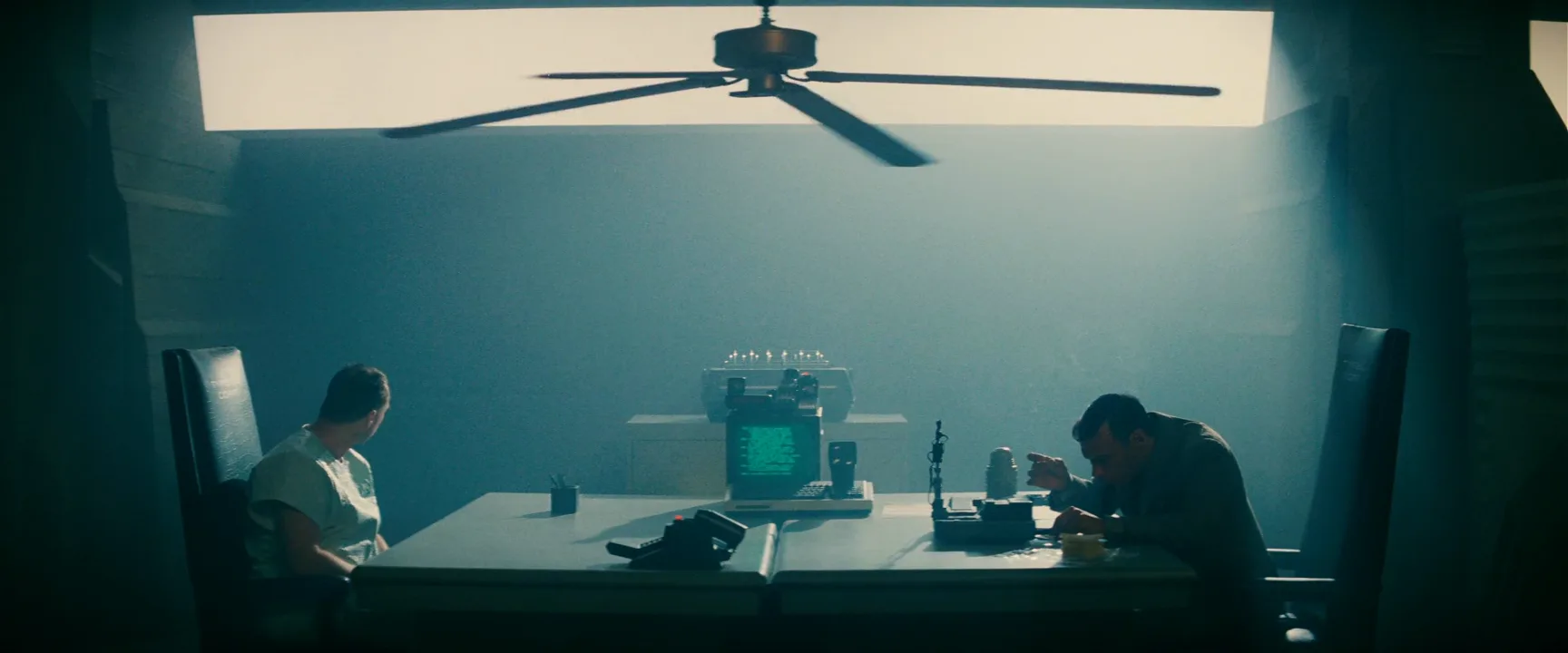
That is why a studio epic like Blade Runner (1982) and a self-financed oddity like The Room (2003) both qualify.
What makes a movie a cult classic?
No recipe guarantees a cult, but the films that attract one share traits.
- Quotable lines. A catchphrase works as a password; The Big Lebowski runs on them.
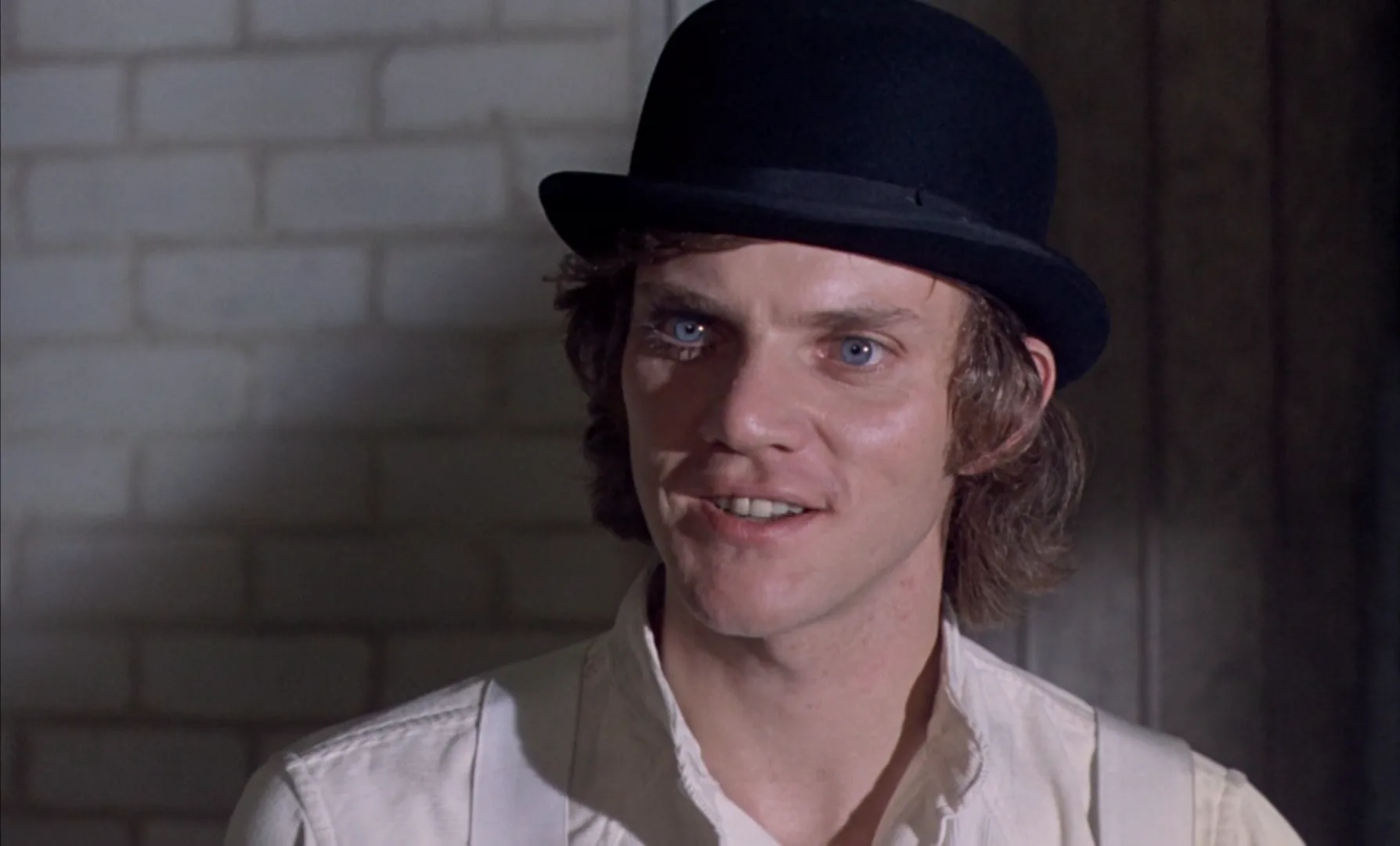
- An imitable look. Alex's bowler hat, white outfit and single false eyelash in A Clockwork Orange (1971) are a ready-made costume.
- A world bigger than the plot. Blade Runner underperformed in 1982, yet its rain-soaked city kept pulling viewers back through several later cuts.
- Sincere failure. Audiences at The Room throw plastic spoons at the screen, and Plan 9 from Outer Space (1957) is the classic Z-movie loved for its mistakes.
Acclaim alone does not make a cult. In the Mood for Love (2000) is better called a modern classic: its audience reveres it rather than ritualizes it.
How do cult audiences form?
Midnight movies. In the 1970s New York theaters began programming odd films at midnight; El Topo (1970) ran for months that way. The Rocky Horror Picture Show (1975) became the model: after a weak release it settled into midnight shows in 1976, and audiences built callbacks, props and live shadow casts that still run.
Repertory screens. A revival house puts older films in front of new crowds, where private obsession becomes group ritual.
Home video. Theatrical disappointments such as Office Space (1999) and Donnie Darko (2001) found their real audience on DVD and cable, rewatched endlessly.
Genre margins. Much cult cinema comes from the cheap end of the business, the B-movie and exploitation double bill.
Cult film vs. sleeper hit
Both start quietly. A sleeper hit opens with little promotion and grows into a commercial success through word of mouth, as My Big Fat Greek Wedding (2002) did. A cult film may never make money; its audience is small, intense and loyal for decades.
| | Sleeper hit | Cult film | |---|---|---| | Audience | Broad, casual | Narrow, devoted | | Timeline | Weeks to months | Years to decades | | Measure | Ticket sales | Rewatching, quoting, costumes |
Can you make a cult film on purpose?
Not really; films that try tend to feel calculated. What you can control are the qualities cults latch onto: a specific world with its own rules, characters with a readable silhouette, dialogue with rhythm, a point of view that is not sanded down for everyone. Think about what fans could copy: a thrift-store costume, a prop carried into a screening, a color scheme that reads across a room.
In FlashBoards, keep reference frames from cult films next to your own costume tests and generated key frames on one board, and check whether your character still reads as a silhouette and three colors.
Cult Film examples in film
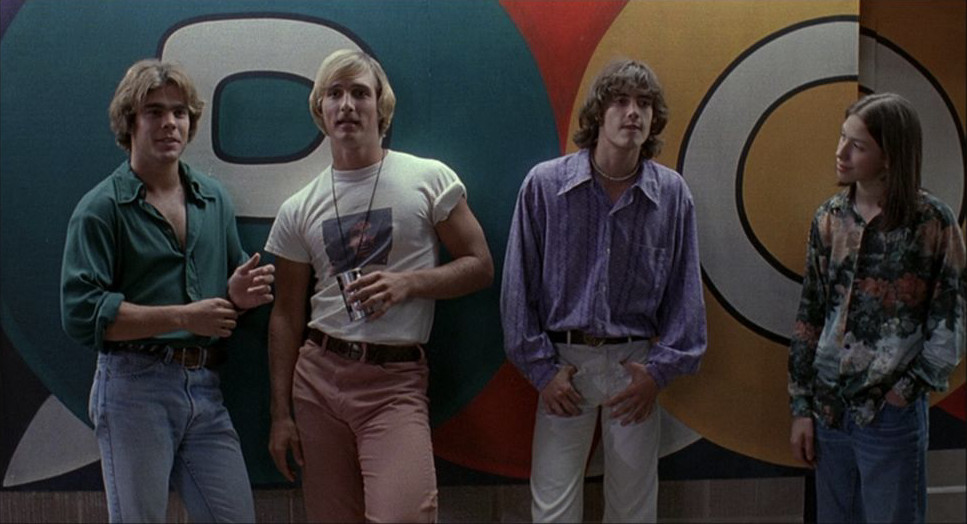
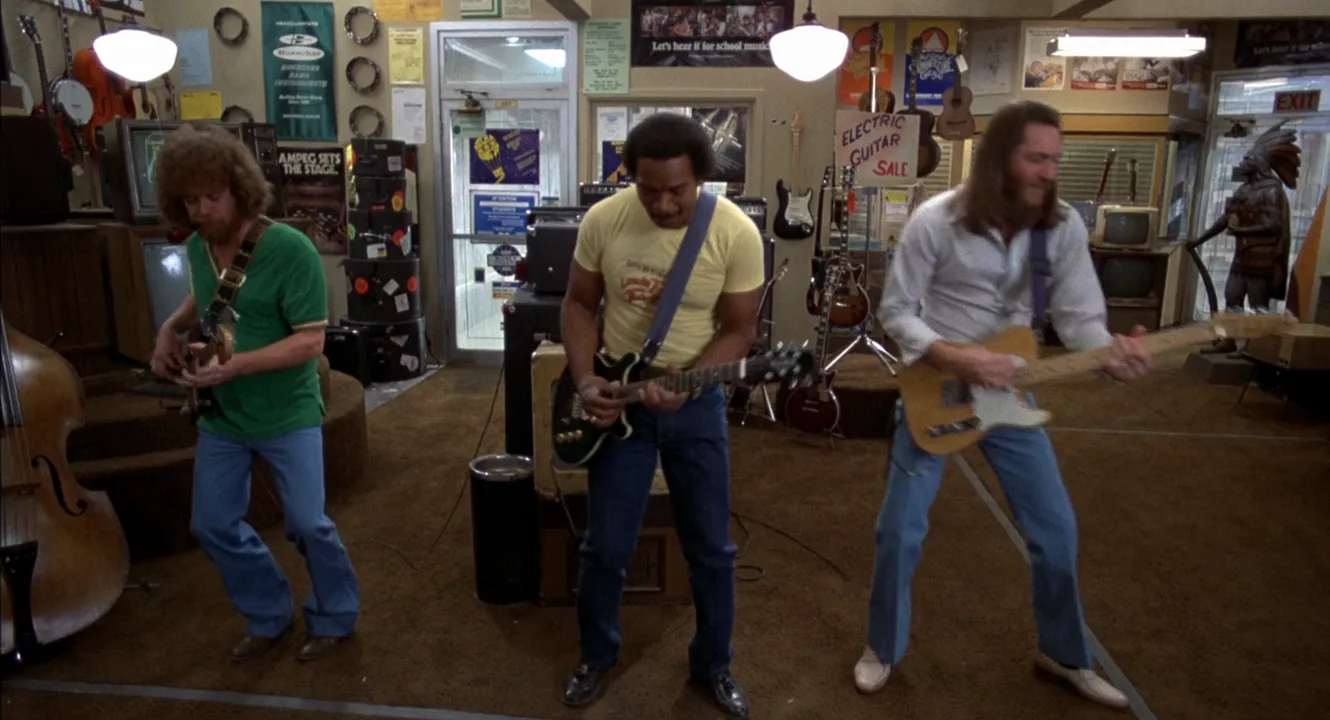
4 framesFrames from films that grew devoted followings, each showing something fans took with them.
How to create a cult film with AI
4 promptsA cult cannot be generated, but its ritual can be staged: the costumed crowd, the midnight marquee, the audience shouting back at the screen. Use these recipes for a film about fandom or a pitch deck, and compare takes next to your reference frames on one FlashBoards board. The fourth prompt re-shoots a real film shot from a text description alone, and the original plays next to the result so you can compare.
Midnight screening in an old single-screen cinema with red velvet seats, shot from the front looking back at the audience, 35mm lens at seated eye level, projector beam cutting through haze above them. Fans in homemade costumes in the first rows: a bald man in his fifties with a gray handlebar mustache in a silver cape, a young woman with a shaved undercut and green lipstick in a thrift-store tuxedo, a freckled teenager holding a flashlight. Faces lit only by cool flicker from the screen, mouths open mid-shout, grainy film texture.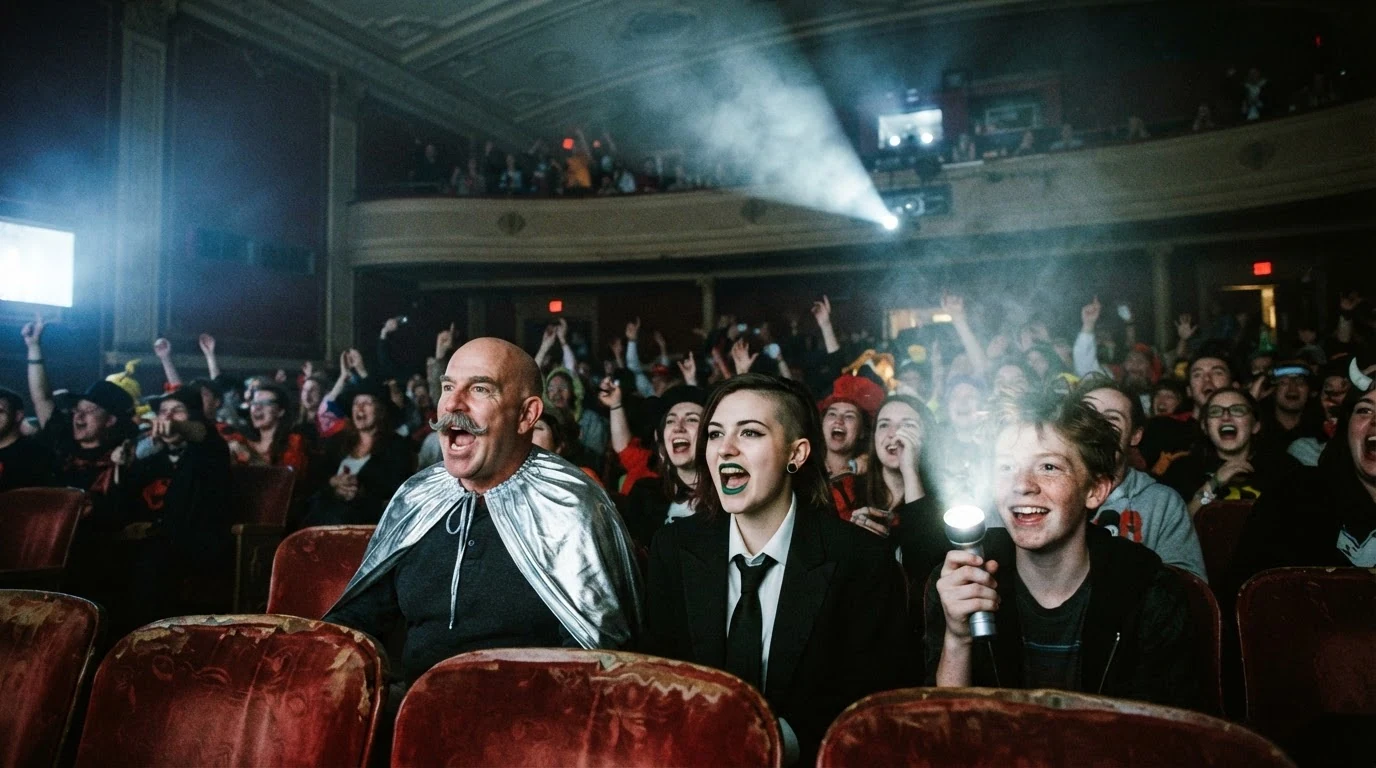
"Looking back at the audience" makes the fans the subject. Three invented people in "homemade costumes" keep the model away from real franchise characters, and "lit only by flicker from the screen" gives the midnight darkness.
Open FlashBoardsNight exterior of a small-town repertory cinema from across a wet street, 28mm lens at standing eye level. The marquee reads in red letters: MIDNIGHT - THE VELVET CRATER - COSTUMES WELCOME. A queue of fans along the sidewalk in matching orange jumpsuits and cardboard crowns; a tall woman with a gray braid carries a paper bag of props, two students with painted silver faces share an umbrella. Neon reflections on the pavement, sodium streetlight.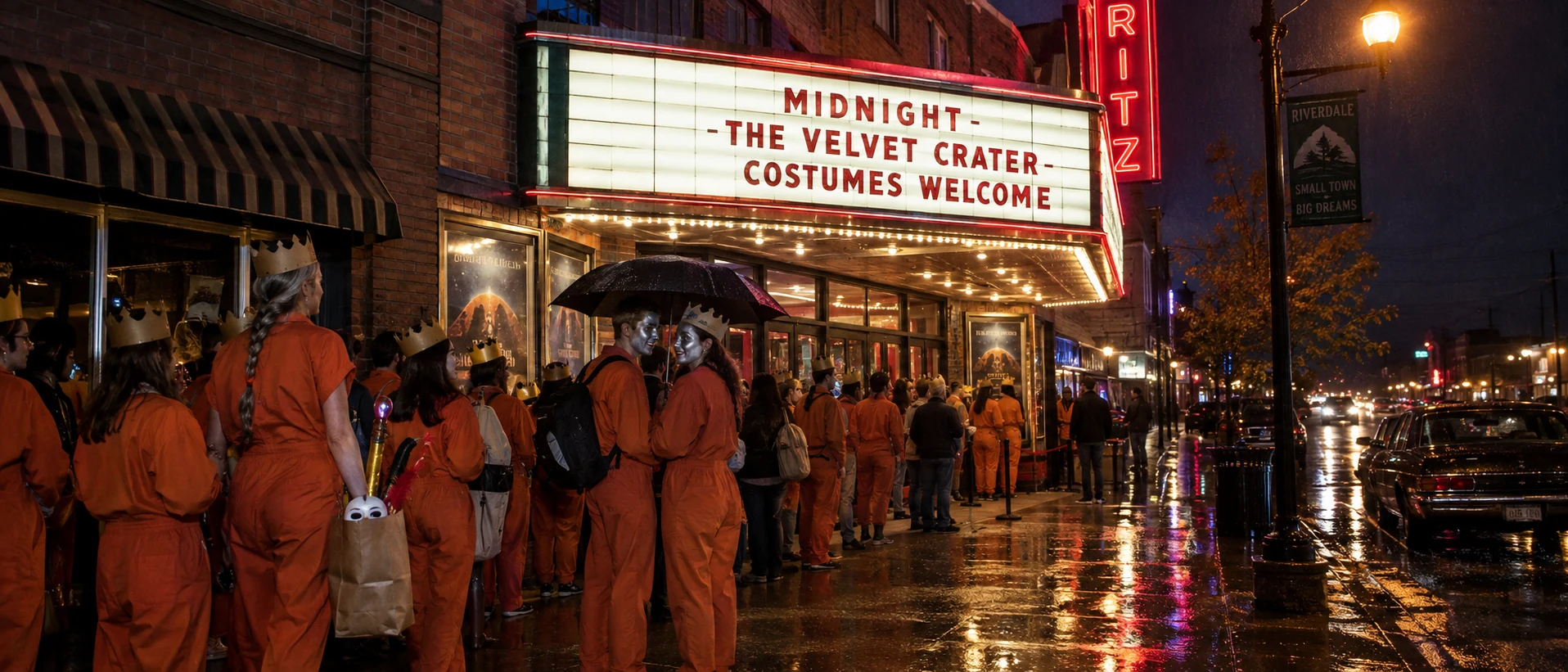
The second half of the ritual: the queue. Short marquee text names an invented film and signals that dressing up is expected; the matching jumpsuits show a fan uniform without copying a real movie.
Open FlashBoardsCamera: slow steady dolly backward from the front of the room toward the rear rows, keeping the three costumed fans centered. Action: the fans are already on their feet shouting a line at the screen together. The man in the silver cape throws both arms up, the woman in the tuxedo points at the screen and laughs, the teenager sweeps his flashlight across the crowd. The three toss handfuls of paper confetti that drift through the projector beam, then drop back into their seats, laughing.Starting mid-shout keeps the shot alive from the first frame, the confetti comes from hands already in the frame, and the backward dolly reveals more of the crowd.
Open FlashBoards{
"output": "Full-screen live-action scene from A Clockwork Orange (1971), from its very first frame: one single continuous shot. Early-1970s 35mm color with soft grain, 1.66:1 frame, a bare interior: a white-painted brick wall behind the man, crossed by a broad diagonal band of shadow running from upper frame left down toward lower frame right, a dark wooden door frame at the far right edge of the frame, flat cool light on the wall and warmer soft light on the face.",
"characters": {
"S1": {
"name": "Alex, played by Malcolm McDowell",
"look": "young man, pale skin, pale blue eyes, collar-length light-brown wavy hair, a black bowler hat worn level and low on the brow, one long false eyelash drawn on the lower lid of the eye on frame left only, a loose white collarless shirt open at the neck with a thin brown leather strap across the chest",
"voice": "light, mocking, precise, a clipped English accent"
},
"S2": {
"name": "Dim, played by Warren Clarke",
"look": "never seen: he stays off screen, standing just left of the camera",
"voice": "slow, thick, heavy"
}
},
"shots": [
{
"shot": 1,
"camera": "static camera with only an almost imperceptible drift, eye level with his eyes, 50mm lens, medium close-up from the chest up; his face sits right of the frame centre, the bowler's crown near the top edge, empty shadowed brick wall fills the left third; the framing stays the same to the end",
"action": [
"BEGINNING: alive from the first frame, S1 already has his mouth open mid-word, eyebrows raised in mock politeness, head tilted slightly toward frame left; his eyes look level from under the hat brim at someone standing just left of the lens.",
"THEN: he breaks into a wide toothy grin, then closes his lips into a smug, tight smile, head still tilted toward frame left, eyes steady on the same spot just left of the lens; no nod.",
"THEN: his head straightens, the smile fades, the tip of his tongue touches his lower lip once, and he speaks the second line calmly, brows level, eyes still level on the spot just left of the lens.",
"THEN: his chin lowers a little and he speaks the third line harder, eyes looking straight ahead from under the brim, the lashed eye on frame left wide open, his jaw setting between phrases.",
"END: he stops talking and closes his mouth; his face holds still, jaw set, the cold level stare fixed just left of the lens while a voice answers from off screen; his lips stay closed."
],
"dialogue": [
{
"speaker": "S1",
"on_screen": true,
"when": "from the first frame",
"delivery": "mock-polite, sing-song",
"line": "<d>[English] Appy polly loggies.</d>"
},
{
"speaker": "S1",
"on_screen": true,
"when": "after the smug smile fades",
"delivery": "calm, faintly amused",
"line": "<d>[English] I had something of a pain in the gulliver, so I had to sleep.</d>"
},
{
"speaker": "S1",
"on_screen": true,
"when": "right after the second line, as his chin lowers",
"delivery": "cold, firm, each word placed",
"line": "<d>[English] I was not awakened when I gave orders for wakening.</d>"
},
{
"speaker": "S2",
"on_screen": false,
"when": "at the very end, after S1 has closed his mouth",
"delivery": "sullen, mumbled",
"line": "<d>[English] Sorry about the pain.</d>"
}
]
}
],
"sound": {
"ambience": "quiet room tone of a bare interior, the soft rustle of the shirt",
"speech": "exactly these spoken phrases, each said once, in this order",
"never_spoken": "no narration and no voice-over: the descriptions, performance notes and step words of this prompt are never spoken aloud",
"music": "a film score under the scene, always below the voices: a low, eerie analog synthesizer drone with a slow, stately pulse",
"subtitles": "none"
}
}Remakes the static close-up of Alex from A Clockwork Orange (1971), dir. Stanley Kubrick, DP John Alcott: the bowler and lashed eye, the smug grin that hardens into a stare, his three lines and Dim's off-screen reply.
A cult image is a costume people can copy, so the look field lists it piece by piece: the bowler worn low on the brow, the single false eyelash on frame left only, the white shirt and strap. The corpus lines keep Alex's slang word for word, and the stare stays just left of the lens to the end.
Common mistakes
- "Cinema audience" becomes a quiet modern multiplex; name the old single-screen room, velvet seats and haze, and say people are shouting.
- "Cult film fans" invites famous franchise costumes; describe invented homemade ones piece by piece.
- In video, a seated, still crowd makes the model creep into a frozen image; start with fans already standing and moving.
Keep the reference frames, prompts and every generated take side by side — images and video in one canvas.
FAQ
4 questionsWhat is a cult film?
A cult film is a movie adopted by a small, passionate audience that rewatches it, quotes it, dresses as its characters and gathers for group screenings. Many failed on release, then built a following over years through midnight shows and home video. The term describes reception, not genre.
What makes a movie a cult classic?
Usually quotable dialogue, an imitable look, a world with its own rules and something that sets it apart from mainstream taste: strangeness, transgression or sincere incompetence. Above all, its devoted audience lasts for decades.
What is the most famous cult film?
The Rocky Horror Picture Show (1975) is the usual answer. It did poorly on release, found a home at midnight screenings from 1976, and grew a full ritual of costumes, shouted callbacks, thrown props and live shadow casts. It has played in theaters ever since.
Is a cult film the same as a B-movie?
No. A B-movie is defined by budget: a cheap genre picture, originally the second feature on a double bill. A cult film is defined by its audience. Many B-movies became cult films because fans love their energy or flaws, but studio films like Blade Runner (1982) have cults too, and most B-movies never attract one.
Related terms
1Further reading
J. Hoberman and Jonathan Rosenbaum, Midnight Movies (1983). Danny Peary, Cult Movies (1981). Umberto Eco, "Casablanca: Cult Movies and Intertextual Collage".