 FlashBoards Learn
- Learn
- Acting & Casting
- Film Extras (Background Actors)
Acting & Casting · Film language
Film Extras (Background Actors)
Also called: background actor, background performer, atmosphere
An extra, or background actor, is a performer who appears in a scene without lines: the diners, commuters, soldiers and spectators who fill the frame. Extras make a film's world feel inhabited and set its scale, era and class, while staying out of focus, literally and dramatically, so the audience watches the principals.
- What it does
- Fills the frame with life so the world feels real and the story's scale reads instantly.
- Use it when
- A space would look staged or empty without people: restaurants, streets, courts, stadiums, battlefields.
- Watch out
- Background that competes with the leads: eyes on camera, loud wardrobe, busy movement behind a key line.
- Try this prompt
Medium shot of a woman at a diner booth, 50mm shallow focus, busy lunch crowd softly blurred behind her, each patron mid-gesture.
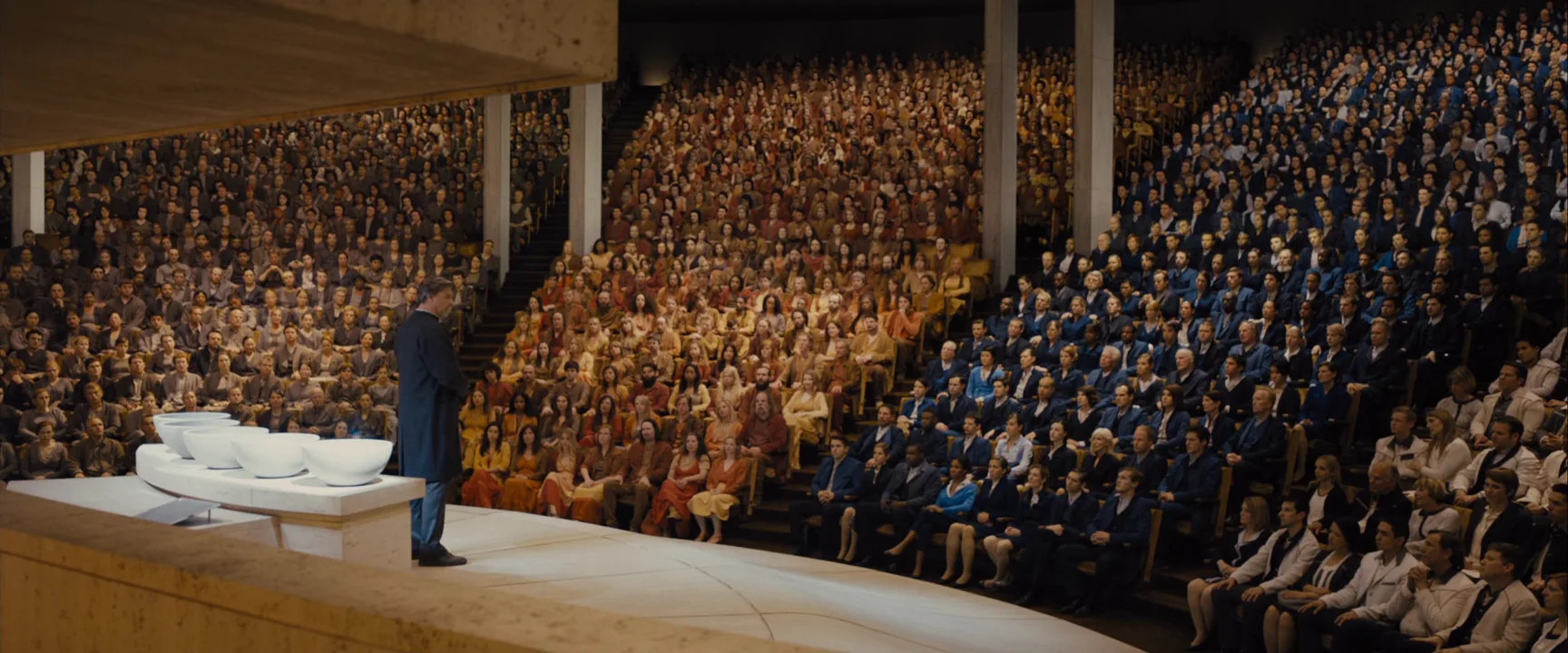
What is an extra in film?
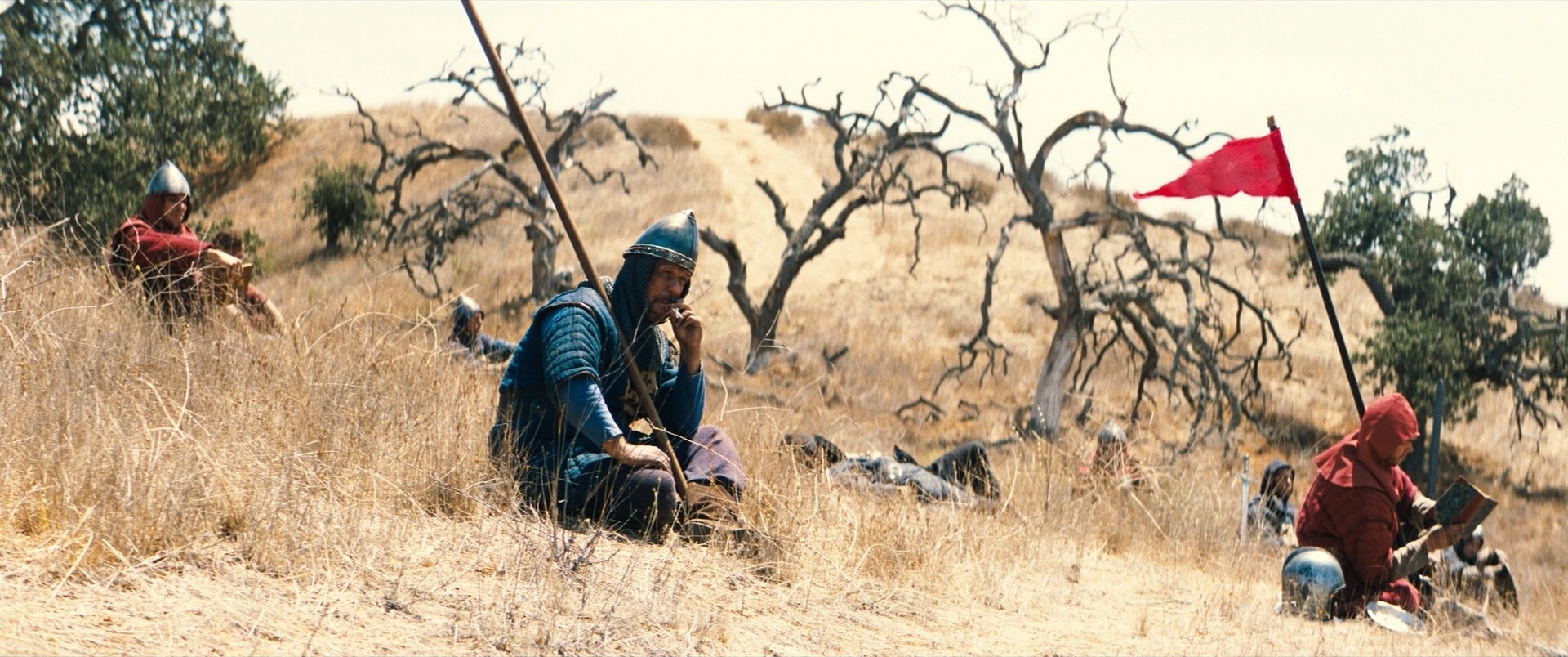
An extra is a member of the cast with no dialogue and no story function of their own. Call sheets list them as background ("BG"); crews also say atmosphere. In acting and casting terms they are hired to be the environment, not characters: a busy bar, a packed courtroom, an army on a ridge.
- No lines. Extras mime conversation.
- No focus. The camera never builds a moment around them.
- No credit, as a rule. The credits list the principal actors.
A featured extra is placed near camera or given a visible bit of business, still without dialogue.
What do extras do in movies?
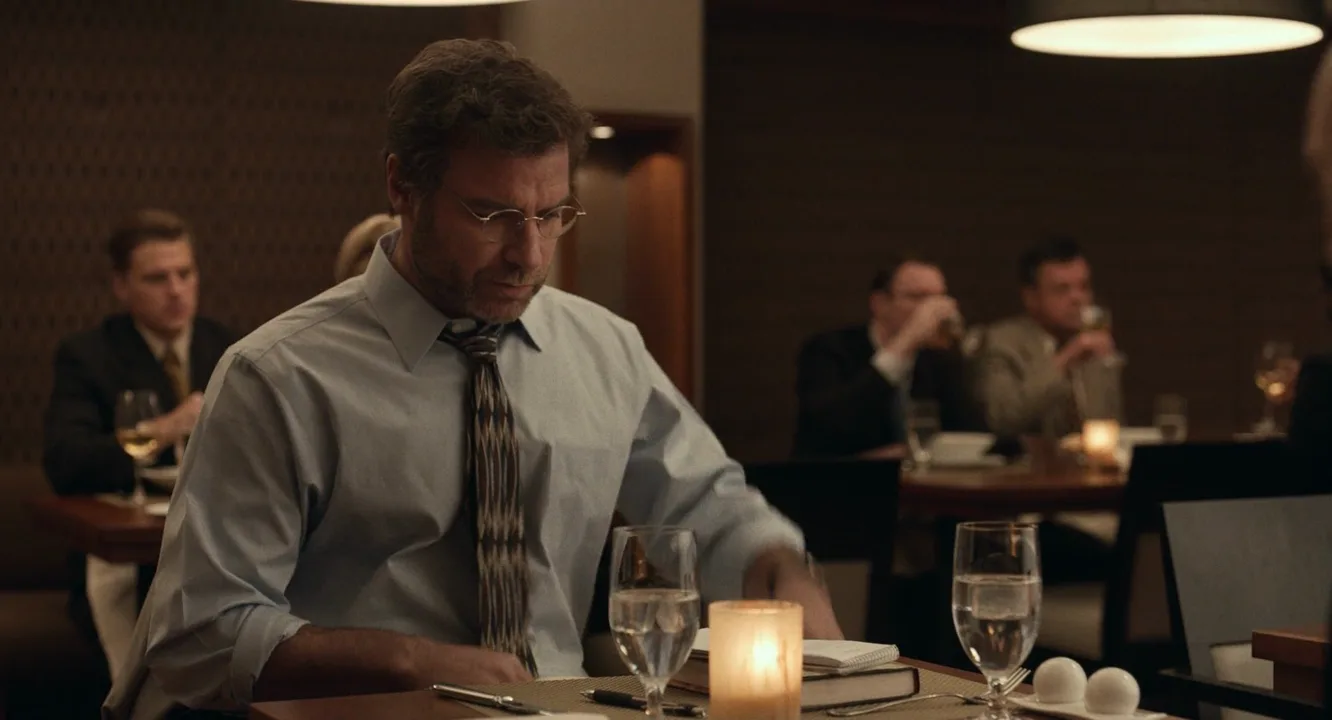
It makes a place believable. An empty restaurant reads as a set. Twenty diners and a crossing waiter make the hero's scene feel overheard rather than performed.
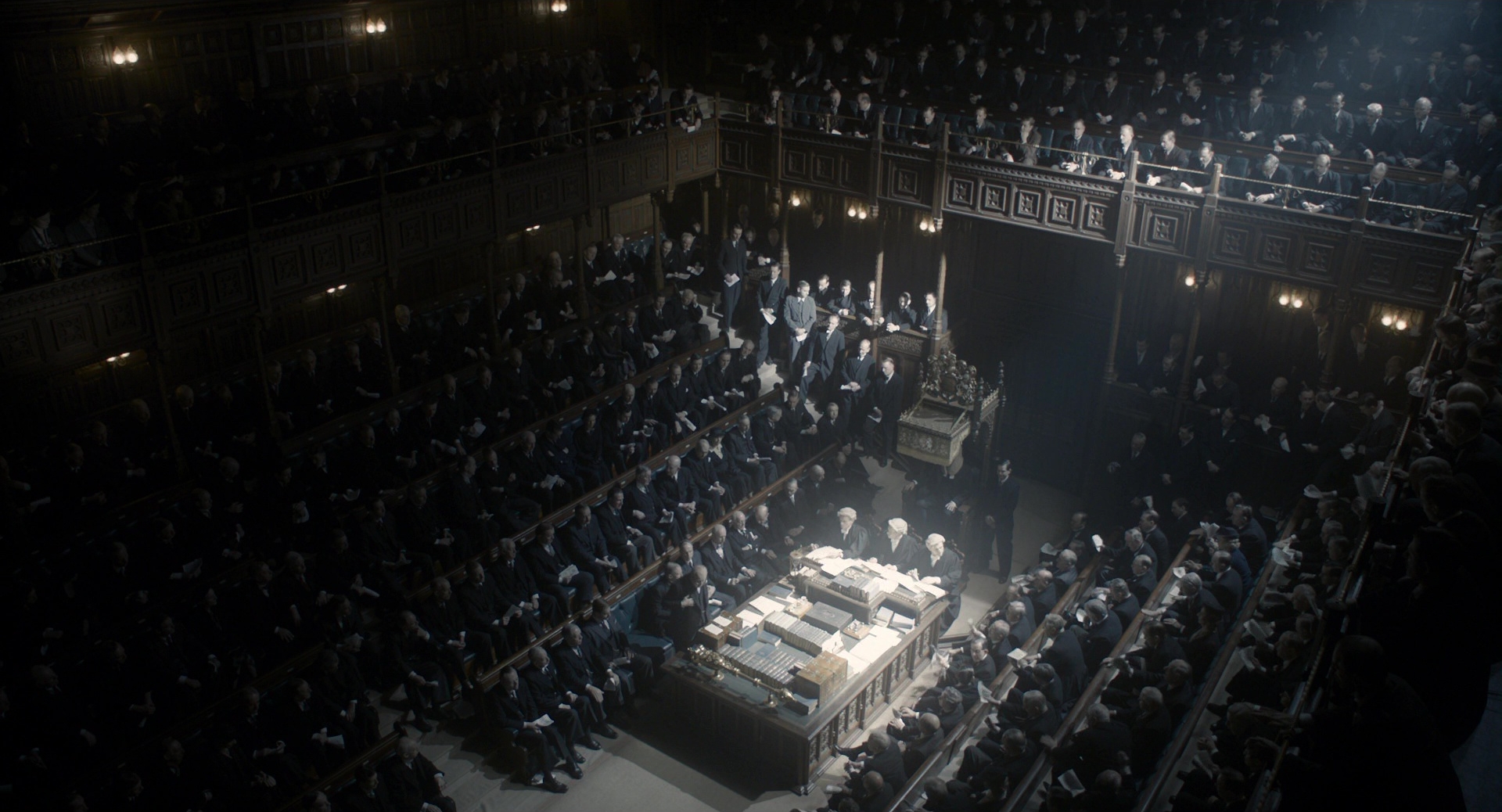
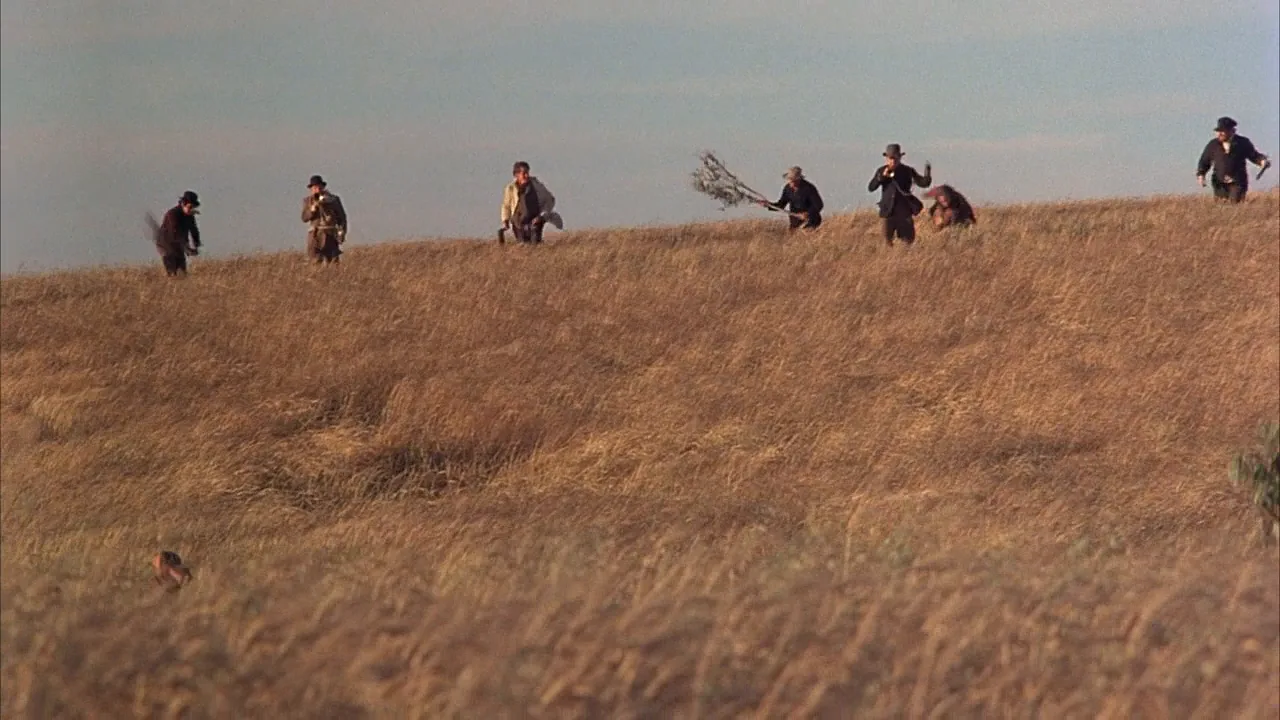
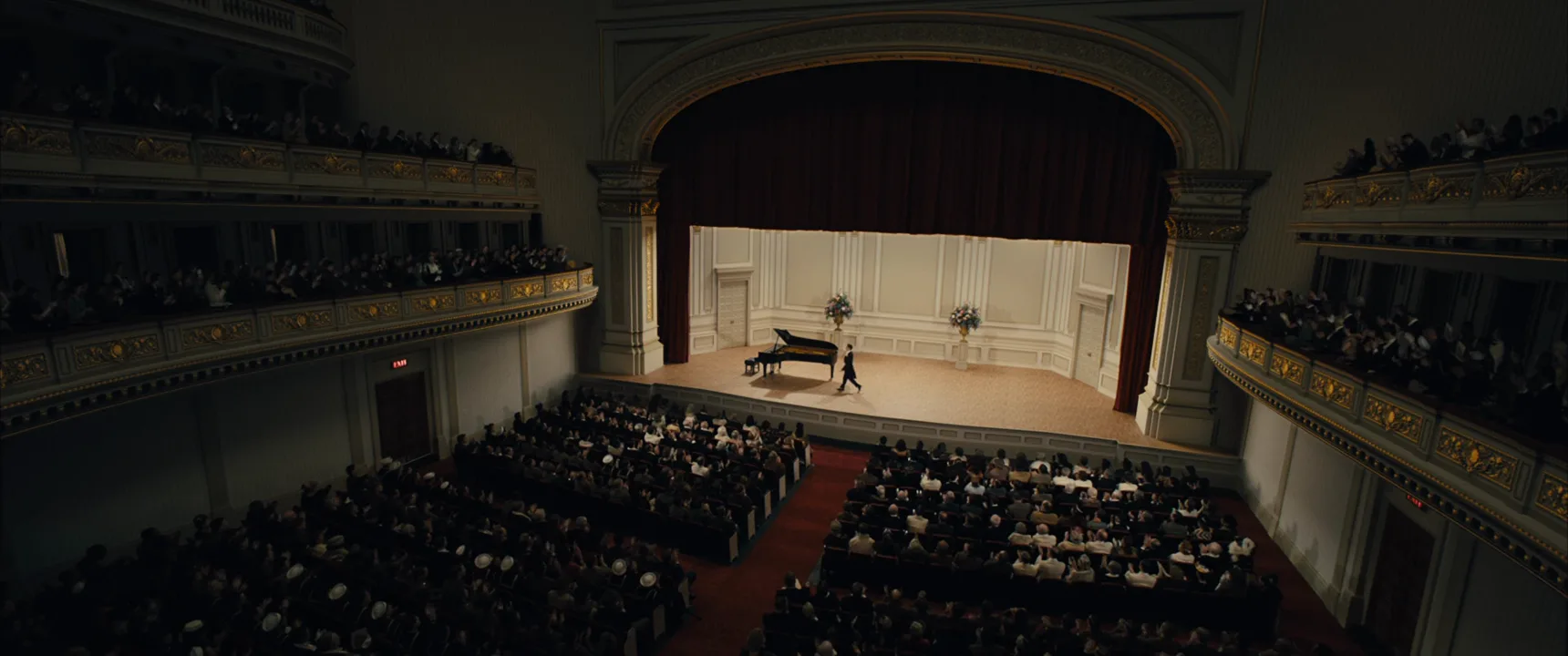
It sets scale and stakes. The packed chamber in Darkest Hour (2017) or the harvest workers strung across a field in Days of Heaven (1978) say more about power and labor than dialogue.
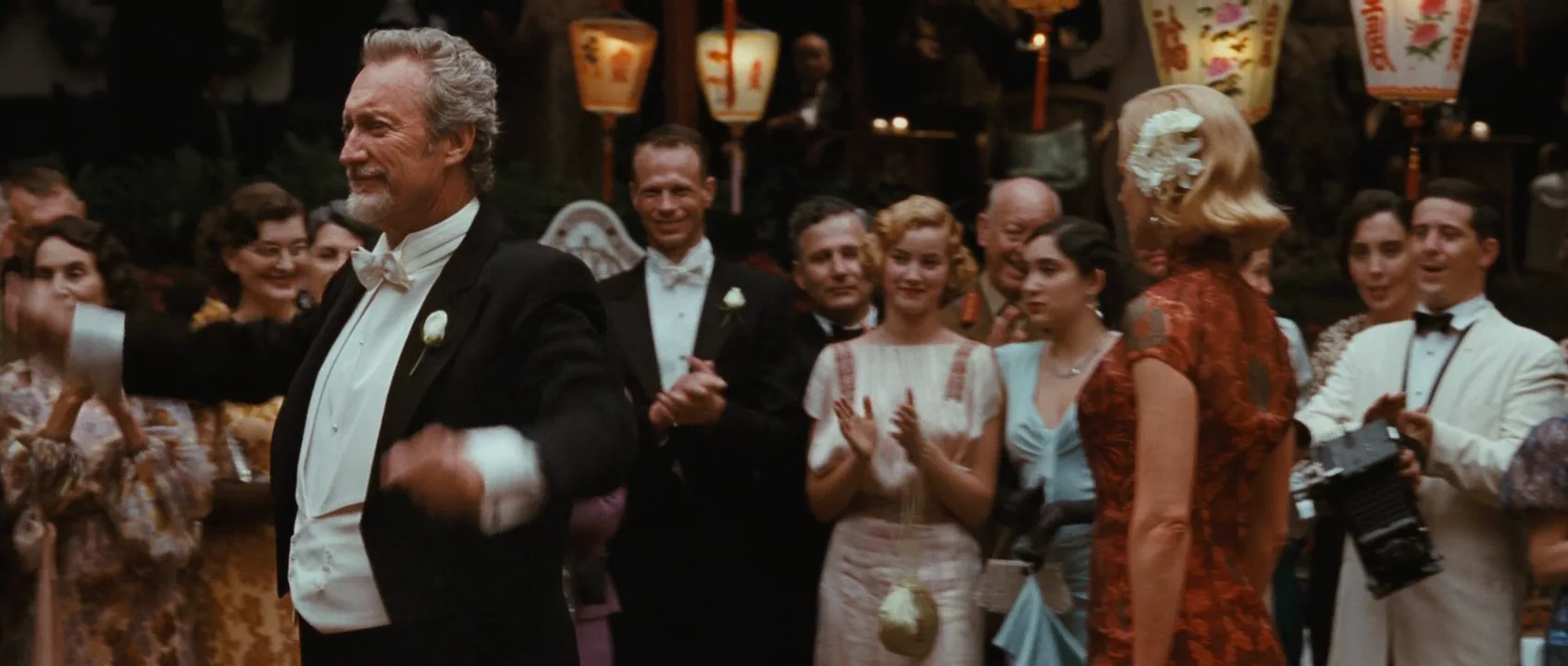
It carries period and class. Hats, posture and haircuts date a scene faster than a title card.
It directs attention. Movement behind a lead can hold the eye or steal it; directors time crosses to push attention toward the speaker.
How to stage and shoot background actors
The first assistant director sets background, often with a second AD who places and cues each person.
- Cue background first. "Background action!" comes a beat before "Action!", so the room is alive when the first line lands.
- Mime, don't murmur. Extras mouth conversation silently so dialogue records clean; crowd sound (walla) is recorded separately and mixed in.
- Plan crosses like dialogue. Each extra gets a start mark, a path and an end mark fitted to the blocking of the leads. Nobody crosses a speaking actor's eyeline on a key line.
- Build depth. A few people near camera, a middle band, a thin back layer: working in foreground, midground and background makes 15 diners look like 50.
- Pick the lens for the crowd you have. A 24–35mm shows a big crowd's size; 85mm or longer compresses a small one into a wall.
- Keep wardrobe quiet. No logos, bright white or tight stripes.
- Protect continuity. Same mark, same action, every take.
Extra vs. walk-on vs. bit part
| | Lines | Camera attention | Credit | |---|---|---|---| | Extra | None | Part of the environment | Rarely | | Walk-on | None or a word or two | A noticeable moment of their own | Sometimes | | Bit part | A handful of scripted lines | Speaks to a principal | Yes |
If the waiter only sets down a plate, he is background. If he stops and looks at the lead on a beat the scene needs, he is a walk-on. If he says "Your table's ready, Mr. Carter," he has a bit part.
Film Extras (Background Actors) examples in film
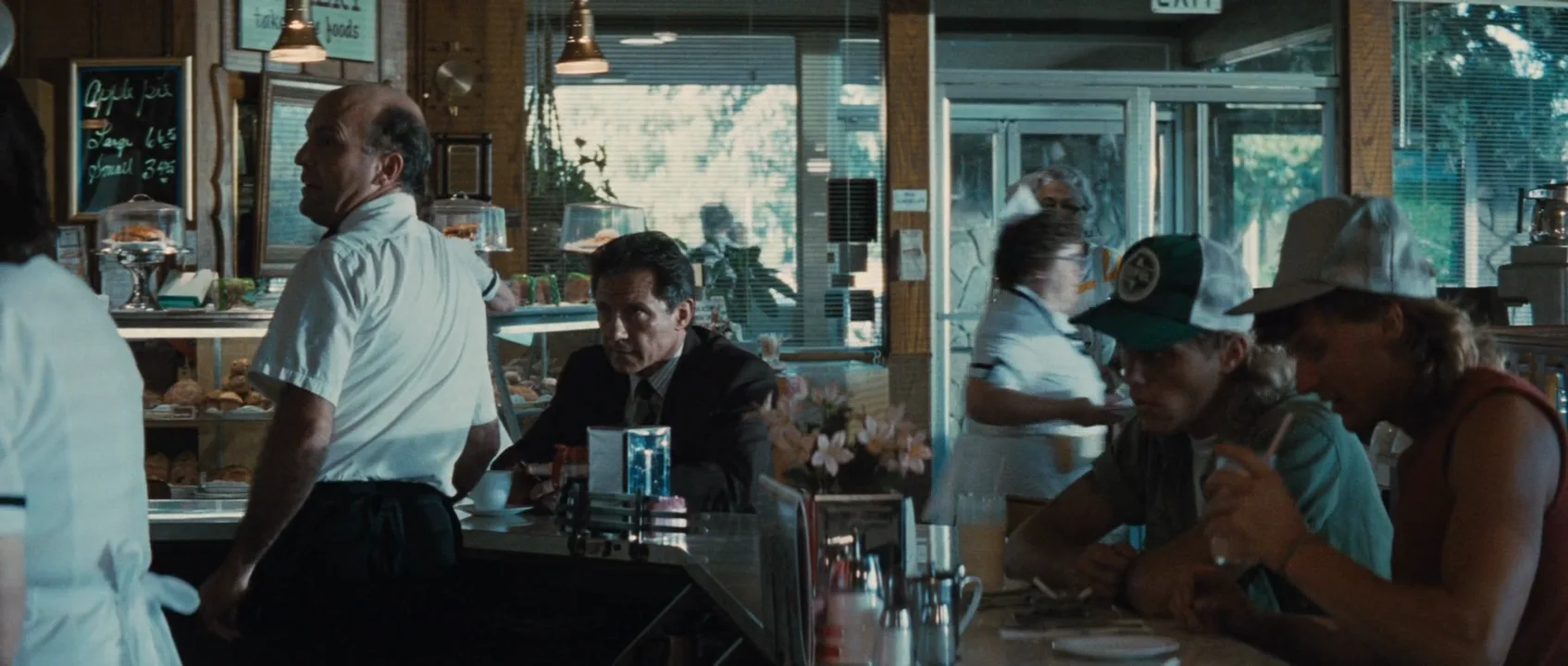
8 framesFrames where background actors do the heavy lifting: they give a room its size, a period its texture and the principals something to play against.
How to create a film extras (background actors) with AI
4 promptsModels draw crowds easily but badly: cloned faces, eyes on the lens, background as sharp as the lead. Direct extras like an AD: ages, clothes, a task per group, a focus plan. In FlashBoards keep references, the start frame and the animated take on one board and compare takes side by side. The fourth prompt re-shoots a real film shot from a text description alone, and the original plays next to the result so you can compare.
Medium shot, eye level, 50mm lens, shallow depth of field. A woman in her fifties with a cropped silver undercut, round tortoiseshell glasses and an olive corduroy jacket sits in a window booth of a busy roadside diner at lunchtime, hands around a coffee mug, in sharp focus. Behind her, softly out of focus: a waitress in a mint uniform pouring coffee at the counter, two men in canvas work jackets eating, an elderly couple sharing a newspaper. Everyone absorbed in their own business. Warm window daylight, tungsten practicals, 1970s film color.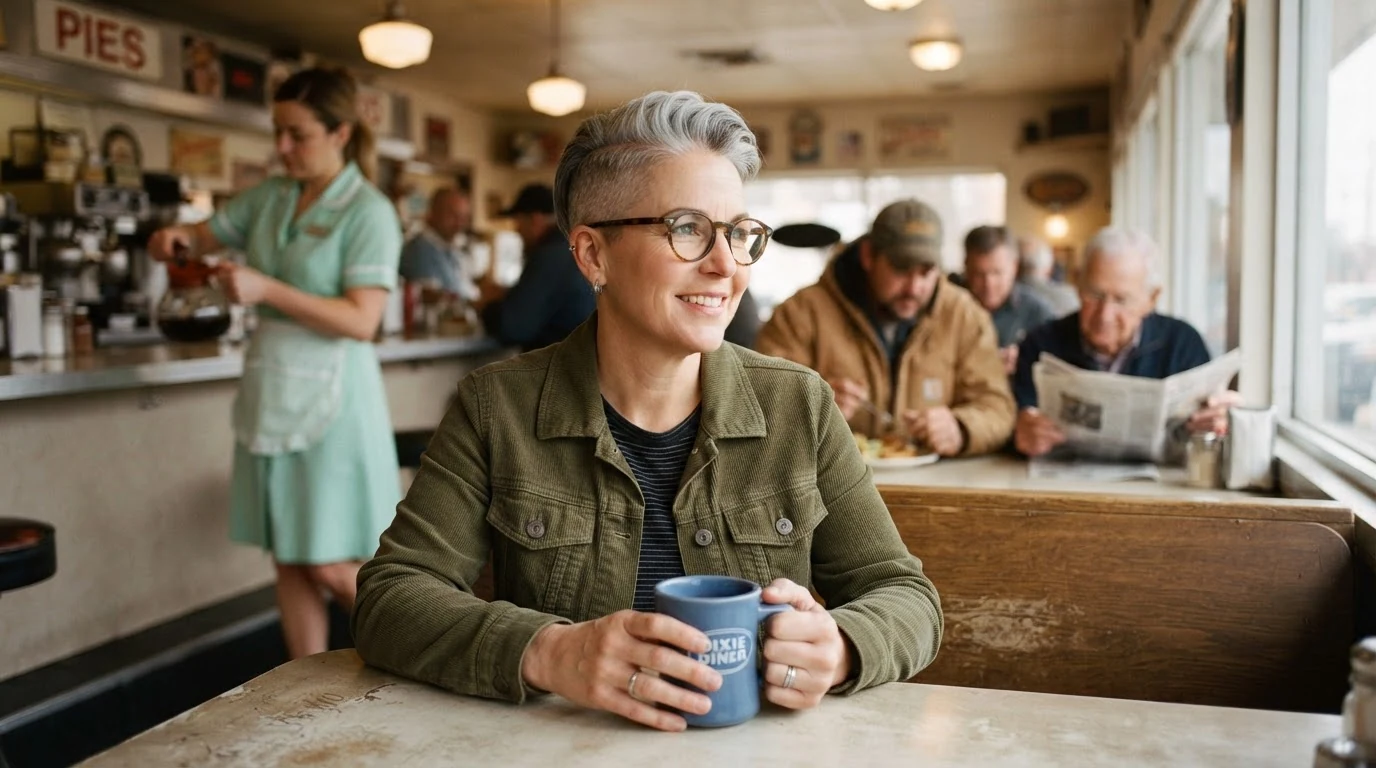
"Shallow depth of field" and "softly out of focus" keep the background behind the lead. A task for each extra (pouring, eating, reading) stops idle lined-up faces, and "absorbed in their own business" turns eyes away from the lens.
Open FlashBoardsWide high-angle shot from a balcony over a packed small-town hall meeting, 28mm lens. About two hundred townspeople in folding chairs, mixed ages and body types, winter coats in muted browns, greys and navy, some whispering, some leaning forward, a few standing at the back wall. In the center aisle a tall young man with a shaved head, thin beard and burgundy scarf stands at a microphone, the only figure facing the stage. Fluorescent light, wood paneling, deep focus.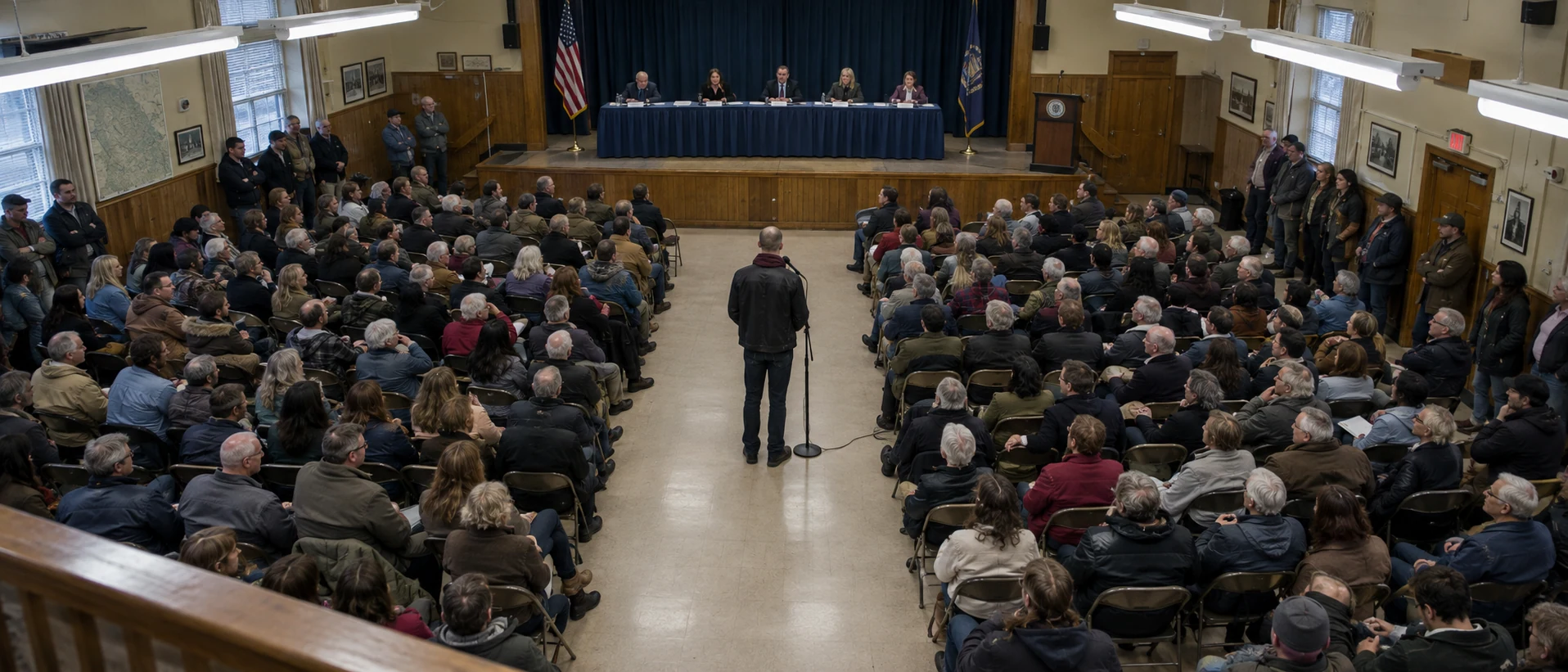
The high angle and 21:9 frame hand the image to the crowd. "Mixed ages and body types" and a muted palette fight cloned faces; the principal is the only one facing the stage, which separates him without a spotlight.
Open FlashBoardsCamera: slow, steady push-in from the first frame toward the woman in the booth, ending on a medium close-up. Action: the diner is already busy; the waitress walks along the counter pouring coffee, the two men in work jackets keep eating and one laughs, the elderly couple turns a newspaper page. The woman in the booth lifts her mug, takes a sip and turns her head to look out the window."Already busy" moves the background from frame one. Every action belongs to someone in the image, so no new patrons appear; the push-in keeps the lead as subject.
Open FlashBoards{
"output": "Full-screen live-action scene from Thelma & Louise (1991), alive from its very first frame: one continuous locked-off shot, no cuts. 1990s 35mm anamorphic film, summer midday in a busy small-town roadside diner, bright green-white daylight through tall glass walls and a glass entrance door at the back centre, warm copper pendant lamps, teal and cream palette, soft film grain, deep focus.",
"characters": {
"S1": {
"role": "plain-clothes detective, the still centre of the frame",
"look": "man in his fifties, dark swept-back hair, dark suit, white shirt, dark tie, seated at the back counter in the centre middle ground behind a napkin dispenser and a coffee cup",
"voice": "calm, low, businesslike"
},
"S2": {
"role": "counterman",
"look": "bald man in his fifties, white short-sleeved shirt, black bow tie, black trousers, a teal cloth",
"voice": "raised, calling across the room"
},
"S3": {
"role": "foreground waitress",
"look": "dark-haired woman seen from behind, white short-sleeved uniform with dark trim on the sleeves and a white apron bow at the back",
"voice": "silent"
},
"S4": {
"role": "two young regulars",
"look": "two long-haired young men hunched over pink milkshakes with straws: one in a green mesh cap with a round badge and a sage green T-shirt, one in a light cap and a sleeveless maroon shirt",
"voice": "silent"
},
"S5": {
"role": "two elderly women customers",
"look": "one with tinted glasses and a white sweater with bold geometric appliques, one with curly white hair",
"voice": "silent"
},
"S6": {
"role": "back waitress",
"look": "young woman in a white uniform and a small white paper cap",
"voice": "silent"
}
},
"shots": [
{
"shot": 1,
"camera": "locked-off static wide shot at seated eye level from the near end of the counter, scope frame; S3's white back fills the left edge, S4 sit large in the right foreground, S1 at the counter in the centre, the glass entrance door at the back centre-right",
"action": [
"BEGINNING: alive from the first frame, the diner already busy: S3 stands at the left edge with her back to camera; S4 sip their milkshakes through straws and lean toward each other; S1 sits at the counter, lifts his head and looks up toward screen left, holding a small gold police badge low in his right hand at the counter edge; S6 stands at the back counter with her back to us; people pass outside beyond the glass door.",
"THEN: S2 walks in from the left behind S3 and leans over the counter toward S1 with his back to camera, both hands on the counter, while S1 speaks up to him.",
"THEN: S2 straightens and turns his head over his right shoulder toward the back of the room, calling out; S1 lowers his eyes to his coffee and stays still; S5 push through the glass door at the back and shuffle slowly forward, looking for seats.",
"THEN: S2 turns to face camera, eyes down, wiping his hands on the teal cloth; S5 stop behind S4 and look around the room; S4 keep sipping, heads down.",
"END: S2 strides toward camera and crosses close past the lens out of frame right in a white blur; S6 now stands at the back counter facing camera, hands at her waist; S3 steps back into the left edge; the green-capped regular turns his head toward screen left; S1 has not moved, head bowed over his cup, the still centre of the busy room."
],
"dialogue": [
{
"speaker": "S1",
"on_screen": true,
"when": "just after the first frame, as he looks up at the counterman leaning in",
"delivery": "quiet, businesslike question",
"line": "<d>[English] Is the manager in?</d>"
},
{
"speaker": "S2",
"on_screen": true,
"when": "right after that, as the counterman straightens and turns his head over his shoulder toward the back of the room",
"delivery": "raised voice, calling across the diner",
"line": "<d>[English] Marian, there's a police officer here.</d>"
}
]
}
],
"sound": {
"ambience": "lunchtime diner walla, indistinct murmur of many voices, cutlery on plates, a straw slurp, cups on saucers, the entrance door opening, traffic heard from outside",
"speech": "exactly these spoken phrases, each said once, in this order",
"never_spoken": "no narration and no voice-over: the descriptions, performance notes and step words of this prompt are never spoken aloud",
"music": "a film score under the scene, always below the voices: a lazy twangy slide guitar over soft bass with a slow road-movie pulse",
"subtitles": "none"
}
}Remakes the busy roadside-diner shot from Thelma & Louise (1991): the prompt keeps the locked-off wide frame, the capped regulars in front, the counterman's two lines and his exit past the lens, and the still detective in the middle.
Each extra gets a look and one task, so nobody idles or stares at the lens. The phases time the traffic: the counterman leans in, calls to the back, then crosses past the lens while older customers come in. The detective stays still. Only the two corpus lines are spoken; the rest is walla under a light score.
Open FlashBoardsCommon mistakes
- Clone crowds. Specify ages, builds and a wardrobe palette.
- Eyes on camera. Give every group something to look at: each other, a menu, the stage.
- Everything sharp. State the lens and "background softly out of focus".
- Frozen extras in video. Give each group one simple verb.
- Too tidy. Ask for people standing, leaning, half-hidden and cropped by the frame edge.
Keep the reference frames, prompts and every generated take side by side — images and video in one canvas.
FAQ
4 questionsWhat do extras do in movies?
Extras populate a scene without speaking: diners, commuters, jurors, soldiers. They make the setting believable, show its scale and period, and steer the eye toward the principals by moving or holding still on the assistant director's cue.
Do extras talk in movie scenes?
Usually not out loud. Extras mime conversation, and the room's murmur (walla) is added in the mix. An extra who speaks a scripted line on camera is normally upgraded to a speaking part.
What is a featured extra?
A background performer placed near camera or given visible business without dialogue, such as the bartender who serves the lead. One step up is the walk-on, who gets a noticeable moment of their own.
How do you become a movie extra?
Register with local background casting agencies; they ask for photos, measurements and availability. No acting experience is needed, only reliability: arrive on time, bring the requested clothes, follow the ADs and repeat the same action every take.