 FlashBoards Learn
- Learn
- Composition & Framing
- Foreground, Midground, Background: Depth Layering
Composition & Framing · Film language
Foreground, Midground, Background: Depth Layering
Also called: foreground, midground, background, staging in depth, FG/MG/BG, layered composition
Depth layering builds a shot in distinct planes: foreground, midground and background, each holding something that matters. The flat screen gains volume, the viewer reads distance and scale at a glance, and one frame can carry several actions or ideas at once.
- What it does
- Turns a flat frame into readable space and lets one shot carry two or three layers of story.
- Use it when
- You want scale, context, a sense of looking in, or two actions in one frame without cutting.
- Watch out
- A foreground that competes with the subject, or a background busy enough to swallow the midground.
- Try this prompt
35mm wide shot, soft fishing net in the foreground, woman mending rope on a dock in the midground, red boat and misty cliffs in the background
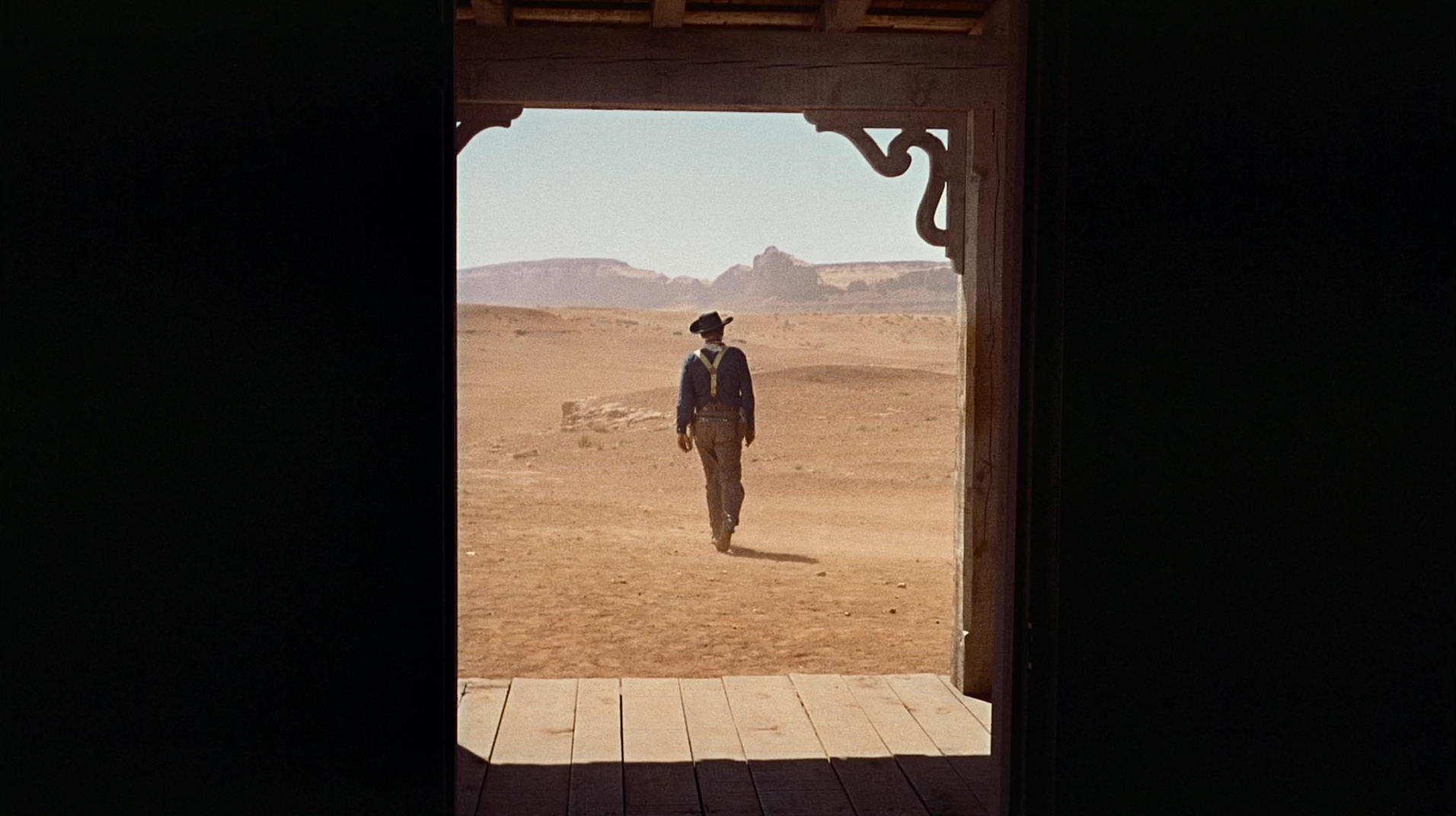
What are foreground, midground and background?
They are the three distances a camera sees. The foreground is nearest the lens: a doorframe, a shoulder, branches. The midground usually holds the subject and the main action. The background is the deepest plane: a landscape, a street, a far wall.
Depth layering means putting something meaningful on each plane on purpose. Overlap, size, haze and focus tell the eye which plane is which. Usually one plane carries the story, one gives context, one frames the view.
Why do filmmakers layer a shot in depth?
- Believable space. A set feels like a place with air in it.
- Two stories in one frame. In Citizen Kane (1941) his mother signs away the boy's future in the foreground while, through the window behind them, he plays in the snow.
- Power. Who stands near the lens and who stands far away is a statement.
- Looking in. A foreground object puts the audience behind a doorway or shelf.
Leading lines and a frame within a frame are the usual helpers; both belong to the wider film composition toolkit.
How to shoot a layered composition
- Find three distances, then place the camera. Something 1–2 m from the lens, the subject at 3–6 m, a readable background 15 m or more away.
- Choose the lens for the effect. A wide-angle lens (18–35mm on Super 35) stretches the planes apart; 85mm and longer compresses them into a stacked look.
- Decide what is sharp. f/8–f/11 on a wide lens holds all three planes; f/2 on a longer lens turns foreground and background into soft color. A rack focus can hand attention from plane to plane.
- Light in bands. Dark foreground, lit subject, brighter or hazier background. Haze adds natural fall-off.
- Block for depth and move sideways. A lateral dolly creates parallax: the foreground slides fast, the background barely moves.
Foreground framing: what goes in front
Foreground framing puts something between camera and subject: leaves, a window frame, a railing, the back of a head. It gives the eye a nearer object to measure against and a point of view: we look through something. Keep it at the edges, darker or softer than the subject; past a third of the frame it becomes the subject. The everyday version is the shoulder in an over-the-shoulder shot.
The background: place, mood and secondary action
The background sets place and mood and separates the figure through contrast. It can also carry a second action, such as a threat the hero hasn't noticed. Control it: a bright window or saturated sign pulls the eye off the midground.
Depth layering vs. depth of field
Depth layering is a composition decision: what sits on each plane. Depth of field is optics: how much of that depth looks sharp, set by aperture, focal length and distance.
A layered shot can use a razor-thin focus zone, or keep every plane sharp with deep focus, as Citizen Kane does. A blurred background alone is not layering; it is just bokeh. Plan the layers first, then pick the focus that says where to look.
Foreground, Midground, Background: Depth Layering examples in film
8 framesIn each frame, check what is nearest the lens, where the subject sits and what the deepest plane tells you.
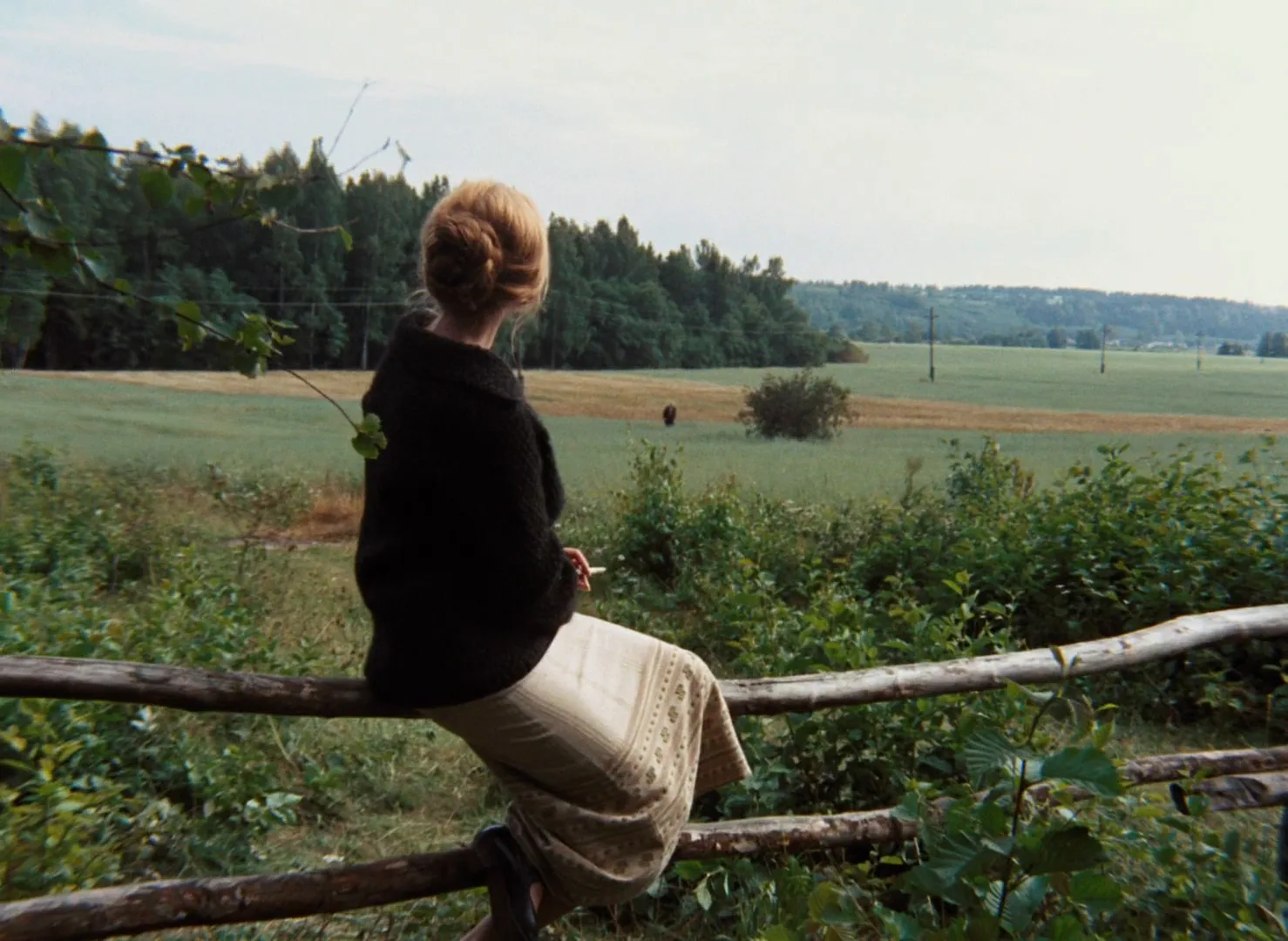
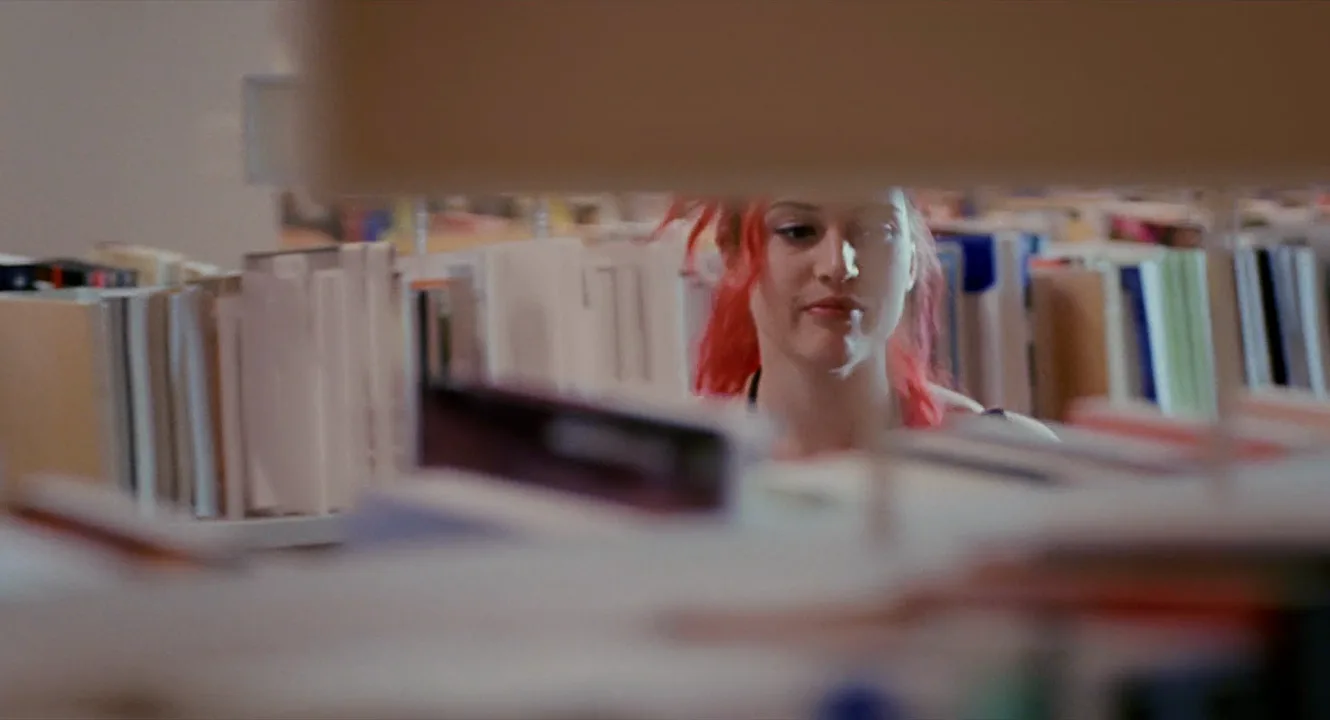
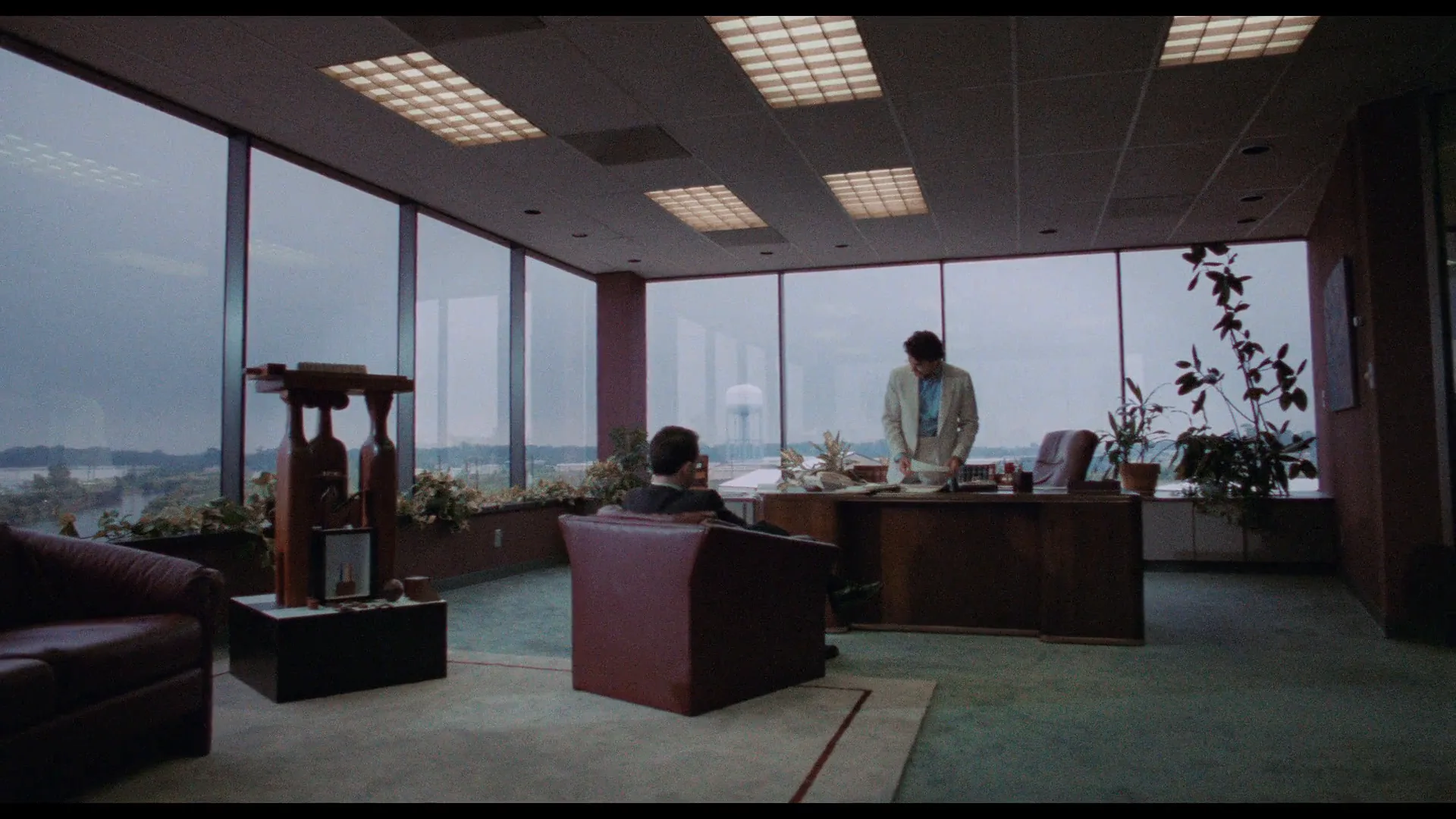
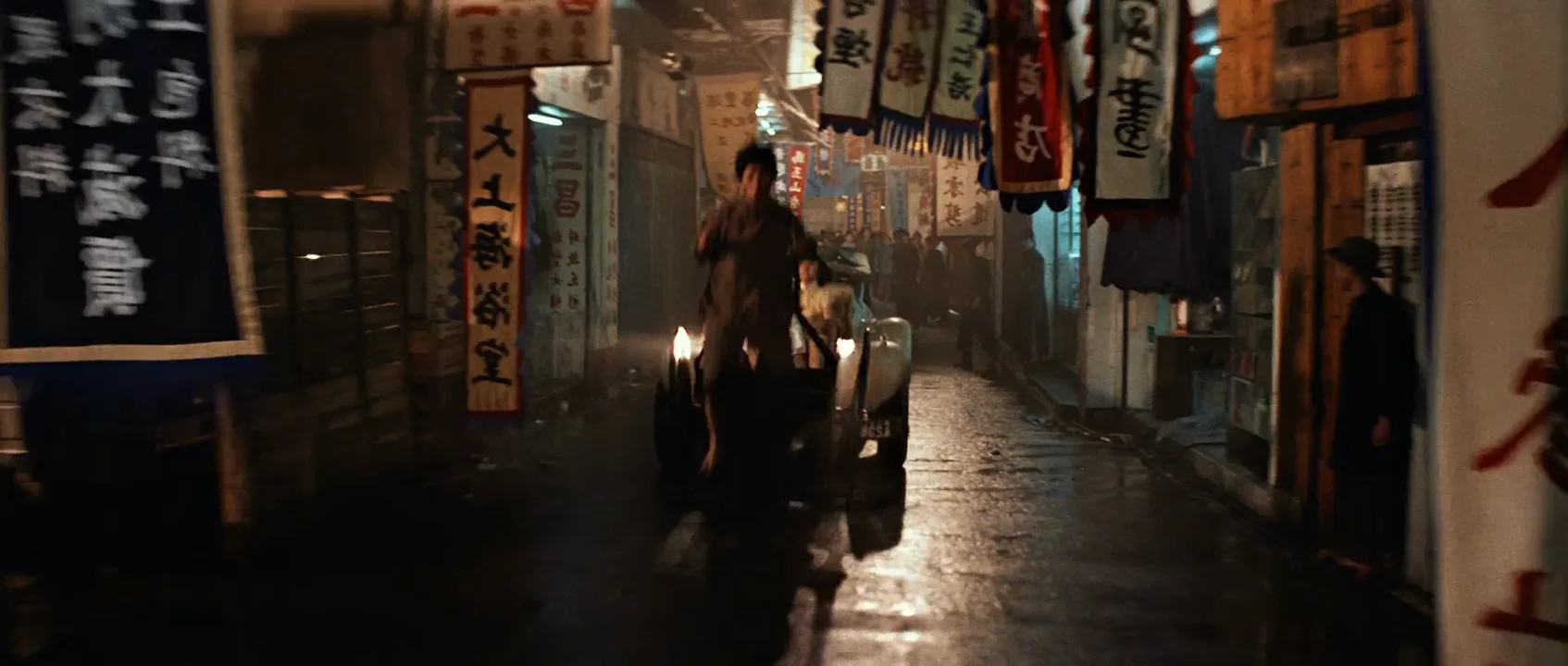
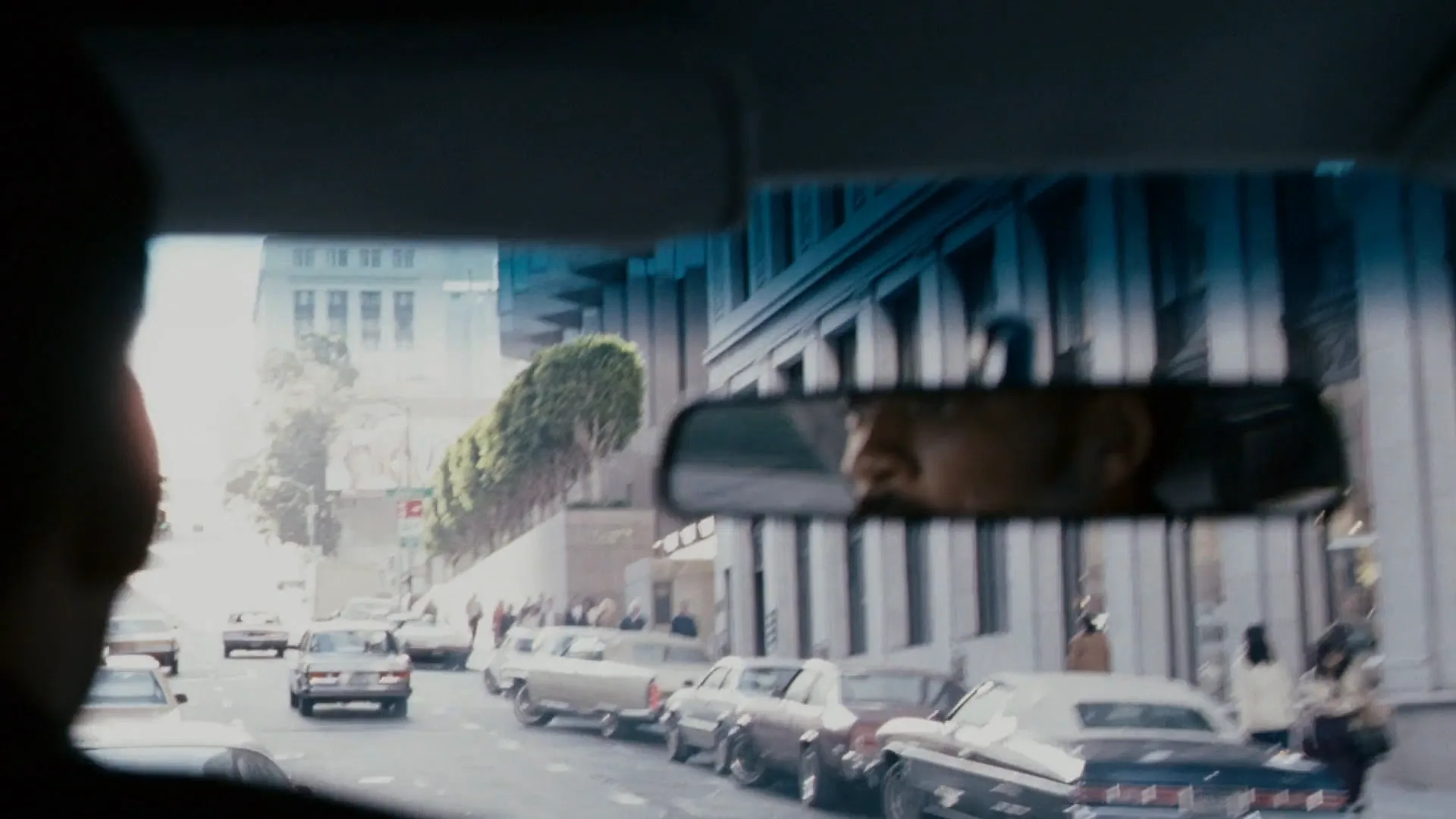
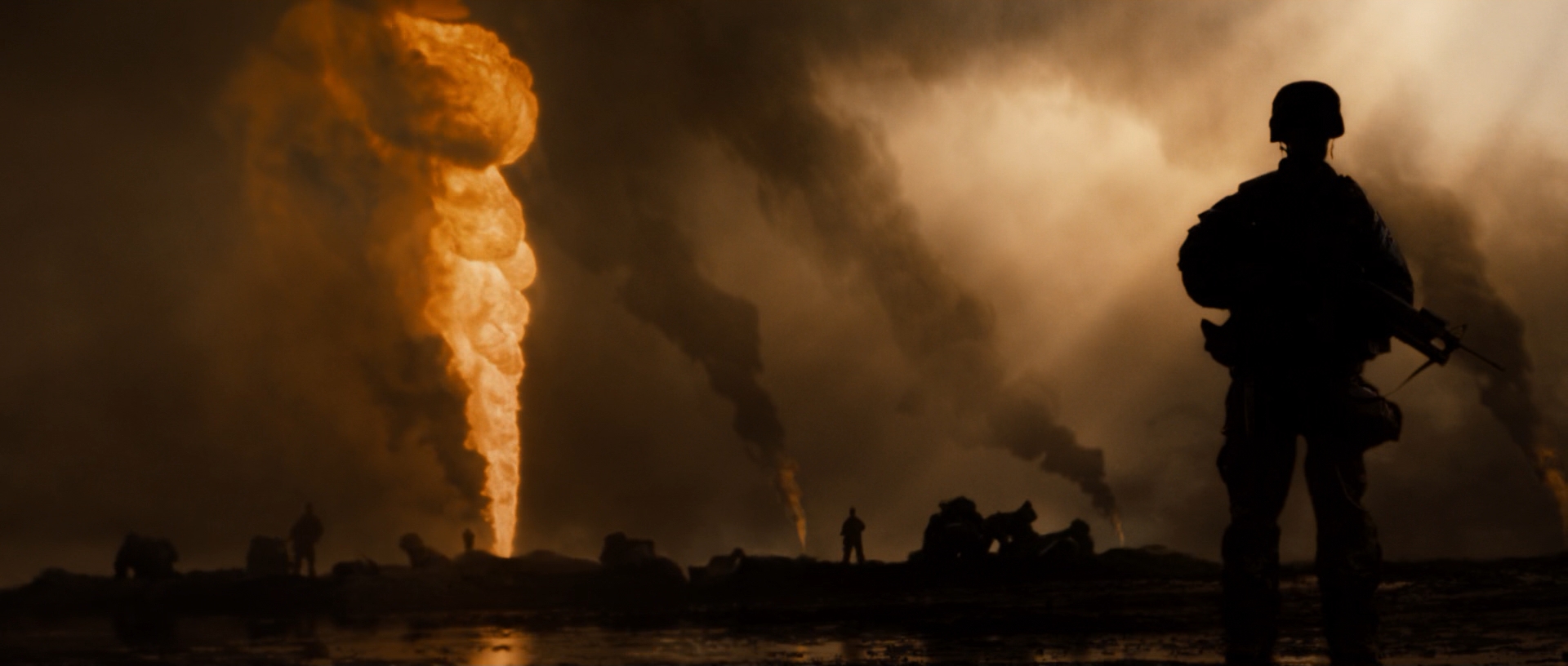
How to create a foreground, midground, background: depth layering with AI
4 promptsImage models tend to collapse depth, standing everything at one distance or making the foreground as sharp as the subject. Write the frame plane by plane, with lens and focus. Nano Banana 2 Lite makes a layered start frame, GPT Image 2.5 a deep-focus interior, and MiniMax H3 Max Turbo shows the depth with parallax. Keep takes and reference frames side by side on one FlashBoards board. The fourth prompt re-shoots a real film shot from a text description alone, and the original plays next to the result so you can compare.
Wide shot in three depth planes, 35mm lens, eye-level camera. Foreground: a brown fishing net hanging from a weathered post at the left edge, close to the lens, softly out of focus. Midground: a woman in her fifties with cropped silver hair, a long nose and a yellow oilskin coat sits on a wooden dock mending rope, sharp focus. Background: a small red fishing boat in grey water, dark cliffs fading into morning mist. Overcast soft light.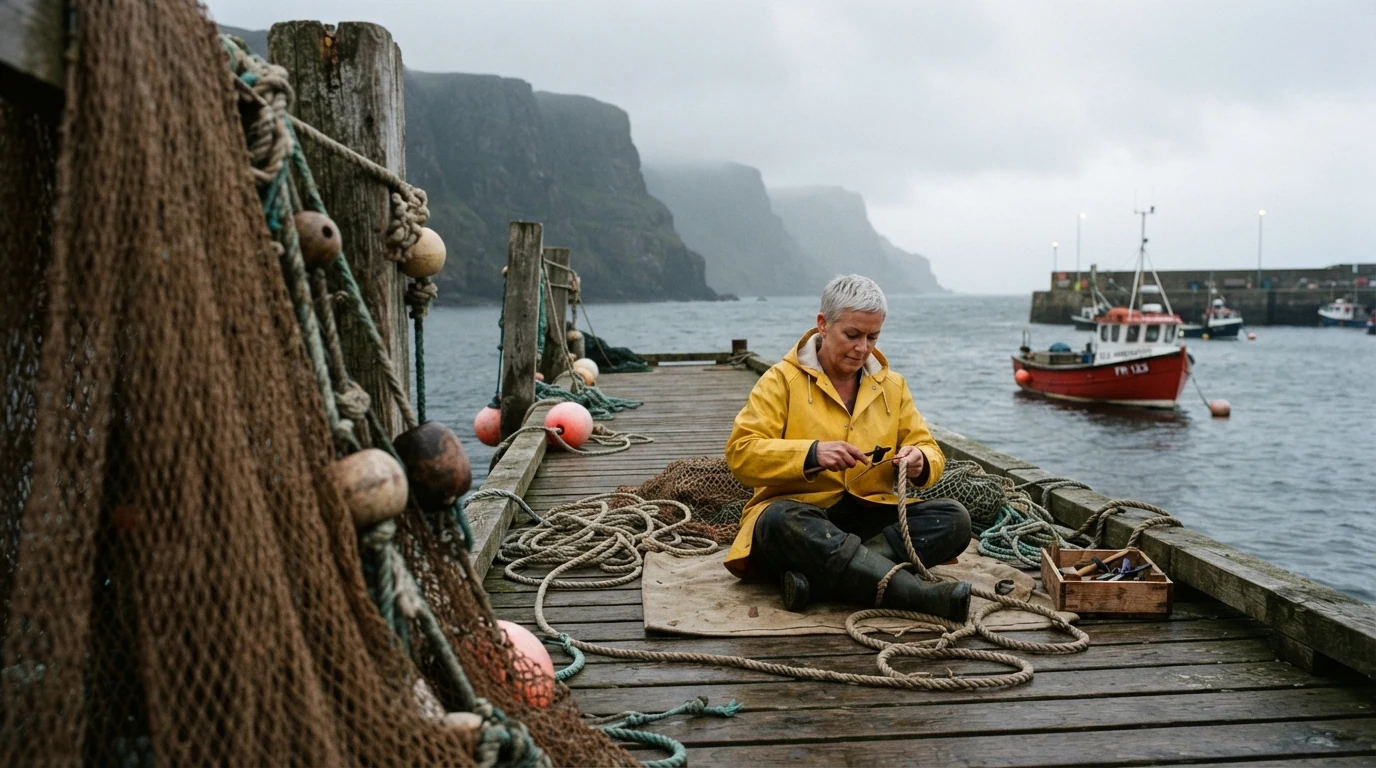
The Foreground / Midground / Background labels force three distances. Close to the lens, softly out of focus keeps the net a frame, not a subject; fading into mist gives the background fall-off, and the yellow coat makes the midground read first.
Open FlashBoards21:9 film still of a small restaurant kitchen at night, 24mm lens, deep focus with every plane sharp. Foreground: copper pans on a steel shelf filling the lower left corner. Midground: a young cook with a shaved head, thick black eyebrows and a white apron plates food under a hanging lamp. Background: through a swinging door at the far end, a warm dining room and a waiter in a black vest carrying two plates. Tungsten practicals, deep shadows between the planes.
This take keeps every plane sharp so the background can carry its own action. Deep shadows between the planes separates them by light instead of blur.
Open FlashBoardsCamera: slow lateral dolly to the right at a steady speed for the whole shot, same eye height. The fishing net slides out of frame to the left quickly, the woman shifts only slightly, the boat and cliffs barely move. Action: from the first frame her hands pull the rope through a knot and the net sways in the wind. In the middle she tightens the knot and glances toward the boat. At the end she returns to her work as the boat rocks gently and mist drifts over the cliffs.Parallax sells depth in motion, so the prompt asks for a lateral dolly, not a push-in, and states each plane's speed. The action starts at once, using only what is in the frame.
Open FlashBoards{
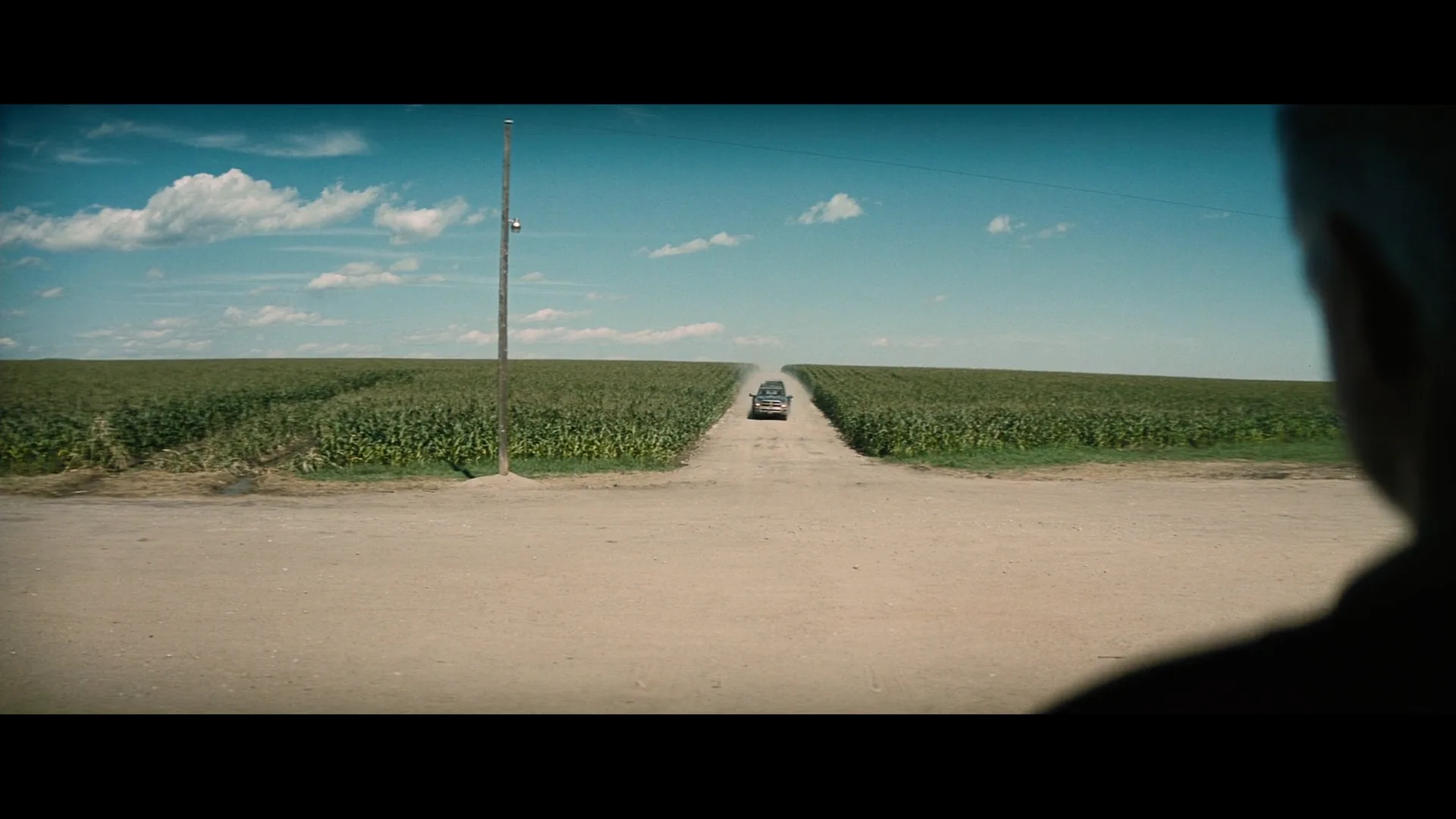
"output": "Full-screen live-action scene from Interstellar (2014), alive from its very first frame: one continuous shot, no cuts, built in three clear depth planes. Anamorphic 35mm film, 2.39:1 wide frame, bright midday summer sun from high above, turquoise sky with a few small white cumulus clouds, green corn and pale dusty beige palette, flat Midwest farmland, fine film grain, slight dark lens vignette at the corners.",
"characters": {
"S1": {
"name": "Cooper, played by Matthew McConaughey",
"look": "never seen: only his voice is heard, as a recorded video message playing off screen",
"voice": "warm, low Southern drawl, a little hesitant, recorded on a small camera"
}
},
"shots": [
{
"shot": 1,
"camera": "very slow dolly in straight ahead, eye level, anamorphic lens, deep focus with every plane sharp. Foreground: the back of an onlooker's head and shoulder, close to the lens, a solid black silhouette filling the right fifth of the frame and curving down into the bottom right corner. Midground: a broad pale dirt crossroads fills the lower third of the frame, and a narrow dirt road runs from it straight away from the camera, dead centre, to the horizon. Background: green cornfields left and right to a flat horizon line just above the middle of the frame; one tall wooden utility pole stands in the left third at the corner of the crossroads, a thin power line crossing the sky at top right.",
"action": [
"BEGINNING: alive from the first frame, a small dark gray pickup truck far down the centre road is already driving toward the camera, its grille and windshield facing us, a thin haze of dust rising behind it; the black silhouette at the right edge stays still, head turned toward the road, watching the truck.",
"THEN: the camera creeps forward; the pickup grows slowly larger as it comes down the road between the corn rows, the dust behind it thickening into a pale plume.",
"THEN: the black silhouette slides slowly toward the right frame edge, uncovering more of the sunlit crossroads and the corn on the right.",
"THEN: the silhouette slips out past the right frame edge and the right side of the frame is open sunlit dirt and corn.",
"END: the road lies open from the lens to the horizon, the pickup nearer and larger than at the start but still far away, still driving straight toward the camera at the end of the corn rows, dust hanging above the road behind it, the utility pole unchanged in the left third."
],
"dialogue": [
{
"speaker": "S1",
"on_screen": false,
"when": "from the first frame, heard over the picture as a recorded message",
"delivery": "warm, gentle, with a small hesitation at the start",
"line": "<d>[English] Um, I really hope you guys are doing great.</d>"
},
{
"speaker": "S1",
"on_screen": false,
"when": "after a short pause, while the pickup keeps coming and the silhouette leaves frame, running to the end of the shot",
"delivery": "reassuring, steady, a little tired",
"line": "<d>[English] I know you'll get this message. Professor Brand's assured me he'll get it to you.</d>"
}
]
}
],
"sound": {
"ambience": "hot summer wind through the cornfields, the faint crunch and hum of the distant truck heard from far away",
"speech": "exactly these spoken phrases, each said once, in this order, in Cooper's off-screen voice only",
"never_spoken": "no narration and no voice-over: the descriptions, performance notes and step words of this prompt are never spoken aloud",
"music": "a film score under the scene, always below the voices: a soft sustained organ chord with gentle high strings, hopeful and aching",
"subtitles": "none"
}
}Remakes the slow push-in from Interstellar (2014), dir. Christopher Nolan, DP Hoyte van Hoytema: the silhouette at the right edge, the dirt road to the horizon, the approaching pickup, the figure leaving frame and Cooper's off-screen message, word for word.
The camera field names the planes in order: black silhouette in the right fifth, dirt crossroads and centre road, cornfields to the horizon, all in deep focus. The oncoming pickup animates the far plane, and the figure slipping out of frame hands the eye to the depth, while Cooper's recorded message plays over it.
Common mistakes
- Planes collapse. Label Foreground / Midground / Background and give a lens.
- Foreground steals the shot. Add close to the lens, softly out of focus and pin it to an edge.
- Background clutter. Name one or two elements plus mist or haze.
- No parallax. A push-in only enlarges; ask for a lateral move.
Keep the reference frames, prompts and every generated take side by side — images and video in one canvas.
FAQ
4 questionsWhat is foreground, midground and background in film?
They are the three distances inside a shot. The foreground is nearest the camera and often frames the view. The midground usually holds the subject and main action. The background is the farthest plane and sets place, mood or a secondary action. Something meaningful on each plane gives the flat screen volume.
How do you create depth in film composition?
Put something on at least two planes and let them overlap: an object near the lens, the subject in the middle distance, a readable detail far away. A wide lens exaggerates the separation, and different light or focus on each plane makes the distances clear. A sideways camera move adds parallax.
Is depth layering the same as deep focus?
No. Depth layering is what you place on each plane of the frame. Deep focus is one way to photograph those planes: a small aperture, often on a wide lens, keeps them all sharp. A layered shot can also use shallow focus around a sharp subject. The layers are the design; focus decides which one the eye reads first.
Does every shot need a foreground, midground and background?
No. Clean singles, flat graphic compositions and intimate close-ups often work better without layers. Use depth when space, scale or relationships matter; two strong planes read better than four weak ones. Every plane should earn its place, so cut any layer that adds nothing.
Related terms
4- Depth of FieldLenses, Focus & Exposure
Depth of field is the zone in front of and behind the point of focus that looks acceptably sharp; aperture, focal length, focus distance and format size decide whether it is razor-thin or stretches to the horizon.
- Deep FocusLenses, Focus & Exposure
Deep focus keeps foreground, middle ground and background sharp at the same time, so the director can stage action on several planes at once and let the viewer choose where to look.
- Leading LinesComposition & Framing
Leading lines are lines in the frame — roads, rails, corridors, fences, architecture, beams of light — that carry the viewer's gaze toward the subject or deeper into the space.
- Frame Within a FrameComposition & Framing
Frame within a frame uses a doorway, window, mirror, arch, corridor or shadow inside the shot as a second border around the subject, isolating it, adding depth or suggesting entrapment.
Further reading
Steven D. Katz, Film Directing Shot by Shot (1991). Bruce Block, The Visual Story (2nd ed., 2008).