 FlashBoards Learn
- Learn
- Camera Shots
- Group Shot
Camera Shots · Film language
Group Shot
Also called: ensemble shot
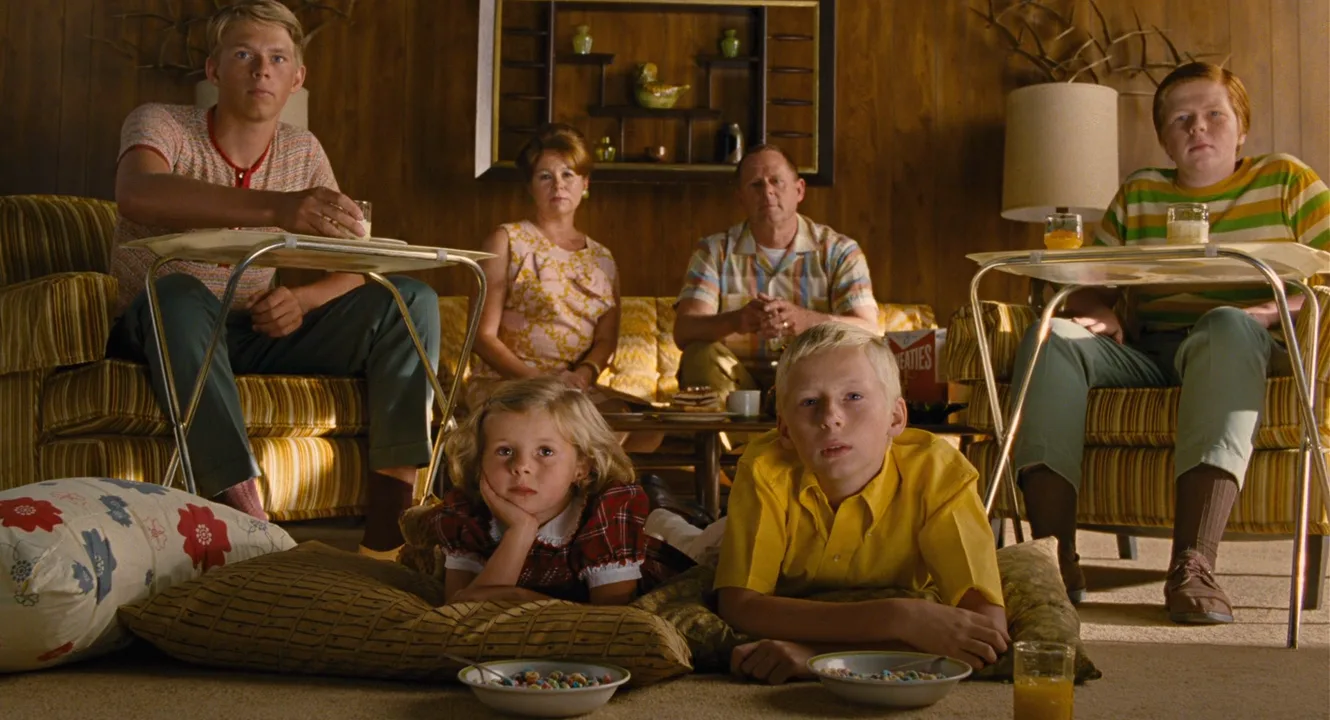
A group shot holds several characters in one frame as a single unit, so the audience reads their positions, hierarchy and reactions at the same moment instead of assembling them from separate singles. It turns a room of people into one picture of a family, a team or a crowd.
- What it does
- Shows who stands where, who leads and how everyone reacts, all in one image.
- Use it when
- The relationship of the whole group matters more than any single face.
- Watch out
- Faces hiding behind heads and a flat row of actors with no depth or focal point.
- Try this prompt
Group shot of five friends around a diner booth, staggered in depth, 32mm lens at eye level, warm practical light.
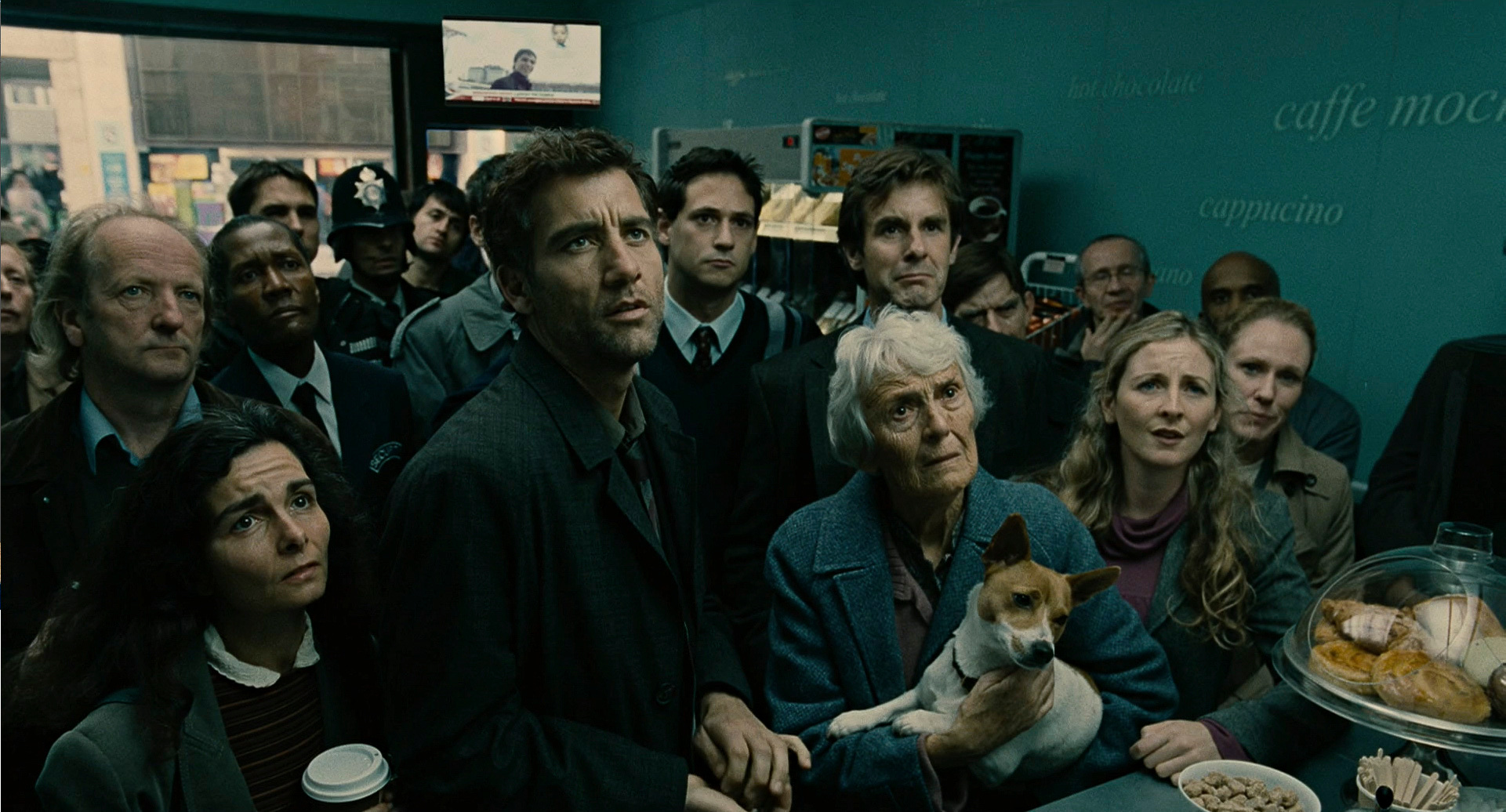
What is a group shot in film?
A group shot, also called an ensemble shot, frames four or more characters together, each readable, none isolated as the only subject. It is named by head count, not distance: five faces packed into a medium frame count as much as a family seen head to toe across a room.
In the camera shots vocabulary, two people make a two shot and three make a three shot. From four upward the frame stops being about pairings and becomes about the group as a body.
Why do filmmakers use group shots?
Reactions at once. When news lands, a group shot shows everyone taking it in within one beat; cutting between singles spreads the moment across time.
Hierarchy and alliance. The person centered and nearest the lens reads as the leader; the one at the edge or turned away reads as the outsider.
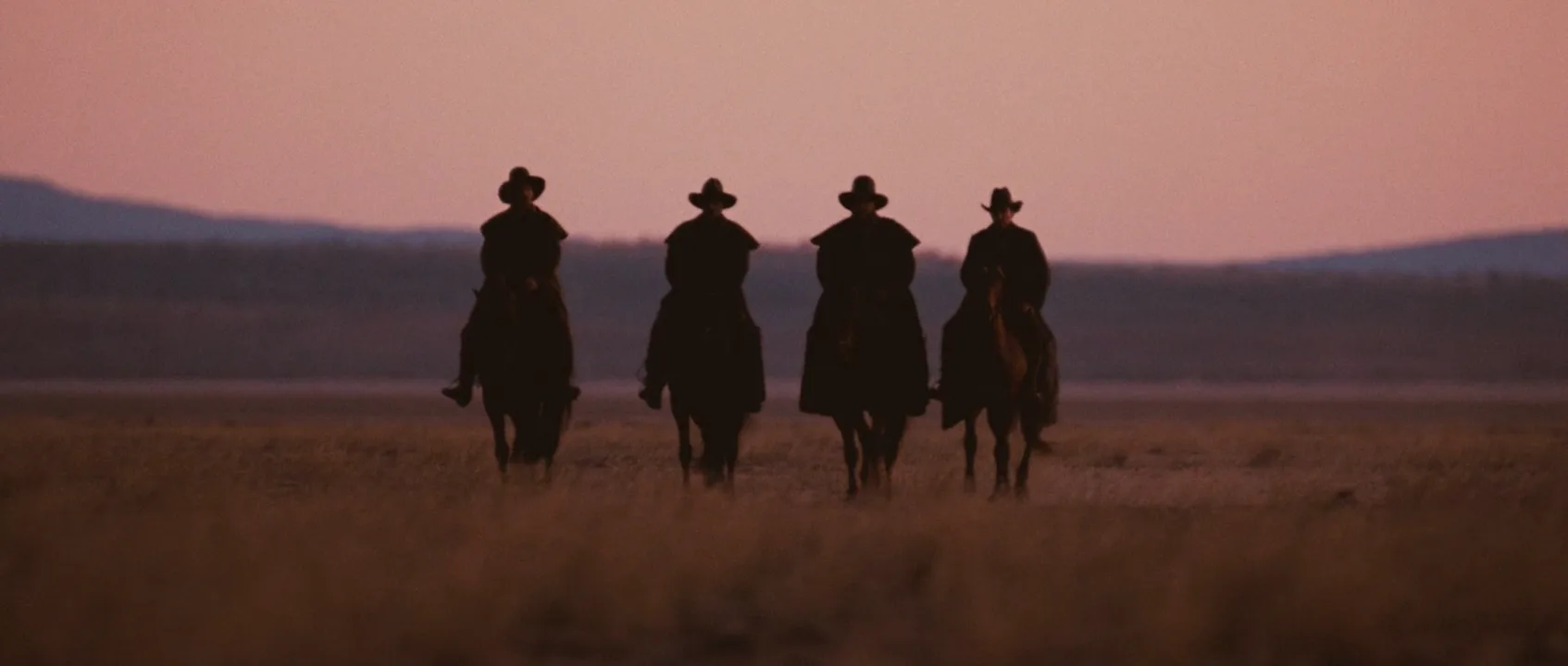
Belonging. Crews, squads and bands are introduced in group frames because the unit is the character, as in the walking line-up of Reservoir Dogs (1992).
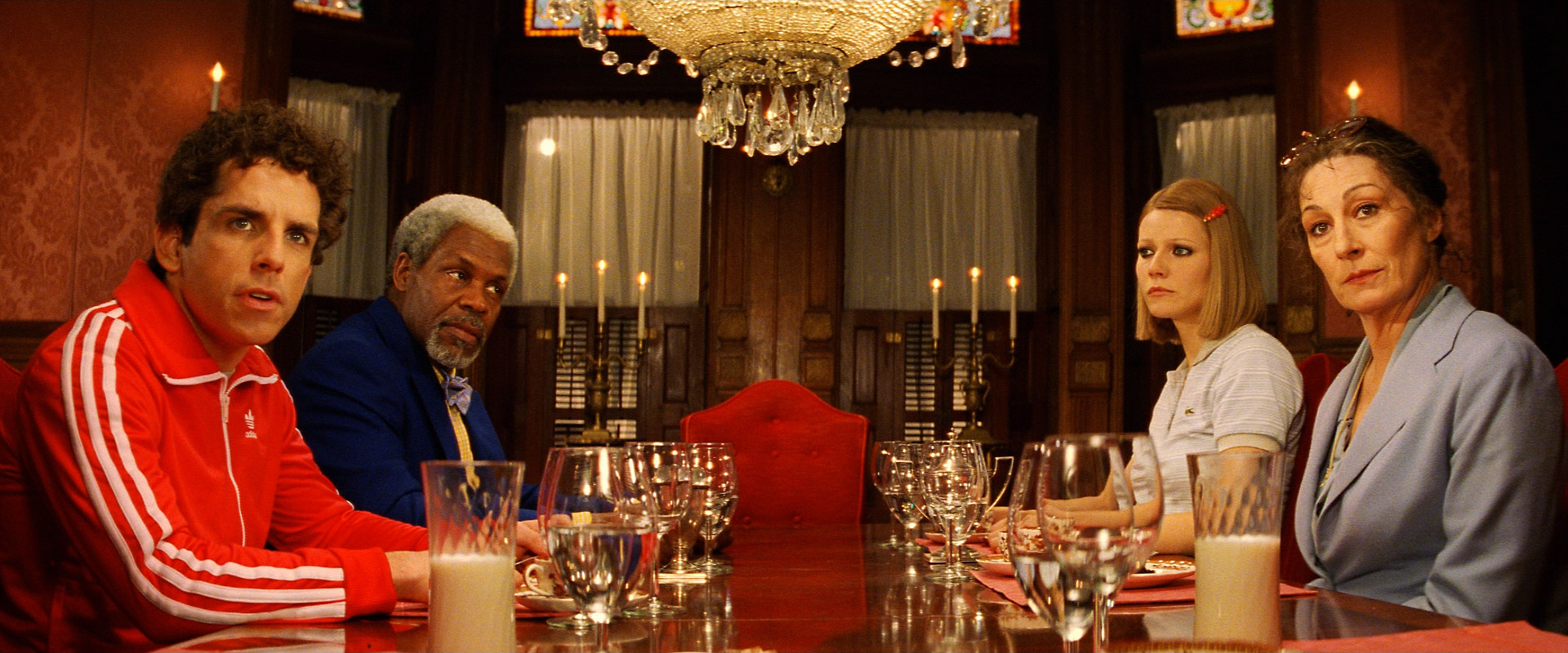
Economy. Wes Anderson often plays whole scenes in flat, frontal group frames close to a tableau, letting the comedy come from who sits where.
How to shoot a group shot
Stage in depth. Put actors on two or three planes instead of shoulder to shoulder, and stagger heads so every face has a clear window to the lens. Good blocking moves people between planes so the emphasis shifts without a cut.
Give the eye a leader. Use position, light or focus to put one person first: nearest the lens, on a third, or in the only pool of light.
Lens and height. For four to six people, a 28–40mm lens on Super 35 at 8–12 feet keeps faces natural. A camera a few inches above the tallest eye line lets back-row faces clear front-row heads.
Focus and light. Stop down to f/4–f/8 so faces on several planes stay sharp, and use one large soft source from above and to the side so the first actor doesn't shadow the rest.
Crowd shot
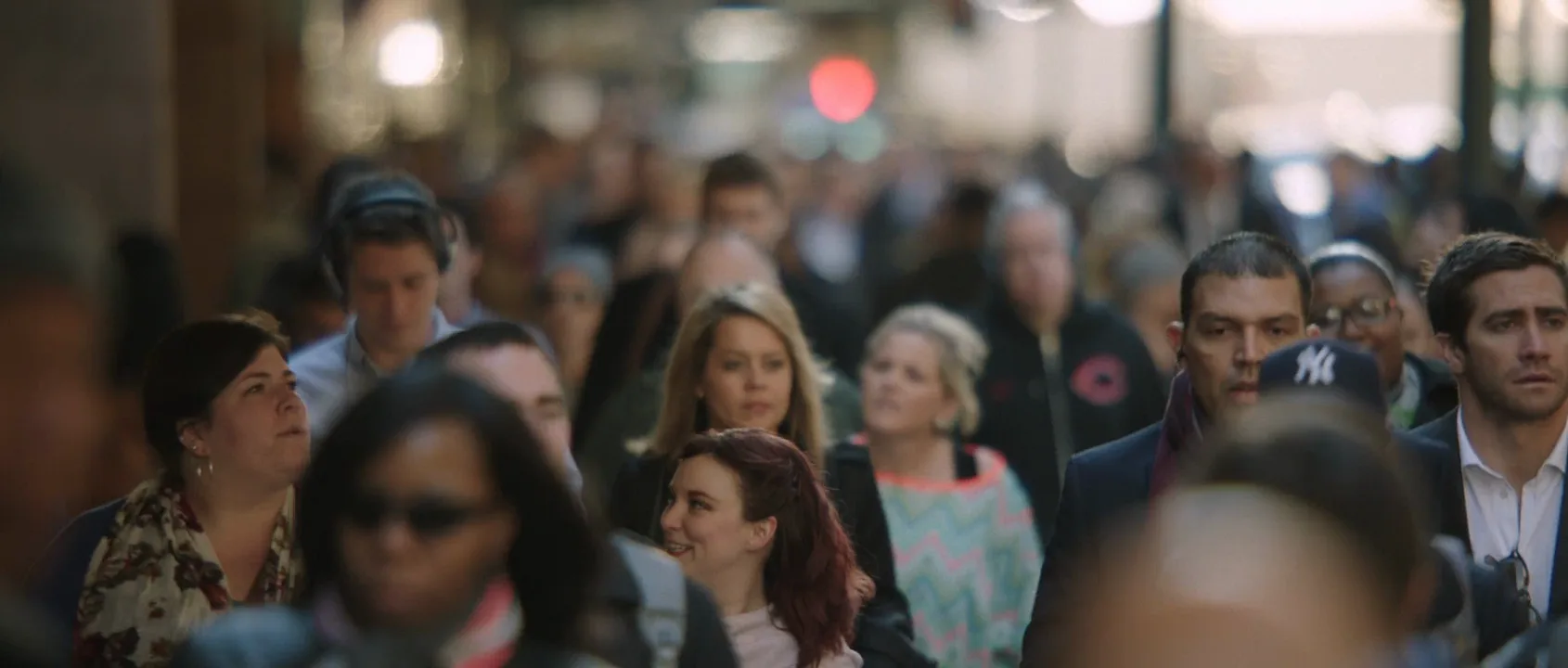
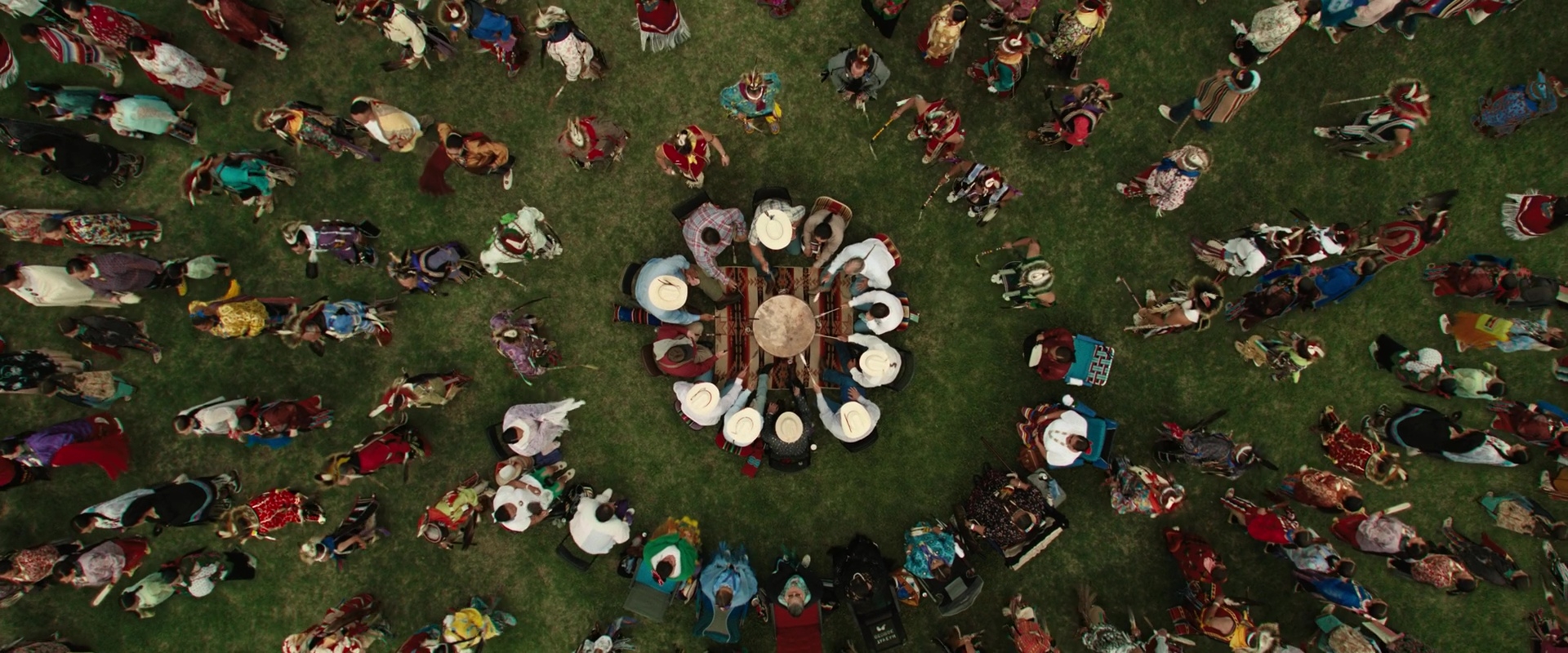
A crowd shot shows a mass of people (spectators, commuters, an army) as one visual body. In a group shot we read individuals; in a crowd shot we read density, pattern and direction of movement.
It is usually wide. An overhead view turns a crowd into pattern, while a long lens at street level compresses a sidewalk into a wall of faces. Use a crowd shot to set scale, to swallow a character, or as an establishing shot for an event.
Group shot vs. three shot
A three shot holds exactly three people with roughly equal weight, usually as a triangle, and its drama is the shifting two-against-one alliances. With four or more people there is no neat triangle, so a group shot is organized by depth, rows and a clear leader instead of balance. A three shot is a relationship; a group shot is a unit.
Group Shot examples in film
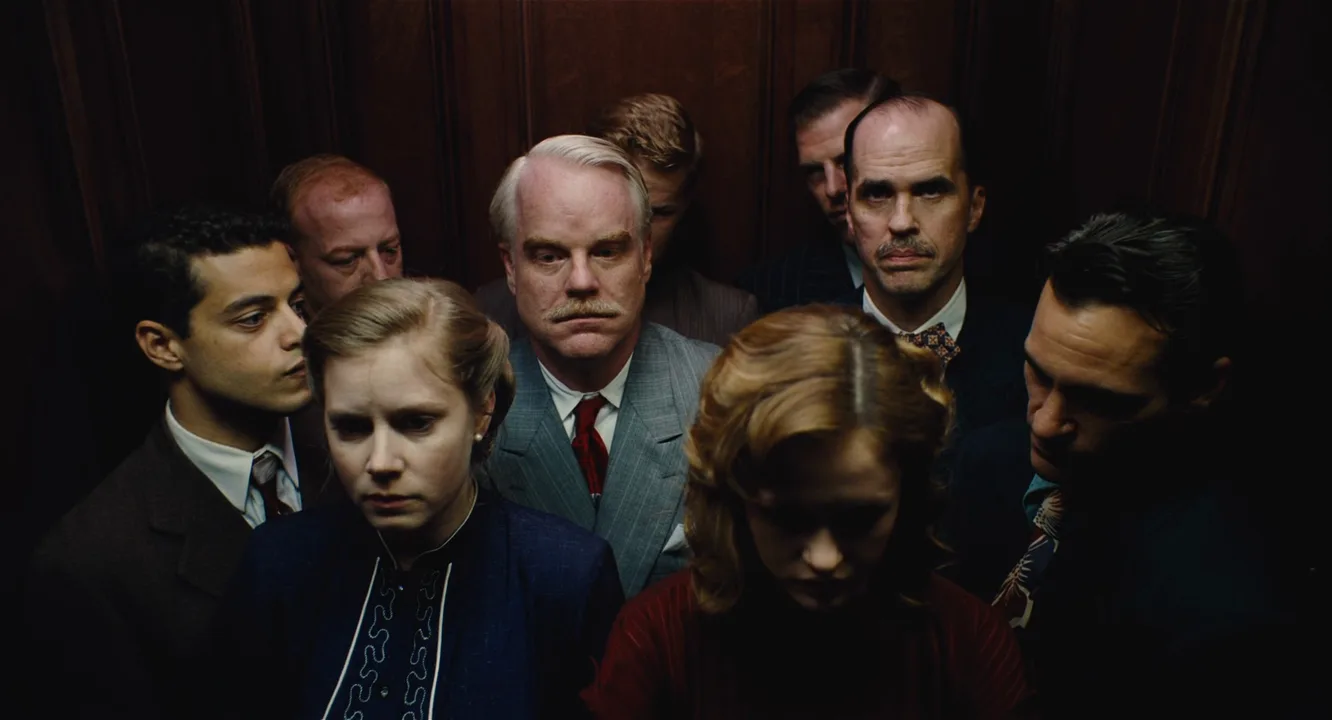
8 framesGroup shots from films made between 1995 and 2023, from tight clusters to crowds.
How to create a group shot with AI
4 promptsImage models tend to merge faces and line everyone up in one flat row. Name the head count, the planes and who leads the frame. In FlashBoards, keep the start frame, the second take and the video next to your reference frames on one board and compare staging side by side. The fourth prompt re-shoots a real film shot from a text description alone, and the original plays next to the result so you can compare.
Cinematic group shot of five fictional friends in a red vinyl diner booth at night, staggered in depth: a man with a shaved head and gray beard leaning forward at the center, a young woman with a copper braid and freckles, a thin man in round wire glasses and a green cardigan, a woman with short silver hair laughing, a teenage boy with curly black hair standing at the edge. Every face visible, 32mm lens at eye level, warm pendant lamp overhead, neon window glow behind.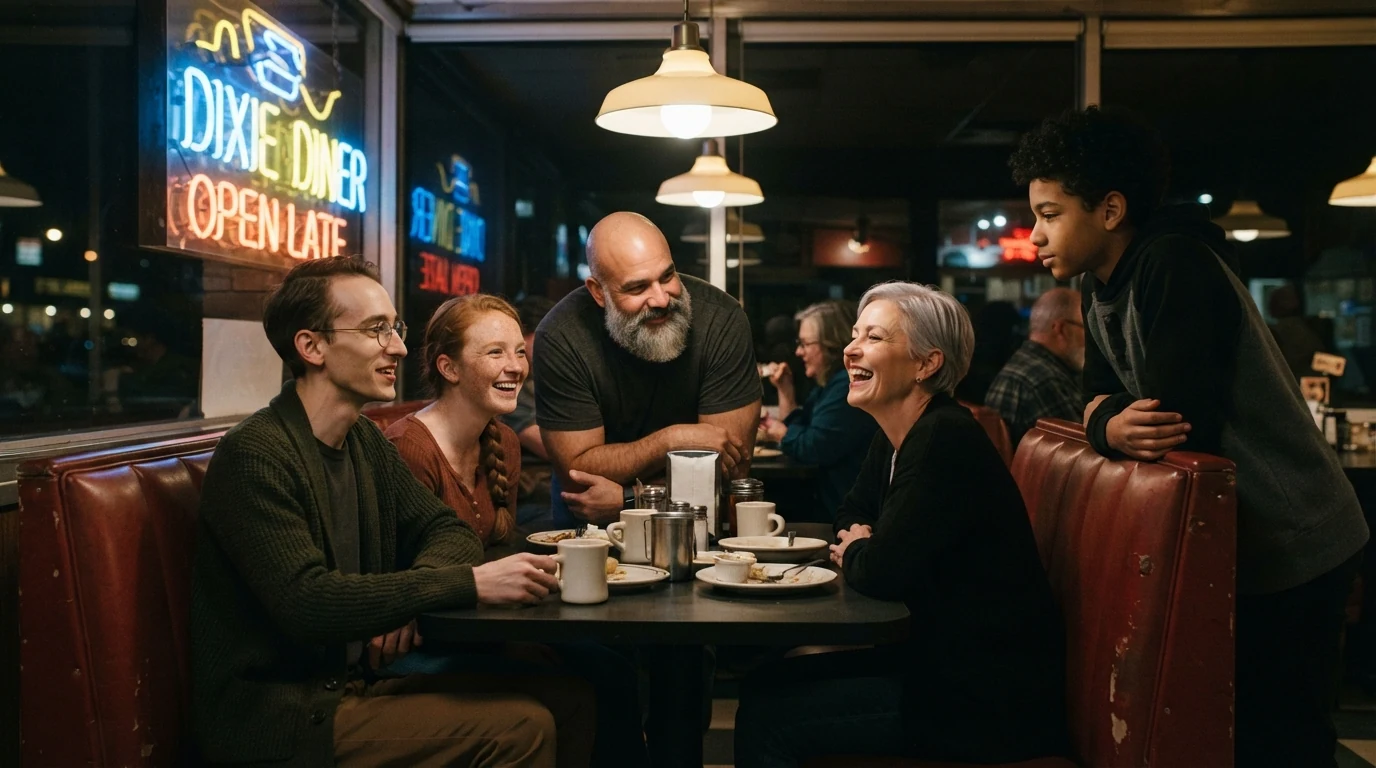
“Five,” “staggered in depth” and “every face visible” fix the head count and planes. Distinct hair, age and clothing keep faces apart and fictional; “leaning forward at the center” gives the frame a leader.
Open FlashBoardsWide high-angle group shot, camera twelve feet up, looking down at a farmhouse dinner table with six fictional family members: a white-haired grandmother in a blue cardigan at the head, a bearded man in plaid carving bread, twin girls with black bobs, a woman with a gray streak pouring wine, a teenage boy in a yellow hoodie turned away from the table. Soft window light from the left, 24mm lens, deep focus, every face sharp.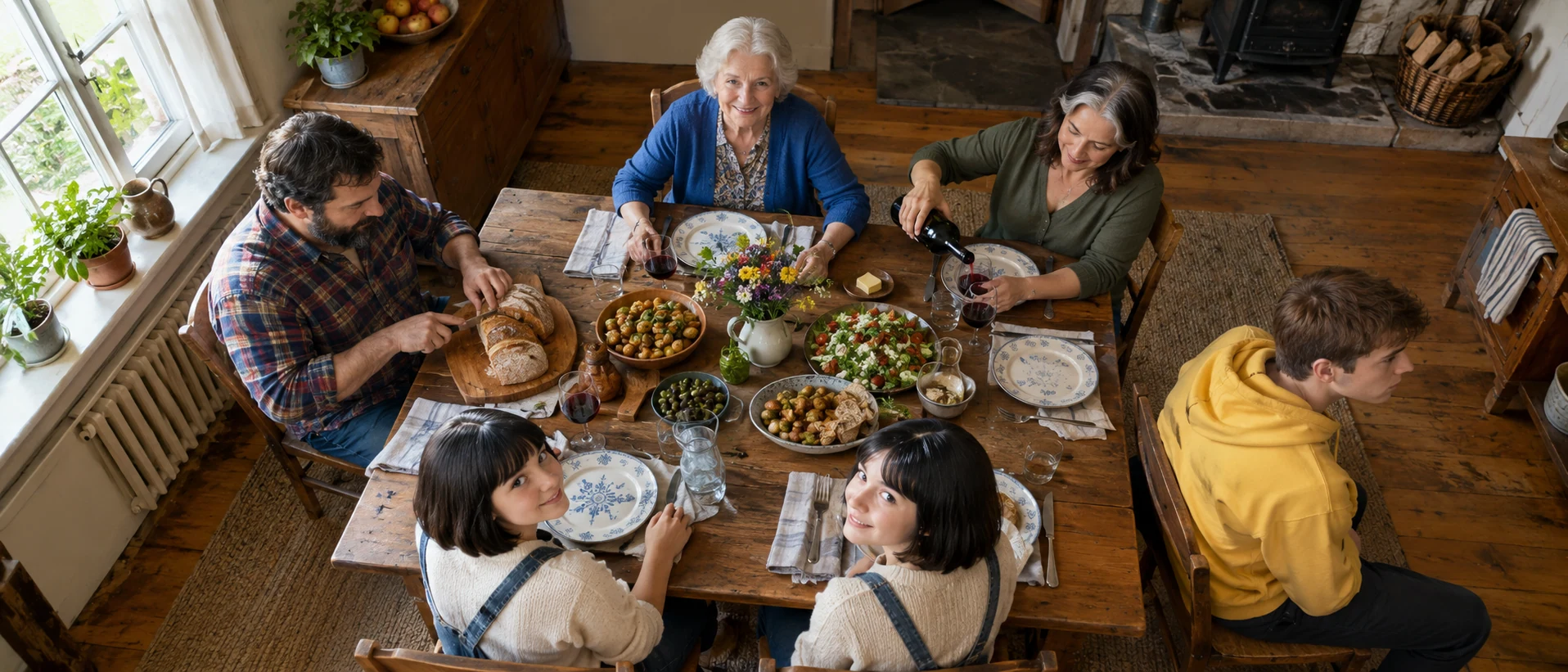
“High-angle, camera twelve feet up” turns the table into a map of the family, and the boy “turned away” gives the group an outsider. The 21:9 frame spreads six people legibly.
Open FlashBoardsCamera: slow steady push-in from the start toward the center of the booth, ending on a tighter shot of the three friends in the middle. Action: the friends are already laughing; the bearded man slaps the table and points at the woman with the copper braid; the others lean in, and the woman with silver hair throws her head back laughing.“Already laughing” keeps the shot alive from the first frame. Every beat names people already in the image, so no new diners appear.
Open FlashBoards{
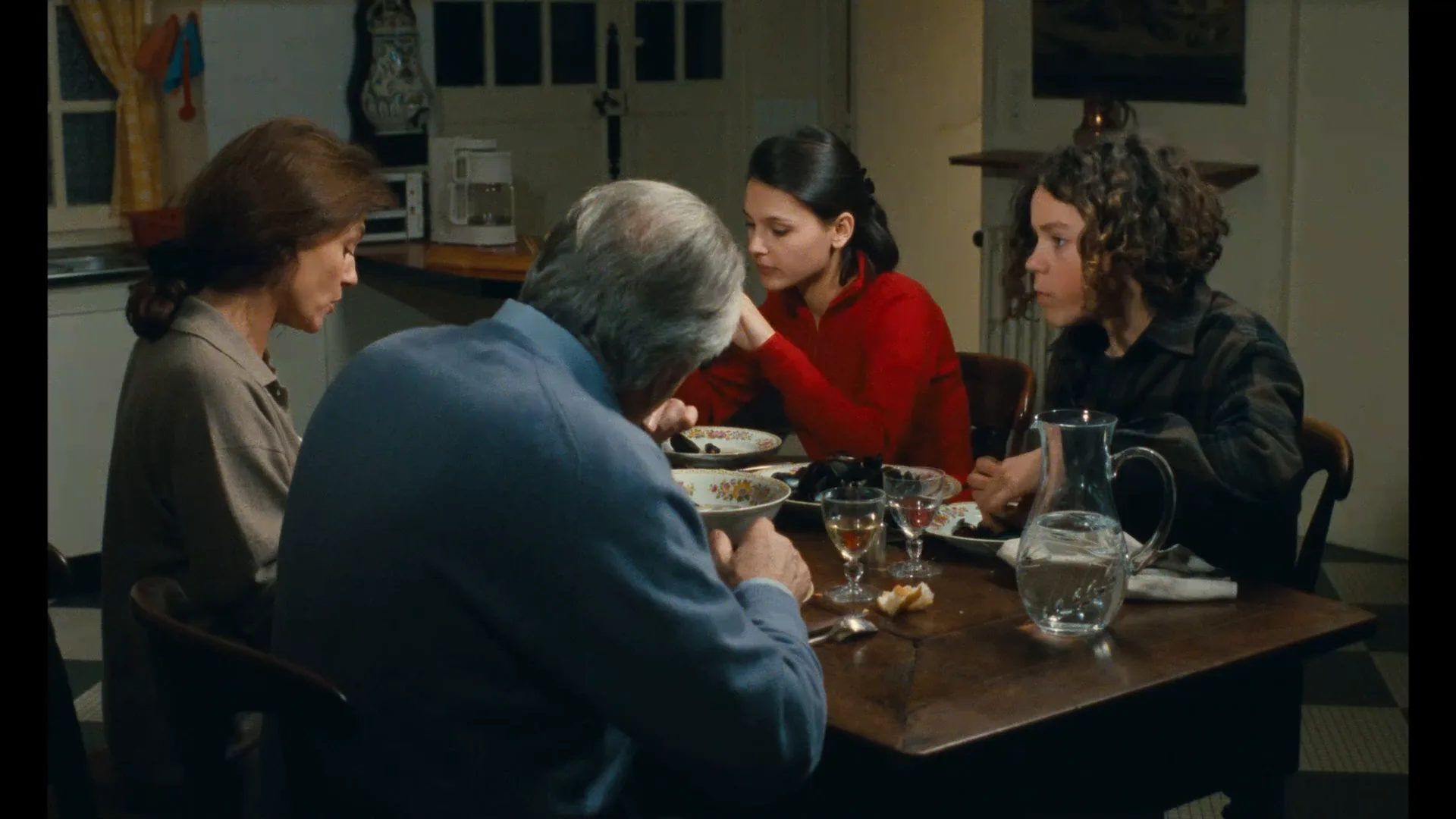
"output": "Full-screen live-action scene from La Cérémonie (1995) from its very first frame: one continuous locked-off shot, a four-person group shot at a family dinner. Mid-1990s French 35mm film look, soft grain, a country-house dining room at night, warm tungsten lamp light from the upper left, dark olive-green walls, a small window with a yellow curtain at the back left, muted blues, grays and one strong red, low-key and quiet. On the dark wooden table: patterned china bowls of black mussels with a big shared bowl in the middle, a clear glass water pitcher, small stemmed wine glasses, bread crusts and folded white napkins.",
"characters": {
"S1": {
"name": "Catherine Lelièvre, played by Jacqueline Bisset",
"look": "woman in her fifties, shoulder-length chestnut hair, taupe blouse, seated at the far left edge in profile facing screen right",
"voice": "calm, low, conversational French"
},
"S2": {
"name": "Georges Lelièvre, played by Jean-Pierre Cassel",
"look": "man in his sixties, thick silver-gray hair, pale blue wool cardigan, seen from behind in three-quarter back view",
"voice": "silence: he does not speak"
},
"S3": {
"name": "Melinda, played by Virginie Ledoyen",
"look": "girl of about eighteen, dark hair pulled back in a low ponytail, bright red knit sweater",
"voice": "silence: she does not speak"
},
"S4": {
"name": "Gilles, played by Valentin Merlet",
"look": "boy of about twelve, thick dark curly hair, black quilted jacket",
"voice": "silence: he does not speak"
}
},
"shots": [
{
"shot": 1,
"camera": "locked-off static camera at seated eye level, normal 40mm lens, medium-wide group shot across the corner of the dining table; S2 fills the left-centre foreground with his back to the lens, S1 sits at the far left edge in the middle ground, S3 sits at the back centre facing the camera, S4 sits at the right facing the camera beside the glass pitcher; four heads staggered on three depth planes, every face except S2's visible; framing identical at the start and at the end, no camera movement",
"action": [
"BEGINNING: alive from the first frame, all four already eating mussels; S1 at the far left turns her profile to screen right toward S2 and talks to him, hands low at her plate; S2 keeps his head bowed over his plate; S3 holds an open mussel shell in both hands at her chest, eyes down on it; S4 bends over his plate prying a shell open with both hands, eyes down.",
"THEN: S1 keeps talking to S2; S3 lifts her eyes for a moment toward screen left, then lowers them back to the shell; S4 raises his head and turns it to screen left, looking across the table at S1 while she talks, his hands still at the plate.",
"THEN: S2 stretches his right arm forward across the table into the big shared bowl in the middle and picks out a mussel, head still lowered; S4 goes on looking at S1.",
"END: S2 draws the mussel back to his plate and bends over it; S4 turns his head back down to his plate; S3 still works the shell in her hands with her eyes down; S1 finishes her sentence and holds her profile toward S2; the father's back still anchors the foreground."
],
"dialogue": [
{
"speaker": "S1",
"on_screen": true,
"when": "from the first frame, one sentence that runs through almost the whole shot and ends just before the last moment",
"delivery": "calm, matter-of-fact, informative, to her husband",
"line": "<d>[French] D'après ce qu'elle dit et selon son ancienne patronne, elle est même assez douée.</d>"
}
]
}
],
"sound": {
"ambience": "quiet room tone of a dining room at night, clink of mussel shells against china, soft cutlery",
"speech": "exactly this one spoken phrase, said once, by S1 only",
"never_spoken": "no narration and no voice-over: the descriptions, performance notes and step words of this prompt are never spoken aloud",
"music": "a film score under the scene, always below the voices: sparse low strings with a faint uneasy pulse",
"subtitles": "none"
}
}Remakes the static family-dinner shot from La Cérémonie (1995): the prompt carried over the father's back in the foreground, the staggered heads, the shared bowl of mussels, Catherine's one line and Gilles's glance across the table.
The JSON pins four named people to three depth planes with the father's back as the foreground anchor, keeps the mother's one French line from the film, and lets a single turned head move the attention across the table, as in the original.
Open FlashBoardsCommon mistakes
- Everyone in one row: write “staggered in depth” and name front and back positions.
- Merged or repeated faces: give each person distinct hair, age and clothing, or cut the head count.
- Hidden faces: add “every face visible” and raise the camera slightly.
- No focal point: say who is centered, nearest the lens or in the light.
Keep the reference frames, prompts and every generated take side by side — images and video in one canvas.
FAQ
4 questionsWhat is a group shot in film?
A group shot frames several characters, usually four or more, together in one shot so the audience reads them as a unit. It shows their positions, hierarchy and reactions at the same moment instead of cutting between singles.
What is an ensemble shot?
An ensemble shot is another name for a group shot: a frame that holds the whole cast of a scene together. The term is common for ensemble-cast films, where the group rather than one lead carries the story.
How many people are in a group shot?
There is no strict rule, but the usual convention goes by head count: two people make a two shot, three a three shot, and four or more a group shot. When the people stop reading as individuals and become a mass, the frame is usually called a crowd shot.
What is the difference between a group shot and a crowd shot?
In a group shot you can read each person's face and position, and their relationships carry the scene. In a crowd shot individuals dissolve into a mass that reads as density, pattern and movement.
Related terms
4- Three ShotCamera Shots
A three shot holds three characters in one frame with comparable weight, often arranged as a triangle, so the dynamics and shifting alliances of a trio play out without cutting.
- Two ShotCamera Shots
A two shot frames two characters together in one shot, so their relationship, distance and reactions are visible at the same time instead of being built from separate singles.
- BlockingDirecting & Staging
Blocking is the planned choreography of actors and camera within a scene — where people stand, when they move, how they relate in space — so that movement itself tells the story and gives the editor usable shots.
- Tableau ShotComposition & Framing
A tableau is a static, carefully arranged frame in which characters are posed in the set like figures in a painting, usually wide and frontal, so the whole composition reads as one picture.
Further reading
Steven D. Katz, Film Directing Shot by Shot (Michael Wiese Productions). Blain Brown, Cinematography: Theory and Practice (Routledge).