 FlashBoards Learn
- Learn
- Lenses, Focus & Exposure
- Macro Shot
Lenses, Focus & Exposure · Film language
Macro Shot
Also called: macro lens, macro photography, macro cinematography
A macro shot uses a macro lens, extension tubes or diopters to focus extremely close and fill the frame with a tiny subject — an iris, an insect, a match head — at life size or larger. It turns the invisible into landscape and makes the viewer study texture.
- What it does
- Magnifies a subject a few millimeters to a few centimeters across until it fills the whole frame.
- Use it when
- A small physical detail carries the scene, or you want the familiar world to feel strange and enormous.
- Watch out
- Depth of field drops to a millimeter or less and you lose light fast; plan focus, stop and lighting before the subject moves.
- Try this prompt
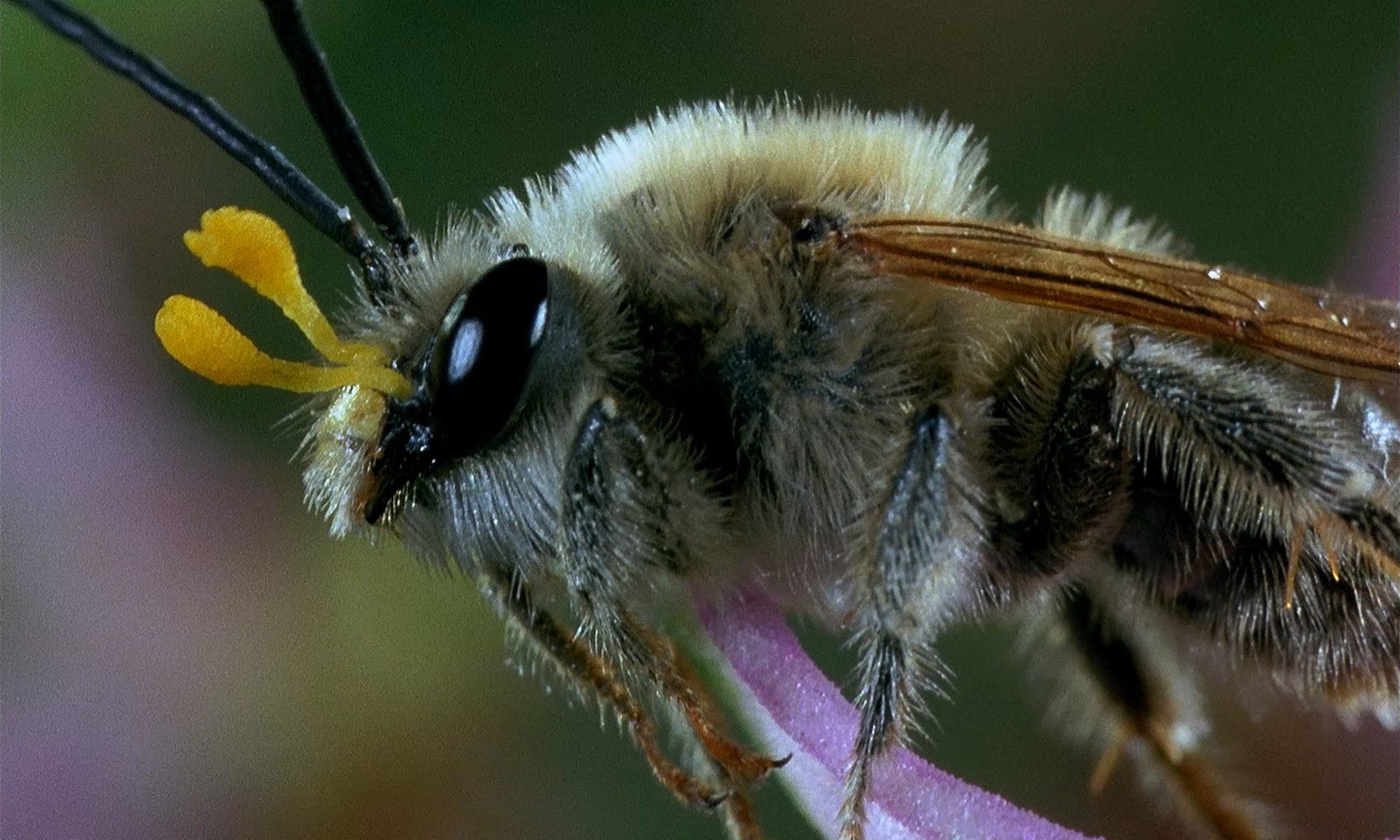
Extreme macro shot of a honeybee on lavender, 1:1 magnification, compound eyes and pollen razor sharp, petals behind melted into soft blur
What is a macro shot?
A macro shot is defined by magnification. When the subject lands on the sensor at the same size it has in real life, the ratio is 1:1, or life size. On set, anything from about 1:2 (half life size) up is called macro; specialist lenses reach 2:1 or 5:1.
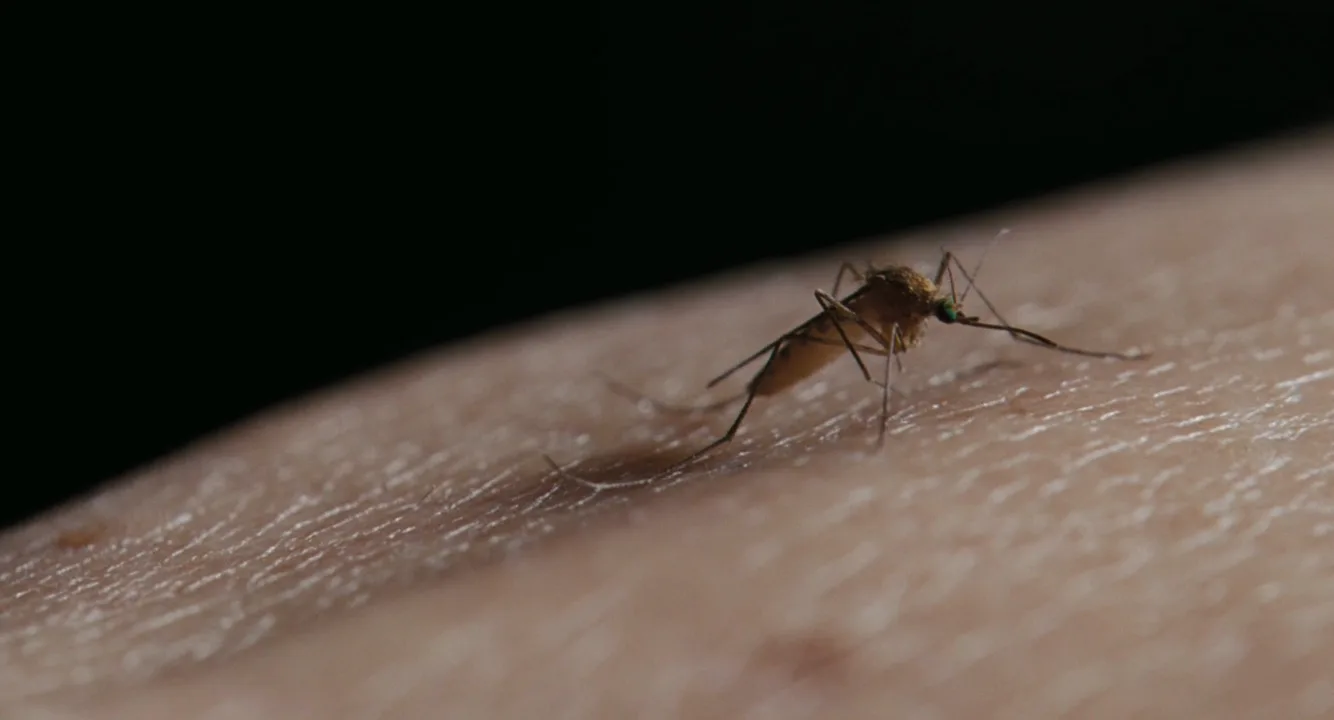
On a Super 35 sensor, 1:1 means the frame covers an area about 25 mm wide — a postage stamp. A mosquito spans the screen; the rim of an iris becomes a coastline. The look comes from optics, so it belongs with camera lenses, not shot sizes.
Why do filmmakers use macro shots?
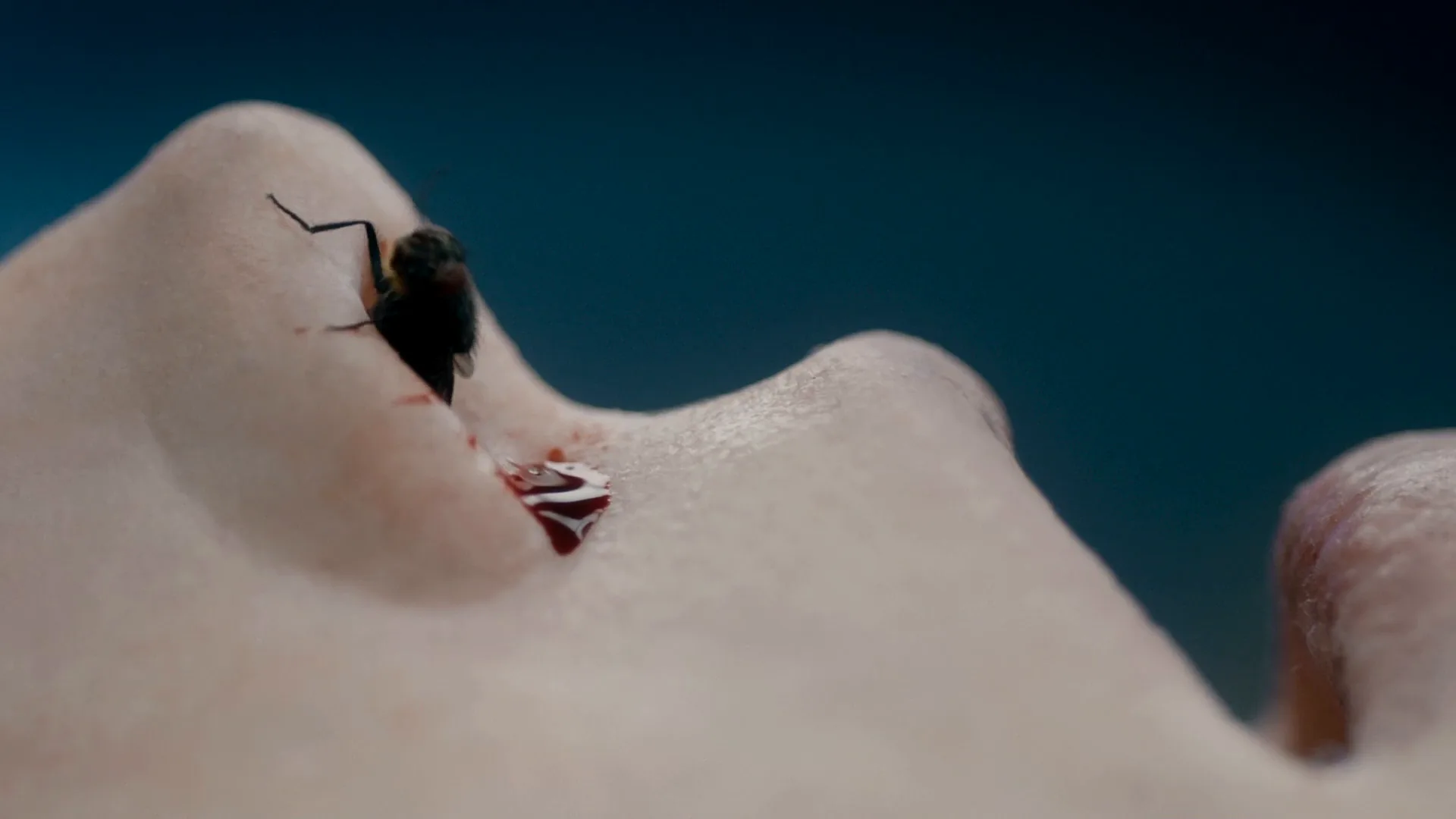
To make a detail the whole story. A macro frame leaves no context. Darren Aronofsky's Requiem for a Dream (2000) cuts dilating pupils into rapid macro montages, so a habit becomes a physical rhythm.
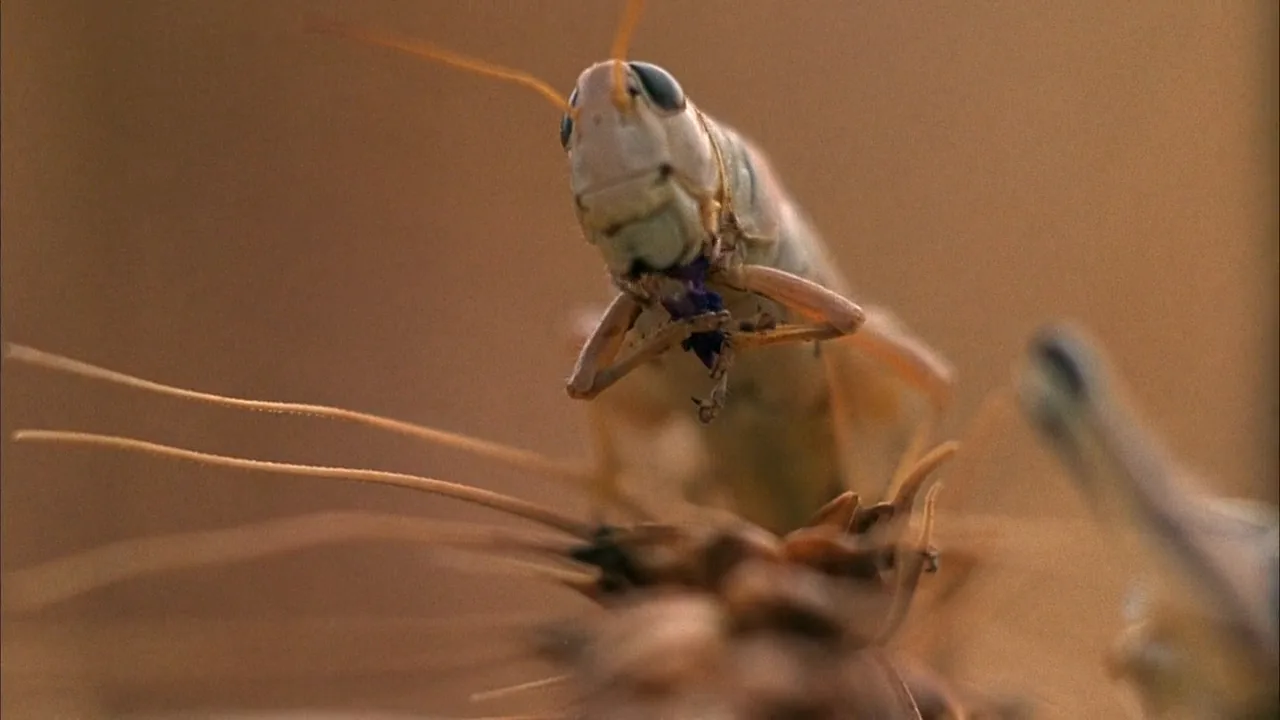
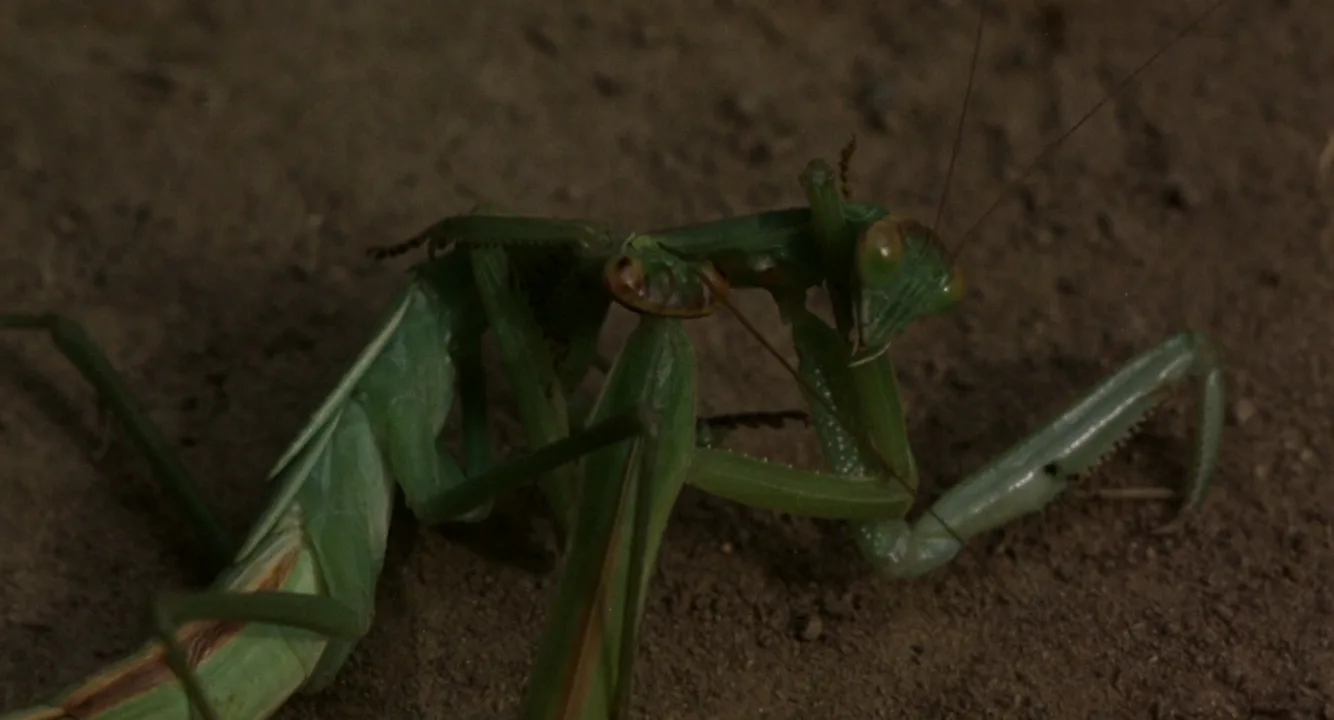
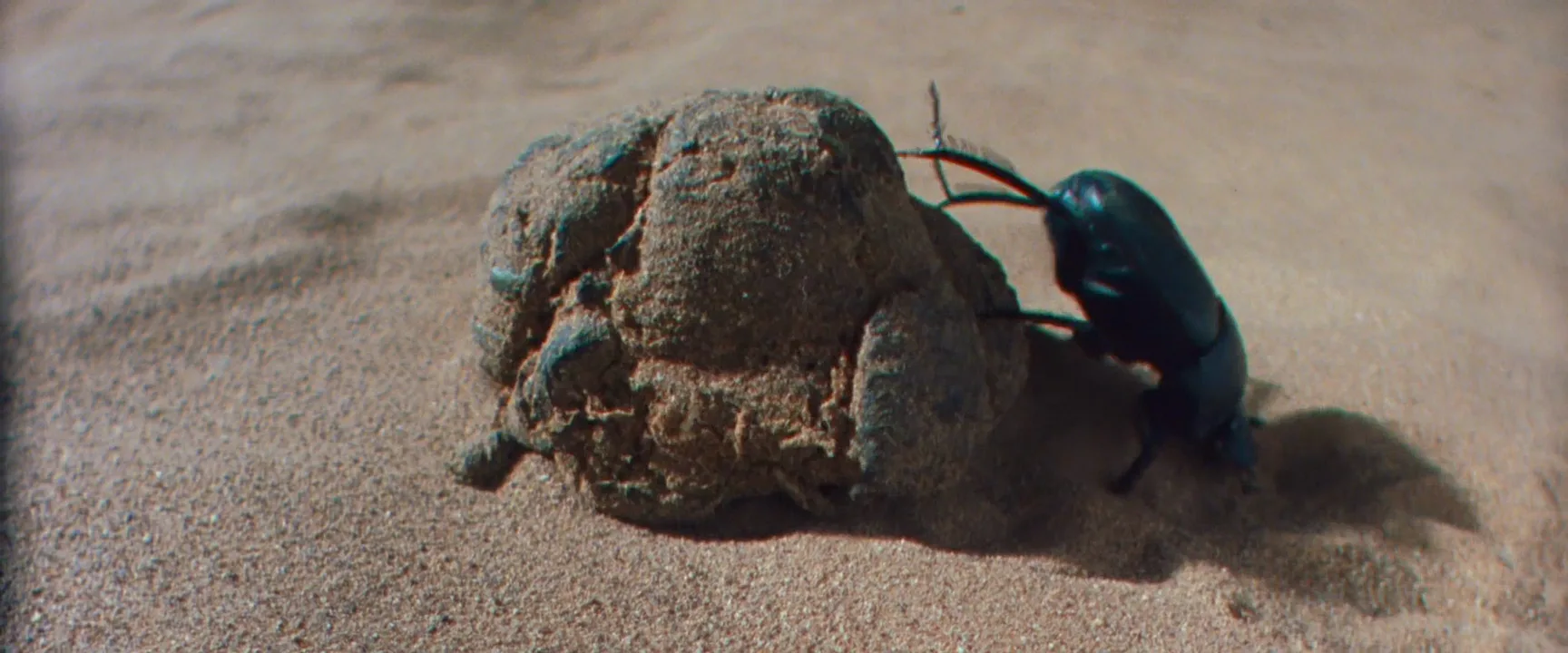
To reveal a hidden world. Microcosmos (1996) stays at insect scale throughout. David Lynch opens Blue Velvet (1986) by sinking into a suburban lawn to find beetles swarming underneath.
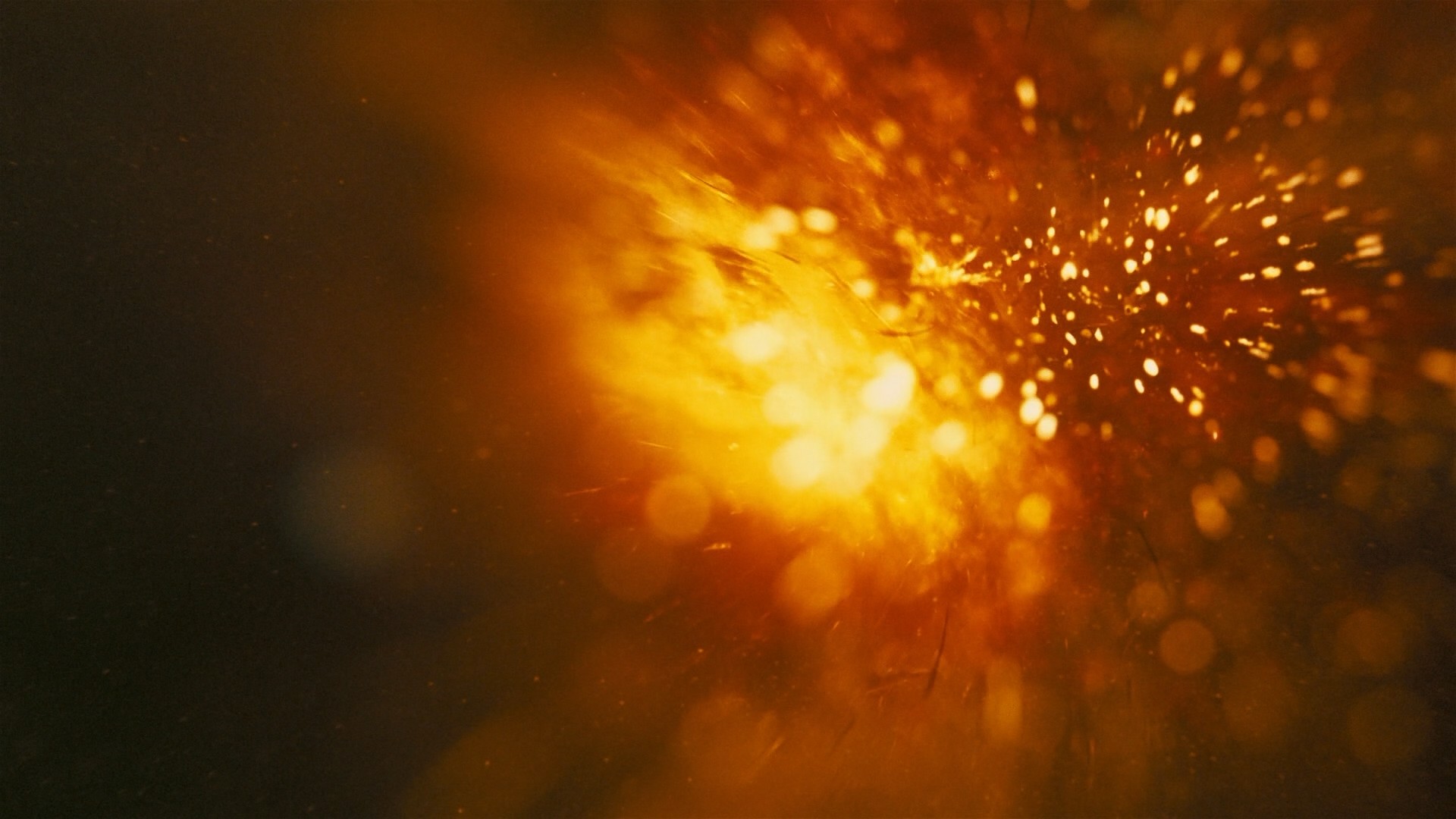
To create an abstract image. Up close, sparks and dust lose scale and read as galaxies. Christopher Nolan built the quantum imagery of Oppenheimer (2023) largely from small practical elements photographed in camera.
To add texture. A normal insert shot shows what an object is; the macro version shows what it is made of.
How to shoot a macro shot
Choose the optics
- Macro lens. Cine and photo macros of 50–100 mm reach 1:2 or 1:1; 150–180 mm macros add working distance for skittish insects.
- Diopters. Screw-on close-up glass (+1, +2, +3) lets any lens focus nearer; strong ones soften the edges.
- Extension tubes or bellows. More distance between lens and sensor means more magnification and less light.
Respect the physics
Depth of field at 1:1 is roughly 0.8 mm at f/8 on Super 35. Stopping down to f/11–f/16 buys a millimeter before diffraction softens the image, so shallow depth of field comes free and deep focus costs a lot. At 1:1 most lenses also lose about two stops.
Light and support
The lens sits centimeters away and shadows the subject, so use small diffused LEDs or a ring light. Lock the camera on a geared head or a fine-adjust slider: focus is often set by moving the camera a millimeter.
Probe lens: the bug's-eye macro
A probe lens is a long, thin tubular macro lens with the front element at the end of the tube. It slides between grass stalks or through a miniature set while the camera body stays back. Designs such as the Laowa 24mm f/14 2x Macro Probe reach 2:1 with a wide field of view.
It is the opposite of a classic macro: instead of one detail against blur, it gives a wide, deep perspective at insect scale with the background still readable — a bug's-eye view. Its small front element needs a lot of light, so probe shots are lit hard.
Macro shot vs. extreme close-up
An extreme close-up is a shot size: one feature — eyes, lips, a finger on a trigger — fills the frame. An ordinary 50 mm lens at minimum focus can make it.
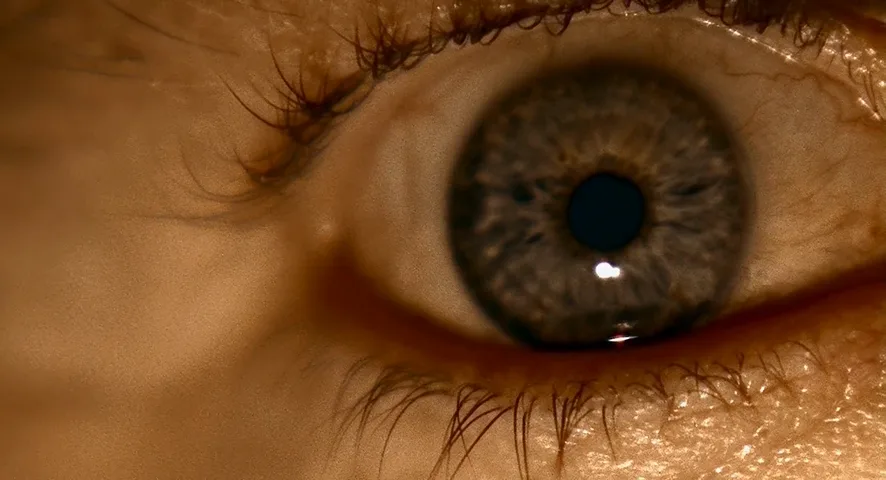
A macro shot is a magnification: the iris alone fills the frame, fibers and flecks included. Every macro shot of a face is an extreme close-up, but most extreme close-ups are not macro. If you needed macro glass, diopters or tubes to focus that close, it is macro. The magnification effect is something else — a lens or graphic window enlarging part of a wider frame.
Macro Shot examples in film
8 framesFrames at or near life size, each isolated by a sliver of focus.
How to create a macro shot with AI
4 promptsImage models default to a normal close-up of a whole object, so a macro prompt must name the magnification, what fills the frame and how thin the focus is. Keep references and takes side by side on one FlashBoards board to judge which reads as macro. The fourth prompt re-shoots a real film shot from a text description alone, and the original plays next to the result so you can compare.
Extreme macro shot of a honeybee on a lavender flower, 1:1 life-size magnification, the bee's head fills the frame: compound eyes, fine golden hair and yellow pollen grains razor sharp, depth of field only a few millimeters, petals behind melt into soft purple blur, soft morning light from the left, 100mm macro lens, cinematic film still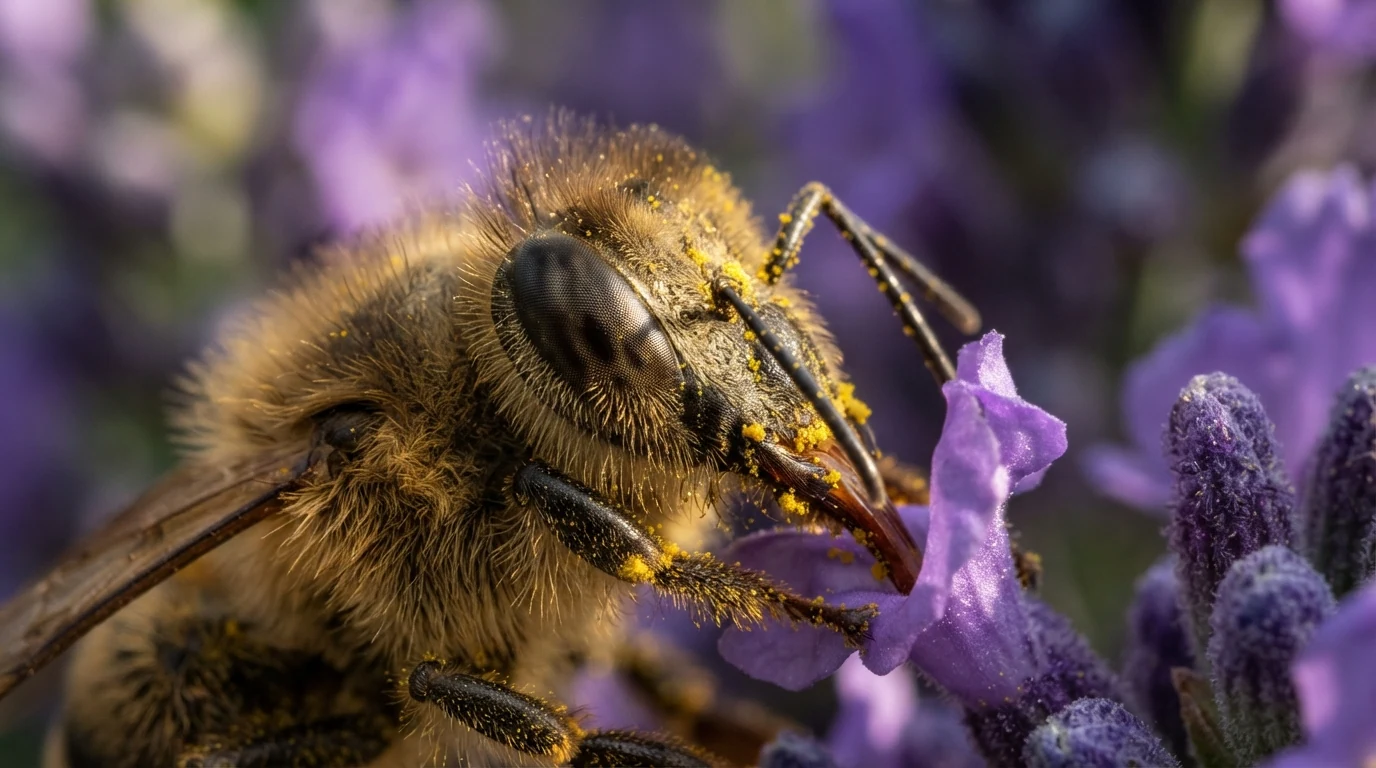
"1:1 life-size magnification" and "the bee's head fills the frame" stop the model from drawing a small bee on a big flower; "depth of field only a few millimeters" gives the thin focus plane.
Open FlashBoardsMacro shot of a single human eye, the iris fills the frame edge to edge: grey-green iris with amber flecks, fine radial fibers, a thin dark limbal ring, eyelashes soft along the top edge, a small square catchlight in the pupil, eye of a fictional woman in her fifties with pale freckled skin, focus on the iris only, soft even light, cinematic film still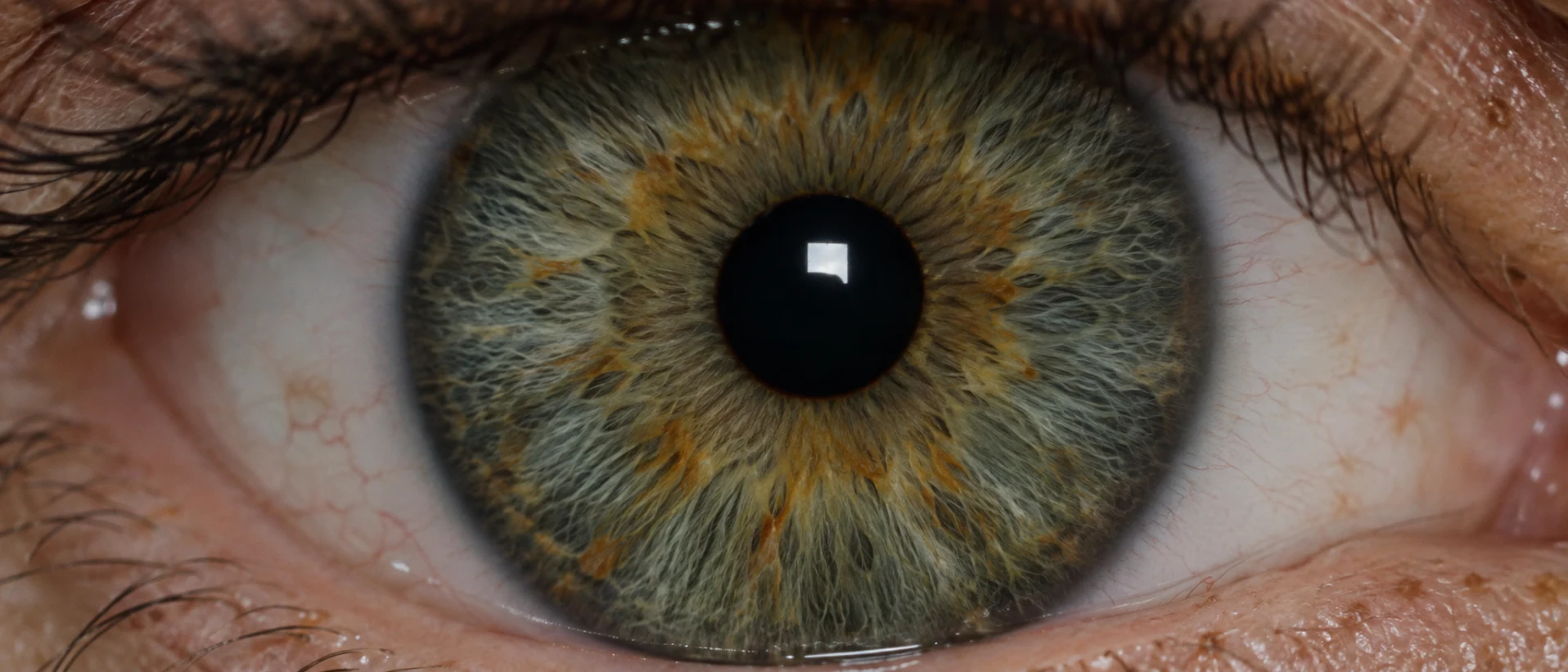
A new subject and a 21:9 frame. "The iris fills the frame edge to edge" pushes past an extreme close-up of the whole eye, and "focus on the iris only" lets the lashes fall soft as through a real macro lens.
Open FlashBoardsCamera: a very slow, steady push-in of a few millimeters toward the bee's head, focus locked on the compound eyes. Action: the bee is already moving as the shot begins, antennae twitching and front legs brushing pollen from its face. Midway it shifts its weight and turns its head slightly toward the lens. At the end its wings flick once and the lavender stem sways."A few millimeters" keeps the move at macro scale; "already moving as the shot begins" makes the frame alive at once, and the action uses only the bee and flower already in the image.
Open FlashBoards{
"output": "Full-screen live-action macro shot from Valkyrie (2008) from its very first frame: one continuous shot. Glossy 2000s 35mm, soft warm key light from the upper right grazing the skin, pure black background, warm beige skin tones, shallow depth of field of a few millimeters, fine film grain.",
"characters": {},
"shots": [
{
"shot": 1,
"camera": "static macro lens at skin level, slightly low angle, locked off with no movement; a patch of bare human forearm skin fills the lower two thirds of the frame as a gentle slope rising from lower left to upper right, black void in the upper left third; a single mosquito stands just right of centre on the skin, sharp from its thin legs to its proboscis; the skin in front of and behind it melts into soft blur; the framing stays the same from start to end",
"voice": "silence: nobody speaks in this shot, no voice at all",
"action": [
"BEGINNING: alive from the first frame, the brown mosquito already stands on the skin, head toward screen right, proboscis dipped down into the skin, striped abdomen raised toward screen left, its long legs spread; fine pale hairs and pores of the skin are visible around it.",
"THEN: the mosquito stays in place feeding, only its legs trembling slightly and its body pulsing; the skin does not move.",
"THEN: the white paper end of a cigarette slides into frame from the upper left corner, huge at this scale, moving diagonally down toward screen right, its tip a crumbling ring of grey and black ash.",
"THEN: the ashy tip lowers straight onto the mosquito, its edge touching the insect's back.",
"END: the cigarette tip presses down on the mosquito against the skin, the insect's thin legs splaying out and folding beneath the ash, a faint wisp of smoke rising from the tip; the cigarette stays pressed there."
],
"dialogue": []
}
],
"sound": {
"ambience": "a thin close whine of the mosquito, then a soft crackle and hiss of ash pressing on skin, quiet room tone",
"speech": "no words in this video; the only human sounds are breaths and movement",
"never_spoken": "no narration and no voice-over: the descriptions, performance notes and step words of this prompt are never spoken aloud",
"music": "a film score under the scene, always below the voices: low sustained strings with a slow tense pulse",
"subtitles": "none"
}
}Remakes the mosquito shot from Valkyrie (2008), dir. Bryan Singer, DP Newton Thomas Sigel: the prompt carried over the forearm slope against black, the locked macro frame and the cigarette ash lowering from the upper left onto the insect.
"Huge at this scale" keeps the macro scale when an ordinary cigarette enters, and a lens "locked off with no movement" that stays "the same from start to end" leaves the ash landing on the insect as the only event.
Open FlashBoardsCommon mistakes
- Too much subject. Models draw a whole insect in a garden. Say what fills the frame and give the ratio ("1:1").
- Everything sharp. Ask for "depth of field only a few millimeters".
- Plastic detail. Name irregular textures: flecks, hair, dust, pollen.
- Video drift. Keep camera moves to millimeters and actions to one or two gestures.
Keep the reference frames, prompts and every generated take side by side — images and video in one canvas.
FAQ
4 questionsWhat is a macro shot in film?
A macro shot shows a very small subject — an insect, an eye, a drop of liquid — magnified to life size or larger so it fills the frame. It is made with a macro lens, diopters or extension tubes, and it isolates a physical detail or turns ordinary materials into abstract images.
What is a macro lens?
A macro lens focuses close enough to project the subject at 1:1 (life size), or at least 1:2, on the sensor, with a flat field and sharp edges. Most sit between 50 and 100 mm; longer macros give more distance from the subject, and specialist designs reach 2:1 or 5:1.
Is a macro shot the same as an extreme close-up?
No. An extreme close-up is a shot size: one feature, such as the eyes, fills the frame, and a normal lens can make it. A macro shot is about magnification: at life size the iris alone fills the frame. Every macro shot of a face is an extreme close-up, but most extreme close-ups are not macro.
Do you need a macro lens for macro cinematography?
Not always. Screw-on diopters and extension tubes let an ordinary lens focus much closer at low cost. A dedicated macro lens gives sharper edges, a flatter field and a focus scale built for close work. For wide bug's-eye views, a probe lens is the specialist choice.
Related terms
4- Extreme Close-UpCamera Shots
An extreme close-up isolates a tiny part of a subject — an eye, lips, a finger on a trigger, a watch face — so a single detail fills the frame and takes on enormous weight.
- Insert ShotCamera Shots
An insert is a close shot of an object or small action inside the scene — a note, a phone screen, a hand turning a key — cut into the coverage so the audience notices exactly the detail the story needs.
- Shallow Depth of FieldLenses, Focus & Exposure
Shallow depth of field keeps only a thin slice of the scene sharp — often just the eyes — while everything nearer and farther dissolves into blur, isolating the subject and steering attention.
- Camera LensesLenses, Focus & Exposure
A lens gathers light and focuses it onto film or a sensor; its focal length, maximum aperture and optical character decide the field of view, perspective, depth of field and texture of the image.
Further reading
Blain Brown, Cinematography: Theory and Practice (Focal Press) — lenses and close focusing. American Cinematographer Manual (ASC Press) — depth-of-field and close-focus tables.