 FlashBoards Learn
- Learn
- Lenses, Focus & Exposure
- Shallow Depth of Field
Lenses, Focus & Exposure · Film language
Shallow Depth of Field
Also called: shallow focus, shallow DOF
Shallow depth of field keeps only a thin slice of the scene sharp, often just the eyes, while everything nearer and farther melts into blur. It isolates the subject from its surroundings, tells the audience exactly where to look, and makes a shot feel intimate, subjective and quiet.
- What it does
- Cuts one subject out of the world: a sharp face or object floating in soft color.
- Use it when
- The shot is about one person's inner state or one detail, and the setting is noise.
- Watch out
- The thinner the focus, the easier it is to miss. A soft eye ruins a take that a sharp ear cannot save.
- Try this prompt
Close-up of a woman at a night window, 85mm lens at f/1.4, focus on her eyes, city lights behind her melted into large round bokeh
What is shallow depth of field?
Every lens focuses at exactly one distance. In front of and behind that plane there is a zone that still reads as sharp; that zone is the depth of field. When the zone is deep, a face and the mountains behind it are both crisp. When it is shallow, the zone shrinks to a few centimeters: the eyes are sharp, the tip of the nose is already softening, and the room behind has turned into shapes and color.
Four things decide how thin that slice gets:
- Aperture. Opening the aperture (T1.4, T2) shrinks the zone; stopping down (T8, T11) deepens it.
- Focal length. At the same distance, a longer lens gives a thinner zone and magnifies the blur behind the subject.
- Focus distance. The closer the subject is to the lens, the shallower the focus. A close-up at 1 m is far shallower than a wide shot at 10 m with the same lens and stop.
- Format size. A larger sensor or film gate needs a longer lens for the same framing, so at matched framing and stop it gives a shallower look than Super 35 or a phone sensor.
Those levers interact. The practical rule is that the look comes from the combination, not from any single number: an 85mm at T2 at 2 m is razor-thin, while the same T2 on a 24mm at 5 m keeps most of a room readable. The quality of the blur itself, especially how point lights turn into discs, is a separate property called bokeh. For the rest of the optics toolkit, see the lenses, focus and exposure hub, starting with focal length.
Shallow focus: the same technique, a set name
On set, camera crews rarely say "shallow depth of field." They say shallow focus, or they just name the stop: "we're at a 1.4, so hit your marks." Shallow focus is the working name for the same technique, a thin plane of focus that isolates one subject from a blurred surround. The two terms are interchangeable; photographers and search engines lean on "shallow depth of field," while crews and critics more often say "shallow focus."
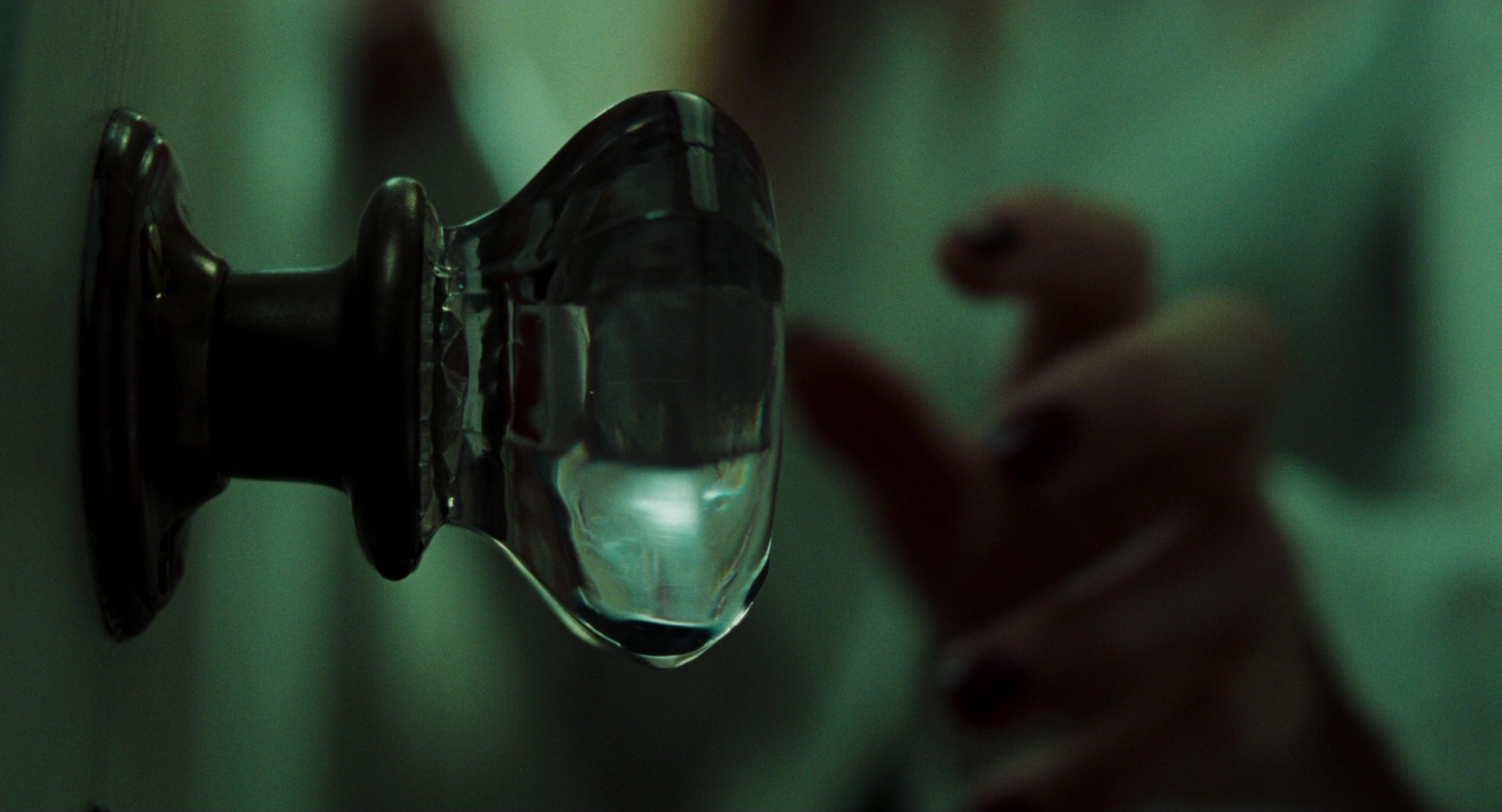
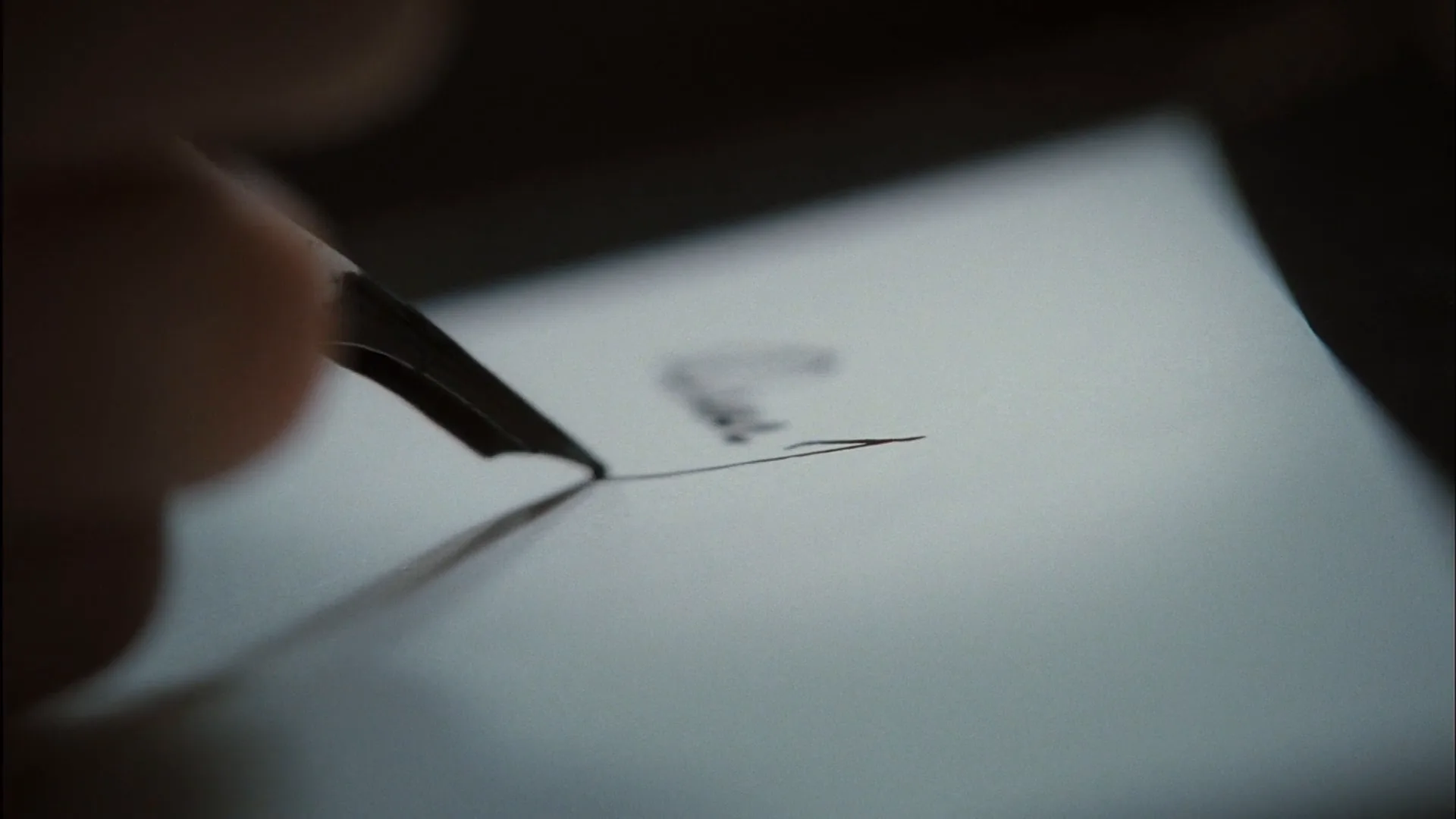
What the phrase adds is intent. Depth of field is a measurement; shallow focus is a choice about where the audience is allowed to look. A shallow-focus shot is usually built around one plane: a pair of eyes, a hand on a doorknob, a pen nib touching paper. Everything else is deliberately left unresolved, which is why the style pairs so naturally with the close-up and the extreme close-up.
Why do filmmakers use shallow depth of field?
To isolate. Blur is subtraction. A face against a sharp street competes with signs, extras and cars; the same face against a soft street is the only readable thing in the frame. That is the most direct tool a cinematographer has for directing the viewer's eye without changing the composition.
To make a shot subjective. A thin plane of focus mimics attention: when you stare at someone, the rest of the room stops mattering. Shallow focus puts the audience inside that stare. It is why the style clusters around moments of fear, desire, grief and concentration.
To control information. What is out of focus is present but withheld. A figure soft in the background can be a threat the character has not noticed yet, and a rack focus can reveal it without a cut.
To add texture and hide the set. Practical lights become soft discs, a cramped location stops looking cramped, and the frame gains a painterly layer of color. Low-budget crews learned this when large-sensor stills cameras began shooting video around 2008 and the shallow look suddenly became cheap.
It has not always been the default. Hollywood's black-and-white era pushed the other way: Gregg Toland's work on Citizen Kane (1941) made sharp foregrounds and backgrounds a signature. The shallow look spread with long lenses, zooms and faster glass in the 1960s and 70s. At the far extreme, Stanley Kubrick shot the candlelit scenes of Barry Lyndon (1975) on f/0.7 lenses, with a focus zone so thin it left the actors almost no room to move.
How to shoot shallow depth of field
Pick the lens and distance first, then the stop. Numbers help here. On Super 35 (circle of confusion around 0.025 mm):
- 85mm at T2, subject at 2 m: roughly 5–6 cm of depth. One eye sharp, the other close to soft if the head is turned.
- 50mm at T2.8, subject at 3 m: about half a meter. Enough for a face and shoulders, not for the actor behind them.
- 25mm at T5.6, subject at 3 m: roughly 1.8 m to 9 m. That is a deep-focus setup, not a shallow one.
Full-frame and large-format cameras push each figure shallower at the same framing, which is why they are popular for intimate dramas.
Push the background away. Blur behind the subject grows with the distance between subject and background. Pull the actor off the wall, shoot down a corridor instead of across it, or use a telephoto lens from farther back: the background both compresses and dissolves.
Control exposure with ND, not the iris. Shooting wide open in daylight needs neutral density filters, often ND 1.2 to 2.1, so the stop can stay at T1.4–T2.8.
Light for the blur. Backlit practicals, streetlights, candles and specular highlights behind the subject are what turn into discs. A flat, evenly lit background just becomes a smudge. Give the background a few small, bright sources and keep the key on the face soft.
Block for the focus puller. At T1.4 the first assistant is as much a performer as the actor. Set marks, give the 1st AC rehearsals, and prefer moves across the frame over moves toward the lens, which change focus distance fastest. Focus on the eye nearest camera; if two actors share the frame at different depths, either split the stop, stage them on the same plane, or plan the rack.
Choose the lens character. Fast vintage primes give swirly, soft-edged blur; modern cine primes give clean, even discs; anamorphic lenses stretch highlights into ovals. The same depth of field reads very differently through each.
When does shallow depth of field hurt a shot?
Used on every setup, shallow focus stops meaning anything. If every coverage angle floats a face in blur, the audience loses the geography of the room and the cut from wide to close stops feeling like a move closer. Keep some shots deep so the shallow ones register.
It also fails when the story lives in the relationship between people and space. Comedy that depends on a reaction in the background, a heist where the audience must track three characters, or a horror beat where the threat should be readable but ignored by the character all want more depth. And the thinner the focus, the higher the risk of soft takes: a 3 cm zone on an actor who leans in during the best performance can cost the take. On a tight schedule, T2.8 instead of T1.4 is often the smarter call.
Shallow depth of field vs. deep focus
Deep focus is the opposite strategy: foreground, middle ground and background sharp together, so the director stages action on several planes and lets the viewer choose where to look. Shallow depth of field makes that choice for the viewer.
| | Shallow depth of field | Deep focus | |---|---|---| | What is sharp | One plane, often just the eyes | Near, middle and far planes | | Typical setup | Long or normal lens, T1.4–T2.8, close distance | Wide lens, T5.6–T11, lots of light | | Viewer's role | Led to one subject | Scans the frame and chooses | | Emotional effect | Intimate, subjective, isolated | Observational, social, spatial | | Staging | Single subject, marks, rack focus | Layered blocking in depth |
Between the two sits the split diopter, a half-lens attachment that keeps a near face and a far face sharp with a soft band between them, a way to fake deep focus when the light or lens will not allow it.
Shallow Depth of Field examples in film
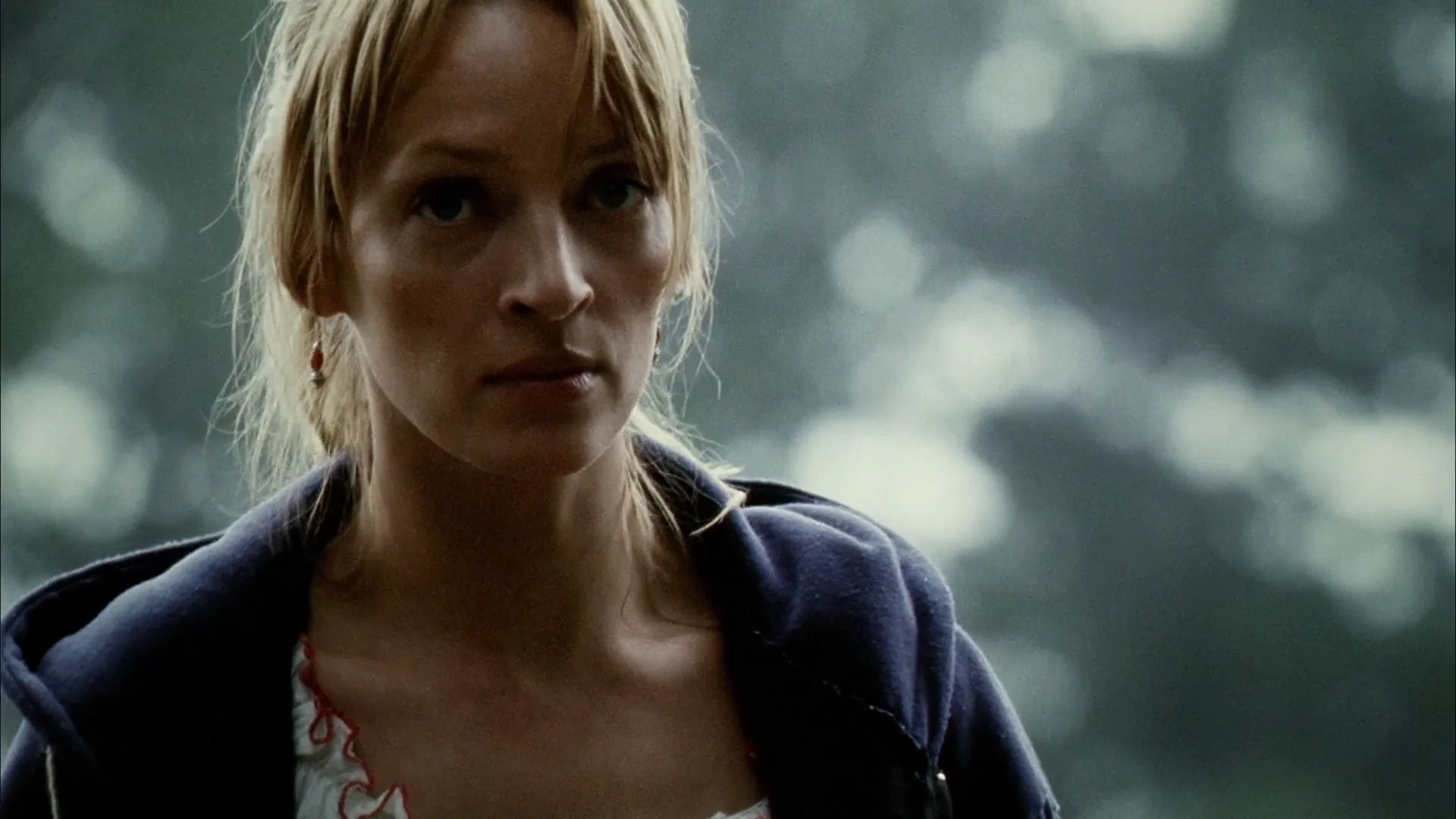
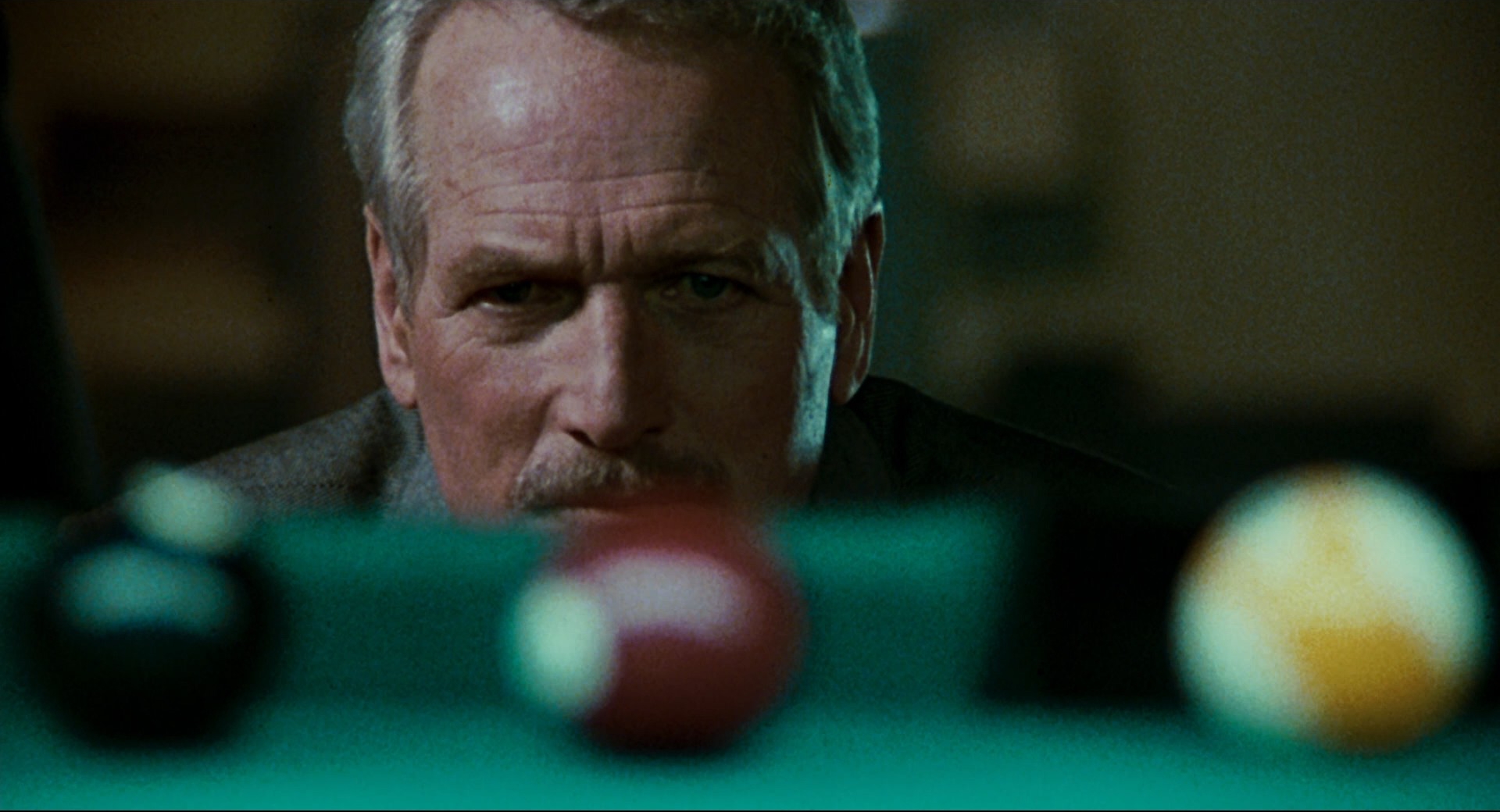
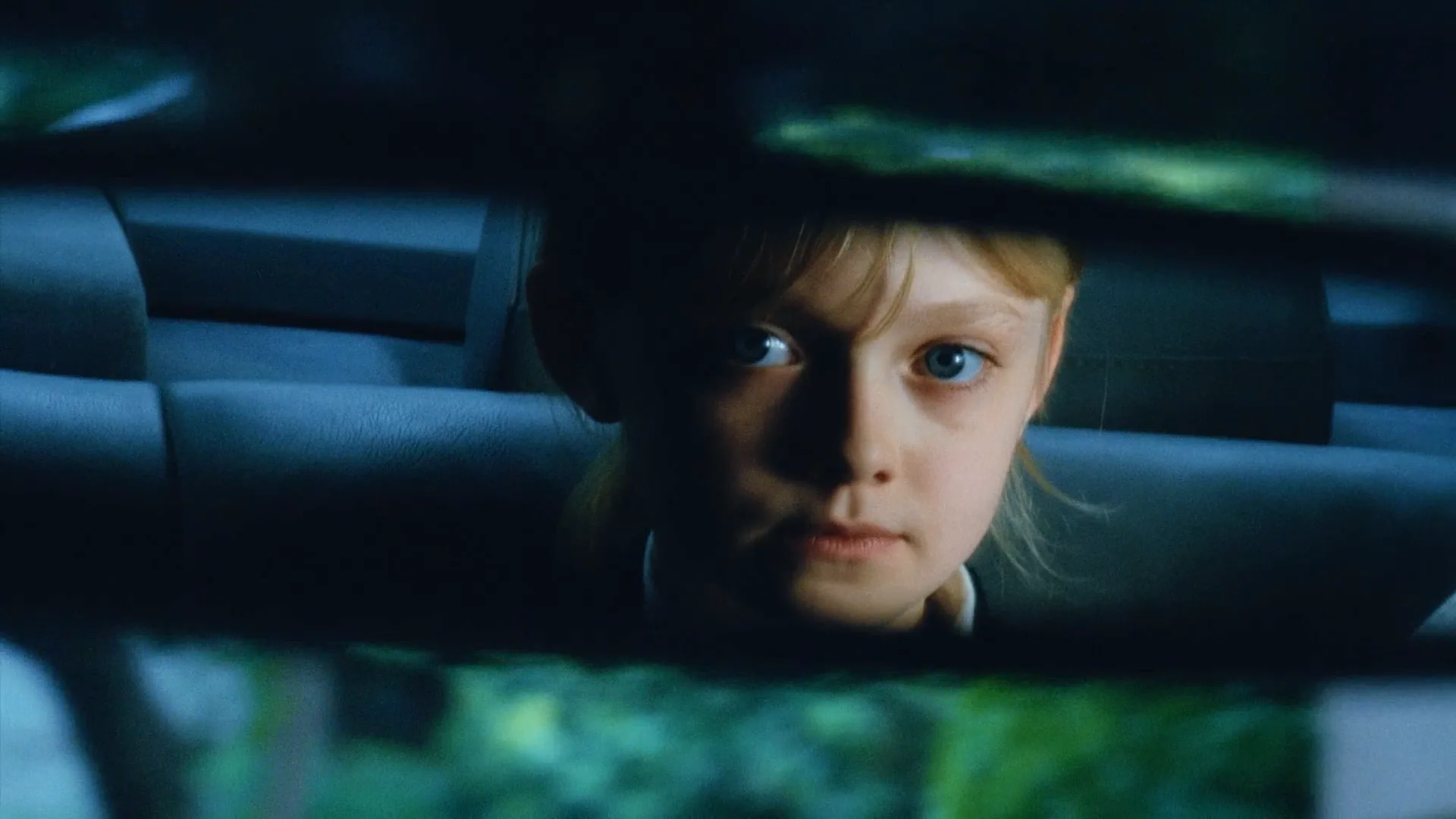
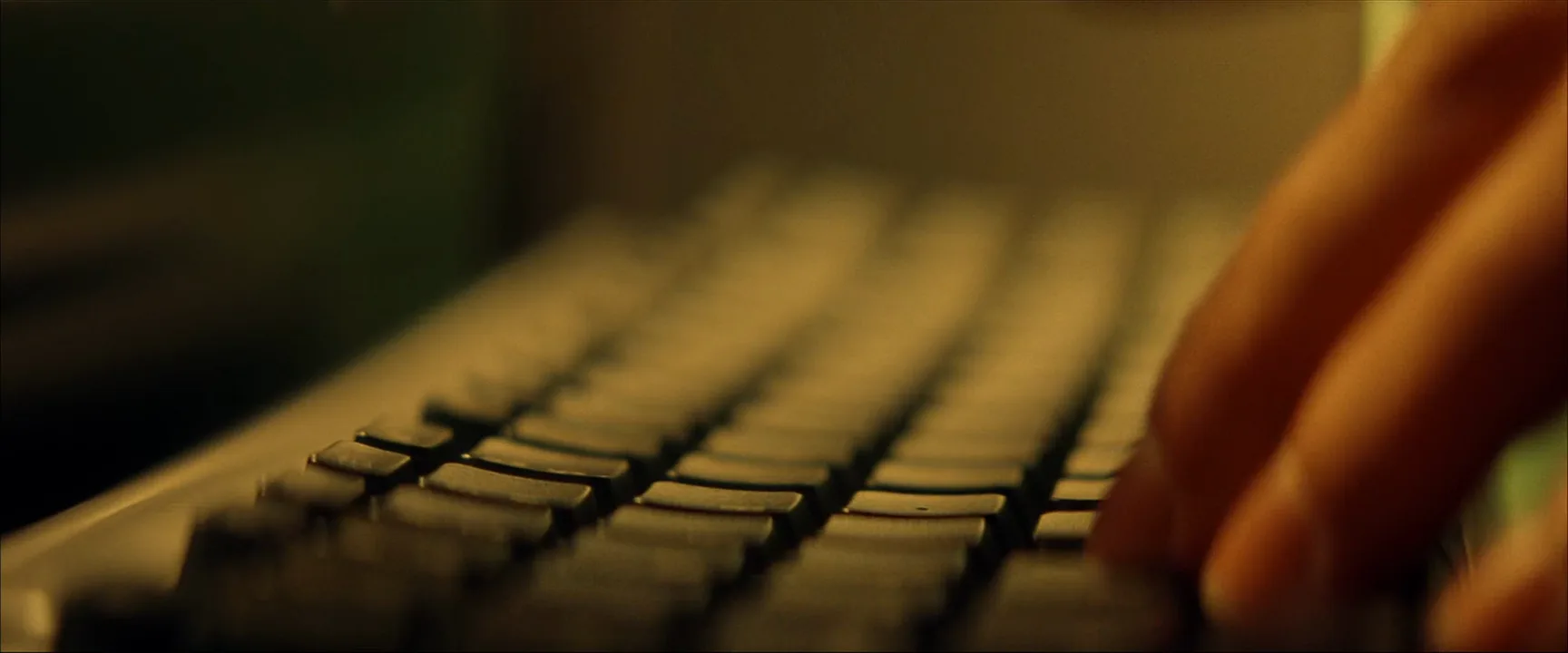
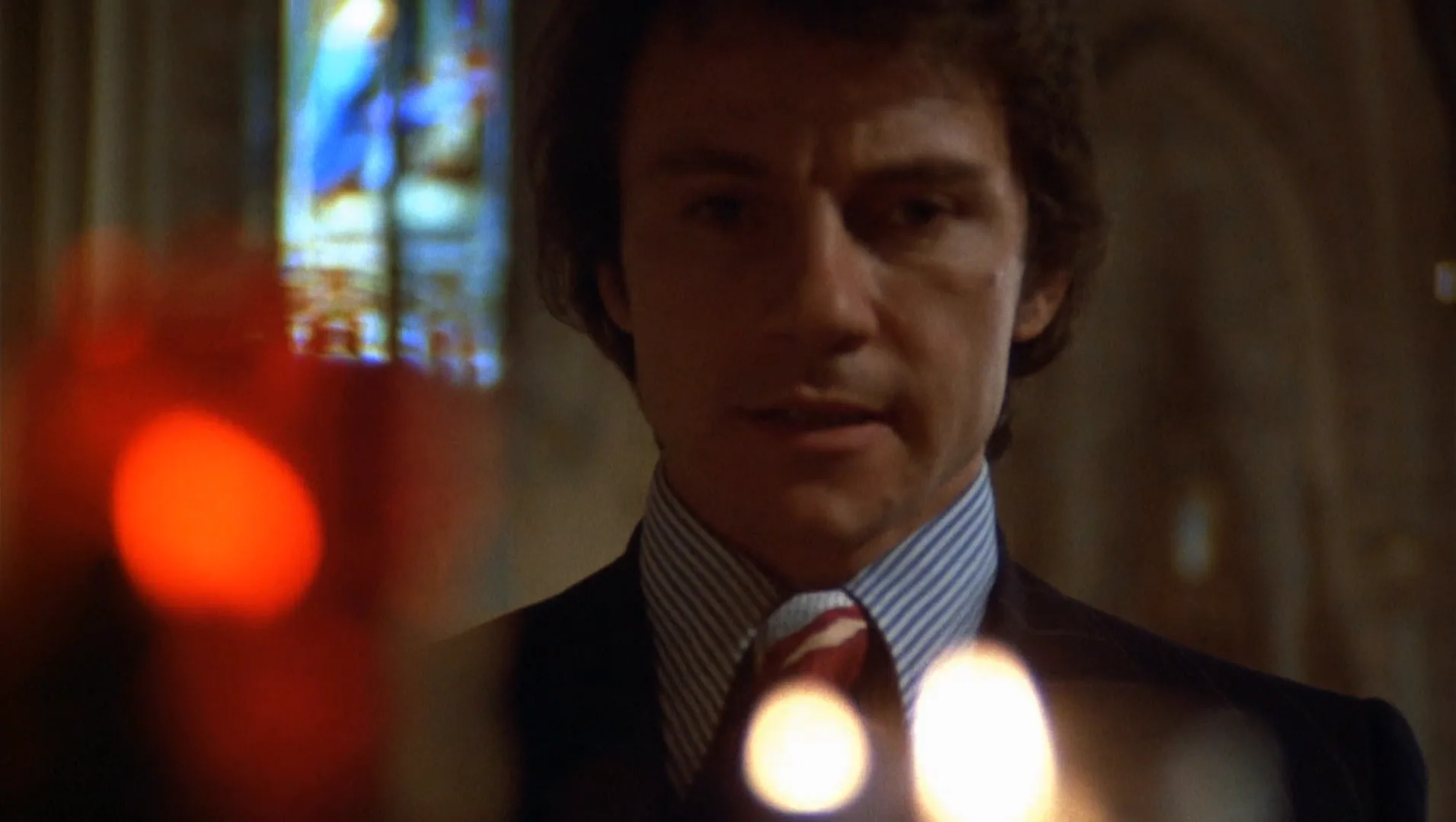
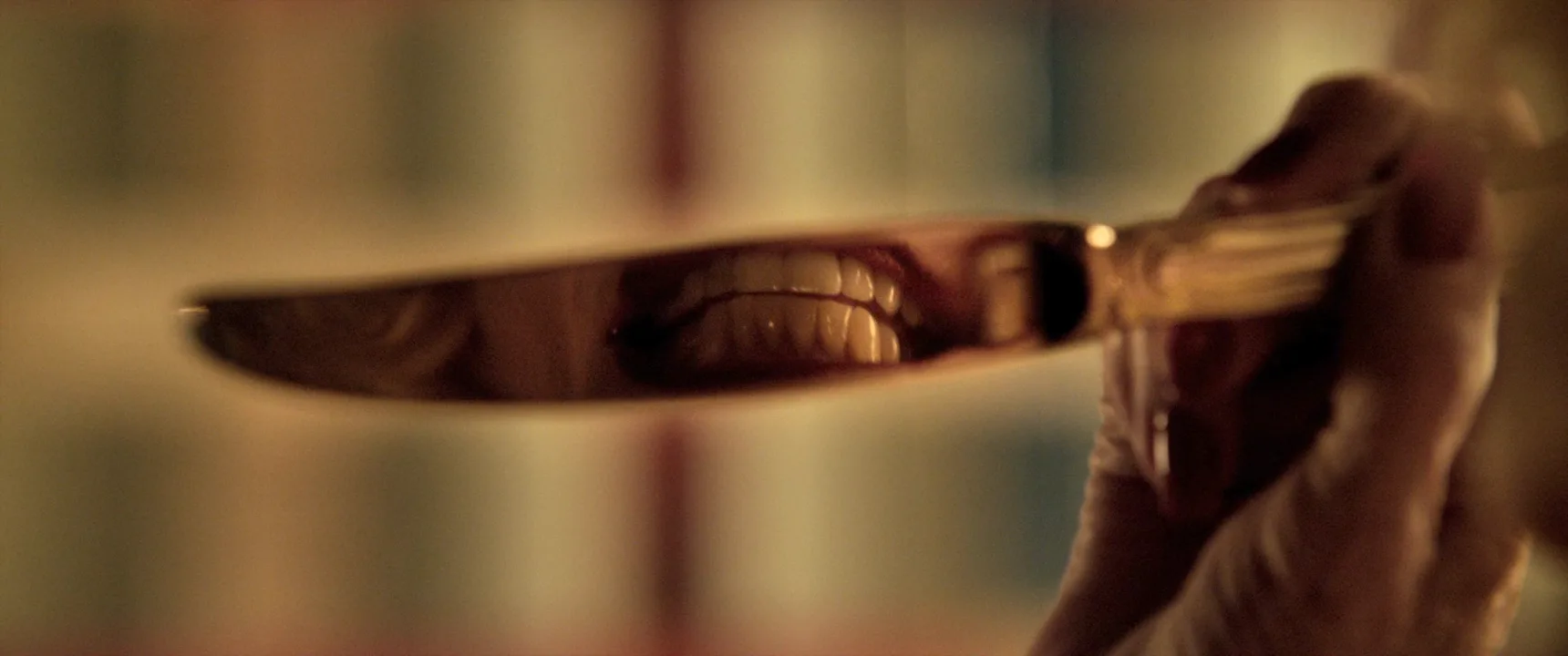
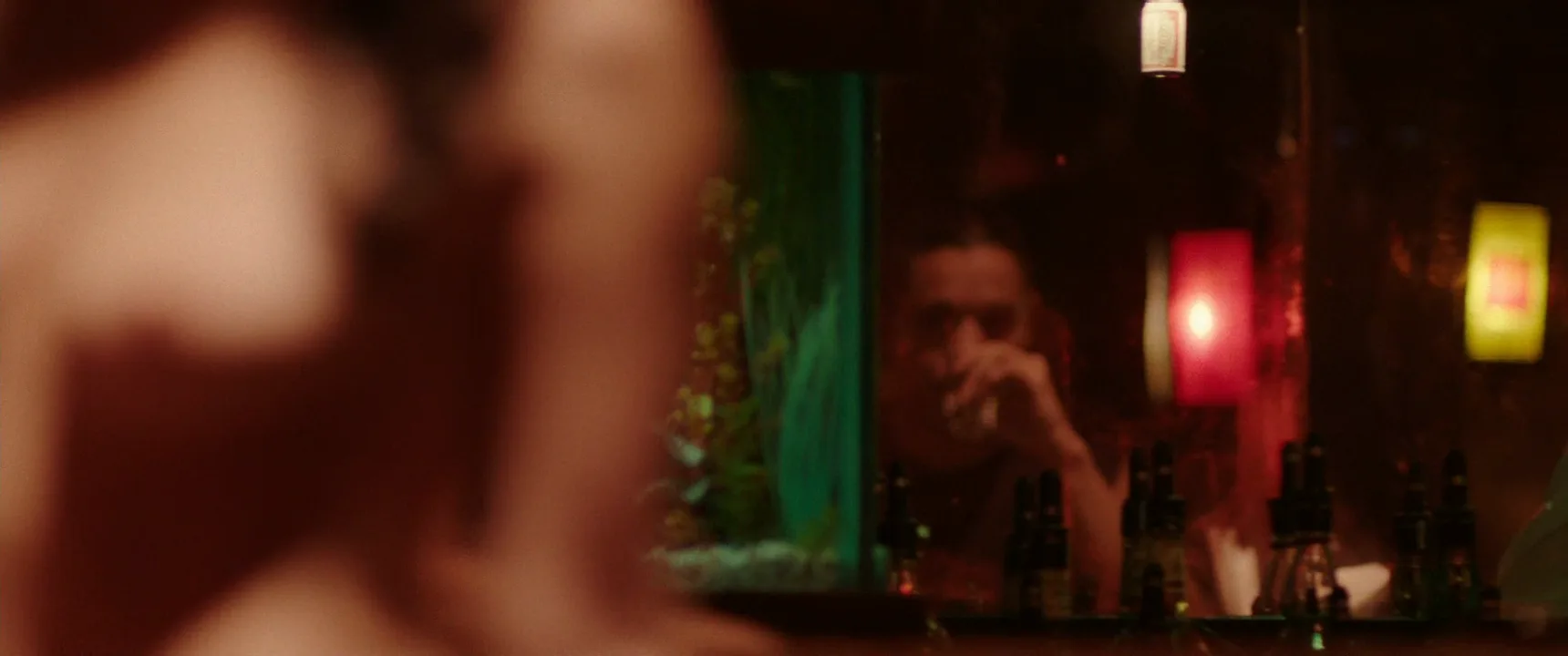
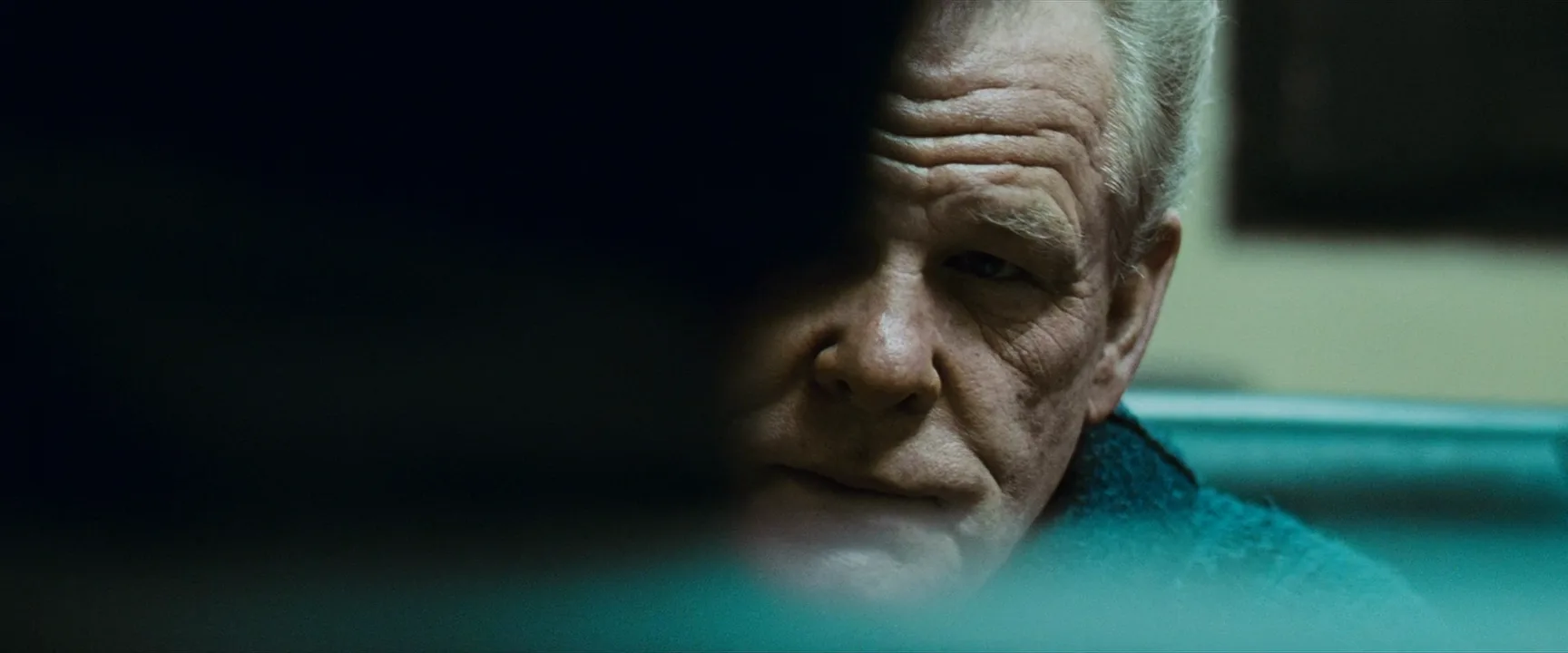
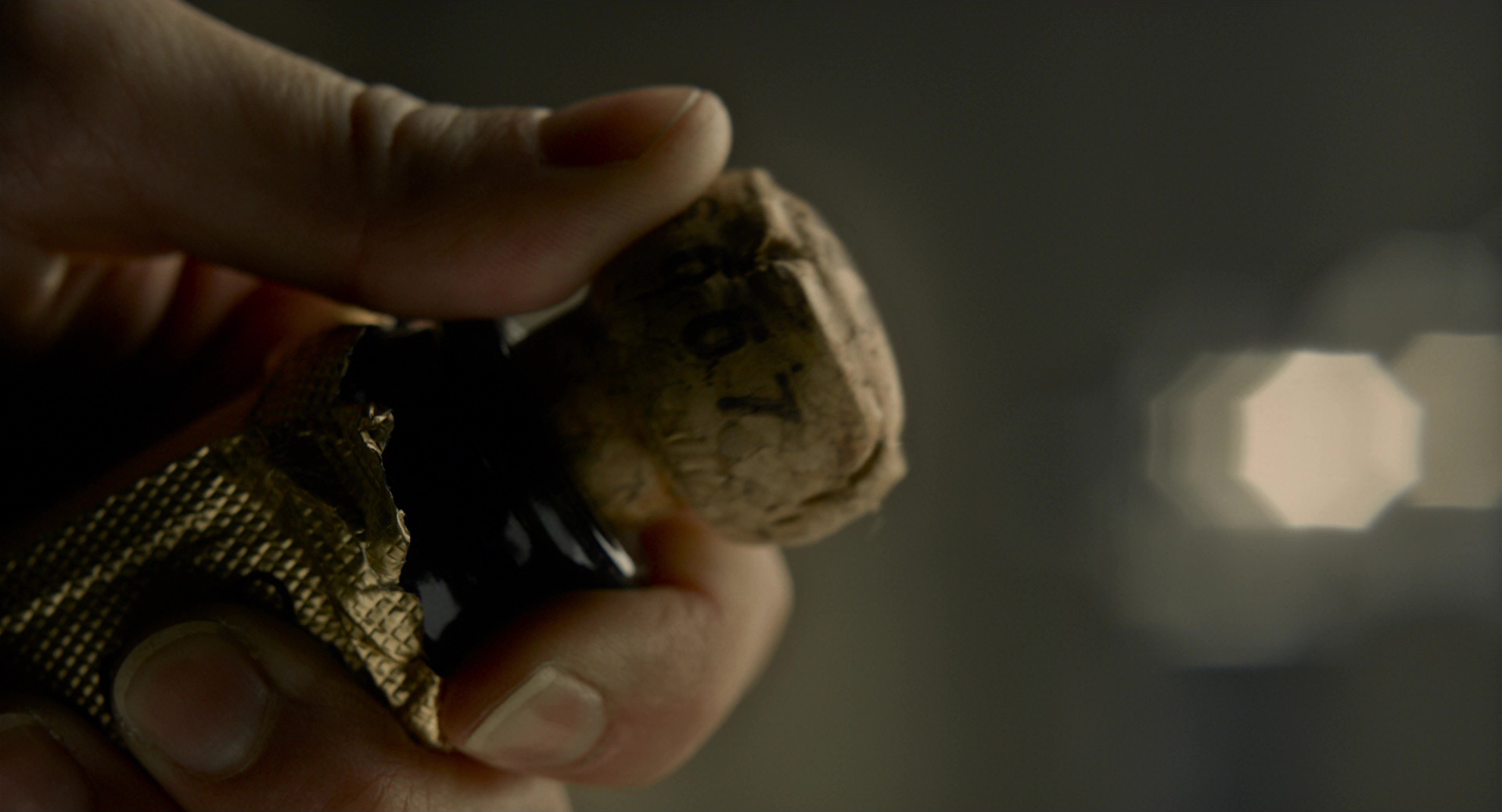
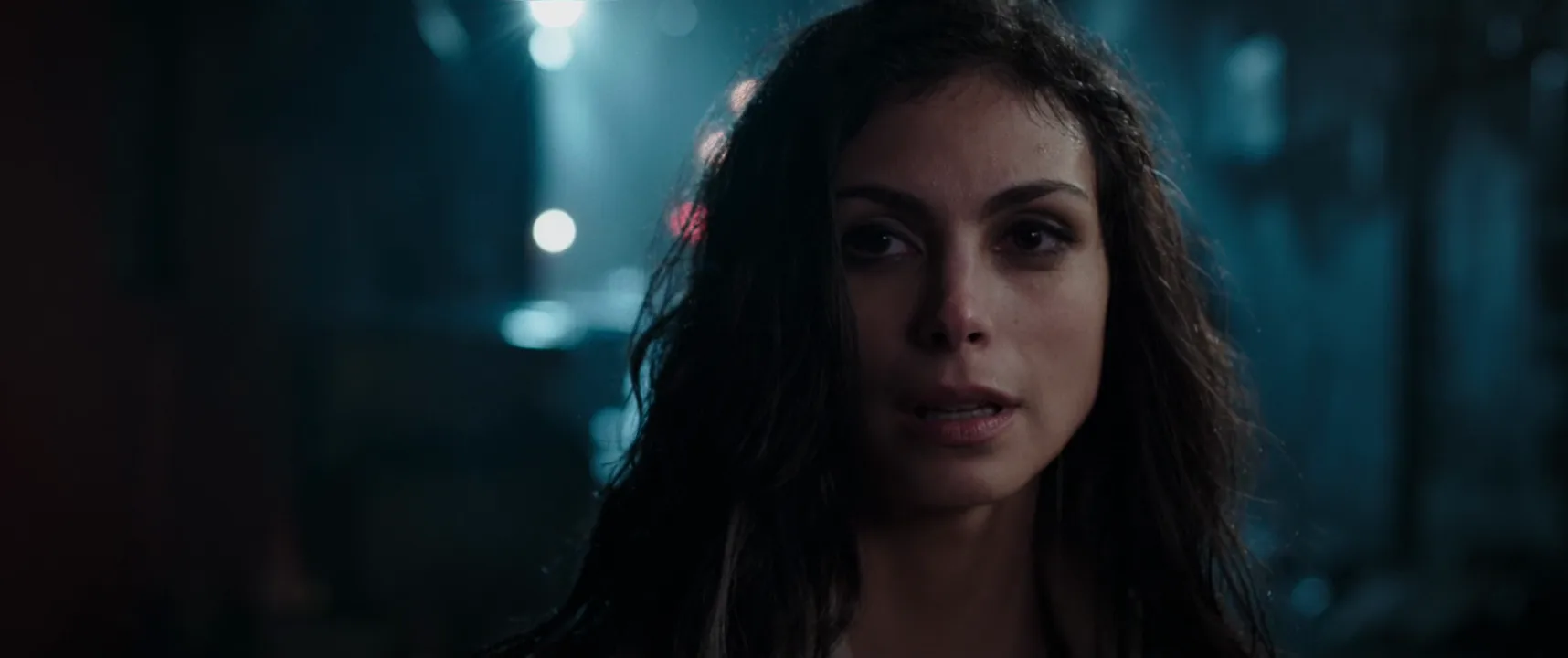
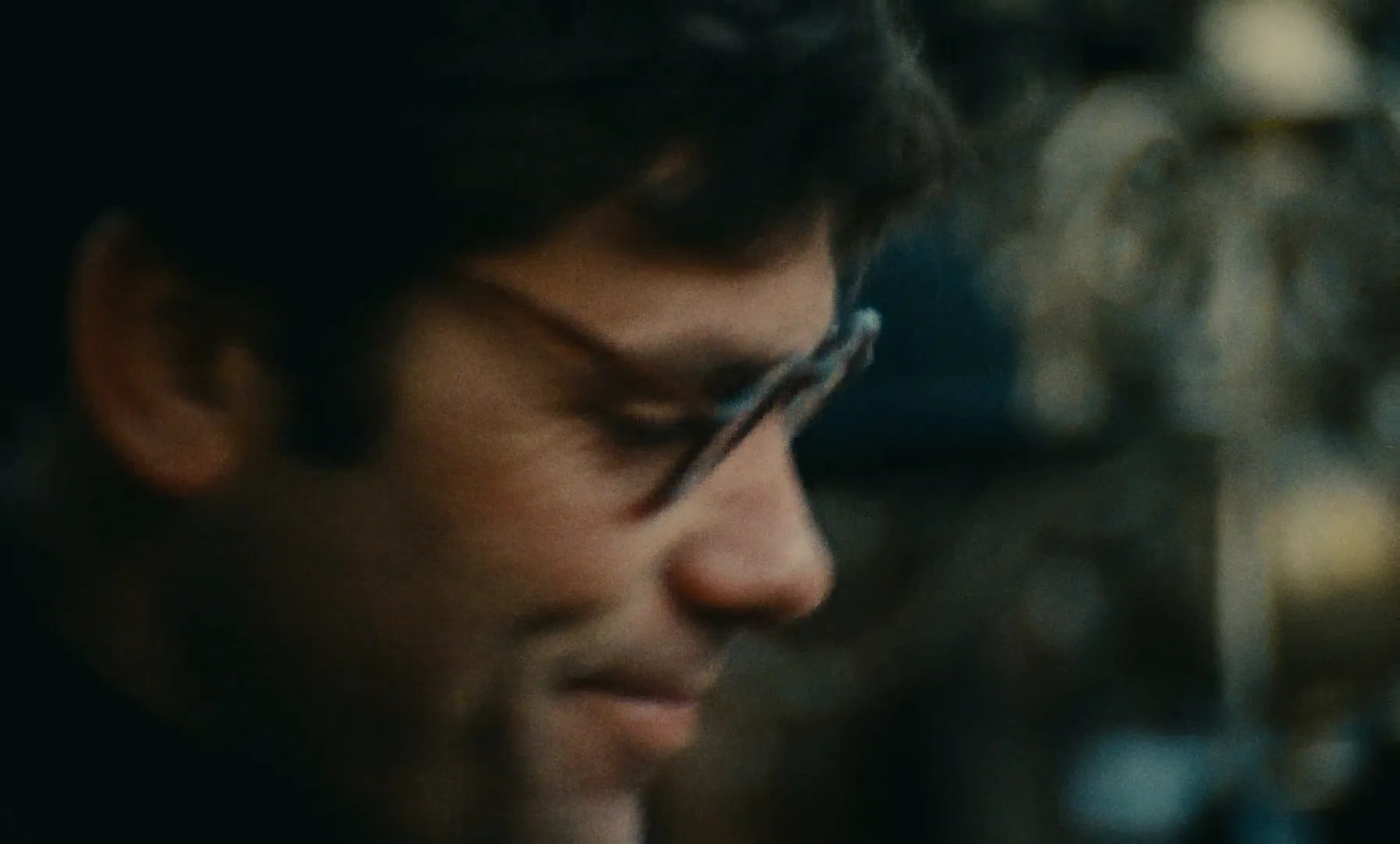
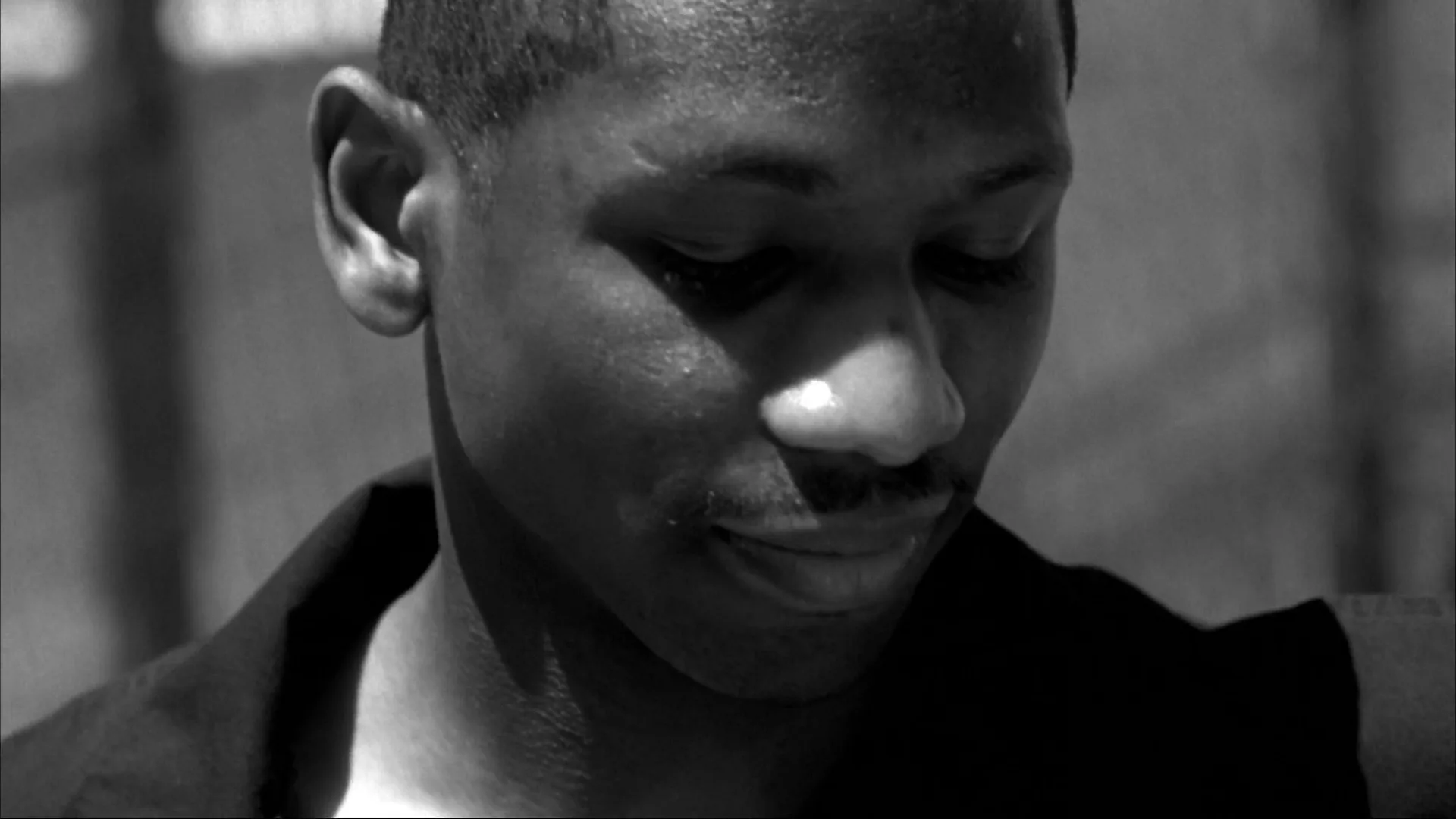
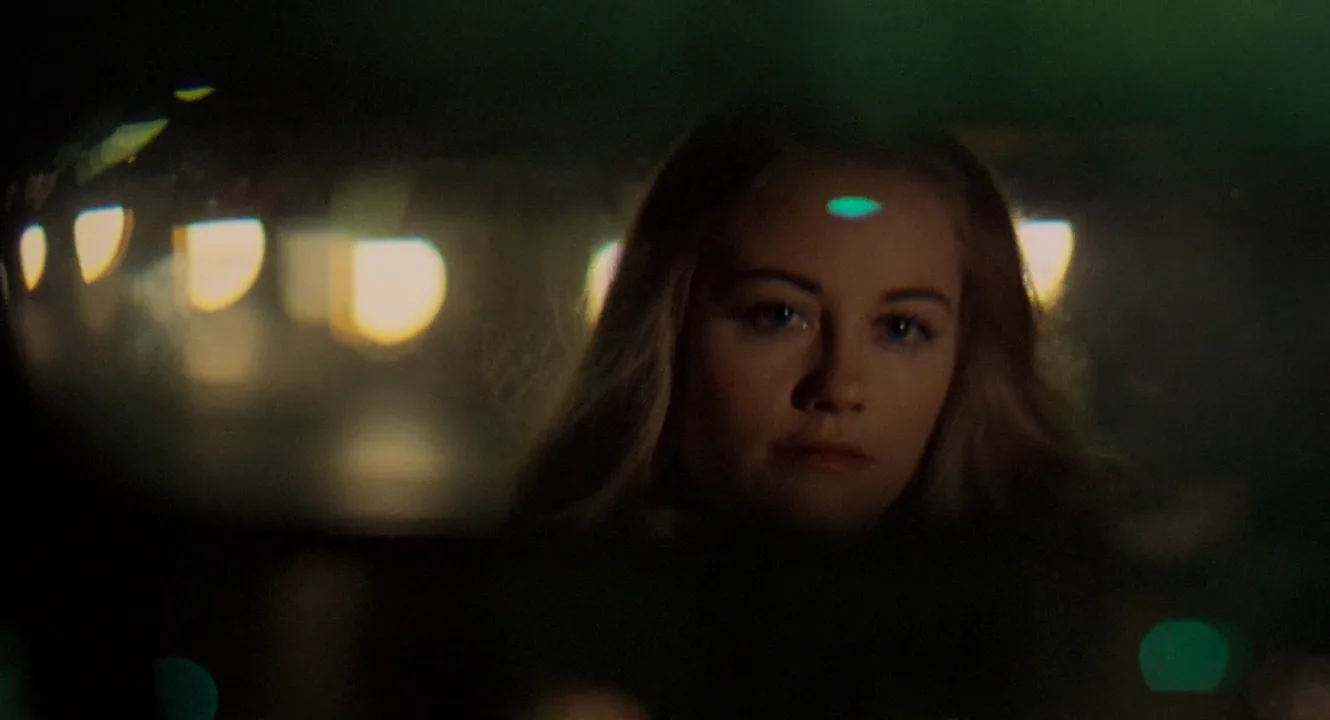
15 framesFifteen frames from features across six decades. Look at where the sharp plane sits, how much of the frame falls outside it, and whether the blur lies in front of the subject, behind it, or both.
How to create a shallow depth of field with AI
4 promptsImage and video models understand shallow focus well, but only when the prompt names where focus sits and what the blur looks like. Give the lens, the stop, the focus point and the background light, and keep the start frame, the second take and the animated shot side by side on one FlashBoards board to compare how thin each version really is. The fourth prompt re-shoots a real film shot from a text description alone, and the original plays next to the result so you can compare.
Cinematic close-up of a fictional woman in her late 30s with close-cropped silver-gray hair, a small scar through her left eyebrow and freckled olive skin, standing on a night train platform. 85mm lens at f/1.4, camera at her eye level about 1.5 meters away. Focus locked on her eyes; her ears and shoulders already softening. Behind her, commuters walking and platform lights dissolved into large round bokeh discs. Warm sodium key light from the left, cool blue edge light, shallow depth of field, thin plane of focus, subtle film grain.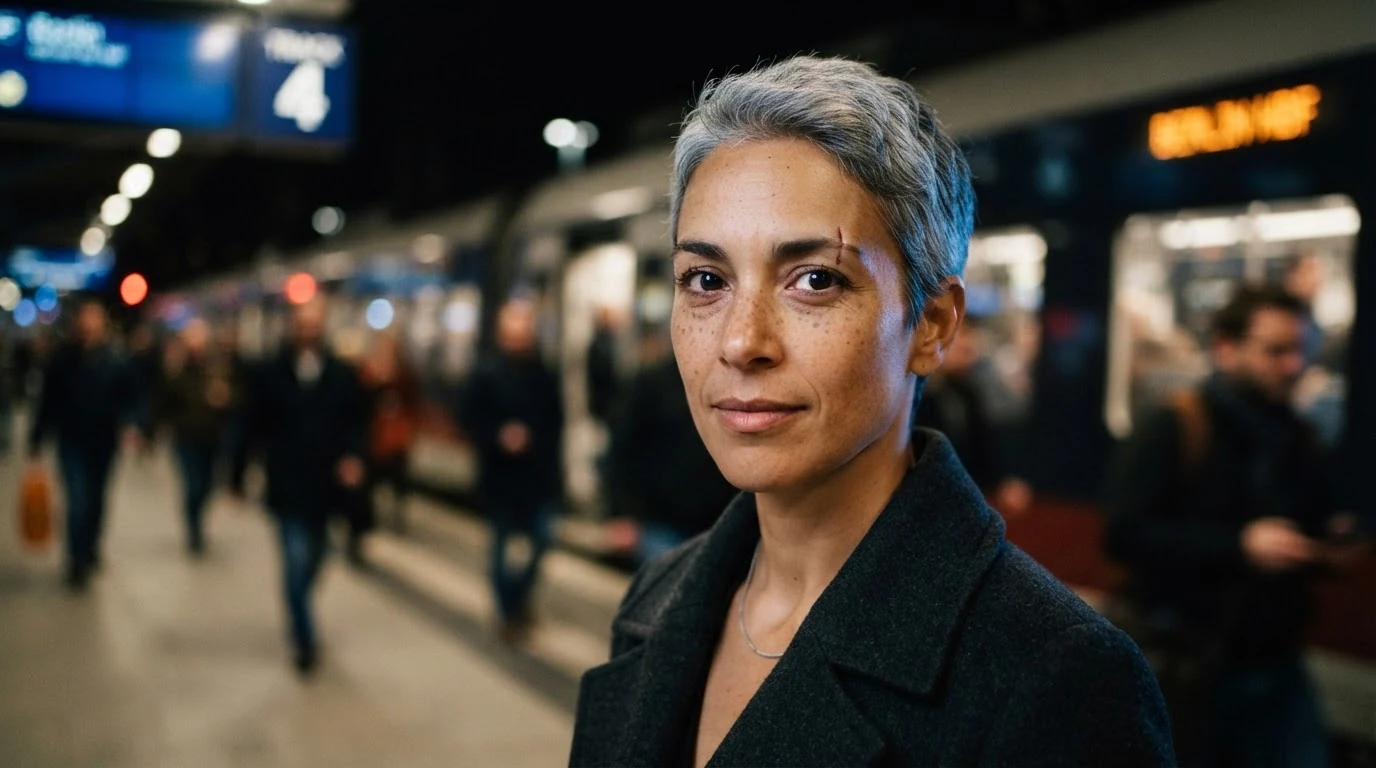
"85mm lens at f/1.4" and "about 1.5 meters away" set the three physical levers together, so the model has no reason to sharpen the platform. "Focus locked on her eyes; her ears and shoulders already softening" describes the falloff on the face itself, which is what separates real shallow focus from a cutout on a blurred plate. "Large round bokeh discs" gives the blur a shape.
Open FlashBoardsWidescreen close shot across a diner counter: a fictional man about 70 with a broad nose, white stubble and a faded navy flat cap, holding a chipped white coffee cup near his chin. 100mm lens at T2, focus exactly on his eyes. In the near foreground, the edge of a red ketchup bottle and a chrome sugar dispenser are huge soft out-of-focus shapes filling the left third of the frame. The kitchen behind him is a blur of warm yellow light with small glowing highlights. Shallow focus with blur both in front of and behind him, muted colors, 35mm film look.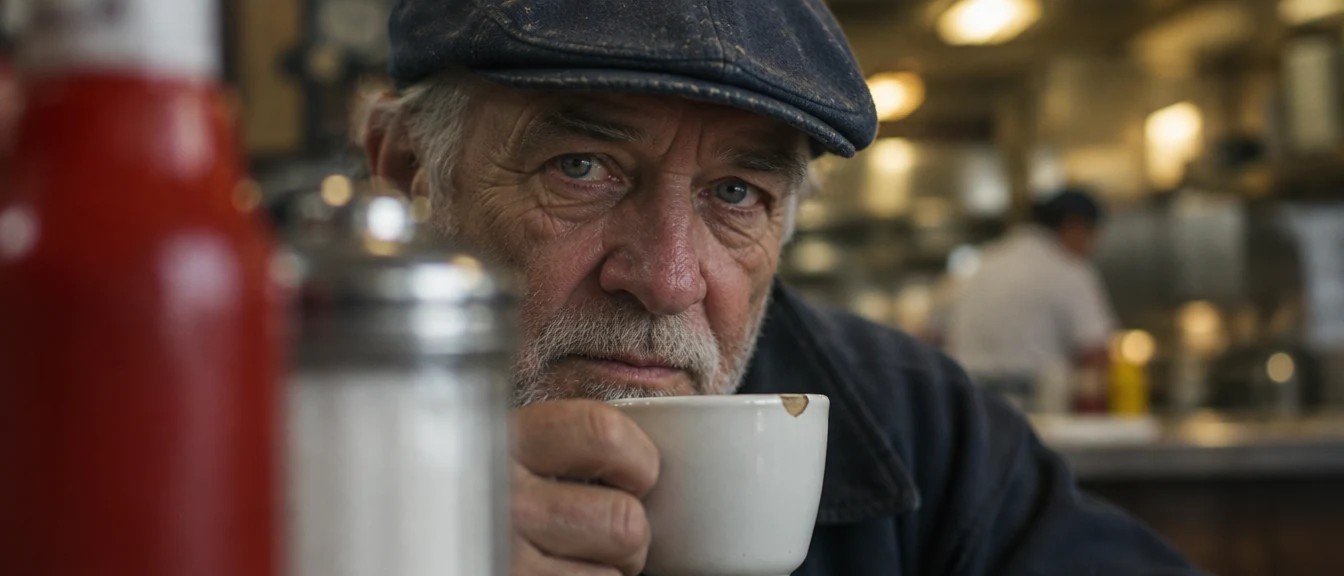
This take puts blur on both sides of the subject. Naming concrete foreground objects and saying they are "huge soft out-of-focus shapes" makes the model build a real foreground layer instead of an empty frame. The longer lens and 21:9 frame add compression, and "focus exactly on his eyes" keeps the sharp plane where it matters.
Open FlashBoardsCamera: very slow dolly push-in from this close-up to a slightly tighter close-up on her eyes; focus stays on her eyes the whole time. Action: from the first frame she is breathing and blinking, and the blurred commuters behind her are already walking left through the round bokeh. In the middle she turns her head a few degrees toward camera right, her eyes staying sharp while her far shoulder softens further. At the end she lets out a slow breath and lowers her gaze, the platform lights still large soft discs behind her.The start frame already carries the lens and focus, so the prompt protects them: "focus stays on her eyes the whole time" and "still large soft discs" stop the background from sharpening as the camera moves. The commuters were in recipe 1's frame, so moving them makes the shot alive from the first frame without inventing anything new, and the head turn shows the thin plane holding on the eyes.
Open FlashBoards{
"output": "Full-screen live-action close-up from Kill Bill: Vol. 2 (2004), alive from its very first frame: one continuous shot, no cuts. 35mm film look with fine grain, soft overcast daylight, muted gray-green palette, pale skin and a navy jacket; extremely shallow depth of field from a long lens wide open: only her face is sharp, and the trees and bright sky behind her melt into large soft round discs.",
"characters": {
"S1": {
"name": "Beatrix Kiddo, played by Uma Thurman",
"look": "slim woman in her thirties with pale skin and a long face; blonde hair pulled loosely back, a fringe of loose strands falling across her forehead and down both cheeks; small red drop earrings; a navy-blue zip-up hooded sweatshirt worn open, hood down and bunched around her neck, over a white top with a small red floral print",
"voice": "silence: she does not speak; only her breathing is heard, quickening at the very end"
}
},
"shots": [
{
"shot": 1,
"camera": "long lens wide open, close-up from just below her eye line, framing her head and the top of her shoulders, the top of her hair touching the upper edge of the frame, her face just left of center; a steady frame with no pan, no tilt and no zoom, kept at the same distance in front of her the whole time so her face stays the same size while she walks toward it; focus locked on her eyes for the entire shot: her face sharp down to single stray hairs, her ears and the edges of her hair starting to soften, everything behind her completely out of focus",
"action": [
"BEGINNING: alive from the first frame, S1 is already walking slowly toward the camera, her eyes fixed straight ahead just past the lens, lips closed, jaw set, brows slightly drawn together; behind her, leaves and bright overcast sky are dissolved into large overlapping gray-white and dark green discs of blur.",
"THEN: with each step her head and shoulders sway gently and drift toward the right of frame, loose blonde strands bouncing and glowing against the bright blur behind her; her stare holds and her face stays sharp.",
"THEN: she sways back toward the left of frame and dips slightly lower, still staring ahead with her mouth closed, her hands below the bottom of the frame.",
"THEN: she sways toward the right of frame again, gaze locked forward, face hard and still.",
"THEN: her lips part slightly and her brows begin to lift.",
"END: she drifts toward the left of frame and comes a little nearer; her mouth falls open and her eyes widen, startled by something just past the camera, breathing through her open mouth, while the background stays a soft wash of gray-white and green discs and only her face is sharp."
],
"voice": "silence: nobody speaks in this shot, no voice at all",
"dialogue": []
}
],
"sound": {
"ambience": "a soft breeze moving through leaves, distant birdsong, her quiet footsteps and the rustle of her jacket",
"speech": "no words in this video; the only human sounds are breaths and movement",
"never_spoken": "no narration and no voice-over: the descriptions, performance notes and step words of this prompt are never spoken aloud",
"music": "a film score under the scene, always below the voices: a low sustained string note with a faint, slow pulse that swells slightly as her mouth opens",
"subtitles": "none"
}
}Remakes the gallery close-up of Beatrix Kiddo (Uma Thurman) from Kill Bill: Vol. 2 (2004): the prompt carries over the long lens wide open, focus held on her eyes, the foliage melting into gray-white and green discs, her walking sway and the startled open mouth at the end.
The technique sits in two lines. The output names a long lens wide open and trees that melt into large soft round discs, and the camera line says focus locked on her eyes for the entire shot while her ears and the edges of her hair start to soften, so the falloff shows on the face as well as behind it. The walking sway and the late startled beat come from the original's frames and give the thin plane something to hold: her head moves, her eyes stay sharp. Nobody speaks in the original, so the shot is marked as silence under a low string score.
Common mistakes
- Everything comes out sharp. Words like "highly detailed background" or "8k, ultra sharp" fight the effect. Describe the background as blur ("dissolved into soft shapes") instead of listing its details.
- Cutout look. A crisp head pasted on a uniformly blurred plate means the model skipped the falloff. Add "ears and shoulders already softening" or "focus falls off across the face."
- Focus lands on the wrong feature. Without a focus point, models often sharpen the nose, hair or jacket. Always write "focus on her eyes" or "focus on the nearest eye."
- Two subjects, one plane. If two people at different distances both come out sharp, say which one is soft ("the second man behind her is a soft silhouette").
- Background sharpens during the video. In image-to-video, a camera move can pull the background into focus. Repeat the focus instruction in the
Camera:line and describe the blur again at the end of theAction:line.
Keep the reference frames, prompts and every generated take side by side — images and video in one canvas.
FAQ
5 questionsWhat is shallow depth of field?
Shallow depth of field means only a thin zone of the image is sharp, often just a subject's eyes, while things nearer and farther from the lens are blurred. It comes from a wide aperture, a longer lens, a close focus distance and a large sensor. Filmmakers use it to isolate a subject, guide attention and give a shot an intimate, subjective feel.
How do you get a shallow depth of field?
Open the aperture as far as the lens allows (f/1.4–f/2.8), move closer to the subject, use a normal or long lens such as 50mm to 135mm, and put plenty of distance between the subject and the background. A larger sensor helps too. In bright light, add ND filters so you can keep the aperture wide without overexposing.
Is shallow focus the same as shallow depth of field?
Yes. Shallow focus is the cinematographer's everyday name for the same technique: a thin plane of focus that separates one subject from a blurred surround. "Depth of field" describes the measurable zone of sharpness; "shallow focus" tends to describe the stylistic choice. In practice, on set and in reviews, the two terms mean the same look.
What aperture gives a shallow depth of field?
Wide apertures, meaning small f-numbers such as f/1.4, f/2 and f/2.8, give the shallowest focus. But aperture is only one lever: f/2.8 on an 85mm lens at 2 meters is much shallower than f/1.8 on a 24mm lens at 6 meters. Lens length, focus distance and sensor size decide the final look together.
What is the difference between shallow depth of field and bokeh?
Shallow depth of field is how much of the scene is sharp; bokeh is what the out-of-focus parts look like. Two lenses at the same stop and distance can have identical depth of field but very different bokeh: round or polygonal highlights, smooth or busy blur, clean or swirly edges. Shallow focus creates the blur, and the lens design gives it character.
Related terms
7- Deep FocusLenses, Focus & Exposure
Deep focus keeps foreground, middle ground and background sharp at the same time, so the director can stage action on several planes at once and let the viewer choose where to look.
- BokehLenses, Focus & Exposure
Bokeh is the character of the out-of-focus areas of an image — above all how point lights melt into soft discs or ovals — shaped by the lens design, the aperture blades and how shallow the focus is.
- ApertureLenses, Focus & Exposure
Aperture is the adjustable opening inside a lens that controls how much light reaches the film or sensor; opening it up brightens the image and makes depth of field shallower, stopping down does the opposite.
- Telephoto LensLenses, Focus & Exposure
A telephoto (long) lens has a narrow angle of view that magnifies distant subjects; used from far away it compresses space, stacking the background onto the subject — the look of long-lens crowd shots, heat-haze chases and isolated faces.
- Rack FocusLenses, Focus & Exposure
A rack focus shifts focus during a shot from one subject to another at a different distance, moving the viewer's attention — and often revealing new information — without a cut.
- Close-Up ShotCamera Shots
A close-up frames a subject tightly — for a person, usually the face from chin to forehead or the head with the top of the shoulders — so emotion, micro-expressions and small details dominate the screen.
- Depth of FieldLenses, Focus & Exposure
Depth of field is the zone in front of and behind the point of focus that looks acceptably sharp; aperture, focal length, focus distance and format size decide whether it is razor-thin or stretches to the horizon.
Further reading
Blain Brown, Cinematography: Theory and Practice (Routledge). The American Cinematographer Manual (ASC Press). Steven D. Katz, Film Directing Shot by Shot (Michael Wiese Productions).