 FlashBoards Learn
- Learn
- Camera Shots
- Extreme Close-Up
Camera Shots · Film language
Extreme Close-Up
Also called: ECU, XCU, extreme close-up shot, macro shot
An extreme close-up (ECU) isolates a tiny part of a subject — an eye, a pair of lips, a finger on a trigger, a watch face — so one detail fills the entire frame. By cutting away everything else it gives that detail enormous weight, stretches time and pulls the viewer into sensation rather than observation.
- What it does
- Blows one detail up to fill the screen, so it becomes the most important thing in the scene.
- Use it when
- A single detail carries the moment: a look before a draw, a clue, a sensation, the beat before a cut.
- Watch out
- Held too long or used too often it turns abstract and loses the audience; keep ECUs short and motivated.
- Try this prompt
Extreme close-up of a single human eye filling the frame, iris and lashes in sharp focus, 100mm macro lens, soft side light, visible skin texture, only the eye and the skin around it in frame
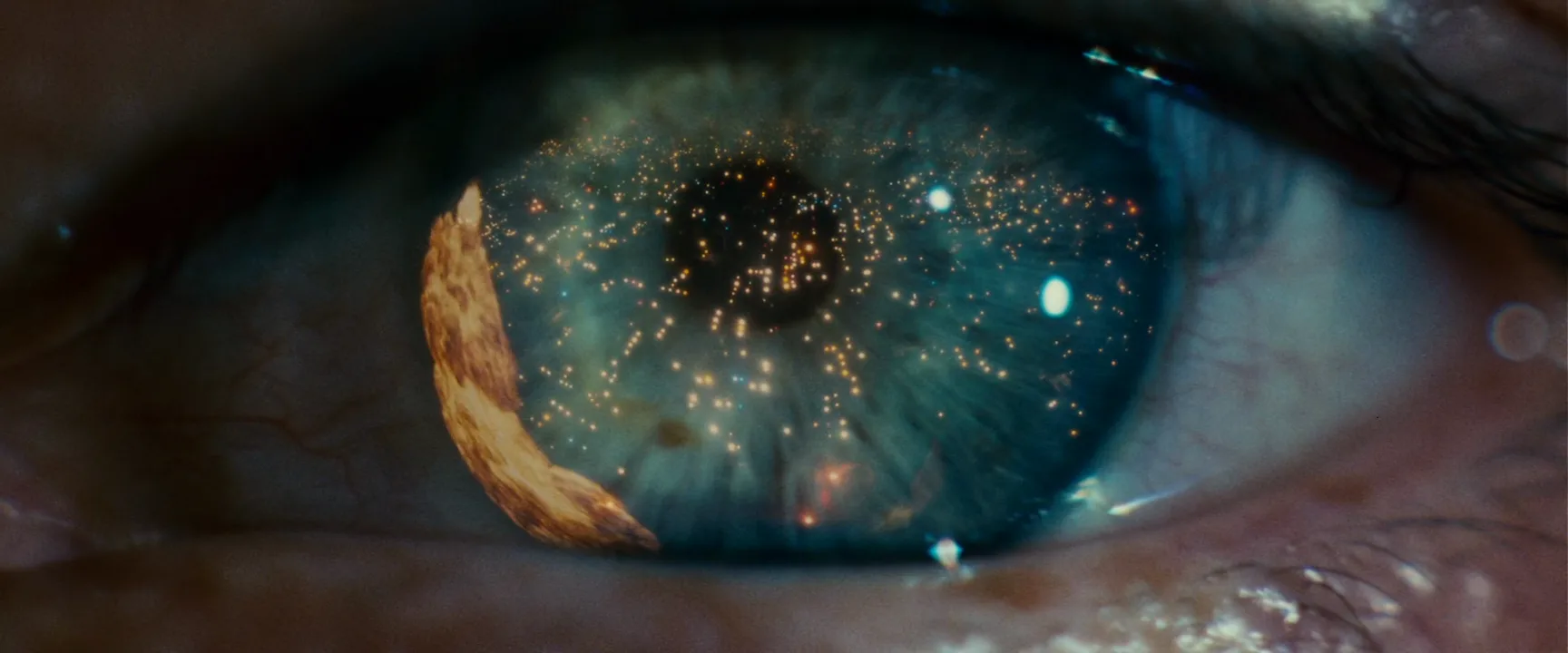
What is an extreme close-up?
An extreme close-up — written ECU or XCU on shot lists — is the tightest size on the scale of types of camera shots. Where a close-up shot shows a whole face, an ECU crops inside it: both eyes in a letterbox strip, one eye, the mouth, an ear, the fingertips. With objects it means the working part only — the nib of a pen, the hammer of a revolver, the second hand of a watch.
The practical definition is simple: the frame no longer contains the outline of the subject. You see a feature, not a person; a mechanism, not a thing. The audience has to supply the rest from context, which is why an ECU almost always depends on the shots around it.
The term is sometimes used interchangeably with macro shot, but they are not the same. An ECU is a shot size defined by what is in the frame. A macro shot describes the optics — a lens focusing close enough to reproduce a tiny subject at or near life size on the sensor. Most ECUs of eyes and lips need macro or near-macro focusing; a macro shot of an insect's wing is extreme magnification but not an extreme close-up of a character.
Why do filmmakers use extreme close-ups?
To stretch a moment. Sergio Leone's duels in The Good, the Bad and the Ugly (1966) cut between wide shots of the arena and ECUs of the gunfighters' eyes and hands, with each cut getting tighter as the music builds. The ECUs add no information; they hold the tension until the shot is fired.
To turn a detail into the plot. Citizen Kane (1941) starts its story on an extreme close-up of Kane's lips as he says his last word — the mystery the whole film investigates is planted in one shot of a mouth.
To make the audience feel it physically. At this scale skin becomes terrain and a needle becomes a spear. Psycho (1960) ends the shower scene by dissolving from the drain to an ECU of Marion's lifeless eye. Body-horror and thrillers lean on the ECU because it removes the safe distance of a wider frame.
To create rhythm. In Requiem for a Dream (2000) Darren Aronofsky cuts drug use into rapid strings of ECUs — a pupil dilating, a pill, a match — with punchy sound. Short ECUs cut together work like percussion in a montage.
To withhold. An eye peering out of darkness tells you someone is watching but not who, or where. Horror, mystery and heist films use ECUs to show exactly one piece of a picture and hide the rest.
The cost is orientation. An ECU cut in without a wider shot around it can read as abstract texture, so directors usually establish the person or object first and cut to the ECU only at the peak.
Eyes, mouths, hands and objects
Most extreme close-ups fall into four families, and each carries a different kind of meaning:
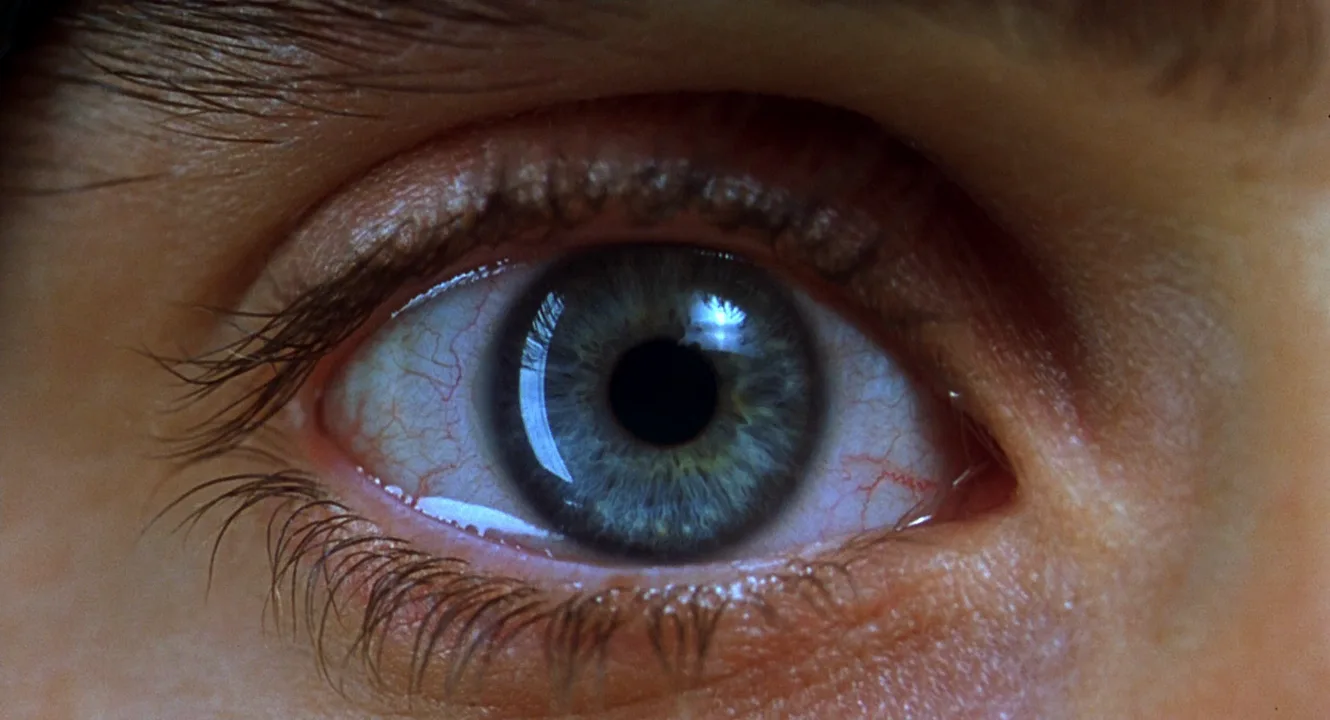
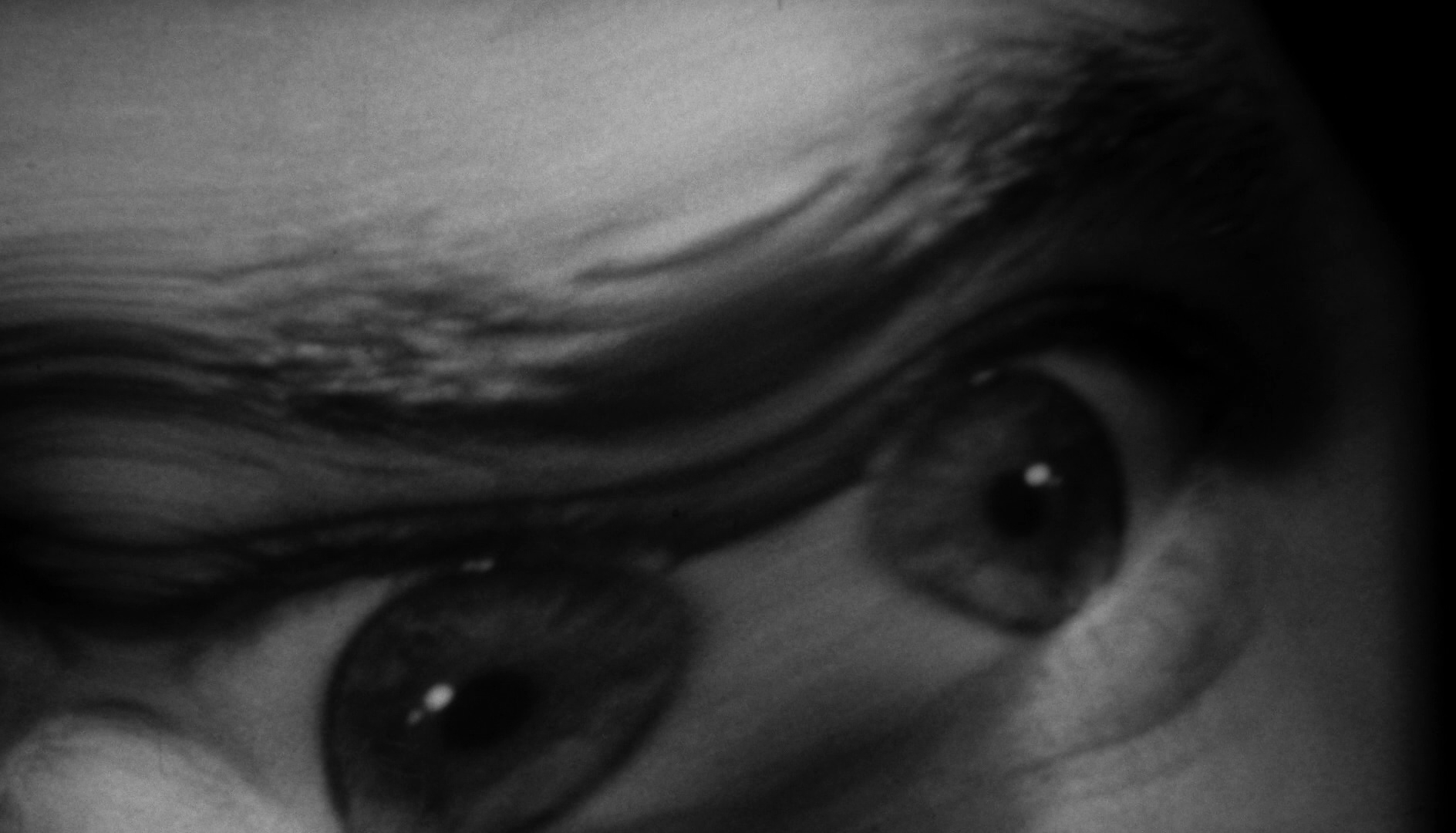
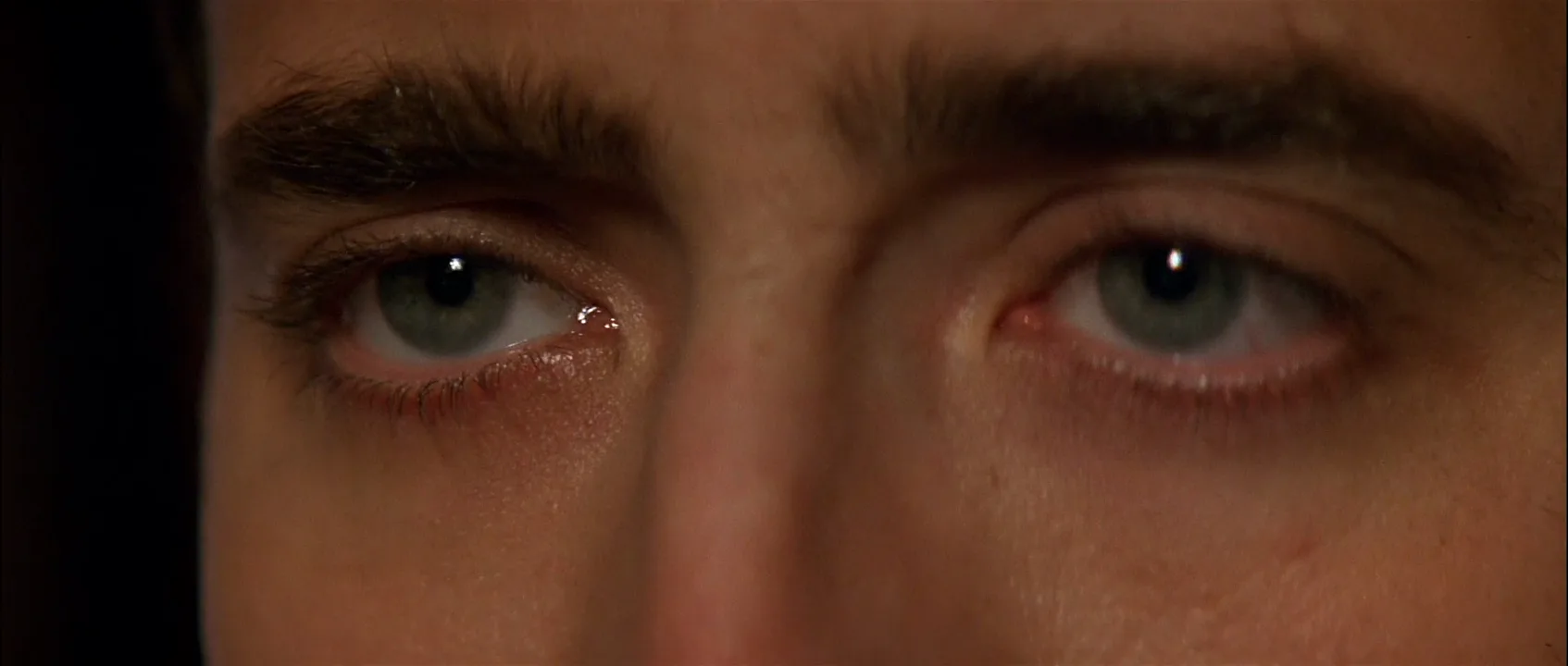
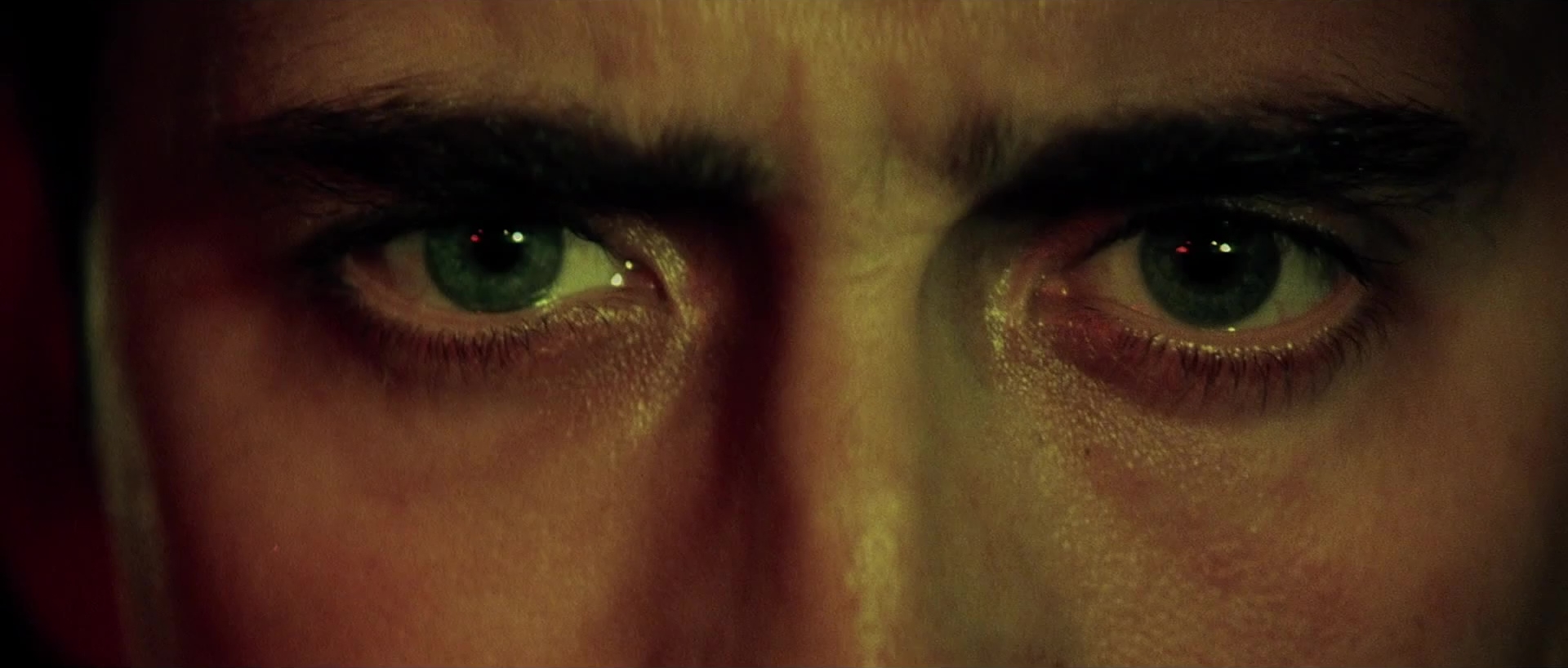
- Eyes. The most common ECU. A two-eye strip (brows to the bridge of the nose) reads as a look or a confrontation; a single eye reads as perception, fear or surveillance. The catchlight and the direction of the iris do all the acting.
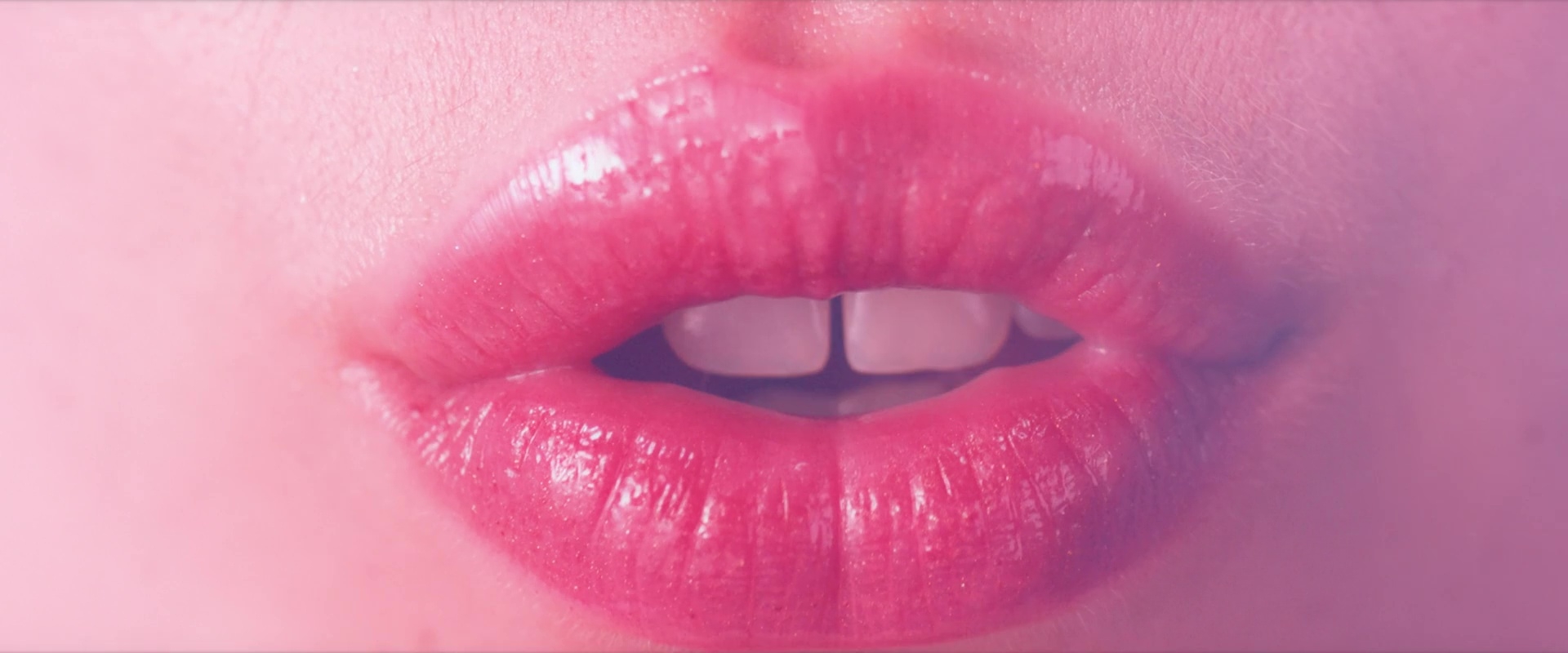
- Mouth and lips. Speech, appetite, desire, disgust. An ECU of lips makes the mouth an object — sensual or grotesque depending on light and texture.
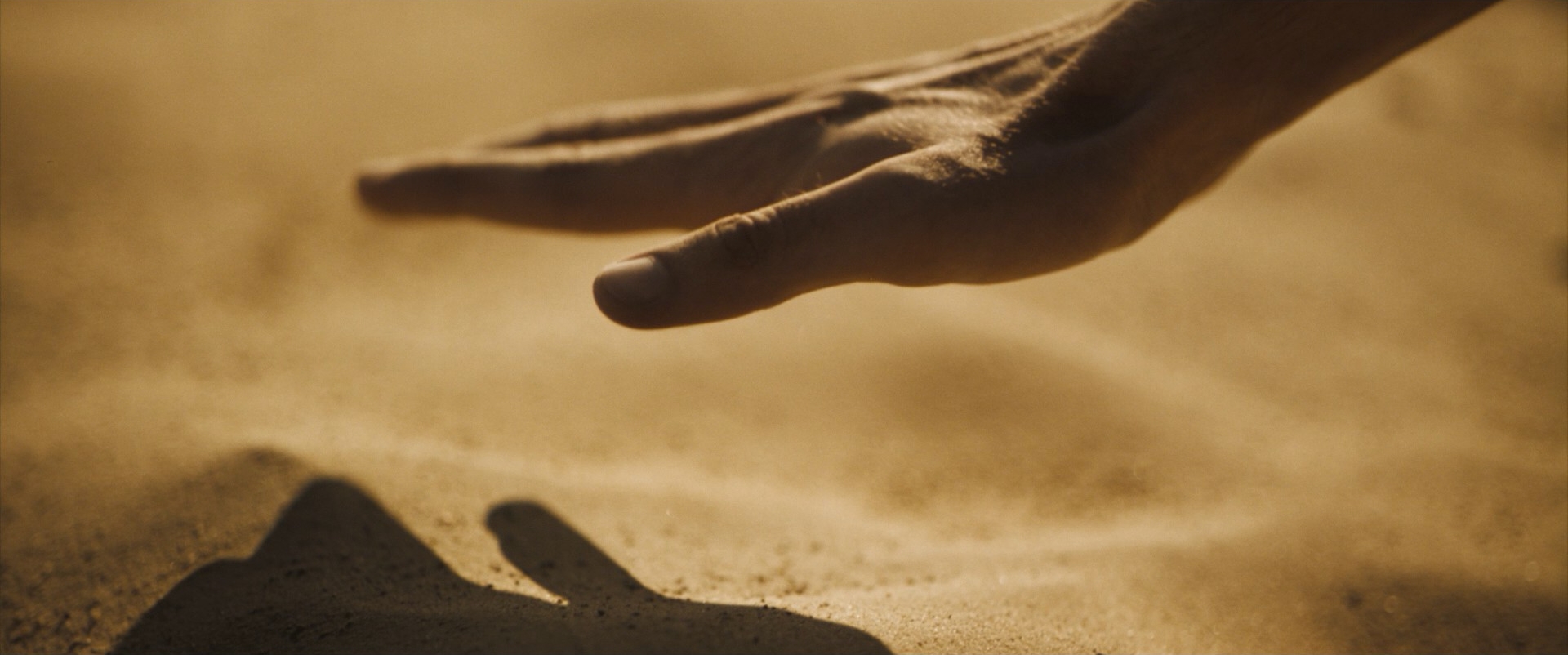
- Hands and fingers. A finger on a trigger, a hand hovering over a button, fingertips on sand. These read as decisions about to be made.
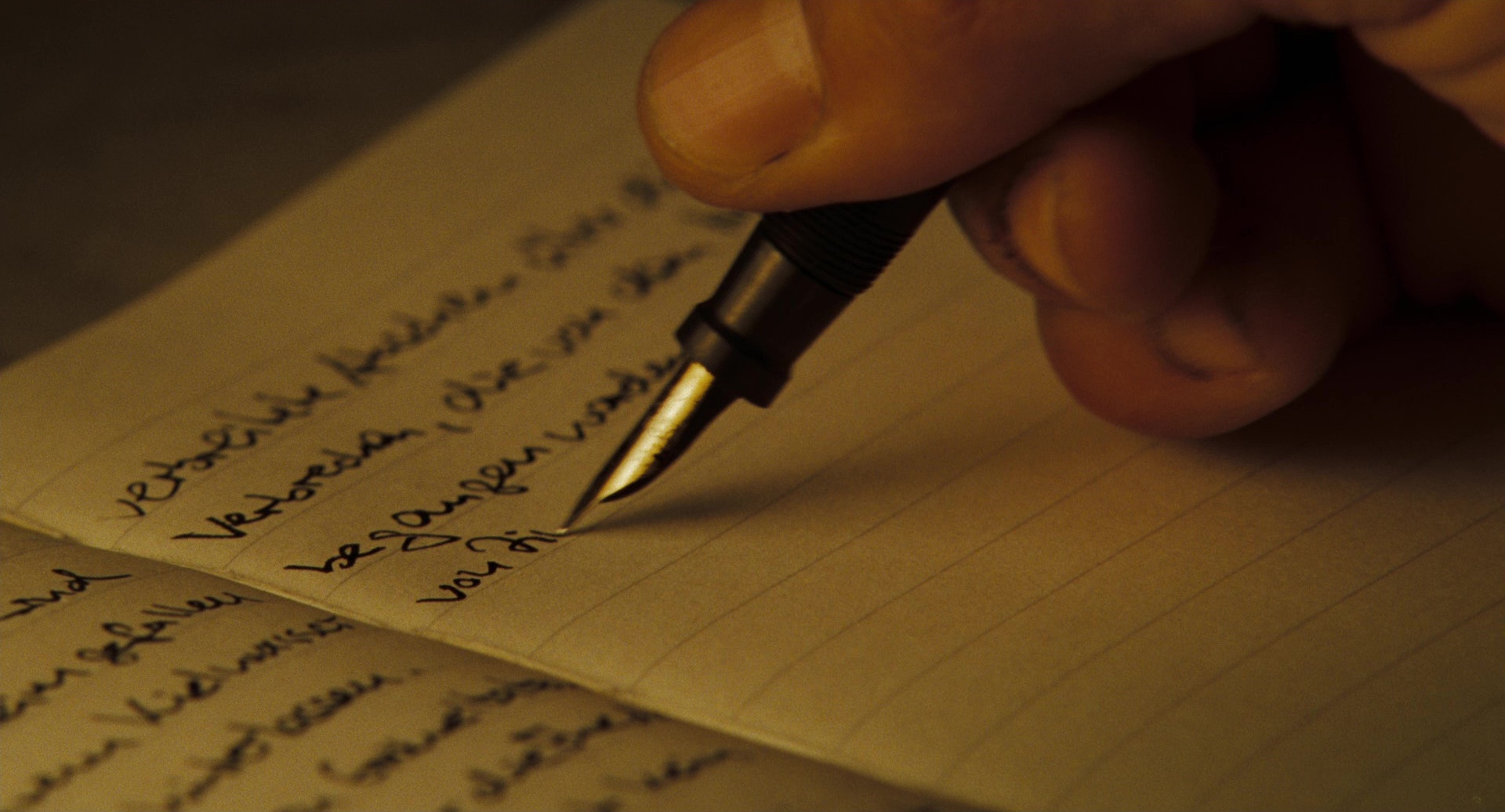
- Objects and mechanisms. A watch face, a pen nib on paper, a key in a lock, a fuse burning. Here the ECU overlaps with the insert and with the product shot — the grammar is the same, the purpose differs.
A fifth, less common family is pure texture — skin, fabric, rust, liquid — used as transitions or as sensory punctuation between scenes.
How to shoot an extreme close-up
Optics. Normal cinema lenses rarely focus close enough. The usual tools are a dedicated macro lens (90–100mm macro on full frame is the workhorse, focusing to about 30 cm at up to 1:1), close-up diopters (+1 to +3) screwed onto a regular prime, or a probe lens for getting inside small spaces. A longer macro keeps the camera farther from the actor, which is easier on eyes and lets you light.
Depth of field. At this magnification the depth of field is measured in millimeters, even at T5.6–T8. An eye ECU at T2.8 may hold the iris and lose the lashes. Most ECUs are shot stopped down, which means a lot of light on a very small area.
Focus by distance, not by the ring. Put the camera on a geared head and a focus rail or slider, and adjust focus by moving the whole camera a few millimeters. Mark the actor's position precisely — a chin rest or a C-stand knuckle near the head helps — because a breath moves the subject out of focus. A deliberate rack focus from lashes to iris, or from a fingertip to the object it touches, is one of the few moves that works at this scale.
Support. Lock it off on a tripod or dolly. Handheld shake is magnified as much as the subject is; use it only when you want that nervous energy. Top-down setups for hands, documents and food are often shot as an overhead shot from a stand arm.
Light. Use a small soft source close to the subject, and watch reflections: an eye mirrors everything, including the lamp, the camera and the crew. Place the catchlight on purpose. Skin shows every pore, so makeup has to be finished for macro — or deliberately unfinished.
Frame rate. Anything moving fast at this size — tears, liquid, a match flaring — benefits from shooting at 48–120 fps and playing back as slow motion, which also hides micro-shake.
Extreme close-up vs. close-up
The boundary is the outline of the face. As long as the frame contains the whole face — even with the forehead cropped — it is a close-up, and it is about a person. Once the frame cuts into the features and you lose the outline, it is an ECU, and it is about a detail.
| | Close-up | Extreme close-up | |---|---|---| | Frame | Whole face, chin to forehead | One feature: eyes, lips, fingers | | Carries | Performance, emotion over time | A single beat, sensation or clue | | Typical length | Holds through lines of dialogue | Often under two seconds | | Lens | 65–100mm portrait prime | Macro lens or diopter |
The practical difference shows in the edit: a close-up can carry a whole speech; an ECU usually cannot, because the actor's expression is incomplete without the rest of the face. Directors therefore cut to an ECU from a close-up at the peak of a beat, and back out as soon as it has done its job.
Extreme close-up vs. insert shot
An insert shot is defined by function, not size: it is a detail cut into a scene's coverage to show the audience information — the text of a letter, the number on a phone. Many inserts are close-ups rather than ECUs, because the information has to be legible. An ECU is defined by size and is often about feeling rather than information: an eye, a trembling lip. When an insert is also extremely tight — a pen nib signing a name — it is both, and crews will call it either.
Extreme Close-Up examples in film
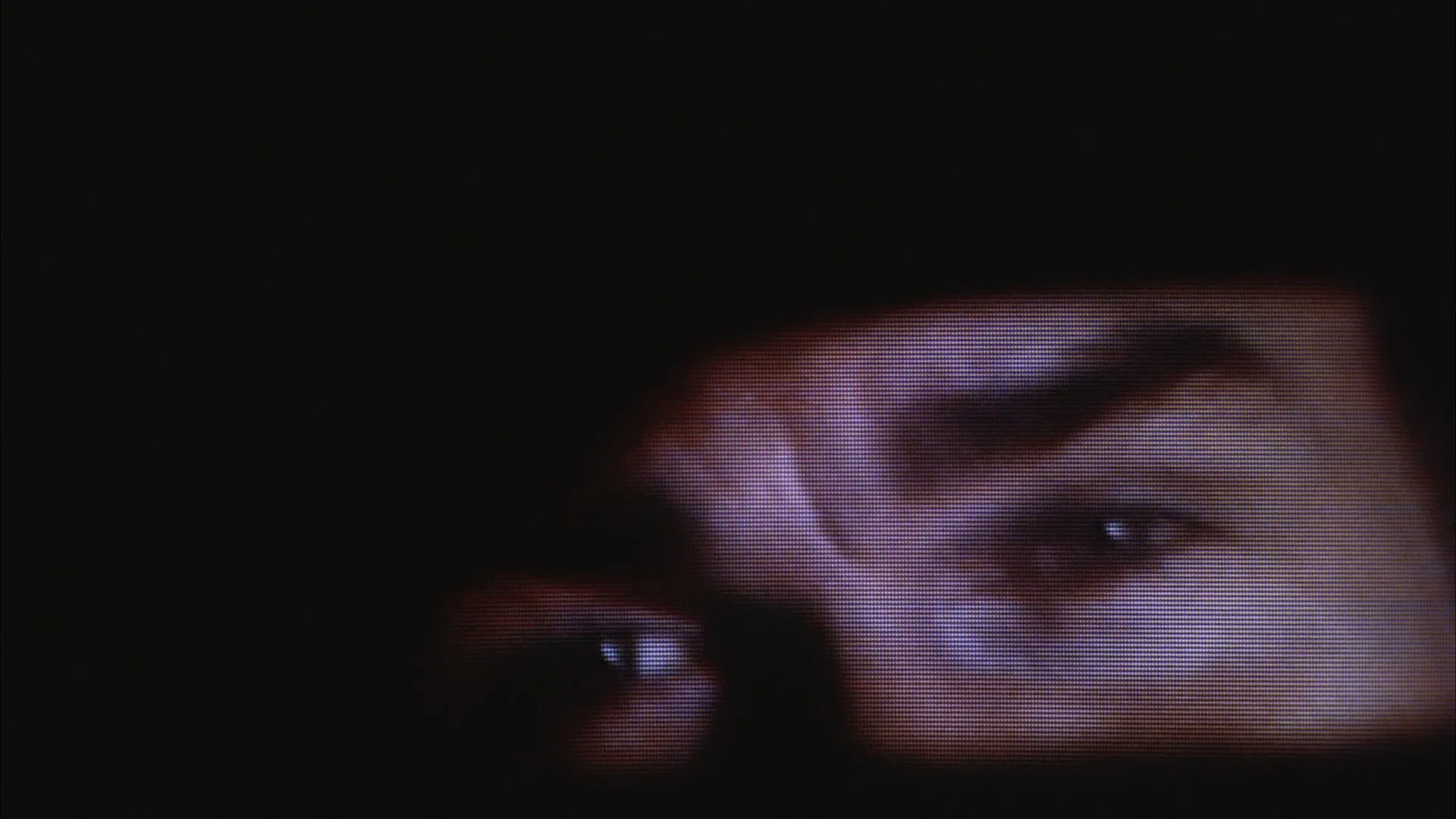
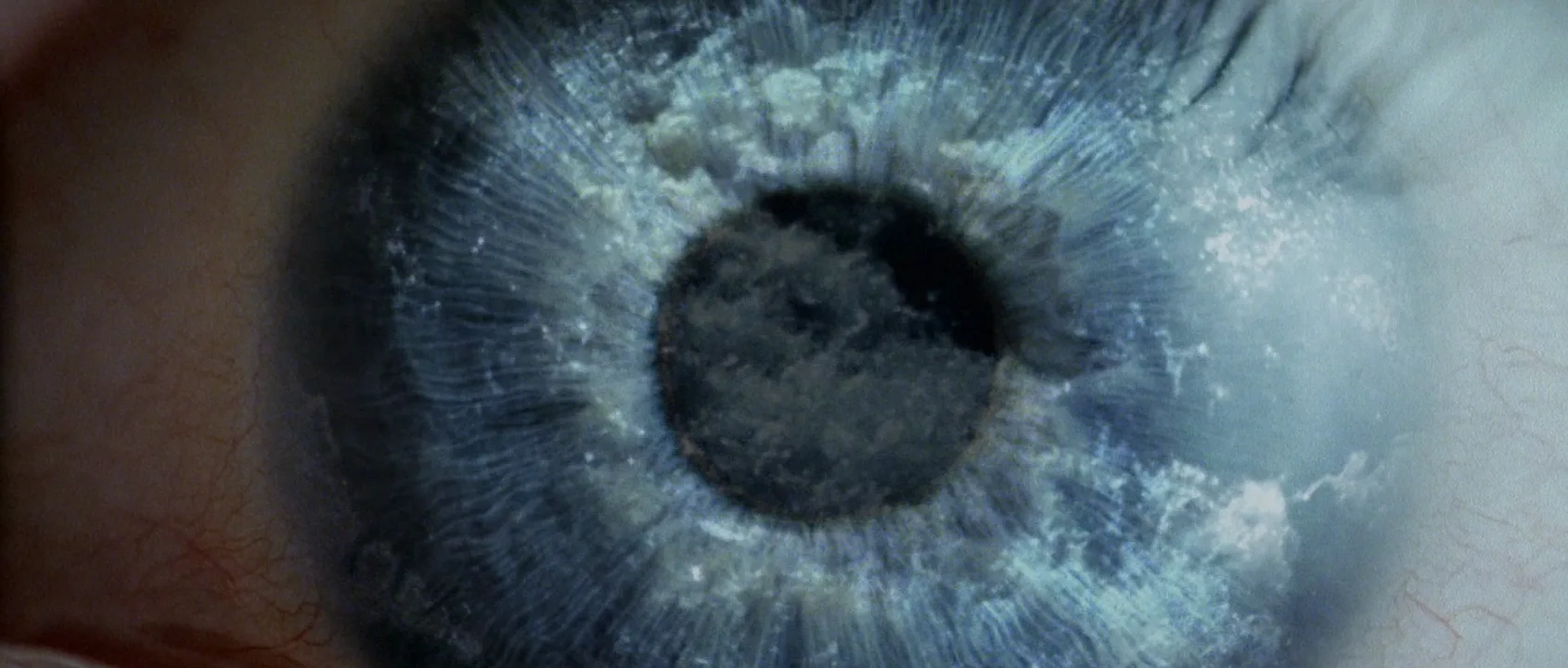
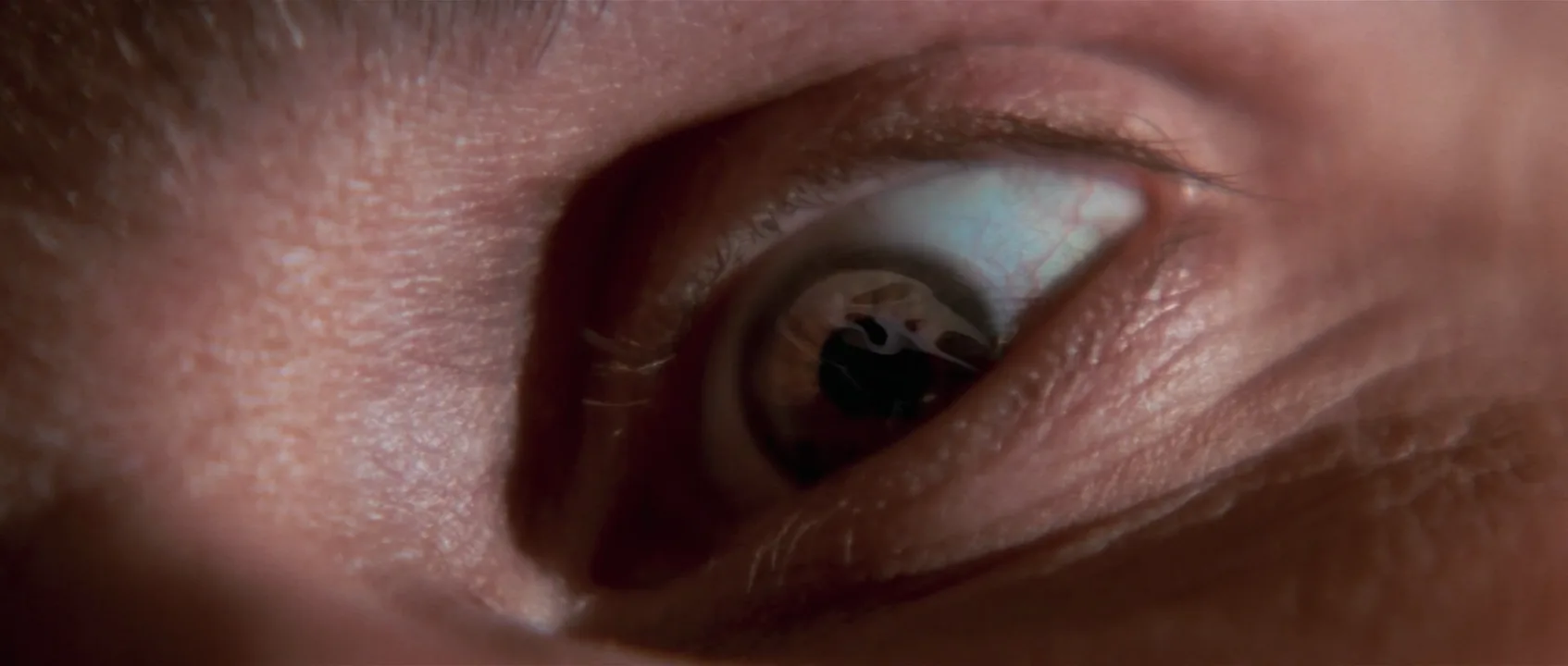
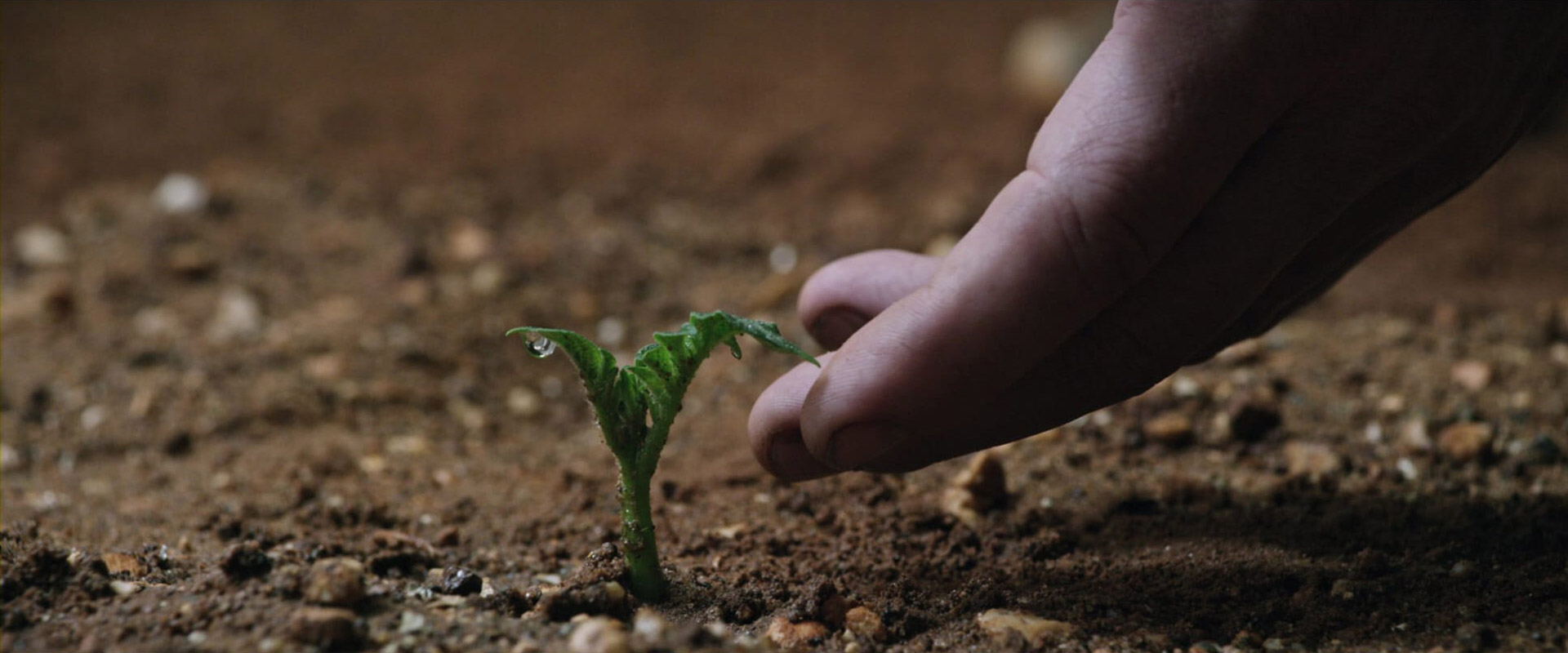
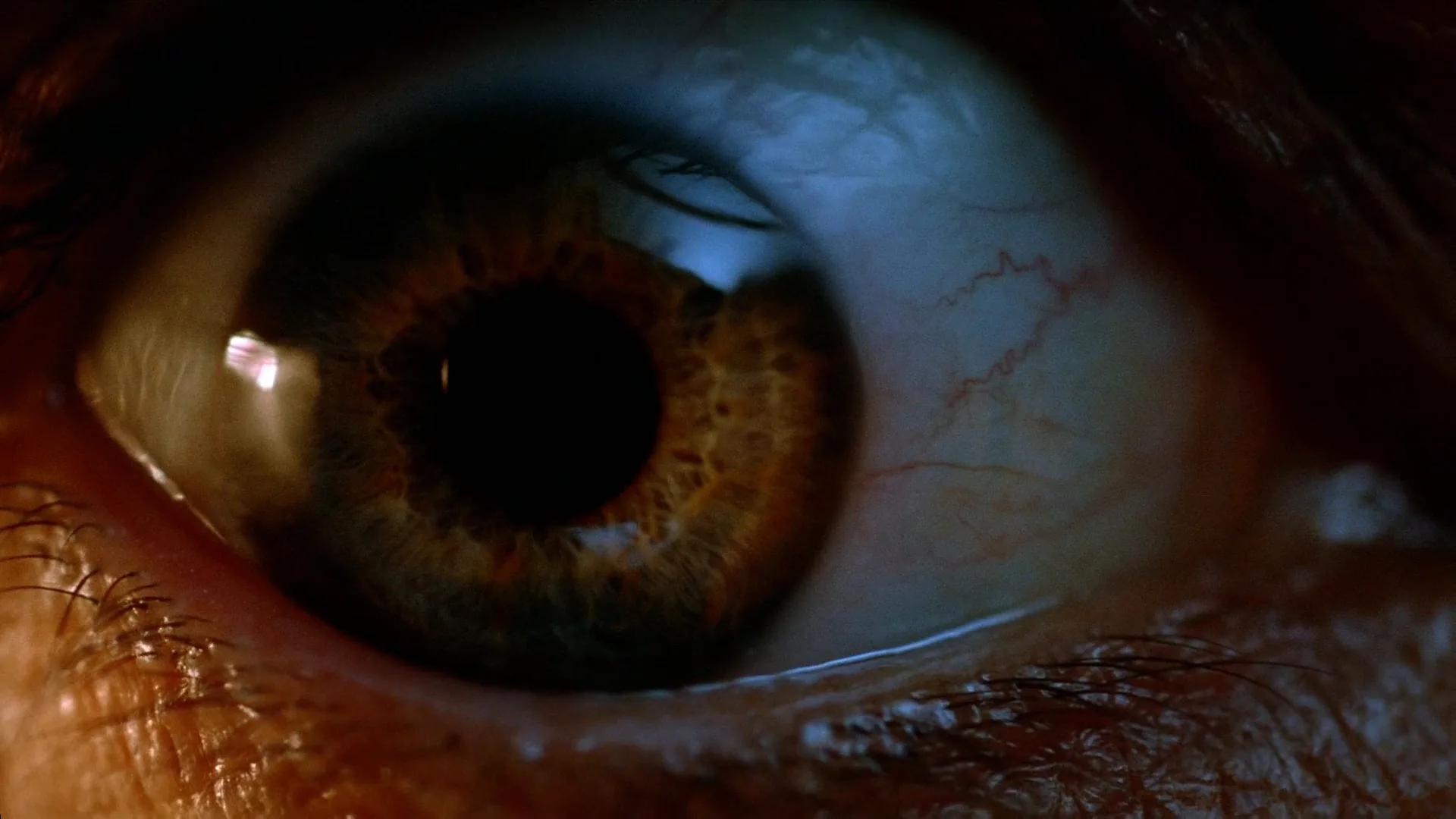
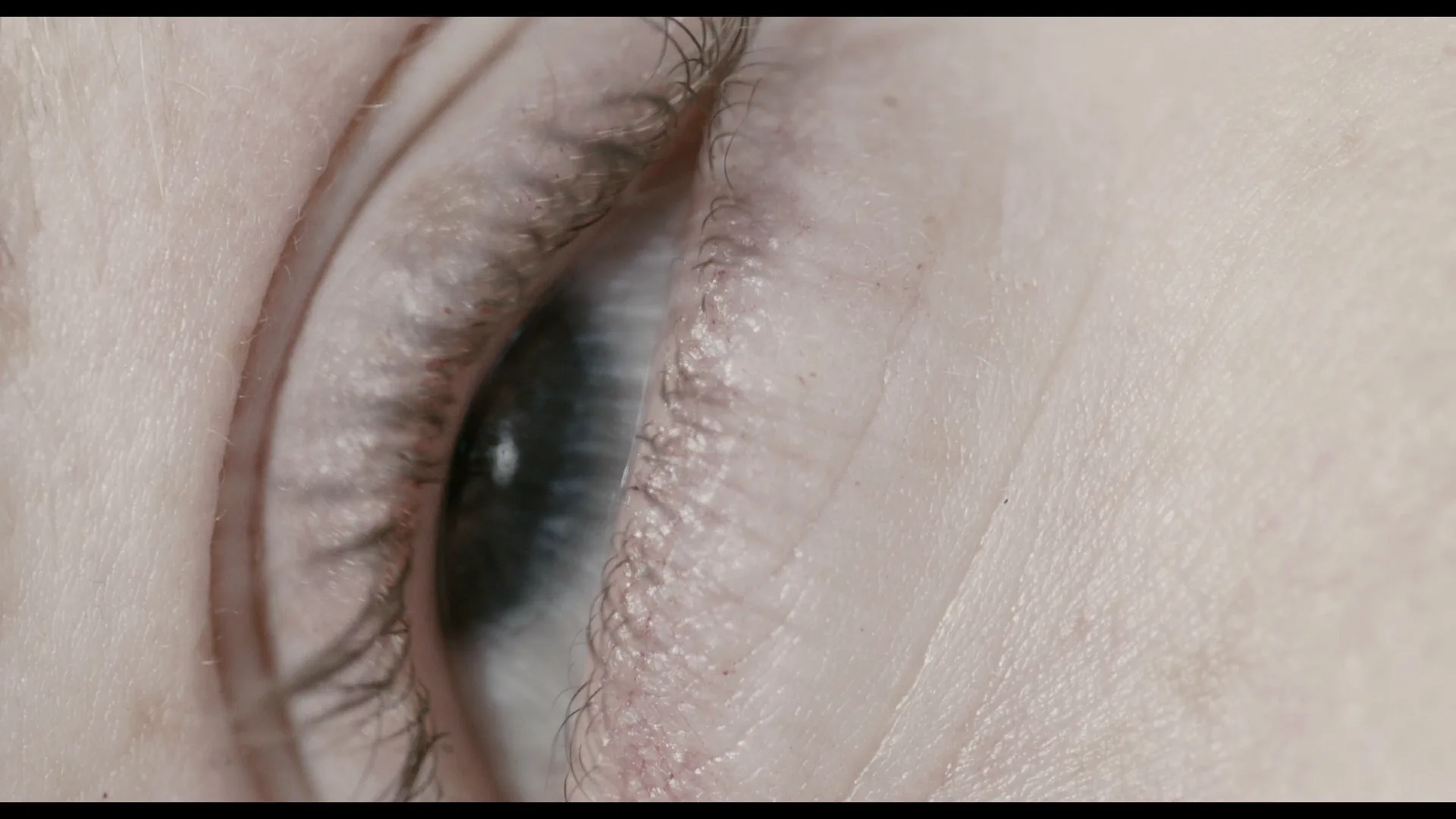
14 framesExtreme close-ups of eyes, lips, hands and objects from 1966 to 2024. Look at where each frame cuts, how shallow the focus is and how little context is left.
How to create a extreme close-up with AI
4 promptsImage and video models pull back to a full face unless you pin the crop, so an ECU prompt has to name one feature, say it fills the frame and describe where the frame edges cut. In FlashBoards, build the start frame with Nano Banana 2 Lite, try a second take with GPT Image 2.5 and animate the frame with MiniMax H3 Max Turbo — with the reference ECUs and the surrounding coverage on the same board, so you can check that each tight detail still cuts with the wider shots. The fourth prompt re-shoots a real film shot from a text description alone, and the original plays next to the result so you can compare.
Extreme close-up of a single green human eye filling the entire frame, upper lid and lower lashes cropped at the frame edges, only the eye and the skin around it in frame, iris in razor-sharp focus, lashes falling soft, 100mm macro lens, small soft light from the left creating one window-shaped catchlight, fine skin texture and tiny veins, cinematic film still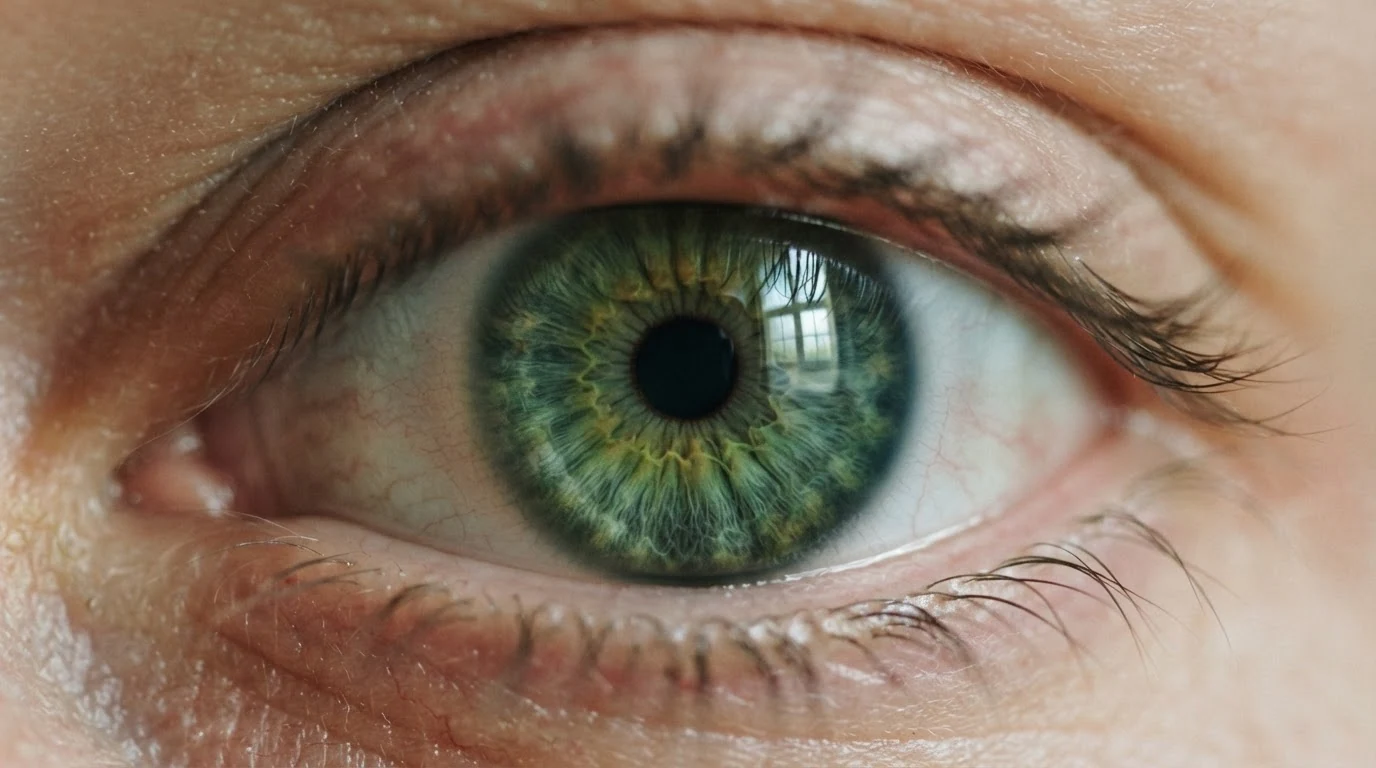
"Filling the entire frame" plus the named crop — lid and lashes at the frame edges — stops the model from drifting back to a close-up. "Iris sharp, lashes soft" describes macro depth of field, and naming the catchlight shape makes the eye look alive. This frame becomes the start frame for the video recipe.
Open FlashBoardsExtreme close-up of an old fountain-pen nib pressing into cream paper mid-stroke, wet black ink line trailing behind it, only the nib and a few millimeters of paper in frame, macro lens at a low angle, warm desk lamp from behind raking across the paper fibers, everything beyond 2 cm dissolves into blur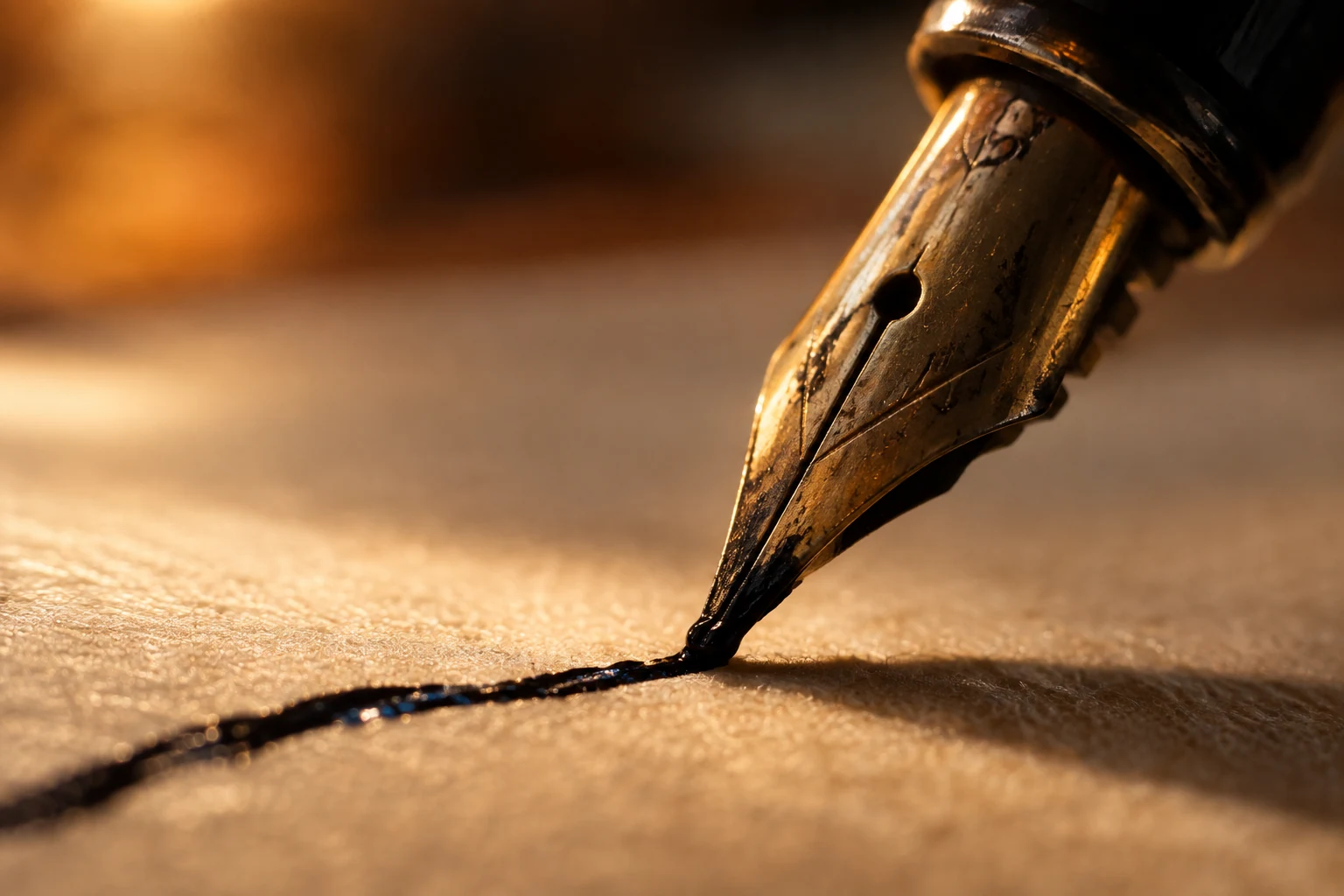
A second take with an object instead of a face. "Only the nib and a few millimeters of paper" defines the scale in physical terms, which works better than the word macro. "Raking light" brings out paper texture, the sign of real magnification.
Open FlashBoardsCamera: locked off, perfectly still on the eye for the whole shot. Action: from the first frame the iris is already sliding slowly from left to right, as if reading. In the middle the pupil stops and fixes on a point just off camera right, and the lower lid tightens. At the end the eye blinks once, slowly, and opens again still fixed off camera right. The soft light from the left and the single catchlight stay constant.Recipe 1's frame already holds the size and the light, so the prompt spends its words on motion. "Already sliding" makes the eye alive from the first frame instead of a still that slowly zooms. "Locked off" matters because any drift reads as a huge move at this magnification, and three tiny beats — read, fix, blink — are the whole performance.
Open FlashBoards{
"output": "Full-screen live-action extreme close-up from Antiviral (2012), alive from its very first frame: one continuous shot, no cuts. Clean modern digital cinema with fine grain, flat soft cool light that is almost shadowless, pale bone-white, gray and faint pink palette, clinical and quiet.",
"characters": {
"S1": {
"name": "the sleeper from Antiviral, a pale young person lying on their side; only one eye and the skin around it are ever seen",
"look": "very pale, almost white skin with faint freckles and fine lines under the eye, a thin pinkish rim along the lower lid, long brown lashes, gray-blue iris",
"voice": "silence: nobody speaks in this shot, no voice at all"
}
},
"shots": [
{
"shot": 1,
"voice": "silence: nobody speaks in this shot, no voice at all",
"camera": "static zero: locked-off and perfectly still for the whole shot, macro lens, extreme close-up of one eye of S1 turned a quarter turn sideways because the head lies on its side. The lash line runs vertically from the top of the frame to the bottom, slightly left of centre; the curved crease of the upper lid bows toward the left edge; bare pale cheek skin fills the right half. Only the eye and the skin around it are in frame, edge to edge, sharp focus on the lashes throughout.",
"action": [
"BEGINNING: alive from the first frame, the eye is closed and at rest, the lashes lying flat against the skin in one vertical line, the lid not moving.",
"THEN: a long stillness: the closed lid and the lashes stay completely still, nothing in the frame moves.",
"THEN: the lid starts to part near the bottom of the frame: a thin dark slit opens between the lashes and grows upward along the lash line.",
"THEN: the upper lid pulls back toward the left, the lashes fan outward to the left and a wet gray-blue iris appears, pressed toward the left side of the eye.",
"THEN: the lid keeps lifting until the eye is wide open; the crease flattens and the whole eye settles slightly toward the left edge.",
"END: the eye holds fully open and perfectly still, the gray-blue iris razor sharp with one small white catchlight in the pupil, gazing toward the left edge of the frame, unblinking."
],
"dialogue": []
}
],
"sound": {
"ambience": "quiet room tone; an old alarm bell rings continuously, heard from off screen in another part of the room, through the whole shot",
"speech": "no words in this video; the only human sounds are breaths and movement",
"never_spoken": "no narration and no voice-over: the descriptions, performance notes and step words of this prompt are never spoken aloud",
"music": "a film score under the scene, always below the voices: a cold, sparse electronic drone with a faint high tone that swells slightly as the eye opens",
"subtitles": "none"
}
}Remakes the sideways eye ECU from Antiviral (2012), dir. Brandon Cronenberg, DP Karim Hussain: the locked-off macro crop, the vertical lash line, the long hold on the closed lid, the eye opening into a fixed stare toward frame left and the alarm bell ringing off screen carried over.
The crop lives in camera: one eye turned a quarter turn sideways, the lash line running vertically, only the eye and the skin around it in frame. Static zero keeps the lens still, and the steps give the lid a long stillness before it opens, so the stare lands late. With no lines in the corpus, the shot is marked silent; the off-screen alarm bell and a cold drone carry the sound.
Common mistakes
- Drift back to a close-up. Models add the nose, the forehead, sometimes the whole head. Name the one feature, say it "fills the frame" and describe where the edges cut ("lid and lashes cropped at the frame edges") rather than listing what to leave out.
- Broken anatomy. Doubled lashes, two pupils, teeth in wrong numbers show up at high magnification. Generate several takes, compare them side by side and pick the clean one.
- Everything in focus. Real ECUs have millimeter depth of field. Say which part is sharp and which falls off.
- Waxy skin. Ask for "pores, fine hairs, skin texture" — smooth skin at this scale looks like plastic.
- "Macro" means nature photography. The word alone can pull in insects, flowers and water drops. Pair it with the human subject and a film-still description.
- A frozen or wandering video. Without stated motion the video model slowly pushes in on a still eye; with a vague move it drifts and hunts focus. Start
Action:with motion that is already happening, lock the camera off, and describe only what is in the frame — a mentioned hand or second face will get drawn in.
Keep the reference frames, prompts and every generated take side by side — images and video in one canvas.
FAQ
5 questionsWhat is an extreme close-up shot?
An extreme close-up, abbreviated ECU or XCU, is the tightest shot size: the frame isolates a single detail — an eye, lips, fingers, the face of a watch — so it fills the screen and nothing else of the subject is visible. Filmmakers use it to give one detail great importance, to build tension or to make an image feel physical.
What is the difference between a close-up and an extreme close-up?
A close-up contains a whole face, even if the forehead is cropped, so it shows a person's expression and can hold through dialogue. An extreme close-up cuts inside the face to one feature — typically the eyes or mouth — so it shows a detail and works best as a short accent. The boundary is whether the outline of the face is still in frame.
What lens do you need for an extreme close-up?
Usually a macro lens — a 90–100mm macro on full frame is the common choice because it focuses close while keeping some working distance. Close-up diopters on a regular prime are a cheaper option, and probe lenses reach into tight spaces. Expect depth of field of only a few millimeters, so stop down and bring plenty of light.
Is an extreme close-up the same as a macro shot?
Not exactly. Extreme close-up names a shot size defined by content: one feature of a subject fills the frame. Macro describes the optics — a lens that focuses close enough to render a tiny subject at or near life size. Many ECUs of eyes or lips need macro focusing, but a macro shot of an insect is not an extreme close-up of a character.
When should you use an extreme close-up?
Use it at the peak of a beat, when one detail carries the moment: the eyes before a draw, a finger tightening on a trigger, a clue the audience must not miss, a sensation you want them to feel. Establish the character or object in a wider shot first, keep the ECU short, and cut back out once it has done its job.
Related terms
4- Close-Up ShotCamera Shots
A close-up frames a subject tightly — for a person, usually the face from chin to forehead or the head with the top of the shoulders — so emotion, micro-expressions and small details dominate the screen.
- Insert ShotCamera Shots
An insert is a close shot of an object or small action inside the scene — a note, a phone screen, a hand turning a key — cut into the coverage so the audience notices exactly the detail the story needs.
- Overhead ShotCamera Angles
An overhead shot looks straight down on the scene from directly above, at about 90 degrees, flattening it into a map-like graphic pattern — also called a bird's-eye or god's-eye view.
- Rack FocusLenses, Focus & Exposure
A rack focus shifts focus during a shot from one subject to another at a different distance, moving the viewer's attention — and often revealing new information — without a cut.
Further reading
Steven D. Katz, Film Directing Shot by Shot (Michael Wiese Productions). Blain Brown, Cinematography: Theory and Practice (Routledge). David Bordwell and Kristin Thompson, Film Art: An Introduction (McGraw-Hill).