 FlashBoards Learn
Lighting · Film language
Cucoloris
Also called: cookie, cuke
A cucoloris, or cookie, is a panel with irregular cut-outs set in front of a light so it throws a broken pattern of light and shadow, such as leaves, branches or abstract dapples, onto walls and faces. It breaks up flat light, hints at a world outside the frame and adds depth and texture.
- What it does
- Breaks an even wash of light into a pattern that suggests leaves, branches or an unseen window just out of frame.
- Use it when
- A wall or background looks flat and lifeless, or the scene needs an off-screen world such as trees, a garden or a courtyard.
- Watch out
- A pattern that is too regular or too busy reads as a lighting trick; keep dark patches off the eyes unless you mean it.
- Try this prompt
cinematic medium shot, hard sunlight through unseen leaves throwing crisp dappled shadows across a pale plaster wall and the actor's shoulder, 35mm, warm afternoon
What is a cucoloris?
A cucoloris is a shadow-casting panel and one of the oldest tricks in film lighting. On set it is almost always a cookie, sometimes a cuke. On a C-stand between lamp and set, its cut-outs turn one even beam into scattered shapes that the audience reads as sunlight through a tree, a lattice or a window.
A flag removes light; a cookie removes only part of it, in a pattern.
Hard, soft and branch cookies
- Hard cookie: plywood or foam board with holes, giving crisp shapes under a small hard light source.
- Soft (celo) cookie: a translucent textured panel whose shapes blend into dappled shade.
- Branchaloris: a real leafy branch in a grip head that a grip can sway to play wind.
Why do filmmakers use a cookie?
To kill flat walls. Broken into irregular patches, an evenly lit background gains texture, depth and a direction for the eye.
To motivate an off-screen world. Leaf dapples mean a garden outside; hard angular slashes suggest window frames or railings. Like water reflection lighting, a cookie builds an unseen place out of light alone.
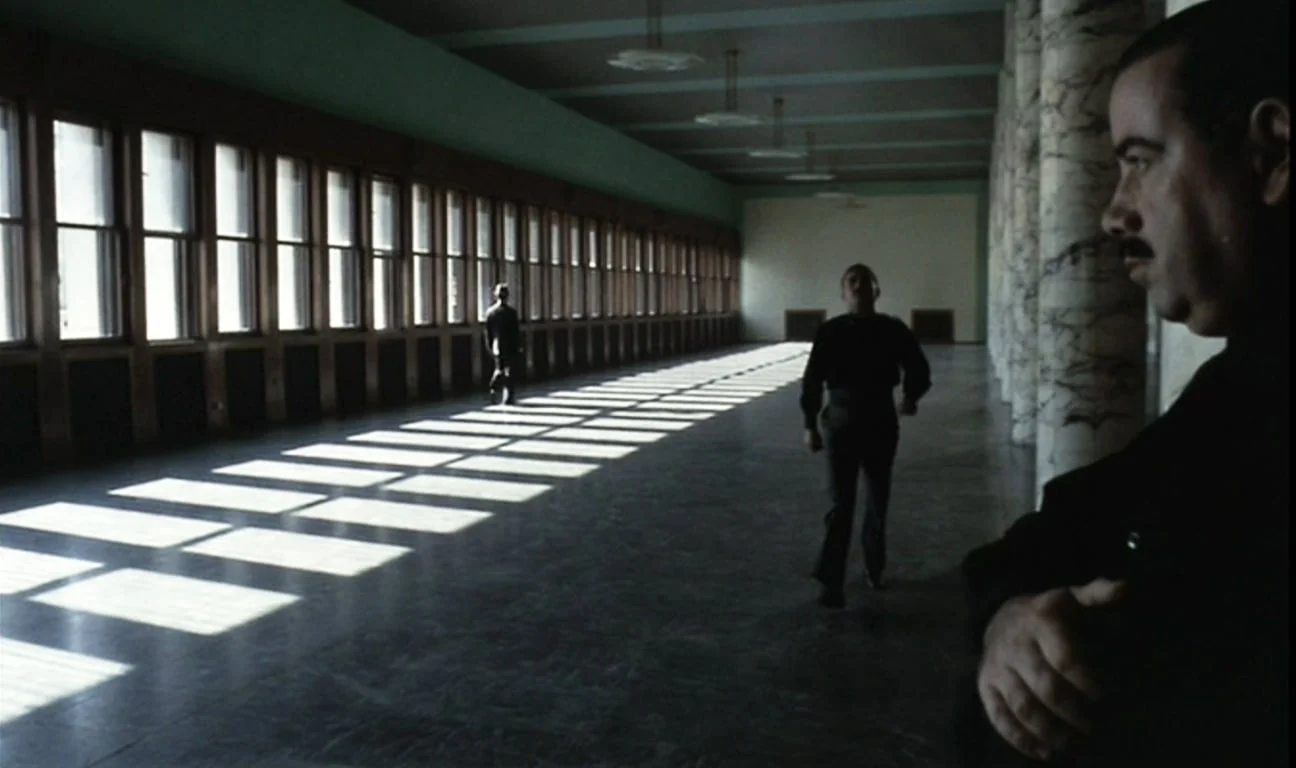
To set a mood. Soft dapples on a face read as summer, calm, memory. Harsh diagonal bars across a hallway read as tension and confinement, the territory of film noir and the cast shadow. The Conformist (1970), shot by Vittorio Storaro, is a well-known study in stylized, patterned light.
To guide the eye. A bright gap in the pattern works as a spotlight: put the face in it and leave the rest in broken shade.
How to light with a cucoloris
- Start hard. A spotted fresnel, open-face lamp, PAR or direct sun. Big soft sources wrap around the cut-outs and the pattern vanishes.
- Set the distances. With the cookie about 1–2 m from the wall and the lamp 4–6 m back, shapes come out crisp and close to the size of the holes. Slide the cookie toward the lamp and they grow larger and softer.
- Choose the surface. Cookies shine on backgrounds. On faces, keep a bright gap over the eyes; a dark blotch there reads as a mistake.
- Balance exposure. Lit patches usually sit 1–2 stops under the key, so the pattern supports the actor.
- Move it slowly. A gentle sway sells wind; fast, regular movement looks mechanical.
- Trim the spill. Barn doors or a flag give the pattern a clean boundary.
Cucoloris vs. gobo
A gobo is a small metal or glass template inside an ellipsoidal spot such as a leko light; the fixture's lens focuses it into a pin-sharp shape, like a specific window or a logo. A cucoloris is a large external panel with no lens, so its sharpness depends only on distances and source size, and its patterns are looser and more organic. Use a gobo when the shape must read; use a cookie for texture.
Cucoloris examples in film
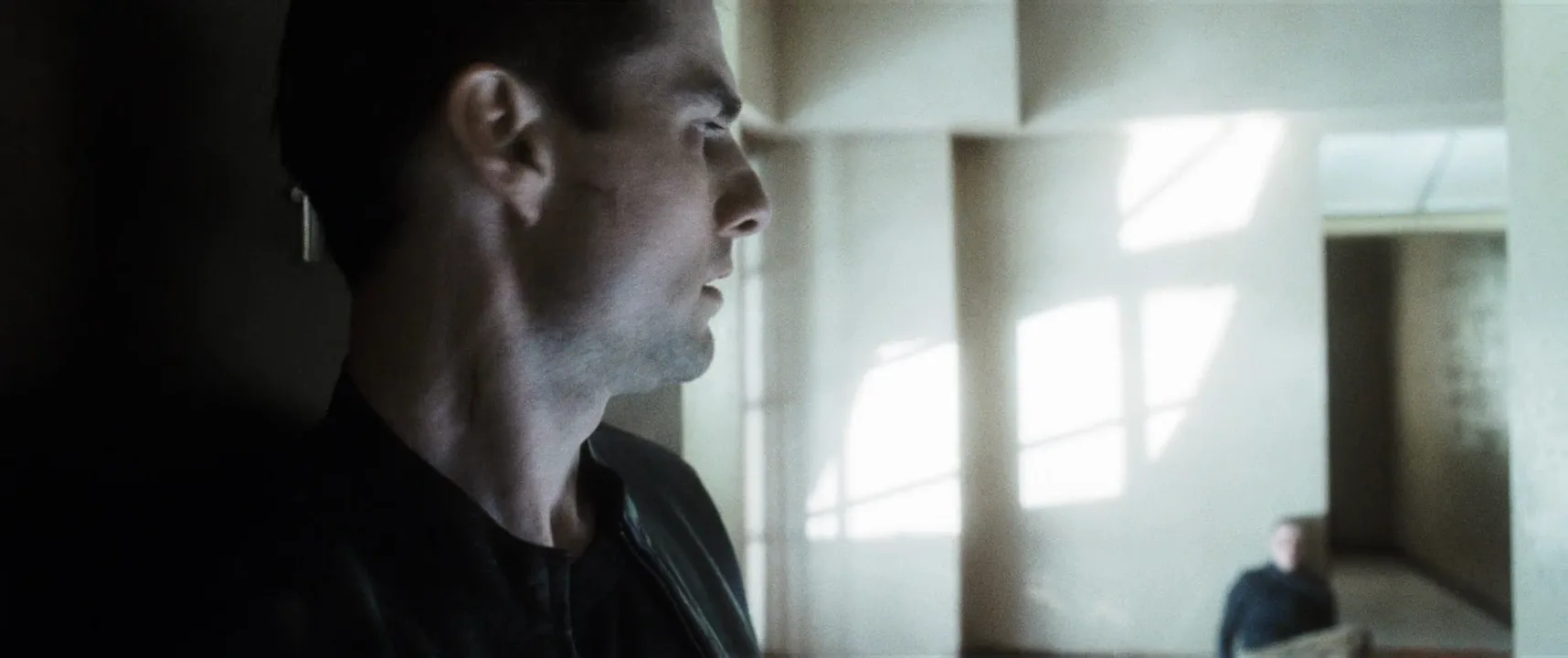
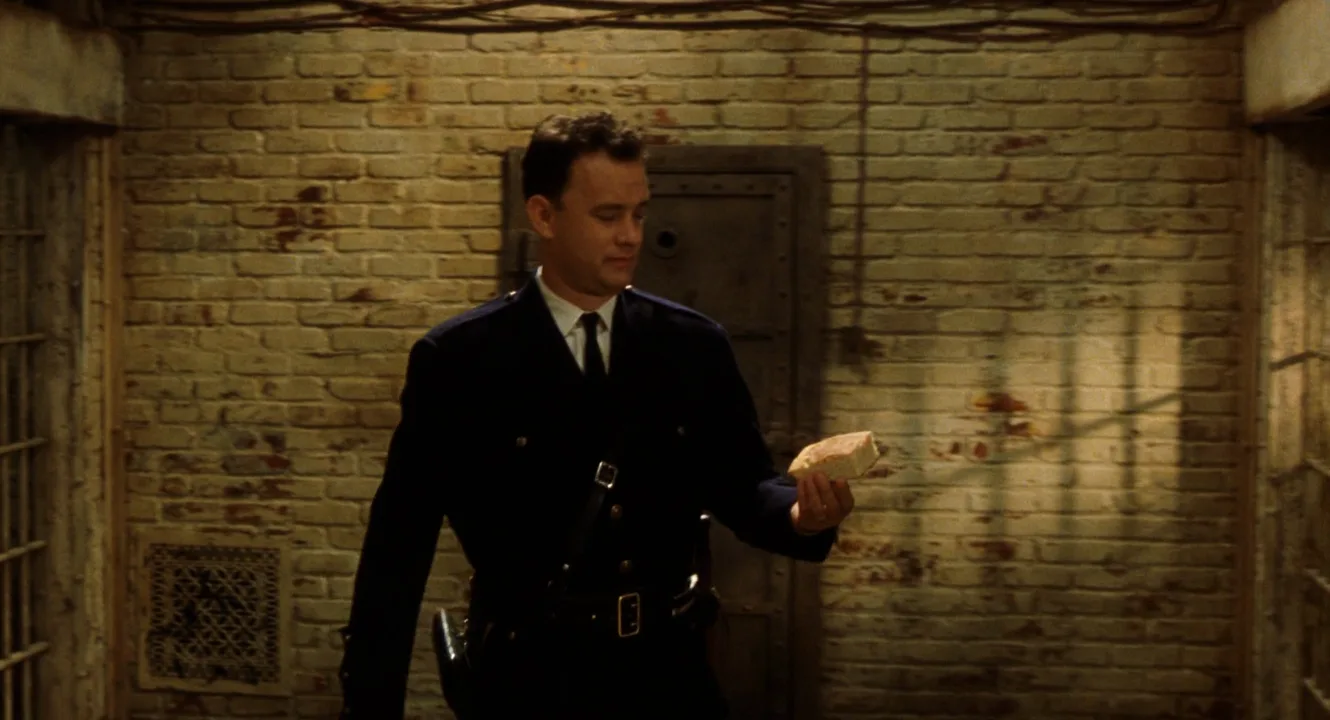
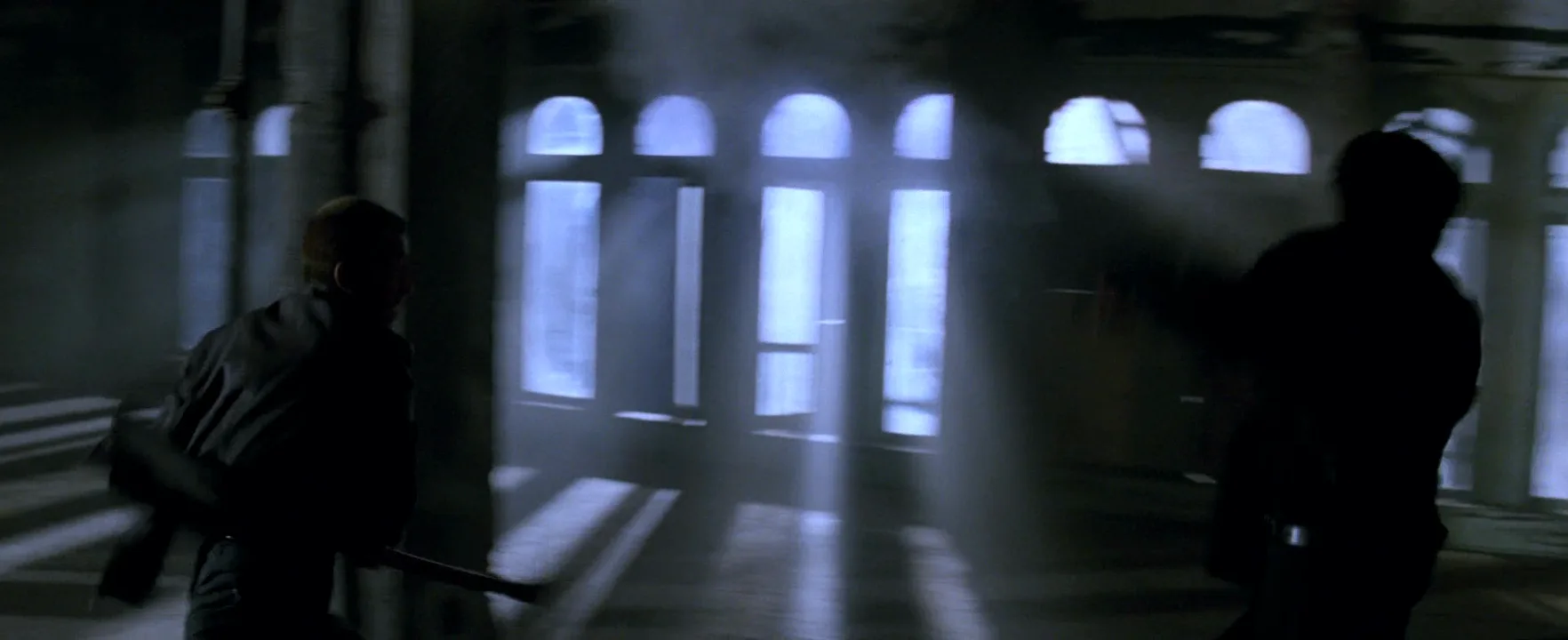
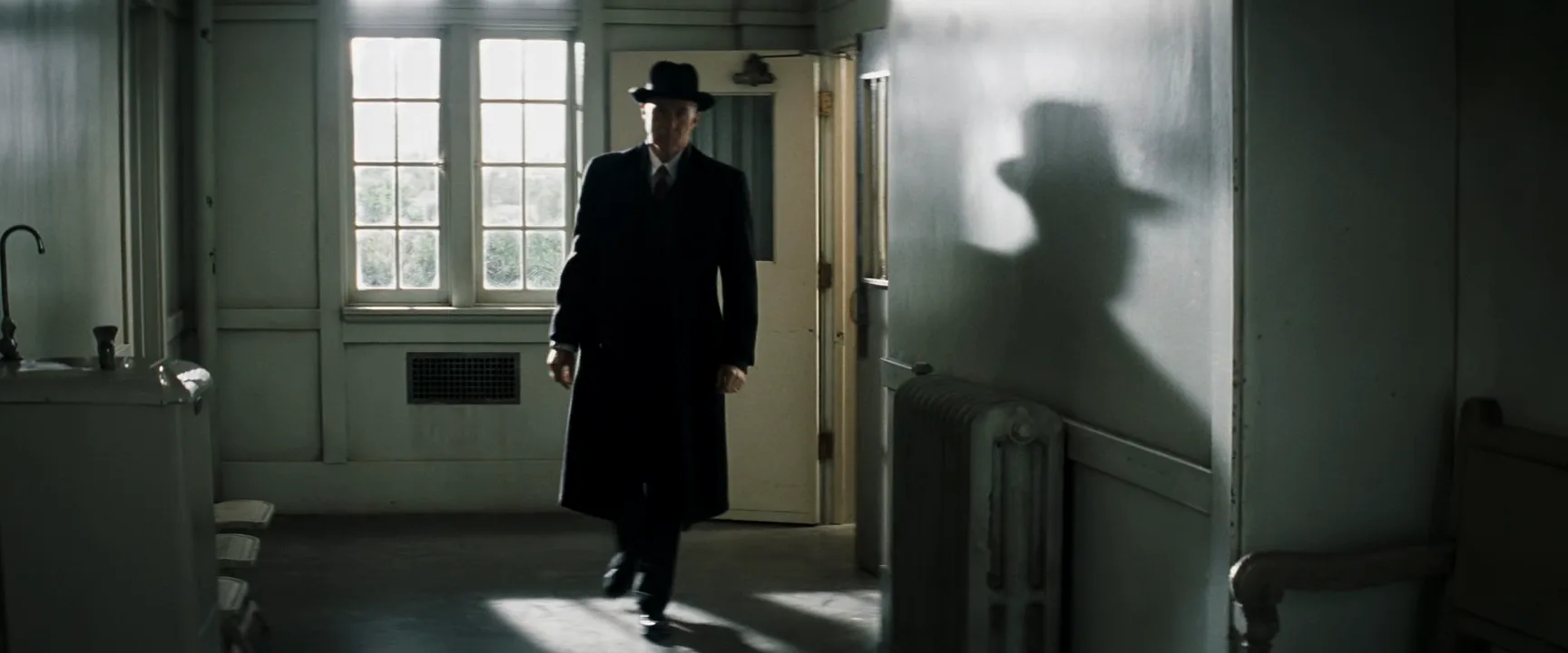
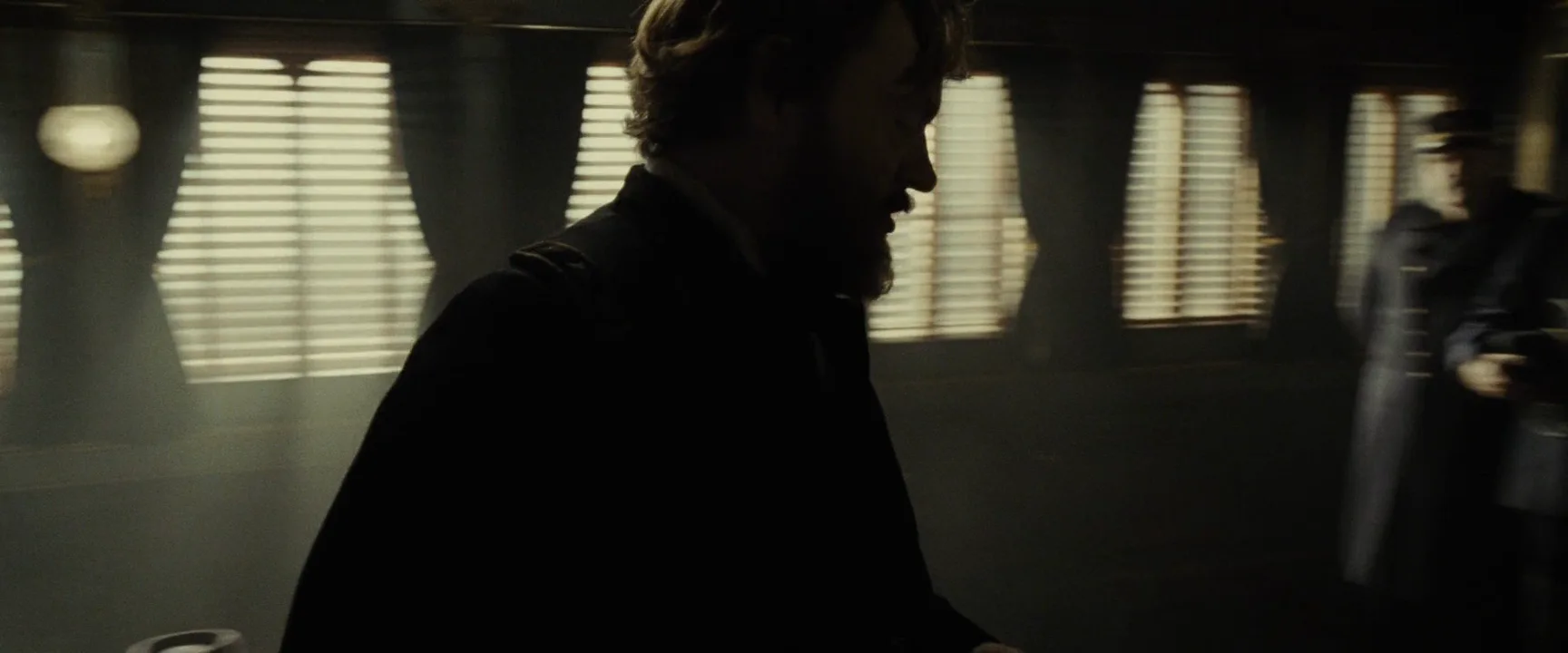
7 framesThese frames don't reveal which tool made each pattern, but each shows the job a cucoloris does: breaking light into shapes that give a surface depth and mood.
How to create a cucoloris with AI
4 promptsFor a cookie look, describe the pattern, where it lands and where its unseen source is. Build the start frame with Nano Banana 2 Lite, try a harder take with GPT Image 2.5, then let MiniMax H3 Max Turbo animate the dapples. Keep the takes side by side on one FlashBoards board with your references. The fourth prompt re-shoots a real film shot from a text description alone, and the original plays next to the result so you can compare.
Cinematic medium shot at eye level, 35mm lens. A woman in her late thirties with a short copper-red bob, heavy freckles and a moss-green cardigan sits at an oak kitchen table reading a handwritten letter. Hard late-afternoon sunlight from outside the frame at left passes through unseen leaves, throwing crisp irregular leaf-shaped dapples across the pale plaster wall behind her, her shoulder and one cheek. Her eyes sit in a bright patch; the rest of the room is in soft warm shade. Film grain.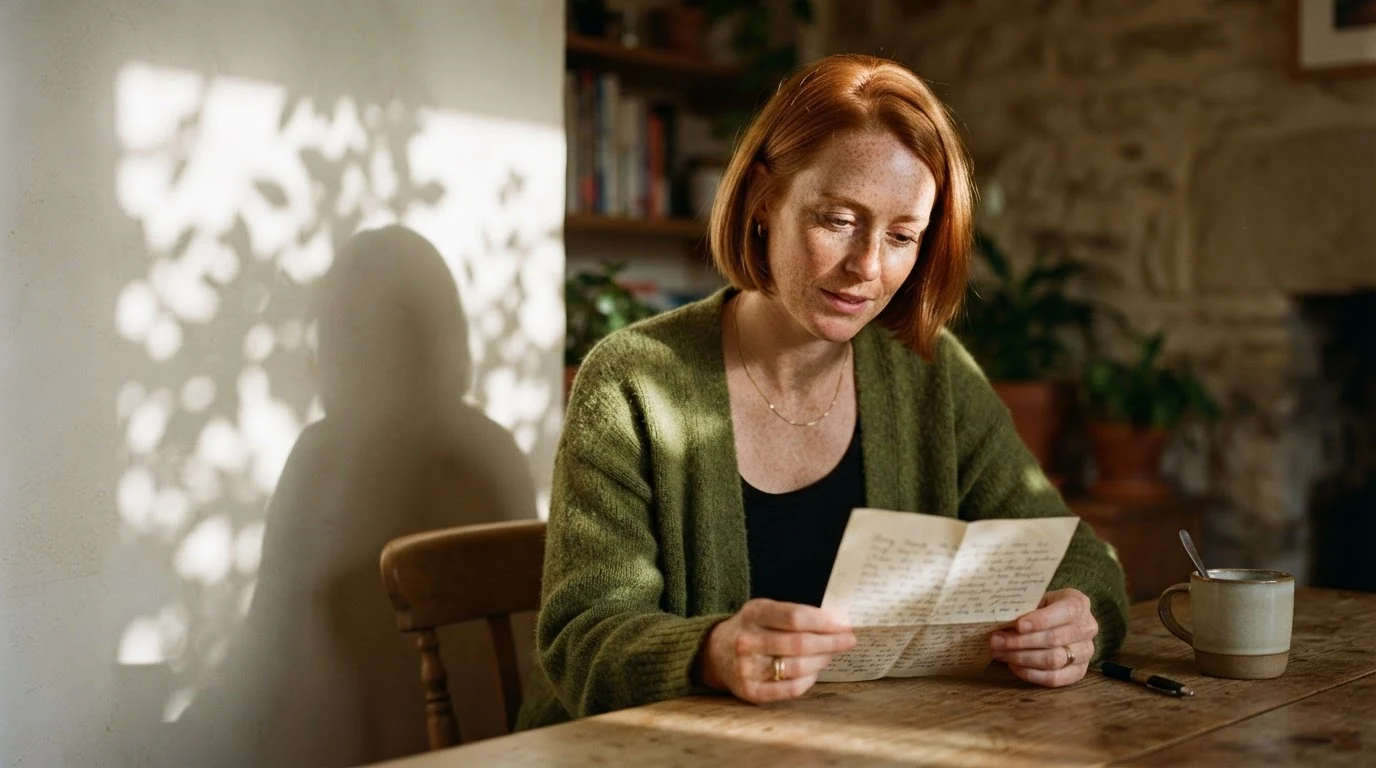
"From outside the frame" and "unseen leaves" motivate the pattern without drawing a tree. "Crisp irregular leaf-shaped" and the named surfaces place the dapples, and "eyes sit in a bright patch" keeps shadow off the eyes.
Open FlashBoardsWide anamorphic frame, 28mm lens at chest height. A night hotel corridor, cream walls, dark red carpet. At the far end stands a tall man in his fifties with a shaved head, a thick grey beard and round steel-rimmed glasses, in a charcoal overcoat. One hard cool-blue light from high right is broken into jagged angular shards of light and deep shadow slashing across both walls and the carpet. He stands in a narrow bright gap. High contrast, faint haze, noir mood.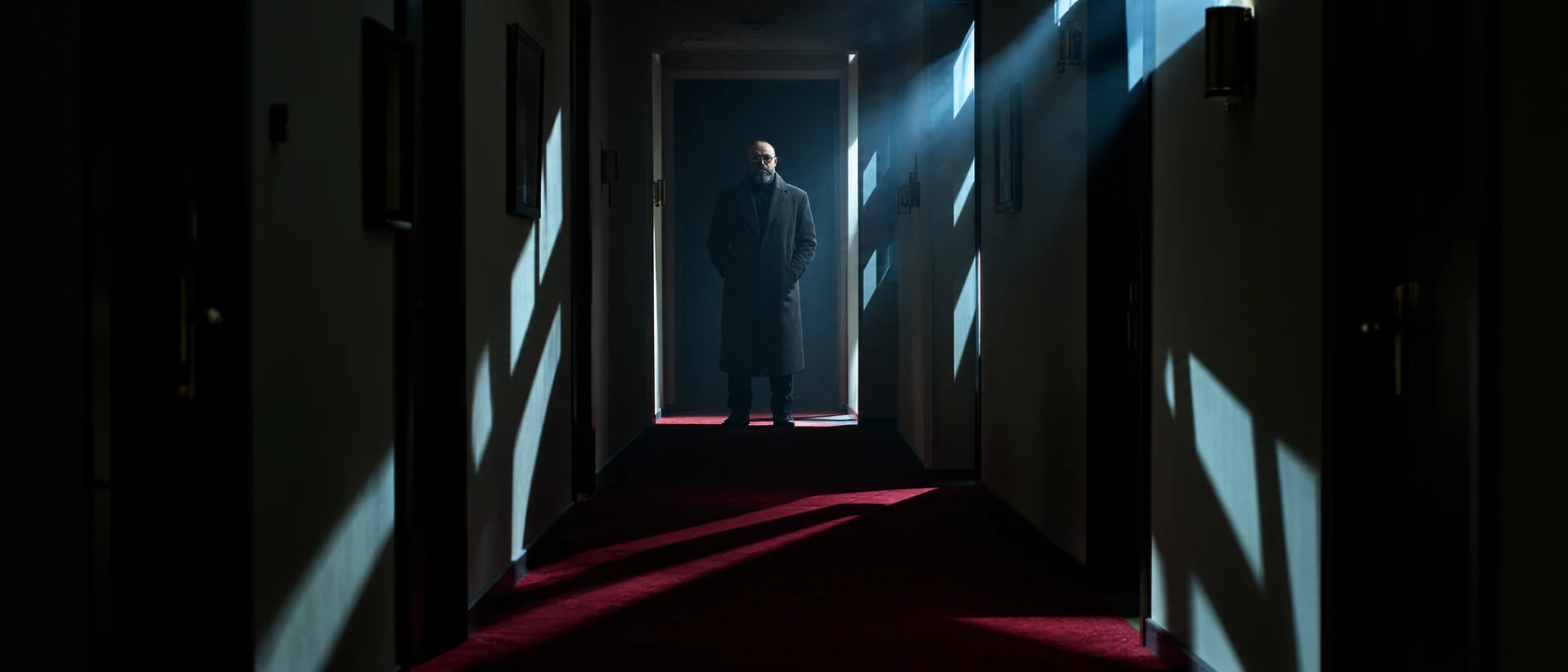
This take swaps leaves for an abstract hard cookie: "jagged angular shards" and "slashing across both walls" give a noir breakup, and "a narrow bright gap" uses the pattern as a spotlight.
Open FlashBoardsCamera: very slow, steady push-in toward her face, at eye level. Action: From the first moment the leaf-shaped dapples shimmer and drift across the plaster wall, her shoulder and cheek, swaying gently as if a breeze moves the leaves. She lowers the letter to the table and turns her face toward the light at left, so the dapples slide across her forehead and eyes. She ends holding still, the moving pattern flickering softly on her face and the wall.The dapples move from the first frame, so the clip starts alive. Her turn toward the light makes the pattern travel across her face, and only elements already in the start frame are named.
Open FlashBoards{
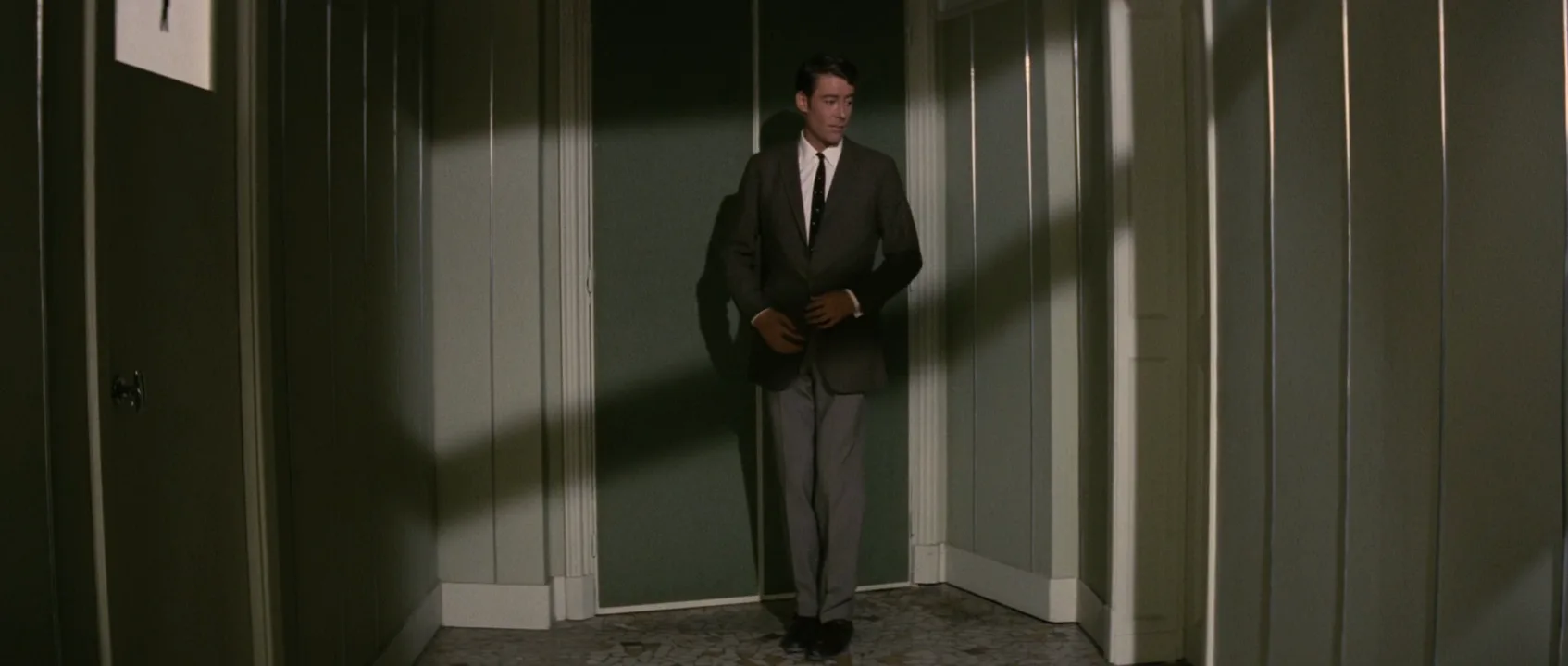
"output": "Full-screen live-action scene from How to Steal a Million (1966), from its very first frame: one continuous shot. 1960s Technicolor 35mm scope look, soft grain, muted olive-green, sage and cream palette, a quiet museum corridor at night lit by dim cool fill plus one hard light source out of frame to the right, broken into broad parallel diagonal bars of light and deep shadow that rise from lower left to upper right across the pale paneled walls, the tall dark double door in the recess and the terrazzo floor.",
"characters": {
"S1": {
"name": "Simon Dermott, played by Peter O'Toole",
"look": "tall and slim, thick neatly combed dark hair, pale face, dark charcoal single-breasted suit, white shirt, thin black tie, light gray trousers, black shoes, a pair of brown leather gloves",
"voice": "silent in this shot"
}
},
"shots": [
{
"shot": 1,
"camera": "locked-off static wide shot at eye level, frame completely still throughout; S1 full figure, small, just right of centre in a shallow recess in front of a tall dark double door, white door frames and vertical wall panels on both sides, a small framed white notice high on the left wall",
"voice": "silence: nobody speaks in this shot, no voice at all",
"action": [
"BEGINNING: alive from the first frame, S1 stands in the recess with his back close to the dark door, body facing the camera, head turned slightly to screen right, eyes glancing toward screen right; arms hang loose, his screen-left hand held a little away from his hip; a diagonal bar of shadow crosses his chest and the door behind him, and his own shadow falls on the door to screen left.",
"THEN: he stays still for a moment, only his eyes moving, listening.",
"THEN: both hands come together in front of his belt and he tugs on the brown leather gloves, working a glove onto his hand, glancing screen right and then back toward the camera.",
"THEN: both hands rise to his collar and he straightens the knot of his tie, chin lifted, eyes up toward screen right, a small pleased half-smile.",
"THEN: his hands drop to his chest and he steps forward out of the recess, turning his body toward screen right; the bright and dark bars slide across his shoulders and suit as he moves.",
"END: he walks briskly toward screen right, his screen-right arm reaching out toward the edge of the right wall, and leaves the frame on the right; the empty recess and the striped walls remain, the pattern unmoved."
],
"dialogue": []
}
],
"sound": {
"ambience": "hushed empty corridor room tone, soft creak of leather gloves, fabric rustle, quick footsteps on a stone floor",
"speech": "no words in this video; the only human sounds are breaths and movement",
"never_spoken": "no narration and no voice-over: the descriptions, performance notes and step words of this prompt are never spoken aloud",
"music": "a film score under the scene, always below the voices: sly light-caper pizzicato strings with a soft celesta, tiptoeing and playful",
"subtitles": "none"
}
}Remakes the static museum-corridor shot from How to Steal a Million (1966), carrying over the locked-off wide frame, the diagonal bars of shadow across paneled walls, and Peter O'Toole's silent beats: gloves, tie, exit right.
The output line names one hard source out of frame and spells out the bars' angle and the surfaces they cross, which is the whole cookie job. A locked-off camera lets the pattern stay put while Simon Dermott gloves up, fixes his tie and walks out through it, so the light reads as part of the set, not as an effect.
Common mistakes
- Source drawn in frame. Say the light comes from outside the frame and only its pattern falls on the wall.
- Smeared pattern. Add "hard sunlight" and "crisp"; soft or overcast wording dissolves the dapples.
- Pattern everywhere. Name the surfaces that receive it and put the rest in soft shade.
- Frozen dapples in video. Start
Action:with the pattern already moving.
Keep the reference frames, prompts and every generated take side by side — images and video in one canvas.
FAQ
4 questionsWhat is a cucoloris in lighting?
A cucoloris is a board with irregular holes placed between a lamp and the set. Light passing through it breaks into patches and shadows, usually meant to look like leaves, branches or a window. It adds texture to flat walls and suggests something outside the frame without showing the source.
Why is it called a cookie?
Cookie is crew shorthand for cucoloris, a word nobody wants to shout across a set; "cuke" is also common. All the names mean the same tool: a perforated panel on a stand that breaks up a beam. A real branch used the same way is jokingly called a branchaloris.
What is the difference between a cucoloris and a gobo?
A gobo is a small template inside an ellipsoidal spotlight, and the fixture's lens focuses it into a sharp, specific shape such as a window or a logo. A cucoloris is a large external panel with no lens, so its shapes are looser and more organic, and its sharpness depends on distances and source size.
How do you make dappled light shadows for film?
Put a cookie, a leafy branch or a DIY foam-board cut-out in front of a hard source such as a fresnel or direct sun. Place it near the wall for crisp dapples, nearer the lamp for soft ones. Keep the pattern a stop or two under the key and sway the branch gently for wind.
Related terms
2- Water Reflection LightingLighting
Water reflection lighting bounces a lamp off a moving water surface — a pool, a tray, a mirror in water — so rippling caustic patterns dance across walls and faces, suggesting water, dreams or an unstable inner world.
- Film LightingLighting
Film lighting is the craft of shaping light for the camera — its direction, quality, color and contrast — to model faces, build space, set the time of day and carry the mood of a scene.
Further reading
Harry C. Box, Set Lighting Technician's Handbook: grip equipment, flags, cookies and pattern projection. Blain Brown, Motion Picture and Video Lighting: controlling hard sources and shaping light. American Cinematographer coverage of Vittorio Storaro's lighting for The Conformist (1970).