 FlashBoards Learn
Lighting · Film language
Hard Light
Also called: hard lighting, harsh light
Hard light comes from a source that is small or far away relative to the subject: the midday sun, a bare bulb, an open fresnel. It casts crisp, sharp-edged shadows and jumps abruptly from light to dark, so images feel exposed, tense and graphic: heat, interrogation, noir, the unforgiving truth of a face.
- What it does
- Carves sharp shadow edges, raises contrast and shows every texture in skin, cloth and walls.
- Use it when
- A scene needs heat, threat, exposure, noir mood or a strong graphic shadow pattern.
- Watch out
- Hard light punishes placement: a few inches decide whether the nose shadow flatters or disfigures.
- Try this prompt
hard light cinematic close-up, single bare source from high side, crisp-edged nose shadow, deep black unfilled shadows, textured skin, 35mm
What is hard light?
Hard light is light whose shadows have a sharp edge. The quality of a light, hard or soft, is decided by one thing: how big the source looks from the subject's position. A source that covers a tiny angle of the subject's "sky" can only reach each point of the face from one direction, so the boundary between lit and unlit is a clean line. A source that covers a wide angle reaches around the form from many directions and blurs that boundary into a gradient.
That is why size alone doesn't tell you much. The sun is enormous, yet from Earth it covers about half a degree, which makes clear-weather sunny daylight one of the hardest lights a filmmaker ever works with. A 2K fresnel with its lens spotted in, a bare tungsten bulb, a flashlight, a PAR can or an ellipsoidal spot are all small in the same practical sense. Move any of them farther away and they get harder still, because their apparent size shrinks.
You can recognize hard light in a frame by four marks:
- Shadow edge. Cast shadows of a nose, a hat brim or a window frame have a sharp outline with almost no transition zone.
- Fast transition across the form. On a face, cheek goes from lit to dark in a short band instead of rolling off slowly.
- Specular highlights. Skin, sweat, metal and eyes pick up small, bright, hard-edged glints.
- Texture. Pores, stubble, wrinkles, brick and plaster all read strongly, because every bump throws its own little shadow.
Hard light is a quality, not a direction or a level. It can be a key, a backlight or a top light; it can be bright and cheerful or a single slash in a dark room. It is the raw material of chiaroscuro and most low-key lighting, but a sunlit beach at noon is hard light too. It is one of the basic choices covered in the film lighting hub.
Why do filmmakers use hard light?
Hard light carries meaning because of what it does to shapes and to contrast. A viewer reads its sharp edges almost physically: it looks hot, bright, bare and a little dangerous.
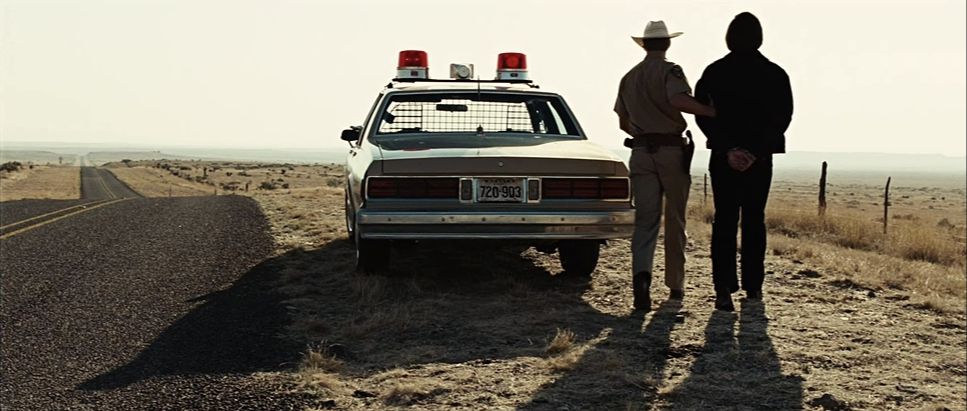
Heat and exposure. Direct sun with no fill is the look of westerns and desert crime films. In No Country for Old Men (2007), Roger Deakins lets the West Texas sun draw long, knife-edged shadows across the plain, and the landscape feels like it offers no cover. Lawrence of Arabia (1962) builds whole sequences out of noon glare on sand. Hard light says there is nowhere to hide from the weather or from what is coming.
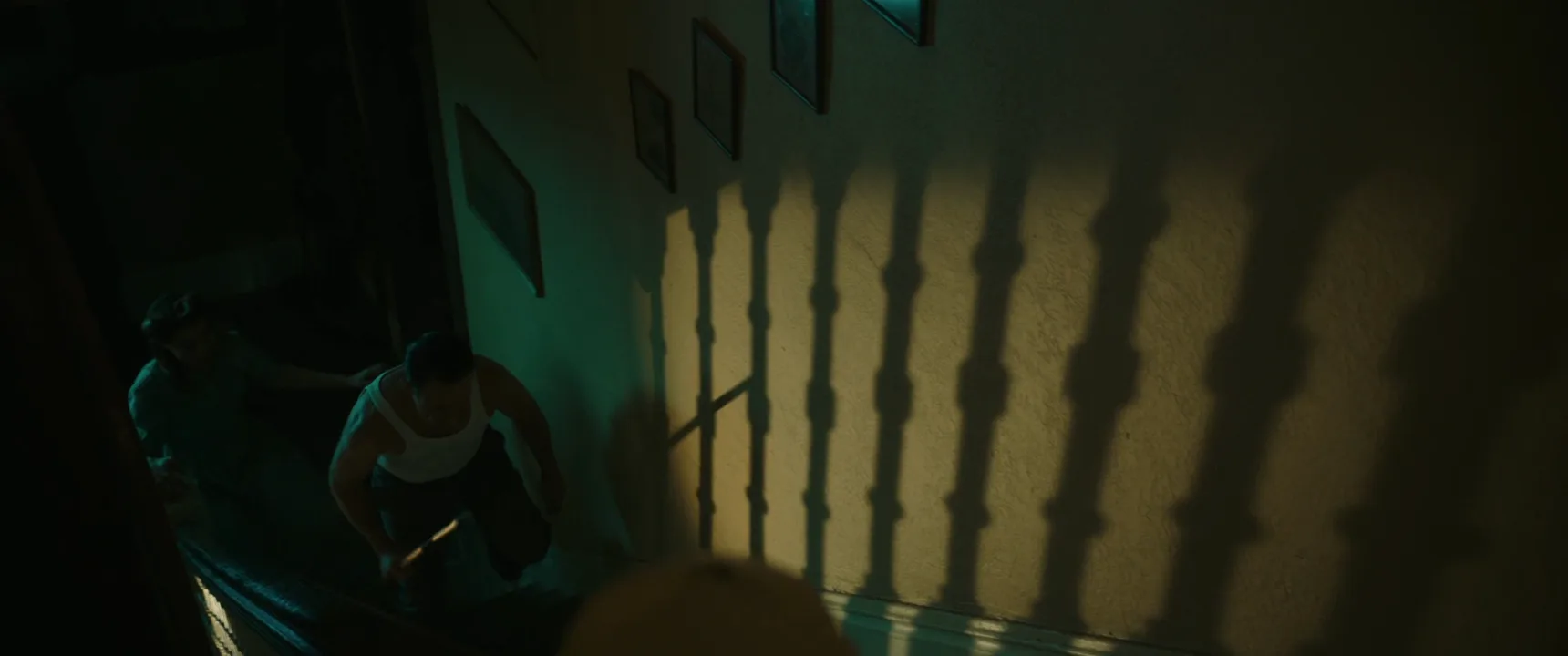
Threat and the shadow as a character. Because hard light casts a readable silhouette on a wall, the shadow itself can act. The shadow of Count Orlok climbing the stairs in Nosferatu (1922) is the canonical example, and German Expressionism passed that device straight to film noir, where blinds, bannisters and doorframes print bars across faces. The cast shadow arrives before the person does.
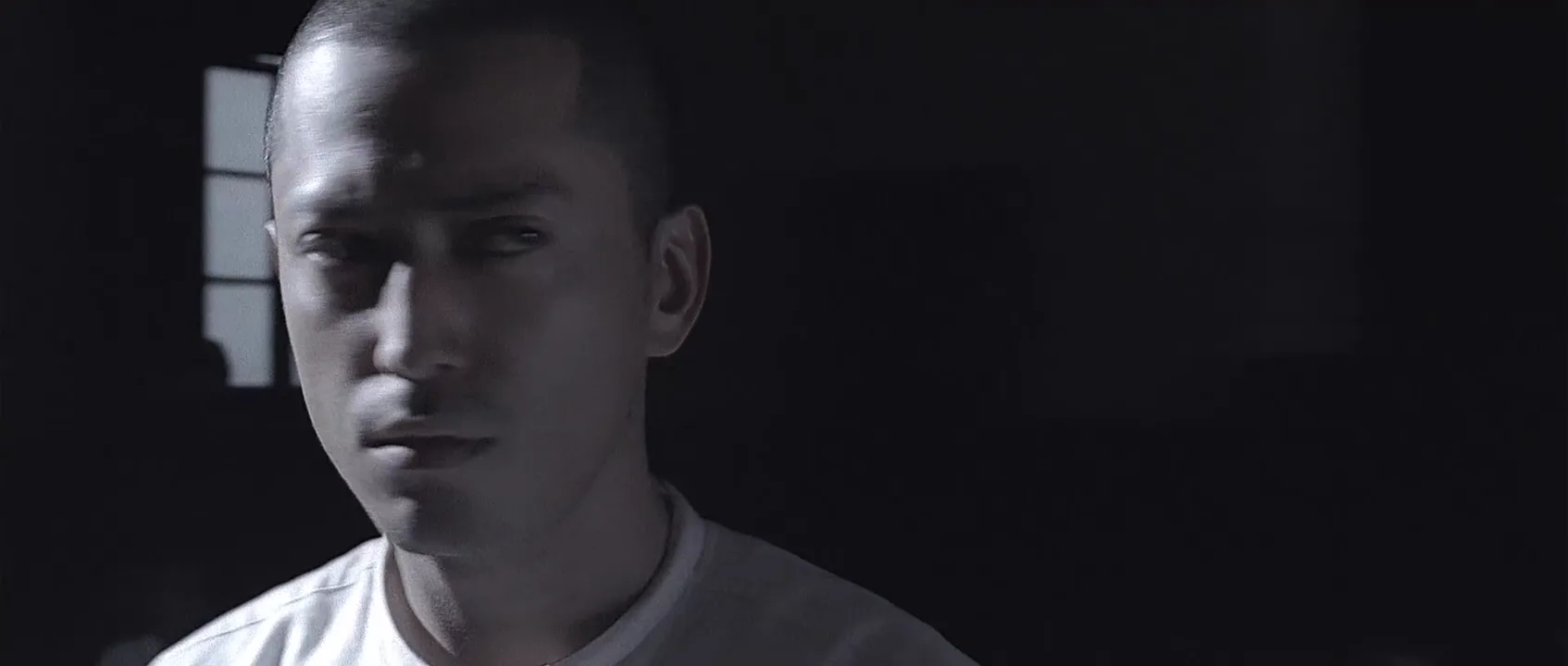
Scrutiny. An interrogation lamp, a bare bulb over a table, a flashlight in the eyes: hard light on a face reads as being examined. Every flaw and bead of sweat is visible, so the audience studies the character the way the light does.
Graphic design. A hard source through a window, a grille or a patterned cucoloris makes stripes and pools that compose the frame. The light becomes a shape you can place, like a prop.
The risk is the flip side of the benefit. Hard light is rarely kind to skin, it multiplies shadows when there is more than one source, and it makes continuity hard outdoors because the sun's shadows move every minute.
How to shoot hard light
Choose a genuinely small source. Open-face lights, fresnels, ellipsoidal spots and PARs give hard light. So does a bare LED chip or COB fixture with its reflector and no softbox. A fresnel spotted to its narrow setting throws a harder, cleaner shadow than the same fixture fully flooded. Direct sun is the hardest source available, so outdoors the work is mainly about choosing where the shadows fall and how much fill to add.
Remove what softens it. Take off diffusion frames, softboxes and chimney balloons, and don't bounce. Haze in the air and a diffusion filter on the lens both spread light, so decide deliberately whether you want the shadow edge pure or a visible beam through haze.
Use distance. Pulling a lamp back from 2 m to 8 m roughly quarters its apparent size and sharpens the shadow edge.
Shape the spill. Hard light spreads less predictably than it looks. Barn doors, flags, cutters and blackwrap give you clean edges on walls and keep light off places it shouldn't be. A cutter close to the subject gives a sharper line than one near the lamp.
Set the ratio. The mood comes from how much of the shadow side you fill. A ratio around 2:1 feels bright and daytime; 4:1 is dramatic; 8:1 and beyond, with no fill light at all, drops the shadow side to black and pushes toward noir. Outdoors, a white bounce or a negative-fill black flag moves that ratio without changing the source.
Protect the highlights. Hard light creates small, bright speculars. Expose so that skin on the lit side keeps detail, and let the specular glints clip; a meter reading off the lit cheek is safer than an average reading of the whole frame.
Keep one shadow per object. Two hard sources hitting the same actor produce two noses and two sets of shadows on the wall. If you need more light, add it as a backlight, a rim, or through soft fill that throws no visible shadow of its own.
Hard light on faces: where the shadows land
With a soft source you can move the lamp a foot and hardly notice. With hard light, the height and angle of the key light decide the whole portrait:
- High, 30 to 45 degrees off the nose. The classic setting: the nose shadow falls down toward the corner of the mouth, the far cheek goes into shade. Raise it too far and the eye sockets turn into black holes.
- Straight overhead. Noon sun or a bare bulb above a table. The brow shadows swallow the eyes, the nose casts a short vertical stripe and the chin shades the neck. Good for heat, menace and exhaustion.
- At 90 degrees, from the side. Side lighting splits the face down the bridge of the nose with a hard line, half in light and half in shadow.
- From behind. A hard backlight rims the hair and shoulders with a sharp edge and leaves the face to fill or to silhouette.
Hard light also shows texture, which is good for a weathered cowboy and hard on a beauty close-up. Makeup matters more: matte skin keeps speculars under control, and a slightly lower, frontal key hides texture better than a raking one.
Hard light vs. soft light
Soft light is the opposite quality. It comes from a source that is large relative to the subject, such as an overcast sky, a big window, a bounced or diffused lamp, and it wraps around forms with a slow gradient.
| | Hard light | Soft light | |---|---|---| | Source size | Small or distant: sun, bare bulb, spot | Large and close: sky, window, bounce, diffusion | | Shadow edge | Sharp line | Feathered, gradual | | Transition on a face | Short and abrupt | Long, rolling | | Texture | Emphasized | Smoothed | | Control | Easy to cut and aim precisely | Spills wide, harder to keep off walls | | Typical feel | Heat, threat, clarity, noir | Calm, intimacy, naturalism |
One source can be either. Put a 1.2 m frame of diffusion in front of a fresnel or bounce it into a white board and it becomes soft; take the frame away and it is hard again. That is why DPs describe diffusion as "making the source bigger." The sun works the same way: clear sky gives hard light, while a cloud layer turns the whole sky into one huge soft box.
Most scenes mix the two. A common setup is a hard key for shape and contrast, with soft fill to keep the shadow side from going pure black. The choice is about which quality the audience should notice first: the sharp shape of the light, or a gentle roundness in the face.
Common hard light setups in film
Noon sun, no fill. Short shadows directly under people and cars, dark eye sockets, bleached ground. It is the simplest way to make heat visible and is used constantly in westerns and road movies.
Low sun. In the first and last hour of sunlight the sun is still hard, but it comes in low and warm, so shadows stretch long across the ground and faces are lit from the side. Long shadows toward the lens make a wide shot graphic.
Window slash. A hard lamp outside a window prints the frame, blinds or bannisters on the wall and across the actor. Move the lamp farther away and the pattern sharpens.
Bare bulb or single practical. A hanging bulb, a lantern or a desk lamp motivated in the frame, sometimes supplemented by a hidden hard source from the same direction. The light drops off quickly and the corners of the room fall to black.
Flashlight and flame. A flashlight beam or a lighter flame gives a small, moving source: shadows swing as the character moves, which is why horror and thrillers love it.
Hard Light examples in film
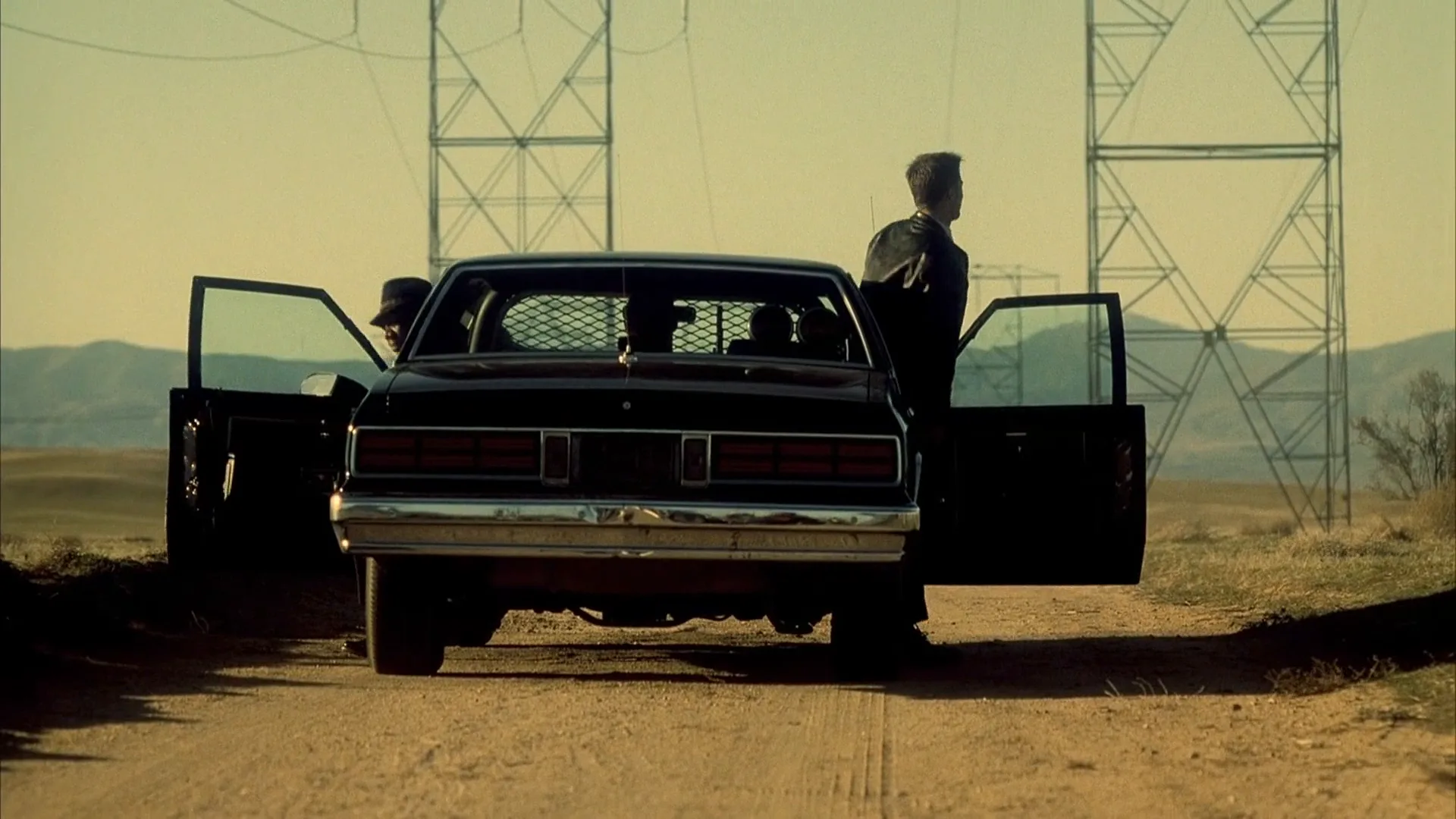
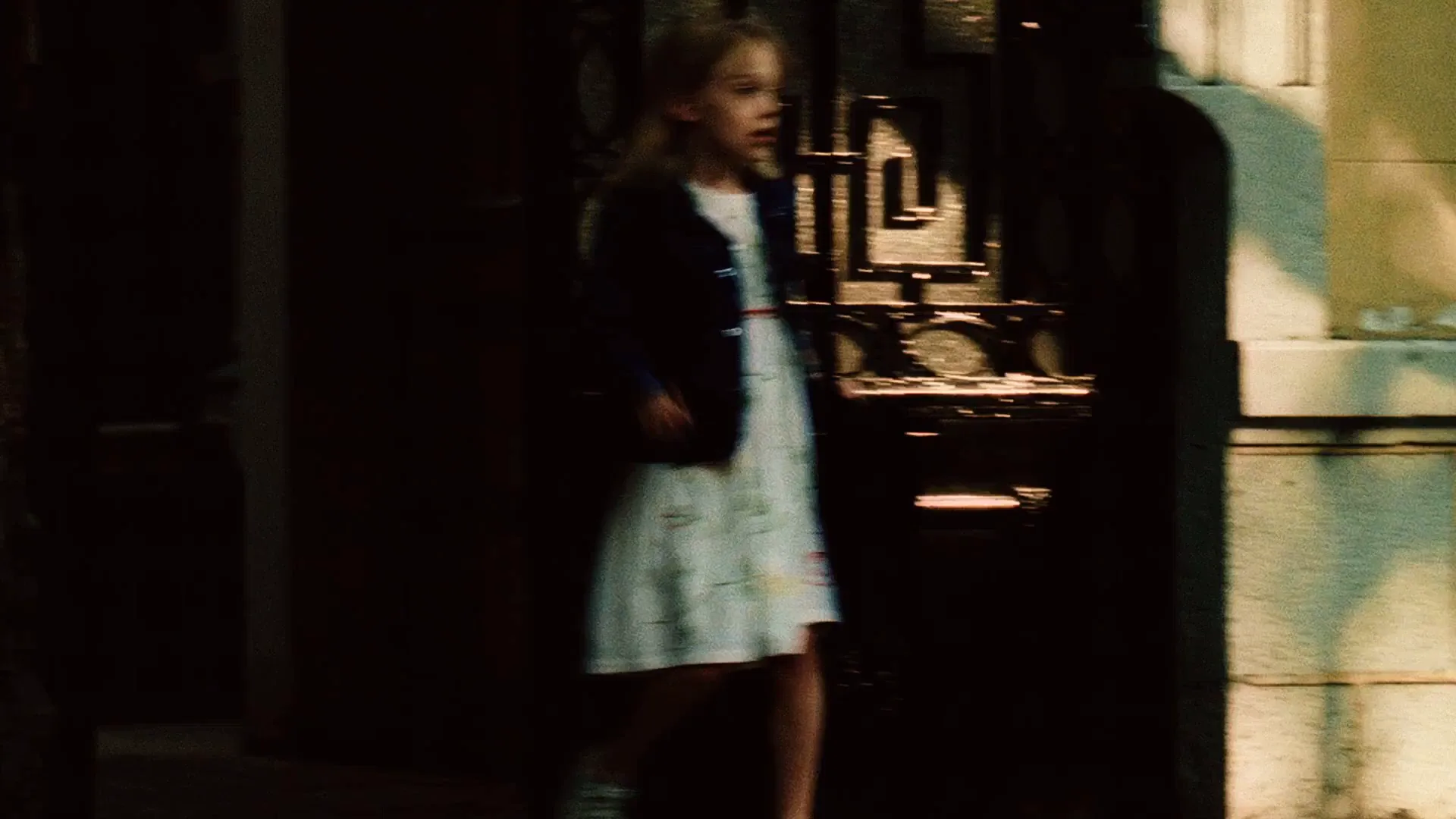
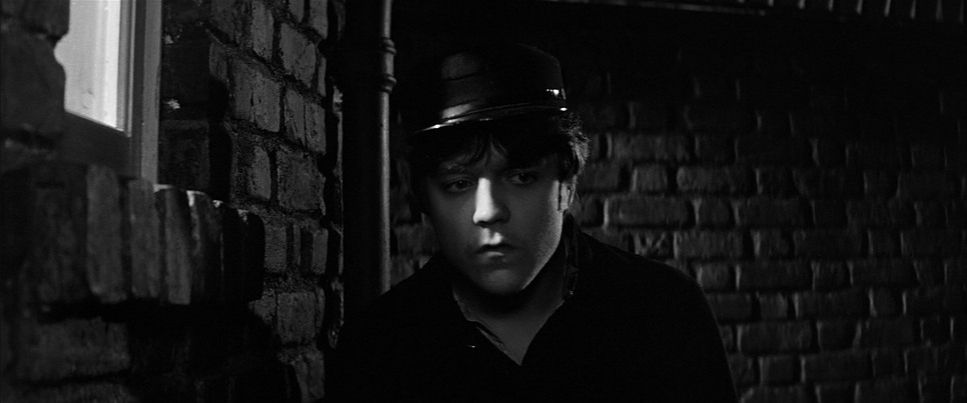
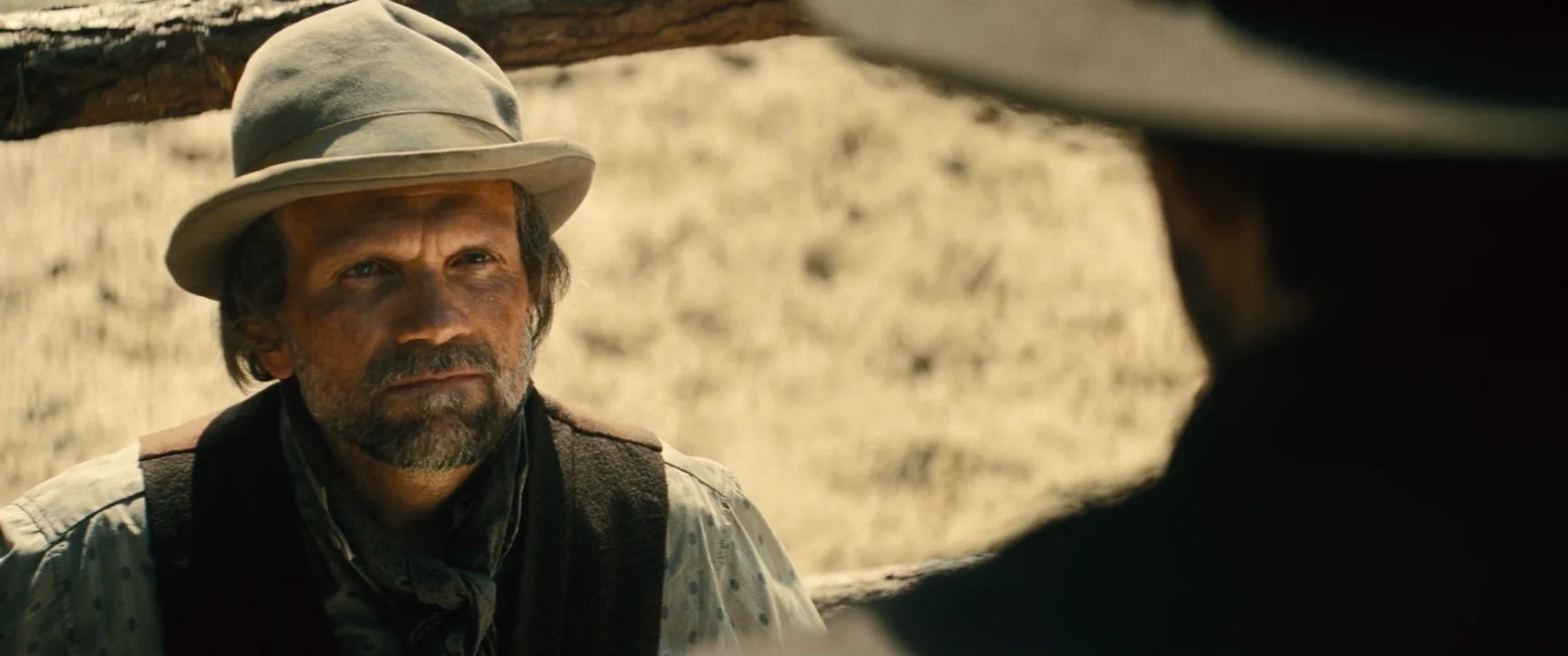
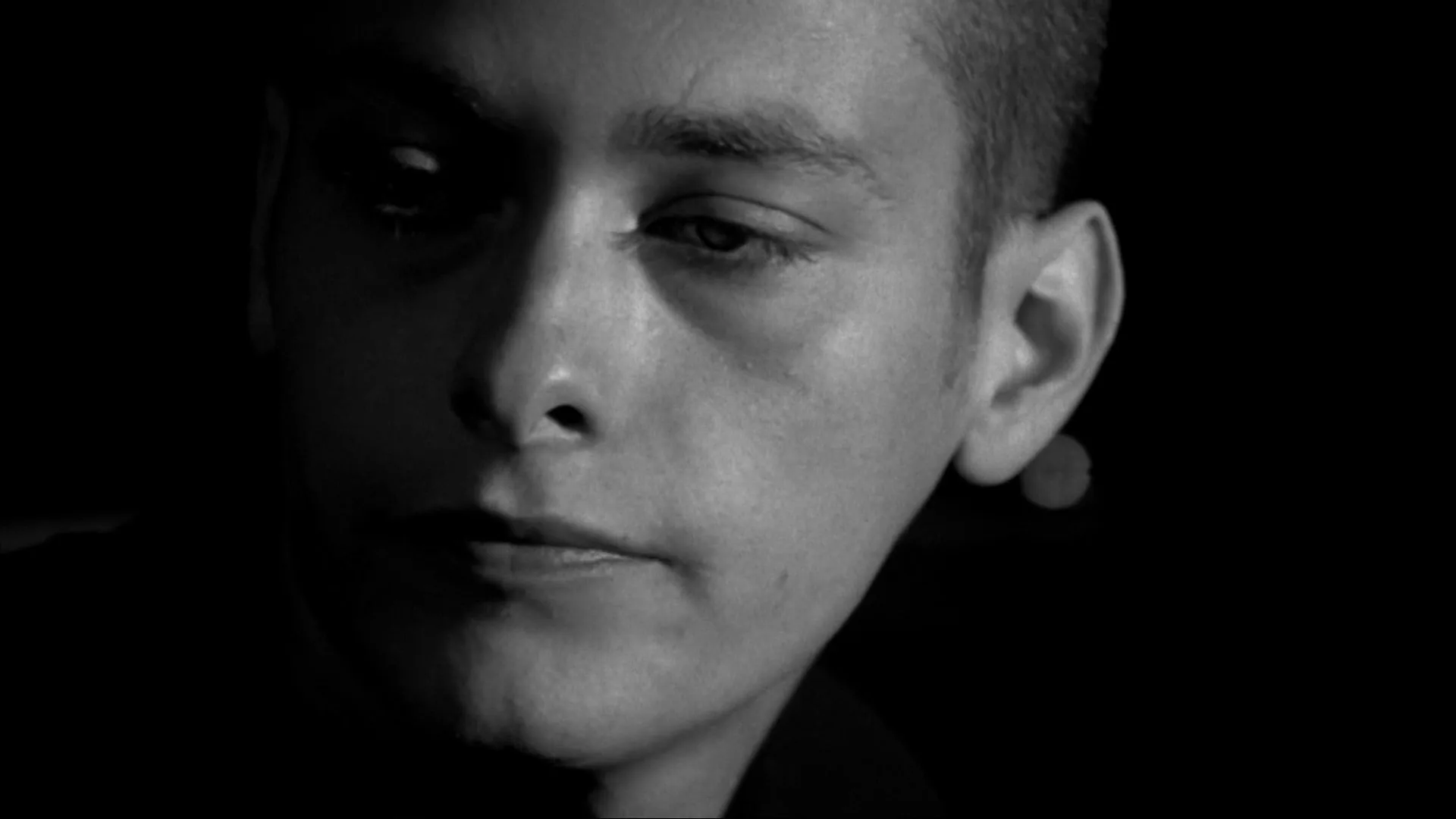
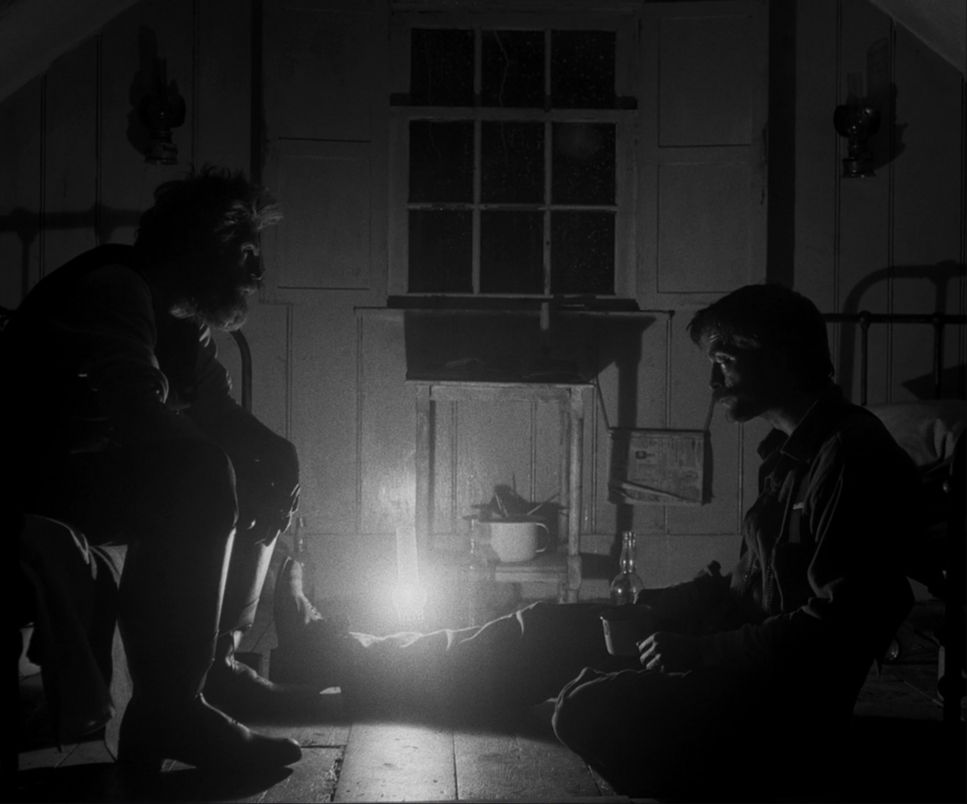
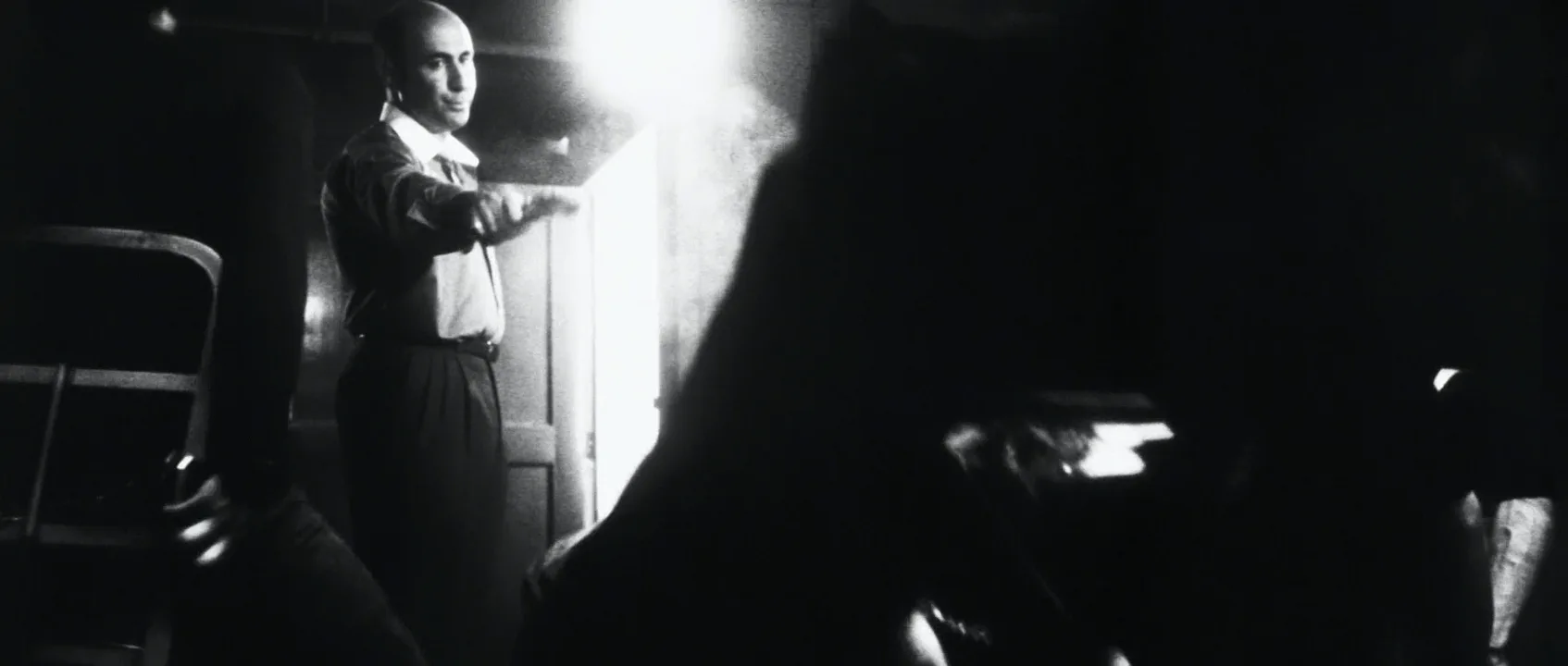
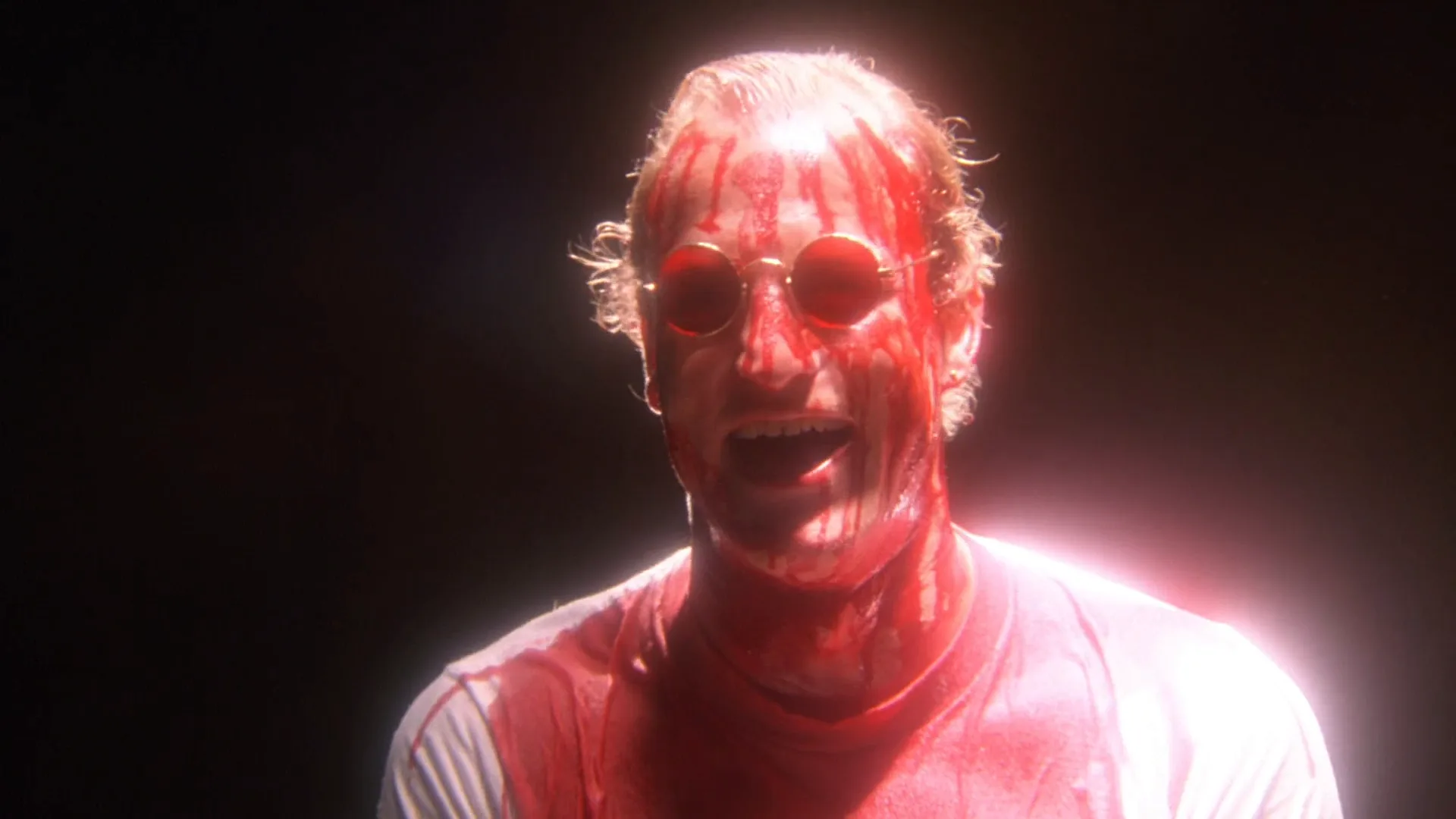
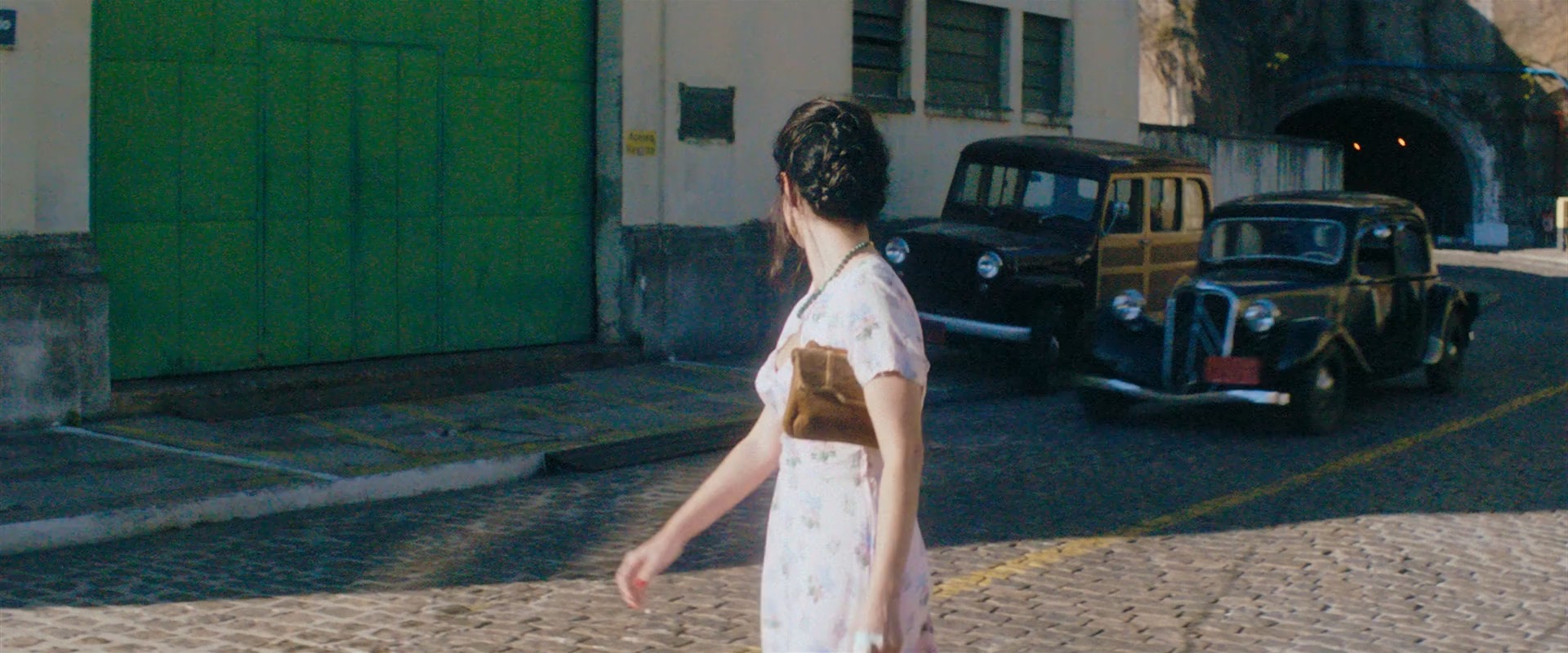
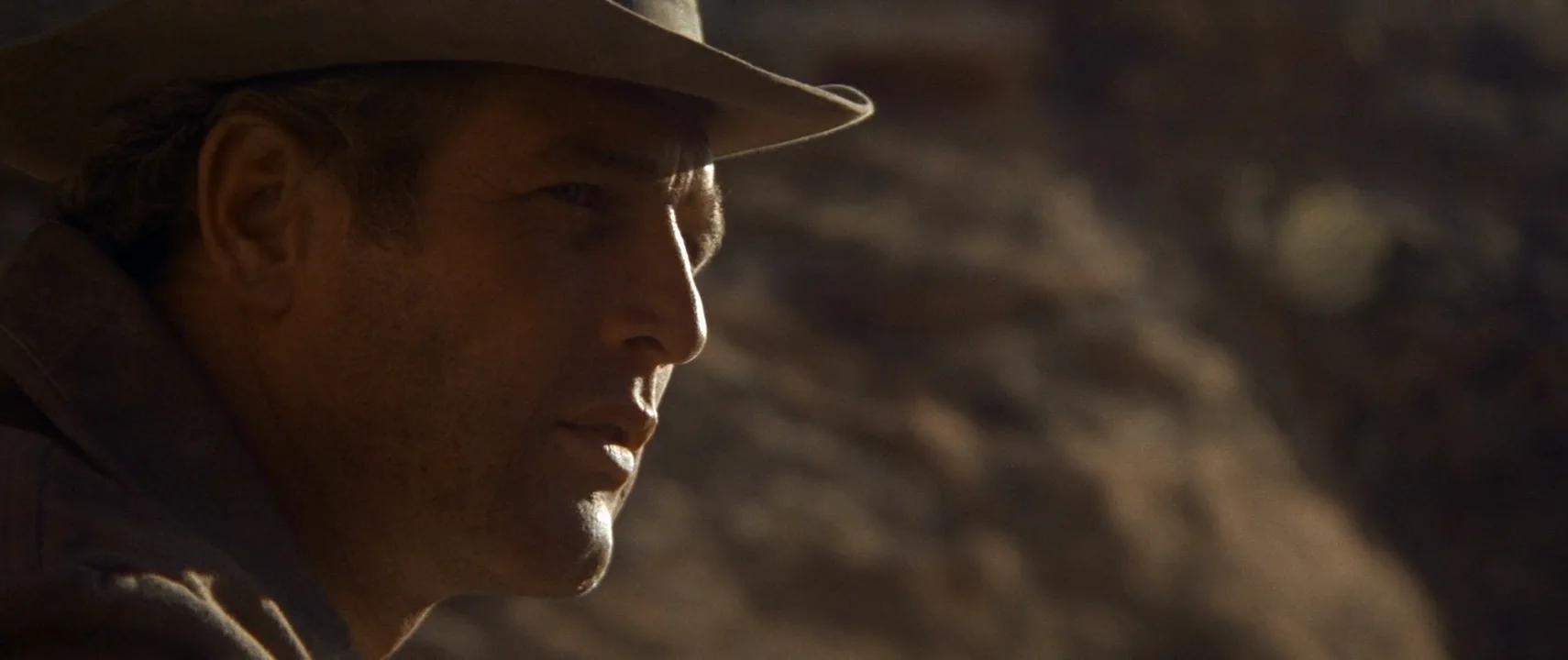
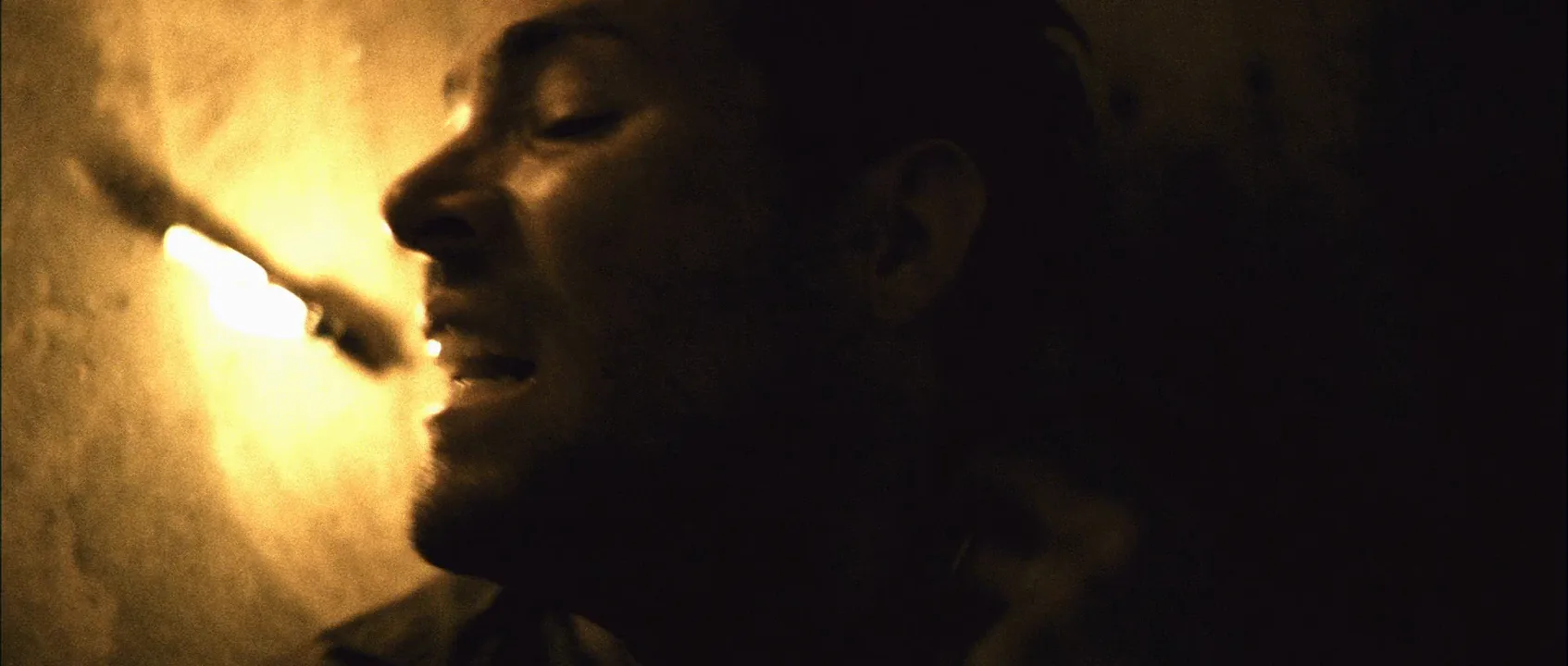
14 framesLook at the edges of the shadows. In every frame below, a small or distant source draws a clean line between light and dark: on faces, on walls, on the ground.
How to create a hard light with AI
4 promptsImage and video models drift toward soft, flattering light, so hard light has to be written as a physical setup: one small source, where it sits, and what its shadows look like. Name the shadow edge ("crisp", "razor-sharp"), the shadow shape (nose shadow, bannister stripes, a black pool under a car) and the absence of fill as deep, unfilled black. Keep reference frames, takes and lighting notes on one FlashBoards board so you can compare how hard each take really is. The fourth prompt re-shoots a real film shot from a text description alone, and the original plays next to the result so you can compare.
Hard light cinematic medium close-up: a man in his fifties with a shaved head, a salt-and-pepper horseshoe mustache, a crooked broken nose and a small gold hoop in his left ear sits at a yellow formica kitchen table in a cheap motel room, a white enamel coffee mug in his hands. Late afternoon sun through venetian blinds from high camera-left is the only light: razor-sharp horizontal stripes of light cross his face, shoulder and the wall behind him, a crisp nose shadow falls toward the corner of his mouth, deep black unfilled shadows, small bright specular highlights on his sweaty forehead, visible skin texture. 40mm lens at eye level, high contrast, warm color, 35mm film grain, tense noir mood.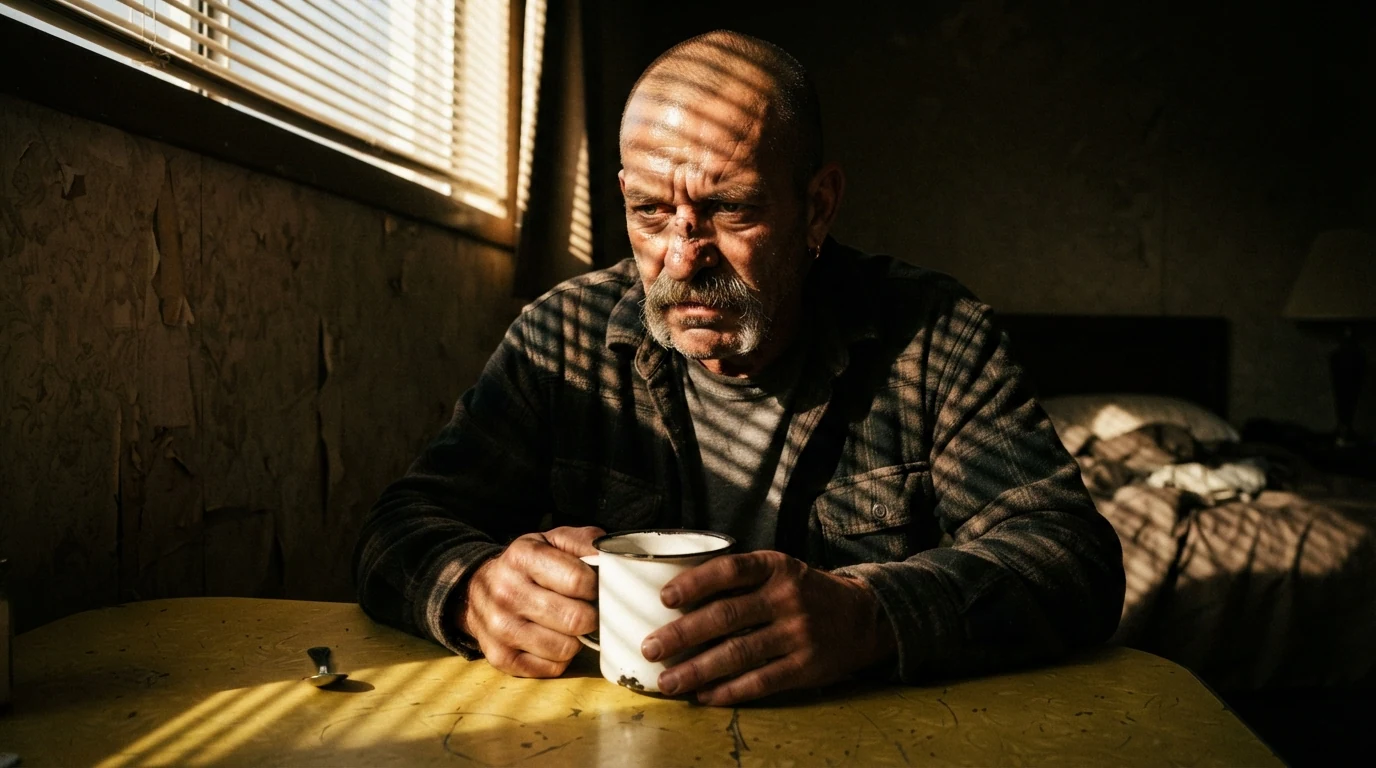
"The only light" and "from high camera-left" pin one small source to one direction. "Razor-sharp horizontal stripes" and "crisp nose shadow" describe the shadow edge, which is what makes light read as hard, and "deep black unfilled shadows" keeps the model from adding soft fill.
Open FlashBoardsWidescreen shot at high noon on an empty desert highway: a teenage girl with a copper-dyed buzz cut, a sunburned nose and a gap between her front teeth, wearing a mustard windbreaker, stands beside a dusty pale-blue pickup truck. The sun is directly overhead and is the only light: her shadow is a small black pool at her feet, a solid black shadow sits under the truck, her brow shadows darken her eye sockets, the asphalt and sand are bleached and bright. Hard midday light with crisp shadow edges, high contrast, clear cloudless sky, heat shimmer on the horizon, 32mm lens at chest height, 35mm film look.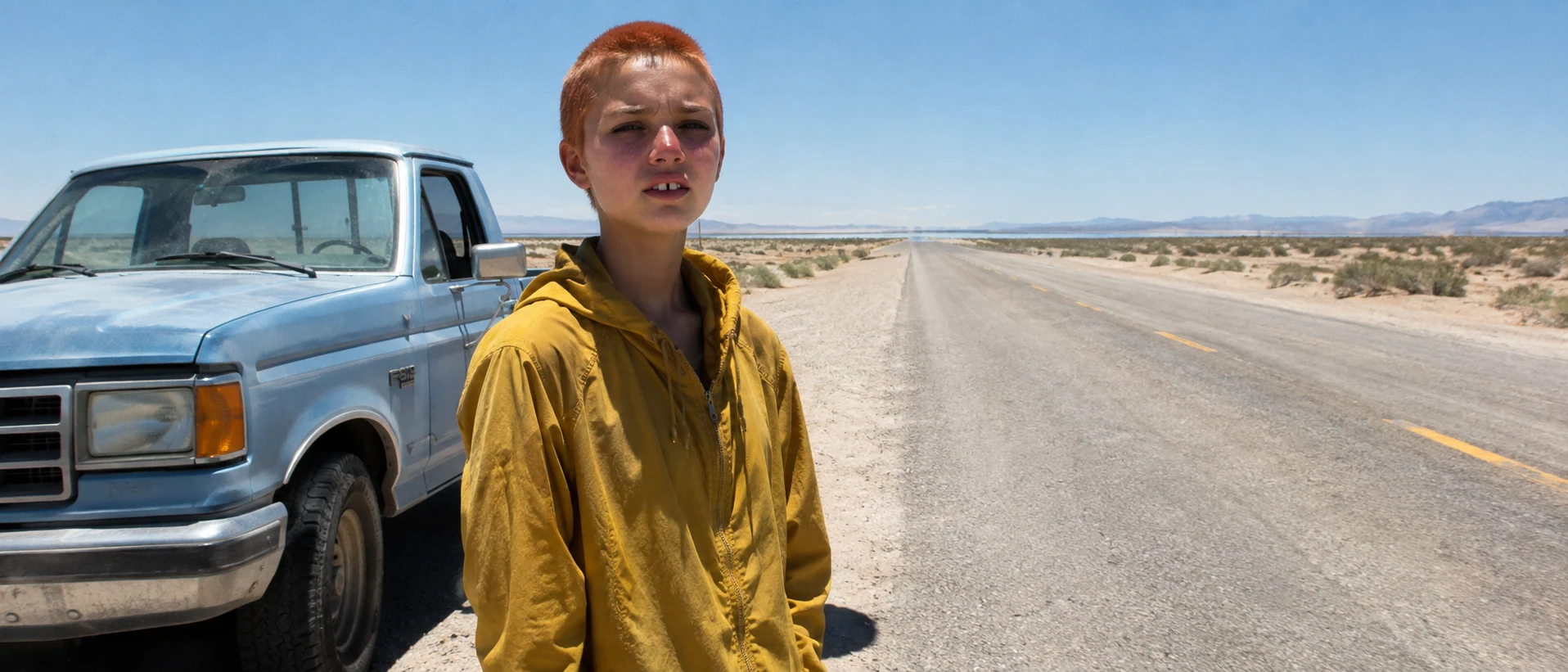
This take moves the source overhead and outdoors. "Directly overhead" plus "small black pool at her feet" fixes the sun's position through its shadow, and "clear cloudless sky" stops the model from softening the light with an overcast sky.
Open FlashBoardsCamera: slow, steady push-in from the medium close-up to a close-up of his face, locked at eye level. Action: He is already raising the white mug toward his mouth, and the sharp stripes of sunlight slide across his knuckles and the mug as it moves. He takes a sip, lowers the mug and turns his head toward the window, so the stripes move across his cheek and the crisp nose shadow swings onto his other cheek. At the end he holds still, eyes narrowed against the light, with the stripes lying across his eyes and the wall behind him.The mug is moving from the first frame, so the clip starts alive. Having hand and head pass through the stripes shows off hard light's key property, shadows that stay sharp as they slide across a moving form, and only the mug, window and wall from the start frame are named.
Open FlashBoards{
"output": "Full-screen live-action wide shot from Se7en (1995) from its very first frame: one continuous locked-off take, no cuts. Hard late-afternoon desert sun, one small bright source high on the left: razor-sharp shadow edges, a solid black pool of shadow under the car spilling to its right, dark shadow bands across both lower corners of the frame, the dirt road and dry scrub bleached pale gold. Grainy 1990s 35mm, sickly yellow-green grade, pale hazy sky, two steel electricity pylons and low blue mountains behind.",
"characters": {
"S1": {
"name": "Detective William Somerset, played by Morgan Freeman",
"look": "man in his late fifties, dark fedora hat, long tan trench coat over a white shirt and dark tie",
"voice": "silent in this shot"
},
"S2": {
"name": "Detective David Mills, played by Brad Pitt",
"look": "man in his thirties, short sandy hair, black leather jacket over a white shirt, dark trousers",
"voice": "silent in this shot"
},
"S3": {
"name": "John Doe, played by Kevin Spacey",
"look": "only a dark head silhouette seen through the rear window behind a wire mesh partition in the back seat",
"voice": "silent in this shot"
}
},
"shots": [
{
"shot": 1,
"camera": "locked-off, static, low at bumper height, centered on the dirt road, wide lens; rear view of a black 1980s sedan parked in the middle of the road, the car filling the center third of the frame; the same framing from first to last frame, focus deep and steady",
"action": [
"BEGINNING: alive from the first frame, the sedan stands still with its red brake lights glowing; the door on the right side of the car is already open, and a dark shoe steps down from it onto the dirt; S3 sits as a still dark head behind the mesh in the rear window.",
"THEN: the brake lights switch off, and the driver door on the left side of the car swings open toward the left edge of the frame.",
"THEN: S2 rises out of the right-hand door, straightens up tall beside it and turns his head to look off toward the right edge of the frame, his arms hanging at his sides.",
"THEN: S1 climbs out of the driver side on the left, first his fedora and shoulders appearing above the door, then the whole tan coat; he rests his right hand, the one nearer the left edge of the frame, on the top edge of the open door.",
"THEN: S2 steps clear of his door, turns to face the camera and plants his feet a little apart on the road beside the right rear wheel.",
"END: both men stand still on either side of the car, S1 on the left with his hand on the door, S2 on the right with his hands down, both looking back along the road toward the camera; their shadows are black and crisp on the pale dirt, and S3 stays a motionless silhouette inside."
],
"voice": "silence: nobody speaks in this shot, no voice at all",
"dialogue": []
}
],
"sound": {
"ambience": "dry desert wind, a low electric hum from the power lines, two car doors creaking open, shoes on gravel",
"speech": "no words in this video; the only human sounds are breaths and movement",
"never_spoken": "no narration and no voice-over: the descriptions, performance notes and step words of this prompt are never spoken aloud",
"music": "a film score under the scene, always below the voices: a low, sustained string drone with a slow, uneasy pulse",
"subtitles": "none"
}
}This remakes the locked-off desert road shot from Se7en (1995): the rear view of the car at bumper height, Mills and then Somerset stepping out in the original order, and the hard sun that leaves a black pool of shadow under the car.
The output field names the film and pins one small source, "one small bright source high on the left", then says what it draws: "razor-sharp shadow edges" and "a solid black pool of shadow under the car". Nobody speaks in the original, so the shot carries an explicit silence line under a low string drone, and the END phase repeats the shadows as "black and crisp" so they stay hard while the men move.
Common mistakes
- "Dramatic lighting" comes out soft. Moody words give a dark, soft wrap. Name the source and the edge: "single bare bulb", "crisp-edged shadows".
- Fill creeps in. Models brighten the shadow side to rescue the face. Write "deep black unfilled shadows" and a ratio word like "high contrast".
- Several shadows. Extra lamps appear and each object throws two shadows. Say "the only light" and give one direction.
- Beam without a shadow. Haze makes a pretty shaft of light but a soft subject. Describe what the light draws on the face or wall, not just the beam.
- Stripes stick to the face in video. Blind shadows can glue to the actor as he moves. State that the stripes stay on the wall and slide across him as he moves.
Keep the reference frames, prompts and every generated take side by side — images and video in one canvas.
FAQ
5 questionsWhat is hard light in film?
Hard light is light from a source that is small or far away relative to the subject, such as direct sun, a bare bulb or a spotted fresnel. It produces cast shadows with sharp edges, an abrupt jump from lit to unlit areas, bright speculars and strong texture. Filmmakers use it for heat, tension, noir moods and graphic shadow patterns.
What is the difference between hard light and soft light?
The difference is the apparent size of the source. A small or distant source gives hard light with crisp shadow edges and high contrast. A large, close source such as a window, an overcast sky or a diffused lamp gives soft light that wraps around the face with gradual shadows. The same lamp can do both, depending on diffusion and distance.
Is sunlight hard or soft light?
Direct sunlight on a clear day is hard light. The sun is huge but so far away that it covers only about half a degree of the sky, so shadows are sharp. When clouds, haze or a big silk sit between sun and subject, the light spreads over a larger area and turns soft. Open shade also gives soft light.
What is hard light photography?
In photography as in film, hard light means a small or distant source that casts crisp shadows: direct sun, a bare speedlight, a snooted strobe or a spot. Photographers use it for fashion, sports and street images with bold graphic shadows, strong texture and high contrast, and they control it by the angle and height of the light.
How do you make hard light softer?
Make the source bigger relative to the subject. Put diffusion fabric or a softbox in front of the lamp, bounce it into a white board, ceiling or wall, or move a large diffuser closer to the actor. Outdoors, a silk overhead softens direct sun. Adding fill also reduces harshness, though the shadow edges stay sharp.
Related terms
5- Soft LightLighting
Soft light comes from a source that is large relative to the subject — an overcast sky, a big window, a bounced or diffused lamp — and wraps around forms with gradual, feathered transitions from light to shadow.
- ChiaroscuroLighting
Chiaroscuro, borrowed from Renaissance and Baroque painting, is dramatic modelling with strong light and deep shadow — usually one hard side or top source carving faces out of darkness — the backbone of German Expressionism and film noir.
- Low-Key LightingLighting
Low-key lighting keeps most of the frame in shadow, with a strong key, little or no fill and a high lighting ratio, so only fragments of faces and objects emerge from the dark — the language of noir, thrillers and horror.
- ContrastLighting
Contrast is the difference between the brightest and darkest parts of an image — set on set by the ratio between key and fill — and ranges from flat, gentle low contrast to hard, graphic high contrast.
- Film LightingLighting
Film lighting is the craft of shaping light for the camera — its direction, quality, color and contrast — to model faces, build space, set the time of day and carry the mood of a scene.
Further reading
Blain Brown, Motion Picture and Video Lighting — chapters on light quality and controlling hard sources. Harry C. Box, Set Lighting Technician's Handbook — fixtures, spot and flood, and shaping tools.