 FlashBoards Learn
Lighting · Film language
Water Reflection Lighting
Also called: water caustics light, water ripple light effect
Water reflection lighting bounces a hard lamp off a moving water surface, such as a pool, a tray or a mirror laid in water, so rippling caustic lines crawl across walls and faces. The light never sits still, which makes a scene feel wet, dreamlike or unstable even when no water is in frame.
- What it does
- Throws moving, net-like caustic highlights onto walls and faces, so the light itself seems to breathe.
- Use it when
- A scene happens near water, inside a dream or memory, or a character's world is quietly coming loose.
- Watch out
- Ripples that are too fast or too bright read as a party effect; keep the motion slow and the pattern about a stop over the base.
- Try this prompt
night, dark concrete room, hard spotlight bouncing off a small pool, sharp rippling caustic light lines across the wall and a man's face, low-key, 40mm
What is water reflection lighting?
It is lighting with water as the modifier. A hard source hits a water surface and reflects off it, or passes through and back out. Each ripple acts as a tiny curved lens or mirror, gathering light into bright wavy lines with dark gaps between them. These lines are caustics; as the surface moves, they wander and re-form.
Unlike plain hard light, the edges are crisp but the shape is organic and never repeats. In the film lighting toolbox it is an effect light layered over a darker base, not the key. The water can be in frame or hidden, with only the pattern hinting at it.
Why do filmmakers use water ripple light?
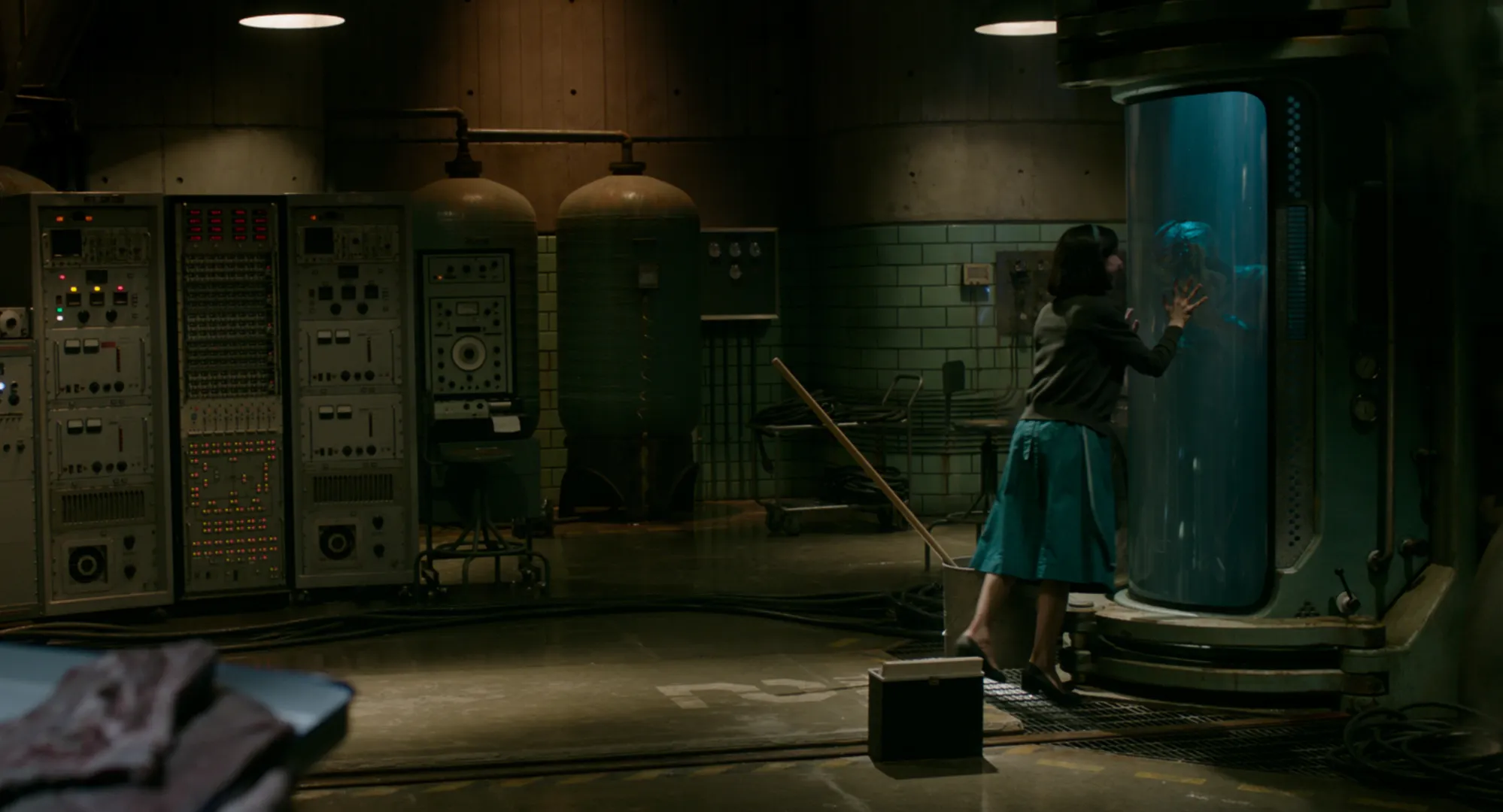
Motion in the light reads as motion in the mind. A face washed by slow caustics looks calm on the surface and unsettled underneath, so the effect turns up in scenes of longing, memory and dream. The Shape of Water (2017) builds its look on water-green light, and in Blade Runner 2049 (2017) Roger Deakins lit Wallace's headquarters with rippling reflections sliding across stone walls.
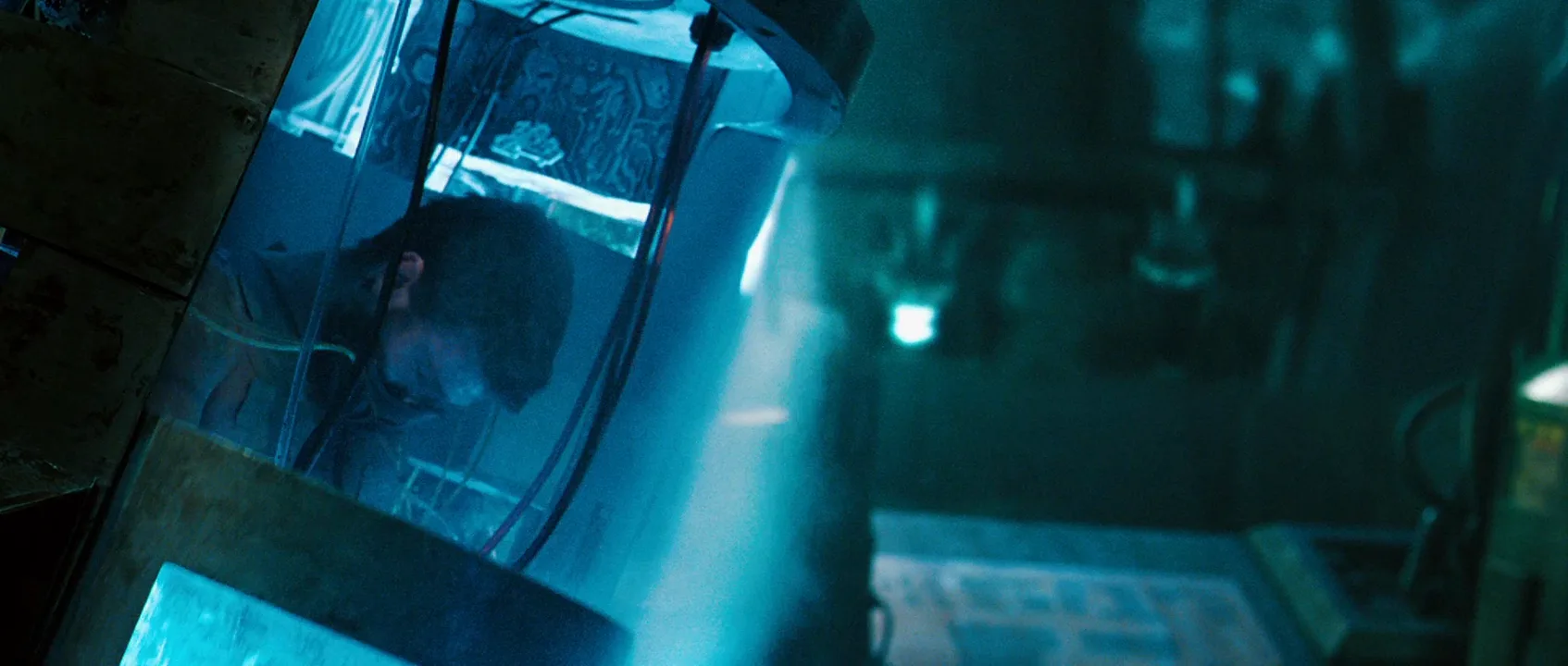
It also tells story cheaply: it places a scene beside a pool without a cutaway, keeps a static shot alive, and in sci-fi, cyan caustics on metal sell flooding and depth.
How to create a water ripple light effect on set
You need a hard source, water and a way to disturb it.
- Source. A small, hard light: a focused LED spot, a Fresnel spotted in, or direct sun. The smaller the source, the sharper the caustics.
- Water. A tray 5–10 cm deep. Lay a mirror in the bottom: bare water reflects only a small fraction of the light, a submerged mirror sends most of it back through the ripples.
- Geometry. Aim into the tray at roughly 30–60 degrees and tilt it so the bounce lands on the wall or face. The farther the surface, the larger and softer the pattern.
- Motion. Stir by hand, drip from a sponge or run a small fan across the water. Slow waves feel dreamy, choppy water anxious; one grip controls it so takes match.
Keep the pattern about a stop over the base and let the rest fall into low-key shadow. Cyan gels read as pool or moonlight, amber as sunset on a river. With water in shot, motivate it with a visible practical light such as a pool lamp.
Size, speed and color: reading the pattern
Treat the pattern like a performance. Fine lines feel close to the water; large soft blobs feel distant and dreamy. Near-still ripples suspend time, and a sudden splash can land a beat through light alone. Cyan suggests chlorine and night, green a tank, amber late sun. This is not an underwater shot: there the camera is submerged; here it stays dry and only borrows the water's light.
Water reflection lighting vs. cucoloris
Both break up flat light. A cucoloris is a cut-out panel in front of a lamp that casts a fixed shadow shape and moves only if someone shakes it. Water reflection lighting throws bright lines, not shadows, and changes on its own. Use a cookie for foliage or a window; use water when the light should feel liquid. A character's image reflected in water or glass is mirror shot territory.
Water Reflection Lighting examples in film
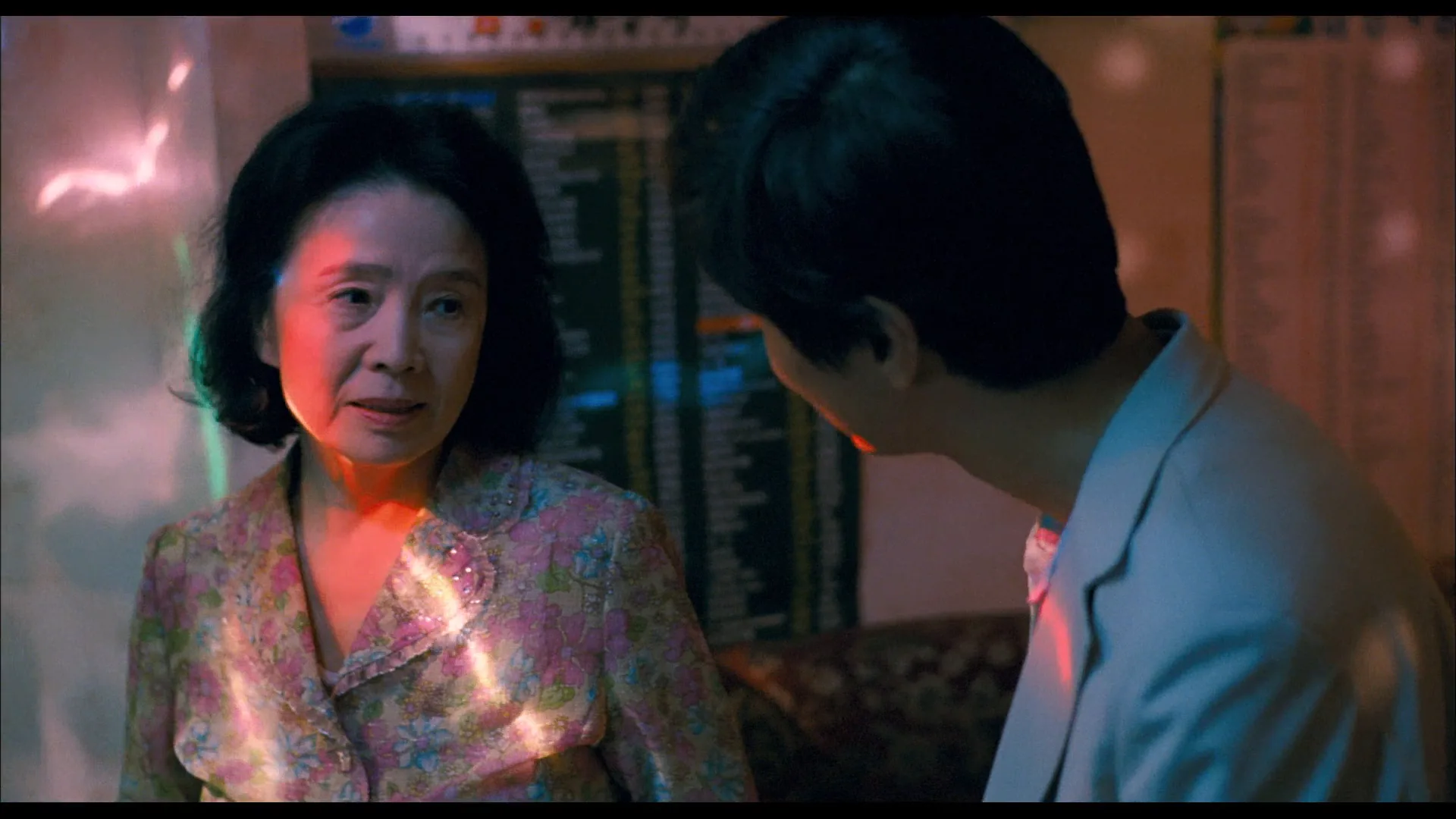
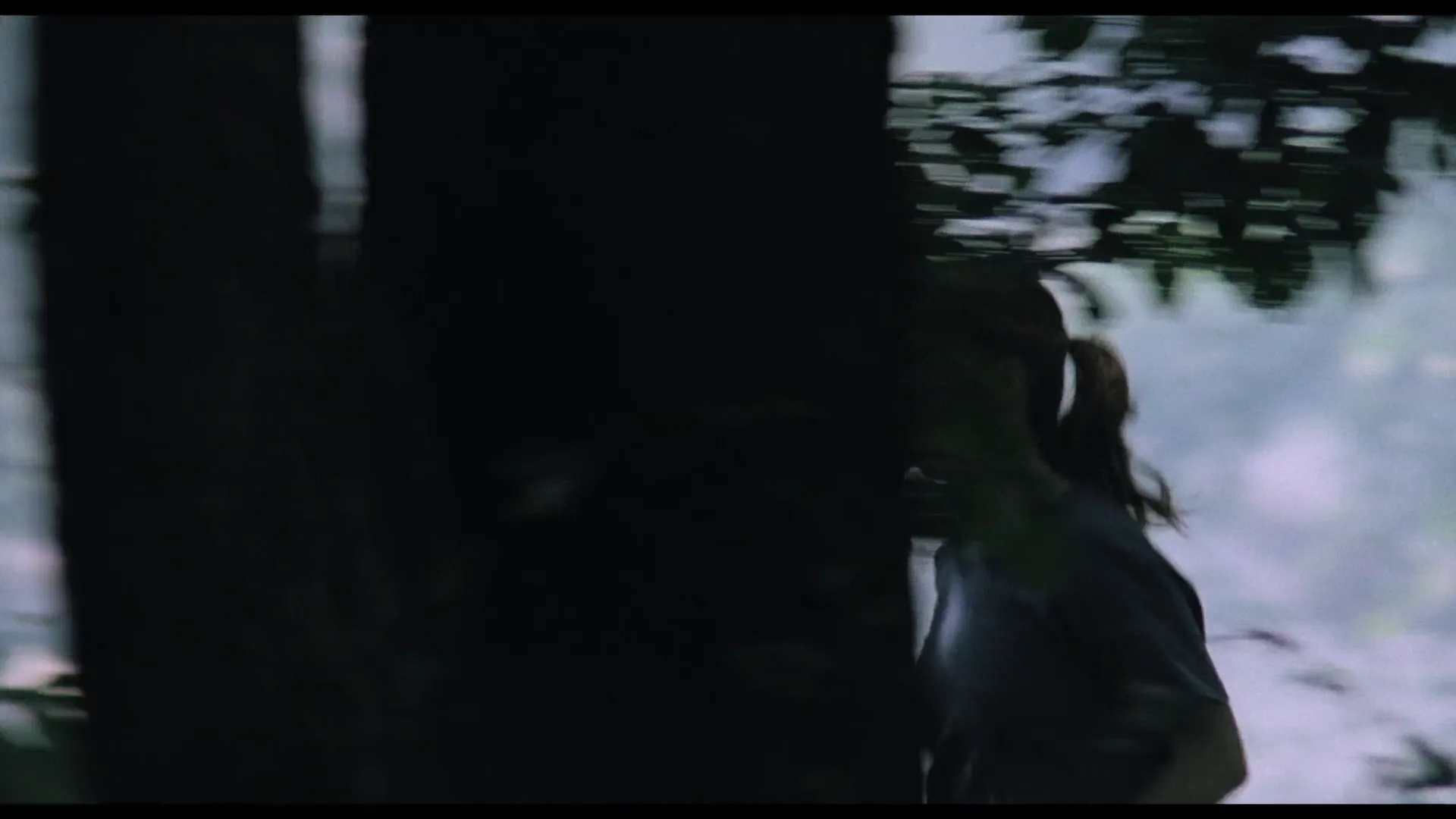
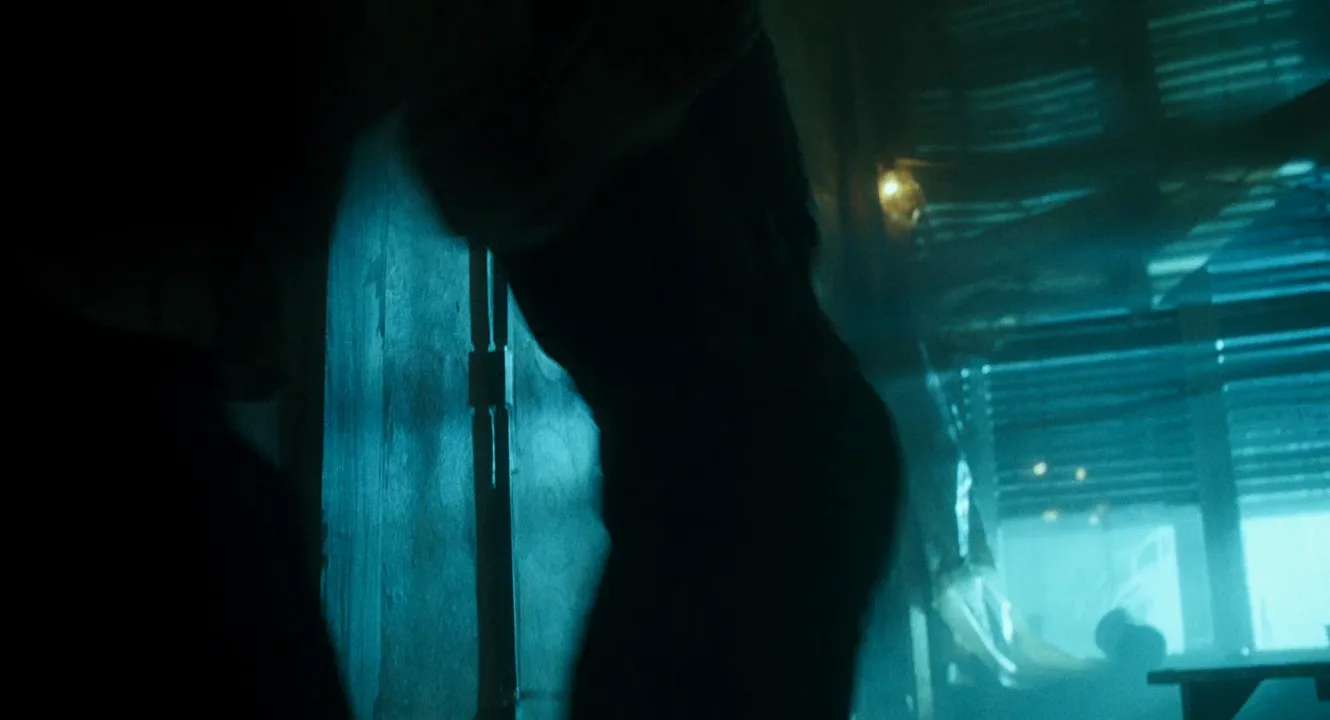
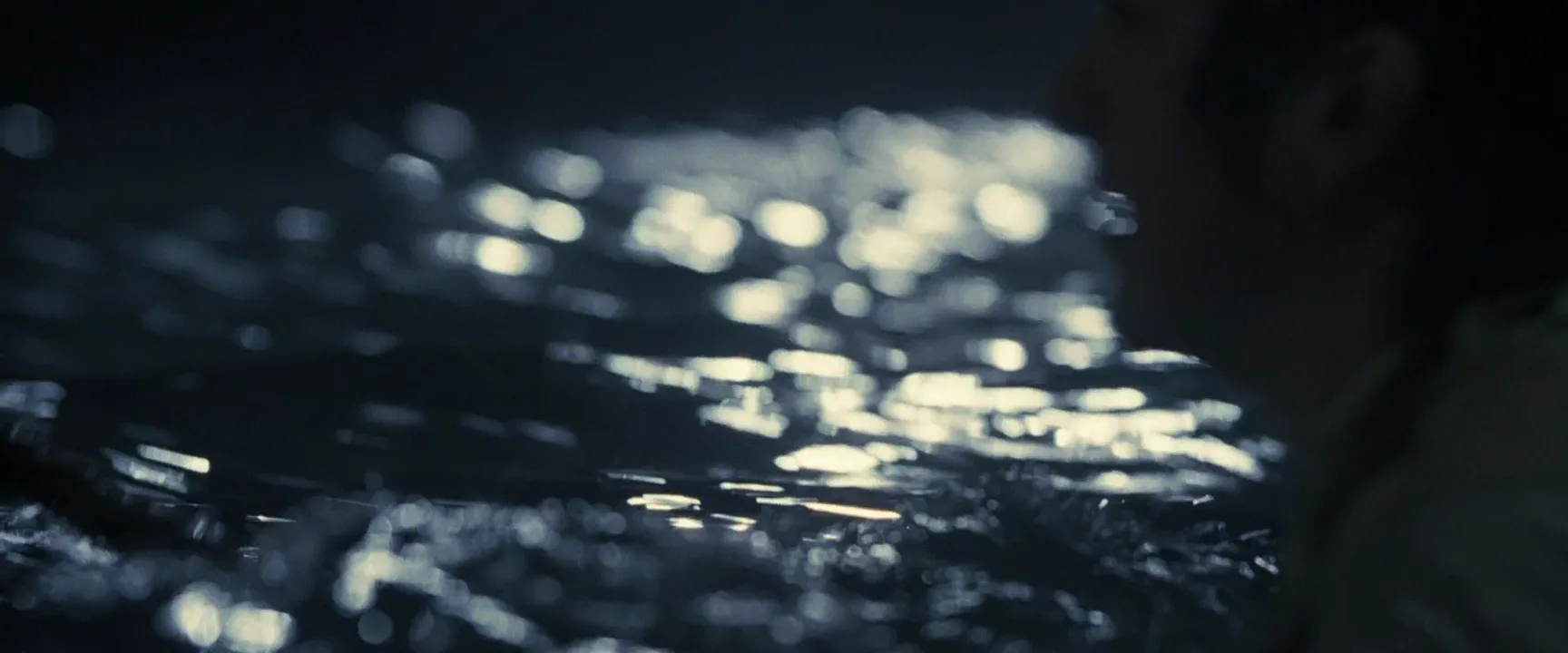
7 framesWater, or something behaving like it, becomes the light: cyan bounce, glowing tanks, broken streaks.
How to create a water reflection lighting with AI
4 promptsModels draw water's light only when you name the source, the bounce and where the pattern lands; then animate the start frame so the caustics keep moving. Compare takes side by side on one FlashBoards board. The fourth prompt re-shoots a real film shot from a text description alone, and the original plays next to the result so you can compare.
Cinematic medium shot at night in a bare concrete room. At the left edge of frame, a low pool of dark water reflects a single hard spotlight, throwing sharp rippling caustic light patterns, bright wavy net-like lines in pale cyan, across the gray wall and the face of a fictional man in his 30s with a shaved head, a thin black mustache and a burgundy turtleneck, standing beside the pool looking down. The rest of the room falls into deep shadow. Eye height, 40mm lens, low-key, film grain.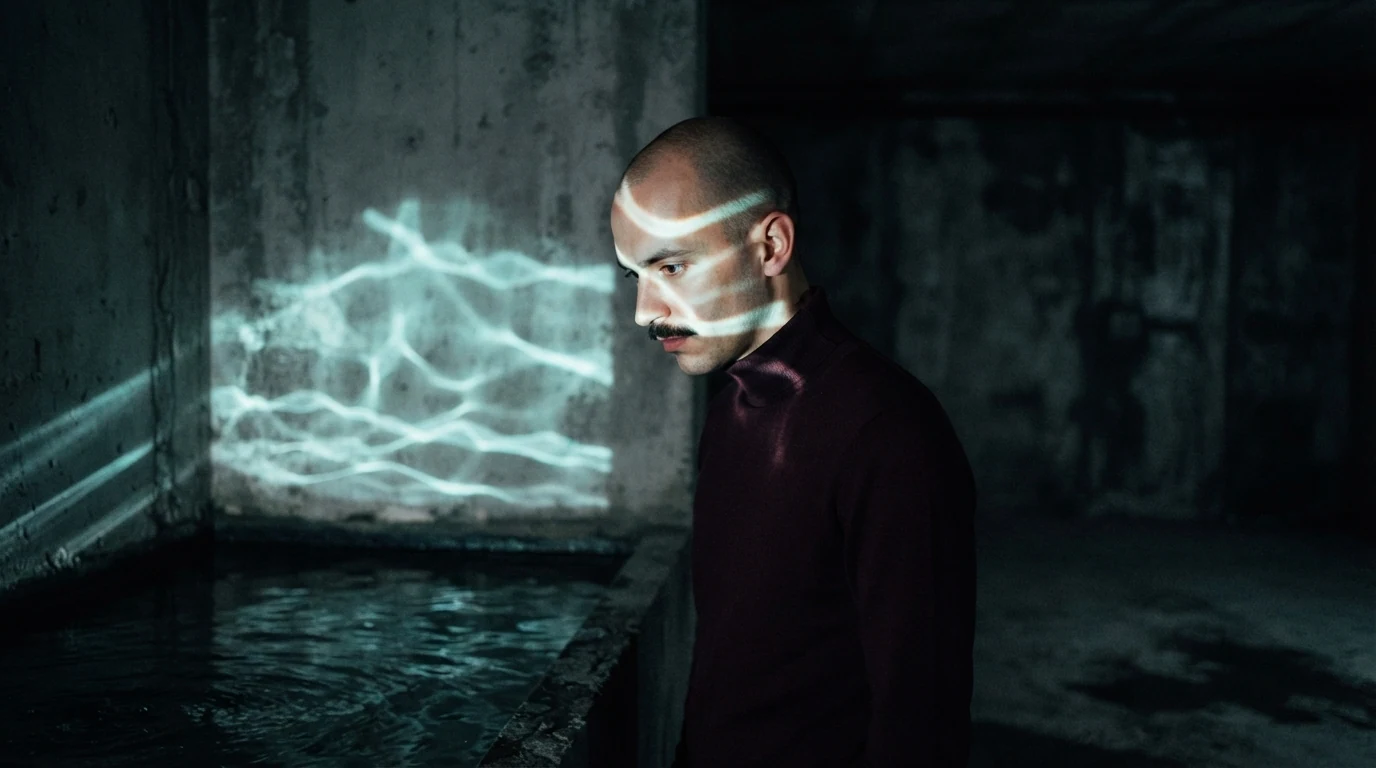
"Pool reflects a single hard spotlight" gives the cause, "sharp rippling caustic light patterns" the look, "across the gray wall and the face" the target; "deep shadow" keeps it readable.
Open FlashBoardsAnamorphic wide shot inside an old wooden boathouse in late afternoon. Low sun reflects off the river beyond the open doors, throwing warm rippling caustic lines across the plank ceiling and the face of a fictional fisherman in his 70s with a white braided beard and a flat wool cap, mending a net. Light from below, amber reflections, deep brown shadows. 28mm, seated eye height.
The variation flips it: day, warm, and "light from below" so reflections hit the ceiling and the underside of the face, as real water light does. The 21:9 frame holds both source and pattern.
Open FlashBoardsCamera: a slow, steady push-in at eye height from medium shot to medium close-up on the man's face, continuous through the shot. Action: from the first frame, the cyan caustic lines ripple and slide across the wall and his face. He crouches and trails his fingers through the pool; the ripples quicken and the light on the wall shatters into bright moving shards. He watches as the water calms and the lines stretch back into long, slow waves."From the first frame, the caustic lines ripple" keeps the shot alive. The hand in the water gives the light a reason to change speed.
Open FlashBoards{
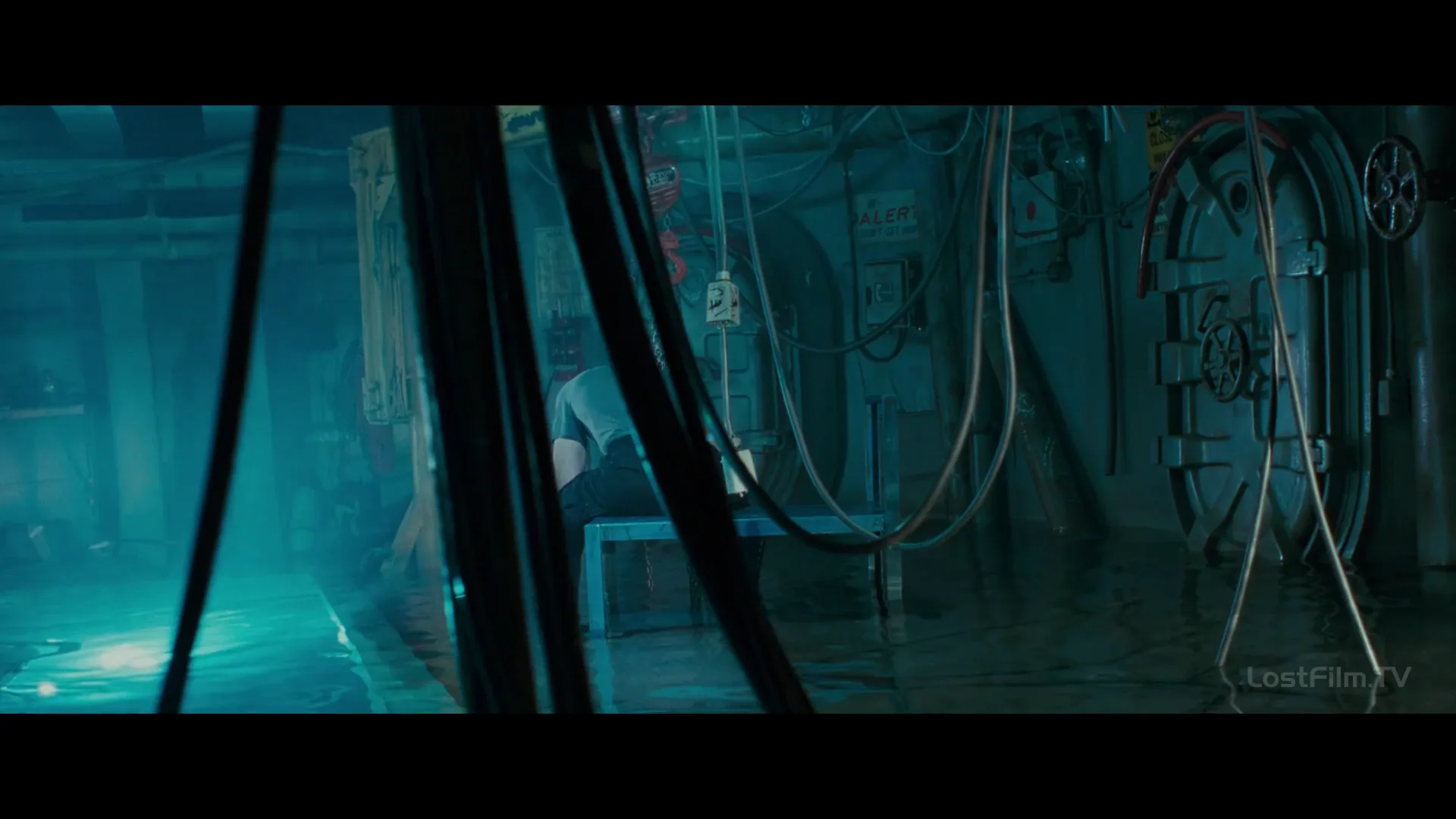
"output": "Full-screen live-action 35mm anamorphic film shot from The Abyss (1989), alive from its very first frame: one continuous handheld shot inside a flooded, dim underwater drilling module. The only light is cold cyan, bouncing up off a shallow sheet of water on the metal floor and throwing soft rippling reflections onto the lower walls, a bench and a round hatch door; everything above is deep teal shadow. Palette of cyan, teal and black.",
"characters": {
"S1": {
"name": "a crew member (unnamed, seen only as a dark silhouette)",
"look": "dark shape in a work jacket, out of focus in the near left foreground, face never visible",
"voice": "silence"
}
},
"shots": [
{
"shot": 1,
"camera": "wide shot at chest height, handheld with a slight unsteady drift, looking through a curtain of thick black cables hanging in the near foreground; a round steel hatch with a wheel on the right third, a bench and glass partition in the middle distance; focus stays on the far room",
"action": [
"BEGINNING: alive from the first frame, the dark silhouette of S1 fills the near left edge of frame, moving away toward the left; cyan light ripples across the wet floor under him",
"THEN: S1 steps out past the left frame edge and is gone; the bright glints on the water at the lower left flicker and slide as the surface settles",
"THEN: the camera drifts slightly to the right; hanging cables sway gently in the foreground, dark against the glowing floor",
"THEN: soft moving wave-lines of reflected cyan crawl up the base of the hatch and the bench in the middle distance",
"END: the room holds still and empty, only the water light keeps trembling on the floor and lower walls"
],
"dialogue": [],
"voice": "silence: nobody speaks in this shot, no voice at all"
}
],
"sound": {
"ambience": "slow water lapping over a metal floor, dripping, a low hum of machinery and creaking metal",
"speech": "no words in this video; the only human sounds are breaths and movement",
"never_spoken": "no narration and no voice-over: the descriptions, performance notes and step words of this prompt are never spoken aloud",
"music": "a film score under the scene, always below the voices: low sustained synth pad with a slow, uneasy pulse",
"subtitles": "none"
}
}Remakes the flooded-module shot from The Abyss (1989): the prompt carried over the cyan floor-bounce light, the cable-framed handheld view and the silhouette leaving frame left.
The prompt names one source of light, the water on the floor, and says where its ripples land: floor, hatch, bench. Everything above stays in shadow, so the moving reflections carry the shot.
Open FlashBoardsCommon mistakes
- Water without its light. A pretty pool, a flat wall. Always say where caustics land: "across the wall and his face."
- Soft blobs. Write "single hard spotlight" and "sharp net-like lines."
- Everything goes underwater. Put the source at the frame edge and state the rest of the room is in deep shadow.
- Sliding texture in video. Ask for lines that "ripple and wobble" and give the water a cause of motion: a hand, a drip, wind.
Keep the reference frames, prompts and every generated take side by side — images and video in one canvas.
FAQ
5 questionsWhat causes the water ripple light effect?
Each wave bends the light passing through or reflecting off the water. Curved parts focus light into bright lines, flatter parts spread it, and the gaps go dark. That net of lines is a caustic pattern; because the surface keeps moving, it shifts constantly and reads as water even off screen.
How do you make water reflection light without a pool?
Fill a tray with 5–10 cm of water, lay a mirror in the bottom and aim a small hard light into it at about 30–60 degrees. Tilt the tray so the bounce lands on the wall or face, then disturb the water by hand, drips or a small fan.
What is caustic light in film?
Caustic light is the bright, wavy line pattern made when a curved transparent or reflective surface, usually water or glass, focuses light. In film it means the rippling pattern on walls and faces near pools, aquariums and rivers, recreated on set with water trays, mirrors and hard lights.
Is water reflection lighting the same as underwater lighting?
No. In an underwater shot the camera is submerged, so the whole image is filtered by water: blue-green, low contrast, floating particles. Water reflection lighting keeps camera and actors dry and only borrows water's moving light, throwing caustics onto a dry set.
Can AI generate water caustic lighting?
Yes, if the prompt names the cause and the target: a water source, a single hard light, "sharp rippling caustic light patterns," and exactly where they fall. For video, animate the start frame and say the lines ripple from the first frame, with a reason for the water to move.
Related terms
5- CucolorisLighting
A cucoloris (cookie) is a panel with irregular cut-outs placed in front of a light to throw a broken pattern of light and shadow — leaves, branches, abstract dapples — across walls or faces, breaking up flat illumination.
- Practical LightingLighting
Practical lighting uses light sources visible in the shot — table lamps, neon signs, candles, TV screens — either as the real illumination or as the visible motivation for hidden film lights.
- Mirror ShotComposition & Framing
A mirror shot builds the frame around a mirror, showing a character's reflection — often alongside the person — to suggest a divided self, self-examination or a hidden second viewpoint, while keeping the camera out of the glass.
- Underwater ShotCameras & Capture
An underwater shot places the camera beneath the water surface, where water scatters light, shifts color toward blue-green, softens contrast and slows movement — often used for weightlessness, danger or dream states.
- Film LightingLighting
Film lighting is the craft of shaping light for the camera — its direction, quality, color and contrast — to model faces, build space, set the time of day and carry the mood of a scene.
Further reading
Blain Brown, Motion Picture and Video Lighting (Focal Press); Harry C. Box, Set Lighting Technician's Handbook (Focal Press).