 FlashBoards Learn
- Learn
- Acting & Casting
- Stunt Performer
Acting & Casting · Film language
Stunt Performer
Also called: stuntman, stuntwoman, stunt double
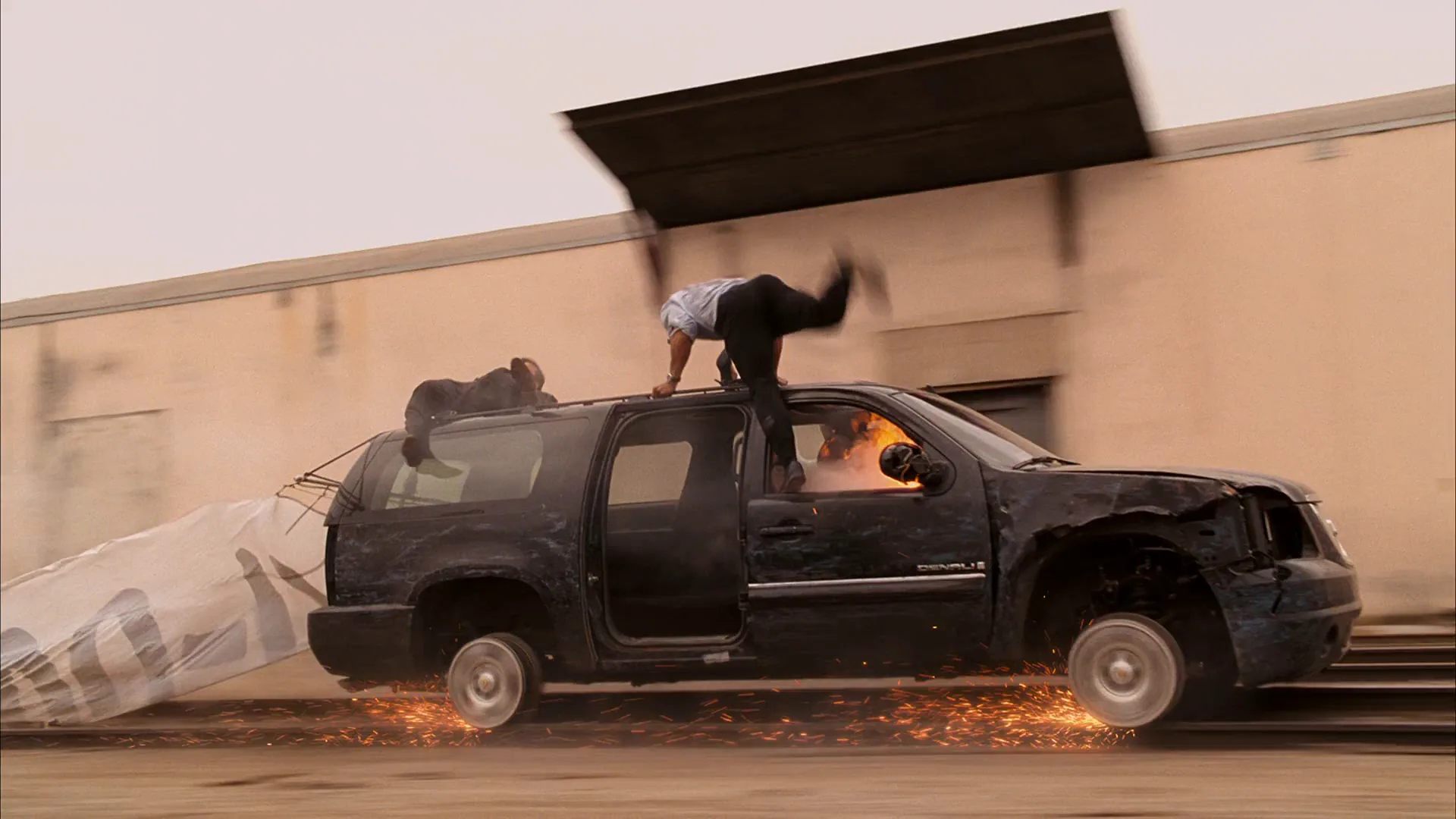
A stunt performer (stuntman, stuntwoman or stunt double) executes dangerous physical action on camera: falls, fights, car hits, fire burns and wire work. Usually doubling for an actor under the stunt coordinator's direction, they give the audience real bodies taking real impacts, which is what makes screen action feel dangerous.
- What it does
- Puts a trained body into the frame for the moments that would injure an untrained actor, so the action reads as physically real.
- Use it when
- Any hit, fall, crash, burn, drag or fight beat where the risk or the skill is beyond the cast.
- Watch out
- The double must match the actor's build, hair and costume, and the framing and cut must hide the swap.
- Try this prompt
Wide night shot at hip height, 35mm: a wiry stuntwoman in a red leather jacket mid-roll across the hood of a slow gray sedan, wet asphalt, headlight glare
What is a stunt performer?
A stunt performer is a specialist actor whose job is controlled danger: the falls, punches, car hits and fire burns the script asks for, repeatable take after take without injury. Most work as stunt doubles, dressed and wigged to match a principal actor; others play their own parts, like the henchman who goes through the window.
Specialties include fights, high falls onto airbags, precision driving, riding, wire work and fire burns. Every stunt is designed by the stunt coordinator, who owns rigging and safety; the performer executes it. In acting, stunt performers sit between cast and crew.
Why do films use stunt performers?
Safety and insurance come first: a production cannot risk its lead breaking a wrist in week two. But a trained performer also makes the action look better: they know where the lens is, how to turn a fall so the impact reads, and how to hit the same mark on every take.
Audiences feel the difference between a body that really hits the ground and a simulated one. Mad Max: Fury Road (2015) built its chases around real vehicles and performers, and the craft runs back to Yakima Canutt's work in Stagecoach (1939). In a fight scene or a car chase, the viewer believes the hit because someone actually took it.
How is a stunt shot for the camera?
Camera and stunt team design the shot together: the frame decides what must be sold and what can be cheated.
- Hide the swap with coverage. Actor's close-up before the hit, double in a wide during it, actor again after.
- Lens sells distance. A 100mm+ lens shooting down the line of action compresses depth, so a car a meter behind someone looks inches away. An 18–24mm close to the action exaggerates speed and impact.
- One-take gags get many cameras. A rollover happens once, so it is covered from three to six angles, often with small crash cameras.
- Frame rate adds weight. Shooting at 30–48 fps gives falls more mass without obvious slow motion.
- Keep the gear out. Pads go under costume, landing mats sit just below frame, wires are hidden by angle or removed in post.
Falling is the clearest case: the frame shows the drop and cuts before the mat appears.
How do you become a stuntman?
There is no single school. Most stunt performers come from gymnastics, martial arts, high diving, riding or motorsport, then add camera awareness, repeatability and the discipline to follow a coordinator's plan exactly.
A typical path: train in several disciplines, cut a short reel of falls, fights and reactions, then take background and small stunt jobs while learning set etiquette. In the United States most film stunt work is union work under SAG-AFTRA; in the UK the industry register asks for qualifications in several sports. Coordinators hire people they trust.
Stunt performer vs. body double
Both replace an actor, for different reasons. A body double stands in when the actor's body is not wanted or available: hands, backs of heads, nude scenes. A stunt double stands in when the action is dangerous or needs trained skill. The body double must match; the stunt double must match and survive the hit.
Stunt Performer in motion
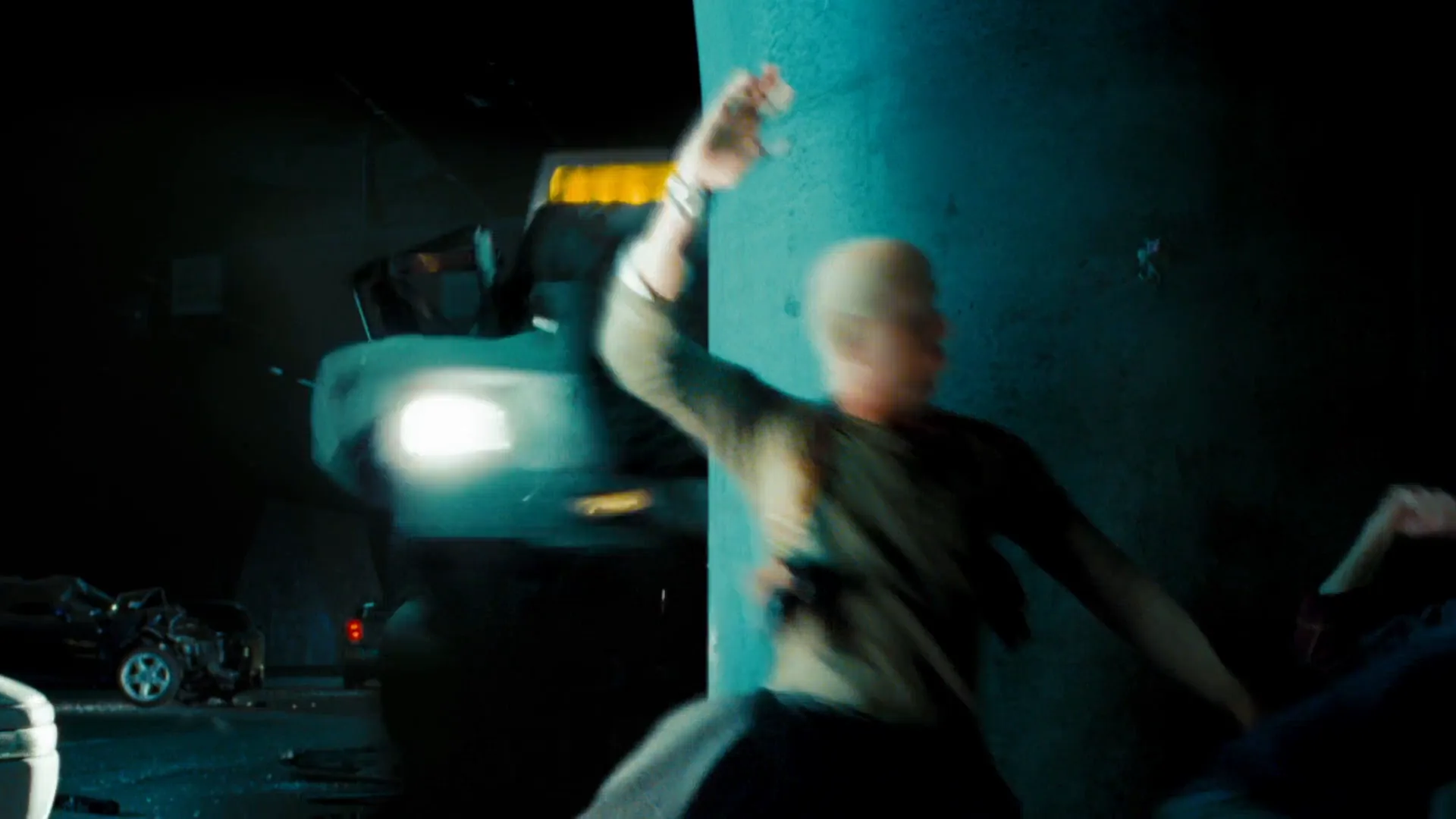
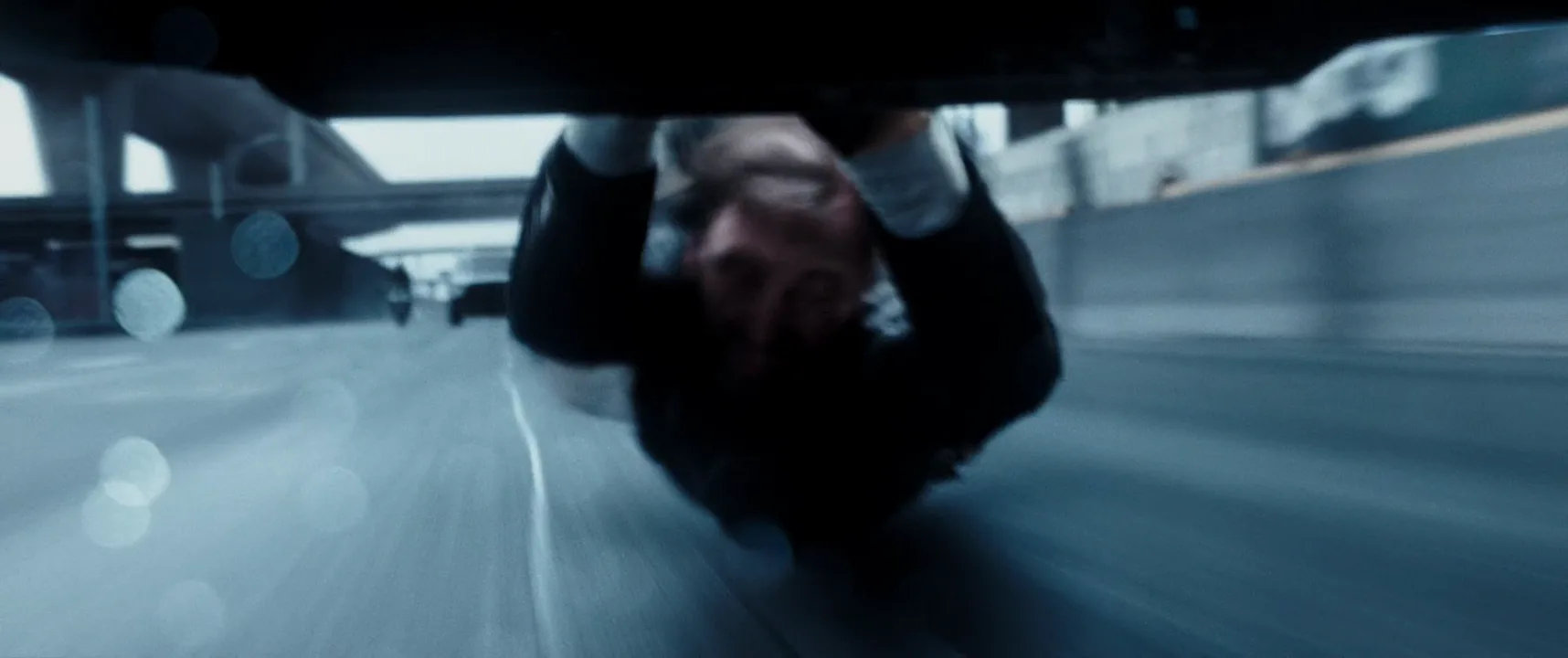
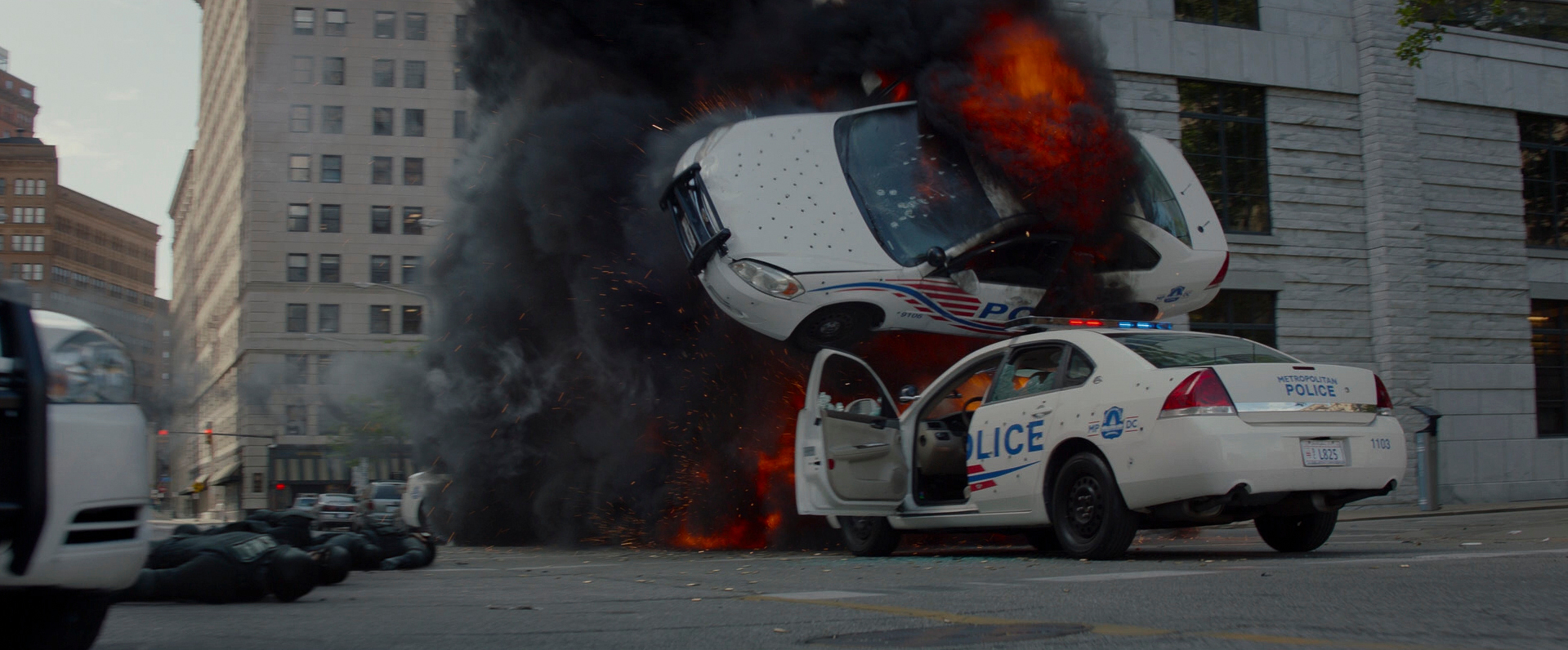
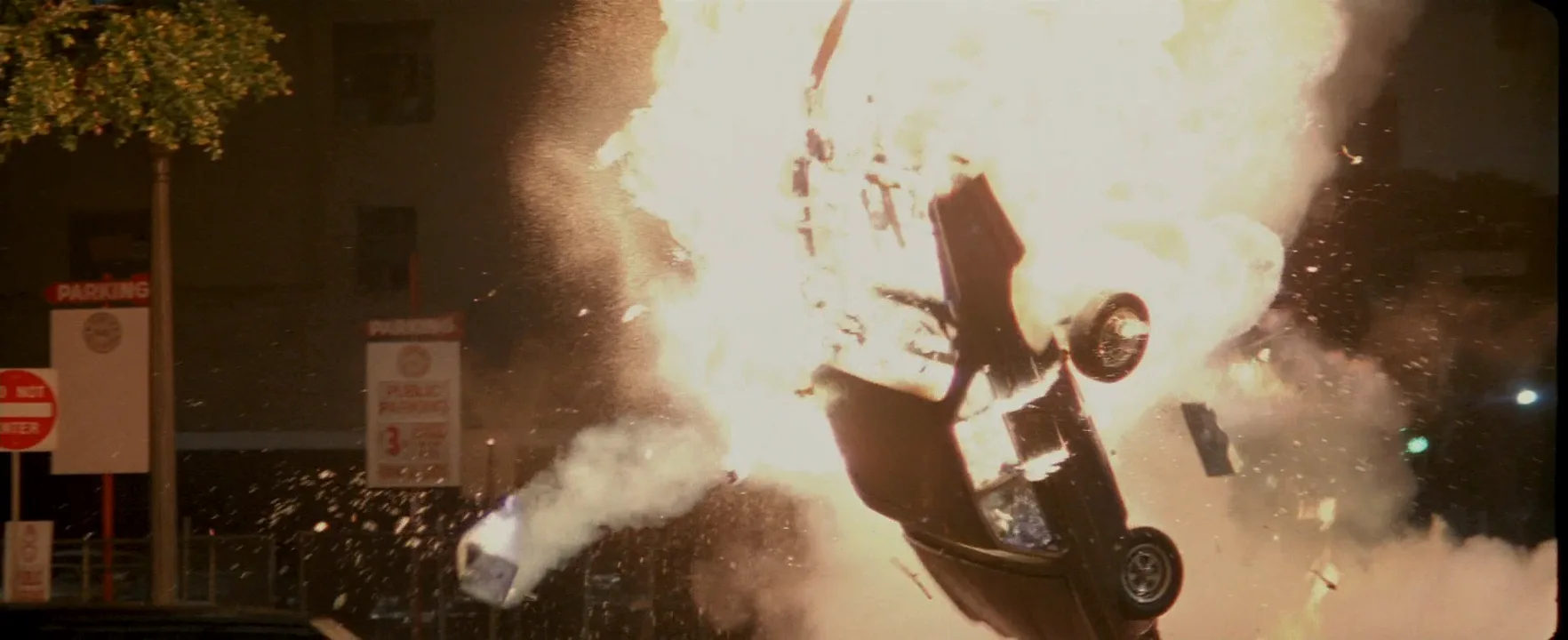
8 clipsWatch where the performer's body is when the hit lands. Long, wide shots prove a real person took the fall; fast cuts and blur hide the switch between actor and double.
Stunt Performer stills
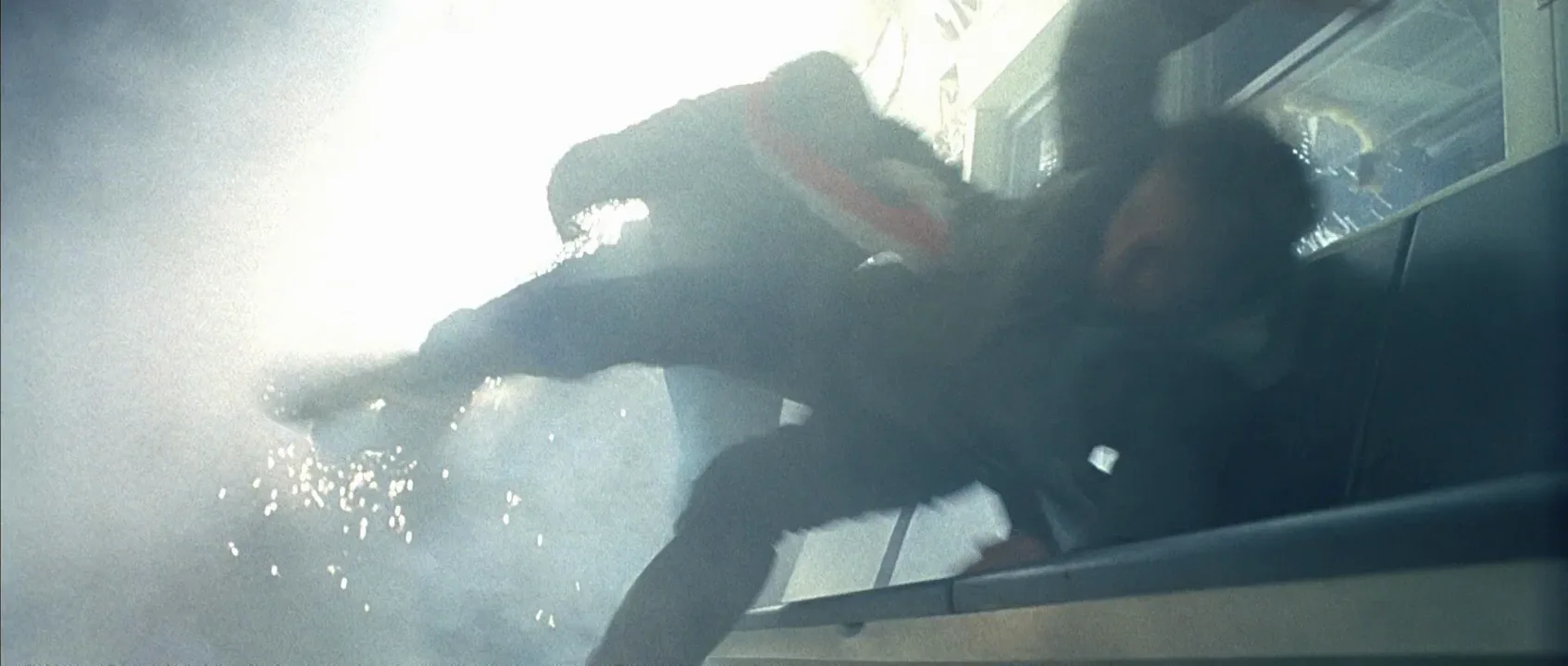
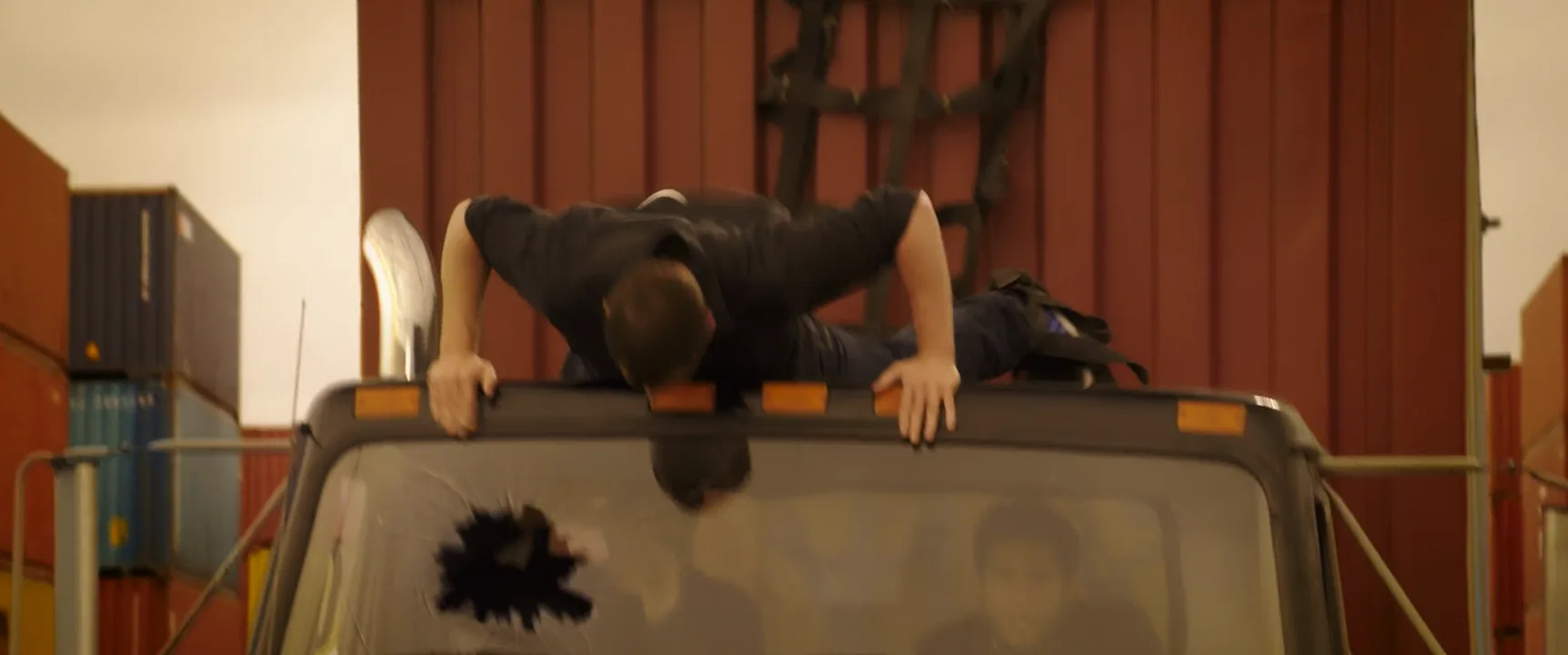
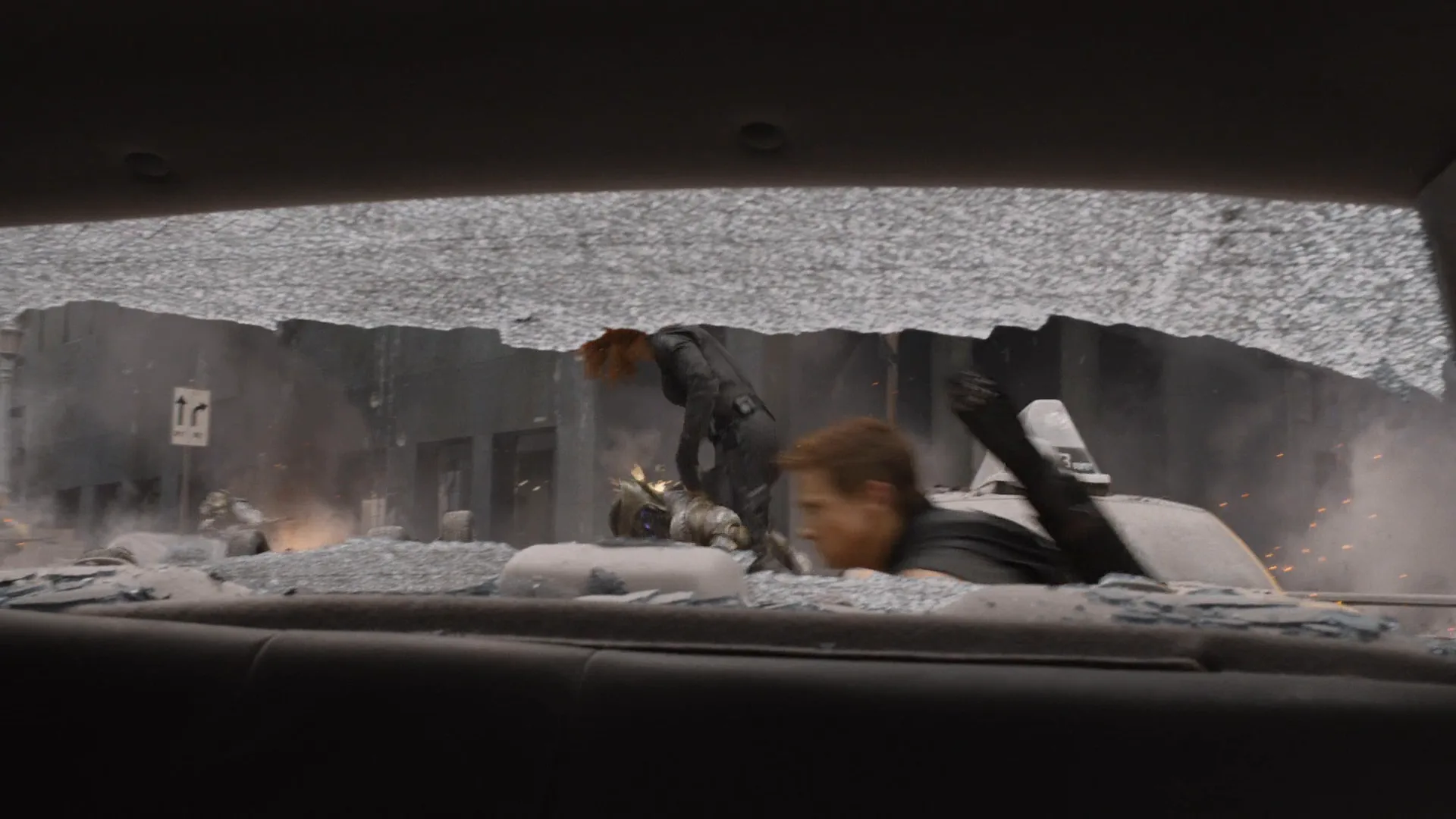
9 framesFrames where a real body, or a real car, takes the action. Notice how often blur or distance hides the face.
How to create a stunt performer with AI
4 promptsAI is a fast way to previsualize a stunt beat: framing, lens and where the body is at the key moment. Generate the peak of the action, animate it, and keep storyboard, references and coordinator notes on one FlashBoards board to compare takes. The fourth prompt re-shoots a real film shot from a text description alone, and the original plays next to the result so you can compare.
Cinematic wide shot, night city street after rain, camera at hip height, 35mm lens. A dark gray sedan rolls slowly toward frame left, headlights glaring on wet asphalt. A stuntwoman in her thirties, wiry build, short bleached-blonde hair, red leather jacket, black jeans, is mid-roll across the hood: shoulder and hip on the metal, knees tucked, hair flying. Sodium streetlight from above, cold blue shop-window fill, film grain.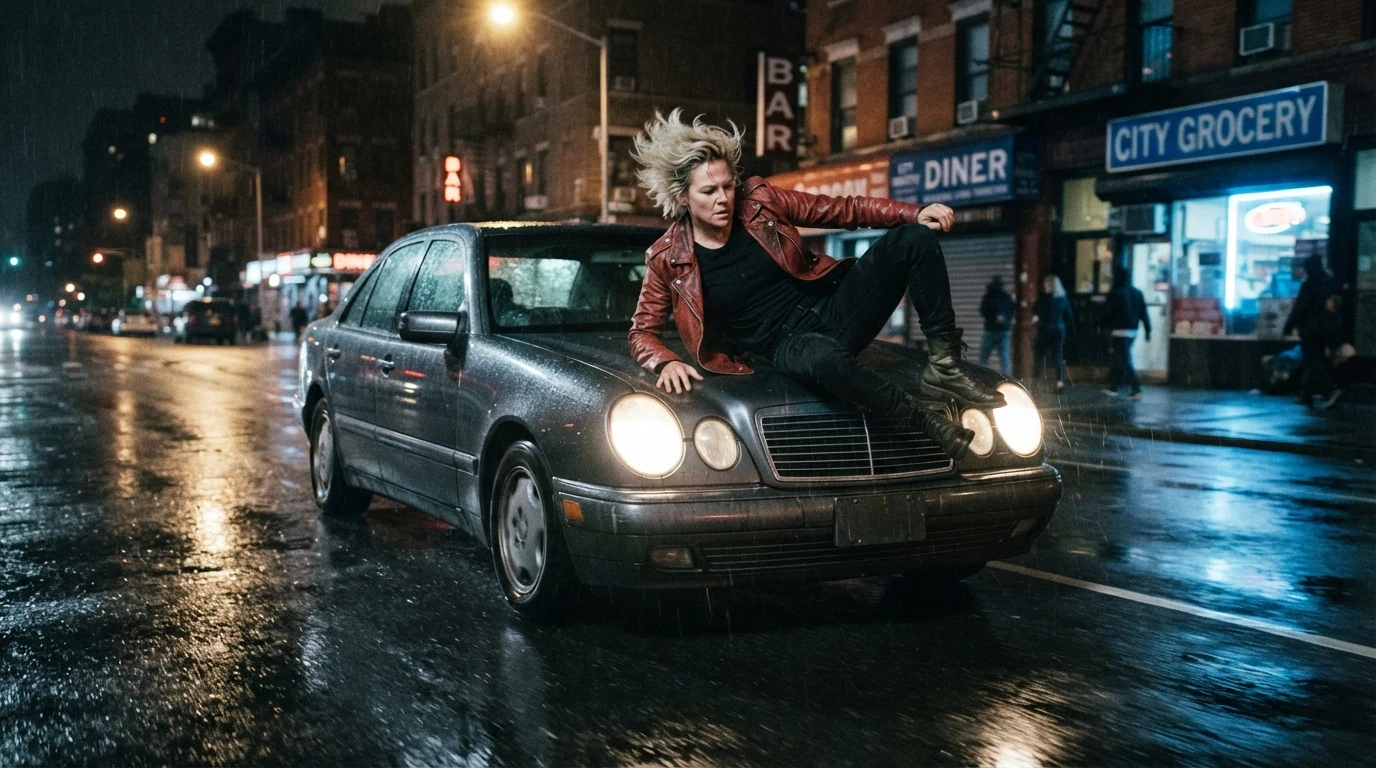
"Mid-roll across the hood" plus contact points (shoulder, hip, tucked knees) give a stunt pose, not a standing figure; "hip height" frames car and body together.
Open FlashBoardsLow-angle wide shot in a 1970s roadside diner, 24mm lens near the floor. A heavyset stuntman with a shaved head, thick red beard and torn denim vest falls backward through a breakaway wooden table, back arched, arms wide, splinters and napkins in the air. Behind him a wiry fighter in a gray hoodie follows through from a push. Hard window light from the left, warm ceiling lamps.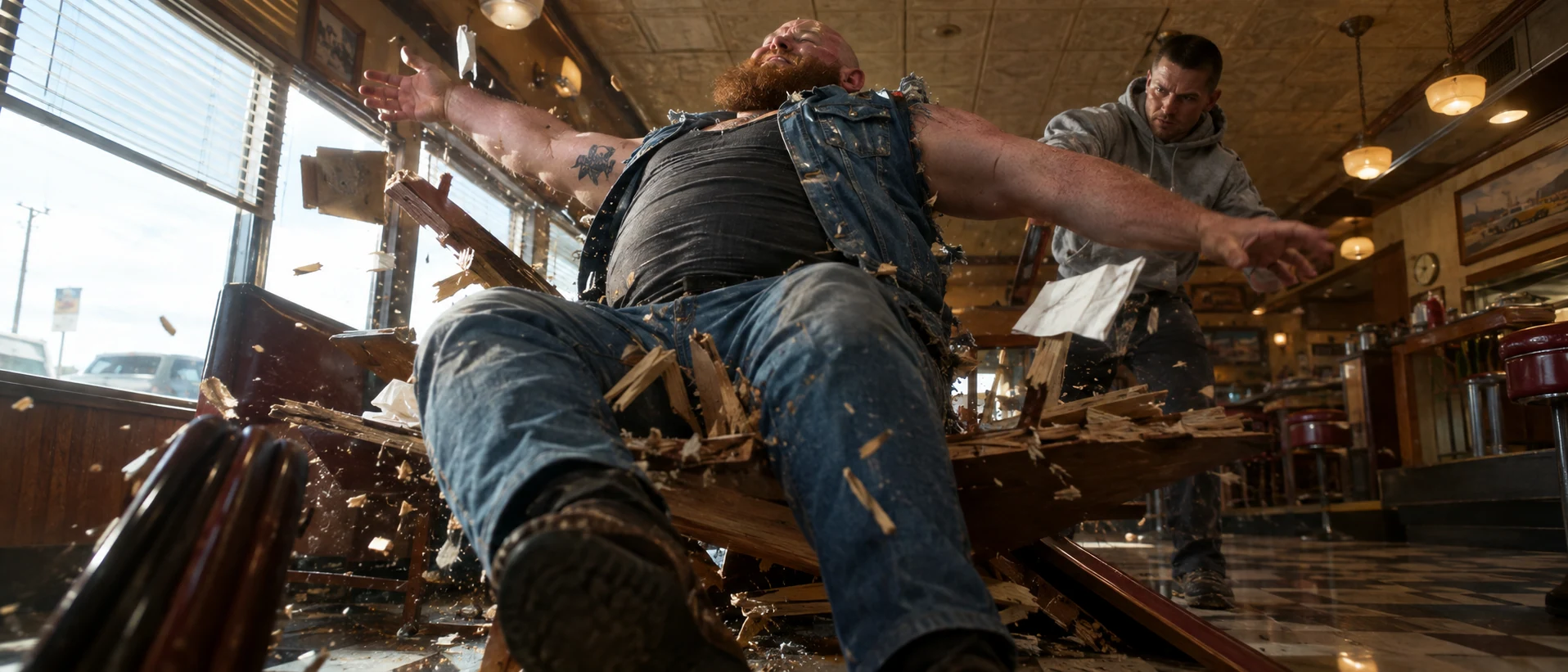
"Falls backward through a breakaway table" names the gag so the prop breaks; the floor-level 24mm makes the fall loom, and "follows through from a push" explains the force.
Open FlashBoardsCamera: handheld at hip height, pans left with the car to keep the woman centered, then settles. Action: the sedan is already moving at walking pace and the woman is already rolling across the hood. She rolls off the far edge, drops to the wet asphalt on her hands and knees and slides a little. The car brakes and stops, headlights on her. She pushes up onto one knee, looking back at the car, breathing hard."Already moving" and "already rolling" make the shot alive from frame one; one continuous beat with a stated speed keeps the body from floating.
Open FlashBoards{
"output": "Full-screen live-action night action shot in the style of Live Free or Die Hard (2007), alive from its very first frame: one continuous handheld shot, no cuts. Dark underpass, a thick teal-lit concrete pillar fills the right half of frame, cold cyan grade, deep black shadows, 35mm film grain.",
"characters": {
"S1": {
"name": "a bald hero in his fifties",
"look": "stocky, shaved head, olive long-sleeve shirt, dark jeans",
"voice": "silence: no words, only breaths and grunts"
},
"S2": {
"name": "a gunman in a dark jacket",
"look": "dark hair, navy jacket, jeans",
"voice": "silence"
}
},
"shots": [
{
"shot": 1,
"camera": "handheld at chest height, slight dolly out, stays on the gap left of the pillar",
"voice": "silence: nobody speaks in this shot, no voice at all",
"action": [
"BEGINNING: alive from the first frame, the gunman in the dark jacket runs from frame left toward the pillar, a car with glaring headlights and a yellow roof light approaches from the far left background",
"THEN: the gunman lunges past the pillar and falls to the ground in the lower right foreground",
"THEN: the bald hero runs in from frame left toward camera, arms swinging, looking back over his left shoulder at the headlights",
"THEN: he flings his right arm high above his head as the car's headlight bursts into frame right behind him",
"THEN: the car slams into the pillar, concrete dust and debris explode across the frame, the hero is thrown down at the pillar's base",
"END: dust settles, the hero sits slumped against the pillar with both arms raised to shield his head, the yellow roof light glowing through the haze on the left"
],
"dialogue": []
}
],
"sound": {
"ambience": "engine roar rising, tyres screeching, a heavy crash of metal into concrete, falling debris",
"speech": "no words in this video; the only human sounds are breaths and movement",
"never_spoken": "no narration and no voice-over: the descriptions, performance notes and step words of this prompt are never spoken aloud",
"music": "a film score under the scene, always below the voices: driving low brass and percussion hits building to the impact",
"subtitles": "none"
}
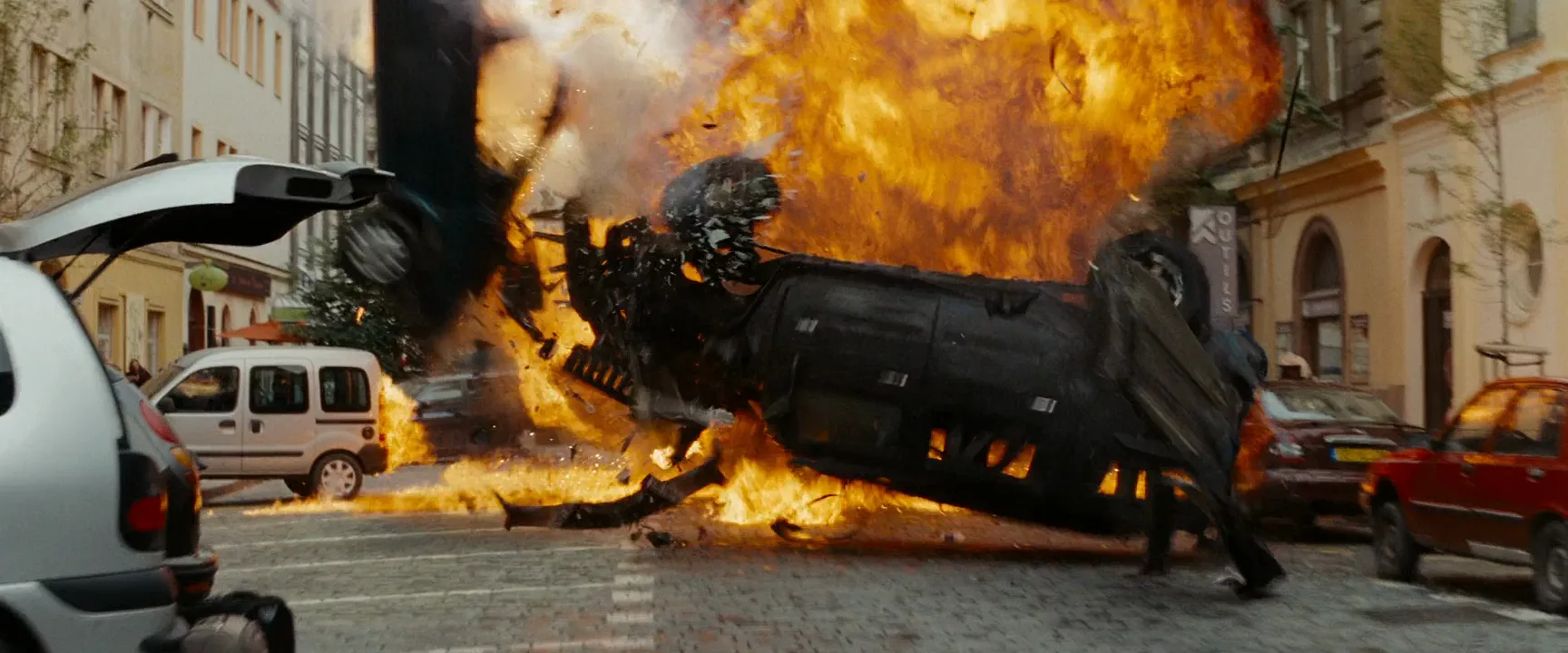
}Remakes the pillar crash from Live Free or Die Hard (2007): the prompt carried over the handheld frame, the raised arm and the car hitting concrete beside the performer.
The action is split into timed beats (runner, near-miss, impact, aftermath) and the camera stays on one gap, so the car and the performer meet in one unbroken frame, as in the original.
Open FlashBoardsCommon mistakes
- Models pose stunts like fashion shots: upright and weightless. Name contact points (shoulder on the hood) and a force (push, hit, drop).
- Bodies float in video; state the speed and what the body lands on.
- Several gags in one prompt tangle limbs; keep one per shot.
- Write the result you want ("lands on hands and knees"), not injuries to avoid.
- Keep performers fictional; never use a real actor's likeness.
Keep the reference frames, prompts and every generated take side by side — images and video in one canvas.
FAQ
4 questionsWhat does a stunt performer do?
A stunt performer executes the dangerous physical action in a film: falls, fights, car hits, fire burns, wire work and precision driving. Most double for a principal actor, matching build, hair and costume. Each gag is rehearsed with the stunt coordinator, who designs the rigging and safety.
Is a stunt double the same as a stuntman?
Mostly. Stuntman, stuntwoman and stunt performer name the profession; a stunt double is a stunt performer replacing a named actor in the dangerous shots. The same person may double a lead on one film and play a henchman thrown through a window.
Do actors do their own stunts?
Some do more than others, and many train for months to perform fight choreography and lighter action themselves. High falls, car hits, full burns and rollovers normally go to stunt performers, because insurance and safety depend on it. The edit often mixes both: actor in close-ups, double in wides.
How do films hide that a stunt double is used?
The double wears the same costume, wig and makeup; the camera sees them from behind, in profile, at a distance or through motion blur; and the editor cuts from the actor's close-up to the double's wide at the moment of impact, then back. Digital face replacement is added when the face must be seen.
Related terms
4- Body DoubleActing & Casting
A body double replaces an actor in shots where the face isn't seen — close-ups of hands, nude scenes, back-of-head shots or skills the actor lacks — so the audience believes it's still the star.
- Stunt CoordinatorFilmmaking Process & Crew
The stunt coordinator designs and supervises every stunt and fight — choreography, rigging, pads, doubles — and is responsible for the safety of performers and crew.
- Fight SceneDirecting & Staging
A fight scene is staged as choreography, camera and editing working together: clear geography, readable action–reaction beats and a rhythm of blows and pauses that tells who is winning.
- Car Chase SceneDirecting & Staging
A car chase is staged as a map of routes, speeds and obstacles: the director keeps screen direction and the distance between pursuer and pursued readable while stunt drivers, camera cars and editing build velocity.
Further reading
Hal Needham, Stuntman!: My Car-Crashing, Plane-Jumping, Bone-Breaking, Death-Defying Hollywood Life (2011). Yakima Canutt with Oliver Drake, Stunt Man: The Autobiography of Yakima Canutt (1979).