 FlashBoards Learn
- Learn
- Acting & Casting
- Body Double
Acting & Casting · Film language
Body Double
Also called: photo double, double
A body double is a performer who replaces an actor in shots where the face is not seen: hands, backs of heads, nude scenes, wide shots or skills the actor lacks. Framing, lighting and editing hide the swap, so the audience believes it is still watching the star.
- What it does
- Shows a body, hands or silhouette the principal actor cannot or will not provide, without breaking the illusion.
- Use it when
- Nudity, specialist skills, pickups after the actor has wrapped, or an actor who is no longer available.
- Watch out
- Build, skin tone, hair, jewelry and posture must match; one wrong ring or visible tattoo breaks the cut.
- Try this prompt
Over-the-shoulder from directly behind a broad-shouldered man with close-cropped gray hair and a navy peacoat, back of his head in soft focus, woman across the table in focus, 85mm, warm lamp light
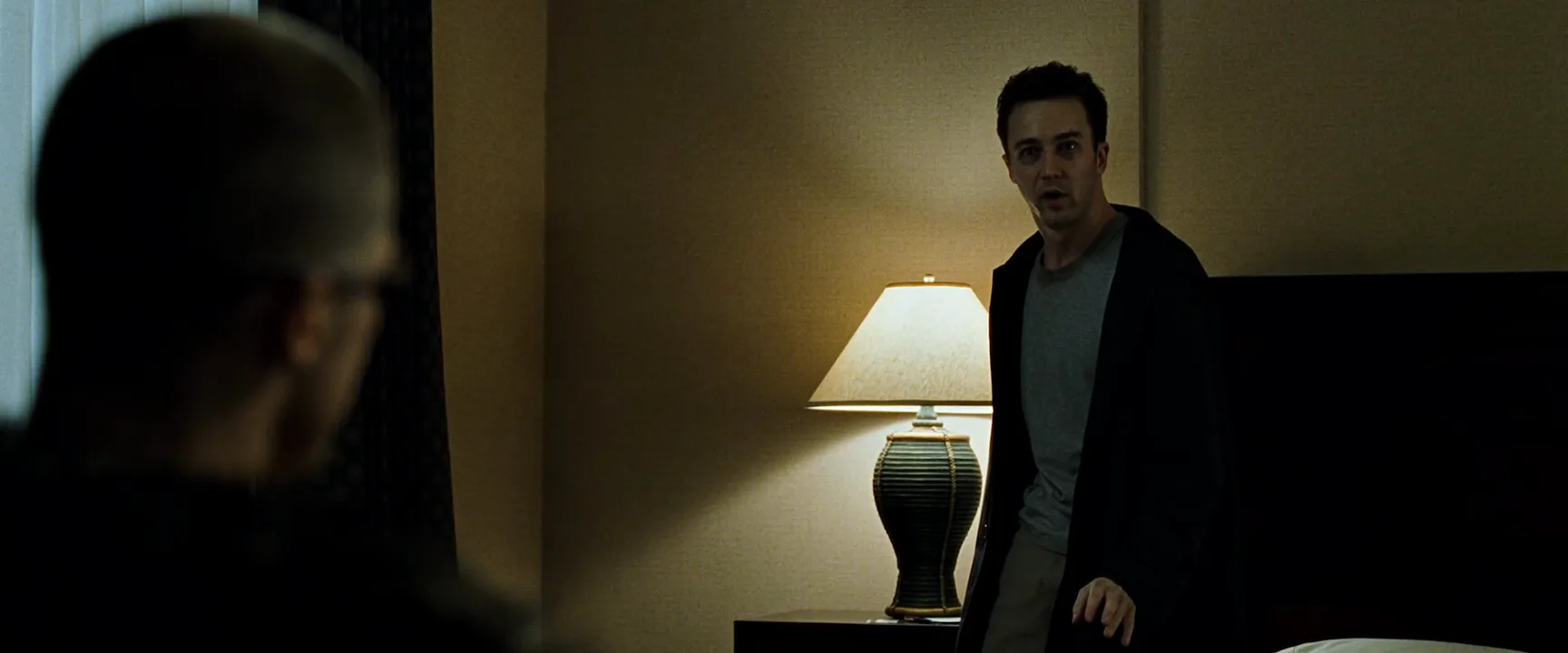
What is a body double?
A body double is cast for their body, not their face. They wear the actor's costume, wig and makeup and appear only in framings that keep their own face unreadable: a back to the lens, a head cropped by the frame, a silhouette, a soft foreground shoulder, a pair of hands in an insert shot. In the cut those shots sit beside the actor's close-ups, and the audience fills in the rest.
The term overlaps with photo double (wides and rear shots), hand double (skill inserts) and the digital double, a scanned 3D model used in effects shots. The rule is the same: if the viewer can identify the face, it is no longer a body double shot. Doubles are cast as part of the wider acting and casting process, with a measuring tape and a camera test rather than a reading.
Why do films use body doubles?
- Nudity. An actor may agree to a scene but not to showing their body; a double provides the shots the contract allows. Brian De Palma built a whole thriller, Body Double (1984), around this corner of the business.
- Skills. Piano, surgery, calligraphy: trained hands in close-up sell a skill the actor learned only for the wide.
- Time. Inserts and walk-aways are often picked up after the star wraps, frequently by the second unit.
- Impossible casting. In The Social Network (2010) Armie Hammer played both Winklevoss twins; Josh Pence played the second twin's body on set, and Hammer's face was composited on in post.
- Loss of an actor. After Paul Walker's death, Furious 7 (2015) finished his scenes with his brothers Caleb and Cody Walker as doubles plus digital face replacement.
The shot works only if nobody notices it.
How do you shoot a scene with a body double?
Match first. Height within an inch or two, the same build and shoulder line, skin tone, hand shape for inserts. Wardrobe makes duplicates; makeup matches nails, tattoos and scars or covers them on both people. The script supervisor tracks rings, watches and sleeves for continuity.
Hide the face with the camera.
- Shoot from behind or a steep back three-quarter, so the ear and jaw line are the most you see.
- Crop at the chin for bodies, at the wrist for hands.
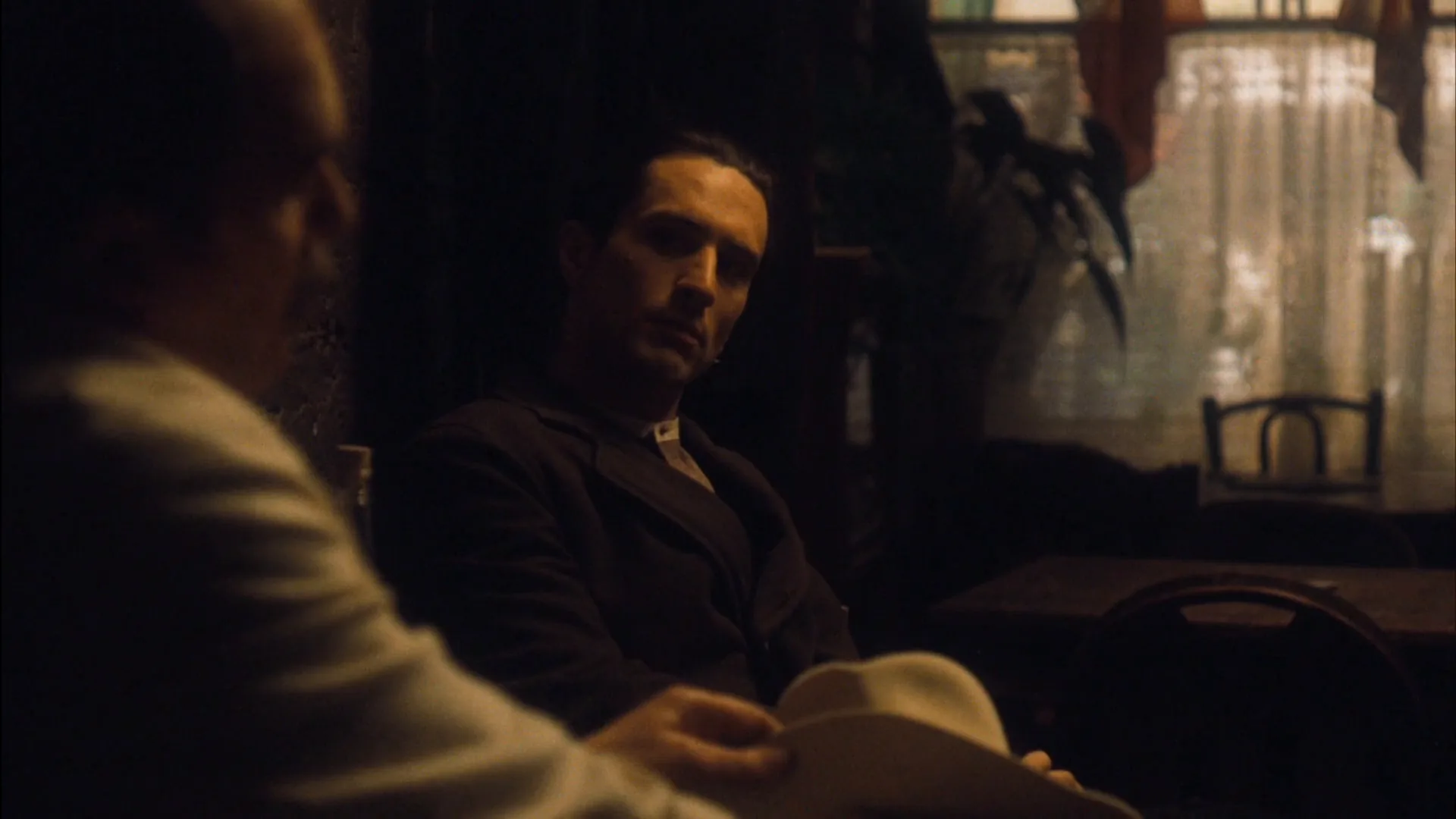
- Throw the double out of focus: in a dirty over-the-shoulder shot on an 85mm at T2, the foreground head is just a shape.
- Backlight the double into silhouette and keep key light off the side of the face.
- For hand inserts, a 100mm macro keeps the arm falling out of focus.
Match the performance. The double studies the actor's takes and copies posture, gait and business, down to which hand sets down the cup.
Body double vs. stunt double
A stunt performer doubles dangerous action: falls, fights, fire, car hits. A body double doubles the actor's appearance in shots with no physical risk. The framing rule is shared, but a stunt double is hired for what they can survive, a body double for what they look like.
Neither is a stand-in, who replaces the actor while the crew lights and rehearses and never appears in the finished shot.
Body Double examples in film
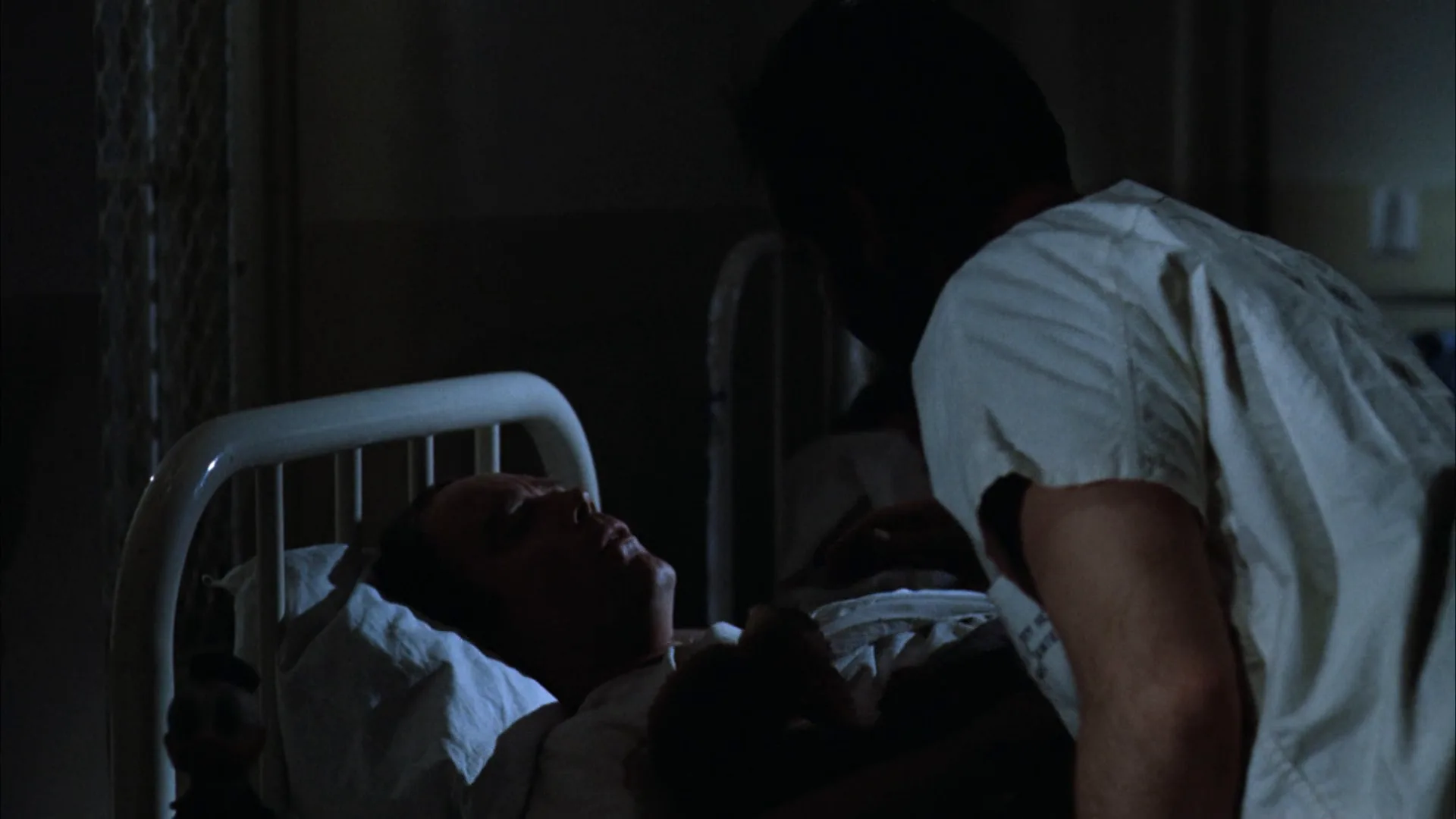
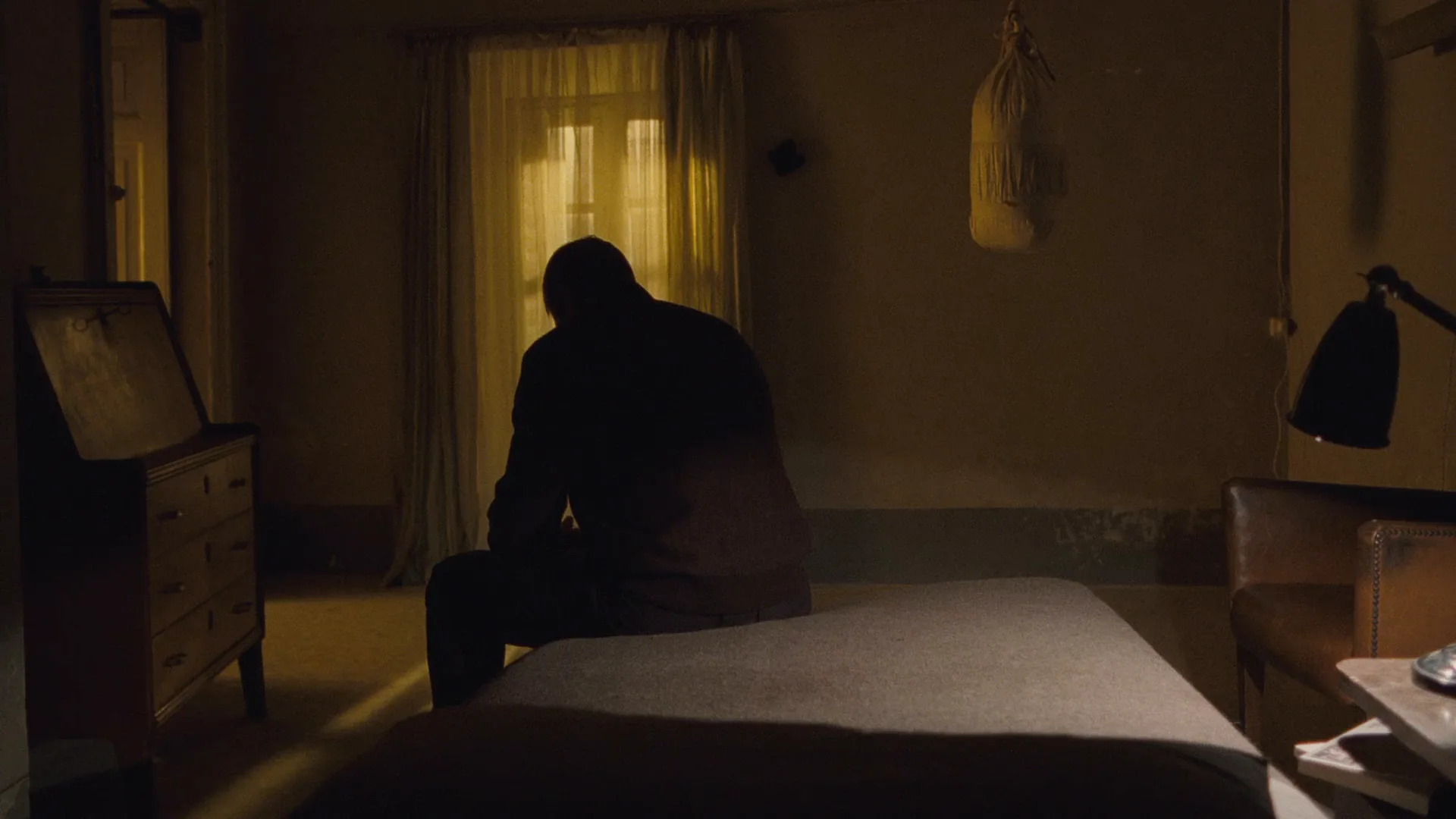
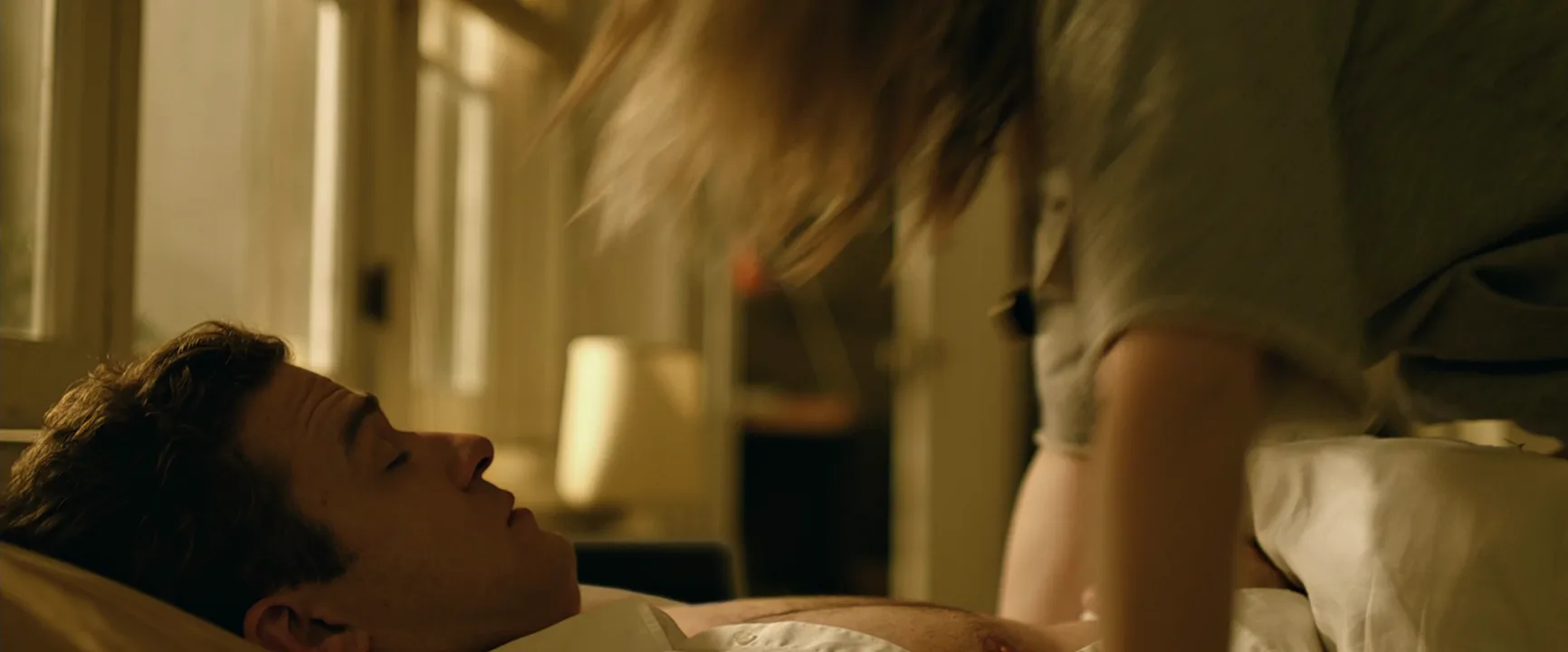
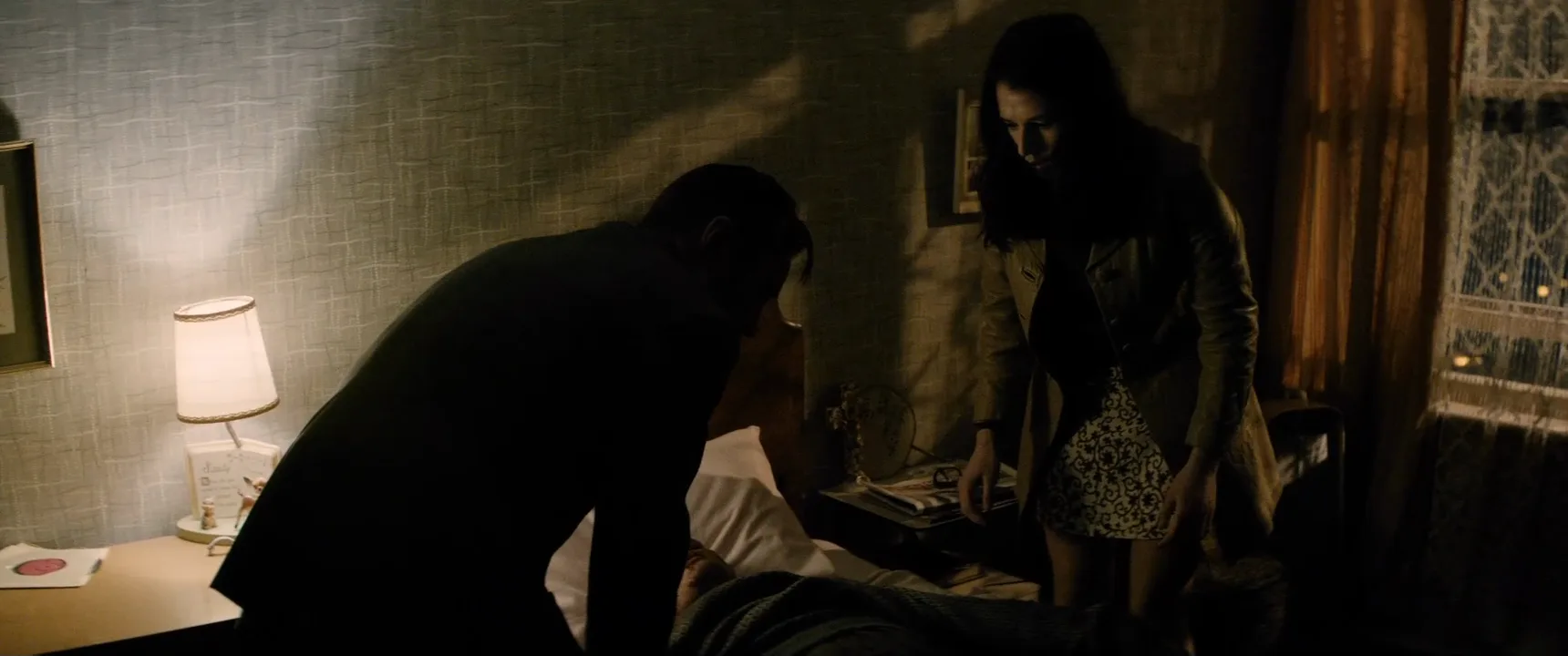
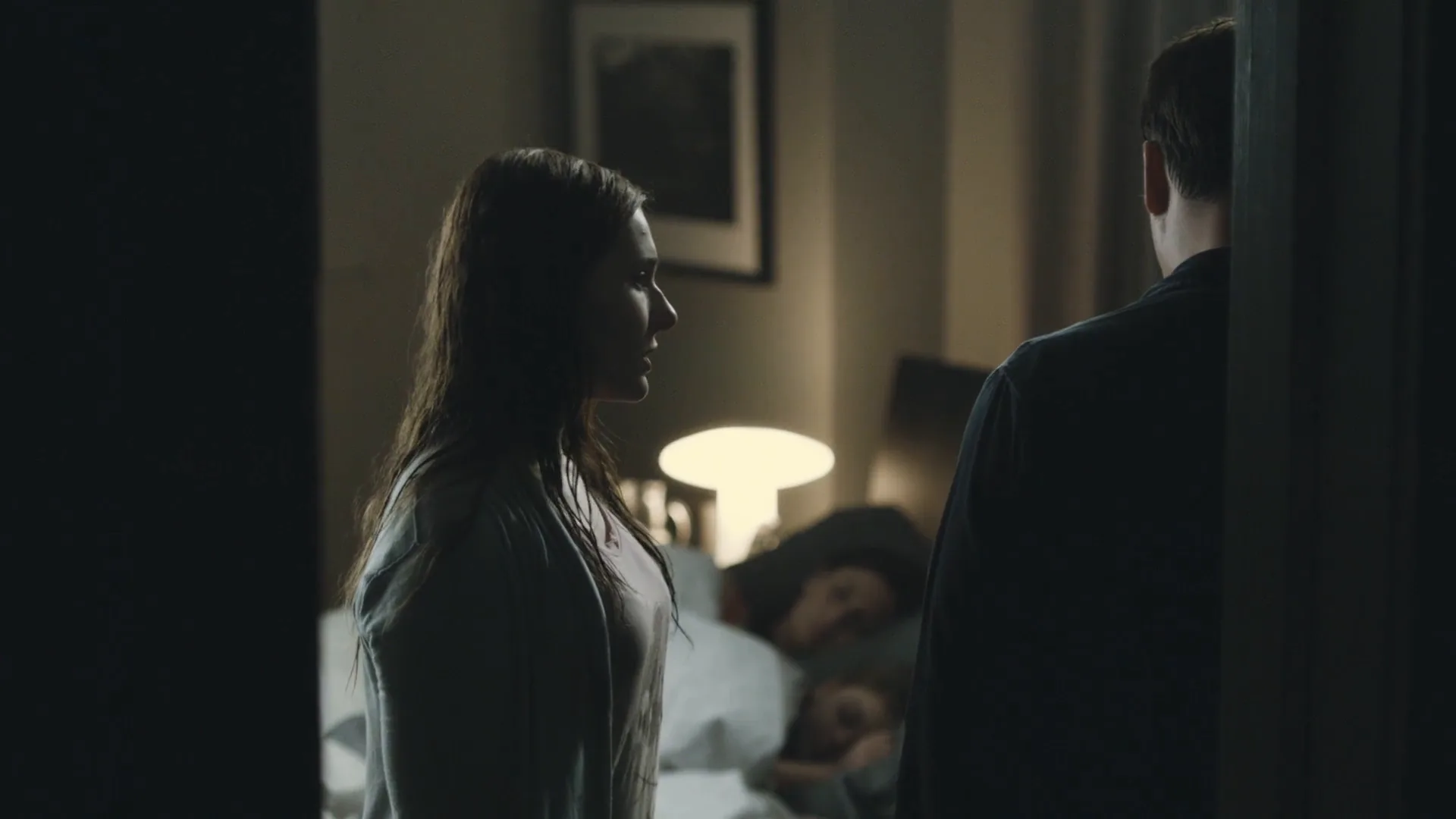
8 framesThese frames are not labeled as double shots, and a still cannot tell you who is inside them. That is the point: each shows the geometry that makes doubling possible.
How to create a body double with AI
4 promptsAI coverage needs the same framings: identity carried by costume and posture while the face stays turned away. Keep the character references, faceless coverage and continuity notes (ring, scar, collar) on one FlashBoards board and compare takes side by side. The fourth prompt re-shoots a real film shot from a text description alone, and the original plays next to the result so you can compare.
Cinematic over-the-shoulder shot, small kitchen at night. Foreground left third: a broad-shouldered man seen from directly behind, close-cropped salt-and-pepper hair, navy peacoat collar turned up, only the back of his head, one ear and his shoulder visible, soft focus. Across the table in sharp focus: a woman in her thirties with a copper-red braid, freckles and a gray knit sweater, holding a white mug, looking at him. Eye level, 85mm, shallow depth of field, warm practical lamp behind her, film grain.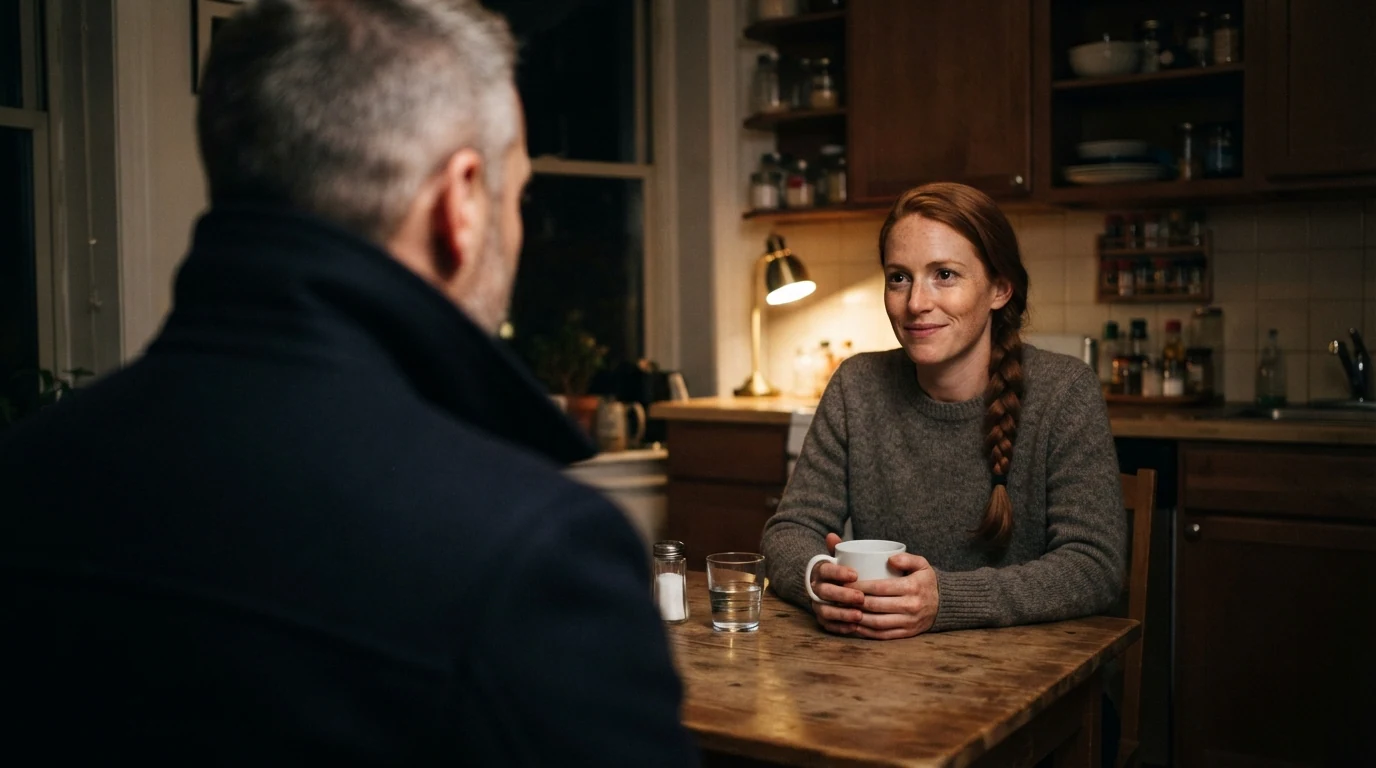
"Seen from directly behind" plus the list of what is visible (head, ear, shoulder) lock the double framing; "soft focus" and the 85mm turn the head into a shape.
Open FlashBoardsHand-double insert, extreme close-up: two weathered hands playing the low keys of an old upright piano, thin silver ring on the left little finger, small pale scar across the right index knuckle, charcoal sweater cuffs. Frame cropped at the forearms, only hands, cuffs and keys in frame. 100mm macro, window side light from left, focus falling off along the keyboard.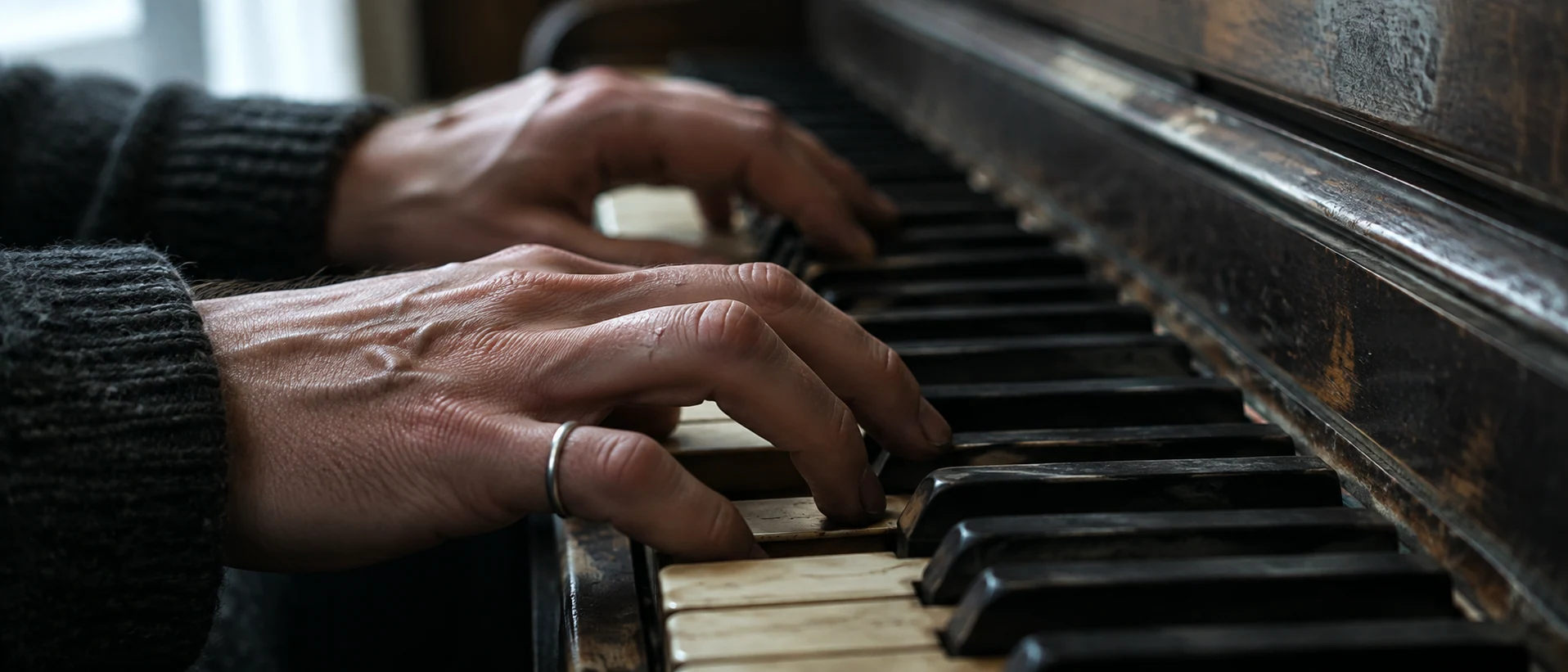
"Cropped at the forearms" keeps the body out, as on set. The ring and scar are continuity marks: repeat them in every prompt for this character.
Open FlashBoardsCamera: locked-off tripod, very slow push-in of a few inches toward the woman, steady to the end. Action: the woman is already lowering her mug, then leans forward and speaks two short sentences, eyes on the man. The man in the foreground keeps his back to the camera, his head tilting slightly toward the window on the left. At the end she sets the mug down and waits."Already lowering her mug" makes the shot alive from frame one. The man's turn is given a direction away from the lens, stated as what he does, not what to avoid.
Open FlashBoards{
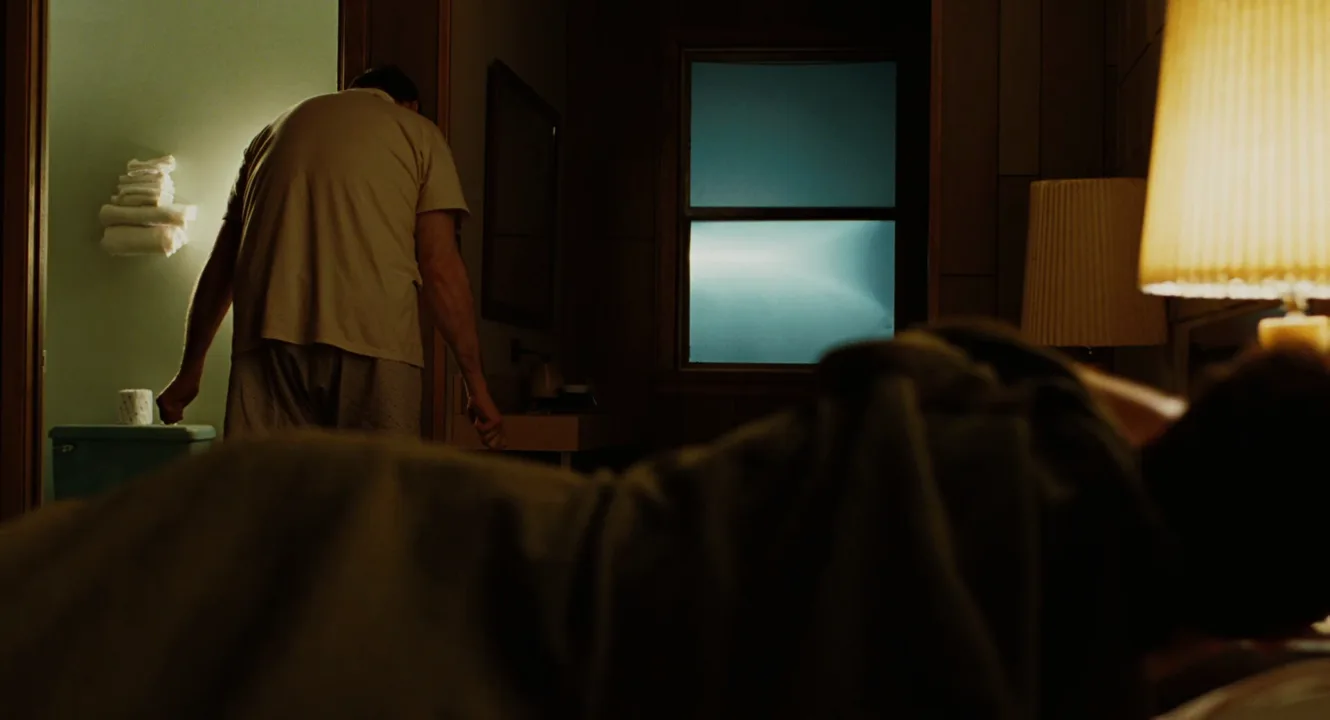
"output": "Full-screen live-action scene from Haunter (2013) from its very first frame: one continuous handheld shot, no cuts. Dim 2010s digital cinema look, night interior, a bedroom seen from a dark hallway through an open doorway, muted gray-green shadows and warm amber lamplight, one small mushroom-shaped table lamp glowing in the background, deep shadows.",
"characters": {
"S1": {
"name": "Lisa, played by Abigail Breslin",
"look": "teenage girl, long dark hair hanging damp and straight past her shoulders, pale gray knit cardigan over a light top; seen in strict side profile for the whole shot, her nose pointing to screen right",
"voice": "soft, steady, a little fragile"
},
"S2": {
"name": "Olivia's Father, played by David Hewlett",
"look": "tall man seen only from directly behind: short dark hair, the back of his head, broad shoulders in a dark charcoal jacket; he stands like a statue, the back of his head pointed straight at the lens for the whole shot",
"voice": "low, broken, apologetic"
},
"S3": {
"name": "Olivia",
"look": "never seen in the shot, a girl's voice from inside the room",
"voice": "young, gentle, forgiving"
}
},
"shots": [
{
"shot": 1,
"camera": "handheld, nearly still with a faint breathing drift, eye level, normal lens, shooting from the dark hallway through the doorway. A dark door jamb fills the left fifth of the frame. S1 stands mid-frame left, lit in profile, facing screen right toward S2. S2 stands in the right foreground, his back filling the right third of the frame from mid-back up, head near the top edge, dark and soft against the room. Behind them: a bed with two people lying asleep under white sheets, the glowing lamp, a framed black-and-white picture and long curtains. Framing stays the same from start to end.",
"action": [
"BEGINNING: alive from the first frame, S1 already looking screen right at the back of S2's head, lips closed, hands out of frame; S2 stands square to the room, the back of his head toward the camera, looking toward the bed.",
"THEN: while the two voices are heard, S1 stays completely still, lips closed, only her chest rising with a slow breath; S2 holds perfectly still, the back of his head pointed at the lens, shoulders square.",
"THEN: S1 keeps her gaze on S2, a strand of damp hair shifting on her shoulder, her face tightening with held emotion; S2 stays a motionless dark back.",
"END: only now S1's lips part and she speaks toward S2, head still in strict profile; S2 is still a motionless dark back, the back of his head pointed at the lens, the lamp glowing between them."
],
"dialogue": [
{
"speaker": "S2",
"on_screen": false,
"when": "from the first frame, while his back stays turned and still",
"delivery": "quiet, choked, apologetic",
"line": "<d>[English] I'm so sorry, Olivia.</d>"
},
{
"speaker": "S3",
"on_screen": false,
"when": "right after his line, heard from inside the room",
"delivery": "gentle, forgiving",
"line": "<d>[English] It's okay, dad.</d>"
},
{
"speaker": "S1",
"on_screen": true,
"when": "near the end of the shot, after a long silent pause, her lips visibly moving",
"delivery": "soft, hopeful, near tears",
"line": "<d>[English] We're gonna be a happy family again.</d>"
}
]
}
],
"sound": {
"ambience": "quiet night room tone, a faint hum of the lamp, slow breathing",
"speech": "exactly these spoken phrases, each said once, in this order",
"never_spoken": "no narration and no voice-over: the descriptions, performance notes and step words of this prompt are never spoken aloud",
"music": "a film score under the scene, always below the voices: a soft, sad piano and low warm strings, slow and quietly hopeful",
"subtitles": "none"
}
}Remakes the doorway shot from Haunter (2013): the prompt carried over the father as a dark back in the right foreground, Lisa's lit profile, the sleepers and lamp behind them, and the scene's three lines in order.
The father is written only as a back aimed at the lens, and his corpus line is marked off screen, so his voice carries him while Lisa's profile carries the face.
Open FlashBoardsCommon mistakes
- Models rotate figures to three-quarter so a face appears. Say "seen from directly behind" and list what IS visible.
- "No face" can pull a face in; describe framing and focus.
- In video, give every head movement a direction away from camera.
- Keep characters fictional; never prompt a real actor's likeness onto a body.
Keep the reference frames, prompts and every generated take side by side — images and video in one canvas.
FAQ
4 questionsWhat is a body double in movies?
A performer who appears in place of an actor in shots where the face is not visible: hands, backs, nude scenes, silhouettes or wides. They wear the actor's costume and hair, and the editor cuts their shots between the actor's close-ups.
What is the difference between a body double and a stunt double?
A stunt double performs dangerous action (falls, fights, fire, car hits) and is hired for skill and safety training. A body double replaces the actor in shots with no physical risk, such as intimate scenes or hand inserts, and is hired for looking like the actor.
What is a photo double?
The broad term for a performer who doubles an actor in non-dangerous shots, usually wides, rear shots or pickups after the actor has left set. They must match height, build, hair and wardrobe.
How do filmmakers hide a body double's face?
Shoot from behind, crop the head out of frame, throw the double out of focus in an over-the-shoulder, or backlight them into silhouette. The editor cuts on movement between the close-up and the double's shot.
Related terms
3- Stunt PerformerActing & Casting
A stunt performer executes dangerous physical action on camera — falls, fights, car hits, fire burns — often doubling for an actor under the stunt coordinator's direction.
- Second UnitFilmmaking Process & Crew
The second unit is a separate crew with its own director and DP that shoots material without the principal cast — establishing shots, inserts, stunts, car work, plates and crowds — in parallel with the main unit.
- Insert ShotCamera Shots
An insert is a close shot of an object or small action inside the scene — a note, a phone screen, a hand turning a key — cut into the coverage so the audience notices exactly the detail the story needs.
Further reading
Steven D. Katz, Film Directing Shot by Shot (Michael Wiese Productions).