 FlashBoards Learn
- Learn
- Filmmaking Process & Crew
- Production Value
Filmmaking Process & Crew · Film language
Production Value
Also called: high production value, production values
Production value is how expensive and polished a film looks on screen, measured against what it actually cost. Locations, sets, costumes, light, extras and effects all add to it. High production value makes the audience trust the world; low production value makes them notice the seams and stop believing.
- What it does
- Makes the world of the film feel real, large and cared for, so the audience accepts it without question.
- Use it when
- Deciding where the money, the days and the art department's time go: spend them on what the camera actually sees.
- Watch out
- Spreading a small budget thin across many cheap locations; one great place shot well beats five forgettable ones.
- Try this prompt
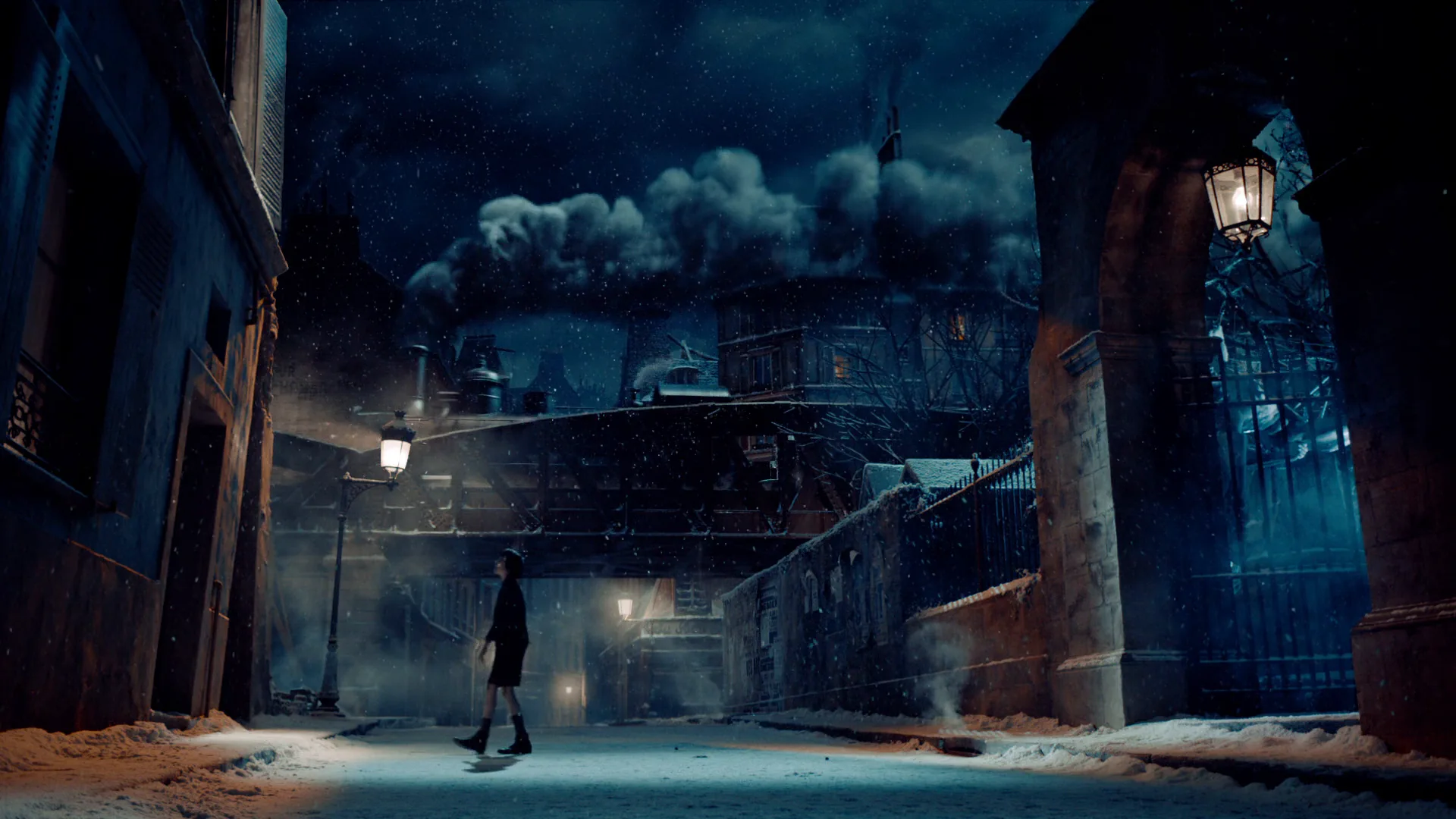
Wide shot, one lone figure in a long wool coat on a wet cobbled alley at blue hour, haze, warm practical lamps, deep background, 24mm
What is production value?
Production value is the gap between what a film cost and what it looks like it cost. Crews call it "putting the money on the screen": every dollar should end up in front of the lens, not in a location the camera never shows. Within film production it is a planning goal, not a department; the producer, director, cinematographer and production designer all raise or lower it.
It is relative. R.I.P.D. (2013) had a big studio budget, yet much of its effects work reads as unfinished. Birdemic: Shock and Terror (2010) is the extreme opposite: animated birds pasted onto the frame make the audience laugh instead of flinch.
What makes a film look expensive?
Audiences can't name it, but they read the same signals:
- Scale and depth. A readable foreground, middle ground and far background feel like a world, not a room.
- Shaped light. Motivated light with contrast looks deliberate; flat light looks like a corporate video. Haze and practical lights in the frame add both cheaply.
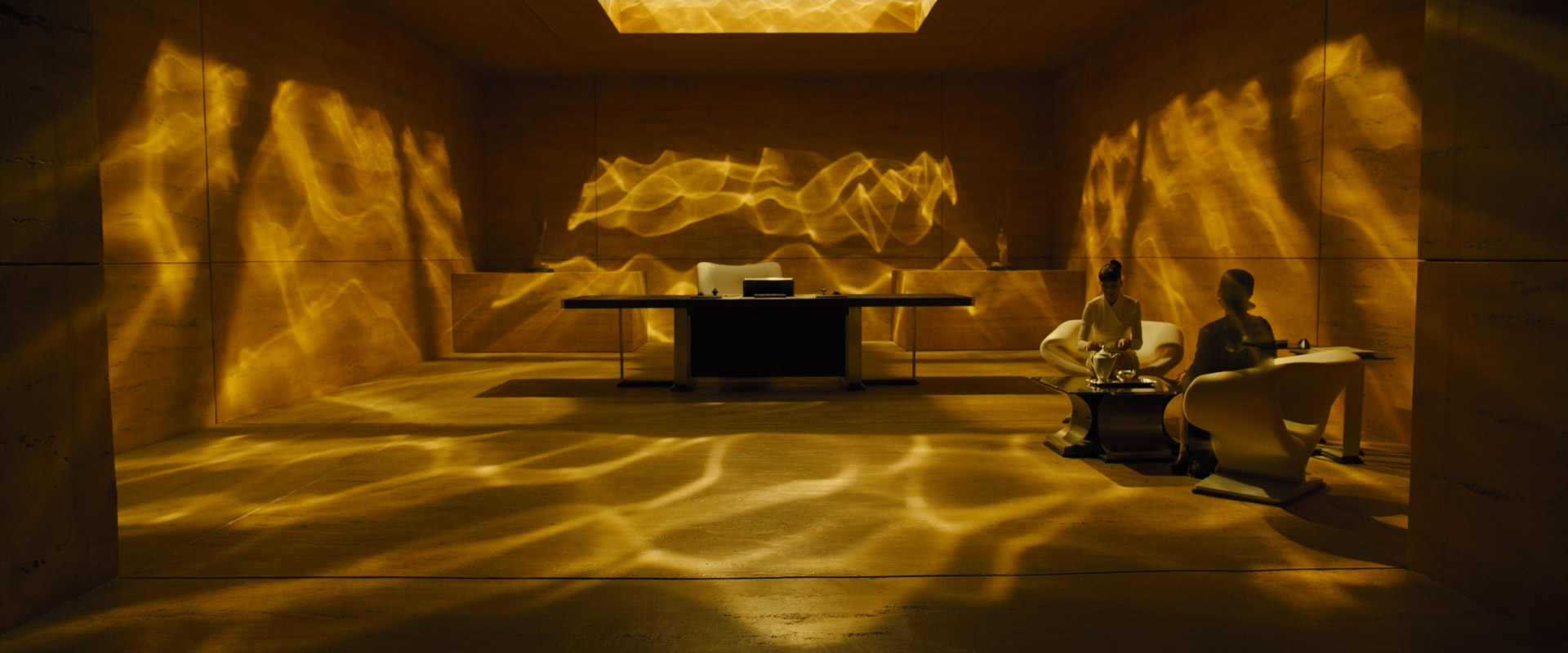
- Dressed spaces. Texture, worn props, windows that show something. Bare white walls are the fastest tell of a small budget; this is where production design earns its keep.
- People. Costumes that fit, and a few extras in the depth of a shot to make a place feel inhabited.
- Sound. Thin, echoey dialogue cheapens the image more than any camera choice.
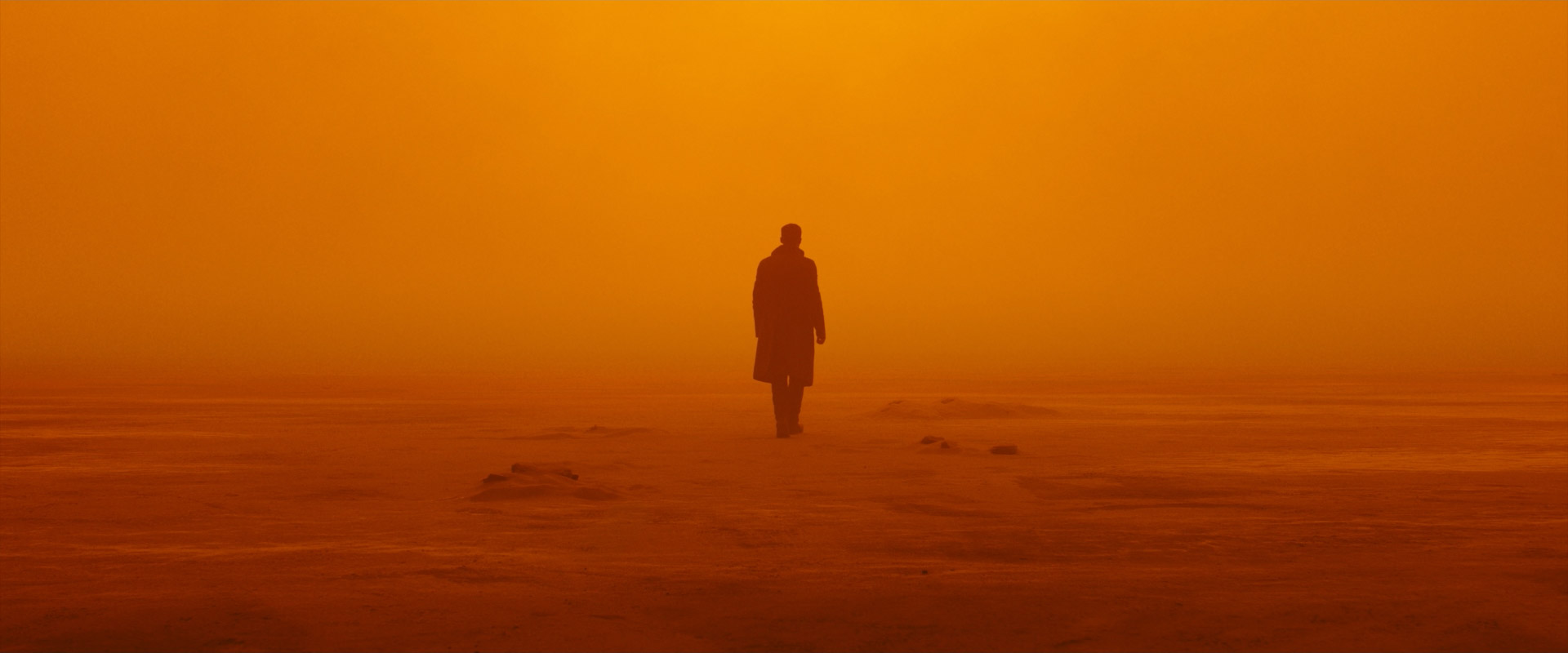
Blade Runner 2049 (2017) and Inception (2010) mark the high end: both built large physical sets, and Inception shot its hallway fight in a practical rotating corridor, so the effect has real weight.
How to increase production value on a small budget
Most production value is won in pre-production:
- Write for what you can get. If you can use a boat, a barn or a closed restaurant, set the scene there. A free, striking filming location is the biggest upgrade on a low budget.
- Fewer, better locations. Company moves eat hours; two strong locations beat eight weak ones.
- Shoot the light. Schedule exteriors for golden hour and blue hour; twenty minutes of good light outranks a day of flat noon sun.
- Show the size once. One real wide, from a rooftop or a hill, tells the audience the world is big. Then the scene can play in close-ups.
- Dress only what the lens sees. Plan the background first and concentrate the art department there.
- Do it in camera. Rain, smoke and a dimmer on a practical are cheap practical effects that beat rushed digital fixes.
El Mariachi (1992) is the classic proof: Robert Rodriguez built the film around towns, props and people he already had access to. A micro-budget film lives or dies on this kind of planning.
Production value vs. production design vs. budget
Production design is the craft and the department: the physical world of the film. The production budget is the itemized cost of everything. Production value is the result on screen: how much of that budget, and of the crew's ingenuity, the audience can actually see. A large budget spent on overtime and failed effects buys little of it; a small one aimed at the lens can buy a lot.
How to plan production value before the shoot
List the three or four images that will carry the film's scale: the big wide, the crowded scene, the location nobody else has. Budget and schedule those first. In FlashBoards, pin them at the center of the board with scout photos, film references and quick AI test frames at the planned time of day, so the art department and the DP can see where the money has to go.
Production Value examples in film
6 framesFrames where the budget, or the ingenuity, is visible on screen.
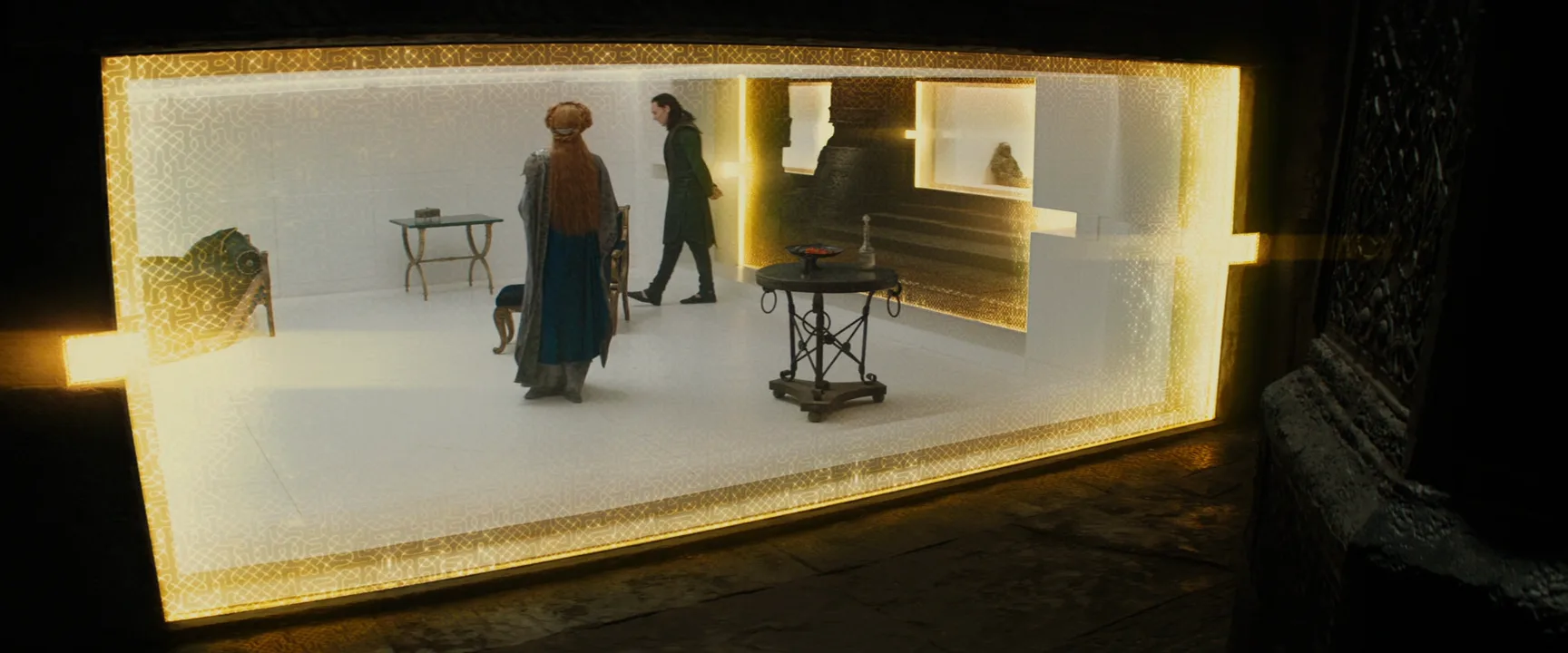
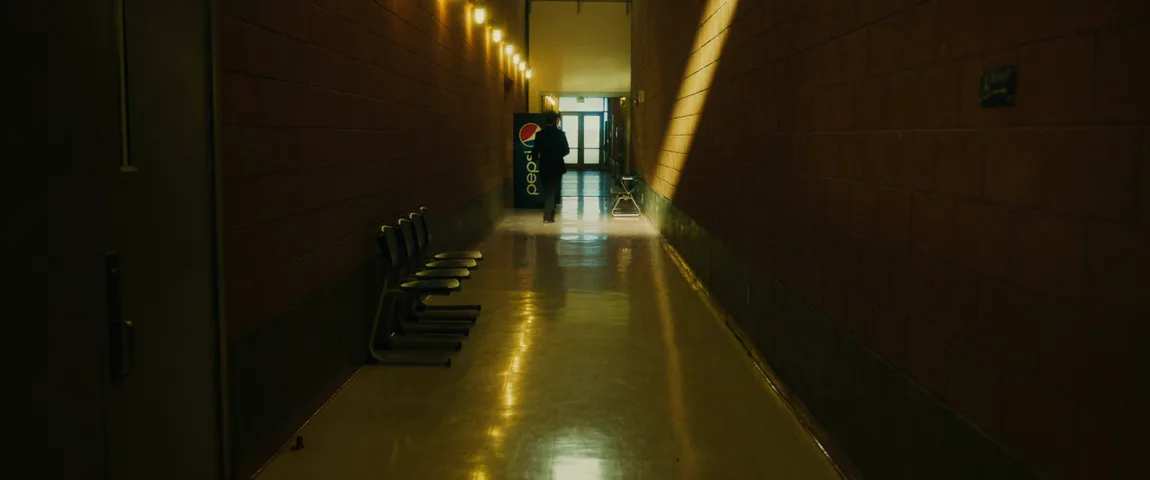
How to create a production value with AI
4 promptsAI frames let you test production value before paying for it: try a scene at different times of day, with or without haze, and compare the takes side by side on a FlashBoards board. These recipes build an expensive-looking setup from very little. The fourth prompt re-shoots a real film shot from a text description alone, and the original plays next to the result so you can compare.
Cinematic wide shot of a narrow cobbled alley at blue hour after rain. A tall woman in her fifties with a long gray braid and an oxblood wool coat walks toward camera in the middle ground. Wet cobblestones reflect warm iron street lamps. Light haze, a lit café window in the left foreground, a stone archway in the deep background. 24mm lens at chest height, deep focus, cool sky against warm practical light, film grain.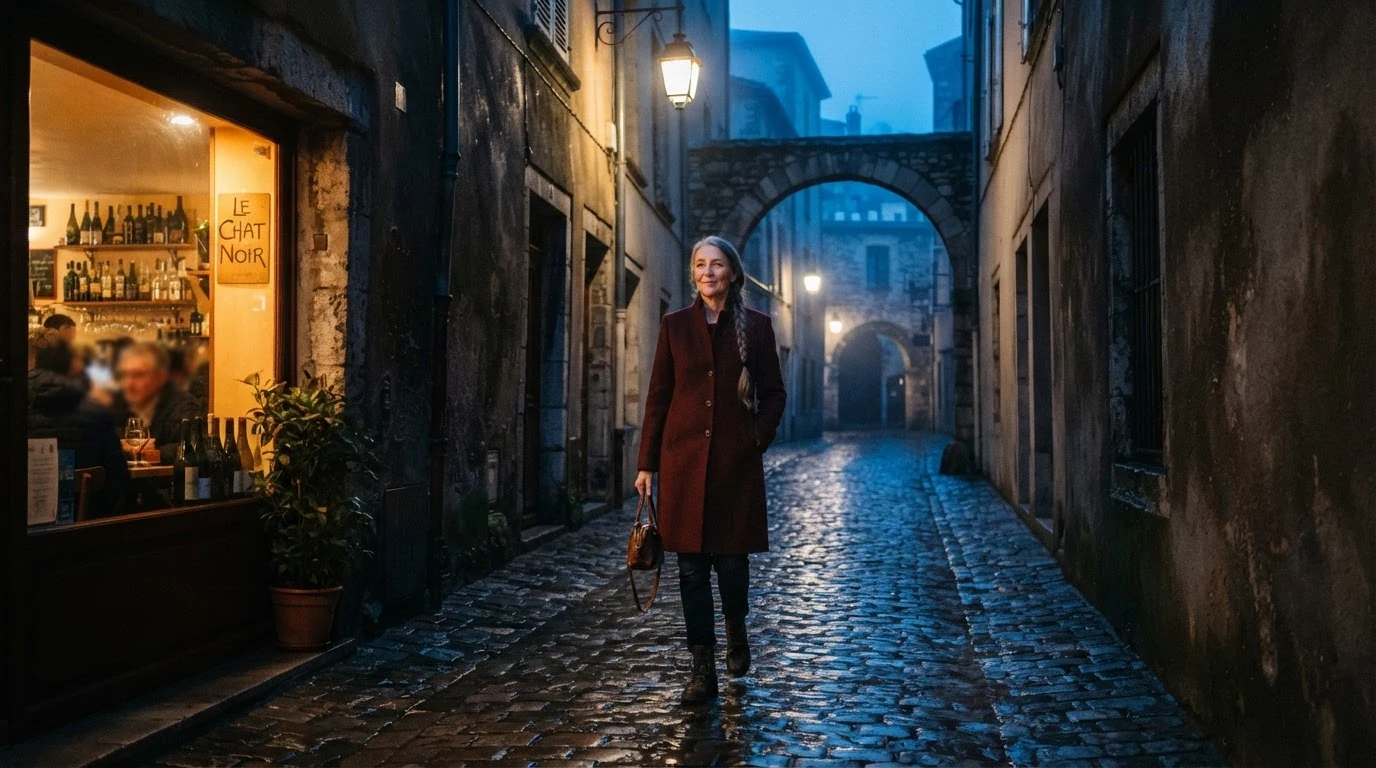
Foreground, middle ground and deep background force layered depth. Wet cobblestones, haze and street lamps add texture and contrast almost for free; the braid and coat keep the woman consistent for the video.
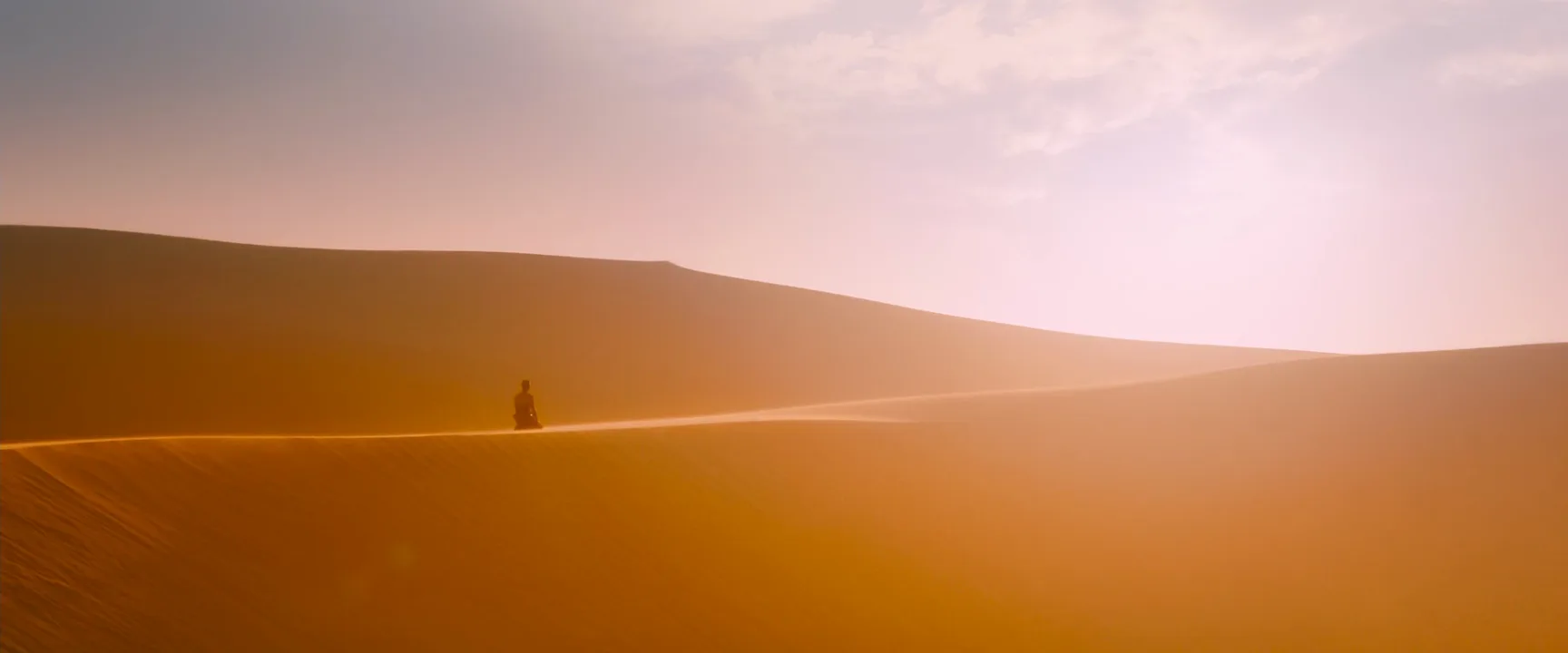
Open FlashBoardsExtreme wide anamorphic shot of a salt flat at golden hour. A lone rider on a dark horse stands small in the lower third, a thin man with a red scarf and a wide-brimmed hat. Low sun behind him, long shadows toward camera, mountains on the horizon, a dust trail glowing in the backlight.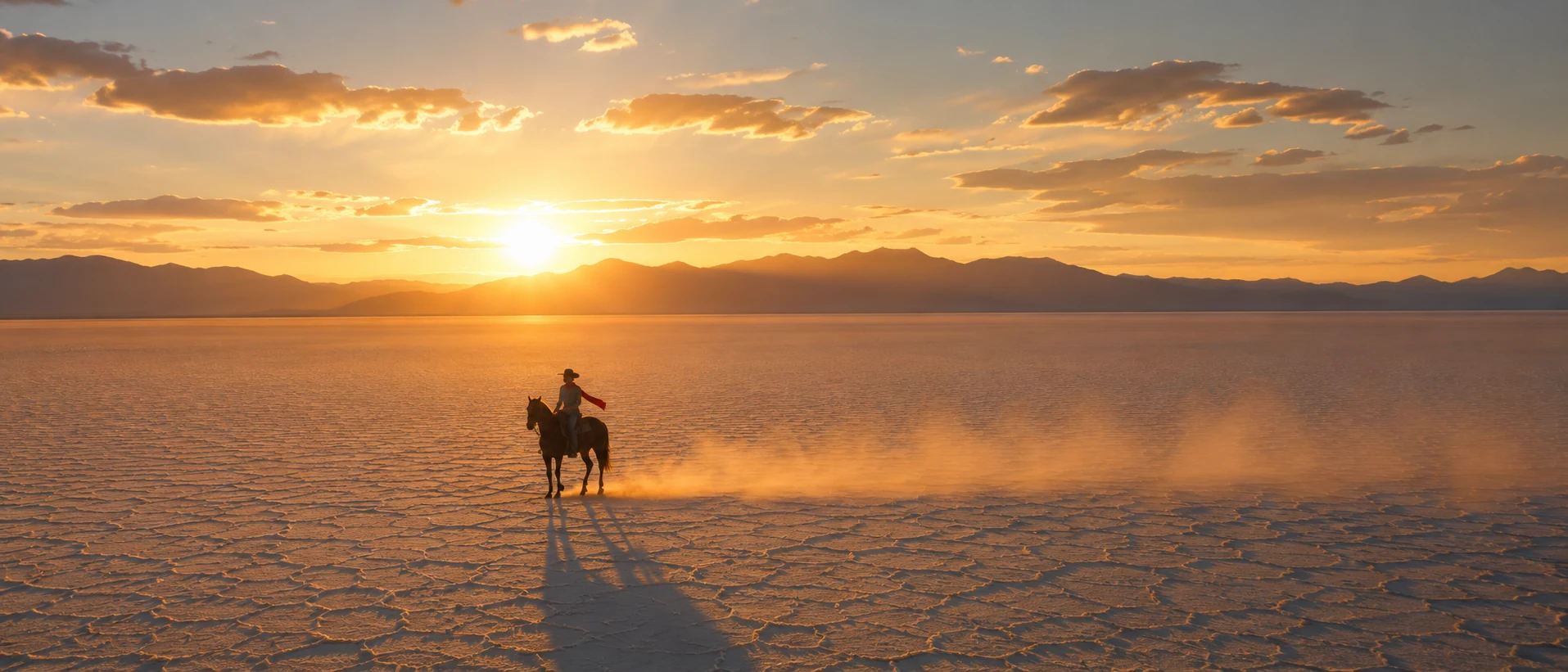
Here scale comes from landscape. Stands small in the lower third and the 21:9 frame let the world dominate; low sun behind him gives the backlit glow that reads as expensive.
Open FlashBoardsCamera: a slow, smooth dolly backward down the alley at chest height, matching the woman's pace. Action: the woman in the oxblood coat is already walking toward camera over the wet cobblestones, haze drifting through the lamplight. She passes the lit café window, glances at it and keeps walking.Already walking keeps the shot alive from the first frame, and a smooth dolly reads as a real crew. Everything named exists in recipe 1, so nothing new gets invented.
Open FlashBoards{
"output": "Full-screen live-action footage from Hugo (2011), from its very first frame: one continuous static shot. Paris in the early 1930s on a winter night: deep moonlit blue palette cut by warm amber lamps, fine snow flecks in the air, drifting steam and haze, 35mm film grain, a richly built studio street where every plane of depth is dressed.",
"characters": {
"S1": {
"name": "a boy of about twelve",
"look": "small and slight, dark wool coat to the knees, short trousers, dark socks and boots, short dark hair; a small full-length figure at this distance",
"voice": "silence: he never speaks"
}
},
"shots": [
{
"shot": 1,
"camera": "locked-off static wide shot from low height near the pavement, wide lens, deep focus, framed between two tall dark stone buildings: a brick wall edge fills the left edge of frame, a thick stone pillar with a glowing iron lantern fills the right third; the camera never moves",
"setting": "an elevated iron railway viaduct crosses the whole background above a lower street; a gas street lamp on a post at the left; warm windows glow under the viaduct; rooftops and chimneys above it; snow banks along the pavement edges lit orange; a thin column of steam rises from a street grate centre-right on the pavement",
"action": [
"BEGINNING: alive from the first frame, S1 stands still on the snowy pavement in the left third, mid-distance, small in frame, body facing right, head tilted up, looking up and to the right at the viaduct; both hands hang at his sides",
"THEN: a black steam locomotive appears on the viaduct from behind the right-hand building and rolls slowly from right to left along it, thick grey-white clouds of smoke pouring from its funnel and rolling leftward over the viaduct",
"THEN: S1 starts walking slowly from left to right along the pavement, small steady steps, arms at his sides, head still turned up toward the passing train; the steam from the grate keeps rising",
"END: the smoke cloud stretches across the full width of the sky above the viaduct and the locomotive has passed out of sight to the left; S1 is now just left of centre, still walking slowly to the right, still looking up"
],
"dialogue": [],
"voice": "silence: nobody speaks in this shot, no voice at all"
}
],
"sound": {
"ambience": "the chugging and hiss of the steam locomotive on the viaduct, a distant train whistle, the soft hiss of the steam grate, quiet footsteps on packed snow",
"speech": "no words in this video; the only human sounds are breaths and movement",
"never_spoken": "no narration and no voice-over: the descriptions, performance notes and step words of this prompt are never spoken aloud",
"music": "a film score under the scene, always below the voices: a soft, wistful waltz on celesta and strings with a slow turning pulse",
"subtitles": "none"
}
}Remakes the static wide shot from Hugo (2011) where a steam train crosses the viaduct behind a small boy; the prompt carried over the layered set, the train's right-to-left pass and his slow walk to the right.
The prompt lists every plane of depth the set dresses: lantern and pillar in front, the boy in the middle, a viaduct with a steam train behind. Moving smoke, steam and snow make the world feel built, and a locked-off camera lets the scale play.
Open FlashBoardsCommon mistakes
- Flat light. Models default to shadowless images; name the light sources and the time of day.
- Empty middle distance. List foreground, middle ground and background explicitly.
- Too much at once. Crowds, neon and fireworks together look like a video game; pick one source of scale per shot.
Keep the reference frames, prompts and every generated take side by side — images and video in one canvas.
FAQ
5 questionsWhat does production value mean?
Production value means how polished and expensive a film looks on screen compared with what it cost. It comes from locations, sets, costumes, lighting, extras, effects and sound. Filmmakers call it putting the money on the screen: spending on what the camera sees, so the audience believes the world.
How can I increase production value with no budget?
Use what you can access for free: a striking location, a friend's car, a public event in the background. Shoot at golden or blue hour, add haze and practical lamps, and dress only what the lens sees. Keep locations few and put one real wide shot early to establish scale.
What is high production value?
High production value describes a film that looks rich and finished: deep, dressed frames, shaped light, convincing costumes and effects, clean sound. It doesn't require a huge budget; many independent films earn it because every choice was aimed at the camera.
Is production value the same as production design?
No. Production design is the department that creates the physical world of a film: sets, props, color and texture. Production value is the overall result on screen, which also depends on locations, cinematography, costumes, extras, effects and sound. Good production design is one of the biggest contributors, but not the only one.
What lowers production value the most?
The usual culprits are flat lighting, bare white walls, poor sound, unconvincing effects and empty backgrounds. They tell the audience the world stops at the frame edge. Fixing sound and shaping light often does more for a low-budget film than a better camera.
Related terms
6- Production DesignProduction Design
Production design is the creation of the entire physical world of a film — locations, sets, props, colors and textures — led by the production designer together with the director and cinematographer.
- Production BudgetFilmmaking Process & Crew
A production budget is the itemized cost of making a film — development, above-the-line talent, below-the-line crew and equipment, post-production and contingency — usually excluding prints and advertising.
- Micro-Budget FilmFilmmaking Process & Crew
A micro-budget film is a feature made for a tiny fraction of an average budget — often tens of thousands of dollars — with a skeleton crew, few locations and every constraint turned into style; El Mariachi and Paranormal Activity are classic cases.
- Filming LocationFilmmaking Process & Crew
A location is any real place used for filming outside a studio; location scouting finds and vets it for look, sound, light, access, permits and cost, and the location manager secures it.
- Practical EffectsPost-Production & VFX
Practical effects are created physically on set — animatronics, prosthetic makeup, miniatures, pyrotechnics, rain and wind machines — and captured by the camera rather than generated with CGI in post.
- Film ProductionFilmmaking Process & Crew
Film production is the whole process of making a film — development, pre-production, production (the shoot), post-production and distribution; in the narrow sense, 'production' is just the shooting phase.
Further reading
Robert Rodriguez, Rebel Without a Crew (1995), on making El Mariachi. Steven Katz, Film Directing Shot by Shot (1991).