 FlashBoards Learn
Genres · Film language
Art House Film
Also called: arthouse, art cinema, art film
An art house film is a personal, formally adventurous movie made for artistic expression rather than mass appeal. It favors ambiguity, slow rhythm, interior characters and a strong directorial voice. The term also names the specialty cinemas that screen such films, and the tradition runs from Fellini's 8½ to Wong Kar-wai and Michael Haneke.
- What it does
- Asks the viewer to watch closely and interpret, trading plot momentum for mood, ambiguity and a personal point of view.
- Use it when
- The story lives in a character's inner life, in time and silence, or in an image system you want the audience to read for themselves.
- Watch out
- Slowness and obscurity are not style on their own. Every long take and every empty frame still needs a reason.
- Try this prompt
Static wide shot through a doorway, a woman alone at a kitchen table at dusk, small in the frame, soft window light, muted palette, one red cup, 35mm film still.
What is an art house film?
"Art house" (also arthouse, art film or art cinema) describes a film made first as a personal work, with box office a secondary concern. It is less a genre than a mode of filmmaking that cuts across the usual film genres.
The word started with the theaters. After World War II, small cinemas in American and British cities programmed foreign-language films, classics and independent work the big chains ignored. Those venues became art houses, and the films took the name. Some still work as a revival house.
Today the label usually means a film that premieres at a film festival, opens in few theaters and sells on its director's name rather than its stars.
What makes a film art house?
Most art house films share several of these traits:
- An authorial voice. Art cinema is the natural home of auteur theory; directors often write their own scripts.
- Ambiguity. Motives stay unclear, memory blurs into the present, endings stay open.
- Time you can feel. Long takes and pauses that mainstream editing would cut.
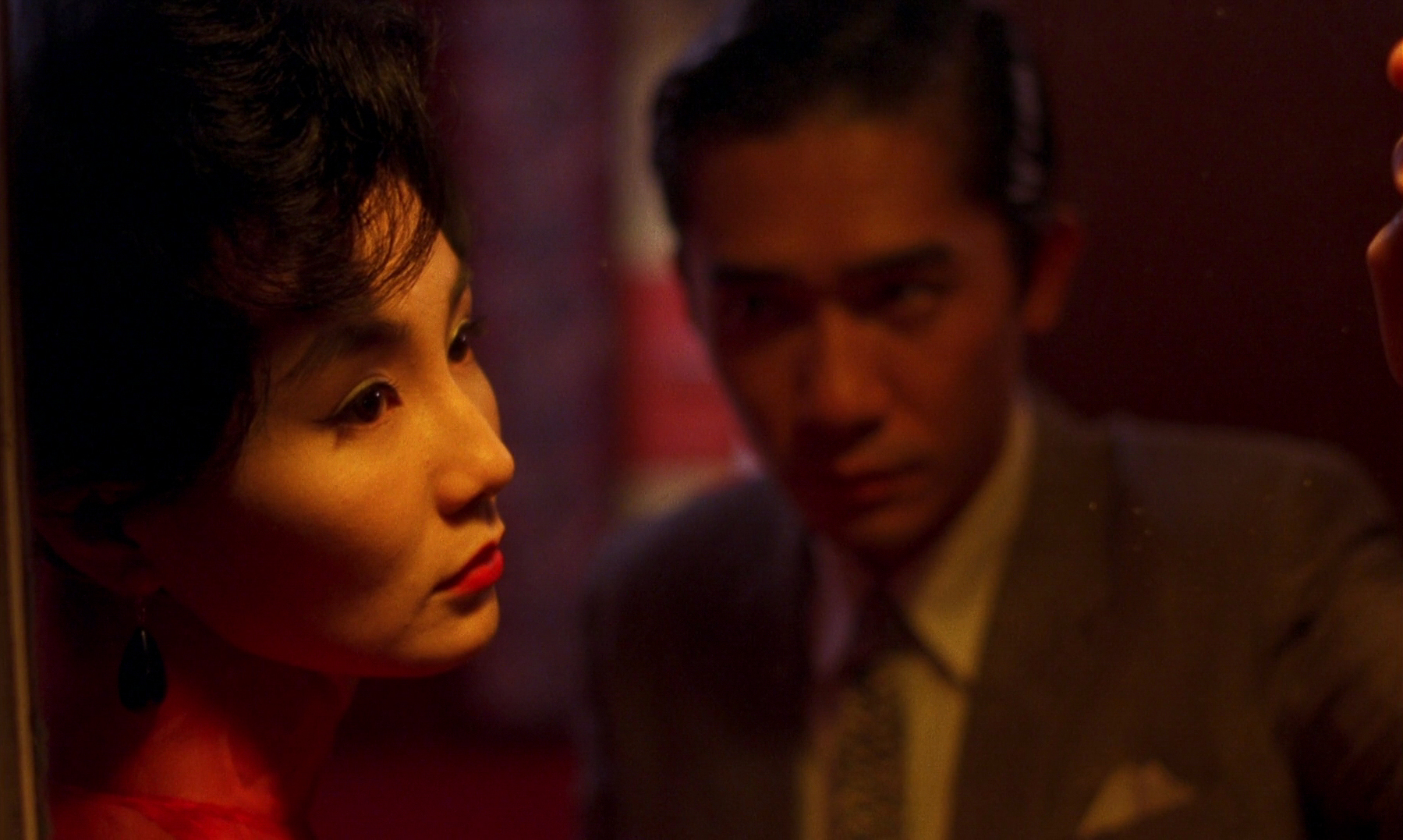
- Form that carries meaning. In In the Mood for Love (2000), the lovers are framed through doorways, corridors and mirrors, so the camera keeps them apart.
- Provocation. Haneke's Funny Games (1997, remade by Haneke in English in 2007) confronts the audience's appetite for screen violence.
The boundary is porous. Parasite (2019) is a genre thriller with a sharp authorial design; it won the Palme d'Or and then became the first non-English-language film to win the Oscar for Best Picture.
A short history of art house cinema
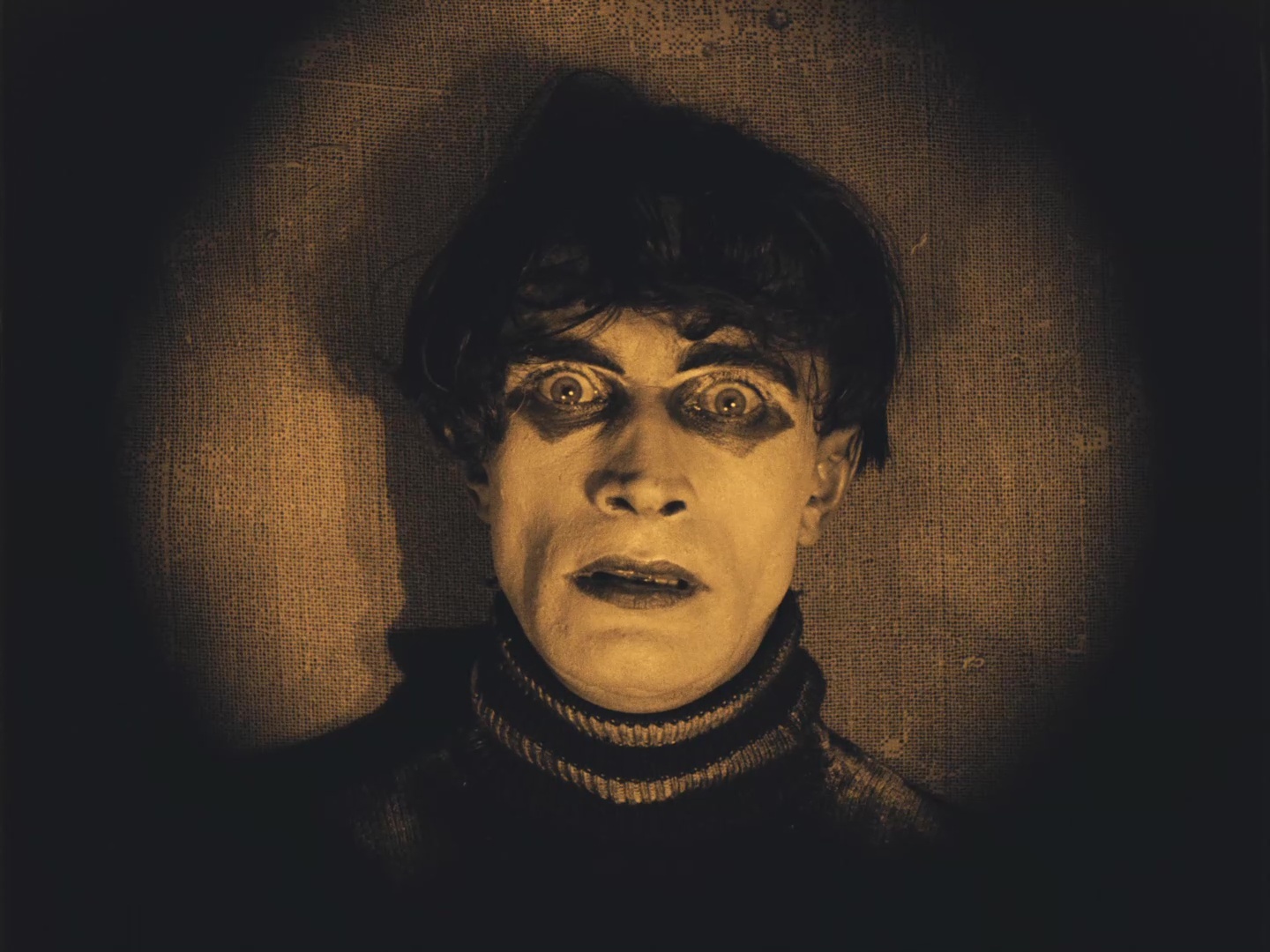
1920s. The Cabinet of Dr. Caligari (1920), with its painted, crooked sets, showed a feature could be built as a designed artwork.
1940s–50s. Italian neorealism took real streets to foreign screens; Rashomon won the Golden Lion at Venice in 1951; La Strada (1954) and The Seventh Seal (1957) became staples.
1960s. Antonioni, Fellini, Bergman and the French New Wave made the director the star.
1970s to today. Tarkovsky, Chen Kaige, Wong Kar-wai, Kiarostami, Farhadi, Lee Chang-dong and Haneke carried the tradition.
How to shoot an art house look
- Let shots run. Hold a take 30–90 seconds when the scene can carry it; let light and actors change inside a locked-off frame.
- Keep your distance. A 32–50mm lens on Super 35 at eye or seated height, subject small in a wide or medium-wide frame.
- Use empty space. Put the character in a lower corner or a doorway.
- Light from the world. Window and practical sources, soft falloff, shadows that stay dark.
- Build a color system. A restrained palette with one recurring accent, like the reds of Cries and Whispers.
- Direct toward stillness. Actors underplay; hold on a face after the line ends.
Art house vs. avant-garde film
An art house film usually keeps characters, a story and a feature running time; you can still say what happens. Avant-garde film often drops narrative to experiment with the medium itself: rhythm, abstraction, collage, as in Un Chien Andalou (1929) or Meshes of the Afternoon (1943). Art house changes how a story is told; the avant-garde asks whether a film needs one at all.
Art House Film examples in film
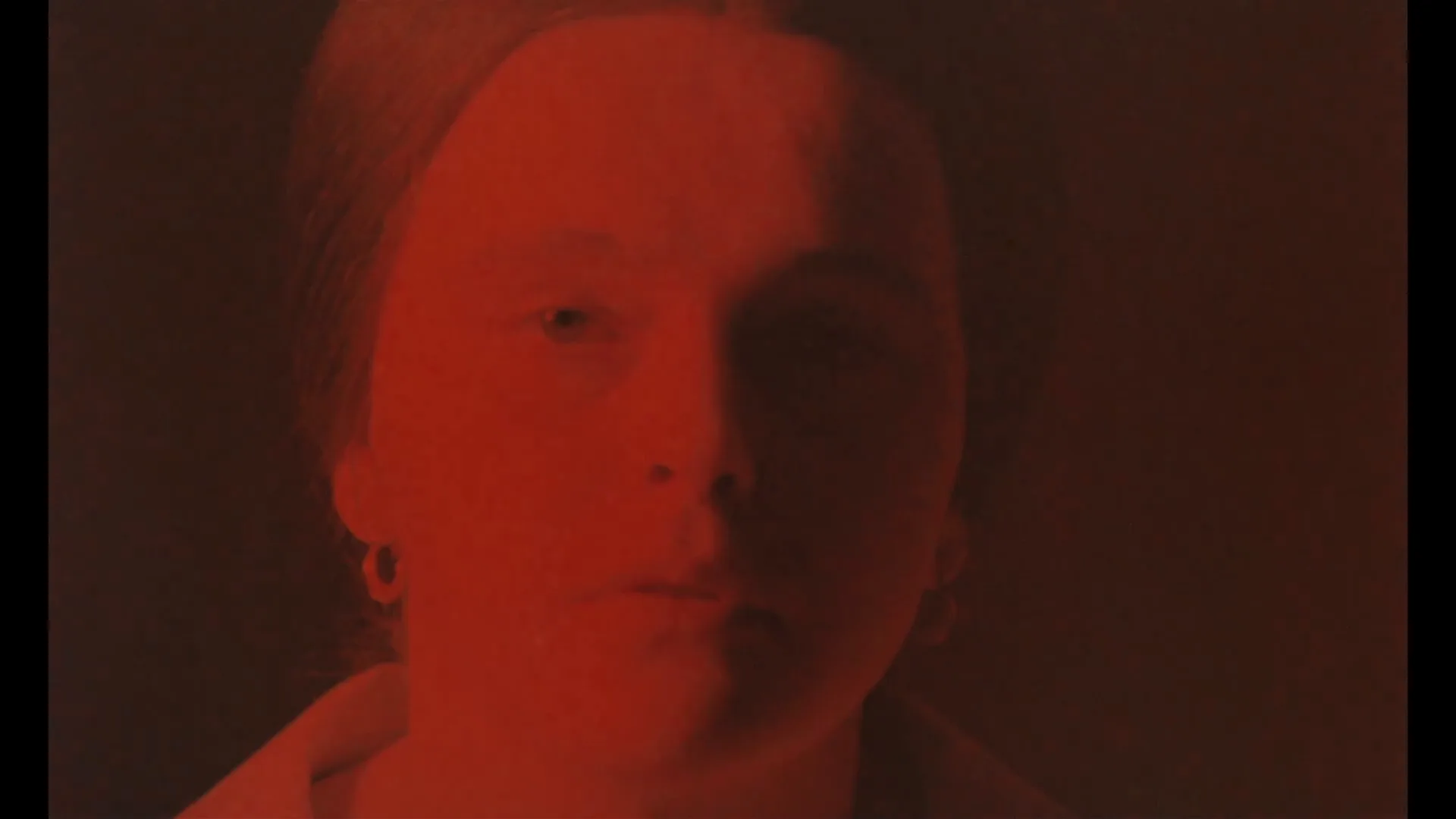
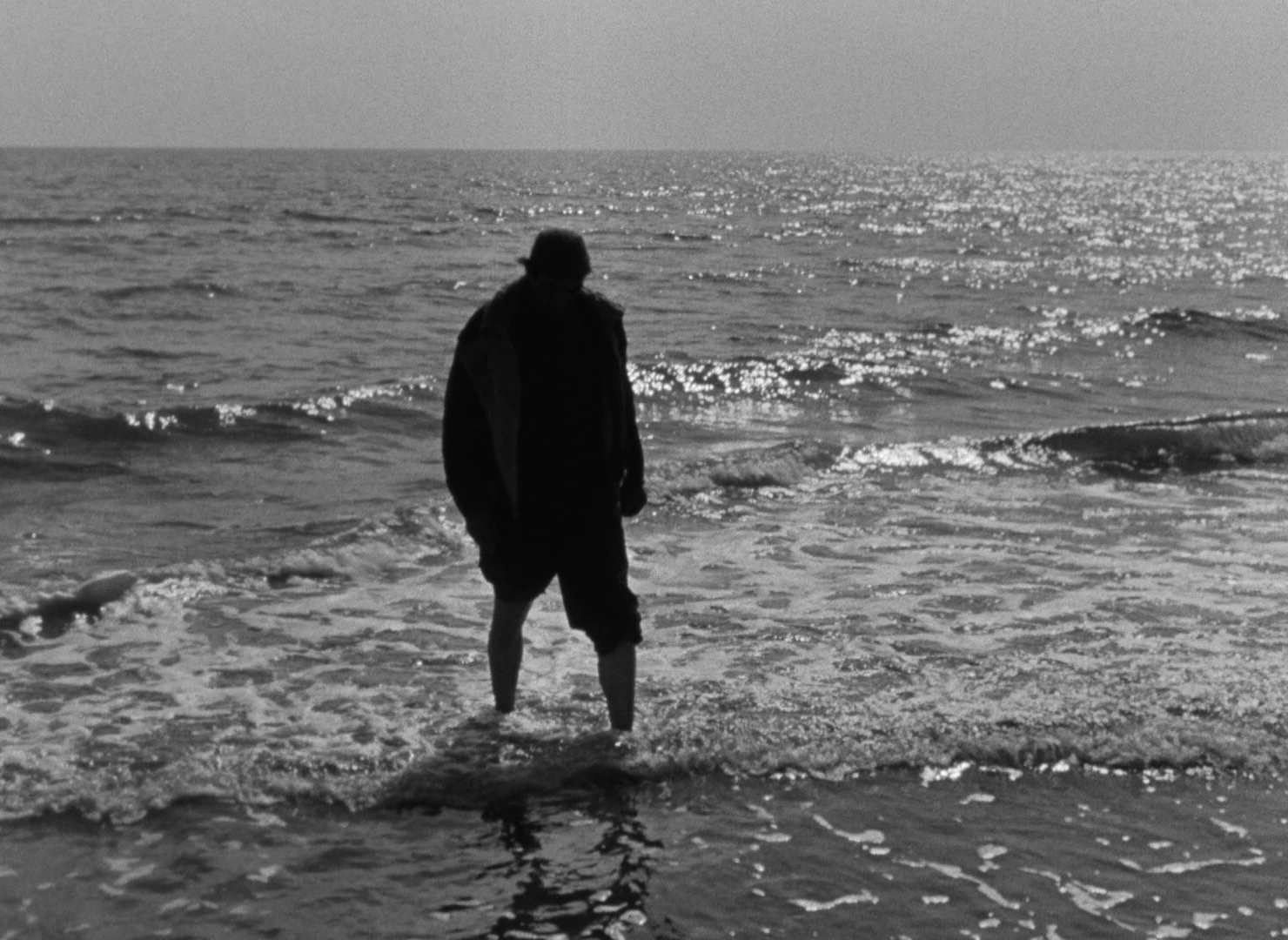
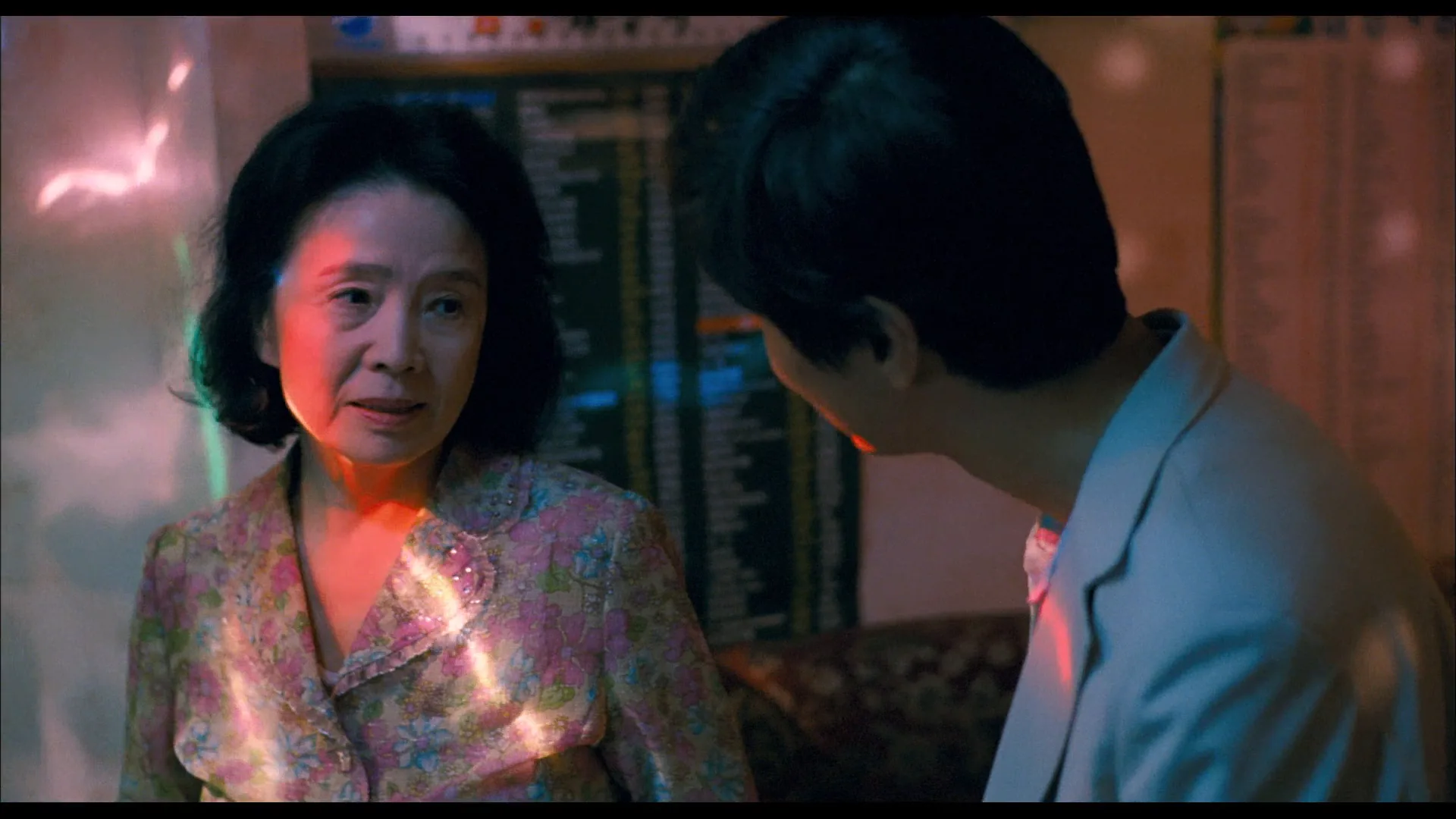
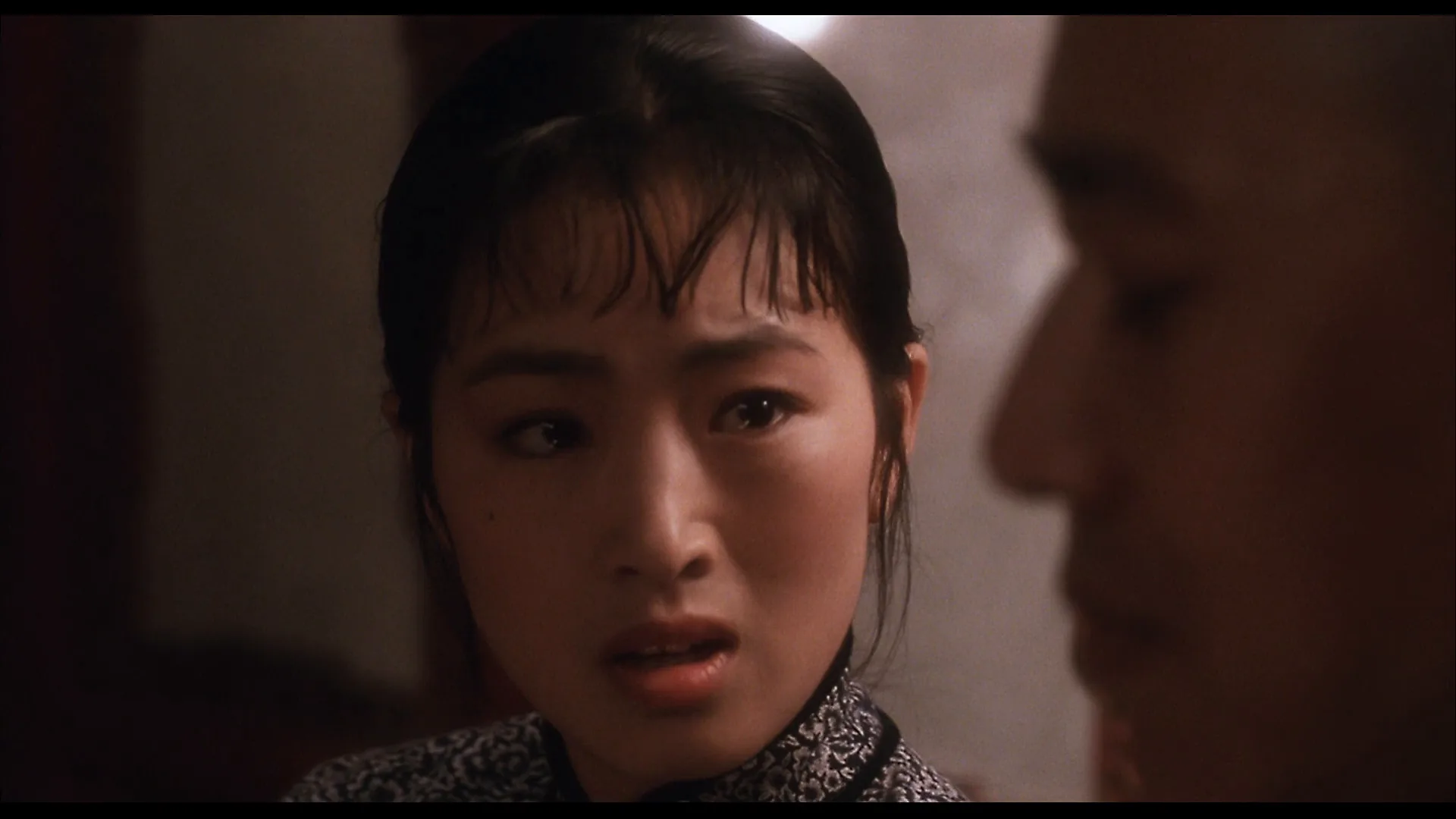
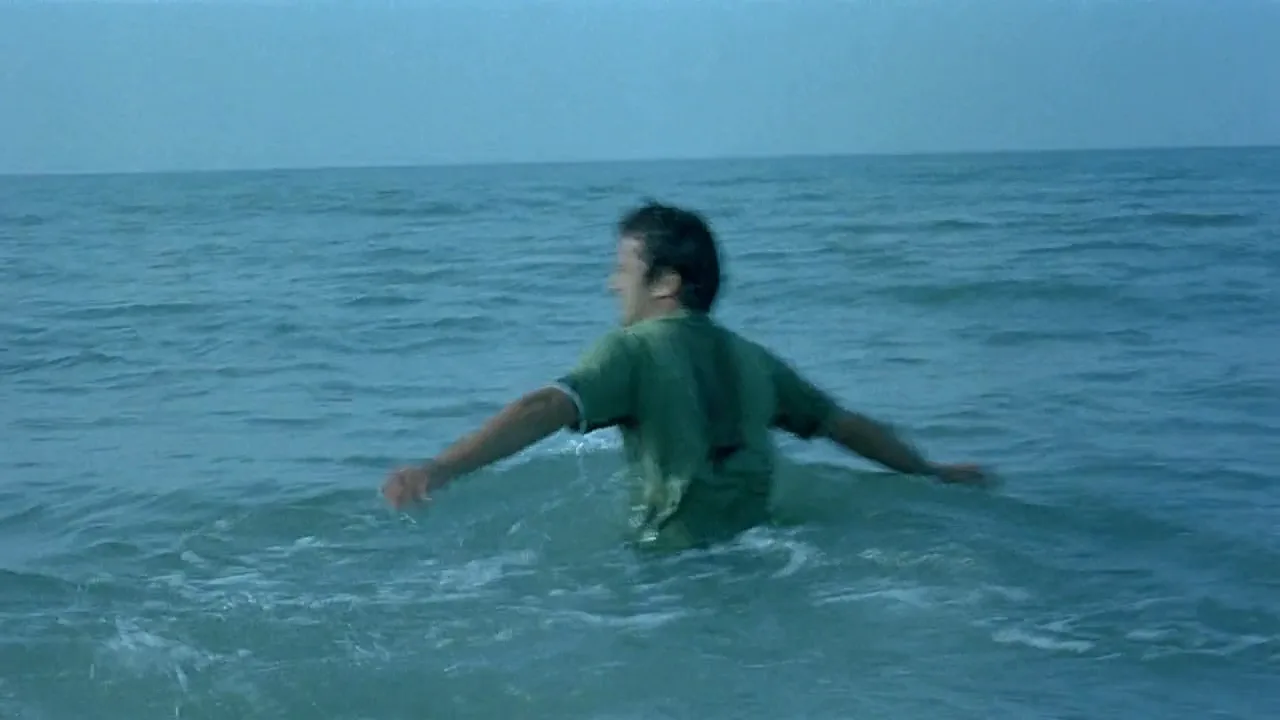
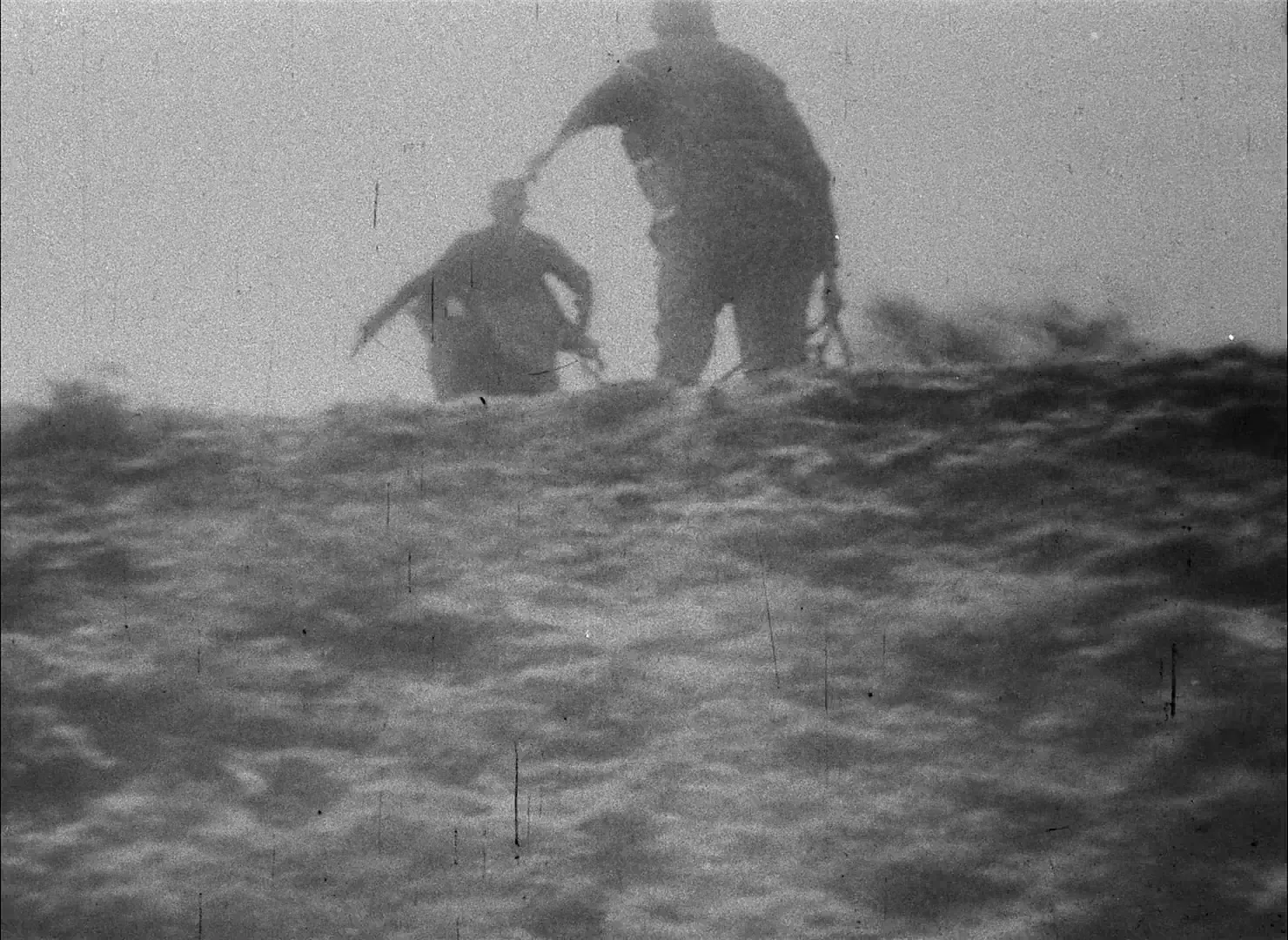
9 framesFrames from art house films across seven decades: distance, empty space, a controlled palette and faces that hold back.
How to create a art house film with AI
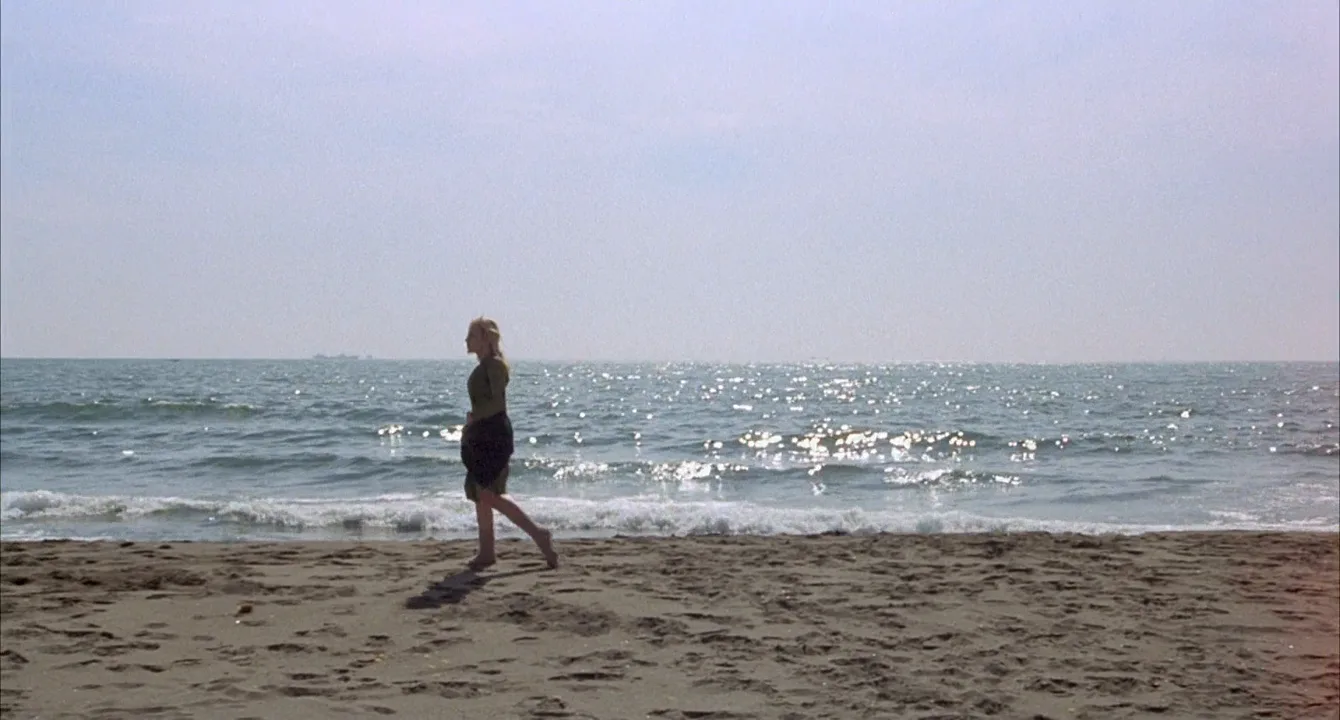
4 promptsTyping "art house" into a prompt gets clichés: black and white, smoke, a moody close-up. Describe the decisions instead: distance, a static frame, empty space, motivated light, one color accent. On a FlashBoards board, pin reference frames beside your generations and compare takes side by side. The fourth prompt re-shoots a real film shot from a text description alone, and the original plays next to the result so you can compare.
Static wide shot framed through an open doorway: a woman in her forties with a grey-streaked chin-length bob, a small scar through her left eyebrow and a mustard knit cardigan sits alone at a kitchen table at dusk, hands around a red enamel cup. She is small in the lower right of the frame; the dark door frame and a bare pale wall fill the rest. Camera at seated eye height, 35mm lens, deep focus. Soft blue window light from the left, no fill, deep shadows. Muted grey-green palette, the red cup the only strong color. 35mm film still, fine grain.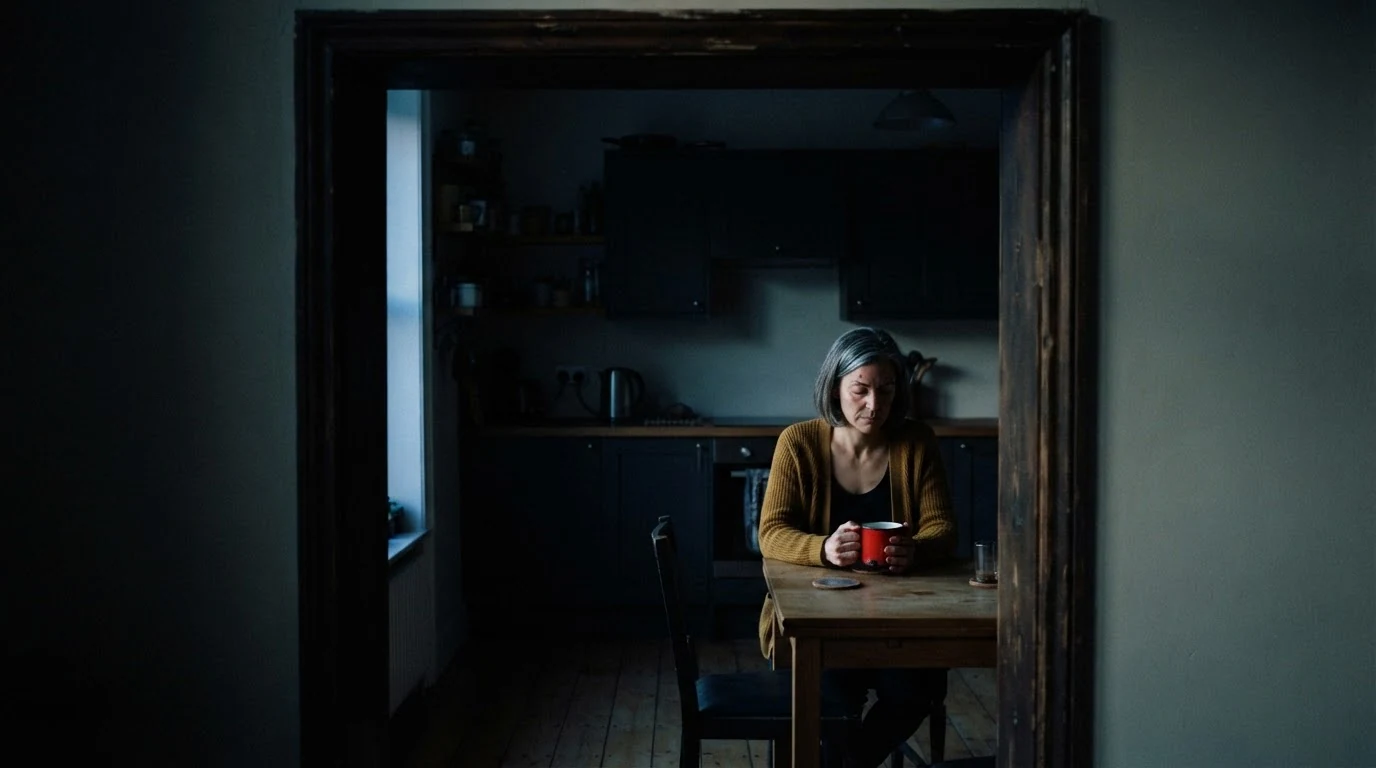
"Framed through an open doorway," "small in the lower right" and "bare pale wall" build distance and empty space; "no fill, deep shadows" prevents commercial lighting. This is the video's start frame.
Open FlashBoardsStatic extreme wide shot of a grey pebble beach under flat overcast sky: a lanky man in his fifties with a shaved head, a long ash-grey beard and a black wool overcoat stands at the edge of the surf, back to camera, small in the lower third. Sea and sky fill almost the whole image. Eye-level camera, 40mm lens, soft even daylight, desaturated slate and pewter palette. Wide-screen 35mm film still, fine grain.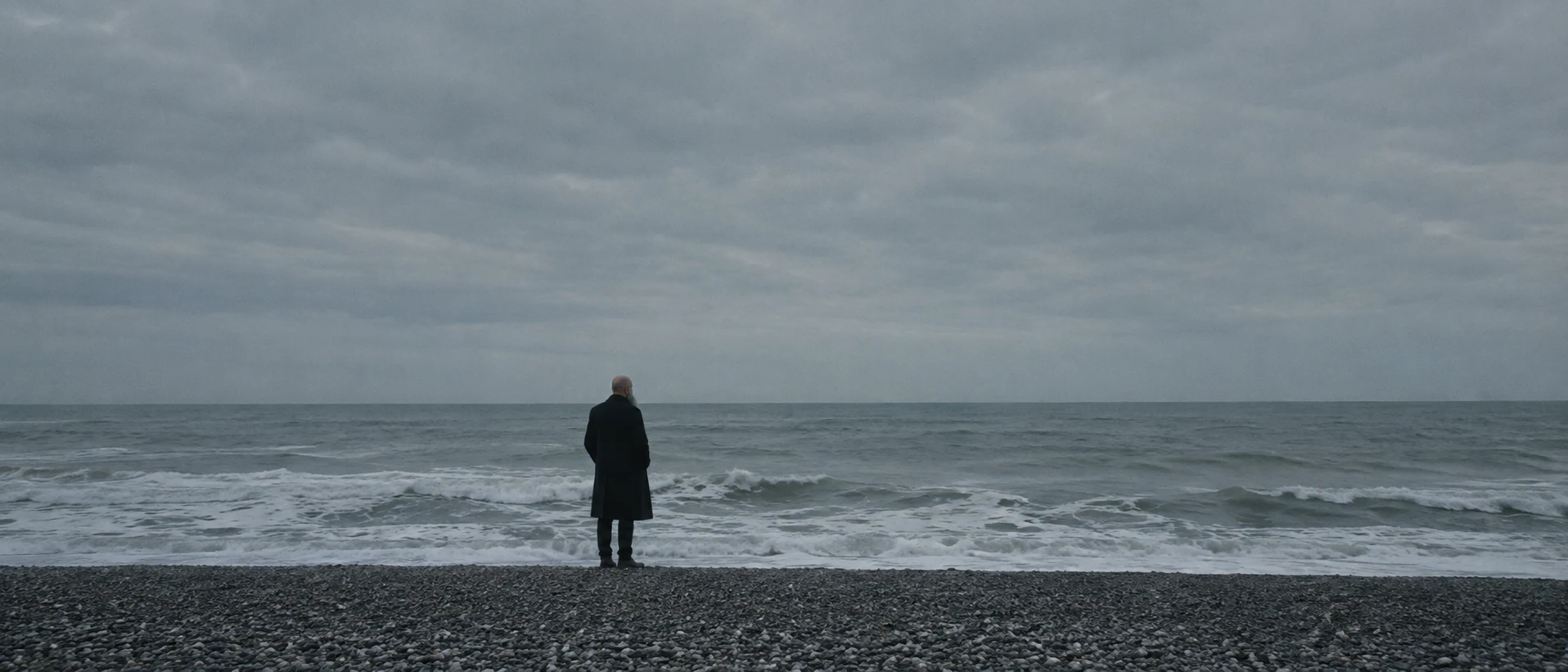
A wider second take: "back to camera" hides his inner state, and "sea and sky fill almost the whole image" forces the negative space models usually fill.
Open FlashBoardsCamera: static tripod shot, locked off for the whole take, the doorway framing never changes. Action: from the first frame steam is already rising from the red cup and the window light is slowly fading. The woman turns the cup a quarter turn between her hands, then lifts her eyes toward the window on the left and holds the look. At the end she lowers her gaze to the cup and stays still while the steam keeps rising.The static camera is stated twice to stop a drifting push-in. Rising steam and fading light keep the shot alive from the first frame, and the action stays small: a turned cup and a held look.
Open FlashBoards{
"output": "Full-screen live-action scene from Amarcord (1973), one continuous shot from its very first frame. Early-1970s Italian 35mm color film: hazy late-morning sun behind thin high cloud, pale lavender-white sky, silver-blue Adriatic sea with glittering sun sparkles, beige sand, soft contrast, gentle grain.",
"characters": {
"W1": {
"name": "a young woman on the beach, unnamed in the film",
"look": "slim, late twenties, loose blond hair pulled back and lifting in the breeze, olive-green long-sleeved blouse, dark navy skirt gathered in both hands at her waist, barefoot",
"voice": "silence: she never speaks and her lips stay closed"
},
"S2": {
"name": "a schoolteacher, heard off-screen only",
"look": "never seen in this shot",
"voice": "middle-aged Italian man, warm, fond, slightly sing-song classroom voice with a gentle echo of a room"
},
"S3": {
"name": "Fighetta, Greek Teacher, played by Ferdinando Villella",
"look": "never seen in this shot",
"voice": "older Italian man, thin, eager and delighted, a quick bright reply"
}
},
"shots": [
{
"shot": 1,
"camera": "wide shot from standing eye height on the dry sand, 40mm lens, deep focus; the horizon crosses the exact middle of the frame, sea fills the band below it, empty sand along the bottom quarter. The camera trucks left sideways at her walking pace for the whole take, following W1 so she stays a small figure, about a third of the frame height, in the left third of the frame, with wide empty sea and sky around her",
"action": [
"BEGINNING: alive from the first frame, W1 is already walking left along the wet edge of the sand, body turned three-quarters toward the camera, head bowed, both hands holding her dark skirt gathered at her waist; small waves break in white lines just behind her.",
"THEN: she turns fully into left-facing profile and walks on at an unhurried pace, bare feet leaving prints, hair lifting in the sea breeze, hands still at her waist, eyes on the sand ahead of her.",
"THEN: the camera keeps gliding left with her, the glittering sun sparkles slide past behind her on the water, her face stays calm and closed.",
"END: she slows and turns her body back toward the camera, head still slightly lowered, hands still holding the skirt at her waist, a lone small figure against the bright sea."
],
"dialogue": [
{
"speaker": "S2",
"on_screen": false,
"when": "about halfway through the shot, while she walks in profile; an off-screen voice carried over from a classroom, her lips never move",
"delivery": "warm, admiring, savoring the words",
"line": "<d>[English] Greek is so beautiful, isn't it?</d>"
},
{
"speaker": "S3",
"on_screen": false,
"when": "right after that question, at the very end of the shot as she turns toward the camera; off-screen, her lips never move",
"delivery": "quick, eager, delighted",
"line": "<d>[English] You betcha.</d>"
}
]
}
],
"sound": {
"ambience": "soft surf rolling onto sand, light sea breeze, bare footsteps on damp sand",
"speech": "exactly these spoken phrases, each said once, in this order, both by off-screen voices",
"never_spoken": "no narration and no voice-over: the descriptions, performance notes and step words of this prompt are never spoken aloud",
"music": "a film score under the scene, always below the voices: a wistful, lilting solo clarinet melody over soft strings, a nostalgic seaside waltz",
"subtitles": "none"
}
}This remakes the beach walk from Amarcord (1973), keeping the leftward tracking move, the small figure against bright water and the off-screen Greek-lesson exchange that plays over it.
The camera block carries the art house decision: a sideways truck that keeps her small in the left third, with empty sea and sky around her. Her lips stay closed; the two lines are the film's own off-screen classroom voices, bridging into the next scene.
Open FlashBoardsCommon mistakes
- "Art house" as a style word triggers black-and-white and heavy grain. Name framing, light and palette.
- Subjects too big. Say "small in the lower right" and name what fills the rest.
- Glossy light. Ask for window light, "no fill" and dark shadows.
- Overacting in video. One small action and a held look.
Keep the reference frames, prompts and every generated take side by side — images and video in one canvas.
FAQ
4 questionsWhat is an art house movie?
A film made mainly as a personal artistic work rather than a mass-market product. It usually has a strong directorial voice, slow pacing, ambiguity and a deliberate visual style, premieres at festivals and plays in specialty cinemas. Classic examples: La Strada, 8½, In the Mood for Love.
What does arthouse cinema mean?
Two related things: personal, formally ambitious films, and the independent theaters that screen them. Art house theaters grew after World War II by showing foreign-language films, classics and independent work that mainstream chains ignored. Many still program festival titles and restorations.
Is art house a genre?
Not strictly. Art house describes an approach and a distribution circuit more than a set of story conventions. An art house film can be a war film like Come and See, a thriller like Parasite or a romance like In the Mood for Love. What unites them is authorship and formal ambition.
What is the difference between art house and indie films?
Independent describes financing: made outside the major studios. Art house describes intention and style. Many indie films are conventional genre pictures on small budgets, and some art house films have large backers. The two overlap, but indie is not automatically art house.
Related terms
5- Avant-Garde FilmFilm Movements & Styles
Avant-garde film rejects commercial narrative to experiment with form itself — rhythm, abstraction, collage, dream logic — from 1920s European movements (Un Chien Andalou) to American experimental cinema like Meshes of the Afternoon.
- Auteur TheoryFilm History & Theory
Auteur theory holds that the director is the true author of a film, whose personal style and themes recur across their work; it grew from Truffaut and Cahiers du cinéma's 'politique des auteurs' in the 1950s and was popularized in the US by Andrew Sarris.
- French New WaveFilm Movements & Styles
The French New Wave (late 1950s–60s) was launched by Cahiers du cinéma critics turned directors — Truffaut, Godard, Chabrol, Rohmer — who shot cheaply on the streets with handheld cameras, jump cuts and a personal, playful voice (The 400 Blows, Breathless).
- Film FestivalFilm Industry
A film festival is a curated event that premieres and screens films, awards prizes and hosts a market for sales — Cannes, Venice, Berlin, Toronto and Sundance can launch a film's whole career.
- Film GenresGenres
A film genre is a category of films that share recognizable conventions of story, setting, character and style — western, horror, musical, noir — letting audiences know what to expect and filmmakers play with it.
Further reading
David Bordwell, "The Art Cinema as a Mode of Film Practice" (Film Criticism, 1979). Barbara Wilinsky, Sure Seaters: The Emergence of Art House Cinema (2001).