 FlashBoards Learn
- Learn
- Film Movements & Styles
- Italian Neorealism
Film Movements & Styles · Film language
Italian Neorealism
Also called: neorealism, neo-realism, Italian neo-realism
Italian neorealism is the post-war film movement, roughly 1945–1952, that took cameras out of the studio and into ruined streets, cast non-professional actors, and built stories from the economic struggles of ordinary people. Its films feel observed rather than staged, so the viewer judges the world before the plot.
- What it does
- Makes poverty, work and the city itself the drama, so small stakes feel like life or death.
- Use it when
- Your story is about survival, work or a community, and truth matters more than polish.
- Watch out
- It is a way of looking, not grey filters and grain; a glossy face or a hero shot breaks it.
- Try this prompt
Black-and-white 1948 film still, thin working man and small boy on a wet, cracked Roman suburb street, overcast daylight, eye level, 40mm, deep focus, film grain
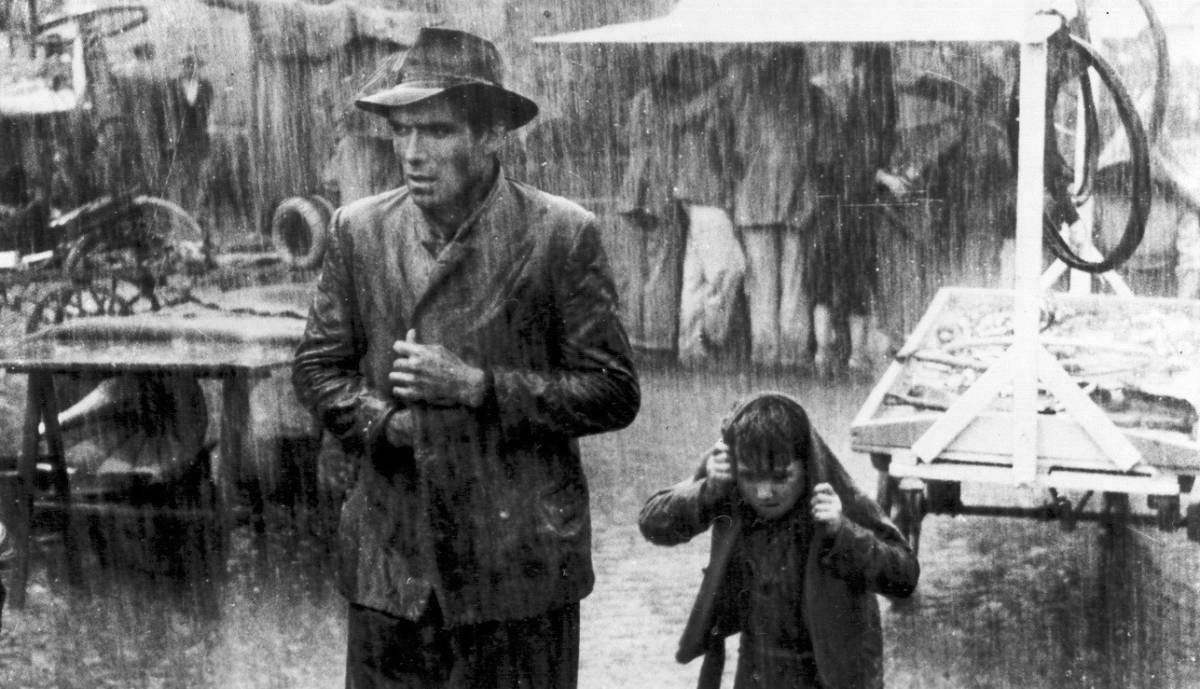
What is Italian neorealism?
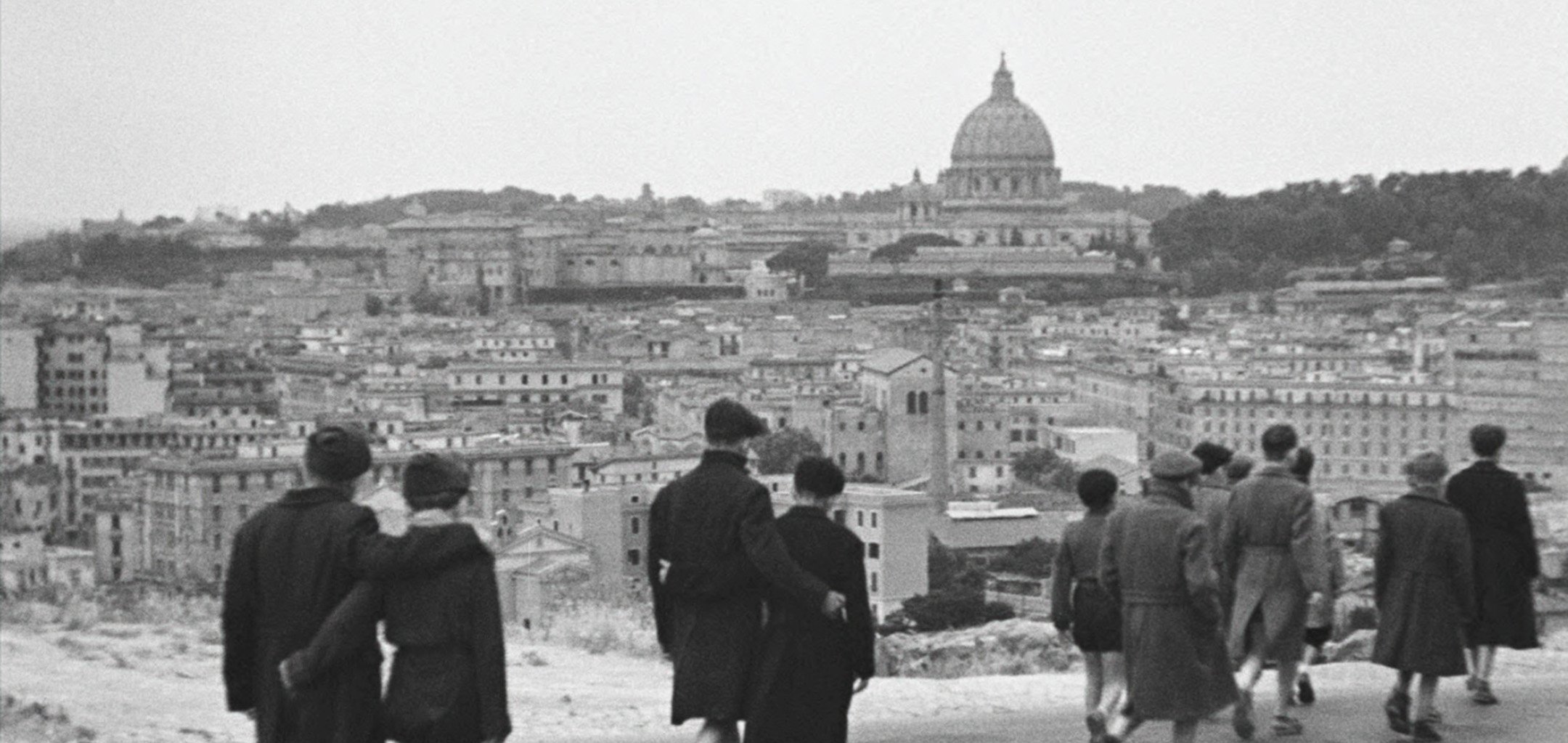
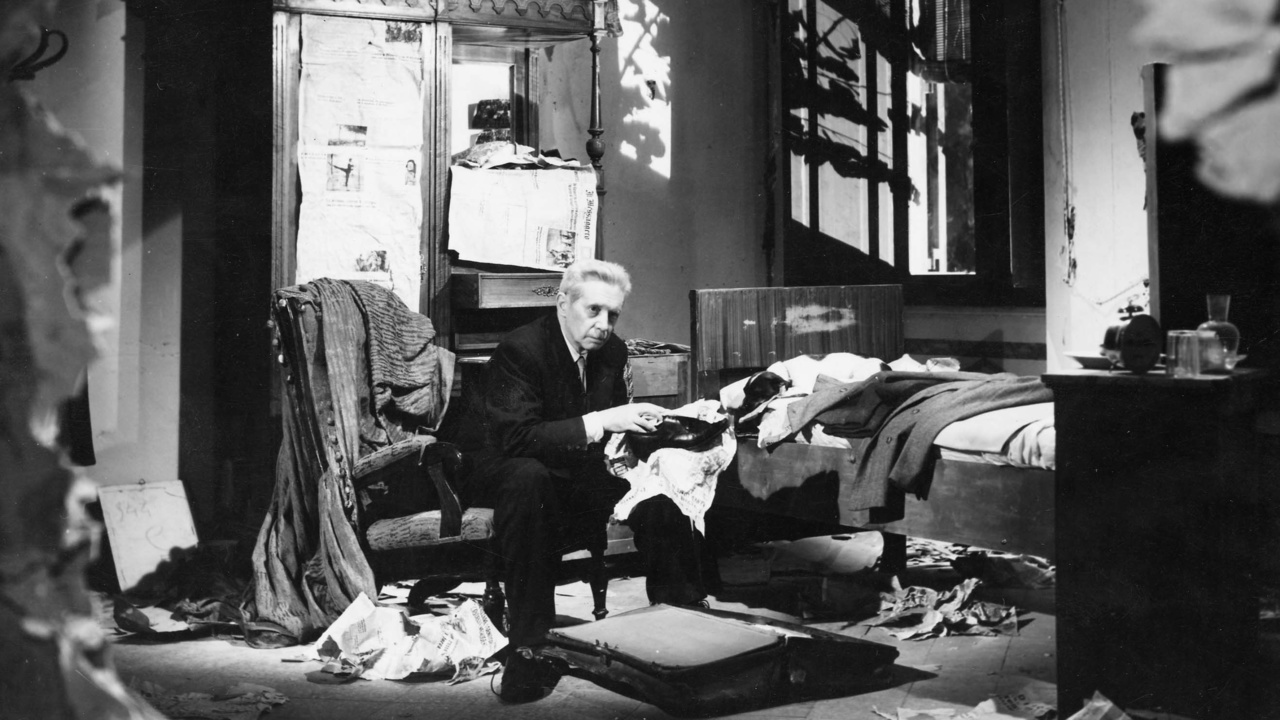
Italian neorealism is a national film movement that grew out of the collapse of Fascism and the end of the Second World War. Between the liberation of Rome in 1944 and the early 1950s, a small group of directors and writers made films about the country as it actually was: bombed, hungry, occupied, unemployed. The core titles are Roberto Rossellini's Rome, Open City (1945), Paisà (1946) and Germany Year Zero (1948); Vittorio De Sica's Shoeshine (1946), Bicycle Thieves (1948) and Umberto D. (1952), all written with Cesare Zavattini; and Luchino Visconti's La terra trema (1948), cast with Sicilian fishermen speaking their own dialect. Visconti's Ossessione (1943) is usually named as the precursor.
It was never a studio style or a manifesto that everyone signed. It was a shared ethic, part necessity and part conviction: the studios were damaged or occupied, film stock and money were scarce, and a generation of filmmakers who had lived through the war wanted cinema to bear witness. Zavattini argued that the ordinary day of an ordinary person held enough drama for a film, and that the filmmaker's job was to follow it patiently rather than invent spectacle.
The movement sits inside the wider tradition of realism in film and is one of the founding chapters of our film movements hub. Almost every later movement that went into the street, from the French New Wave to Dogme 95, took something from it.
What are the characteristics of Italian neorealism?
Neorealist films share a recognizable set of choices. Not every film uses all of them, but together they make the look and the feeling.
- Real locations. Streets, tenements, factory gates, fishing villages and rubble were the sets. Neorealist directors shot on location because the places carried the story: the ruined apartment block explains the family before anyone speaks.
- Non-professional actors, mixed with professionals. Lamberto Maggiorani, the father in Bicycle Thieves, was a factory worker; Carlo Battisti, who plays Umberto D., was a university professor. Rossellini, by contrast, anchored Rome, Open City with Anna Magnani and Aldo Fabrizi. The mix is the point: faces that were not trained to perform next to actors who could carry a scene.
- Everyday economic stakes. A stolen bicycle, a pension that does not cover the rent, a boat that cannot be paid off. Plots are small and concrete; the pressure is money, work and hunger.
- Available light and plain framing. Exteriors lean on flat overcast daylight and ambient light; interiors on window light and a few lamps. The camera mostly sits at eye level at a human distance, framing people inside their environment rather than isolating them.
- Dead time. Scenes linger on actions a studio film would cut: the maid in Umberto D. waking up and moving through her kitchen chores in near real time is the textbook example.
- Post-synchronized sound. Most dialogue was recorded after the fact and dubbed, standard practice in Italian cinema then. It freed the camera in noisy streets, and it is one reason the lip sync sometimes drifts.
- Open, unresolved endings. Problems are rarely solved. The father and son in Bicycle Thieves walk into a crowd with nothing fixed; the film simply stops watching them.
- Children as witnesses. Boys shine shoes, steal, follow their fathers and watch adults fail. Their point of view keeps the films from becoming lectures.
Why the neorealist approach still works on viewers
Neorealism changes what the audience trusts. When the street is a real street and the man is a real worker, the viewer stops asking whether the story is plausible and starts asking what they would do. Small stakes become enormous: in Bicycle Thieves the loss of one bicycle is the loss of a job, and the camera never lets you forget how many other people in the frame are in the same position. The crowd is not background; it is the reason the hero cannot win.
The form also slows judgment. Long, patient takes and unhurried framing let you read faces and places for yourself, which is exactly what André Bazin admired in these films. He saw in them a cinema that respected the ambiguity of reality instead of cutting it into a message.
That effect traveled. Satyajit Ray has described how seeing Bicycle Thieves in London convinced him he could make Pather Panchali (1955) with non-actors on real locations. The French New Wave directors championed Rossellini, especially Journey to Italy. Brazil's Cinema Novo, Abbas Kiarostami's films in Iran, Ken Loach in Britain and the Dardenne brothers in Belgium all extend the same bargain: less polish, more truth. Documentary movements such as cinéma vérité pushed it further with sync sound, and Dogme 95 turned some of its necessities into written rules.
The movement faded in the early 1950s. Audiences preferred comedies and Hollywood imports, and Italian officials, Giulio Andreotti most famously, criticized films that showed the country's poverty abroad. Its directors moved on: Fellini, who had co-written Rome, Open City and Paisà, made I Vitelloni and La Strada with a more personal, poetic eye, and Rossellini turned inward with Journey to Italy. Critics still argue over where neorealism ends, which is itself a sign of how deeply it shaped Italian cinema.
How to shoot a neorealist scene today
A neorealist scene is built in pre-production more than in the grade. Start with the place and the people, then keep the camera honest.
- Find the location first. Choose a place with its own history: a market after closing, a stairwell with peeling plaster, a bus depot at dawn. Scout it at the hour you will shoot and write the scene around what is really there.
- Cast faces, not types. Street-cast or cast people who do the job in real life, and surround them with one or two trained actors who can hold a long take. Rehearse actions, not line readings.
- Lens and height. Work between 28mm and 50mm on full frame, camera at 1.5–1.7 m, eye level. Wider lenses keep the environment in the frame; stay away from long telephoto compression, which isolates the subject and feels like surveillance. Stop down to f/5.6–f/8 outdoors for deep focus so the street behind stays readable.
- Light with what is there. Overcast daylight is the neorealist key. Indoors, use the window as the source and add only bounce or a practical bulb. Accept dark corners and a little underexposure.
- Move simply. Tripod, a modest pan, or a walking follow at the characters' pace. No showy crane moves, no glossy stabilizer glide unless it reads as someone walking.
- Stage people in the frame, not in front of it. Keep passersby, traffic and neighbors in the same shot as the actors, working on their own business.
- Texture. Black and white is traditional, 1.37:1 or 4:3 is authentic, and visible film grain helps, but none of it creates neorealism by itself. A glossy color film can be neorealist in spirit if the location, cast and stakes are real.
- Cut late, end open. Let actions finish, keep some dead time, and stop the scene before the problem is solved.
Italian neorealism vs. realism: what's the difference?
Realism is the broad, recurring aim of showing the world as it is, and it exists in every era and country. Italian neorealism is one historical movement inside that tradition, with a place, a period and a political charge: Italy, the mid-1940s to the early 1950s, and a moral commitment to the poor and the defeated.
The practical differences follow. Realism as a style can live in a studio, with professional actors and a classical script, as long as the performance and design are believable. Neorealism insists on the real place and often the real person, and it builds plots out of economic survival. It is also closer to naturalism in how environment shapes character, but it is less deterministic: neorealist films watch people under pressure without claiming their fate is sealed.
A useful test: if the film would still work moved onto a set with a star, it is realism. If moving it would kill it because the street, the faces and the hunger are the story, it is working in the neorealist line. Directors from the auteur generation borrowed both, which is why later films often mix a realist method with a very personal voice.
Italian Neorealism examples in film
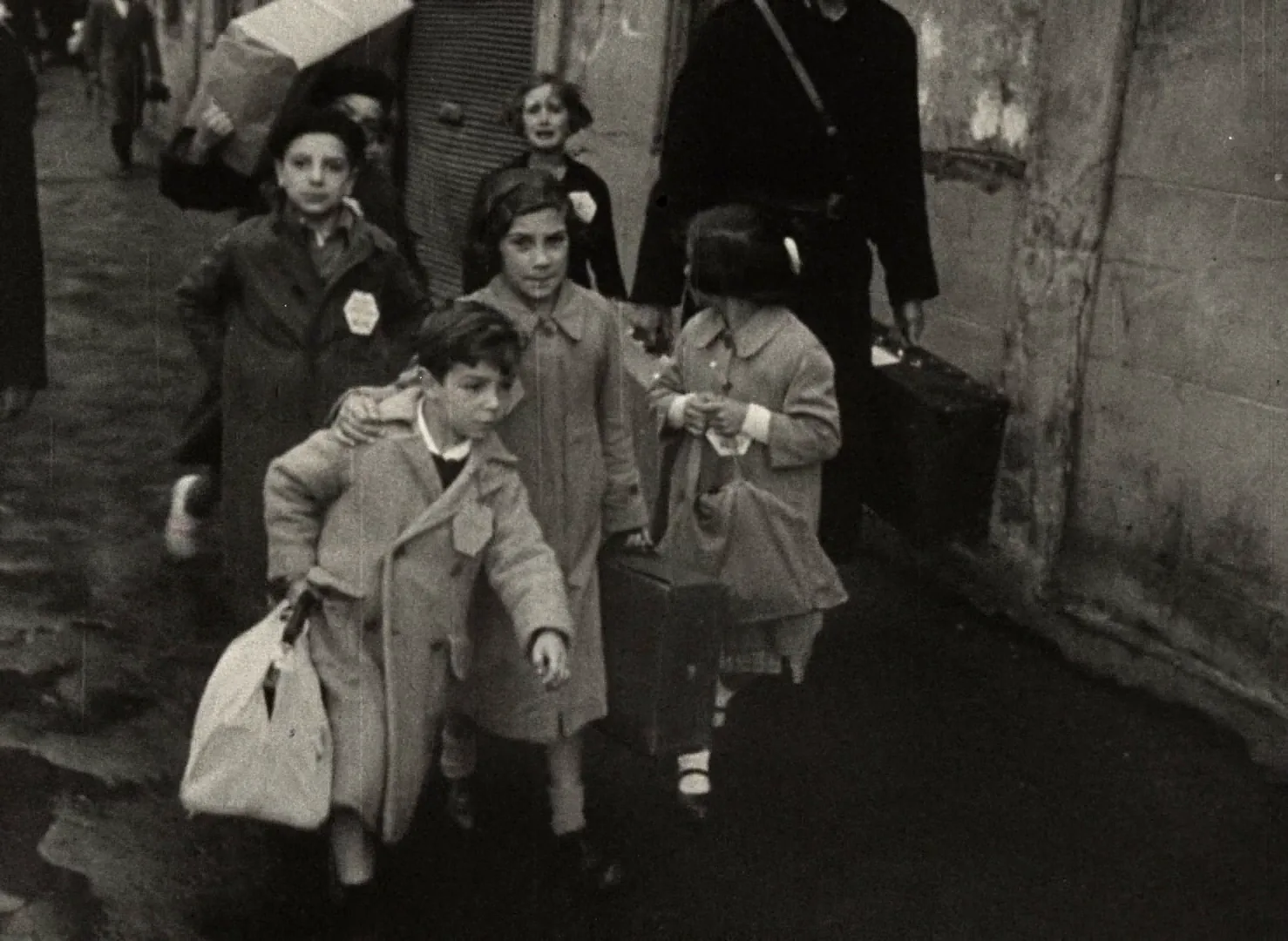
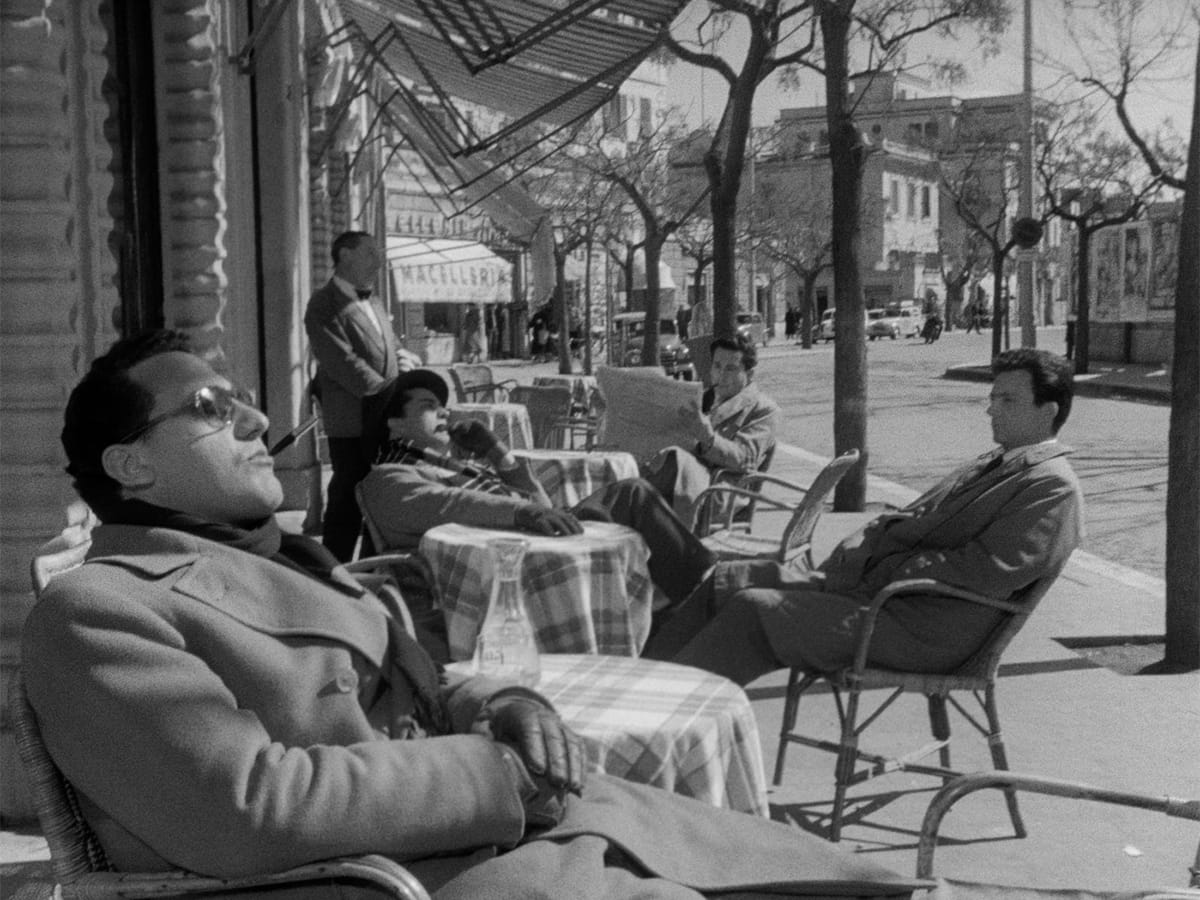
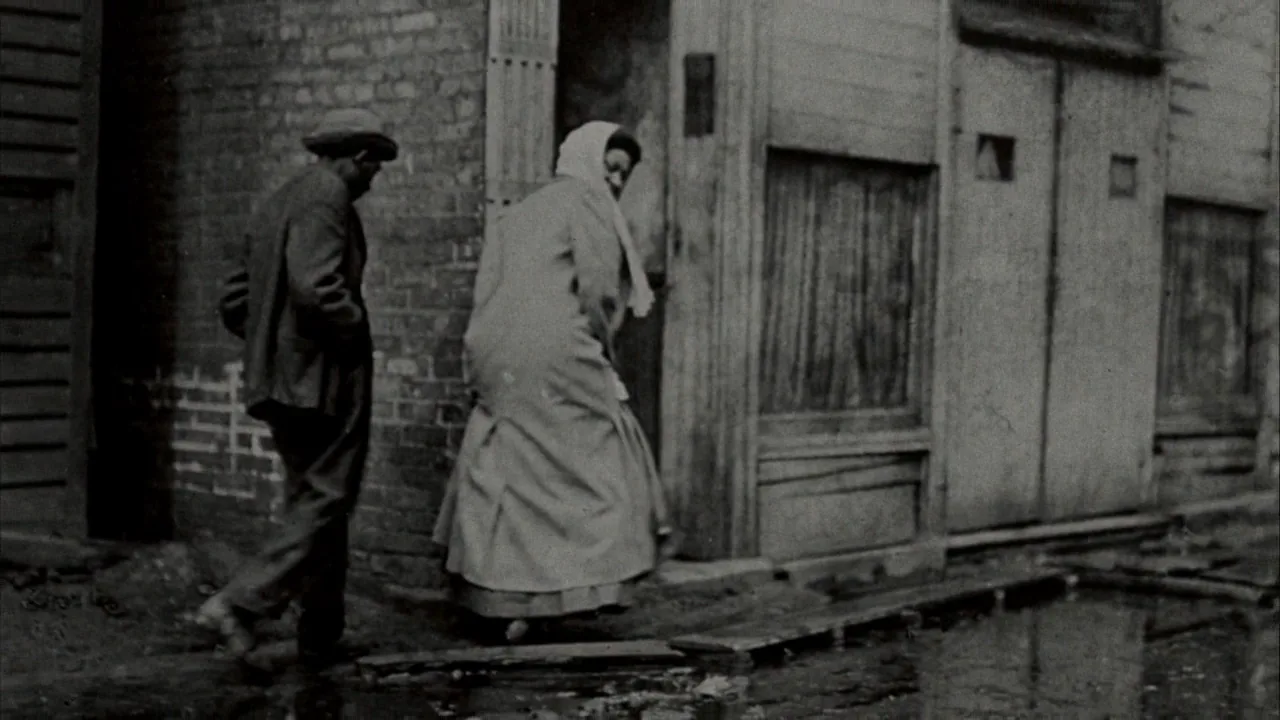
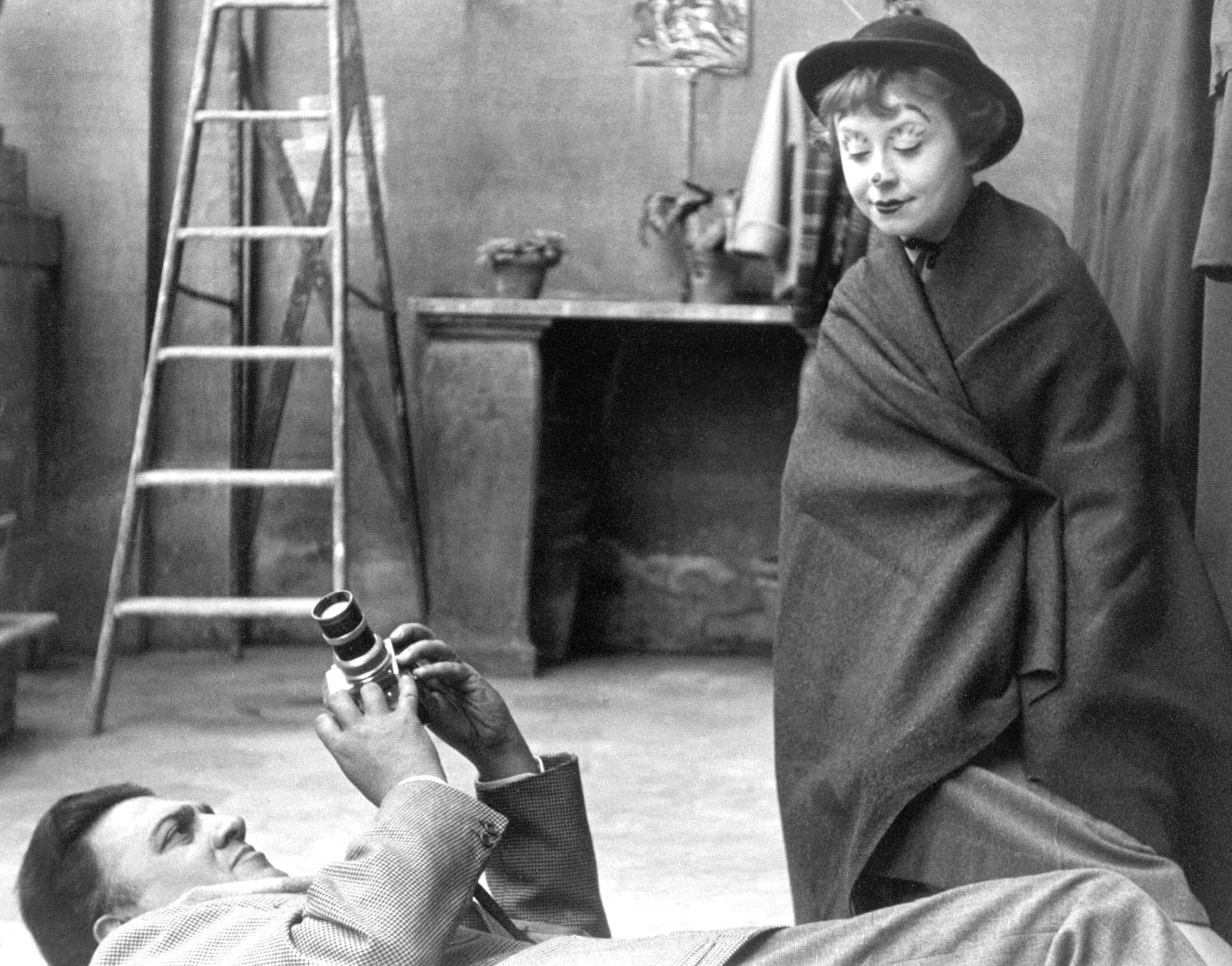
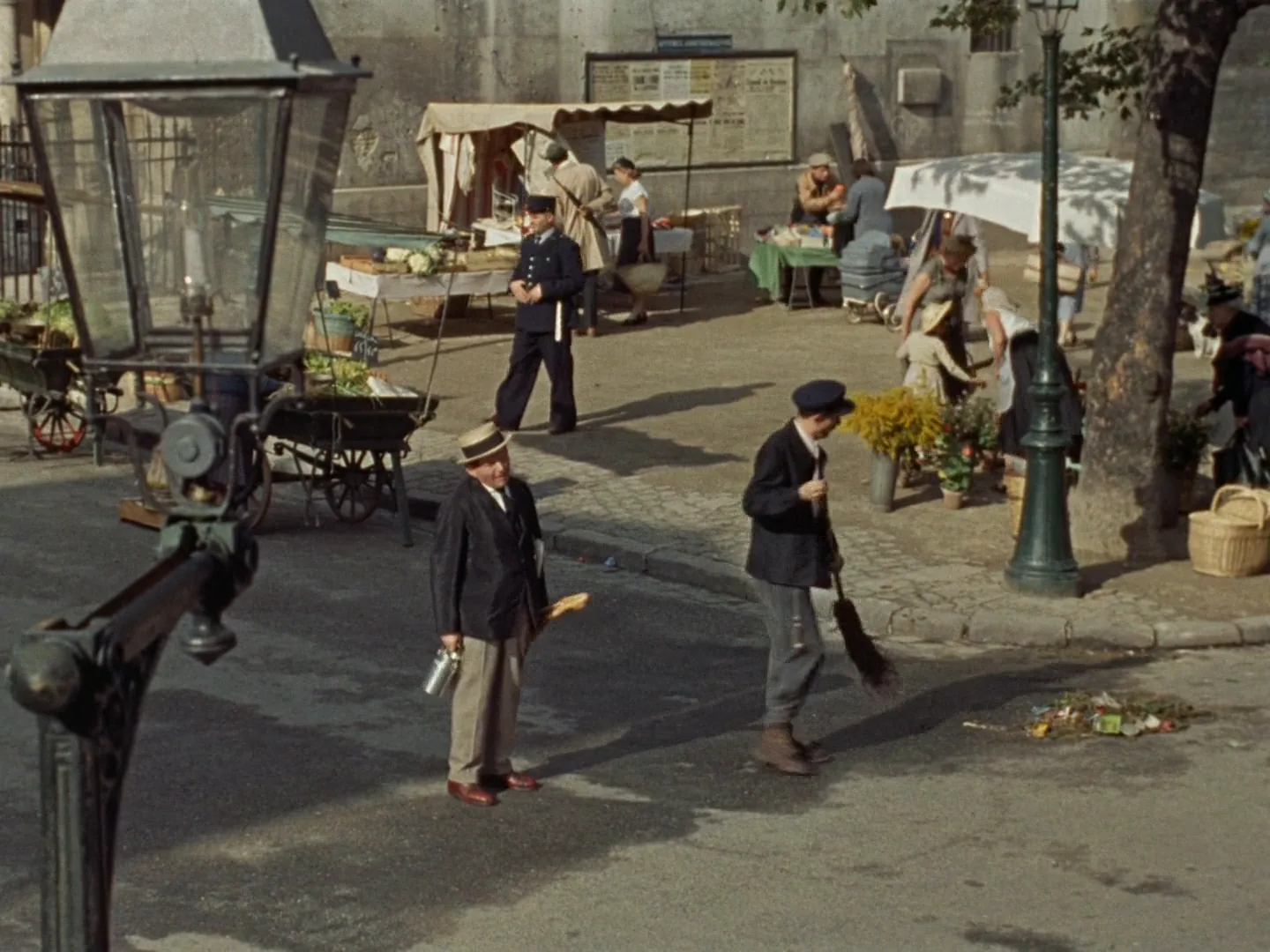
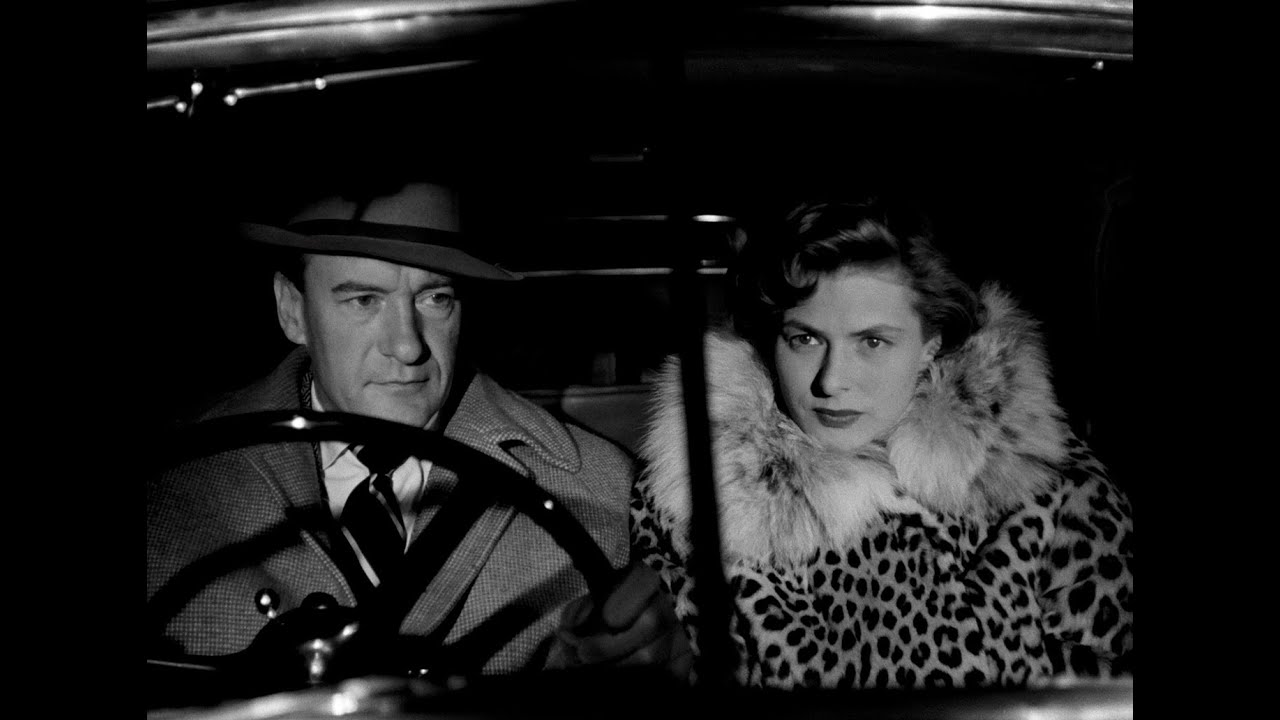
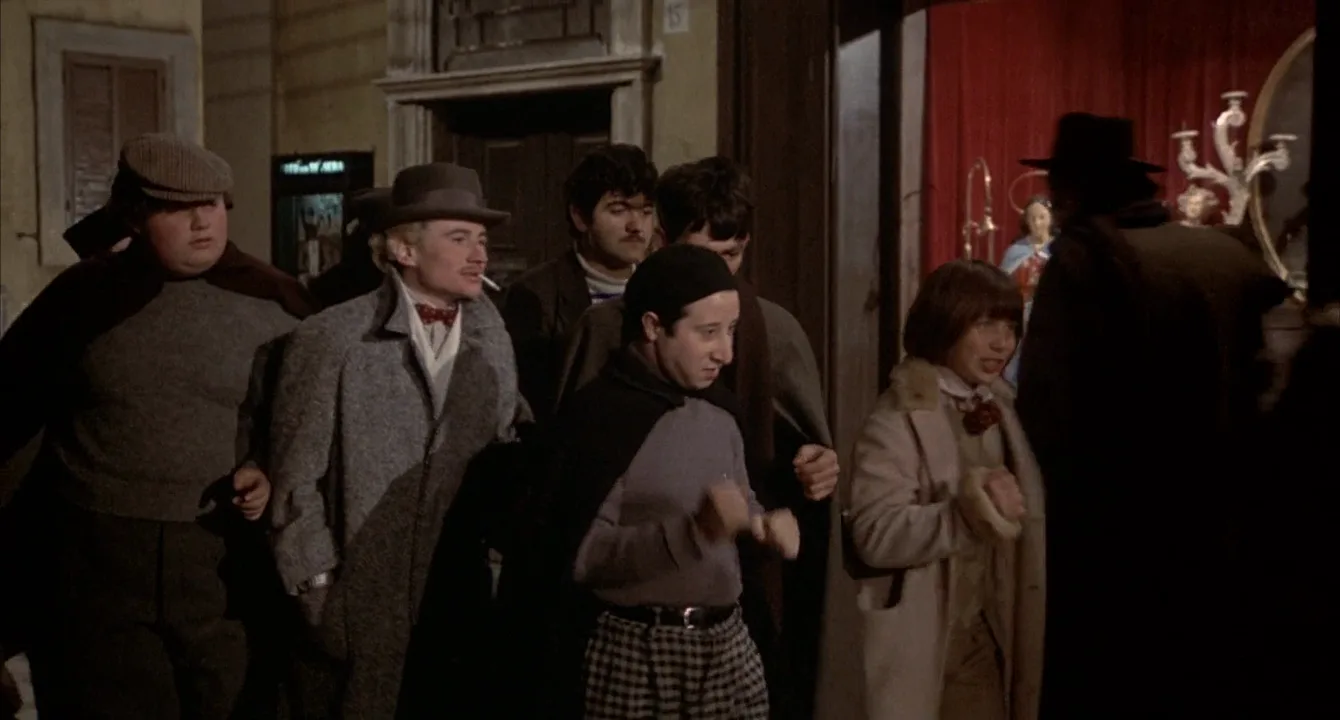
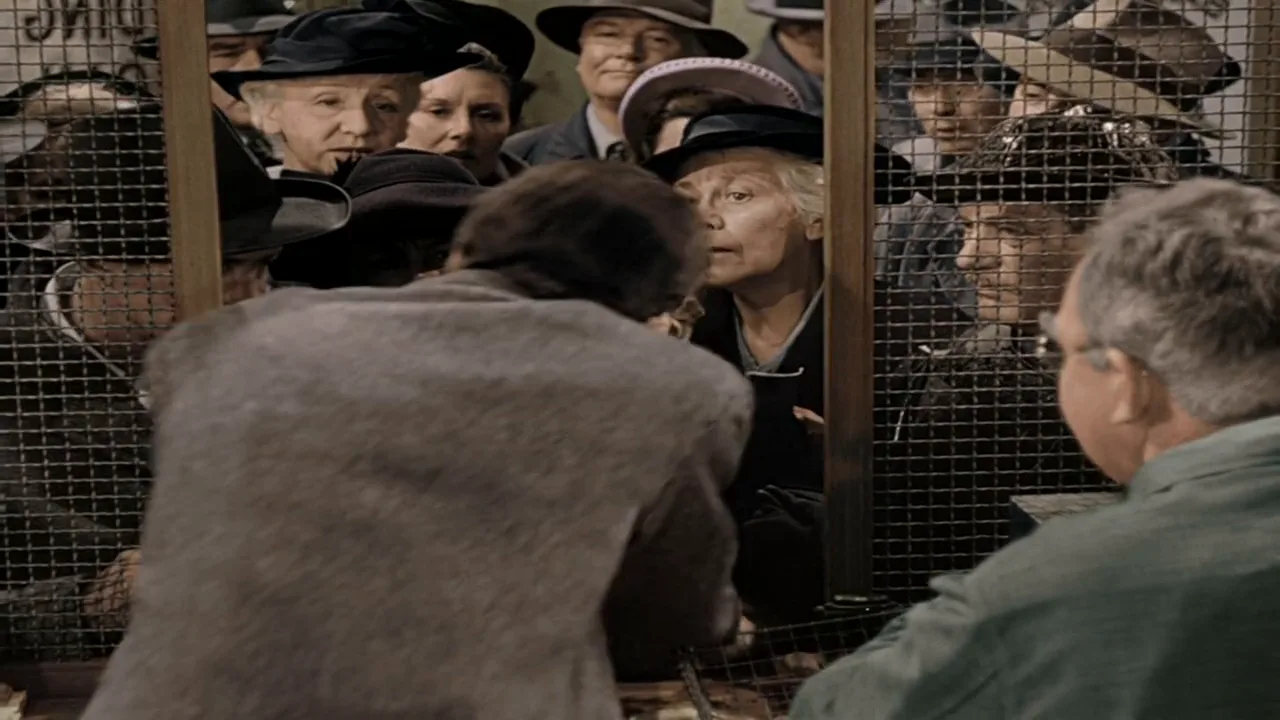
12 framesFrames from the core neorealist films, then later films that echo their street-level, crowd-in-frame way of seeing, plus one studio picture from the same year for contrast.
How to create a italian neorealism with AI
4 promptsImage models drift toward glamour: clean skin, perfect light, a centered hero. To direct a neorealist frame, name the period and the texture, then describe poverty through concrete objects, put the environment and passersby in the same shot, and keep the camera at eye level with a normal lens. On a FlashBoards board, pin the film frames next to your generations and compare takes side by side. The fourth prompt re-shoots a real film shot from a text description alone, and the original plays next to the result so you can compare.
Black-and-white 1948 film still, medium wide shot on a cracked sidewalk in a working-class suburb of Rome after rain. A thin man in his late thirties with a sunken, unshaven face, dark hair flattened by the damp and a patched wool jacket too wide at the shoulders walks toward camera holding the hand of a boy of about eight with cropped hair, a large nose for his age and oversized short trousers. Half-finished apartment blocks behind them, laundry hanging from balconies, puddles on the street, a few passersby in worn coats walking past on their own business. Flat overcast daylight, eye-level camera at 1.6 m, 40mm lens, deep focus with the whole street sharp, soft contrast, visible film grain.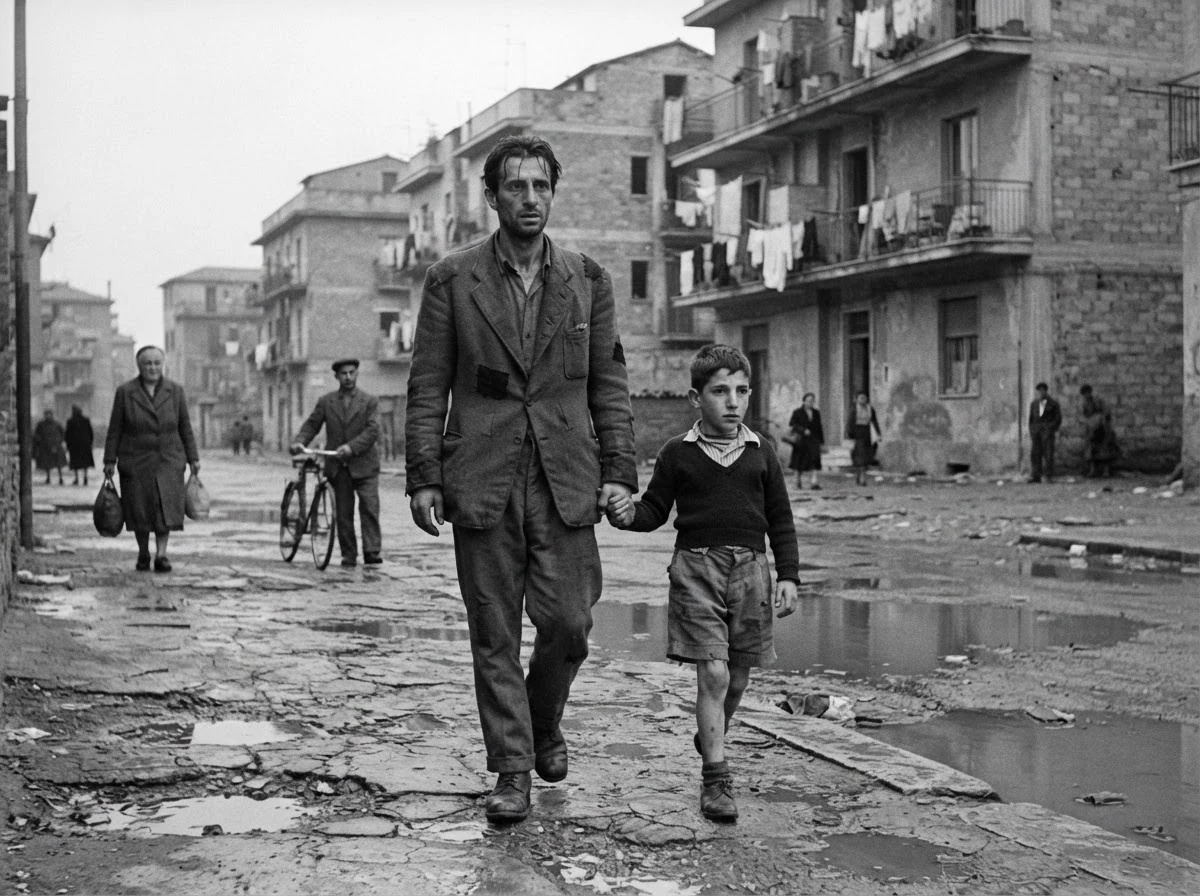
Black-and-white 1948 film still and film grain set the period; passersby on their own business and half-finished apartment blocks put the world in the frame; flat overcast daylight, eye-level, 40mm and deep focus stop the model from isolating a glossy hero.
Open FlashBoardsBlack-and-white film still in the style of post-war Italian cinema, wide interior shot of a cramped tenement kitchen. A heavy-set woman in her sixties with grey hair pinned in a loose bun, a mole on her left cheek and a faded flowered apron sits at a table covered with cracked oilcloth, counting a few coins into her palm. Peeling plaster walls, a single iron bed visible through an open doorway, a tin pot on a small stove. The only light is a window on the right, soft daylight falling across the table, the far corners of the room dark. 28mm lens at eye level, the whole room in focus, film grain, slightly underexposed.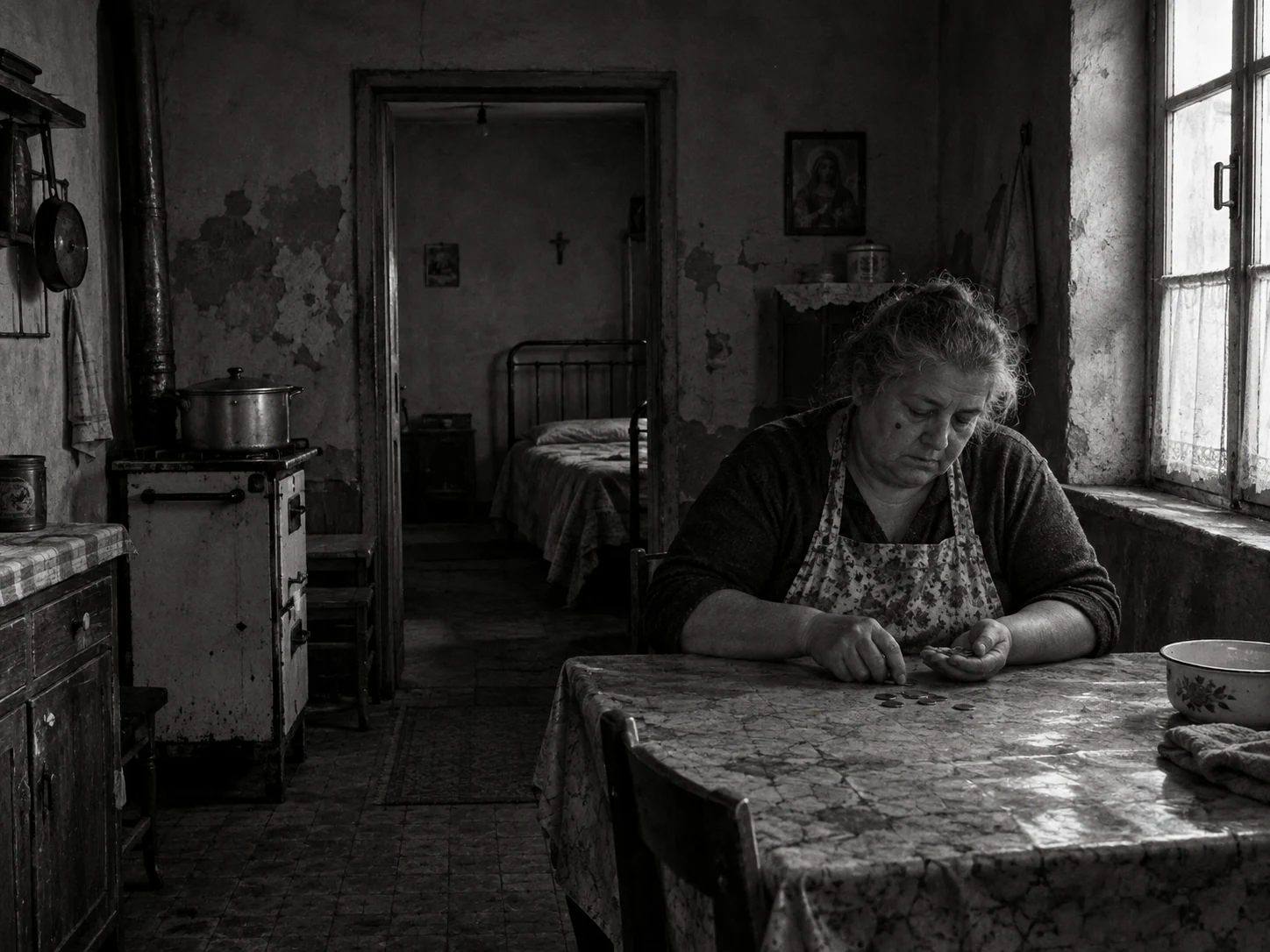
A second take moves indoors and wider. The only light is a window and far corners dark give the available-light look; counting a few coins and cracked oilcloth state the economic stakes through objects instead of a caption.
Open FlashBoardsCamera: handheld at eye level, moving slowly backward ahead of the man and the boy at their walking pace, with a slight natural sway, retreating steadily for the whole shot. Action: The man and the boy are already walking toward the camera along the wet sidewalk. The boy takes two quick steps to keep up and looks up at the man's face. The man keeps his eyes on the street ahead, jaw tight, and pulls the boy closer by the hand. The passersby keep walking past behind them. The man slows, glances back over his shoulder at the street, then walks on. The image stays black and white with film grain.The walk has started on frame one, so the shot is alive immediately. Moving slowly backward at their walking pace gives a modest follow instead of a showy move, and every element named, the sidewalk, the passersby, the hand-holding, is already in the start frame.
Open FlashBoards{
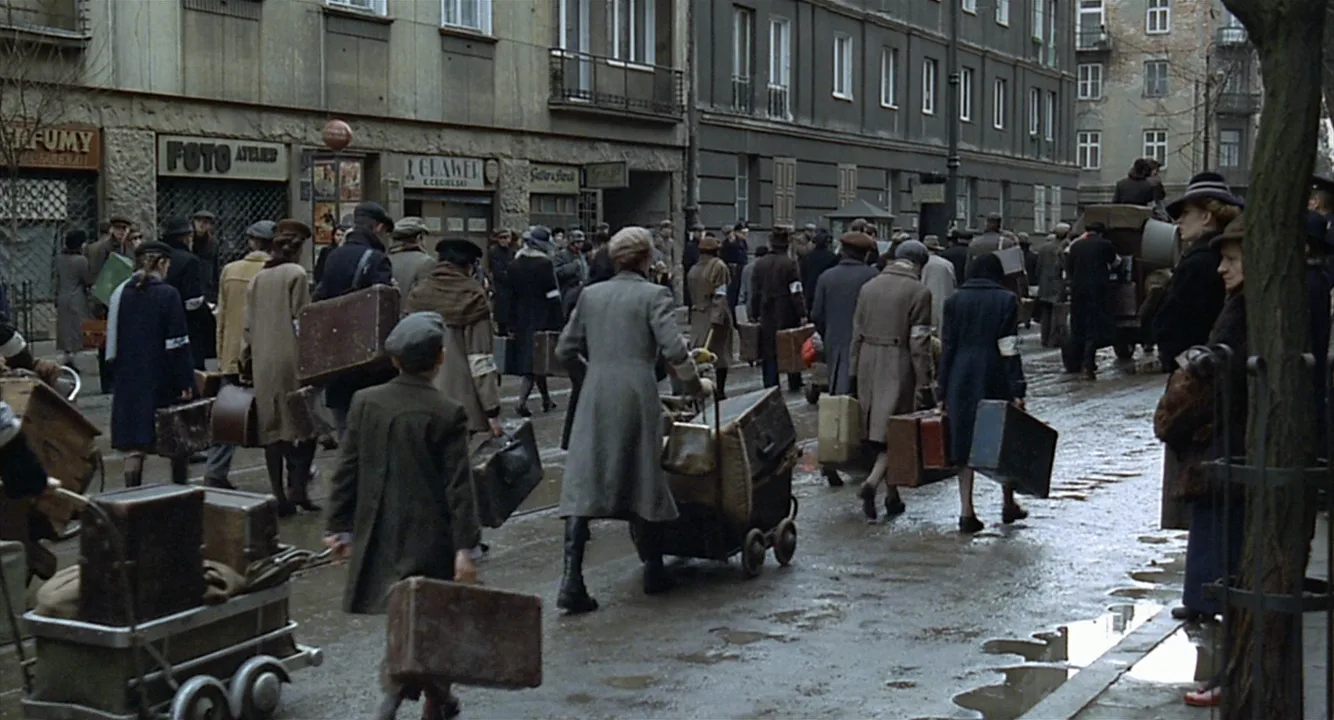
"output": "Full-screen live-action shot from The Pianist (2002) from its very first frame: one continuous locked-off shot, no cuts. Early-2000s 35mm color film with fine grain, an overcast winter day in 1940s Warsaw, flat soft gray daylight, a long wet city street of gray five-story apartment blocks with small shopfronts at street level, tram rails and puddles reflecting the pale sky, muted palette of slate gray, olive, camel and navy.",
"characters": {},
"shots": [
{
"shot": 1,
"camera": "locked-off static camera just above head height, tilted slightly down, normal 40mm lens, wide shot looking down the length of the street to a dense crowd at the far end right of center; a bare dark tree trunk inside a low iron guard stands vertically at the far right edge in the foreground on the sidewalk; the framing stays exactly the same for the whole shot",
"action": [
"BEGINNING: alive from the first frame, the street is already packed from edge to edge with ordinary men, women and children in worn 1940s overcoats, headscarves and felt hats, all walking away from the camera toward the far end with their backs to us, many with a white armband on the sleeve; left of center a woman in a long pale gray coat pushes an old baby carriage heaped with a wooden trunk and bundles; ahead of her a woman in a dark navy coat carries a blue suitcase and a man in a brown coat carries two suitcases.",
"THEN: a boy of about ten in an olive-green coat and a flat cap steps into frame from the bottom left edge and walks away up the middle of the street, a brown suitcase hanging from his right hand.",
"THEN: at the right edge, just left of the tree, two women in hats and fur-collared coats stand still on the sidewalk, heads turned left toward the procession, watching it pass; they stay in place for the whole shot.",
"THEN: a low metal handcart stacked with trunks rolls in from the bottom left corner, and more walkers carrying suitcases follow it in from below the frame; far back on the right a cart piled high with belongings creeps away.",
"THEN: a woman in a long black coat with a white armband steps in from the left foreground, close to the lens, and walks away beside a woman in a camel coat.",
"END: the woman with the carriage has moved right of center and deeper into the crowd; the boy walks in the middle of the frame; people keep entering from below the frame and the street stays full to its far end."
],
"voice": "silence: nobody speaks in this shot, no voice at all",
"dialogue": []
}
],
"sound": {
"ambience": "hundreds of shuffling footsteps on wet cobbles, the rattle of small cart wheels, suitcases knocking together",
"speech": "no words in this video; the only human sounds are breaths and movement",
"never_spoken": "no narration and no voice-over: the descriptions, performance notes and step words of this prompt are never spoken aloud",
"music": "a film score under the scene, always below the voices: a sparse, mournful solo piano in a minor key over a hushed low string drone",
"subtitles": "none"
}
}This remakes the static wide shot from The Pianist (2002) of families hauling suitcases and carts down a wet Warsaw street; the prompt kept the fixed framing, the tree at the right edge, the white armbands, the carriage, the boy with his suitcase and the two women watching.
The locked-off frame and a crowd walking away from the camera keep the street, not one hero, as the subject. Each THEN step brings in a real walker from the original, so the stream never thins, and the silent bystanders by the tree turn the shot into what neorealism does: people watching history pass on their own street.
Open FlashBoardsCommon mistakes
- Glamour creep: models smooth skin and style hair. Specify stubble, damp hair, patched clothes and worn coats, and ask for soft contrast.
- Empty streets: without passersby on their own business, the model clears the street and the frame becomes a portrait.
- Hero framing: low angles and long lenses creep in for drama. State eye-level and a 28–40mm lens.
- Fake vintage: heavy scratches and sepia read as an old-photo filter. Ask for clean black and white with fine grain.
- Invented backgrounds in video: describe only what is already in the start frame, or the model draws new traffic and signs.
Keep the reference frames, prompts and every generated take side by side — images and video in one canvas.
FAQ
5 questionsWhat is Italian neorealism in simple terms?
Italian neorealism is a film movement from Italy right after the Second World War, roughly 1945 to 1952. Directors such as Roberto Rossellini, Vittorio De Sica and Luchino Visconti shot on real streets, often with non-professional actors, and told small stories about poverty, work and survival. Key films include Rome, Open City, Bicycle Thieves and Umberto D.
What are the main characteristics of Italian neorealism?
The main characteristics are real locations instead of studio sets, non-professional actors mixed with a few professionals, stories about ordinary people and economic hardship, available light, a plain eye-level camera, long takes with everyday dead time, post-synchronized dialogue and open endings where problems stay unsolved. Children often serve as witnesses to the adults' struggle.
Why did Italian neorealism end?
By the early 1950s Italy's economy was recovering, audiences preferred comedies and Hollywood imports, and government figures such as Giulio Andreotti criticized films that exposed the country's poverty abroad, with state support following that line. The directors also moved on: Fellini and Rossellini turned to more personal, inward films, carrying neorealist methods into new styles.
What is the most famous neorealist film?
Bicycle Thieves (1948), directed by Vittorio De Sica and written with Cesare Zavattini, is the best-known neorealist film. A poor Roman father needs his bicycle for a job, it is stolen, and he searches the city for it with his young son. It regularly appears on lists of the greatest films ever made.
How did neorealism influence later cinema?
Neorealism showed that a powerful film could be made cheaply, on location, with ordinary people. The French New Wave, Satyajit Ray's Pather Panchali, Brazil's Cinema Novo, Iranian filmmakers like Abbas Kiarostami, and social realists such as Ken Loach and the Dardenne brothers all drew on it. Many current indie films using street casting follow the same approach.
Related terms
6- RealismFilm Movements & Styles
Realism in film is the broad tradition — theorized by André Bazin — of showing the world as it is: long takes, deep focus, real places and restrained style that let reality speak rather than montage or spectacle.
- NaturalismFilm Movements & Styles
Naturalism in film aims for an illusion of unmediated life — unstylized acting, available light, real locations and hidden technique — often showing characters shaped by environment and circumstance.
- Filming LocationFilmmaking Process & Crew
A location is any real place used for filming outside a studio; location scouting finds and vets it for look, sound, light, access, permits and cost, and the location manager secures it.
- Ambient LightLighting
Ambient (available) light is whatever light already exists at a location — sun through windows, street lamps, shop signs — before the crew adds its own; DPs either shoot with it as it is or shape and supplement it.
- French New WaveFilm Movements & Styles
The French New Wave (late 1950s–60s) was launched by Cahiers du cinéma critics turned directors — Truffaut, Godard, Chabrol, Rohmer — who shot cheaply on the streets with handheld cameras, jump cuts and a personal, playful voice (The 400 Blows, Breathless).
- Cinéma VéritéFilm Movements & Styles
Cinéma vérité is a 1960s documentary approach, born with Jean Rouch and Edgar Morin's Chronicle of a Summer, in which lightweight sync-sound cameras record real life and the filmmaker openly provokes and takes part in it.
Further reading
André Bazin, What Is Cinema? Vol. 2 (essays on neorealism). Peter Bondanella, Italian Cinema: From Neorealism to the Present. Millicent Marcus, Italian Film in the Light of Neorealism.