 FlashBoards Learn
- Learn
- Film Movements & Styles
- Avant-Garde Film
Film Movements & Styles · Film language
Avant-Garde Film
Also called: experimental film, avant-garde cinema, underground film
Avant-garde film is cinema that drops commercial storytelling to experiment with the medium itself: rhythm, abstraction, collage, dream logic and the material of film. Instead of following a plot, the viewer experiences images, cuts and textures directly, from 1920s Paris and Berlin to American underground cinema and today's artist films.
- What it does
- Makes the viewer feel form itself (cutting, texture, repetition, abstraction) instead of following a plot.
- Use it when
- An idea, a mood or a dream cannot be told in scenes and dialogue, or you want to test what an image and a cut can do on their own.
- Watch out
- Random strangeness is not experiment. Pick one rule (a rhythm, a repeated object, a single texture) and push it all the way.
- Try this prompt
Black-and-white 16mm still, double exposure of a woman's face and a spiral staircase, heavy grain, scratched emulsion, 4:3.
What is avant-garde film?
Avant-garde is a French military term that literally means "advance guard", the unit that moves ahead of the army. In cinema it names films that run ahead of the mainstream by questioning what a film has to be. Most are short and personal; many have no characters or story.
You will also hear experimental film (the common term today) and underground film (the 1950s–60s American scene that screened outside theaters). The shared ground is form first: a rhythm of shapes, a chain of dream images, a collage of found footage, or one camera move stretched to an hour. Its ideas feed many later film movements.
A short history of avant-garde cinema
1920s Europe. Hans Richter and Walter Ruttmann animated pure geometric forms; Fernand Léger and Dudley Murphy cut machine parts and faces into the rhythmic Ballet Mécanique (1924). Buñuel and Dalí's Un Chien Andalou (1929), with its razor-and-eye opening, became the manifesto of surrealism in film, and Dziga Vertov's Man with a Movie Camera (1929) showed off every trick of camera and edit. German Expressionism ran in parallel but kept a story.
1940s–70s America. Maya Deren and Alexander Hammid's Meshes of the Afternoon (1943) built a looping dream from a key, a knife and a flower. Then came the underground: Stan Brakhage glued moth wings between strips of tape for Mothlight (1963), Kenneth Anger cut bikers to pop songs in Scorpio Rising (1963), and Michael Snow's Wavelength (1967) is essentially one slow zoom across a loft.
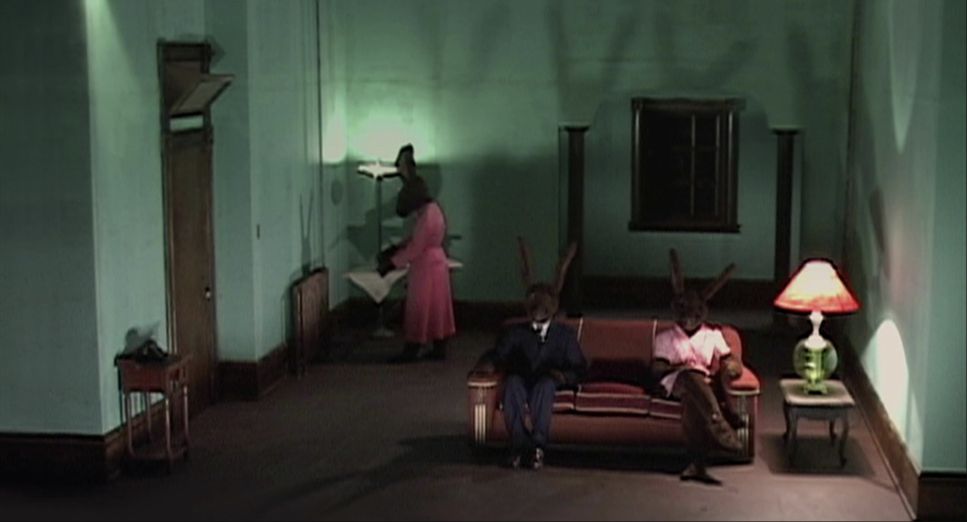
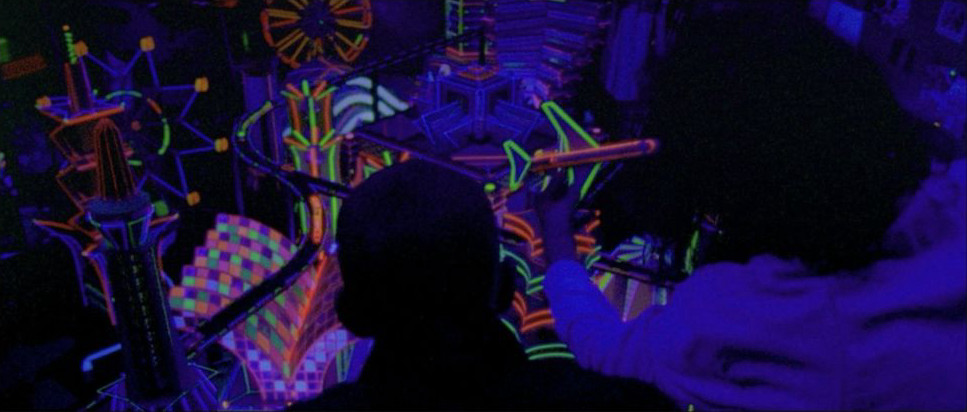
Beyond. Sergei Parajanov's The Color of Pomegranates (1969) replaced scenes with frontal tableaux, and David Lynch carried the experimental short into features with Eraserhead (1977).
Why do filmmakers make experimental films?
Narrative cinema hides its machinery; the avant-garde wants you to feel it. A jump cut that breaks time, a frame held too long, a scratch on the emulsion: each reminds the viewer they are watching a made object.
It also reaches interior life. Dreams and memory don't follow cause and effect, so Deren, Tarkovsky in Mirror (1975) and Lynch link images by shape, color or feeling. And rhythm, flicker and abstraction work on the body the way music does.
It is also a lab: superimposition, step-printing and found footage migrated from shorts into features and music videos.
How to shoot an avant-garde film
Start from a rule, not a story: one repeated object, one move, one texture, one rhythm.
- Format. 16mm or Super 8 lets grain, gate weave and light leaks become part of the image.
- Speed. Undercrank to 8–12 fps for jerky, accelerated motion; overcrank to 48–120 fps to stretch a gesture into a ritual. Step-printing (each frame repeated 2–4 times) gives a stuttering smear.
- Layering. For an in-camera double exposure, underexpose each pass by about one stop and put a dark background behind the second subject.
- Lens. A 14–18mm lens close to a face distorts it; macro turns objects into fields of color.
- Cutting. Edit by shape, color or beat. Flash cuts of 1–4 frames read as a pulse, not a shot.
Avant-garde vs. art house film
Art house film is usually a feature-length narrative: think Bergman, Wong Kar-wai, Haneke. Avant-garde film questions storytelling itself, is often short, and plays in galleries, festivals and cinematheques.
A quick test: if you can summarize the plot in a sentence, it's probably art house. If the best summary describes a technique ("a 45-minute zoom", "moth wings on film"), it's avant-garde. Lynch, Tarkovsky and Gaspar Noé sit on the border.
Avant-Garde Film examples in film
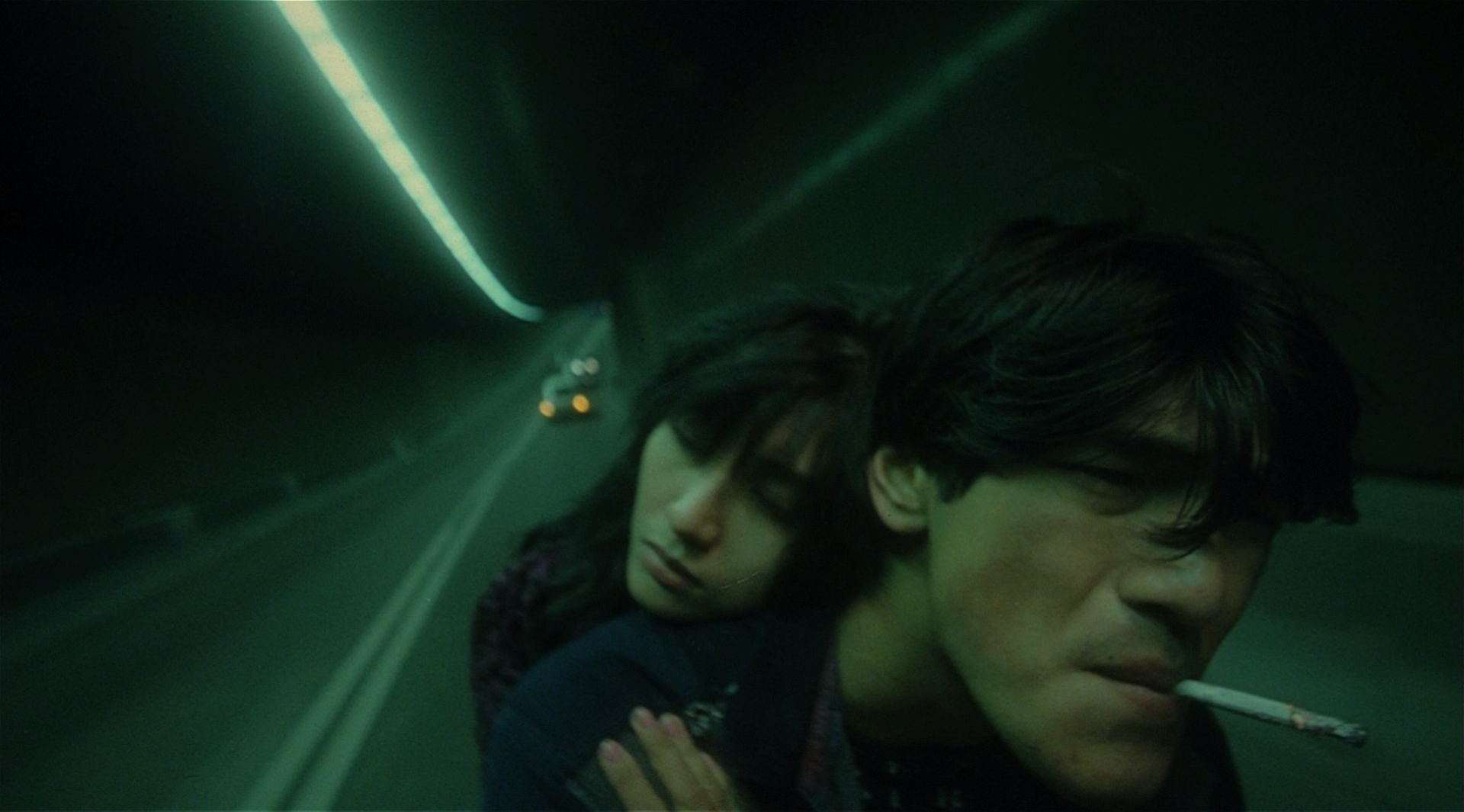
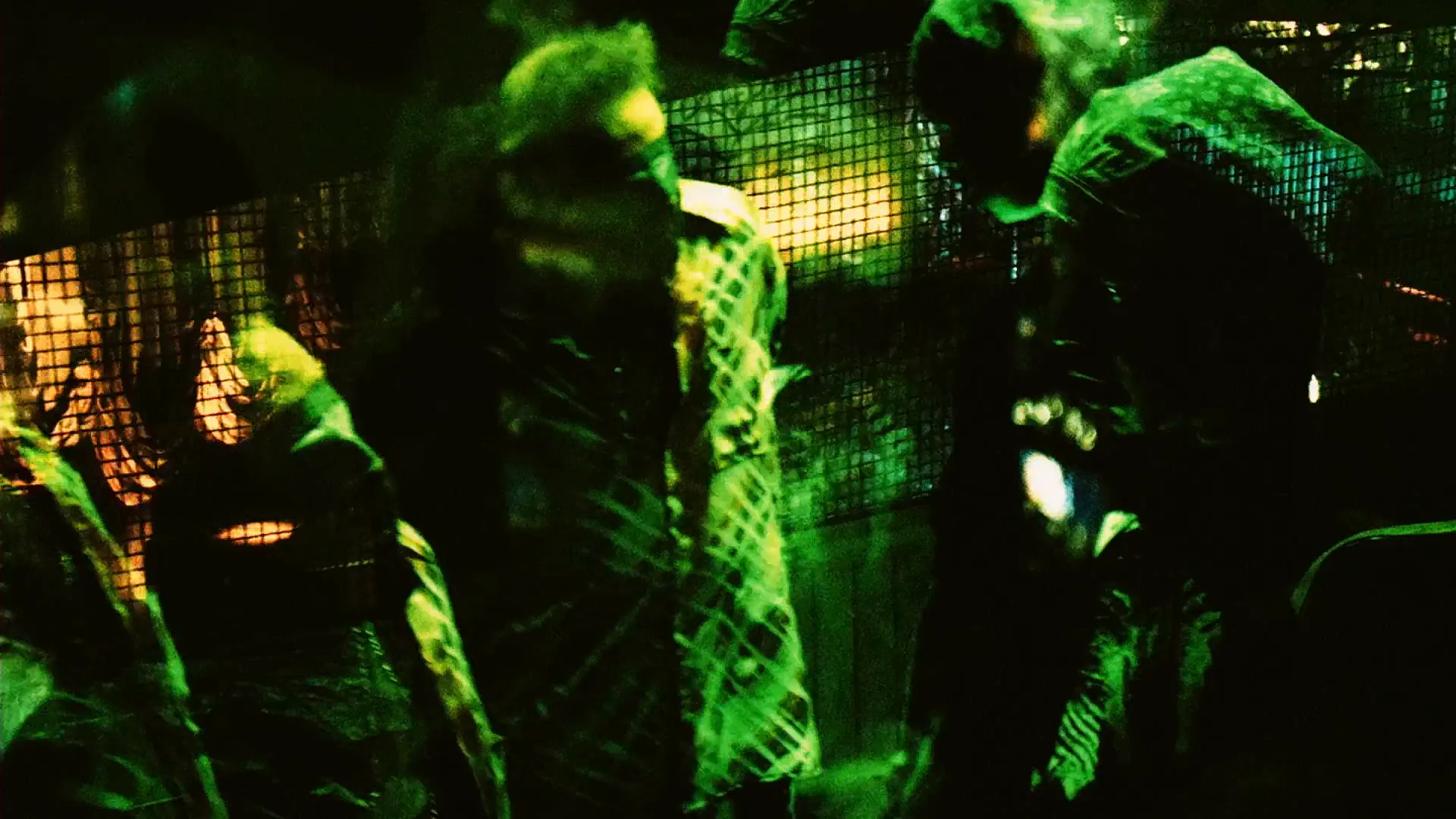
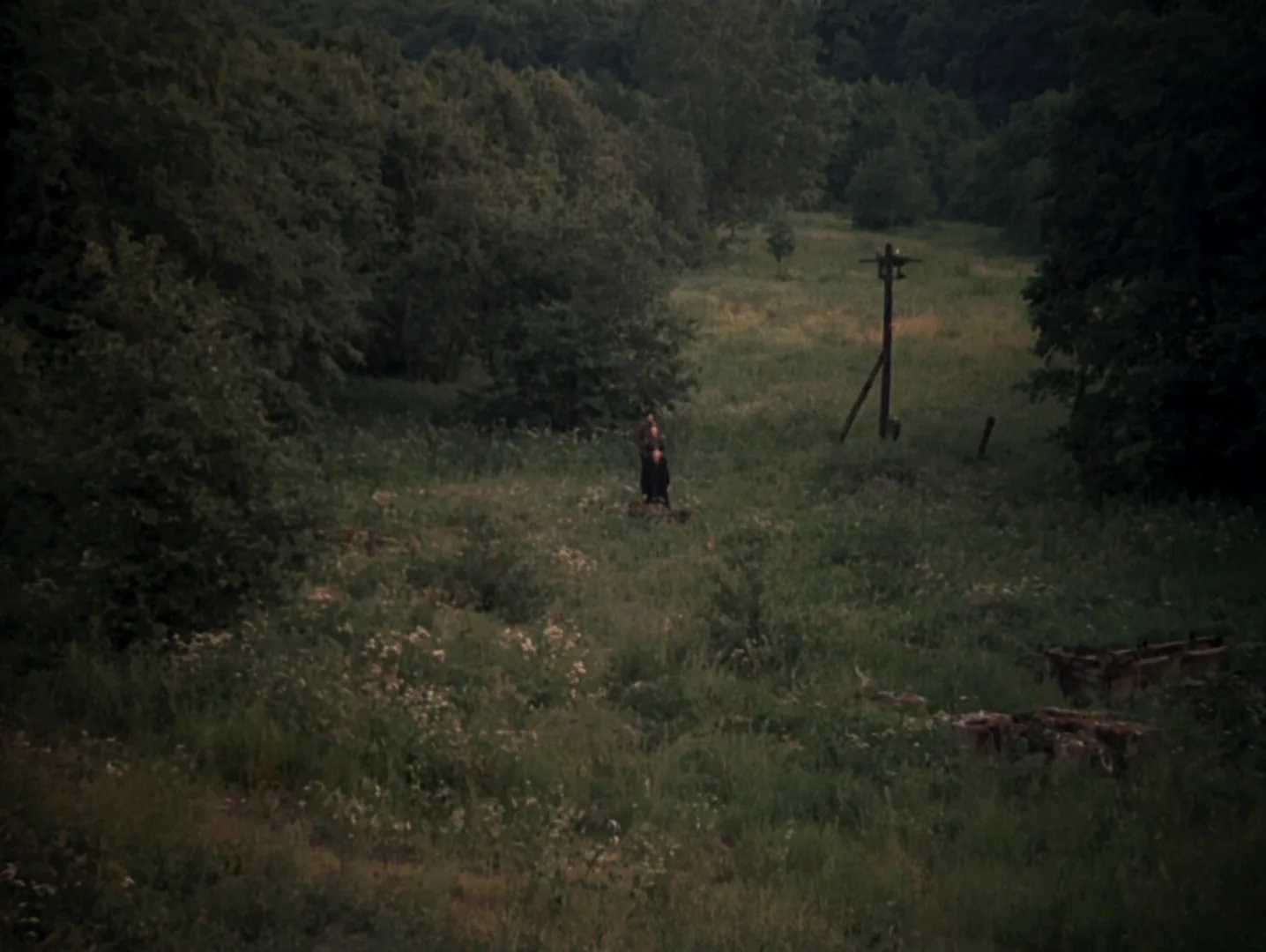
6 framesFeatures that borrow the avant-garde toolkit: dream rooms, abstract color, layered textures, empty time.
How to create a avant-garde film with AI
4 promptsModels default to clean, commercial pictures, so spell out the film stock, the defect, the layering and the rule the image obeys. In FlashBoards, keep references and takes on one board and compare them side by side. The fourth prompt re-shoots a real film shot from a text description alone, and the original plays next to the result so you can compare.
Black-and-white 16mm film still, in-camera double exposure: close-up face of a woman in her thirties with a shaved head, heavy dark eyebrows and a thin scar across her chin, eyes closed, overlaid with a white spiral staircase seen from below, the steps curling through her forehead. Hard window light from the left, deep black background around the face. Heavy grain, vertical scratches, a soft light leak in the top corner.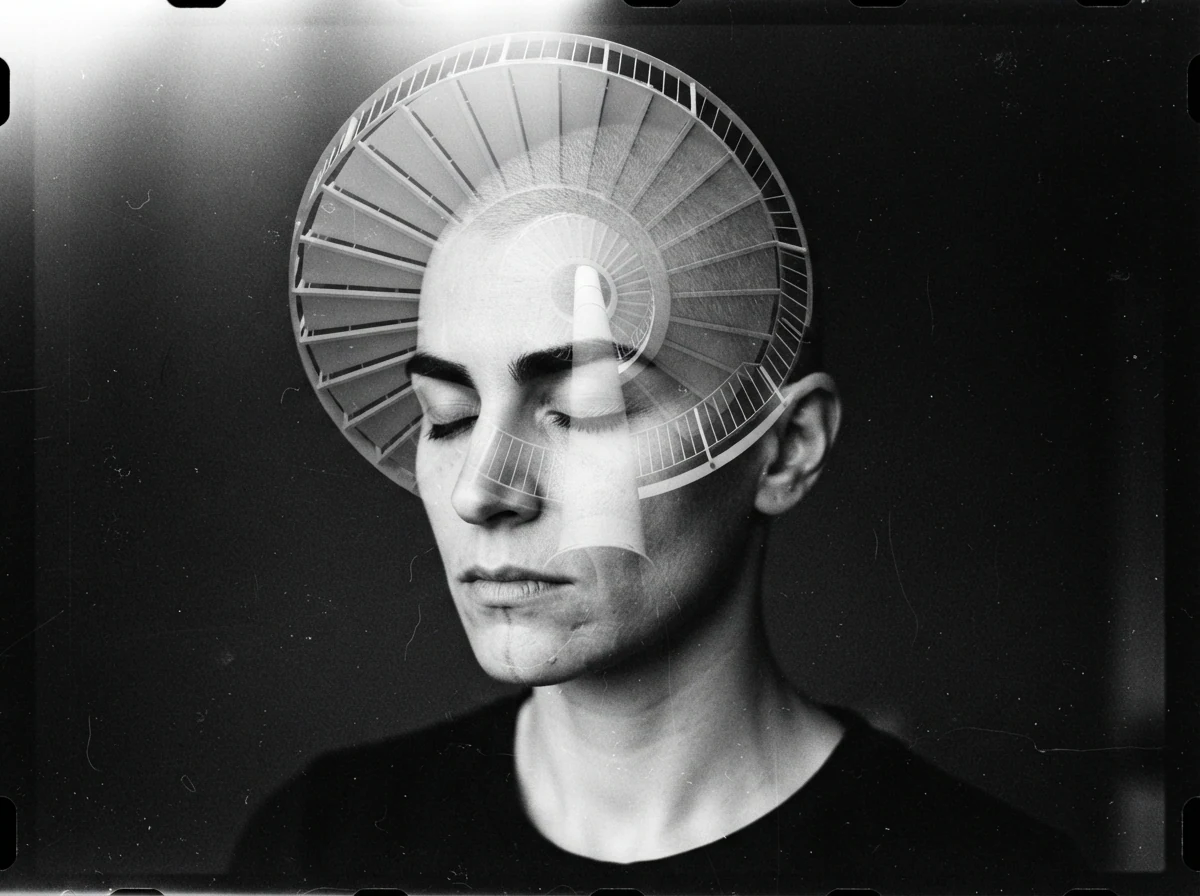
"In-camera double exposure" plus two described layers makes the model blend images instead of placing them side by side; "deep black background" keeps both readable, and "grain, scratches, light leak" put the film surface in the image.
Open FlashBoardsPerfectly frontal wide tableau, static camera, flat composition like a painted frieze: a young man with a long black braid, a crooked nose and ink-stained fingers stands at the center of a long whitewashed wall holding an open book toward the lens; three brass keys hang on strings to his left and a white goat stands in profile to his right, bare wall stretching to both edges of the frame. Soft even daylight, faded 1970s color film, muted reds and ochres.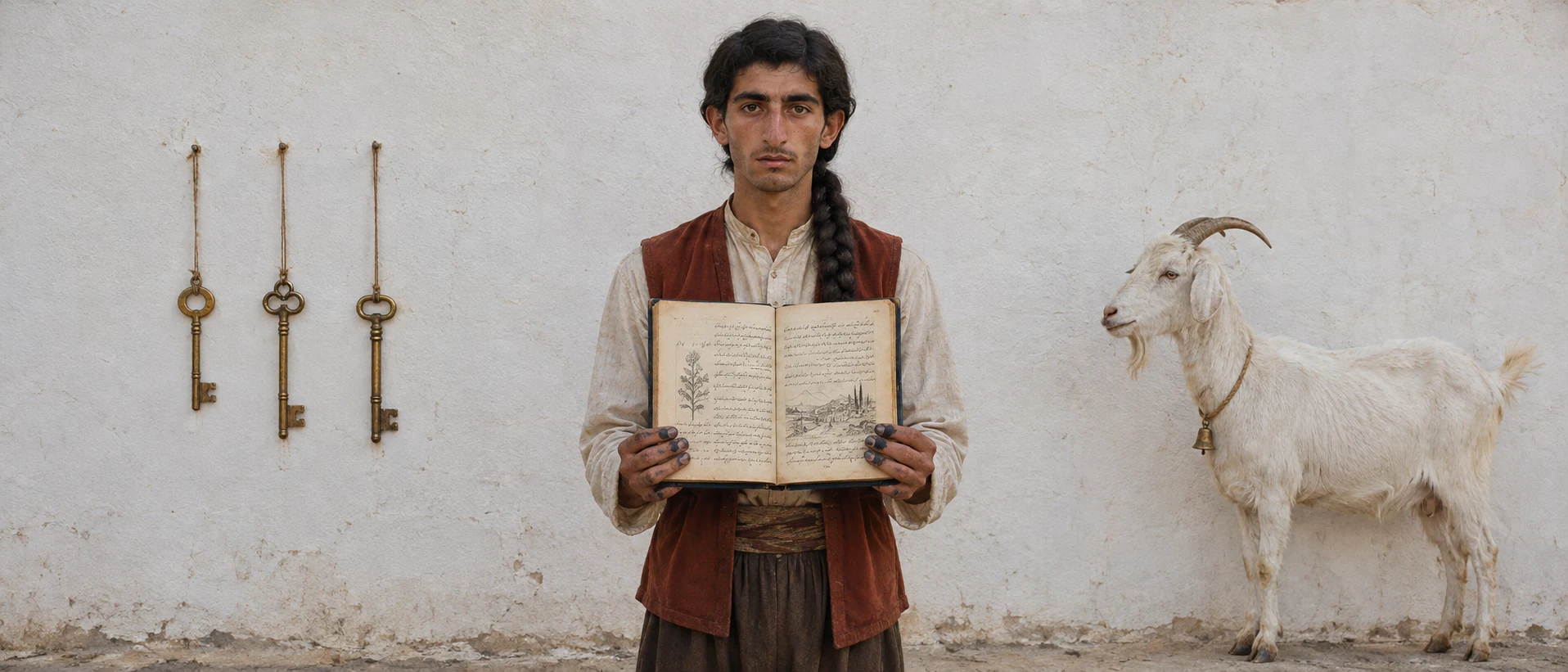
"Perfectly frontal tableau" and "flat composition like a painted frieze" block the default depth and three-quarter angle; symbolic objects spaced along the wide wall give a ritual, non-narrative feel.
Open FlashBoardsCamera: locked-off, completely still. Action: from the first frame the spiral staircase layer rotates slowly clockwise through the woman's face while grain and scratches flicker. Her eyes open and she looks straight into the lens as the staircase keeps turning. At the end the staircase brightens and her face darkens until only her eyes and the white steps remain.A still camera puts all motion inside the image. "From the first frame" keeps the shot alive, and the ending uses only what is already in the frame.
Open FlashBoards{
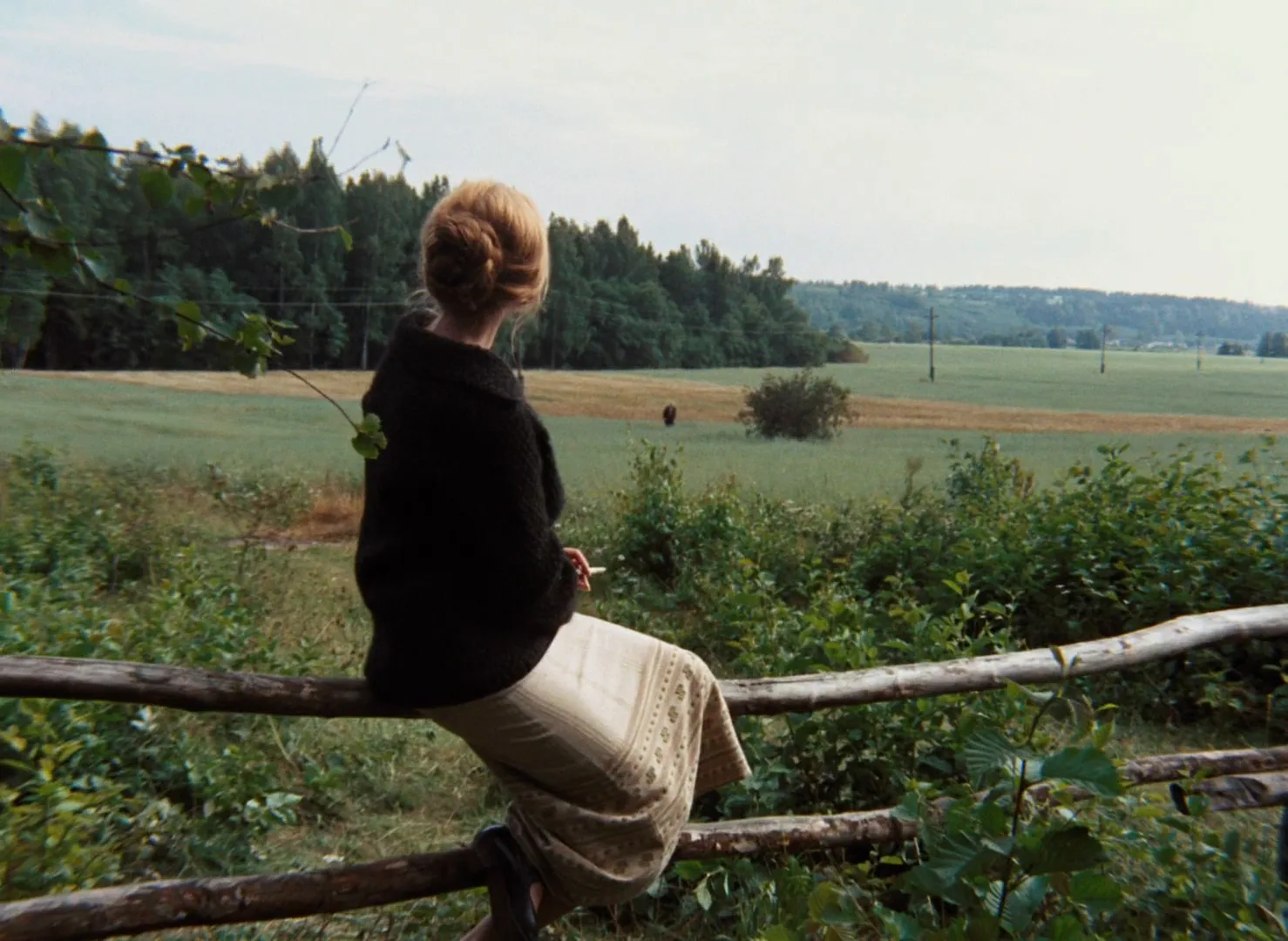
"output": "Full-screen live-action single continuous shot from its very first frame, one unbroken take, a re-shoot of the fence shot from Mirror (1975) by Andrei Tarkovsky. Soft 1970s Soviet 35mm color stock, fine grain, overcast summer afternoon, flat pearly white sky, muted greens and faded ochre, a wide countryside of meadow and dark pine forest.",
"characters": {
"S1": {
"name": "Natalya, played by Margarita Terekhova",
"look": "slender woman in her thirties, seen only from behind and in lost profile: strawberry-blond hair pinned up in a loose low bun, a loose black knitted cardigan, a long pale cream skirt draped over the fence rail",
"voice": "silence: she never speaks"
}
},
"shots": [
{
"shot": 1,
"camera": "very slow dolly in combined with a slow pedestal down, steady and unhurried; starts as a medium-wide shot from slightly above her eye level, S1 small in the left-centre third with the whole meadow and the forest line open to the right; ends lower and closer, a medium shot of S1 from the waist up against the far forest edge, 35mm lens feel, deep focus",
"voice": "silence: nobody speaks in this shot, no voice at all",
"action": [
"BEGINNING: alive from the first frame, S1 sits on the top rail of an old grey wooden fence that runs diagonally across the lower frame, her back three-quarters to the camera, head turned slightly to screen right, gazing across a wide green meadow toward a dark pine forest; a single round bush stands in the middle of the meadow; thin birch branches at the top-left edge of frame tremble in the breeze.",
"THEN: S1 stays completely still, shoulders relaxed, her right hand resting at her hip on the screen-right side of her body with a thin lit cigarette between two fingers, her other hand hidden in her lap; the meadow stays empty, the tall grass stirs, and the camera keeps creeping closer and lower.",
"THEN: still gazing at the far edge of the meadow on screen right, S1 turns her head a little further to the right, so the curve of her cheek shows past her hair; her body does not move.",
"THEN: S1 slowly raises her right hand with the cigarette from her hip up past her shoulder on the screen-right side of her body.",
"END: S1 brings the cigarette to her lips and holds it there, her face still hidden from the lens, eyes on the distant edge of the meadow, as the camera settles close behind her shoulder."
],
"dialogue": []
}
],
"sound": {
"ambience": "soft summer breeze through grass and birch leaves, distant birdsong, a faint rustle of knitted fabric",
"speech": "no words in this video; the only human sounds are breaths and movement",
"never_spoken": "no narration and no voice-over: the descriptions, performance notes and step words of this prompt are never spoken aloud",
"music": "a film score under the scene, always below the voices: a sparse, slow, melancholic score of soft sustained organ-like chords over a faint electronic hum",
"subtitles": "none"
}
}Remakes the fence shot from Mirror (1975): the prompt carried over the woman seen from behind, the meadow and forest, the slow dolly in and down, and the cigarette raised to her lips at the end.
Nothing happens in the plot, so the prompt spends its words on time: one unbroken take, a slow move closer and lower, an empty meadow, and a single gesture at the end. The silence and the quiet score are written out, so the model keeps the shot about waiting.
Open FlashBoardsCommon mistakes
- Grain, scratches and light leaks vanish unless named, with their place in the frame.
- "Double exposure" often comes out as a split screen. Describe both layers and which one is dark.
- "Surreal" alone gives melting clocks. Name the rule instead: one object, one repetition, one texture.
- Tableaux drift to three-quarter angles; add "camera square to the wall".
Keep the reference frames, prompts and every generated take side by side — images and video in one canvas.
FAQ
5 questionsWhat is the difference between avant-garde and experimental film?
In practice they are interchangeable. "Avant-garde" is the older, art-historical label tied to the 1920s European movements. "Experimental film" is the broader term festivals and schools use today for any work that puts form over story. "Underground film" usually means the American scene of the 1950s and 60s, shown outside commercial theaters.
What was the first avant-garde film?
There is no single first. In the early 1920s several artists made abstract or anti-narrative films almost at once: Hans Richter and Walter Ruttmann animated geometric shapes in Germany, and Man Ray made Le Retour à la raison (1923) in Paris. Ballet Mécanique (1924) and Un Chien Andalou (1929) are the best-known early landmarks.
What are examples of avant-garde films?
Core examples: Ballet Mécanique (1924), Un Chien Andalou (1929), Man with a Movie Camera (1929), Meshes of the Afternoon (1943), Mothlight (1963), Wavelength (1967) and The Color of Pomegranates (1969). Features that bring avant-garde methods into storytelling include Mirror (1975), Eraserhead (1977) and Inland Empire (2006).
Is David Lynch an avant-garde filmmaker?
Lynch began as a painter making experimental shorts, and Eraserhead (1977) and Inland Empire (2006) use avant-garde methods: dream logic, abstract sound and scenes that resist explanation. Features like The Elephant Man tell straightforward stories, so he is best described as a narrative director with one foot in experimental cinema.
How do I make an experimental film on a small budget?
Pick one rule and a cheap tool that serves it: a phone at high frame rates, Super 8, or licensed found footage. Limit yourself to one location or object, edit by rhythm and shape, and keep it short. Three strong minutes built on a clear idea beat twenty minutes of random effects.
Related terms
4- Art House FilmGenres
Art house film is personal, formally adventurous cinema made for artistic expression over mass appeal — and the specialized theaters that screen it; the tradition runs from Fellini's 8½ to Wong Kar-wai and Haneke.
- Surrealism in FilmFilm Movements & Styles
Surrealism in film, born in 1920s Paris (Un Chien Andalou by Buñuel and Dalí), follows dream logic and the unconscious: irrational juxtapositions, impossible images and shocking cuts — a line that runs through Buñuel to David Lynch.
- German ExpressionismFilm Movements & Styles
German Expressionism is the 1920s Weimar cinema movement that externalized inner states through distorted painted sets, slanted lines, stark chiaroscuro and stylized acting — The Cabinet of Dr. Caligari, Nosferatu, Metropolis.
- SuperimpositionPost-Production & VFX
Superimposition layers one image over another so both are visible at once — a face over a landscape, a ghostly figure, a memory over the present — made optically or in compositing.
Further reading
P. Adams Sitney, Visionary Film: The American Avant-Garde (Oxford University Press). A. L. Rees, A History of Experimental Film and Video (BFI).