 FlashBoards Learn
Lighting · Film language
Diffusion
Also called: diffused light, light diffusion, diffusion frame, silk
Diffusion is any translucent material, such as silk, frost, grid cloth or a softbox front, placed between a lamp and the subject. It spreads the light across a larger surface, so shadows soften, contrast drops and light wraps around faces. The result reads as gentle and natural rather than sharp and theatrical.
- What it does
- Turns a small, hard lamp into a larger, softer source with feathered shadow edges and gentler contrast.
- Use it when
- Faces need to look kind and natural, a period or romantic scene wants window-like light, or harsh sun has to be tamed.
- Watch out
- Diffusion eats light and spills everywhere; plan for the stop loss and flag the spill off walls and background.
- Try this prompt
medium close-up, key light through a large white diffusion frame just out of frame left, soft wrapping light, gradual shadow falloff, low contrast, 85mm
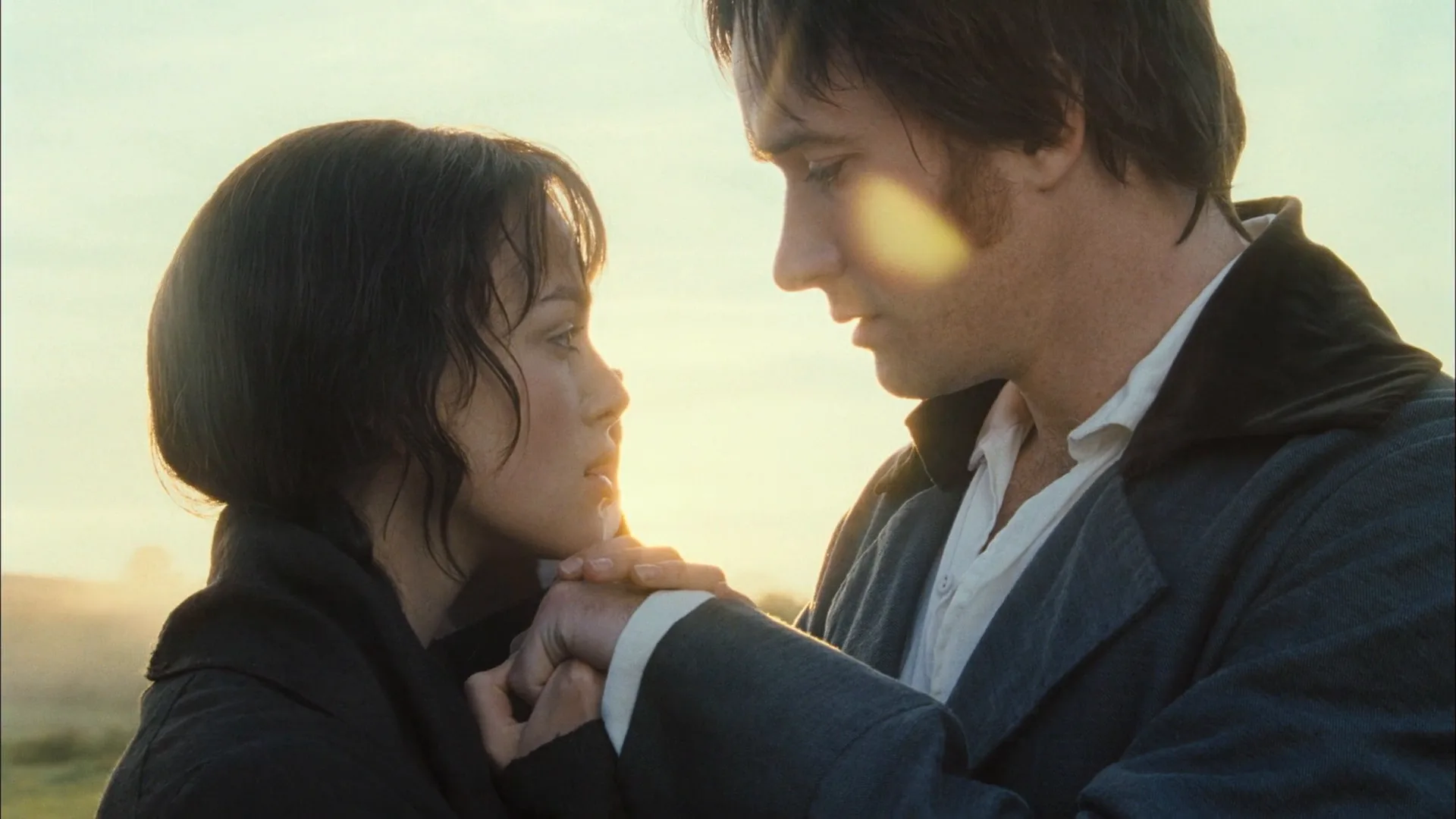
What is diffusion in film lighting?
In film lighting, diffusion means scattering light on its way to the subject. A bare lamp is a small point that throws crisp shadows, the look of hard light. Put translucent material in front of it and the material becomes the new source, glowing across its whole surface, so the edge between light and shadow stretches into a gradient.
Softness depends on the density of the material and on the size of the lit surface relative to the subject. Light frost on the barn doors barely changes a shadow; the same lamp filling a 6x6 frame near an actor gives true soft light.
This is a lighting tool. Diffusion filters on the lens soften the image, not the light, and belong with lens filters.
Light diffusers: frames, fabrics and gels
A light diffuser is the material itself, and crews carry a range of densities:
- Gels. Heat-resistant sheets such as Lee 251 Quarter White, 250 Half White and 216 White Diffusion, or Rosco Tough Frost and Opal.
- Fabrics on frames. Silk (fine, fairly transparent), grid cloth in full, half and quarter strengths, and dense muslin, stretched on frames from 4x4 to 20x20 feet.
- Built-in diffusion. A softbox has a diffuser sewn into its front; a China ball lantern spreads light everywhere.
- Found diffusion. Sheer curtains, frosted glass, a cloud layer: overcast light is the sun behind the biggest diffuser there is.
On a budget, a white shower curtain works; keep it away from hot lamps.
Why do filmmakers diffuse light?
Faces. Soft light hides skin texture and puts a large, gentle catchlight in the eyes, which is why most drama close-ups are lit through diffusion.
Naturalism. Daylight indoors is almost always diffused: sky through a window, sun through curtains. A lamp behind a frame outside a stage window recreates it; Barry Lyndon (1975) remains the reference for window-driven period light.
Mood. Low contrast feels calm, tender or melancholy. The dawn scene in Pride & Prejudice (2005) leans on soft light to feel like memory.
Control outdoors. An overhead silk turns midday sun into soft top light for the actors while the background stays sunlit.
How to diffuse light for a shot
- Size first. Softness comes from how big the source looks from the subject: a 4x4 frame for a close-up, a 6x6 or 8x8 for a two-shot.
- Distance second. Set the frame about 1 to 2 meters from the face. Closer means bigger and softer.
- Fill the frame. Pull the lamp back until its beam covers the whole diffuser; a hot spot in the middle is a small source again.
- Budget the stop. Quarter-strength materials cost roughly half a stop, full-strength ones one and a half to two. Meter at the subject.
- Control the spill. Diffused light washes out backgrounds; flag the edges and grid softboxes.
- Layer. For the softest key, pass a bounce off a white board through a second frame (a book light).
Outdoors, an overhead silk softens the sun and a bounce board restores shape on the shadow side.
Diffusion vs. soft light
Soft light is the result; diffusion is one way to get it. A face can be softly lit by a white wall, an overcast sky or a big window with no added material. Diffusion means light passing through something translucent, and it keeps the lamp's direction, so a soft key can still sit precisely at 45 degrees. A lens diffusion filter is a separate tool that blooms highlights however the scene is lit.
Diffusion examples in film
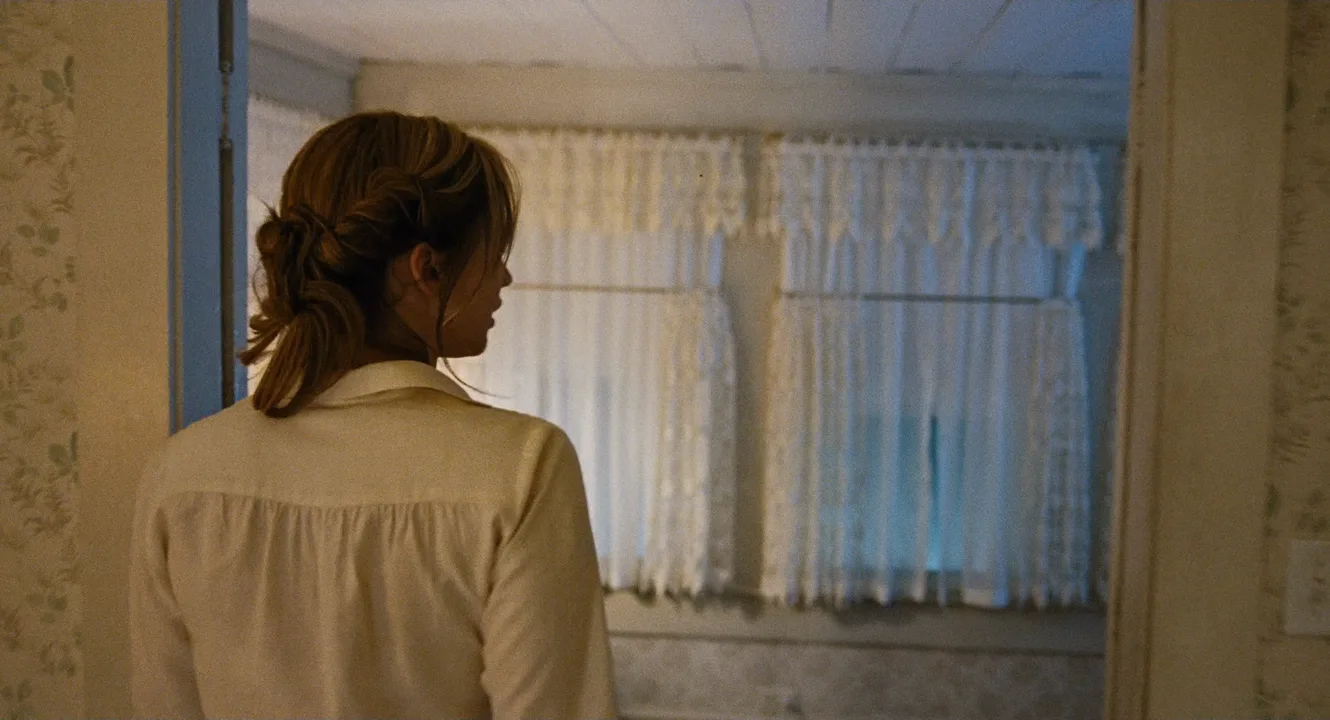
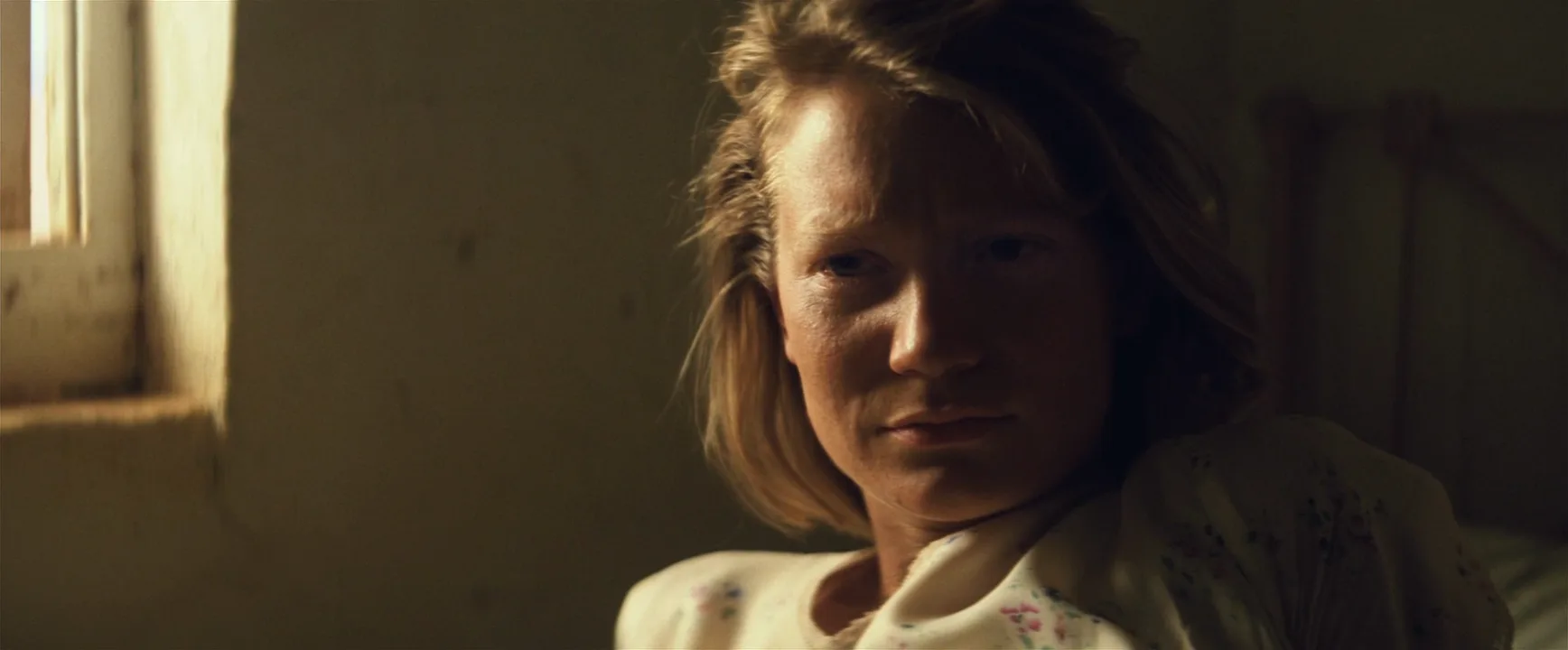
8 framesWatch the shadow edges under noses and chins: in diffused light they fade out gradually.
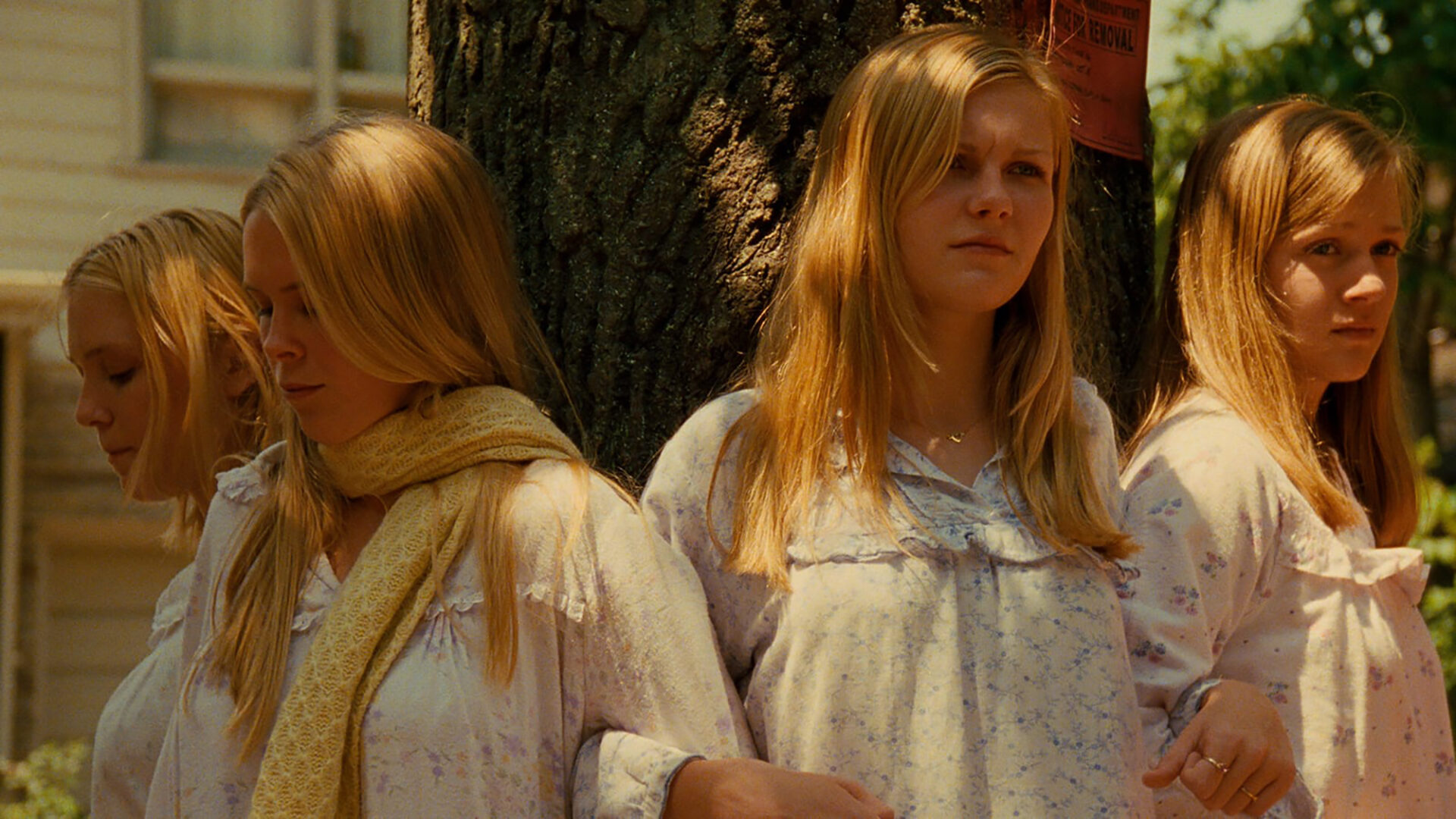
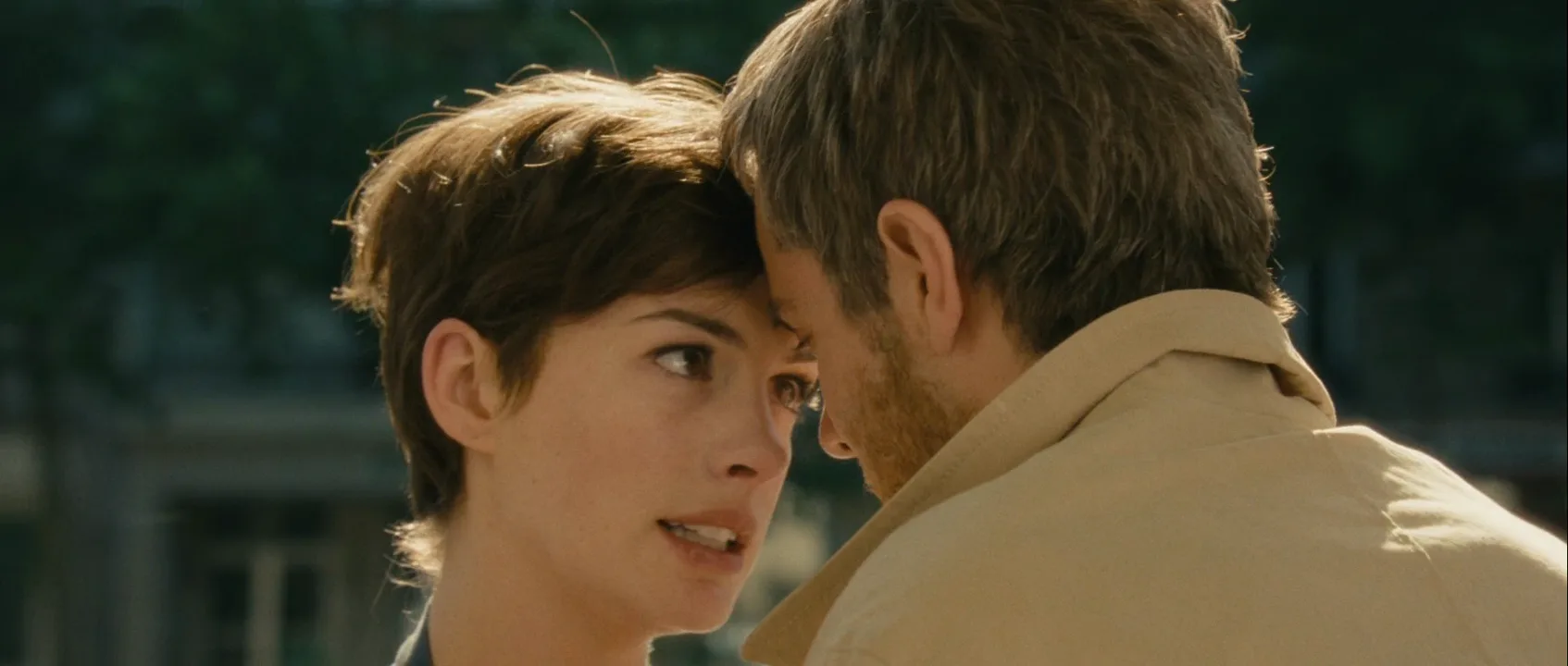
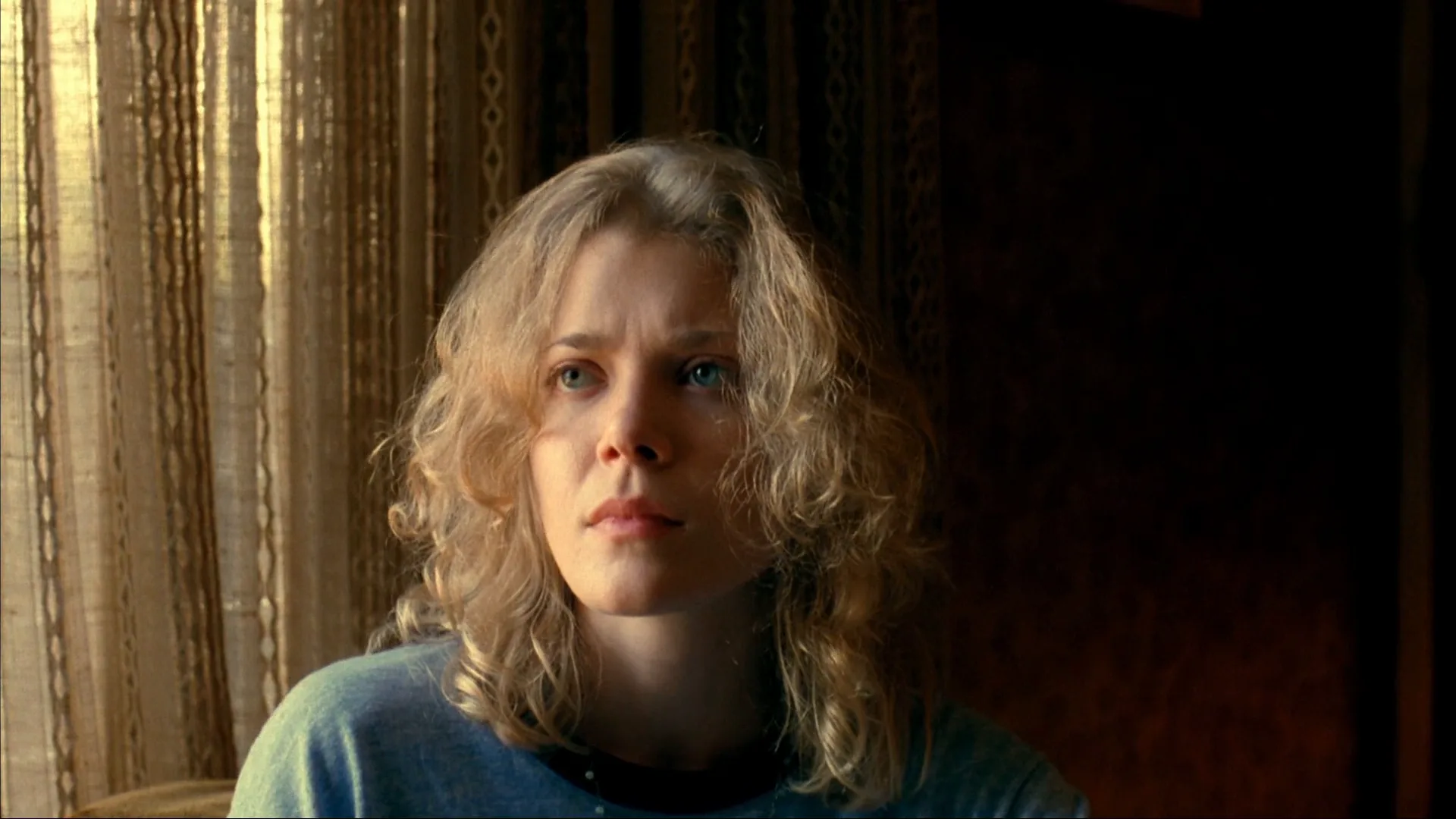
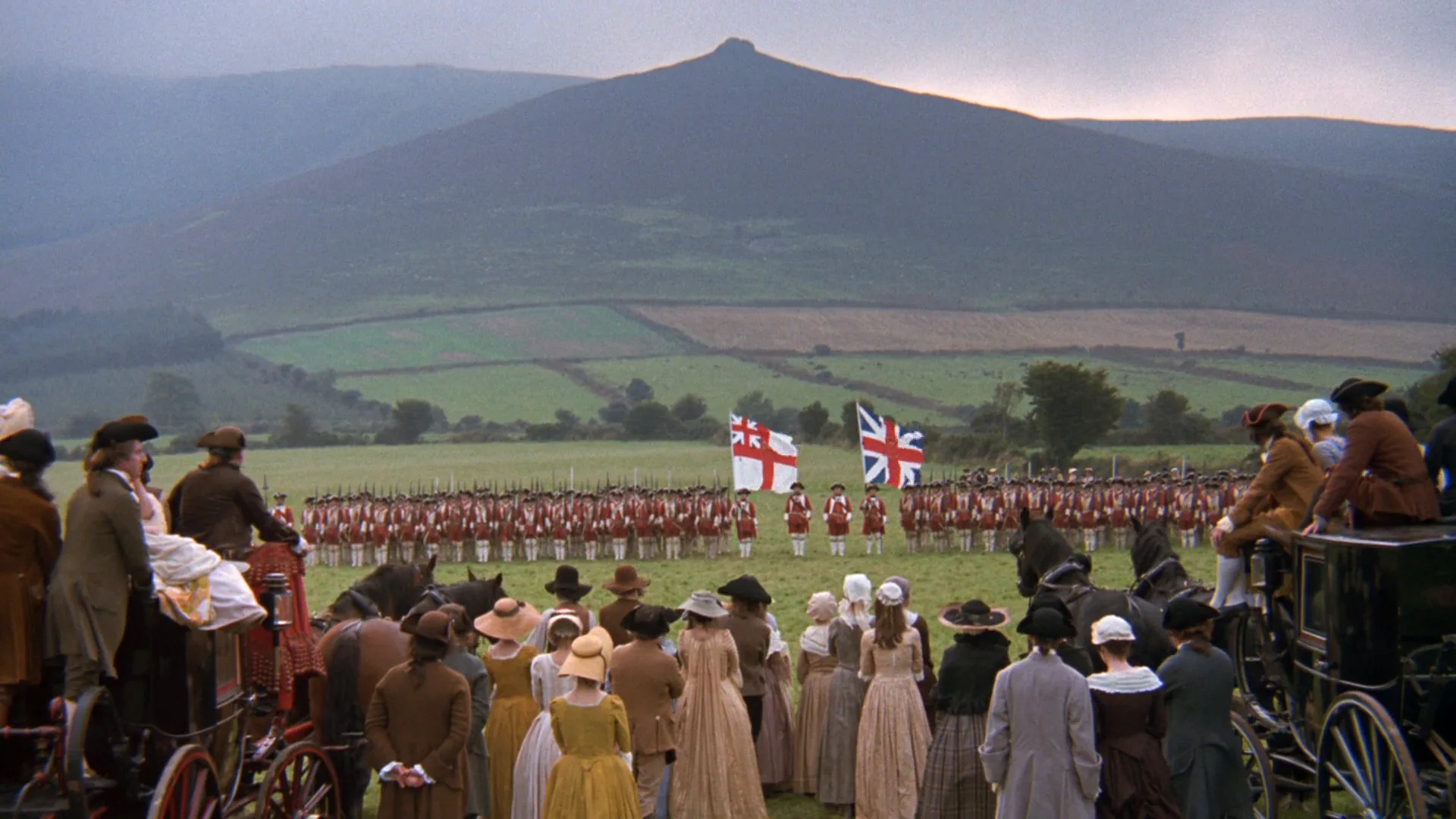
How to create a diffusion with AI
4 promptsImage models default to clean, even studio light, which is not directed diffusion. Say where the diffused source sits, how big it is and how the shadow falls off, then compare takes side by side on one FlashBoards board. The fourth prompt re-shoots a real film shot from a text description alone, and the original plays next to the result so you can compare.
Cinematic medium close-up of a fictional woman in her early 50s with a silver-streaked auburn braid, dense freckles and a thin scar above her right eyebrow, in a moss-green wool cardigan, holding a steaming ceramic mug. Key light from camera left through a large white diffusion frame just out of frame, soft wrapping light, shadow side falls off gradually, large soft square catchlight in her eyes. Low contrast, muted morning palette. 85mm lens at eye level, fine film grain.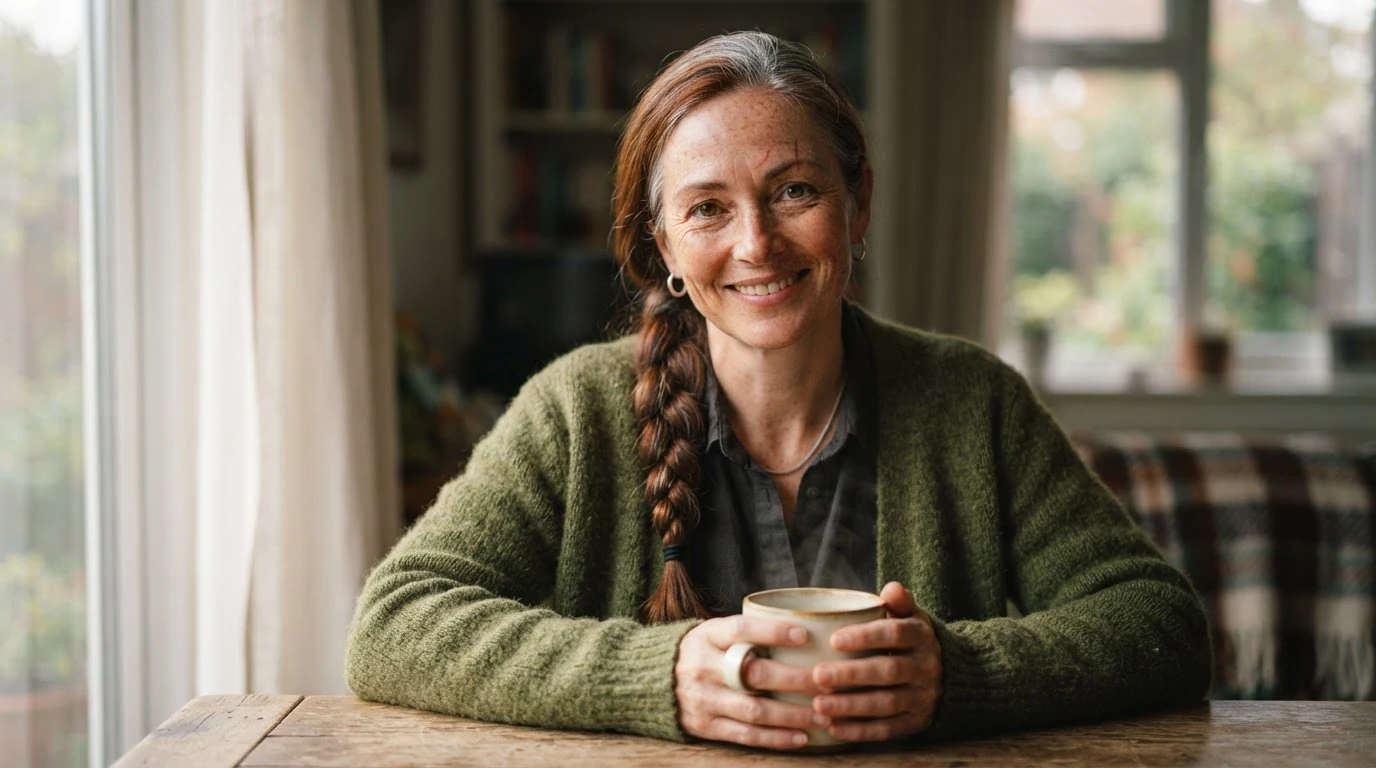
“Large white diffusion frame just out of frame” names the source and its size, which is what softness depends on. “Falls off gradually” describes the shadow edge, and the square catchlight is the tell-tale sign of a diffuser.
Open FlashBoardsWide 21:9 two-shot in a desert at noon. A fictional elderly man with a long white beard and a sunburned bald head sits on a folding chair beside a fictional teenage girl with short bleached hair and a yellow windbreaker. A large overhead white silk, just out of frame above them and never visible, softens the sun on them: faces gently lit, soft shadows under brows and chins. Behind them, dunes and a rusted pickup stand in hard direct sunlight with crisp shadows. 40mm lens.
This take moves diffusion outdoors and makes it readable by contrast: soft light under the silk, hard sun on the background, so the model cannot make the whole scene overcast.
Open FlashBoardsCamera: a slow, steady push-in from medium close-up to close-up at eye level, moving from the first frame to the end. Action: Steam rises from the mug as she lifts it toward her lips. She slowly turns her head toward camera left, into the soft light, and the shadow side of her face brightens gradually. At the end she lowers the mug and gives a small tired smile.Rising steam keeps the shot alive from frame one. The head turn tests the diffusion: light should slide across her face with no hard shadow line. Everything named is already in the start frame.
Open FlashBoards{
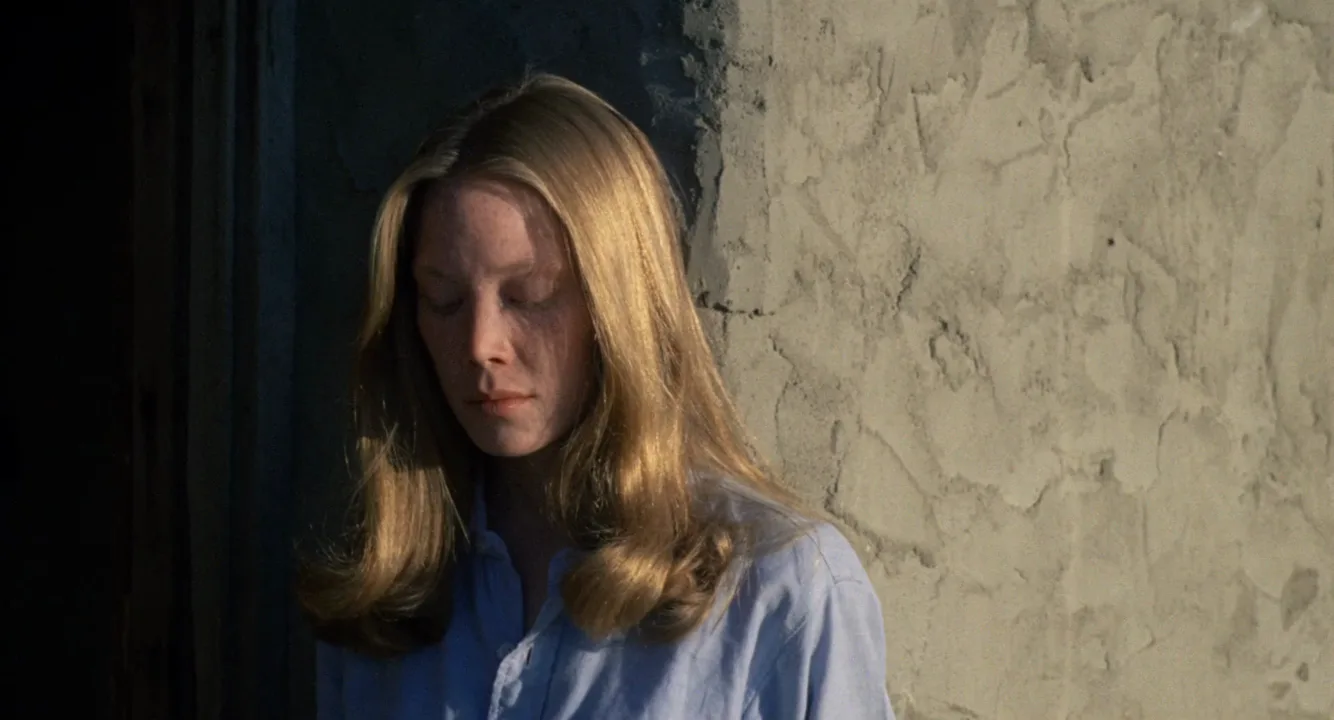
"output": "Full-screen live-action shot from Badlands (1973) from its very first frame: one continuous locked-off shot. Grainy 1970s 35mm film, late afternoon at a farmhouse, the girl stands in open shade: her face is lit only by soft, broad skylight bouncing off a sunlit pale plaster wall on the right, so it has almost no shadow line and falls off gently toward the dark doorway on the left. Warm low sun catches only the top and outer strands of her hair. Muted warm palette: honey, straw beige, pale powder blue, deep blue-black shadow.",
"characters": {
"S1": {
"name": "Holly, played by Sissy Spacek",
"look": "slender girl in her late teens, grown-up proportions, long thin face, high cheekbones, pale freckled skin, long straight strawberry-blond hair parted in the middle, falling past her shoulders and curling loosely at the ends, pale powder-blue cotton blouse with an open collar",
"voice": "small, soft, flat Texan girl's voice"
}
},
"shots": [
{
"shot": 1,
"camera": "static, locked-off tripod at her eye level, 50mm lens, medium close-up of S1 from mid-chest up with room above her head, her face on the left third of the frame; behind her on the left a deep blue-black open doorway, on the right a large cracked pale-cream plaster wall filling half the frame; the framing stays exactly the same to the end",
"action": [
"BEGINNING: alive from the first frame, S1 stands still with her head bowed and her eyelids lowered almost shut, mouth closed, both arms hanging below the frame, soft even light across her whole face.",
"THEN: her head sinks a touch further, eyes still downcast, face calm; her hands and shoulders stay still.",
"THEN: her eyelids lift and her eyes come up toward someone standing just beside the camera; her head rises slightly and turns a little toward the lens, the light on her face staying soft and even as she moves.",
"THEN: holding that gaze, her face stays soft and open, only a faint puzzled look in her eyes, and her lips part as she asks her question.",
"END: she finishes the line and holds her gaze on that person, lips still parted, face calm, no nod, shoulders still."
],
"dialogue": [
{
"speaker": "S1",
"on_screen": true,
"when": "only after her eyes have come up to that person, in the last third of the shot",
"delivery": "quiet, puzzled, flat",
"line": "<d>[English] What did you put him in there for?</d>"
}
]
}
],
"sound": {
"ambience": "quiet rural afternoon, faint breeze, a distant farm dog heard from far away",
"speech": "exactly this spoken phrase, said once",
"never_spoken": "no narration and no voice-over: the descriptions, performance notes and step words of this prompt are never spoken aloud",
"music": "a film score under the scene, always below the voices: a sparse, gentle mallet-and-strings theme, soft and wistful",
"subtitles": "none"
}
}Remakes Holly's locked-off open-shade close-up from Badlands (1973), carrying over the dark doorway, the pale plaster wall, the lowered eyes that lift, her one line and the soft bounced light with warm sun only on the hair.
The prompt names the light's source and its effect, not a mood: open shade, skylight bounced off a pale wall, almost no shadow line on the face. The locked-off camera, the slow lift of her eyes and Holly's one line let you judge whether the light stays soft as her face turns.
Open FlashBoardsCommon mistakes
- Soft becomes flat. “Soft lighting” alone returns shadowless beauty light. Give the source a side and a gradual falloff.
- The diffuser appears in frame. Write “just out of frame” and describe only its effect.
- Soft light, blurry image. Ask for a sharp lens and fine grain so the model does not blur the picture.
- Overcast everywhere. For silk-under-sun looks, describe the hard light on the background.
Keep the reference frames, prompts and every generated take side by side — images and video in one canvas.
FAQ
5 questionsWhat is diffused light?
Diffused light has been scattered by passing through or bouncing off a surface, so it reaches the subject from many directions. Shadows get soft edges, contrast drops and skin looks smoother. Overcast daylight, window light through sheer curtains and a lamp behind a silk frame are all diffused.
What is a diffusion frame?
A diffusion frame is a metal frame with translucent fabric or gel stretched across it, set on a stand between the lamp and the actor. Common sizes run from 4x4 to 20x20 feet. The bigger the frame and the closer it sits to the subject, the softer the light.
What is silk in film lighting?
Silk is a fine, fairly transparent diffusion fabric stretched on a frame. It softens a lamp or the sun only slightly and costs relatively little light, which makes it popular overhead on exteriors. For stronger softening, crews switch to denser grid cloth or muslin.
How much light does diffusion lose?
It depends on density. Quarter-strength gels and cloths cost roughly half a stop, half-strength about one stop, full-strength around one and a half to two stops. Pulling the lamp back to fill the frame costs more. Always meter at the subject with the diffusion in place.
Is diffusion lighting the same as a diffusion filter?
No. Diffusion lighting softens the light source and changes how shadows fall on the subject. A diffusion or mist filter goes on the lens and softens the image itself, blooming highlights and lowering sharpness. The two are often combined but work independently.
Related terms
4- Soft LightLighting
Soft light comes from a source that is large relative to the subject — an overcast sky, a big window, a bounced or diffused lamp — and wraps around forms with gradual, feathered transitions from light to shadow.
- Lens FilterLenses, Focus & Exposure
A lens filter is glass placed in front of (or behind) the lens to change the image in camera: ND filters cut light, polarizers remove reflections, diffusion and mist filters soften detail and bloom highlights, color filters shift the tone.
- Bounce LightingLighting
Bounce lighting aims a lamp — or the sun — at a white board, foam core, wall or ceiling instead of at the subject, turning a hard source into a broad, soft fill that wraps around faces.
- Film LightingLighting
Film lighting is the craft of shaping light for the camera — its direction, quality, color and contrast — to model faces, build space, set the time of day and carry the mood of a scene.
Further reading
Blain Brown, Motion Picture and Video Lighting (Focal Press). Harry C. Box, Set Lighting Technician's Handbook (Focal Press).