 FlashBoards Learn
- Learn
- Lenses, Focus & Exposure
- Lens Filter
Lenses, Focus & Exposure · Film language
Lens Filter
Also called: camera filter, ND filter, polarizing filter, mist filter
A lens filter is a piece of optical glass placed in front of, or sometimes behind, the lens to change the image before it reaches the sensor. ND filters cut light, polarizers remove reflections, mist and diffusion filters soften detail and make highlights bloom, and color filters shift the tone of the whole frame.
- What it does
- Changes exposure, reflections, contrast or color in camera, before anything is recorded.
- Use it when
- Bright daylight at a wide aperture, glass or water in shot, or a digital image that looks too clinical.
- Watch out
- Every extra piece of glass can add flare, reflections or color shift; heavy stacks show it first.
- Try this prompt
Night street, 50mm, half-strength black mist filter, soft glow around every neon sign, lifted shadows, face still sharp
What is a lens filter?
A lens filter is flat optical glass (sometimes resin or gel) in the light path that changes the image in camera. On film sets most filters are rectangular 4×5.65-inch or 6.6×6.6-inch plates that slide into a matte box in front of the lens, so they can be swapped, stacked or rotated in seconds. Small crews use round screw-in filters.
The old advice about a protective UV filter misses the working kit: ND, polarizers, diffusion and mist, and color filters. Each changes something you cannot fully recover later: how much light arrives, which reflections exist, how highlights spread.
What types of camera filters do filmmakers use?
- Neutral density (ND). Gray glass that cuts light without changing color. ND 0.3 is one stop, 0.6 two, 0.9 three. Heavy NDs need IR-cut (IRND) glass to keep blacks neutral.
- Graduated ND. Dense at the top, clear at the bottom: it holds a bright sky while the ground keeps its exposure.
- Polarizer. Rotating it removes glare from glass, water and wet asphalt and deepens a blue sky. It costs about 1.5–2 stops.
- Diffusion and mist. Fine particles in the glass scatter light: highlights bloom, shadows lift, skin texture softens. Black mist keeps blacks deeper than white mist. Pushed far, the result becomes soft focus.
- Color. An 85 converts tungsten film stock to daylight, an 80A the reverse. On digital, most correction moved to white balance.
- Effects. Star and streak filters draw spikes or lines from point lights; red and yellow filters darken skies in black-and-white.
Why do filmmakers use lens filters?
The first reason is exposure. A bright exterior might meter at f/16, but the director wants the background soft. Three or four stops of ND let you open the aperture to T2 and keep a 180° shutter.
The second is control: a polarizer turns a windshield from a mirror of the sky into a window onto the actor's face.
The third is mood. Diffusion lowers contrast and makes lights glow, reading as memory, heat or romance. For McCabe & Mrs. Miller (1971), Vilmos Zsigmond combined fog filters with flashing the negative for its faded, old-photograph look.
How to use lens filters on set
- Pick the stop first. Choose the aperture for the story, then add ND until the meter agrees.
- Keep the stack short. ND and polarizer closest to the lens, diffusion and grads outside; two or three filters at most.
- Kill reflections. Flag the matte box and tilt the tray a few degrees if a practical or the sun creates ghosts.
- Test diffusion on the real lens. The same strength looks different by focal length and stop. Shoot a close-up with a bare bulb behind at 1/8, 1/4 and 1/2.
- Stay consistent. A diffusion change inside a scene shows in the cut.
Lens filter vs. post: what can be faked later?
ND and polarizers cannot be replaced by software: a clipped sky or a glare-covered windshield holds no data to bring back.
Diffusion and color are closer. A grade can warm the image or add glow, and digital halation imitates the red rim film puts around highlights. But optical mist reacts to every light and moves with the camera, so many cinematographers use light mist in camera and finish in the grade.
Don't confuse a mist filter with diffusion on a lamp, which softens shadows but leaves the image crisp, or with haze in the air, which builds with distance and shows beams. More on glass in the lenses and focus hub.
Lens Filter examples in film
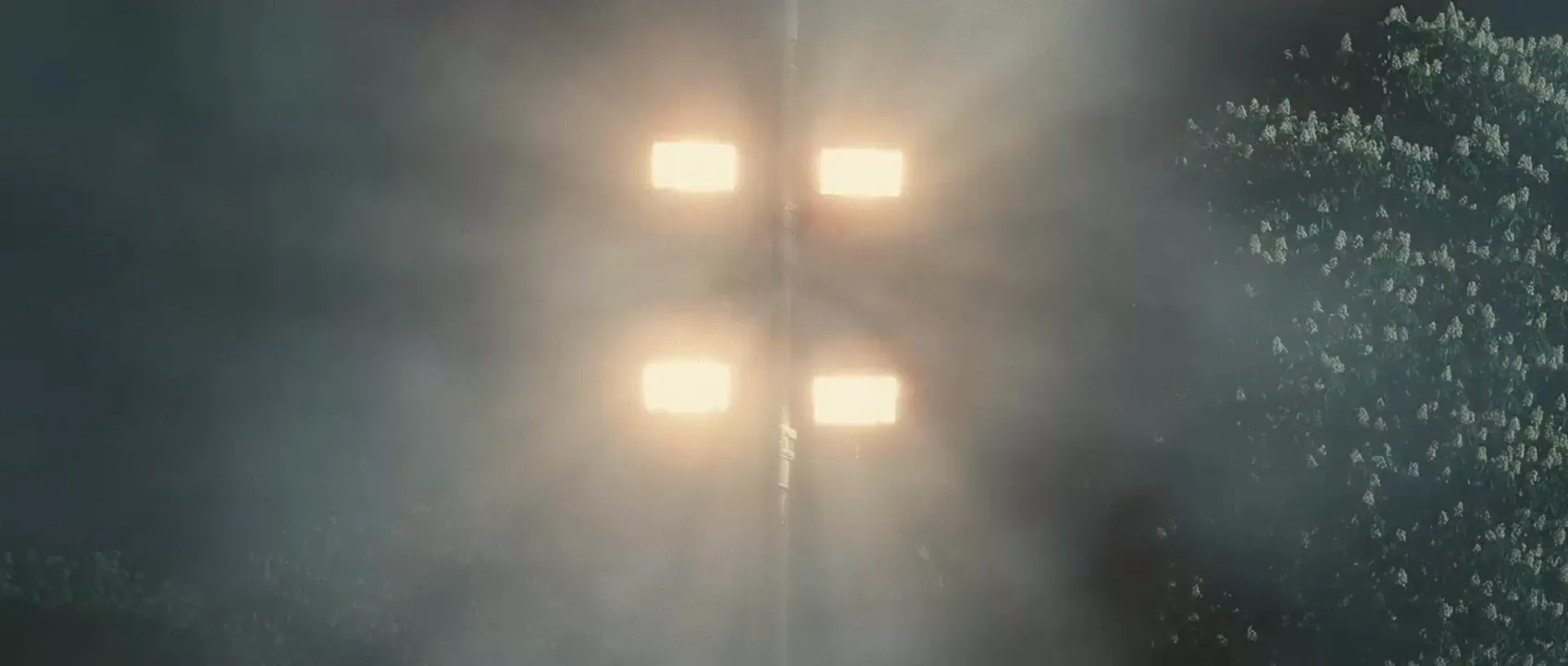
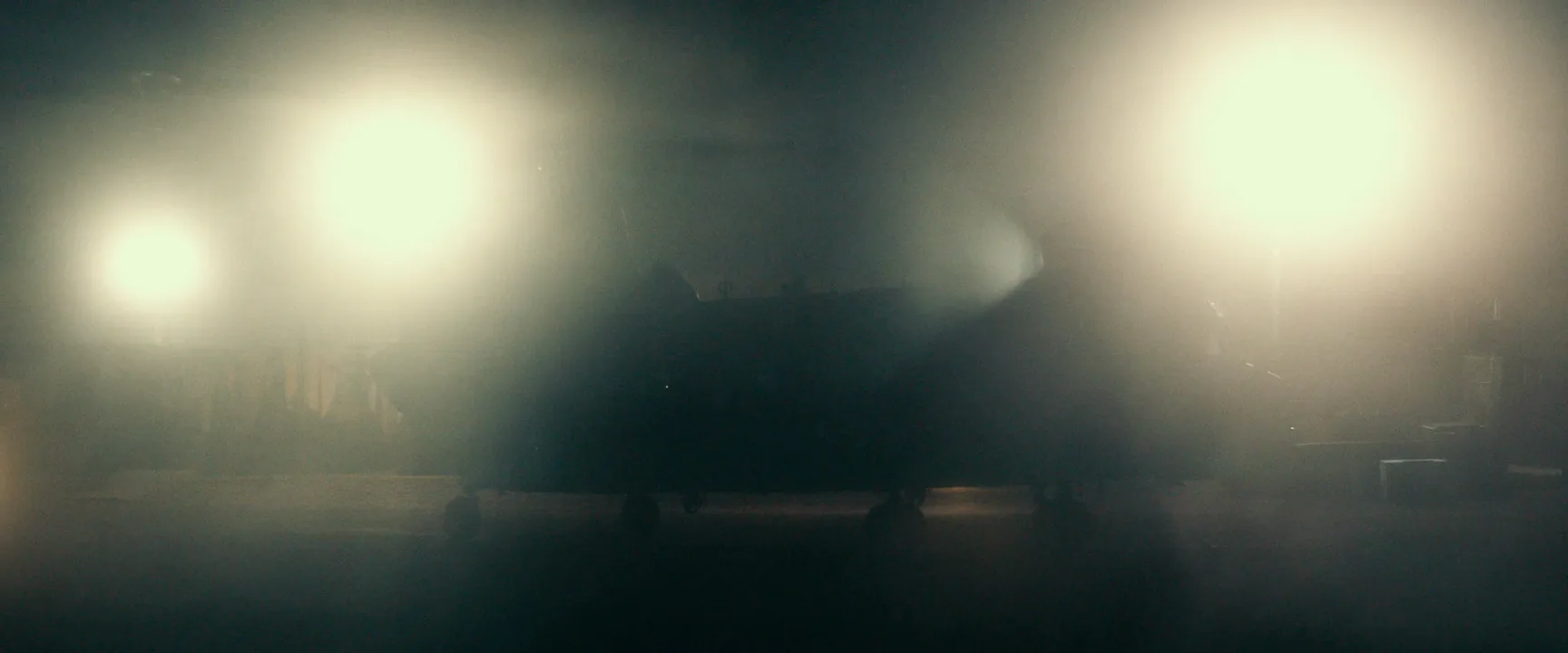
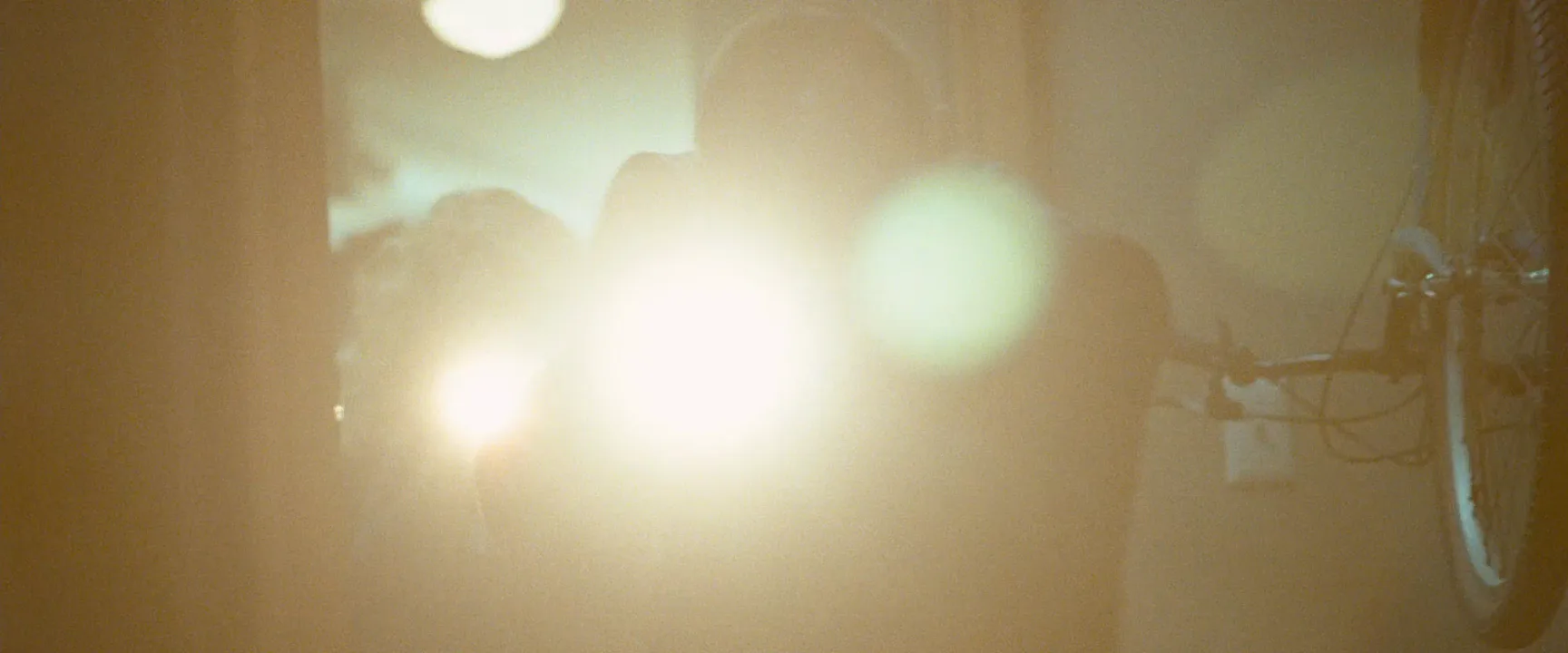
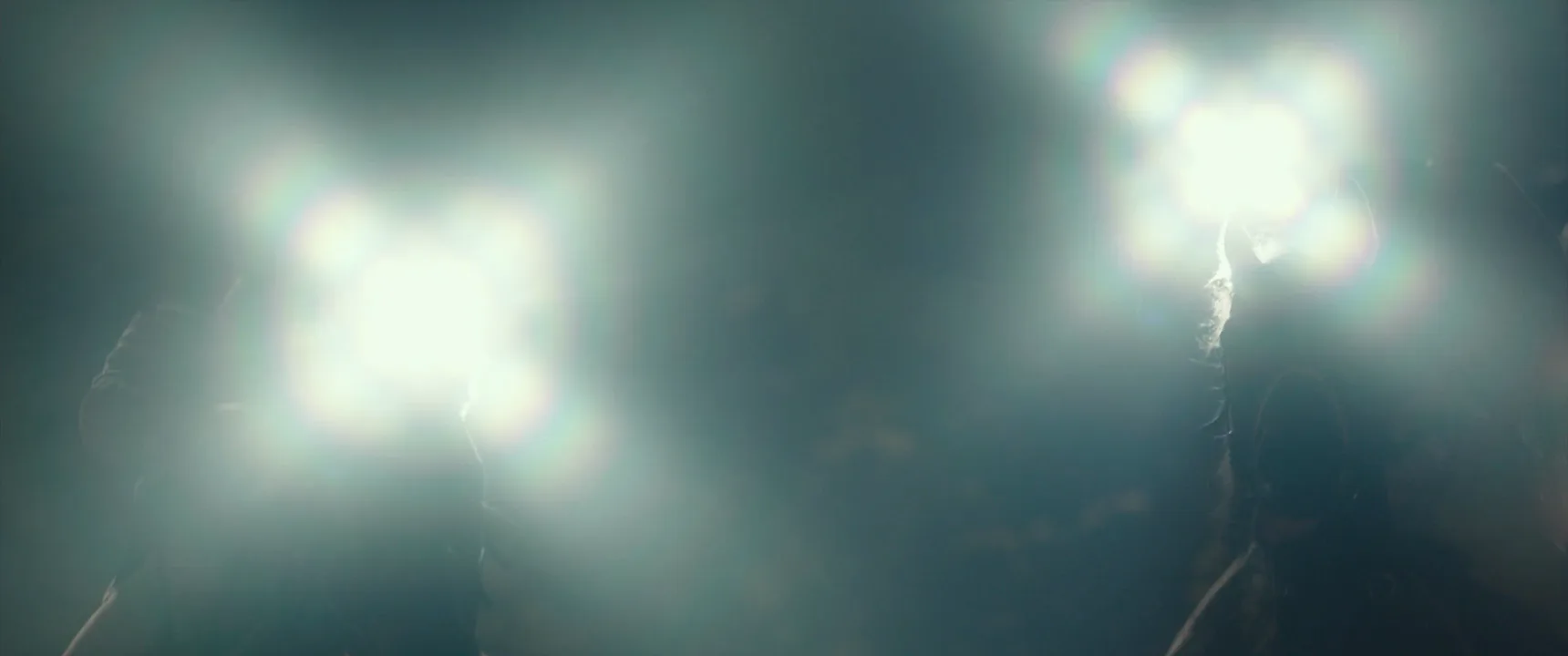
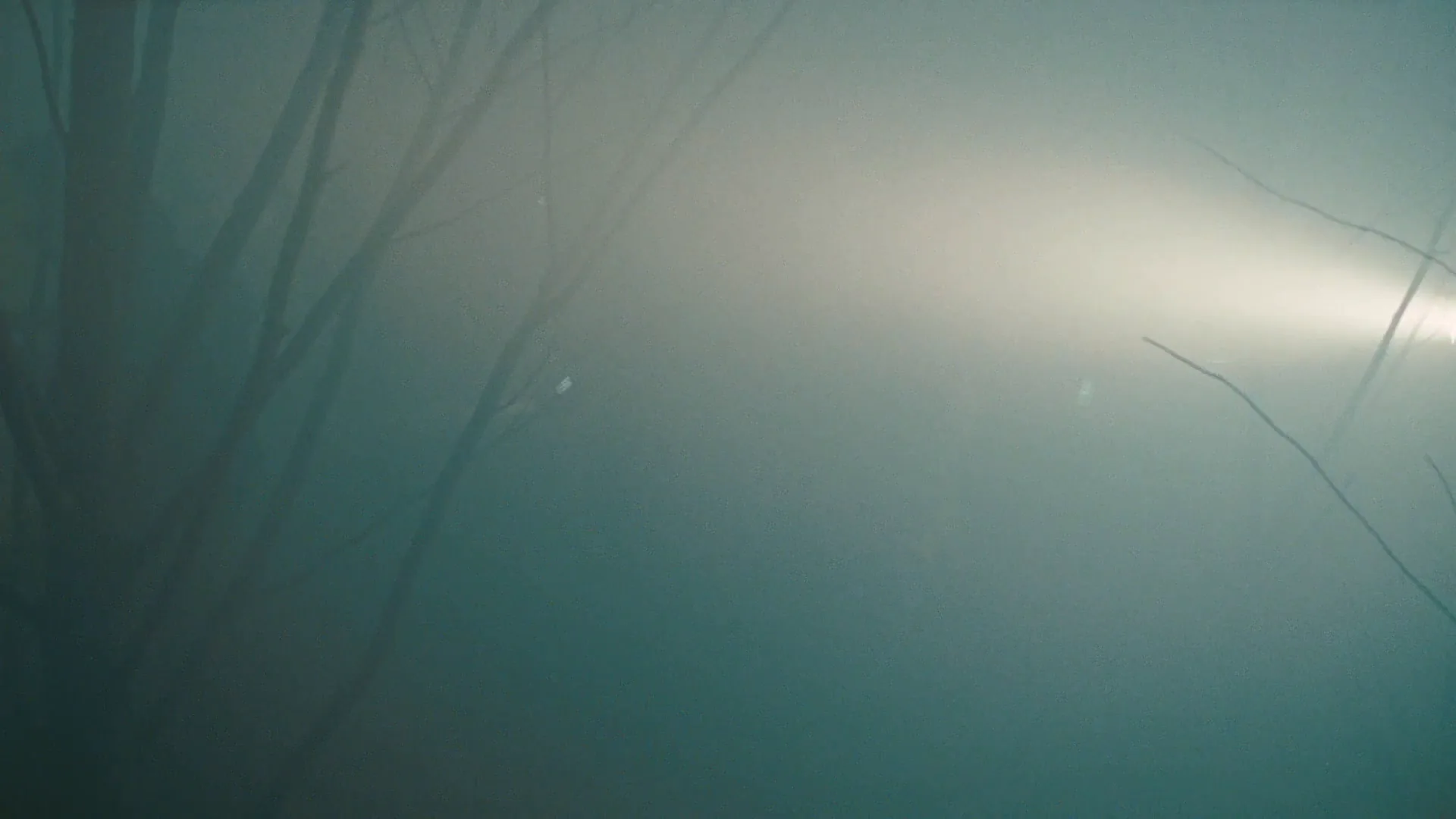
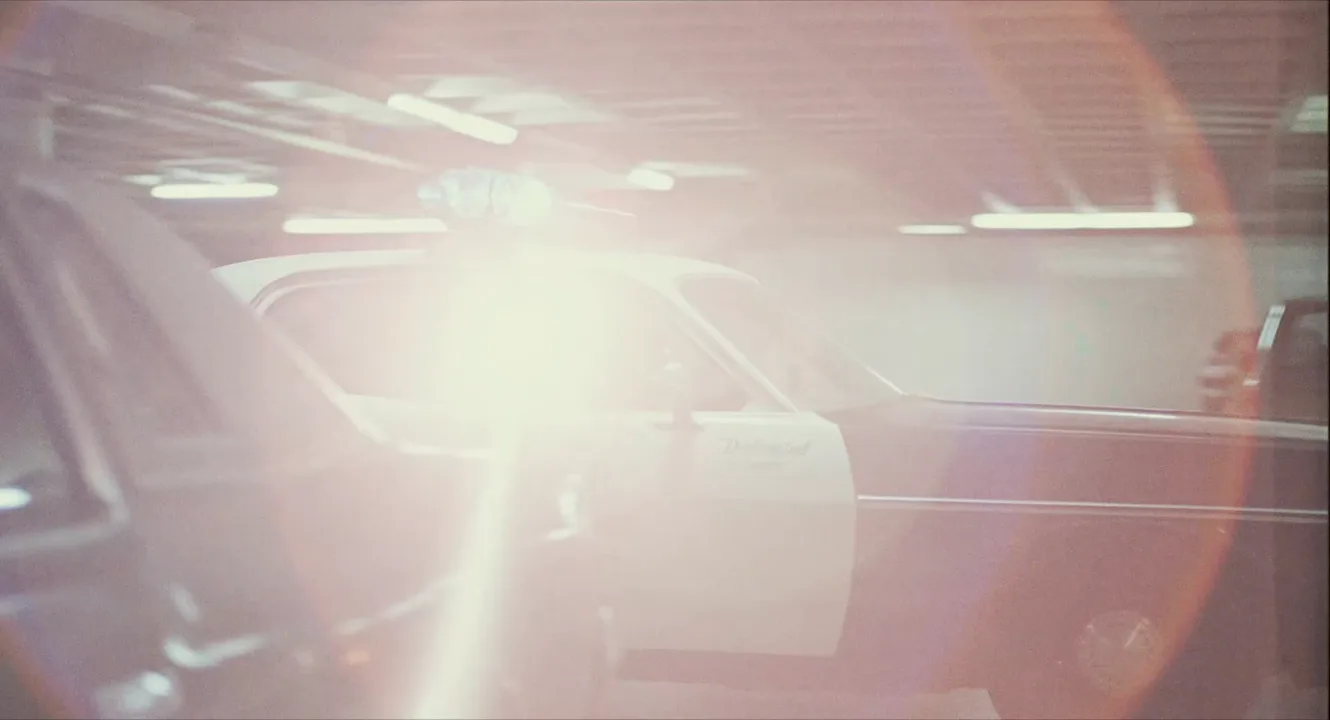
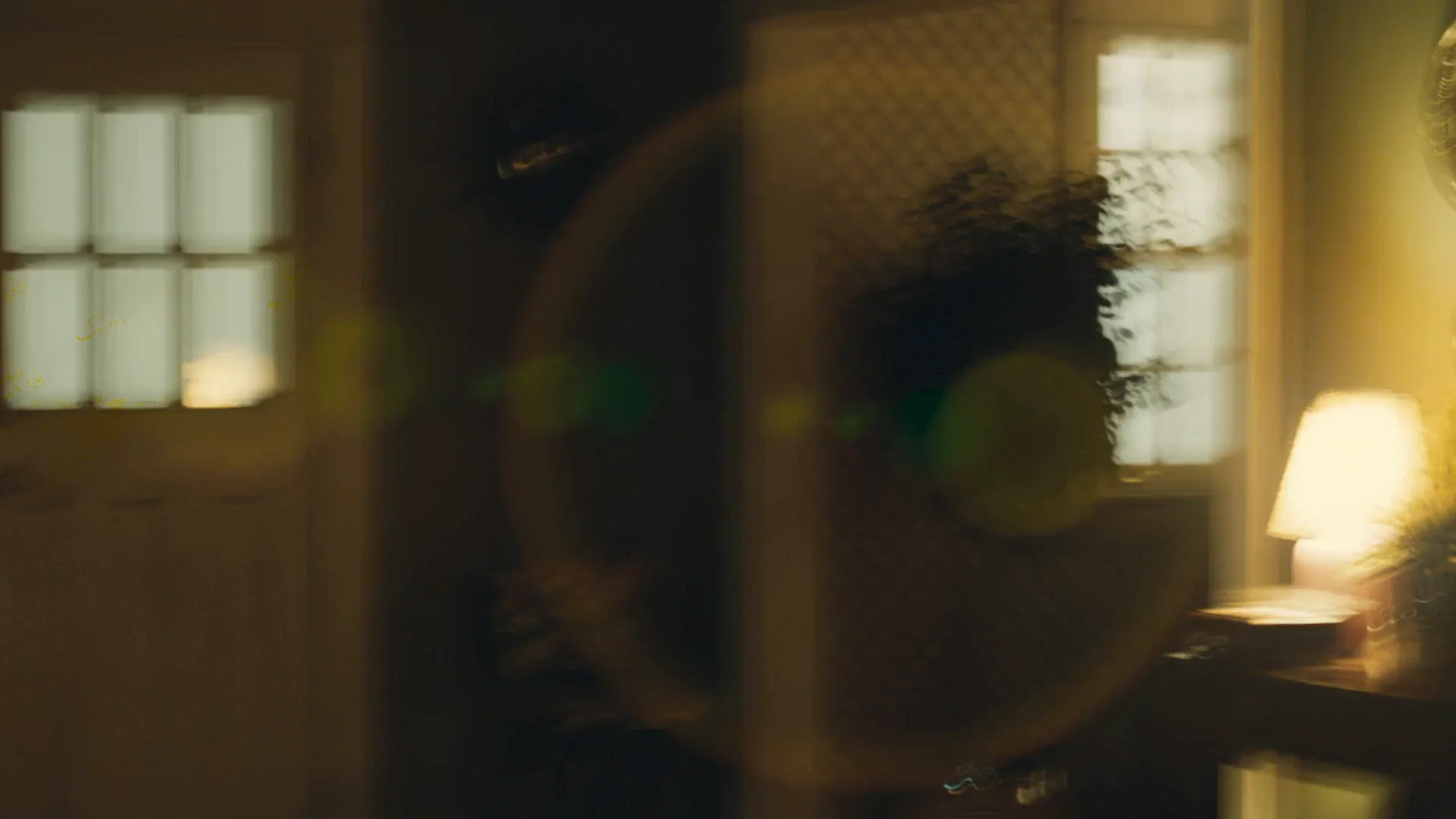
8 framesA still can't prove which filter was on the lens, so these frames show the looks filters create or control: bloom, lifted shadows, glare and flare.
How to create a lens filter with AI
4 promptsModels don't know filter part numbers, so describe what the filter does: where the glow sits, how deep the blacks stay, what vanishes from the glass. Build the start frame in Nano Banana 2 Lite, a polarizer take in GPT Image 2.5, and animate recipe 1 with MiniMax H3 Max Turbo on one FlashBoards board beside your references. The fourth prompt re-shoots a real film shot from a text description alone, and the original plays next to the result so you can compare.
Cinematic medium close-up at night, 50mm lens, half-strength black mist filter. A woman in her forties with a silver-streaked bob, round tortoiseshell glasses and a mustard raincoat waits at a rain-soaked bus stop. Her eyes are sharp; every light blooms: soft glow around the red neon sign behind her, halos around the streetlights, shadows lifted to blue-gray but not milky. Light rain, wet asphalt, gentle contrast, fine grain.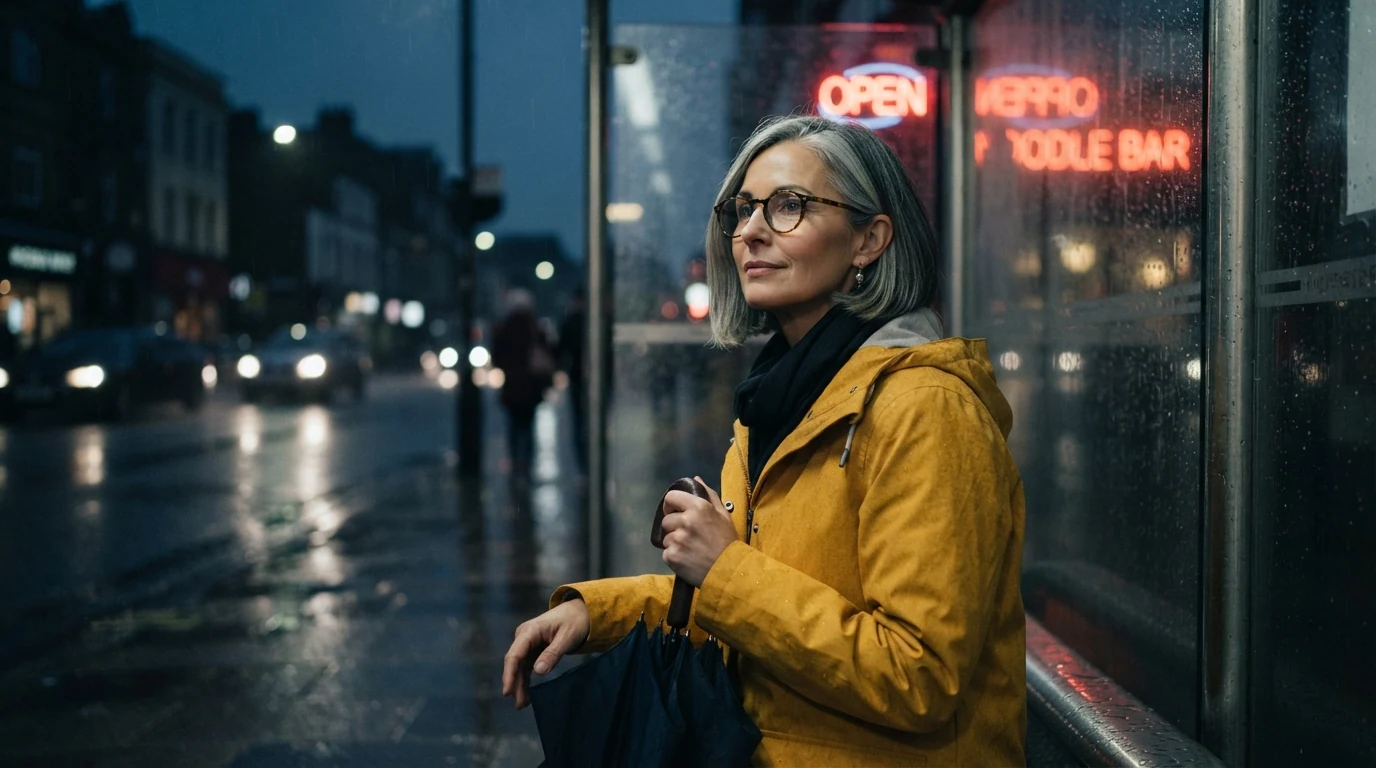
Every light blooms, halos around the streetlights and shadows lifted but not milky carry the mist look; her eyes are sharp keeps it from becoming blur.
Open FlashBoardsDaylight exterior through the windshield of a parked green pickup, 35mm lens, circular polarizer rotated for zero reflection on the glass. The driver is fully visible: a man in his sixties with a sunburned nose, white stubble beard and faded blue cap, hands on the wheel. The glass looks almost invisible, his face clean and saturated, the sky above the cab deep blue. Hard midday sun.
Zero reflection and glass almost invisible describe the polarizer's result; without them models paint clouds across the windshield.
Open FlashBoardsCamera: slow, steady push-in toward her face across the whole shot. Action: from the first frame rain falls through the streetlight halos and her breath shows in the cold air. In the middle she wipes a raindrop from her glasses and looks up the street. At the end headlights sweep across her face from frame left, bloom into a soft white glow, then fade.Rain and breath start motion at once; the headlights give the mist something to do.
Open FlashBoards{
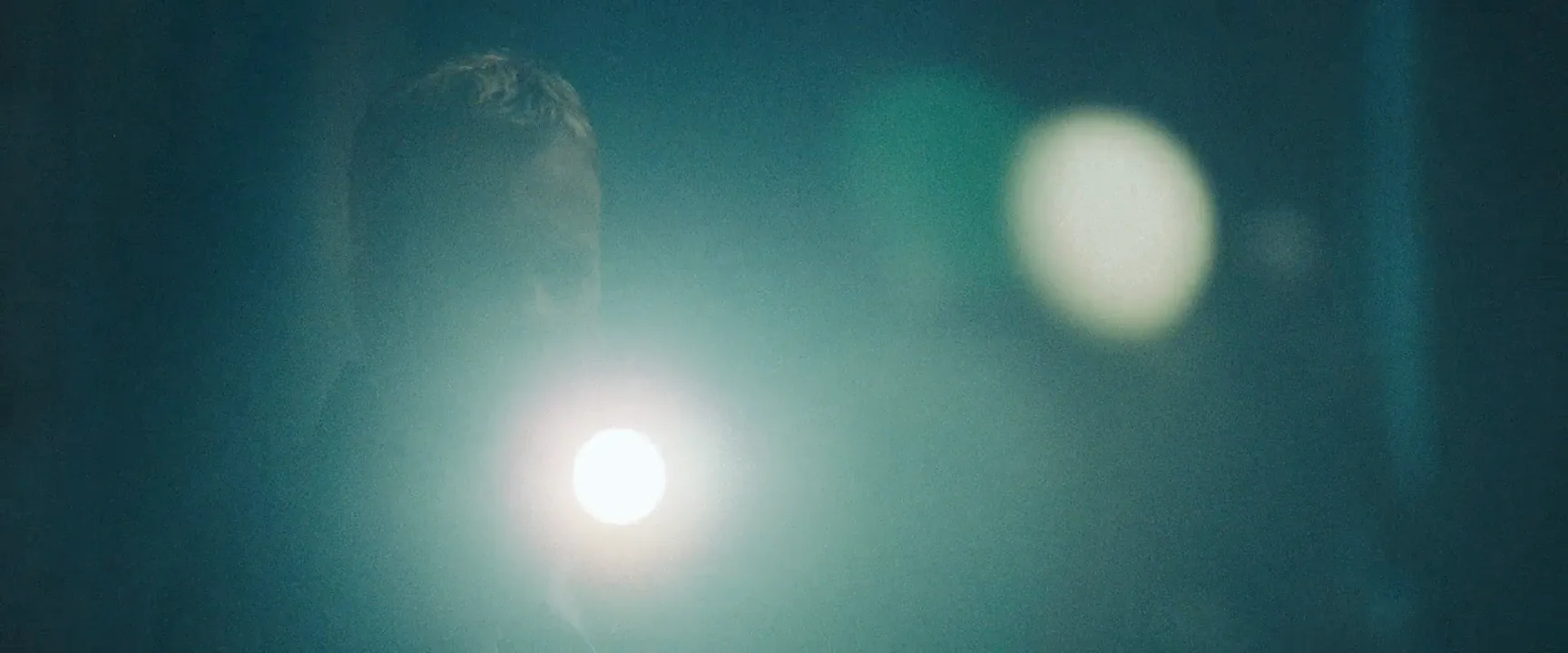
"output": "Full-screen live-action shot from Mirrors (2008), alive from its very first frame: one continuous locked-off shot. Anamorphic 2000s 35mm horror-thriller look with a heavy mist filter on the lens: every light source blooms into a wide soft halo, blacks lifted to milky teal, a large pale round lens ghost floats in the upper right of frame with a faint green ghost beside it. Night inside a dark, burned-out department store, cold teal-cyan palette, hazy air.",
"characters": {
"S1": {
"name": "Ben Carson, played by Kiefer Sutherland",
"look": "night security guard around forty, short dark-blond hair, light stubble, dark navy guard jacket with a gold shoulder patch over an open-collar pale shirt, long black metal flashlight",
"voice": "silent in this shot"
}
},
"shots": [
{
"shot": 1,
"camera": "locked-off, eye level, long lens, wide aperture, never moves; medium shot, S1 at mid distance in the left-centre of frame; the glare softens him at the start and he reads sharp in profile at the end",
"action": [
"BEGINNING: alive from the first frame, S1 stands left of centre, body angled toward frame right, face turned to the lens; he holds the lit flashlight at chest height aimed straight into the camera, a hot white disc below and right of his face, and the beam washes the whole frame into a soft white bloom.",
"THEN: the beam dips a little; the bloom shrinks to a bright disc with a wide halo in the lower left-centre, his face and pale collar show through the glow, eyes on the lens, mouth closed.",
"THEN: the beam swings back into the lens and the frame whites out a second time, the pale ghost disc still glowing upper right.",
"THEN: he turns his head and shoulders toward frame right into profile and edges slightly to frame left; the disc slides from left-centre to the centre of frame and shrinks, blacks sink back to deep teal.",
"THEN: he holds still in profile in the left third, looking toward frame right, the flashlight disc glowing just right of his hands; the upper-right ghost dims.",
"END: he rotates the flashlight away from the lens; the disc turns into a thin oval and goes out, the halo and the ghosts vanish, and the black flashlight body shows, held overhand at shoulder height, lamp end toward frame right; S1 stands in sharp profile against the dark teal background."
],
"voice": "silence: nobody speaks in this shot, no voice at all",
"dialogue": []
}
],
"sound": {
"ambience": "hollow room tone of a large empty building, faint grit under his shoes, cloth rustle of the jacket, a soft click of the flashlight grip",
"speech": "no words in this video; the only human sounds are breaths and movement",
"never_spoken": "no narration and no voice-over: the descriptions, performance notes and step words of this prompt are never spoken aloud",
"music": "a film score under the scene, always below the voices: low tense strings holding one dissonant note over a slow, muffled pulse",
"subtitles": "none"
}
}Remakes the flashlight shot from Mirrors (2008), dir. Alexandre Aja, DP Maxime Alexandre: the prompt kept Kiefer Sutherland's guard, the locked-off long lens, the teal haze, the beam blooming into the lens twice and the final turn into sharp profile, with no words.
The filter look sits in output, so it holds all clip long: every light source blooms, blacks lifted to milky teal, named lens ghosts. The beam whites out the frame twice, then turns away and the guard reads sharp.
Common mistakes
- Mist becomes blur. Name the sharp plane; keep glow around lights.
- Milky everything. Add deep blacks.
- Polarizer ignored. Describe the result: glass almost invisible.
- Glow flickers in video. Keep lights few and named.
Keep the reference frames, prompts and every generated take side by side — images and video in one canvas.
FAQ
5 questionsWhat does an ND filter do?
A neutral density filter is gray glass that cuts the light reaching the sensor without changing its color. Each 0.3 of density is one stop, so ND 0.9 cuts three. It lets you shoot wide open in bright light for shallow depth of field while keeping a 180° shutter.
What filter gives a cinematic look?
Usually a mist or diffusion filter. It scatters a little light so highlights glow, shadows lift and fine skin detail softens, taking the hard edge off digital video. Black mist keeps blacks deeper. Start light, 1/8 or 1/4, and test on your lens: strong diffusion quickly looks dated.
What is a polarizing filter used for in film?
A polarizer removes glare from windshields, windows, water and wet roads; rotating it sets the strength. It also darkens a blue sky, most strongly at about 90° to the sun, and is standard for car scenes shot through glass. It costs about one and a half to two stops.
Do you need a UV filter for video?
Not for the image. Modern sensors are barely affected by UV haze, so a UV filter is mostly protective glass for sand, spray or rain. On cinema sets that job goes to a clear optical flat in the matte box. Any added glass can flare, so use good glass or none.
What are the main types of camera lens filters?
ND, plain and graduated, controls exposure; polarizers remove reflections and deepen skies; diffusion and mist soften detail and bloom highlights; color filters warm, cool or tint; star and streak filters add effects. Cinema crews mostly slide rectangular filters into a matte box.
Related terms
7- DiffusionLighting
Diffusion is any translucent material — silk, frost, grid cloth, a softbox front — placed between a lamp and the subject to spread the light over a larger area, softening shadows and wrapping light around faces.
- Soft FocusLenses, Focus & Exposure
Soft focus is a deliberately dreamy image in which the subject is still in focus but fine detail and contrast are softened and highlights bloom — produced by special lenses, diffusion filters or even a stocking over the lens, a classic of Hollywood glamour close-ups.
- HalationCameras & Capture
Halation is the reddish-orange glow around bright highlights on film: light passes through the emulsion, reflects off the film base and re-exposes the layers; digital looks add it to imitate celluloid.
- White BalanceCameras & Capture
White balance tells the camera which color of light to treat as neutral white — about 3200K for tungsten, 5600K for daylight — so skin and whites look natural, or are pushed deliberately warm or cool.
- Day for NightLighting
Day for night shoots night scenes in daylight and sells them as night by underexposing, keeping the sun behind the actors as a 'moon', avoiding the sky and grading everything dark and cool.
- ApertureLenses, Focus & Exposure
Aperture is the adjustable opening inside a lens that controls how much light reaches the film or sensor; opening it up brightens the image and makes depth of field shallower, stopping down does the opposite.
- Camera LensesLenses, Focus & Exposure
A lens gathers light and focuses it onto film or a sensor; its focal length, maximum aperture and optical character decide the field of view, perspective, depth of field and texture of the image.
Further reading
American Cinematographer Manual (ASC Press) — filters chapter. Blain Brown, Cinematography: Theory and Practice (Routledge) — optics and filtration.