 FlashBoards Learn
Lighting · Film language
Bounce Lighting
Also called: bounce board, bounce light, reflector, bounce card
Bounce lighting aims a lamp, or the sun, at a white board, foam core, wall or ceiling instead of at the subject. The reflecting surface becomes the new source: broad, soft and low in contrast, so light wraps around a face with gentle shadows and reads as the natural light of the room.
- What it does
- Turns a small, hard source into a large, soft one by reflecting it off a white or metallic surface.
- Use it when
- You need soft key or fill fast, want light that belongs to the room, or must lift shadows in hard sun.
- Watch out
- Colored walls tint the bounce, and a board placed too far away loses its level and its softness.
- Try this prompt
Close-up, hard sunlight hitting a white tablecloth and bouncing soft warm light up into her face, no hard shadows on the face
What is bounce lighting?
Bounce lighting is indirect light, the most common way to soften a source in film lighting. The crew points the lamp at a reflecting surface, and that surface lights the actor. The lamp sets how much light there is; the bounce sets what it looks like.
The term covers the gear too. A bounce board is any white surface used for the job: foam core, polystyrene beadboard, a 4×4 or 8×8 frame of bleached muslin. A reflector is the collapsible version with white, silver or gold faces, used mostly outdoors.
Softness depends on the source's size as seen from the subject: a lamp is a few inches wide, the ceiling patch it lights may be two meters across. That jump produces soft light: gradual transitions from highlight to shadow and light that wraps around a cheek.
Why do cinematographers bounce light?
It looks like the room. Real interiors are lit mostly by light bounced off walls and ceilings. Sven Nykvist's pared-down, soft interiors for Ingmar Bergman made this approach a reference point.
It flatters faces. Broad light smooths skin and fills the eye sockets.
It fixes hard sun. Midday sun is a hard light from above that leaves the eyes dark. A white bounce below the frame line pushes some of it back into the face.
It works as key or fill. A big surface close to the actor becomes a soft key light; a bounce from farther away on the shadow side becomes fill light.
Which bounce surface does what?
| Surface | Light | Typical use | |---|---|---| | White foam core, beadboard | Soft, neutral | Close-up fill, cards under the frame line | | Bleached muslin frame | Very soft, large | Big bounced key for interiors | | Silver reflector | Brighter, harder | Throwing sunlight a long way | | Gold reflector | Warm tint | Warming skin in cool daylight | | White ceiling or wall | Even, directionless | Lighting a whole location fast |
White for softness, silver for reach, gold only when you want the color. Every bounce takes on the color of its surface: a green wall gives green fill.
How to bounce light on set
- Size and distance. A 4×4 board 1–1.5 m from a close-up is soft; the same board 4 m away behaves like a small source again.
- Angle. Place the lamp so the reflected light travels toward the subject.
- Budget for the loss. Expect to lose two stops or more against the same lamp aimed directly.
- Set the level with distance. Moving the board in brightens the face fast; feathering it off the subject trims it without changing the color.
- Ceiling bounce for ambience. A lamp into a white ceiling gives even fill for a whole room; add a key so faces still have a direction.
- Kill unwanted bounce. A black flag beside the actor, called negative fill, absorbs light from a white wall and restores shape.
- Book light. Bounce a lamp into a white surface, then pass it through diffusion for one of the softest sources on a set.
Bounce lighting vs. diffusion
Both soften a source by making it bigger. Diffusion puts translucent material, such as silk or frost, between lamp and subject: the light passes through and keeps its direction. Bounce reflects light off an opaque surface, which becomes the source.
| | Bounce | Diffusion | |---|---|---| | Light path | Reflected, changes direction | Transmitted, keeps direction | | Efficiency | Loses more light | Keeps more output | | Color | Takes the surface color | Mostly neutral | | Best for | Room light, fill, sun | Controlled soft key |
Bounce Lighting examples in film
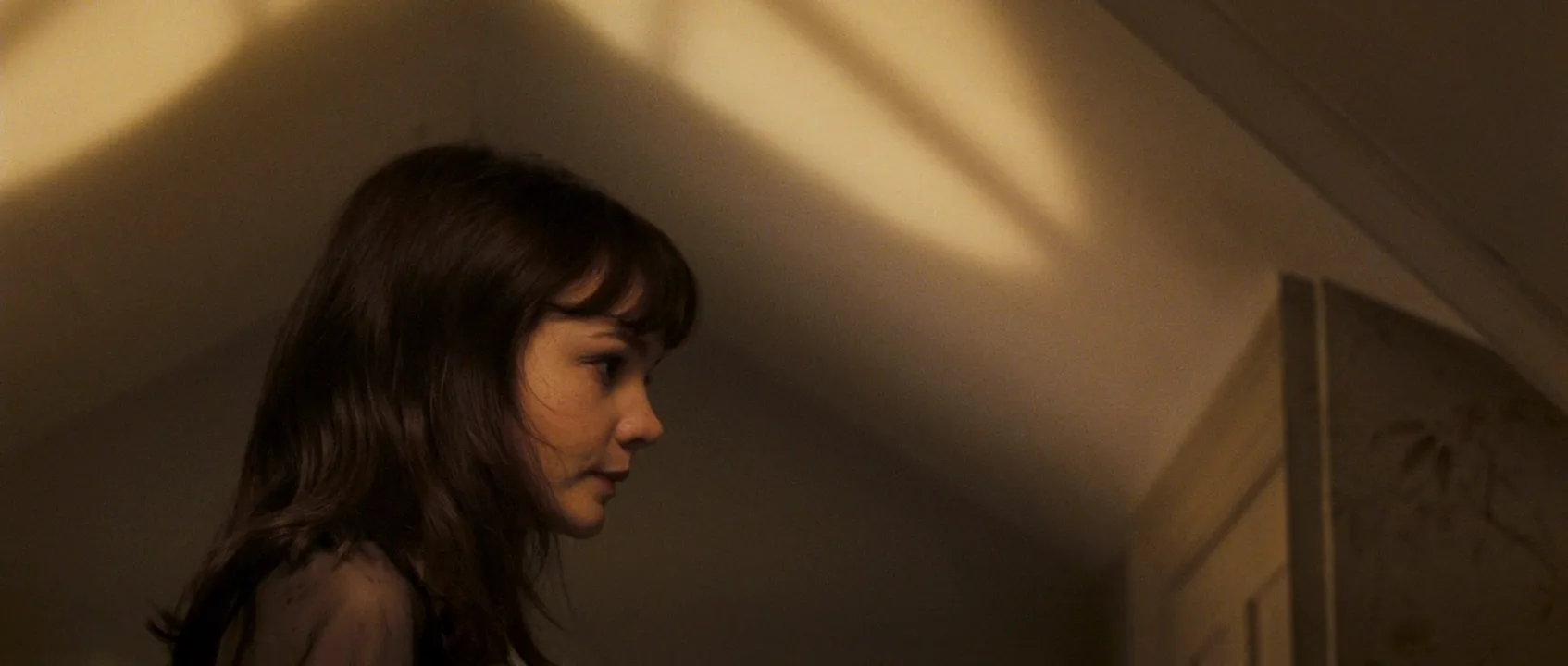
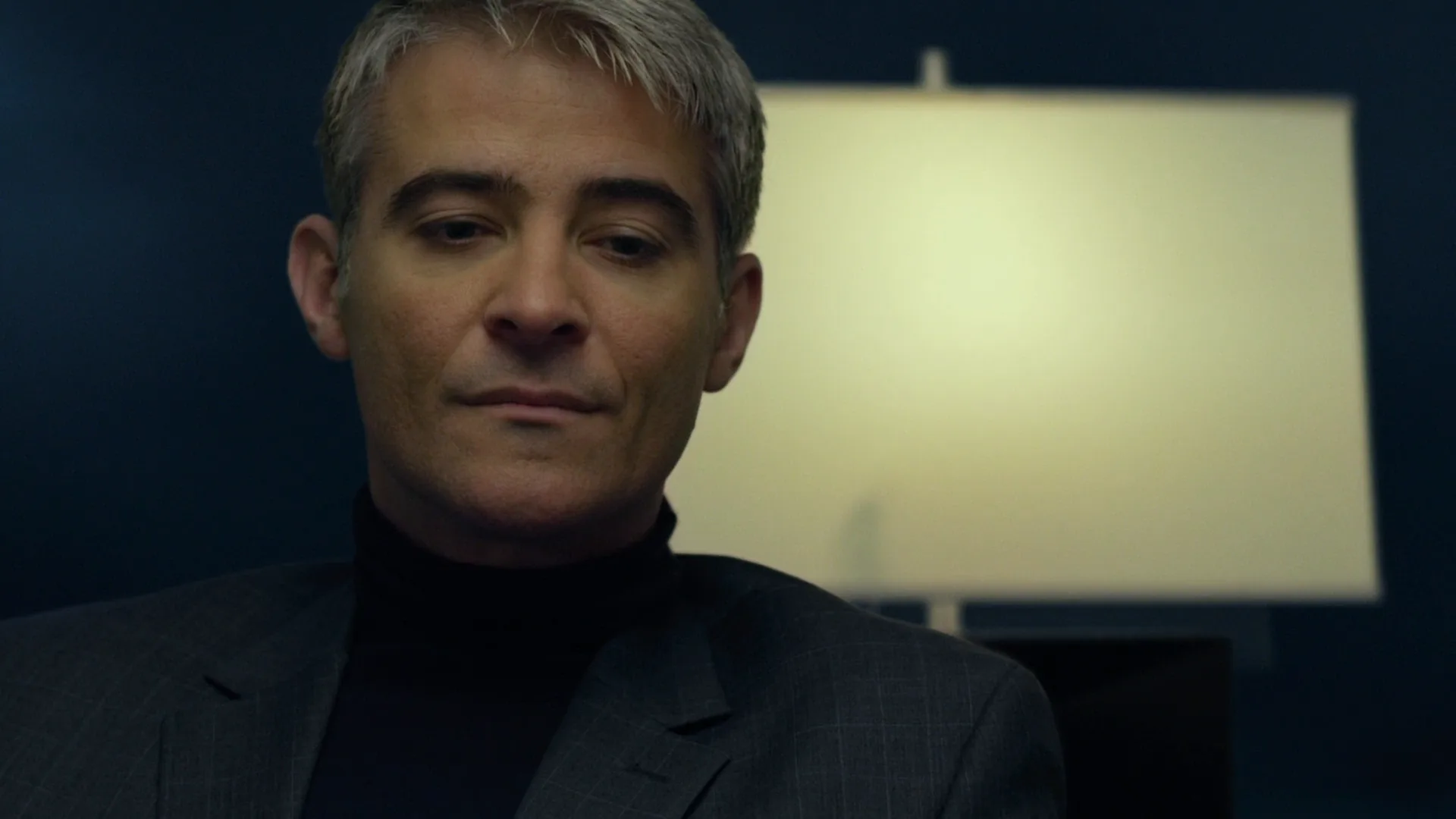
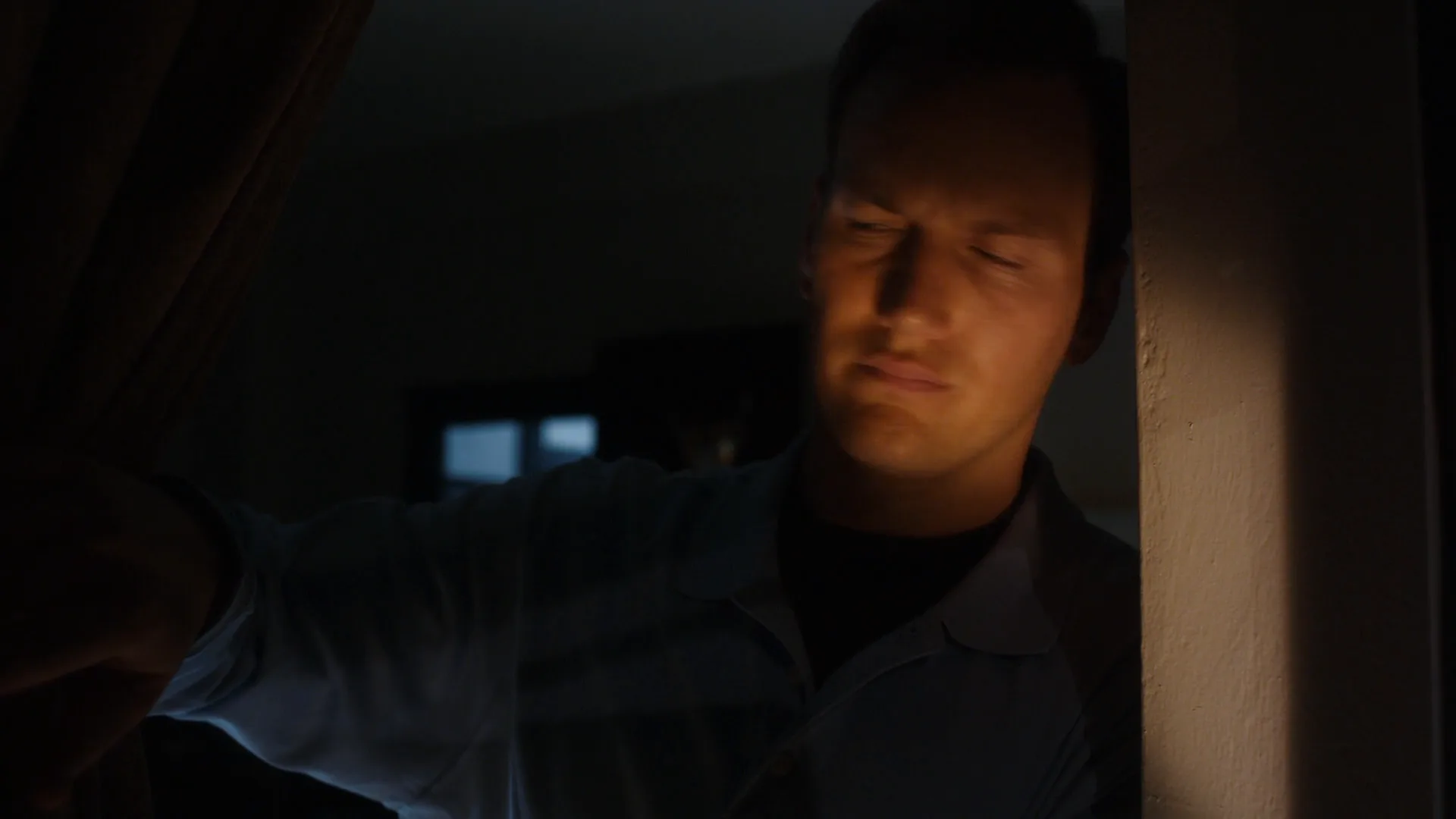
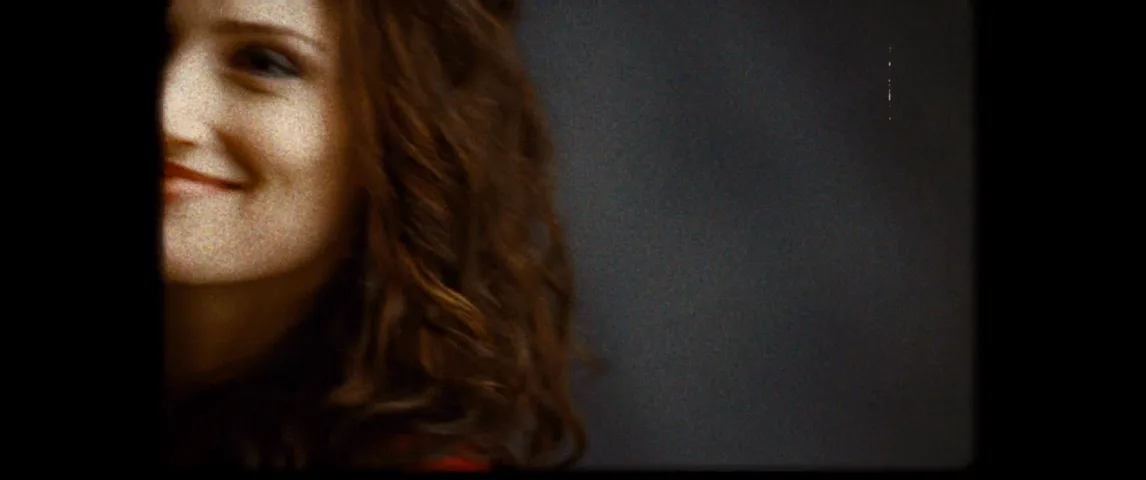
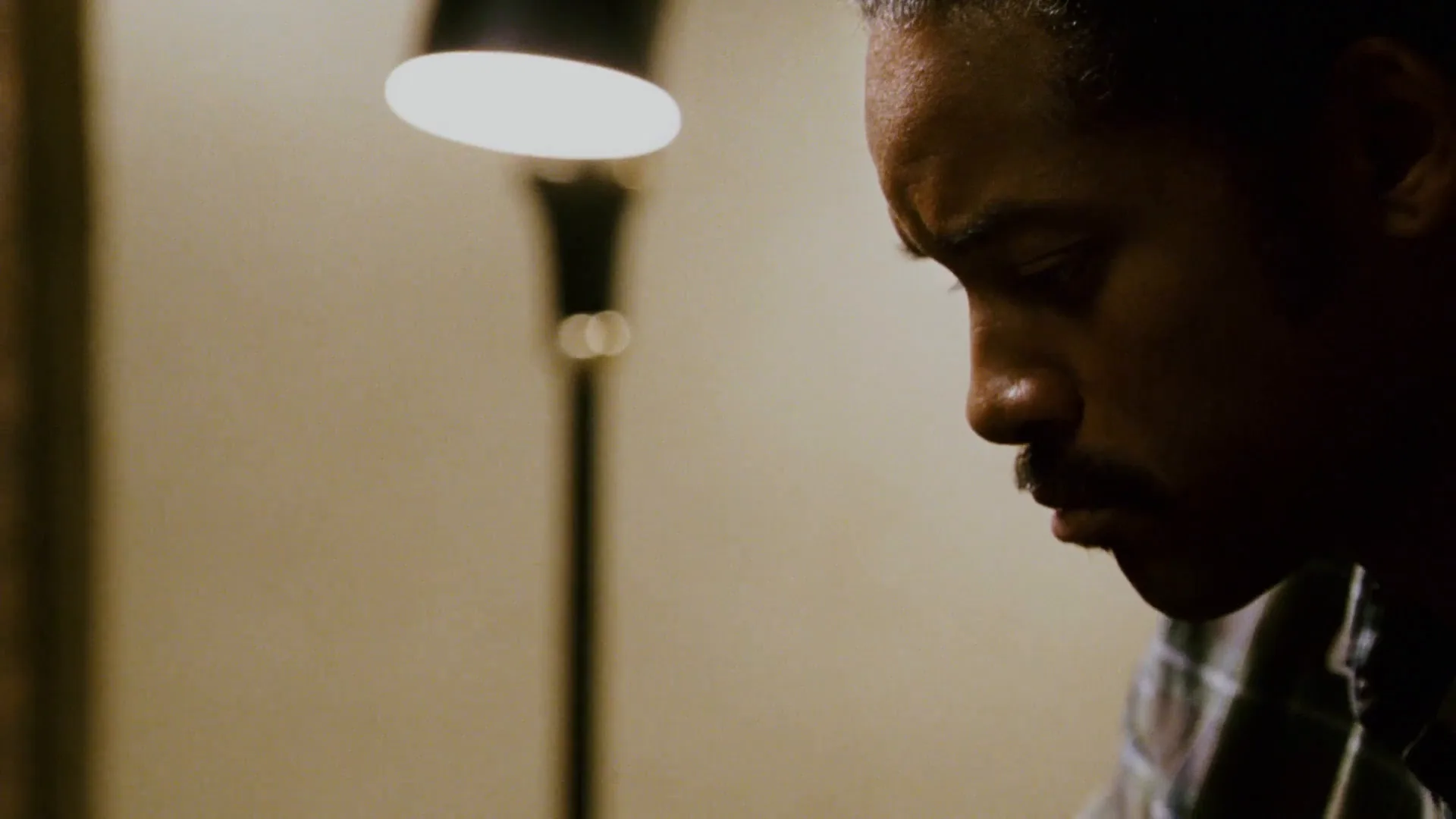
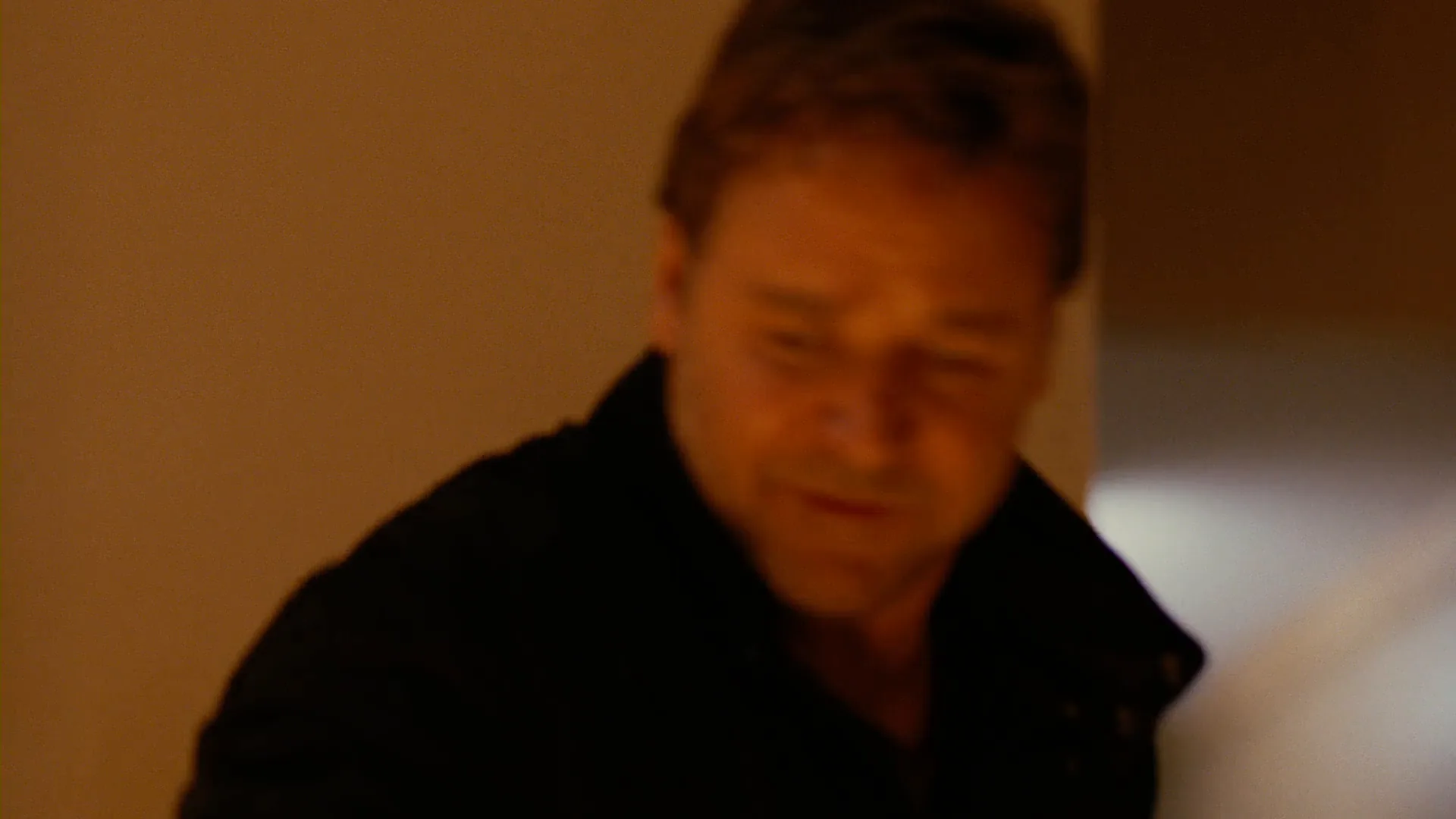
7 framesLook for bright surfaces near the actors, no hard edges on the faces and a slow falloff across the cheek.
How to create a bounce lighting with AI
4 promptsModels rarely act on "bounce lighting" alone. Describe the chain: a hard source, the surface it hits, the soft light it throws onto the face. In FlashBoards, keep the film frames and every take on one board and compare them before you animate. The fourth prompt re-shoots a real film shot from a text description alone, and the original plays next to the result so you can compare.
Cinematic close-up of a woman in her early thirties with short copper curls, a small gap between her front teeth and pale freckled skin, in a dark green cardigan, sitting at a table by a window. Hard afternoon sun makes a sharp-edged bright patch on the white linen tablecloth in front of her, and that sunlit cloth bounces soft warm light up into her face. Face lit softly from below and in front, no hard shadows on the face, catchlights low in her eyes. 50mm lens at eye level, 35mm film grain.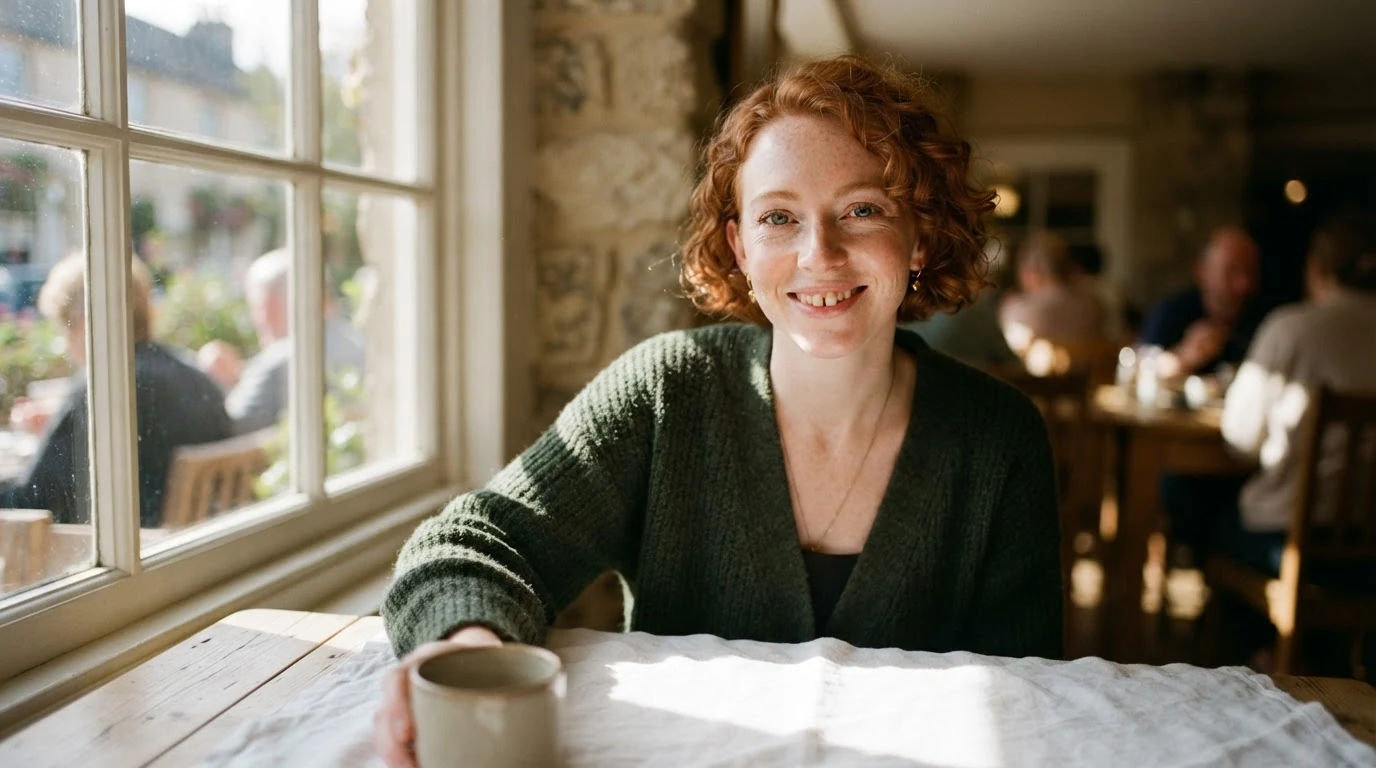
"Sharp-edged bright patch" sets the hard source; "that sunlit cloth bounces soft warm light up into her face" names the reflector; "catchlights low in her eyes" is the visible proof of a bounce from below.
Open FlashBoardsAnamorphic medium close-up of a man in his fifties with a shaved head, a salt-and-pepper horseshoe mustache and deep laugh lines, in a faded red work shirt, standing at a desert gas station at noon. Harsh overhead sun, but a large white bounce board just below the frame line reflects light up into his face: eye sockets filled, both eyes visible with bright catchlights, soft light shadows under brow and nose. Pale concrete background, 75mm lens.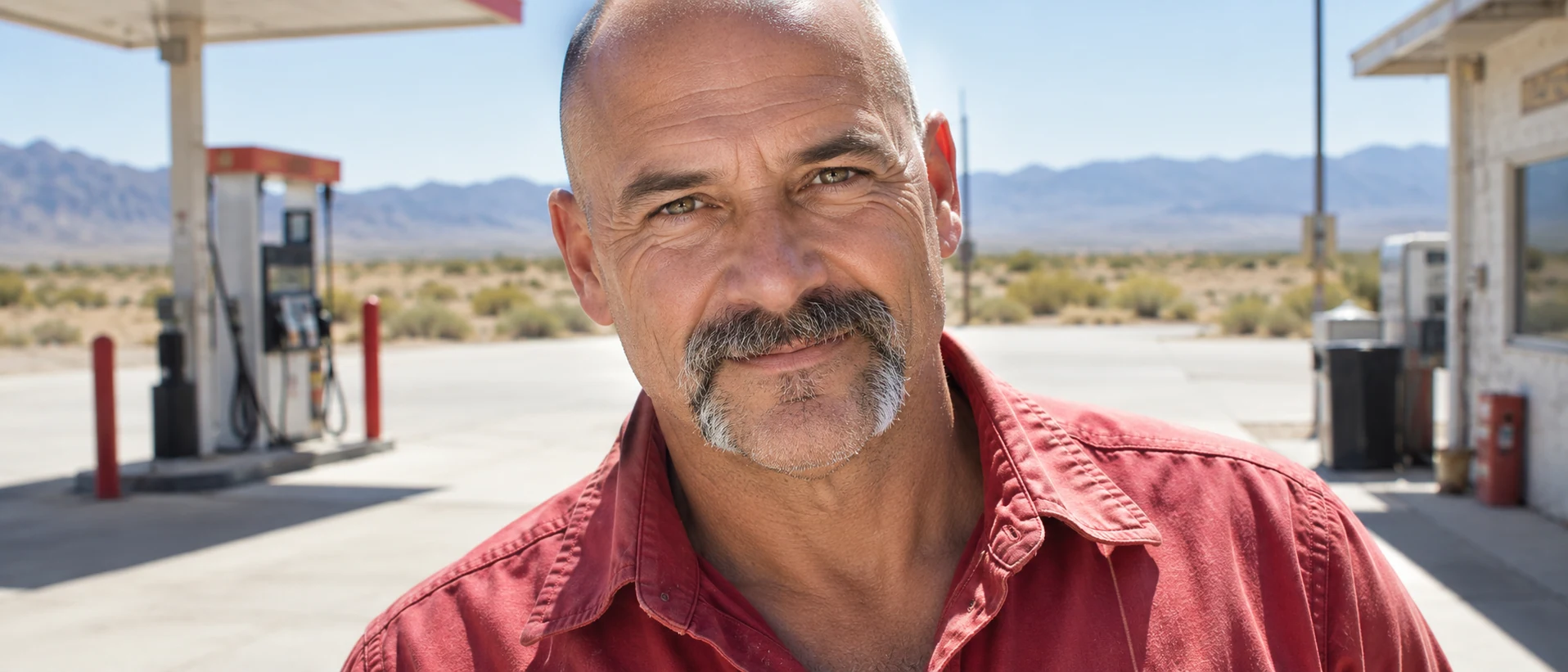
"Just below the frame line" keeps the board out of the picture; "eye sockets filled" describes the result, which models follow better than gear names.
Open FlashBoardsCamera: a slow, steady push-in toward her face, moving from the first moment and ending on her eyes. Action: she is already leaning forward over the sunlit white tablecloth; as her face nears the cloth, the soft warm glow on her chin and cheeks grows brighter; then she lifts her eyes toward the window and holds. The patch of sun stays on the cloth and the soft light from below stays on her face.The lean starts at once, so the shot is alive from frame one, and moving closer to the cloth shows a bounce brightening with distance.
Open FlashBoards{
"output": "Full-screen live-action scene from An Education (2009) from its very first frame: one continuous shot. Warm 35mm film grain, early-1960s London attic bedroom in late afternoon, dim amber and brown palette. Low golden sun from an unseen source out of frame right lands as two long slanted bright patches on the sloped white plaster ceiling; the light coming back off that ceiling fills the room and her face softly and evenly, gentle falloff into brown shadow, and the sunlit ceiling stays the brightest thing in frame.",
"characters": {
"S1": {
"name": "Jenny Mellor, played by Carey Mulligan",
"look": "slim teenage girl, shoulder-length loose chestnut hair with a full fringe, sheer black chiffon wrap over a black dress with a low neckline, small gold heart pendant on a thin chain",
"voice": "soft, young, a little shy"
},
"S2": {
"name": "David Goldman, played by Peter Sarsgaard",
"look": "never seen: he stands just off frame right, beside the camera",
"voice": "warm, low, gentle"
}
},
"shots": [
{
"shot": 1,
"camera": "nearly static, eye level, slightly low, 40mm anamorphic; starts as a wide medium shot with the sloped white ceiling and its two sun patches filling the upper half of the frame and a pale painted wardrobe at the right edge; only a very slow slight drift, no pan and no zoom; ends as a medium close-up of S1 at frame centre as she has stepped toward the lens",
"action": [
"BEGINNING: alive from the first frame, S1 is already stepping in from the left edge of frame, in profile facing right, her right hand briefly at her shoulder, walking slowly under the sunlit ceiling.",
"THEN: she comes to a stop in the left third of frame, still in profile facing right, both hands low and out of frame, looking ahead toward frame right at someone off screen; her face is lit softly from above, her mouth closed, no smile.",
"THEN: her lips part slightly as if about to answer, and she stays in profile, still.",
"THEN: she turns her head and shoulders toward the camera and steps a little closer, into the centre of frame; her face is now frontal, softly and evenly lit, eyes looking just to the right of the lens toward the unseen S2.",
"THEN: a small shy closed-mouth smile, her eyes glancing up and to the right, then back.",
"END: still facing the camera, gaze just right of the lens, she parts her lips and speaks, a faint smile staying on her face; hands stay out of frame."
],
"dialogue": [
{
"speaker": "S2",
"on_screen": false,
"when": "while S1 is walking in profile, from early in the shot until she stops",
"delivery": "quiet, admiring",
"line": "<d>[English] You look beautiful.</d>"
},
{
"speaker": "S1",
"on_screen": true,
"when": "near the end, after she has turned to face the camera and smiled",
"delivery": "soft, tentative",
"line": "<d>[English] David.</d>"
},
{
"speaker": "S2",
"on_screen": false,
"when": "right after her word, at the very end of the shot",
"delivery": "low, questioning hum",
"line": "<d>[English] Mmm?</d>"
}
]
}
],
"sound": {
"ambience": "quiet attic room tone, soft footsteps on a wooden floor, faint birdsong heard from far outside",
"speech": "exactly these spoken phrases, each said once, in this order",
"never_spoken": "no narration and no voice-over: the descriptions, performance notes and step words of this prompt are never spoken aloud",
"music": "a film score under the scene, always below the voices: a soft, hesitant solo piano with warm low strings, tender and a little uncertain",
"subtitles": "none"
}
}Remakes the attic shot from An Education (2009), DP John de Borman: the prompt kept the near-static wide frame, the sun patches on the sloped ceiling, Jenny's walk in profile, the turn to camera into soft bounced light and the film's own lines.
The output line names the chain: low sun hits the white ceiling, and light coming back off it fills her face. The turn to camera is a late THEN beat, so the soft frontal face arrives after the source is shown, and David's lines stay off screen.
Open FlashBoardsCommon mistakes
- The reflector appears in frame. Place it: "just below the frame line", or use a surface from the scene, like a tablecloth or wall.
- Flat face. "Soft bounce" alone goes frontal; say where the bounce is and which side stays darker.
- Double shadows. Keep the hard light on the surface and write "no hard shadows on the face".
Keep the reference frames, prompts and every generated take side by side — images and video in one canvas.
FAQ
4 questionsWhat is bounce lighting?
Bounce lighting is indirect light: a lamp or the sun is aimed at a white board, wall, ceiling or reflector instead of the subject, and the reflected light illuminates the scene. The reflecting surface is much larger than the lamp, so the light is soft and wraps around faces. It serves as soft key or fill.
What is a bounce board?
A bounce board is a white reflective panel, usually foam core, polystyrene beadboard or muslin on a frame, placed near the actor to reflect light onto them. Small cards add fill in close-ups; 8×8 frames and larger can light whole scenes as a soft key.
White, silver or gold reflector: which should I use?
White gives the softest, most neutral bounce and is the safe choice for faces. Silver throws more light farther but looks harder and can feel artificial up close. Gold warms skin for sunset looks and is easy to overdo on pale skin.
Is bounce lighting the same as diffusion?
No. Both soften light by enlarging the source, but bounce reflects light off an opaque surface, while diffusion passes it through translucent material like silk. Bounce changes direction and picks up the surface color; diffusion keeps the direction and loses less light.
Related terms
5- DiffusionLighting
Diffusion is any translucent material — silk, frost, grid cloth, a softbox front — placed between a lamp and the subject to spread the light over a larger area, softening shadows and wrapping light around faces.
- Fill LightLighting
Fill light is a softer, weaker source on the side opposite the key that lifts the shadows the key creates; its level relative to the key — the lighting ratio — decides whether a face looks open and bright or moody and sculpted.
- Soft LightLighting
Soft light comes from a source that is large relative to the subject — an overcast sky, a big window, a bounced or diffused lamp — and wraps around forms with gradual, feathered transitions from light to shadow.
- Key LightLighting
The key light is the main light on a subject: it sets the direction, hardness and color of the illumination, and every other source — fill, back, practicals — is balanced against it.
- Film LightingLighting
Film lighting is the craft of shaping light for the camera — its direction, quality, color and contrast — to model faces, build space, set the time of day and carry the mood of a scene.
Further reading
Blain Brown, Motion Picture and Video Lighting (Focal Press). · Harry C. Box, Set Lighting Technician's Handbook (Focal Press).