 FlashBoards Learn
- Learn
- Production Design
- Movie Prop
Production Design · Film language
Movie Prop
Also called: prop, film prop, hand prop, hero prop
A movie prop is any movable object an actor handles or uses on screen — a gun, a letter, a cup, a sled. Set dressing only furnishes the room; a prop is part of the performance. The right one tells us who a character is and can carry the plot.
- What it does
- Turns an object into character, action or plot: what someone holds shows who they are and what they will do.
- Use it when
- An object is touched, used, handed over or chased in the scene, or has to come back later in the story.
- Watch out
- Continuity: position, level, damage and which hand holds it must match across every take and angle.
- Try this prompt
Close-up of a hand turning a dented brass compass, face soft behind it, 85mm, f/2, warm window light from the left
What is a prop in film?
A prop (short for property, a theater term) is any movable object an actor touches, uses or refers to in a scene: a pistol, a letter, a coffee cup, a ring. Everything else in the frame belongs to the set or to set dressing — the sofa, the posters, the books nobody opens.
The line is drawn by use, not by the object. A lamp on a side table is dressing; the moment a character switches it on or throws it, it is a prop. Props sit inside production design and are run by the prop master, who sources and tracks them and hands them to actors on set.
What are the types of props in film?
- Hand props. Anything held or used: phones, keys, cigarettes, weapons, paperwork.
- Hero props. The detailed version for close-ups and insert shots, where the lens sees every scratch.
- Stunt and background props. Lighter or softer copies for wide shots, falls and fights.
- Breakaway props. Bottles, chairs and plates built to shatter safely, from sugar glass, resin or balsa.
- Consumables. Food, drink and anything used up in a take — enough for every setup.
- Multiples. Identical copies, so a take resets in seconds.
What cannot be bought is built by a prop maker: replicas, period pieces and one-off hero pieces. Real and blank-firing weapons are handled by a licensed armorer.
Why props matter: famous movie props
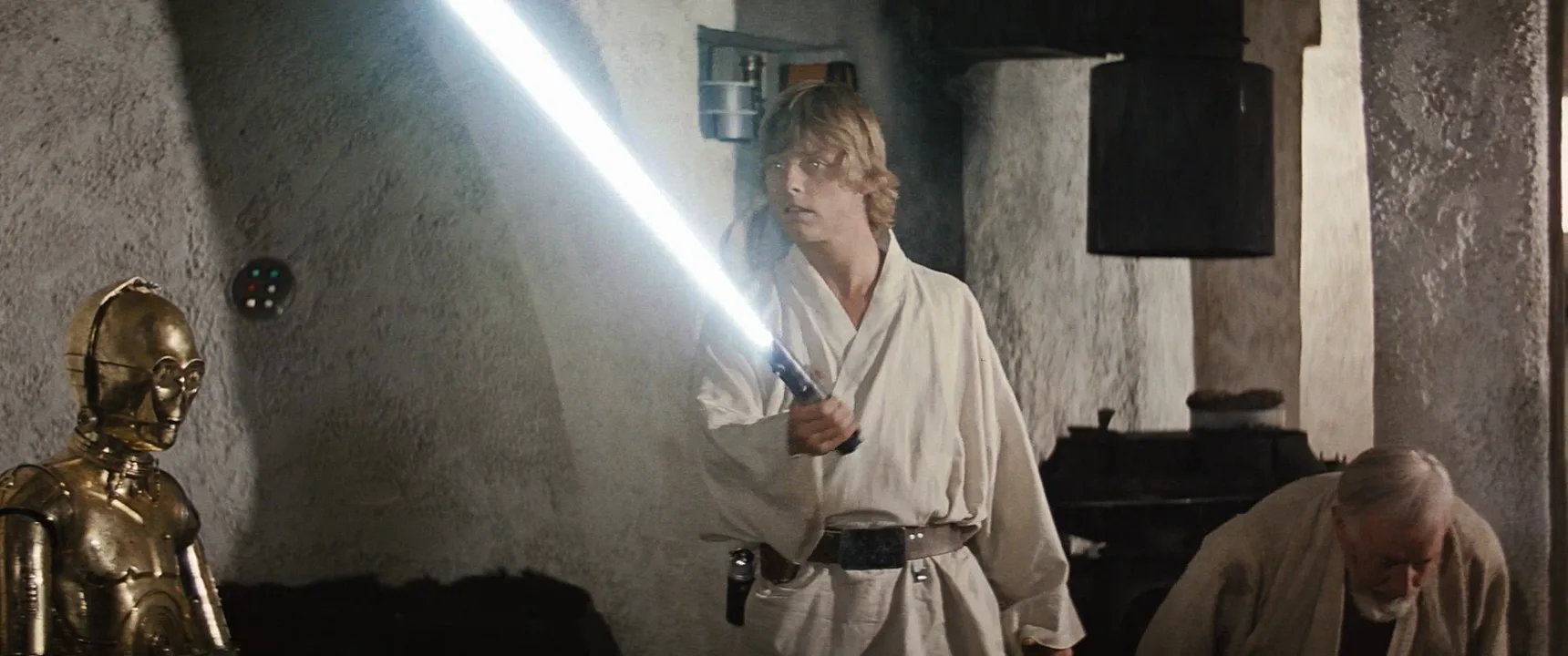
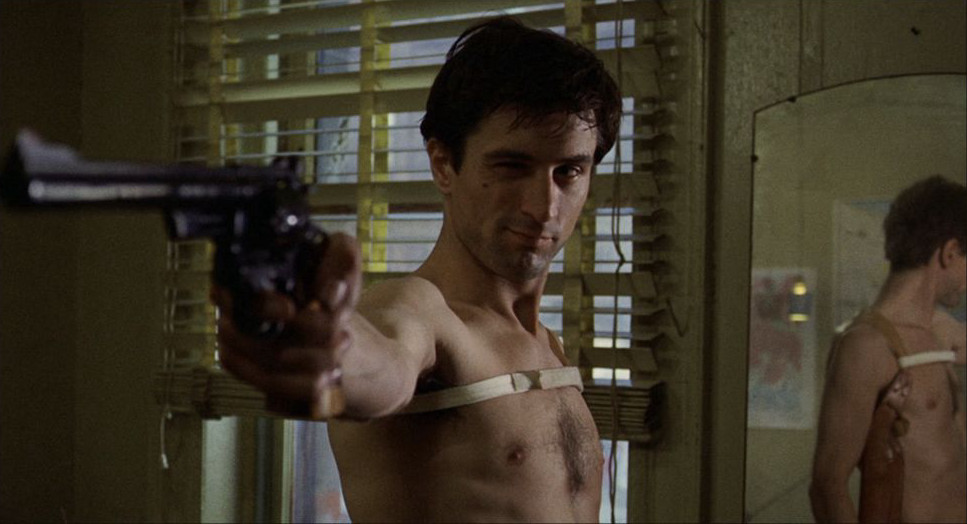
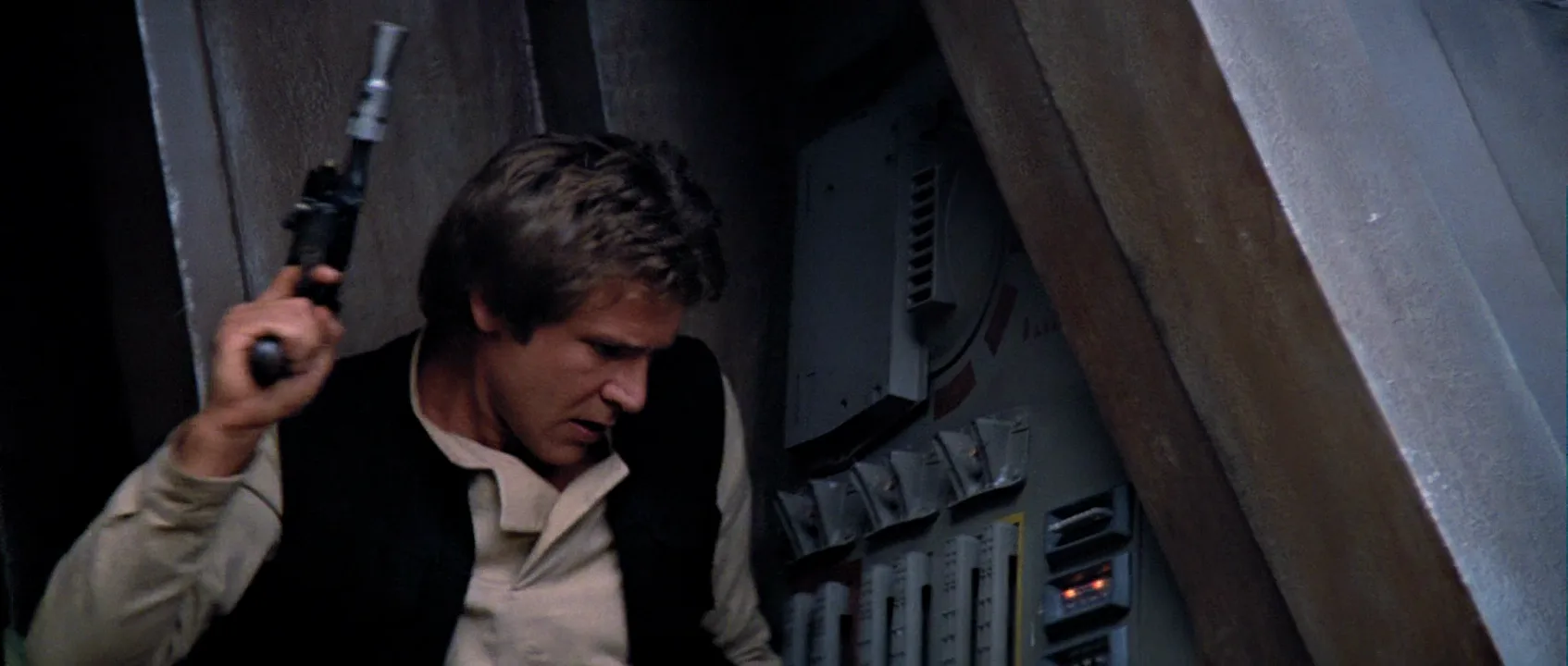
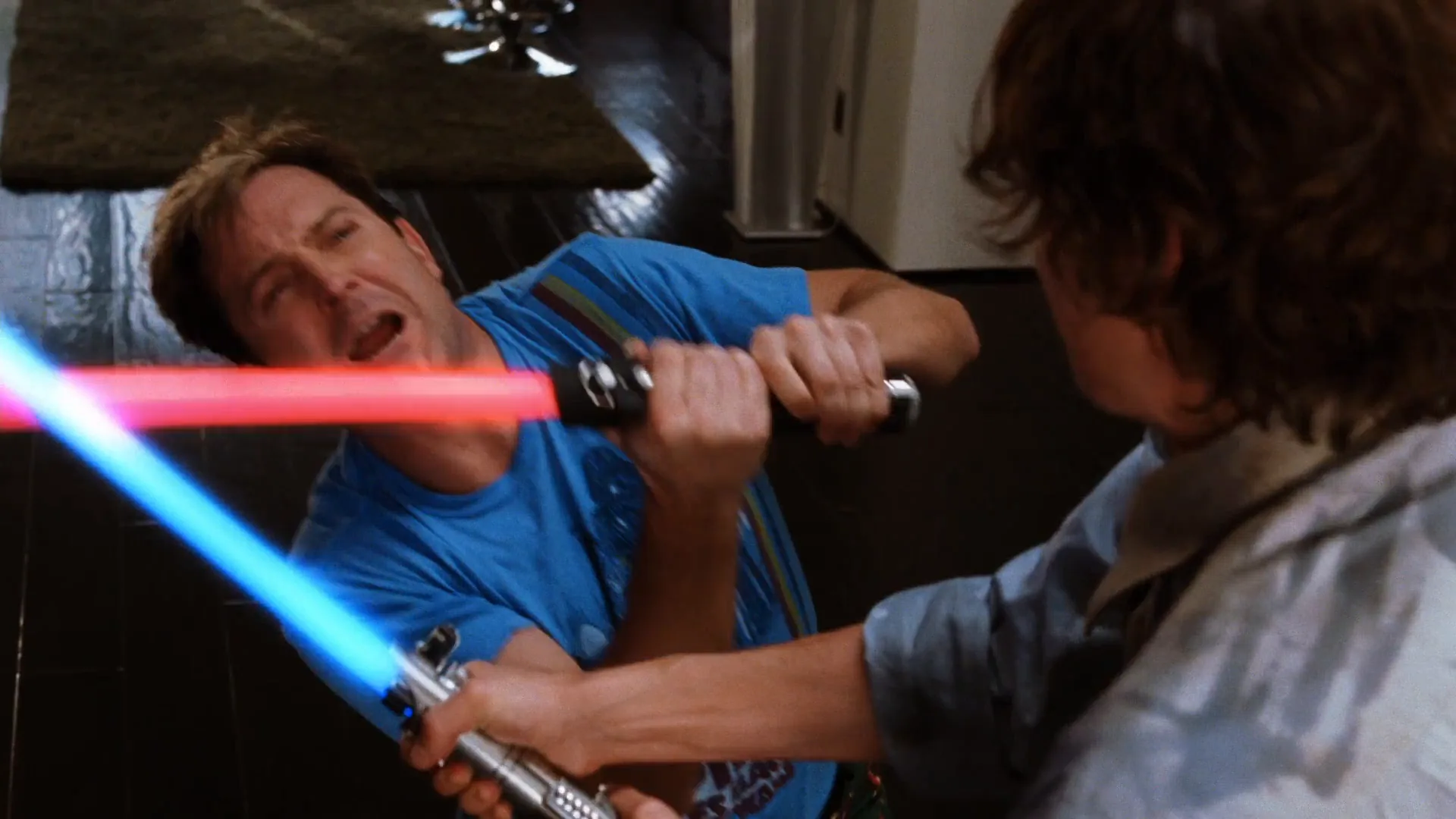
- It defines a character. Luke's lightsaber in Star Wars (1977), Travis Bickle's guns in Taxi Driver (1976): the object is shorthand for who they are.
- It carries the plot. The sled in Citizen Kane (1941) answers the film's question; the golden ticket drives Willy Wonka & the Chocolate Factory (1971). When everyone chases an object whose nature barely matters, it becomes a MacGuffin.
- It becomes a partner. In Cast Away (2000) a volleyball with a painted face is the other character.
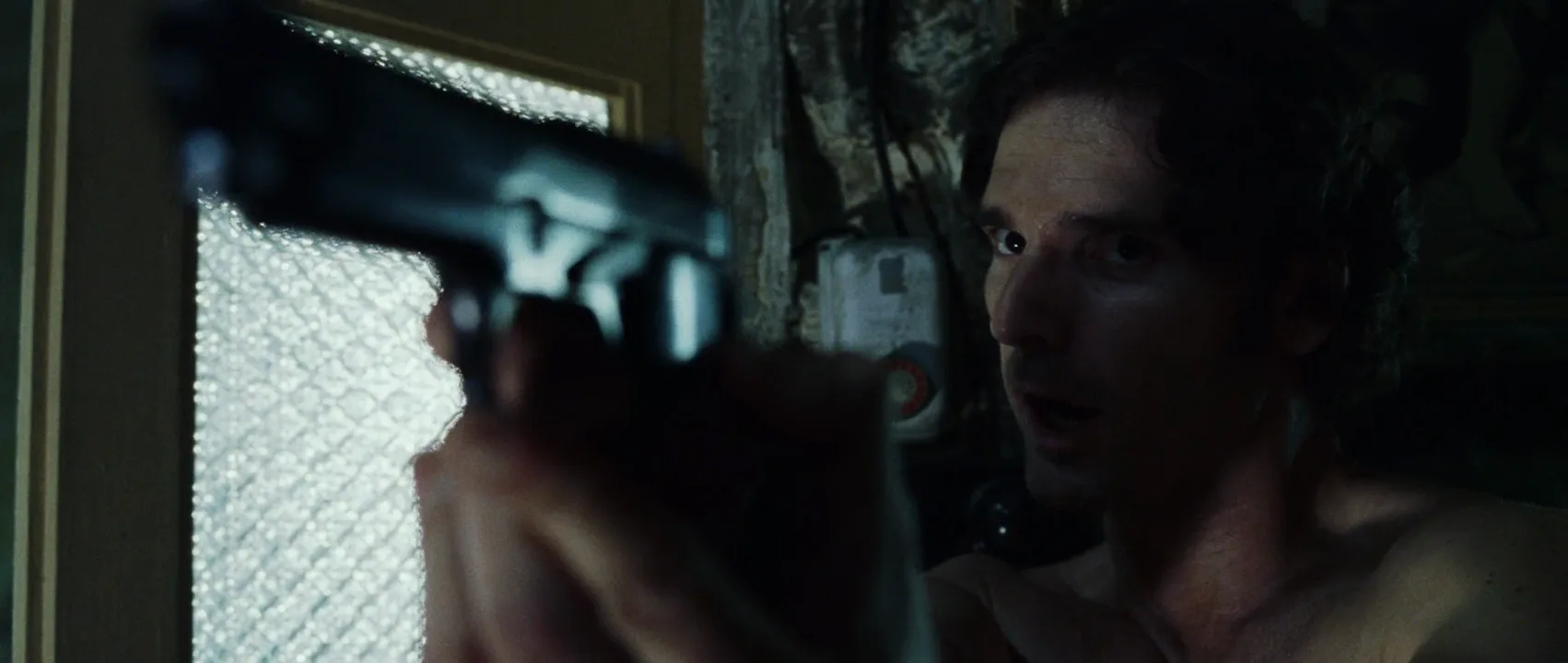
- It makes menace concrete. Anton Chigurh's captive bolt pistol in No Country for Old Men (2007) frightens because it is so unusual.
- It pays off. A coffee cup in The Usual Suspects (1995) and the red and blue pills in The Matrix (1999) are ordinary objects that become loaded with meaning.
How to design, light and shoot a prop
- Design for the lens. Close shots need a hero piece with real wear; wide shots can use simpler copies.
- Kill the shine. New metal and plastic look fake; props are dulled, stained and handled until they read as used.
- Give it its own light. A small key or a slash of light separates the object from the dressing. Keep it on the master's key side.
- Lens and focus. For a prop held toward camera with a face behind, 50–85mm at f/2–f/2.8 keeps the object sharp and the face soft; rack focus when the story moves to the person. Inserts: 100mm macro at f/4–f/5.6.
- Block it. Decide which hand, where it enters and where it rests; rehearse with the real prop.
- Log continuity. Photograph it at the start and end of every take. Continuity errors in hands and props are the ones audiences spot first.
Prop vs. set dressing
- Prop — handled or used by an actor; tracked by the props department, often in multiples.
- Set dressing — furnishes the space and tells us who lives there, but no one touches it.
Quick test: if the action line says a character picks it up, opens it, drinks it or points it, it is a prop. If it only has to be there, it is dressing. A lamp can be dressing in scene 12 and a prop in scene 40.
Movie Prop examples in film
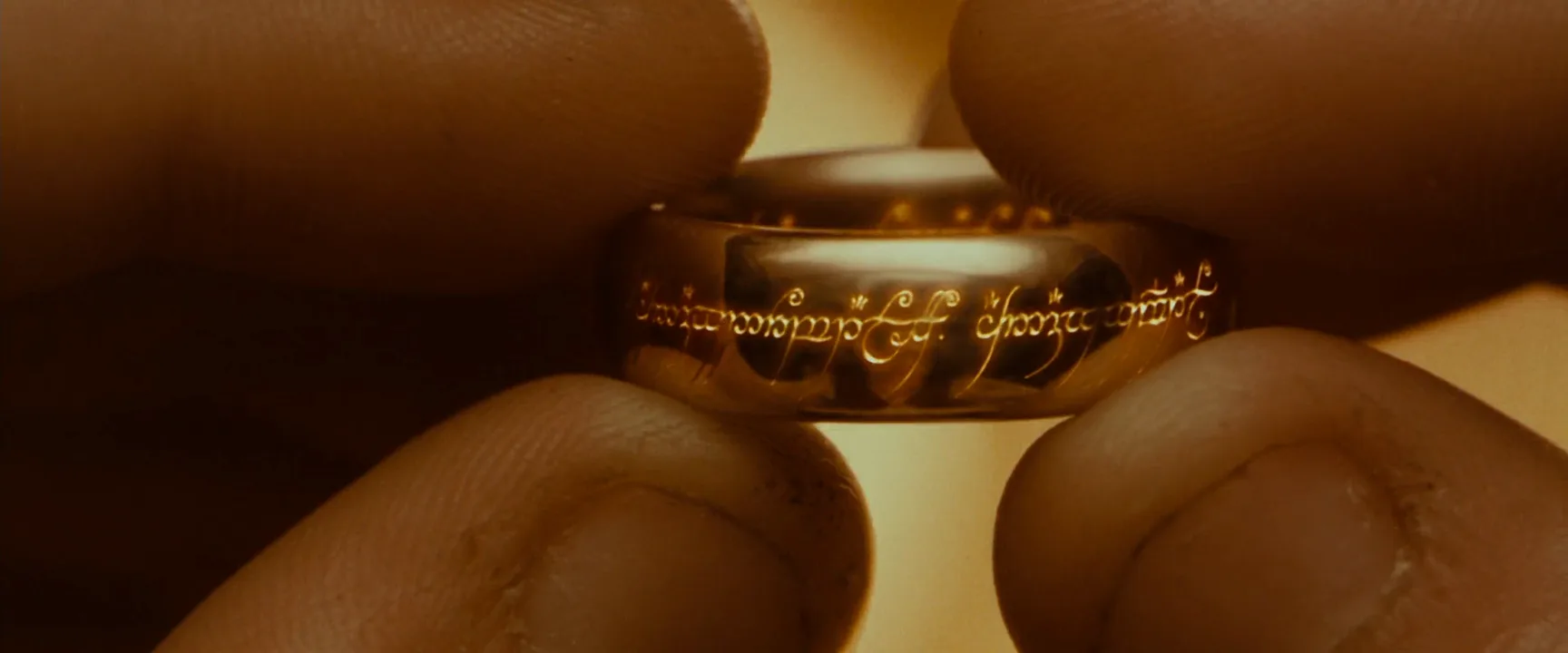
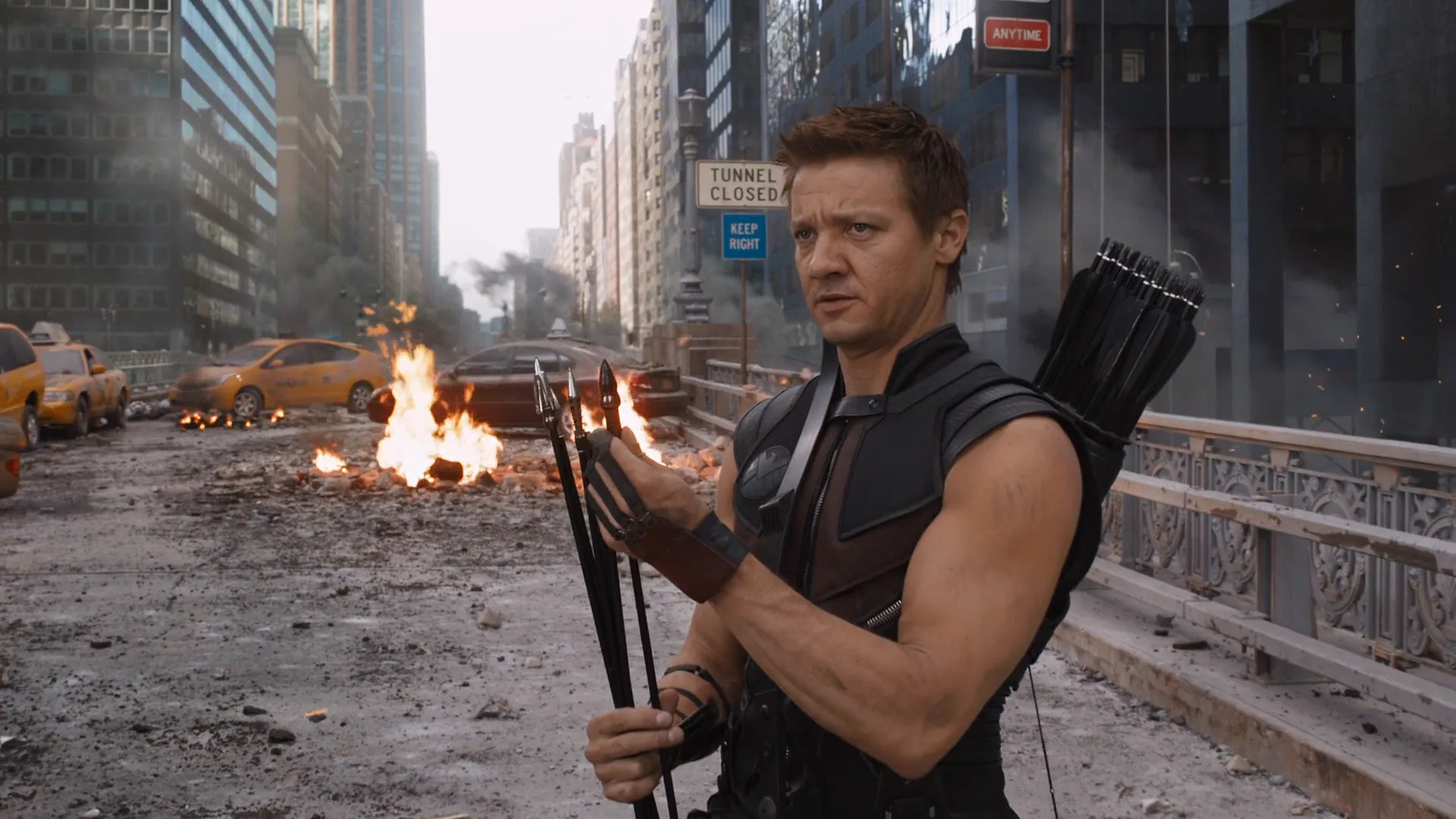
8 framesRings, blades, bows and guns: notice how focus, light and position make the object read first.
How to create a movie prop with AI
4 promptsImage models treat objects as background unless the prompt makes one the subject. Name the prop first, describe its wear and material, and say which hand holds it and where focus sits. Keep takes, prop references and continuity notes on one FlashBoards board so the object stays the same in every shot. The fourth prompt re-shoots a real film shot from a text description alone, and the original plays next to the result so you can compare.
Close-up, a dented brass pocket compass held toward the camera in a weathered right hand, lid open, green patina in the engraving. Behind it, soft and out of focus: a woman in her sixties with cropped silver hair, a thin scar through her left eyebrow, a navy wool cardigan. The compass is sharp and fills the left third of the frame. 85mm, f/2, chest height. Warm window light from the left on the brass, dim cabin, film grain.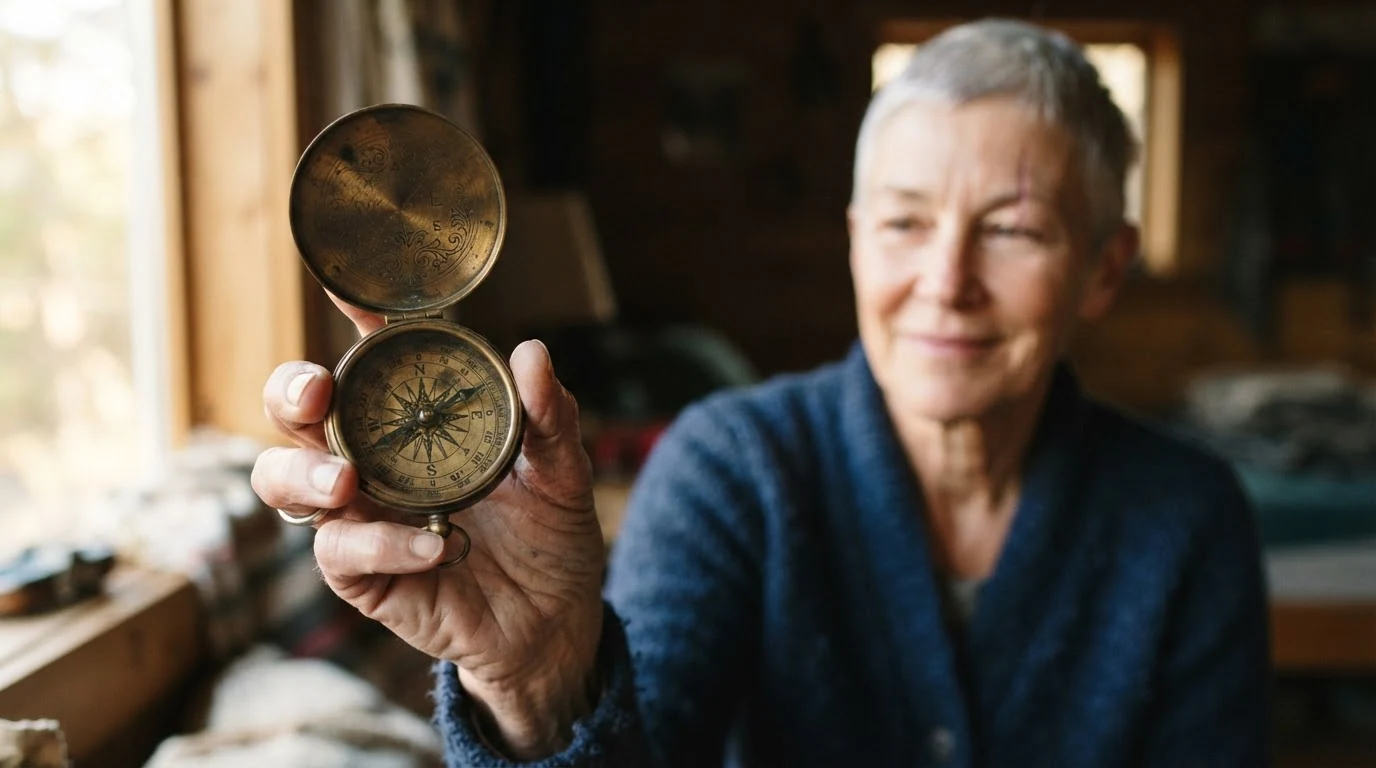
"Held toward the camera" and "the compass is sharp" put focus on the prop; dents, patina and engraving make it a hero prop, not a catalog object.
Open FlashBoardsWide anamorphic frame of a cluttered 1970s kitchen: beige cabinets, stacked dishes, faded wallpaper, all muted browns. A man in his forties with a shaved head, gray stubble and a chipped front tooth, in a mustard work shirt, reaches for a red rotary telephone on the counter. A narrow beam of afternoon light falls only on the telephone. 40mm, f/4, eye level.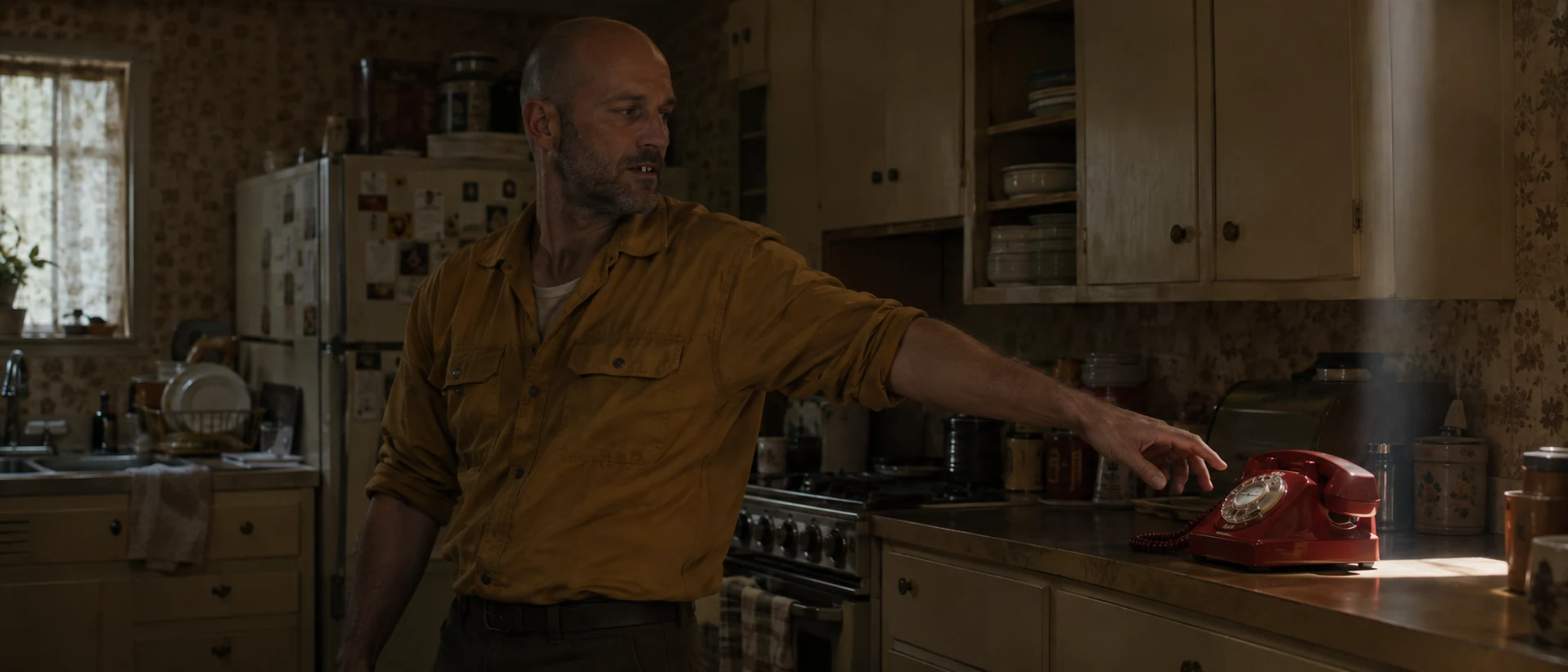
Prop against dressing: the room is muted clutter, while the object the actor touches gets the only saturated color and the only hard light.
Open FlashBoardsCamera: static at chest height, then a slow focus shift from the compass to the woman's face in the last part of the shot. Action: the needle is already swinging. The hand tilts the compass slightly and the needle settles. The woman's thumb closes the brass lid with a small click. She lowers the compass and her face comes into focus, eyes fixed past the camera.Motion starts in the needle, so the shot is alive, and the focus shift moves attention from prop to actor using only what is in the frame.
Open FlashBoards{
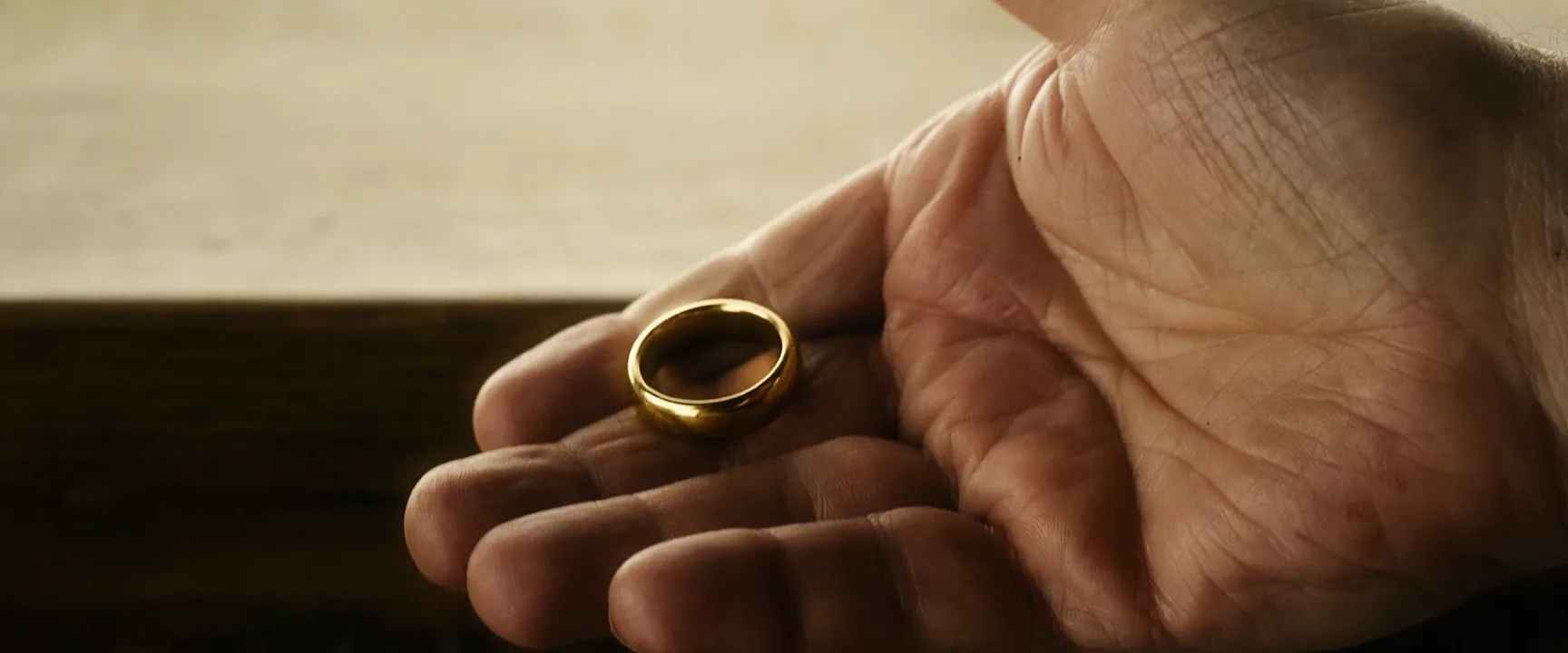
"output": "Full-screen live-action extreme close-up from The Hobbit: The Battle of the Five Armies (2014), from its very first frame: one continuous shot, no cuts. Fine-grain 35mm film, anamorphic 2.39:1, warm soft light from above and screen left, muted cream and honey-brown palette with a deep brown band below, very shallow depth of field, a quiet room in Bag End.",
"characters": {
"S1": {
"name": "Old Bilbo, played by Ian Holm",
"look": "seen only as his right hand and wrist, entering from the right edge of frame: a large pale old man's hand, deeply wrinkled skin, thick knuckles, short clean nails, faint age spots, fine grey hairs on the back of the wrist; his face never appears",
"voice": "silence: he never speaks"
}
},
"shots": [
{
"shot": 1,
"camera": "static camera on a tripod just above table height, macro lens, extreme close-up of the hand in profile against a pale cream plaster wall, softly out of focus in the upper half of the frame, with a dark brown wooden table edge as a horizontal band across the lower third. The frame never moves; focus stays locked on the ring and fingers for the whole shot.",
"action": [
"BEGINNING: alive from the first frame, S1's right hand reaches in from the right edge, back of the hand up, fingers pointing to screen left, filling the right two thirds of the frame; a small plain gold band stands upright between the pad of his index finger above and his thumb below, just left of centre, the light gleaming through the open ring.",
"THEN: thumb and index finger slowly roll the ring a quarter turn so it goes edge-on and almost disappears between the fingertips, the other fingers curled loosely under the palm.",
"THEN: the hand draws back slightly toward screen right and curls, the ring pinched in the fingertips; the whole hand begins to roll over toward the camera.",
"THEN: the wrist turns fully, the palm opens upward, the thumb swings up toward the top of the frame, and the ring drops onto the pads of the middle fingers; the open hand drifts a little to screen left and closer to the lens.",
"END: the open palm rests completely still, fingers pointing to screen left, filling the lower right of the frame; the gold ring lies flat on the fingers just left of centre, a warm highlight on its rim, the brightest point in the frame; only the faintest tremor of the old hand."
],
"dialogue": [],
"voice": "silence: nobody speaks in this shot, no voice at all"
}
],
"sound": {
"ambience": "a hushed room, a faint rustle of skin, the soft tick of the gold band against a fingernail",
"speech": "no words in this video; the only human sounds are breaths and movement",
"never_spoken": "no narration and no voice-over: the descriptions, performance notes and step words of this prompt are never spoken aloud",
"music": "a film score under the scene, always below the voices: a slow, wistful melody on low strings with a faint high sustained note, quiet and heavy with memory",
"subtitles": "none"
}
}Remakes the ring-in-the-palm close-up of Old Bilbo's hand from The Hobbit: The Battle of the Five Armies (2014); the prompt kept the static profile framing, the warm top light, the right hand entering from screen right and the turn-then-reveal beat.
The prop is the only subject: a locked-off macro frame, the ring as the brightest point, and one simple beat (turned in the fingers, then shown in the open palm) give a small object the weight of a hero prop.
Open FlashBoardsCommon mistakes
- The prop comes out too clean. Name the wear: dents, scratches, patina.
- Focus goes to the face. Say which element is sharp and give lens and stop.
- The object changes between takes. Reuse the same three details and compare takes side by side on the board.
- Hands change sides. Say "right hand" and describe the grip.
- The prop disappears into the set. Give it its own light or the only strong color.
Keep the reference frames, prompts and every generated take side by side — images and video in one canvas.
FAQ
4 questionsWhat is a prop in film?
A prop is any movable object an actor handles, uses or refers to on screen: a weapon, a phone, a letter, a cup, a suitcase. Furniture and decor that nobody touches count as set dressing. Props are sourced or built by the props department, tracked for continuity and handed to actors before each take.
What are the main types of movie props?
Hand props are held by actors; hero props are detailed pieces for close-ups; stunt and background props are lighter or softer copies for action and wide shots; breakaway props shatter safely; consumables are food and drink. Important props also exist in multiples so takes can be reset quickly.
What is a hero prop?
A hero prop is the most detailed version of an object, built or chosen to hold up in close-ups and insert shots. It carries full wear, engraving and working parts. Cheaper or safer copies stand in for it in wide shots and stunts, where the lens cannot see the difference.
Who is responsible for props on a film set?
The prop master runs the props department: breaking down the script for every object, sourcing or commissioning each piece, managing multiples and continuity, and handing props to actors on set. Prop makers build what cannot be bought, and a licensed armorer handles weapons, all under the production designer.
Related terms
4- Set DressingProduction Design
Set dressing is everything that furnishes a set but is not handled by the actors — furniture, books, posters, clutter — the details that make a space feel lived-in and tell us about who lives there.
- MacGuffinStorytelling
A MacGuffin is the object everyone in the story is chasing — a briefcase, a formula, a statue — whose exact nature barely matters; it exists to set the characters in motion. Hitchcock popularized the term.
- Insert ShotCamera Shots
An insert is a close shot of an object or small action inside the scene — a note, a phone screen, a hand turning a key — cut into the coverage so the audience notices exactly the detail the story needs.
- Production DesignProduction Design
Production design is the creation of the entire physical world of a film — locations, sets, props, colors and textures — led by the production designer together with the director and cinematographer.
Further reading
Vincent LoBrutto, The Filmmaker's Guide to Production Design (Allworth Press, 2002).