 FlashBoards Learn
- Learn
- Filmmaking Process & Crew
- Second Unit
Filmmaking Process & Crew · Film language
Second Unit
Also called: second unit photography, 2nd unit, splinter unit
The second unit is a separate film crew, with its own director and cinematographer, that shoots material without the principal cast: establishing shots, inserts, stunts, car work, driving plates, aerials and crowds. It works in parallel with the main unit and must match its look so the footage cuts together invisibly.
- What it does
- Moves every shot that doesn't need the lead actors or the director off the main unit's schedule and shoots it in parallel.
- Use it when
- The script has stunts, vehicles, landscapes, crowds or detail shots that would eat main-unit days.
- Watch out
- If the second unit doesn't match lens, light, weather and screen direction, its shots stand out in the cut.
- Try this prompt
Night driving plate from the back of a camera car, wet city avenue, sodium streetlights, 35mm lens, cinematic film still
What is a second unit in film?
Every feature has a main unit (or first unit): the director, the director of photography and the crew who shoot the scenes with the principal cast. The second unit is a smaller, independent crew that shoots everything else the story needs: the city at dawn, a key turning, a car flipping on the highway.
It has its own director, DP, operators, 1st AD, grips and electrics, and often its own stunt coordinator. It runs on its own call sheet, in parallel with the main unit or in the weeks around principal photography. Big productions add an aerial unit, a third unit or a small splinter unit that peels off for a day. The logic, familiar to anyone in the filmmaking process: the director and the leads are the most expensive hours on the schedule, so anything that doesn't need them moves to a cheaper crew working elsewhere at the same time.
What does the second unit shoot?
Typical assignments:
- Establishing shots of cities, buildings and landscapes.
- Inserts: hands, letters, screens, gauges, with hand doubles for the actors.
- Stunts and action: falls, fights with doubles, explosions and the wide angles of a car chase, while the main unit shoots the actors' close-ups.
- Driving plates: road footage from a camera car, later placed behind the cast on a stage.
- Aerials, crowds, animals and weather: anything that needs waiting, rigging or a long drive for one shot.
This is not minor footage. The chariot race in Ben-Hur (1959) was directed by the second-unit team of Andrew Marton and Yakima Canutt.
What does a second unit director do?
The second unit director makes shots the main director won't be present for. In prep they go through storyboards, previs and the shot list with the director: which angles, which lenses, how each sequence will cut. On the day they run their own set, direct doubles and stunt performers, and choose coverage within the brief. Many come from stunts or camera work.
The second unit DP matches the main DP's light, exposure and lenses so the shots intercut.
How to plan second unit work so it matches
Most second-unit problems are matching problems:
- Screen direction. Mark which way cars and runners travel in every shot, or the chase reverses between units.
- Lens and height. Share the main unit's lens chart. A double's reverse on a 24mm from the ground won't cut with close-ups on a 50mm at eye level.
- Light and weather. Note time of day, sun direction and cloud.
- Continuity. Wardrobe, props, vehicle damage, wet or dry roads must match the main unit's takes.
- Doubles. Keep faces away from the lens: backs, profiles in shadow, long lenses.
In FlashBoards the whole brief fits on one board: the main unit's reference frames, storyboard panels for each second-unit shot, lens and sun notes, and generated test frames of the target look. Both directors work from it, and dailies land next to the panels they should match.
Second unit vs. principal photography
Principal photography is a period: the scheduled shooting days with the principal cast. The second unit is a crew: it may shoot during that period, before it (plates the stage work depends on) or after it, alongside pickups and reshoots. The practical test is the actors: if a shot needs the leads' faces and the director on set, it belongs to the main unit; if doubles, vehicles, locations or objects can carry it, it's a second-unit candidate.
How to create a second unit with AI
3 promptsYou can't generate a crew, but you can preview a second unit's shots before the shoot: plates and inserts in the main unit's look, so both directors agree on the target. Nano Banana 2 Lite builds a night driving plate, GPT Image 2.5 a matching insert, and MiniMax H3 Max Turbo sets the plate in motion. Keep them on one FlashBoards board beside the main unit's frames.
Rear driving plate for a night car scene, shot from the back of a camera car with a 35mm lens at seat height looking straight back down the road: a wet four-lane city avenue, orange sodium streetlights receding in a line, reflections streaking across black asphalt, two yellow taxis following at a distance with headlights on, shuttered shops along an empty sidewalk, light drizzle, cinematic film still, 35mm film grain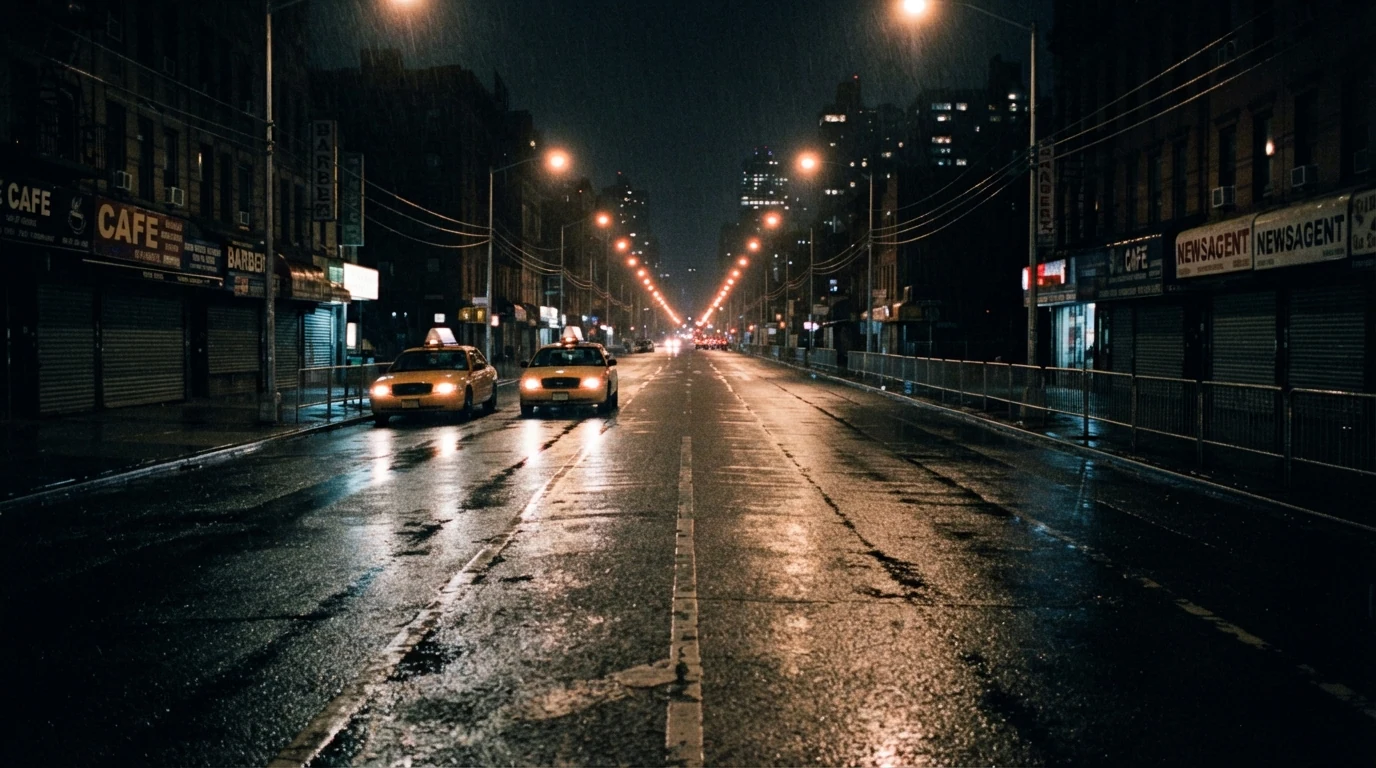
Rear driving plate and from the back of a camera car define the job: the road seen from where the actors would sit. 35mm at seat height matches a typical car interior setup. Empty sidewalk keeps faces out without naming what isn't there, and the taxis give the video motion.
Open FlashBoardsInsert shot, extreme close-up at night inside a 1970s sedan: a hand in a worn brown leather driving glove with a split seam over the knuckle shifts the chrome gear lever, orange streetlight sweeping across the glove and the cracked vinyl seat, a thin red glow from the dashboard, 85mm lens, shallow depth of field, cinematic film still, 35mm film grain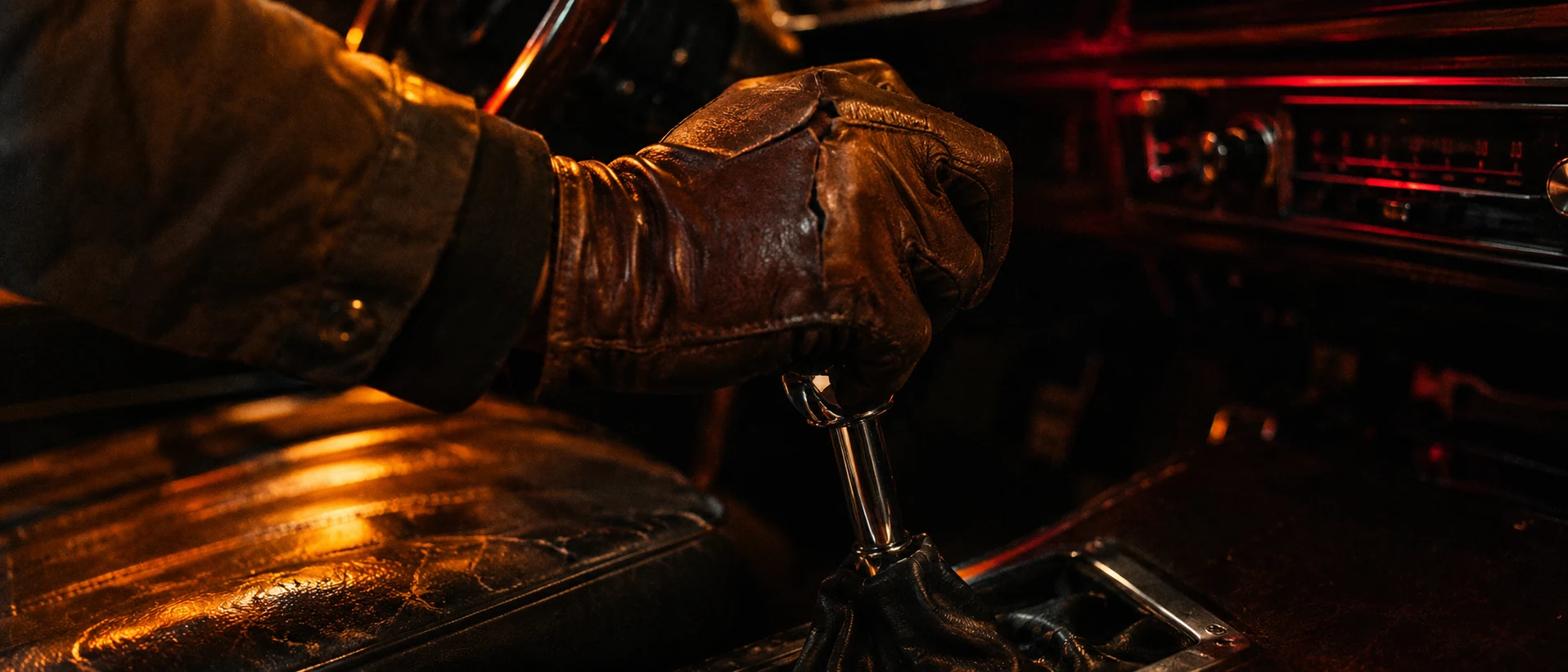
The hand-double insert. Extreme close-up and 85mm, shallow depth of field hold one object and action. The split seam is the continuity detail a double must match, and the orange streetlight ties it to the plate.
Open FlashBoardsCamera: mounted on the back of a moving car, looking straight back, travelling away down the avenue at a steady city speed for the whole shot, perfectly stable, same height and angle throughout. Action: the road is already streaming away from the lens as the shot begins, streetlights sliding out of the top of the frame one after another. In the middle the nearer taxi closes the gap and its headlights flare on the wet asphalt. At the end the taxi drops back, drizzle catching in the orange light as the avenue keeps receding.Mounted on the back of a moving car and perfectly stable describe a real plate rig. Already streaming away starts motion on frame one, and the action uses only what recipe 1 contains.
Open FlashBoardsCommon mistakes
- Models put a driver in any car shot. Describe the camera position (from the back of a camera car, looking back).
- Plates come out tilted: ask for seat height, looking straight back.
- Inserts drift wide: state extreme close-up and one action.
- Repeat the same light words in every prompt so takes match.
Keep the reference frames, prompts and every generated take side by side — images and video in one canvas.
FAQ
5 questionsWhat is second unit filming?
Second unit filming is the work of a separate crew that shoots footage without the principal cast: establishing shots, inserts, stunts, car work, driving plates, aerials and crowds. It has its own director and cinematographer and often works at the same time as the main unit, so the production covers more material without adding days for the leads.
What does a second unit director do?
A second unit director plans and directs the shots assigned to the second unit, following the main director's storyboards, shot list and style. They run their own set, direct stunt performers and doubles, and keep lenses, light and screen direction matched to the main unit's footage.
Is the second unit less important than the main unit?
No. The second unit handles material that doesn't need the principal actors, but that material can be central: major chases and battles are often largely second-unit work, and the chariot race in Ben-Hur (1959) was directed by its second-unit team. The difference is who is in front of the camera, not how much the shots matter.
What is a splinter unit?
A splinter unit is a very small crew that breaks away from the main or second unit for a few hours or a day to grab specific shots: an insert, a pickup, a landscape at a certain time of day. It works from the same shot list and references as the unit it came from.
Do actors work with the second unit?
Usually not the principal cast. The second unit works with stunt performers, photo doubles, hand doubles, background actors and vehicles. Occasionally a lead spends a day with the second unit for a simple shot that doesn't need the main director, but by default the leads stay with the main unit.
Related terms
5- Principal PhotographyFilmmaking Process & Crew
Principal photography is the main shooting period of a film with the principal cast, from the first to the last scheduled shoot day; second-unit work, pickups and reshoots fall outside it.
- Establishing ShotCamera Shots
An establishing shot opens a scene or sequence by showing where — and often when — it takes place, typically a wide view of a building, street, city or landscape before the film cuts closer to the characters.
- Insert ShotCamera Shots
An insert is a close shot of an object or small action inside the scene — a note, a phone screen, a hand turning a key — cut into the coverage so the audience notices exactly the detail the story needs.
- Stunt CoordinatorFilmmaking Process & Crew
The stunt coordinator designs and supervises every stunt and fight — choreography, rigging, pads, doubles — and is responsible for the safety of performers and crew.
- Car Chase SceneDirecting & Staging
A car chase is staged as a map of routes, speeds and obstacles: the director keeps screen direction and the distance between pursuer and pursued readable while stunt drivers, camera cars and editing build velocity.
Further reading
Eve Light Honthaner, The Complete Film Production Handbook (Focal Press) · Directors Guild of America, Basic Agreement (second unit director provisions)