 FlashBoards Learn
- Learn
- Camera Angles
- Ground-Level Shot
Camera Angles · Film language
Ground-Level Shot
Also called: ground shot, floor-level shot
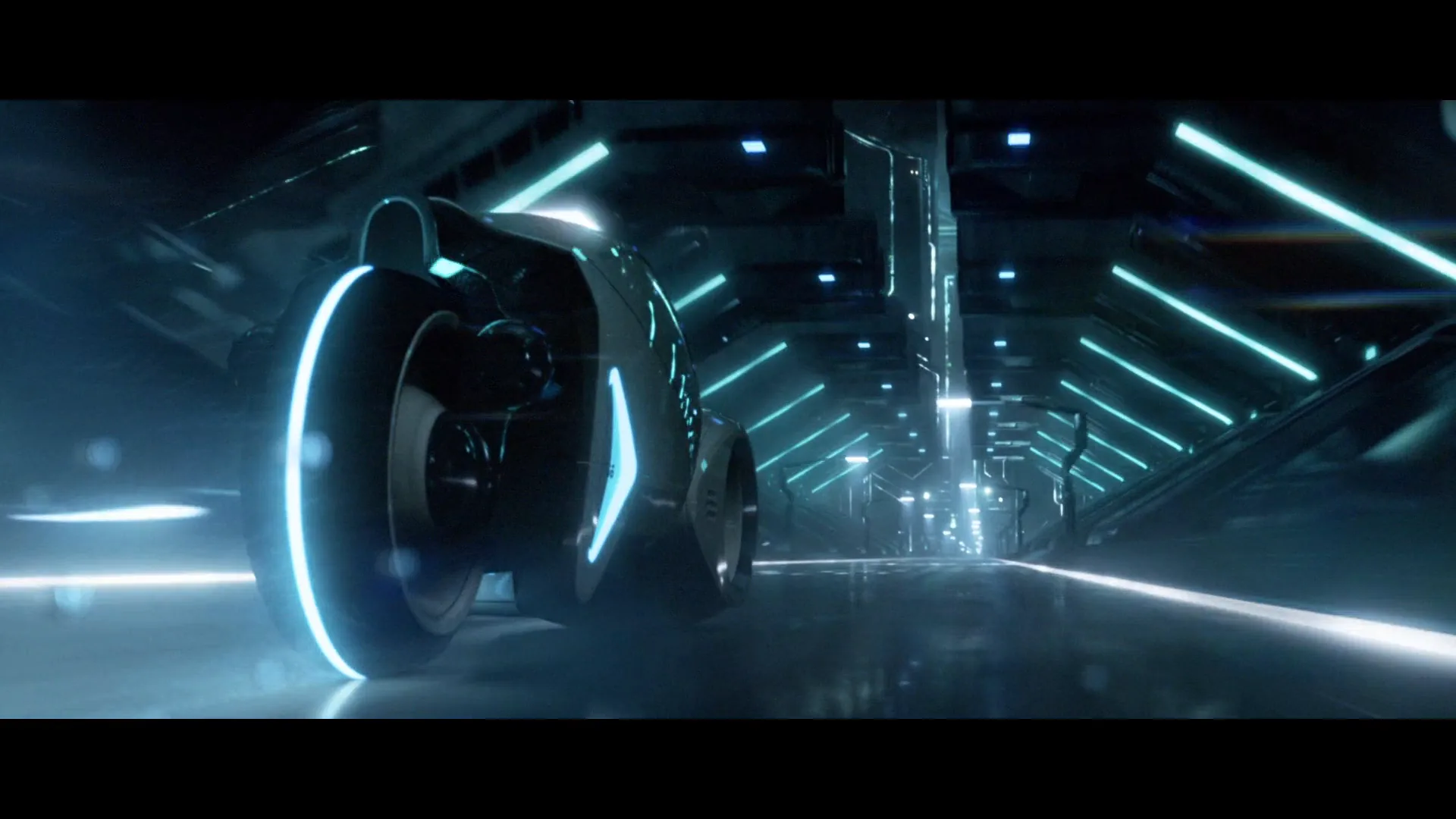
A ground-level shot puts the camera on the floor or a few inches above it, usually level rather than tilted up. The ground becomes a large, textured foreground, and whatever touches it — feet, tires, hooves, dropped objects — happens right at the lens, giving small actions weight and speed.
- What it does
- Turns the floor into a foreground and makes feet, wheels and objects at ground height feel big, fast and close.
- Use it when
- An entrance, a chase, a fall or a small object on the ground should hit harder than it would from eye level.
- Watch out
- The lens is inches from dirt, water and moving feet — plan protection, focus and where the subject stops.
- Try this prompt
Ground-level shot, lens 5 cm above wet cobblestones and level, a cyclist rides toward camera down a narrow street at dusk, 24mm, deep focus
What is a ground-level shot?
A ground-level shot is defined by camera height, not tilt. The lens sits on the ground or within about 15 cm (6 in) of it and usually stays level, so the horizon lands low and the surface — asphalt, floorboards, sand, snow — fills the bottom third or more.
A boot heel or a dropped key becomes as large as a face. It is the lowest rung of the camera angles height ladder, one step below the knee-level shot. Also called a ground shot or floor-level shot.
Why filmmakers use a ground-level shot
- Speed and impact. Wheels, hooves and running feet pass inches from the lens, so motion feels faster than from any tripod height.
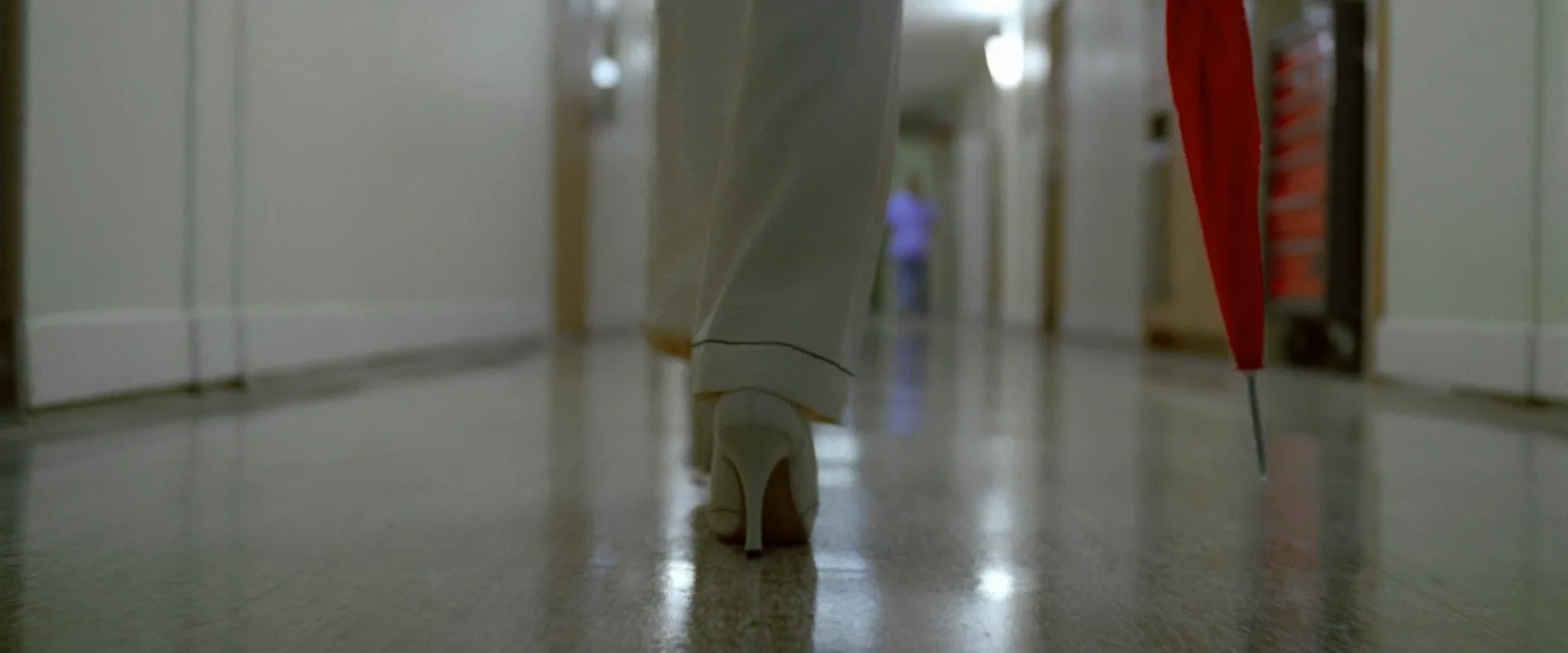
- Anticipation. Showing only feet introduces a character before revealing them — Kill Bill: Vol. 1 (2003) crosses a gleaming corridor from the knees down.
- Vulnerability. Someone lying on the floor, seen from the same height, shares the frame with the ground instead of being looked down on.
- Non-human perspective. It can stand in for an animal or unseen presence, overlapping with the POV shot; the force in The Evil Dead (1981) skims low through the woods.
How to shoot a ground-level shot
Support. Use a hi-hat, a bean bag, an underslung gimbal or the camera on a folded towel. For moves, a skateboard dolly or a slider laid flat keeps the height constant.
Lens. A wide-angle lens (18–28 mm on Super 35) stretches floor texture toward the camera and makes approaching feet grow fast. A long lens (85–200 mm) compresses the ground into a band of shimmer.
Focus. At f/8 on a wide lens, pebbles and horizon hold together; at f/2 the foreground melts into texture. Mark exactly where feet or tires land.
Light and safety. Floors are often the darkest part of a set — a low bounce gives the foreground shape. Use a clear protective filter and a spotter whenever vehicles or stunt performers come near the lens.
Water-level shot
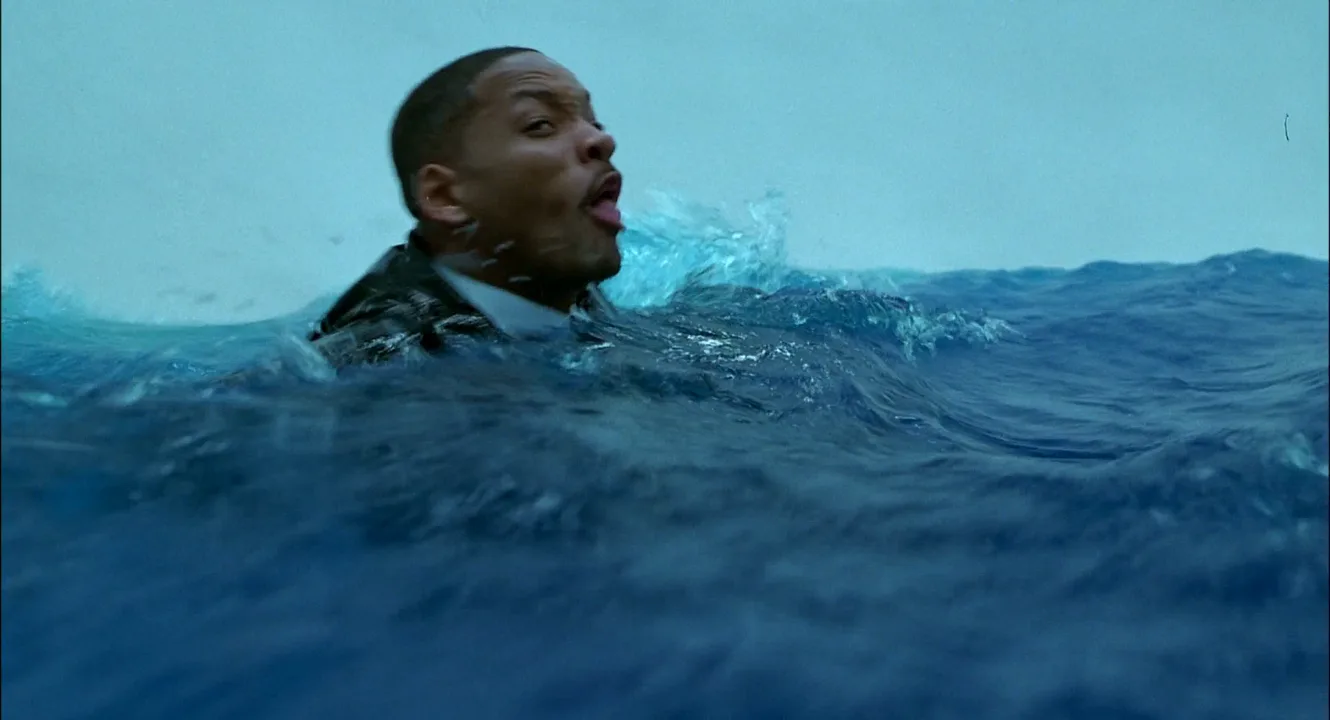
A water-level shot is the liquid version: the lens sits at the waterline, so waves, spray and reflections replace the floor. Swimmers are seen at their own eye height, so the sea feels vast.
The split version — half above, half below the surface — needs an underwater housing with a large dome port so both halves hold focus. Decide whether droplets on the port are part of the look.
Ground-level shot vs. worm's-eye view
Both put the lens at the floor; the difference is where it points.
| | Ground-level shot | Worm's-eye view | |---|---|---| | Tilt | Level or nearly level | Steeply up, 45–90° | | Fills the frame | Ground surface, horizon | Sky, ceiling, towering figures | | Effect | Speed, texture, intimacy | Awe, menace, height |
A worm's-eye view is an extreme low-angle shot: the audience looks up. A ground-level shot looks across the ground and can stay neutral in power terms.
Ground-Level Shot examples in film
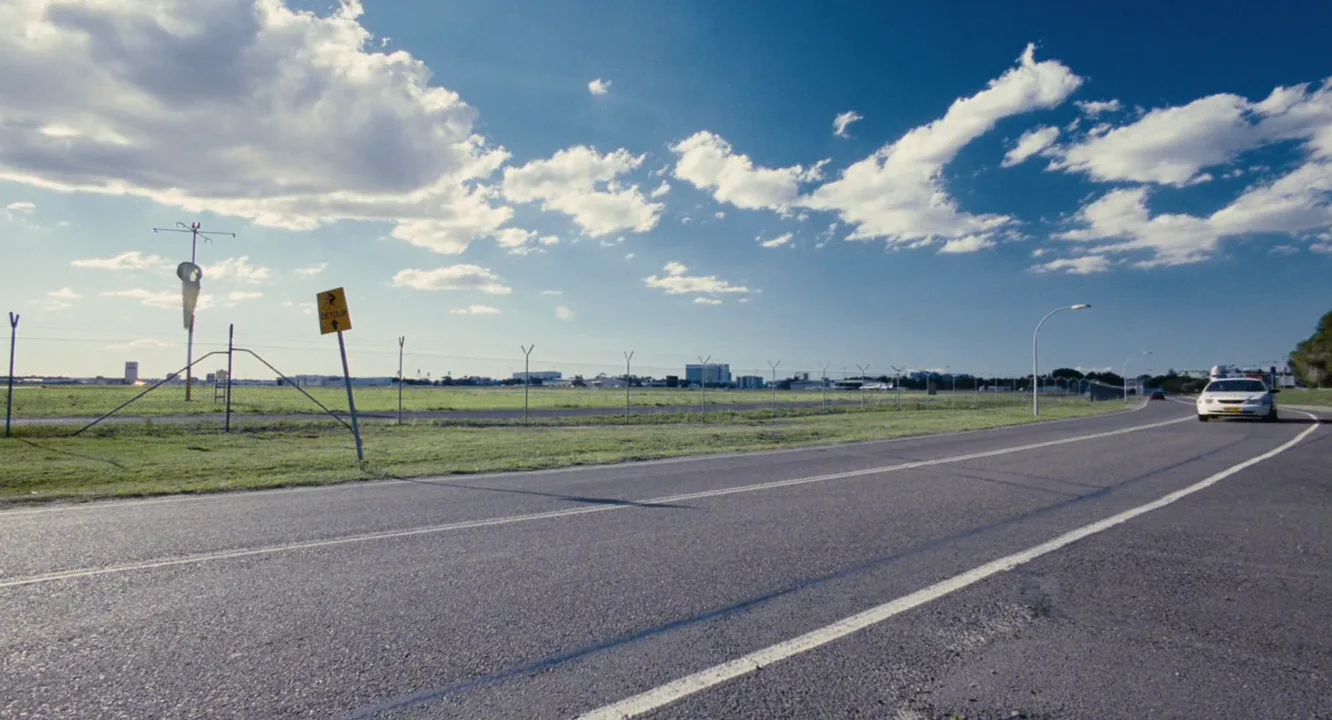
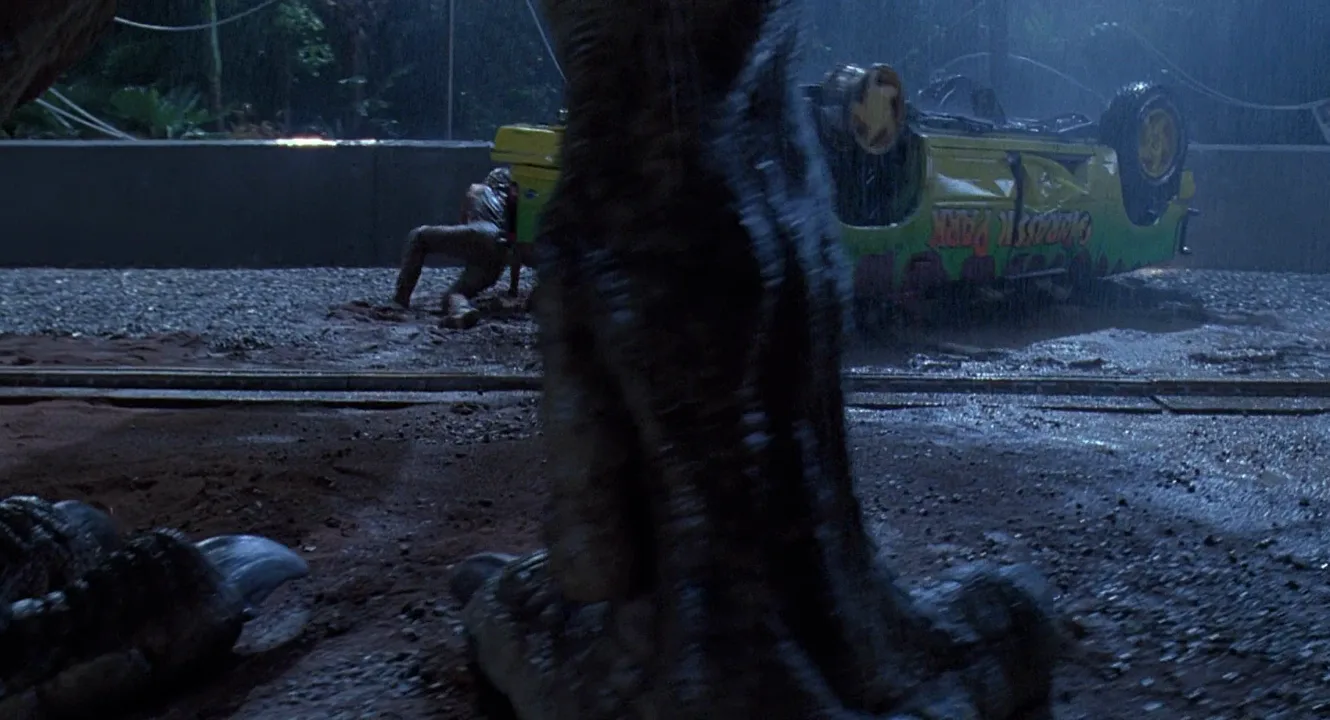
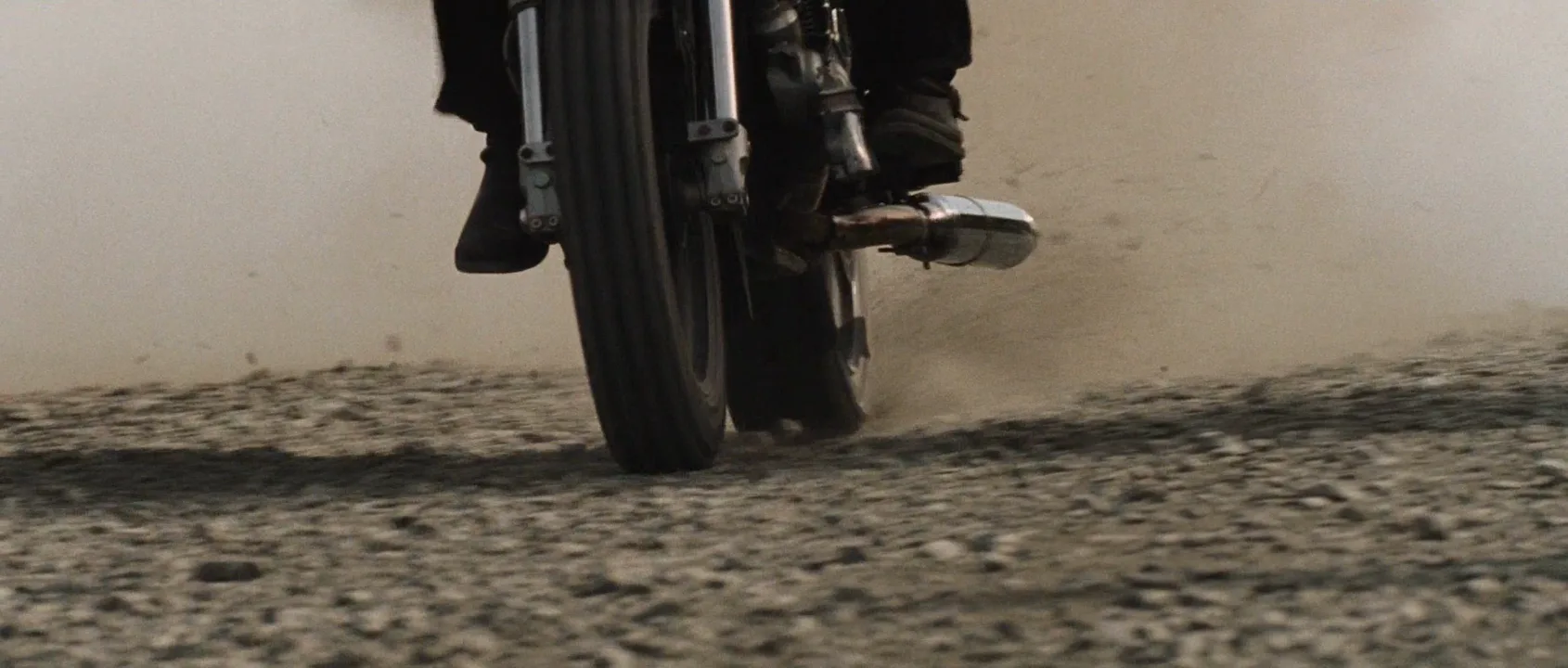
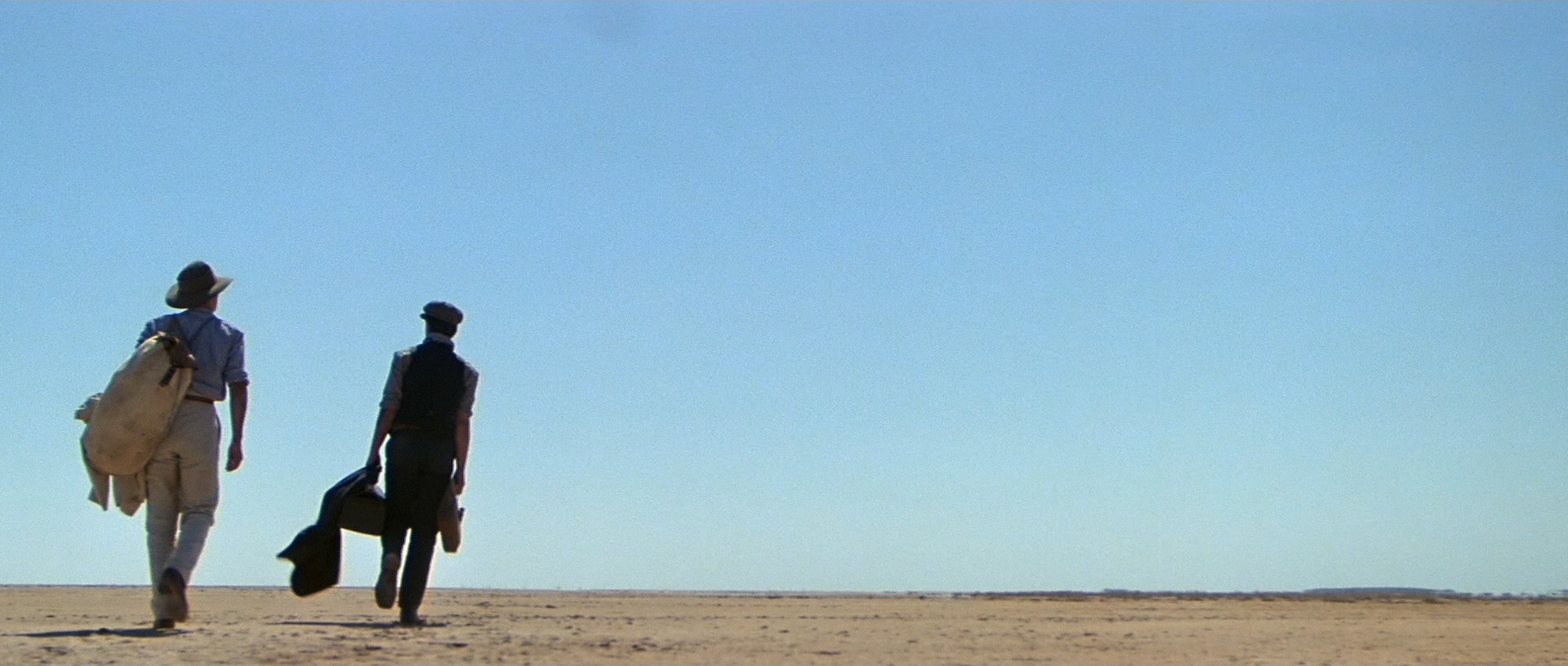
8 framesEight frames with the lens at the floor, road or waterline — watch how much of each frame the surface takes.

How to create a ground-level shot with AI
4 promptsModels drift to eye level and, when told "low," tilt the camera up. Describe a ground-level shot as height plus a level lens plus what fills the foreground. Nano Banana 2 Lite makes the start frame, GPT Image 2.5 a telephoto second take, and MiniMax H3 Max Turbo animates frame one. In FlashBoards, keep film frames beside your takes on one board. The fourth prompt re-shoots a real film shot from a text description alone, and the original plays next to the result so you can compare.
Ground-level shot, lens 5 cm above wet cobblestones and level, not tilted up. Glistening cobblestones fill the lower third, sharp. A courier rides a battered red bicycle toward the lens down a narrow old-town street at dusk, front tire two meters away: a woman in her forties with a shaved head, freckles and a green rain jacket. 24mm lens, deep focus, shop windows reflecting in puddles, cinematic film still
"5 cm above… level, not tilted up" fixes height and tilt, preventing a worm's-eye view. Naming the cobblestones as the lower third makes the ground a real foreground, and "two meters away" puts the action at the lens.
Open FlashBoardsGround-level telephoto shot, 135mm lens, camera flat on a cracked white salt flat, level. The salt crust fills the bottom half, soft near the lens. A tall, lean man with a short red beard, wide-brimmed hat and long gray duster walks toward camera, compressed against a heat-haze horizon one-third from the bottom. Pale sky, harsh noon sun, widescreen film still
The opposite lens logic: "135mm" and "heat-haze horizon" flatten the ground into a band, and "one-third from the bottom" stops the model from centering the horizon at standing height.
Open FlashBoardsCamera: locked on the cobblestones at the same low, level height for the whole shot. Action: The courier is already pedaling toward the lens, water spraying from her front tire. She keeps coming until the wheel fills the lower half of the frame, then swerves past the right side of the camera, leaving the wet street and reflected lights rippling in the puddles.A locked camera preserves the geometry while the rider moves from the first frame, so the model has no reason to creep into a push-in. The ending uses only what the start frame already contains.
Open FlashBoards{
"output": "Full-screen live-action shot from The Protector (2005), live from its very first frame: one continuous shot with no cuts. 2000s 35mm action-film look, hard midday sun, deep blue sky with big white cumulus clouds, saturated teal-and-warm grade, flat green airfield-edge grassland.",
"vehicles": {
"V1": {
"look": "white four-door police sedan with a dark stripe along the side and a light bar on the roof"
},
"V2": {
"look": "silver four-door civilian sedan"
},
"V3": {
"look": "white four-door police sedan with its red-and-blue roof lights flashing"
}
},
"shots": [
{
"shot": 1,
"camera": "locked-off, lens a few inches above the asphalt at the road edge, level and pointed along the road, wide lens, deep focus. Gray asphalt with white painted lines curving away to the right fills the lower half of the frame, road grain sharp near the lens; horizon just below the middle, a windsock on a pole and a yellow road sign on a pole in the left third, big sky above. The camera never moves or rises.",
"action": [
"BEGINNING: alive from the first frame, V1 is already in the mid-distance at centre, speeding toward the lens along the curving road.",
"THEN: V1 grows huge and sweeps past just beside the lens, exiting frame left in a blur, its dark shadow sliding across the foreground asphalt.",
"THEN: the road is empty for a beat; two small cars wait far away at the right on the horizon.",
"THEN: V2 enters from the left edge in the far lane and drives slowly left to right across the frame, away from camera, while V3 races toward the lens from the far right.",
"THEN: V3 passes in front of V2 and grows fast at centre, roof lights flashing.",
"END: V3 blasts past the lens and exits frame left in a motion blur, while V2 shrinks toward the right horizon."
],
"dialogue": [],
"voice": "silence: nobody speaks in this shot, no voice at all"
}
],
"sound": {
"ambience": "open-country wind, engines rising and roaring past the lens with a whoosh, tires hissing on asphalt, a siren wail on V3",
"speech": "no words in this video; the only human sounds are breaths and movement",
"never_spoken": "no narration and no voice-over: the descriptions, performance notes and step words of this prompt are never spoken aloud",
"music": "a film score under the scene, always below the voices: driving low percussion with a tense rising string ostinato",
"subtitles": "none"
}
}This remakes the road-edge shot from The Protector (2005): the prompt carried over the level lens on the asphalt, the windsock and sign, and the two police cars sweeping past on the left.
The camera field pins a level lens a few inches above the asphalt and says it never rises, so the model keeps the road filling the lower frame. Each car gets its own action phase, and the explicit silence plus a single score line keep invented voices out.
Open FlashBoardsCommon mistakes
- The camera rises to knee or hip height. State lens height in centimeters and make the ground the lower third.
- The camera tilts up. Add "level, not tilted up" and put the horizon low.
- Mushy foreground. Name the surface and its texture, and say sharp or soft.
- Water-level goes fully under or above. Write "lens at the waterline, surface cutting across the middle of the frame."
Keep the reference frames, prompts and every generated take side by side — images and video in one canvas.
FAQ
4 questionsWhat is a ground-level shot in film?
A ground-level shot places the camera on or just above the floor, usually level rather than angled up. The ground fills the lower frame and anything touching it — feet, tires, falling objects — happens right at the lens, which exaggerates speed and can hide a character's identity by showing only their steps.
What is the difference between a ground-level shot and a worm's-eye view?
Same height, different tilt. A ground-level shot looks across the ground with a level lens, so floor and horizon dominate. A worm's-eye view points steeply up from the same spot, so sky, ceilings and towering figures fill the frame. One is about the ground and motion along it, the other about height and power.
How do you film a ground-level shot without special gear?
Set the camera directly on the ground on a folded towel or bean bag and level the lens with a small wedge. Use a wide lens and a small aperture so ground and subject both hold focus, frame on a flip-out screen, mark where the subject stops, and protect the lens with a clear filter.
What is a water-level shot?
A water-level shot sits the lens at the waterline, so waves and reflections replace the ground and swimmers are seen at their own eye height. A split version, half above and half below the surface, needs an underwater housing with a dome port. It suits rescues, shipwrecks and any scene where the water is the threat.
Related terms
3- Worm's-Eye ViewCamera Angles
A worm's-eye view places the camera on or near the ground pointing steeply upward, so buildings, trees and people tower over the lens and the sky or ceiling fills the background — an extreme form of the low angle.
- Low-Angle ShotCamera Angles
A low-angle shot looks up at the subject from below eye level, making them loom larger against the ceiling or sky — used for power, menace or heroism, or to make a space feel monumental.
- POV ShotCamera Angles
A POV shot shows exactly what a character sees by placing the camera at their eyes — usually right after a shot of them looking — so the audience shares their perspective, including movement, obstruction or distortion.
Further reading
Blain Brown, Cinematography: Theory and Practice — camera height and angle. Steven D. Katz, Film Directing Shot by Shot — lens height and staging for effect.