 FlashBoards Learn
- Learn
- Camera Angles
- POV Shot
Camera Angles · Film language
POV Shot
Also called: point of view shot, first-person shot, subjective shot
A POV shot, or point of view shot, shows exactly what a character sees by placing the camera at their eyes. It usually follows a shot of the character looking, so the audience reads the next image as their view and shares their perspective, including their movement, obstructions and distortions.
- What it does
- Puts the audience behind a character's eyes, so they discover information at the same moment and in the same way the character does.
- Use it when
- You need identification, suspense, a reveal, a limited or impaired view, or to show exactly what a character notices.
- Watch out
- Without a clear look shot before it, or a body anchor inside it, a POV reads as an ordinary angle; held too long, it becomes a video game.
- Try this prompt
First-person POV from a person's eyes, their own hands in the lower frame holding a paper map, crowded night crosswalk, pedestrians glancing into the lens, 28mm, eye height 165 cm
What is a POV shot?
A POV shot, short for point of view shot, frames the scene from a character's eye position so that the image on screen is what that character sees. It is also called a first-person shot or subjective shot. Among the camera angles it is the only one defined by whose eyes the camera stands in for, not by height or tilt: a POV can be a low angle from a child, a high angle from a balcony or a straight-down view at someone's own feet.
Context, more than any single frame, makes a POV. The classic pattern has three shots: the character looks off-screen, we cut to what they see, we cut back to their reaction. That middle cut depends on an eyeline match, with the gaze direction and height matching, and the third shot, the reaction shot, tells us what the character makes of it.
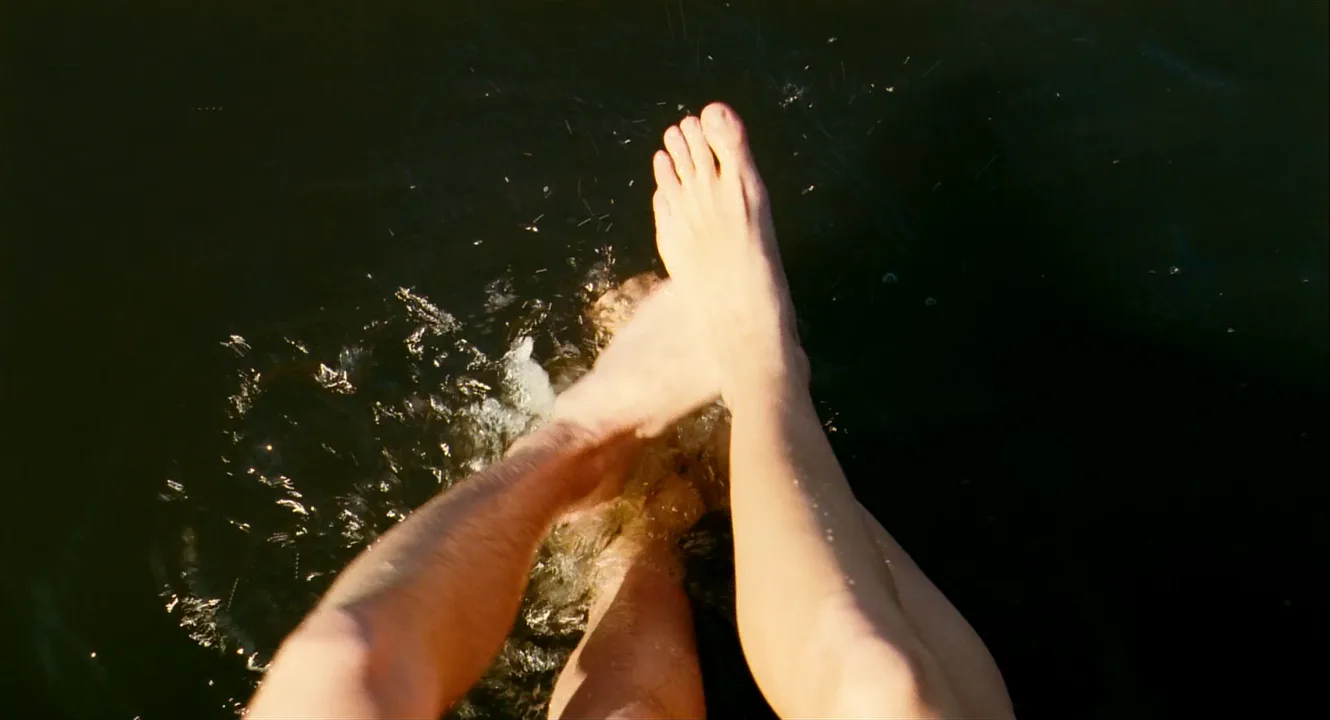
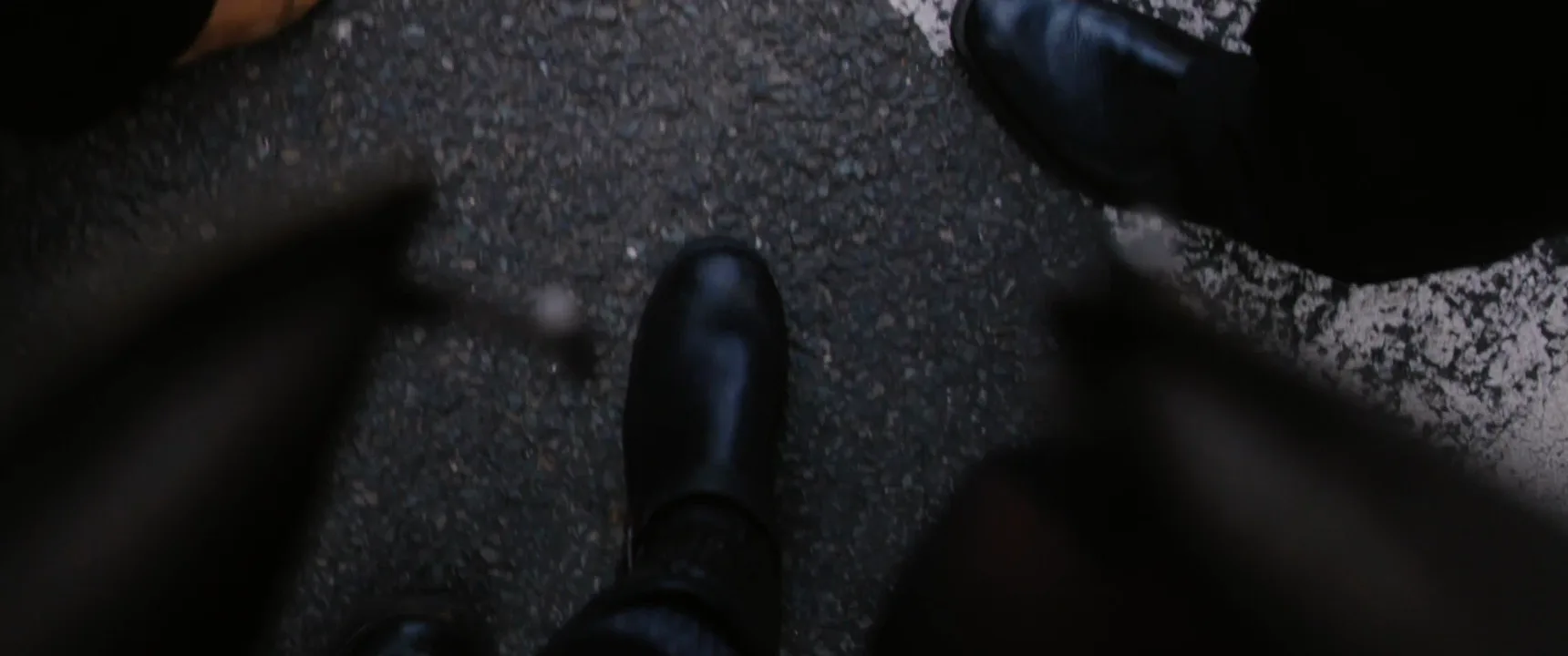
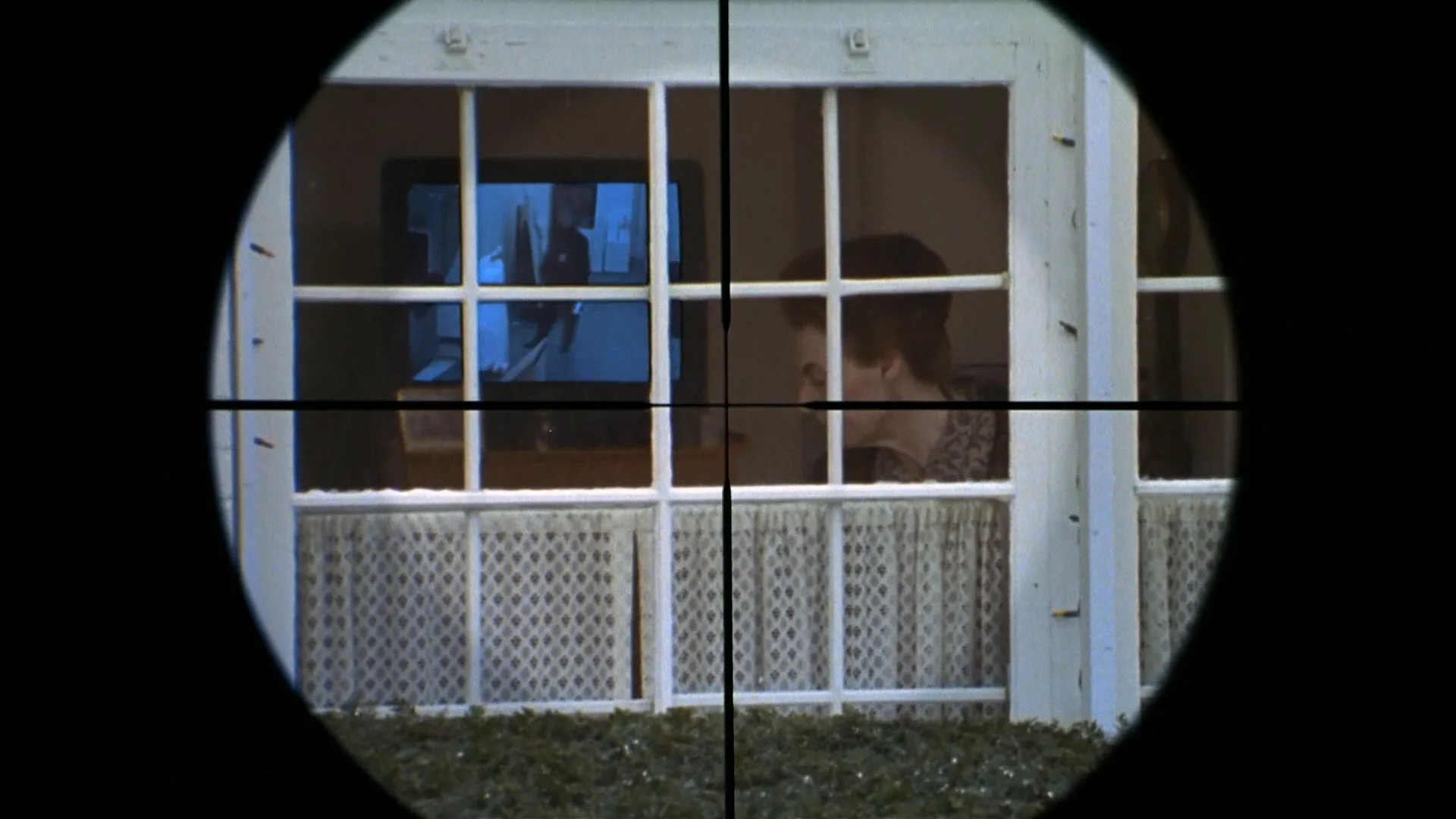
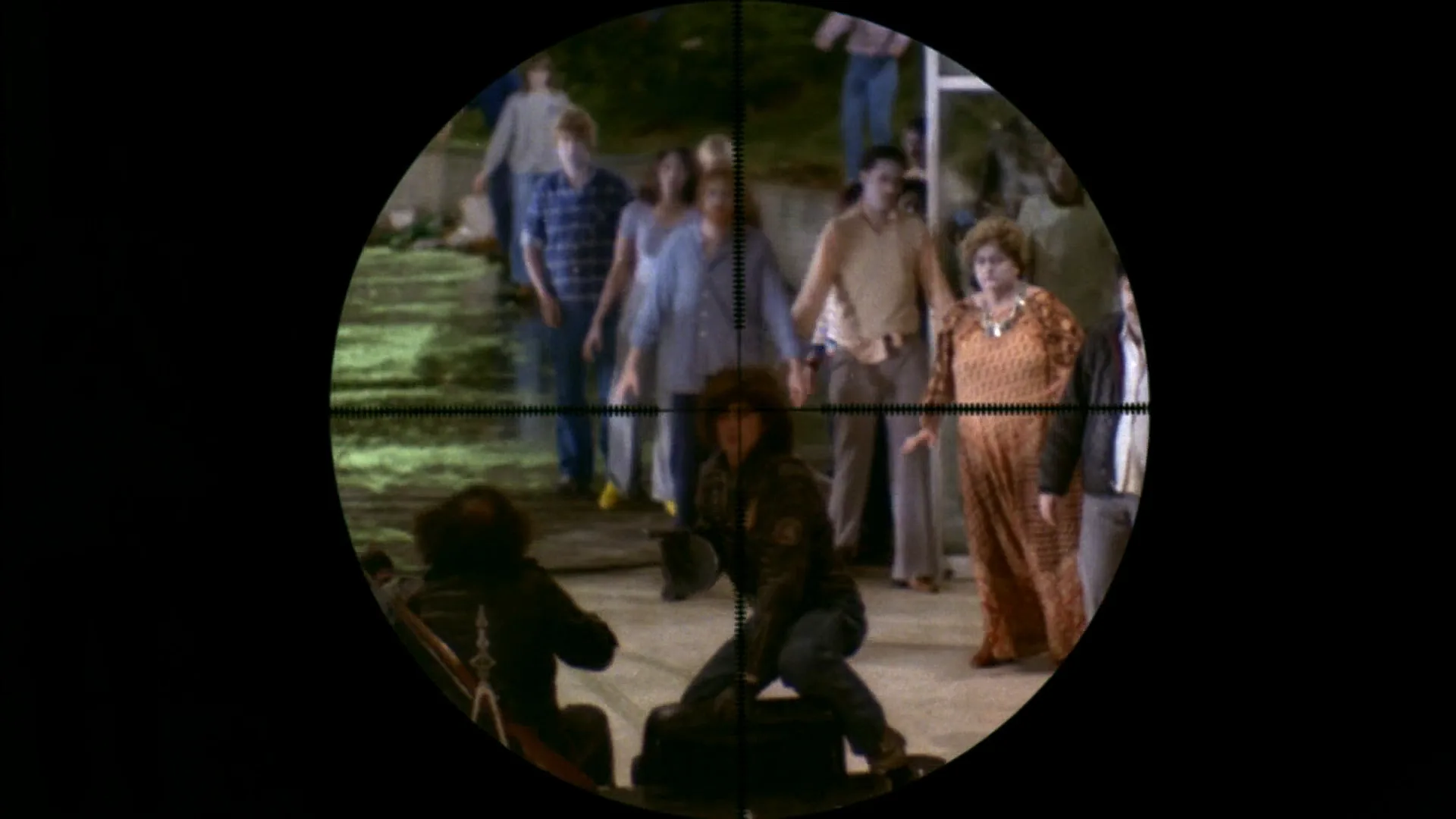
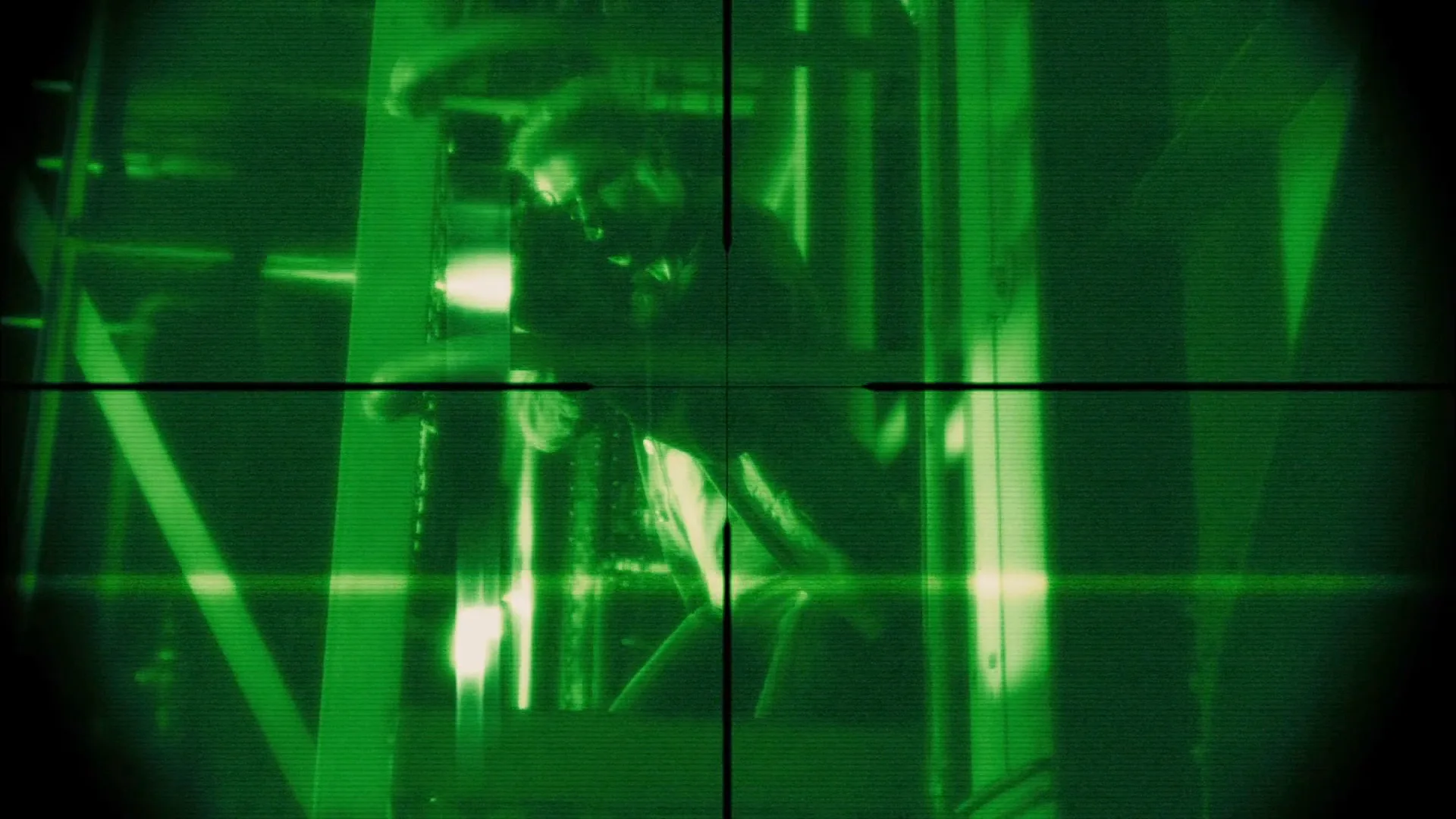
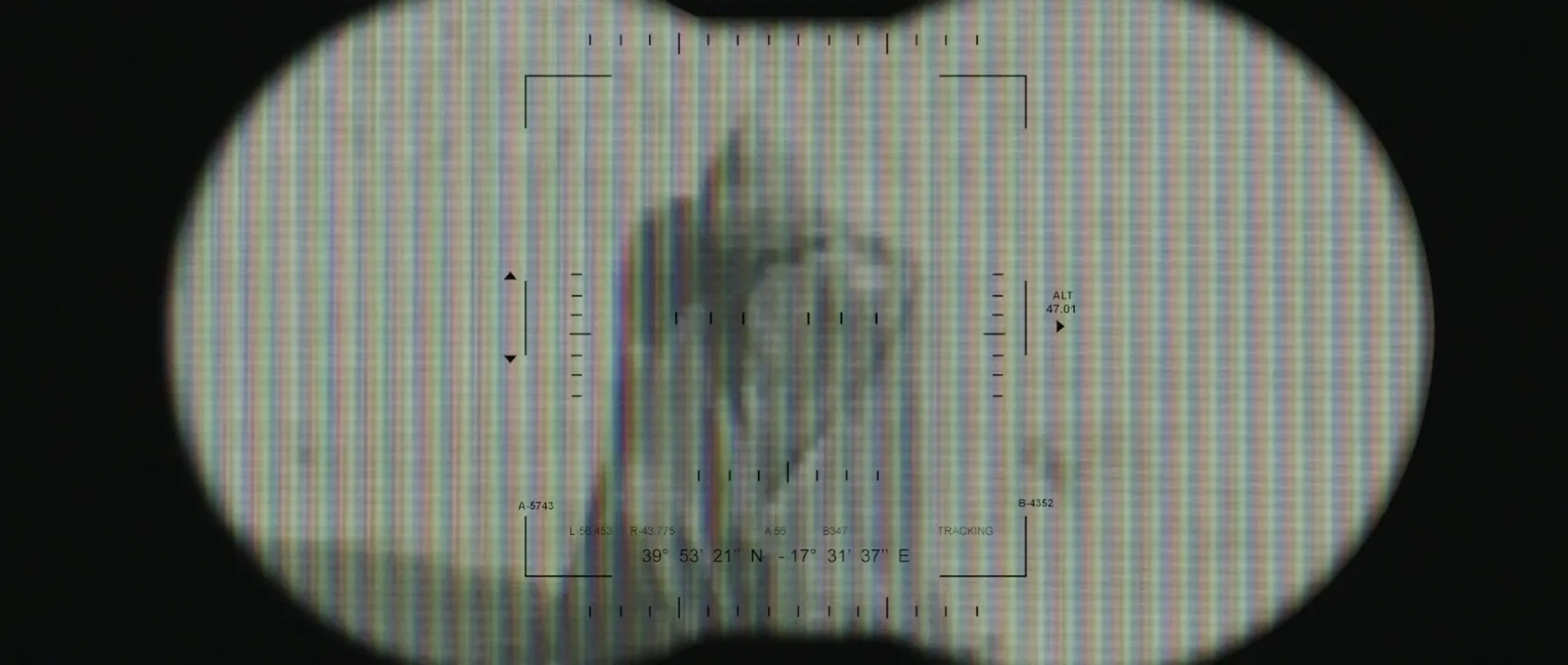
Inside the frame, a POV is anchored by clues: the character's own hands or feet at the edge, people looking straight into the lens, movement that behaves like a head, or a binocular, keyhole or scope mask.
Why do filmmakers use POV shots?
- Identification. We learn what the character learns, in the order they learn it.
- Suspense and dread. The opening of Halloween (1978) is one long POV of an unseen figure prowling a house, part of it through the eyeholes of a mask. Unable to see who we are, we become complicit, and the device has stayed central to horror.
- Watching. In Rear Window (1954) Hitchcock cuts repeatedly from Jeff looking to what he sees across the courtyard and back to his face. POV and the voyeur shot often work together: the POV makes us the one spying.
- Limited or impaired perception. The Diving Bell and the Butterfly (2007) shows its paralyzed narrator's world through one eye, blurred, blinking and partly out of frame.
- Immersion. Lady in the Lake (1947) was shot almost entirely from the detective's POV, and Hardcore Henry (2015) took the idea to action with head-mounted cameras. Both show the limit: we identify through faces, and a first-person film hides the hero's.
Most films therefore use POV in short bursts, cutting back to the face so the audience both sees and feels.
How to shoot a POV shot
Height and lens
Measure the actor's eye height and put the lens there: about 160 to 175 centimeters standing, 115 to 125 seated, lower for a child. The shot before it must agree; if the character looks down from a staircase, the POV looks down from the same step. A 25 to 35mm lens on Super 35 feels close to natural human attention. A wide-angle lens at 18mm or wider exaggerates presence and panic; a long lens reads as the character concentrating on one thing.
Movement
A person's view never glides like a dolly. Handheld is the usual choice for walking and searching: the operator copies the actor's gait, stops when they stop, turns the lens like a head, with a quick move and a small settle. A gimbal suits dreamlike or mechanical POVs. Helmet or chest rigs serve extended first-person action.
Anchors and eyelines
Put the character in the frame without showing their face: hands reaching for a door, feet on a ledge, the edge of a hood. Other actors deliver lines straight into the lens, not just past it as in normal coverage; that direct look tells the audience they are being addressed.
Optical and sound cues
Binocular, scope and keyhole shapes are mattes built in camera or in post. Racking focus can follow attention, and breathing or footsteps on the track sell a view from inside a body.
Animal POV
An animal POV puts the camera where a creature's eyes would be: 30 to 60 centimeters above the ground for a dog, skimming the surface for a cat, below the waterline for a fish, high and circling for a bird. People become legs and the world feels bigger and faster.
The best-known example is Jaws (1975), where the camera glides beneath the swimmers, looking up at kicking legs, and John Williams's theme tells us whose eyes these are. Predator (1987) went further and changed the image itself, rendering the creature's view in heat-map colors. Those are the two levers: position and perception.
On set, use a wide lens low to the ground on a small gimbal, a car mount or a handheld rig close to the floor, and move with the animal's rhythm: quick darts, sudden stops, sniffing pauses. Grass or obstacles brushing past the lens sell the height. A shifted palette can suggest animal vision, as long as the scene still reads.
Object POV
An object POV shows the scene from the position of a thing: the inside of a fridge, oven, locker, washing machine, mailbox or safe. Characters open it and look straight into the lens, as if at the object. The object has no eyes, but the framing mirrors a POV and the audience accepts it instantly.
The most famous version is the trunk shot: the camera sits in a car's trunk, looking up at characters leaning over it, a signature Quentin Tarantino used in both Reservoir Dogs and Pulp Fiction. The opening frames the faces, and the low angle makes whoever stands over the trunk dominant.
Object POV is naturally comic (a tired face lit by a fridge bulb) or ominous (a hand reaching into a locker). Build an opening large enough for a wide lens and motivate the light from the object itself.
Screen POV
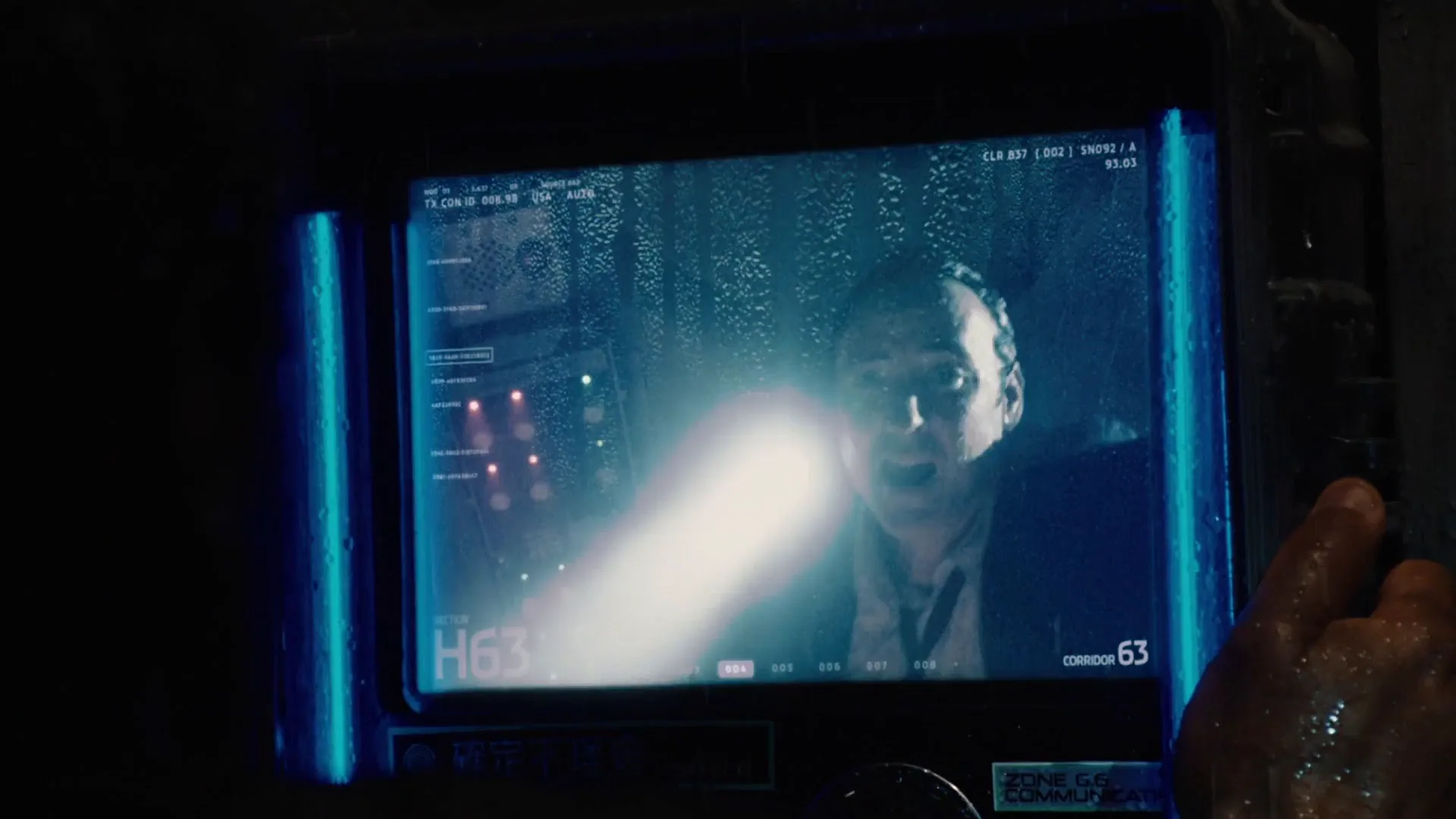
A screen POV shows the scene as a device captures or displays it: a phone camera, camcorder, webcam, CCTV monitor, drone feed, scope or heads-up display. The device's interface is part of the image, with timecode, focus brackets, battery icons, scan lines, low resolution or a record light.
Films use it in two ways. In found footage, The Blair Witch Project (1999) and Cloverfield (2008) make the characters' own camera the only camera, so its framing, shakes and failures are the style. In machine vision, The Terminator (1984) and RoboCop (1987) show their cyborgs' views as red or scanning HUD displays with text readouts, telling us these eyes are not human. Screenlife films push the idea to feature length on a computer desktop.
Match the device's lens, frame rate, compression and autofocus hunting, and design the interface before the shoot so actors can play to it.
POV shot vs. over-the-shoulder shot
An over-the-shoulder shot looks at one character past the shoulder and head of another. The viewer is a third party standing just behind the listener, seeing both people and the space between them. A POV removes that shoulder: the camera takes the listener's place, so the other character looks straight into the lens and the audience receives the look directly.
The OTS keeps a conversation grounded; cutting from OTS coverage to a clean POV breaks that balance for a confession, a threat or a stare.
Two other neighbors are easy to confuse. The Snorricam is body-mounted but aims back at the actor's face, the opposite of a POV. And subjective cinema is broader: it includes POV shots, but also sound, focus and editing that mirror what a character feels without literally showing what their eyes see.
POV Shot in motion
12 clipsWatch for the moment an image stops being a neutral view and becomes someone's: a cut from a face to what it sees, hands or feet at the frame edge, an optic's mask, a lens that moves like a head. The first clips run the look-and-POV pattern, the middle ones lean on body anchors, the last hand the view to devices, a dog and objects.



POV Shot stills
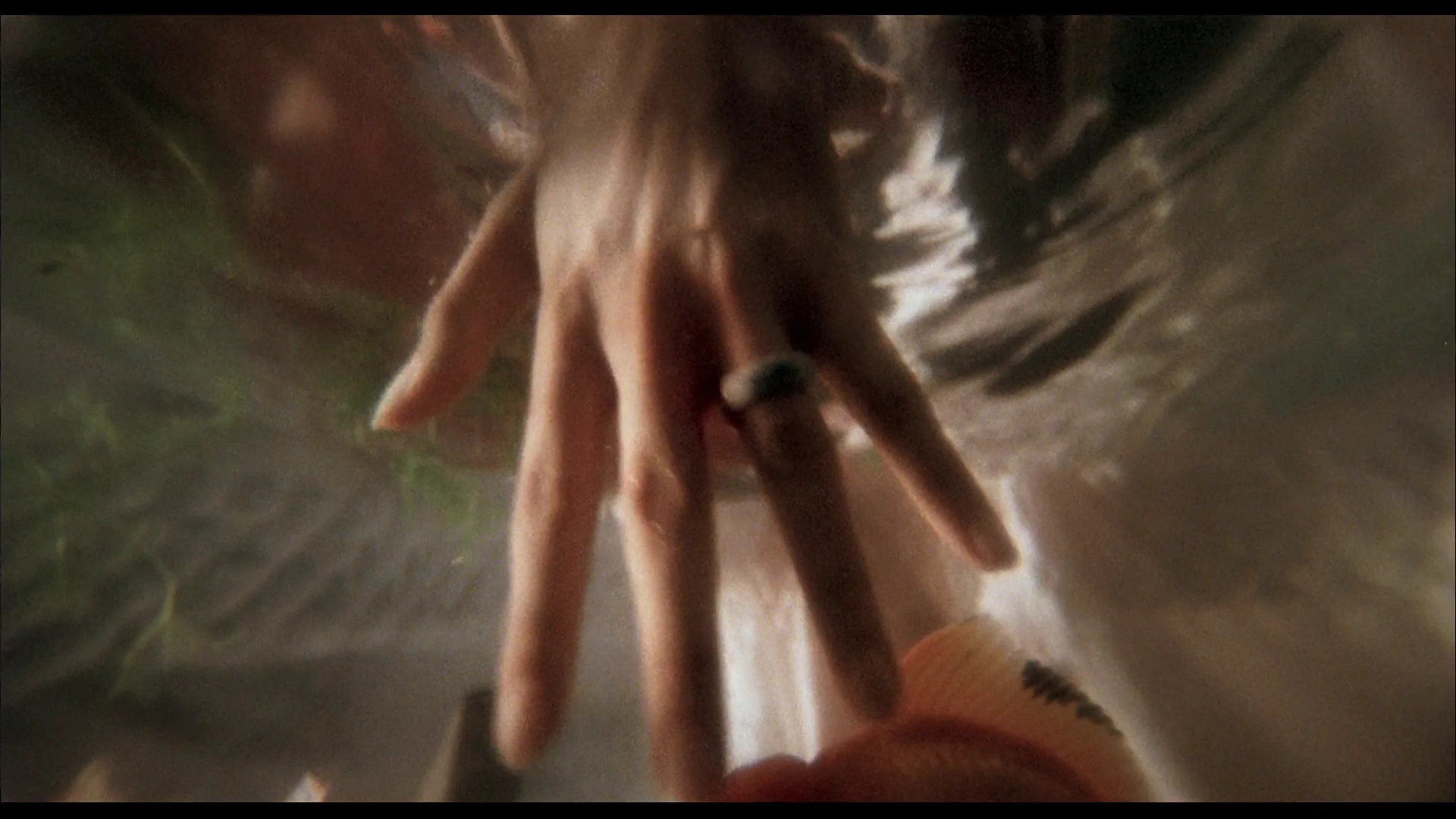
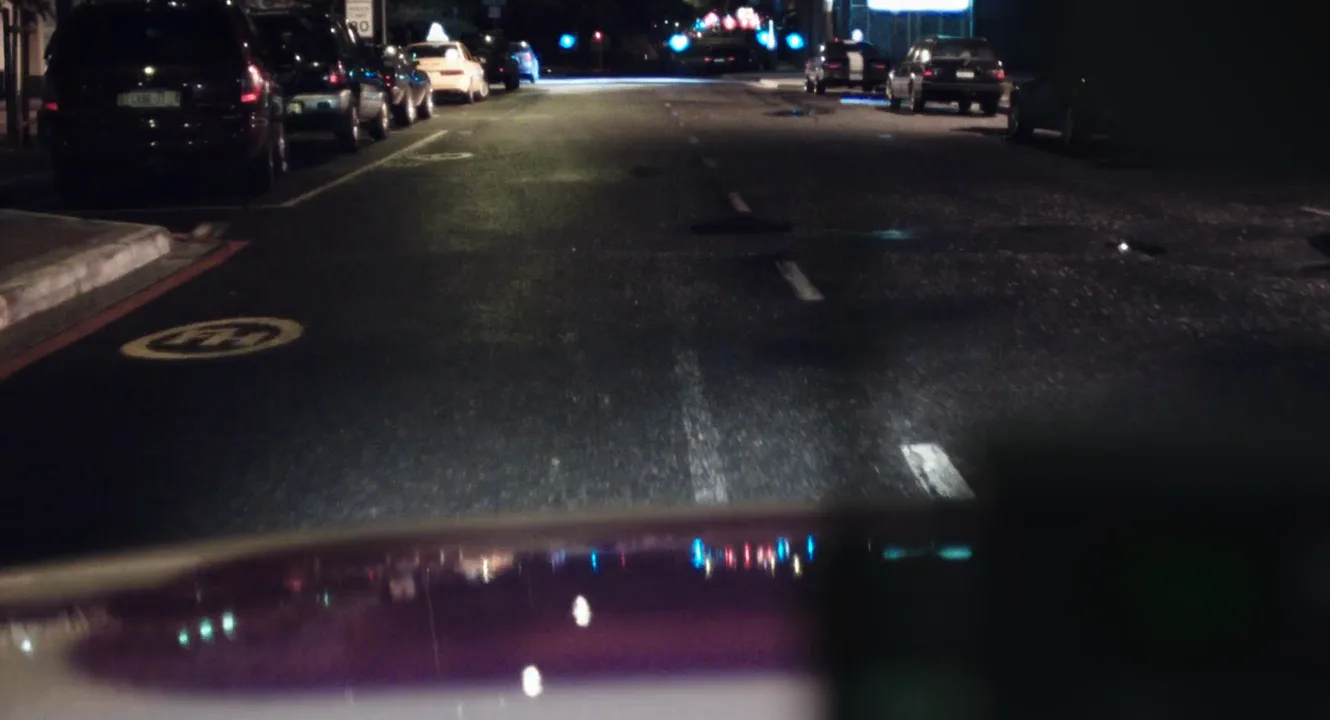
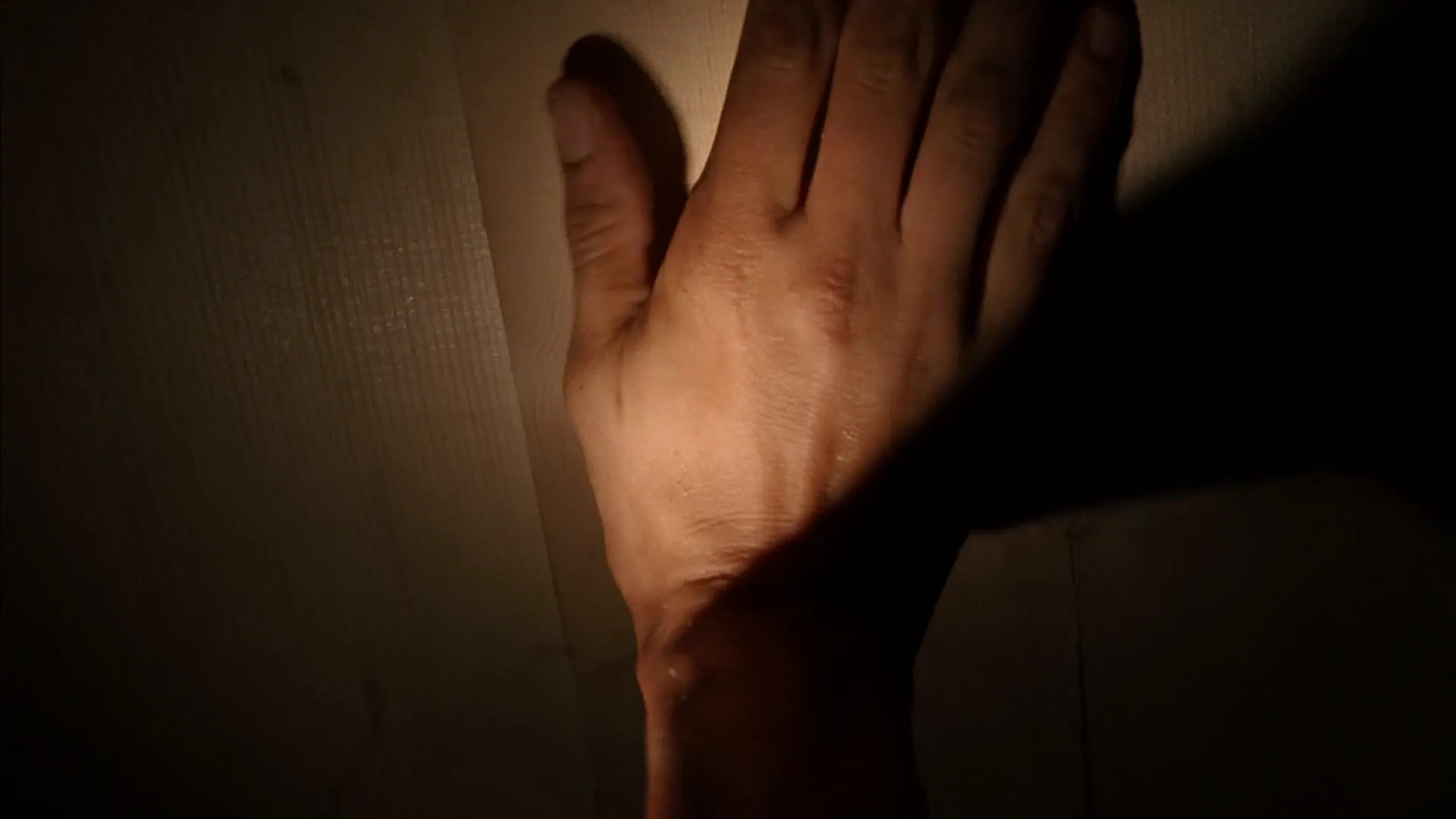
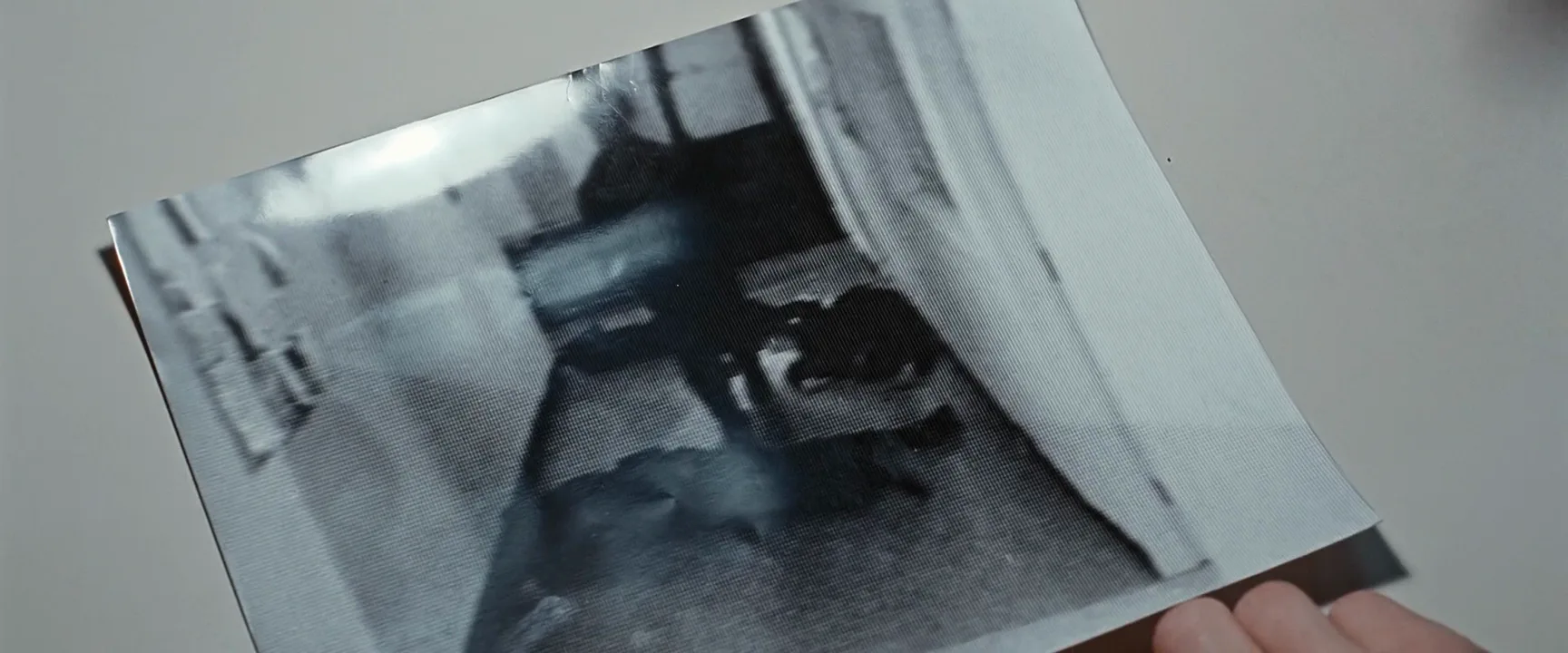
12 framesThirteen POV frames from feature films. Look for the anchors that tell you whose eyes these are: hands and feet in frame, a car hood, an optic's mask, a screen held in the hand.
How to create a POV shot with AI
4 promptsModels tend to show a person rather than become one, so a POV prompt has to remove the character from the frame and put the camera in their head. In FlashBoards, build the start frame in Nano Banana 2 Lite, try a second take in GPT Image 2.5 and animate the frame with MiniMax H3 Max Turbo; keep the look shot, the POV and the reaction on one board so you can check eyelines and height across the sequence and compare takes side by side. The fourth prompt re-shoots a real film shot from a text description alone, and the original plays next to the result so you can compare.
First-person POV shot seen through a person's eyes; we never see the person, only their own two hands in the lower frame holding an unfolded paper map. Crowded Tokyo crosswalk at night, pedestrians walking toward the camera, two of them glancing directly into the lens. Camera at 165 cm eye height, 28mm lens, neon reflections on wet asphalt, slight motion blur, cinematic still.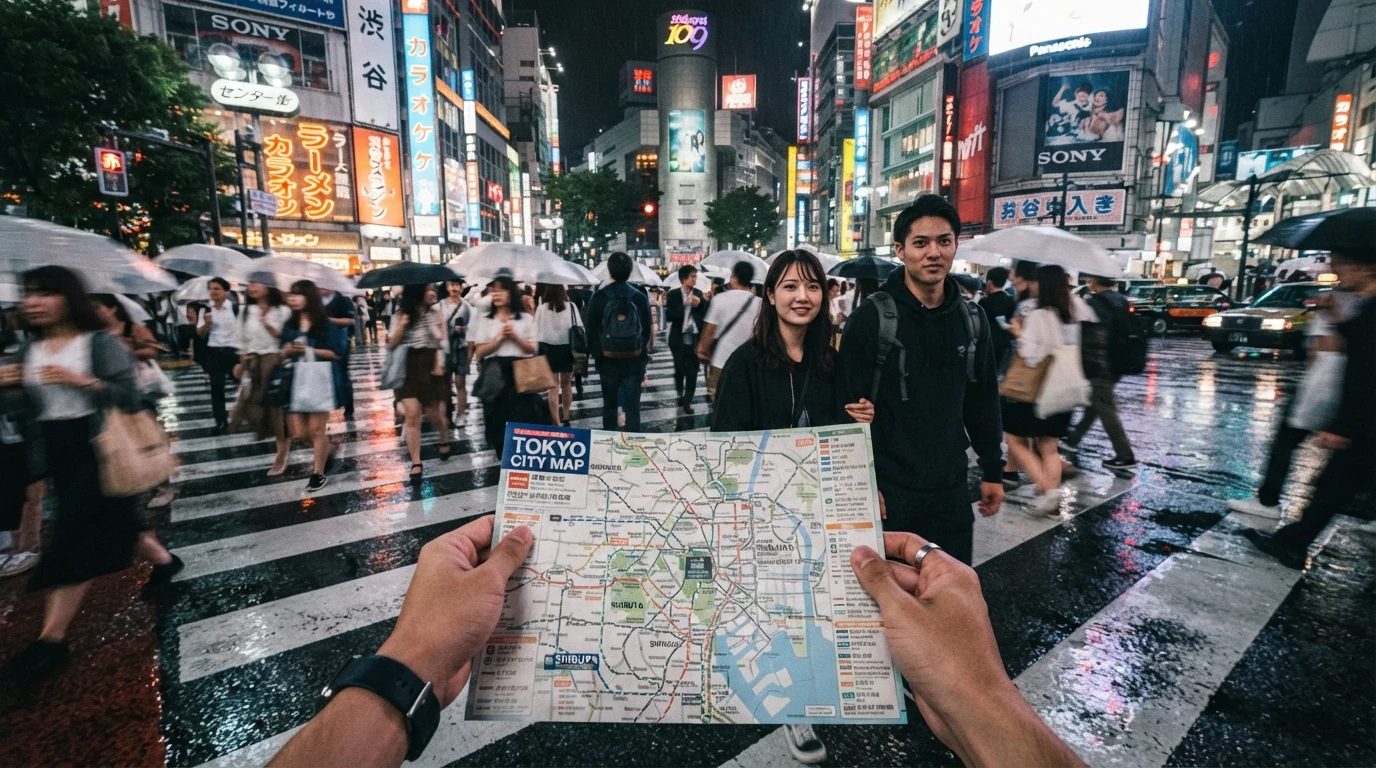
We never see the person, only their own two hands stops the model from drawing an over-the-shoulder view. Glancing directly into the lens and camera at 165 cm eye height supply the two cues that make an image read as POV.
Open FlashBoardsObject POV from inside an open refrigerator, looking out past glass shelves and milk bottles in the foreground at a tired man in a bathrobe bending down and staring into the fridge, eyes meeting the lens. Cold white fridge light on his face, dark kitchen behind him, wide 18mm lens, symmetrical framing, the fridge interior framing the shot.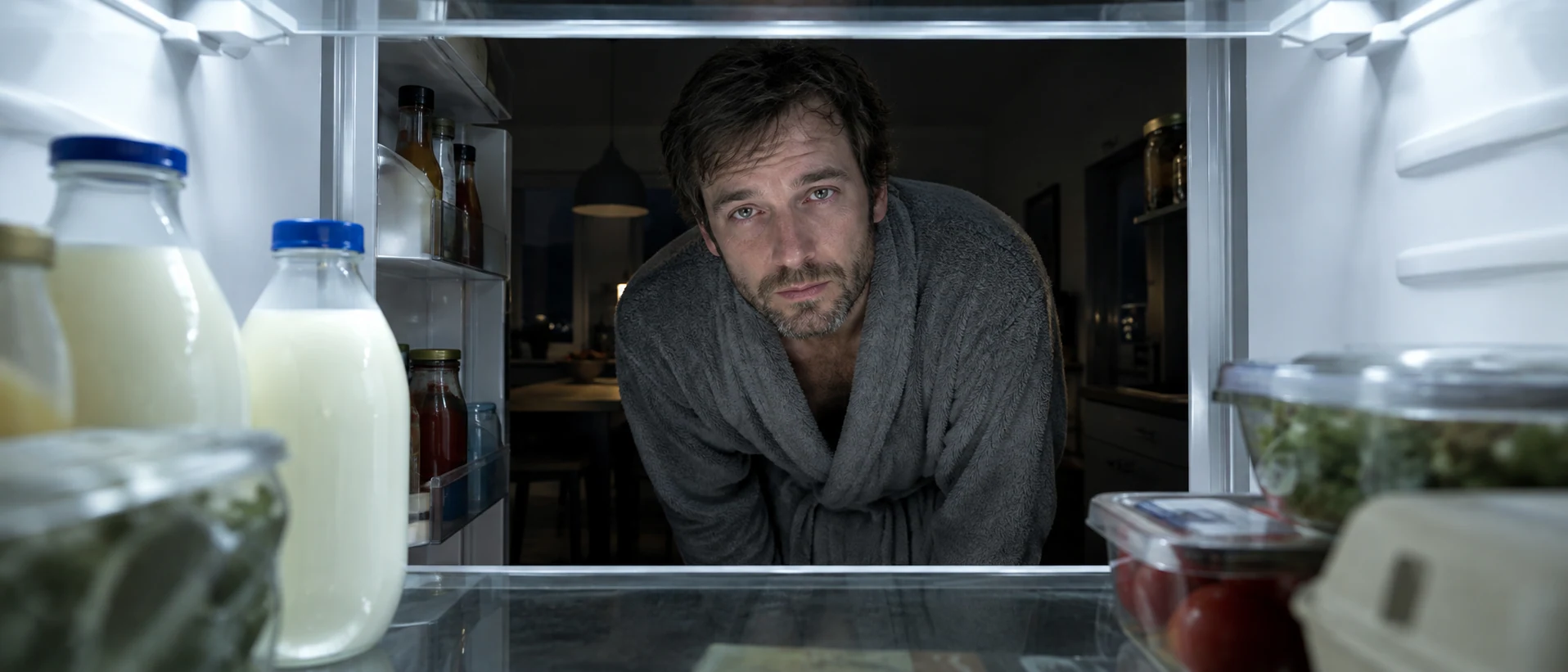
A second take on the same idea with a different owner of the view. From inside an open refrigerator, looking out places the camera; foreground shelves build a frame within a frame, eyes meeting the lens makes him look at us, and the fridge light as the only key makes the object the point of view.
Open FlashBoardsCamera: handheld first-person view at eye height, walking forward at a steady pace from the first frame, with a slight head-bob on every step. Action: From the first frame, pedestrians stream toward the camera, neon reflections ripple on the wet asphalt and the two hands hold the paper map steady in the lower frame. In the middle, the view lifts from the map to the crowd and one passerby looks straight into the lens while passing close by. At the end, the hands lower the map out of the lower frame and the view keeps walking into the crowd.Walking forward at a steady pace from the first frame and slight head-bob on every step make the move feel like a body, not a dolly, and start it immediately. The hands stay in the action from first to last line, so the POV anchor never disappears, and the passerby's look into the lens gives the shot its middle beat. Everything described is already in recipe 1's frame.
Open FlashBoards{
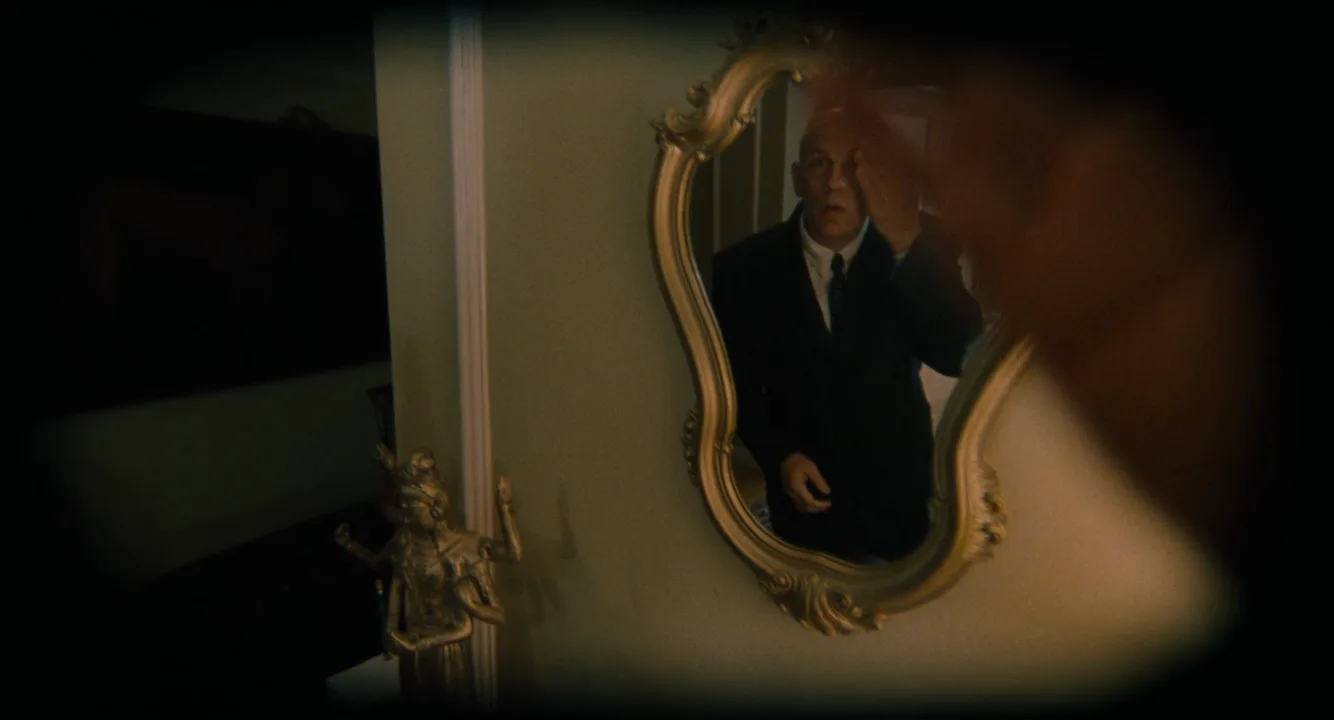
"output": "Full-screen live-action POV shot from Being John Malkovich (1999), alive from its very first frame: one continuous shot, no cuts, seen through S1's own eyes. Late-1990s 35mm film look, dim warm tungsten apartment interior, amber, olive-green and gold palette, soft film grain. The whole image sits inside a soft, dark, rounded oval vignette with a blurry warm-brown rim on every edge, as if looking out from inside a head.",
"characters": {
"S1": {
"name": "John Horatio Malkovich, played by John Malkovich",
"look": "seen only as his reflection inside the mirror: a man in his mid-forties, bald crown with close-cropped grey hair at the sides, pale face, black suit, white shirt, narrow black tie",
"voice": "silent in this shot, only soft breathing"
}
},
"shots": [
{
"shot": 1,
"camera": "first-person point of view from S1's eyes at standing eye height, a normal lens, with the small sway of a living head; the camera is his eyes, so the only parts of him ever seen directly are his own hand blurring past the lens and his reflection in the mirror; it starts looking down at a side table, tilts up with a brief roll to face a wall mirror, holds on the mirror with small drifts, and ends leaning a little closer to it",
"action": [
"BEGINNING: alive from the first frame, the view looks down at a marble side table veined in amber and brown: a dark green cordless phone with its antenna raised on the left, a small dark oval tray in the middle, a small silver lighter beside it and a gilded fish-shaped lamp base on the right; the view sways gently with breathing.",
"THEN: the view lifts and swings up and to the left, the tabletop sliding down out of the bottom right of the frame and the image canting for a moment, until an ornate gilded rococo mirror on a pale green wall settles level in the centre, a white pilaster on the left and a small gilded statuette in the lower left foreground.",
"THEN: inside the mirror, S1's reflection stands at mid shot facing the lens, eyes on his own reflection, both hands at his collar straightening the knot of his black tie.",
"THEN: he tugs the tie straight with the hand on screen right while the other hand rests at his waist, studying himself.",
"THEN: he raises the hand on screen right toward his face, and in the same moment a huge, soft, out-of-focus real hand sweeps up across the right half of the lens: his own hand passing in front of his eyes.",
"THEN: in the mirror he rubs his brow with that hand, then strokes it back over his bald scalp, face intent.",
"THEN: the blurred real hand drops past the lower middle of the lens as he lowers his arm.",
"END: both his hands rest together at his waist, fingertips touching; he looks straight into the mirror and into the lens, lips slightly parted without a word, and the view drifts a little closer so his reflection grows in the frame."
],
"voice": "silence: nobody speaks in this shot, no voice at all",
"dialogue": []
}
],
"sound": {
"ambience": "a muffled, hollow room tone as if heard from inside a head, the soft rustle of a suit and fingers brushing skin",
"speech": "no words in this video; the only human sounds are breaths and movement",
"never_spoken": "no narration and no voice-over: the descriptions, performance notes and step words of this prompt are never spoken aloud",
"music": "a film score under the scene, always below the voices: soft, curious plucked strings and a wistful celesta over a slightly uneasy pulse",
"subtitles": "none"
}
}Remakes the mirror shot from Being John Malkovich (1999): the prompt carries over the dark oval vignette, the tilt up from a marble table to a gilt mirror, the tie straightening, the blurred hand crossing the lens and the silence.
First-person point of view from S1's eyes and the dark oval vignette put the camera inside his head, and the mirror is the only place he can appear, so the model shows his face without breaking the POV. The blurred hand that sweeps across the lens in the same moment his reflection raises it ties body and view together; in the result it lingers longer than in the film, but the beat lands in the same place. Nobody speaks in the original, so the prompt asks for silence under a quiet score.
Open FlashBoardsCommon mistakes
- The model shows the character instead of their view. Say we never see the person and describe only what enters the frame from their body.
- Extra or wrong-sided hands. Specify how many hands and from which edge they enter.
- Everything at human eye level. Give the height in centimeters for children, animals and objects.
- Smooth dolly motion in video. Ask for handheld, head-bob with each step in the
Camera:line and describe walking, not gliding. - The video starts as a still and slowly pushes in. Put motion in the first sentence of the
Action:line (people moving, hands shifting) so the shot is alive from the first frame. - Nobody looks into the lens. State who looks directly into the lens; otherwise the shot reads as observation.
- Garbled interface text in screen POV. Keep HUD text minimal and add real graphics in post.
Keep the reference frames, prompts and every generated take side by side — images and video in one canvas.
FAQ
5 questionsWhat is a POV shot in film?
A POV shot, or point of view shot, shows exactly what a character sees by placing the camera at their eye position. It usually follows a shot of the character looking off-screen and precedes their reaction, so the audience reads the image as their view. Hands, feet, masks or people looking into the lens confirm it.
What is a famous example of a POV shot?
The opening of Halloween (1978) is a classic: a long POV of an unseen figure moving through a house, partly seen through a mask's eyeholes. Others include the look, POV, reaction cutting of Rear Window (1954), the underwater shark view in Jaws (1975) and the one-eyed perspective of The Diving Bell and the Butterfly (2007).
Is a POV shot the same as a first-person or subjective shot?
Mostly, yes. First-person shot and subjective shot are common synonyms for a POV shot. Subjective cinema, however, is broader: it covers any technique that puts us inside a character's perception, including distorted sound, focus and editing, even when the camera is not literally at their eyes. Every POV is subjective, but not every subjective shot is a POV.
How do you film a POV shot?
Set the lens at the character's eye height, match the angle of the shot where they look, and use a 25 to 35mm lens for natural attention. Go handheld for walking so the move feels like a body. Show hands or feet at the frame edge, and have other actors look straight into the lens. Cut back to the character's reaction.
What is the difference between a POV shot and an over-the-shoulder shot?
An over-the-shoulder shot keeps part of the listener, a shoulder and the back of the head, in the foreground, so the audience watches both characters from just behind one of them. A POV removes the listener entirely and puts the camera in their place, so the other character looks directly into the lens. OTS grounds a conversation; POV makes it personal.
Related terms
5- Over-the-Shoulder ShotCamera Shots
An over-the-shoulder shot looks at one character past the back of another's shoulder and head, keeping both in frame so a conversation feels connected and spatially anchored.
- Subjective CinemaFilm History & Theory
Subjective cinema puts the audience inside a character's perception — literal point-of-view shots, but also distorted focus, sound and editing that mirror what the character feels (Enter the Void, Lady in the Lake).
- Eyeline MatchEditing
An eyeline match cuts from a character looking off-screen to what they are looking at, with the gaze direction matched so the audience instantly reads the second shot as their view.
- Voyeur ShotCamera Angles
A voyeur shot watches a character who doesn't know they're being observed — through a window, blinds, a door gap or foliage, or from afar with a long lens — making the audience complicit in spying.
- SnorricamCamera Movement
A Snorricam is a rig strapped to the actor's body with the camera aimed back at them, so their face stays locked in the frame while the world lurches around — a staple for drunkenness, panic or euphoria.
Further reading
David Bordwell and Kristin Thompson, Film Art: An Introduction (McGraw-Hill). Steven D. Katz, Film Directing Shot by Shot (Michael Wiese Productions).