 FlashBoards Learn
- Learn
- Lenses, Focus & Exposure
- Wide-Angle Lens
Lenses, Focus & Exposure · Film language
Wide-Angle Lens
Also called: wide lens, wide-angle shot, short lens
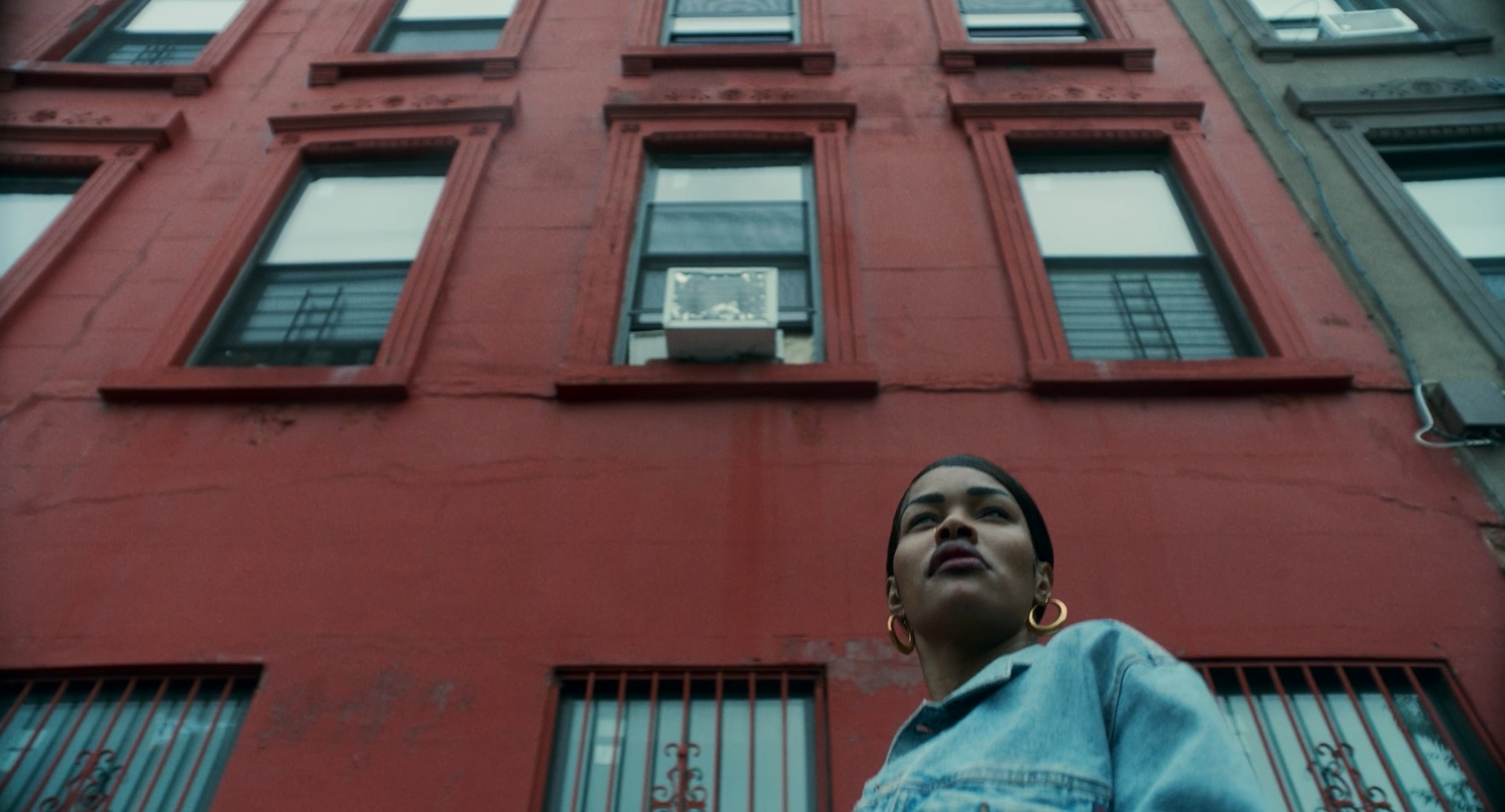
A wide-angle lens has a shorter focal length than a normal lens, so it sees a wider slice of the world. Used close to the subject, it exaggerates the distance between near and far: whatever is near the camera looms large, the background shrinks away, and rooms feel deeper than they are.
- What it does
- Takes in more space and stretches depth, so near objects grow and far ones shrink fast.
- Use it when
- You want the viewer inside a space, a foreground that dominates, or a face that feels uncomfortably close.
- Watch out
- Faces near the frame edges stretch and tilted cameras make verticals lean; keep the camera level and key faces near center.
- Try this prompt
18mm wide-angle lens, camera 50 cm from a woman's face at waist height, narrow hallway receding sharply behind her, strong perspective, straight lines
What is a wide-angle lens?
A wide-angle lens is any lens whose focal length is shorter than the "normal" focal length for the format. On full frame (and 35mm stills film) the normal lens sits around 40–50mm, so anything under about 35mm counts as wide. On Super 35, the standard motion-picture sensor size, normal is roughly 32–35mm and wide starts at about 25mm and below. The shorter the focal length, the bigger the angle of view: a 50mm on full frame sees about 40° horizontally, a 24mm about 74°, an 18mm about 90°, a 14mm more than 100°. Choosing where on that scale to sit is one of the first lenses and focus decisions for any shot.
What matters in the frame is not the number but what it lets you do. A wider lens lets you stand closer and still fit the subject in, and standing close is what changes perspective. From half a meter away, a face's nose is noticeably nearer to the lens than its ears, so it reads bigger. A hallway's near doorframe is huge while the far one is tiny, so the hallway looks longer. That near/far exaggeration is the wide-lens look. Strictly, it comes from camera distance, and the wide lens is the tool that lets you use that distance.
How to recognize a wide lens in a still:
- Objects near the camera look oversized compared with things a few meters back.
- Lines on floors, ceilings and walls rush toward a vanishing point.
- A lot of the set is visible around even a tight face, often sharp.
- Near the frame edges, heads and round objects stretch sideways.
Wide-angle lens vs. wide shot
The word "wide" is used for two different things. A wide shot is a shot size, a long shot that shows a full figure in its surroundings; it can be made on any lens, including a long one from far away. A wide-angle shot is any shot made on a wide-angle lens, whatever its size. A close-up on an 18mm is a wide-angle shot; a long shot on a 150mm is not.
Why do filmmakers use wide-angle lenses?
A wide lens changes how the audience experiences space. Instead of looking at a scene from a distance, the viewer feels placed inside it, close enough to touch the foreground.
- Immersion in a place. Gregg Toland's wide lenses in Citizen Kane (1941) put ceilings into the frame and kept whole rooms in view, so Welles could stage scenes in depth rather than cutting them up. The wide lens is the natural partner of deep focus: shorter focal lengths give more depth of field at the same stop.
- Power of the foreground. Put a hand, a weapon or an object half a meter from the lens and it outweighs the people behind it. Directors use this to make a prop or a gesture the real subject of the frame, and to build clear depth layers.
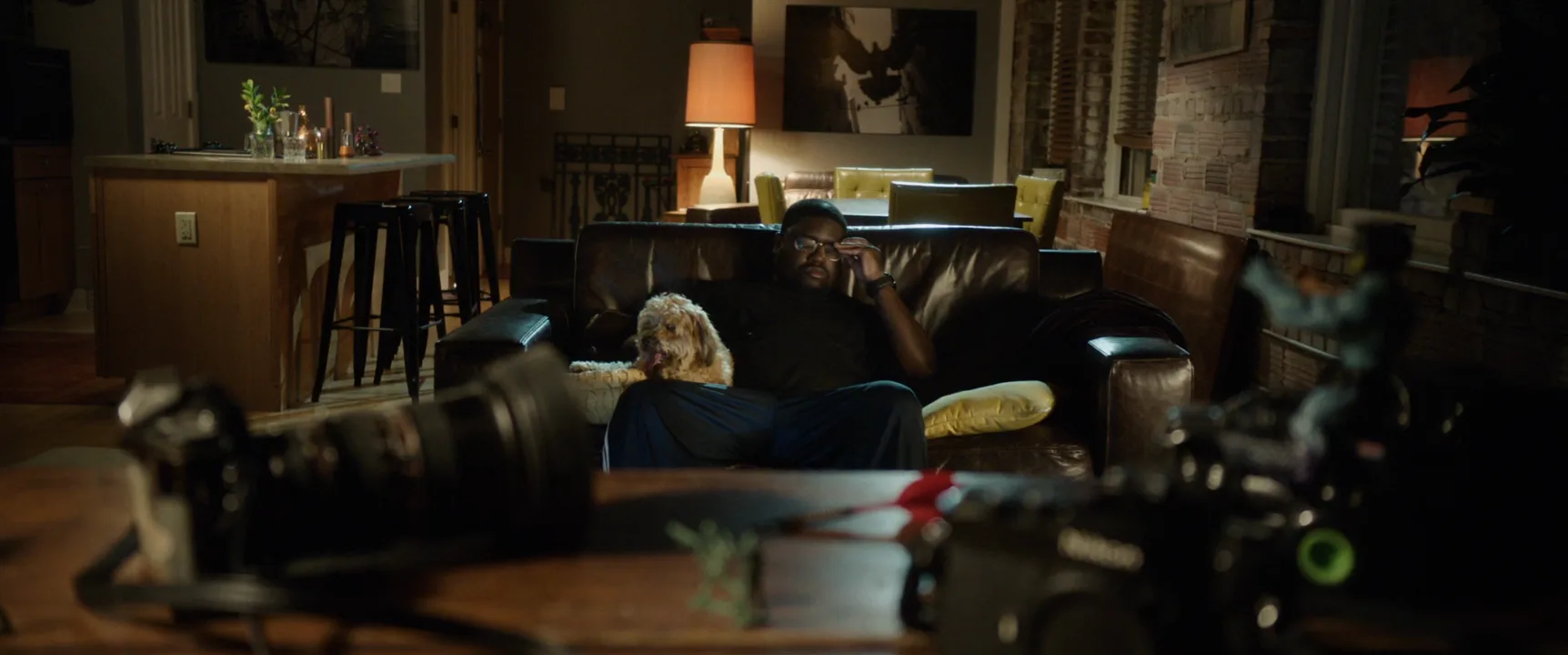
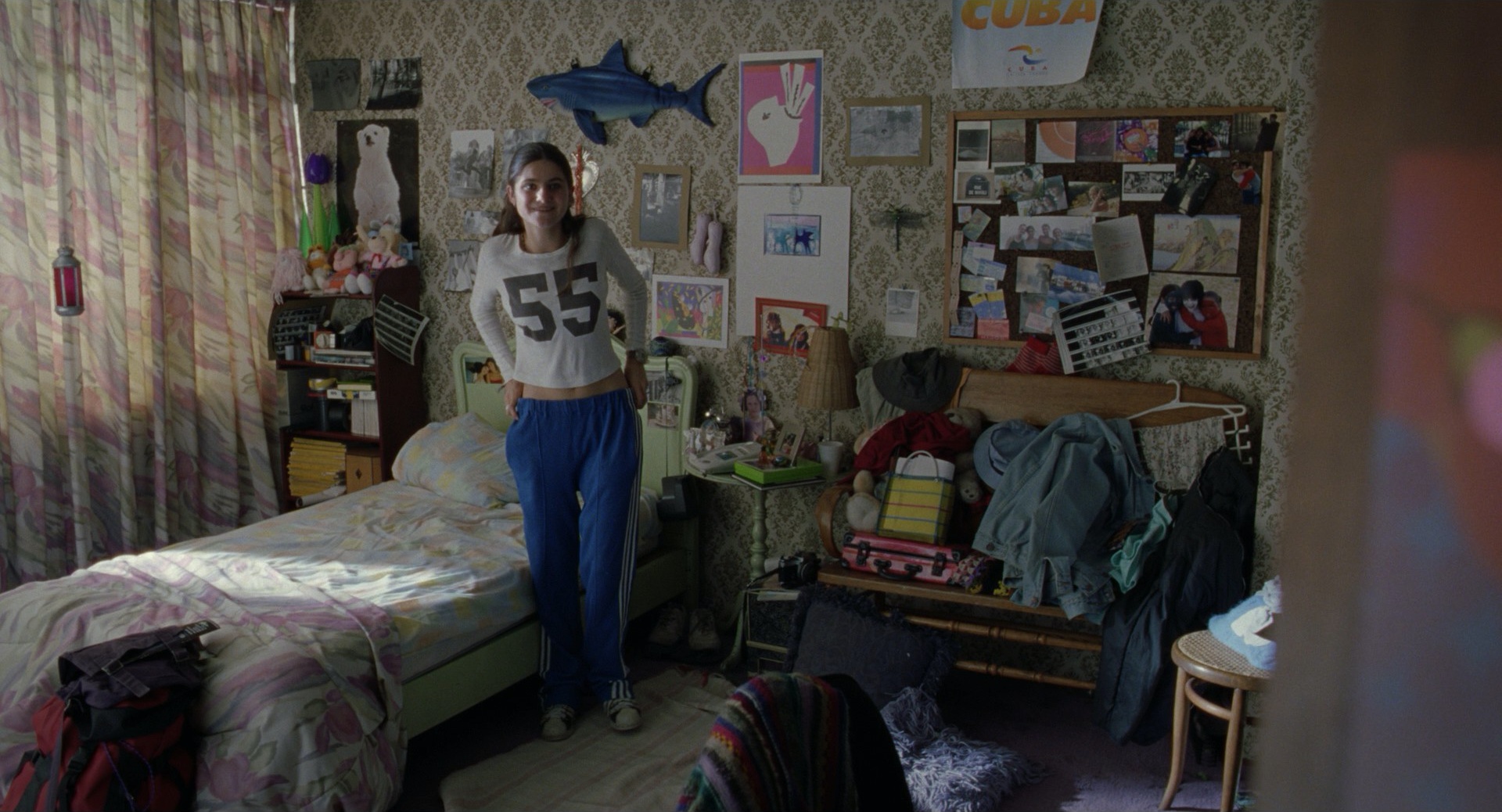
- Unease and distortion. A wide lens close to a face makes features swell and the background tilt away. Terry Gilliam's Brazil (1985) and Jean-Pierre Jeunet's Amélie (2001) use wide-lens close-ups for comedy and oddness; in a thriller the same move feels invasive.
- Isolation inside big space. Kubrick's hallways and ballrooms in The Shining (1980) are photographed wide, so rooms seem to stretch and characters look small in them.
- Energy along the lens axis. On a wide lens, a character who walks toward the camera grows fast, and a camera that moves forward seems to travel quicker. That is why wide lenses pair with Steadicam and handheld work: the image looks steadier and motion looks faster.
- Presence and intimacy. Emmanuel Lubezki shot The Revenant (2015) largely on very wide lenses held close to the actors, so faces fill the frame while the landscape stays visible behind them.
How to shoot with a wide-angle lens
Pick the focal length by effect
- Moderate wide (full frame 28–35mm, Super 35 20–25mm). Natural-looking interiors and walk-and-talks. Faces stay flattering at a meter or more.
- Wide (full frame 20–24mm, Super 35 14–18mm). Obvious depth, looming foregrounds, strong converging lines. The workhorse for rooms and dynamic handheld.
- Ultra-wide (below about 20mm full frame). Stylized, see the section below.
Distance to the subject
The effect lives in the distance. A 24mm at 2 m from an actor gives a fairly normal medium shot with lots of room around it. The same 24mm at 50 cm gives a close-up with a swollen nose, a narrow chin and a background that feels far away. Decide how much distortion the character should carry and move the camera, not the zoom ring.
Height and level
Keep the camera level if you want architecture to stay straight. Tilting a wide lens up or down makes verticals converge hard, a look that works for a low-angle shot of a tower block but reads as a mistake in a quiet dialogue scene. For interiors, chest height (about 1.2–1.4 m) keeps floor and ceiling in balance; lower heights bring more floor and more drama.
Framing and blocking
- Keep important faces near the center third; the edges of a wide frame stretch heads sideways.
- Stage along the lens axis: one character close, one deep. Moving toward or away from camera reads much stronger than moving across it.
- Use something in the foreground (a doorframe, a shoulder, a table edge) to show the scale jump.
Set, light and focus
A wider lens sees more set: more walls to dress, more ceiling, and fewer places to hide lights, stands and crew. Plan practicals and ceiling-rigged units, and expect to light deeper into the room. Depth of field is generous; at f/4 on an 18mm, most of a room holds focus, which is easier on the focus puller but exposes every detail of production design. Check barrel distortion on the lens you rent: modern cine primes keep lines fairly straight, cheaper or older wide lenses bow them (see lens distortion).
Ultra-wide lens: when to go below 20mm
An ultra-wide lens is roughly anything under 20mm on full frame (about 14mm and under on Super 35). Horizontal coverage approaches and then passes 90°, and everything described above becomes extreme: a hand at arm's length can fill half the frame, and a small room looks like a hall.
Most ultra-wides are rectilinear: they are designed to keep straight lines straight. The price is stretching at the edges. A face near the corner of a 12mm frame is pulled wide and oval, even though the walls behind it are perfectly straight. A fisheye lens gives up straight lines instead, bending them into curves and covering up to 180°. The two look very different: the rectilinear ultra-wide feels like an enormous, sharp space; the fisheye feels like a bubble.
Use an ultra-wide when the space itself must dominate the scene: cramped interiors that need to read whole, vehicles, stairwells, spaces that should feel unnaturally deep, or a character whose world is closing in. Yorgos Lanthimos and cinematographer Robbie Ryan used very wide lenses, including a fisheye, in The Favourite (2018) to make palace rooms feel vast and strange around the characters.
Practical notes:
- Level the camera precisely; at 12mm, a degree of tilt shows as leaning walls.
- Keep the lens clean and flagged: front elements are big and catch flares from any light in the half-sphere ahead.
Wide-angle vs. telephoto lens
The two lenses draw space in opposite ways, and the difference is clearest when you keep the subject the same size in frame.
| | Wide-angle lens | Telephoto lens | |---|---|---| | Angle of view | Wide, takes in the setting | Narrow, isolates a slice | | Camera position | Close to the subject | Far from the subject | | Depth | Stretched: background feels far away | Compressed: background stacks up behind the subject | | Background size | Small, lots of it visible | Big, very little of it visible | | Depth of field | Deep, the set stays readable | Shallow, background melts into blur | | Faces | Enlarged features, can look distorted | Flattened, often flattering | | Movement toward camera | Fast, dramatic change of size | Slow, the subject seems to walk in place |
The classic demonstration is the dolly zoom: the camera travels while the lens zooms so the subject stays the same size, and the background swings from compressed to stretched in one shot. It proves that perspective belongs to camera distance, and focal length decides how that distance fills the frame.
Choose the wide lens when the relationship between a person and a place is the point. Choose the long lens when you want to cut the person out of the place, compress a crowd or make distance feel small.
Wide-Angle Lens examples in film
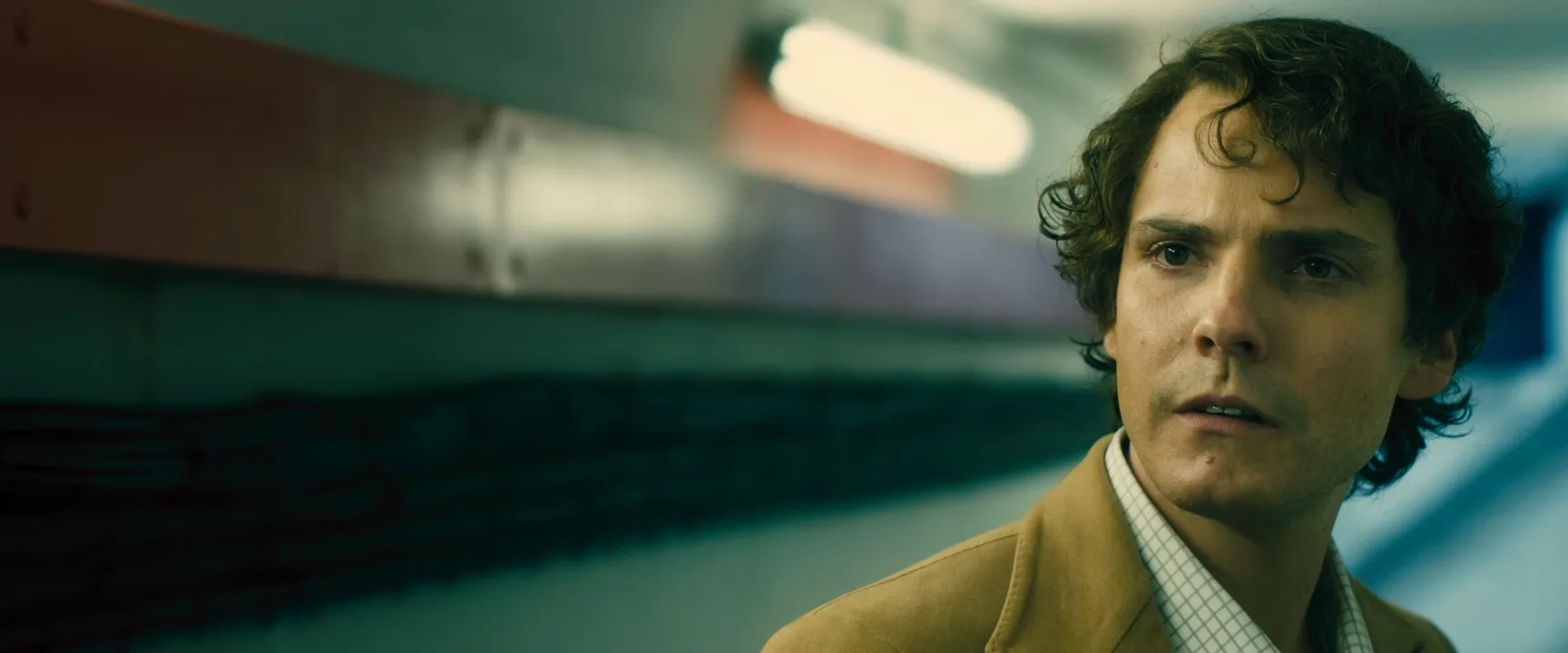
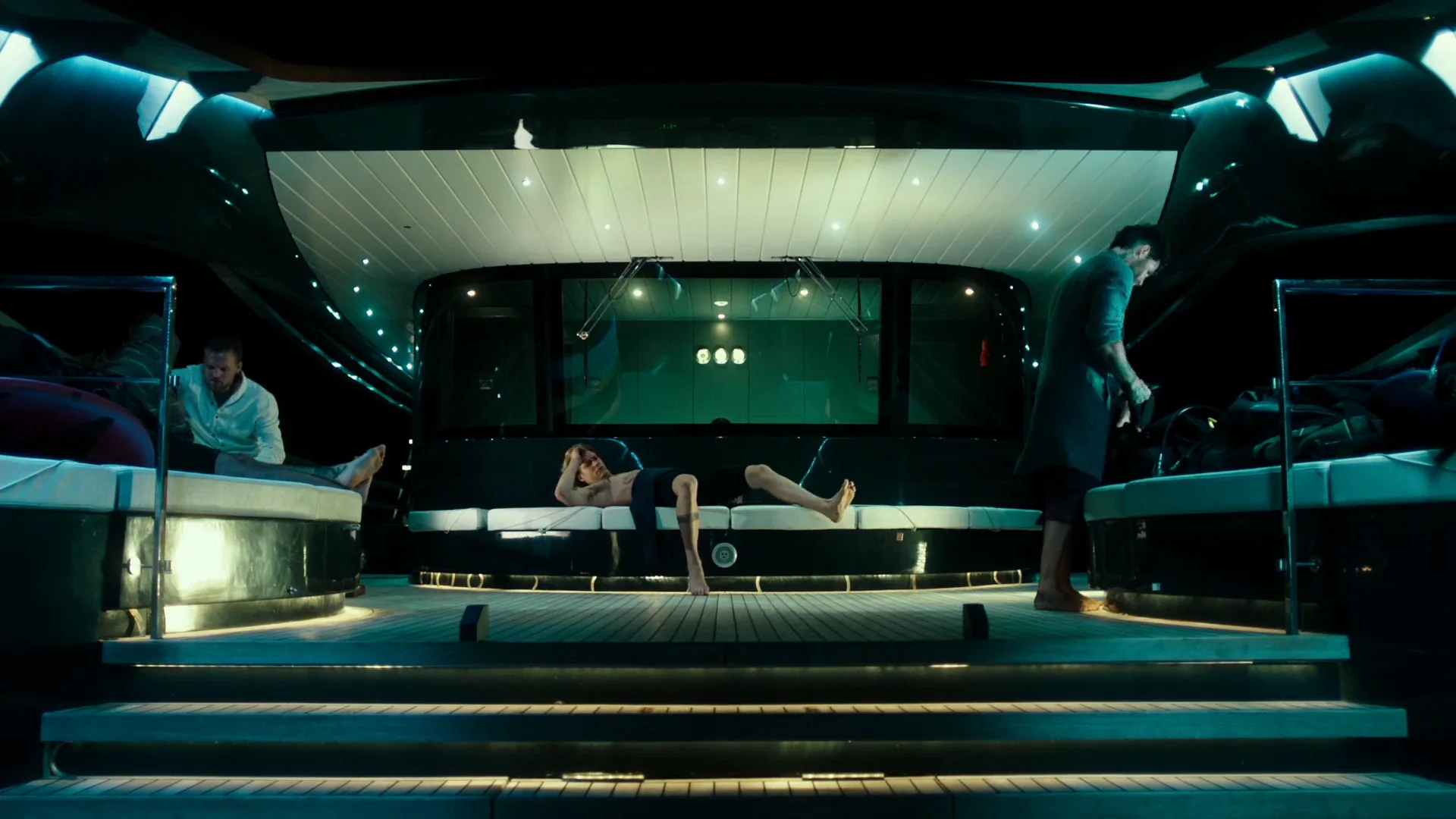
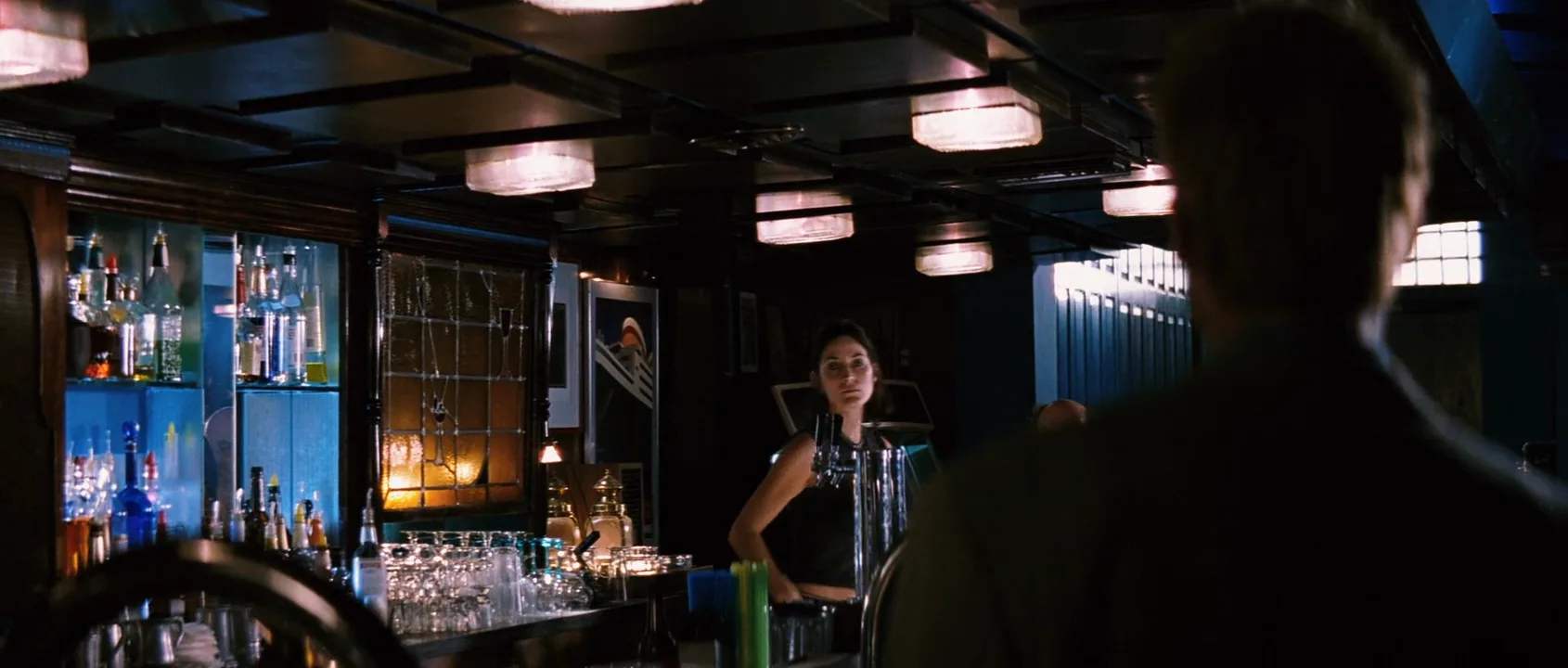
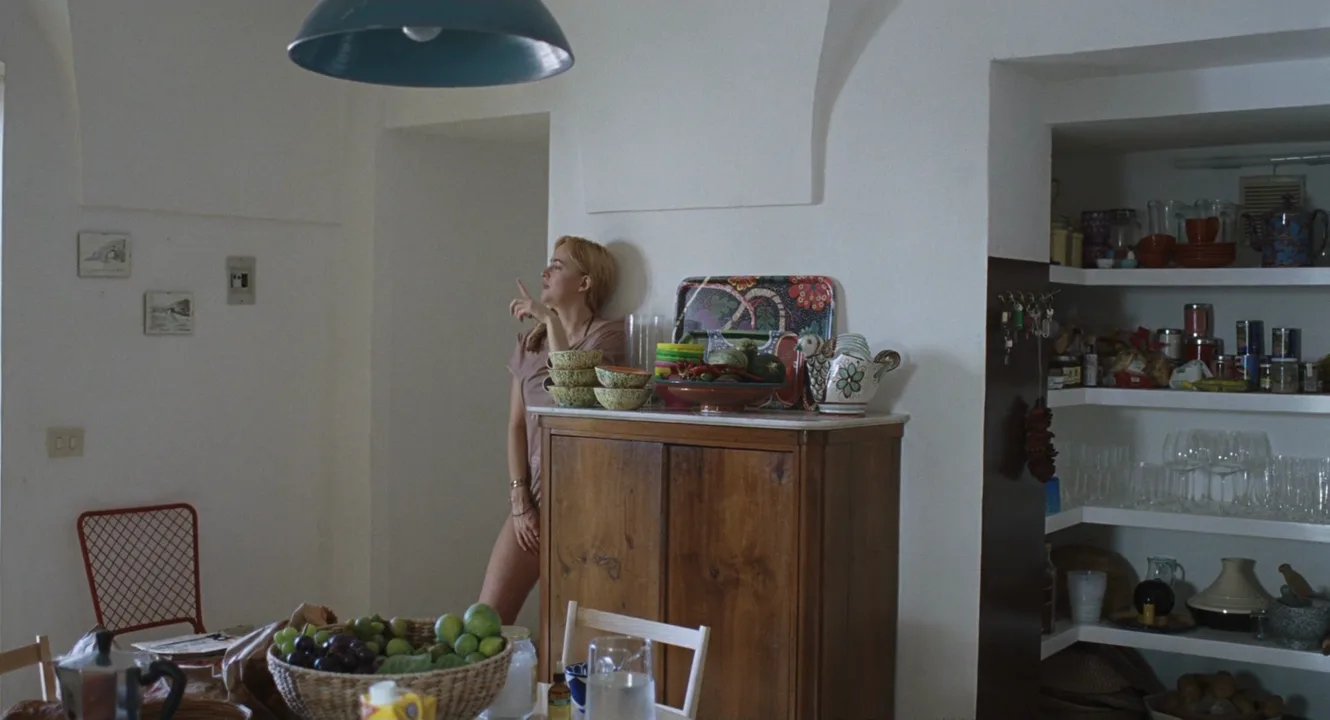
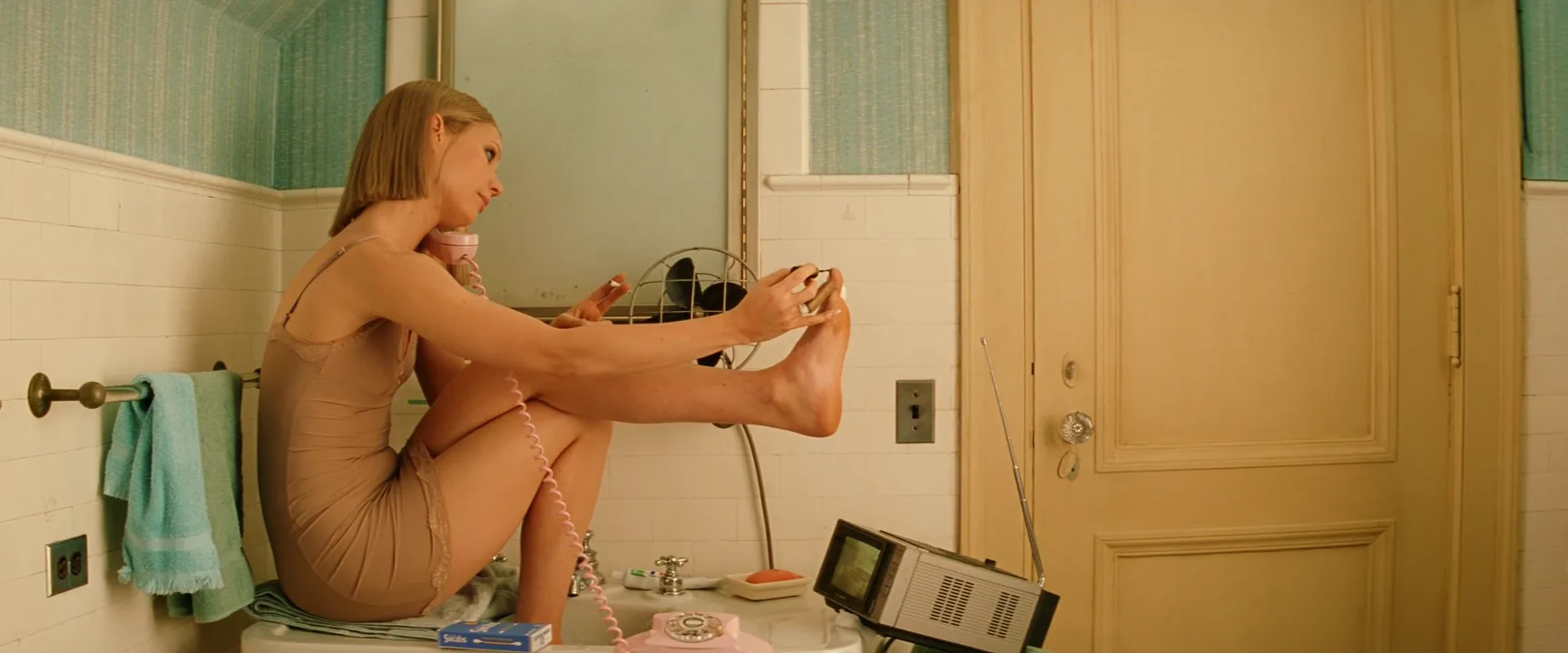
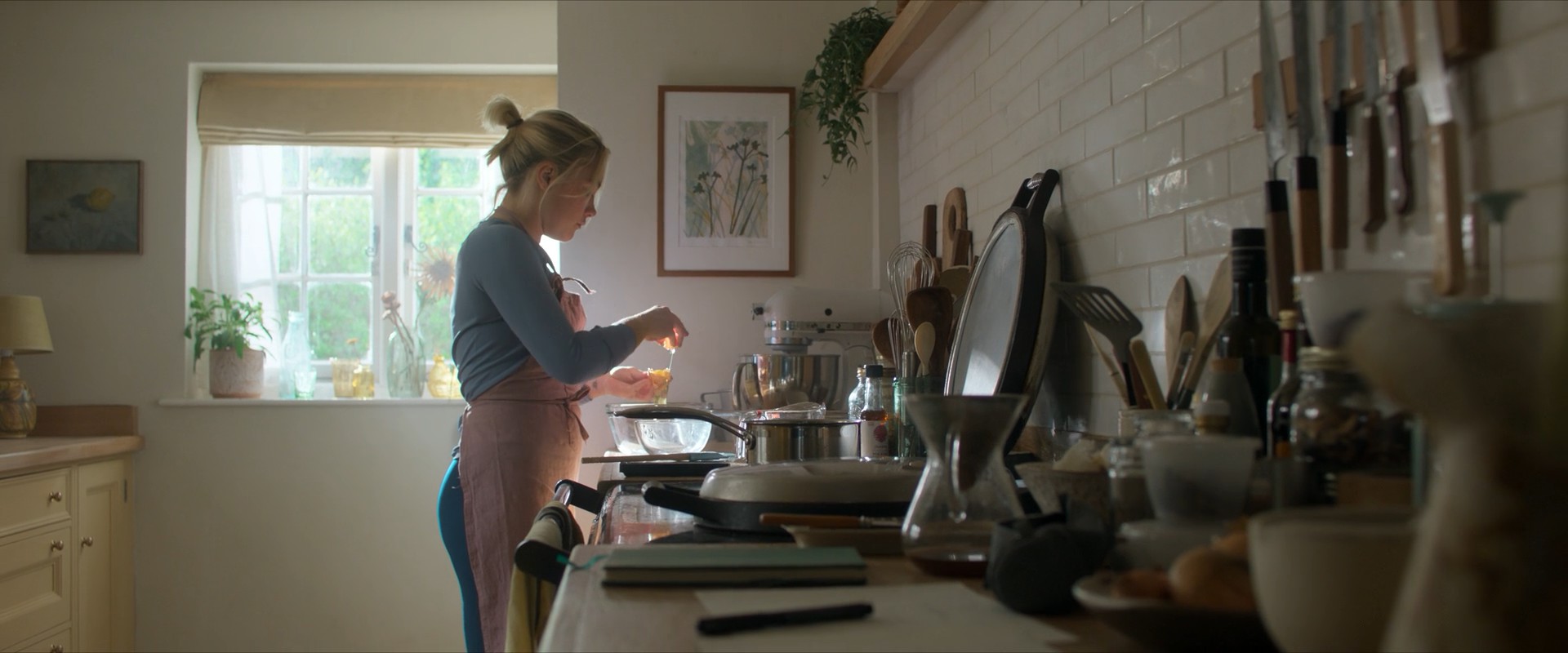
13 framesEach frame below uses a short focal length, often with the camera close to something. Look for the oversized foreground, lines racing to a vanishing point and whole rooms held in view.
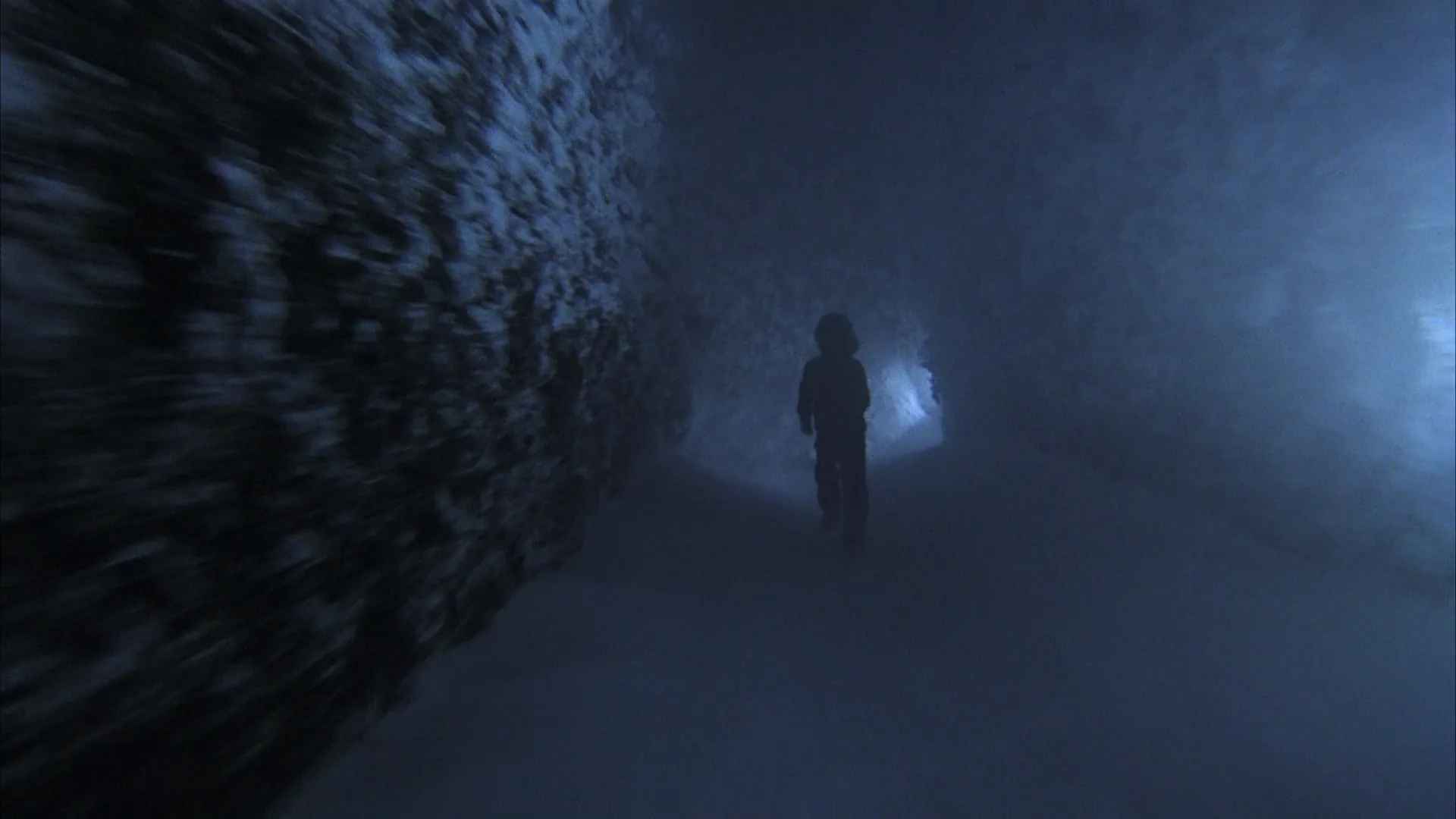
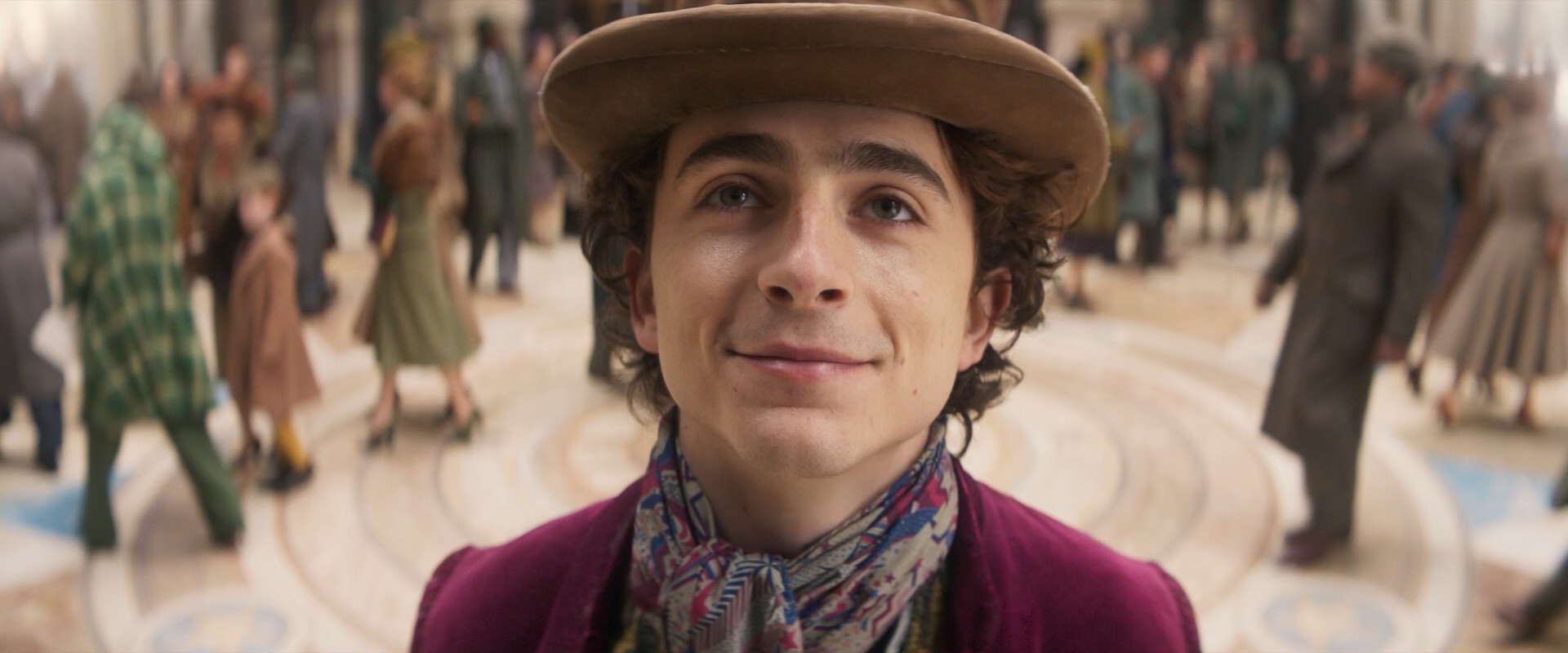
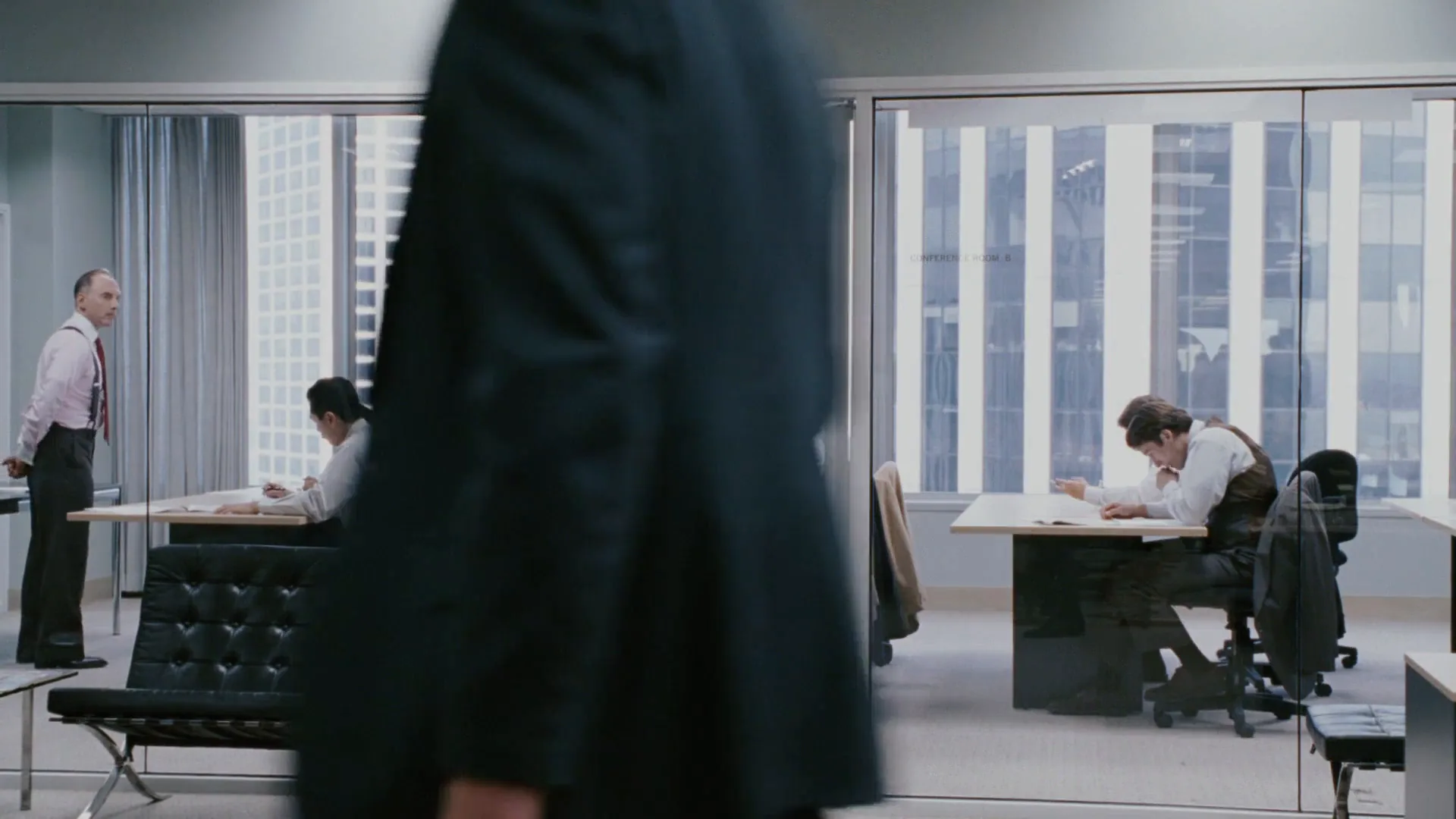
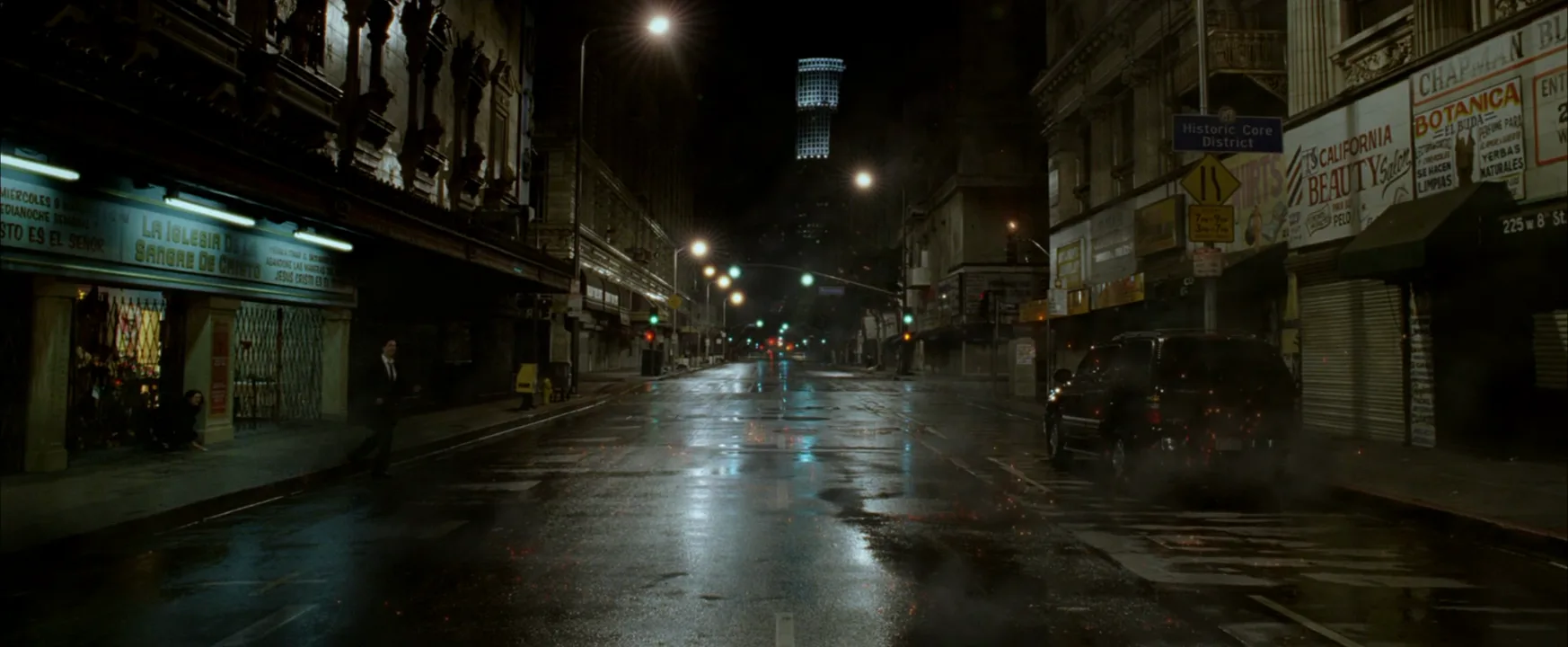
How to create a wide-angle lens with AI
4 promptsImage models default to a normal, portrait-like lens with a soft background, so a wide-angle look needs three things in the prompt: a short focal length in millimeters, the camera's distance from the nearest subject, and a named far point for the space to recede to. Build the start frame with Nano Banana 2 Lite, try an ultra-wide low-angle variation with GPT Image 2.5, then animate recipe 1 with MiniMax H3 Max Turbo. Keep the reference frames above and your takes on one FlashBoards board so you can see which one actually stretches the space. The fourth prompt re-shoots a real film shot from a text description alone, and the original plays next to the result so you can compare.
Film still shot on an 18mm wide-angle lens, camera at waist height, level, 40 cm from the subject's hand. A woman in her fifties with cropped copper-red hair, a gap between her front teeth and faded green work overalls stands in a narrow hardware store aisle, holding a huge brass key ring toward the lens; her hand and keys look oversized in the foreground, her face one meter behind. Tall metal shelves full of paint cans and boxes line both sides and converge sharply toward a glass door at the far end of the aisle, fifteen meters away. Strong perspective, straight vertical lines, deep focus, cool fluorescent ceiling light with warm daylight through the far door.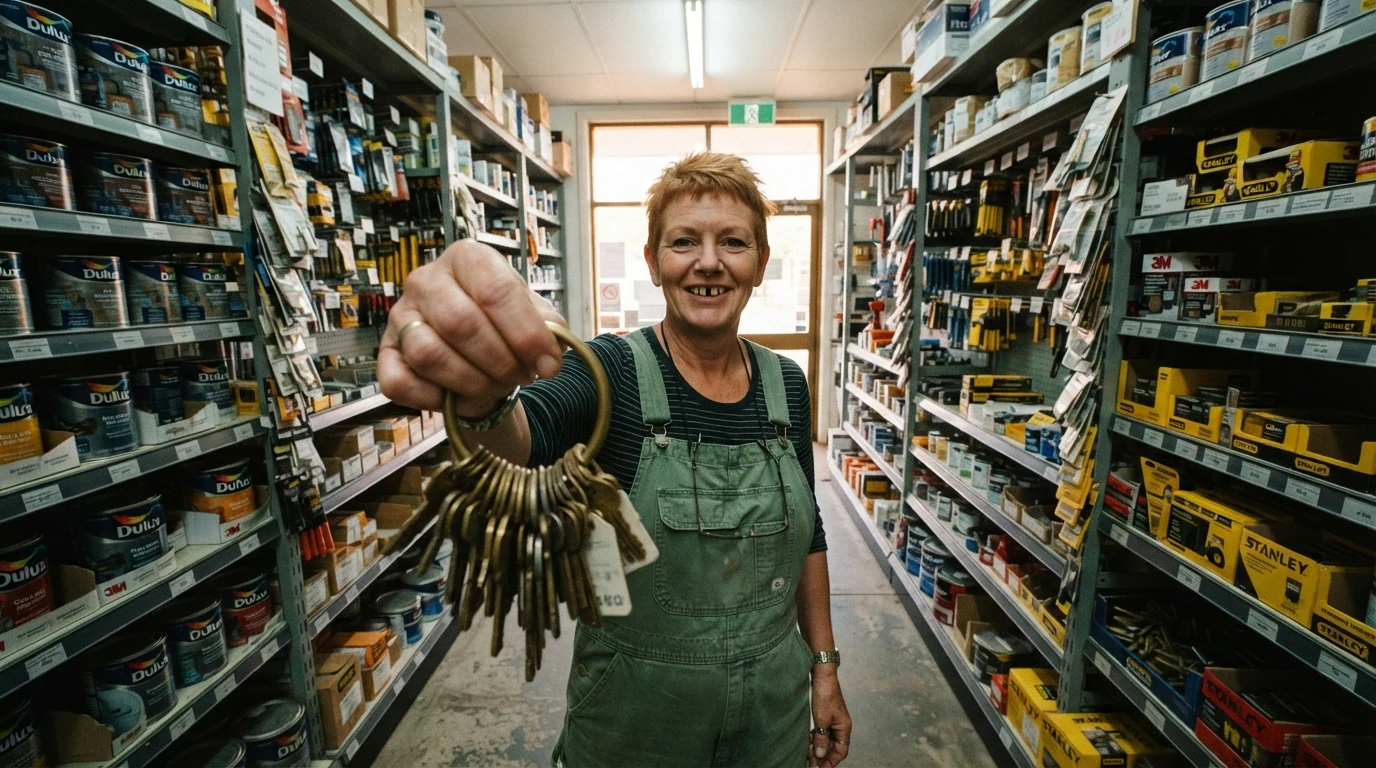
18mm, 40 cm from the subject's hand and oversized in the foreground create the scale jump; converge sharply toward a glass door fifteen meters away gives the space a far point to stretch toward. Level and straight vertical lines stop the model from tilting the frame or bending it into a fisheye.
Open FlashBoards21:9 cinematic frame, 14mm rectilinear ultra-wide lens, camera at knee height 1 meter from the subject, tilted slightly up. A bicycle courier in his twenties with a shaved head, a thin scar through his left eyebrow and a bright orange windbreaker stands in the center of a courtyard, one hand on his bike's handlebar, looking down into the lens. Around him, five tall grey concrete apartment blocks with rows of balconies lean inward toward a small square of pale sky at the top of the frame. The courier's boots and front wheel look large at the bottom, the buildings shrink upward. Overcast soft light, sharp from the wheel to the rooftops.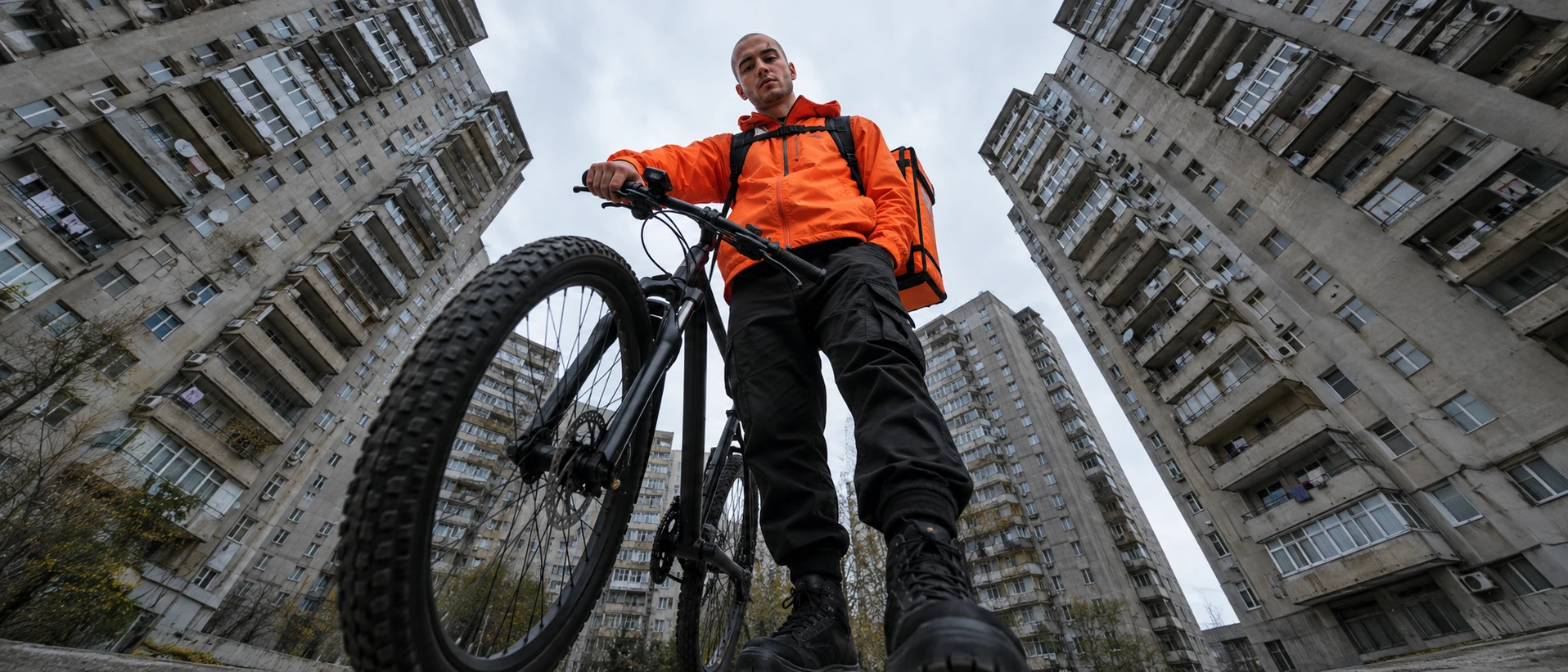
This take goes wider and lower. Rectilinear ultra-wide asks for straight lines rather than fisheye curves, while knee height, tilted slightly up and lean inward toward a small square of pale sky produce the converging verticals. Keeping the courier in the center protects his face from edge stretch.
Open FlashBoardsCamera: moves steadily backward down the aisle at walking pace from the first frame, staying at waist height and level, the shelves sliding quickly past both edges of the frame. Action: the woman walks forward toward the lens right away, shaking the brass key ring so the keys swing and catch the light. Halfway down the aisle she glances at a shelf of paint cans without slowing. At the end she stops, holds the key ring close to the lens and grins, while the glass door at the far end stays small and bright behind her.Movement along the lens axis is where a wide lens shows off: shelves at the edges slide fast while the far door barely changes. Starting both the camera and the walk in the first frame keeps the shot alive, and every object in the action is already in recipe 1's image.
Open FlashBoards{
"output": "Full-screen live-action shot from The Pursuit of Happyness (2006) from its very first frame: one continuous locked-off shot, no cuts, filmed on a 24mm wide-angle lens with deep focus. Mid-2000s 35mm film stock with fine grain; cool grey-blue palette of white, silver and navy with small accents of rust, red and brown; soft, bright overcast daylight pours through floor-to-ceiling windows at the back of the room; an early-1980s stockbroker training office high in a San Francisco tower, divided by floor-to-ceiling glass partitions in thin white aluminium frames, grey-glass office towers filling the windows.",
"characters": {
"S1": {
"name": "the young trainee, a character not identified in the corpus",
"look": "a slim young Black man in his thirties, short cropped hair, crisp white shirt, narrow dark navy tie, dark trousers, black shoes, a dark navy suit jacket",
"voice": "silence: he does not speak"
},
"S2": {
"name": "a passer-by right at the lens, a character not identified in the corpus",
"look": "a man in a dark navy wool suit, seen only from the shoulder down to below the hip, his head above the top edge of the frame",
"voice": "silence: he does not speak"
},
"S3": {
"name": "an older broker with a briefcase, a character not identified in the corpus",
"look": "a heavy-set white man in his sixties, balding with grey hair at the sides, light grey suit jacket, white shirt, dark trousers, a brown leather briefcase",
"voice": "silence: he does not speak"
},
"S4": {
"name": "the manager by the window, a character not identified in the corpus",
"look": "a bald middle-aged white man, pale pink shirt, red tie, black suspenders, dark grey trousers",
"voice": "silence: he does not speak"
}
},
"shots": [
{
"shot": 1,
"camera": "locked off on a tripod at chest height, level, facing the glass wall square-on; 24mm rectilinear wide-angle lens, deep focus: everything from half a metre in front of the lens to the towers outside the windows is sharp, verticals straight; a walkway crosses the frame on the camera side of the glass, from half a metre to three metres from the lens; static, the camera never moves for the whole shot",
"action": [
"BEGINNING: alive from the first frame. The glass wall crosses the whole frame about four metres back, split into three tall panes by white aluminium frames, a glass door with a vertical steel handle in the centre pane; a black tufted leather armchair on a chrome frame stands on the camera side of the glass in the left third. Behind the glass, trainees sit at desks writing, heads down: at centre, behind the door, a woman with long dark wavy hair in a rust-brown blouse and dark skirt, legs crossed; in the right third a man in a white shirt and brown vest; more men in white shirts at the desks on the left. At the far left edge, by the window, S4 stands still, hands at his sides, head turned right, watching S1. In the left third, behind the glass and behind the armchair, S1 stands holding his navy jacket bunched in both hands at his waist, looking down at it. At the right edge a grey-haired man in a dark suit is already walking away to the right and leaves the frame.",
"THEN: S1 swings the jacket up over his right shoulder with both arms high, twists to his right and pushes his left arm into the sleeve, the jacket flaring out as he steps to the right.",
"THEN: with the jacket half on, S1 hurries right behind the glass to the centre pane, bends, grabs the door handle with his left hand and swings the glass door open toward the camera; he steps into the open doorway, tugging at his collar with his right hand.",
"THEN: S2 bursts in from the right edge right next to the lens, walking fast to the left: his dark navy suit fills the whole height of the frame from the top edge to the bottom edge and a third of its width, soft and motion-blurred, his near hand swinging at the bottom of the frame; he is a giant beside the small, sharp trainees at the desks behind the glass.",
"THEN: S2 keeps crossing right to left, covering the centre and then the left third, and leaves past the left edge; the whole office behind him stays sharp and small the entire time.",
"THEN: S1 stands in the open doorway facing the camera, looking down at his right hand fixing his tie at his chest, then steps out through the door onto the camera side of the glass, heading left.",
"THEN: S3 enters from the left edge about three metres from the lens and walks briskly to the right in front of the black armchair, the brown briefcase swinging from his right hand; at the same moment S4 turns away and stands with his back to the camera, facing the desks at the left.",
"THEN: S1 slides the jacket off his right shoulder with his right hand, his white shirt showing, glancing to the left; he and S3 cross at the centre, S3 passing in front of him.",
"THEN: S1 hurries left, bent forward, head down, the jacket bundled in one hand behind his back; he grows larger as he nears the lens and leaves past the left edge, blurred.",
"END: S3 walks on past the glass door into the right third and leaves past the right edge; S4 still stands with his back to the camera at the far left, the trainees keep writing with their heads down, and the camera stays perfectly still."
],
"dialogue": [],
"voice": "silence: nobody speaks in this shot, no voice at all"
}
],
"sound": {
"ambience": "a quiet open-plan office: the soft hum of the room, brisk footsteps on carpet, the rustle of a suit jacket, the click and swing of the glass door, pens scratching on paper, phones ringing faintly from distant rooms",
"speech": "no words in this video; the only human sounds are breaths and movement",
"never_spoken": "no narration and no voice-over: the descriptions, performance notes and step words of this prompt are never spoken aloud",
"music": "a film score under the scene, always below the voices: a light, hopeful piano melody over soft strings with a brisk, hurrying pulse",
"subtitles": "none"
}
}Remakes the office shot from The Pursuit of Happyness (2006), dir. Gabriele Muccino, DP Phedon Papamichael: the prompt carried over the locked-off wide view through the glass partitions, the trainee wrestling on his jacket and stepping out through the door, and the dark suit that crosses right at the lens as a giant.
The lens effect lives in distances, so the camera field spells them out: 24mm, deep focus and a walkway from half a metre to three metres from the lens. The key beat names the scale jump outright: a suit that fills the whole height of the frame beside small, sharp trainees behind the glass. A locked-off camera leaves all the size change to people walking at different depths, and the explicit silence plus one line of score keep the model from adding a narrator.
Open FlashBoardsCommon mistakes
- "Wide" becomes a wide shot. A prompt that only says wide often gives a small figure on a normal lens. Name the focal length (18mm, 14mm) and the camera distance.
- Background turns to blur. Cinematic and portrait pull toward shallow focus. Add deep focus or name the far object as sharp.
- Accidental fisheye. Ultra wide sometimes bends every line. Say rectilinear and straight vertical lines.
- Flat depth. Without something close to the lens, a wide frame just looks roomy. Put a hand, object or shoulder at a stated distance, and give a far point.
- Video drifts into a slow push. Give H3 a clear move from the first frame (backward, forward, lateral) and an action along the lens axis.
Keep the reference frames, prompts and every generated take side by side — images and video in one canvas.
FAQ
6 questionsWhat focal length is considered a wide-angle lens?
On full frame or 35mm film, lenses shorter than about 35mm are wide-angle, and below about 20mm they are called ultra-wide. On Super 35, the usual cinema sensor, the ranges shift down: roughly 25mm and shorter is wide, and around 14mm and under is ultra-wide. Normal lenses sit near 40–50mm on full frame and 32–35mm on Super 35.
What does a wide-angle lens do in film?
It takes in a large angle of view and, used close to the subject, exaggerates depth. Foreground objects look big, backgrounds look small and far away, and lines race toward a vanishing point. Filmmakers use it to place the viewer inside a space, to make a foreground object dominate, to keep a whole room sharp and readable, or to make a close-up feel unsettling.
Is a wide shot the same as a wide-angle shot?
No. A wide shot is a shot size: the whole figure plus a lot of surroundings, and it can be filmed on any lens, even a long telephoto from far away. A wide-angle shot is defined by the lens: any shot made on a wide-angle lens, including a close-up. A close-up on 18mm is a wide-angle shot but not a wide shot.
Why do faces look distorted on a wide-angle lens?
Because the camera is close. To fill the frame with a face on a wide lens you must stand very near, so the nose is much closer to the lens than the ears and appears larger. Faces near the frame edges also stretch sideways on rectilinear wide lenses. Step back, keep the face near center, or use a longer focal length for flattering portraits.
What is the difference between a wide-angle lens and a fisheye lens?
A regular wide-angle lens is rectilinear: it keeps straight lines straight and stretches objects near the edges instead. A fisheye lens gives up straight lines, bending them into curves so it can cover up to around 180 degrees. Wide-angle frames feel like a big, deep space; fisheye frames feel bulging, comic or dreamlike.
Wide-angle vs. telephoto: which should I use?
Use a wide-angle lens when the space matters: to put the audience inside a room, show a person in relation to their surroundings or build strong foreground-to-background depth. Use a telephoto lens when you want to isolate a subject, compress distance, stack a crowd or blur the background. Many scenes cut between both to shift between context and isolation.
Related terms
7- Long ShotCamera Shots
A long shot (wide shot) shows the full figure with plenty of surroundings around it, so the audience reads both a character's body language and their relationship to the place.
- Telephoto LensLenses, Focus & Exposure
A telephoto (long) lens has a narrow angle of view that magnifies distant subjects; used from far away it compresses space, stacking the background onto the subject — the look of long-lens crowd shots, heat-haze chases and isolated faces.
- Focal LengthLenses, Focus & Exposure
Focal length, measured in millimetres, sets a lens's angle of view: short focal lengths see wide and stretch space, long ones see narrow and compress it — which is why the same framing feels different on 24mm and on 135mm.
- Fisheye LensLenses, Focus & Exposure
A fisheye lens is an extreme wide-angle lens (often around 180°) that abandons straight-line perspective and bends lines into curves, producing a bulging, distorted image that feels claustrophobic, comic or hallucinatory.
- Deep FocusLenses, Focus & Exposure
Deep focus keeps foreground, middle ground and background sharp at the same time, so the director can stage action on several planes at once and let the viewer choose where to look.
- Lens DistortionLenses, Focus & Exposure
Lens distortion is the way a lens bends lines that should be straight — outward like a barrel on wide and fisheye lenses, inward like a pincushion on some long lenses; filmmakers either correct it or push it to make a space feel warped and unstable.
- Normal LensLenses, Focus & Exposure
A normal lens has a field of view and perspective that feel close to natural vision for its format — roughly 40–50mm on 35mm film or full frame — so space looks neither stretched nor compressed.
Further reading
Joseph V. Mascelli, The Five C's of Cinematography (1965). Blain Brown, Cinematography: Theory and Practice. American Cinematographer Manual (ASC Press), sections on lenses and angle of view.