 FlashBoards Learn
- Learn
- Camera Angles
- Worm's-Eye View
Camera Angles · Film language
Worm's-Eye View
Also called: worm's-eye shot, extreme low angle, frog's-eye view
A worm’s-eye view puts the camera on or near the ground and points it steeply up, so people, trees and buildings tower over the lens while the sky or ceiling fills the background. It is the most extreme low angle: the viewer feels tiny, trapped or overwhelmed, and ordinary things turn monumental.
- What it does
- Shrinks the viewer to the size of something on the ground and makes everything above loom, stretch and converge.
- Use it when
- Architecture should overwhelm, a character is down in a pit or on the floor, or someone must dominate the frame completely.
- Watch out
- The sky or ceiling is now your whole background — plan its exposure, its dressing and where the boom and lights hide.
- Try this prompt
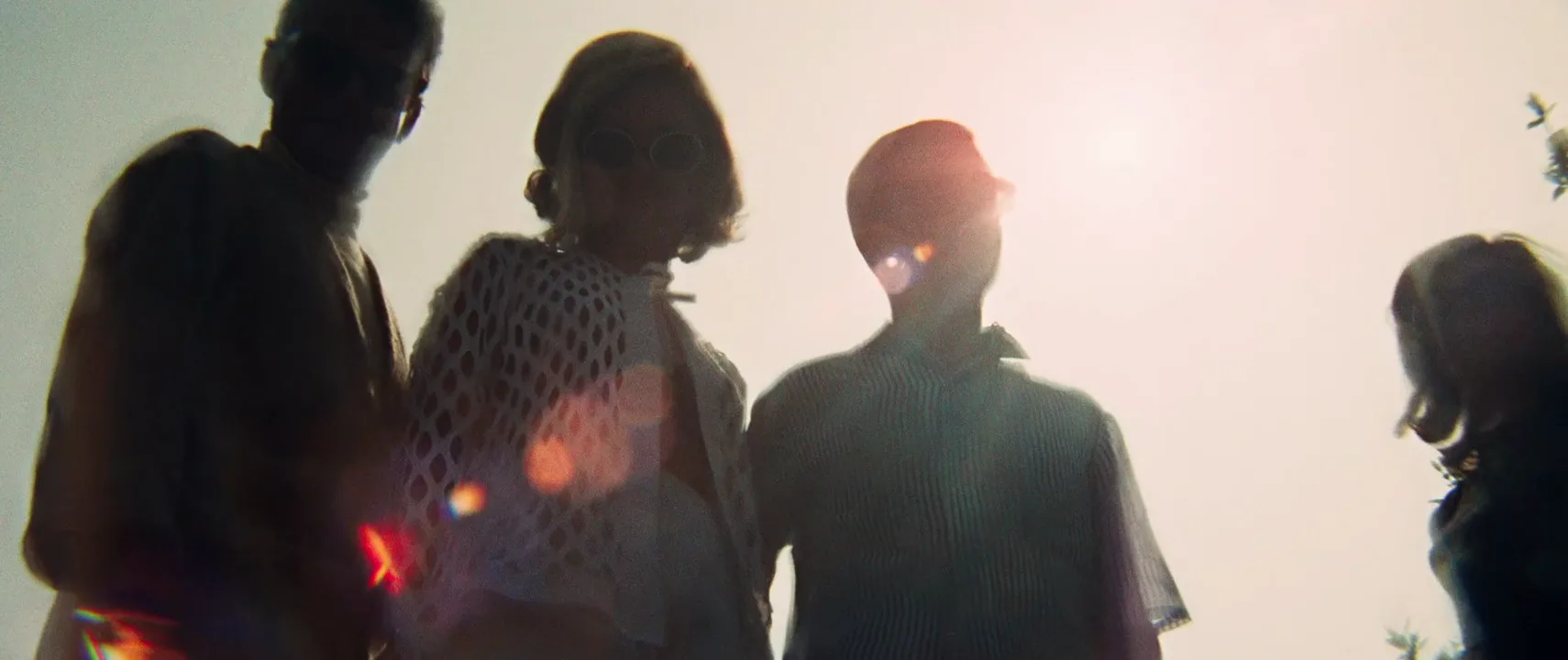
Worm's-eye view, camera on the ground pointing straight up, 14mm lens, three people leaning over the lens against a white overcast sky, cinematic still
What is a worm’s-eye view?
A worm’s-eye view is the lowest vantage point in the vocabulary of camera angles: the lens sits on the floor, in the grass or even below ground level, and tilts sharply upward — usually 60° or more, sometimes straight up at 90°. The name says it: the world as seen by something living in the dirt.
Three things together make a frame read as a worm’s-eye view:
- The camera is at ground level. Not waist height, not knee height — on the ground, or within a few inches of it.
- It points steeply up. Walls, tree trunks, legs and towers converge hard toward the top of the frame instead of standing parallel.
- The sky or ceiling becomes the background. The horizon drops out of frame or clings to the bottom edge; everything behind the subject is overhead space.
It is the extreme end of the low-angle shot. A normal low angle tilts up at a character from chest or waist height; a worm’s-eye view takes the same idea down to the floor and steepens the tilt until the ground nearly disappears. You will also hear it called an extreme low angle, a worm’s-eye shot or a frog’s-eye view, although some crews reserve “frog’s eye” for a camera that sits at ground level and looks straight ahead.
That distinction matters. A camera resting on the floor and looking horizontally along it is a ground-level shot: the floor fills the lower frame and the action happens right at the lens. Tilt that same camera up at the people standing over it and it becomes a worm’s-eye view. Its exact opposite is the overhead shot, which looks straight down from above.
What does a worm’s-eye view convey?
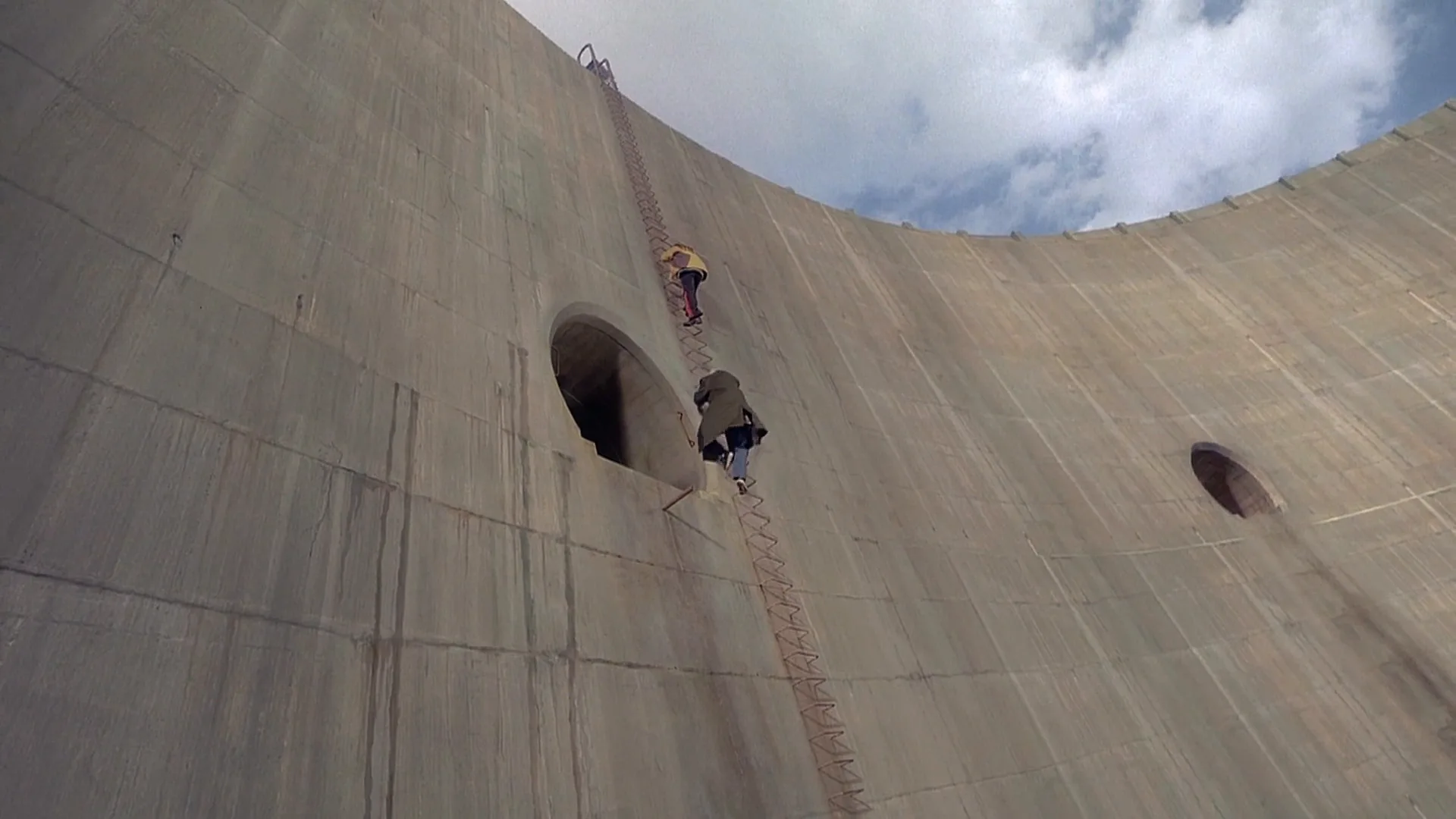
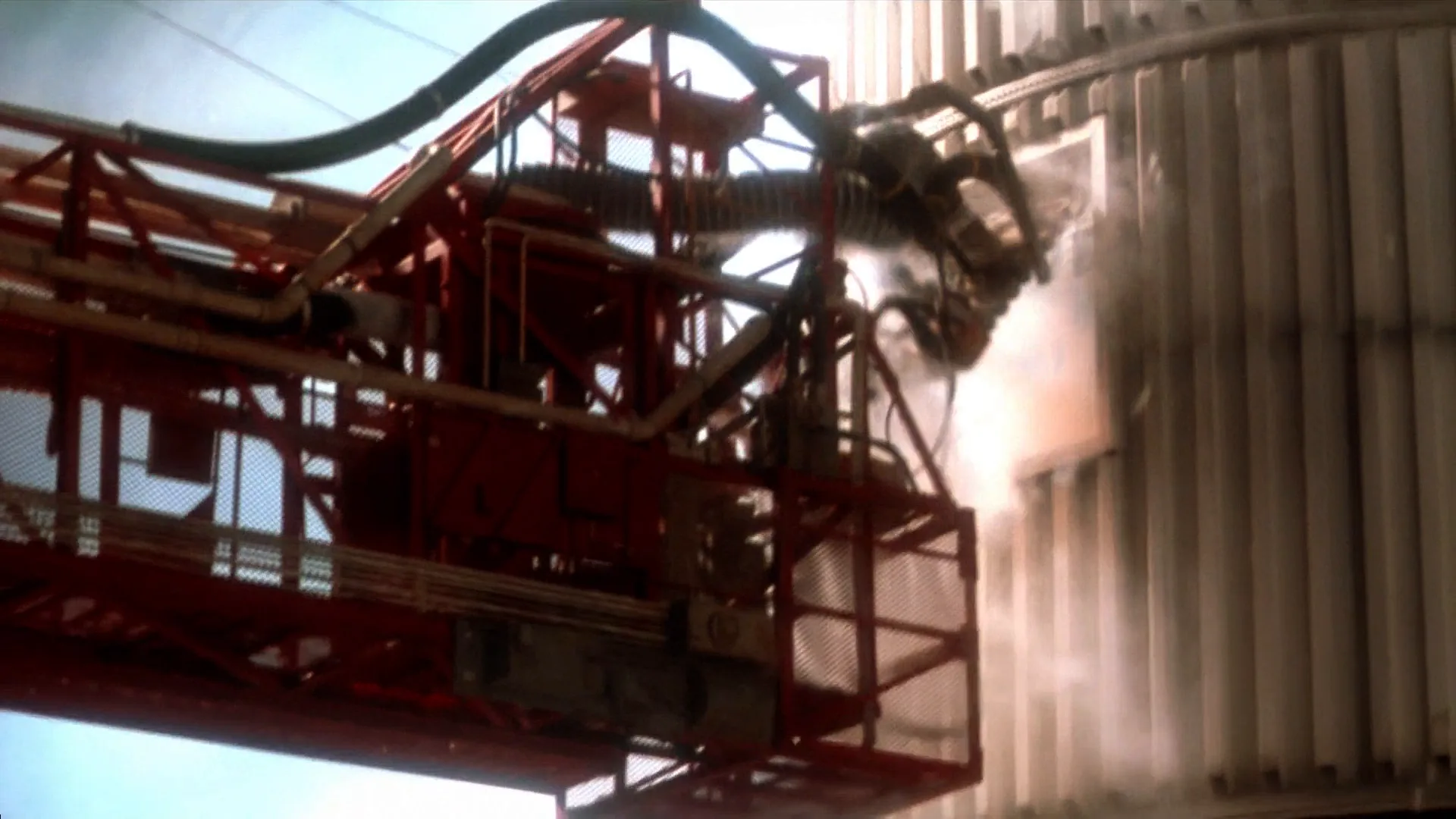
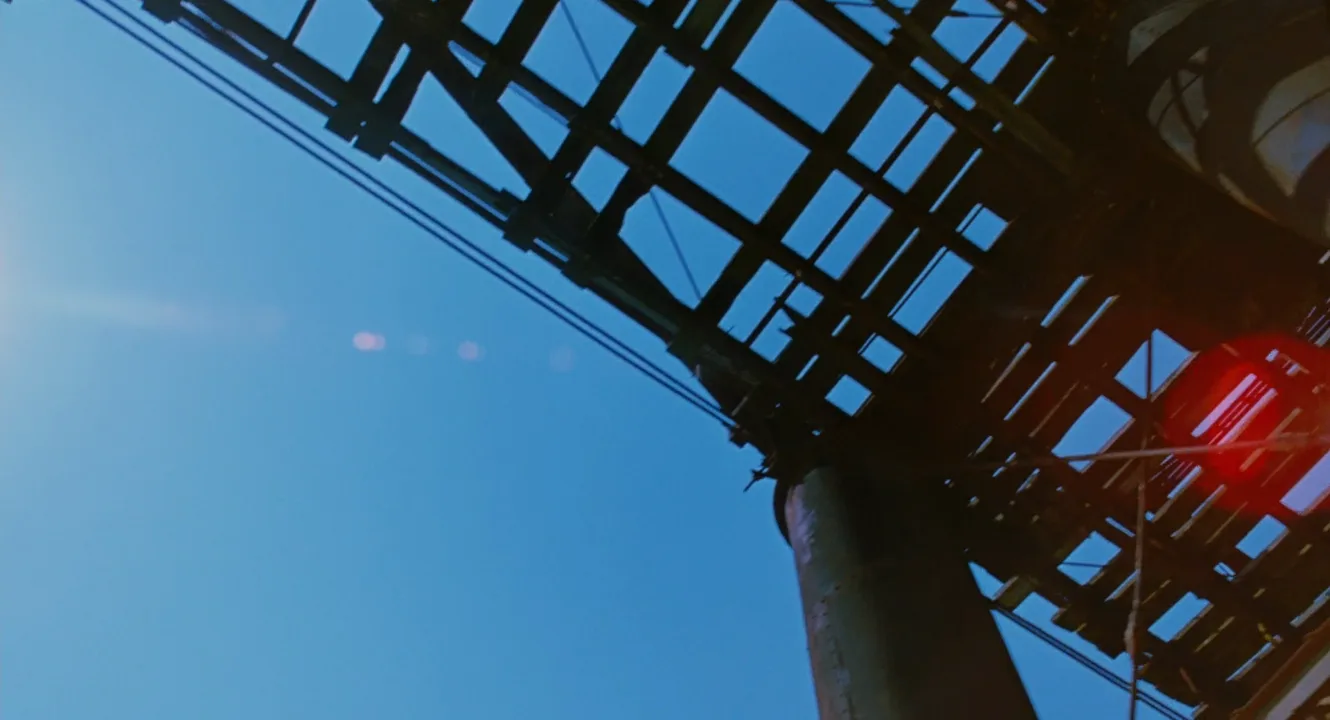
Scale and awe. Aimed at architecture or machinery, the angle strips out every familiar reference — no horizon, no street, no people for comparison — and leaves only lines racing toward the sky. A tower or a dam wall becomes a vertical landscape.
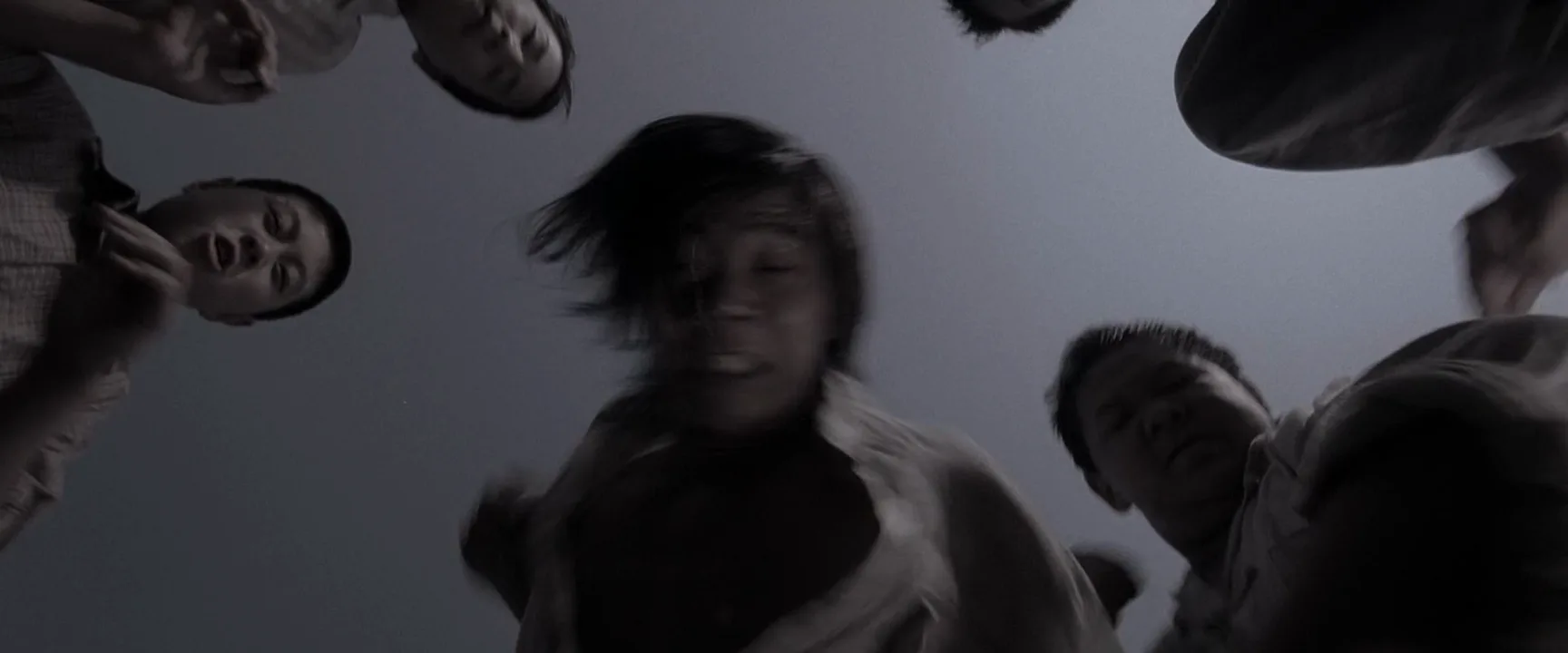
Vulnerability. When people stand over the camera, the viewer takes the position of someone lying on the ground: fallen, hurt, trapped or hidden. Faces peering down into the lens are the classic version — a ring of heads around a circle of sky reads instantly as “someone is down there,” and the audience is that someone.
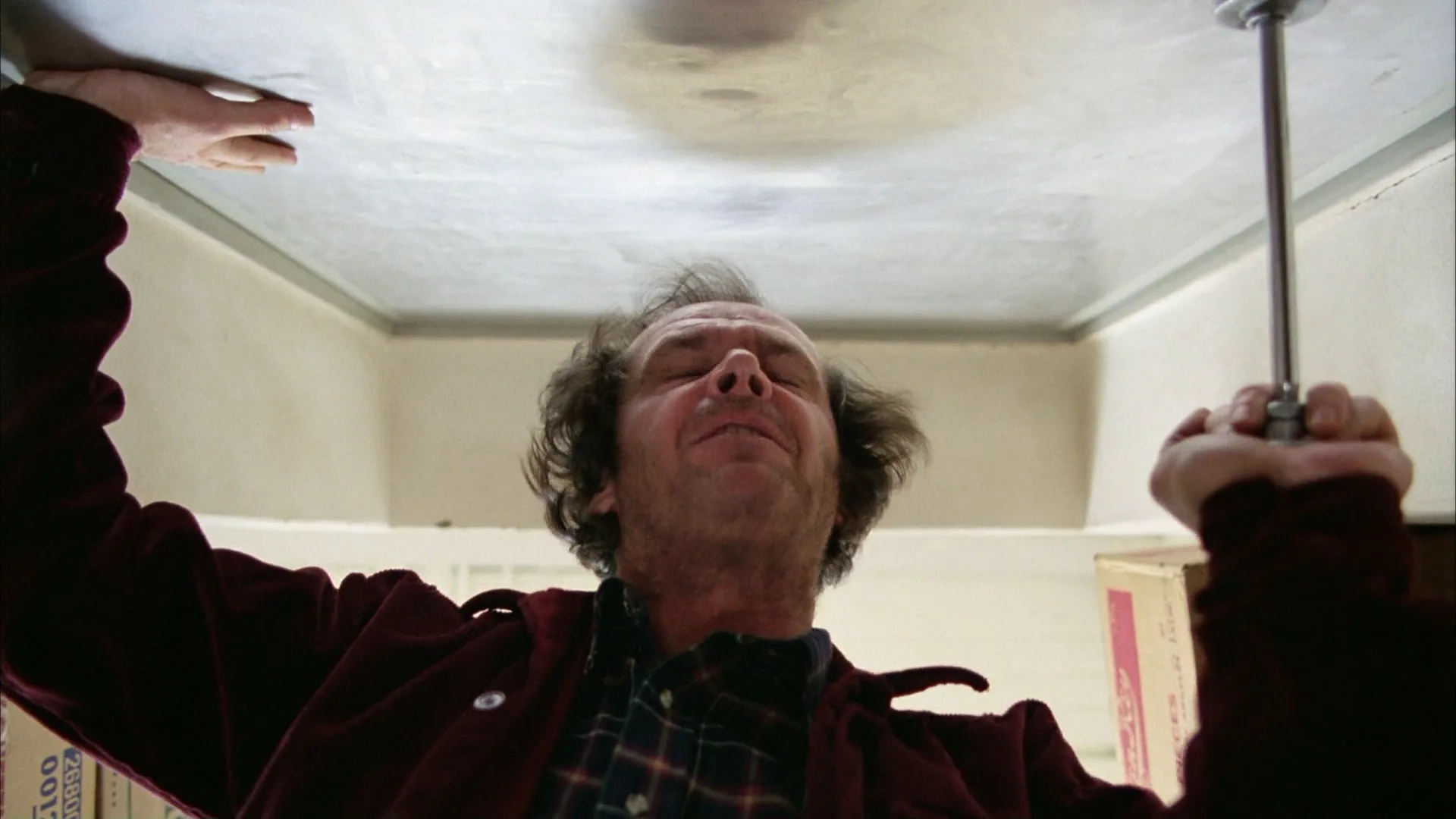
Dominance and menace. A figure seen from the floor is the most dominant figure a frame can show. The chin and nostrils lead, the eyes sit under the brow, the ceiling hangs above like a lid. Stanley Kubrick uses exactly this geometry in The Shining (1980) — see the first frame in the gallery — and the car-trunk variant, the trunk shot, became a signature of its own.
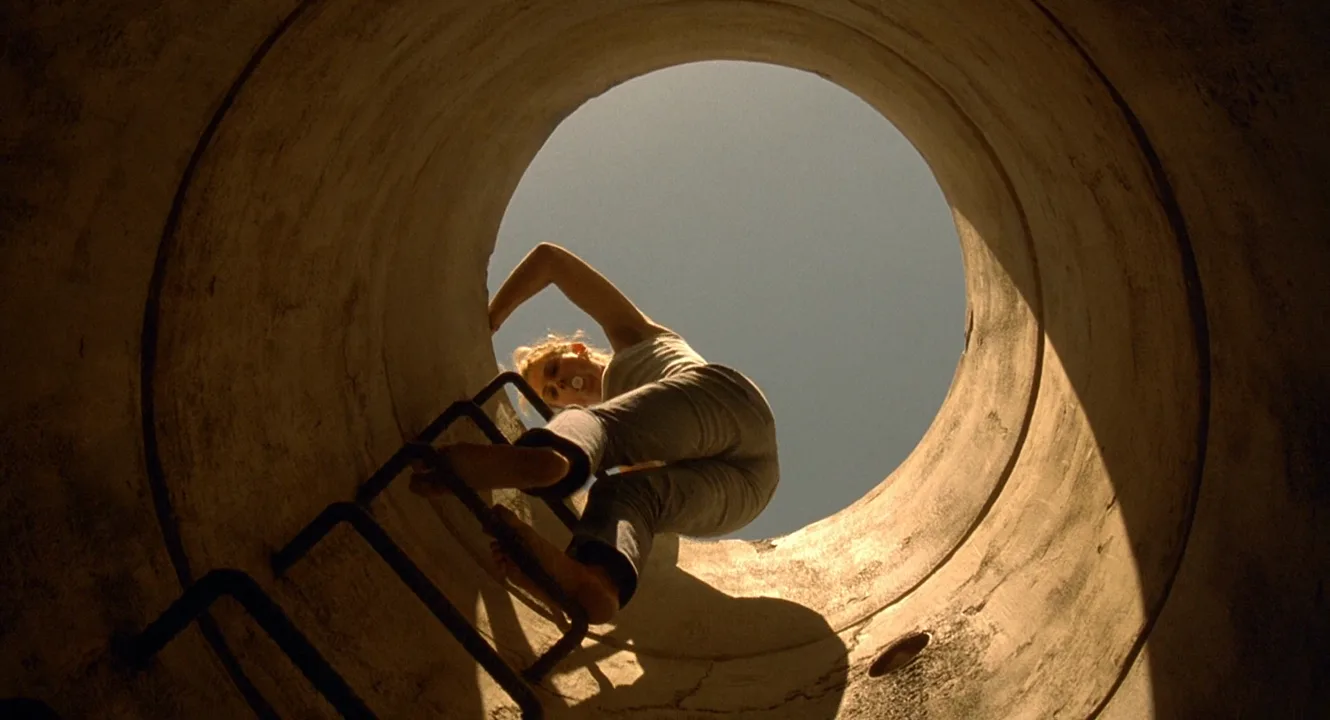
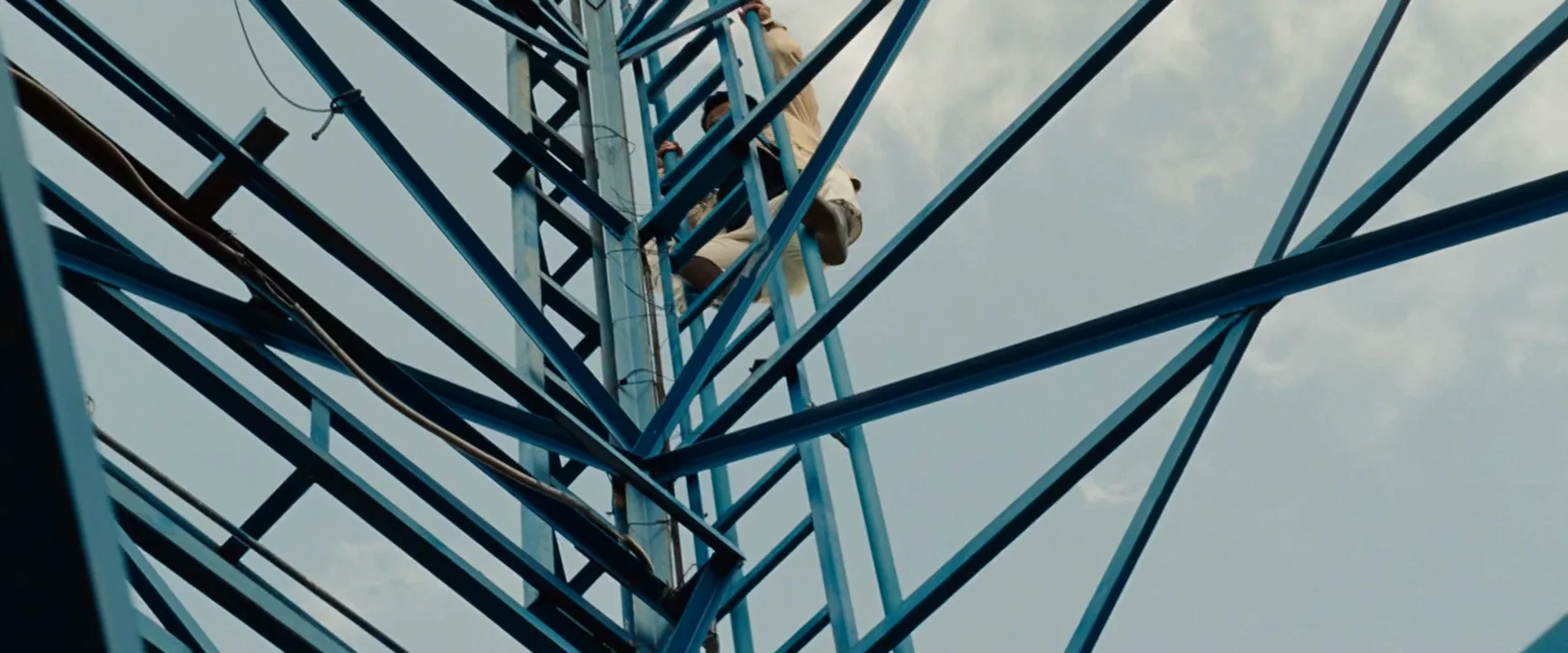
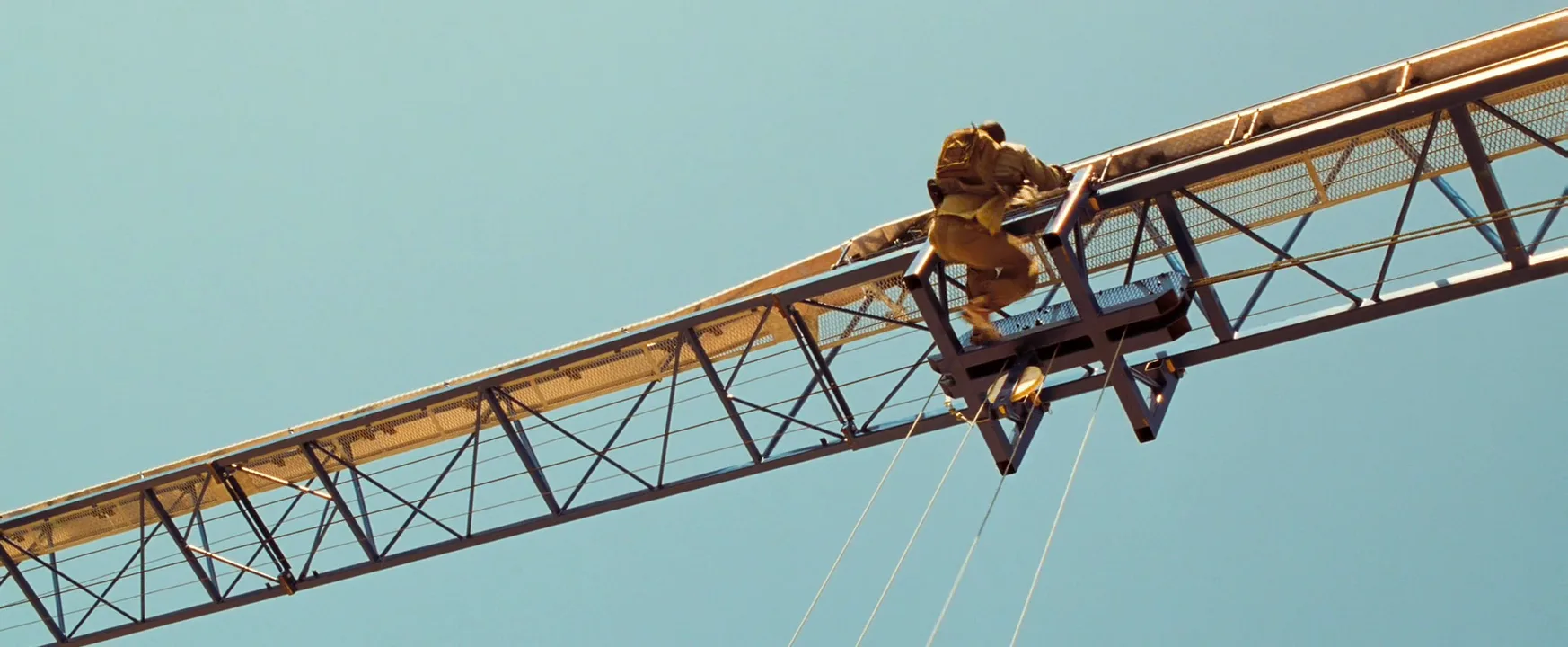
Vertigo and danger. A worm’s-eye view of someone climbing a ladder, a tower or a wall shows the full height they could fall from. The camera is at the bottom, so the drop is measured against the audience’s own body.
Wonder and play. The angle is also childlike. Seeing adults, trees or the sky from underneath can feel like memory, fantasy or comedy as easily as threat.
The angle has always been tied to the ceiling. For Citizen Kane (1941), Orson Welles and cinematographer Gregg Toland cut into the studio floor so the camera could sit below floor level, and built sets with ceilings, because a lens that low shows what is above the actors.
How to shoot a worm’s-eye view
Get the camera down. A standard tripod’s lowest position is still far too high. Use a high hat (a small base plate bolted to an apple box or the floor), a low-mode rig, a sandbag with a wedge, or simply lay a small camera on a folded towel. When the lens needs to sit at or below ground level, crews build a shallow pit or a crash box.
Choose the tilt on purpose. At about 45° you get a steep low angle with a strip of ground in frame. At 60–75° the ground disappears and verticals converge dramatically. At 90° you point straight up and the frame turns symmetrical and almost abstract — ideal for a well, a stairwell or a ring of faces.
Go wide. A wide-angle lens — roughly 12–24mm on Super 35, 16–28mm on full frame — is the default. It keeps a towering subject in frame from close range and exaggerates the convergence of vertical lines, which is what sells the height. For a caricatured, dreamlike version, a fisheye lens bends the frame into a dome. Keep faces away from the extreme edges of an ultra-wide unless you want lens distortion to stretch them.
Stop down. Wide lenses at f/5.6–f/8 hold focus from the ground at the lens to the sky beyond, so a boot near the camera and a treetop far above can both be sharp.
Solve the sky. Outdoors, the background is the brightest part of the scene, often three to five stops over the faces. Pick a strategy: expose for the sky and let the figures fall into silhouette; add fill with a bounce on the ground or a small LED panel beside the lens; or shoot under overcast light, which gives a soft white dome that is easy to hold.
Solve the ceiling. Indoors, the camera sees everything overhead: lighting grids, flags, the boom, the top of the set walls. Build a ceiling piece, dress the practical fixtures, or choose a location with a real ceiling.
Glass floors and probe lenses. For a view from directly beneath a person, put the camera under a thick acrylic or glass sheet the actor can walk on. A probe lens lets the lens tip sit in grass or a miniature set.
Block for the lens. The eyeline completes the angle. Ask actors to look down into or just past the lens, lean over it, or walk toward it and over it. Anything moving toward the camera grows enormous at this height, so keep feet, hands and props clear of the front element.
Common worm’s-eye view setups

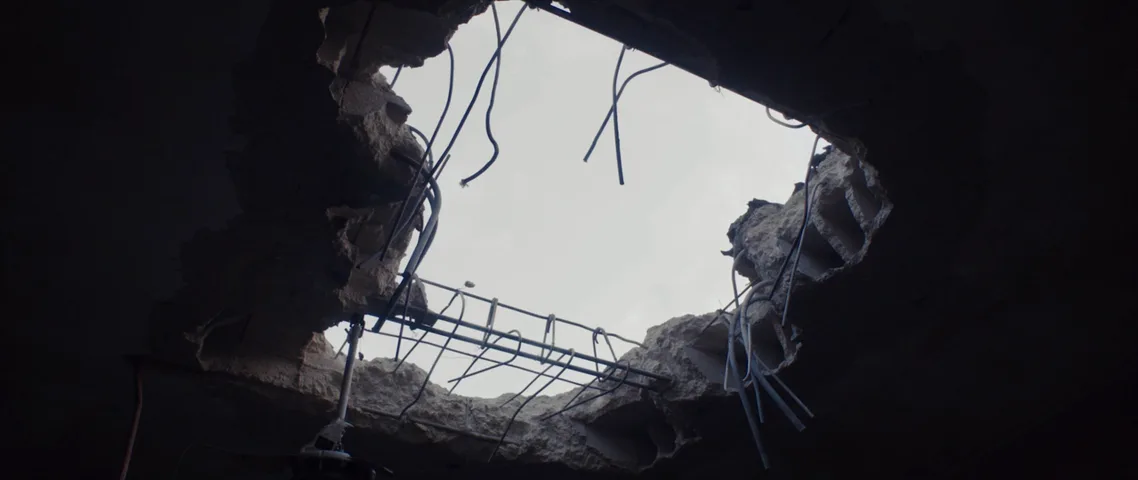
The well shot. The camera sits at the bottom of a well, pit, shaft or stairwell and looks straight up at a small circle of light, often with faces or a rope at the rim. The opening becomes a frame within a frame, and the character is cut off from the world above.

The huddle. A ring of faces leans into the lens from all sides — a group checking on someone who has fallen, a team in a huddle, a crowd around an accident. With the camera at 90°, the heads arrange themselves around the center of the frame.
The tower climb. The camera stands at the foot of a tower, crane, cliff or dam and looks up at a tiny figure near the top. The converging lines of the structure act as leading lines that pull the eye straight to the climber.
The step-over. A foot, a tire or a whole person passes directly over the lens — a staple of action scenes and music videos. It works best with a glass plate or a camera buried flush with the ground.
The creature’s view. A literal POV shot of something small on the ground — an insect, a pet, a toy — makes the human world gigantic.
Worm’s-eye view vs. low angle shot
Every worm’s-eye view is a low angle, but most low angles are nowhere near a worm’s-eye view. The difference is height, tilt and what ends up behind the subject.
| | Low angle shot | Worm’s-eye view | |---|---|---| | Camera height | Anywhere below the subject’s eyes | On or just above the ground | | Tilt | About 5–45° up | Steep, usually 60–90° up | | Background | Upper walls, ceiling, some sky | Almost entirely sky or ceiling | | Horizon | Often still in frame | Usually gone | | Main effect | The character gains status, weight, threat | The viewer becomes tiny; the world towers |
A practical test: if the actor’s surroundings at their own level — the room, the street, the horizon — are still visible, it is a low angle. If the only thing behind them is overhead space and the verticals are rushing to a point, it is a worm’s-eye view.
Use the low angle for status inside a scene; use the worm’s-eye view sparingly, as punctuation — a moment when the audience should physically feel small. Compared with the ground-level shot, the difference is only the tilt: ground-level looks along the floor, worm’s-eye looks up from it.
Worm's-Eye View in motion
2 clipsThese loops show worm's-eye view in motion, where a still frame can't: watch how the effect plays out over a few seconds.
Worm's-Eye View stills
12 framesFourteen frames of the camera on the ground looking up: looming figures, faces at the rim of a well, climbers on towers and walls, and machinery turned into vertical landscape.
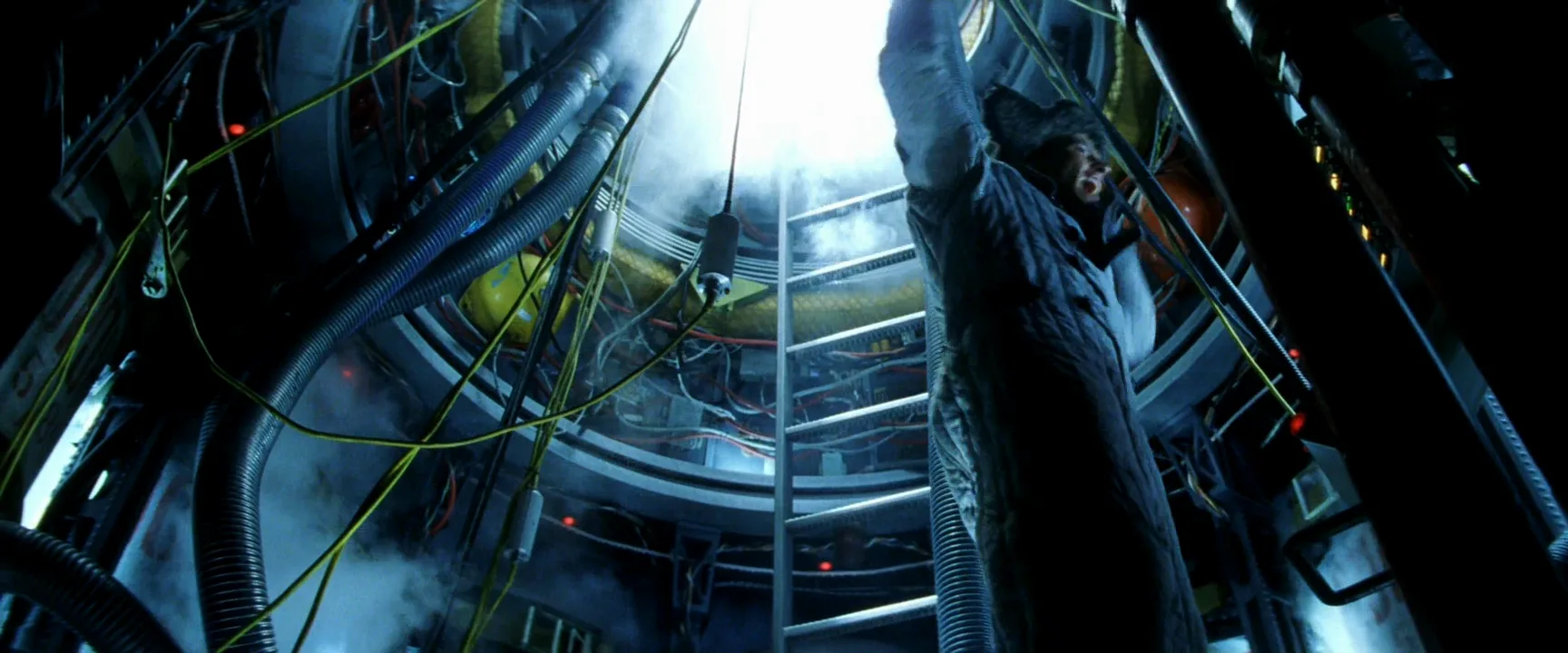
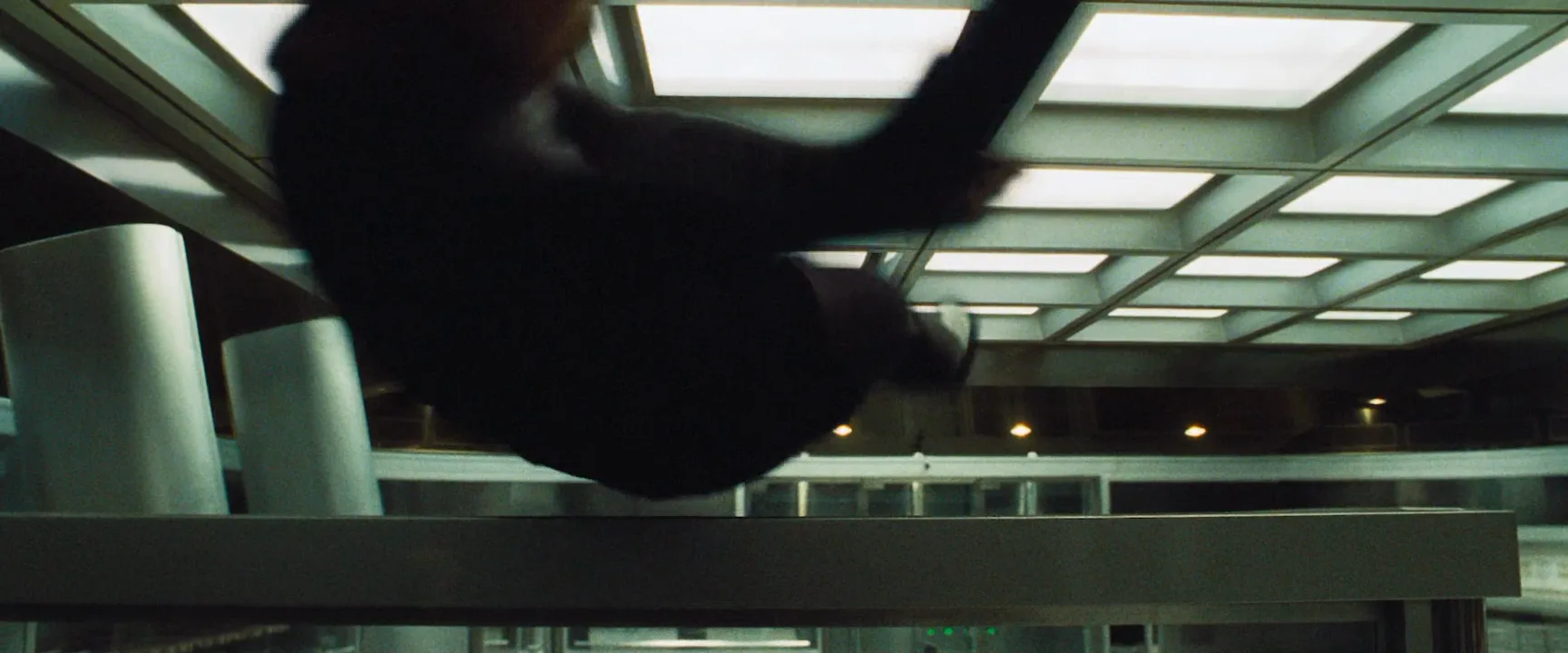
How to create a worm's-eye view with AI
4 promptsImage models drift toward eye level, and a bare “worm’s-eye view” often comes back as an ordinary low angle — or flipped into a top-down shot. Spell out the geometry: camera on the ground, pointing up, what fills the background, and who is looking down. Build the start frame with Nano Banana 2 Lite, try a second take with GPT Image 2.5, then animate the first frame with MiniMax H3 Max Turbo; in FlashBoards all three sit on one board next to the reference frames, so you can compare takes side by side. The fourth prompt re-shoots a real film shot from a text description alone, and the original plays next to the result so you can compare.
Worm's-eye view from the bottom of a dry stone well, camera lying on the ground pointing straight up, 14mm lens: rough stone walls converging toward a bright circle of overcast sky at the top of the frame, three people leaning over the rim looking down into the lens — a woman in her thirties with a cropped silver-dyed bob and a yellow raincoat, a broad bearded man with a shaved head and a red bandana, a thin older man with a white mustache and a gray wool cap — a thick rope hanging from the woman's hands down the center of the frame, dust drifting in the daylight, faces in soft shadow, cinematic film still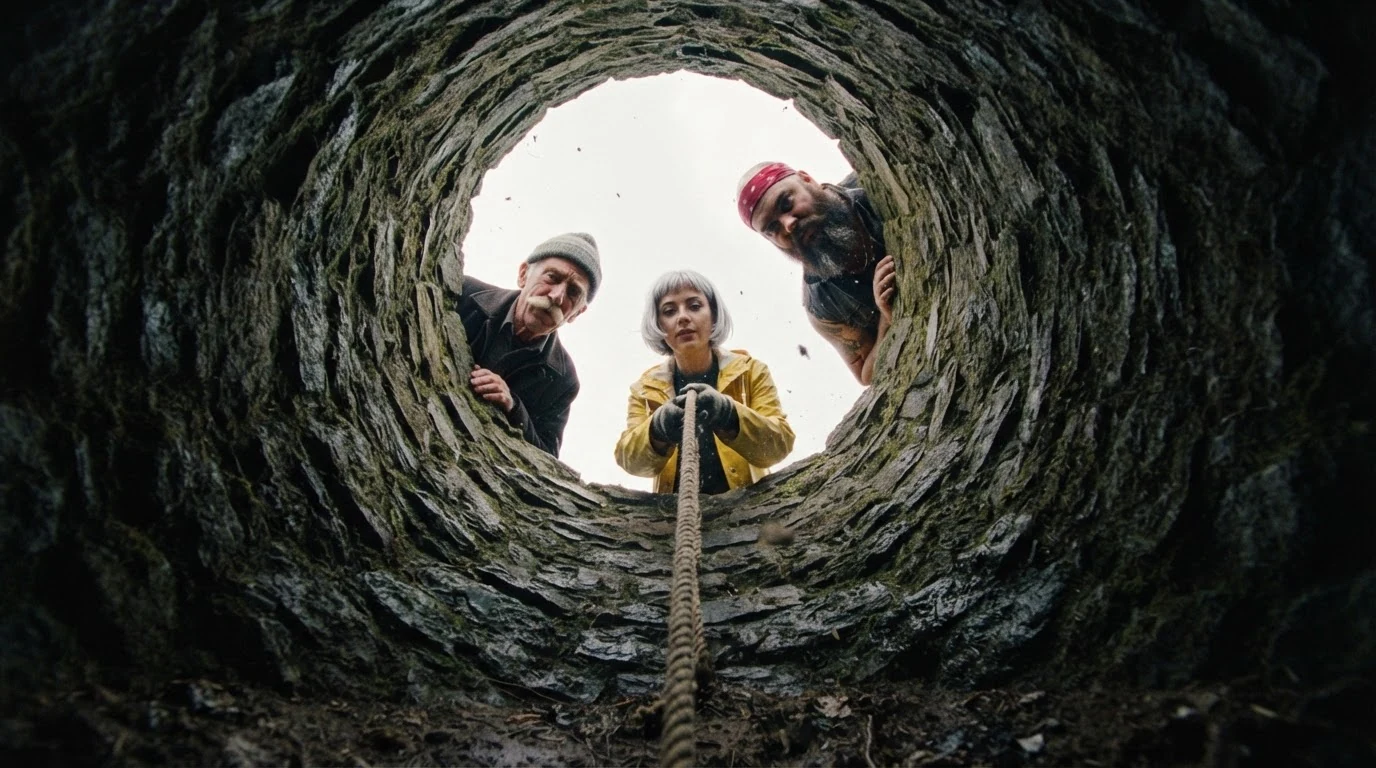
“Camera lying on the ground pointing straight up” fixes the geometry, and “walls converging toward a bright circle of sky” forces the perspective that makes it a worm’s-eye view rather than a low angle. “Looking down into the lens” sets the eyeline so the faces are seen from below, not from the side. Specific invented faces avoid generic looks; the rope and dust give the video recipe motion from frame one.
Open FlashBoardsWide cinematic film still, extreme low angle worm's-eye view, camera on wet asphalt in a narrow downtown street pointing steeply up, 16mm lens: a bike courier in his twenties with a tight black afro, a gold nose ring and a bright orange windbreaker stands astride the camera at the center, one plain unbranded black canvas sneaker with no logos planted on each side of the lens, looking down at it; glass skyscrapers line both sides of the street and lean inward, converging to a point in a pale evening sky above him, puddle reflections at the bottom edge, cool blue and orange light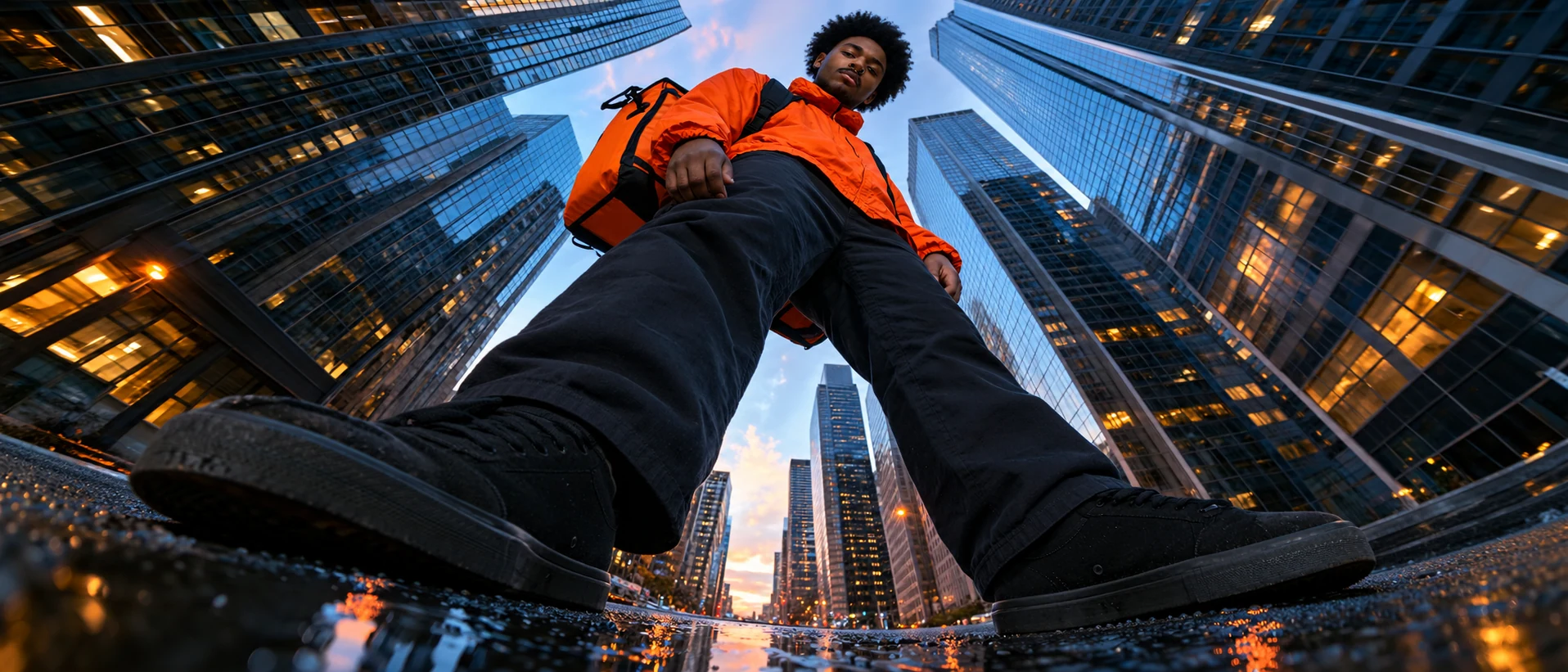
A second take with a different subject and a wide frame. “Stands astride the camera” with a sneaker “planted on each side of the lens” is the step-over setup and puts the lens undeniably on the ground; “lean inward, converging to a point” bends the skyscrapers on both sides toward him, so the steep angle still reads across the width.
Open FlashBoardsCamera: stays locked on the ground at the bottom of the well, pointing straight up for the whole shot, perfectly still. Action: the rope is already swinging and dust is already falling through the daylight toward the lens as the shot begins. In the middle the woman in the yellow raincoat feeds the rope down hand over hand, and it drops closer to the camera, swaying across the circle of sky. At the end the bearded man leans further over the rim and points down into the well, and the older man pulls his wool cap tighter, all three still looking into the lens.A locked-off camera keeps the worm’s-eye geometry intact; “stays locked on the ground, pointing straight up” stops the model from tilting down toward eye level or creeping into a push-in. Rope and dust are already moving, so the shot is alive from the first frame, and every action uses something already in the start frame, so nothing new gets drawn into the sky.
Open FlashBoards{
"output": "Full-screen live-action scene from The Shining (1980) from its very first frame: one continuous locked-off shot, a worm's-eye view from the floor straight up at a man. 1980 35mm color, flat white overhead fluorescent light, pale cream walls and a bright white ceiling, a cramped hotel storeroom.",
"characters": {
"S1": {
"name": "Jack Torrance, played by Jack Nicholson",
"look": "wild brown hair, stubble, dark maroon corduroy jacket over a dark green plaid flannel shirt, arms spread wide above the lens",
"voice": "hoarse, wheedling, half laughing"
}
},
"shots": [
{
"shot": 1,
"camera": "locked-off, static, lens on the floor pointing up, wide lens, S1 from the chest up at the bottom centre of frame, the white ceiling and a round ceiling lamp filling the top of frame; no camera movement at all",
"action": [
"BEGINNING: alive from the first frame, S1 looms over the lens in the centre, his right arm (screen left) stretched up to the top-left corner gripping a shelf edge, his left hand (screen right) clenched around a vertical metal pole, head tilted, eyes darting to screen right with a crooked grin.",
"THEN: he turns his face down toward the lens, grimacing, brows pulled together, eyes squeezing shut as he pleads.",
"THEN: his head rolls back, chin up toward the ceiling, mouth opening in a wide, pained laugh; both hands stay locked on the shelf and the pole.",
"END: head still thrown back, he laughs and pleads toward the ceiling, grinning with bared teeth, arms still spread over the lens like a lid."
],
"dialogue": [
{
"speaker": "S1",
"on_screen": true,
"when": "shortly after the first frame, as he turns his face down",
"delivery": "coaxing, strained",
"line": "<d>[English] Wendy, listen.</d>"
},
{
"speaker": "S1",
"on_screen": true,
"when": "right after, as his head rolls back",
"delivery": "pleading through a laugh",
"line": "<d>[English] Let me out and I'll forget the whole goddamn thing.</d>"
},
{
"speaker": "S1",
"on_screen": true,
"when": "to the end, head thrown back",
"delivery": "sing-song, laughing",
"line": "<d>[English] It'll be just like nothing ever happened.</d>"
}
]
}
],
"sound": {
"ambience": "dead quiet storeroom, faint hum of fluorescent light, creak of his grip on the metal pole",
"speech": "exactly these spoken phrases, each said once, in this order",
"never_spoken": "no narration and no voice-over: the descriptions, performance notes and step words of this prompt are never spoken aloud",
"music": "a film score under the scene, always below the voices: low dissonant strings holding one uneasy drone",
"subtitles": "none"
}
}Remakes the locked-off floor-level shot of Jack Torrance pleading through the pantry door in The Shining (1980), carrying over the static upward lens, the spread arms, the head thrown back and his three lines verbatim.
The camera block pins the lens to the floor and forbids any move, so the height comes only from the angle: arms spread above the lens and a ceiling behind the head turn a pleading man into a lid closing over the viewer.
Open FlashBoardsCommon mistakes
- The shot comes back at chest height. “Low angle” and even “worm’s-eye view” alone often produce a mild upward tilt. Add “camera on the ground” and “pointing steeply up” or “straight up.”
- The view flips to top-down. Some takes misread the phrase and look down at the ground. Name the background — “against the sky,” “ceiling above them” — so there is only one way to read the angle.
- Verticals stay parallel. Without converging lines the height is lost. Ask for walls, towers or trunks that “converge toward the top of the frame” and use a 14–18mm lens.
- Faces warp from below. Keep faces out of the extreme corners and state the eyeline: “looking down into the lens.”
- The video camera stands up. During motion, the camera may rise or tilt toward the horizon. Say it “stays on the ground, pointing straight up” and open
Action:with movement that is already happening.
Keep the reference frames, prompts and every generated take side by side — images and video in one canvas.
FAQ
6 questionsWhat is a worm’s-eye view in film?
A worm’s-eye view is a shot taken with the camera on or near the ground, pointing steeply up — often 60 to 90 degrees. People and buildings tower over the lens, vertical lines converge toward the top of the frame and the sky or ceiling fills the background. It is the most extreme form of the low-angle shot and makes the viewer feel small.
What is a worm’s-eye view shot used for?
Filmmakers use it to make architecture or machinery feel overwhelming, to show a character trapped at the bottom of a well or pit, to put the audience in the place of someone lying on the ground, and to make a figure standing over the camera as dominant as possible.
Is a worm’s-eye view the same as a low angle shot?
Not exactly. Every worm’s-eye view is a low angle, but a low angle can be taken from chest or waist height with a gentle tilt, and the character’s surroundings stay visible. A worm’s-eye view sits on the ground and tilts steeply up, so the horizon drops out and nearly everything behind the subject is sky or ceiling.
What is a frog’s-eye view?
The term is used loosely. Many people treat frog’s-eye view as a synonym for worm’s-eye view — a camera on the ground looking up. Others use it for a camera at ground level looking straight ahead, which cinematographers usually call a ground-level shot. When briefing a crew, state height and tilt.
What lens should I use for a worm’s-eye view?
A wide-angle lens — roughly 12–24mm on Super 35 or 16–28mm on full frame — is standard. It fits a tall subject into the frame from close range and makes vertical lines converge, which sells the height. Stop down to around f/5.6–f/8 for deep focus from the ground to the sky, and keep faces away from the distorted frame edges.
What is the opposite of a worm’s-eye view?
The bird’s-eye view, usually called an overhead shot in film: the camera sits high above the scene and looks straight down, so the floor or ground becomes the background and people look small and patterned.
Related terms
4- Low-Angle ShotCamera Angles
A low-angle shot looks up at the subject from below eye level, making them loom larger against the ceiling or sky — used for power, menace or heroism, or to make a space feel monumental.
- Ground-Level ShotCamera Angles
A ground-level shot rests the camera on or just above the floor, so the ground fills the lower frame and action — feet, wheels, objects — happens right at the lens; unlike a worm's-eye view, it need not point steeply upward.
- Trunk ShotCamera Angles
A trunk shot looks up from inside a car trunk at characters leaning over it, framing them against the sky with the lid as a border — a low-angle object POV strongly associated with Quentin Tarantino.
- Wide-Angle LensLenses, Focus & Exposure
A wide-angle lens has a shorter focal length than normal: it takes in more space, exaggerates the distance between near and far, and enlarges whatever is close to the camera — from immersive interiors to unsettling, distorted close-ups.
Further reading
Blain Brown, Cinematography: Theory and Practice (Routledge). Gustavo Mercado, The Filmmaker’s Eye (Focal Press). Joseph V. Mascelli, The Five C’s of Cinematography.