 FlashBoards Learn
- Learn
- Cameras & Capture
- Underwater Shot
Cameras & Capture · Film language
Underwater Shot
Also called: underwater, underwater cinematography, subaquatic shot
An underwater shot puts the camera below the surface, so a body of water sits between lens and subject. The water scatters light, pulls color toward blue-green, lowers contrast and slows every movement. Filmmakers use it for weightlessness, dread, drowning and dream states: the viewer is in an element where no one can breathe.
- What it does
- Moves the viewpoint into the water, where light, color and motion stop behaving like they do in air.
- Use it when
- A character sinks, floats, swims, hides or is hunted, or a scene needs to feel suspended and unreal.
- Watch out
- Clean, crisp, saturated water reads as fake; real water has particles, falloff and muted reds.
- Try this prompt
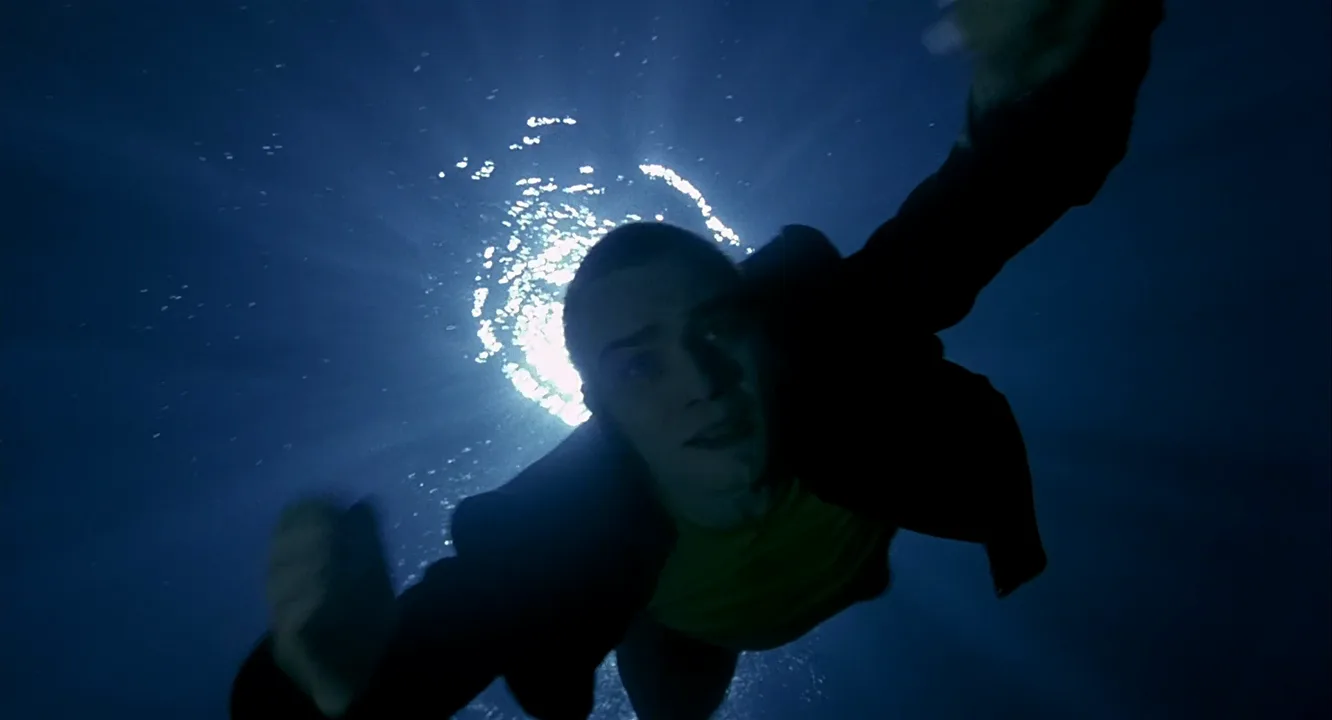
Underwater shot looking up at a swimmer, rippled bright surface above, sun rays through blue-green water, floating hair, fine bubbles
What is an underwater shot?
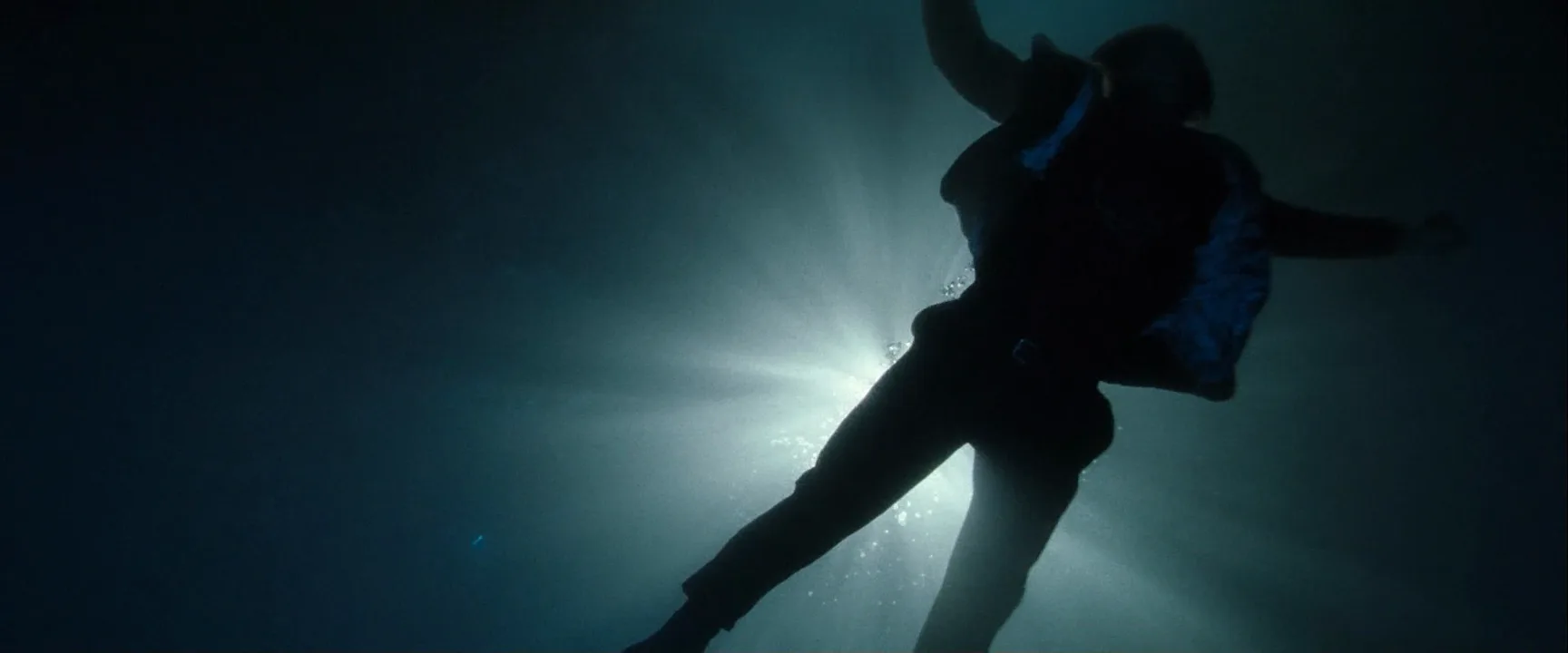
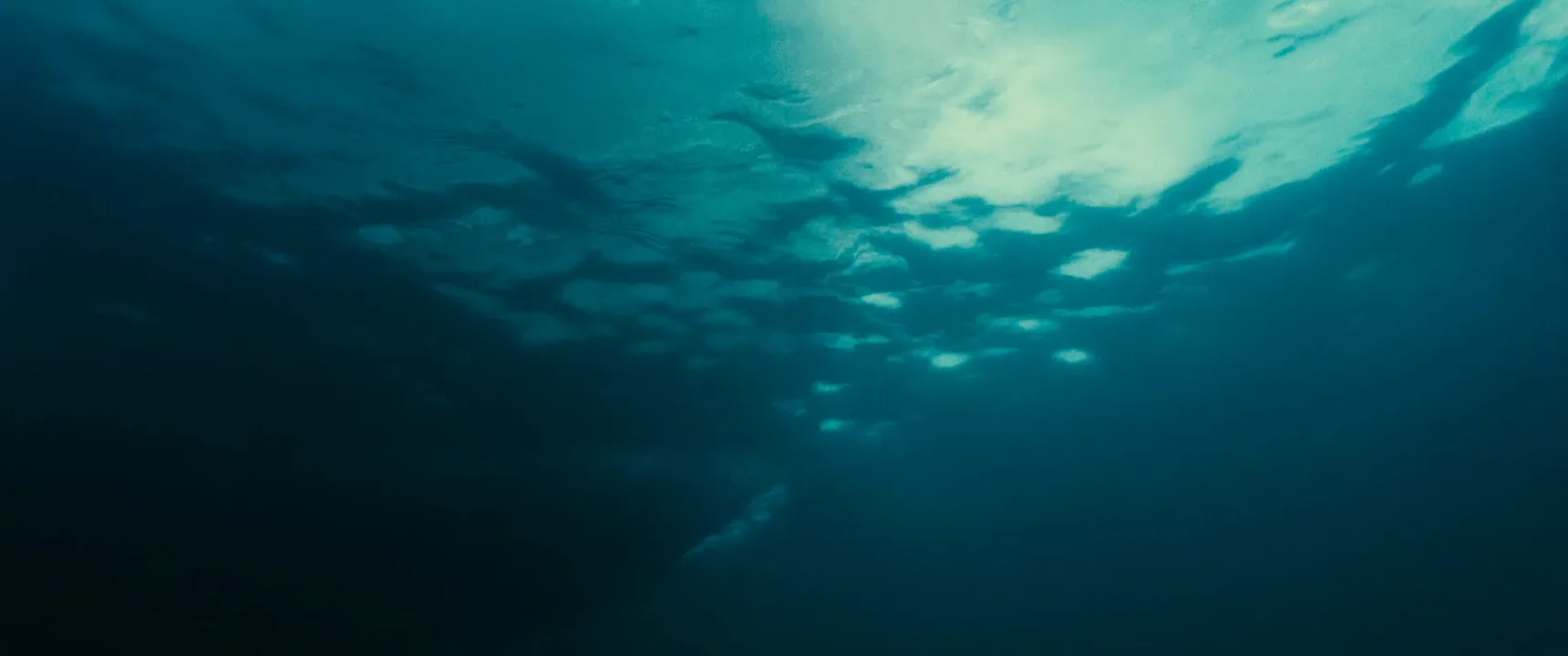
An underwater shot is defined by where the lens is: fully submerged in a pool, tank, lake or sea. The water does four things. It absorbs red and orange first, so everything drifts toward blue or green with depth and distance. It scatters light off particles, lowering contrast and fading far objects into haze. Looking up, the surface shows a bright circle of sky (Snell's window) ringed by a mirror of the water below. And it slows bodies, hair and cloth, which float instead of fall.
In cinematography it belongs to the cameras and capture toolkit: a camera position that needs its own housing, lenses, crew and lighting. A close cousin is the split-level shot, where a dome port straddles the surface and shows above and below in one frame.
Why do filmmakers use underwater shots?
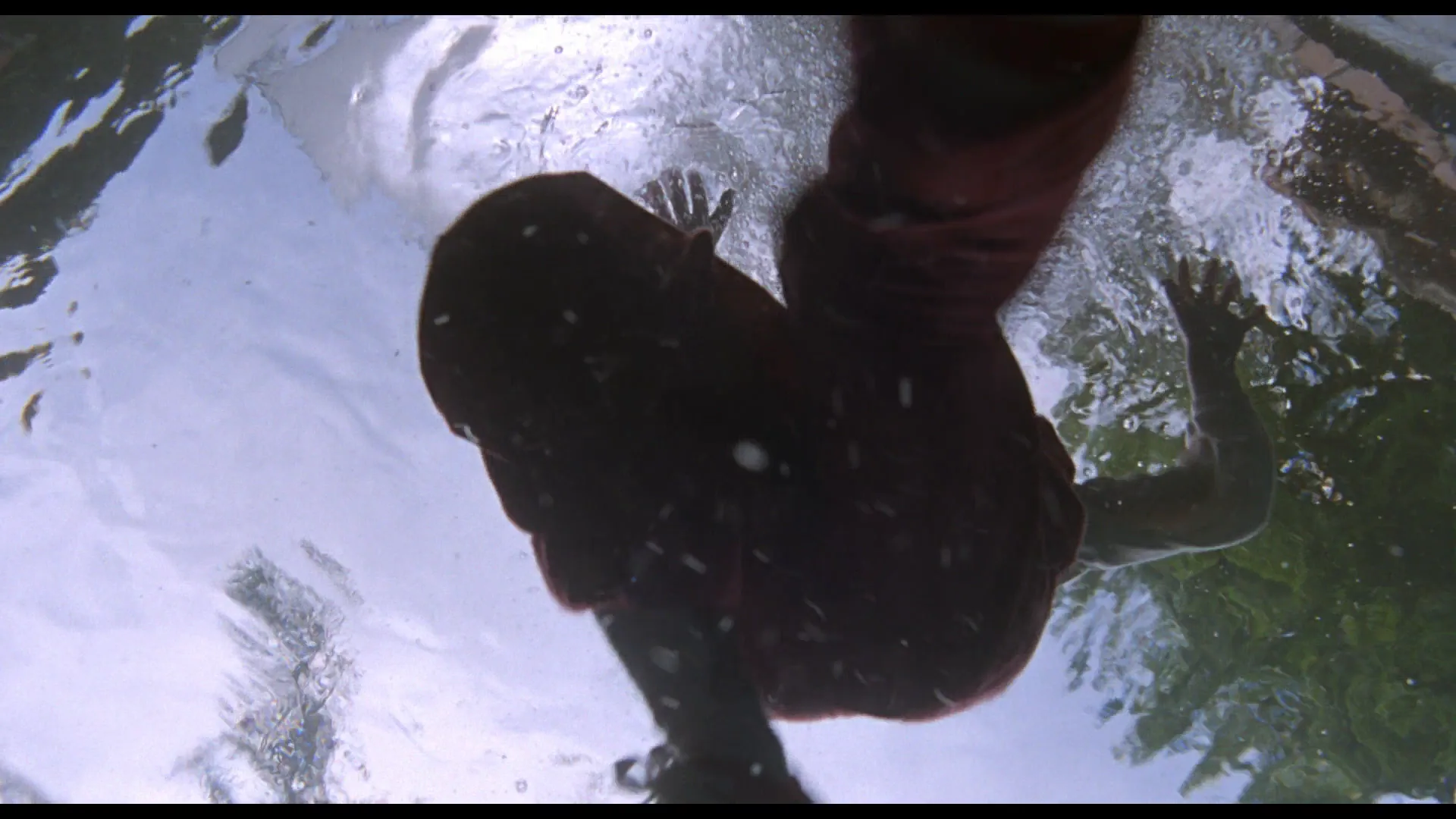
Threat. Underwater, you can't see far or hear clearly. Jaws (1975) turns the lens into a predator's POV shot, looking up at kicking legs against the bright surface.
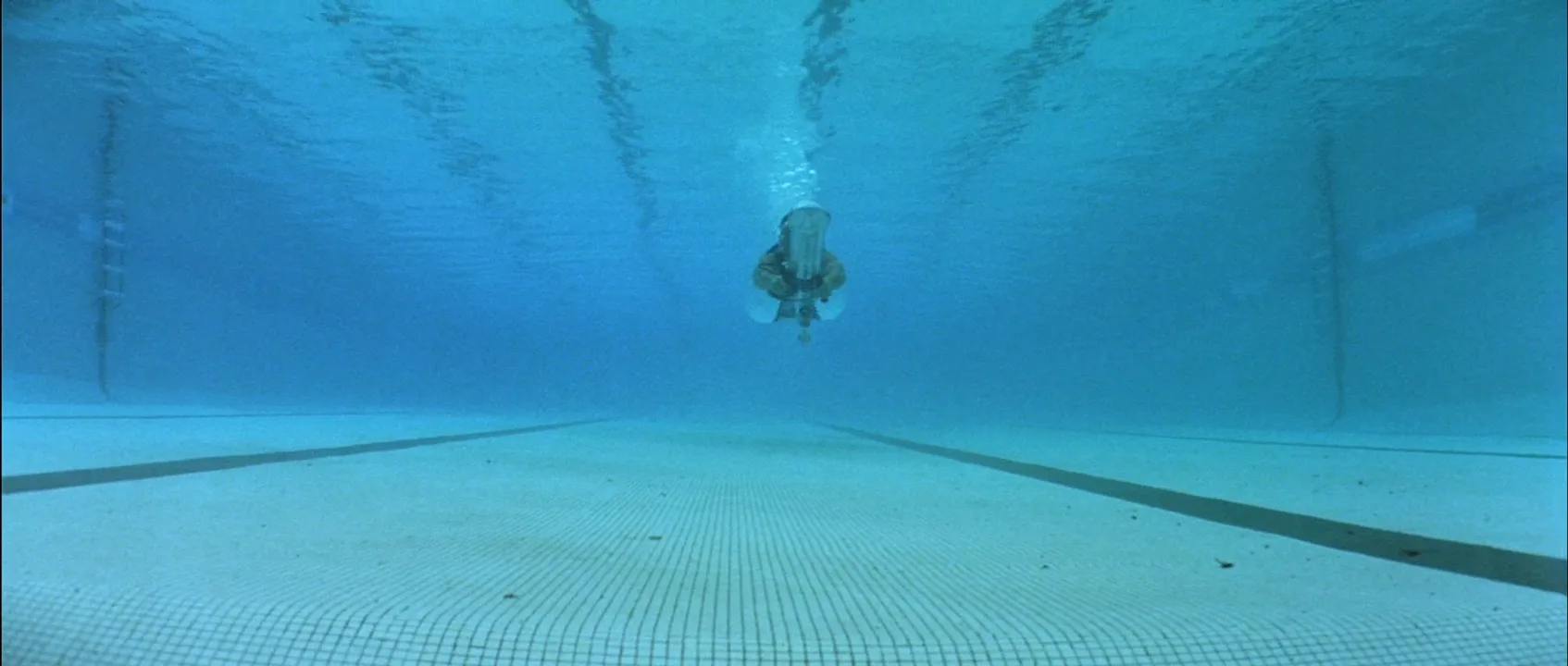
Weightlessness. The free divers of The Big Blue (1988) move through water as if it were their real home. The image turns calm and meditative.
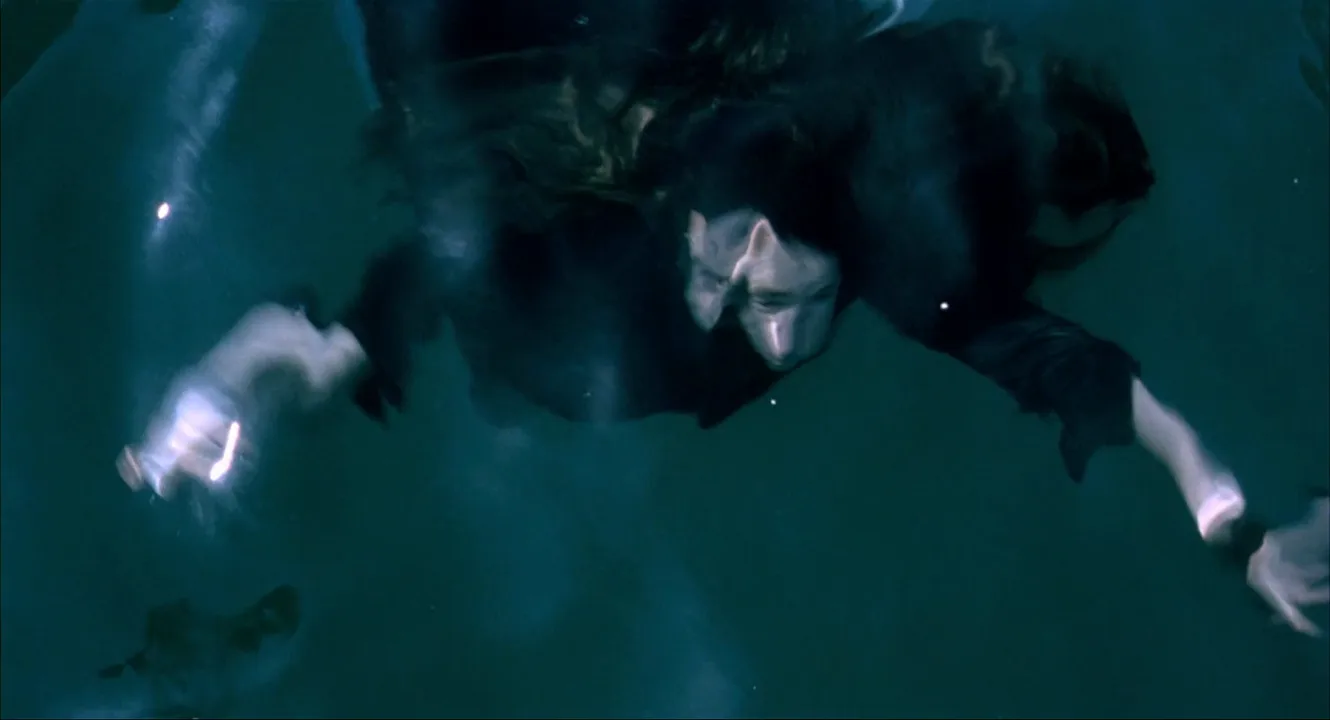
Drowning. The same slowness turns frightening when a character can't get back up. The ending of The Piano (1993) holds on a woman in a dark dress drifting in murky water.
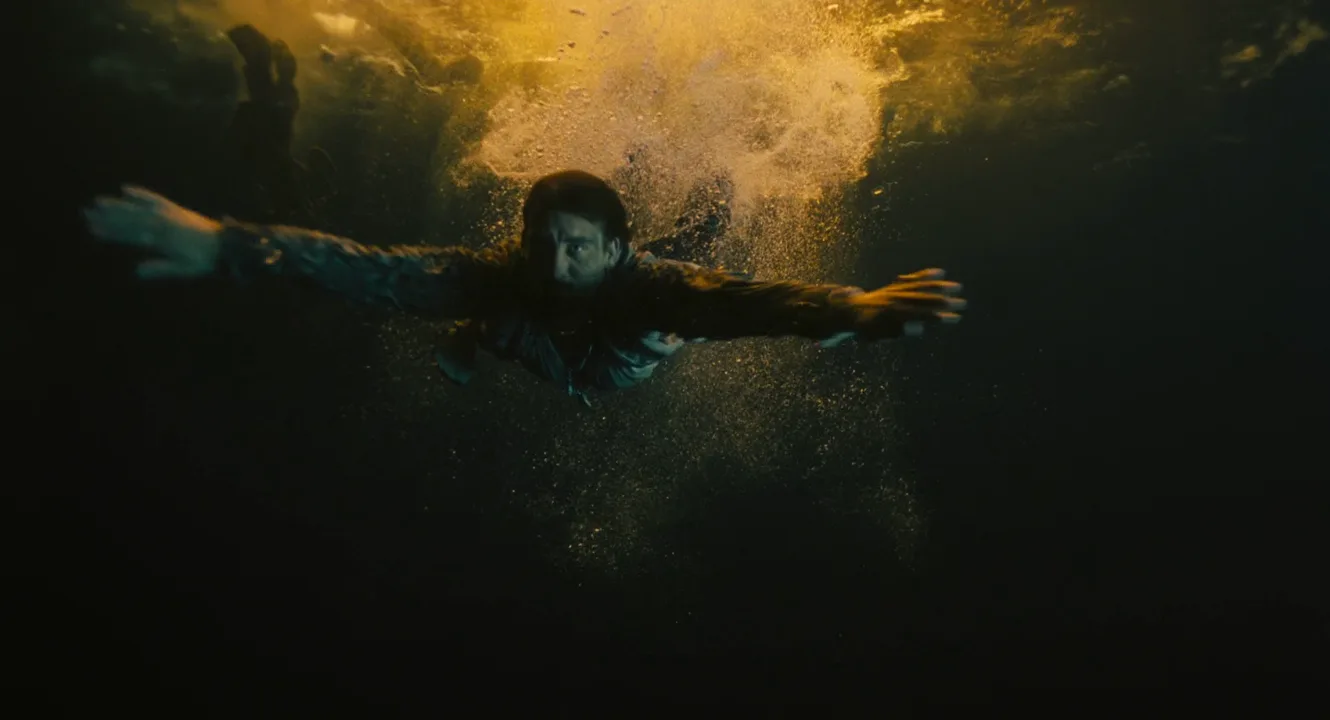
Dream. Floating hair, bent light and muffled sound pull a scene away from reality, as in the crystal-clear hallucinated dive of Trainspotting (1996).
Water already slows motion; add slow motion at 48 or 60 fps and a plunge becomes a long, suspended event.
How do you film underwater scenes?
Where. Most narrative underwater work happens in heated, filtered tanks or pools 2–5 m deep, with dark walls and a repeatable image.
Camera and ports. The camera goes into a purpose-built housing. A flat port magnifies the image by about a third and softens wide-lens edges; a dome port keeps the full angle of view, so crews shoot wide (14–24mm on Super 35) and close. Every meter of water between lens and actor costs contrast and color.
Light. Lamps rigged above the surface give rippling rays and caustics. Underwater lights sit off the lens axis; light next to the lens hits particles and causes backscatter, the white specks that ruin a frame.
Crew and safety. Actors work on breath holds or scuba, with safety divers on every setup and underwater speakers for cues.
Faking it. Dry-for-wet stages the scene in air with haze, fans for floating hair, slow motion and water reflection lighting rippling across the set.
Underwater shot vs. ground-level shot
Both are extreme camera positions defined by a surface, but on opposite sides of it. A ground-level shot rests the camera on the floor: the ground fills the lower frame and action happens at the lens, in air, with normal color and contrast. An underwater shot takes the lens through the surface into another medium: blue-green color, soft falloff, particles, weightless motion. They meet at the waterline, where a half-submerged lens borrows the low framing of a ground-level shot.
Underwater Shot in motion
11 clipsWatch what the water does while the shot plays: color drifts to blue-green with distance, the surface overhead becomes a bright, rippling ceiling, and bodies, hair and cloth float instead of fall. The first clips are calm pool swims, then backlit and sinking figures and a predator's view; the last two break the waterline.
Underwater Shot stills
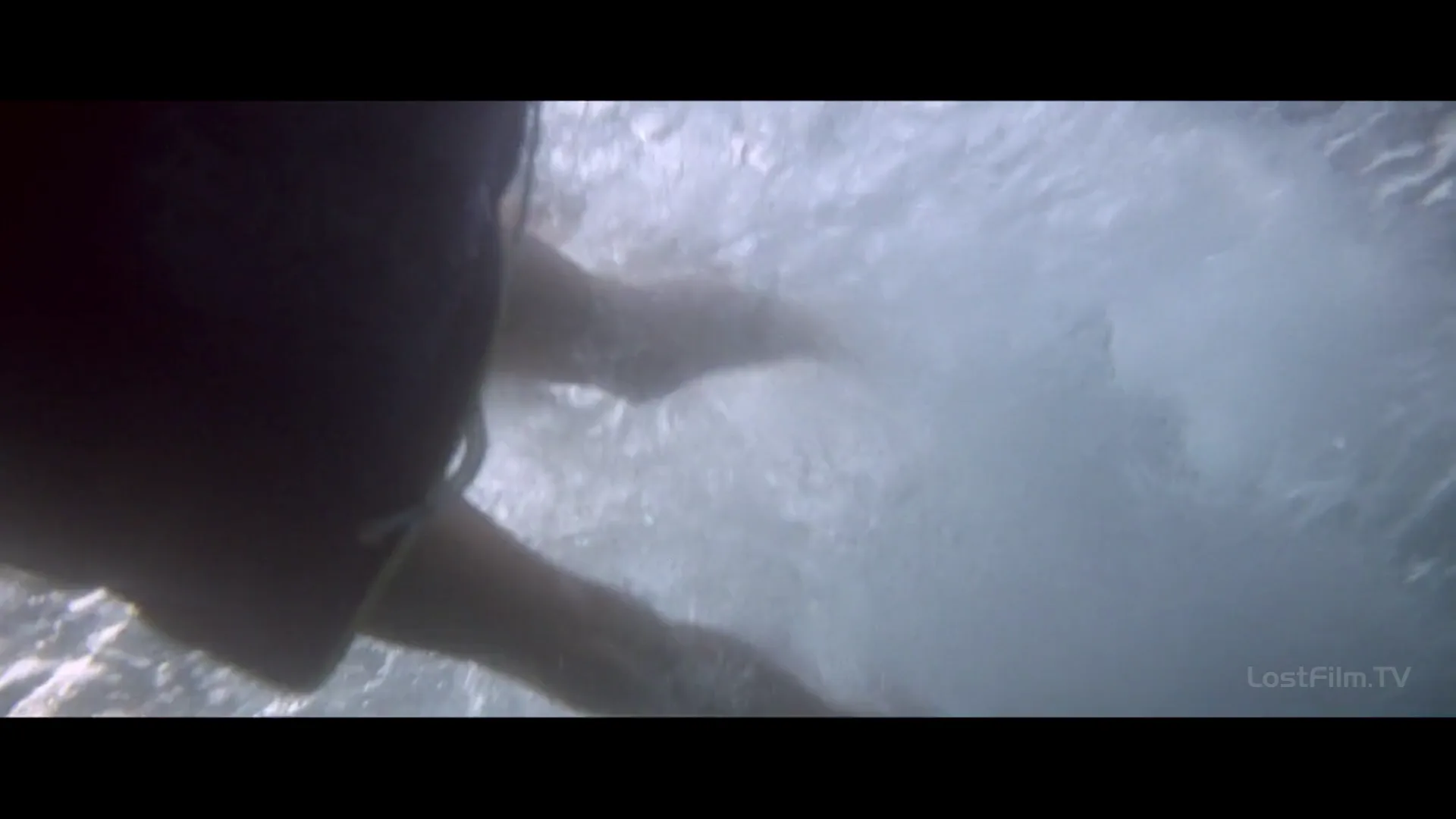
8 framesFrames shot beneath the surface: note the color shift, the bright surface from below and floating bodies.
How to create a underwater shot with AI
4 promptsImage models draw people in air by default, so the prompt has to describe the water: depth, color shift, particles, floating hair, the surface seen from below. Build the start frame, try a darker take, then animate. Keep references and takes on one FlashBoards board to compare them side by side. The fourth prompt re-shoots a real film shot from a text description alone, and the original plays next to the result so you can compare.
Underwater shot in a clear swimming pool, camera 2 meters below the surface looking up at a fictional woman in her 30s with short copper hair, freckles and a thin silver ring in one ear, wearing a loose white linen dress, suspended mid-water with arms drifting out, dress and hair floating upward, bright rippled surface above her, sun rays cutting down through blue-green water, small bubbles rising, fine particles, soft low contrast, wide-angle lens, dreamlike mood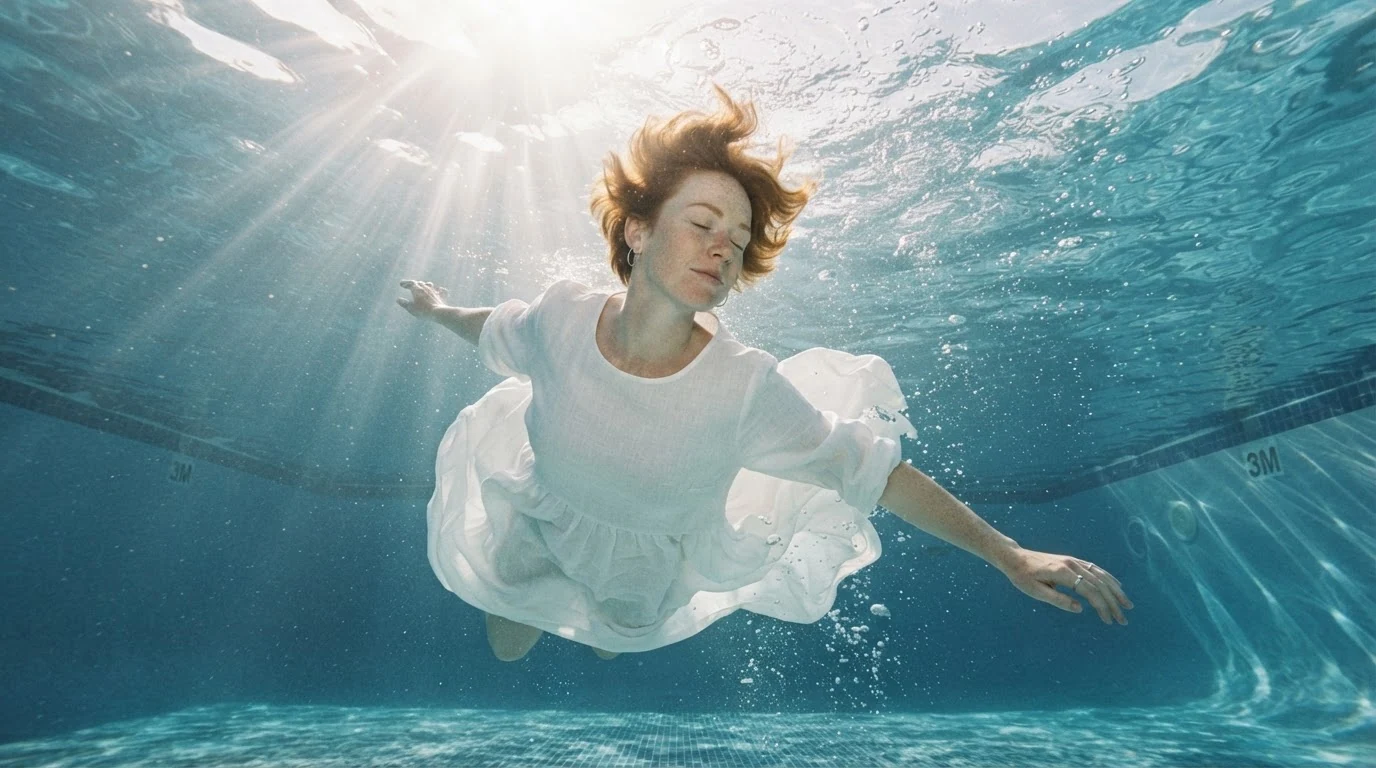
"Camera 2 meters below the surface looking up" puts the lens in the water; "hair floating upward", "rays" and "particles" are the physical cues; "soft low contrast" stops air-clear detail.
Open FlashBoardsWide underwater shot in murky green lake water, camera 1 meter deep pointing up at a fictional man in his 50s with a close-cropped gray beard and a heavy brown wool coat, treading water at the surface, legs kicking below him, seen from underneath, the surface a bright silver mirror with a circle of pale sky directly above, suspended silt drifting in front of the lens, visibility fading to dark green at the edges, muted colors, ominous mood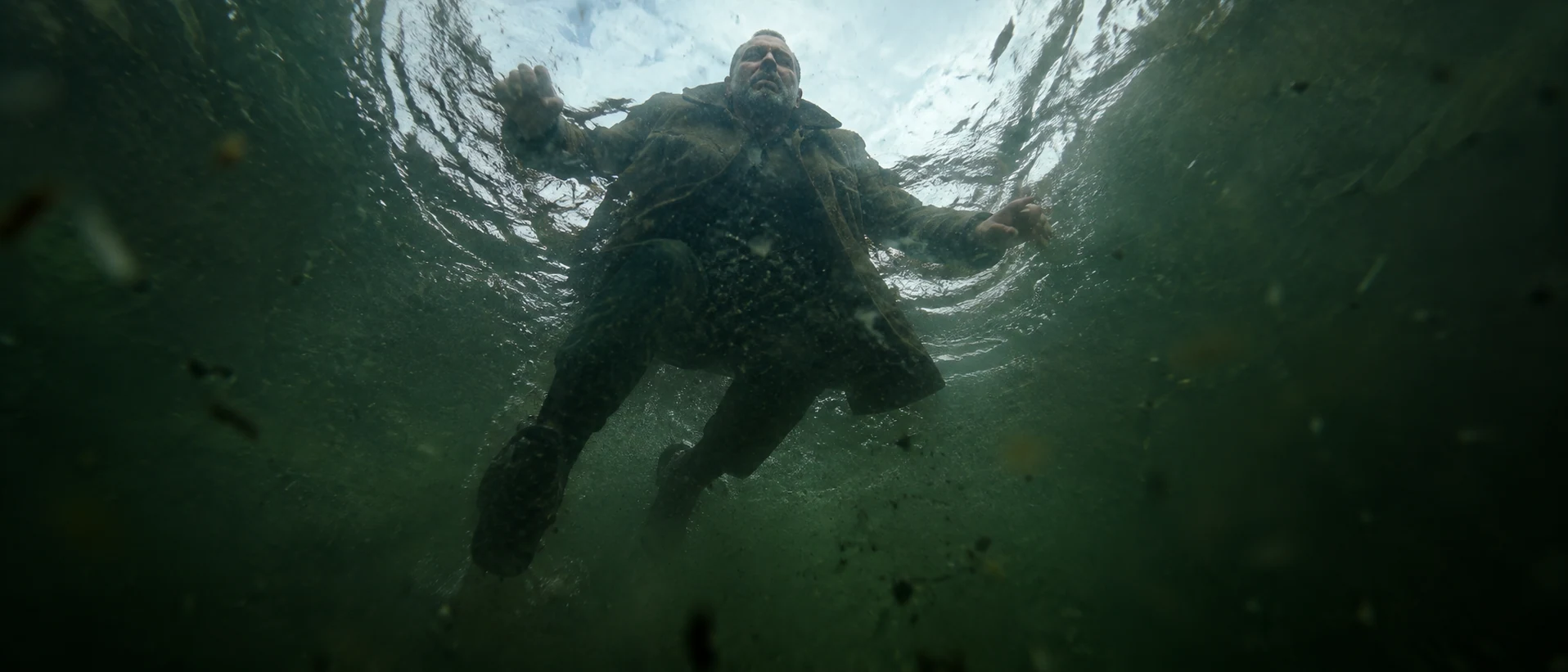
The second take flips dream to threat: "seen from underneath" plus "legs kicking" builds a predator's viewpoint, while "murky green" and "silt" limit visibility.
Open FlashBoardsCamera: slow steady drift upward and slightly to the left, starting deep below the woman and ending just under the rippled surface. Action: Her white dress and copper hair are already swaying in the water as the shot begins. A thin stream of bubbles leaves her lips and rises past the lens. Her arms sway slowly with the current while sun rays shimmer across her face. She tilts her head up toward the bright surface as the ripples move above her.Hair and dress move in the first sentence, so the clip is alive from frame one; rising bubbles and shimmering rays keep the water moving.
Open FlashBoards{
"output": "Full-screen live-action underwater shot from The Big Blue (1988), alive from its very first frame: one continuous shot, no cuts. Look: 1980s 35mm film grain, clear turquoise pool water, daylight from above, soft low contrast, a tiled pool floor with dark lane lines, rippled bright surface.",
"characters": {
"S1": {
"name": "a free diver",
"look": "slim figure in a dark wetsuit and long fins, holding a long white float board upright above the head with both hands",
"voice": "silence: never speaks"
}
},
"shots": [
{
"shot": 1,
"camera": "static underwater camera set low near the pool floor at the end of the lanes, wide lens, slowly tilting up to follow the diver as he approaches",
"action": [
"BEGINNING: alive from the first frame, the diver is a tiny dark figure high in the centre of the frame, far down the pool just under the surface, a thin trail of bubbles above him; the tiled floor and lane lines fill the bottom half",
"THEN: he sinks and glides straight toward the camera along the centre line with slow dolphin kicks, the white float held upright ahead of him in both hands, growing steadily larger",
"THEN: the camera tilts up to keep him centred; the floor and lane lines slide out of the bottom of the frame and the dark lane ropes and bright rippled surface fill the top",
"END: he passes just above the lens, the white float and his hands and chest filling the upper centre of the frame against the shimmering surface"
],
"dialogue": [],
"voice": "silence: nobody speaks in this shot, no voice at all"
}
],
"sound": {
"ambience": "muffled underwater pressure hum, soft bubbles rising, slow fin strokes",
"speech": "no words in this video; the only human sounds are breaths and movement",
"never_spoken": "no narration and no voice-over: the descriptions, performance notes and step words of this prompt are never spoken aloud",
"music": "a film score under the scene, always below the voices: slow floating synth pads with a calm, weightless pulse",
"subtitles": "none"
}
}Remakes the pool shot from The Big Blue (1988): the prompt keeps the low camera at the end of the lanes, the diver descending from far away with a white float, and the tilt up that trades the pool floor for the bright surface.
The camera field keeps the original's single move, a low static camera that tilts up to follow the diver, so the floor leaving frame and the surface arriving read as depth. The tiny dark figure at the start and soft low contrast let distance fade the way real water does, and the explicit silence plus a calm score keep the model from adding voices.
Common mistakes
- Water that looks like air. Without particles, falloff and a color shift the subject looks dry. Add "fine particles", "soft low contrast", "blue-green water".
- Hair that hangs down. Models keep gravity; write "hair and fabric floating upward".
- The surface drawn as sky. Ask for "the rippled surface seen from below, bright and silvery".
- A frozen video. If the video prompt opens on a still pose, the model just pushes in. Start with motion: swaying hair, rising bubbles.
Keep the reference frames, prompts and every generated take side by side — images and video in one canvas.
FAQ
4 questionsWhat is an underwater shot in film?
An underwater shot is a shot filmed with the camera fully below the water surface. The water between lens and subject shifts color toward blue-green, lowers contrast, scatters light off particles and slows movement, so hair and cloth float. Filmmakers use it for swimming and diving scenes, drowning, danger from below, and dreamlike or weightless moments.
How are underwater scenes filmed in movies?
Most are shot in filtered, heated tanks or pools 2–5 m deep, with the camera in a waterproof housing behind a dome port. Lamps above the surface create rays and caustics, underwater lights sit off-axis to avoid backscatter, and safety divers support actors on breath holds. Some scenes are faked dry-for-wet with haze, fans and slow motion.
Why does underwater footage look blue or green?
Water absorbs long wavelengths first. Red disappears within a few meters, then orange and yellow, leaving blue in clear water and green where algae and sediment float. The effect grows with depth and with the distance between lens and subject, so underwater operators work close and add warm light near the actors.
What is a split-level or over-under shot?
A split-level shot, also called an over-under or half-and-half shot, puts a large dome port at the waterline so the frame shows the worlds above and below the surface at once, divided by the water line. It links two spaces in one image, such as a swimmer's face in air and the depths beneath.
Related terms
4- Ground-Level ShotCamera Angles
A ground-level shot rests the camera on or just above the floor, so the ground fills the lower frame and action — feet, wheels, objects — happens right at the lens; unlike a worm's-eye view, it need not point steeply upward.
- Water Reflection LightingLighting
Water reflection lighting bounces a lamp off a moving water surface — a pool, a tray, a mirror in water — so rippling caustic patterns dance across walls and faces, suggesting water, dreams or an unstable inner world.
- Slow MotionCameras & Capture
Slow motion stretches time on screen: the camera records at a higher frame rate than playback — for example 120 fps played at 24 — so action unfolds several times slower, used for spectacle, violence, grief or to reveal what the eye normally misses.
- CinematographyCameras & Capture
Cinematography is the art of creating the moving image: the choices of camera, lens, framing, movement, light and exposure through which the director of photography turns a script into pictures.
Further reading
American Cinematographer magazine coverage of underwater and tank photography; Blain Brown, Cinematography: Theory and Practice (Focal Press).