 FlashBoards Learn
- Learn
- Camera Angles
- Low Angle Shot
Camera Angles · Film language
Low Angle Shot
Also called: low angle, low-angle view
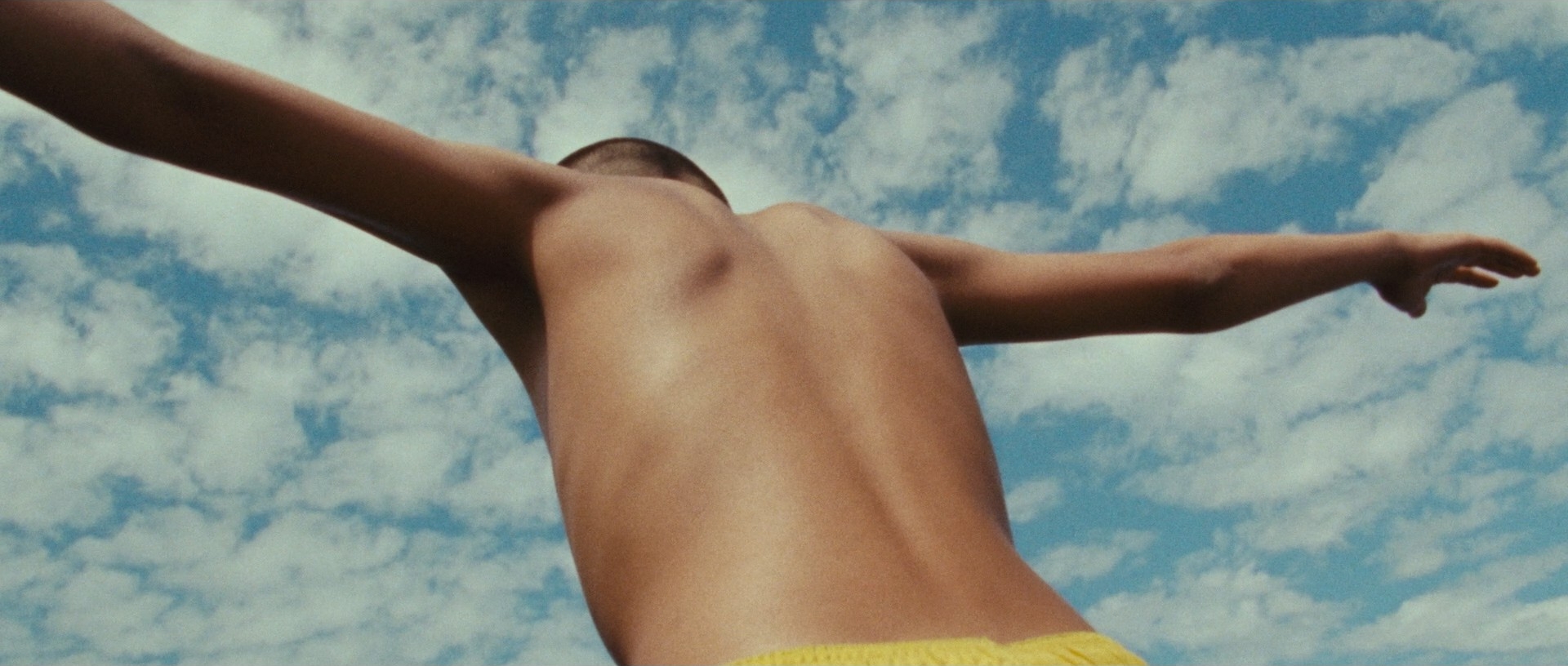
A low angle shot places the camera below the subject’s eye line and points it up at them. The viewer looks up, so the character grows taller, heavier and harder to read against the ceiling or sky — which is why the angle is used for power, menace, heroism and for spaces meant to feel monumental.
- What it does
- Makes a person or place loom over the viewer and gain status, weight or threat.
- Use it when
- A character takes control of a scene, becomes a threat, or the architecture should dwarf the audience.
- Watch out
- Every low angle shows the ceiling or sky — plan that background, or the shot exposes the set and the boom.
- Try this prompt
Low angle shot, camera at waist height tilted up 25 degrees, a woman in a long coat on a rooftop edge against a stormy sky, 24mm lens, cinematic still
What is a low angle shot?
A low angle shot is any shot where the lens sits lower than the subject’s eyes and tilts upward to hold them in frame. It is one of the basic camera angles, defined against the neutral eye-level shot: the moment the camera drops below the eye line and looks up, the audience is placed physically beneath the character.
Low angles come in degrees rather than one fixed position:
- Slight low angle — the camera at chest or shoulder height, tilted up 5–15°. Barely noticeable, but it adds a quiet authority. Many leading-man close-ups are shot this way without anyone calling it a “low angle.”
- Moderate low angle — the camera at waist or hip level, tilted up 20–35°. The chin and underside of the jaw start to show, the ceiling or sky enters the frame, and the effect becomes conscious.
- Extreme low angle — the camera near the floor, tilted up 45° or more. Perspective lines converge sharply toward the top of frame and the subject towers. At its limit this becomes a worm’s-eye view.
What defines the shot is the upward tilt from below the eye line, not the camera height alone. A camera resting on the floor but pointed straight ahead is a ground-level shot; it only becomes a low angle when it looks up at something.
What does a low angle shot convey?
The low angle borrows a childhood experience: looking up at adults. Whoever stands above us seems larger, stronger and in charge. Directors use that reflex in a few distinct ways.
Power and dominance. The most common use. A villain entering a room, a general addressing troops, a character who has just won an argument — the camera drops and they take over the frame. Citizen Kane (1941) is the classic study: Orson Welles and cinematographer Gregg Toland shot Kane from so low that the sets needed ceilings, and the ceilings press down on him as his power curdles.
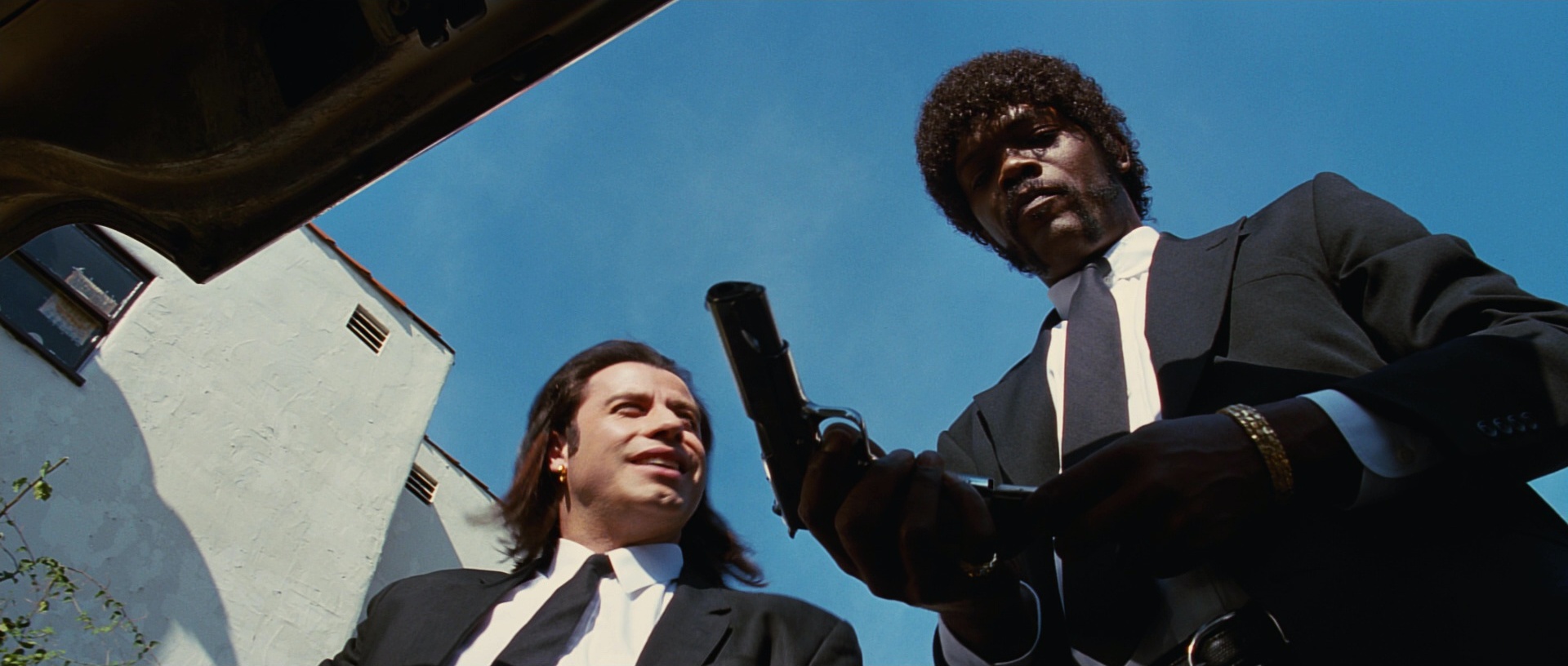
Threat. From below, a face is lit and shaped unfamiliarly — nostrils, jaw and brow become prominent, eyes sit in shadow. Combined with a character looking down into the lens, the audience feels like the one being loomed over. The trunk shots in Pulp Fiction (1994) work exactly this way.
Heroism and myth. Superhero, war and western films put characters against open sky with the camera low, turning a person into a monument. The sky removes every point of comparison, so the figure has nothing to be measured against.
Monumental space. Aim a low angle at architecture and buildings stretch upward, lines converge, and the audience feels small. Office towers, cathedrals and prisons are regularly shot this way to make the institution the real antagonist.
Ambiguity and rapture. The angle does not have to mean power. A low angle on a face tipped up toward the sky can read as prayer, exhaustion or ecstasy — the character is looking up too, and the shot shares their upward pull rather than their dominance.
Context always wins: the meaning comes from the contrast with the other angles in the scene.
How to shoot a low angle shot
Height and tilt. Decide the degree before you set the tripod. Slight: lens at the actor’s chest (about 1.2–1.4 m for a standing adult), tilted up 10°. Moderate: waist height (0.9–1 m), tilted 25–30°. Extreme: a high hat or low-mode rig on the floor. Small height changes read as big changes in meaning, so shoot a test frame.
Lens. A wide-angle lens (18–28 mm on Super 35) close to the subject exaggerates the effect: the feet or hands nearest the camera grow, the head recedes, and verticals converge hard. A normal 35–50 mm gives a dignified, less distorted low angle for close-ups. A telephoto lens from far away flattens the geometry — you get the eyeline of a low angle without the looming perspective, useful for a figure on a distant rooftop.
Background. Low angles show what is above the actor. Outdoors that is sky: clean, graphic, but often two to four stops brighter than the face. Indoors it is the ceiling — which on a stage may not exist. Plan ceiling pieces, practical fixtures or a black ceiling, and move the boom operator out of the frame line, since the mic can no longer hang overhead.
Light. Against a bright sky you can either expose for the face and let the sky blow out, add fill to bring the face up, or expose for the sky and let the figure fall into silhouette. A low bounce or unit placed below frame can reinforce the unusual “from beneath” shape of the face, which reads as menacing — or keep your key high and natural if you want authority without horror.
Blocking. Have the actor look slightly down toward or past the lens; that eyeline completes the power dynamic. Give them a reason to be elevated — stairs, a balcony, a car roof — and let them move toward the camera so they grow in frame. For a reveal, start low on hands or boots and tilt up to the face.
Cutting. A low angle is strongest when it has a partner. Shoot the other character in a matching high-angle shot and the edit builds a clear hierarchy; flip the angles later in the scene and the audience feels the power shift without a word of dialogue.
Common low angle variations
The trunk shot. The camera sits inside a car trunk looking up at characters leaning over it, framed by the open lid. It is a low angle object POV, strongly associated with Quentin Tarantino; see the dedicated page on the trunk shot.
The hero shot. A moderate low angle on a wide lens, the character in full figure against the sky, often with a slow push-in. The format of every poster moment in action cinema.
The canted low angle. Many thriller and action frames combine a low angle with a Dutch angle. The low angle adds scale, the tilted horizon adds instability — together they signal danger, disorientation or a world out of balance.
Low angle vs. worm’s-eye view
Every worm’s-eye view is a low angle, but not every low angle is a worm’s-eye view. The difference is degree and intent.
| | Low angle shot | Worm’s-eye view | |---|---|---| | Camera height | Anywhere below eye level | On or just above the ground | | Tilt | 5–45° up | Steep, often 60–90° up | | Background | Upper walls, ceiling, sky | Mostly sky or ceiling | | Effect | Authority, threat, heroism | Extreme scale, disorientation, the view of something tiny |
Use the low angle when you want the audience to feel a character’s status. Use the worm’s-eye when you want the audience to feel small themselves — or to literally see from a creature’s or object’s point of view on the ground. The high angle is the mirror of both: it looks down and shrinks the subject instead.
Low Angle Shot examples in film
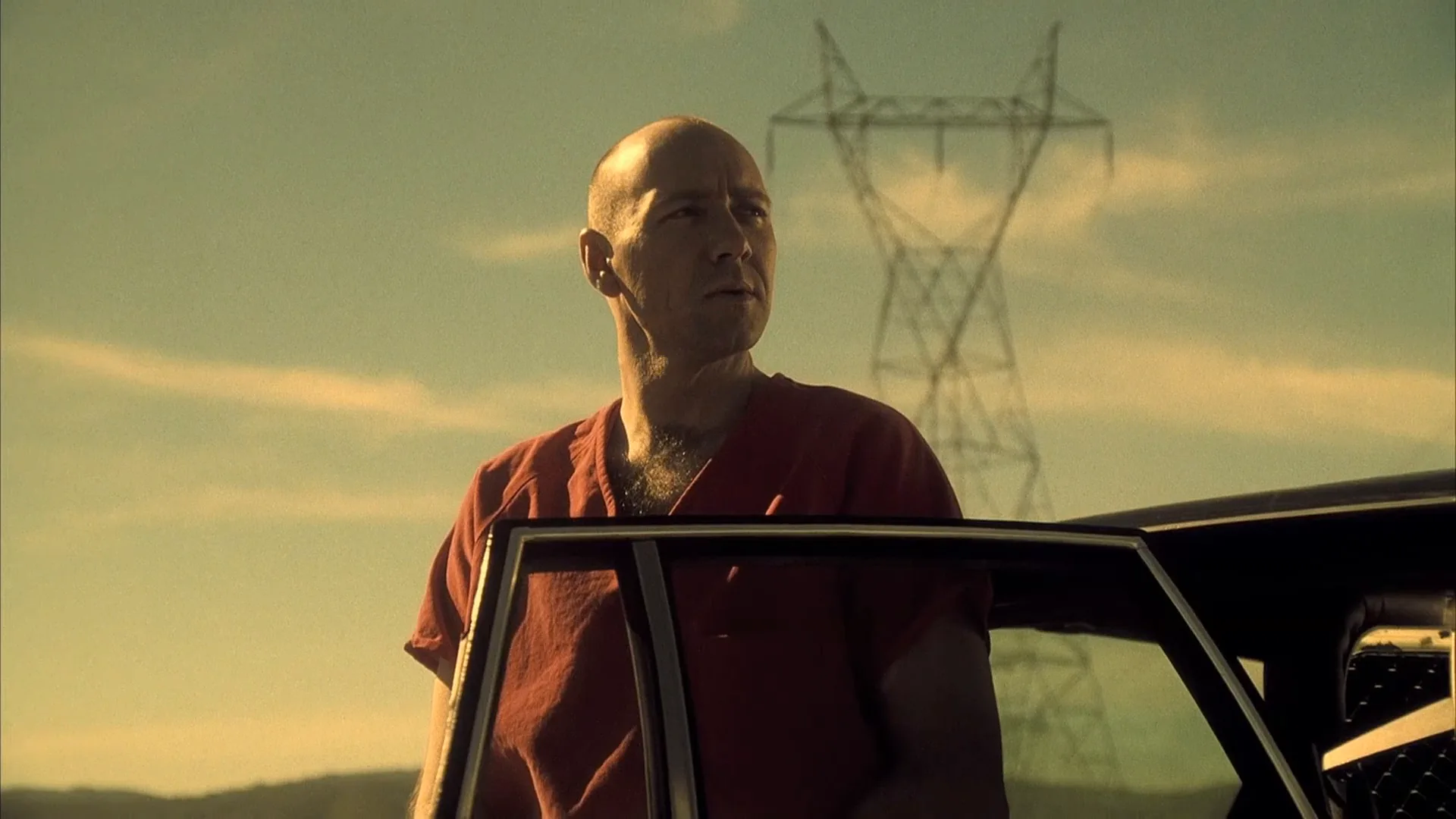
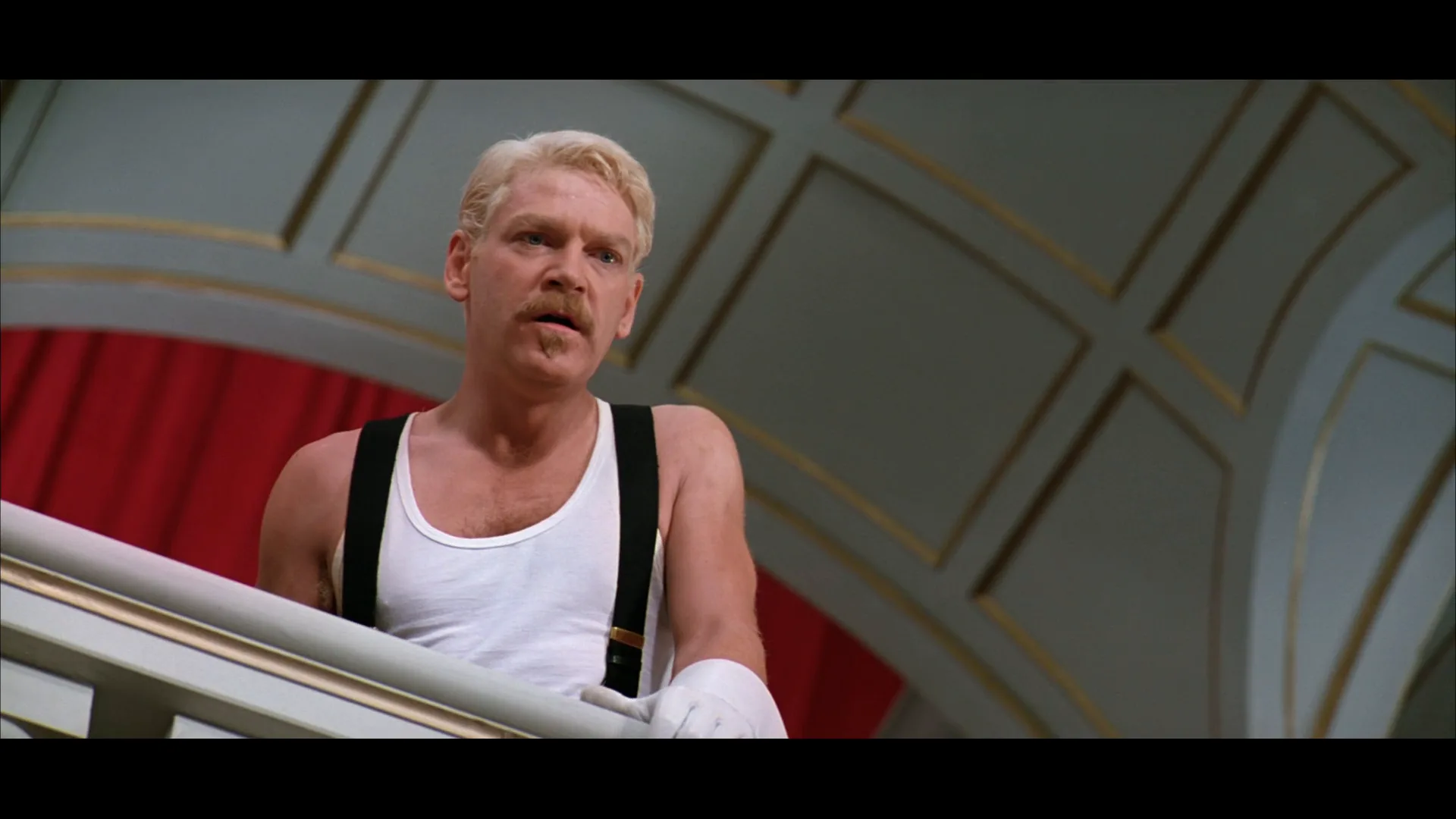
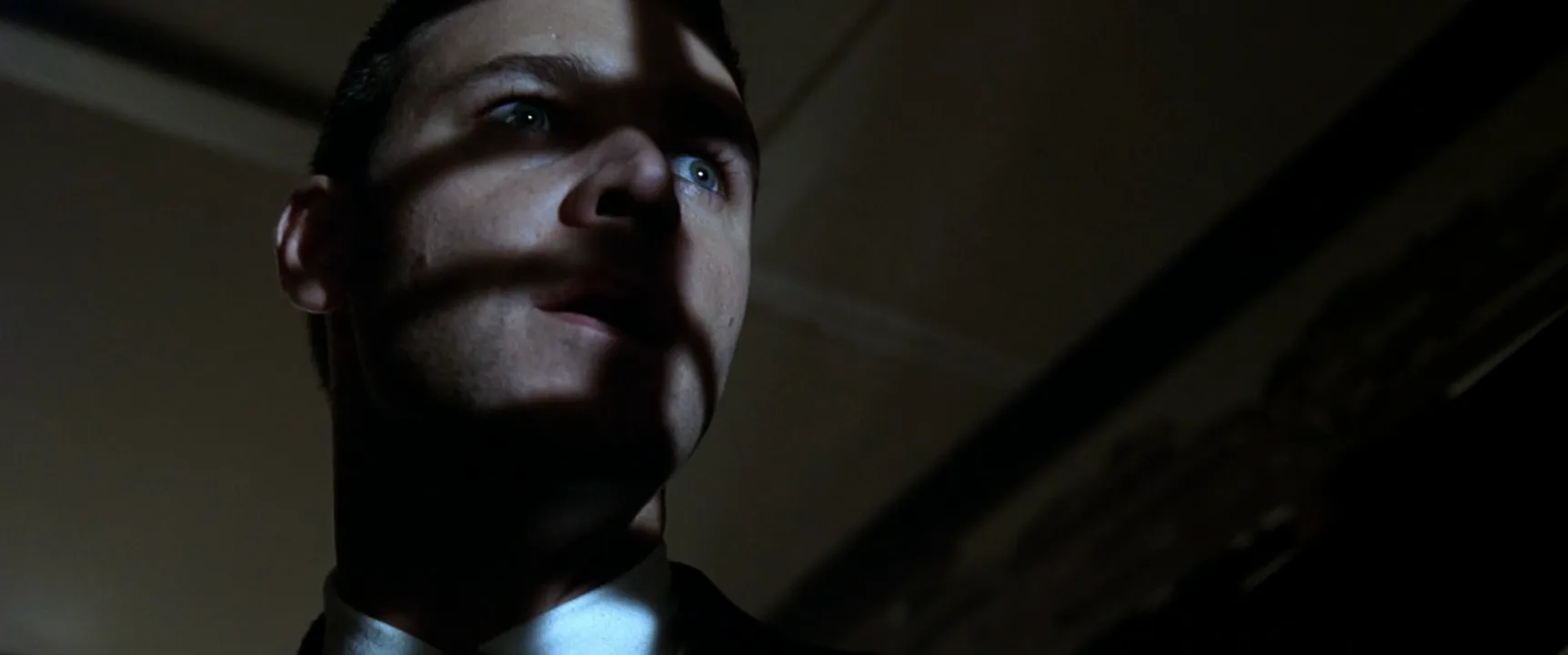
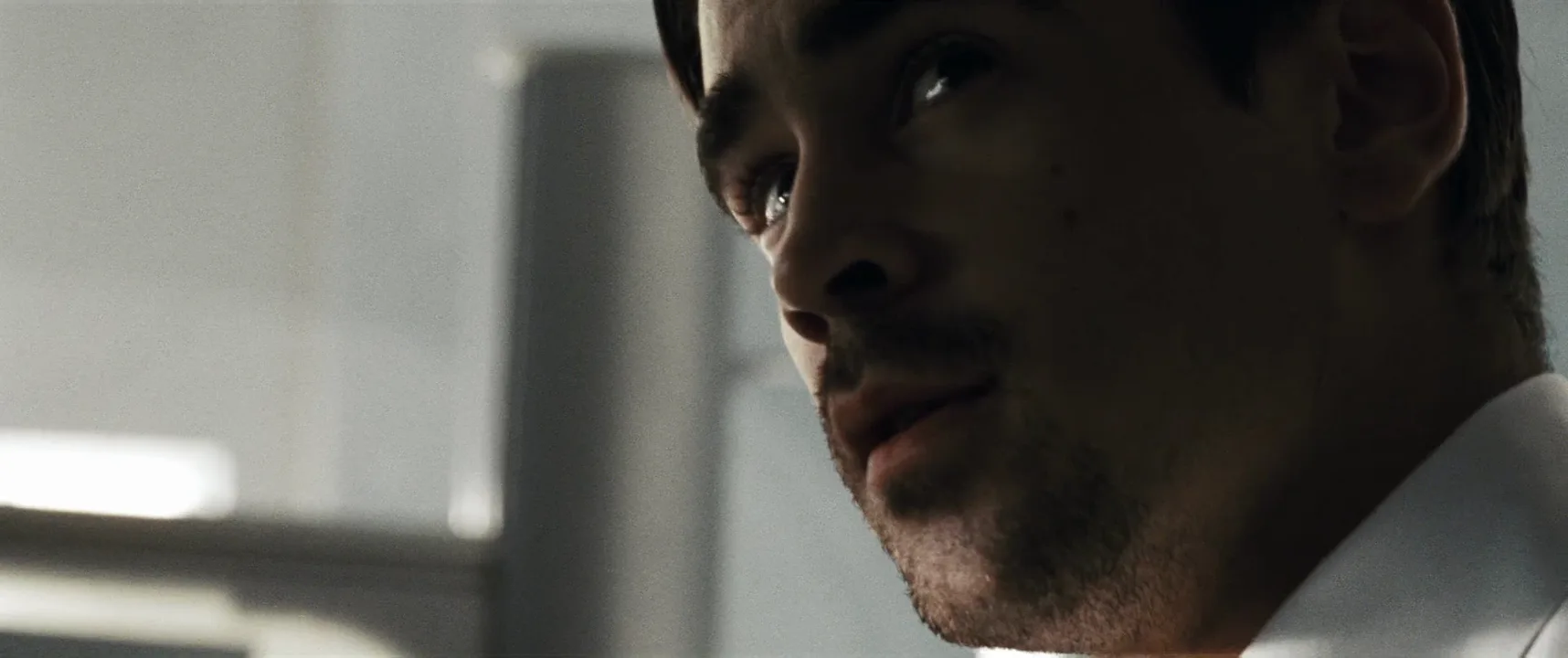
14 framesFourteen frames showing the range of the low angle, from a quiet authority close-up to canted, ceiling-heavy menace and figures set against open sky.
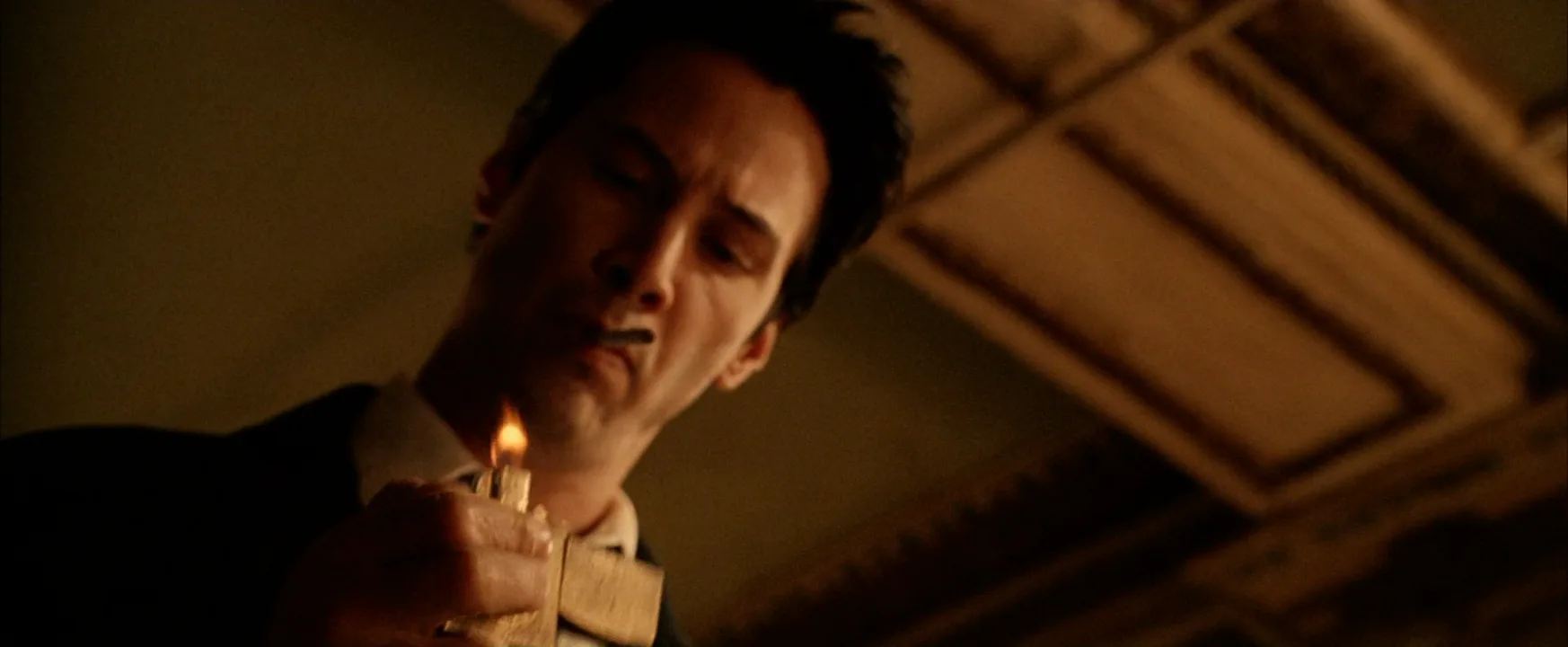
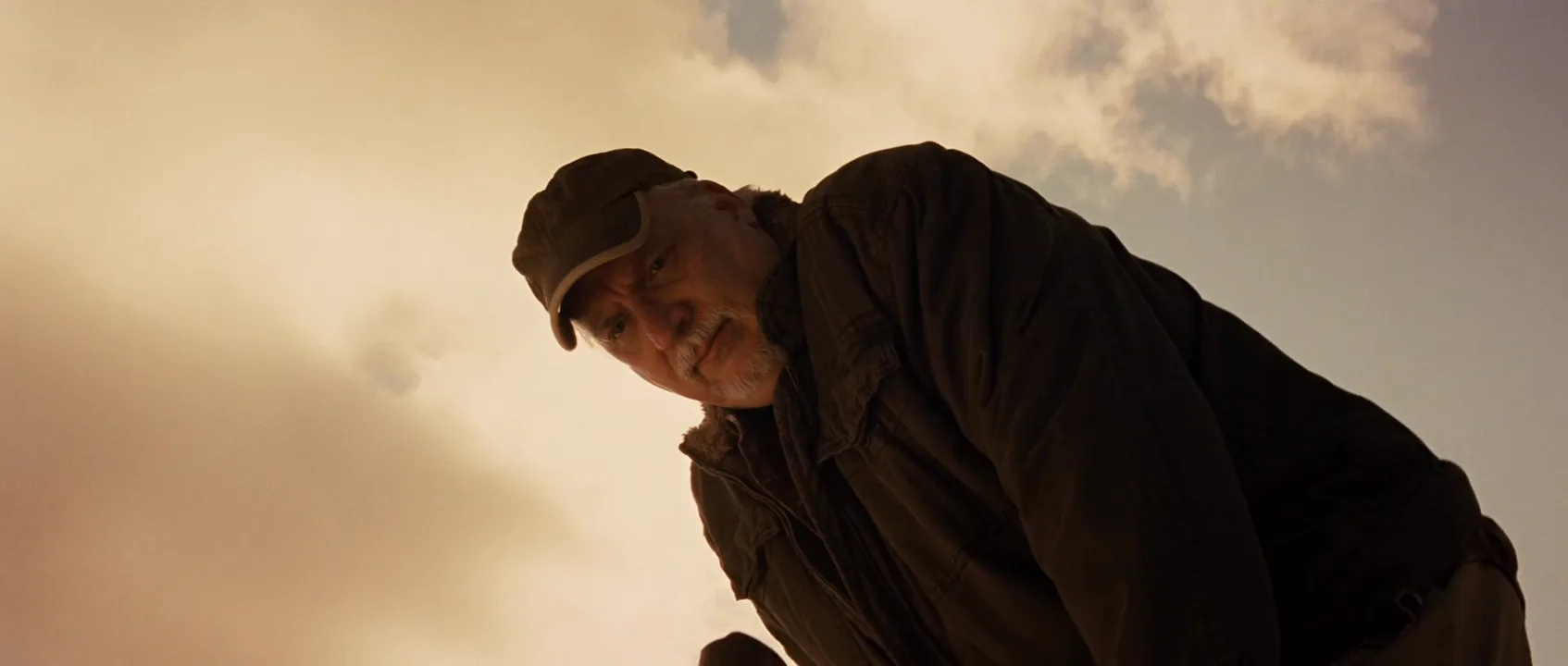
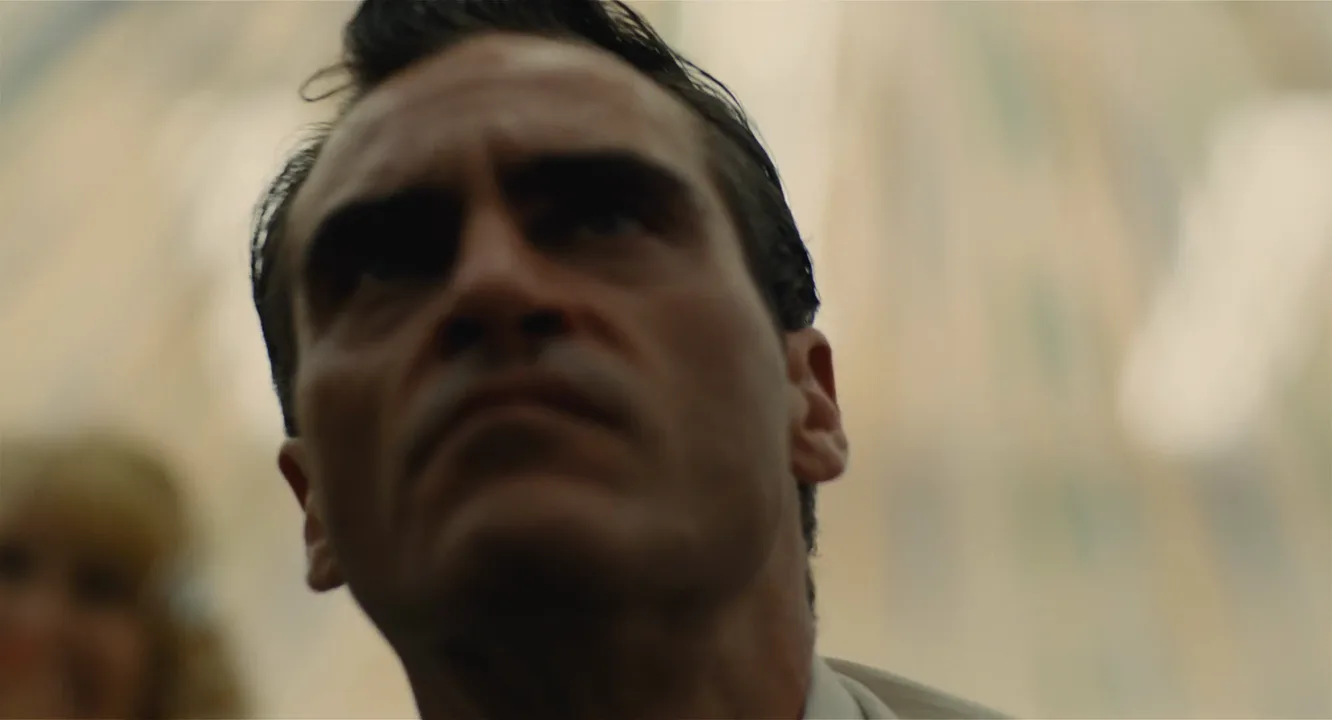
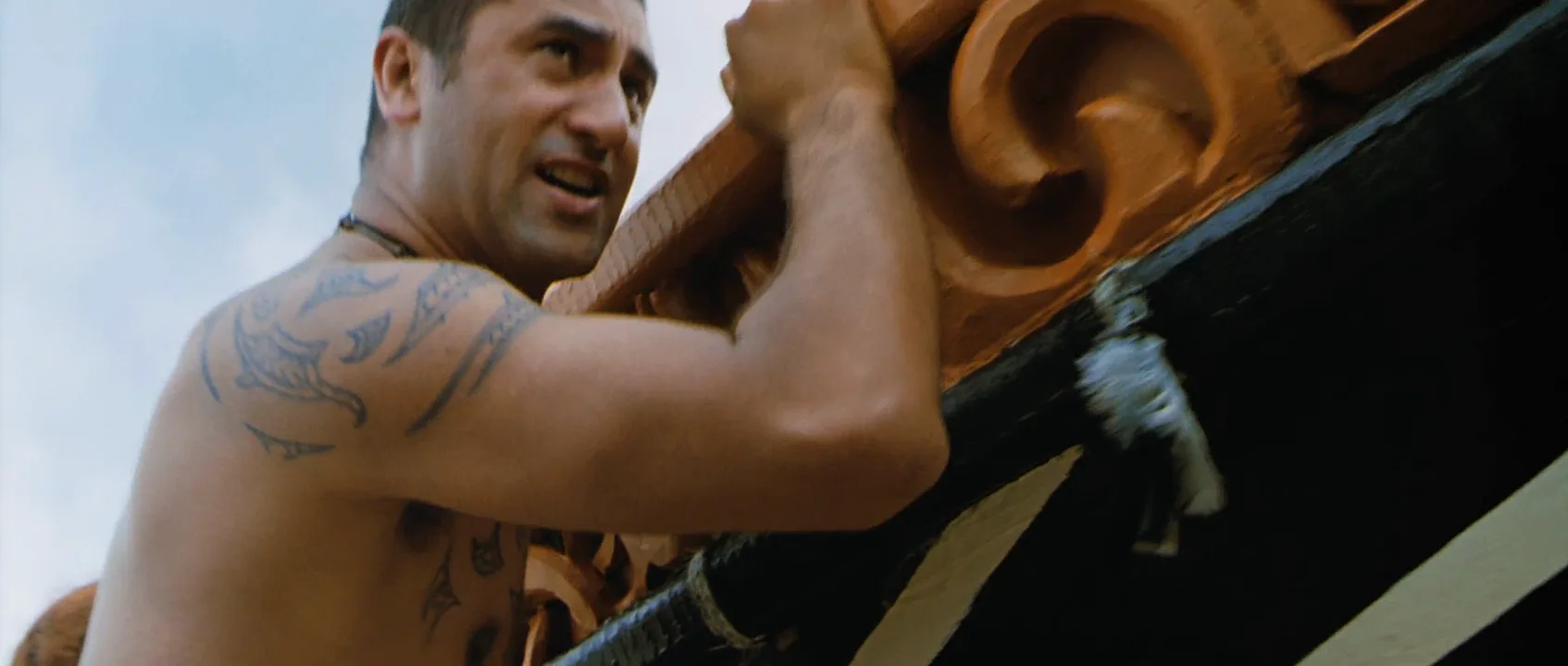
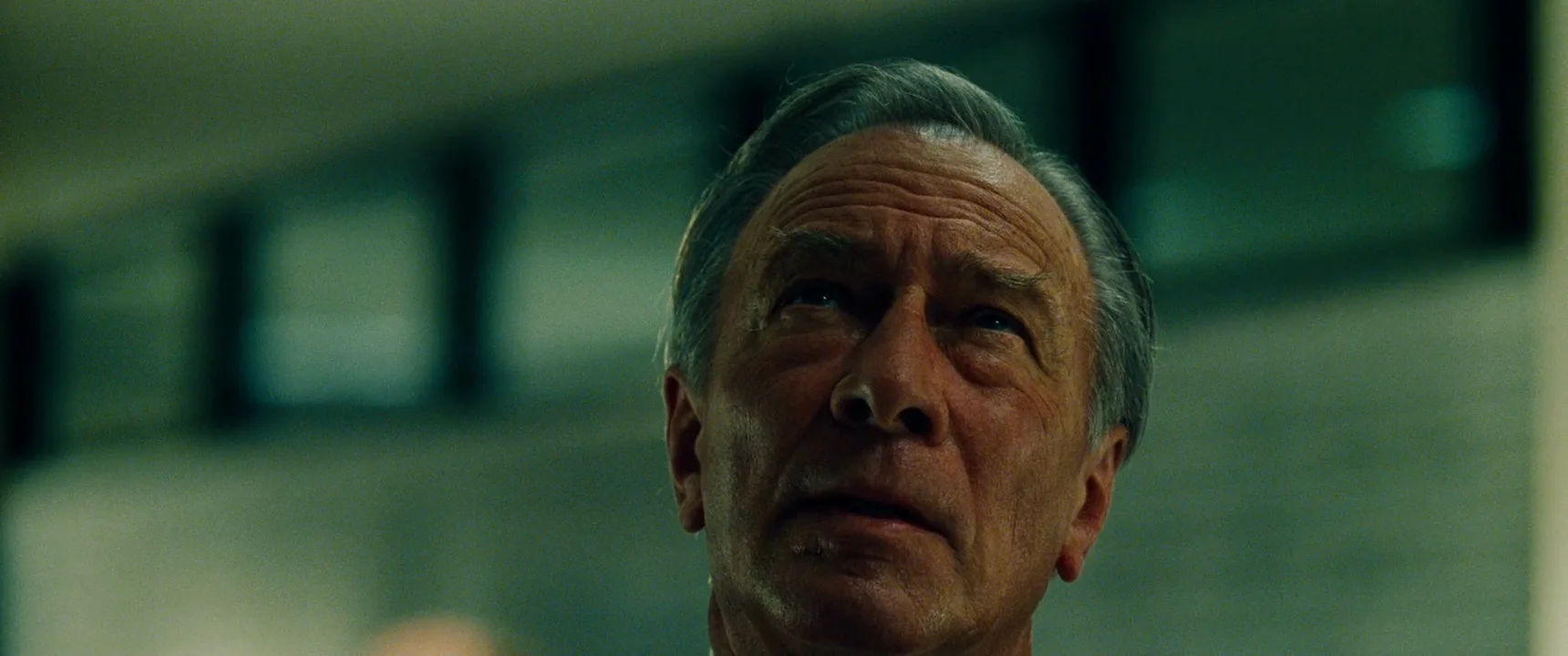
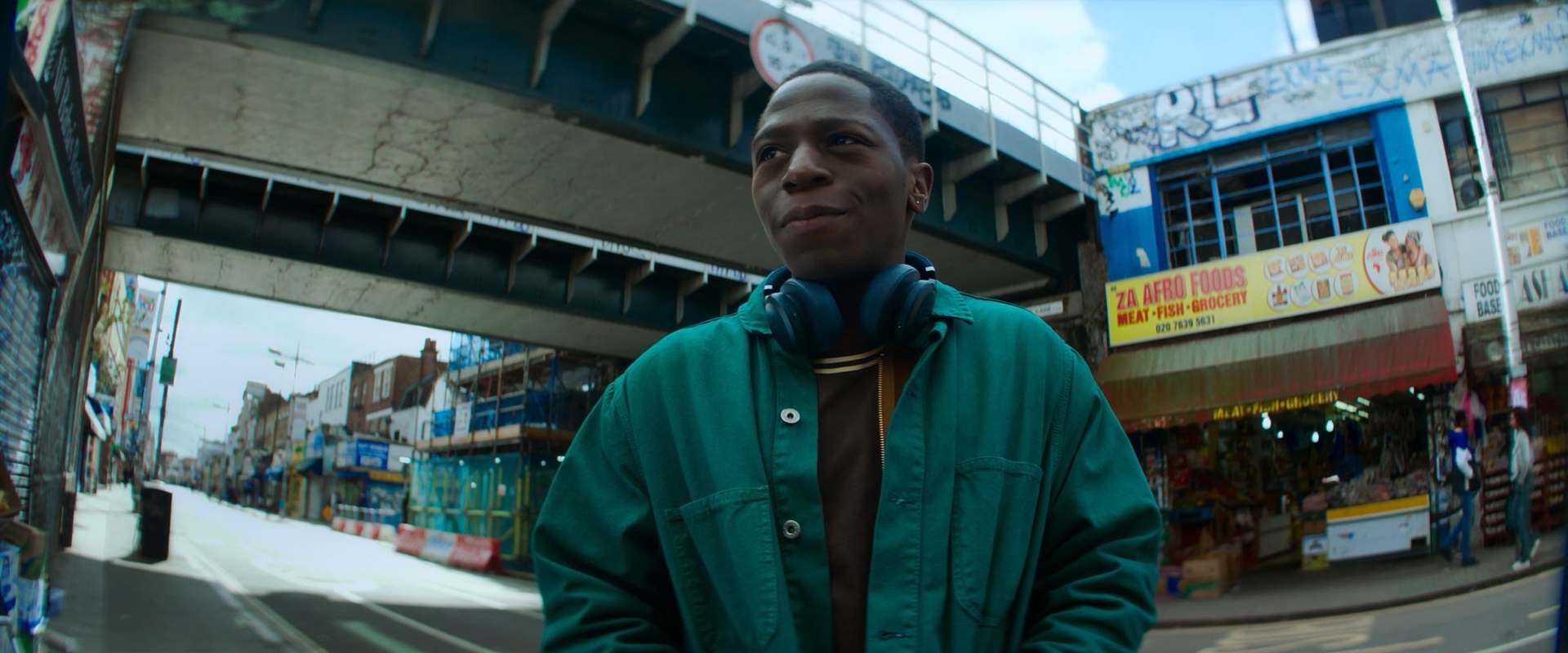
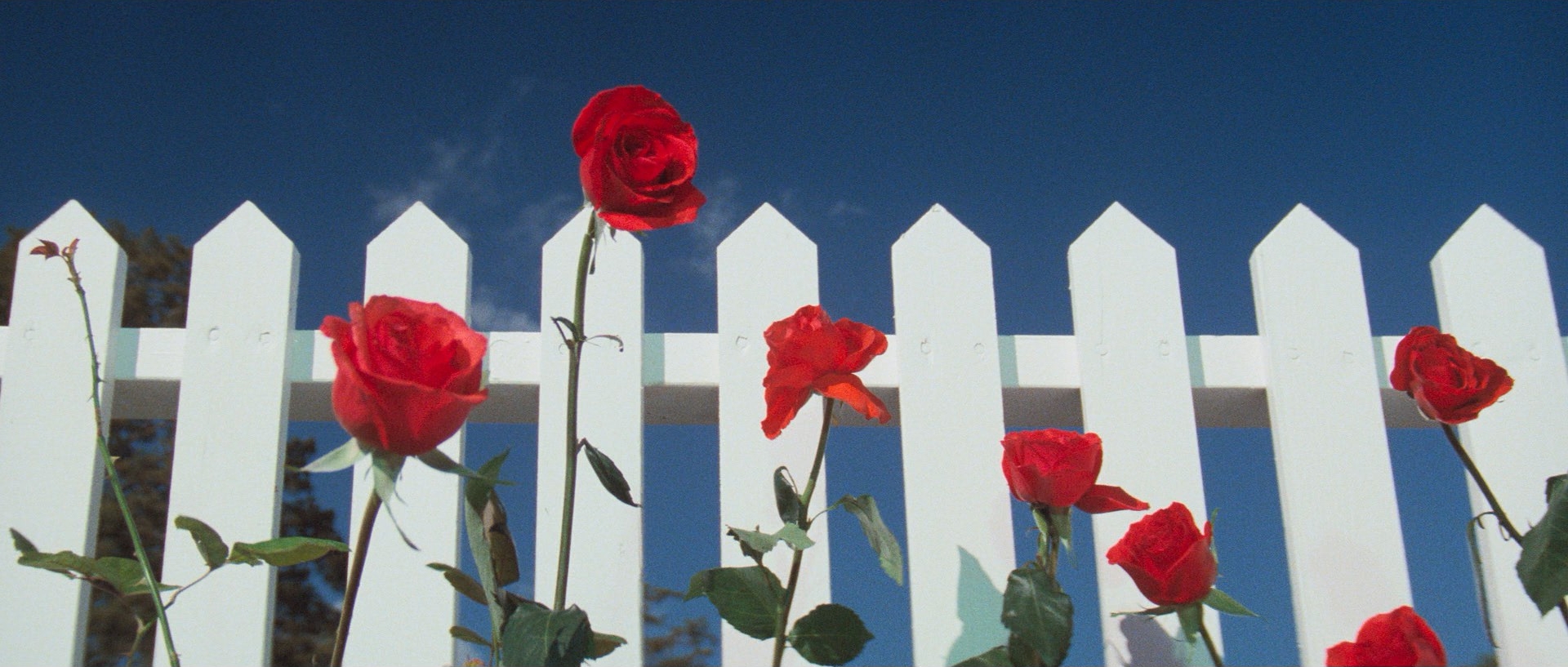
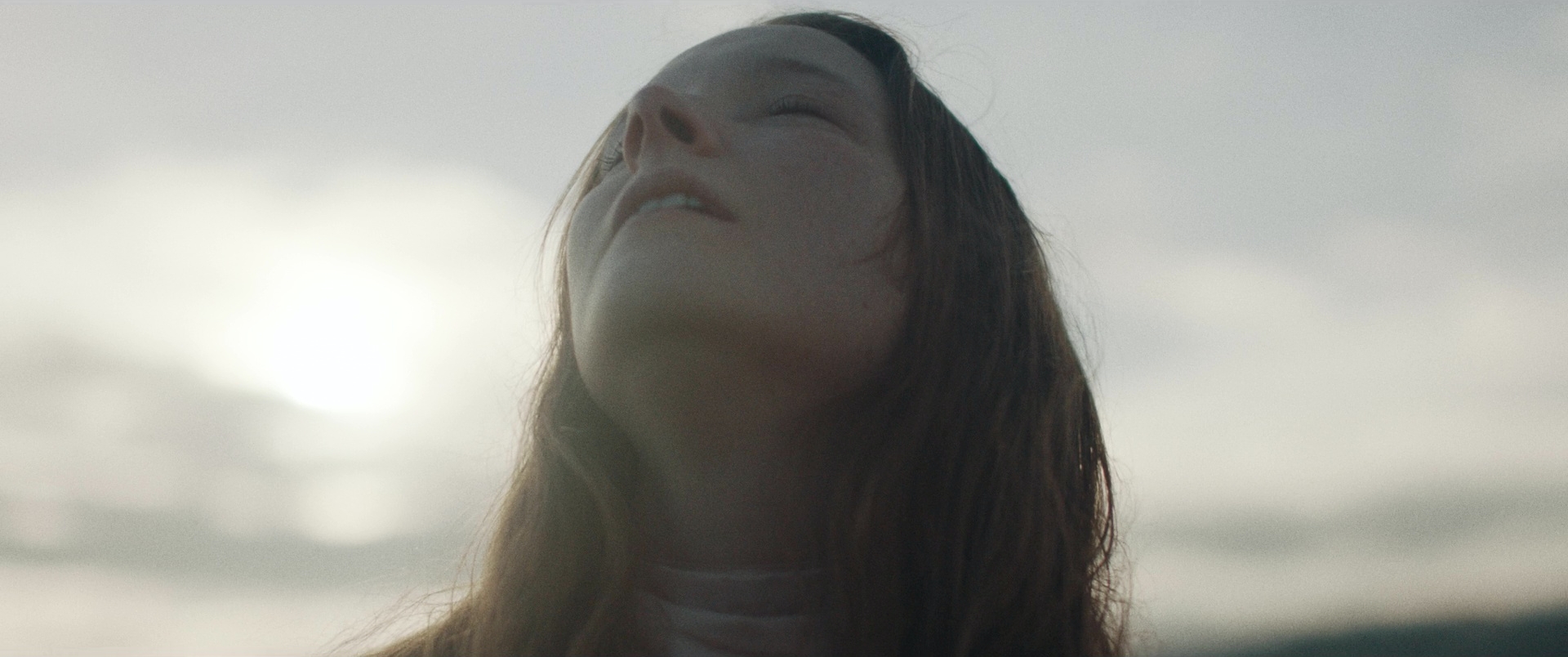
How to create a low angle shot with AI
4 promptsImage and video models default to eye level, so a low angle has to be stated as geometry: camera height, tilt, and what fills the background. Nano Banana 2 Lite makes the start frame, GPT Image 2.5 pushes the idea to an extreme low angle indoors, and MiniMax H3 Max Turbo animates the first frame into a slow hero push-in. In FlashBoards, keep the reference frames next to your generations on one board and compare takes side by side. The fourth prompt re-shoots a real film shot from a text description alone, and the original plays next to the result so you can compare.
Low angle shot from the stairs just below the landing, camera at waist height tilted up 30 degrees, 24mm lens: a heavyset detective in his fifties with a shaved head, thick grey beard and a scar across his left eyebrow, in a long gray overcoat, standing on a fire escape landing above the camera, both hands on the rusted iron railing, looking down past the lens, railings converging toward the top of the frame, overcast white sky with fast-moving clouds behind him, his coat lifting in the wind, hard side light, cinematic film still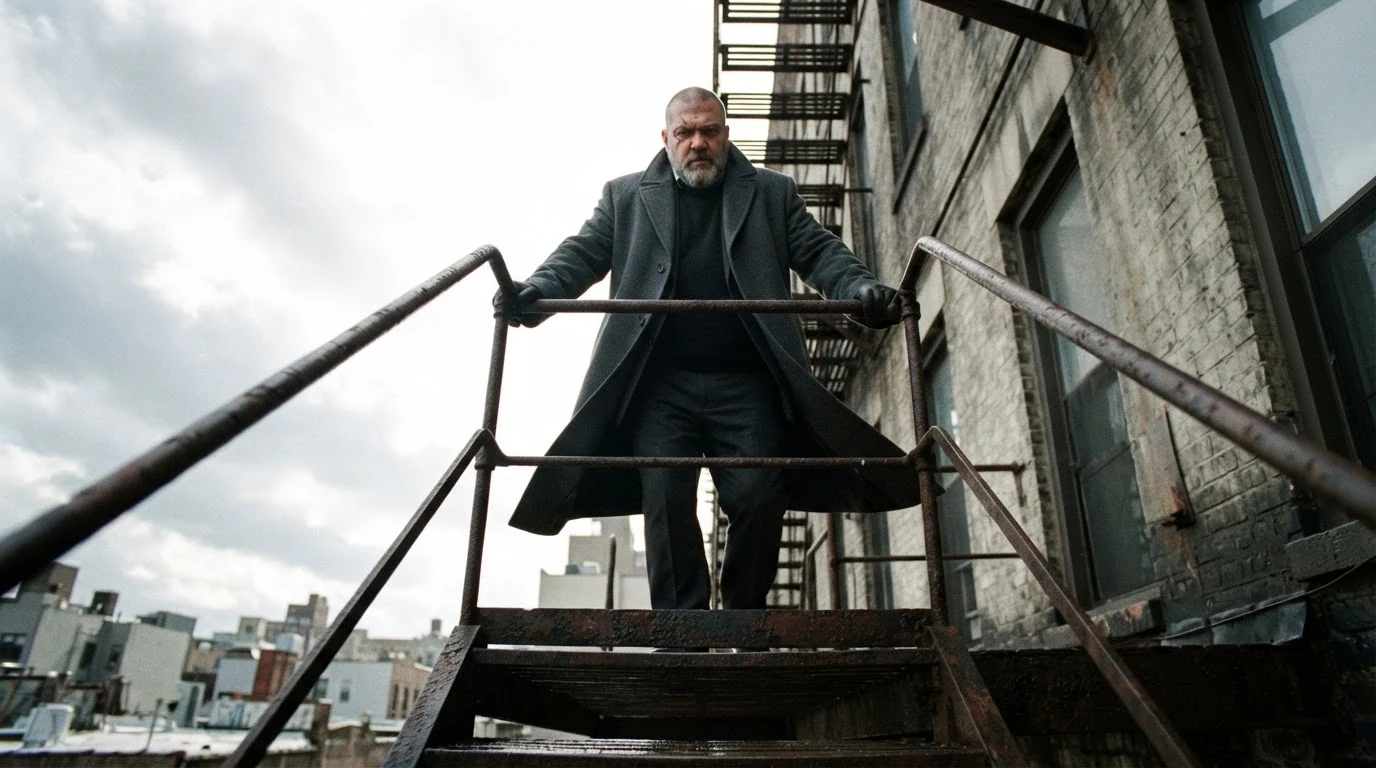
“From the stairs just below the landing” puts the lens below the level he stands on, and “camera at waist height tilted up 30 degrees” fixes the geometry; “looking down past the lens” completes the power eyeline; “railings converging toward the top of the frame” forces visible upward perspective, and the 24mm exaggerates it. A specific face (shaved head, beard, scar) keeps the model from drifting toward a familiar movie-star look. Naming the sky as background stops the model from inventing a wall behind him, and the clouds and wind give the video recipe motion that already exists in the first frame.
Open FlashBoardsExtreme low angle from the floor of a marble courthouse lobby, camera pointed steeply up at a judge in black robes standing at the top of a staircase, coffered ceiling and hanging brass chandelier filling the upper half of the frame, cold daylight from high windows, 18mm lens, symmetrical composition, cinematic film still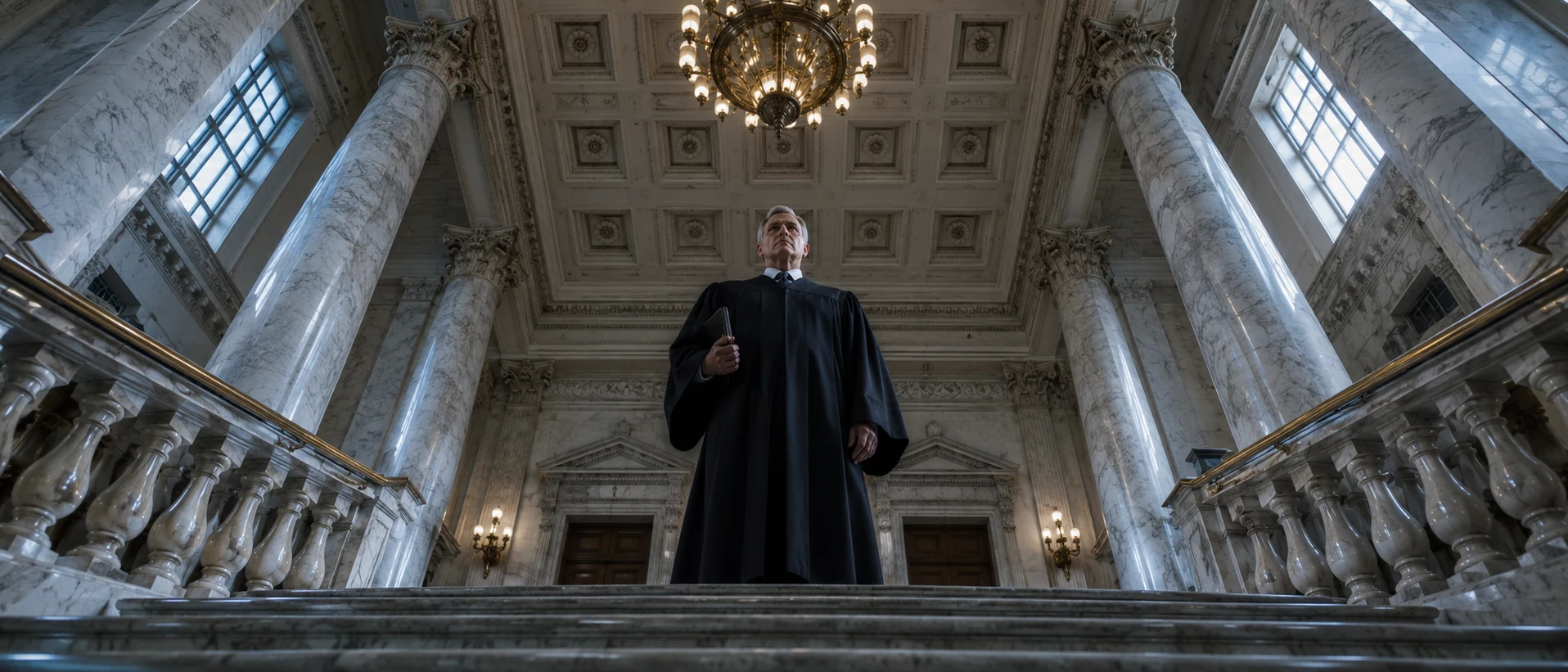
A second take, pushed further and moved indoors. “From the floor” and “pointed steeply up” get past a polite low angle; describing the ceiling and chandelier gives the model something to render above the figure, which is what sells the height. The staircase explains why the judge is elevated, and the wide 21:9 frame lets the architecture dominate.
Open FlashBoardsCamera: stays at waist height and pushes in slowly and steadily toward the detective for the whole shot, keeping the same upward tilt, so he grows in the frame until his head and shoulders fill the upper half against the sky. Action: the clouds are already racing across the white sky and his coat is lifting in the wind as the shot begins. In the middle he tightens his grip on the iron railing and leans forward over it. At the end he looks straight down past the lens, jaw set, the railings still converging above him.A push-in on a camera that stays low is the hero-shot build: the character grows while the angle holds. “Stays at waist height” and “keeping the same upward tilt” stop the model from lifting the camera toward eye level as it moves. Clouds and wind come first so the shot is alive from frame one, and the railing, coat and sky are all in the start frame, so nothing new gets drawn in.
Open FlashBoards{
"output": "Full-screen live-action close-up from L.A. Confidential (1997) from its very first frame: one continuous shot. Late-1990s 35mm crime-drama look, night interior, a plain ceiling of white acoustic tiles in a grid and a dark wooden shelf edge above the man, one hard cool light from above frame right broken into curved bars by a slatted shade off frame, deep black shadows, muted steel-gray, olive and warm brown palette, fine film grain.",
"characters": {
"S1": {
"name": "Ed Exley, played by Guy Pearce",
"look": "clean-shaven man around thirty, short dark hair combed back, pale blue eyes, dark suit jacket, white shirt collar",
"voice": "no words; only fast, shallow breathing through the open mouth"
}
},
"shots": [
{
"shot": 1,
"camera": "extreme low angle close-up from well below S1's chin, lens tilted steeply up, slightly wide lens; the tile ceiling and the dark shelf edge fill the frame behind his head; the whole frame rolls slowly clockwise from start to end, so the ceiling grid lines turn steeper and the shot ends on a strong Dutch tilt; focus stays on his face",
"action": [
"BEGINNING: alive from the first frame, S1 fills the left-centre of the frame, his head turned three-quarters toward frame right, his face almost fully black in shadow; only the rim of his ear on screen left and one cheekbone catch a thin edge of light; the frame holds only his head and the top of his collar.",
"THEN: he lifts his chin and rises slowly toward the light; a horizontal band of light slides onto his eyes and the bridge of his nose while his mouth stays in shadow; his pale eyes stare up and to frame right, past the lens.",
"THEN: he turns his face from frame right toward the lens; curved diagonal bars of hard shadow, running from upper left to lower right, fall across his forehead, eyes, nose and cheeks; his lips part and his chest heaves with quick shallow breaths, no words.",
"END: his face is almost frontal and fully lit through the curved bars of shadow, pushed toward the left third of the tilted frame, the white shirt collar showing at the bottom edge; eyes wide and fixed above and just right of the lens, brows raised, mouth open, head held still, while the tile ceiling slants steeply behind him."
],
"voice": "silence: nobody speaks in this shot, no voice at all",
"dialogue": []
}
],
"sound": {
"ambience": "near-silent room tone, the soft rustle of his jacket collar, his quick shallow breathing close to the lens",
"speech": "no words in this video; the only human sounds are breaths and movement",
"never_spoken": "no narration and no voice-over: the descriptions, performance notes and step words of this prompt are never spoken aloud",
"music": "a film score under the scene, always below the voices: low tense strings holding one dark chord with a slow muffled drum pulse",
"subtitles": "none"
}
}Remakes the rolling low-angle close-up of Ed Exley from L.A. Confidential (1997), carrying over the below-the-chin lens, the ceiling pressing in, the turn from shadow into barred light and the slow clockwise roll.
The camera field carries the geometry: lens well below the chin, tilted steeply up, the tile ceiling named behind the head, and a slow clockwise roll that ends on a Dutch tilt, so the low angle reads as threat rather than heroism. The action runs from a face lost in shadow to one lit through bars of shade. Nobody speaks, so the prompt says so outright and keeps only breathing under a low string score.
Open FlashBoardsCommon mistakes
- The model levels out. “Low angle” alone often returns an eye-level frame with a slightly lower horizon. State the camera height (knee, waist, floor) and a tilt in degrees.
- No ceiling, no sky. If the background is not described, models fill it with a wall and the upward view collapses. Name what is above the subject.
- Distorted anatomy. Very wide lenses at extreme angles can produce giant hands or tiny heads. Move to a 35mm or ask for “natural proportions” when the character must stay attractive.
- The video camera drifts upward. During a push-in or tilt, MiniMax H3 Max Turbo may raise the camera toward eye level. Say “camera stays at waist height” and “keeping the same upward tilt.”
- The video starts frozen. With only a camera move in the prompt, the model tends to creep toward a still figure. Open
Action:with motion that is already happening: clouds moving, a coat in the wind, a hand tightening on a rail.
Keep the reference frames, prompts and every generated take side by side — images and video in one canvas.
FAQ
6 questionsWhat is a low angle shot in film?
A low angle shot is filmed with the camera below the subject’s eye line, tilted up toward them. The audience looks up at the character, who appears taller, stronger or more threatening, and the ceiling or sky becomes the background. It is used for power, menace, heroism and to make buildings or spaces feel monumental.
What does a low camera angle make the viewer feel?
Usually smaller. Looking up at someone puts the viewer in a subordinate position, so the character on screen gains authority, weight or threat. Aimed at architecture, the angle makes spaces feel vast. If the character is also looking up, the shot can instead feel hopeful or spiritual — the meaning depends on the eyeline and context.
How low should the camera be for a low angle shot?
It depends on how strong you want the effect. For a subtle low angle, place the lens at chest height and tilt up about 10 degrees. For a clear one, go to waist height and tilt 25–30 degrees. For an extreme version, put the camera on a high hat near the floor. Past that, you are into a worm’s-eye view.
What lens is best for a low angle shot?
A wide-angle lens, around 18–28mm, placed close to the subject gives the strongest looming effect, because it enlarges whatever is nearest the camera and makes verticals converge. For close-ups where you want authority without distortion, a 35–50mm is safer. A long lens from far away gives the upward eyeline with flattened, less dramatic perspective.
What are famous low angle shot examples?
Citizen Kane (1941) is the textbook case, with low angles and visible ceilings pressing down on Kane. The trunk shots in Pulp Fiction (1994) turn the angle into threat, while westerns and superhero films use it to make characters into monuments against the sky.
What is the difference between a low angle and a worm’s-eye view?
A worm’s-eye view is an extreme low angle: the camera sits on or near the ground and points steeply up, so the sky or ceiling fills most of the frame. A regular low angle can be only slightly below eye level. The low angle builds a character’s status; the worm’s-eye view makes the viewer feel tiny.
Related terms
6- Worm's-Eye ViewCamera Angles
A worm's-eye view places the camera on or near the ground pointing steeply upward, so buildings, trees and people tower over the lens and the sky or ceiling fills the background — an extreme form of the low angle.
- High-Angle ShotCamera Angles
A high-angle shot looks down on the subject from above eye level, shrinking them in the frame and in status — often used to make a character seem small, vulnerable, trapped or overwhelmed.
- Trunk ShotCamera Angles
A trunk shot looks up from inside a car trunk at characters leaning over it, framing them against the sky with the lid as a border — a low-angle object POV strongly associated with Quentin Tarantino.
- Ground-Level ShotCamera Angles
A ground-level shot rests the camera on or just above the floor, so the ground fills the lower frame and action — feet, wheels, objects — happens right at the lens; unlike a worm's-eye view, it need not point steeply upward.
- Eye-Level ShotCamera Angles
An eye-level shot places the camera at the height of the subject's eyes, looking straight on, producing a neutral, natural view that neither empowers nor diminishes the character.
- Wide-Angle LensLenses, Focus & Exposure
A wide-angle lens has a shorter focal length than normal: it takes in more space, exaggerates the distance between near and far, and enlarges whatever is close to the camera — from immersive interiors to unsettling, distorted close-ups.
Further reading
Blain Brown, Cinematography: Theory and Practice (Routledge). Gustavo Mercado, The Filmmaker’s Eye (Focal Press). Joseph V. Mascelli, The Five C’s of Cinematography.