 FlashBoards Learn
- Learn
- Camera Angles
- Hip-Level Shot
Camera Angles · Film language
Hip-Level Shot
Also called: hip shot, waist-level shot
A hip-level shot places the camera at the height of the character's hips, roughly one meter off the ground for a standing adult. It pulls hands, belts and holsters into the center of the frame, gives standing figures a slight lift without an obvious low angle, and is the classic standoff height of the western.
- What it does
- Moves the viewer's eye down to the belt line: hands and whatever they hold become the story, and figures gain quiet stature.
- Use it when
- Hands matter — a gun, a tool, a nervous fidget — or you want a character to feel solid without a heroic low angle.
- Watch out
- Hip level is camera height, not shot size: decide the framing separately, or you end up with a cowboy shot you never planned.
- Try this prompt
hip-level medium wide shot, camera 1 m above the ground at the man's belt, lens level, hand resting on a holstered revolver, 32mm, hard late sun
What is a hip-level shot?
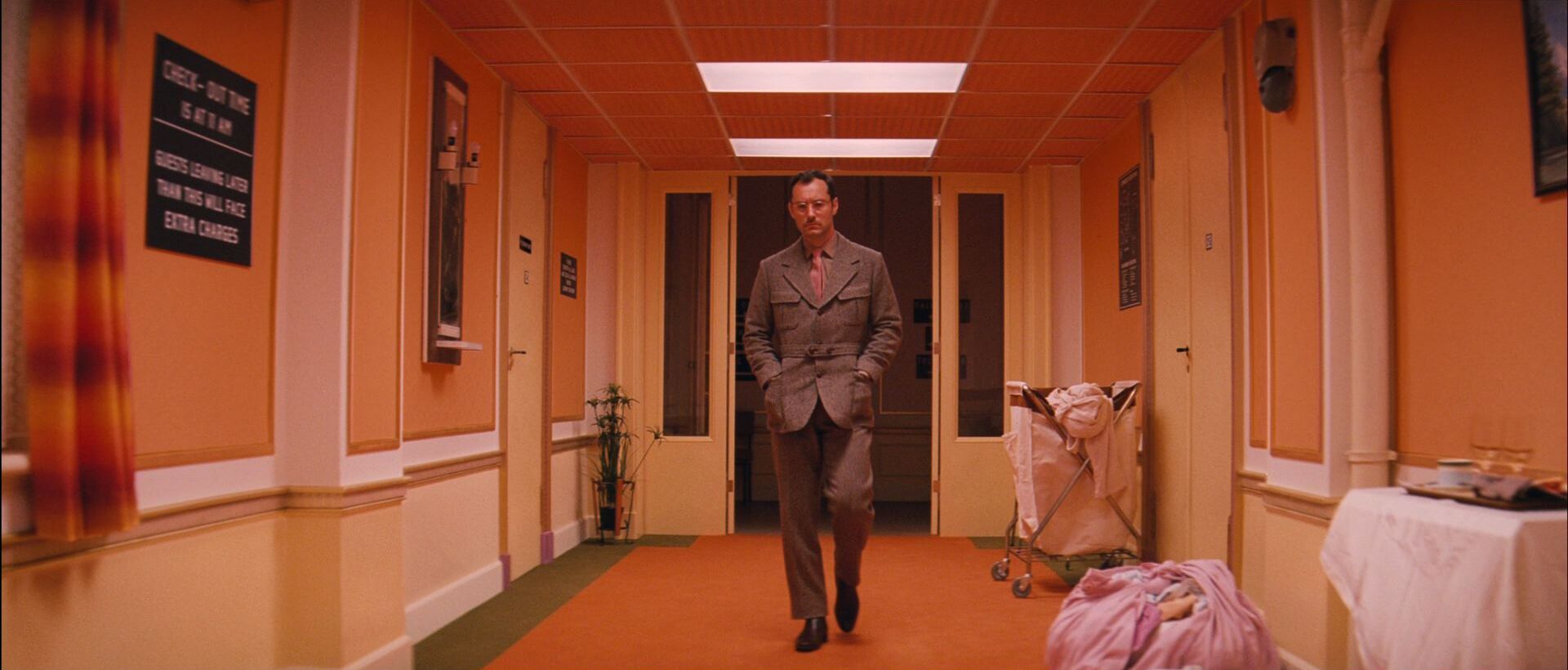
A hip-level shot is defined by where the lens sits, not by what it frames. The camera is placed at the subject's hip line — about 90–110 cm for a standing adult — and kept level or tilted up a few degrees. Among the camera angles it sits between the shoulder-level shot above and the knee-level shot below.
You recognize it by the horizon: with a level lens, the horizon or a corridor's vanishing point runs through the character's waist. Faces are seen from slightly below, and ceilings or sky appear behind heads. Common aliases are hip shot and waist-level shot.
Why do filmmakers shoot from hip height?
Hands become the subject. At hip height a hand hovering over a holster sits near the center of the frame, not at the bottom edge. That is why the western standoff lives here: the tension is in the fingers. The spaghetti western pushed it further — the duels in The Good, the Bad and the Ugly (1966) cut between eyes and hands near gun grips.
A slight, honest lift. Below the eyes, a standing character gains mass and authority without the obvious tilt of a low-angle shot.
Floors and architecture. In a corridor or on a street, a waist-high lens shows floor, vanishing point and ceiling at once, and the ground fills the lower third.
How to shoot a hip-level shot
- Height. Measure to the actor: 90–110 cm for most standing adults, lower for a child. Put the horizon on the belt line in the monitor.
- Support. Baby legs, a slider on apple boxes, a dolly with the column down, or a gimbal held at the waist for walks.
- Tilt. Level for the neutral version; 5–10° up for a heroic lift. Past about 15° it becomes a low angle.
- Lens. 25–40mm keeps hands and face natural; wider exaggerates the belt, longer flattens the effect.
- Blocking and set. Give the hands a task, and plan for ceilings and sky entering the frame.
Hip level is a height, not a shot size
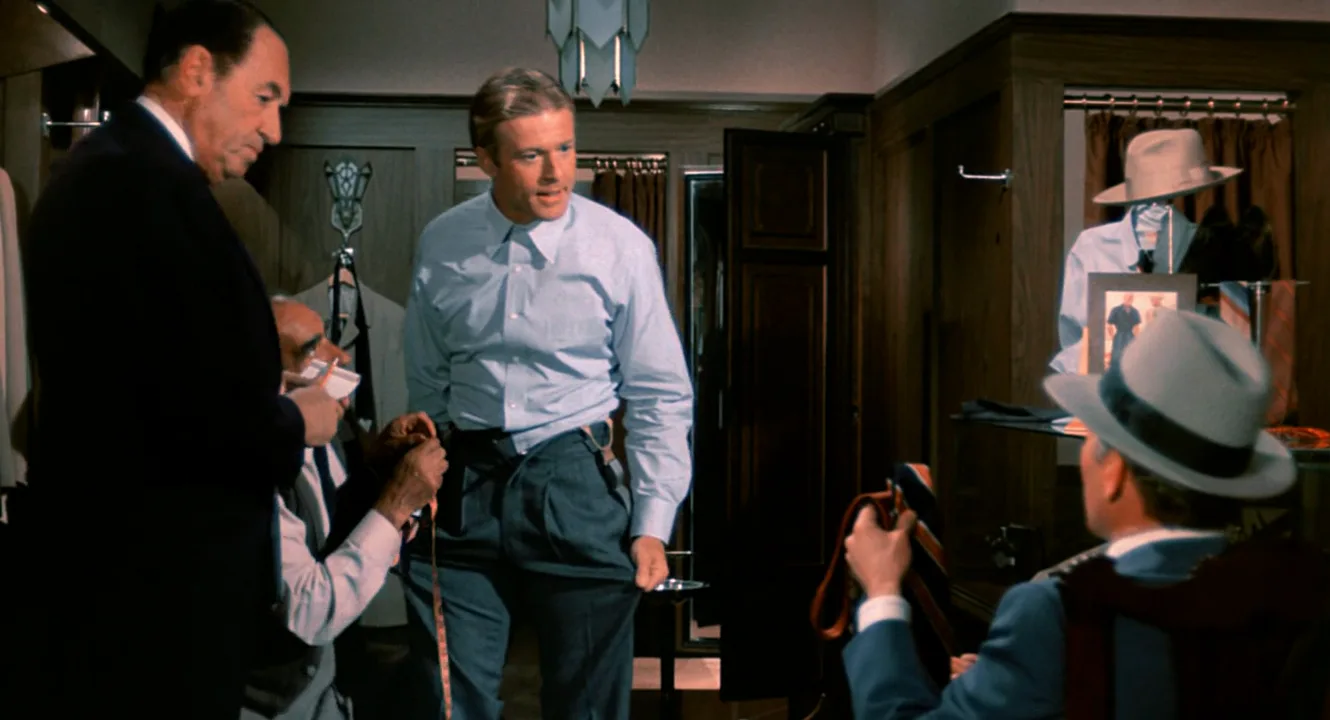
"Hip level" is not a crop. From the same one-meter height you can shoot an insert of a hand on a gun grip, a medium shot at a tailor's, or a wide street. Height sets perspective; focal length and distance set size. In a shot list write both: "medium wide, hip level".
Hip-level shot vs. cowboy shot
A cowboy shot is a shot size — the frame cuts around mid-thigh — usually filmed from eye or chest height. A hip-level shot is a camera height, whatever the framing. Combined, they give the full standoff look: holster at frame center, the character towering slightly, sky opening behind the hat.
Hip-Level Shot examples in film
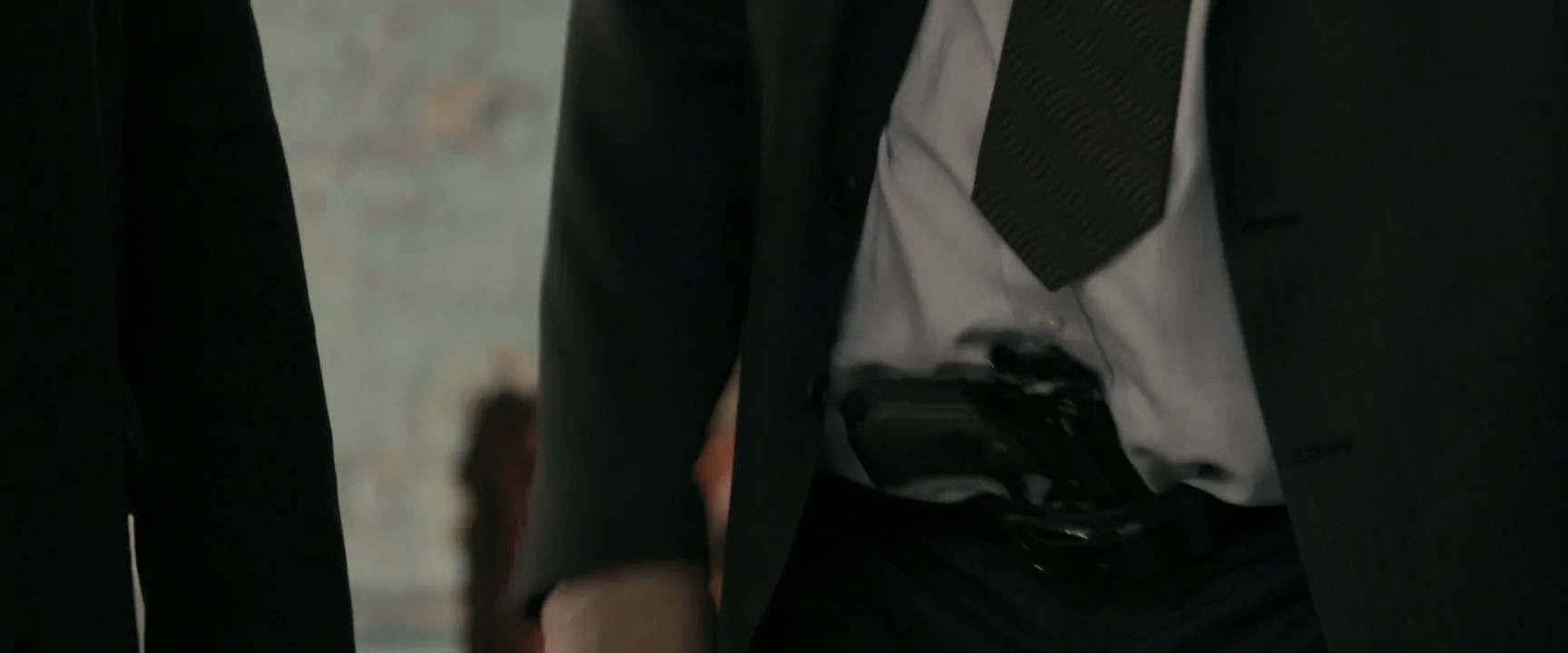
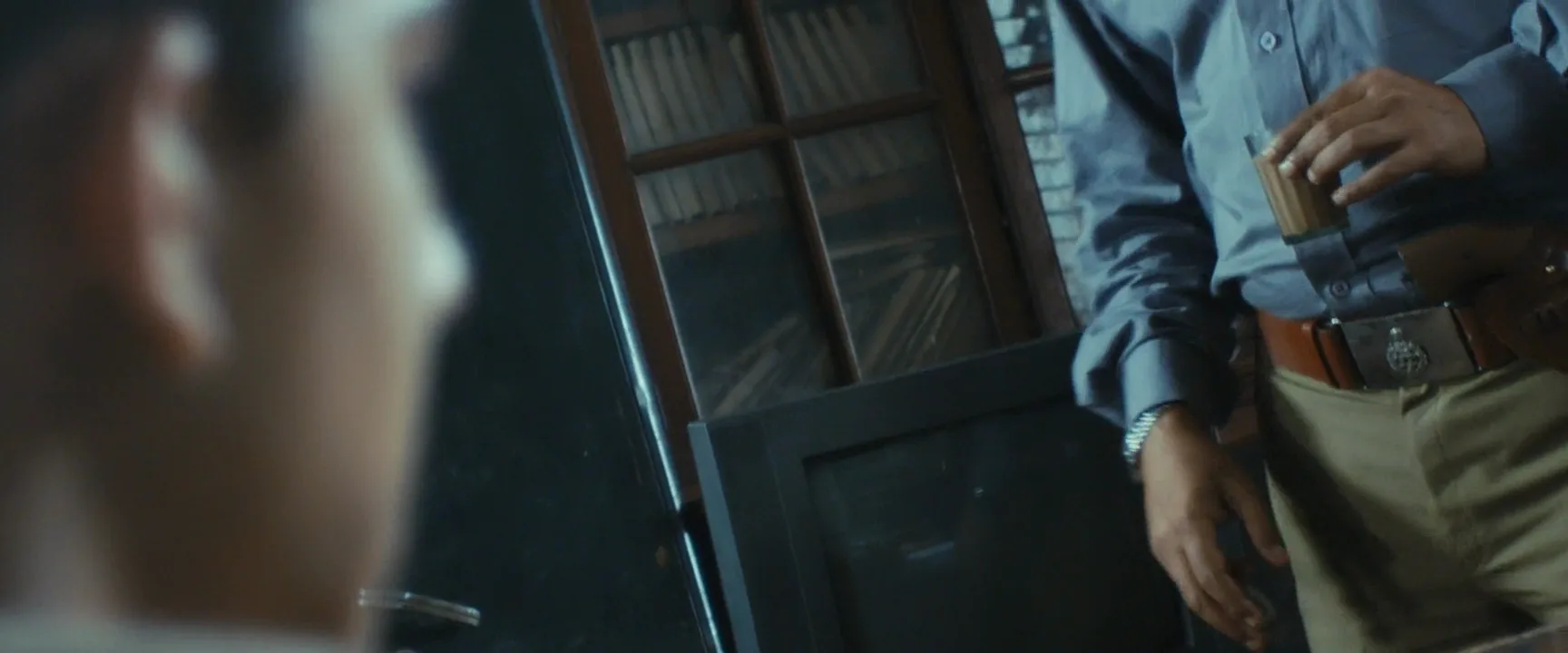
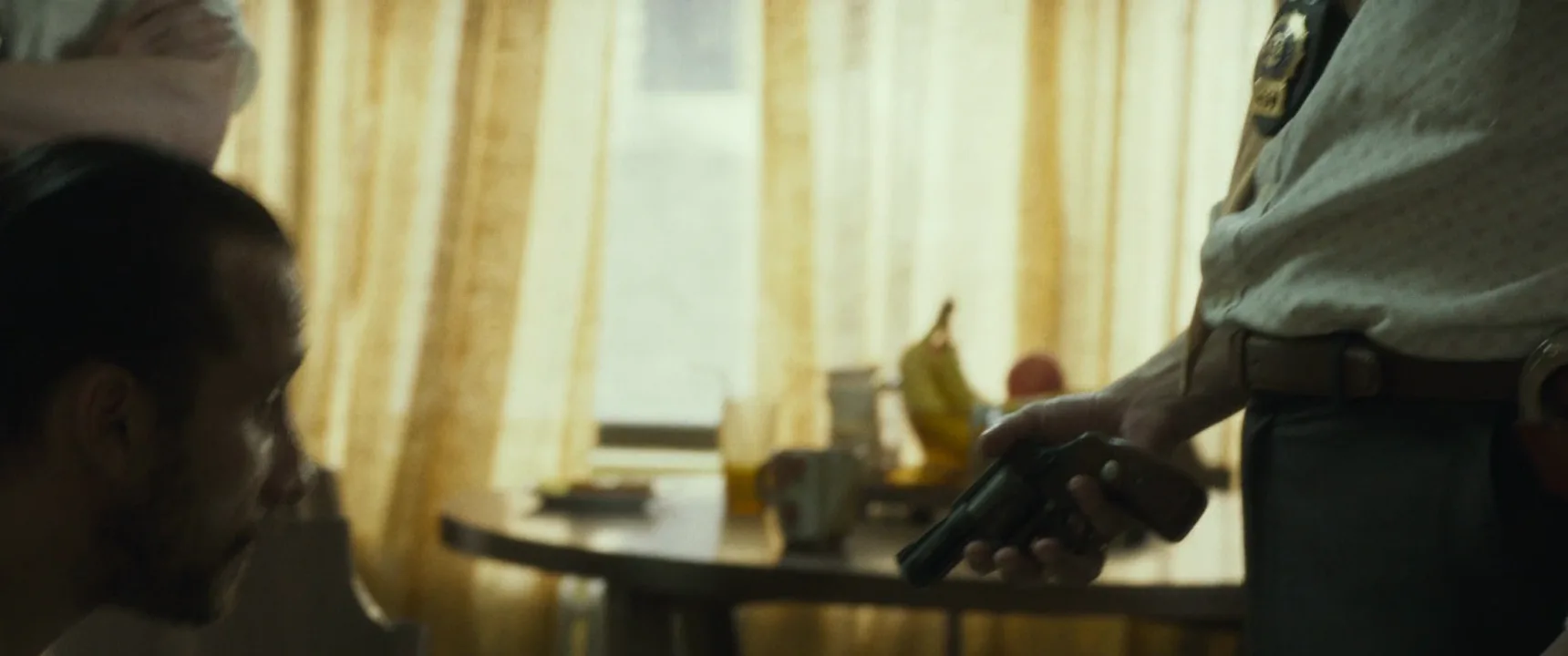
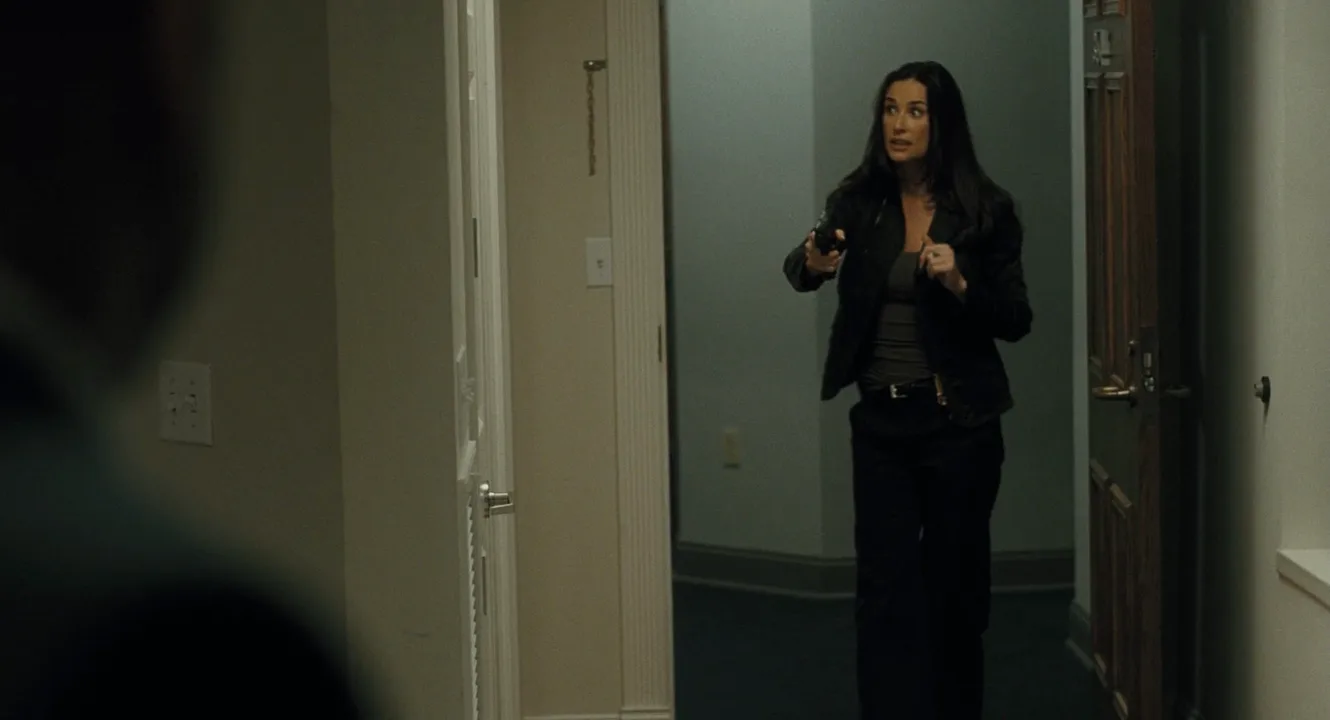
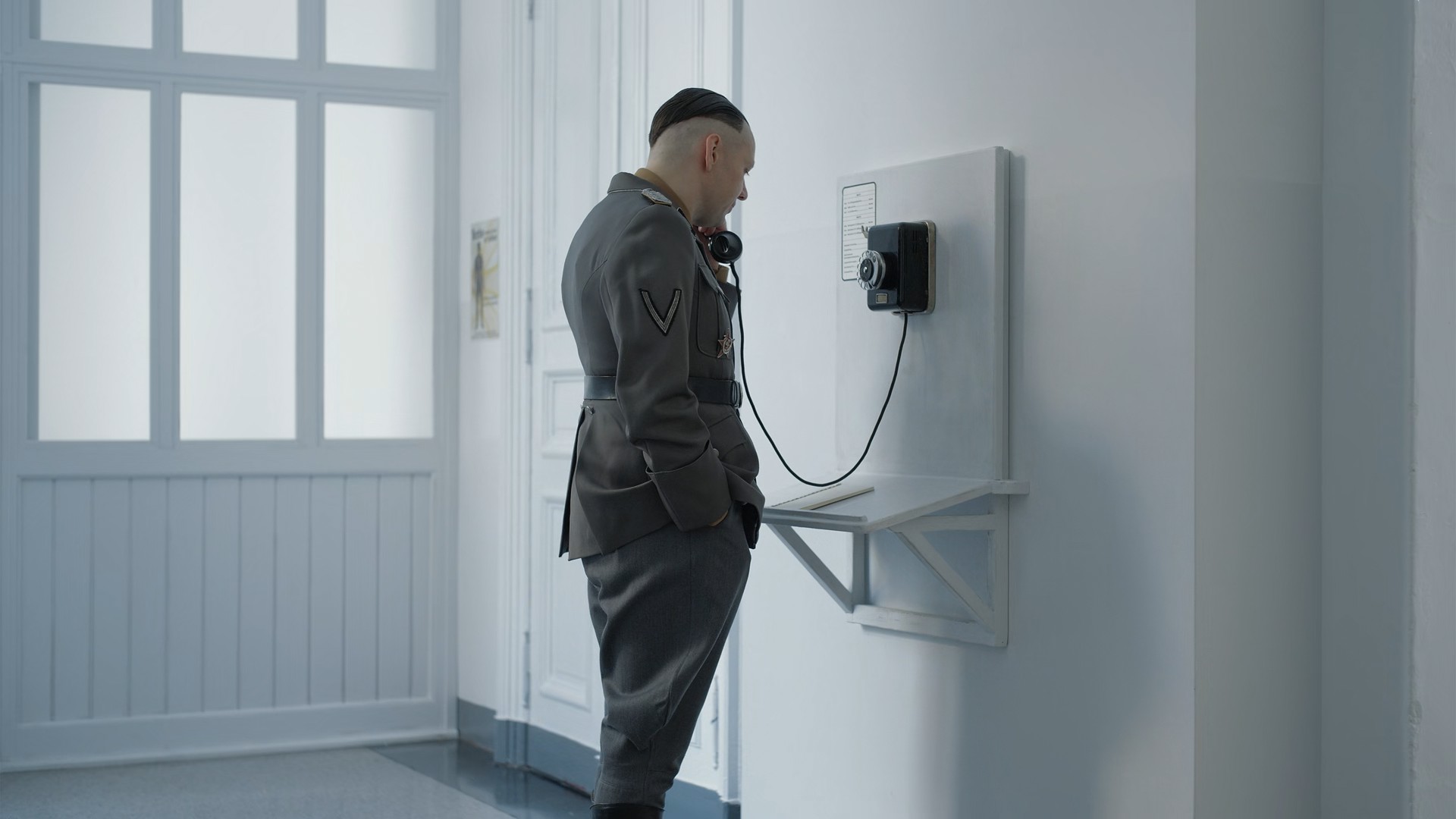
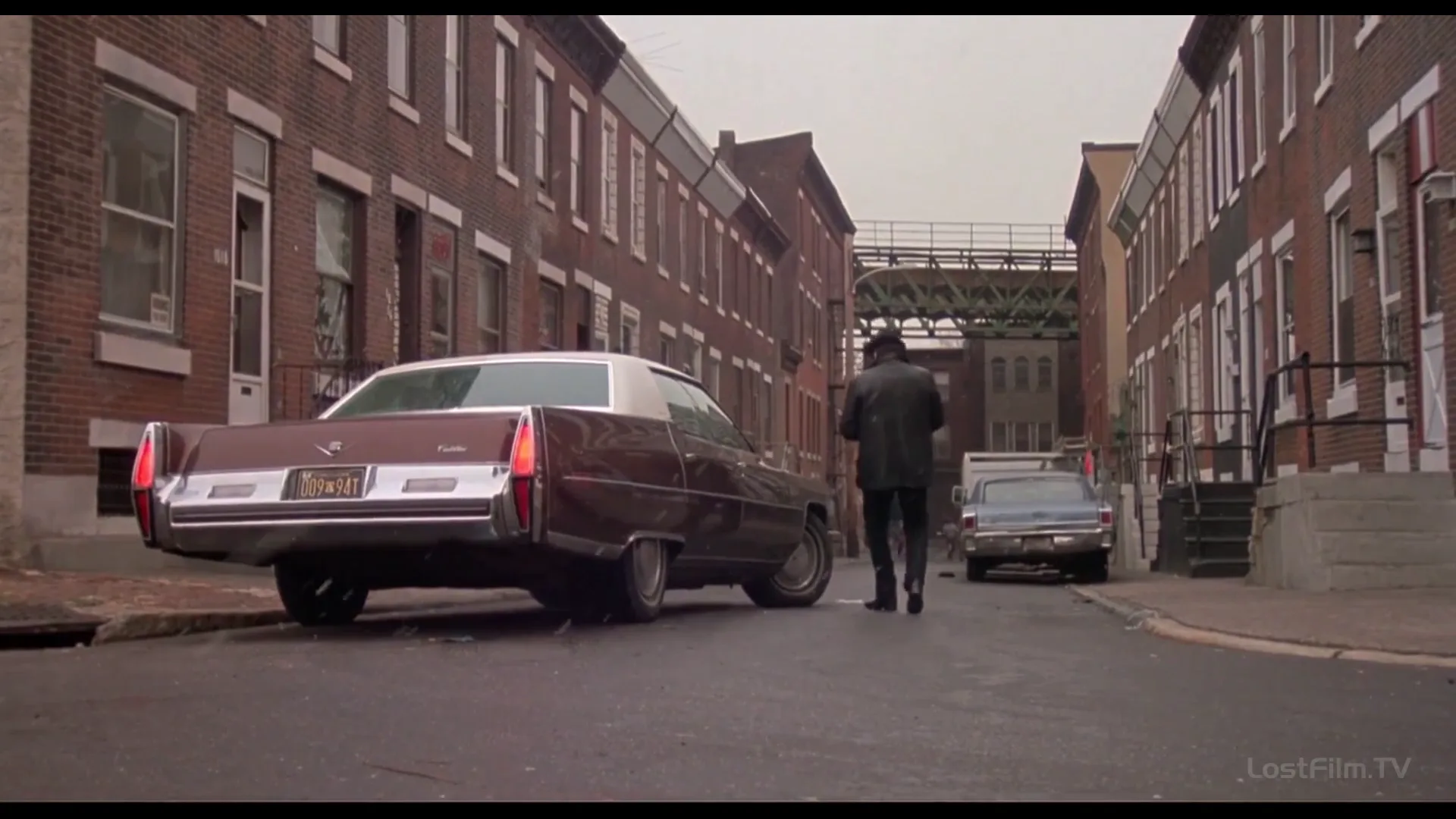
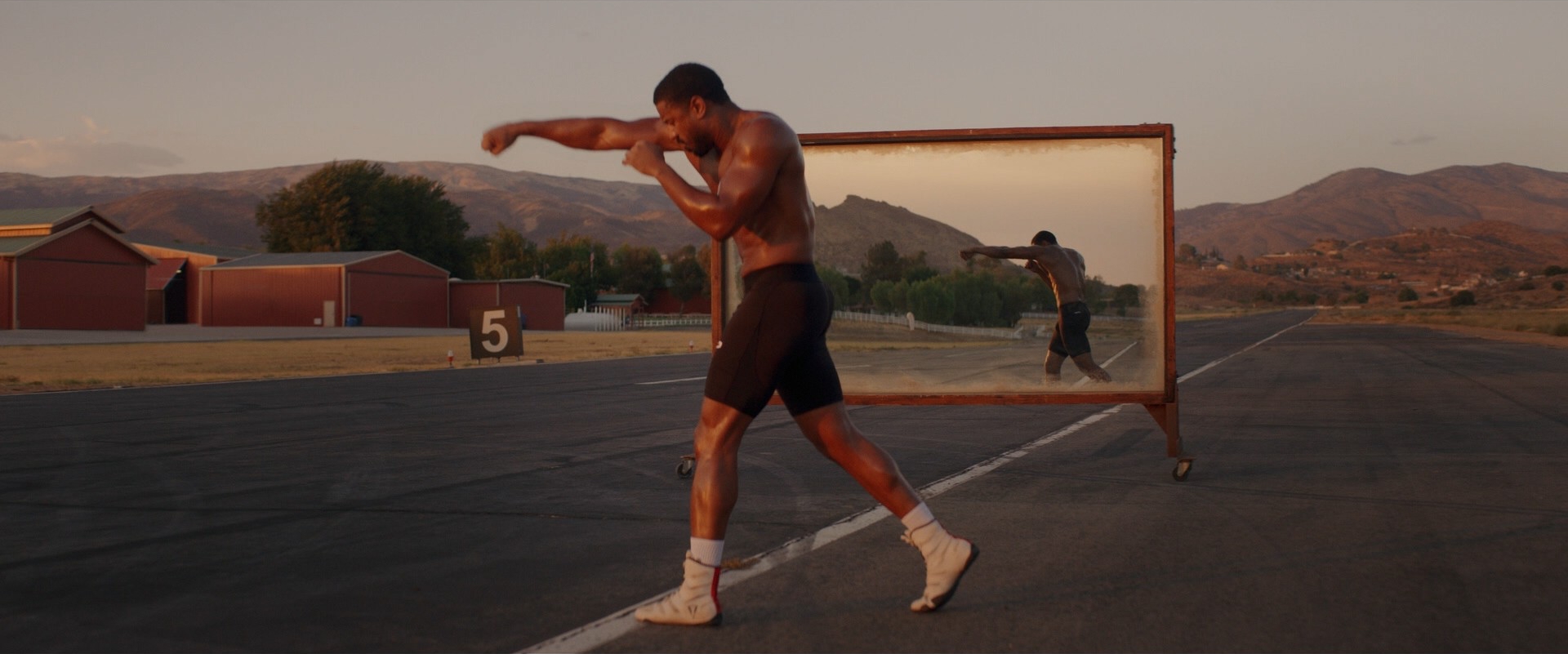
9 framesIn each frame the horizon or vanishing point runs near the character's belt, pulling hands and waistlines into the center.
How to create a hip-level shot with AI
4 promptsImage models default to eye level, so state the height physically and add a visual check, such as where the horizon falls. Keep references, takes and the animated shot on one FlashBoards board to compare heights side by side. The fourth prompt re-shoots a real film shot from a text description alone, and the original plays next to the result so you can compare.
Hip-level medium wide shot, low camera 1 meter above the porch floor at the woman's belt buckle, lens level with no downward tilt, distant horizon line crossing at her belt buckle, porch floorboards seen at a shallow grazing angle, a woman in her fifties with a sun-weathered face, a long grey braid and a small scar on her chin, standing in the doorway of a dusty desert gas station, right hand resting on a holstered revolver, belt buckle near frame center, wooden porch roof above her, hard late-afternoon sun, 32mm lens, film grain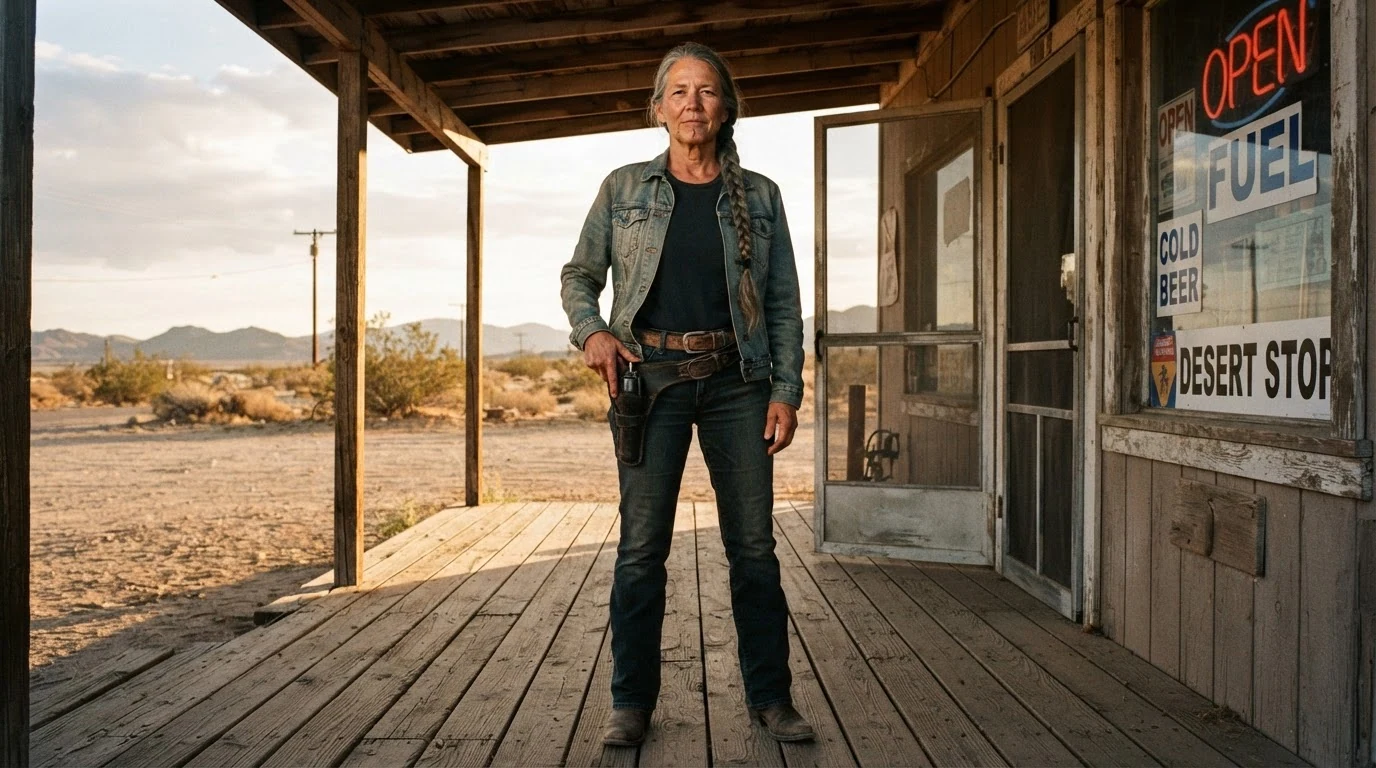
"Low camera 1 meter above the porch floor at the woman's belt buckle" sets the height; "horizon line crossing at her belt buckle" and the grazing floorboards stop the drift back to eye level. The hand on the holster gives the height a reason.
Open FlashBoardsHip-level wide shot, camera at the men's hip height and level, two men facing each other twelve meters apart in an empty concrete parking garage at night, left a tall bald man with a grey goatee in a long navy coat, right a lanky young man with curly black hair in a red bomber jacket, hands loose at their sides, ceiling fluorescent tubes receding to a vanishing point between their belts, wet reflective floor, 28mm lens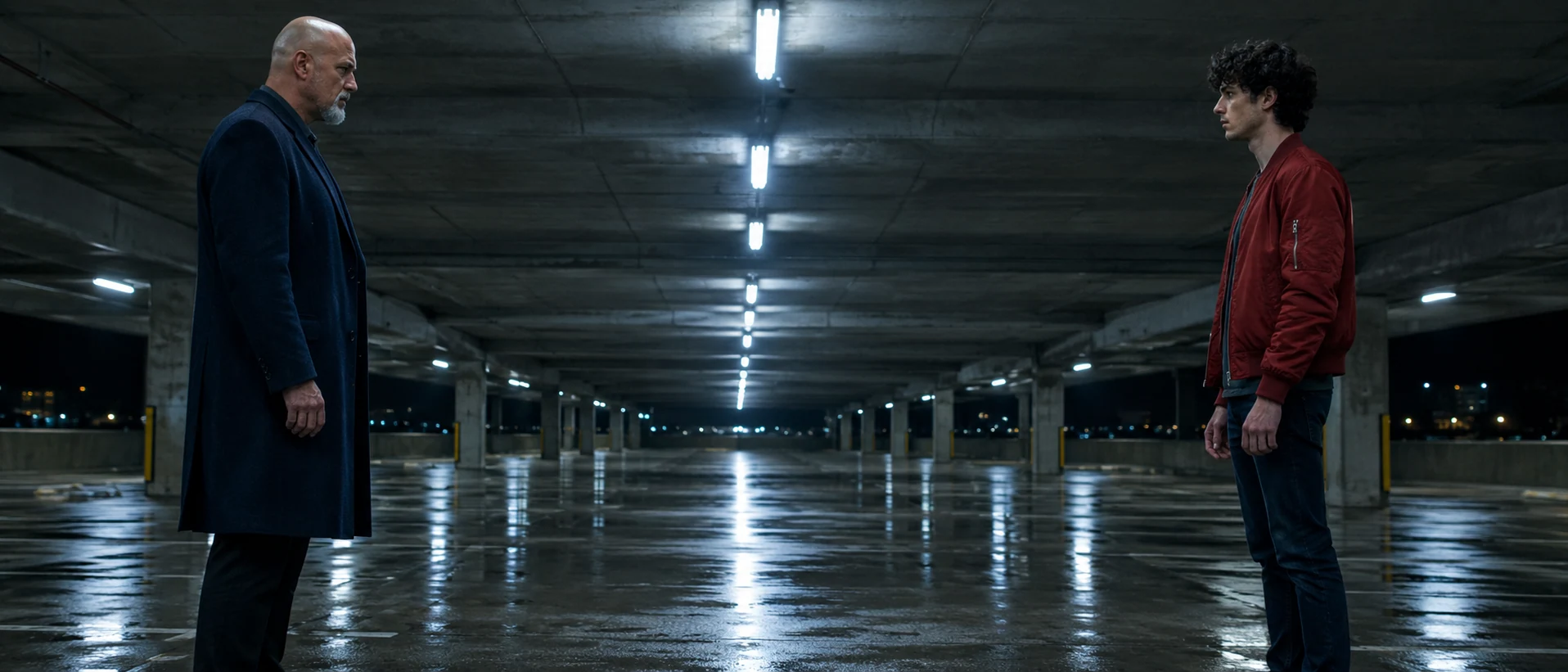
A modern standoff shows hip level in a wide. "Vanishing point between their belts" locks the height; the loose hands carry the tension.
Open FlashBoardsCamera: slow, steady dolly-in, camera height locked at the woman's hips, lens level, from medium wide to medium shot, ending with her hand and gunbelt in the lower third. Action: from the first frame her fingers are already tapping the revolver grip and dust drifts across the porch. In the middle she steps forward out of the doorway into the sun. At the end she stops, hand on the holster, and squints past the camera to the left."Camera height locked at the woman's hips" keeps the push-in from rising to eye level; "already tapping" makes the shot alive from the first frame.
Open FlashBoards{
"output": "Full-screen live-action one single continuous shot from its very first frame, from Rocky (1976), held on one static camera. Grainy 1970s 35mm color film, overcast winter afternoon in Philadelphia, flat soft gray daylight, muted brick reds and asphalt grays, a narrow working-class street of identical two-storey brick row houses with white stone stoops, a steel rail overpass crossing the far end of the street.",
"characters": {
"S1": {
"name": "Rocky, played by Sylvester Stallone",
"look": "stocky man in his thirties, dark curly hair under a dark flat cap, black leather car coat to mid-thigh, dark trousers, black boots, a small notebook held in both hands",
"voice": "slow, low, easygoing working-class Philadelphia"
},
"S2": {
"name": "Gazzo, played by Joe Spinell",
"look": "never seen: he sits inside the maroon sedan, hidden by its roof and glass",
"voice": "gruff, impatient, heard from inside the car"
}
},
"shots": [
{
"shot": 1,
"camera": "locked-off tripod at hip height, about one meter above the asphalt, lens perfectly level with zero tilt, 35mm lens, standing in the middle of the street looking straight down it; the vanishing point and the far overpass sit at a standing man's belt line; the gray asphalt fills the lower third; a long maroon 1970s sedan with a white vinyl roof is parked at the left curb, its rear bumper and red tail lights close to the lens in the left half of the frame; a blue-gray sedan is parked farther down at the right curb; the camera stays perfectly still for the whole shot",
"action": [
"BEGINNING: alive from the first frame, the sedan's street-side door on the right of the car stands open; S1 climbs out of it, back half to the camera, and straightens up beside the door.",
"THEN: he stands still at the open door in the centre of the frame, head bowed, both hands holding the notebook at his chest, reading it.",
"THEN: he pushes the door shut with his right hand and walks away from the camera up the middle of the street toward the overpass, back to the lens, getting smaller, still looking down at the notebook; a small red car crosses far away at the end of the street.",
"THEN: a few steps past the sedan's front bumper he stops, turns around to face the camera and walks back toward the car, head still down over the notebook.",
"THEN: he reaches the street side of the sedan, turns his body to screen left toward the car, and pulls the door open with his left hand.",
"END: he bends down into the open doorway, head and shoulders toward the unseen man inside, notebook in his right hand, talking into the car; the camera never moves."
],
"dialogue": [
{
"speaker": "S2",
"on_screen": false,
"when": "as S1 pulls the car door open near the end of the shot",
"delivery": "gruff, impatient, from inside the car",
"line": "<d>[English] What? What is it?</d>"
},
{
"speaker": "S1",
"on_screen": true,
"when": "right after, as he bends toward the open doorway",
"delivery": "calm, unhurried, eyes on the notebook",
"line": "<d>[English] I just wanna check this thing out.</d>"
},
{
"speaker": "S1",
"on_screen": true,
"when": "in the last moment of the shot, leaning into the car; the video ends while he is still saying it",
"delivery": "slow, reading from the notebook",
"line": "<d>[English] Now, you said pick up two yards from Snyder and a grand from Cappoli, right?</d>"
}
]
}
],
"sound": {
"ambience": "quiet winter street, footsteps on asphalt, a car door thud, a car door opening, a distant train rumbling over the overpass heard from far away",
"speech": "exactly these spoken phrases, each said once, in this order",
"never_spoken": "no narration and no voice-over: the descriptions, performance notes and step words of this prompt are never spoken aloud",
"music": "a film score under the scene, always below the voices: a soft, slow 1970s solo trumpet with muted strings, wistful and working-class",
"subtitles": "none"
}
}Remakes the static street shot from Rocky (1976), dir. John G. Avildsen, DP James Crabe; the prompt carried over the hip-high locked camera, the parked sedan in the foreground, the walk away down the street and back, and the film's own exchange through the car door.
The camera block pins the lens at "about one meter above the asphalt" with "zero tilt" and puts the vanishing point "at a standing man's belt line", so the level holds while Rocky walks away and back. The three lines come verbatim from the film, with Gazzo kept off screen inside the car.
Open FlashBoardsCommon mistakes
- Silent eye level. "Hip shot" alone often gives an eye-level frame cropped at the hips. Give the height in meters and where the horizon falls.
- Overshooting. "From below" produces a steep tilt with leaning verticals; say "lens level" or "tilted up slightly".
- Drift in video. Repeat "camera height locked at the hips" or the camera rises as it pushes in.
Keep the reference frames, prompts and every generated take side by side — images and video in one canvas.
FAQ
4 questionsWhat is a hip-level shot?
A hip-level shot is a camera height: the lens sits at the subject's hips, about one meter off the ground for a standing adult. It brings hands, belts and holsters toward the center of the frame and makes standing characters feel slightly taller than at eye level, without the obvious tilt of a low angle. It works with any shot size.
Is a hip shot the same as a cowboy shot?
No. A cowboy shot is a framing that cuts the character around mid-thigh so a holstered gun stays in view. A hip shot, or waist-level shot, describes where the camera sits — at the belt line — regardless of framing. Westerns often combine them, making the gunbelt the center of the standoff.
Why are hip-level shots used in westerns?
Because the drama of a gunfight is in the hands. With the lens at the gunbelt, a hand hovering near a holster sits close to frame center, and the gunfighter gains a slight, heroic stature against the sky. Westerns and spaghetti westerns used this height for standoffs and for hands before the draw.
How high should the camera be for a hip-level shot?
Set it to the actor: for most standing adults the hip line is 90–110 cm from the ground, lower for children. Use baby legs, a low tripod, a slider on apple boxes or a gimbal at the waist. Keep the lens level for a neutral look, or tilt up 5–10° for more lift.
Related terms
4- Cowboy ShotCamera Shots
A cowboy shot frames a character from about mid-thigh up — a size born in westerns to keep a holstered gun in frame while still reading the face — and is now used for confident, heroic stances.
- Shoulder-Level ShotCamera Angles
A shoulder-level shot puts the camera at the height of the actor's shoulders — slightly below the eyes — so characters feel a touch taller and more substantial than at eye level while the view still reads as natural.
- Low-Angle ShotCamera Angles
A low-angle shot looks up at the subject from below eye level, making them loom larger against the ceiling or sky — used for power, menace or heroism, or to make a space feel monumental.
- Spaghetti WesternGenres
The spaghetti western is the 1960s–70s wave of Italian-made westerns, led by Sergio Leone: amoral gunslingers, operatic violence, Ennio Morricone scores and a signature cut from sweeping wides to extreme close-ups of eyes.
Further reading
Joseph V. Mascelli, The Five C's of Cinematography (1965) — chapter on camera angles. Blain Brown, Cinematography: Theory and Practice — sections on camera height and angle.