 FlashBoards Learn
- Learn
- Camera Shots
- Cowboy Shot
Camera Shots · Film language
Cowboy Shot
Also called: American shot, plan américain, mid-thigh shot
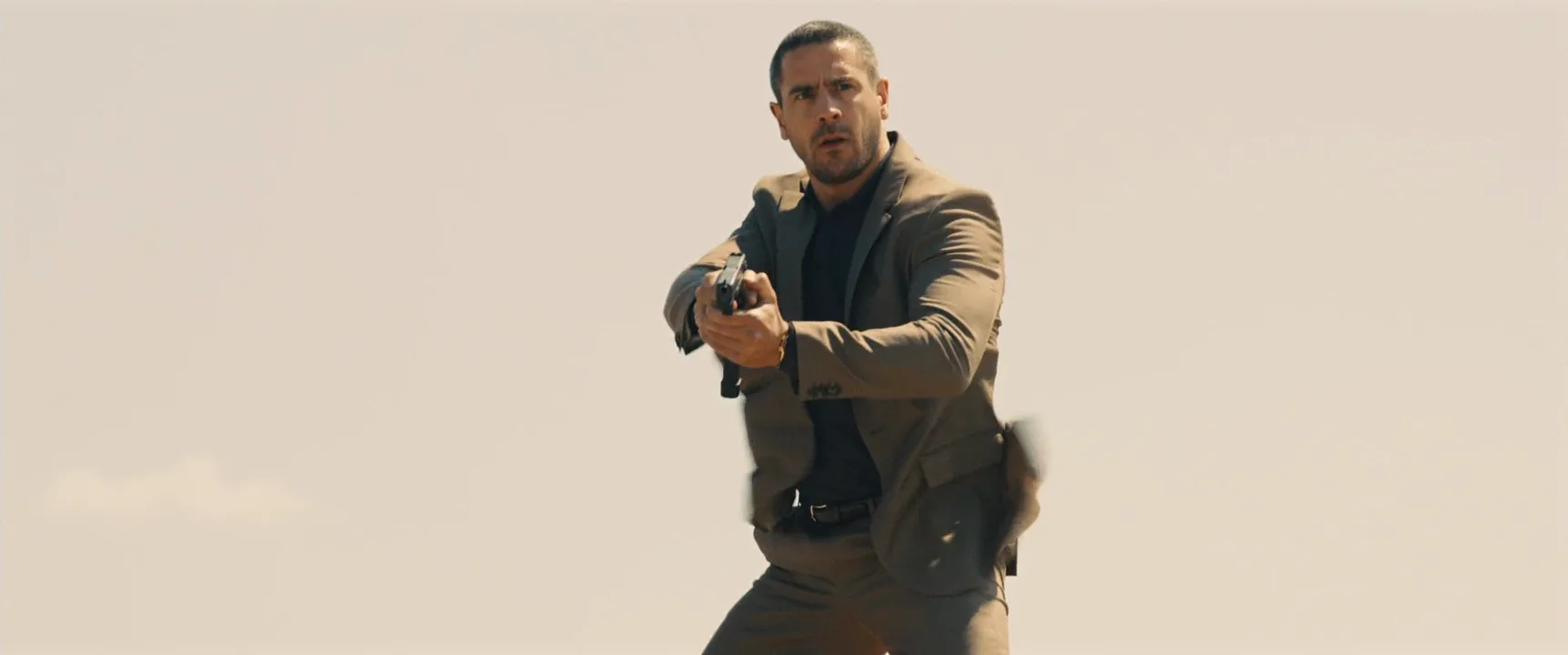
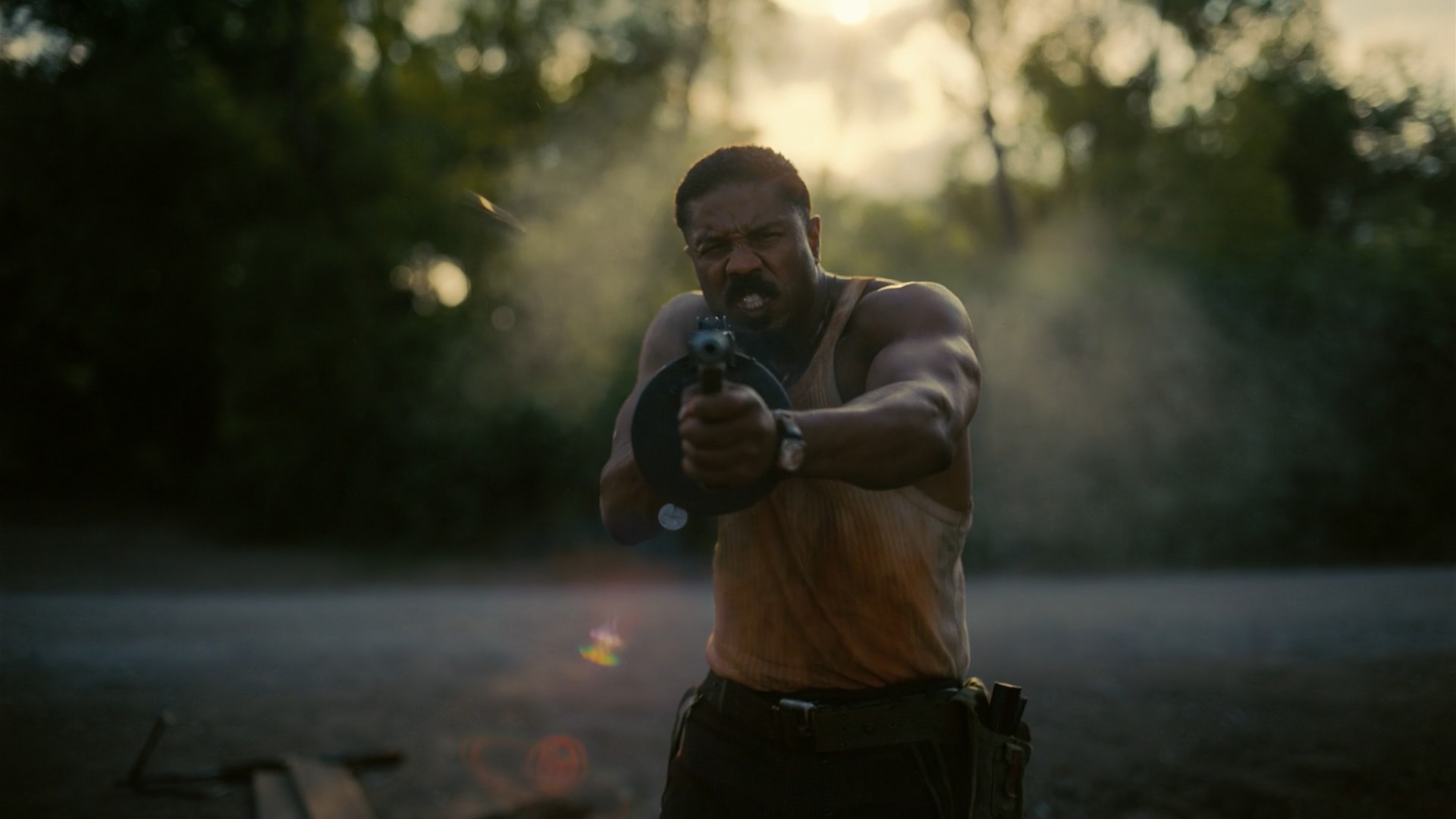
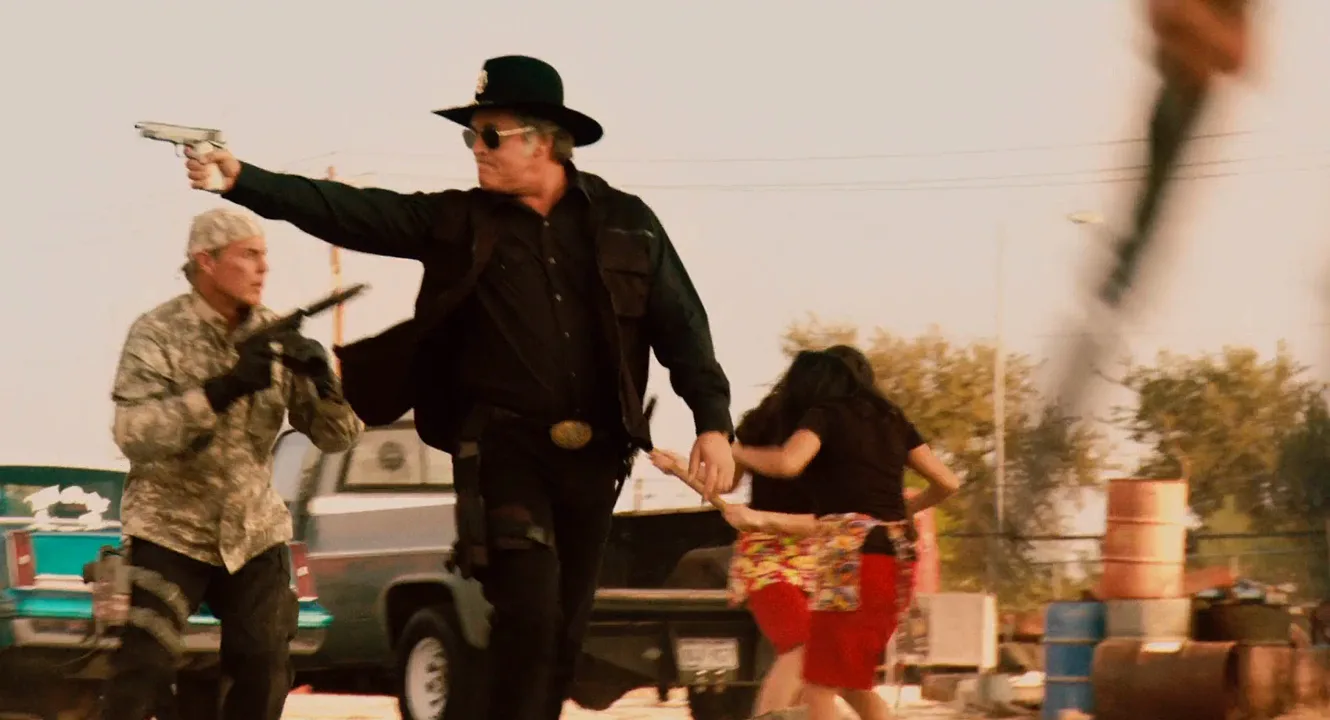
A cowboy shot frames a character from about mid-thigh up. Westerns made it standard because it keeps the holstered gun and the drawing hand in frame while the face stays readable, and today it is the size for confident, squared-up stances: gunfights, arrivals, heroes sizing up a threat.
- What it does
- Shows face, hands, belt line and stance in one frame, so a character looks ready to act.
- Use it when
- A character squares up, arrives or faces a threat and the hands at the hips matter.
- Watch out
- Cut at mid-thigh, never at the knees or the crotch, or the frame looks accidental.
- Try this prompt
Cowboy shot, gunslinger framed from mid-thigh up, hand near holster, camera at hip height, 40mm lens, low sun.
What is a cowboy shot?
A cowboy shot is defined by one line: the bottom edge of the frame crosses the legs at about mid-thigh. On the camera shots scale it sits between the waist-up medium shot and the knees-up medium long shot. Cut at the belt and you lose what this size exists to show: a holster, a hand on a hip, the weight of a stance.
Why the name. Hollywood westerns needed a gunfighter's face and revolver in the same frame, and the gun hangs at the hip. Mid-thigh kept both readable, so the size became the genre's house style. French critics called it plan américain, the American shot; it is also called a mid-thigh shot. Avoid "CS" on a shot list, since most crews read that as close shot.
Why do filmmakers use the cowboy shot?
It reads as readiness. The hips carry the body's weight, so the audience reads posture: feet planted, shoulders squared, a hand drifting toward a weapon. It still rules standoffs and hero introductions. The Italian westerns of the 1960s set it against extreme close-ups of eyes, a rhythm you can study in Sergio Leone's A Fistful of Dollars (1964) and the rest of the spaghetti western cycle.
It gives a character presence. With the lens at belt height, the classic hip-level shot, the camera looks up just enough to add weight without the distortion of an extreme low angle.
How to shoot a cowboy shot
Cut line. Put the bottom of the frame halfway between hip and knee, never on the knee joint or the crotch.
Lens and distance. On Super 35, a standing adult framed from mid-thigh up takes roughly a 35mm at 12–13 feet or a 50mm at about 18 feet. A 32–40mm keeps the street; 75mm and longer compresses it.
Height. Eye level is neutral. Drop the camera to three or four feet and tilt up slightly for the heroic version.
Blocking and light. Keep moves small: a weight shift, flexing fingers, a slow step. Low, hard late sun sculpts the figure against sky.
Cowboy shot vs. medium long shot
A medium long shot cuts at or just below the knees, bringing in more room, so the character reads against the space. A cowboy shot sits a few inches higher and keeps attention on face, hands and belt line. Choose the medium long shot for movement and geography, the cowboy shot for attitude; a full shot goes head to toe. On a shot list, write the cut line in words.
Cowboy Shot examples in film
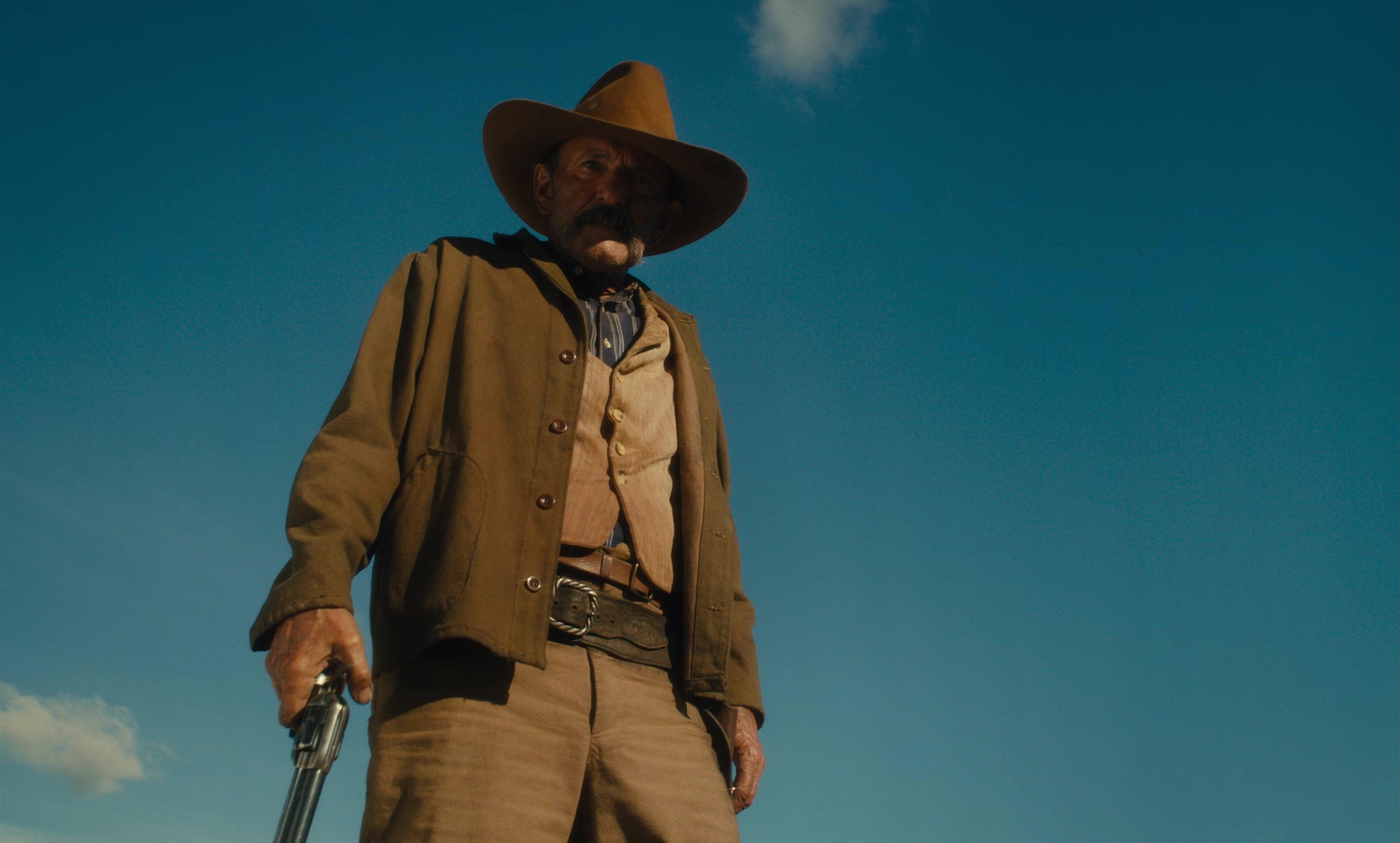
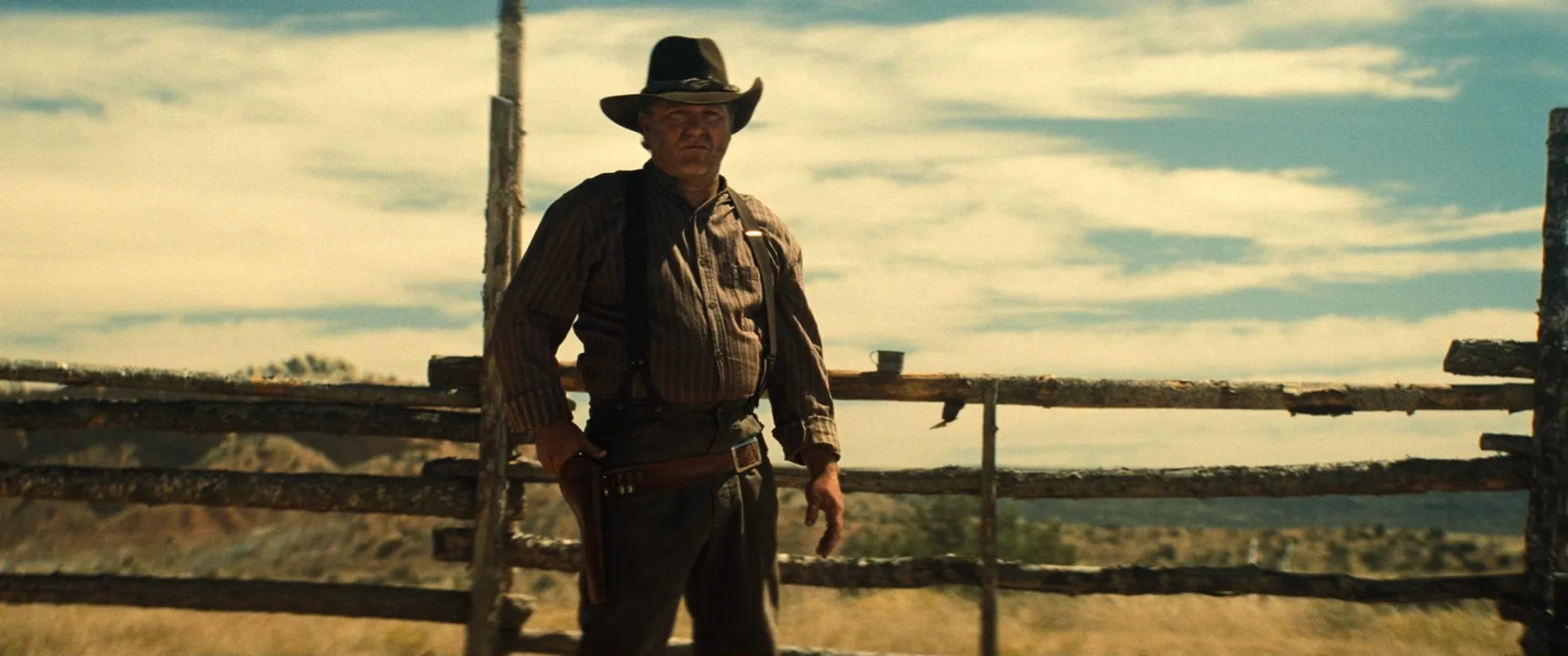
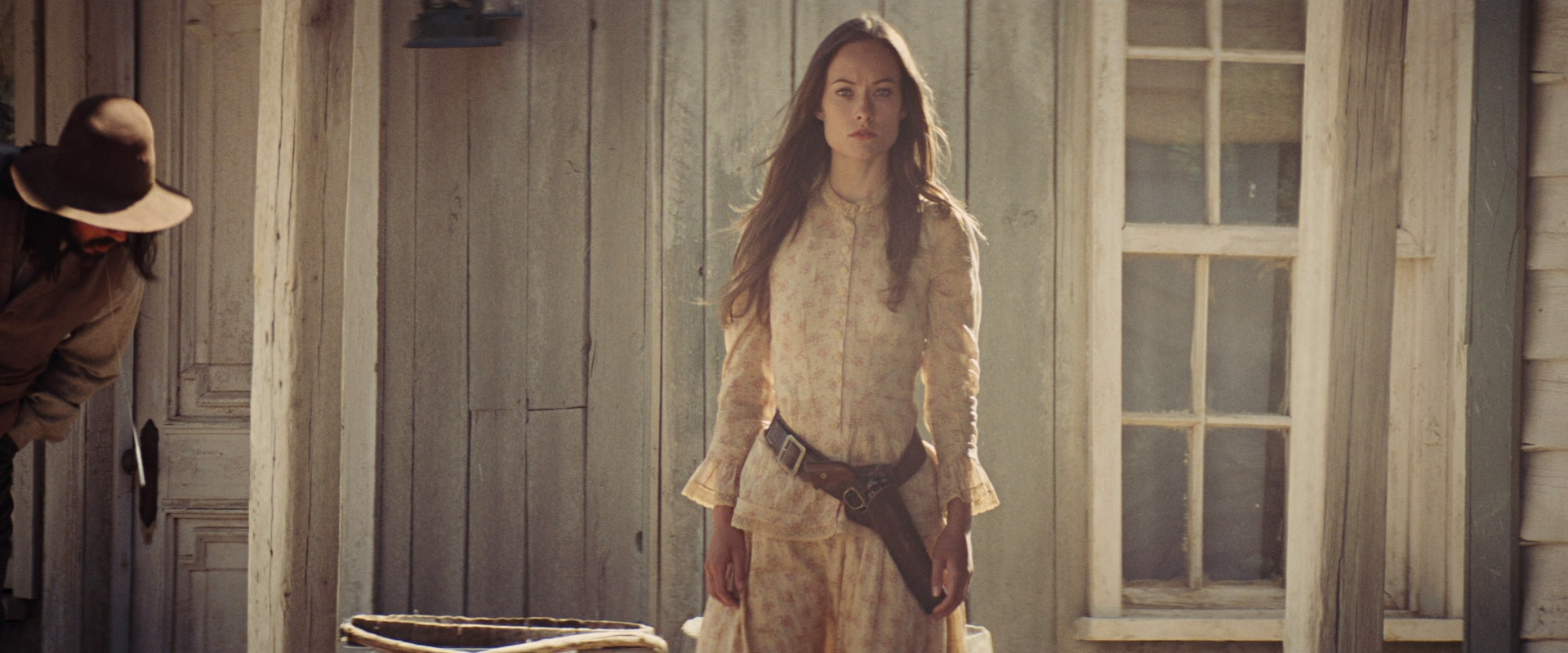
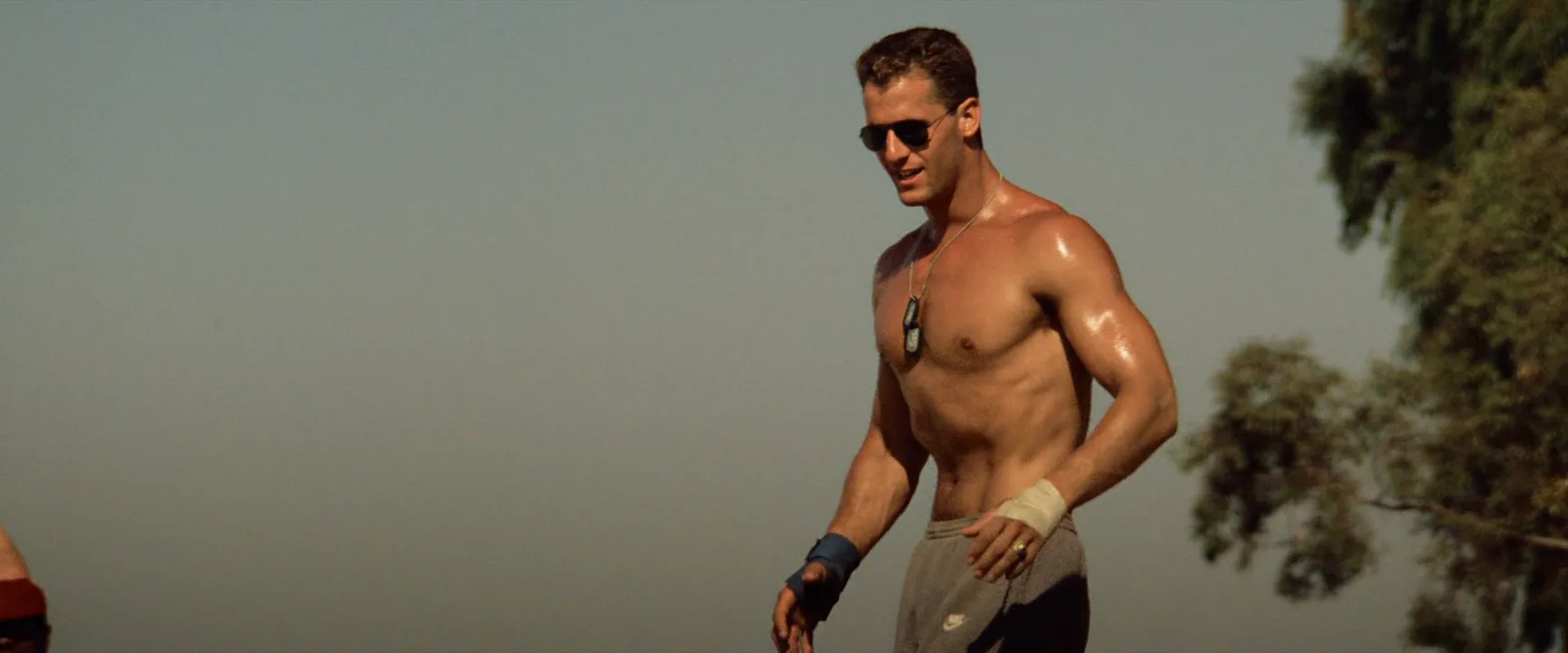
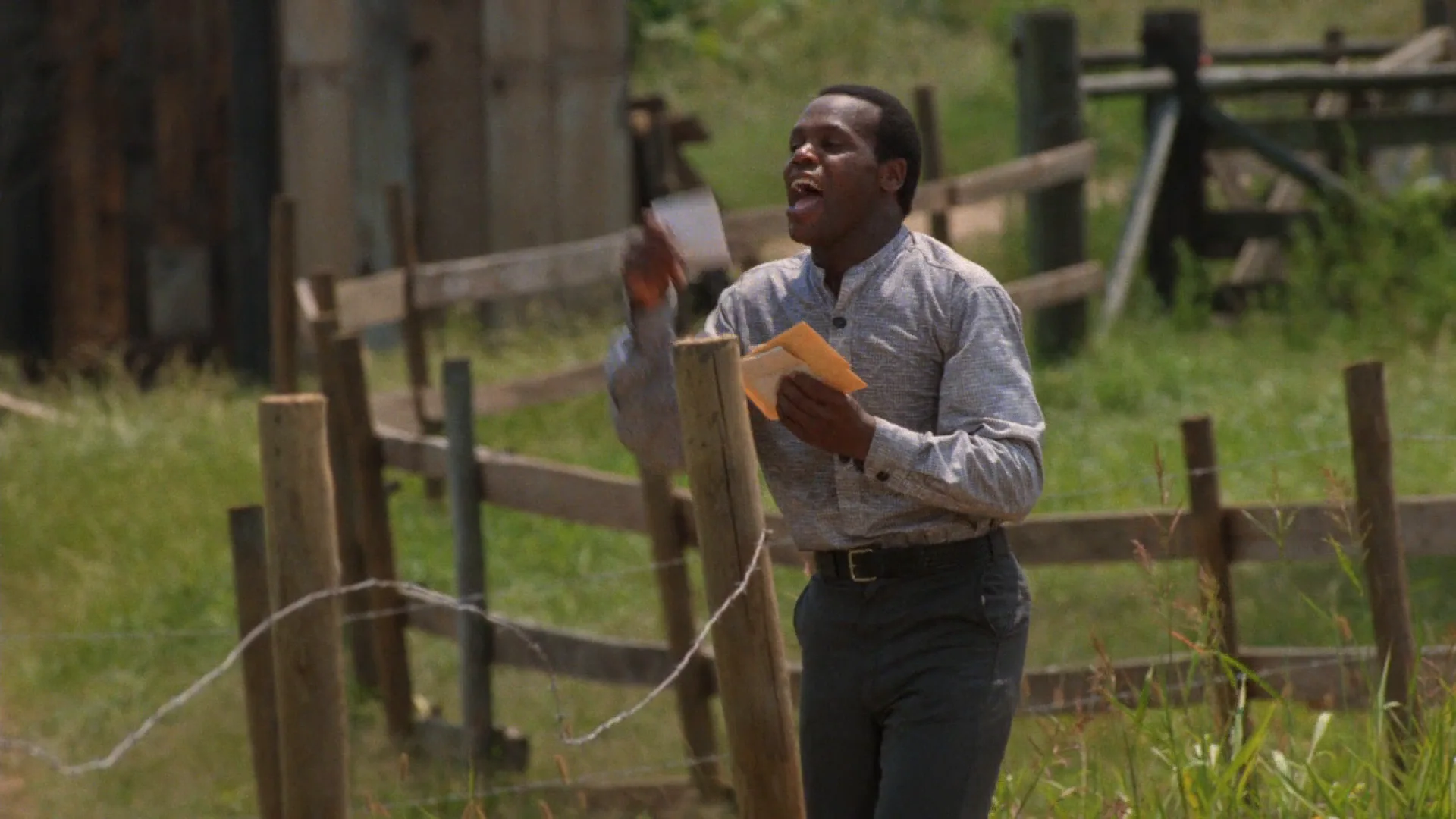
9 framesFrames from westerns and their heirs, 1959 to 2025. Watch where the bottom edge lands and what sits at the hips.
How to create a cowboy shot with AI
4 promptsModels respond to the cut line more than the name: "cowboy shot" alone can come back as a cowboy costume at any size. Name the framing, put something at the hips and set the camera height. In FlashBoards, compare your takes with western references on one board. The fourth prompt re-shoots a real film shot from a text description alone, and the original plays next to the result so you can compare.
Cowboy shot, framed from mid-thigh up: the bottom edge of the frame cuts across her thighs, knees and boots out of frame. A fictional rancher woman in her late fifties, silver braid, sun-creased face, thin scar through her left eyebrow, faded denim shirt, leather vest, gun belt with a holstered revolver on her right hip, standing square on a dusty main street. Camera at hip height looking slightly up, 40mm lens, low warm sun from the left, long shadows, weathered wooden storefronts soft behind her.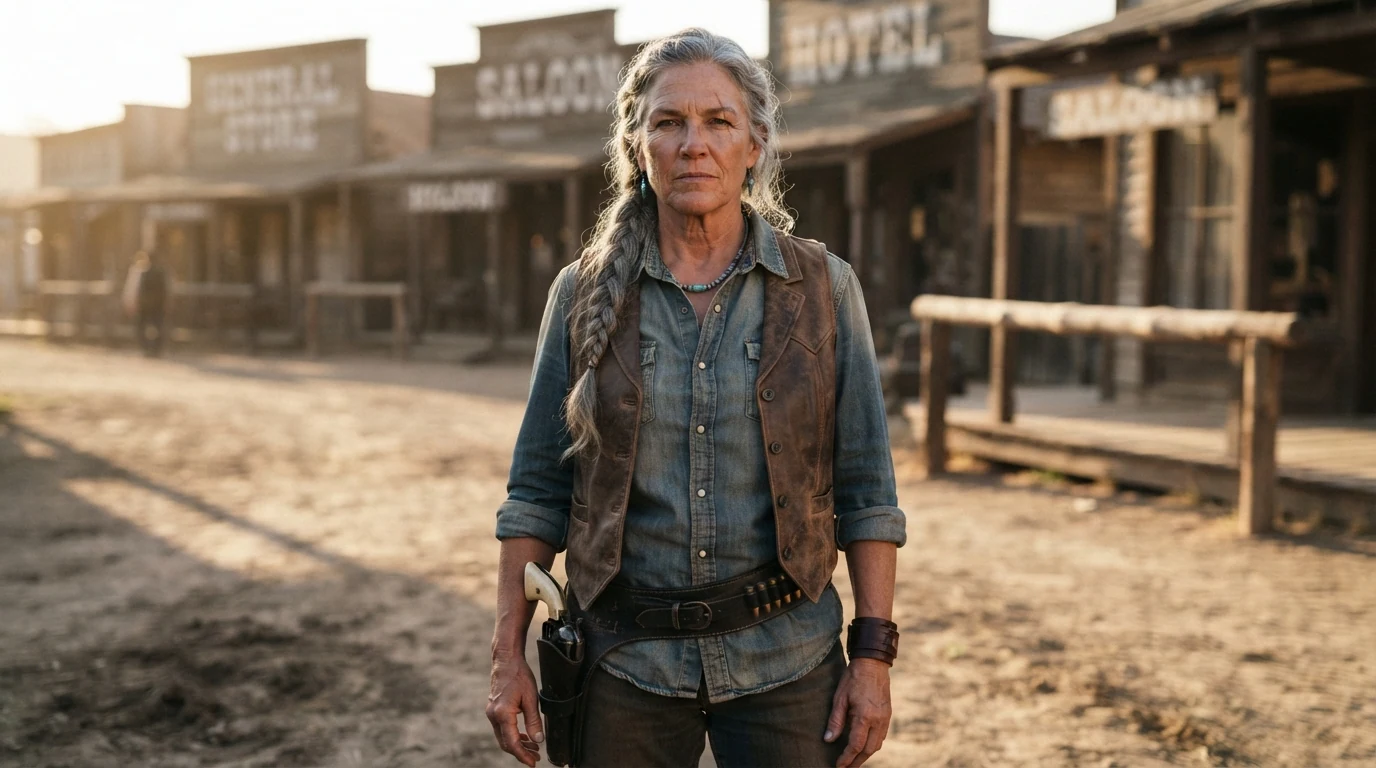
"Framed from mid-thigh up" sets the size, and naming where the bottom edge cuts keeps the knees and boots out; the holster gives the model a reason to keep the frame that low, and "hip height looking slightly up" adds the heroic lift. The scar and braid make her clearly invented. This is the video start frame.
Open FlashBoardsCinematic cowboy shot on a rain-wet city street at night: a lanky bicycle courier in his twenties with a shaved head, a gap between his front teeth and an orange windbreaker, framed from mid-thigh up, thumbs hooked in his belt loops, standing square beside his bike. Eye-level camera, 75mm lens, shallow focus, magenta and teal shop signs blurred behind him, widescreen film still.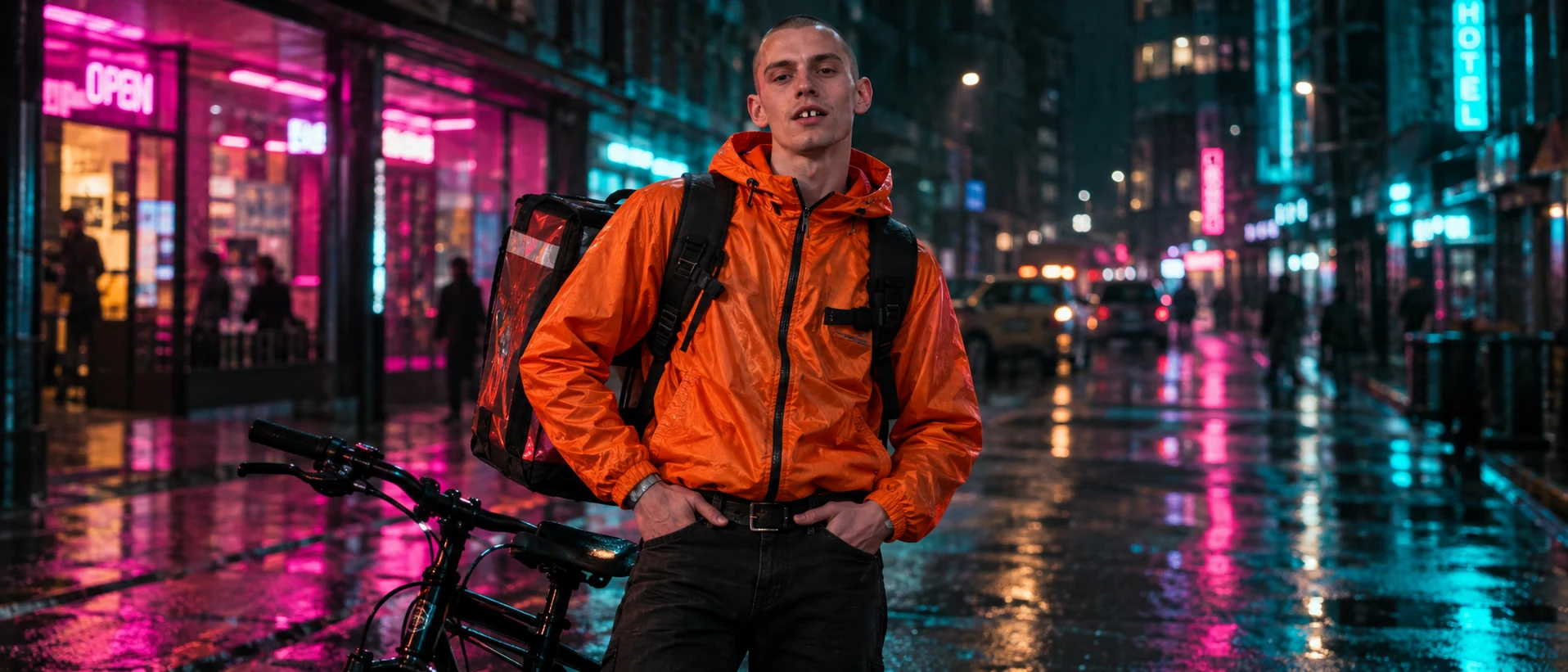
No western props, to show the size carries attitude on its own. Hooked thumbs keep the hands at the hips, which holds the mid-thigh line; the 75mm compresses the street behind him.
Open FlashBoardsCamera: locked off at hip height, holding the same mid-thigh framing for the whole shot. Action: from the first frame, wind is already pushing dust across the street and tugging at her vest and braid. She flexes the fingers of her right hand just above the holstered revolver and shifts her weight onto her back foot. At the end she lifts her chin and narrows her eyes at something just off camera left, her hand still hovering at her hip.Moving dust and cloth make the shot alive from the first frame instead of a slow push-in on a still. "Holding the same mid-thigh framing" stops the drift into a medium shot, and the flexing fingers keep the action at the hips.
Open FlashBoards{
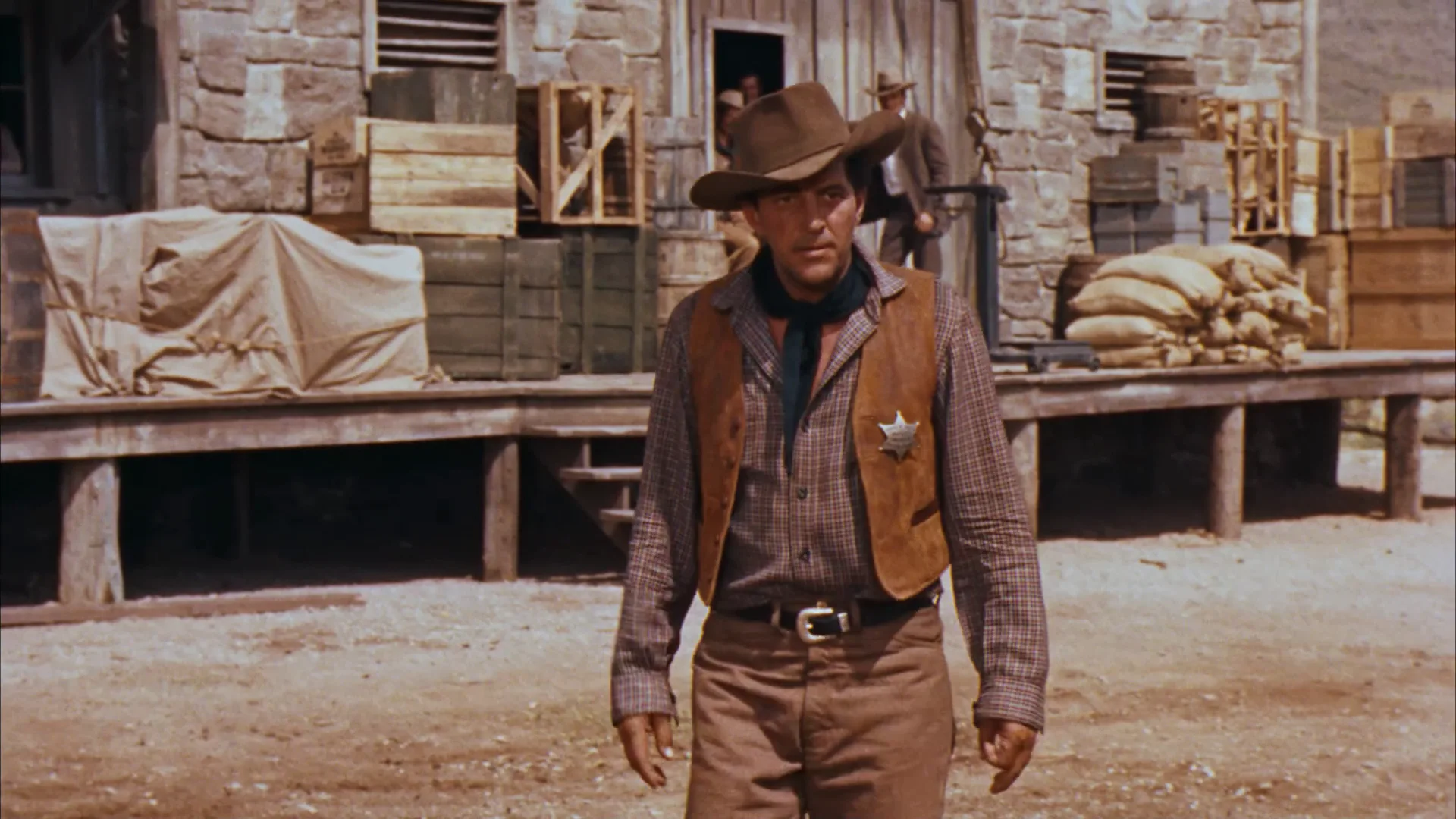
"output": "Full-screen live-action shot from Rio Bravo (1959), from its very first frame: one continuous shot. Late-1950s Technicolor 35mm look, hard high sun from above and slightly behind the camera, warm saturated browns and tans, pale dusty ground, crisp shadows under the hat brim. A stone-and-plank warehouse with a raised wooden loading dock fills the background: crates, a canvas-covered stack, barrels and grain sacks on the dock, a small wooden stair down to the dirt, an open dark doorway above it.",
"characters": {
"S1": {
"name": "Dude, played by Dean Martin",
"look": "slim man around forty, clean-shaven, dark hair under a wide-brimmed brown felt hat, black neckerchief knotted loose at the throat, brown-and-cream checked shirt, tan suede vest with a silver six-point deputy star on the vest over his left chest, dark leather belt with a big square silver buckle, tan trousers, both hands empty",
"voice": "silence: he does not speak"
},
"S2": {
"name": "Nathan Burdette, played by John Russell",
"look": "small and far away on the loading dock: brown suit jacket, white shirt, dark bow tie, gray hat",
"voice": "silence: he does not speak"
}
},
"shots": [
{
"shot": 1,
"camera": "tripod at chest height, normal lens, the camera stays in place and pans slowly to the left to keep S1 in frame as he walks toward it; starts as a medium-wide shot cut at his knees with S1 in the centre, passes through a cowboy shot with the bottom edge of the frame across the middle of his thighs, ends a little tighter with the bottom edge just below his belt buckle",
"voice": "silence: nobody speaks in this shot, no voice at all",
"action": [
"BEGINNING: alive from the first frame, S1 is already walking straight toward the camera in the centre of the frame, seen from the knees up, arms hanging loose, head level, eyes on a point just off camera to screen left; far behind him S2 stands on the loading dock at the open doorway right of centre, leaning on the door frame with his right arm stretched out to it, two more men half hidden in the dark doorway.",
"THEN: S1 keeps an unhurried, even stride, drifting slightly toward screen left, his right hand on screen left swinging forward past his thigh while his left hand on screen right stays low by his other thigh; the camera pans left after him and the dock slides toward screen right.",
"THEN: he comes close enough that the bottom edge of the frame crosses the middle of his thighs: hat, star, belt buckle and both empty hands all in frame at once, face set, no smile, mouth closed.",
"THEN: his right hand on screen left swings out wider from his body for one step as he angles back toward the centre; S2 stays leaning in the doorway, unmoving.",
"END: the camera settles with S1 centred and a step closer, the bottom edge of the frame just below his silver buckle, his head turned slightly toward screen left, eyes lowered to a point off camera left, jaw tight, still walking forward."
],
"dialogue": []
}
],
"sound": {
"ambience": "boot steps on dry packed dirt, a faint warm breeze across an open yard",
"speech": "no words in this video; the only human sounds are breaths and movement",
"never_spoken": "no narration and no voice-over: the descriptions, performance notes and step words of this prompt are never spoken aloud",
"music": "a film score under the scene, always below the voices: low tense western strings with a slow, steady pulse",
"subtitles": "none"
}
}Remakes the Rio Bravo (1959) shot of Dude (Dean Martin) walking away from the warehouse toward a camera panning left; the prompt carries over his vest, star and empty hands, the dock behind him and the frame crossing mid-thigh.
The camera line names all three cut points (knees, mid-thigh, just below the buckle), so the walk passes through a true cowboy shot instead of jumping to a waist shot. Timing the pan left against his drift keeps him centred, and naming the silence keeps the model from adding lines.
Open FlashBoardsCommon mistakes
- Costume instead of framing. The name alone can produce a hat and boots at full length. Add "framed from mid-thigh up".
- Snapping to the waist or knees. Put something at the hips (a holster, hooked thumbs) so the frame has to include it.
- Eye-level default. Without a height, the stance loses weight. Write "camera at hip height looking slightly up".
- Drift in video. Say the camera holds the same mid-thigh framing, and describe only what is in the frame: "eyes on something off camera left" instead of an opponent the model will draw.
Keep the reference frames, prompts and every generated take side by side — images and video in one canvas.
FAQ
4 questionsWhat is a cowboy shot in film?
A cowboy shot frames a person from about mid-thigh to just above the head, showing the face, the hands and whatever sits at the hips, such as a holster. Westerns made it standard for gunfighters; modern films use it for confident stances in standoffs and hero introductions.
Why is it called a cowboy shot?
It comes from Hollywood westerns. A gunfighter's revolver hangs at the hip, so a waist-up frame cut it out and a full-length frame made the face too small. Cropping at mid-thigh kept both readable, and the size was named after the genre.
What is the American shot or plan américain?
They are other names for the cowboy shot. French critics used plan américain for the mid-thigh framing they saw constantly in American films, westerns above all. Some usage stretches it to knees-up, so write the cut line itself.
What is the difference between a cowboy shot and a medium shot?
The cut line. A medium shot ends around the waist or belt. A cowboy shot ends lower, at mid-thigh, so the hips, the belt and the full stance are in frame, making a character look planted and ready to act.
Related terms
5- Medium Long ShotCamera Shots
A medium long shot frames a character from about the knees up, between a medium and a full shot, showing gesture and stance while leaving room for the setting and other people.
- Medium ShotCamera Shots
A medium shot frames a person from about the waist up, balancing facial expression with hand gestures and some of the surroundings — the neutral, conversational size of most dialogue and interaction.
- Full ShotCamera Shots
A full shot frames a character from head to toe with little room above and below, so posture, costume and whole-body movement read clearly while the setting stays secondary.
- Hip-Level ShotCamera Angles
A hip-level shot places the camera at the height of the character's hips, emphasizing hands, belts and holsters — the classic standoff angle of westerns — and giving figures a slight heroic lift.
- Spaghetti WesternGenres
The spaghetti western is the 1960s–70s wave of Italian-made westerns, led by Sergio Leone: amoral gunslingers, operatic violence, Ennio Morricone scores and a signature cut from sweeping wides to extreme close-ups of eyes.
Further reading
Joseph V. Mascelli, The Five C's of Cinematography (1965). Daniel Arijon, Grammar of the Film Language (1976).