 FlashBoards Learn
- Learn
- Camera Angles
- Voyeur Shot
Camera Angles · Film language
Voyeur Shot
Also called: voyeuristic shot, peeping shot, surveillance shot
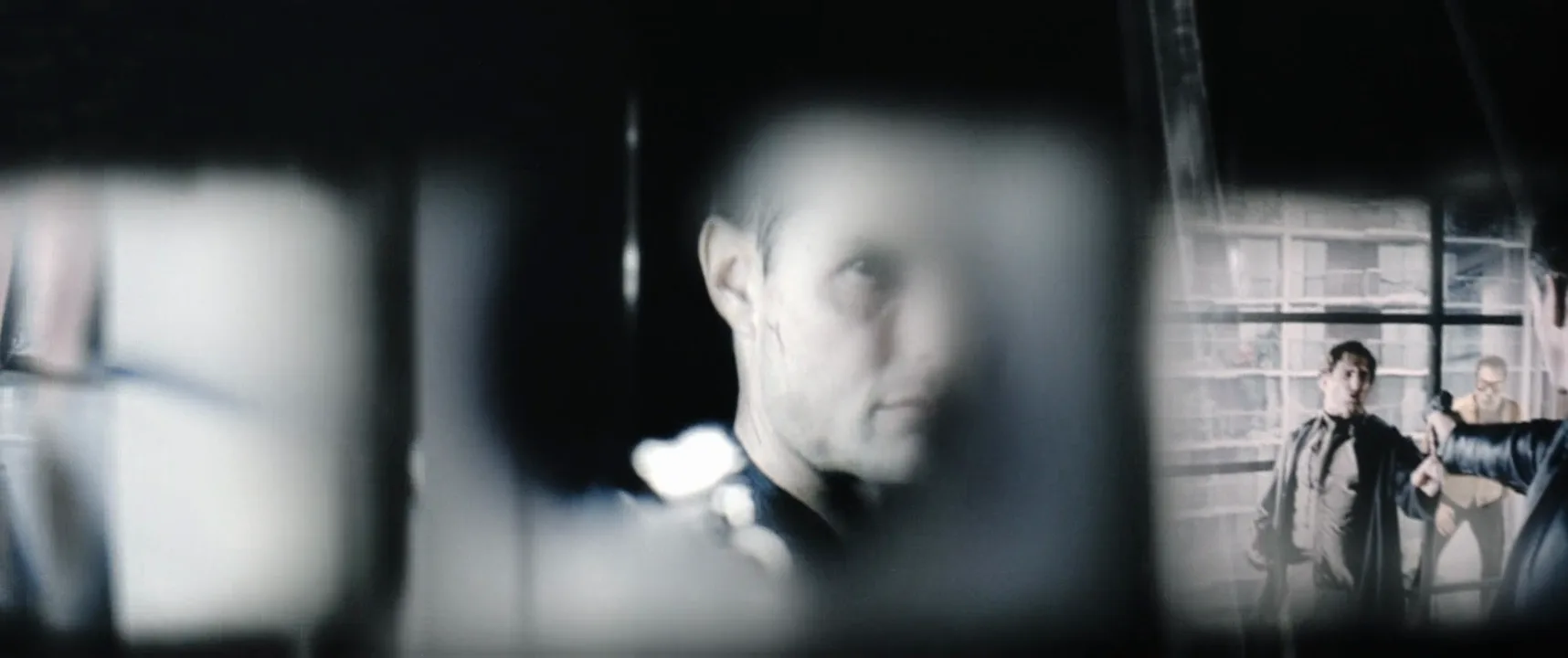
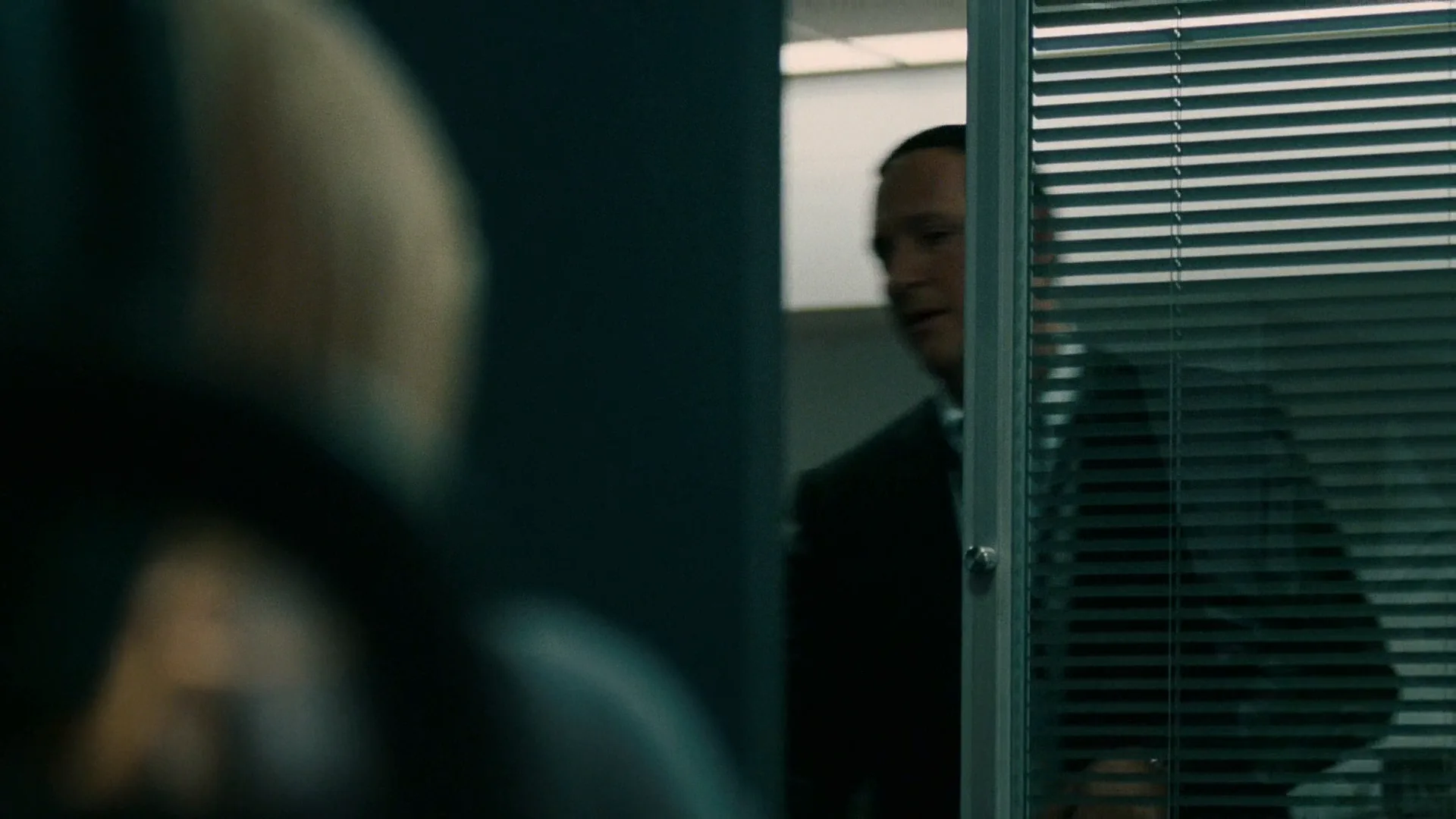
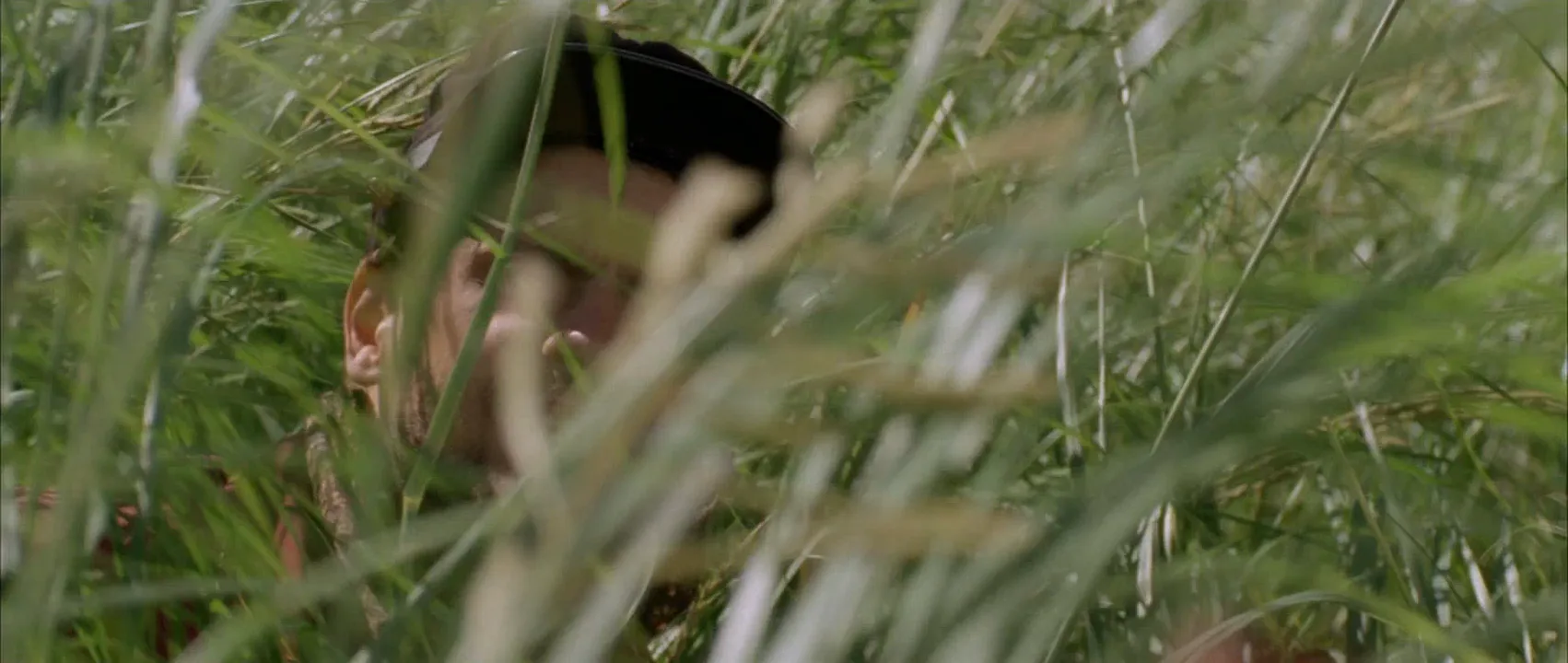
A voyeur shot watches a character who doesn't know they are being observed: through a window, blinds, a door gap or foliage, or from far away on a long lens. The foreground obstruction and the distance make the audience a hidden observer, so the scene reads as spying, not just watching.
- What it does
- Turns the viewer into a hidden watcher and makes the subject look exposed and unaware.
- Use it when
- Someone is being stalked, surveilled, suspected or secretly desired, and you want the audience to feel complicit.
- Watch out
- If the subject glances at the lens or the obstruction disappears, it becomes an ordinary shot.
- Try this prompt
Voyeur shot through half-open venetian blinds, soft blurred slats in foreground, woman at a kitchen table unaware, long lens from across the street
What is a voyeur shot?
A voyeur shot (also called a voyeuristic, peeping or surveillance shot) is defined by the relationship between camera and subject, not by camera height. The subject is private and unguarded; the camera is hidden. Three signals make a frame read as voyeuristic:
- A barrier. Blinds, a door gap, leaves, a windshield or a fence sits between us and the subject, usually soft and covering part of the frame.
- Distance. The camera is farther back than normal coverage, on a longer lens.
- No acknowledgment. The subject never looks into the lens. When they do, the spell breaks, and that is a beat in itself.
It belongs to the camera angles family because it is a choice of vantage point.
Why do filmmakers use voyeur shots?
It makes the audience complicit: watching a film is already peeping, and this framing admits it. In Rear Window (1954), a laid-up photographer spies on his neighbors through a long lens, and every shot of their windows implicates us too. Psycho (1960) puts us at a peephole, and Peeping Tom (1960) makes the killer a cameraman.
- Thriller and horror: an unaware subject plus a hidden viewer means danger, so we fear for them before they know to be afraid.
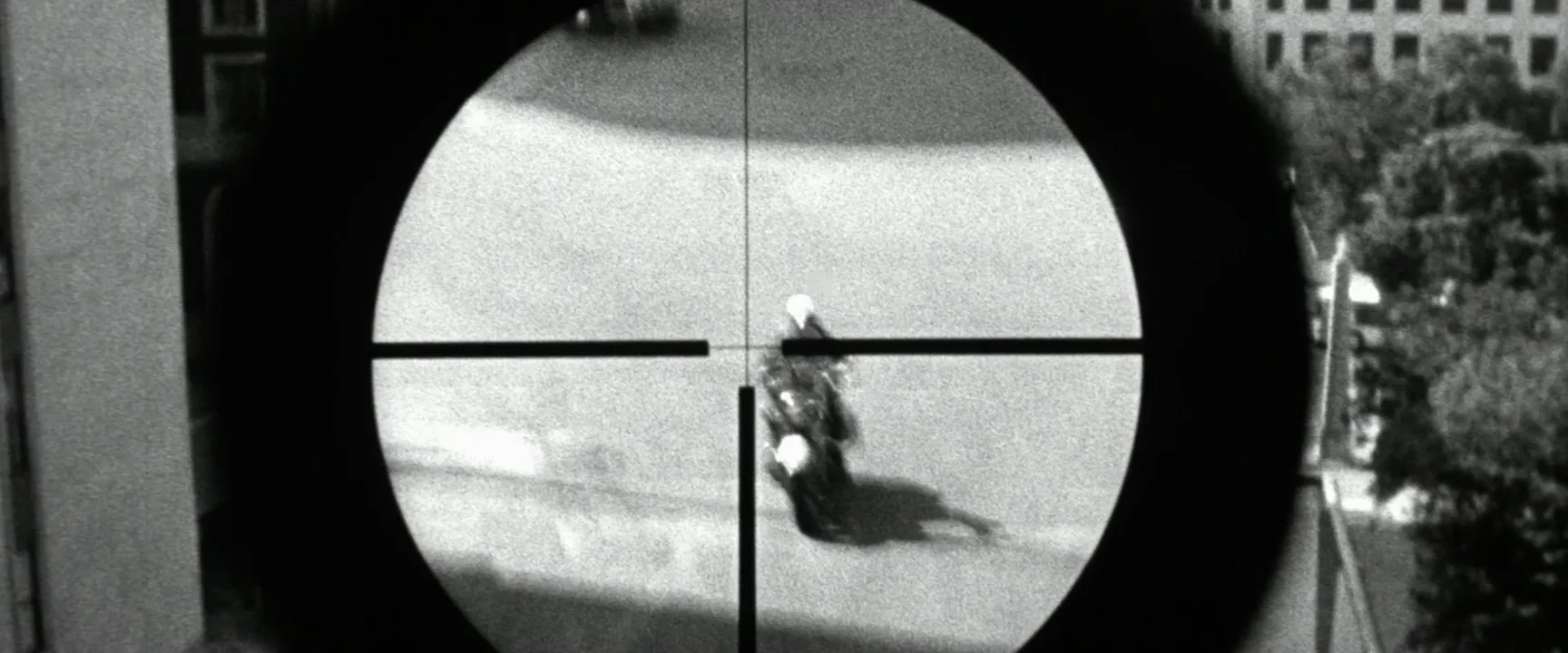
- Espionage and crime: scopes, binoculars and parked cars turn information into tension. The Conversation (1974) opens with a long-lens surveillance of a crowded square.
- Drama: a secret glance through a doorway reads as longing or jealousy, and raises questions of who looks at whom, the territory of the male gaze.
How to shoot a voyeur shot
Lens and distance. Go long, 85–200mm on full frame, from across a street, room or field. A telephoto lens compresses space and flattens the subject against their surroundings.
Obstruction. Put a real object 30–100 cm from the lens: blind slats, a door edge, leaves, a car pillar. At T2–T2.8 it melts into soft shapes that make a frame within a frame. Let it cover 30–60% of the image.
Height. Match an imagined watcher: seated in a car (about 110 cm), crouched in bushes (60–80 cm), or high in a window across the street.
Blocking and light. Give the subject a private task (counting money, a phone call, crying) with the eyeline away from the lens. Keep them in the brighter space and the watcher's side dark.
Movement and sound. Stay still or creep: a slow lateral drift behind foreground layers, light handheld breathing on a long lens. Muffle the subject's dialogue as if heard through glass.
Surveillance, scope and binocular shots

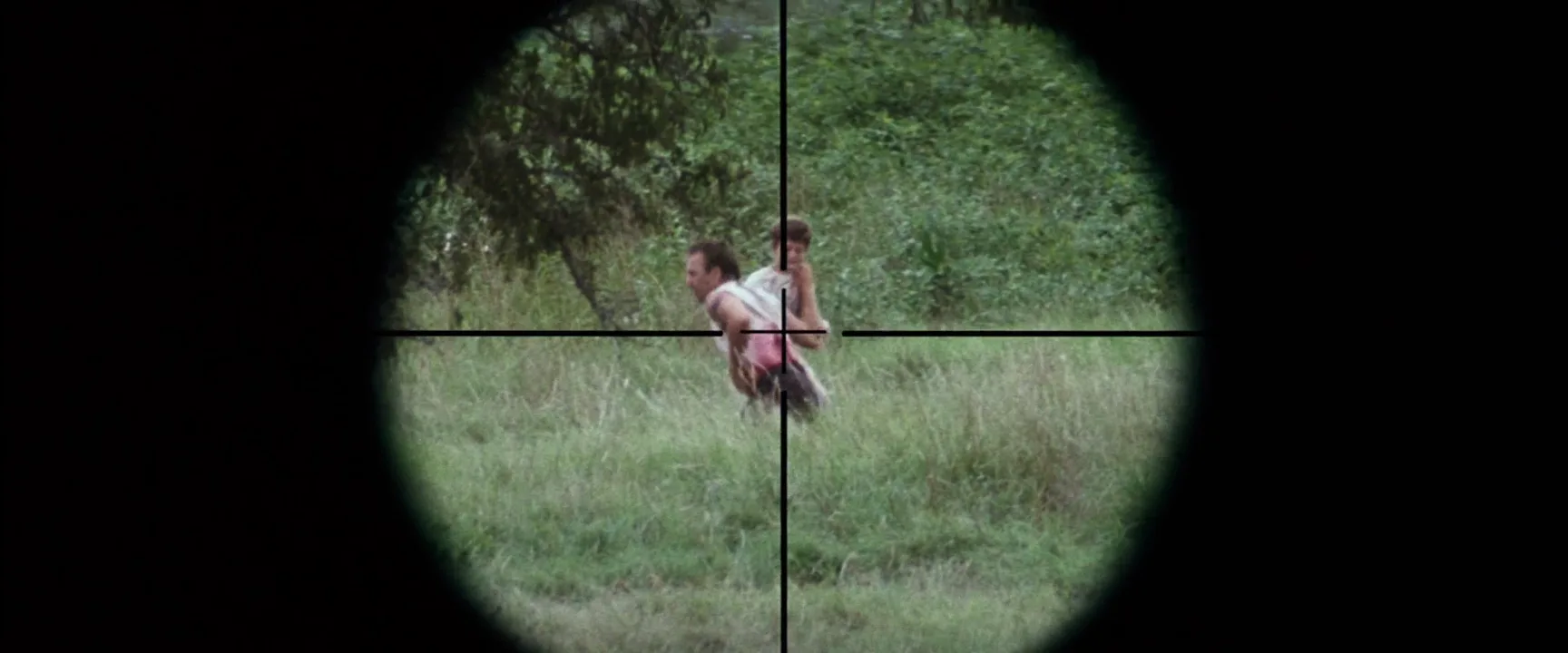
The literal version puts a device between watcher and target: a rifle scope's crosshair, a binocular matte, a CCTV monitor. It says someone is watching, often someone who means harm. Keep the matte consistent within a sequence and add slight handheld drift.
Voyeur shot vs. POV shot
A POV shot shows what a specific character sees, from their eye position, usually after a cut of them looking. A voyeur shot is about the subject's unawareness, not about whose eyes we borrow. They overlap at a peephole. But a voyeur shot can have no watcher at all: when the camera itself lurks behind curtains, the audience is the only peeper, which is often creepier.
Voyeur Shot in motion
2 clipsThese loops show voyeur shot in motion, where a still frame can't: watch how the effect plays out over a few seconds.
Voyeur Shot stills
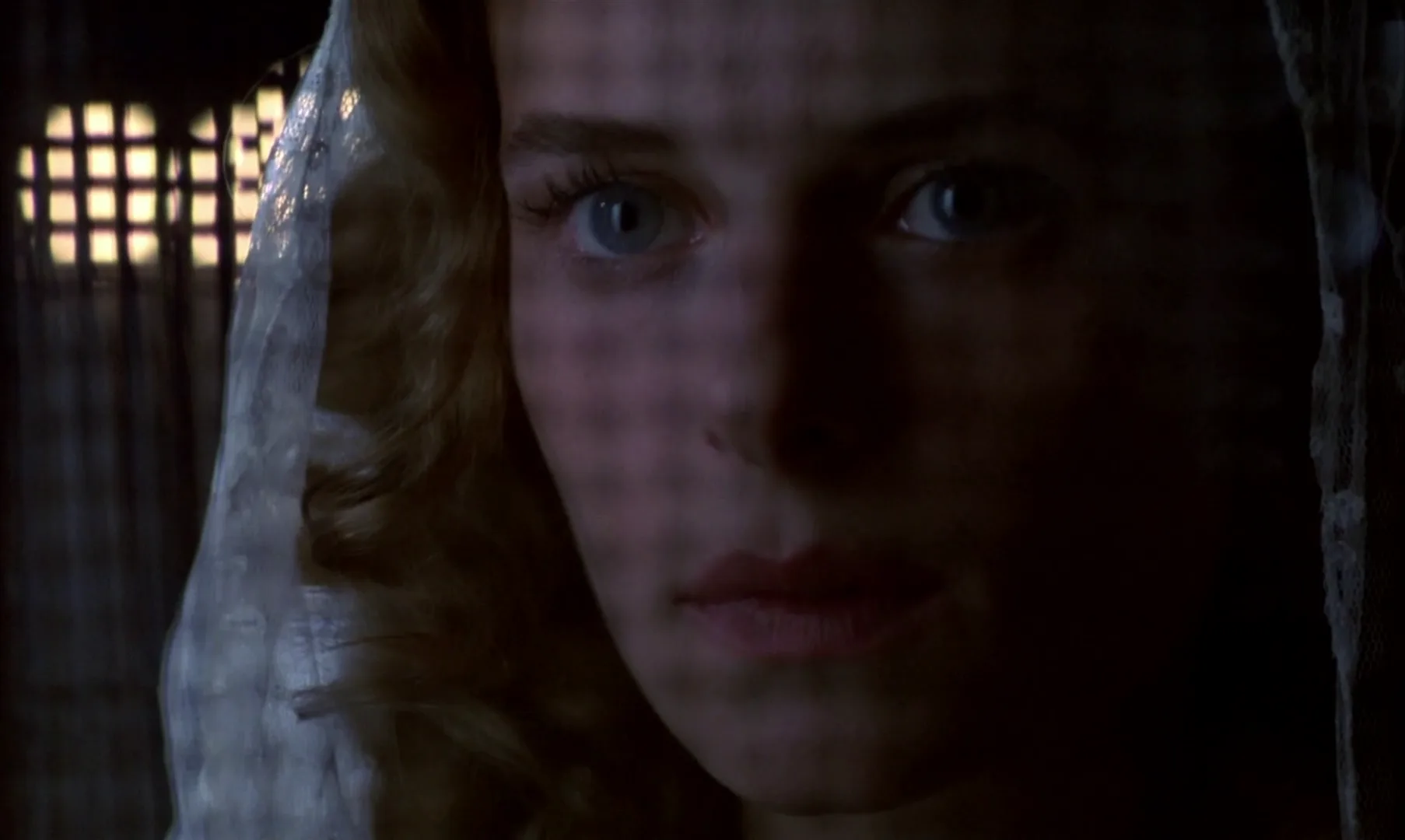
6 framesThe camera hides or keeps its distance; the subject has no idea.
How to create a voyeur shot with AI
4 promptsImage models default to a clean portrait with the subject posing, so a voyeur prompt has to build the barrier, the distance and the unawareness on purpose. In FlashBoards, make the start frame in Nano Banana 2 Lite, try a second take in GPT Image 2.5 and animate recipe 1 with MiniMax H3 Max Turbo, keeping the takes side by side on one board. The fourth prompt re-shoots a real film shot from a text description alone, and the original plays next to the result so you can compare.
Voyeur shot through half-open venetian blinds, soft out-of-focus dark slats covering the left half of the frame. Across a dim street, a lit apartment window: a woman in her forties with a short silver bob and a mustard cardigan counts cash into envelopes at a kitchen table, looking down, absorbed. Long 135mm lens, compressed perspective, warm tungsten window, cold blue night, cinematic still.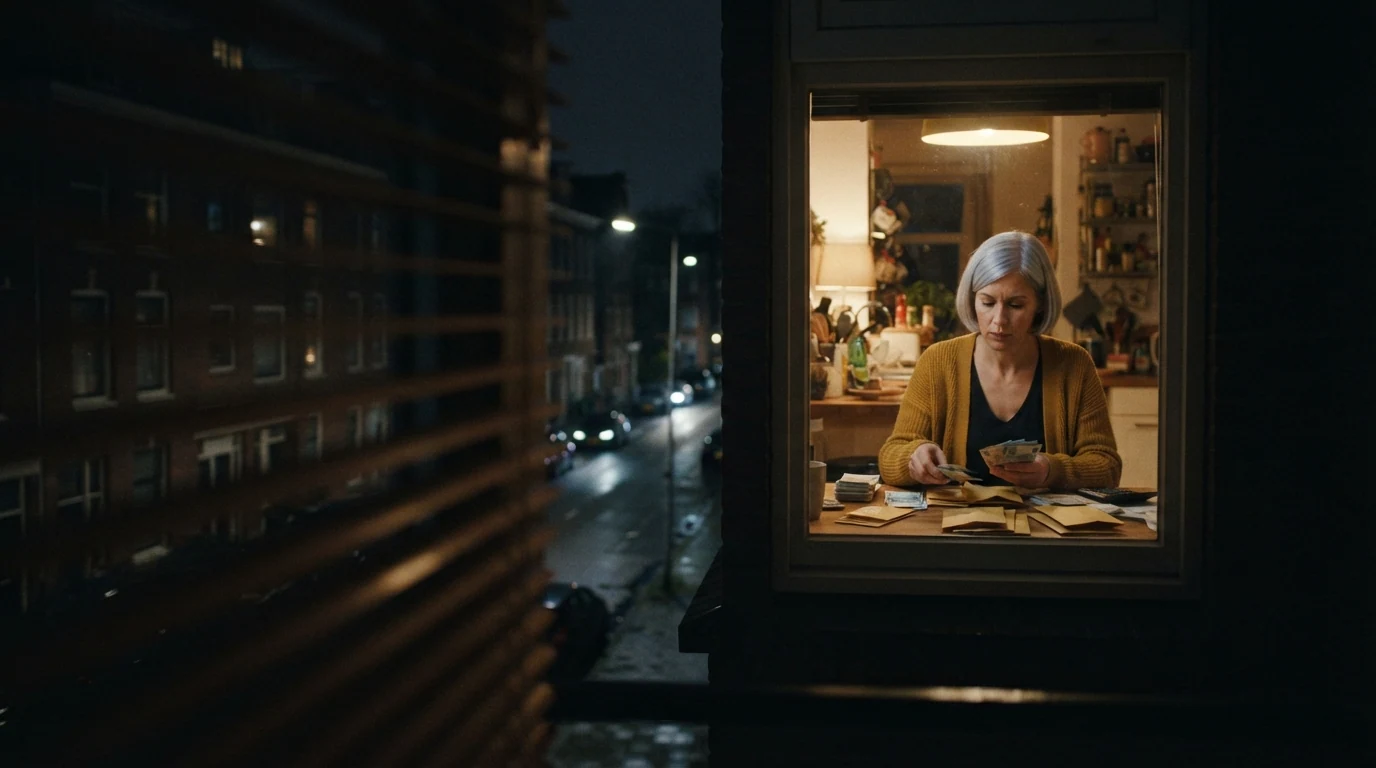
Slats covering the left half builds the barrier; across a dim street and 135mm add distance. Looking down, absorbed keeps her eyeline off the lens, and the warm window puts her in the light, us in the dark.

Open FlashBoardsHidden surveillance shot from inside a parked car at night, looking through the gap between the dark dashboard and the roof, windshield edge soft in the foreground, raindrops on the glass. Across a wet parking lot, a tall young man with a shaved head and a red bomber jacket talks on a phone under a sodium streetlight, turned three-quarters away. Long-lens compression, orange and teal palette.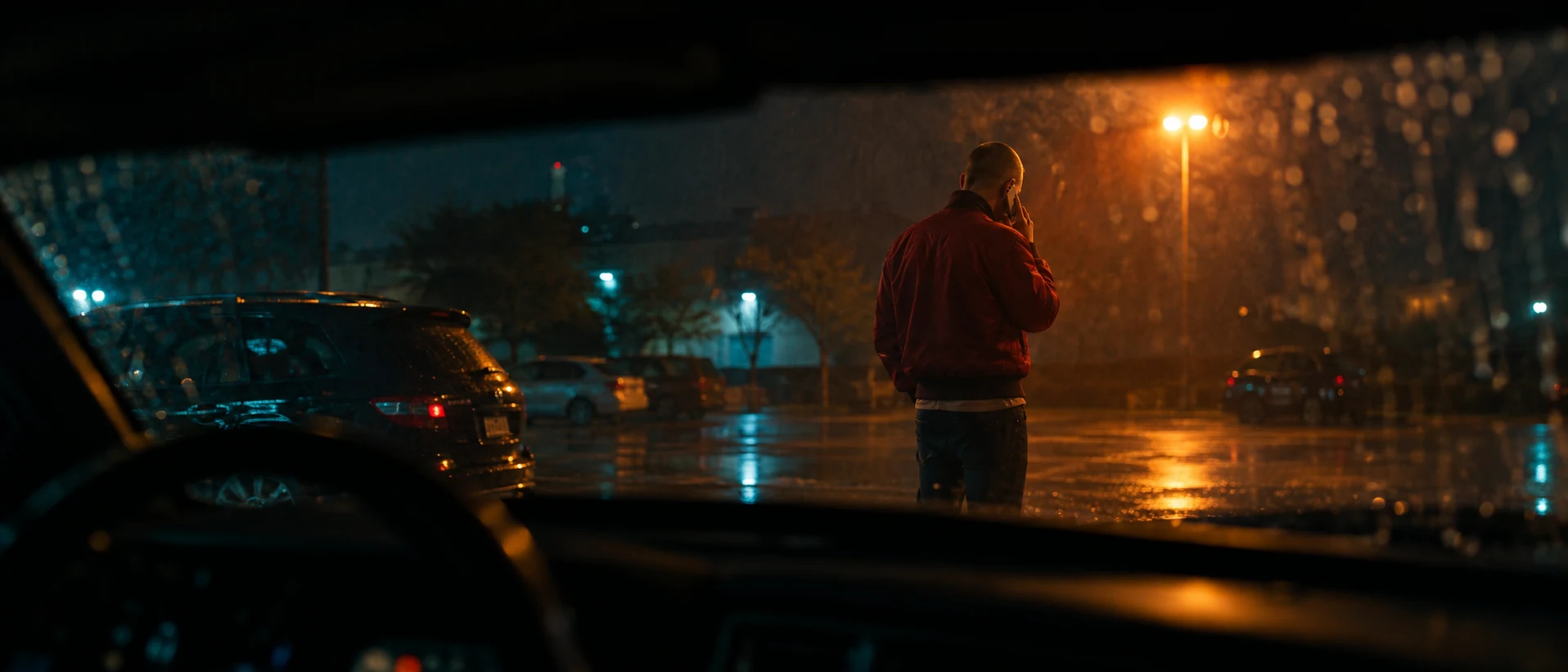
A stakeout instead of a window. The gap between the dashboard and the roof makes a letterbox inside the frame; turned three-quarters away and the phone call keep him unaware.
Open FlashBoardsCamera: static long-lens view through the blinds with a slight handheld sway from the first frame, then a very slow drift right so more slats slide across the foreground. Action: The woman keeps counting bills into an envelope with quick hands. She seals it and adds it to a stack at the table edge. Then she stands and walks toward the back of the room, eyes on the envelopes, as the slats partly cover her.Handheld sway from the first frame starts motion immediately and feels like a person holding the camera. The drift right slides slats across her like someone peering, and eyes on the envelopes keeps her from turning to the lens.
Open FlashBoards{
"output": "Full-screen live-action 35mm film footage in the style of A Perfect World (1993), one continuous handheld shot from its very first frame: a sniper's point of view through a rifle scope. The frame is black except for one round scope circle left of centre, soft dark vignette at its rim, thin black crosshairs across it. Inside the circle, far away across a meadow of tall green grass with a leafy tree on the upper left, overcast soft daylight, muted greens.",
"characters": {
"S1": {
"name": "the man",
"look": "far away in the scope, a man in his late thirties, short hair, light shirt, jeans, unaware of being watched",
"voice": "silent"
},
"S2": {
"name": "the boy",
"look": "a small boy of about eight, white T-shirt, bare-headed",
"voice": "silent"
}
},
"shots": [
{
"shot": 1,
"camera": "handheld long-lens scope view, locked on the pair, small unstable wobble and a slow drift right following them; the crosshairs stay on the man's back",
"voice": "silence: nobody speaks in this shot, no voice at all",
"action": [
"BEGINNING: alive from the first frame, the boy stands in the grass left of the crosshair centre and the man crouches in front of him, back to the boy, both facing screen right, neither looks toward the camera",
"THEN: the boy climbs onto the man's back, both arms around his neck; the man grips the boy's legs with both hands at his hips",
"THEN: the man rises with the boy riding piggyback and starts walking through the tall grass toward screen right, heads down, the crosshairs sliding across their backs",
"END: the man carries the boy on through the grass toward screen right, the scope drifting right to keep them in the circle, crosshairs on them, both still unaware"
],
"dialogue": []
}
],
"sound": {
"ambience": "wind in the grass and distant birds, the faint breath of the person holding the rifle close to the lens",
"speech": "no words in this video; the only human sounds are breaths and movement",
"never_spoken": "no narration and no voice-over: the descriptions, performance notes and step words of this prompt are never spoken aloud",
"music": "a film score under the scene, always below the voices: a low sustained string drone with a slow, uneasy pulse",
"subtitles": "none"
}
}Remakes the rifle-scope shot from A Perfect World (1993): the prompt carried over the circular mask, the crosshairs, the piggyback beat and the drift right.
The black frame with one scope circle is the barrier, far away across a meadow is the distance, and neither looks toward the camera keeps them unaware. The handheld wobble tells you someone is holding the rifle.
Open FlashBoardsCommon mistakes
- The barrier vanishes. Models shrink blinds to a thin border. State how much frame they cover and that they are out of focus in the foreground.
- The subject poses. Give a task and an eyeline: looking down at, turned three-quarters away.
- Too close. Without across the street and a long focal length, you get an ordinary medium shot.
Keep the reference frames, prompts and every generated take side by side — images and video in one canvas.
FAQ
4 questionsWhat is a voyeur shot in film?
A voyeur shot observes a character who doesn't know they are being watched, usually through a foreground barrier such as blinds, a door gap or leaves, or from far away on a long lens. It places the audience in the position of a hidden observer, which creates tension, unease or guilty intimacy depending on the scene.
What is a voyeuristic camera?
A voyeuristic camera behaves like an unseen spy: it hides behind objects, keeps its distance, lingers on private moments and never gets a look back. It can stand in for a character who is watching, or be unmotivated, so the film itself seems to spy. Rear Window (1954) is the textbook example.
What lens is best for a voyeur shot?
Usually a long lens, around 85–200mm on full frame, used from a distance. It compresses space, keeps the camera far from the subject and turns objects near the lens into soft shapes. For a close door-gap or peephole version, a normal lens right behind the gap works, as long as the barrier stays visible in frame.
Is a surveillance shot the same as a voyeur shot?
A surveillance shot is a type of voyeur shot where the watching is technical or official: CCTV, scopes, binoculars, a stakeout car. It usually signals investigation or threat rather than desire. Both depend on an unaware subject and a hidden viewpoint, so the staging and lens choices are nearly the same.
Related terms
5- POV ShotCamera Angles
A POV shot shows exactly what a character sees by placing the camera at their eyes — usually right after a shot of them looking — so the audience shares their perspective, including movement, obstruction or distortion.
- Frame Within a FrameComposition & Framing
Frame within a frame uses a doorway, window, mirror, arch, corridor or shadow inside the shot as a second border around the subject, isolating it, adding depth or suggesting entrapment.
- Depth LayeringComposition & Framing
Depth layering builds a shot in distinct planes — foreground, midground and background — each holding something meaningful, so the flat screen gains volume and several actions or ideas can be read at once.
- Telephoto LensLenses, Focus & Exposure
A telephoto (long) lens has a narrow angle of view that magnifies distant subjects; used from far away it compresses space, stacking the background onto the subject — the look of long-lens crowd shots, heat-haze chases and isolated faces.
- Male GazeFilm History & Theory
The male gaze, a term from Laura Mulvey's 1975 essay 'Visual Pleasure and Narrative Cinema', describes how classical cinema frames women as objects of heterosexual male looking — through POV, fragmenting close-ups and camera lingering on bodies.
Further reading
Laura Mulvey, Visual Pleasure and Narrative Cinema (Screen, 1975). François Truffaut, Hitchcock/Truffaut (1967).