 FlashBoards Learn
- Learn
- Composition & Framing
- Frame Within a Frame
Composition & Framing · Film language
Frame Within a Frame
Also called: frame within frame, internal frame, natural frame
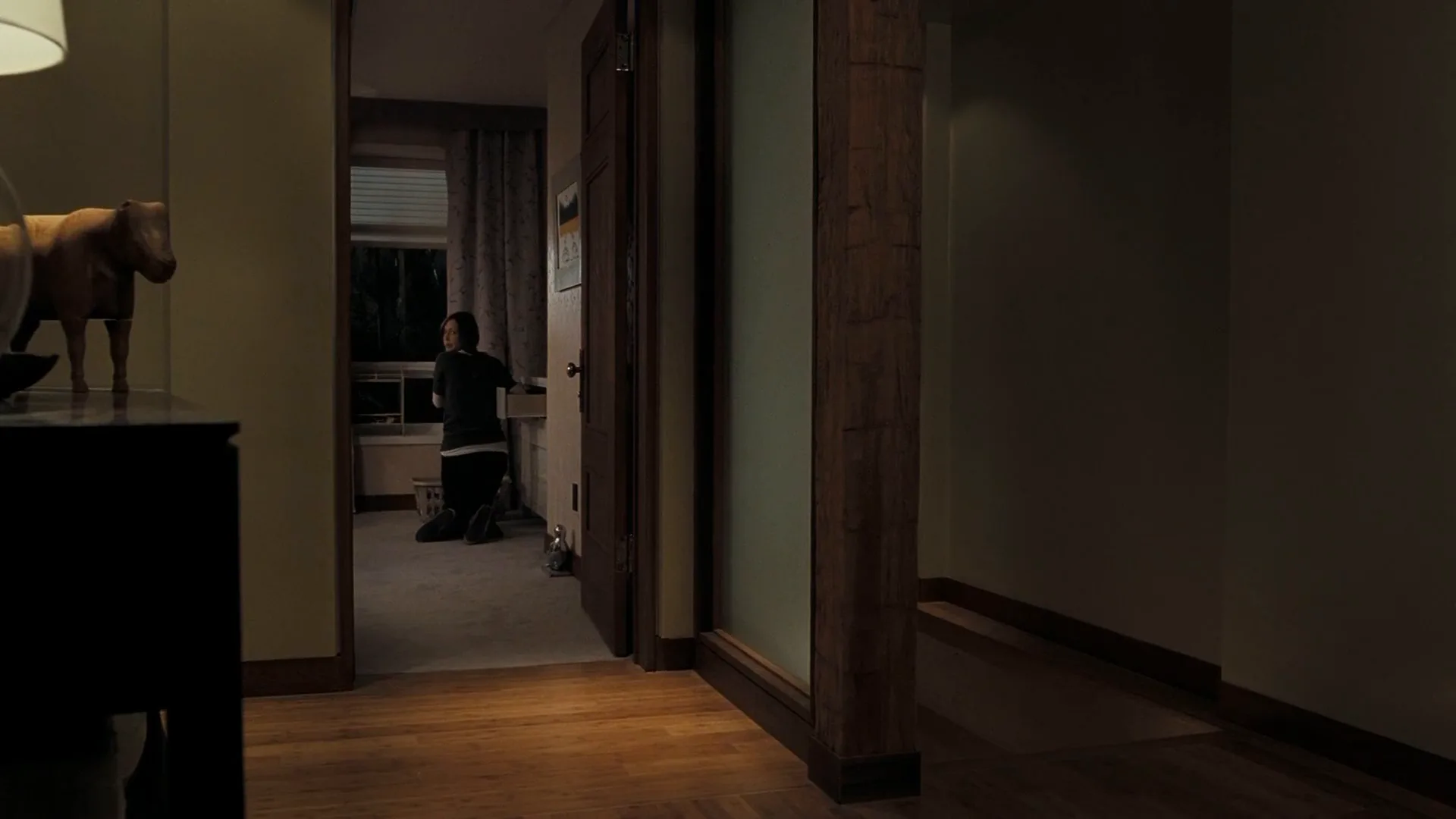
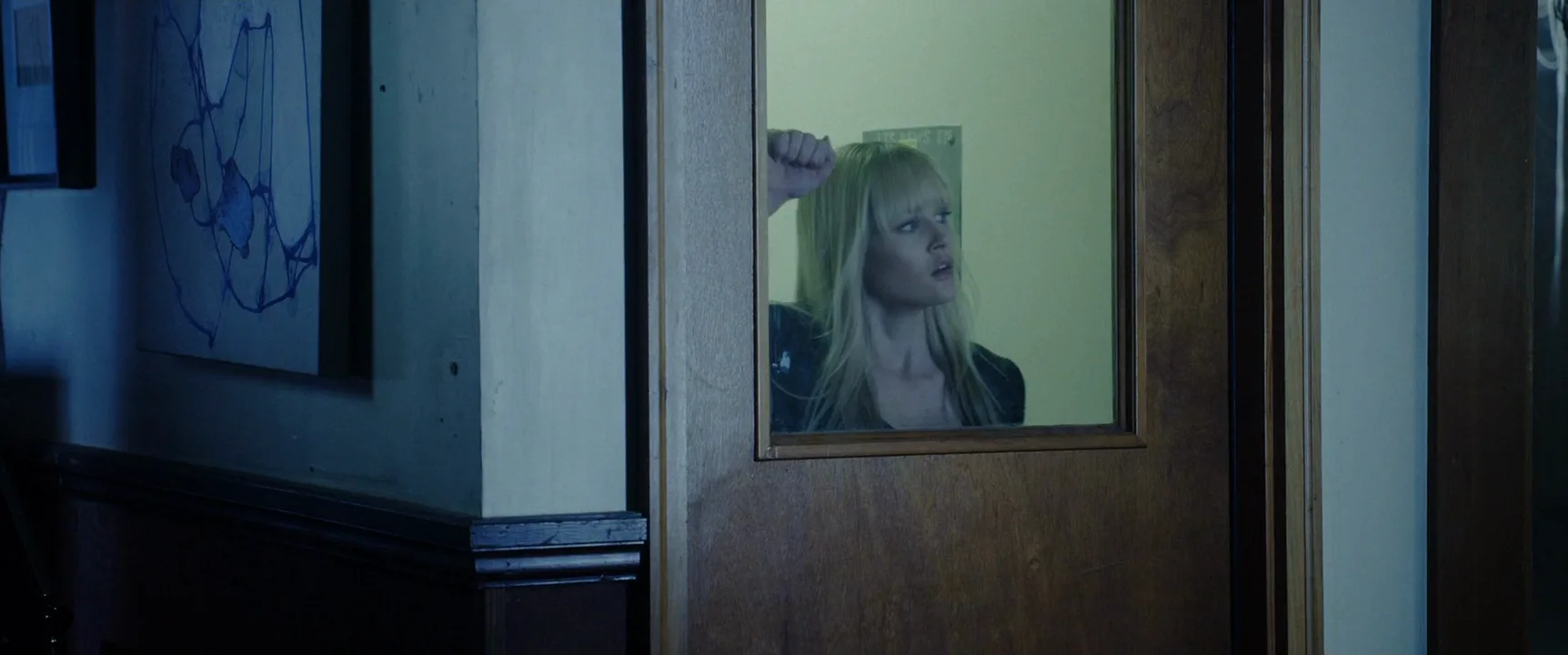
A frame within a frame uses a doorway, window, arch, corridor or mirror inside the shot as a second border around the subject. The inner frame tells the eye where to look, adds depth, and often comments on the character: shut in, shut out, watched, or standing on a threshold.
- What it does
- Draws a second border around the subject, isolating it and adding depth to a flat image.
- Use it when
- A character is trapped, excluded, observed or about to cross from one world into another.
- Watch out
- The inner frame must organize attention; a doorway that merely sits in the background is just set dressing.
- Try this prompt
Frame within a frame, camera inside a dark room looking through an open doorway, figure silhouetted against a bright desert, 35mm, deep focus
What is a frame within a frame?
Every shot already has one frame: the edge of the screen. A frame within a frame adds a second one from the set or location: a doorframe, a window, an arch, a corridor narrowing to a lit room, a car window, even a hard-edged patch of light. The subject sits inside it; everything around goes darker or less important. It is also called an internal or natural frame.
The test: remove the doorway and the shot should lose its focus. If nothing changes, the door was decor. As a core tool of film composition, it almost always creates depth layering: frame, subject and the world beyond in separate planes.
Why do filmmakers use a frame within a frame?
Isolation. The inner frame cuts the subject out of a busy image, so the eye finds even a tiny figure in a wide shot.
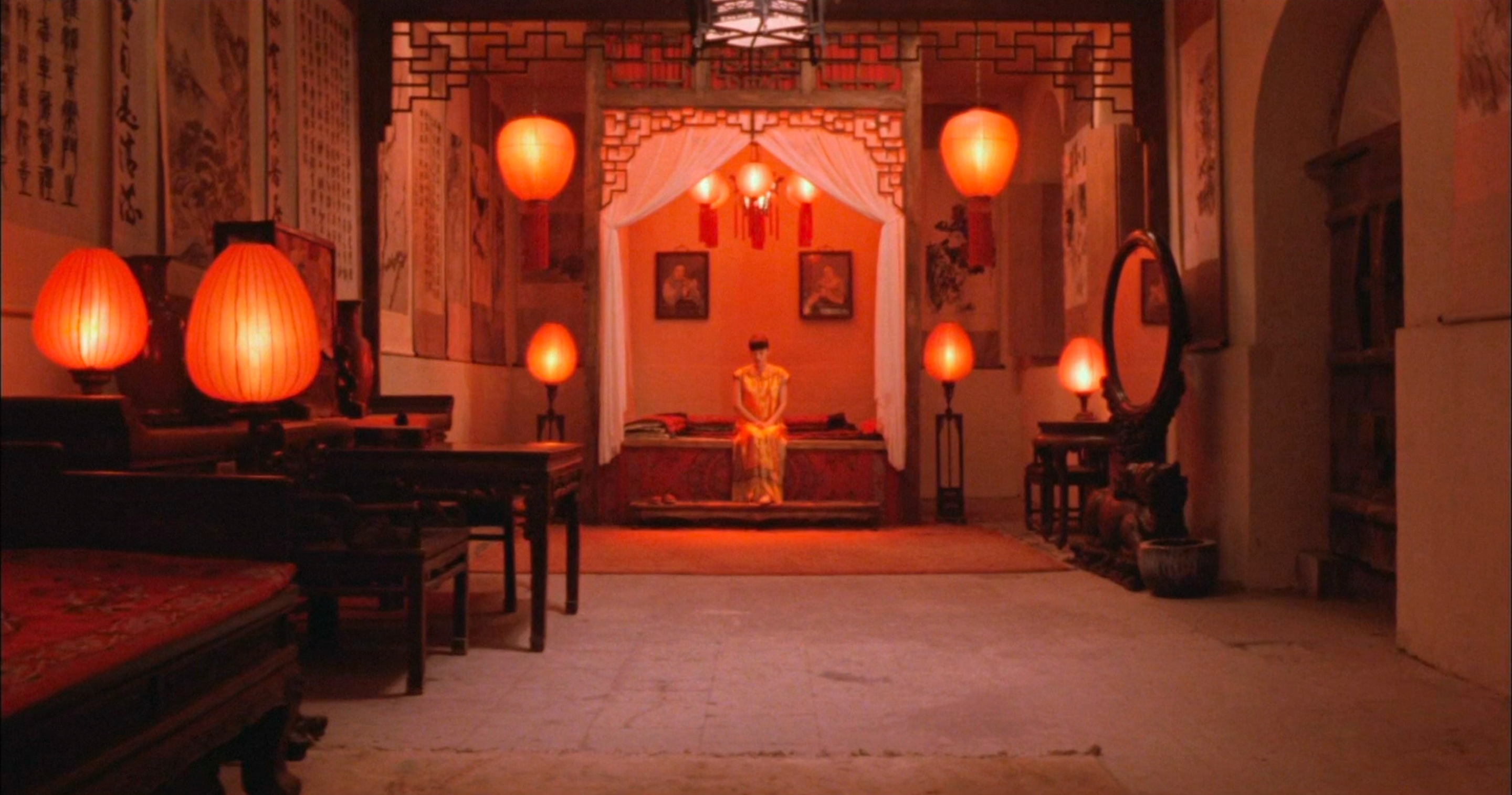
Entrapment. Raise the Red Lantern (1991) keeps its wives inside courtyards, gates and nested doorways until the architecture becomes the prison.
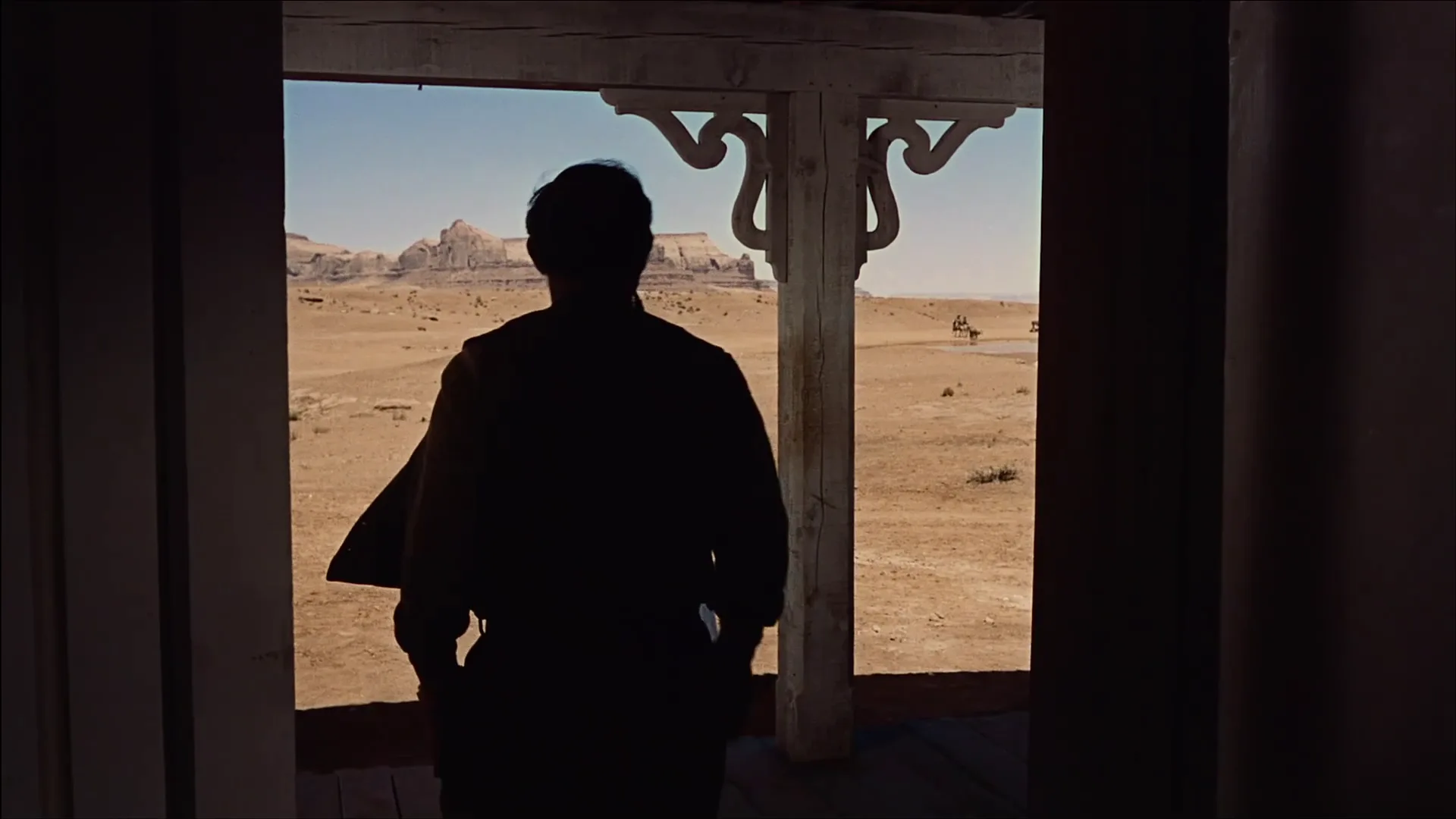
Exclusion. The Searchers (1956) opens and closes on a dark interior looking out through a door at the desert; at the end the hero stays outside. The Godfather (1972) ends with a door closing on Kay.
Watching. A window or half-open door turns the audience into an observer, the principle behind the voyeur shot and Rear Window (1954).
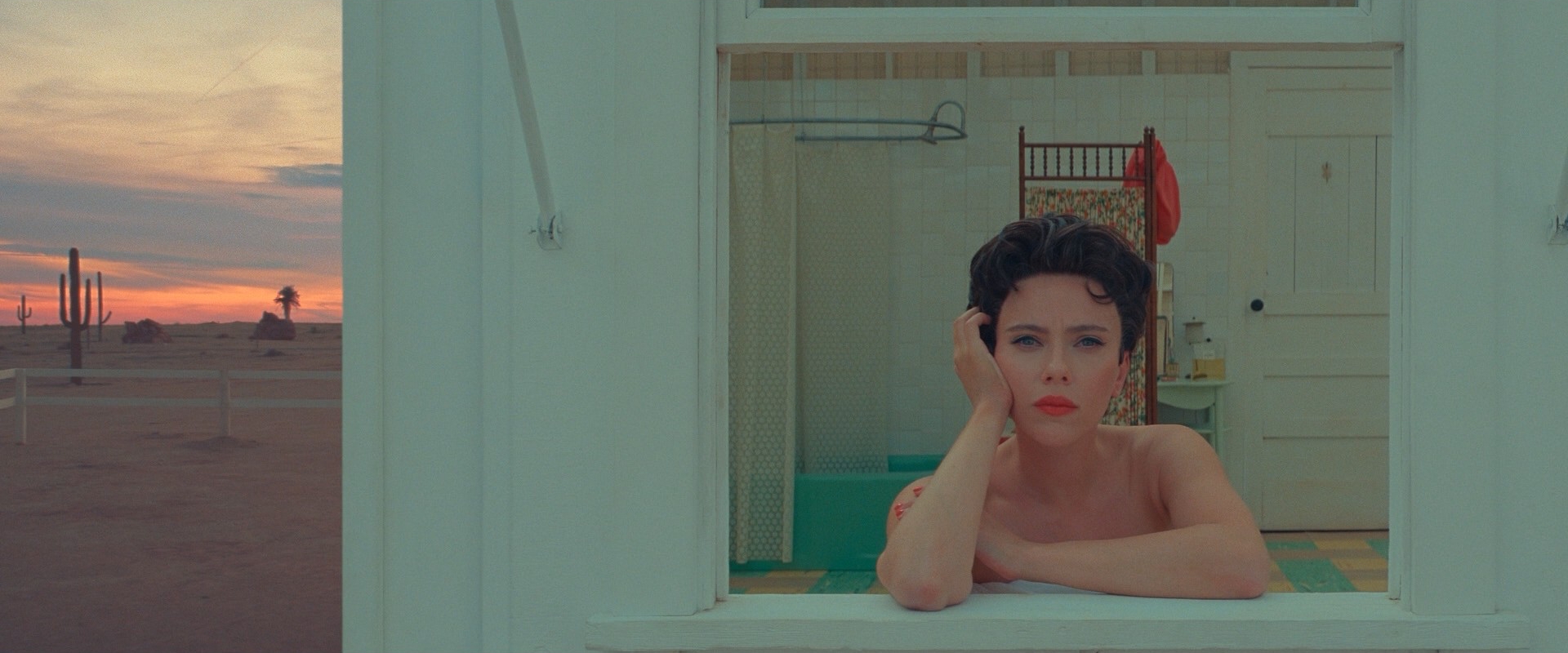
Order. Centered, an inner frame locks the shot into symmetry, a Wes Anderson signature.
How to shoot a frame within a frame
Find the shape. Doors, windows, stair gaps, arches, shelving, car windows. Put the opening between lens and actor.
Lens. A 25–40mm lens from several meters back keeps frame and room readable; stop down to f/5.6–f/8 for deep focus. An 85mm compresses the frame onto the subject and tightens the enclosure.
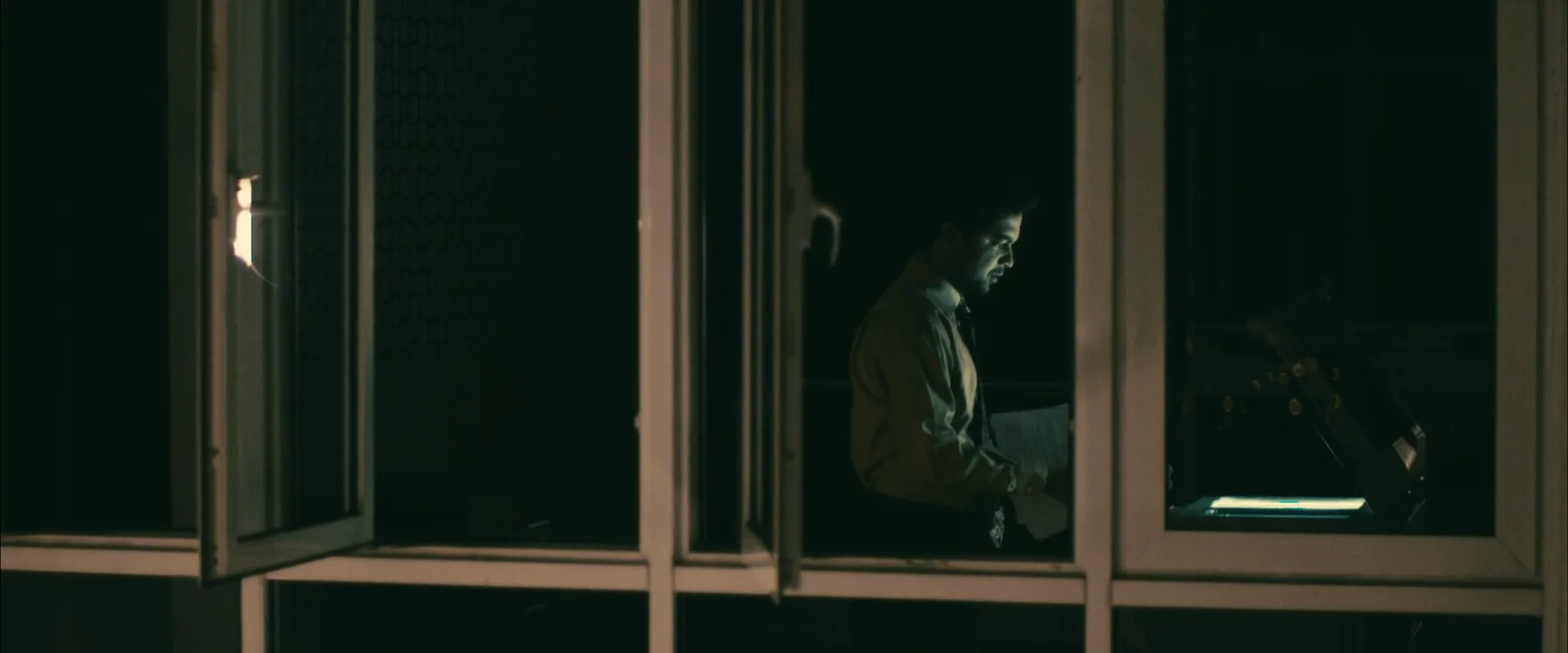
Exposure. Keep the inner frame 2–4 stops darker than what it holds, often turning the figure into a silhouette. At night, reverse it: a lit window in a dark facade.
Placement. Center the opening for formality and confinement, push it to a third for an observational feel. Keep head and shoulders inside the border.
Blocking. Crossing the threshold is the payoff: stepping in, stepping out, closing the door.
Window shot
The window shot is the most common variant. Panes and mullions split the image into smaller frames; glass adds a reflective layer, so the street can float over a face; and the window marks a boundary the character can see through but not cross.
Shot from outside, it makes the audience a watcher looking into a private room; from inside, it becomes a view the character longs for or fears. For reflections, angle the glass 20–30 degrees to the lens and keep the interior darker than the reflected scene.
Frame within a frame vs. screen in screen
A frame within a frame is architecture: the doorway surrounds a subject in the same space and moment as the camera. Screen in screen puts a second image in the shot, a TV, phone or monitor showing its own picture, often from another place or time. A mirror shot sits between them: a physical frame showing a second view of the same room.
Frame Within a Frame examples in film
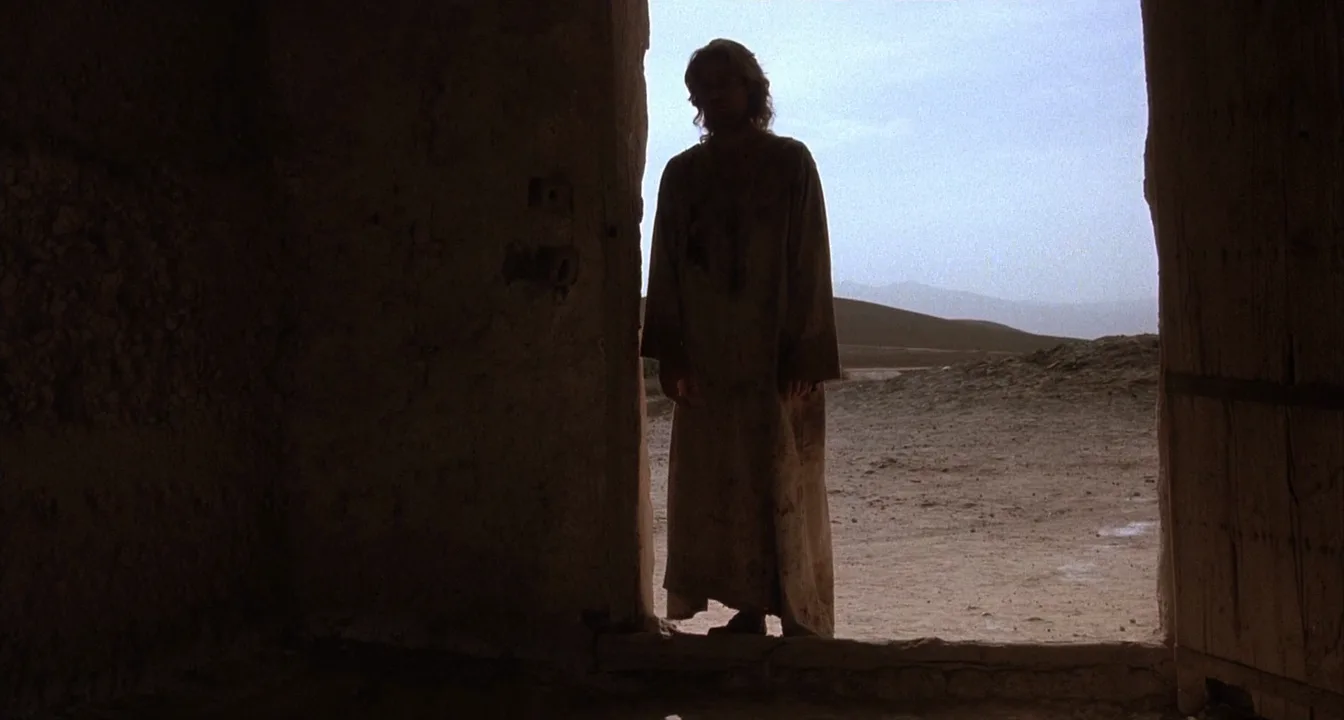
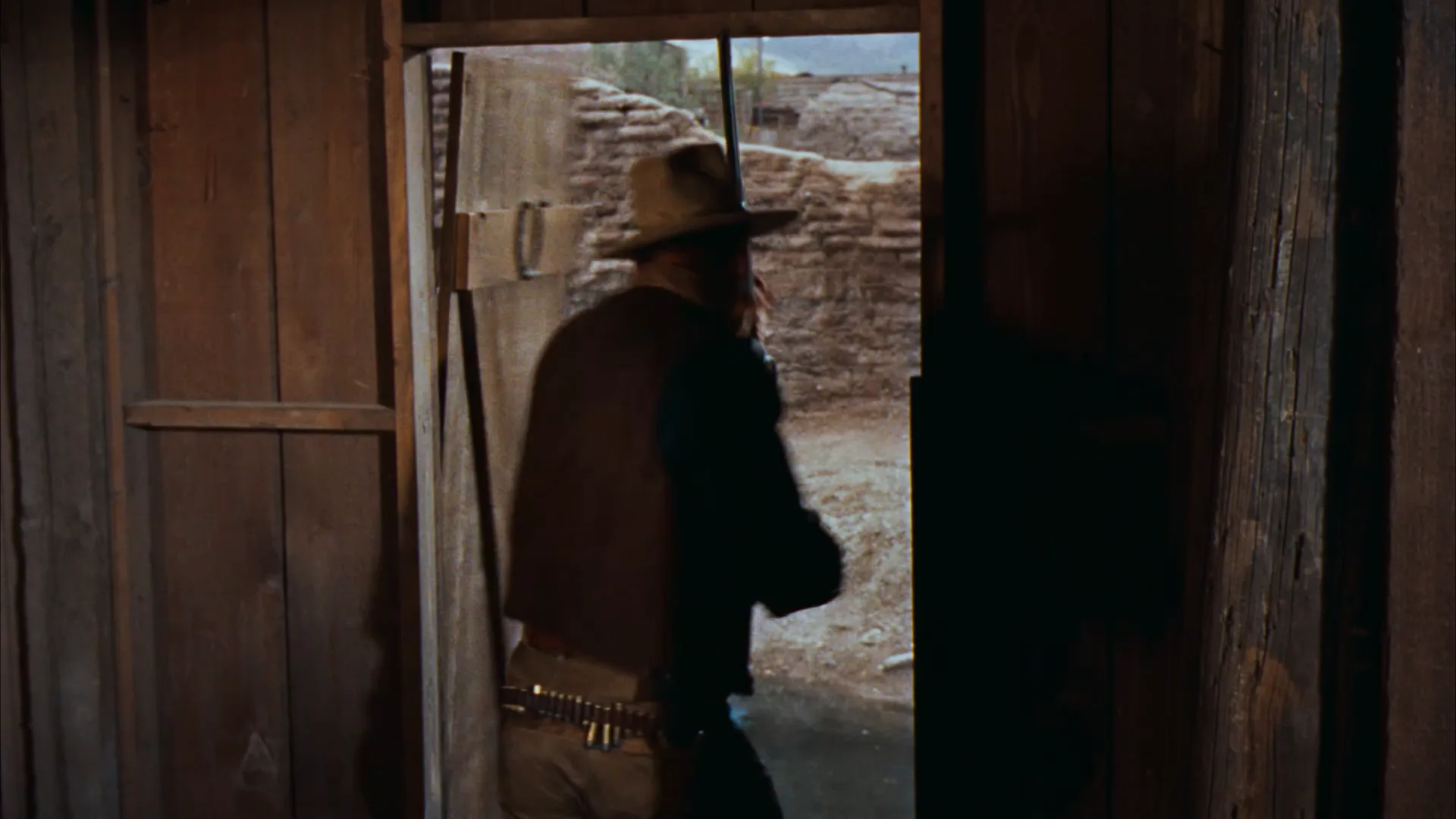
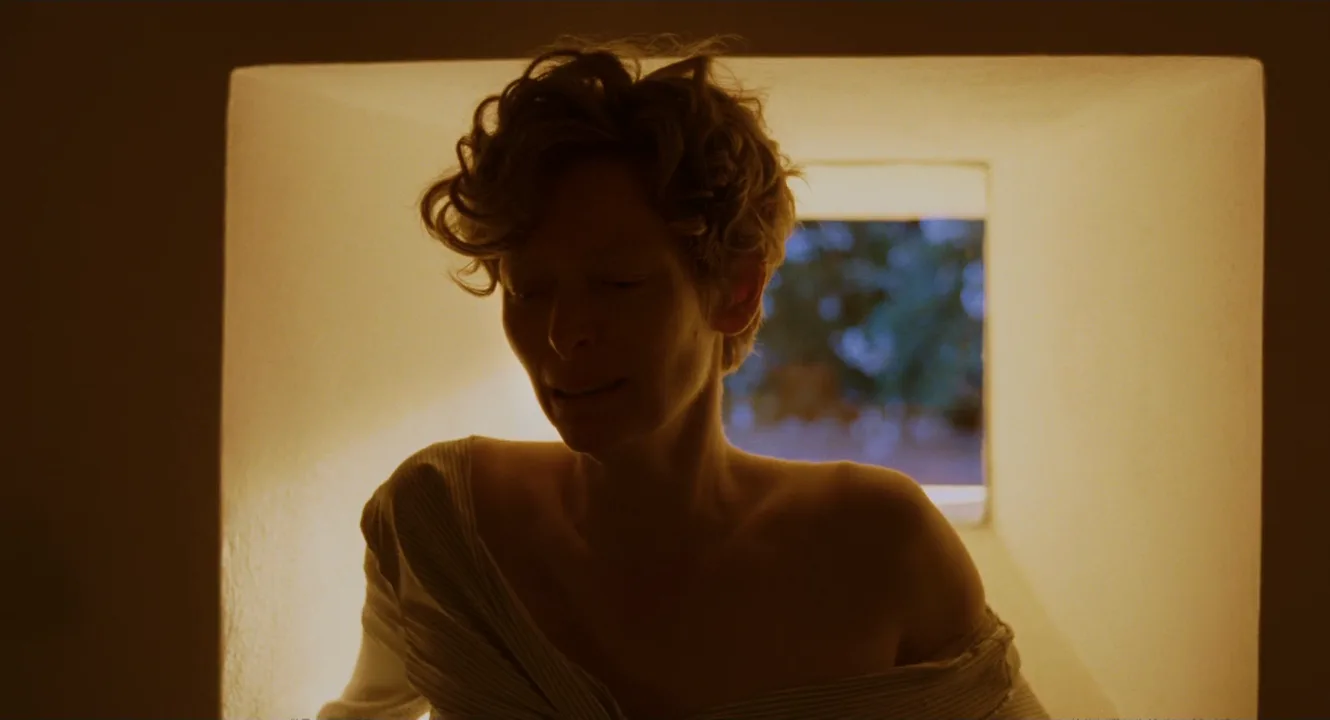
9 framesDoorways, windows and nested rooms across seven decades. Exposure contrast makes each inner border readable.
How to create a frame within a frame with AI
4 promptsImage models place a subject well but rarely think in layers, so the prompt must build the inner frame: where the camera stands, what the opening is, how much of the image it fills and how dark its edges are. Keep references and takes on one FlashBoards board to compare them. The fourth prompt re-shoots a real film shot from a text description alone, and the original plays next to the result so you can compare.
Frame within a frame. Wide shot from inside a dark adobe farmhouse looking out through an open wooden doorway that fills the center third of the image; walls and floorboards around it fall almost to black. In the doorway, a fictional woman in her fifties with close-cropped silver hair and a long rust-colored wool coat stands in silhouette, facing a bright desert of ochre dirt and red mesas. Eye level, 35mm lens, deep focus, exterior four stops brighter than the room.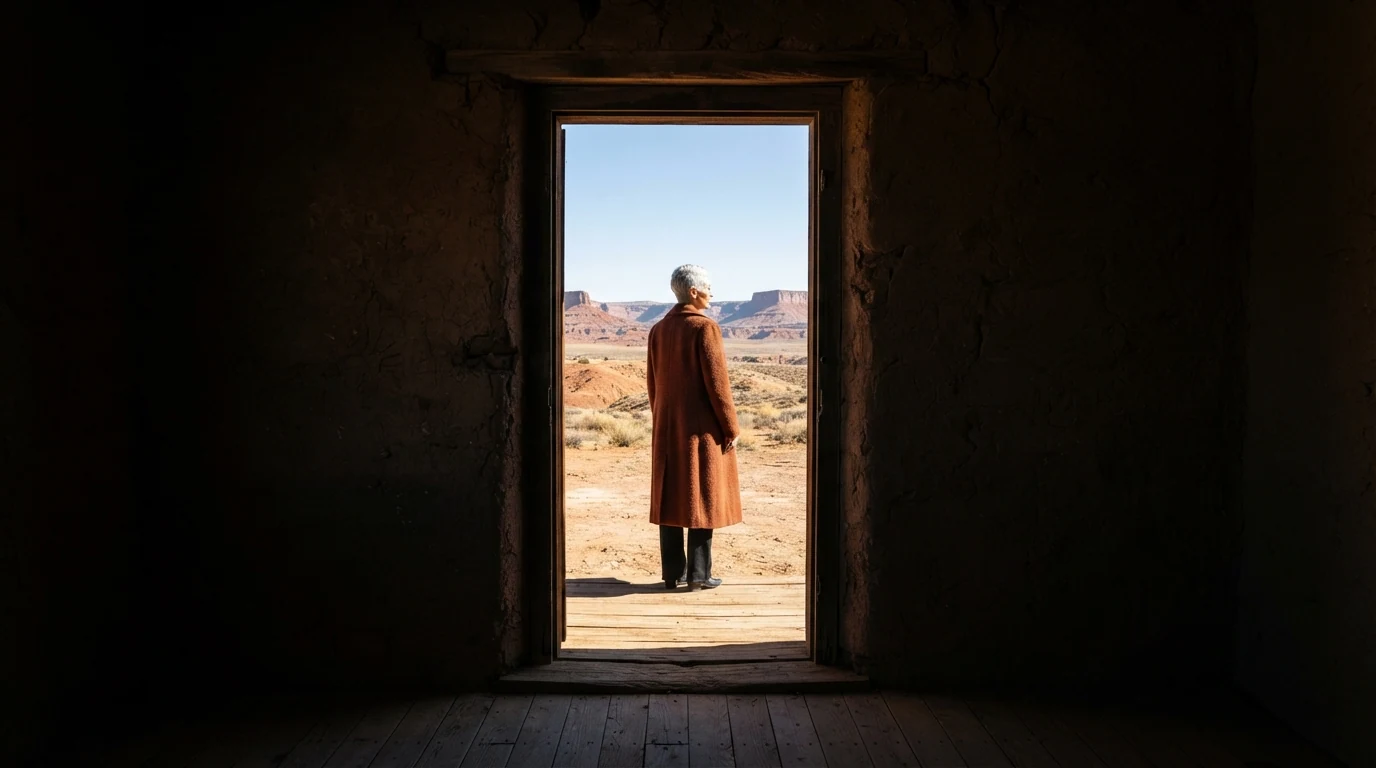
Inside, looking out through an open doorway puts the opening between lens and subject; center third fixes its size; almost to black and four stops brighter make the border read.
Open FlashBoardsFrame within a frame, window shot at night. From across a narrow street, 85mm lens: one lit second-floor window of a dark brick building on the right third, the rest dark brick. Inside, a fictional man in his thirties with a shaved head, thick black beard and mustard cardigan sits alone at a kitchen table under a green-shaded lamp. Warm tungsten inside, cold blue street light outside.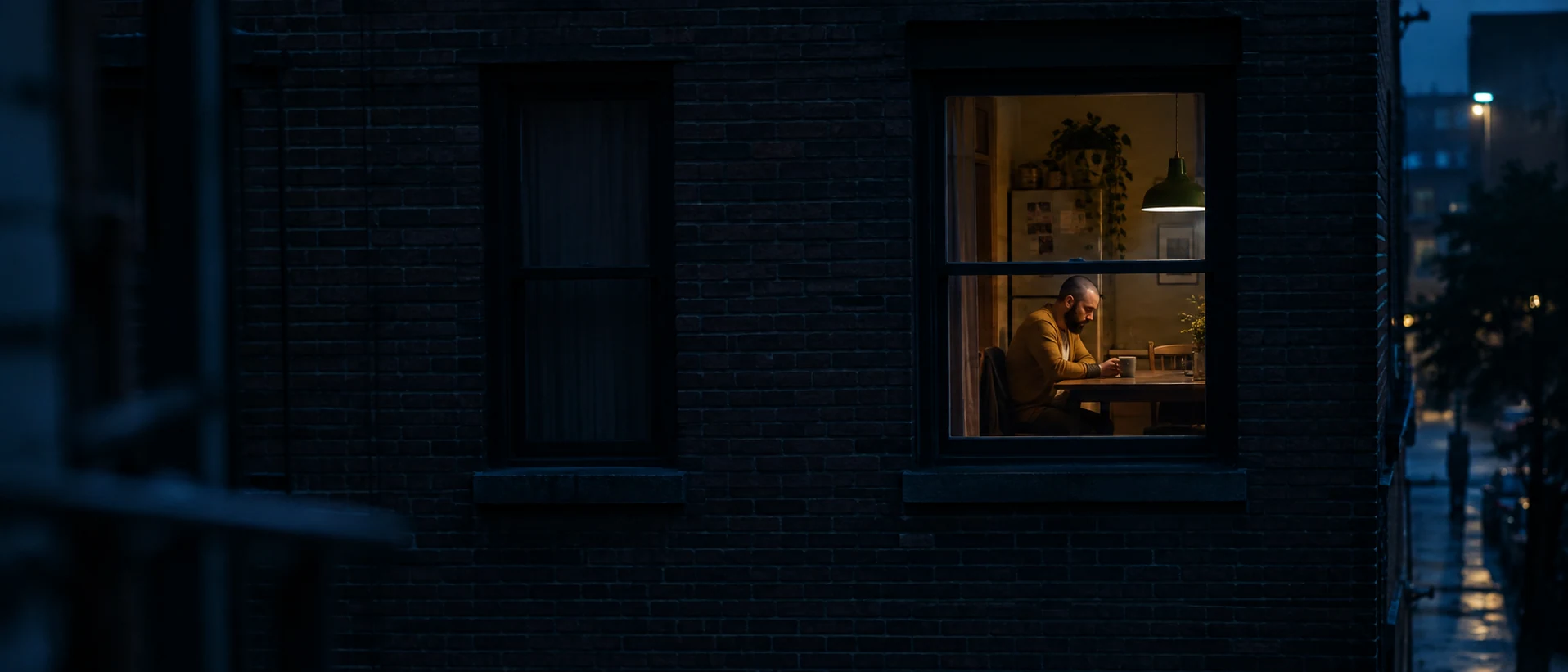
The reverse version: a lit window in a dark facade, seen from outside, so the viewer becomes a watcher. 85mm flattens the wall; the warm-cold split keeps the panes the only bright shape.
Open FlashBoardsCamera: a slow, steady push forward from the dark room toward the doorway, about one step over the shot; the doorframe grows but stays fully in frame. Action: The woman in the rust-colored coat is already walking out through the doorway. She steps onto the dirt, keeps walking toward the mesas, and shrinks to a small figure in the center of the doorway as dust drifts in the light.The walk starts in the first frame, so the shot is alive at once. Stays fully in frame keeps the camera from pushing through the opening.
Open FlashBoards{
"output": "Full-screen live-action shot from The Searchers (1956) from its very first frame: one continuous locked-off shot, no cuts. 1950s Technicolor 35mm western look, hard midday desert sun, saturated ochre earth and pale blue sky with red mesas on the horizon, the interior of the ranch house in near-black shadow.",
"characters": {
"S1": {
"name": "Mrs. Jorgensen, played by Olive Carey",
"look": "sturdy middle-aged frontier woman seen only from behind, gray-brown hair pinned up in a bun, long gray-blue cotton dress, long white apron tied in a bow at the back",
"voice": "silent"
},
"S2": {
"name": "Lars Jorgensen, played by John Qualen",
"look": "short stocky older rancher seen only from behind, bareheaded, thin gray hair, olive-brown work shirt, dark vest, dark trousers",
"voice": "silent"
}
},
"shots": [
{
"shot": 1,
"camera": "static zero: locked-off at eye level from deep inside the dark ranch house, 35mm lens, deep focus. An open doorway fills the left and centre of the image: black plank wall on the left edge, a dark curtain and wall filling the right third. Through the doorway: a shaded porch with its roof beam across the top, carved pale wooden scroll brackets, one square white porch post standing right of centre inside the doorway, and a bright sunlit desert plain with distant red mesas beyond. The camera does not move at all; the doorway stays exactly in place for the whole shot.",
"action": [
"BEGINNING: alive from the first frame, S1 stands in the middle of the doorway on the porch, back to camera, her right arm raised with the hand resting high on the porch post at screen right, head turned slightly right, looking out at the plain; she holds perfectly still.",
"THEN: S1 lowers her right hand from the post and sets both hands on her hips, still facing the desert, weight settling.",
"THEN: S2 enters from the screen-right edge very close to the lens as a huge black silhouette of head and shoulders, crosses right to left in front of the doorway, briefly blotting out S1, and walks away from camera out through the doorway.",
"THEN: S2 comes into the sunlight on the left side of the porch, back to camera, arms at his sides, and keeps walking slowly toward the porch edge; S1 now stands just to his right.",
"THEN: S1 raises her right hand flat to her brow to shade her eyes and stares out at the far right of the plain; S2 turns his head the same way.",
"END: S2 steps down off the porch edge and stands lower, small, left of the post; S1 keeps her hand at her brow; both are small figures seen from behind, boxed inside the dark doorway, while two tiny riders appear far away on the plain at screen right."
],
"dialogue": [],
"voice": "silence: nobody speaks in this shot, no voice at all"
}
],
"sound": {
"ambience": "dry desert wind heard from outside, boots on wooden porch planks, a faint creak of boards",
"speech": "no words in this video; the only human sounds are breaths and movement",
"never_spoken": "no narration and no voice-over: the descriptions, performance notes and step words of this prompt are never spoken aloud",
"music": "a film score under the scene, always below the voices: a gentle, wistful western string melody with a soft French horn, hopeful and aching",
"subtitles": "none"
}
}Re-shoots the porch doorway shot from The Searchers (1956): the locked-off camera, the dark room, Mrs. Jorgensen shading her eyes, her husband crossing the lens in silhouette and riders appearing beyond the frame.
The camera never moves, so the doorway stays a fixed border and all the drama is staging inside it. Mr. Jorgensen crossing the lens in silhouette shows how dark the room is, and the END phase lands both figures small and boxed in the opening.
Open FlashBoardsCommon mistakes
- The frame becomes decor. Models park the doorway to one side with the subject in front. State where the camera stands and how much of the image the opening fills.
- Flat exposure. Without a stated contrast the border vanishes. Give the ratio.
- Broken border. Say the figure stands inside the doorway or one pane.
- Camera passes through. In video, say the doorframe stays in frame.
Keep the reference frames, prompts and every generated take side by side — images and video in one canvas.
FAQ
4 questionsWhat is a frame within a frame in film?
It is a composition that uses an object inside the shot, usually a doorway, window, arch, corridor or mirror, as a second border around the subject. The inner frame isolates the subject, adds depth by separating planes, and often carries meaning: a character trapped, excluded or watched. It is also called an internal frame or a natural frame.
What does a frame within a frame symbolize?
It depends on shape and staging. A tight doorway or barred window suggests confinement. A character outside a door looking in suggests exclusion. A figure seen through a window from across the street suggests being watched. Someone in a doorway between dark and light suggests a threshold.
What are famous frame within a frame examples?
The Searchers (1956) opens and closes on a doorway looking out at the desert. The Godfather (1972) ends with a door closing on Kay. Rear Window (1954) turns every apartment window into its own frame, and Raise the Red Lantern (1991) keeps its characters inside nested doorways.
Is a mirror a frame within a frame?
Yes, when its edges visibly box the subject. But a mirror frames a reflection, a second view of the same space, often the face the character is avoiding. That is why the mirror shot is treated as its own technique, with its own lighting and camera-placement problems.
Related terms
3- Mirror ShotComposition & Framing
A mirror shot builds the frame around a mirror, showing a character's reflection — often alongside the person — to suggest a divided self, self-examination or a hidden second viewpoint, while keeping the camera out of the glass.
- Depth LayeringComposition & Framing
Depth layering builds a shot in distinct planes — foreground, midground and background — each holding something meaningful, so the flat screen gains volume and several actions or ideas can be read at once.
- Voyeur ShotCamera Angles
A voyeur shot watches a character who doesn't know they're being observed — through a window, blinds, a door gap or foliage, or from afar with a long lens — making the audience complicit in spying.
Further reading
Gustavo Mercado, The Filmmaker's Eye (Focal Press). Bruce Block, The Visual Story (Focal Press).