 FlashBoards Learn
- Learn
- Lenses, Focus & Exposure
- Telephoto Lens
Lenses, Focus & Exposure · Film language
Telephoto Lens
Also called: telephoto, long lens, telephoto shot, telephoto compression
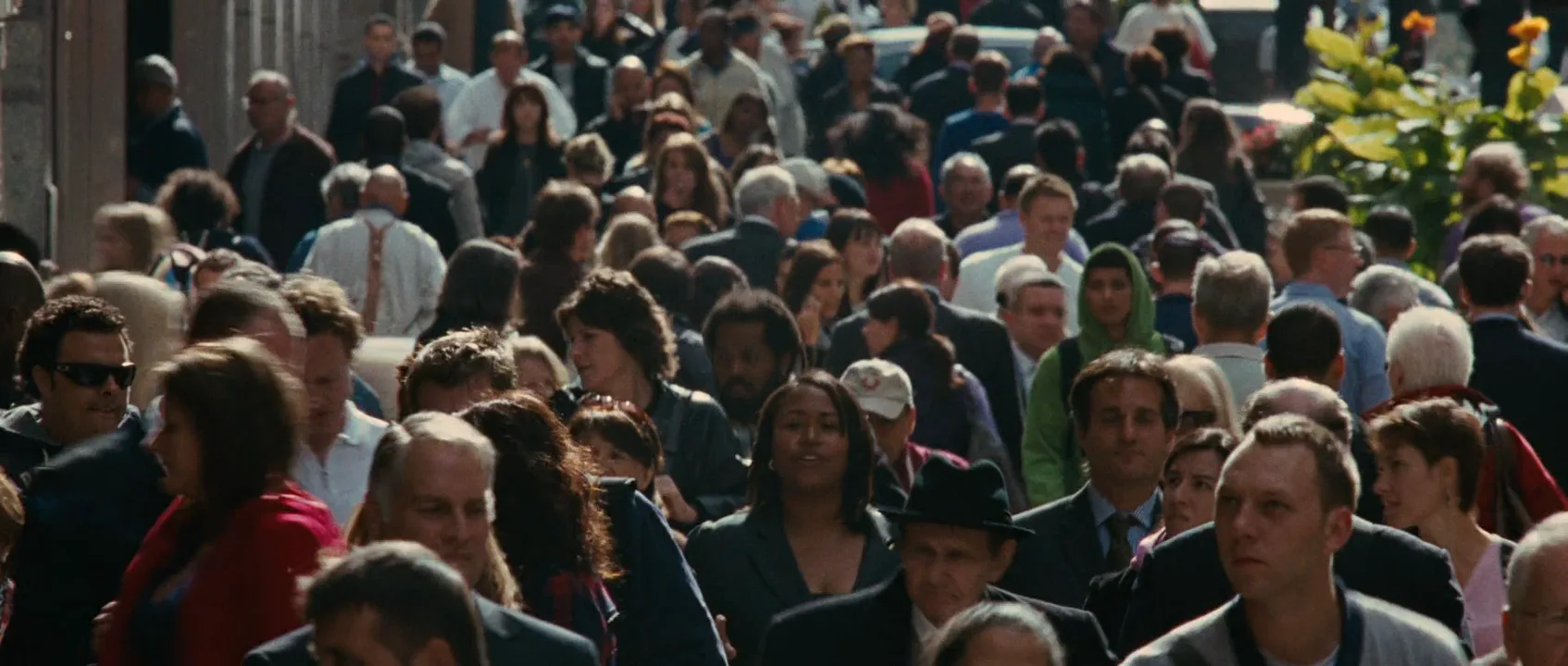
A telephoto lens is a long focal length lens with a narrow angle of view that magnifies distant subjects. Used from far away, it compresses space: the background looks huge and close, crowds pack into walls, and faces separate from soft surroundings. The viewer feels like an observer watching from a distance.
- What it does
- Magnifies a narrow slice of the scene, flattens the distance between planes and lets a subject stand out from a blurred or stacked background.
- Use it when
- You want crowds, traffic or heat to feel dense, a face isolated in a busy place, a watcher's point of view, or a sun or skyline that dwarfs a person.
- Watch out
- Every wobble, focus error and bit of air between lens and subject is magnified; plan support, focus marks and atmosphere before you roll.
- Try this prompt
400mm telephoto from 150 meters away, woman running toward camera on a desert highway, heat shimmer, trucks and mountains stacked close behind her
What is a telephoto lens?
A telephoto lens is one of the core tools in lenses and focus: any lens noticeably longer than the normal lens for its format. On full frame or VistaVision that means roughly 85mm and up; on Super 35, where normal sits around 35mm, a 75mm already reads as long. Cinematographers usually sort them loosely:
- Short tele (75–135mm): portrait lenses. Close-ups with a softened background and flattering, slightly flattened facial features.
- Long (150–300mm): the classic long-lens look of street scenes, crowds and sports-style coverage.
- Very long (400mm and beyond): heat haze, giant suns, cars that seem to stand still while they race toward camera.
Strictly speaking, telephoto names an optical design whose body is physically shorter than its focal length. On set nobody makes the distinction: long lens, tele and telephoto all mean a narrow field of view. What sets that field of view is focal length, measured in millimeters, relative to the size of the sensor or film gate.
A telephoto can be a prime or the long end of a zoom lens. That is a common source of confusion: a zoom is a lens whose focal length can change, while telephoto describes where that focal length sits. A 25–250mm zoom set to 250mm is a telephoto lens for as long as it stays there.
What is telephoto compression, and what really causes it?
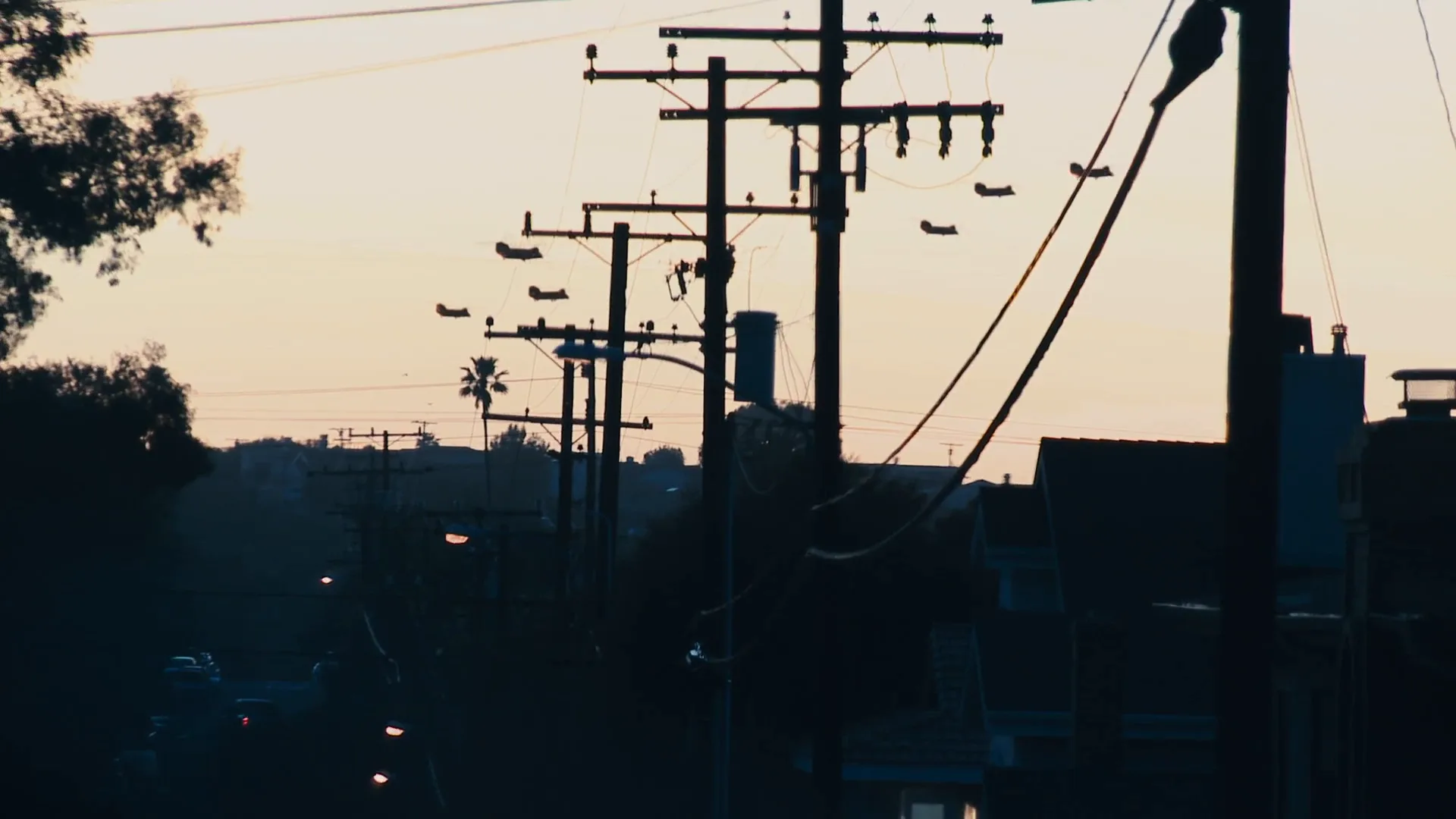
Telephoto compression is the effect everyone associates with long lenses: objects at different distances look closer together than they are. Mountains loom right behind a rider, a row of telephone poles collapses into a single fence, and people on a sidewalk overlap like cards in a deck.
The lens does not create this on its own. Perspective, meaning the size relationship between near and far objects, is set only by where the camera stands. A long lens is simply what lets you stand far away and still fill the frame with your subject. From 5 meters, a person 5 meters in front of a building is half the camera's distance from the facade, so the building looks small behind them. From 100 meters, the same person and building are almost the same distance from the lens, so the building appears nearly at the scale it really has, and it seems to press right up against their shoulders.
You can prove it by shooting one scene on a wide lens and cropping the center of the frame: the crop has the same compressed perspective as a telephoto shot from that spot, just with less resolution. That is why the brief to a camera team is never only put on the 300; it is put on the 300 and back up until the framing works.
Two things do come from the lens itself. The narrow field of view shows only a small patch of background, so the background reads as one continuous wall. And because that background is magnified, any blur in it is magnified too, which is why long lenses produce large, creamy bokeh even at moderate stops.
Why do filmmakers use telephoto lenses?
A long lens changes how the audience relates to the space and to the people in it. The main uses:
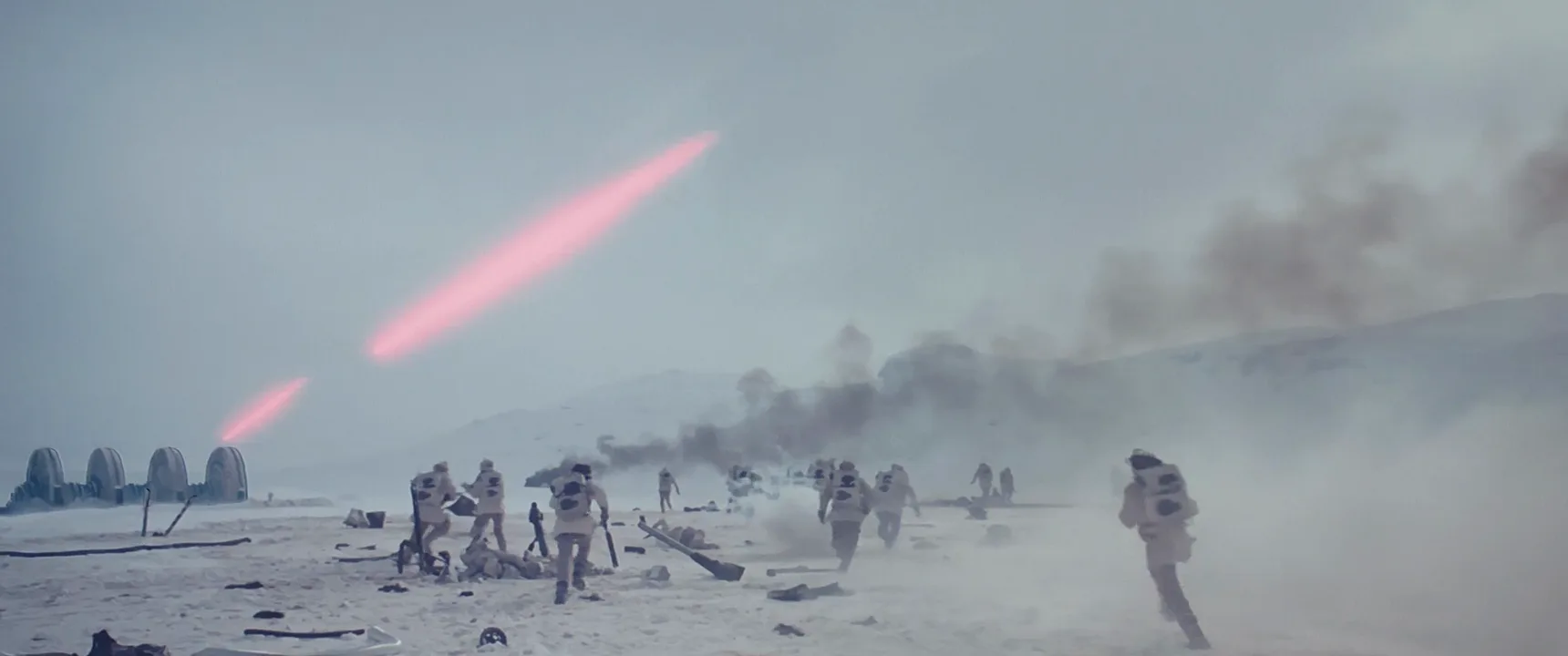
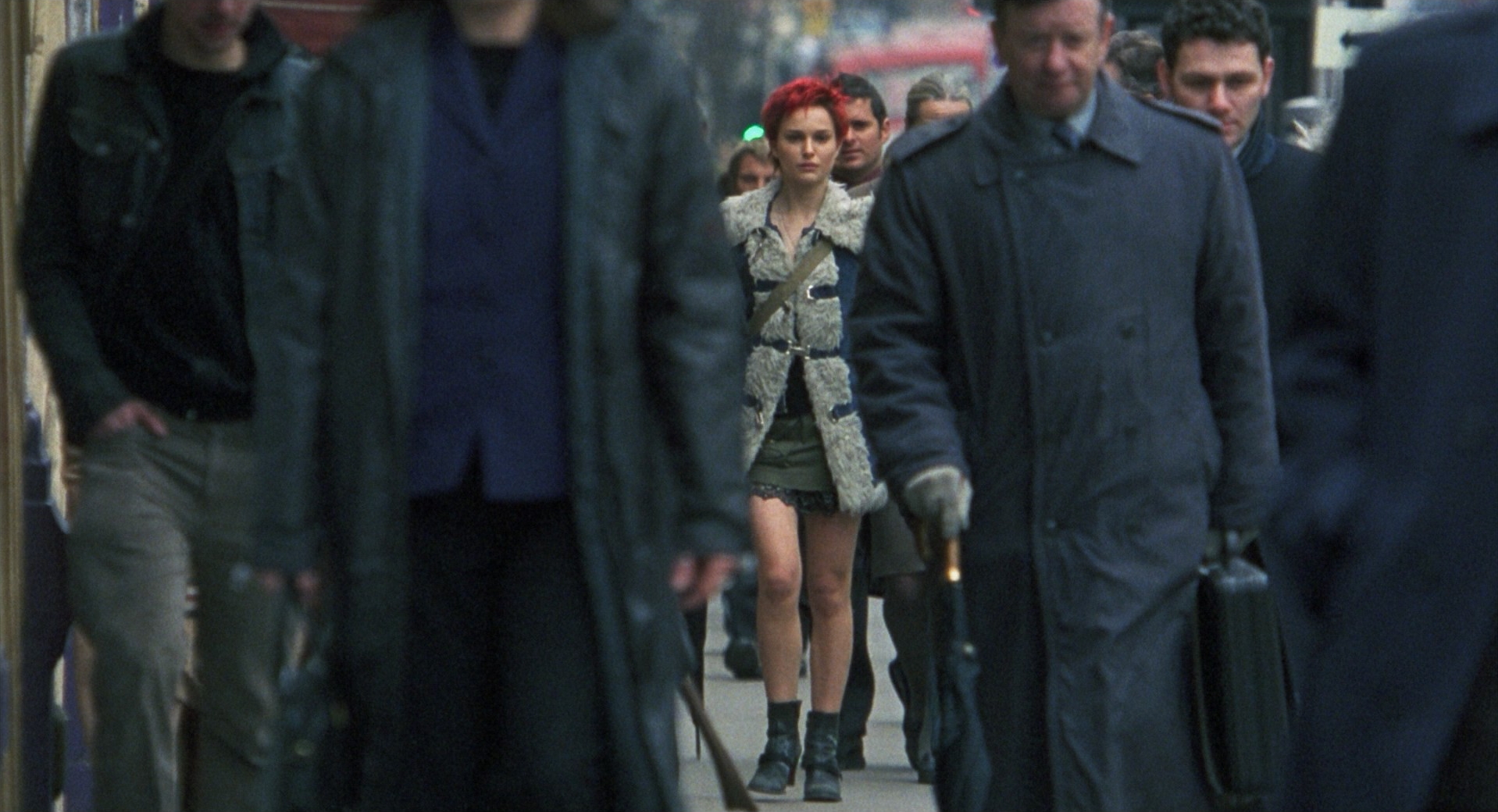
- Density and pressure. Crowds, traffic jams, industrial landscapes and battlefields look packed when their foreground, midground and background are squeezed together. A few hundred extras can read as a city.
- Isolation. A face held sharp in front of a blurred street feels alone even in a crowd. Combined with shallow depth of field, the long lens is the quickest way to pull one person out of a busy background.
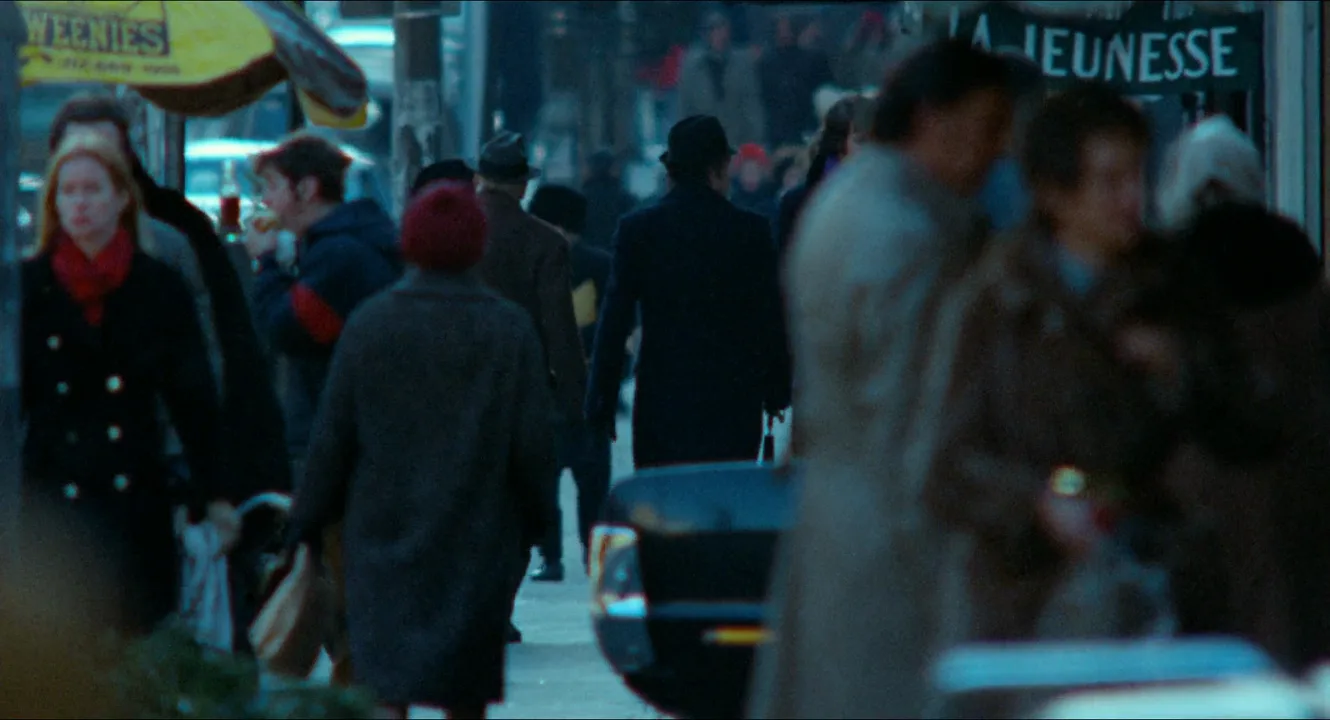
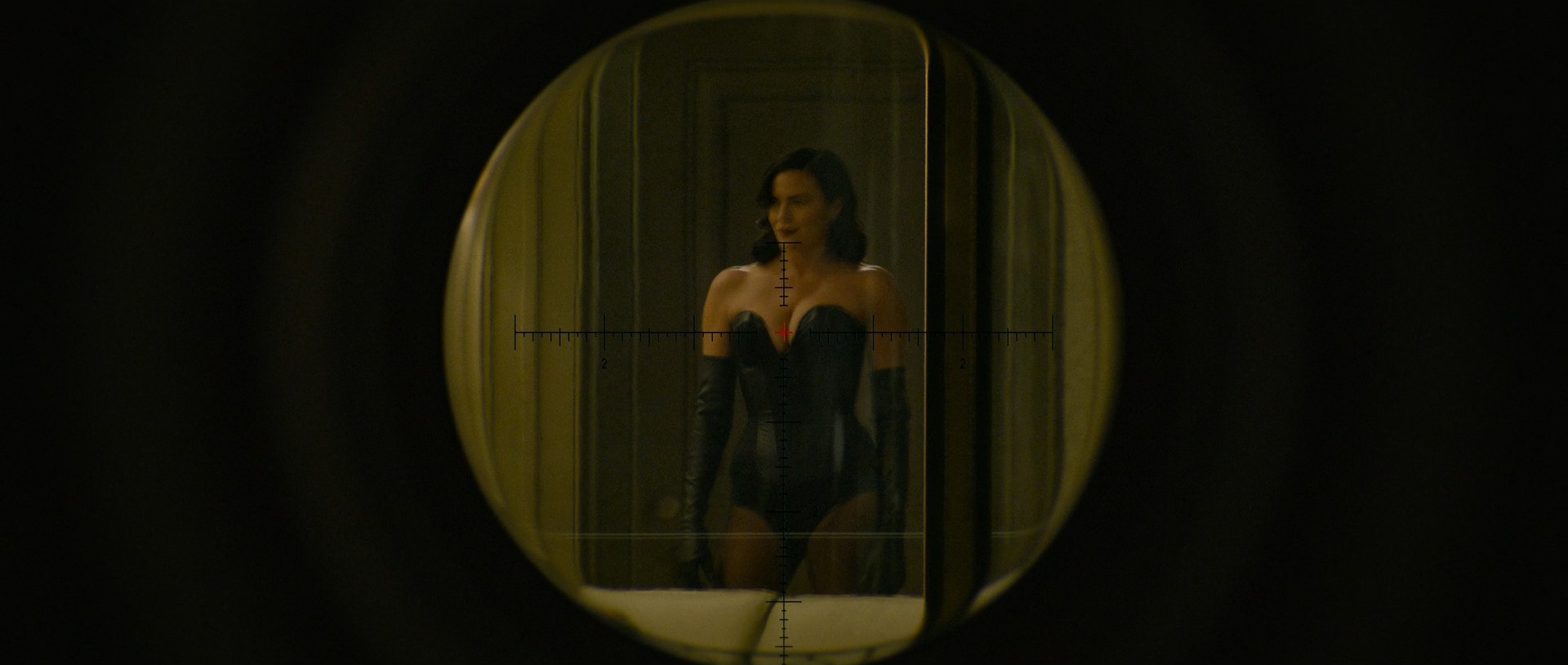
- The observer's eye. Shooting from across the street, through traffic and passing bodies, makes the audience a watcher. Surveillance thrillers such as The Conversation (1974) lean on this, and a sniper or binocular POV shot is by definition a telephoto image.
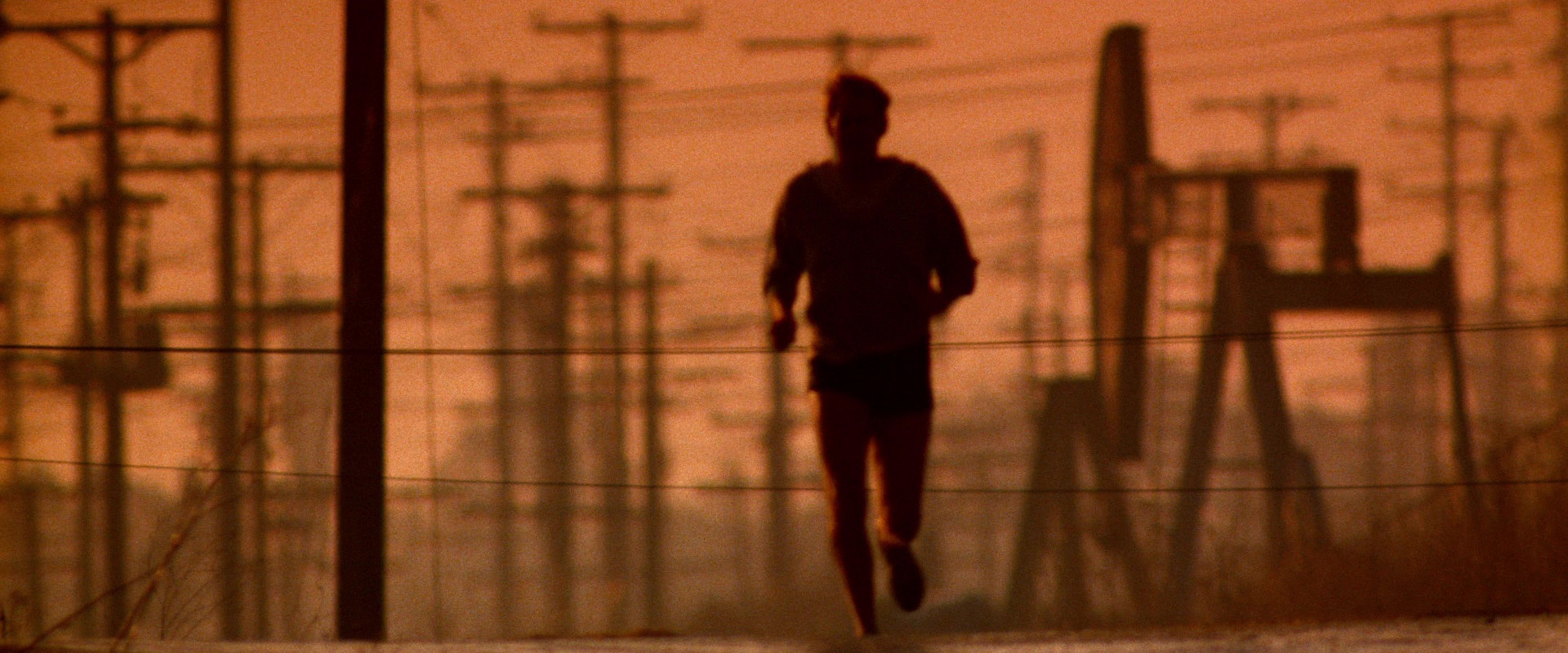
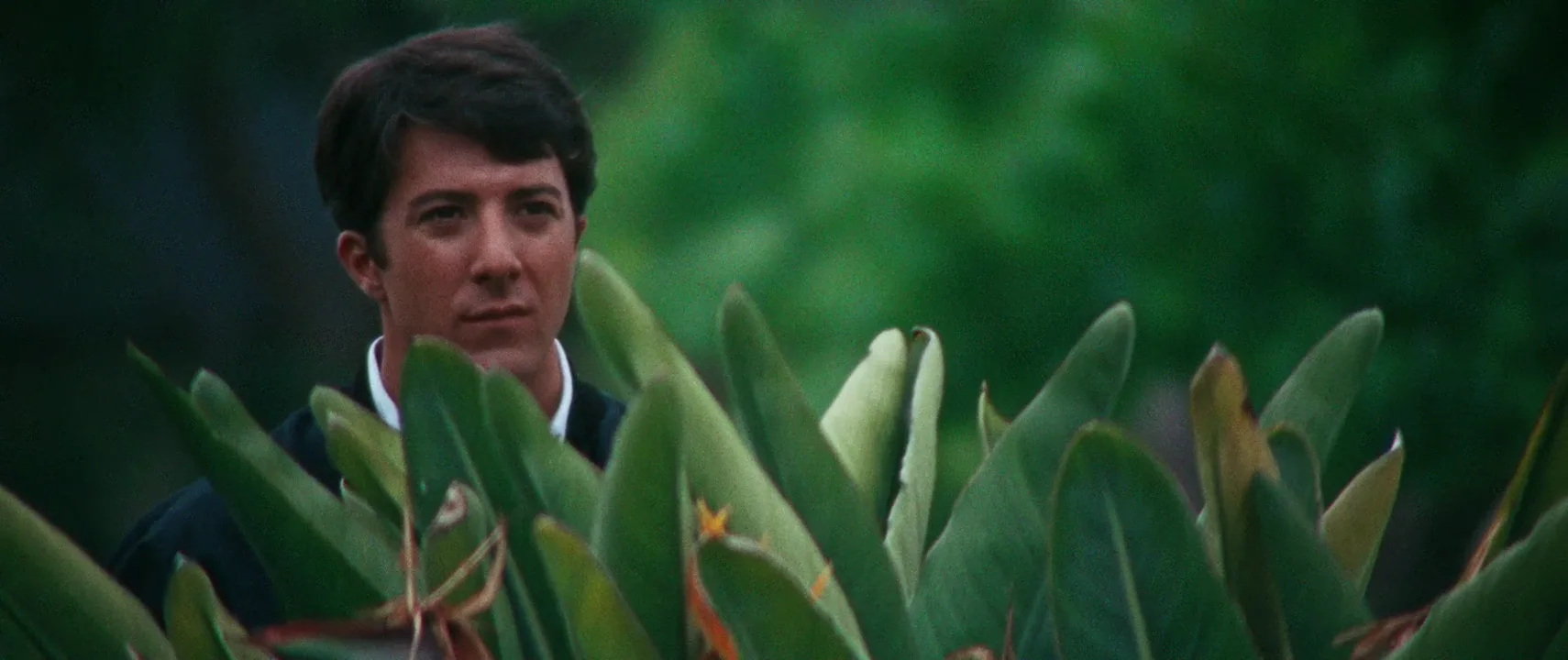
- Effort without progress. A character running straight at a long lens grows in the frame very slowly. The final dash in The Graduate (1967) is the textbook example: the harder he runs, the more stuck he seems.
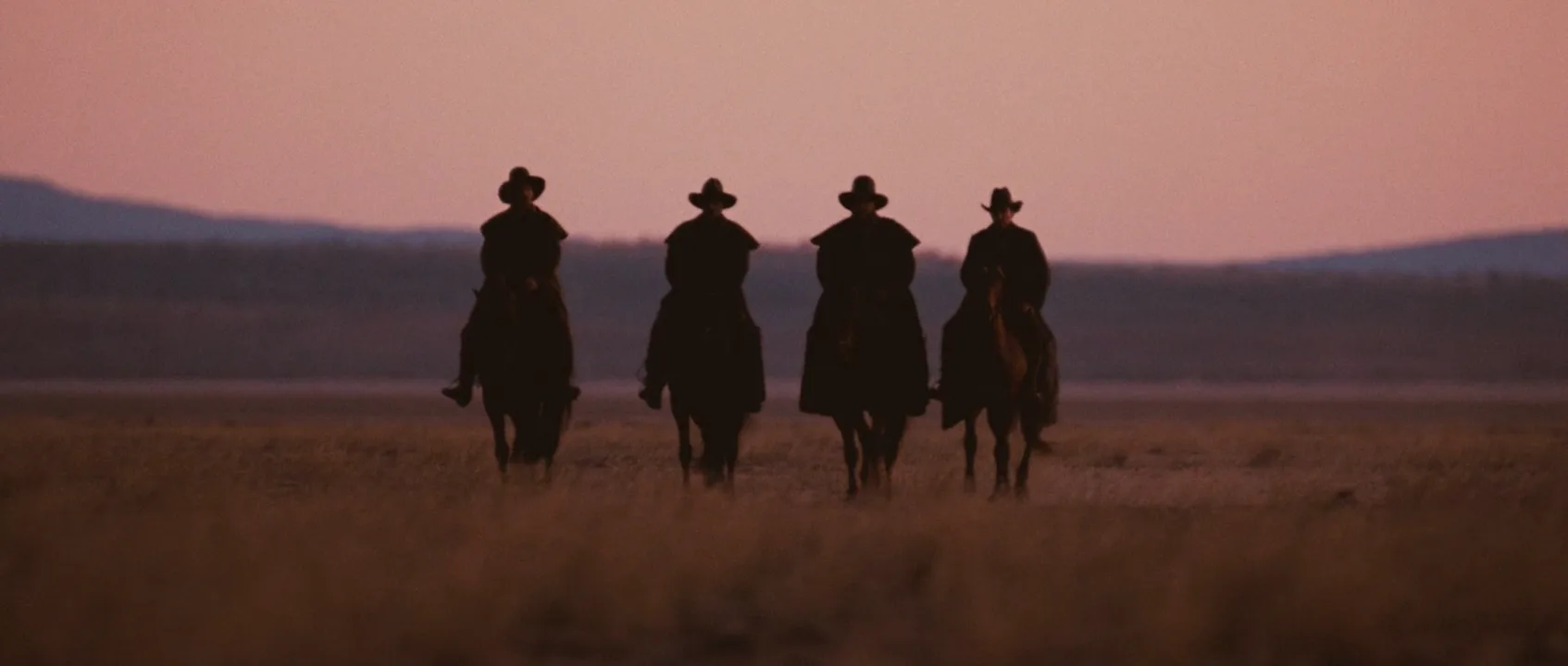
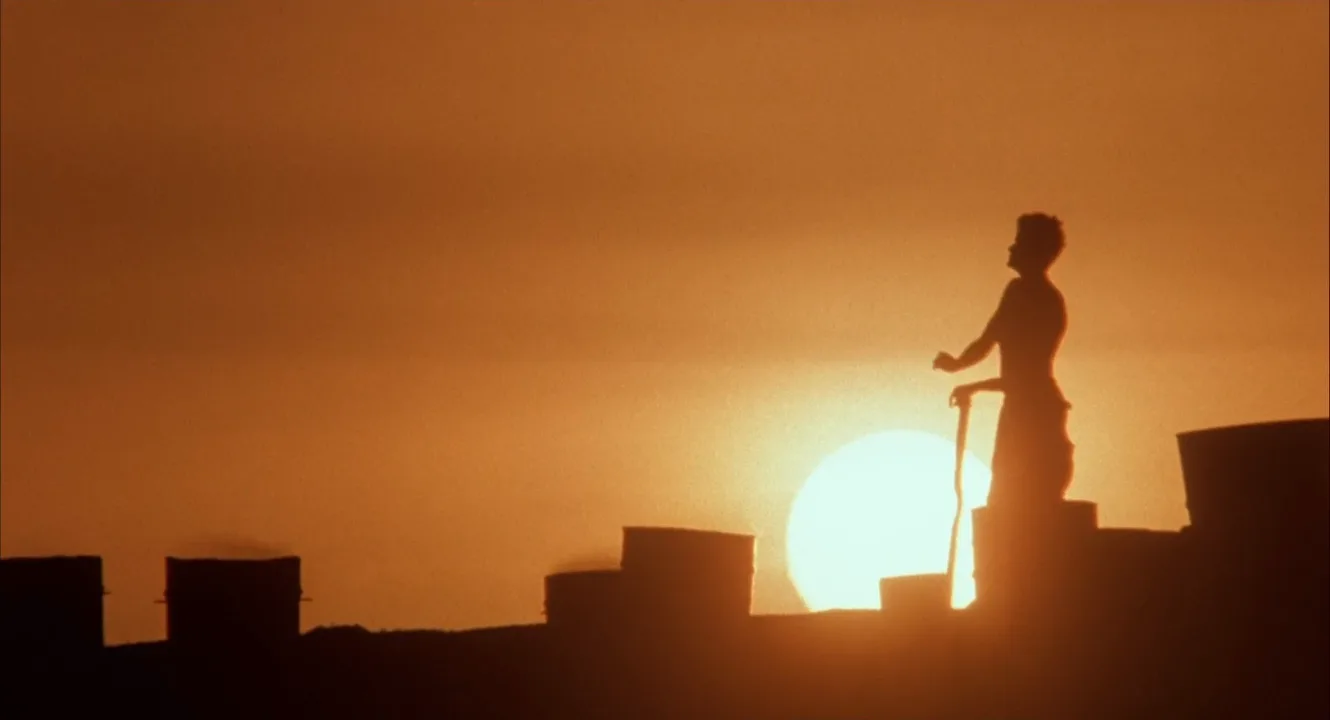
- Scale and myth. A setting sun or rising moon shot from far away becomes a huge disc behind a tiny figure. The famous entrance through the desert mirage in Lawrence of Arabia (1962) uses an extremely long lens to make the approach seem endless.
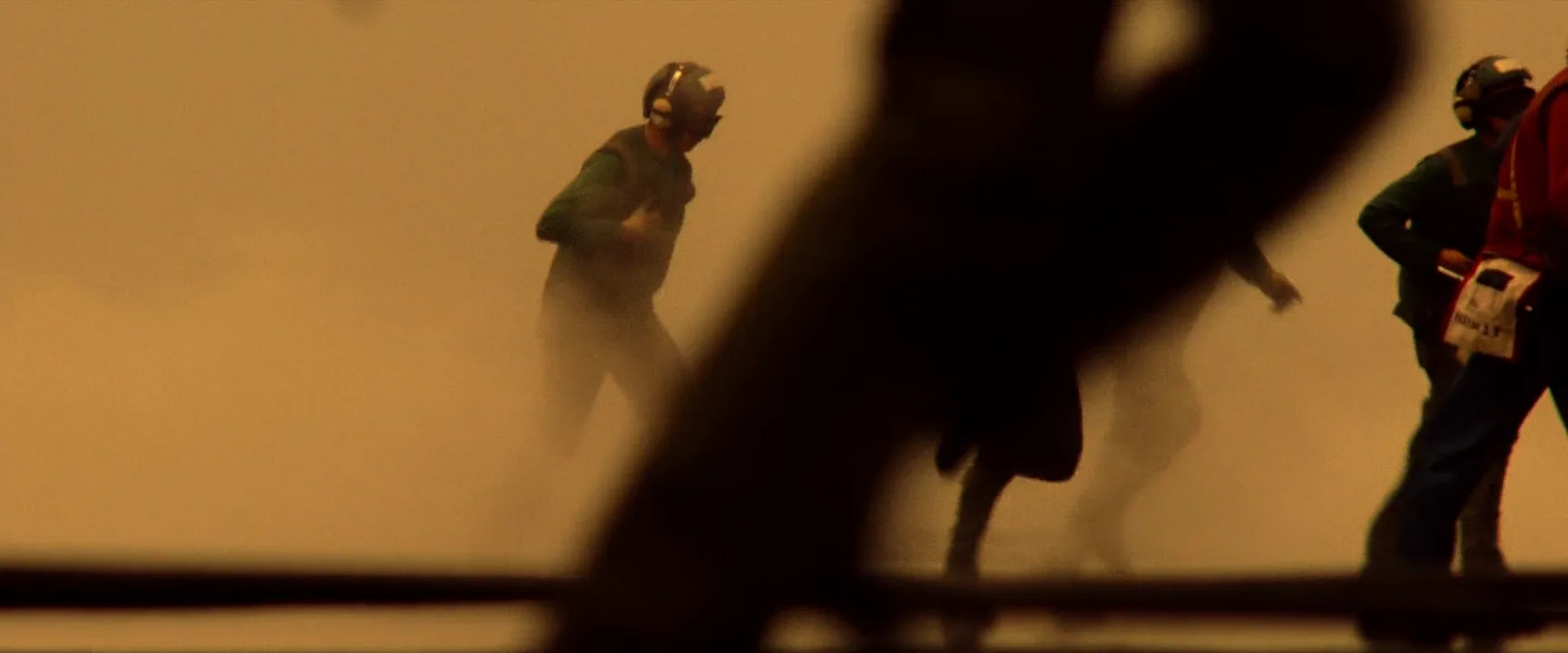
- Atmosphere. Every extra meter of air between lens and subject adds haze, heat shimmer and softer contrast. Tony Scott built a signature look out of this in films like Top Gun (1986): figures dissolving into orange air, backlit dust, shapes melting at the edges.
Akira Kurosawa ran several cameras on long lenses during the battles of Seven Samurai (1954), keeping them far back so actors could not play to any one of them; the result is action that feels observed rather than staged.
How to shoot a long lens shot
Choose distance first, then lens. Decide how much the background should grow. For portraits with a soft background, 85–135mm at 3–8 meters works. For stacked streets and crowds, 200–300mm from 40–100 meters. For heat haze and giant suns, 400–600mm or longer, often from several hundred meters.
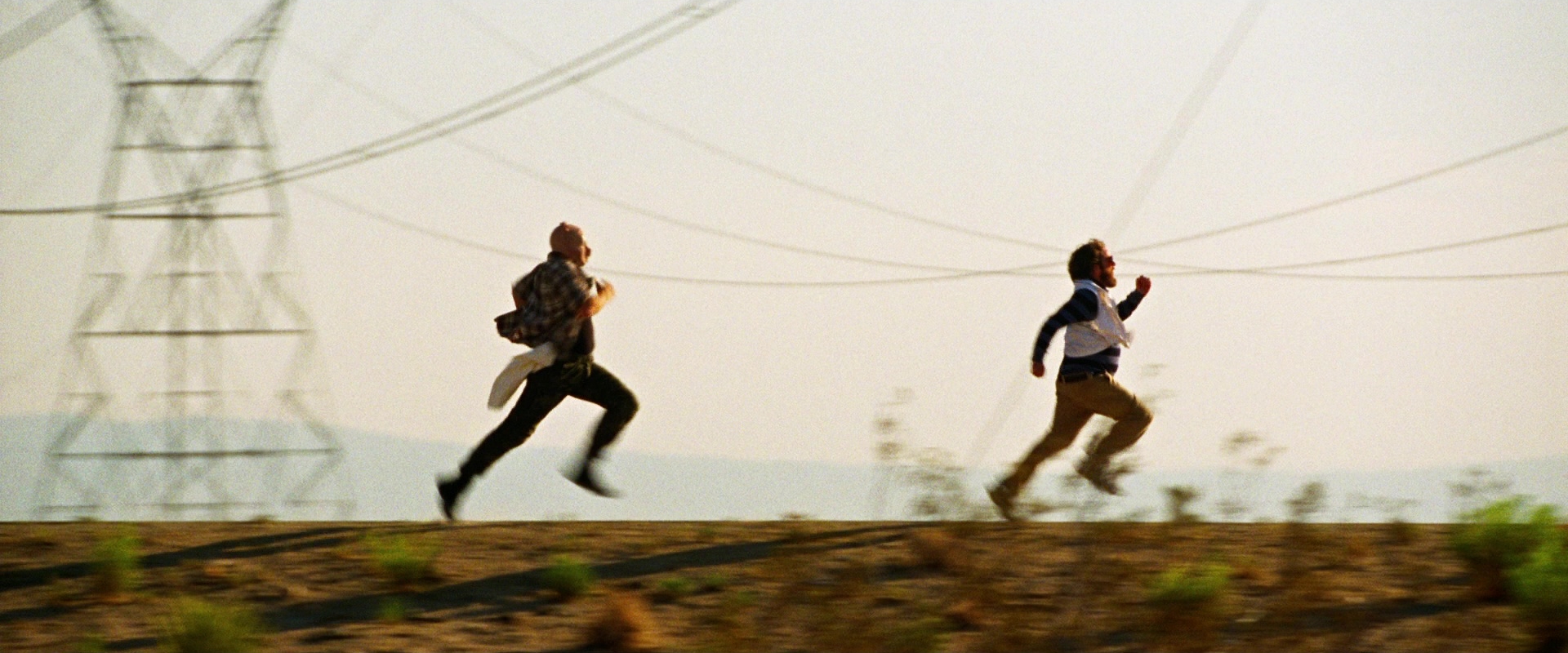
Block along the lens axis. Compression is strongest along the line from lens to subject. Put the extras, the traffic or the poles on that line and let them overlap. Movement toward or away from camera reads as slow; movement across frame reads as very fast, because a few steps cross the whole narrow field. That is the basis of long-lens chases where cars whip through frame while the background barely shifts.
Support everything. A 300mm lens magnifies a tremor as much as it magnifies the subject. Use a heavy tripod, a fluid head with enough counterbalance, a lens support bracket and a sandbag on the legs. Handheld long-lens work is possible, but it reads as nervous and documentary; use it on purpose, not by accident.
Plan focus like a stunt. At long focal lengths the sharp zone is thin in meters and the focus ring throw is long. Mark the actor's route, give the focus puller a wide witness monitor and, when possible, a distance-measuring device. A deliberate rack focus between two actors 20 meters apart is easy; keeping a runner sharp while they approach is the hard part.
Stop down when you want the stack, open up when you want isolation. At T2 the background turns into color; at T5.6–T8 it stays readable and the compression shows. Many crowd shots are lit or exposed for a deeper stop so the viewer can see how packed the space is.
Use the air. Backlight and low sun turn distance into haze and glow. Midday heat produces shimmer, which is beautiful on desert roads and ruinous on a shot that needs clean detail; shoot early morning if you need sharpness.
Communication. At 100 meters nobody can shout direction; plan radios or an AD next to the performers.
Telephoto vs. wide-angle lens
A wide-angle lens is the opposite tool, and the choice between them is really a choice of camera distance.
- Space. Wide lenses used close stretch the distance between planes: the foreground looms, the background shrinks and rooms feel bigger. Telephoto lenses used far away squeeze those planes together.
- Faces. Close on a wide lens, noses and hands swell toward the camera and the image turns intimate, comic or unsettling. On a long lens from further back, features flatten slightly and look calm and even.
- Background. A wide lens shows a lot of background, small and usually sharp. A telephoto shows a small patch of background, large and often soft.
- Movement. A wide-angle move through space creates strong parallax; the same move on a long lens barely changes the relationship between near and far.
- Viewer position. Wide feels like being inside the action; long feels like watching from outside.
The two meet in the dolly zoom, where the lens zooms from wide to long while the camera travels, holding the subject's size constant as the background visibly swells. It is the clearest demonstration that perspective follows distance, not focal length. A plain zoom shot on a long lens does the opposite: the image enlarges, but the perspective stays exactly the same because the camera never moves.
Telephoto Lens examples in film
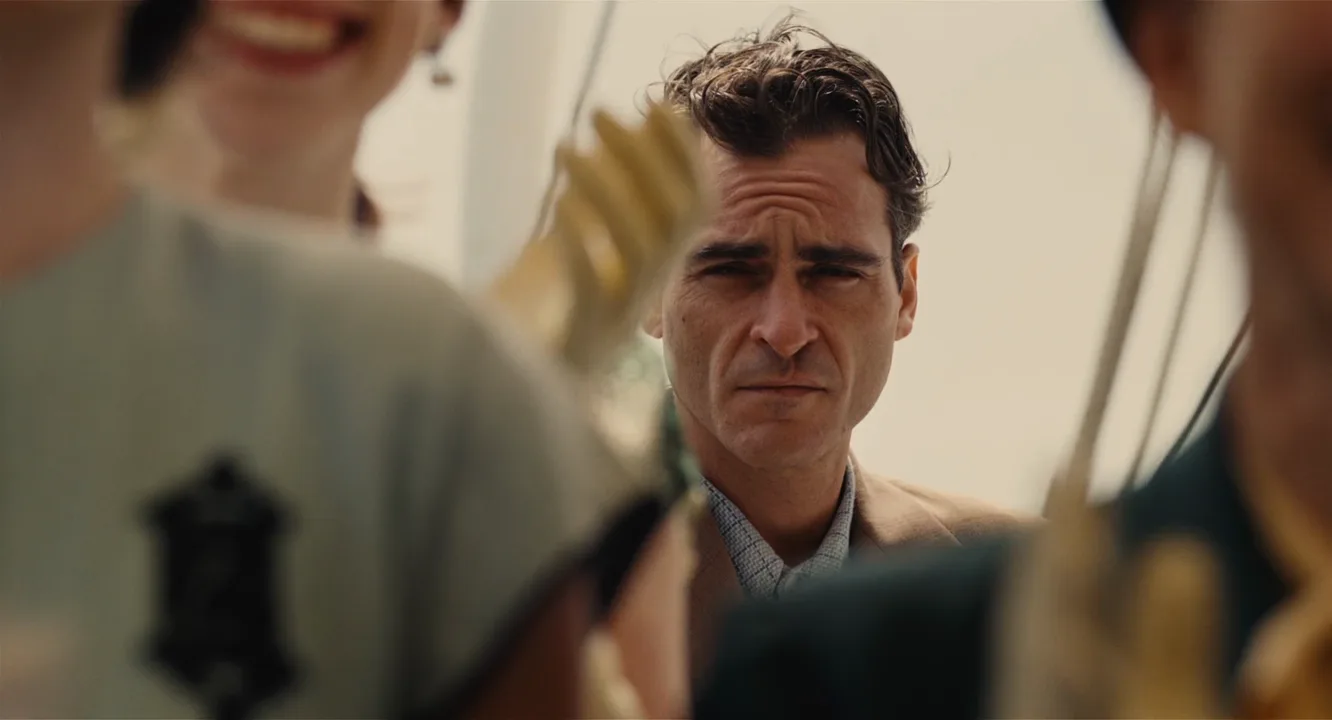
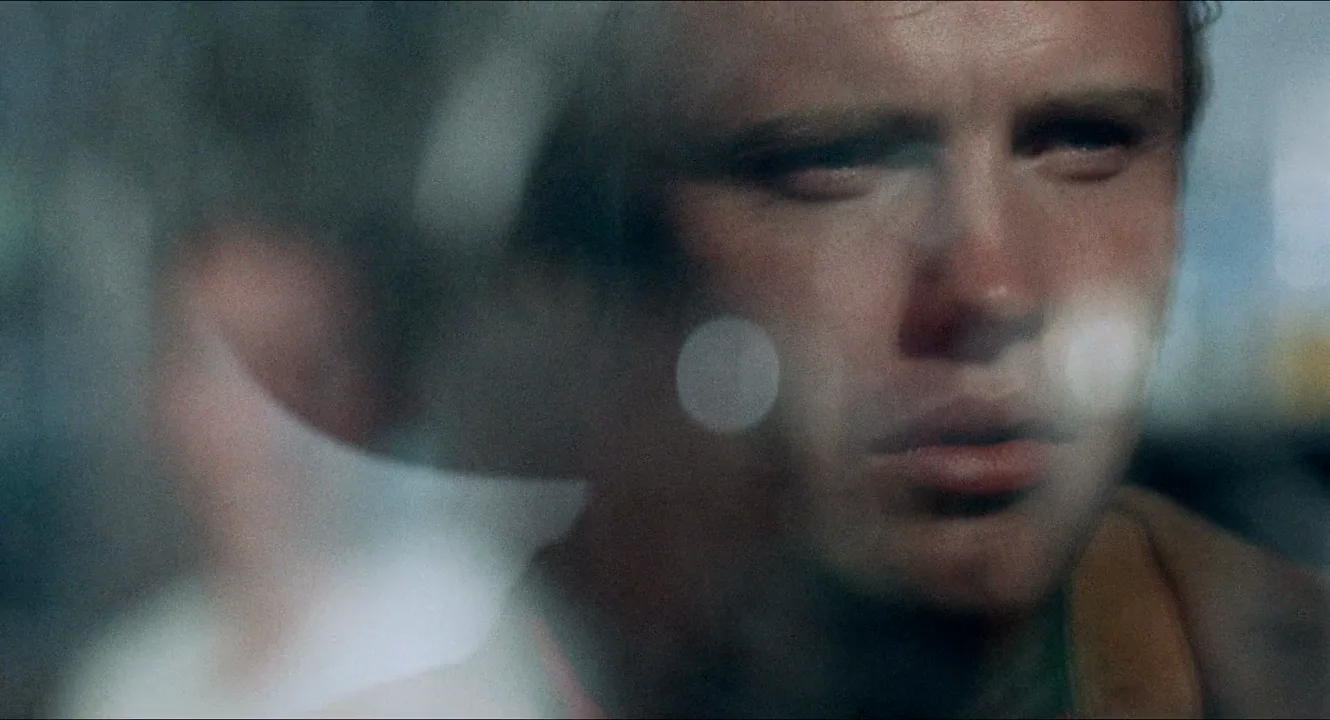
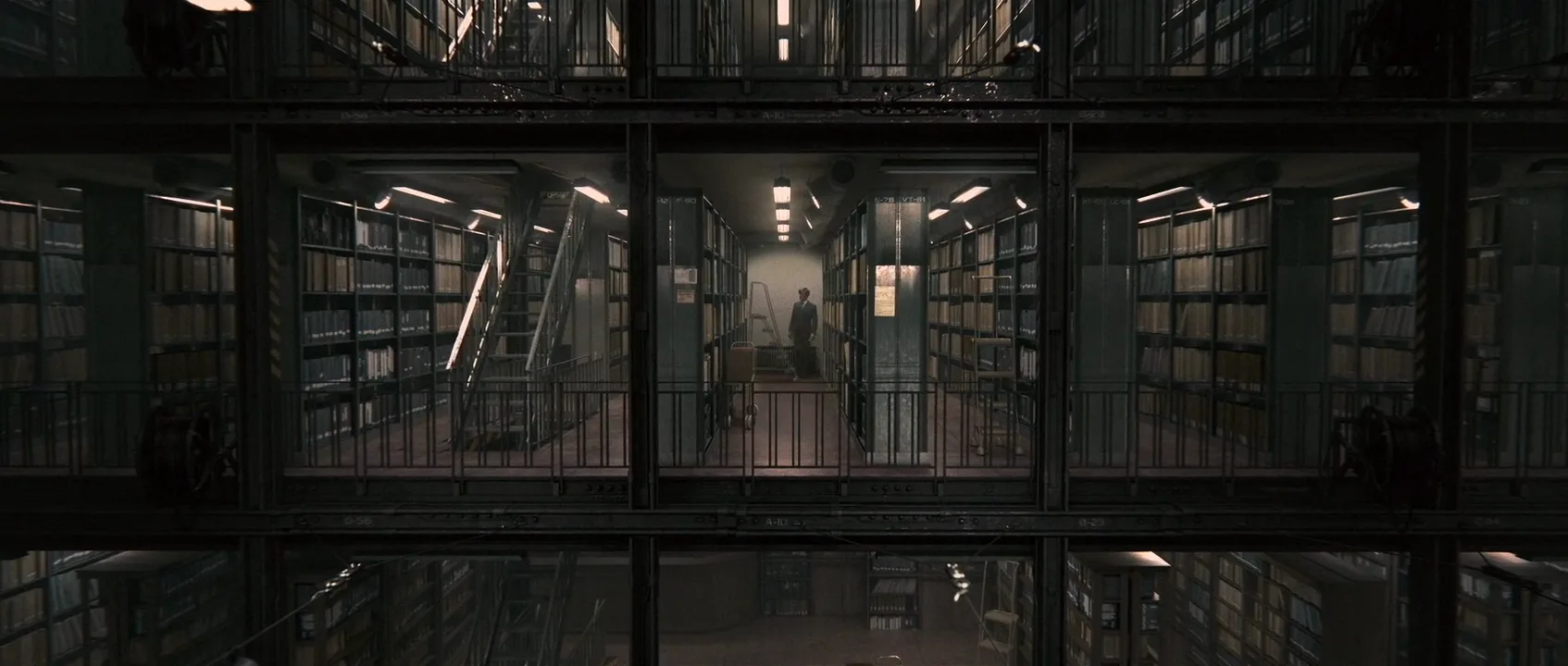
15 framesFrames where the long lens is doing the work: stacked crowds and landscapes, faces pulled out of a blur, and air thick with haze. Look at how close the background seems and how little of it the frame shows.
How to create a telephoto lens with AI
4 promptsImage models default to a normal-lens perspective, and when you type telephoto they often only add background blur. To get real compression, state the distance as well as the focal length, then describe what the distance does: which background objects look huge and close. Build the start frame in Nano Banana 2 Lite, a crowd variation in GPT Image 2.5, and animate recipe 1 with MiniMax H3 Max Turbo; keep all three next to your film references on one FlashBoards board to compare how much each take really compresses. The fourth prompt re-shoots a real film shot from a text description alone, and the original plays next to the result so you can compare.
Cinematic long lens shot on a 400mm telephoto lens from 150 meters away, camera at eye level on a tripod. A woman in her early thirties with a shaved head, a copper nose ring and an oversized olive field jacket runs straight toward camera down the center line of an empty two-lane desert highway. Telephoto compression: two parked semi trucks, a rusted water tower and a range of brown mountains are stacked close behind her, the mountains looming huge above the road. Heat shimmer rising off the asphalt, late afternoon backlight, dusty warm haze, deep focus at f/8 so the background stays readable, subtle film grain.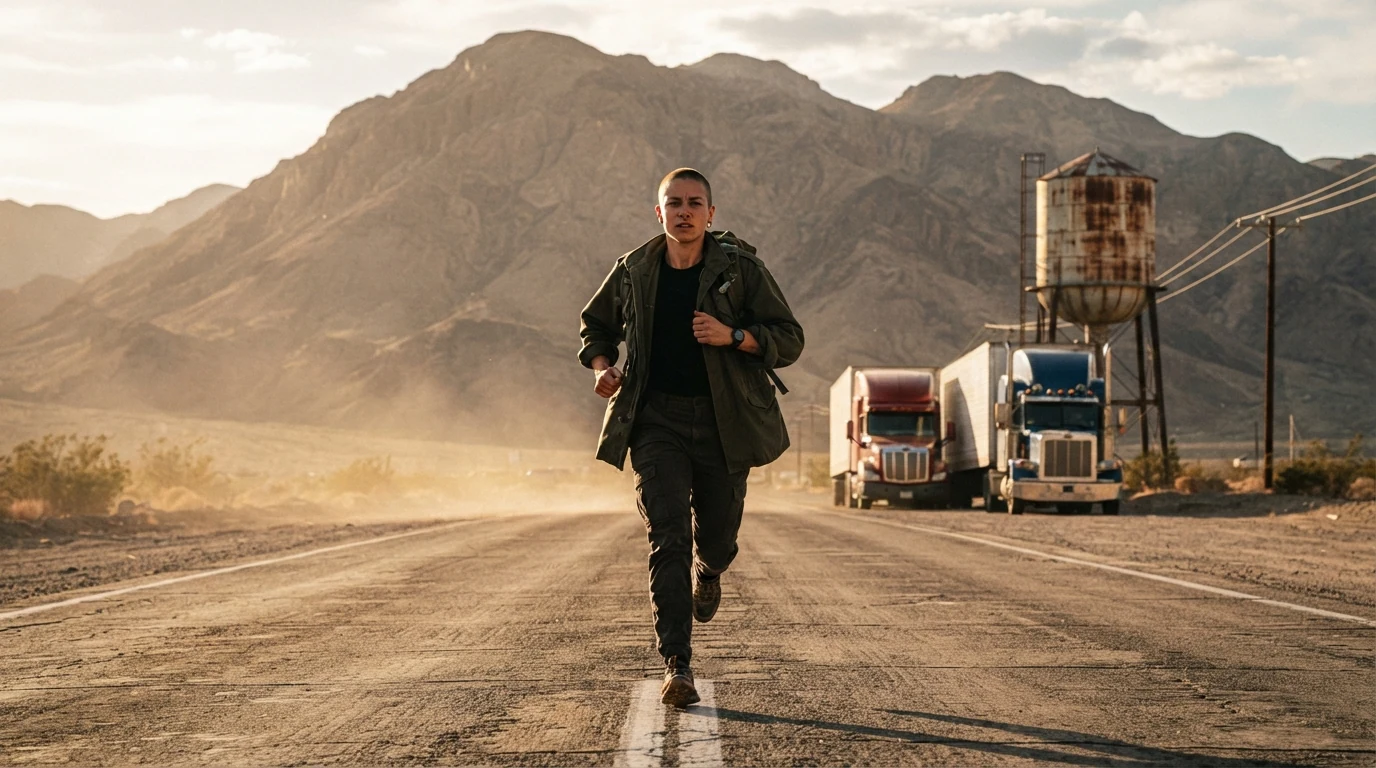
400mm from 150 meters away gives the model both halves of the effect, lens and distance. Stacked close behind her and mountains looming huge describe the result in plain words, which is what actually moves the perspective. f/8 so the background stays readable stops the model from dissolving the stack into generic blur, and heat shimmer plus backlight add the air that makes a long lens feel long.
Open FlashBoardsTelephoto street shot on a 300mm lens from the far end of a long city block, crowd compression. An elderly man with a white braided beard, a bright yellow raincoat and a closed red umbrella stands still in the middle of a packed crosswalk while commuters in dark coats stream past him in both directions. Dozens of heads and shoulders overlap into a dense wall, shop signs and traffic lights pressed flat behind them, a bus looming close at the top of the frame. Focus on the man at f/4, people in front of and behind him slightly soft, overcast light, drizzle, muted blue-grey palette with the yellow coat as the only strong color.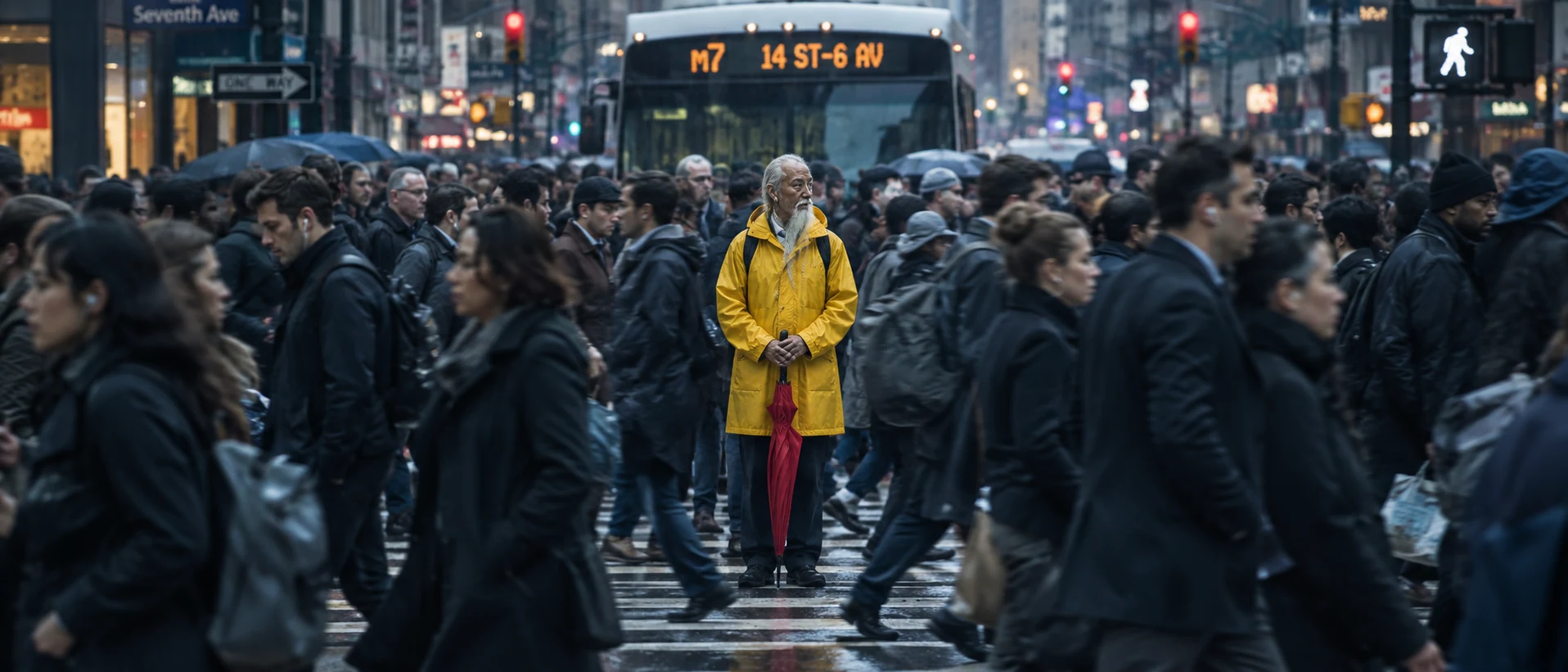
This take uses the long lens for density and isolation at once. From the far end of a long city block sets the distance; overlap into a dense wall and pressed flat behind them spell out the compression. Focus on the man at f/4 with slightly soft neighbors keeps him readable without losing the crowd, and the single yellow coat gives the eye a target inside the stack.
Open FlashBoardsCamera: completely static shot from a camera bolted to a heavy tripod far down the road, 400mm lens. The frame does not move, pan, zoom or track at any moment; only the woman, the dust and the heat shimmer move. The two trucks, the water tower and the mountains stay pinned at exactly the same size and in exactly the same place in the frame from the first frame to the last. Action: from the first frame the woman is already running toward the camera down the center line, jacket flapping, heat shimmer rippling across the road. She is still far away, so over the whole shot she grows only slightly and never comes close to the camera. At the end she is still far down the road, breathing hard as dust drifts through the backlight.The runner is moving from the first frame, so the clip does not start as a still. Does not move, pan, zoom or track rules out both the default push-in and tracking backward with the runner, and a background pinned at the same size and place gives the model something concrete to hold. Grows only slightly and never comes close is the long-lens effect itself: the runner covers ground without arriving.
Open FlashBoards{
"output": "Full-screen live-action film shot from Platoon (1986) from its very first frame: one continuous shot, no cuts. Shot on warm 35mm film stock through a very long telephoto lens from far away: a huge swollen setting sun sits low behind a lone silhouetted soldier, orange haze fills the whole sky, Vietnam firebase at dusk.",
"characters": {
"S1": {
"name": "a lone soldier, seen only as a black silhouette",
"look": "slim young man, bare arms, helmetless head in profile, trousers, holding a long rifle upright with its butt resting on the wall",
"voice": "silence: he does not speak"
}
},
"shots": [
{
"shot": 1,
"camera": "static, locked-off camera on a tripod far away, long telephoto lens, wide framing at eye level; the frame never moves",
"action": [
"BEGINNING: alive from the first frame, the soldier S1 stands on a low sandbag wall at the right third of the frame, black against the orange sky; the enormous pale sun disc sits just left of him, touching his hip, several times larger than his head; his right hand (screen left) holds the rifle upright beside the sun, his other hand is raised to his mouth",
"THEN: he lowers the raised hand slowly and lets it hang, his head turns slightly up and to screen left toward the sky",
"THEN: he shifts his weight, both hands come to rest on the top of the upright rifle, he stands still and gazes out over the haze",
"END: he stays motionless in silhouette beside the huge sun, the edge of the wall and sandbags remain a black band along the bottom of the frame, dust haze drifts slowly across the light"
],
"dialogue": [],
"voice": "silence: nobody speaks in this shot, no voice at all"
}
],
"sound": {
"ambience": "distant evening insects and faint far-off camp sounds, a soft warm breeze",
"speech": "no words in this video; the only human sounds are breaths and movement",
"never_spoken": "no narration and no voice-over: the descriptions, performance notes and step words of this prompt are never spoken aloud",
"music": "a film score under the scene, always below the voices: a slow, mournful string adagio",
"subtitles": "none"
}
}Remakes the silhouette-against-the-sun shot from Platoon (1986), carrying over the locked-off long-lens framing, the oversized sun beside the soldier and his slow hand movements.
The prompt fixes the geometry the long lens creates: a sun several times larger than his head, touching his hip, with a camera that never moves. Named hands and a slow beat list keep the silhouette alive without breaking the still, compressed frame.
Open FlashBoardsCommon mistakes
- Telephoto becomes just blur. Models treat telephoto as portrait mode. Add the distance (from 150 meters away) and the result (mountains looming huge behind her), and set a stop like f/8 when you want the stack visible.
- The perspective stays normal. If background objects stay small, name their size relative to the subject: the sun larger than the building, the bus towering over the crowd.
- Heat shimmer warps the subject. Keep shimmer on the road or the background (rising off the asphalt) so faces stay intact.
- Video drifts into a zoom or push-in. Say locked-off, fixed focal length and describe how little the subject grows.
- Too steady or too shaky. Real long lenses show a faint float; ask for faint tripod float rather than handheld shake, which models exaggerate.
- H3 tracks with the runner. In our tests MiniMax H3 Max Turbo pulled back and panned with her in all five takes, even with the camera does not move: the trucks shrank while she stayed the same size. Expect several takes.
Keep the reference frames, prompts and every generated take side by side — images and video in one canvas.
FAQ
5 questionsWhat is a telephoto lens used for in film?
Filmmakers use telephoto lenses to compress space, isolate faces and suggest an observer. From far away, a long lens stacks background objects close behind the subject, so crowds, traffic and landscapes look dense. It also separates a sharp face from a soft background, makes a runner seem to struggle without progress, and turns suns or moons into huge discs. Surveillance and sniper points of view are telephoto images almost by definition.
What focal length counts as a telephoto lens?
Anything clearly longer than the normal lens for your format. On full frame, roughly 85mm and up counts as telephoto; on Super 35, 75mm already reads long. In practice, 85–135mm are short portrait teles, 150–300mm give the classic long-lens street and crowd look, and 400mm and beyond are used for heat haze, giant suns and extreme compression from hundreds of meters away.
Does a telephoto lens really compress the background?
Not by itself. Compression comes from camera distance: the farther back the camera stands, the closer near and far objects are in relative size. A telephoto lens is what lets you stand that far back and still fill the frame. A crop from the center of a wide shot taken from the same spot shows the same perspective, only with less resolution. The lens does magnify background blur and narrow the view.
What is a long lens shot?
A long lens shot is any shot made on a telephoto focal length, usually from well back. The term describes a look more than a size: flattened depth, a background that seems close and large, often a soft foreground or heat haze, and a sense that the camera is watching from a distance. It can be a close-up, a crowd or a landscape, as long as the lens is long.
Is a zoom lens the same as a telephoto lens?
No. A zoom lens has a variable focal length; a telephoto lens has a long one. Many zooms reach telephoto lengths, so a 25–250mm zoom at 250mm is working as a telephoto. A prime can be telephoto too. A zoom shot changes focal length during the take, which magnifies the image but, unlike moving the camera, never changes the perspective.
Related terms
6- Wide-Angle LensLenses, Focus & Exposure
A wide-angle lens has a shorter focal length than normal: it takes in more space, exaggerates the distance between near and far, and enlarges whatever is close to the camera — from immersive interiors to unsettling, distorted close-ups.
- Zoom ShotCamera Movement
A zoom shot changes the lens's focal length during the take, so the image grows or shrinks from a fixed camera position; because the camera doesn't move, perspective stays the same — the key difference from a dolly.
- Focal LengthLenses, Focus & Exposure
Focal length, measured in millimetres, sets a lens's angle of view: short focal lengths see wide and stretch space, long ones see narrow and compress it — which is why the same framing feels different on 24mm and on 135mm.
- Normal LensLenses, Focus & Exposure
A normal lens has a field of view and perspective that feel close to natural vision for its format — roughly 40–50mm on 35mm film or full frame — so space looks neither stretched nor compressed.
- Shallow Depth of FieldLenses, Focus & Exposure
Shallow depth of field keeps only a thin slice of the scene sharp — often just the eyes — while everything nearer and farther dissolves into blur, isolating the subject and steering attention.
- BokehLenses, Focus & Exposure
Bokeh is the character of the out-of-focus areas of an image — above all how point lights melt into soft discs or ovals — shaped by the lens design, the aperture blades and how shallow the focus is.
Further reading
Blain Brown, Cinematography: Theory and Practice (3rd ed., 2016). American Society of Cinematographers, American Cinematographer Manual (lens angle-of-view tables). Rudolf Kingslake, A History of the Photographic Lens (1989).