 FlashBoards Learn
- Learn
- Film History & Theory
- Male Gaze
Film History & Theory · Film language
Male Gaze
Also called: the male gaze, Mulvey's gaze
The male gaze is Laura Mulvey’s 1975 term for how classical cinema makes the viewer look through the eyes of a heterosexual man and turns women on screen into objects of that look — through point-of-view shots, fragmenting close-ups, slow tilts over bodies and scenes that stop the story so she can be displayed.
- What it does
- Makes the audience share a man’s look and places the woman on screen as the thing being looked at.
- Use it when
- Analyzing whose point of view a film adopts — or deciding on your own set whose look the camera shares.
- Watch out
- Body-scanning tilts, cut-up close-ups and slow-motion entrances read as objectifying even when nobody meant them to.
- Try this prompt
over-the-shoulder of a seated man in soft focus, a singer in an emerald gown centered under a spotlight, 85mm, 1950s supper club
What is the male gaze?
The term comes from Laura Mulvey’s essay “Visual Pleasure and Narrative Cinema,” published in the British journal Screen in autumn 1975. Writing from the psychoanalytic and feminist current of film theory, Mulvey argued bluntly that mainstream Hollywood is built around a split between an active male who looks and a passive female who is looked at. Women on screen, she wrote, are coded for “to-be-looked-at-ness.”
Mulvey identified three looks that classical cinema weaves together:
- The camera’s look at the event being filmed.
- The characters’ looks at each other inside the story.
- The audience’s look at the screen.
In the classical style, the first and third are hidden so the viewer rides along with the second — usually the male protagonist’s. When the hero watches a woman, the camera takes his position, the cut shows what he sees, and the audience’s pleasure in looking is fused with his. That fusion is the male gaze. It is not a shot type but a structure of who looks and who gets looked at.
Mulvey borrowed Freud’s term scopophilia — pleasure in looking — and described two ways cinema manages it. Voyeuristic looking investigates the woman, often as a mystery to be solved, punished or rescued (her main example was Hitchcock). Fetishistic looking freezes her into a perfect spectacle, a glamour image outside the flow of the plot (her example was Josef von Sternberg’s films with Marlene Dietrich).
For filmmakers the useful part is practical: every choice of eyeline, lens height and coverage answers Mulvey’s question — whose eyes are we borrowing?
How does the camera create the male gaze?
None of these choices is objectifying on its own; the pattern builds the gaze.
The look–object–reaction edit. A man looks off screen, cut to a POV shot of a woman, cut back to his reaction. The woman’s shot answers his look; she rarely gets a matching shot of him. Coverage often stays over his shoulder: the over-the-shoulder shot puts his head and suit in the foreground as the frame through which she is seen.
Fragmenting close-ups. Legs stepping out of a car, lips, a hip — a close-up that isolates a body part instead of a face strips the person of point of view.
The body scan. A slow tilt from shoes to face (or the reverse) is the camera looking someone up and down, the most recognizable male-gaze move.
The spectacle entrance. The story stops. The woman enters in slow motion, often backlit, as music swells and the men in the room turn. Mulvey noted that such moments freeze the narrative for pure looking; in the classic showgirl number an on-screen audience merges the viewer’s look with the characters’.
Lighting and lensing. Classical Hollywood gave female stars frontal butterfly lighting, heavy soft focus or diffusion on her close-ups while his stayed sharp, and hair lights that made a halo. Unequal treatment within one scene shows who is the image.
Staging and hidden watching. Men watching from doorways or across a room — the voyeur shot is the male gaze made literal, and Hitchcock built whole films on it.
Male gaze examples in film
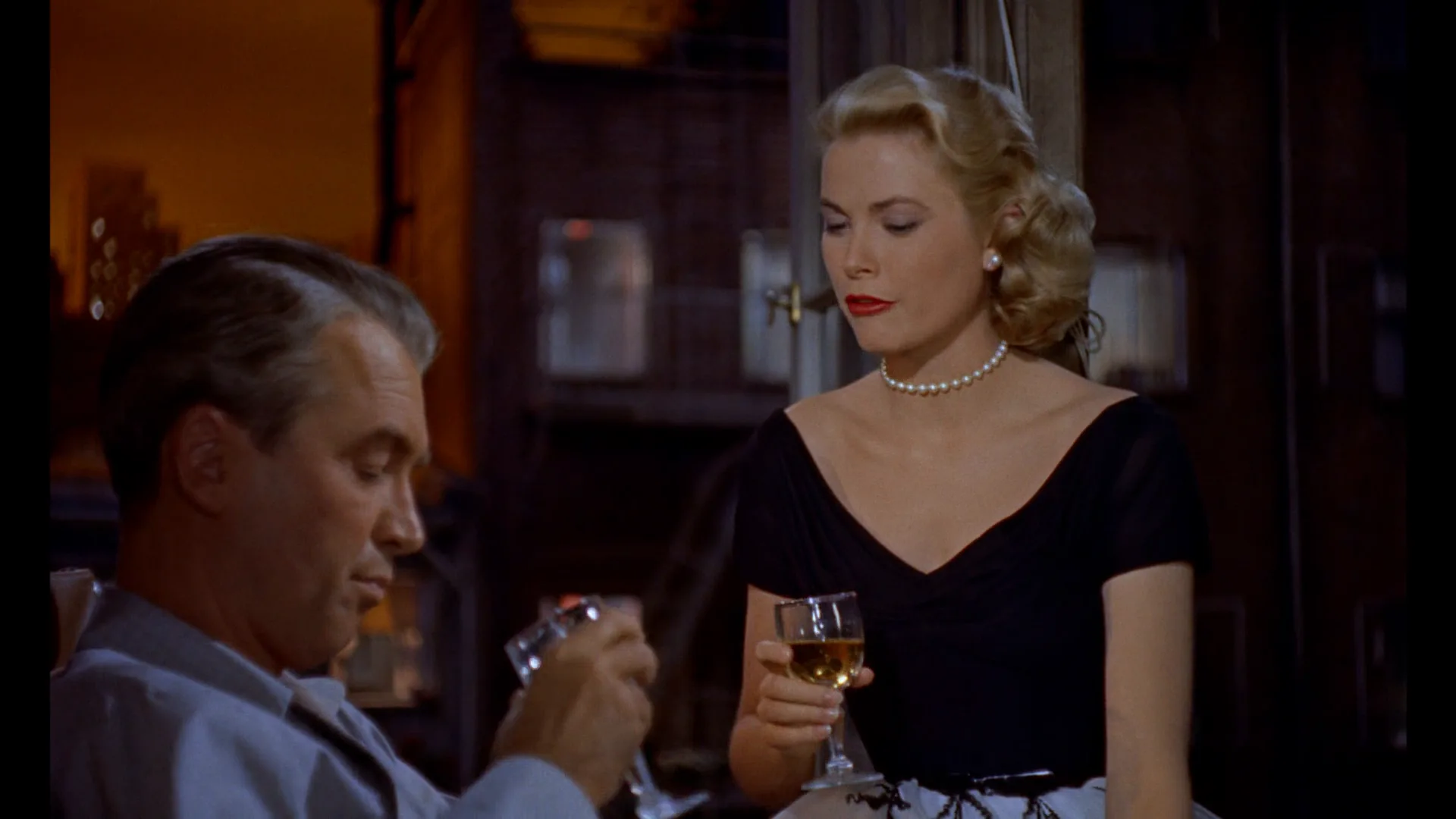
Rear Window (1954). One of Mulvey’s central Hitchcock cases. A photographer in a wheelchair watches his neighbors through a long lens, and the film cuts between his face and what he sees. His girlfriend grips him most when she climbs into the suspect’s apartment and he can only watch — she has entered his frame.
Vertigo (1958). Scottie follows Madeleine through San Francisco in long wordless point-of-view sequences, then later remakes another woman, Judy, into Madeleine’s image — hair, suit, shoes.
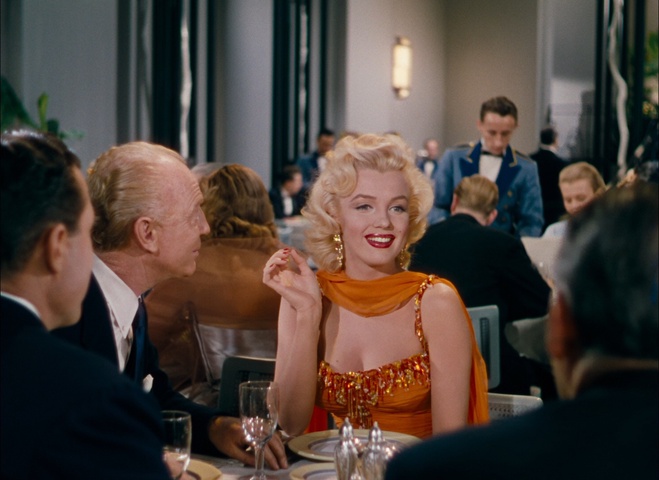
Gentlemen Prefer Blondes (1953). Howard Hawks stages Marilyn Monroe as a spectacle for rooms full of men. The film also flips it: Jane Russell’s number among athletes in trunks puts male bodies on display while she walks through fully dressed.
The Bond films. Ursula Andress walking out of the sea in Dr. No (1962), echoed by Halle Berry in Die Another Day (2002), is the spectacle entrance in its purest form: the hero watches from hiding, the camera watches with him.
Contemporary blockbusters. In Transformers (2007), a much-cited case, the camera lingers on the heroine bent over an engine as the hero stares.
Asking who looks at whom, how big each person is and who is sharp is the fastest way to see the structure — a core habit of film analysis.
Male gaze vs. female gaze
The female gaze is the most searched answer to Mulvey, but it does not simply mean “women looking at men’s bodies.” Swapping the object — a slow tilt up a shirtless actor — keeps the same machinery with a different target. Most people who use the term mean something structural: the camera shares a woman’s experience instead of looking at her from outside.
| | Male gaze | Female gaze (as usually described) | |---|---|---| | Whose POV | A male looker; the woman is seen | The woman’s perception and feeling | | Framing of her | Body parts, full-figure display | Face, hands, what she does and notices | | Camera | Scans, lingers, follows her from behind | Stays with her eyes, shares her field of view | | Editing | Look → her body → his reaction | Her look → what she sees → her response |
In a widely shared 2016 talk, the showrunner Joey Soloway described the female gaze as “feeling-seeing” — a camera that tries to transmit how a character feels, not just what she looks like. Céline Sciamma’s Portrait of a Lady on Fire (2019) is the example most often cited: a painter and her subject study each other, and the film keeps returning the look instead of letting one side own it.
The female gaze is less a rulebook than a question of subjective cinema: whose inner life does the camera stay with, and who may look back?
Criticism and how the theory evolved
Mulvey’s polemic drew answers quickly — including from Mulvey herself.
- The female spectator. Her 1981 follow-up, “Afterthoughts,” asked what happens to women in the audience. Her answer: they can adopt the masculine position temporarily.
- Race. bell hooks’ essay “The Oppositional Gaze” (1992) argued that Black women viewers, absent or stereotyped on screen, learned to look critically against the film — a resisting gaze the original model had no room for.
- Horror and identification. Carol Clover’s Men, Women, and Chain Saws (1992) showed that slasher films make young male viewers identify with a terrorized woman — the Final Girl — which complicates the idea that men only identify with men.
- Desire beyond one axis. Readings informed by queer theory point out that the model assumes a single heterosexual viewer and ignores queer desire, coded characters and camp pleasure in spectacle.
Others note that women directors can shoot a male gaze and men can avoid one, and that the theory fits Golden Age of Hollywood films better than later cinema. The core insight has held up because you can point at the shot and ask who is looking.
How to direct with the gaze in mind
- Assign the look. For every scene, write in the shot list whose eyes the camera belongs to. If she is the protagonist, her looks motivate the cuts.
- Match coverage. If he gets a POV of her, give her a POV of him or of what she is attending to. Unequal coverage is the most common unintended gaze.
- Keep faces in the frame. Tie any body insert to action or to the character’s own look, not to a watcher.
- Question the tilt. A tilt up a body is a look up and down; to reveal a costume, a static full shot often works better.
- Treat light equally. If her close-up gets diffusion and his doesn’t, decide whether that is the story or just habit.
- Let her look back. A returned look into the lens or at the watcher is the oldest way to break the male gaze.
In FlashBoards you can plan this visually: pin a scene’s reference frames on one board, mark who looks and who is looked at, and generate a second take from the other character’s side to compare both points of view before the shoot.
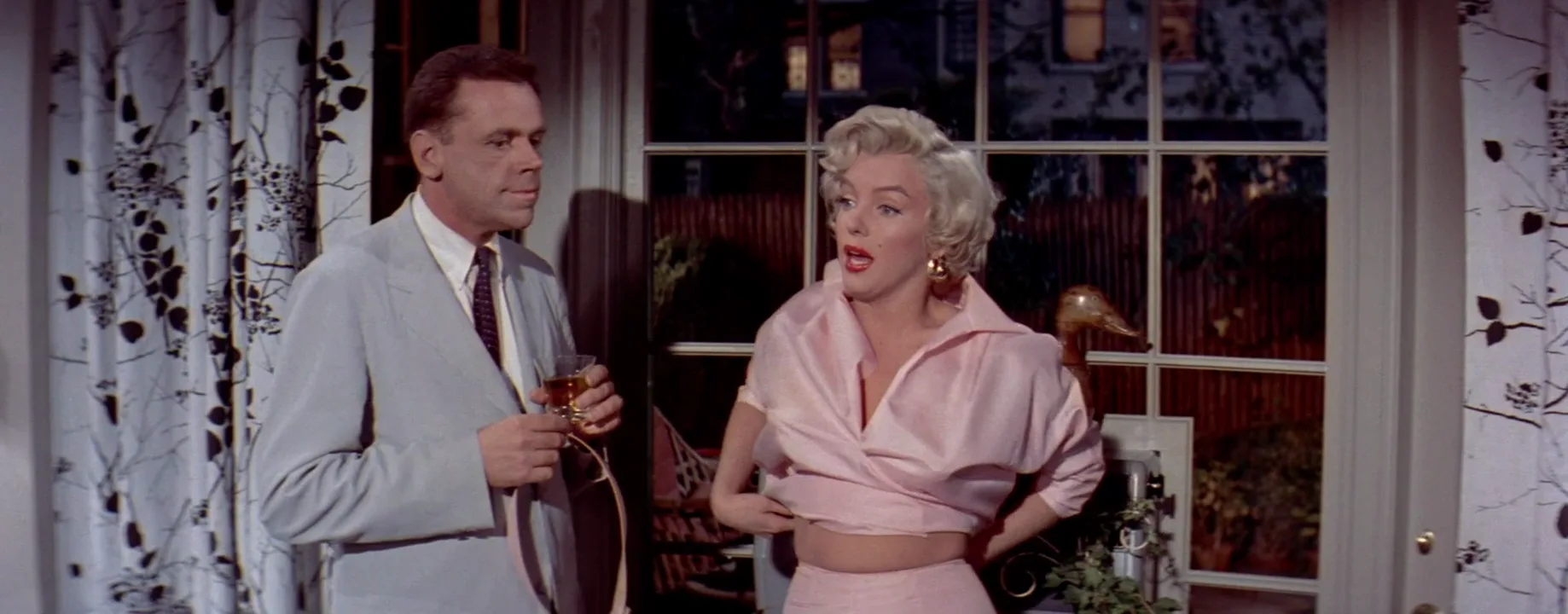
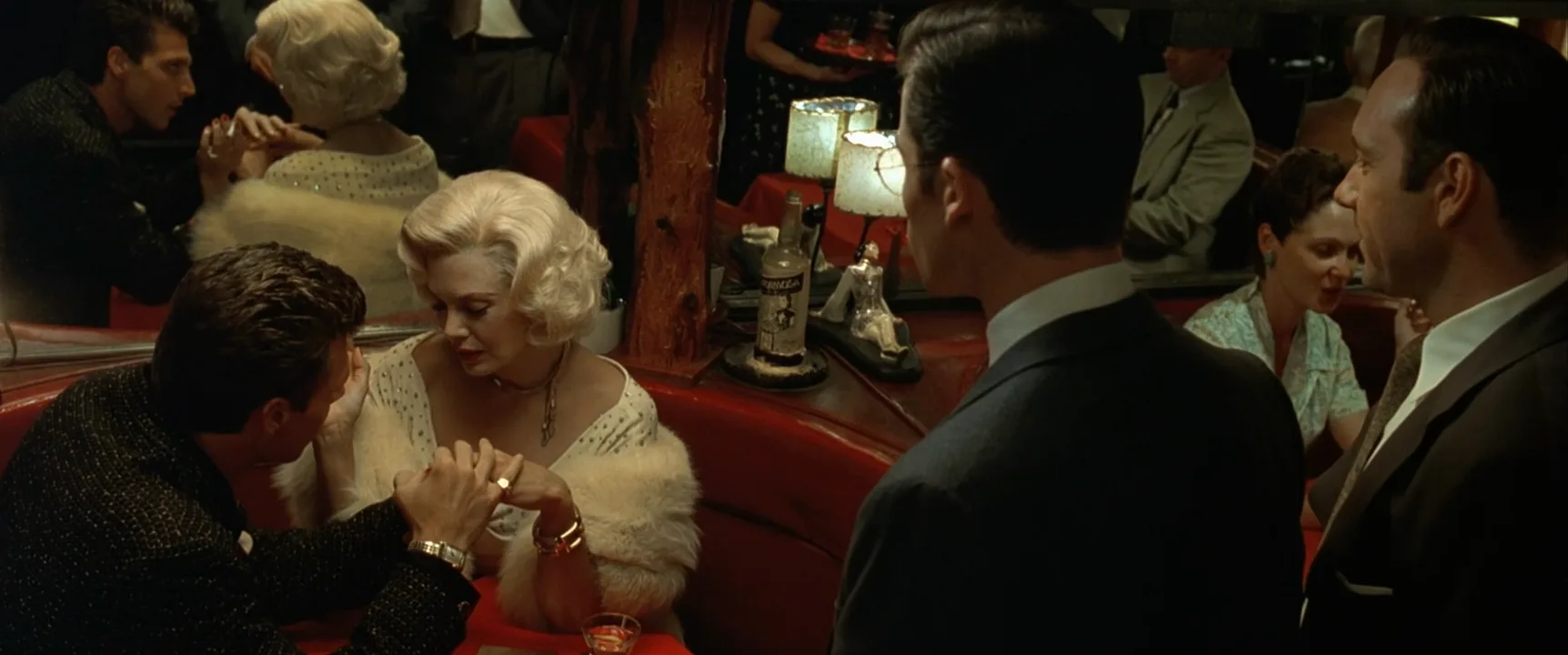
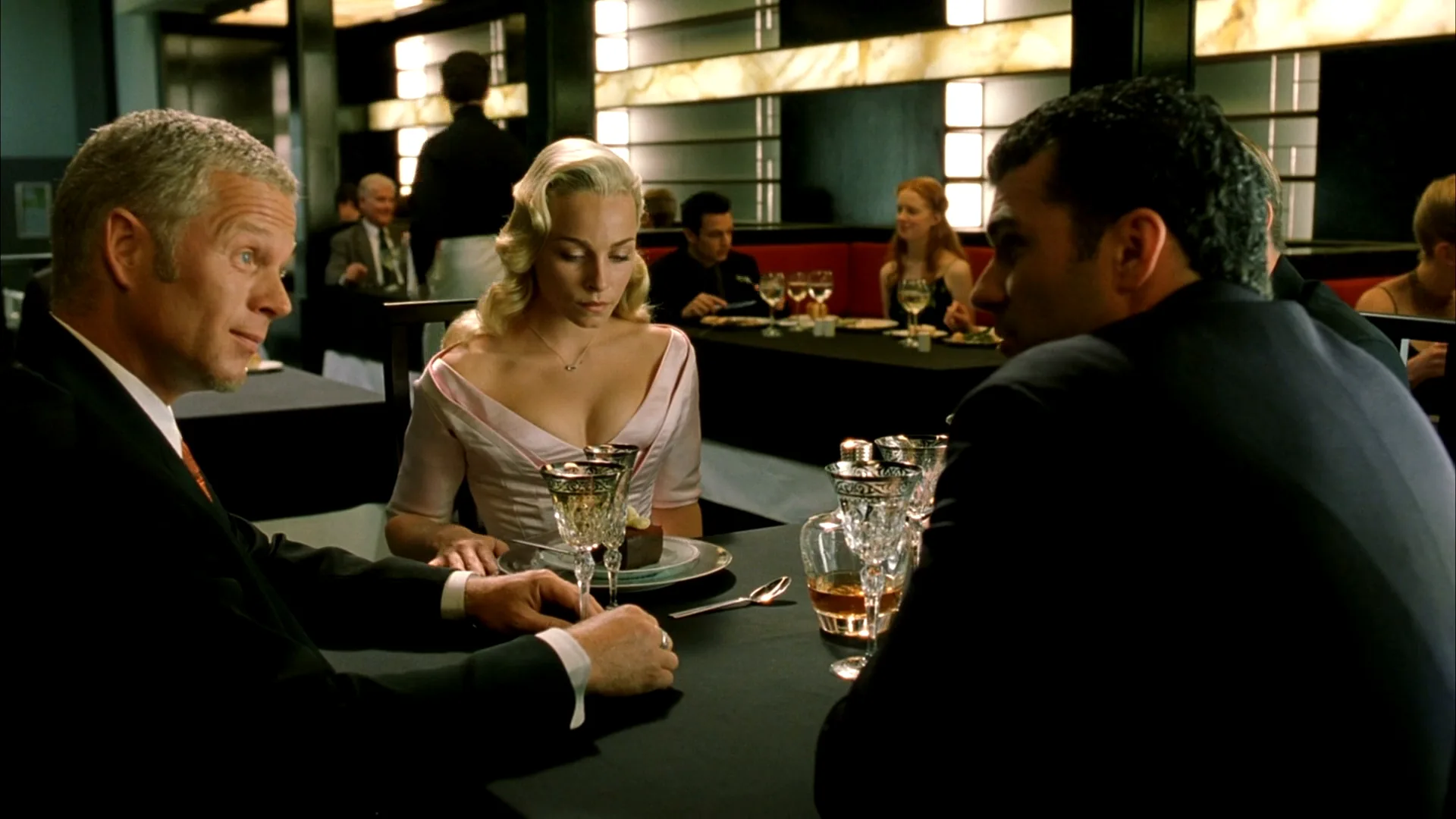
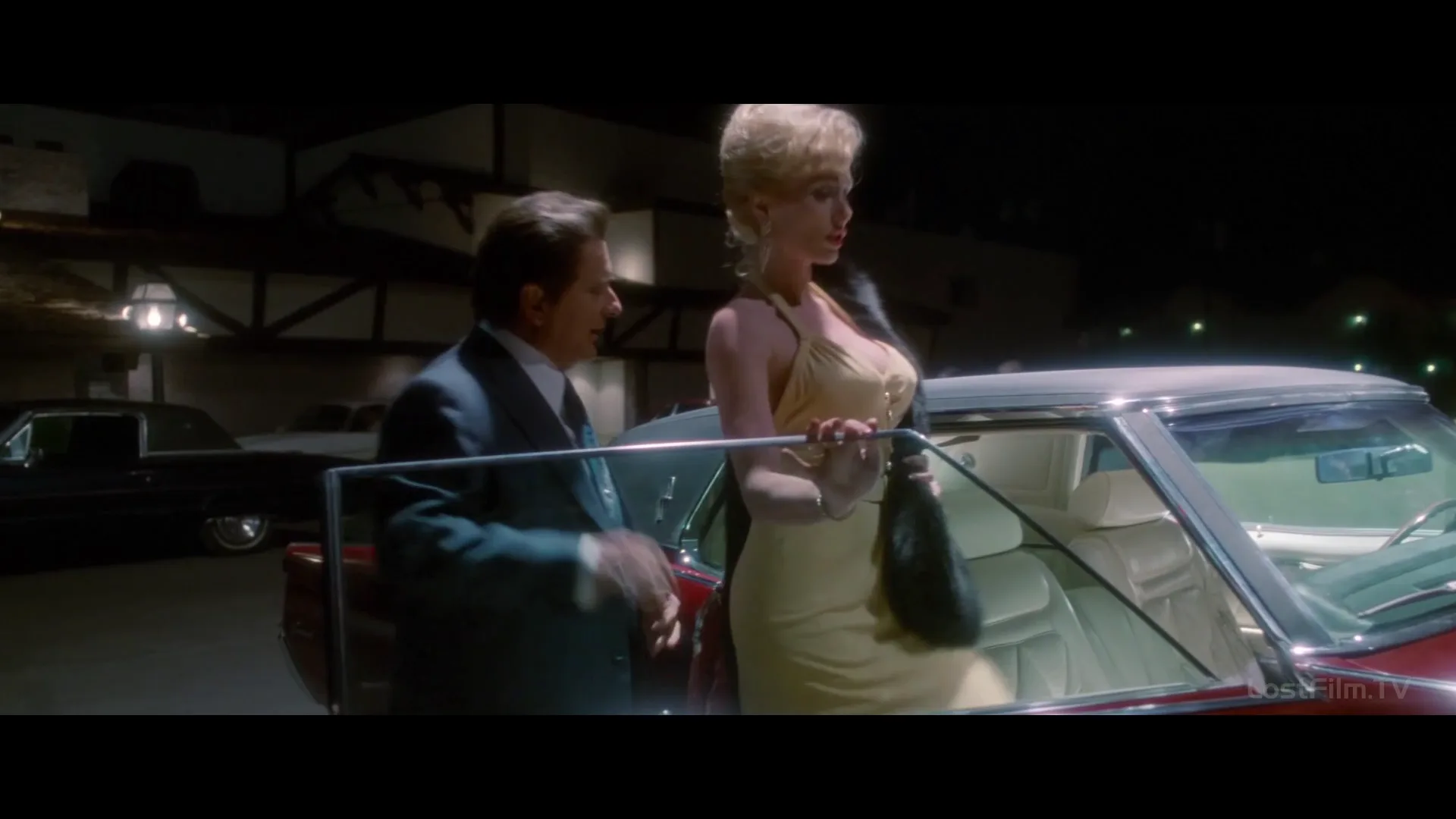
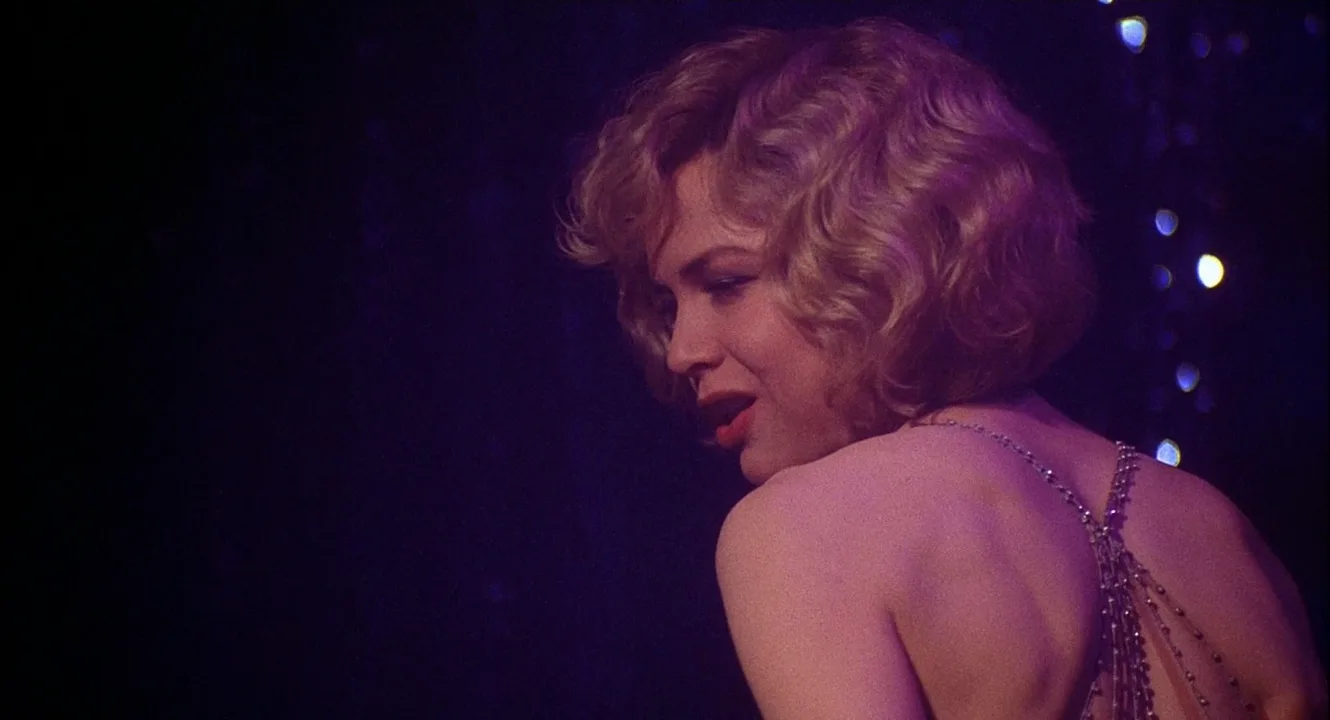
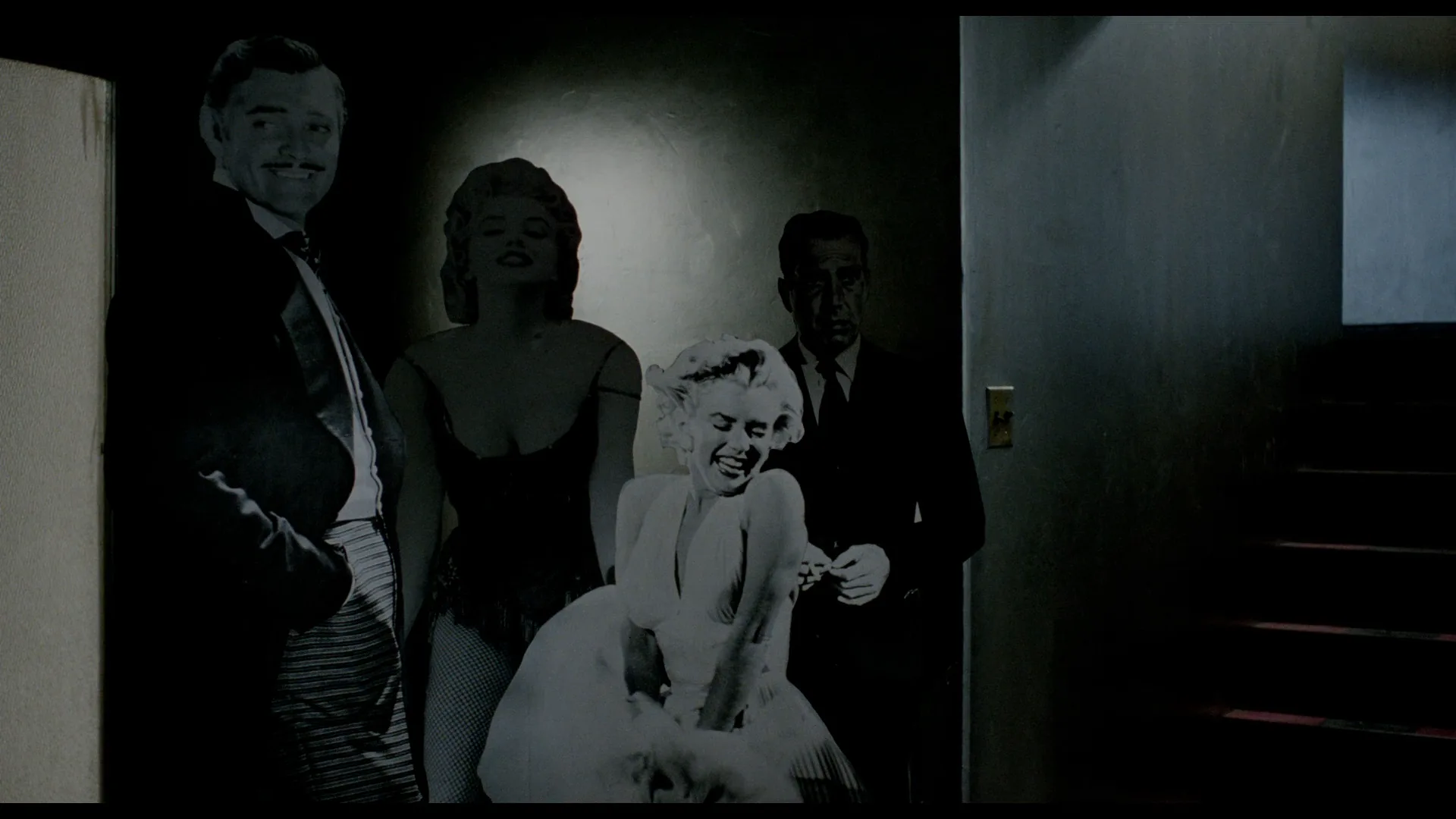
Male Gaze examples in film
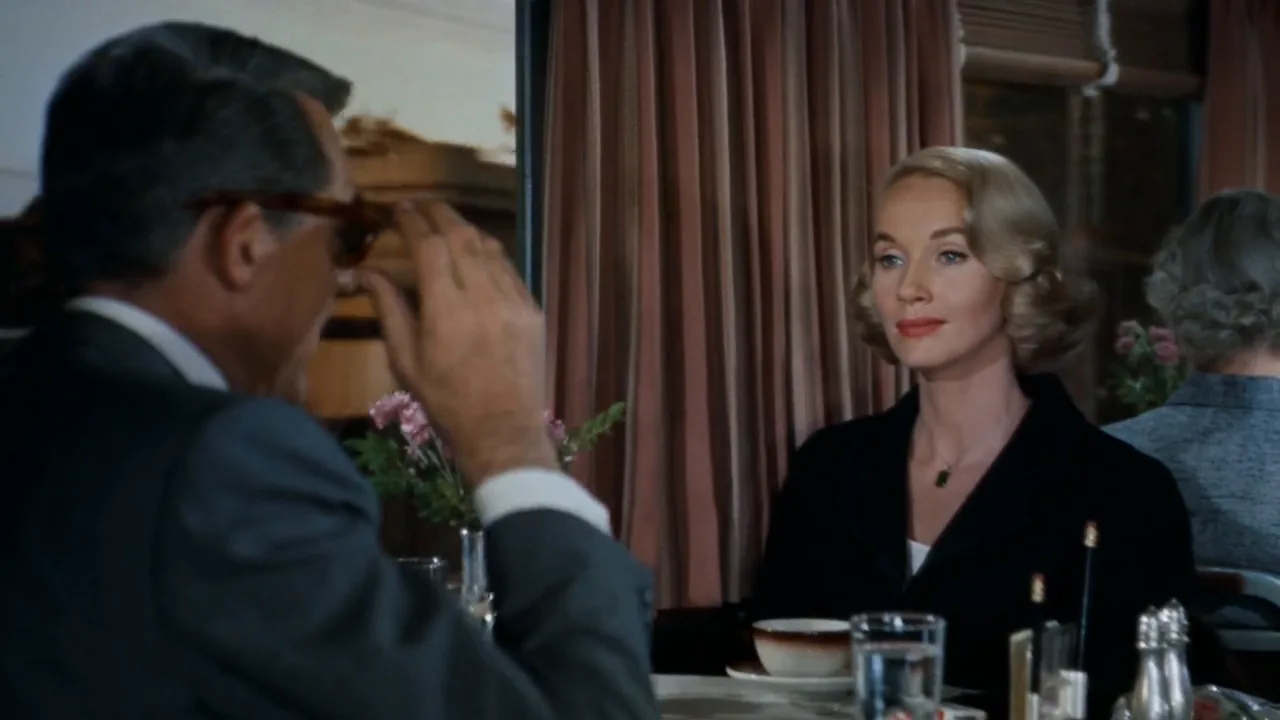
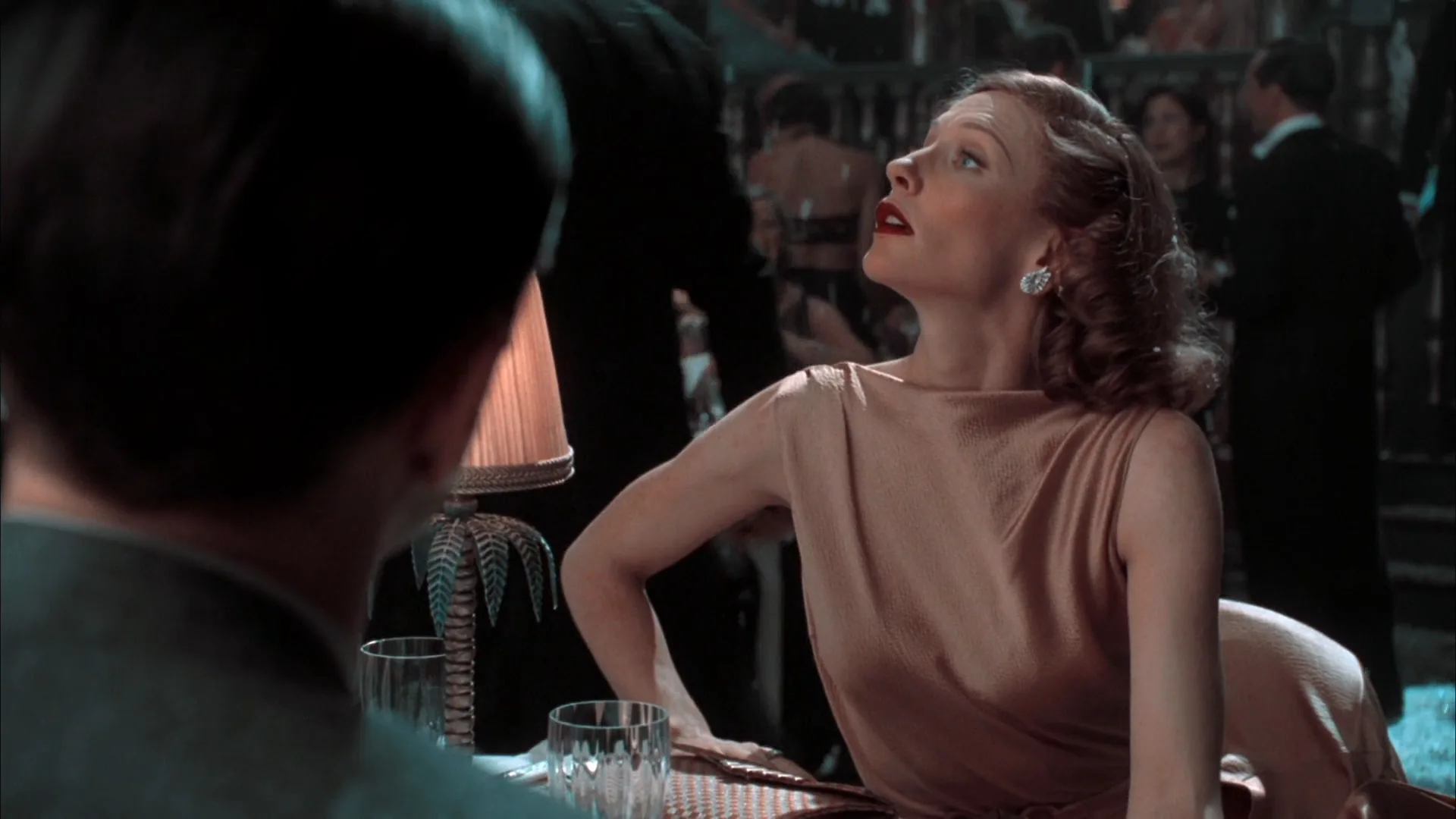
10 framesFrames from classical and modern films where the staging, framing and light make one person the looker and a woman the image. Note who faces the camera and whose back fills the foreground.
How to create a male gaze with AI
4 promptsThe male gaze is built from framing, so image and video models can stage and reverse it: a classic looker/looked-at shot, a take from her side, and a clip where she returns the look. One FlashBoards board keeps both points of view side by side. The fourth prompt re-shoots a real film shot from a text description alone, and the original plays next to the result so you can compare.
Over-the-shoulder shot in a smoky 1950s supper club. In the soft-focus foreground on the left third: the back of the head and right shoulder of a fictional middle-aged man with a gray crew cut and a charcoal wool suit, seated at a small table with a whiskey glass. Beyond him, sharp and centered: a fictional nightclub singer in her thirties with cropped copper hair, a freckled face and a high-necked emerald satin gown, eyes half-closed, singing into a chrome microphone under a hard white spotlight. Camera at the man’s seated eye level, 85mm lens, shallow depth of field, the room around her in amber darkness, 35mm film grain.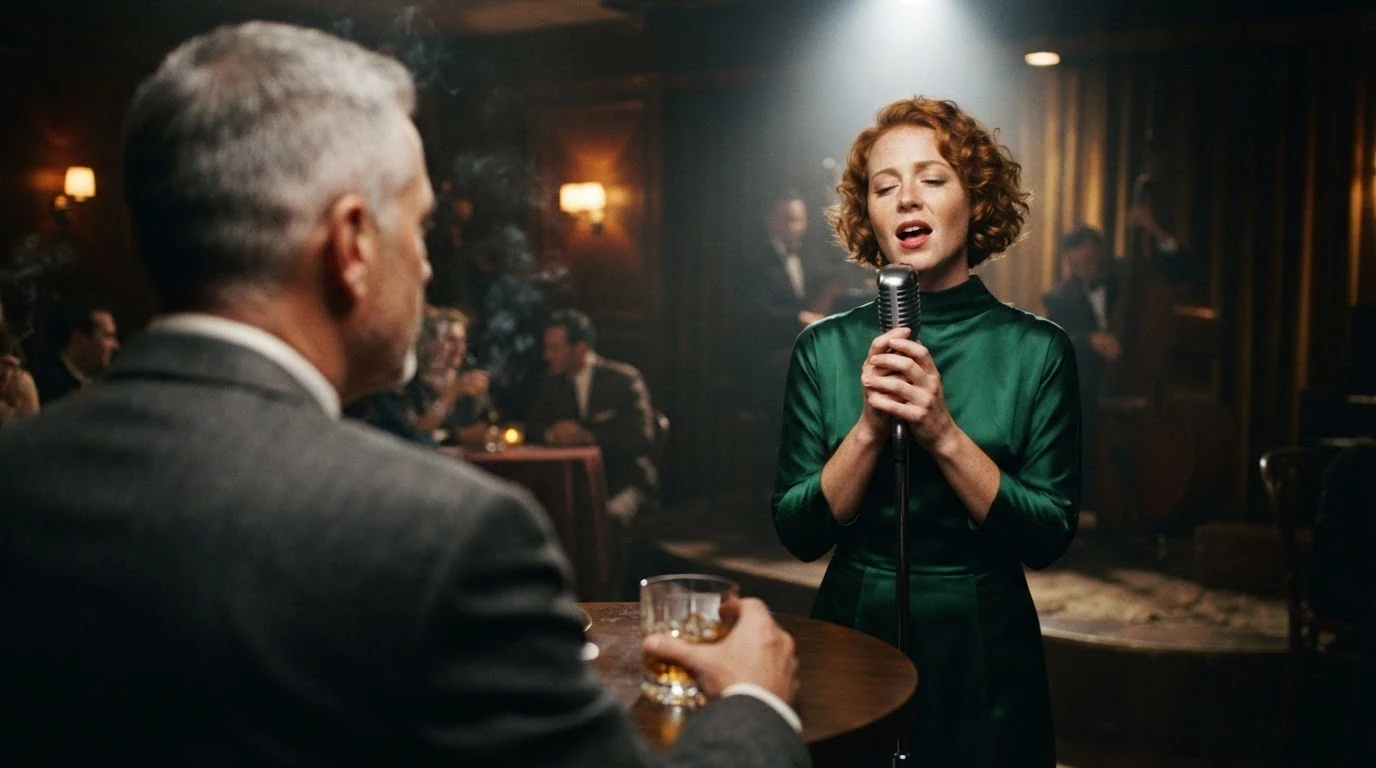
“Over-the-shoulder” plus the man’s head in soft focus makes him the looker and frames the singer through him. “Sharp and centered” under a “hard white spotlight” turns her into the image; “eyes half-closed” keeps her unaware of being watched, which is what makes the look one-sided.
Open FlashBoardsThe same 1950s supper club, reversed point of view. Medium close-up of a fictional nightclub singer in her thirties with cropped copper hair, a freckled face, a small scar through her left eyebrow and a long-sleeved, high-necked emerald satin gown, placed on the left third in three-quarter profile facing right, holding a chrome microphone at her chest and looking out over the audience with a cool, appraising expression, her eyes on the men, not on the camera. Filling the right of the frame in soft focus, rows of men in dark suits at small tables, looking up at the stage. Camera at her eye level, 50mm lens, warm side key light from the stage wings, anamorphic widescreen framing, 35mm film grain.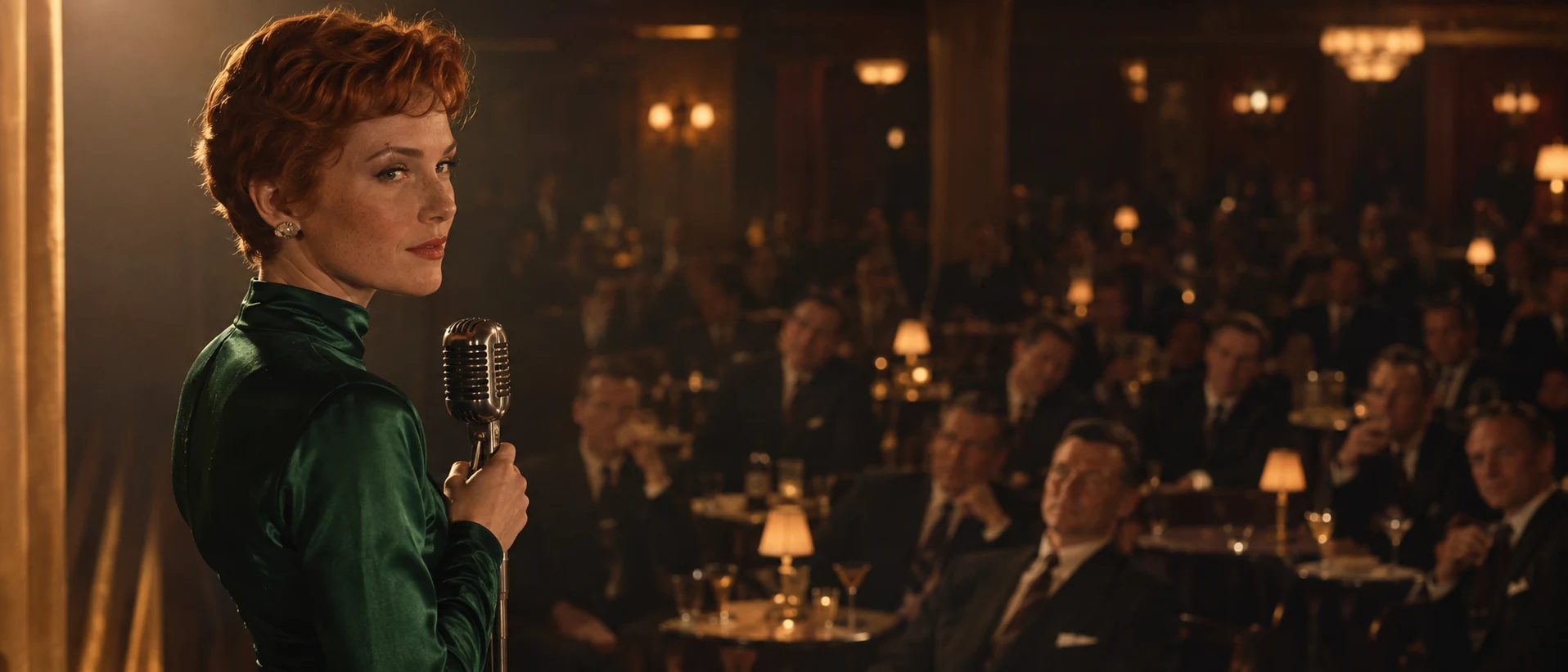
This take hands the look to her: her face and eyes carry the frame, “looking out over the audience” makes her the one who watches, and the men become the soft-focus crowd. The 21:9 frame gives room for the reversed relationship without cutting her into parts.
Open FlashBoardsCamera: a slow, steady push in over the man’s shoulder for the whole shot, starting on the back of his head and ending in a medium shot of the singer. Action: The singer is already singing and swaying under the spotlight as the shot begins, the man sits still with his whiskey glass. Halfway through she stops singing, lowers the microphone and opens her eyes, looking straight into the lens. She holds the look without smiling while the camera keeps creeping closer.The push in over his shoulder is the gaze moving toward its object; stating that she is “already singing and swaying” keeps the clip alive from the first frame. Her direct look “straight into the lens” is the break — the watched woman becomes the one who looks, and the viewer is caught looking.
Open FlashBoards{
"output": "Full-screen live-action scene from North by Northwest (1959), from its very first frame: one single continuous shot. Saturated late-1950s Technicolor look with fine 35mm grain, a railway dining car in late afternoon: dusty-rose pleated curtains between wide windows, the passing station buildings and trees seen through the glass, a white tablecloth with a small glass vase of pink carnations, coffee cups, water glasses, silver salt and pepper shakers; soft warm frontal key light on the woman, the man in the near foreground darker.",
"characters": {
"S1": {
"name": "Roger Thornhill, played by Cary Grant",
"look": "seen only from behind: short dark-gray hair, charcoal-gray suit, white shirt collar, dark tortoiseshell sunglasses",
"voice": "light, dry, teasing"
},
"S2": {
"name": "Eve Kendall, played by Eva Marie Saint",
"look": "platinum-blonde hair in soft sculpted waves, fitted black suit jacket, a small dark pendant on a thin chain, red lipstick",
"voice": "low, cool, amused"
}
},
"shots": [
{
"shot": 1,
"camera": "locked-off, eye level, normal lens, over-the-shoulder medium shot from just behind S1: the back of his head and his gray-suited right shoulder fill the left third of the frame in the near foreground; across the small table S2 sits right of centre facing the lens, sharp and brightly lit, the brightest thing in the frame; a gray-haired older woman sits at the next table at the far right edge, her back half turned; the framing holds unchanged to the end",
"action": [
"BEGINNING: alive from the first frame, S2 sits upright, hands out of sight below the table, eyes on S1's face, answering him with a faint smile; S1 sits still, his back to the camera, head turned slightly toward her.",
"THEN: S2 finishes her answer and holds his look, lips closed in a small smile, head tilted a little to her left.",
"THEN: S1 turns his head a little to screen left into rear three-quarter profile and raises his right hand to the right arm of his sunglasses while he speaks.",
"THEN: S1 pulls the sunglasses off with his right hand and brings them down in front of his chest; S2 watches his face and asks her question, eyebrows lifting slightly.",
"THEN: S1 lowers the glasses toward the table and answers with one word, his head square to her again.",
"THEN: S1 bows his head, looking down at the table; S2 glances down for a moment, one hand moving near her coffee cup.",
"END: S2 lifts her eyes back to him and answers with a small, knowing smile, her face calm and frontal in the light; S1 still looks down, his back to the camera."
],
"dialogue": [
{
"speaker": "S1",
"on_screen": true,
"when": "from the first frame",
"delivery": "light, a little surprised, his lips unseen from behind",
"line": "<d>[English] You think so?</d>"
},
{
"speaker": "S2",
"on_screen": true,
"when": "right after his question, at the beginning",
"delivery": "cool, sure of herself",
"line": "<d>[English] I wouldn't say it if I didn't.</d>"
},
{
"speaker": "S1",
"on_screen": true,
"when": "as he raises his hand to the sunglasses",
"delivery": "dry, teasing, his lips unseen from behind",
"line": "<d>[English] Oh, you're that type.</d>"
},
{
"speaker": "S2",
"on_screen": true,
"when": "as the sunglasses come off",
"delivery": "curious, playful",
"line": "<d>[English] What type?</d>"
},
{
"speaker": "S1",
"on_screen": true,
"when": "as he lowers the glasses toward the table",
"delivery": "flat, one word, his lips unseen from behind",
"line": "<d>[English] Honest.</d>"
},
{
"speaker": "S2",
"on_screen": true,
"when": "at the end, as she lifts her eyes back to him",
"delivery": "low, amused",
"line": "<d>[English] Not really.</d>"
}
]
}
],
"sound": {
"ambience": "steady rumble and rhythmic clack of train wheels on rails, soft clink of china and a quiet murmur of other diners",
"speech": "exactly these spoken phrases, each said once, in this order",
"never_spoken": "no narration and no voice-over: the descriptions, performance notes and step words of this prompt are never spoken aloud",
"music": "a film score under the scene, always below the voices: soft romantic strings and a gentle woodwind melody with a slow, lilting sway",
"subtitles": "none"
}
}Remakes the dining-car over-the-shoulder shot from North by Northwest (1959), dir. Alfred Hitchcock, DP Robert Burks: the locked-off framing behind Thornhill's shoulder, Eve's frontal, lit face, his sunglasses coming off and the film's exact exchange carried over.
The gaze sits in the camera field: the back of his head and his gray-suited right shoulder fill the left third while she faces the lens, the brightest thing in the frame. The film's own lines stay verbatim, and pulls the sunglasses off with his right hand sharpens his look as she asks what type he is.
Common mistakes
- Models tend to sexualize any “glamorous woman” prompt with revealing clothes and a pin-up pose. Specify wardrobe (“high-necked emerald satin gown”) and an expression to keep the frame about the looking.
- The foreground watcher often disappears or turns into a second subject facing the camera. Say where he is (“left third, back of the head and shoulder, soft focus”).
- Image models love eye contact with the lens, which breaks the one-sided look of recipe 1. Give the object an action that directs her eyes elsewhere (“eyes half-closed, singing into the microphone”).
- In video, the returned look can happen instantly or never. Place it with “halfway through” and describe what she does before it.
Keep the reference frames, prompts and every generated take side by side — images and video in one canvas.
FAQ
5 questionsWhat is the male gaze in simple terms?
The male gaze is the way many films make the audience look at women through the eyes of a heterosexual man. The camera takes his position, cuts to what he sees, and frames the woman as something to be watched — often through body-part close-ups, slow tilts and spectacle entrances — rather than as a person with her own point of view.
Who coined the term male gaze?
Film theorist and filmmaker Laura Mulvey introduced it in her 1975 essay “Visual Pleasure and Narrative Cinema,” published in the journal Screen. Drawing on psychoanalysis, she argued that classical Hollywood splits looking into an active male role and a passive female one, and that the camera, the characters and the audience all share the male position.
What are examples of the male gaze in film?
Mulvey’s own examples were Hitchcock’s Rear Window and Vertigo and Josef von Sternberg’s films with Marlene Dietrich. Later cases often cited include Ursula Andress emerging from the sea in Dr. No, its echo in Die Another Day, and the heroine bent over a car engine while the hero stares in Transformers.
What is the female gaze?
The female gaze usually describes films where the camera shares a woman’s perception and feelings instead of looking at her from outside: her looks motivate the cuts, her face carries scenes, and bodies are not fragmented for display. Céline Sciamma’s Portrait of a Lady on Fire (2019) is the most frequently cited example.
Can a woman director create a male gaze?
Yes. The male gaze describes a structure of looking — who holds the point of view and who is displayed — not the gender of the person behind the camera. A woman can direct a film built on fragmenting close-ups and one-sided POV, and a man can make a film where women hold the look. The shots decide it.
Related terms
6- POV ShotCamera Angles
A POV shot shows exactly what a character sees by placing the camera at their eyes — usually right after a shot of them looking — so the audience shares their perspective, including movement, obstruction or distortion.
- Voyeur ShotCamera Angles
A voyeur shot watches a character who doesn't know they're being observed — through a window, blinds, a door gap or foliage, or from afar with a long lens — making the audience complicit in spying.
- Queer TheoryFilm History & Theory
Queer theory in film studies reads movies against fixed categories of gender and sexuality — uncovering coded queer characters of the Hays Code era and analyzing New Queer Cinema and its politics of representation.
- Tilt ShotCamera Movement
A tilt pivots the camera up or down from a fixed position, like nodding your head — to reveal a tall subject, follow a rise or fall, or shift attention between sky and ground.
- Close-Up ShotCamera Shots
A close-up frames a subject tightly — for a person, usually the face from chin to forehead or the head with the top of the shoulders — so emotion, micro-expressions and small details dominate the screen.
- Film TheoryFilm History & Theory
Film theory is the body of ideas about what cinema is and how it produces meaning and pleasure — from Soviet montage and Bazin's realism to auteur theory, psychoanalytic and feminist criticism.
Further reading
Laura Mulvey, “Visual Pleasure and Narrative Cinema,” Screen 16, no. 3 (1975). Laura Mulvey, “Afterthoughts on ‘Visual Pleasure and Narrative Cinema’,” Framework (1981). bell hooks, “The Oppositional Gaze,” in Black Looks: Race and Representation (1992).