 FlashBoards Learn
- Learn
- Camera Shots
- Medium Long Shot
Camera Shots · Film language
Medium Long Shot
Also called: medium full shot, medium wide shot, MLS, MFS
A medium long shot (also called a medium full or medium wide shot) frames a person from about the knees up. It sits between the medium shot and the full shot: close enough to read the face, wide enough to show stance, gesture and the room around the character.
- What it does
- Shows a character's whole attitude — posture, hands, weight — while keeping the setting and other people in play.
- Use it when
- A scene is about how someone stands in a place or next to someone, not just what their face does.
- Watch out
- Cutting exactly at the knee joint looks like an accident; frame just above or clearly below it.
- Try this prompt
Medium long shot from the knees up, woman in a rust wool coat in a bookshop doorway, 40mm lens at chest height, warm practicals, 35mm film grain
What is a medium long shot?
A medium long shot (MLS on a shot list) frames a standing person from roughly the knees up, with a little air above the head. On the scale of types of camera shots it sits one step wider than the medium shot, which stops at the waist, and one step tighter than the full shot, which keeps the feet.
The size goes by several names: medium full shot (MFS), medium wide, or a three-quarter figure in painting and photography. Because the labels overlap, name the frame line on set — "bottom of frame just under the knees."
The face still carries expression but no longer dominates: hands, weight, costume and floor space join the performance.
Why do filmmakers use the medium long shot?
It reads the body without losing the person. A long shot turns a character into a figure in a place; a medium shot, a face with hands. At the knees you see someone slumped or braced and still see their eyes.
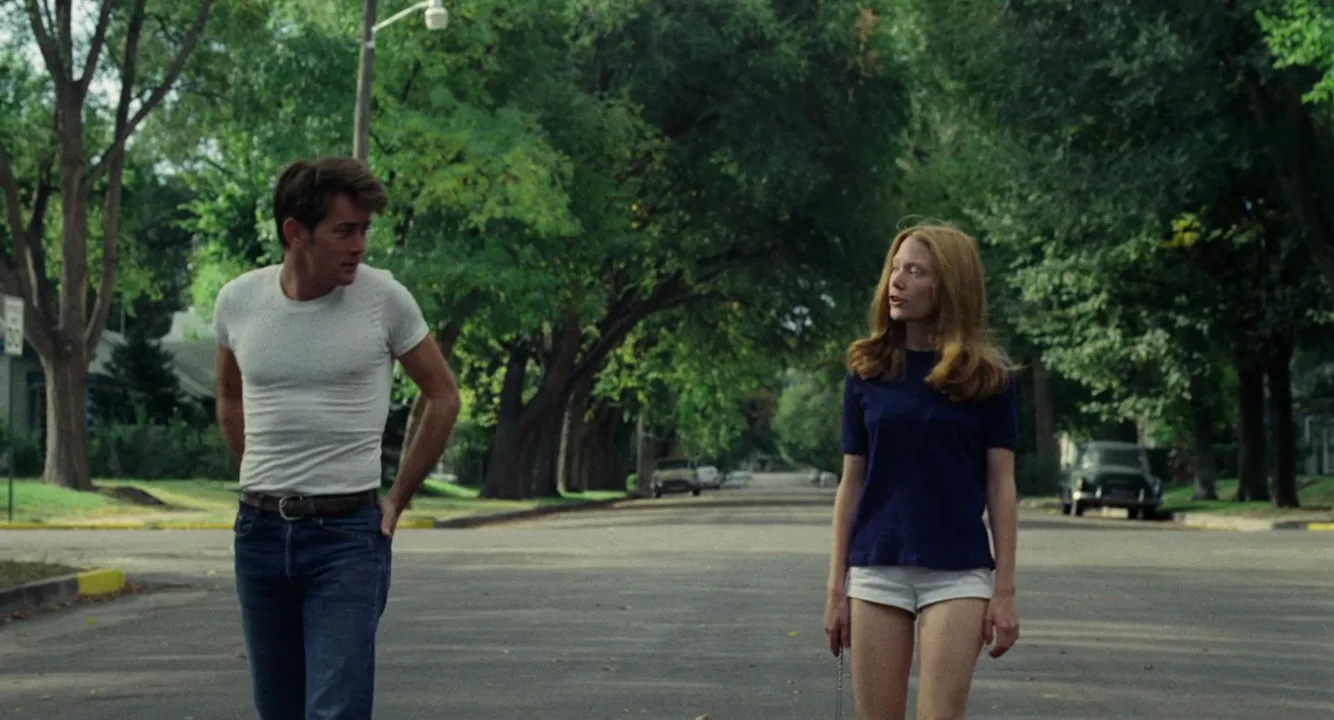
It holds two or three people. It is the natural size for a standing two shot: distance between actors, who turns away, who steps closer — all without a cut. In the Badlands (1973) frame below, the gap between the couple says as much as their faces.
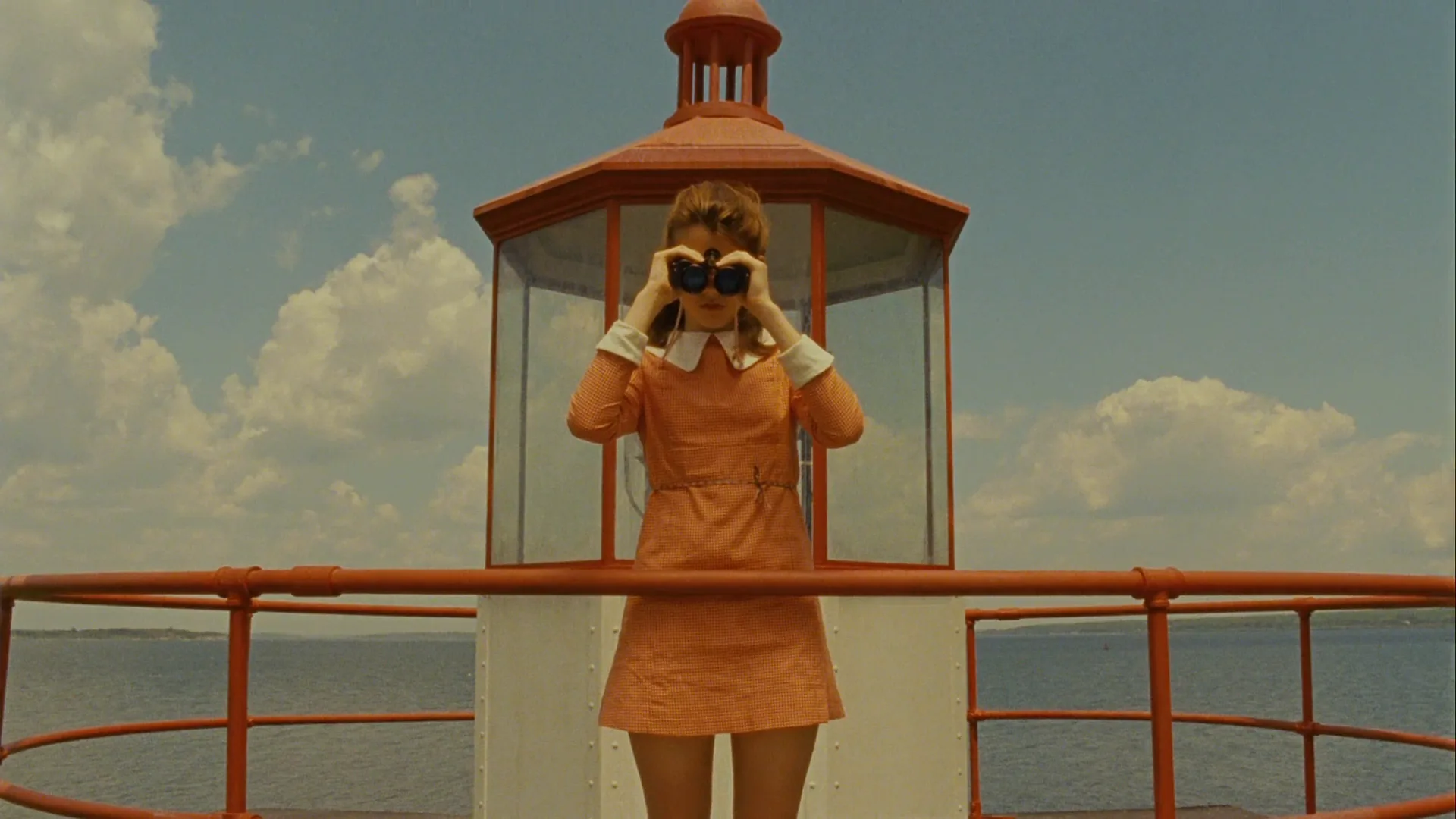
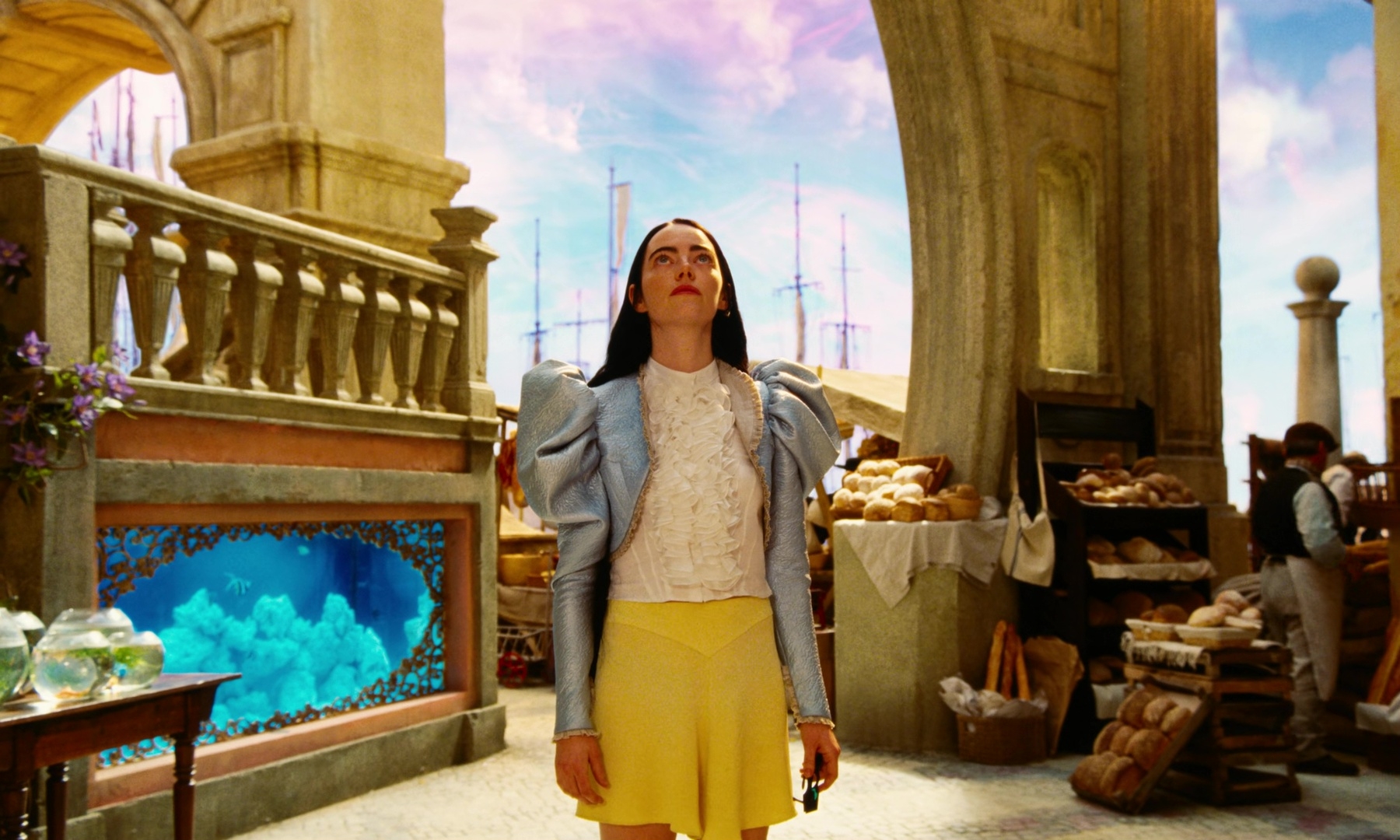
It lets the set speak. Wes Anderson and Yorgos Lanthimos favor centered knee-up framings where production design surrounds the actor like a diorama.
It resets coverage. Editors use it to re-establish geography after close-ups.
How to shoot a medium long shot
Lens and distance. On a full-frame sensor, 35–50mm gives natural proportions: for an adult framed knees-up in 16:9, roughly 3 m away on a 50mm and a little over 2 m on a 35mm. Wider than 28mm stretches heads and shrinks legs; 85mm and longer flattens the background into a backdrop.
Camera height. Chest height is neutral; waist height adds a confident lift.
Frame lines. Don't cut at a joint. Put the bottom edge a hand's width above the knees or at mid-shin, never on the kneecap, and keep headroom modest.
Blocking and light. The size rewards blocking that uses the body — a hand on a door frame, a step toward another actor. If the actor walks toward the lens, dolly back to hold the knee line. Floor and back wall are in frame: light and dress them, and use an edge light so legs don't melt into a dark floor.
Medium long shot vs. cowboy shot
A cowboy shot cuts at mid-thigh — historically to keep a holstered gun in frame — and is usually shot from a slightly low camera to make the stance heroic. A medium long shot sits lower, around the knees, and carries no built-in attitude: angle and staging make it neutral, intimate or lonely. If the hip and hands are the point, frame a cowboy; if the whole stance and the space around it are the point, frame to the knees.
Medium long shot vs. full shot
The full shot keeps the feet and floor — right for footwork, a fall or a head-to-toe costume. Cropping at the knees buys face size and loses the ground.
Medium Long Shot examples in film
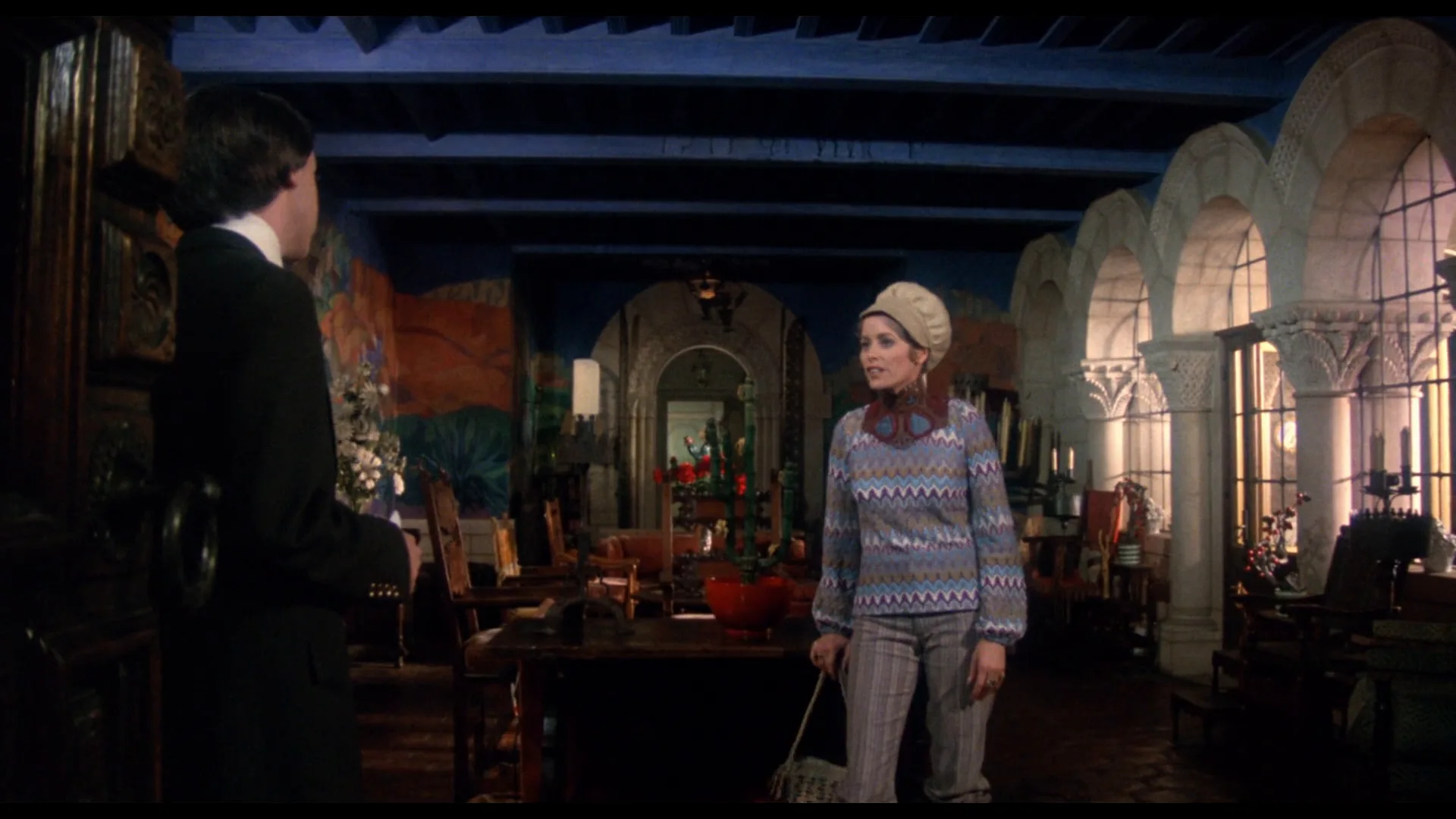
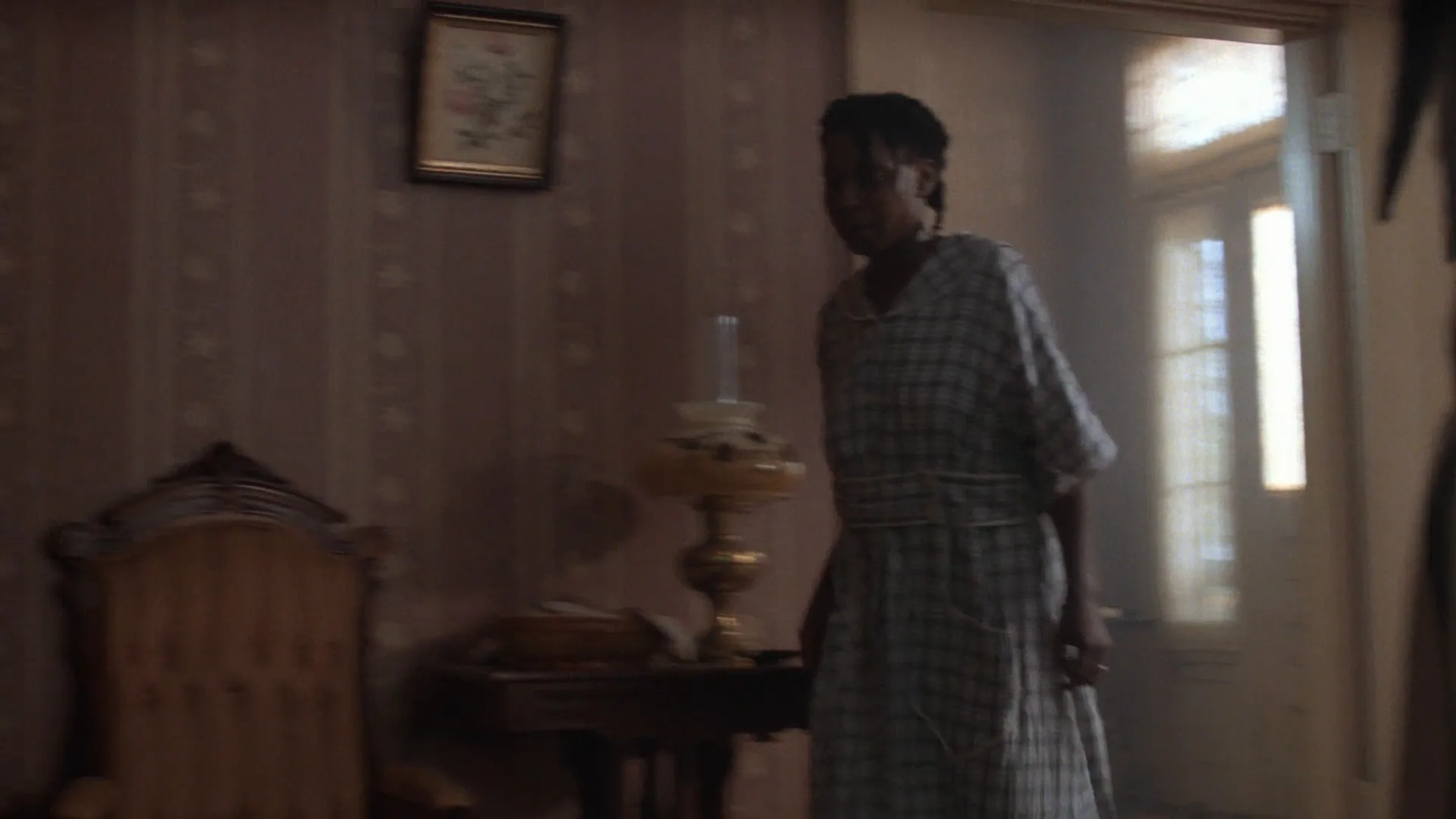
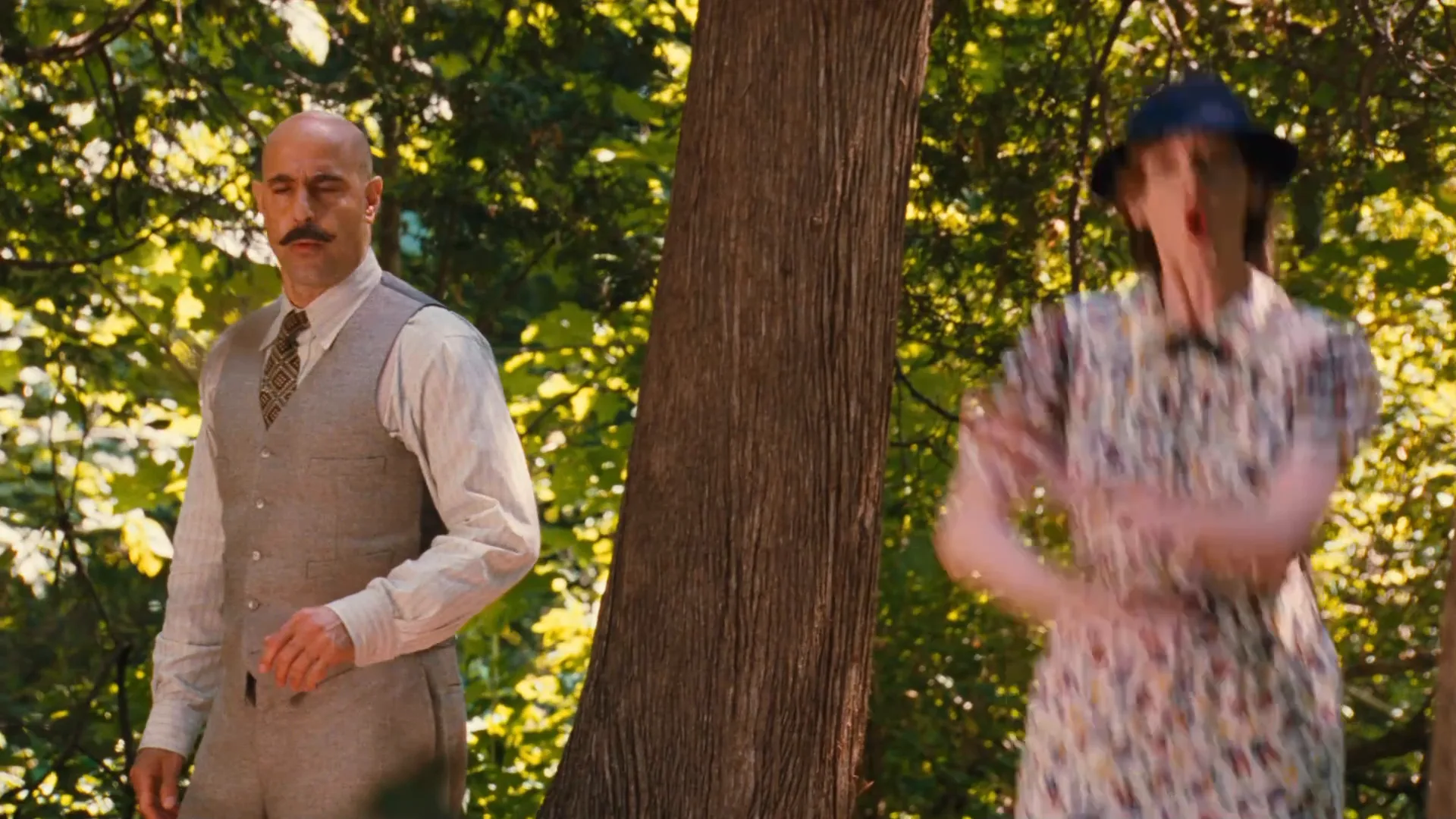
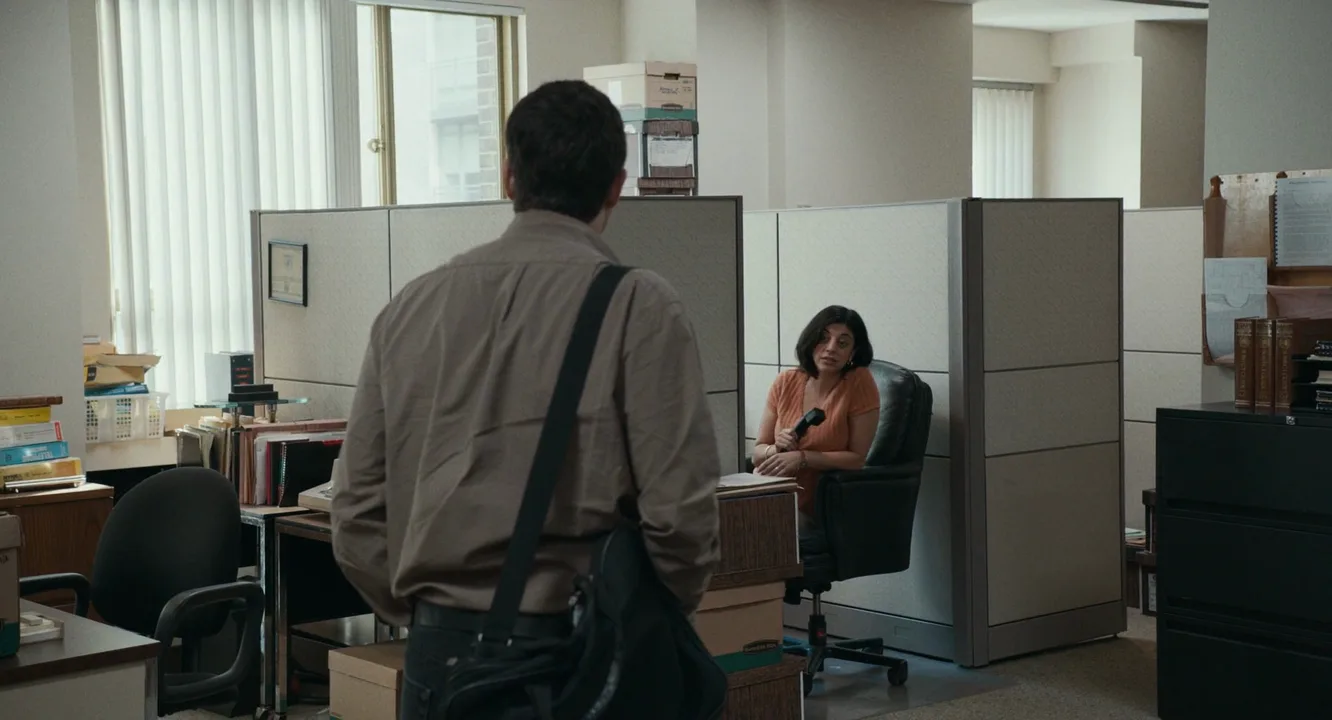
7 framesFrames from feature films, 1971–2023. Watch where the bottom edge falls and how much room surrounds the body.
How to create a medium long shot with AI
4 promptsImage models default to a portrait or a wide frame, so write the knee line in as an explicit frame edge. Generate the start frame, try a second take, then animate the first — all on one FlashBoards board, takes side by side. The fourth prompt re-shoots a real film shot from a text description alone, and the original plays next to the result so you can compare.
Medium long shot, bottom of frame just below the knees, a little headroom, the hem of her knee-length coat near the bottom edge: a fictional woman in her late 30s with a cropped silver-gray bob, freckles and a rust wool coat stands in a bookshop doorway, one hand on the door frame, a paper bag in the other arm. 40mm lens at chest height, eye level, camera about 2 meters away. Wooden shelves around her, warm tungsten practicals, cool dusk light on her face. 35mm film grain.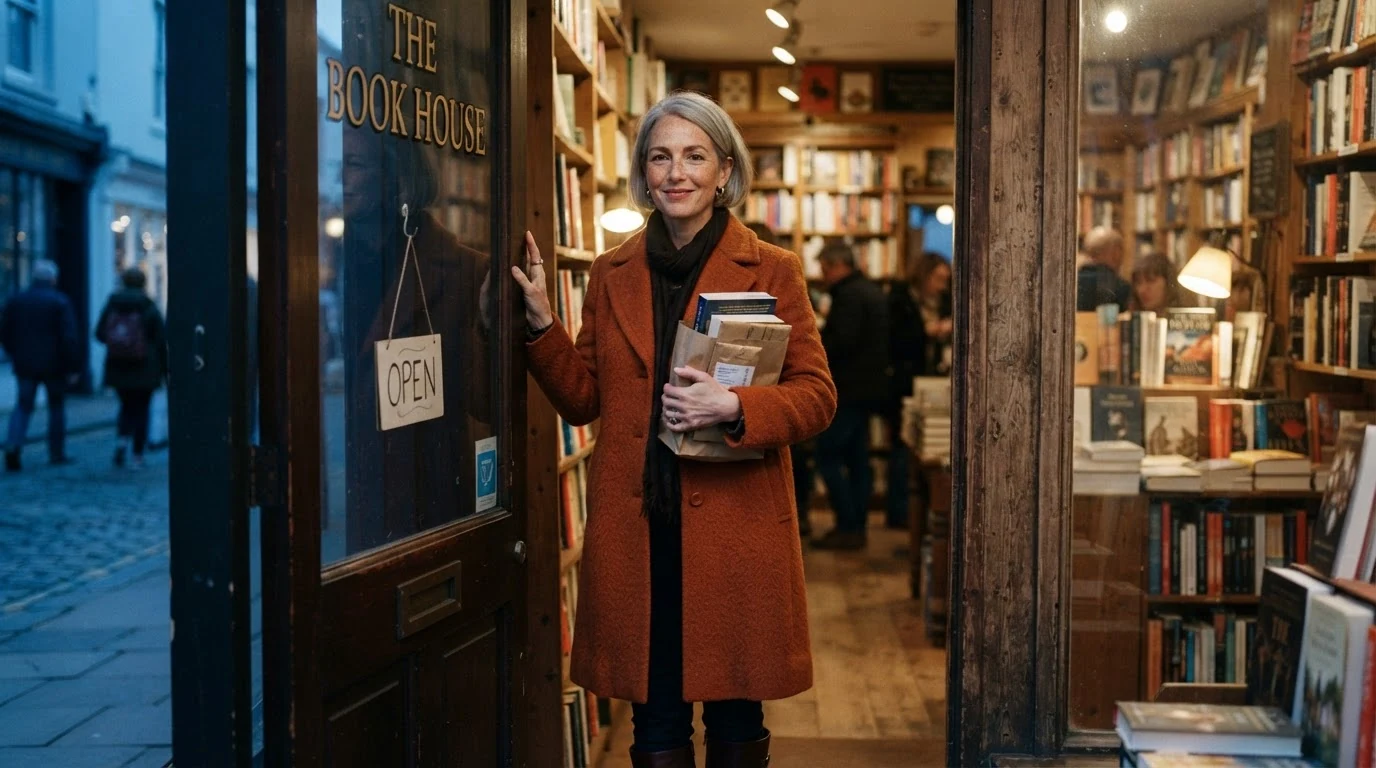
"Bottom of frame just below the knees" does more than the shot name; "40mm, chest height, about 2 meters" locks the perspective so the model doesn't drift into a portrait.
Open FlashBoardsMedium wide two-shot, bottom of frame just below both knees: a fictional stocky rancher in his 50s, clean-shaven, with a shaved head, a crooked nose and faded denim shirt, and a young woman with a long dark braid and sunburned nose in a canvas jacket, leaning on a split-rail fence two steps apart, facing each other. 50mm anamorphic lens at waist height, camera about 4 meters back, late afternoon backlight, dry grass behind. Warm dusty color.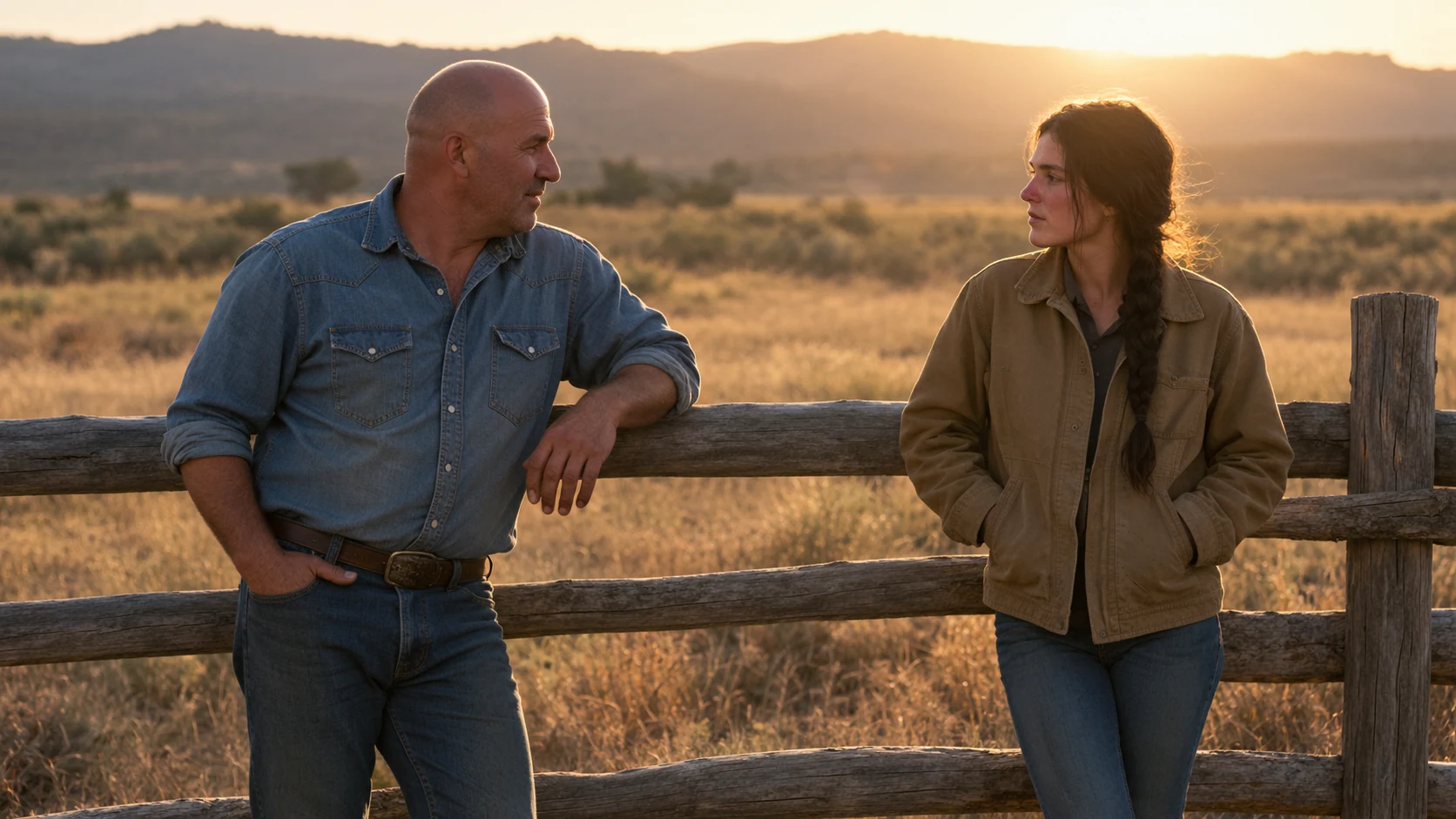
Moves the size outdoors into a two-shot. "Waist height" adds a western lift without becoming a cowboy shot; "two steps apart" gives the wide frame a distance to show.
Open FlashBoardsCamera: a slow, steady dolly back of about half a meter across the shot, holding her from the knees up at eye level. Action: The woman is already stepping out of the doorway onto the threshold, shifting the paper bag to her other arm. She stops and turns up the collar of her rust coat. She glances back into the warm shop, then looks ahead with a small, tired smile.Motion starts in the first words, so the clip is alive from frame one, and the dolly back matches her step forward to keep the knee line. Every action uses only what the start frame shows.
Open FlashBoards{
"output": "Full-screen live-action scene from Badlands (1973), from its very first frame: one single continuous shot. Early-1970s 35mm film look with soft grain, 1.85:1 frame, a quiet small-town residential street in South Dakota in summer: gray asphalt running straight back to the horizon, huge leafy elms arching over both sides, green lawns, a streetlamp on a tall pole left of center, an old dark 1950s sedan parked far back at the right curb; soft overcast-bright daylight, dappled green shade, gentle greens, faded blues and whites.",
"characters": {
"S1": {
"name": "Kit, played by Martin Sheen",
"look": "lean young man in his mid twenties, dark hair combed back in a 1950s quiff, tight plain white short-sleeved T-shirt tucked into dark blue jeans with a black leather belt",
"voice": "flat, mild, a light Midwestern drawl, offhand as if talking about the weather"
},
"S2": {
"name": "Holly, played by Sissy Spacek",
"look": "slim teenage girl, long straight strawberry-blonde hair past the shoulders, navy-blue short-sleeved knit top, white short shorts, a thin silver twirling baton held pointing down in her right hand",
"voice": "small, soft, plain, a young girl's voice"
}
},
"shots": [
{
"shot": 1,
"camera": "medium long two-shot that keeps both people from just above the knees up the whole time; 35mm lens at chest height, eye level, down the middle of the street; a slow steady dolly out that travels backward as the two walk slowly toward the lens, so the street behind them keeps revealing more houses and trees; S1 walks in the left third, S2 in the right third, a wide gap of empty asphalt between them; the knee-up framing never changes",
"action": [
"BEGINNING: alive from the first frame, both already walking slowly toward the camera; S1 on the left has his right hand pressed to the small of his back and his head turned to screen right, looking at S2; S2 on the right walks with both arms loose, the baton hanging from her right hand, glancing left at him.",
"THEN: S1 lowers his head and looks down at the road as he walks, his hand still on his hip, moving his lips as he talks; S2 keeps her even pace, her eyes on him.",
"THEN: S1 lifts his head and turns it to screen right toward S2 again, now his left hand resting on his hip; S2 looks back at him and answers, lips moving, her face calm, no smile.",
"THEN: S1 looks down at the asphalt, slides his left hand to his jeans pocket and slows, still talking; S2 keeps walking, turning her eyes forward.",
"THEN: S1 bends deep at the waist toward screen left, his head dropping below his hips, and reaches down to the road with his right hand to pick up something small; S2 walks on without stopping and without looking down at him.",
"END: S1 straightens up, now square to the camera, turning the small thing in his right hand at his side as he walks on toward the lens, still talking; S2 walks level with him on the right, looking ahead down the street, the gap between them unchanged."
],
"dialogue": [
{
"speaker": "S1",
"on_screen": true,
"when": "early, as he looks down at the road",
"delivery": "wry, half to himself",
"line": "<d>[English] Sounds a little too much like \"druthers,\" huh?</d>"
},
{
"speaker": "S2",
"on_screen": true,
"when": "right after his line, while she looks at him",
"delivery": "soft, simple, reassuring",
"line": "<d>[English] It's okay.</d>"
},
{
"speaker": "S1",
"on_screen": true,
"when": "as he looks down and starts to bend for the pebble",
"delivery": "flat, a little sulky",
"line": "<d>[English] Yeah, well, nobody asked me what I thought.</d>"
},
{
"speaker": "S1",
"on_screen": true,
"when": "as he straightens up at the very end",
"delivery": "offhand, a shrug in the voice",
"line": "<d>[English] They just hung it on me.</d>"
}
]
}
],
"sound": {
"ambience": "a quiet summer street: birds in the elms, soft steps on asphalt, a light breeze in the leaves",
"speech": "exactly these spoken phrases, each said once, in this order",
"never_spoken": "no narration and no voice-over: the descriptions, performance notes and step words of this prompt are never spoken aloud",
"music": "a film score under the scene, always below the voices: a light, plucked, music-box-like melody on marimba and soft strings, innocent and slightly distant",
"subtitles": "none"
}
}Remakes the Badlands (1973) street walk, dir. Terrence Malick, DP Tak Fujimoto: Kit and Holly held knee-up while the camera dollies back, his hand on his hip, her baton, his stoop for a pebble and their real lines about his last name.
The knee line lives in the camera field: from just above the knees up the whole time, with a slow dolly out so the pair can walk toward the lens without growing into a medium shot. Kit's three lines and Holly's reply come from the film, word for word, and the stoop for the pebble lands inside the frame.
Common mistakes
- The feet sneak back in. Describe the edge you want — "bottom of frame just below the knees" — not what to hide.
- "Medium wide" becomes a wide shot. Pair it with a body landmark, lens and distance.
- Wide-lens distortion. 24mm at this size stretches the head; stay at 35–50mm.
- Video pushes in. Without a stated move the clip drifts to a medium shot; write the dolly back.
Keep the reference frames, prompts and every generated take side by side — images and video in one canvas.
FAQ
4 questionsWhat is a medium long shot in film?
A medium long shot frames a character from roughly the knees up with a little space above the head. It shows posture, gesture and costume while keeping the face readable, and leaves room for the setting and a second actor. It sits between the waist-high medium shot and the head-to-toe full shot.
Is a medium wide shot the same as a medium long shot?
Usually, yes. Medium long, medium full and medium wide all describe a person framed from about the knees up, though some crews use medium wide loosely. On set, name the frame line: bottom of frame just under the knees.
What is the difference between a medium long shot and a cowboy shot?
A cowboy shot cuts at mid-thigh, a size from westerns that kept a holstered gun in frame, and is often filmed slightly low to make the stance heroic. A medium long shot sits a little lower, around the knees, and has no built-in attitude; its mood comes from angle, lens and staging.
What lens should I use for a medium long shot?
On full frame, 35mm to 50mm gives natural proportions for a standing adult framed knees-up, roughly 2 to 3 meters away. Wider lenses distort head and legs; 85mm and longer flattens the background.
Related terms
4- Cowboy ShotCamera Shots
A cowboy shot frames a character from about mid-thigh up — a size born in westerns to keep a holstered gun in frame while still reading the face — and is now used for confident, heroic stances.
- Full ShotCamera Shots
A full shot frames a character from head to toe with little room above and below, so posture, costume and whole-body movement read clearly while the setting stays secondary.
- Medium ShotCamera Shots
A medium shot frames a person from about the waist up, balancing facial expression with hand gestures and some of the surroundings — the neutral, conversational size of most dialogue and interaction.
- Long ShotCamera Shots
A long shot (wide shot) shows the full figure with plenty of surroundings around it, so the audience reads both a character's body language and their relationship to the place.
Further reading
Joseph V. Mascelli, The Five C's of Cinematography (1965) — chapters on camera distance and shot sizes. Gustavo Mercado, The Filmmaker's Eye (2010) — the medium long shot and its uses.