 FlashBoards Learn
- Learn
- Camera Shots
- Three Shot
Camera Shots · Film language
Three Shot
Also called: 3-shot, triple shot
A three shot holds three characters in one frame with comparable weight, usually staged as a triangle or a line. Instead of cutting between faces, it lets the audience watch the trio as a unit: who sits in the middle, who leans toward whom, who is left on the edge.
- What it does
- Shows a trio's balance of power and shifting alliances in one uncut image.
- Use it when
- Three characters share a scene and the relationship between all three is the point.
- Watch out
- Three faces in a line go flat and small; stagger them in depth or height.
- Try this prompt
Medium three shot at eye level, 35mm lens, three distinct people shoulder to shoulder, the middle one slightly higher, all three in focus
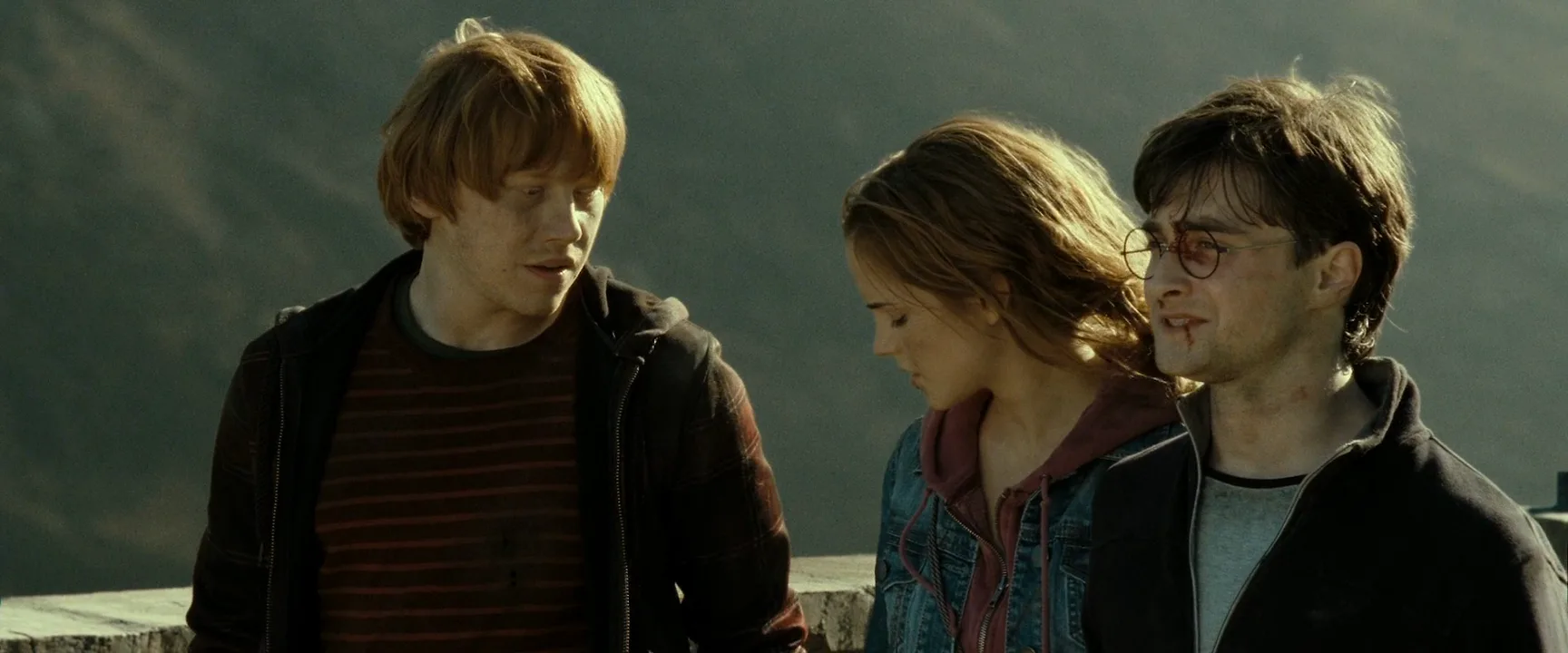
What is a three shot?
A three shot is a setup built around exactly three characters who all matter in the frame. Like the two shot, it is named by content, not size: three figures in a landscape, a waist-up medium shot of friends on a couch, or three faces in a tight frame. Shot lists write it as 3-shot; triple shot is a rarer name.
The test is weight: if one person dominates and the others are shoulders, it is a single with company. In the camera shots vocabulary it sits between the two shot and the group shot.
Why do filmmakers use three shots?
Three is unstable. A pair can be equal; a trio almost never is. Someone is in the middle, someone is closer to the lens, someone is left out. Rearrange them within a scene and alliances shift without dialogue.
The middle means something. The character between the other two is often the one being fought over or judged. Put the outsider at the edge, turned away, and their silent reaction becomes the story.
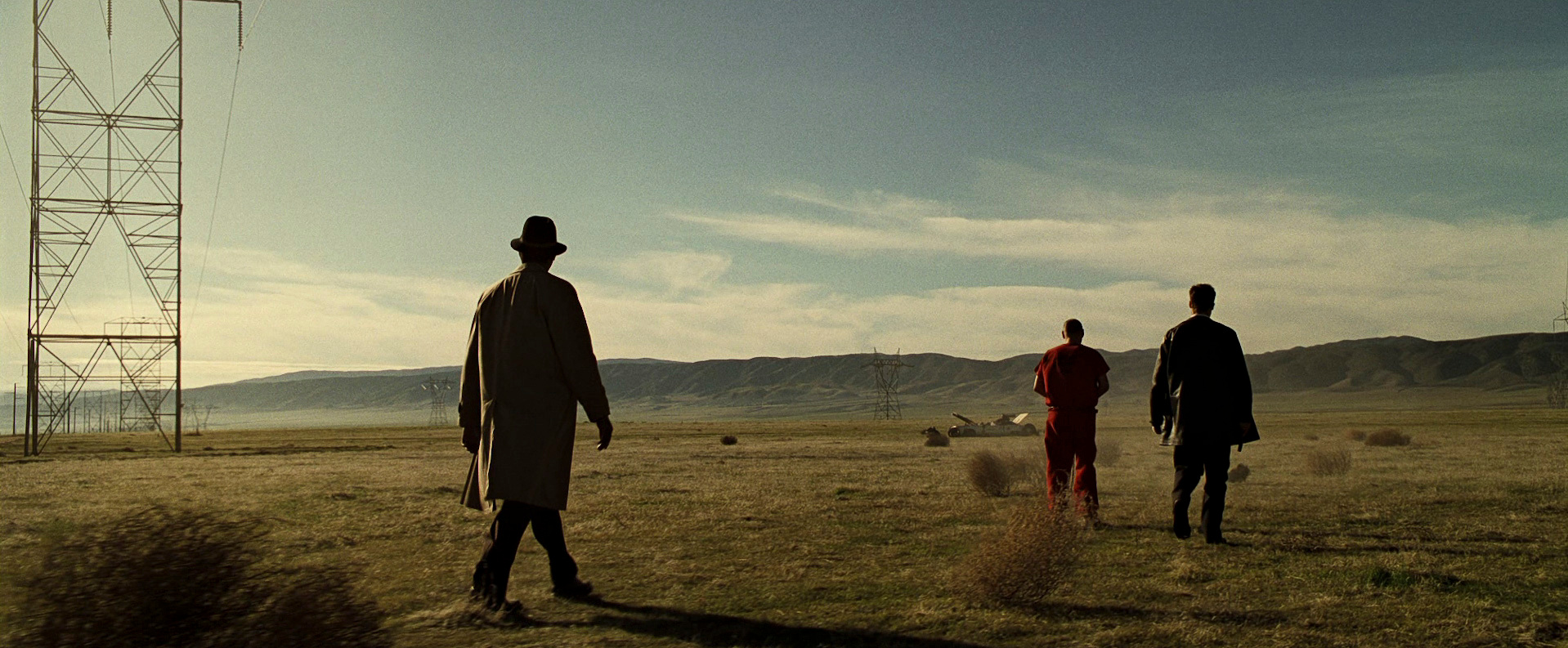
Trio films lean on it. The Harry Potter films keep returning to side-by-side shots of Harry, Ron and Hermione. The final standoff in The Good, the Bad and the Ugly (1966) keeps coming back to a wide holding all three gunmen in the cemetery circle.
How to shoot a three shot
Aspect ratio and lens. Three people side by side need width. A 2.39:1 frame holds a medium three shot comfortably; in 16:9, back off or stagger the actors. On Super 35, 25–35mm (about 35–50mm full frame) covers three at waist height; much wider and the edge faces stretch.
Blocking. A straight line reads as a lineup: formal, often comic. A triangle is more alive: two figures near the lens at the edges, the third deeper in the middle as the apex. Vary height: one sits, one leans, one stands.
Focus and light. Staggered faces rarely share a focus plane: stop down to T4–T5.6 or choose whose face stays sharp. One large soft source above the lens keys all three; leave the outsider half in shadow if the scene is about exclusion.
Coverage. The three shot often serves as the master shot; the editor cuts into singles and returns to the trio when the balance changes.
Common ways to stage a three shot
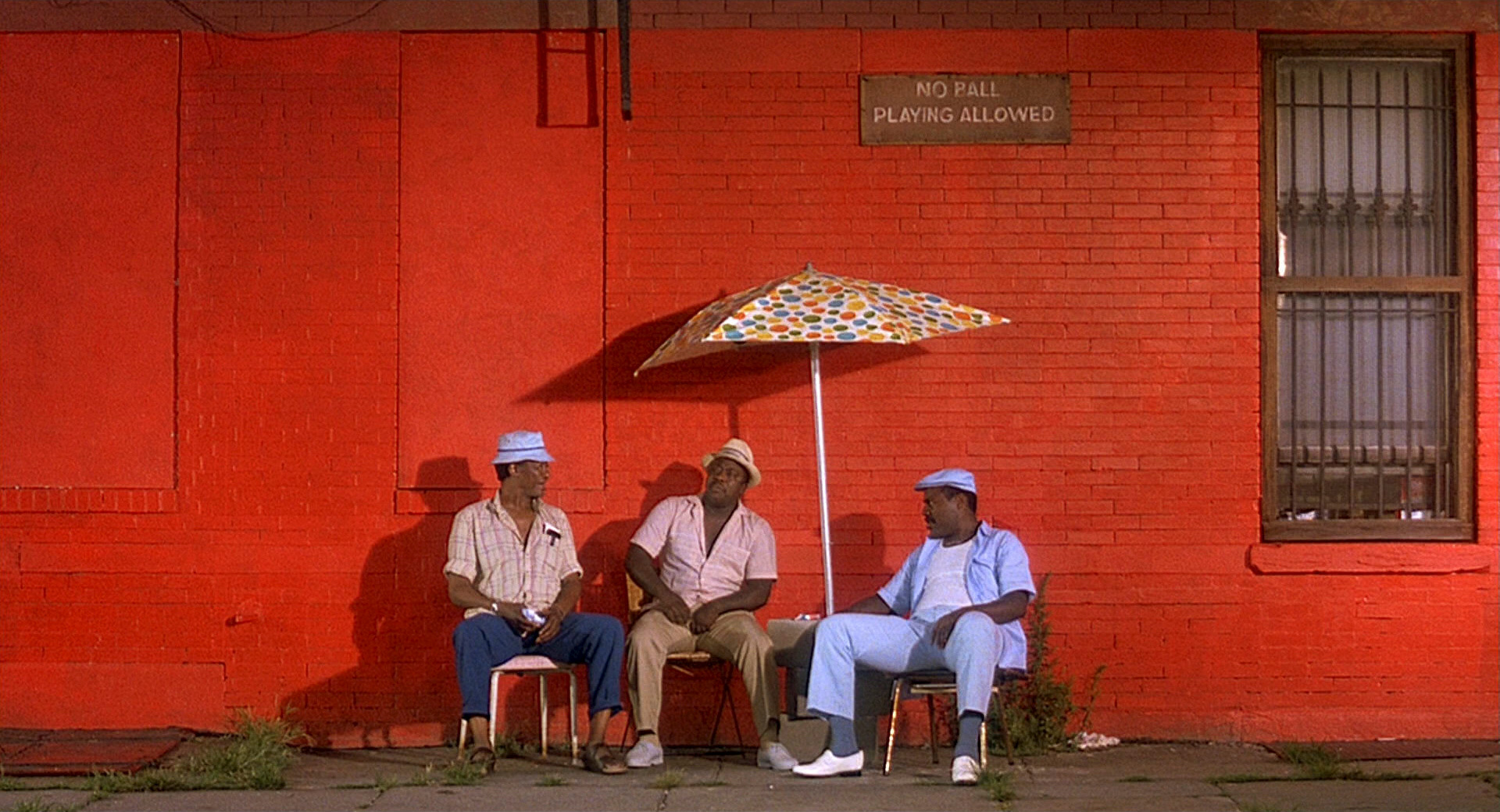
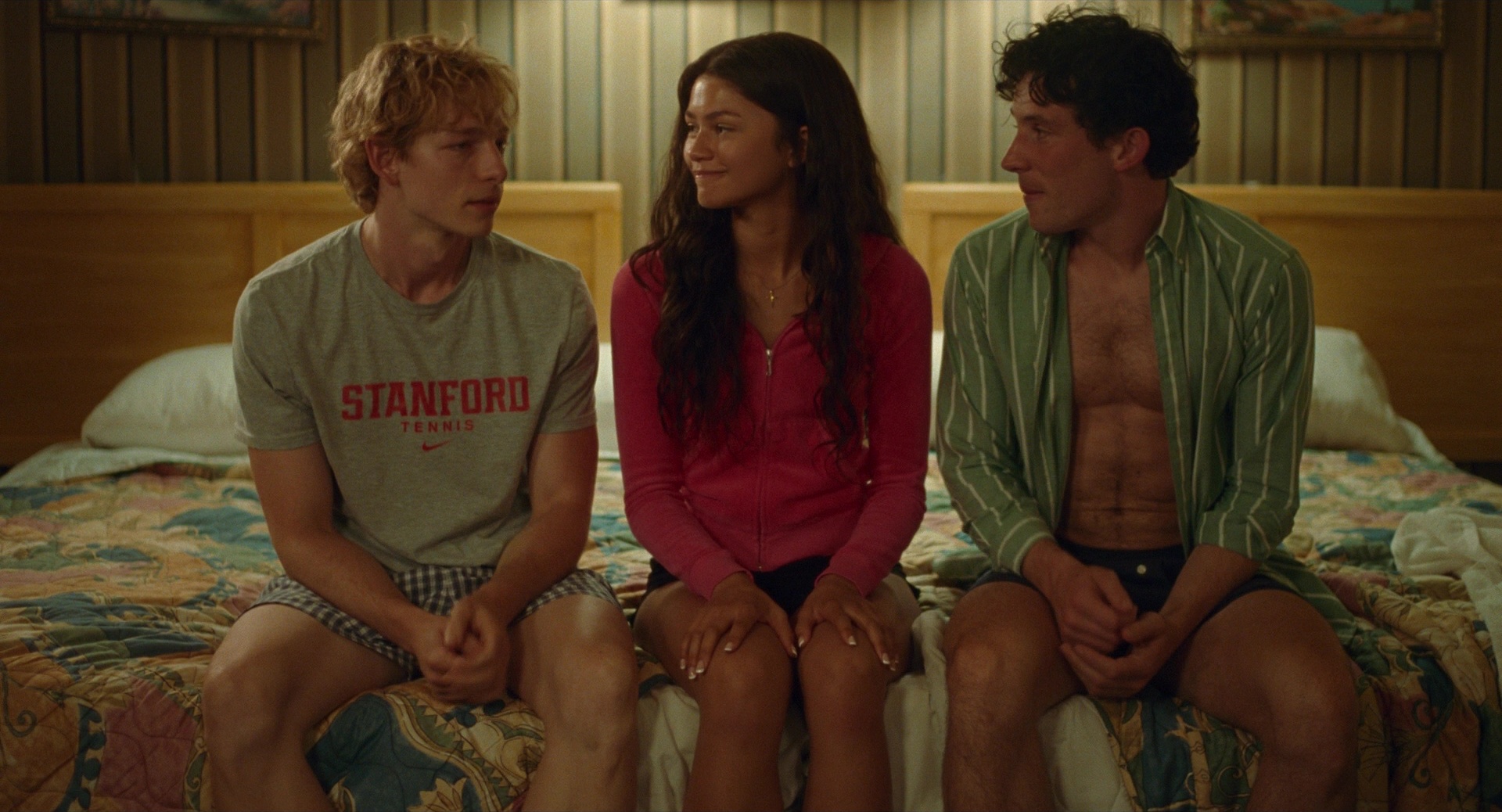
- Lineup. Three side by side on a bench, car seat or bed. Formal, a deadpan-comedy favorite.
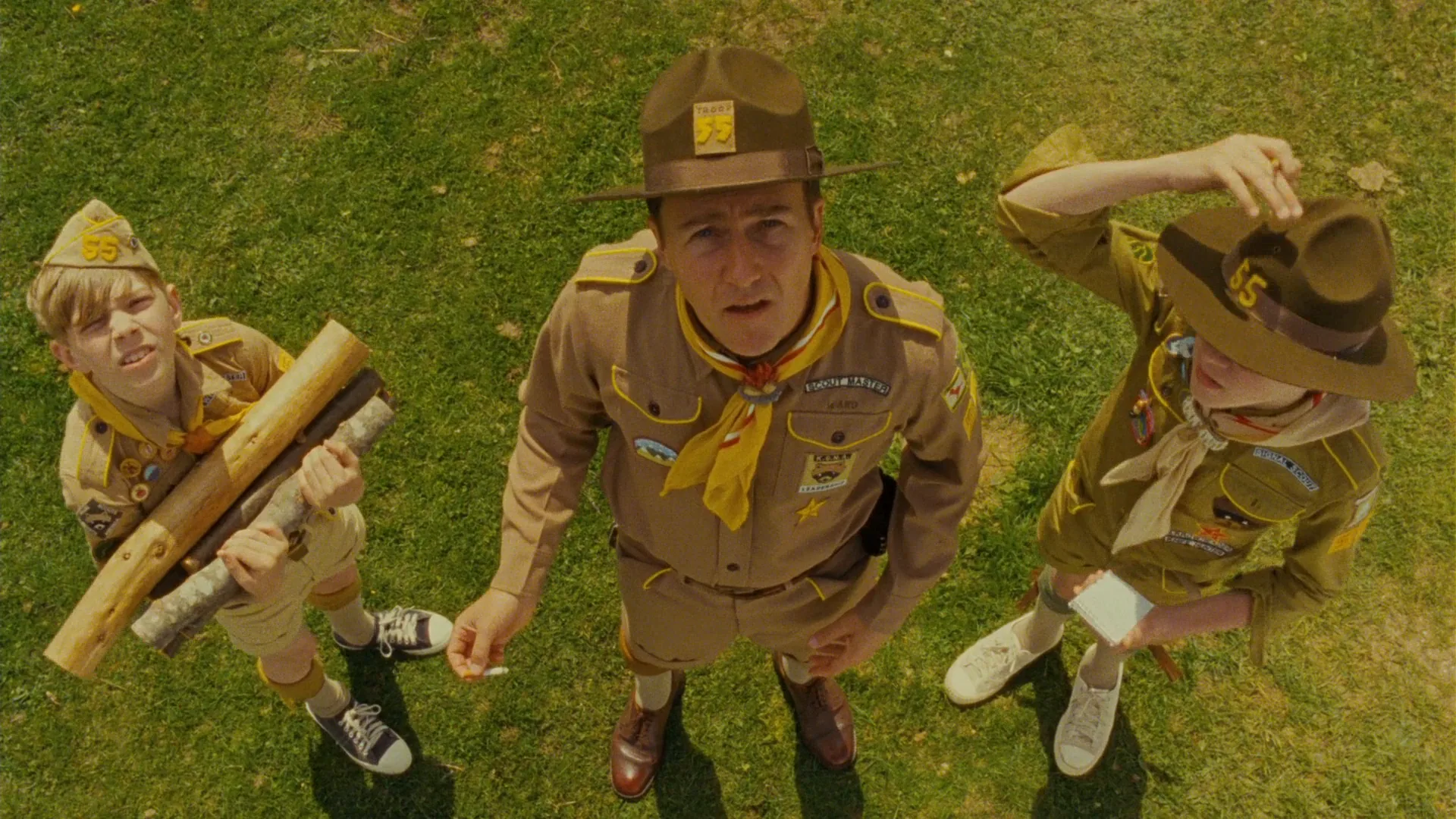
- Triangle. Two faces at the edges, one deeper at the center, or the reverse.
- Two plus one. A pair on one side, the third alone across a gap.
- Depth stack. Three faces overlapping along the lens axis, ranked by distance.
- Tight three shot. Three heads filling the frame, sharing one look or one light.
Three shot vs. two shot and group shot
A two shot's tension is the distance between two people. A three shot adds a third point, and the tension becomes geometry: who stands between whom. With four or more people sharing weight it becomes a group shot, where the crowd reads as one mass. If the viewer follows all three faces and each carries the scene, it is a three shot, even with extras in the background.
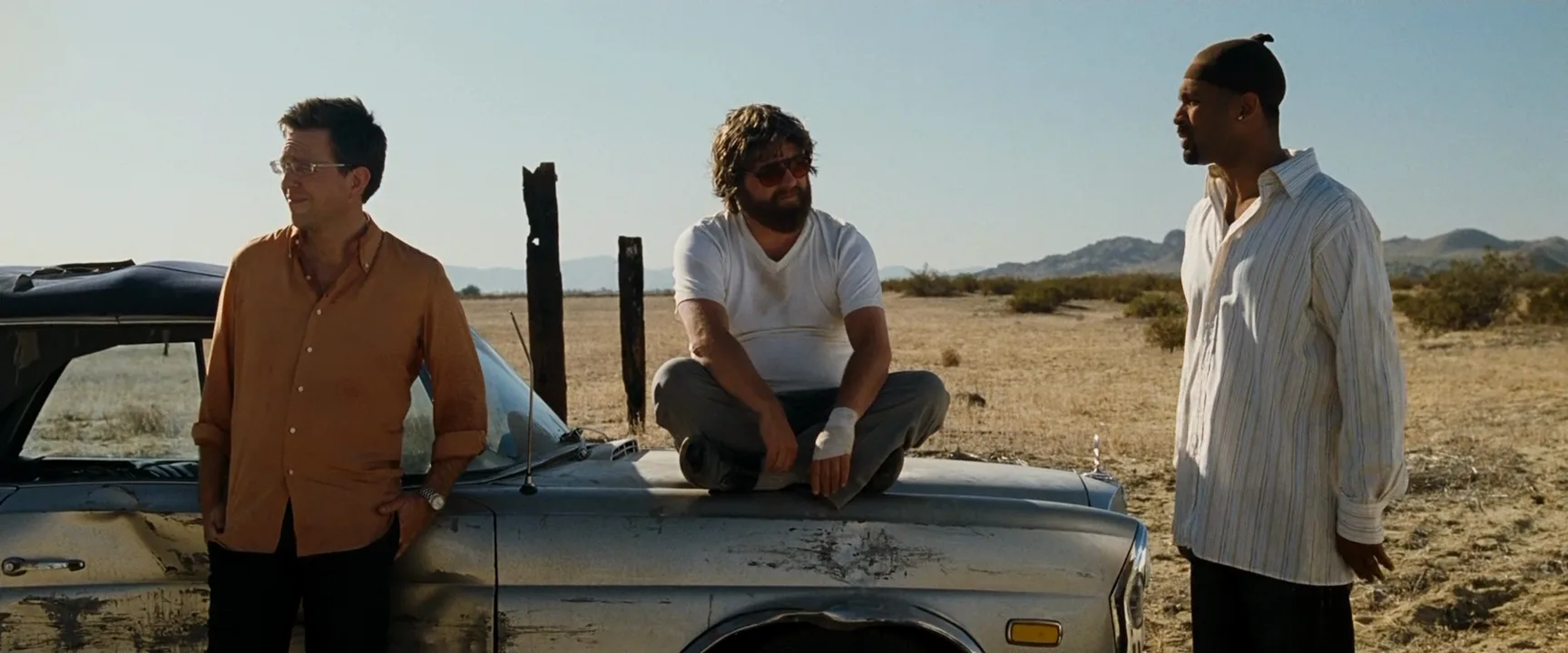
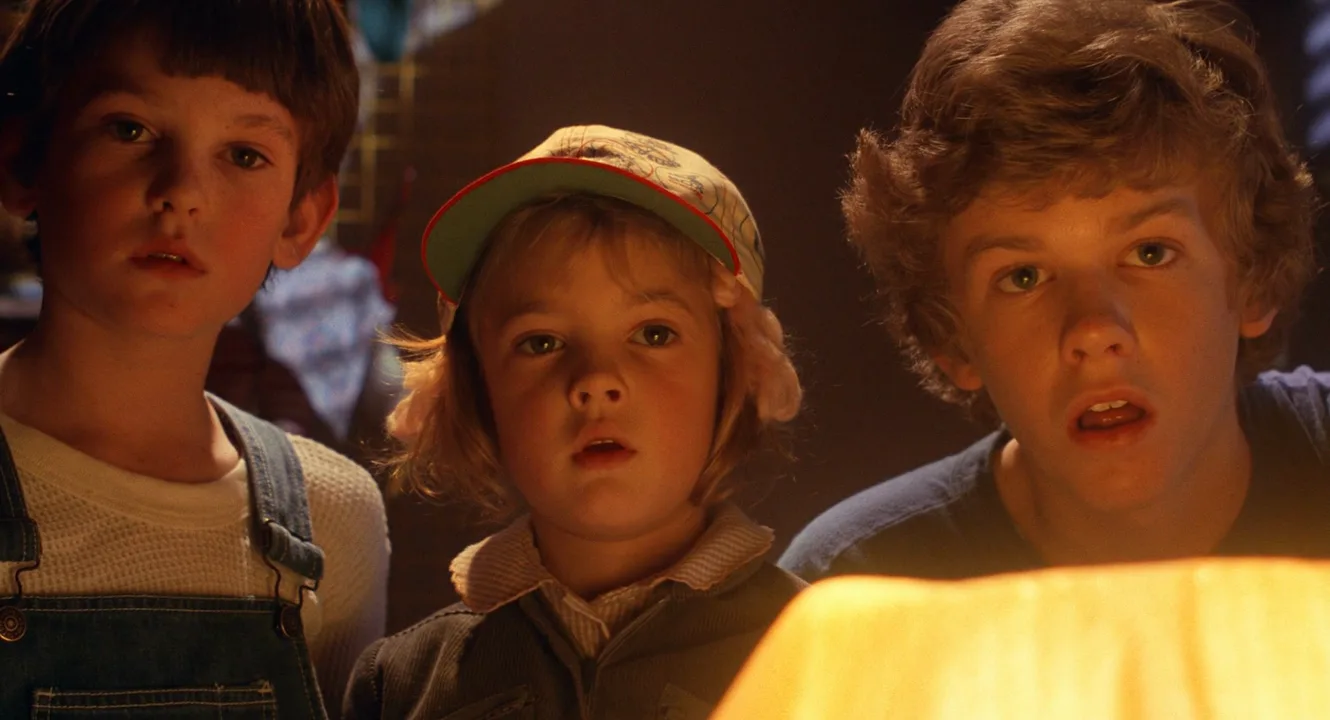
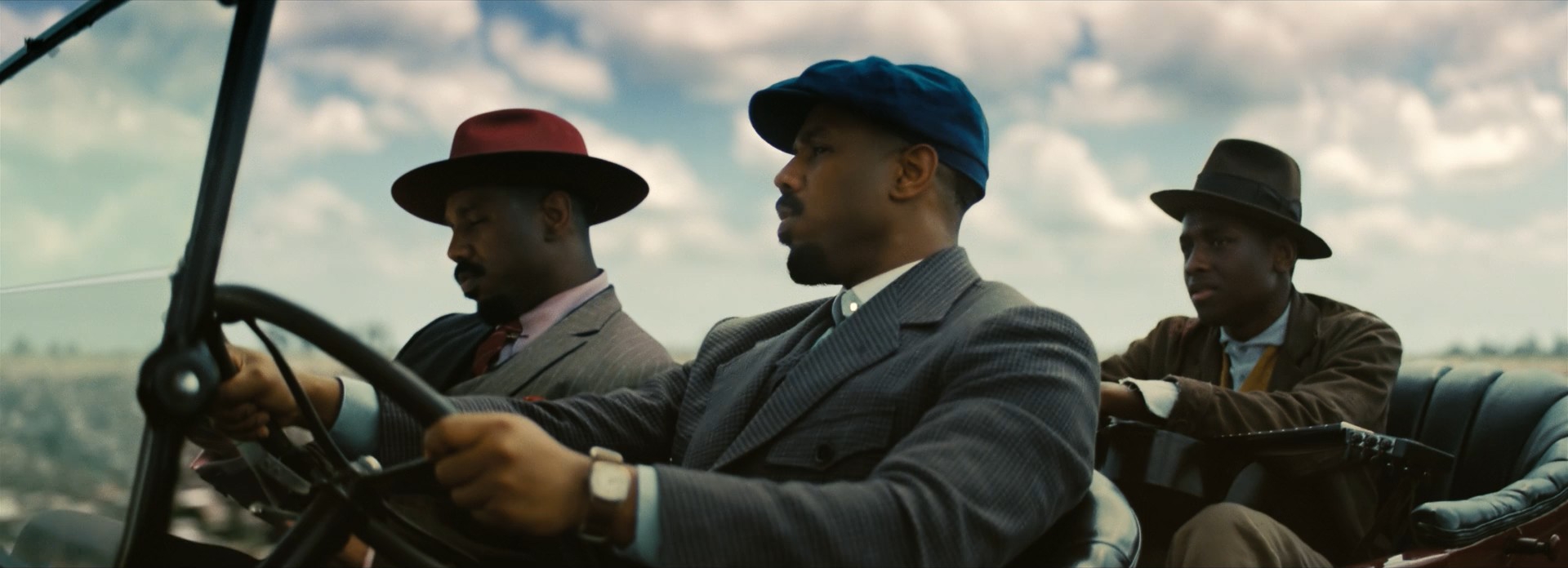
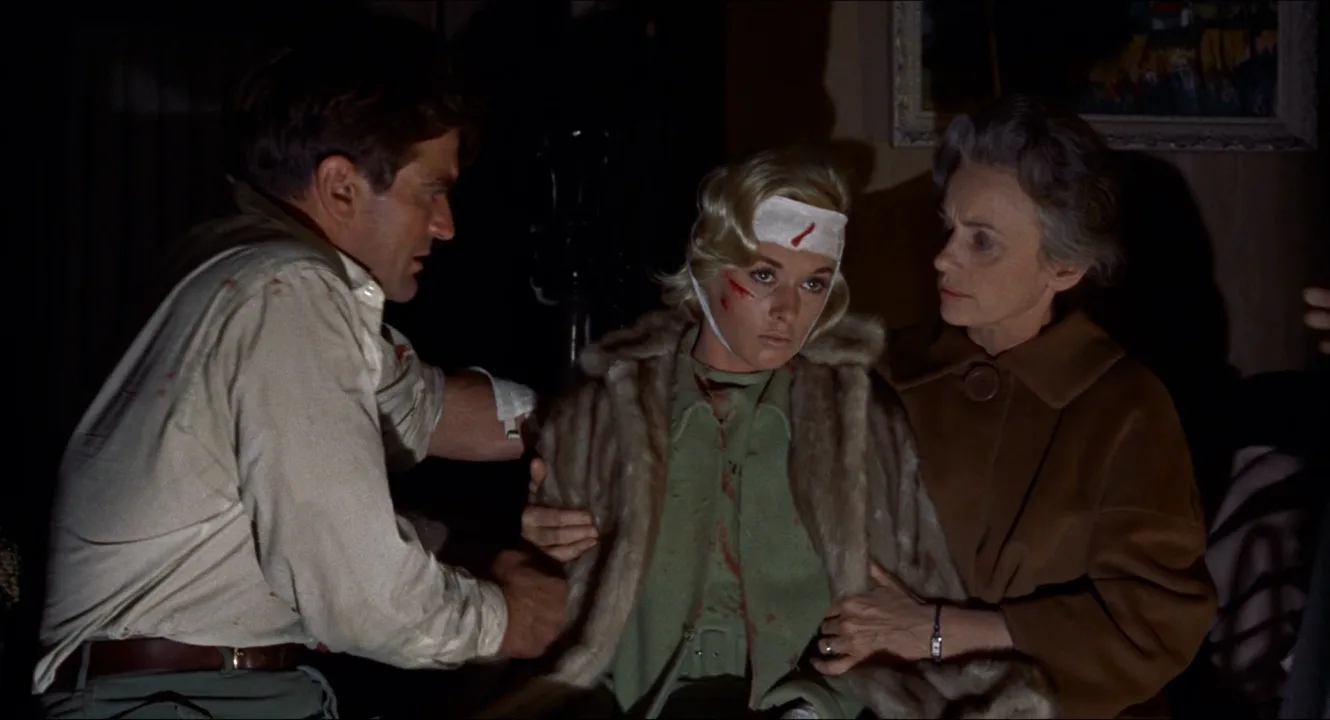
Three Shot examples in film
9 framesLineups, triangles, depth stacks and trios in landscape.
How to create a three shot with AI
4 promptsImage models default to one hero and extras, so name the count, give each person a position and a distinct look, and ask for equal focus. Compare the takes side by side on one FlashBoards board. The fourth prompt re-shoots a real film shot from a text description alone, and the original plays next to the result so you can compare.
Medium three shot at eye level, 35mm lens, film still. Exactly three people sit shoulder to shoulder on the tailgate of a rusty blue pickup at dusk, equal size in frame. Left: a heavyset man in his fifties with a grey handlebar mustache, holding a steel thermos. Center, slightly higher: a young woman with a shaved undercut and an orange hoodie, laughing mid-sentence. Right: a lanky teenage boy with curly red hair and a wrist cast, leaning toward her. Wheat field behind, golden backlight, all three in focus.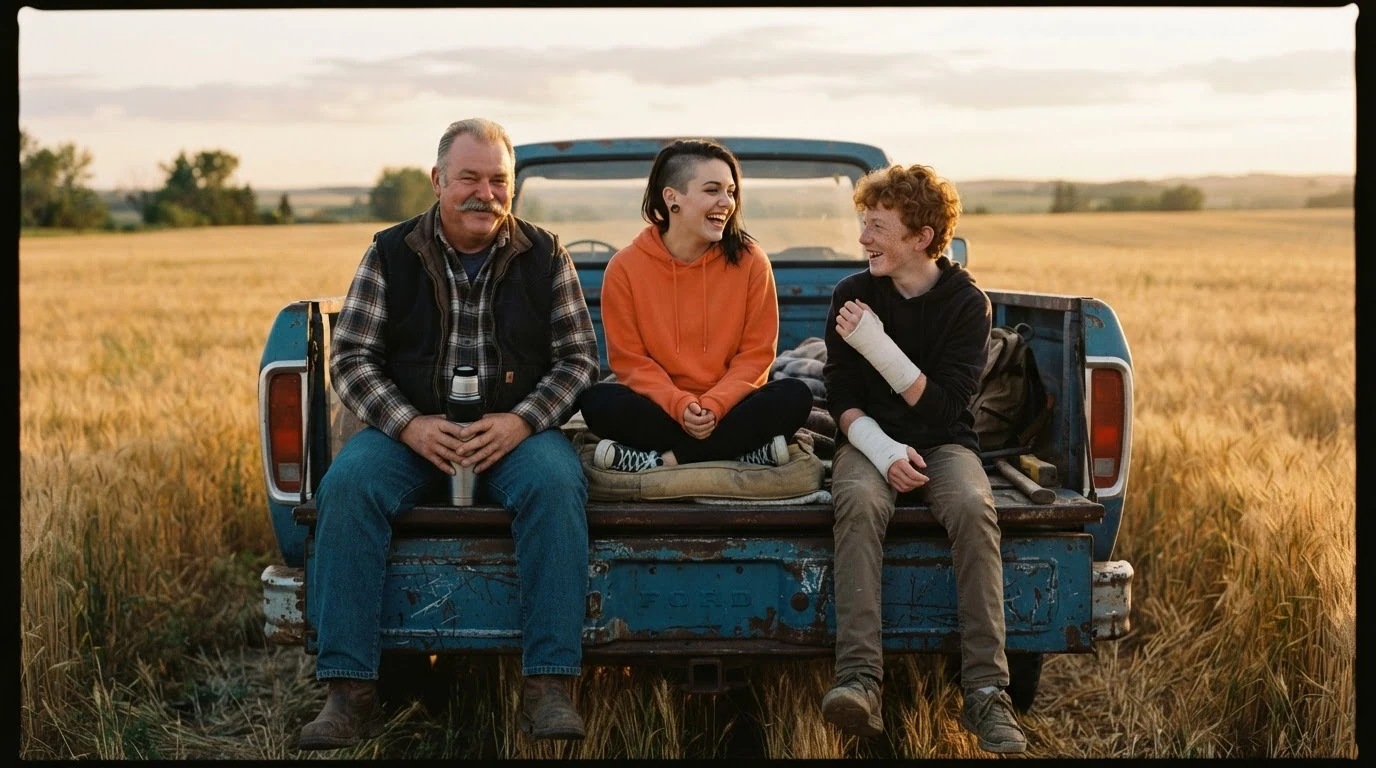
Exactly three people, equal size in frame and fixed positions block the one-hero default; slightly higher makes the middle the apex. Laughing and leaning give the video motion.
Open FlashBoardsWide-screen three shot staged as a triangle in depth, 28mm lens, chest height, deep focus. Foreground left edge: an elderly woman with a white bun and cat-eye glasses, seated at a kitchen table. Foreground right edge: a bearded middle-aged man in a burgundy sweater, gripping a chair back, facing her. Background center, in the hallway doorway between them: a teenage girl with long box braids and a backpack. Cool window light, warm hallway lamp, tense silence.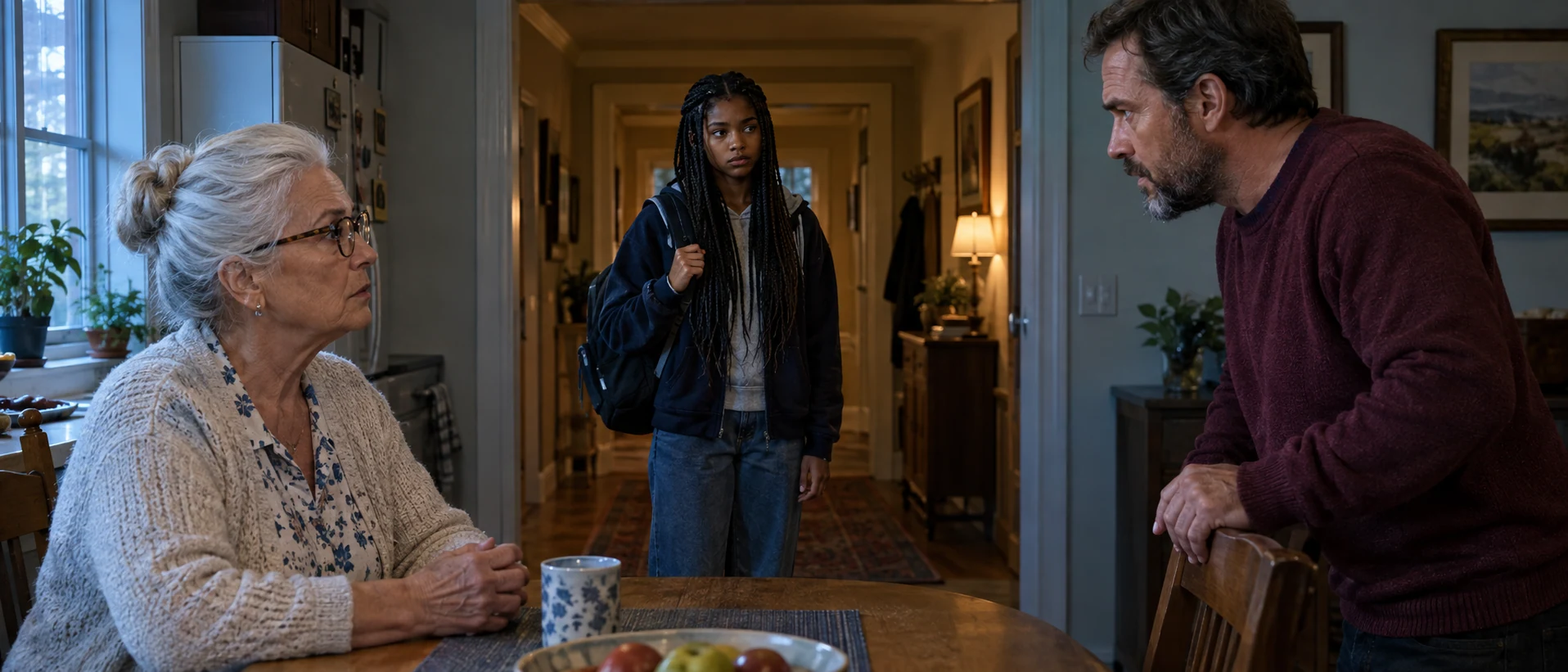
Triangle in depth plus a job for each corner builds the geometry; in the doorway between them makes the girl the apex.
Open FlashBoardsCamera: eye level, a slow, steady push-in, all three people framed side by side the whole time, stopping at chest height. Action: the woman in the center keeps laughing and turns toward the boy. The boy grins and nudges her shoulder. The man on the left pours from the thermos as steam rises, then joins the laugh. The wheat sways in the wind.All three framed side by side the whole time keeps the push off a single face; each person gets a beat, so the shot is alive from the first frame.
Open FlashBoards{
"output": "Full-screen live-action film shot from Harry Potter and the Deathly Hallows: Part 2 (2011), alive from its very first frame: one continuous shot, no cuts. 35mm anamorphic film stock, soft hazy late-afternoon backlight from the upper left, muted green-grey palette, a stone parapet on a high bridge with a misty wooded mountainside far behind.",
"characters": {
"S1": {
"name": "Harry Potter, played by Daniel Radcliffe",
"look": "young man, dark messy hair, round wire glasses, black zip jacket over a grey t-shirt",
"voice": "silence"
},
"S2": {
"name": "Hermione Granger, played by Emma Watson",
"look": "young woman, light brown hair tied back with loose wisps, faded denim jacket over a maroon hoodie",
"voice": "silence"
},
"S3": {
"name": "Ron Weasley, played by Rupert Grint",
"look": "young man, ginger hair, black zip hoodie over a dark red striped jumper",
"voice": "silence"
}
},
"shots": [
{
"shot": 1,
"camera": "medium shot at shoulder height, long lens, shallow depth; nearly static, a slow slight drift to the left that widens the frame from a two shot into a three shot; focus stays on the faces",
"voice": "silence: nobody speaks in this shot, no voice at all",
"action": [
"BEGINNING: alive from the first frame, a two shot: Hermione at centre-left and Harry at centre-right stand shoulder to shoulder behind the parapet, both looking off toward screen right, still and quiet; wind lifts Hermione's loose hair",
"THEN: Ron's ginger head appears behind them at the right edge, walking toward screen left behind their backs",
"THEN: Ron passes behind Hermione and steps out on the left side of the frame, while the camera drifts slightly left to take him in",
"THEN: Ron stops at the left third, a half step apart from the other two, turns his head right and looks at Harry; Hermione lowers her eyes toward the ground, Harry keeps looking off to the right",
"END: a flat three shot, Ron left, Hermione centre, Harry right, all three at equal size and in focus, faces tired and calm, hands low and out of frame, nobody moves except the wind in their hair"
],
"dialogue": []
}
],
"sound": {
"ambience": "high open-air wind across the bridge, faint distant birds, soft footsteps of Ron",
"speech": "no words in this video; the only human sounds are breaths and movement",
"never_spoken": "no narration and no voice-over: the descriptions, performance notes and step words of this prompt are never spoken aloud",
"music": "a film score under the scene, always below the voices: quiet, bittersweet sustained strings with a slow rising melody",
"subtitles": "none"
}
}Remakes the bridge shot from Harry Potter and the Deathly Hallows: Part 2 (2011), carrying over Ron's walk-in behind the pair, the slight drift left and the flat Ron–Hermione–Harry line.
The shot is a two shot that becomes a three shot: Ron walks in behind and stops on the left, so the prompt fixes each position by screen side and ends on all three at equal size.
Open FlashBoardsCommon mistakes
- One hero, two extras. The middle face gets focus and light. Add equal size in frame and all three in focus.
- Wrong headcount. Write exactly three people and describe each.
- Clone faces. Give each a different age, hair and clothing.
- Flat lineup. Ask for one figure higher, a triangle or depth.
- Video drifts to a single. Repeat that all three stay in frame.
Keep the reference frames, prompts and every generated take side by side — images and video in one canvas.
FAQ
4 questionsWhat is a three shot in film?
A three shot is one frame holding three characters with comparable weight, so the audience reads all three faces and their relationships at once. It can be any size, from a wide to a tight close framing. Directors use it for trios and love triangles, because the staging shows who holds power.
What is the difference between a two shot and a three shot?
A two shot draws its meaning from the distance between two people. A three shot adds a third, turning the frame into geometry: someone in the middle, someone nearer the lens, someone left at the edge. That makes it better at showing alliances, rivalry and exclusion in one image.
Is a triple shot the same as a three shot?
Yes. Triple shot and 3-shot are alternate names for three characters sharing one frame with roughly equal weight; 3-shot is the usual shot-list form. A group shot is different: it covers four or more people and treats them as a unit rather than as distinct individuals.
How do you frame three people without it looking flat?
Break the straight line. Stage a triangle, two near the lens and one deeper at the center, and vary heights: one sits, one leans, one stands. Stagger them in depth, hold focus on the faces you need, and use light or spacing to single out the character the scene is about.
Related terms
3- Two ShotCamera Shots
A two shot frames two characters together in one shot, so their relationship, distance and reactions are visible at the same time instead of being built from separate singles.
- Group ShotCamera Shots
A group shot holds several characters in one frame as a unit, letting the audience read their positions, hierarchy and reactions at once instead of cutting between singles.
- BlockingDirecting & Staging
Blocking is the planned choreography of actors and camera within a scene — where people stand, when they move, how they relate in space — so that movement itself tells the story and gives the editor usable shots.
Further reading
Steven D. Katz, Film Directing Shot by Shot (1991). Joseph V. Mascelli, The Five C's of Cinematography (1965).