 FlashBoards Learn
- Learn
- Camera Shots
- Two Shot
Camera Shots · Film language
Two Shot
Also called: 2-shot, double shot
A two shot frames two characters together in a single shot, so their relationship, the distance between them and each reaction are visible at the same moment. Instead of building a conversation from separate close-ups, the two shot lets the audience read both people at once and judge how they fit together.
- What it does
- Shows two people and the space between them in one frame, so the relationship becomes the subject.
- Use it when
- The connection, tension or balance of power between two characters matters more than either face alone.
- Watch out
- Both faces need light and focus; staggered actors fall out of focus fast on long lenses.
- Try this prompt
Medium two shot at eye level, 40mm lens, two friends side by side on a bus stop bench at night, both faces lit, both in focus
What is a two shot?
A two shot is a setup built to hold two characters with comparable weight. It is named for its content, not its size: it can be a full-figure wide, a waist-up medium shot or two faces cheek to cheek. Shot lists write it as 2-shot; some people call it a double shot. Either way it is one frame with two people, never two shots cut together.
In the camera shots vocabulary it sits between the single and the three shot.
Why do filmmakers use two shots?
The relationship becomes visible. The gap between two people is part of the image. Lovers lean into the same third of the frame; estranged partners sit at opposite edges with a table or wall between them.
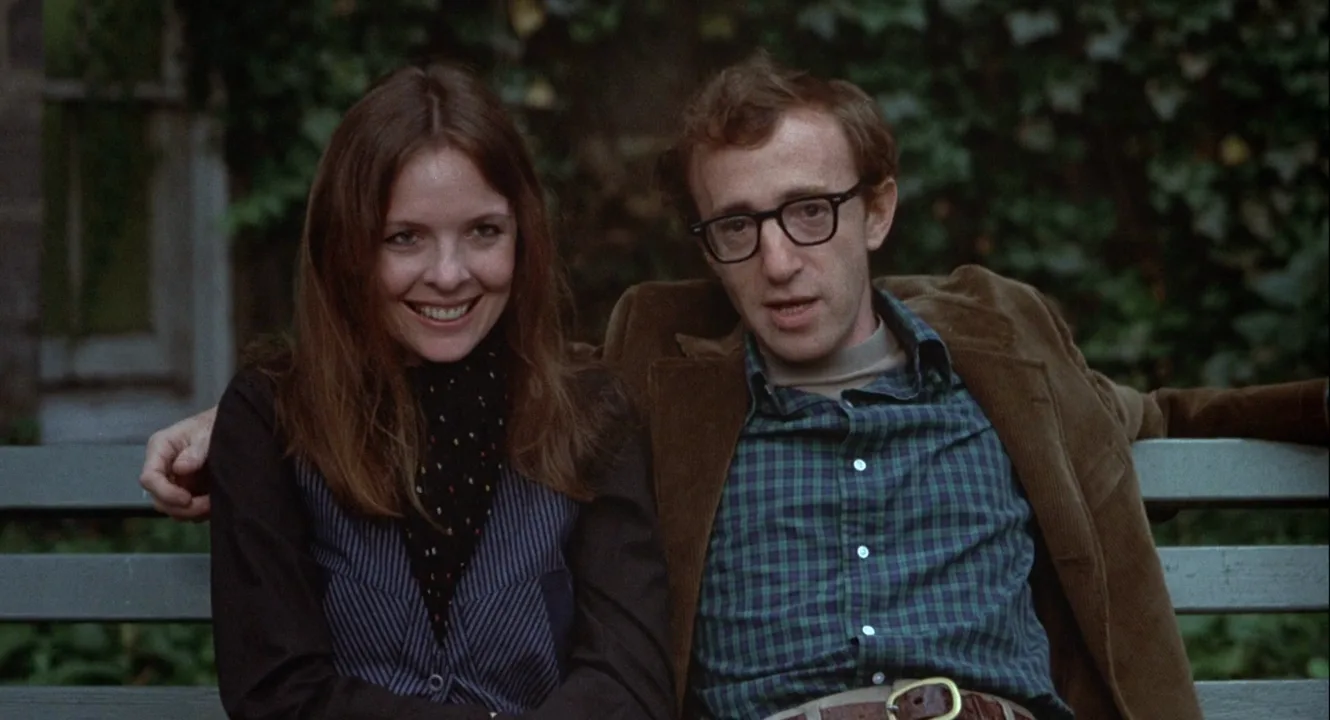
Reactions play live. The listener's face stays on screen while the other speaks, so timing and small shifts of feeling land as the actors played them. Woody Allen and Gordon Willis let long conversations run in unbroken two shots in Annie Hall (1977).
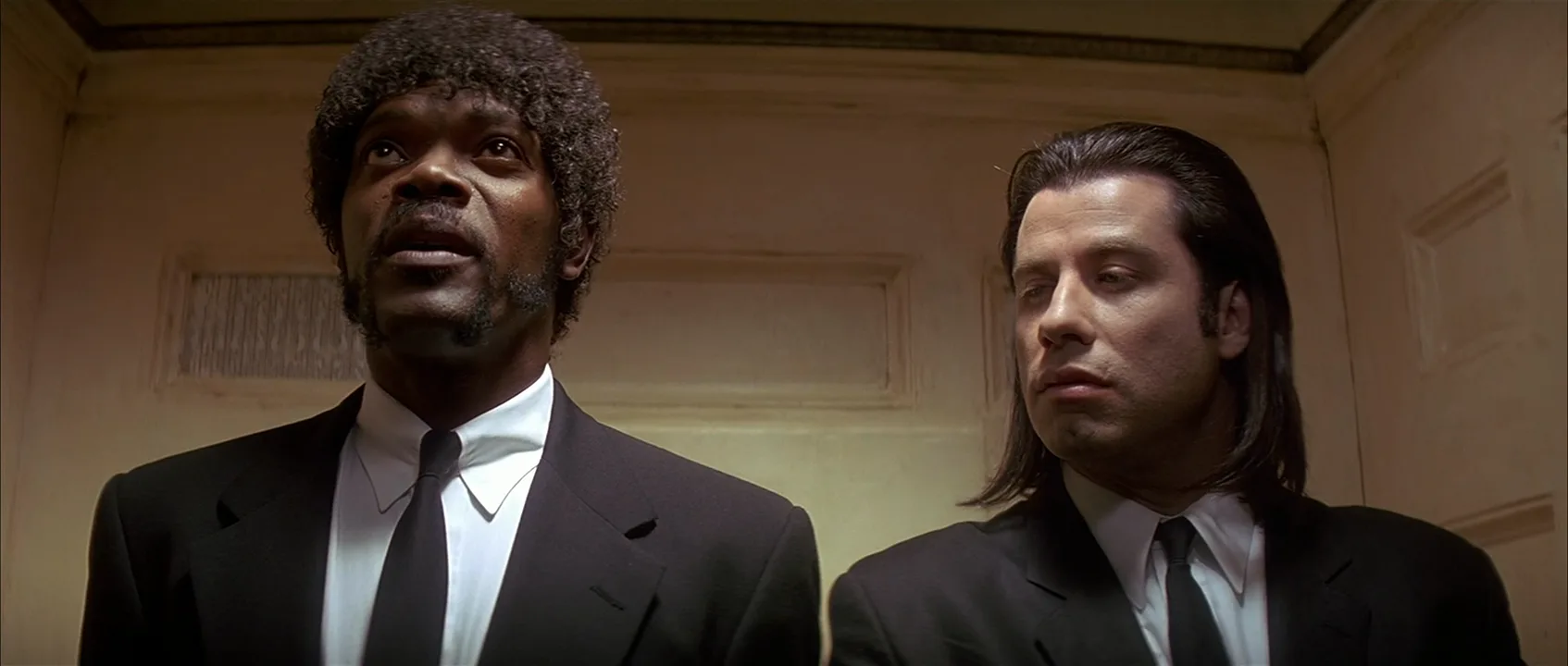
Balance of power. Equal size, height and light say the two are partners, like Jules and Vincent in Pulp Fiction (1994). Put one closer to the lens or in the only pool of light and the shot tilts toward them.
Pacing. A held two shot slows a scene; cutting into shot reverse shot speeds it up.
How to shoot a two shot
Lens. For a medium two shot, 32–50mm on Super 35 (about 45–70mm full frame) keeps faces natural. A longer lens from farther back stacks staggered actors together; a wider lens exaggerates the distance between them.
Blocking. Side by side facing camera reads as partners; facing each other in profile reads as confrontation; staggered in depth builds hierarchy. Turn each actor 30–45 degrees toward the lens so neither disappears into pure profile.
Focus. Side by side, actors share one focus plane. Staggered, they don't: stop down to T4–T5.6, bring them closer in depth, or choose whose face stays sharp.
Light. One large soft source in front of and between the actors can key both faces.
Types of two shots
- 50-50 shot. Two actors in profile at opposite edges of the frame, facing each other: a standoff staged as an even match.
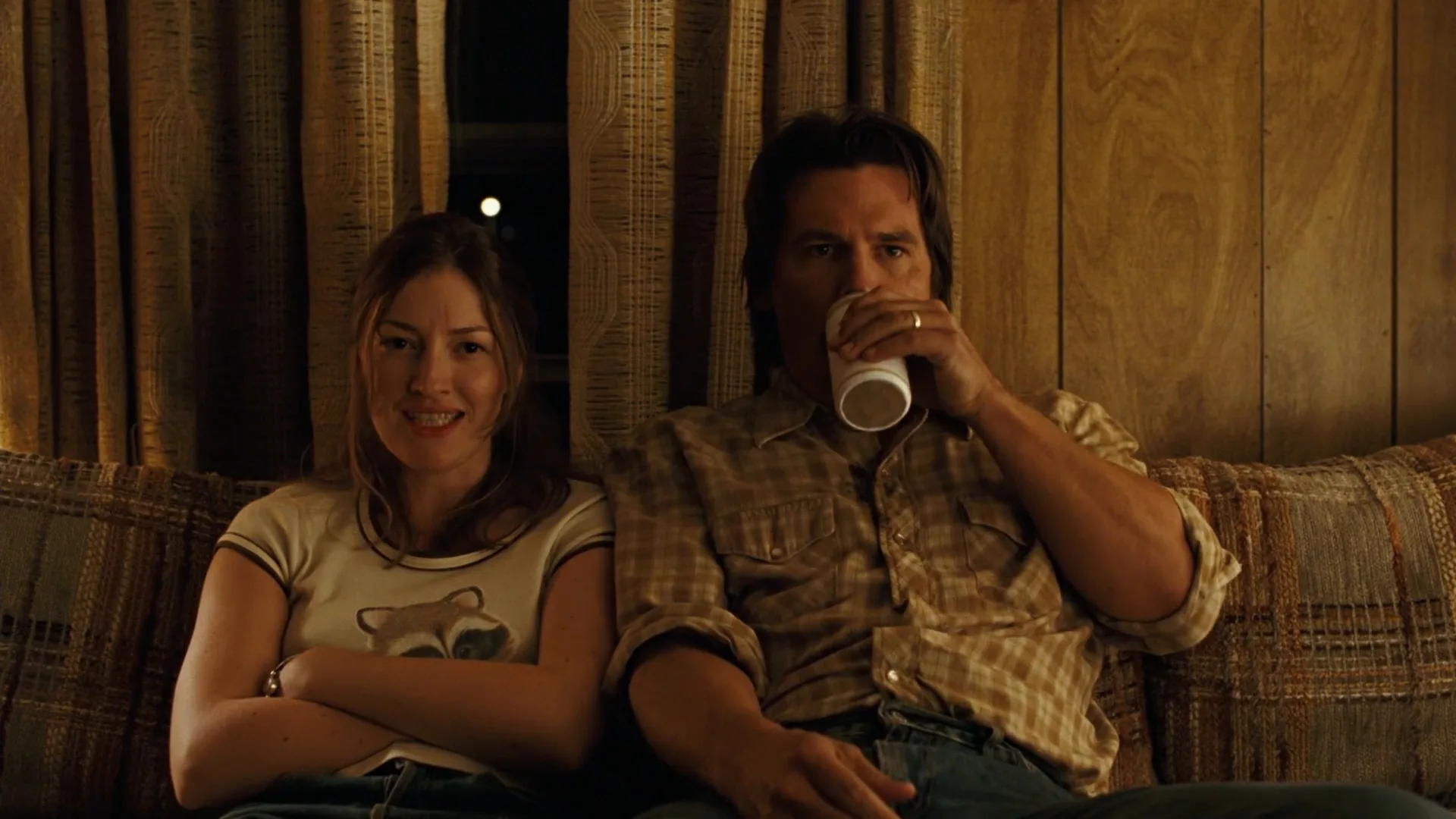
- Side-by-side. Both face the camera or a shared point: a car seat, a bench, a couch.
- Depth two shot. One face near the lens, the other deeper in the room; one character looms over the other.
- Tight two shot. Two heads fill the frame, for intimacy or grief.
- Split screen. A phone call becomes a two shot when both callers share one image, as in Asteroid City (2023).
Two shot vs. over-the-shoulder shot and single
An over-the-shoulder shot also contains two people, but only one is the subject; the other is a soft shoulder that anchors geography. A two shot gives both faces roughly equal weight. A single shot isolates one character and lets the editor choose whose face we watch. Coverage often uses the two shot as the reference and cuts into singles for emphasis.
Two Shot examples in film
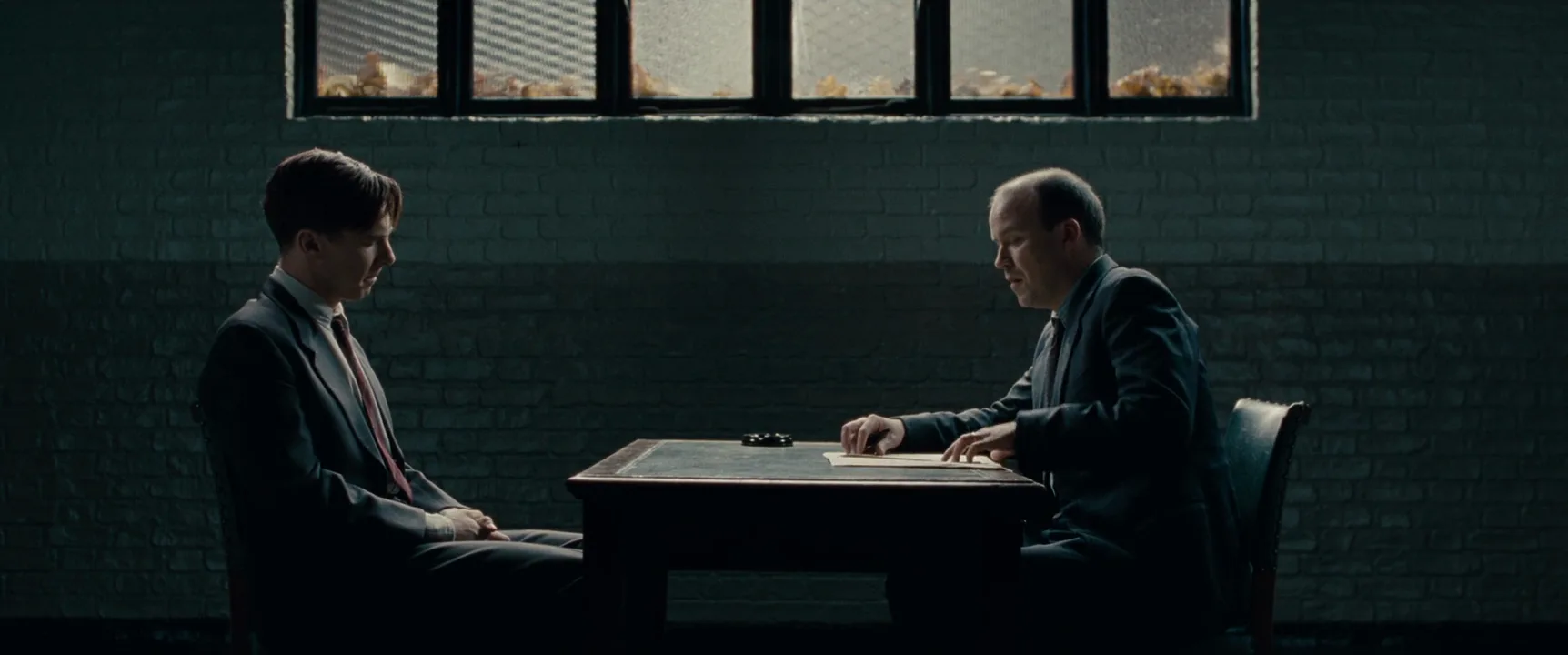
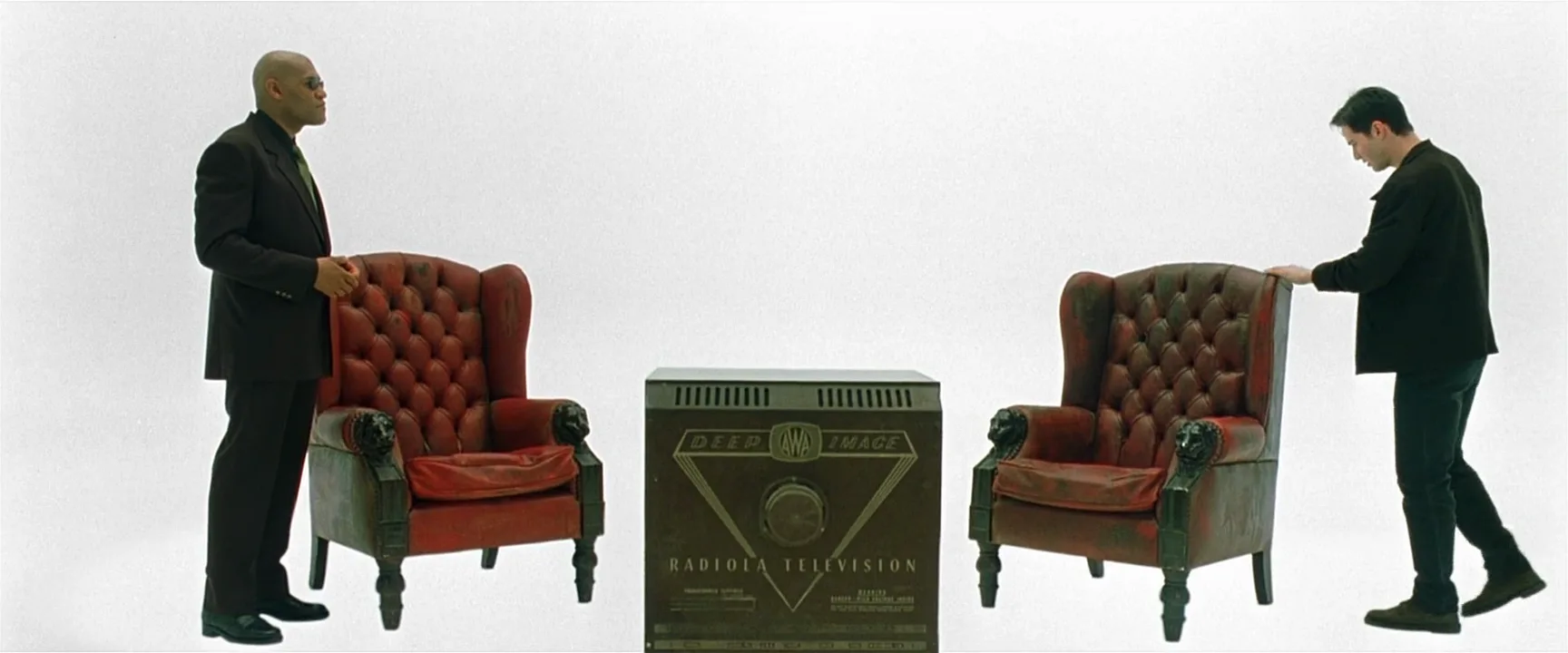
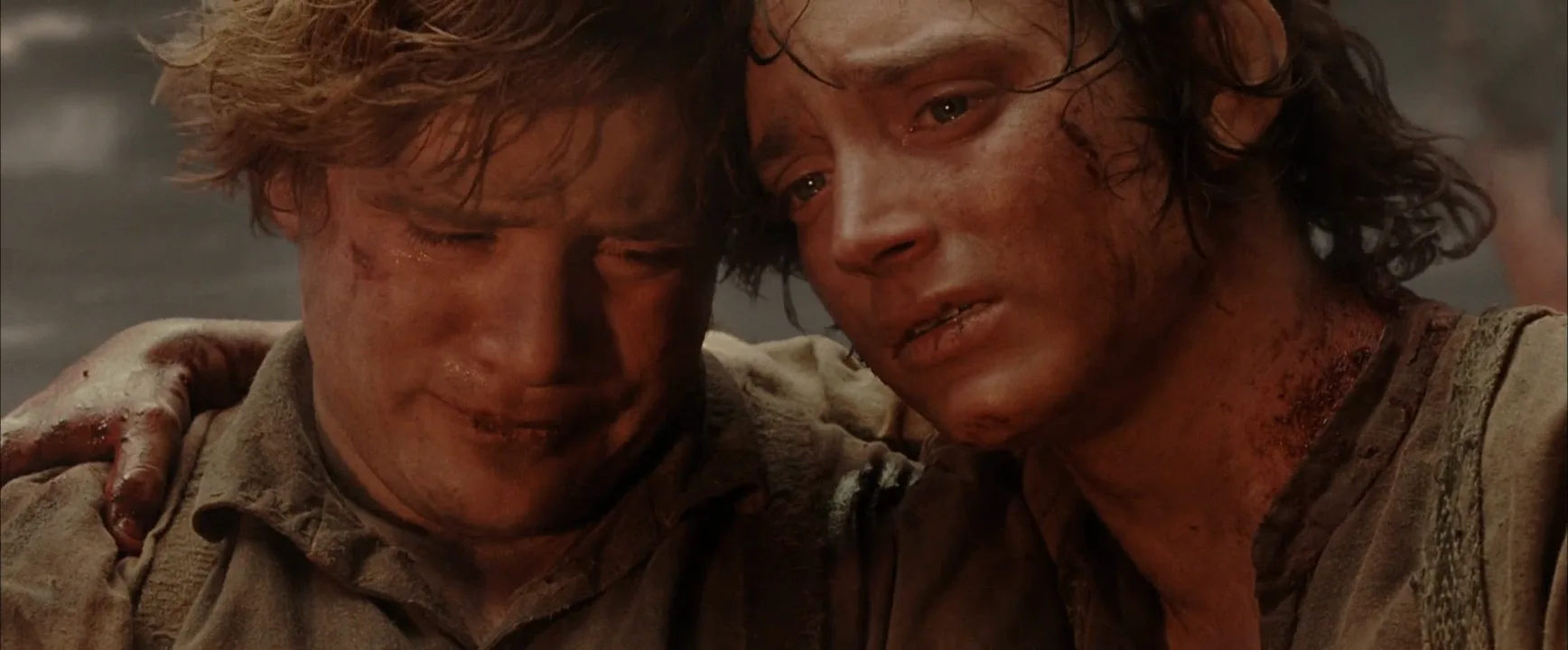
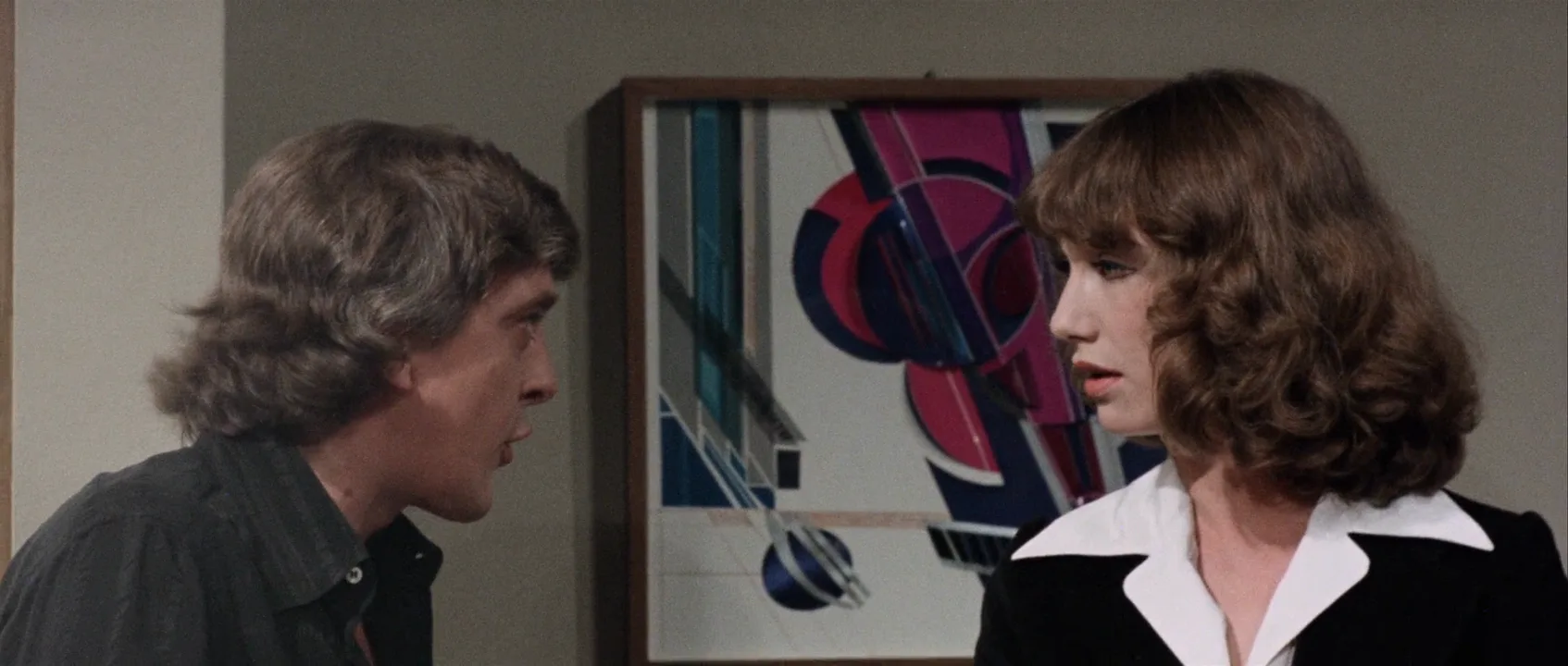
8 framesEight two shots, from side-by-side partners to standoffs across a table.
How to create a two shot with AI
4 promptsImage models default to one hero face, so spell out the pair: two people, their positions in the frame, equal focus and light. Nano Banana 2 Lite makes a side-by-side start frame, GPT Image 2.5 restages it as a 50-50 profile shot, and MiniMax H3 Max Turbo animates the first frame. Keep references and takes on one FlashBoards board to compare spacing. The fourth prompt re-shoots a real film shot from a text description alone, and the original plays next to the result so you can compare.
Medium two shot at eye level, 40mm lens, cinematic film still. Two people sit side by side on a wooden bus stop bench at night, sharing the frame equally. Left third: a woman in her sixties with short silver hair, a yellow raincoat and a steaming paper cup. Right third: a young man with a shaved head, freckles and a red knit beanie, turned toward her, mid-sentence. Rain falls behind them under one streetlight, soft light on both faces, both in focus.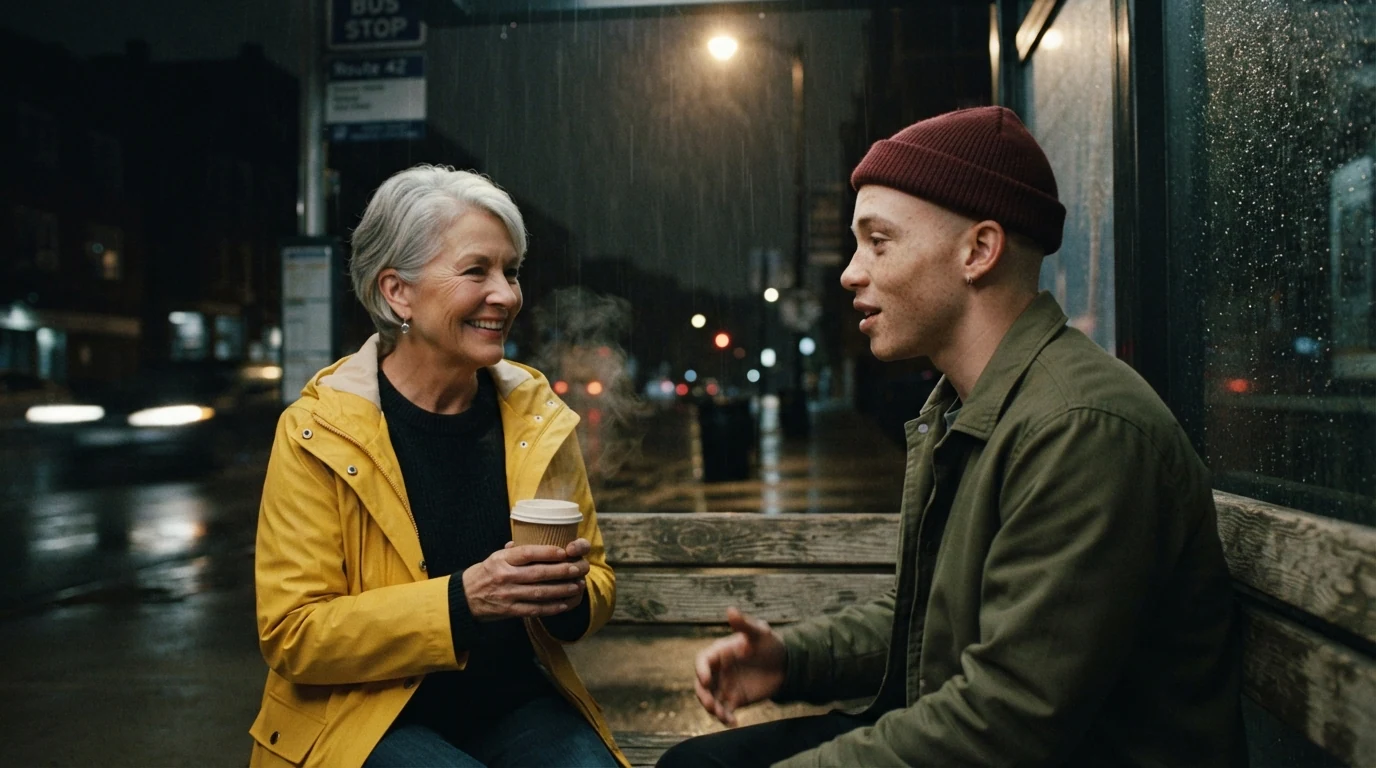
Left third, right third and sharing the frame equally stop the model from favoring one face; both in focus keeps them equal. Steam, rain and mid-sentence give the video recipe motion that exists in the first frame.
Open FlashBoards50-50 two shot in profile, eye level, 50mm lens, wide cinematic frame. At the left edge a tall woman in her forties with a long red braid and a green work shirt sits facing right. At the right edge an older man with a white beard and round glasses sits facing left, hands folded. A bare kitchen table and a hanging lamp fill the space between them. Cool window light, both faces sharp, tense stillness.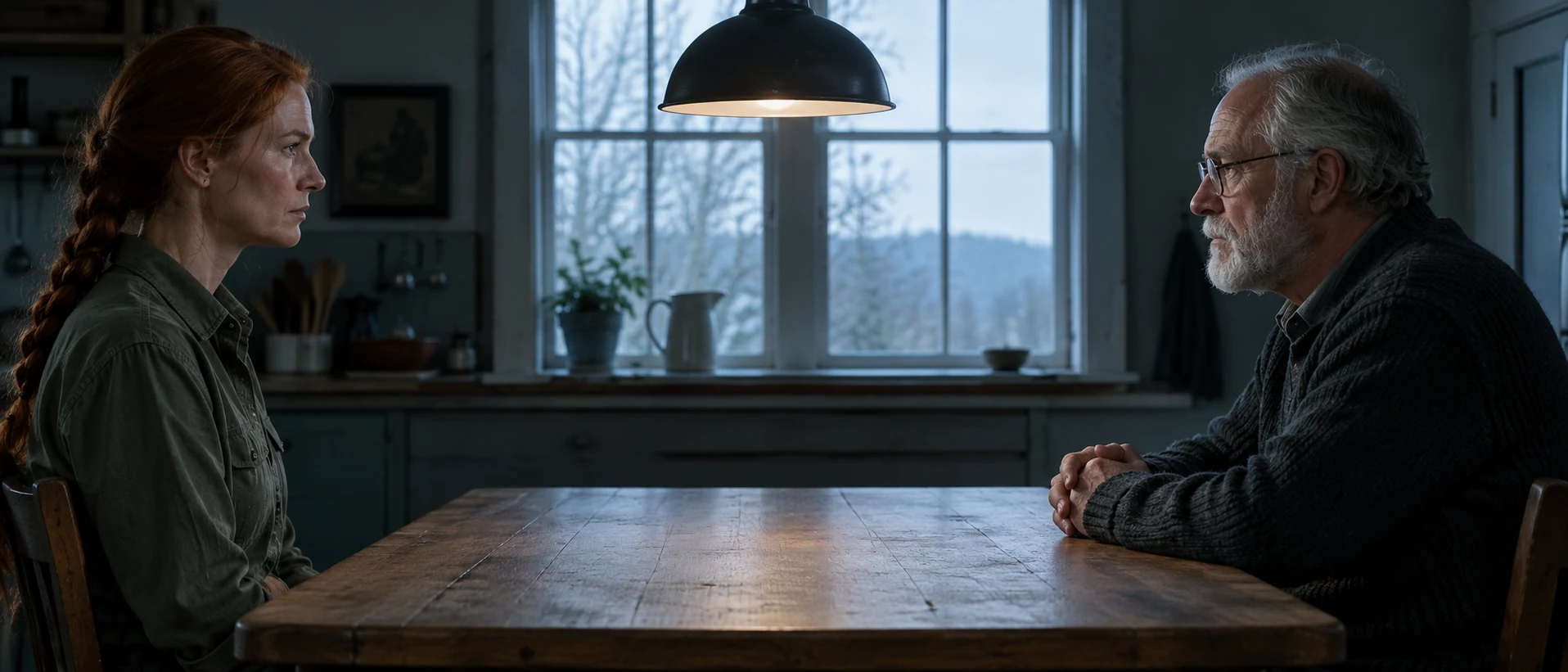
Facing right and facing left lock the eyelines. Placing them at the left edge and at the right edge of a 21:9 frame makes the empty table the center, which turns a pair into a standoff.
Open FlashBoardsCamera: eye level, a slow, steady push-in from the medium two shot to a tighter two shot, both people framed side by side the whole time. Action: rain is already falling and steam rises from her cup as the young man keeps talking, gesturing with one hand. She turns her head toward him and smiles. At the end he laughs, looks down, and she bumps his shoulder with hers.Both people framed side by side the whole time keeps the push inside the two shot. Rain, steam and keeps talking make it alive from the first frame; the shoulder bump gives the pair a shared physical beat.
Open FlashBoards{
"output": "Full-screen live-action scene from The Imitation Game (2014), from its very first frame: one continuous locked-off shot, no cuts. A 50-50 two shot in profile in a bare 1950s police interview room: dark teal painted brick walls, a row of small frosted windows high on the back wall behind the actors, one plain dark wooden table in the centre with a folder and a small ashtray on it. Cold dim daylight from the high windows, deep shadows, muted teal and charcoal palette, fine 35mm grain.",
"characters": {
"S1": {
"name": "Alan Turing, played by Benedict Cumberbatch",
"look": "slim young man, dark side-parted hair, dark three-piece suit and tie, seated at the left end of the table facing right",
"voice": "silent in this shot"
},
"S2": {
"name": "Detective Nock, played by Rory Kinnear",
"look": "balding man in his forties, dark suit, standing at the right end of the table, a dark wooden chair behind him",
"voice": "quiet, measured, curious"
}
},
"shots": [
{
"shot": 1,
"camera": "static, eye level, wide shot, the camera never moves; S1 fills the left third, S2 the right third, the empty table between them",
"action": [
"BEGINNING: alive from the first frame, S1 sits upright in profile facing right, both hands resting still in his lap, gaze fixed on S2; S2 stands bent over the right end of the table, both palms flat on the tabletop, head lowered toward the folder.",
"THEN: S2 lifts his head and straightens slowly, turning his face toward S1.",
"THEN: S2 steps back and sits down in the chair behind him, now in profile facing left, eyes on S1.",
"THEN: S2 rests his right forearm on the table and taps the folder once with his fingers; S1 does not move at all, no nod, hands still.",
"THEN: S2 opens the folder with his left hand, glances down at it, then looks back up at S1.",
"END: both sit in profile at opposite ends of the table, eyes locked across the empty space; S2 leans slightly forward and begins to speak, S1 stays perfectly still."
],
"dialogue": [
{
"speaker": "S2",
"on_screen": true,
"when": "at the very end of the shot, as he leans forward",
"delivery": "soft, almost conspiratorial",
"line": "<d>[English] Mr Turing, can I tell you a secret?</d>"
}
]
}
],
"sound": {
"ambience": "quiet room tone, a faint chair creak as S2 sits, paper rustle of the folder",
"speech": "exactly these spoken phrases, each said once, in this order",
"never_spoken": "no narration and no voice-over: the descriptions, performance notes and step words of this prompt are never spoken aloud",
"music": "a film score under the scene, always below the voices: sparse low strings with a slow, uneasy piano pulse",
"subtitles": "none"
}
}Remakes the interview-room two shot from The Imitation Game (2014): the prompt carries over the static profile framing, the high frosted windows, Nock leaning over the table before sitting opposite a motionless Turing, and his line "Mr Turing, can I tell you a secret?"
The static, eye level, wide shot with each man in his own third keeps the 50-50 frame fixed, so the drama comes from blocking: Nock bent over the table and then sits down opposite, turning an intrusion into an even match across the empty table, while S1 does not move at all. The one line is the film's own, placed at the end where it falls.
Open FlashBoardsCommon mistakes
- One face wins. Models sharpen and light one person and blur the other; state both in focus and light on both faces.
- Eyelines miss. Two profiles can look past each other; name the direction each one faces.
- The push drifts to a single. In video, write that both stay framed until the end.
Keep the reference frames, prompts and every generated take side by side — images and video in one canvas.
FAQ
4 questionsWhat is a two shot in film?
A two shot is a camera setup that frames two characters together in one image, usually with comparable size and importance. It can be wide, medium or tight. Because both people are on screen at once, the audience reads their relationship and each reaction without cutting between separate close-ups.
What is the difference between a two shot and an over-the-shoulder shot?
In a two shot both characters are subjects, with both faces visible and roughly equal in weight. In an over-the-shoulder shot only one character faces the camera; the other is a soft shoulder and the back of a head in the foreground. The OTS favors one person; the two shot shows the pair.
Is a 2-shot the same as a double shot?
Yes. When people say double shot about framing, they usually mean a two shot, written 2-shot on shot lists: one frame holding two characters. It does not mean two separate shots edited together. For three people the term is three shot.
What are good two shot examples in movies?
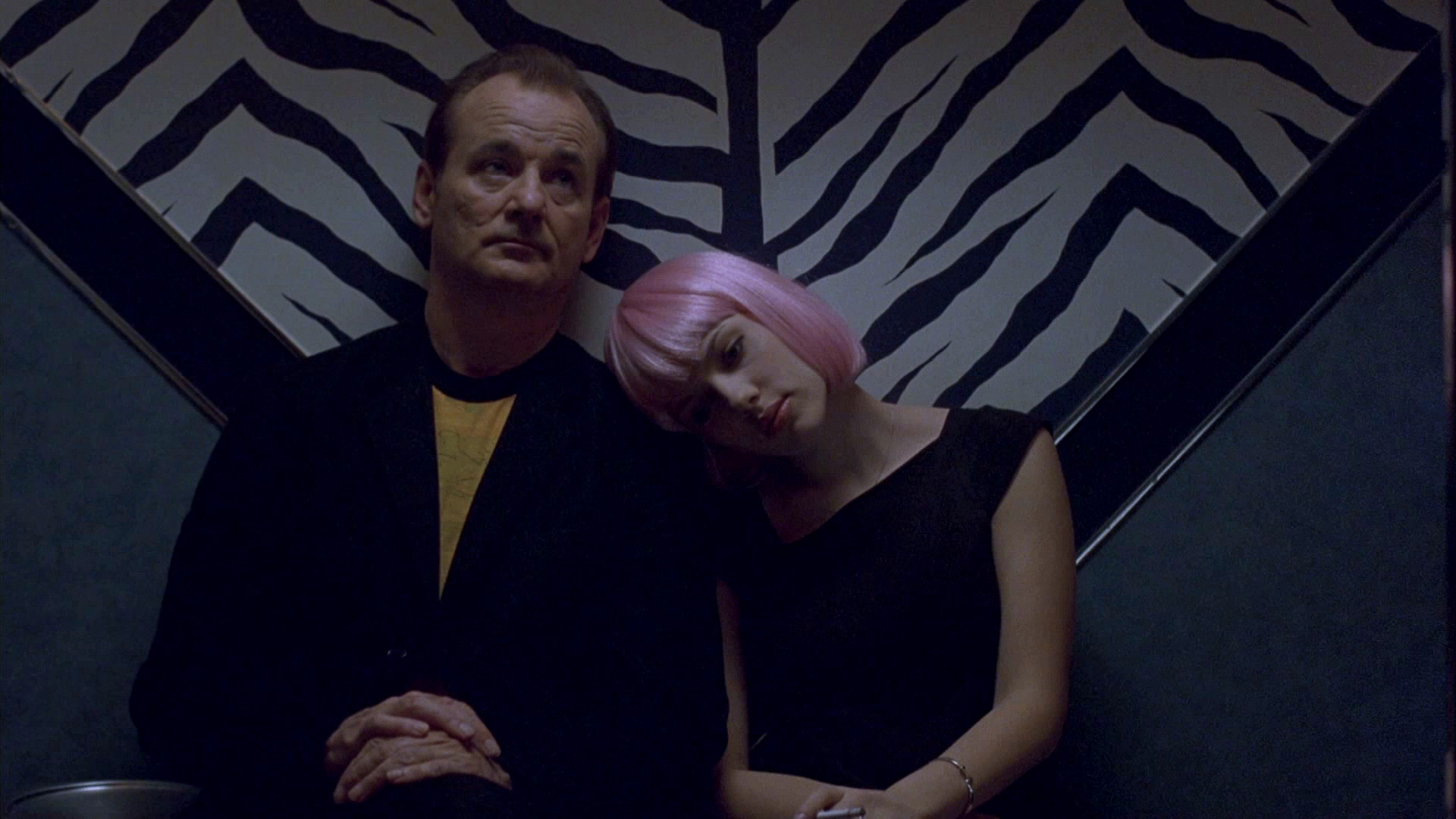
Classic examples include Jules and Vincent side by side in Pulp Fiction (1994), the bench conversation in Annie Hall (1977), and the two leads sharing a banquette in Lost in Translation (2003). Each keeps both faces in view, so the relationship becomes the subject of the shot.
Related terms
5- Over-the-Shoulder ShotCamera Shots
An over-the-shoulder shot looks at one character past the back of another's shoulder and head, keeping both in frame so a conversation feels connected and spatially anchored.
- Single ShotCamera Shots
A single is a shot built around one character as a unit of coverage; it can be clean, with nobody else in frame, or dirty, with a piece of the scene partner in the foreground.
- Three ShotCamera Shots
A three shot holds three characters in one frame with comparable weight, often arranged as a triangle, so the dynamics and shifting alliances of a trio play out without cutting.
- Profile ShotCamera Angles
A profile shot films the subject from the side, roughly 90 degrees to their line of sight, so the outline of the face is emphasized and the character seems withdrawn, observed, or locked in confrontation with someone off-frame.
- Medium ShotCamera Shots
A medium shot frames a person from about the waist up, balancing facial expression with hand gestures and some of the surroundings — the neutral, conversational size of most dialogue and interaction.
Further reading
Steven D. Katz, Film Directing Shot by Shot (1991). Joseph V. Mascelli, The Five C's of Cinematography (1965).