 FlashBoards Learn
- Learn
- Camera Shots
- Talking Head
Camera Shots · Film language
Talking Head
Also called: talking-head shot, talking head interview
A talking head is a head-and-shoulders shot of a person speaking: an interviewee, an expert, a news anchor or a presenter. It is the basic unit of documentaries, news and online video. The frame puts the face and the words first, so the audience judges both the information and the person delivering it.
- What it does
- Delivers testimony or information through a face the audience can read and trust.
- Use it when
- Someone needs to explain, remember or argue on camera: interviews, news, explainers, testimonials.
- Watch out
- A static head for minutes on end; plan B-roll and a second angle so the edit can breathe.
- Try this prompt
documentary talking head, medium close-up of a seated woman speaking, eyeline just off camera left, soft window key light, 85mm, dark studio background
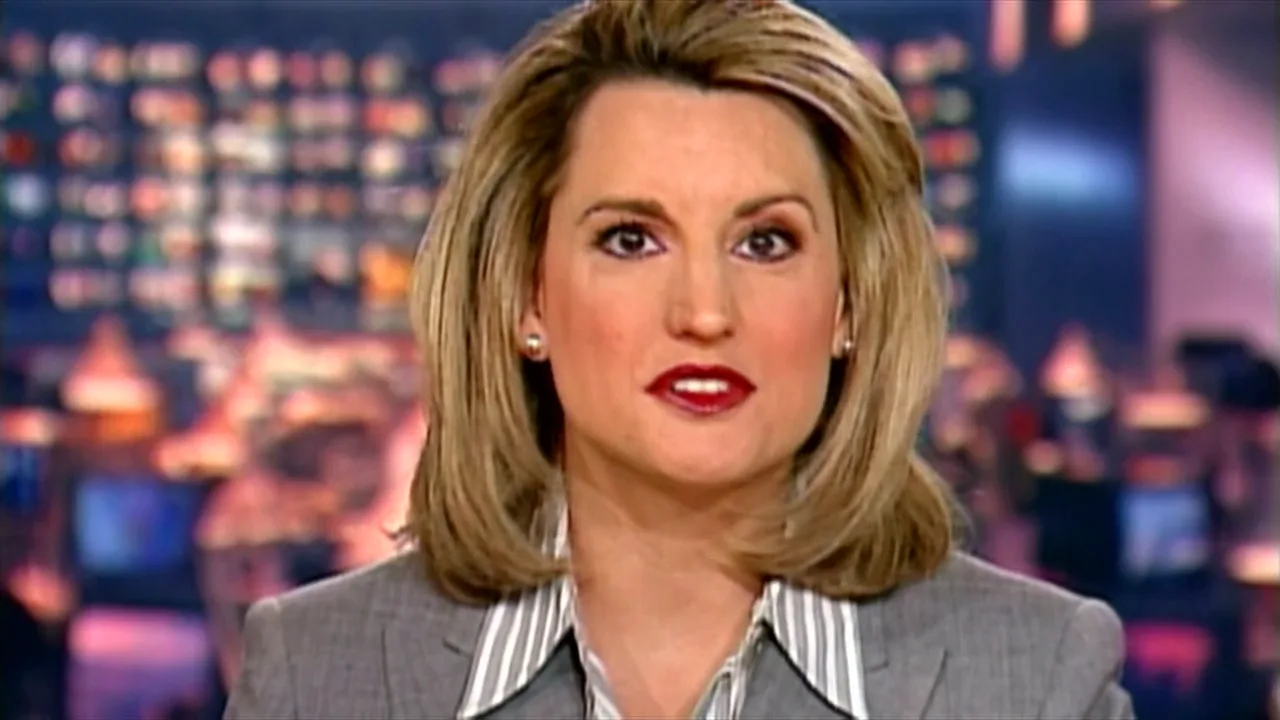
What is a talking head shot?
A talking head is defined by two things: one person, and speech as the point of the shot. Framing sits between a medium close-up and a loose close-up, from mid-chest to just above the hair, usually at eye level on a locked-off camera, against a background that doesn't compete with the face.
It is one of the most-used camera shots in nonfiction. It comes in two variants: the interview, where the speaker looks just past the lens, and the presenter, where an anchor or host looks straight into it.
Why do filmmakers use talking heads?
Authority. A face turns information into a claim someone stands behind. In documentary filmmaking the talking head is the witness box: expert, survivor, insider.
Character. Close framing shows what the words hide: a pause, a swallow, eyes drifting away. Much of Grizzly Man (2005) rests on people searching for words about Timothy Treadwell.
Structure. Interviews give the edit a spine. Voices carry the story while B-roll shows what they describe.
Borrowed realism. Reds (1981) cuts to real elderly witnesses; When Harry Met Sally... (1989) punctuates its story with couples on a couch telling how they met.
Interview shot: framing someone answering questions
The interview shot is the classic talking head: the subject in a steady single, the interviewer sitting beside the camera, the eyeline falling just off the lens. That small offset tells the audience they are watching a conversation, not being addressed.
- Lead room on the eyeline side. A subject looking camera left sits slightly right of center.
- Interviewer close to the lens, at the subject's eye height; farther away, the eyeline turns toward profile.
- Alternate sides between subjects, so the edit can suggest they answer each other.
- A second angle 30–45 degrees off the first lets the editor cut inside an answer without a jump cut.
Errol Morris reversed the convention with his Interrotron, which shows the interviewer's face on glass over the lens: subjects in The Fog of War (2003) look straight at the viewer.
How to shoot a talking head
Lens and distance. 50–85mm on full frame from 1.5–2.5 m. Wide lenses up close stretch the nose; at f/2.8–f/4 both eyes stay sharp when the subject leans in.
Height and headroom. Lens at eye level or a hair above, eyes near the upper third line, little headroom.
Light. A soft key light 30–45 degrees off-axis on the side the subject faces, a little fill, a rim to separate the head, and a background a stop or two darker than the face.
Background. A place that says something about the person, a workshop or a lab, blurred 2–4 m behind.
Sound first. Lavalier plus a boom just out of frame; viewers forgive soft focus, not a bad voice.
Performance. A chair that doesn't swivel, and silences left to run.
Talking head vs. direct address
Both are people speaking to camera, but to different listeners. An interview talking head looks just off the lens, so we observe an exchange. Direct address looks into the lens, so the viewer is the one spoken to.
| | Talking head (interview) | Direct address | |---|---|---| | Eyeline | Just off the lens | Into the lens | | Viewer's role | Observer | Addressee | | Effect | Candid, reflective | Intimate, confrontational |
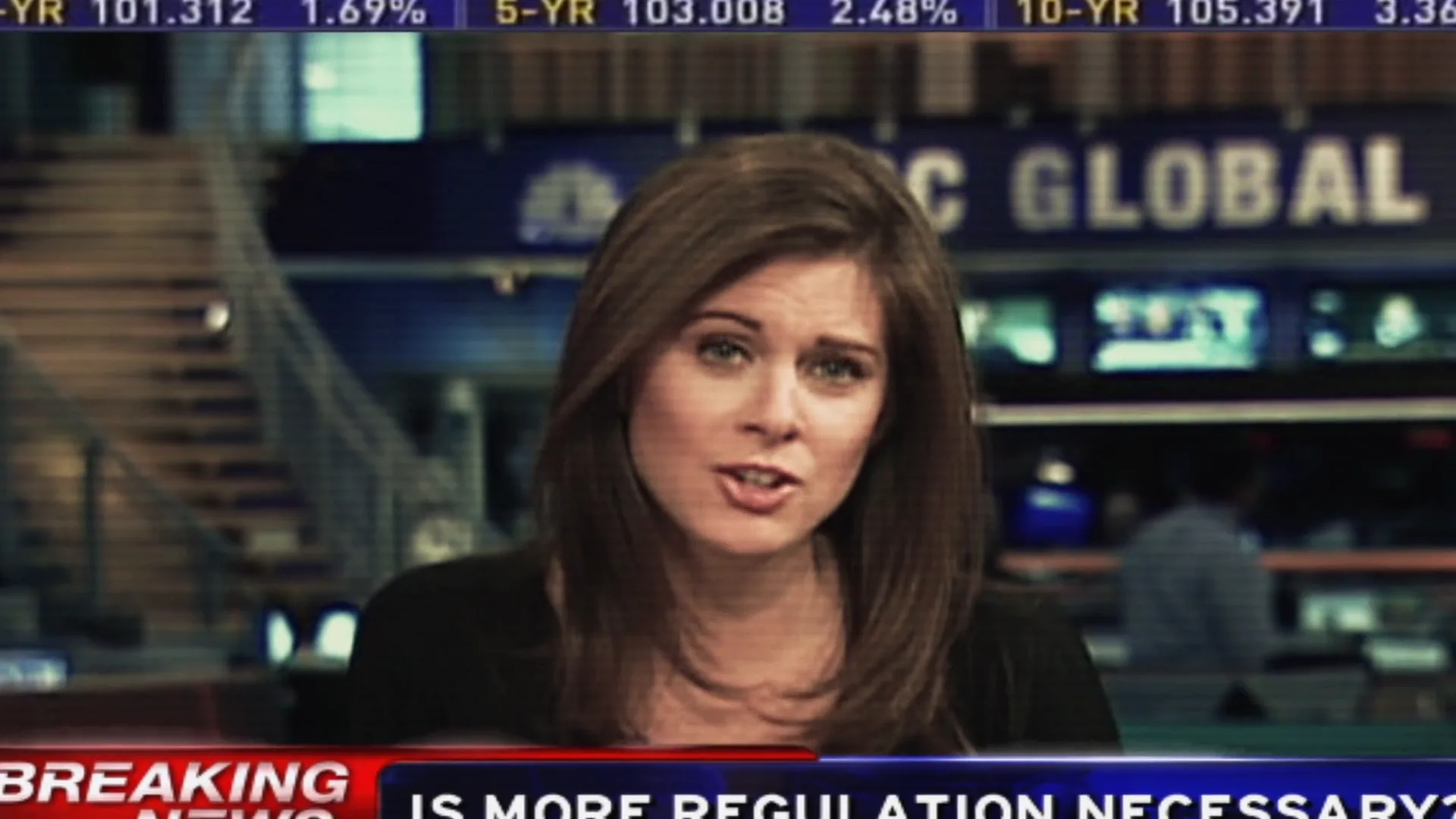
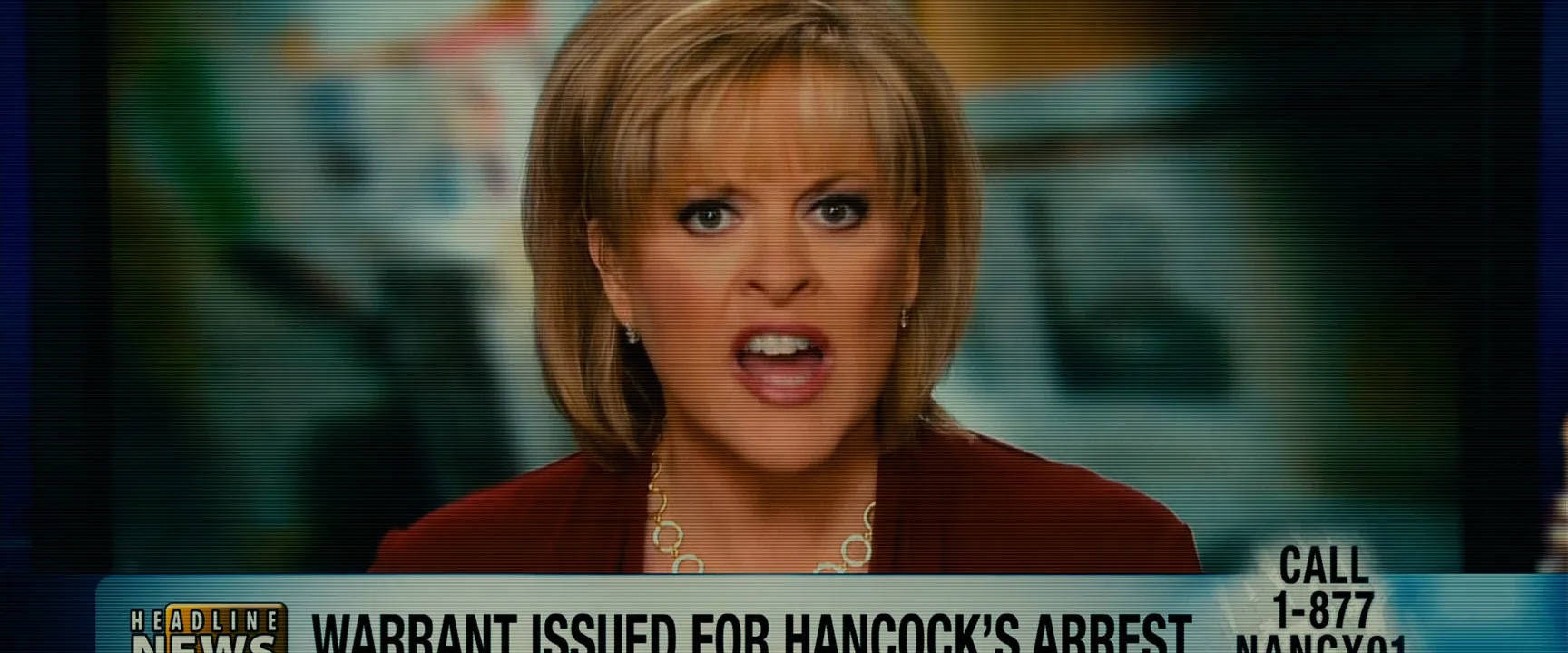
A news anchor combines both: talking-head framing with direct address. Keep one mode per subject so the eyeline doesn't jump within a film.
Talking Head examples in film
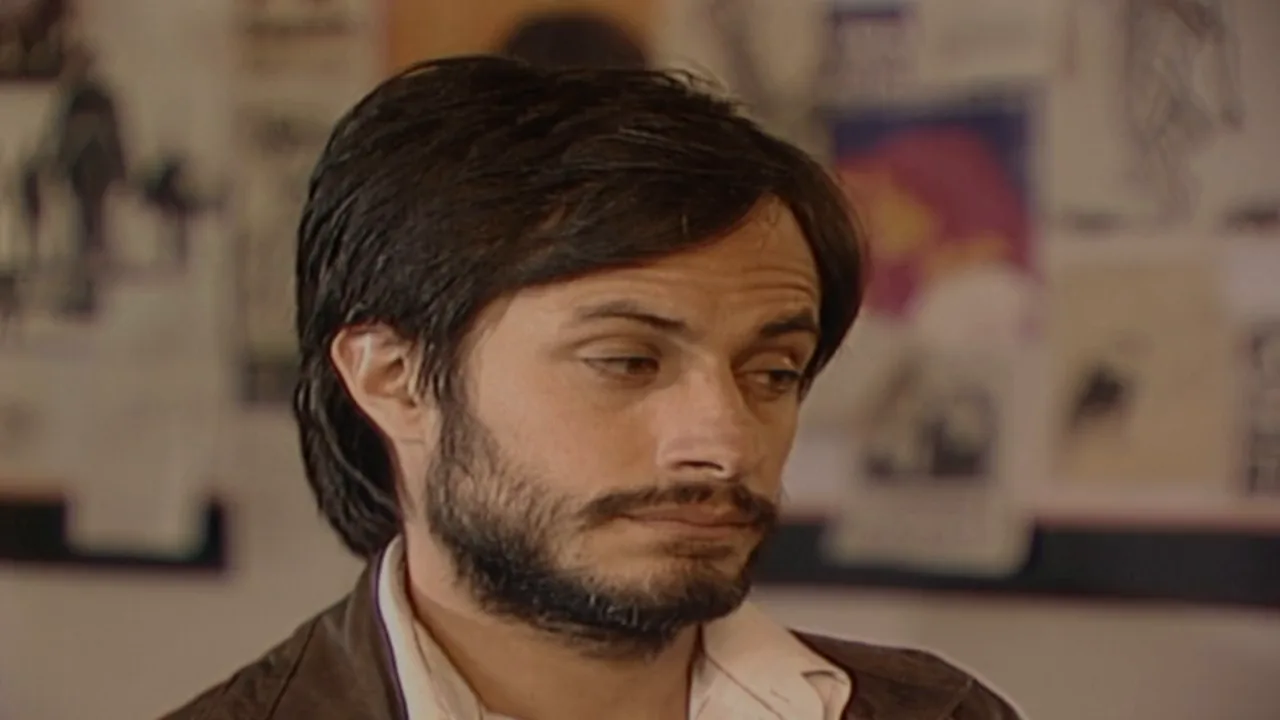
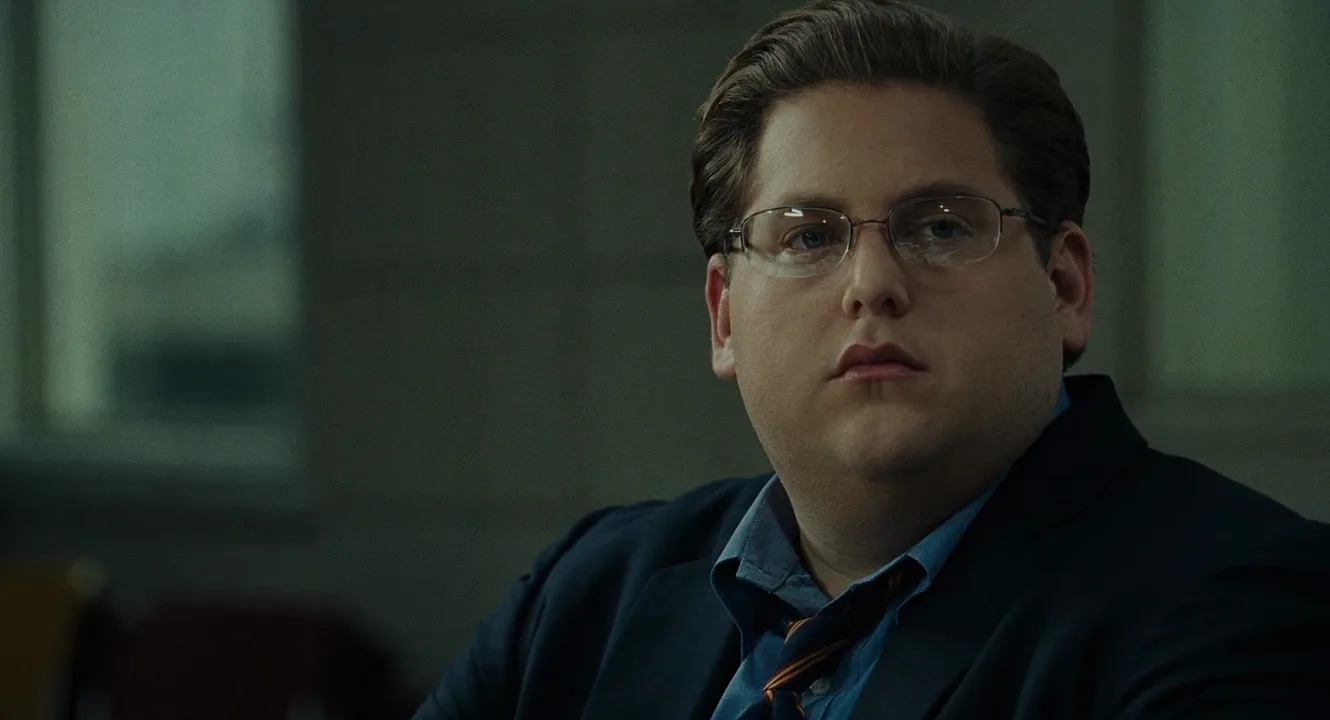
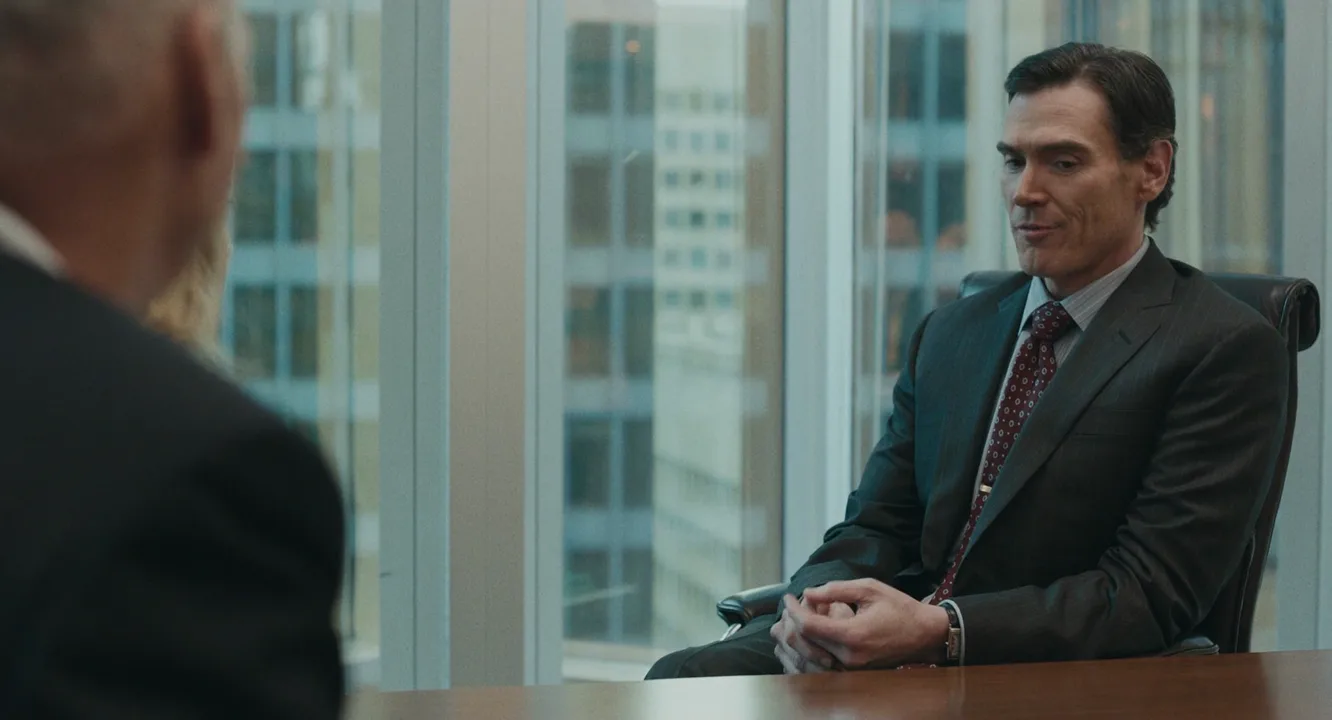
7 framesDocumentaries live on the talking head, and fiction borrows it constantly. Note where each person looks and how much space the frame leaves around the head.
How to create a talking head with AI
4 promptsAn AI talking head comes down to three prompt decisions: shot size, eyeline and the light on the face. On a FlashBoards board the reference frames, takes and notes sit side by side, so you can compare eyelines at a glance. The fourth prompt re-shoots a real film shot from a text description alone, and the original plays next to the result so you can compare.
Documentary talking head, a single-person shot with a clean, empty foreground: tight medium close-up of one woman from mid-chest up, her head and shoulders filling most of the frame, the bottom edge crossing her chest, the top edge just above her hair, eye-level camera, 85mm lens. A potter in her late fifties with a silver-streaked black braid, deep laugh lines, jade stud earrings and a clay-flecked oatmeal cardigan sits slightly right of center, her eyes turned just off camera left as if answering a question, mid-sentence. Soft window key light from camera left, gentle shadow on the far cheek, a warm lamp glowing in the blurred ceramics studio behind her.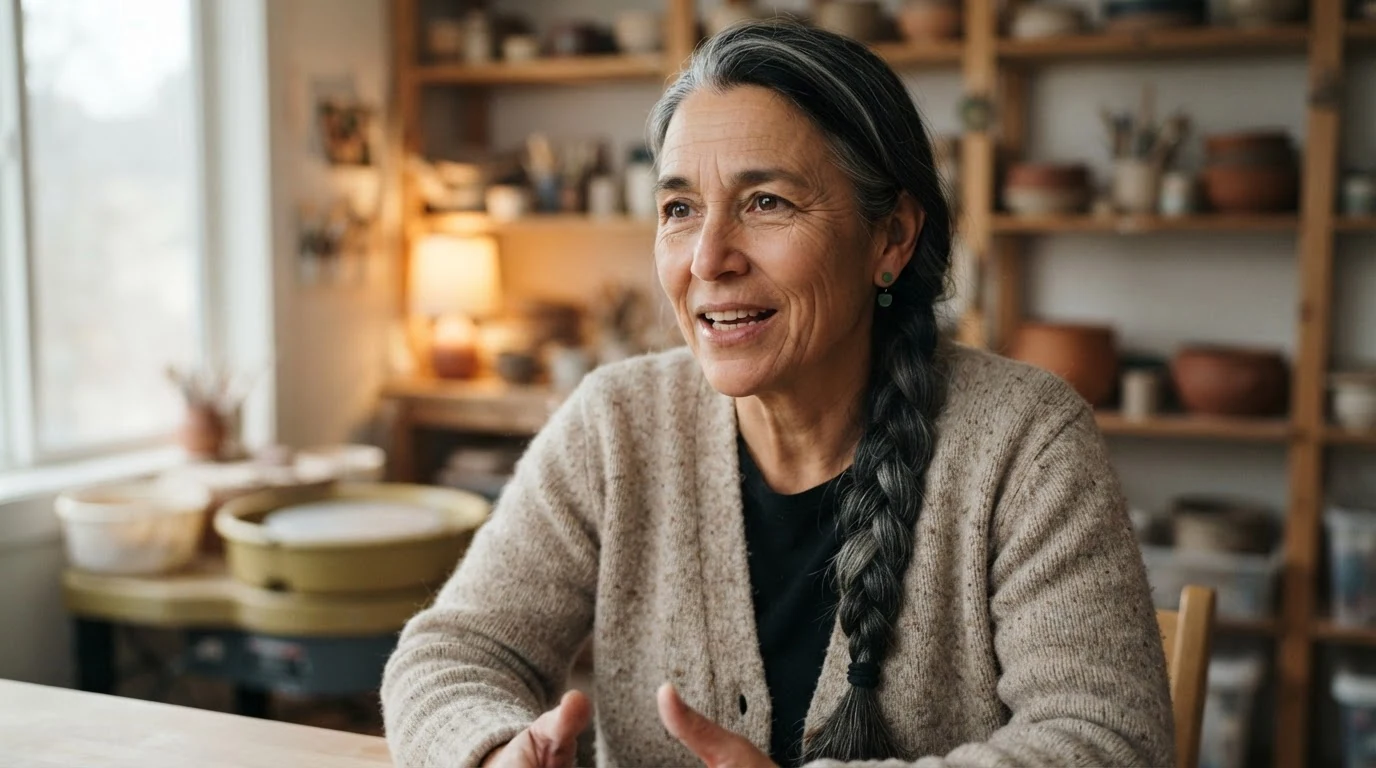
"Medium close-up from mid-chest up" with both frame edges spelled out and "eye-level, 85mm" set size and perspective; "a single-person shot with a clean, empty foreground" keeps the interviewer out of shot; "just off camera left as if answering a question" plus "right of center" builds interview eyeline with lead room.
Open FlashBoardsWide talking head for an online explainer, direct address: a man in his mid-thirties with a shaved head, short copper-red beard, round tortoiseshell glasses and a mustard sweater looks straight into the lens, mid-sentence, one hand raised in a small gesture. Close-up from the collarbones up, placed on the right third of the frame, eyes on the upper third line, eye-level camera, 50mm. Large soft key from front-right, subtle rim light, a softly blurred home office with a bookshelf filling the rest of the frame.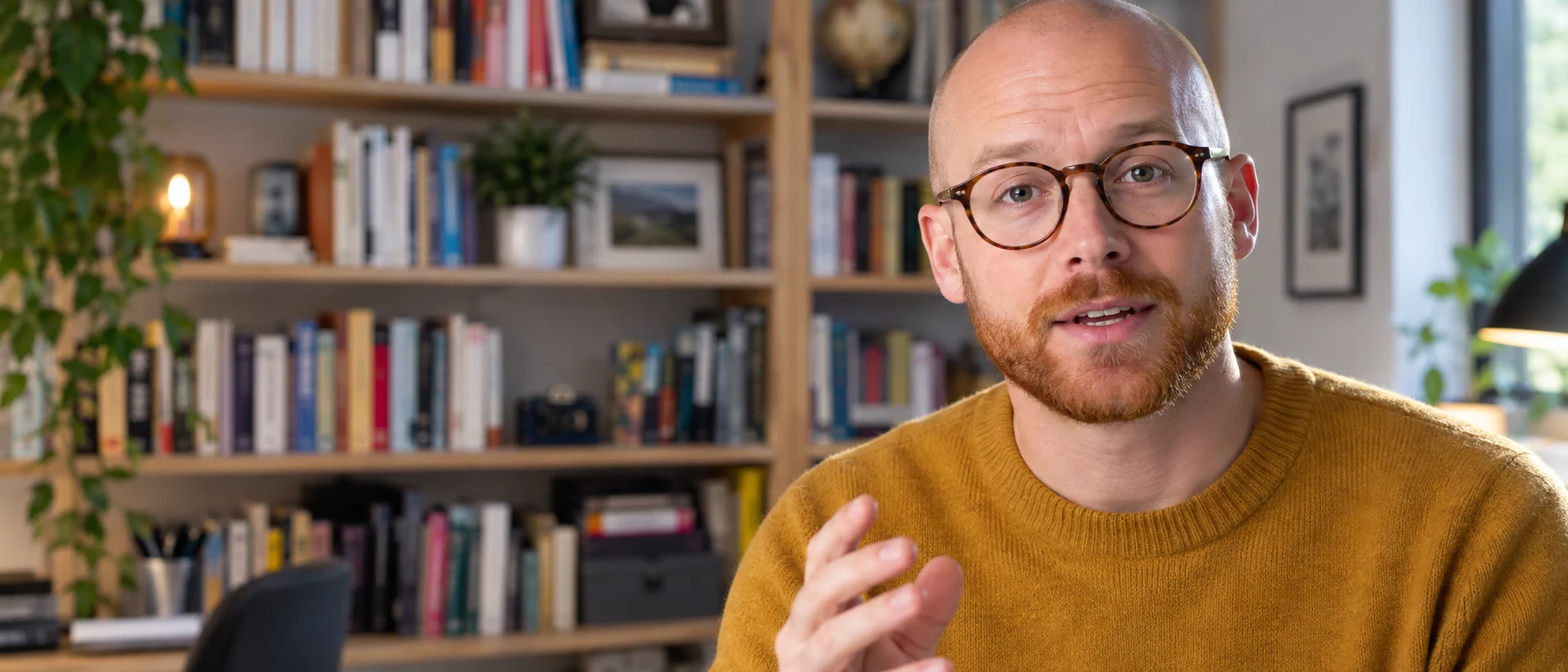
"Looks straight into the lens" gives the presenter variant; the wide frame with him on the right third and "eyes on the upper third line" is the classic explainer layout. The rim light separates him from the shelf.
Open FlashBoardsCamera: locked-off tripod shot with a very slow, barely noticeable push-in toward her face. Action: The woman is already speaking as the shot begins, lips moving, her right hand turning in a small gesture. She pauses and looks down as if remembering, then lifts her eyes back to the interviewer off camera left and smiles slightly while she keeps talking. The lamp behind her glows steadily."Already speaking as the shot begins" keeps the frame alive from the first frame; the glance down and back reads as real thinking. The slow push-in is the one move a talking head easily tolerates.
Open FlashBoards{
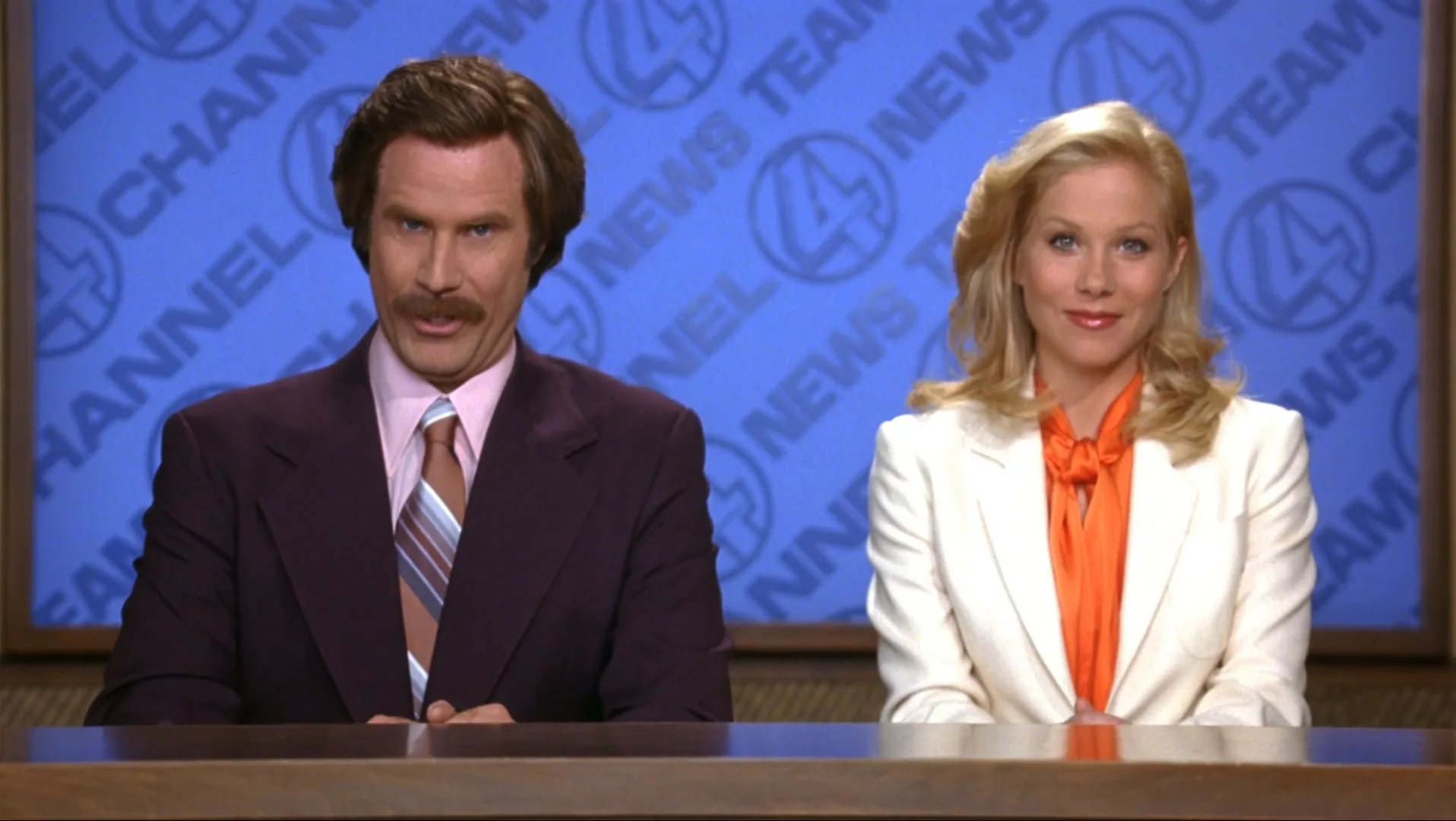
"output": "Full-screen live-action 35mm film footage of a 1970s local TV newscast set, a scene from Anchorman: The Legend of Ron Burgundy (2004), one continuous locked-off shot from its very first frame: a two-shot of two news anchors seated side by side behind a long wooden desk, both facing straight into the lens. Flat, even studio light from the front, bright royal-blue backdrop printed with repeating 'Channel 4 News Team' logos, saturated warm 1970s palette.",
"characters": {
"S1": {
"name": "Ron Burgundy, played by Will Ferrell",
"look": "left of frame: a man with thick feathered brown hair and a full moustache, dark brown three-piece suit, pale pink shirt, wide striped tie, hands folded on the desk",
"voice": "deep, self-satisfied broadcast baritone, slow and grand"
},
"S2": {
"name": "Veronica Corningstone, played by Christina Applegate",
"look": "right of frame: a woman with long feathered blonde hair, white blazer over an orange silk blouse with a big bow, hands resting on the desk",
"voice": "bright, polished anchorwoman voice, warm sign-off tone"
}
},
"shots": [
{
"shot": 1,
"camera": "static tripod at eye level, medium two-shot from the desk up, no movement, no zoom, both anchors in sharp focus for the whole shot",
"action": [
"BEGINNING: alive from the first frame, Ron on the left third and Veronica on the right third sit upright behind the desk, both looking straight into the lens; Ron is already mid-sentence, Veronica listens with a small fixed smile",
"THEN: Ron finishes his name with a slight lift of the chin, eyes locked on the lens, hands stay still on the desk; Veronica keeps smiling at the lens, no nod",
"THEN: Ron delivers his sign-off with a grave little tilt of the head, then holds a proud stare into the lens",
"THEN: Veronica leans a touch forward, turns her smile up and speaks straight to the lens, her hands still on the desk; Ron keeps staring into the lens, motionless",
"END: Ron raises his brows and adds his closing words to the lens; both hold their broadcast smiles facing the camera"
],
"dialogue": [
{
"speaker": "S1",
"on_screen": true,
"when": "from the first frame",
"delivery": "grand, already mid-flow",
"line": "<d>[English] Well, for all of us here at Channel 4 News, I'm Ron Burgundy.</d>"
},
{
"speaker": "S1",
"on_screen": true,
"when": "right after his name",
"delivery": "slow, solemn catchphrase",
"line": "<d>[English] You stay classy, San Diego.</d>"
},
{
"speaker": "S2",
"on_screen": true,
"when": "after Ron's sign-off",
"delivery": "cheerful, polished",
"line": "<d>[English] And thanks for stopping by.</d>"
},
{
"speaker": "S1",
"on_screen": true,
"when": "right after Veronica, to the end",
"delivery": "pompous, final",
"line": "<d>[English] But mainly stay classy.</d>"
}
]
}
],
"sound": {
"ambience": "quiet TV studio room tone, faint hum of studio lights",
"speech": "exactly these spoken phrases, each said once, in this order",
"never_spoken": "no narration and no voice-over: the descriptions, performance notes and step words of this prompt are never spoken aloud",
"music": "a film score under the scene, always below the voices: a brassy 1970s local-news theme sting, light and upbeat",
"subtitles": "none"
}
}Remakes the Channel 4 sign-off from Anchorman: The Legend of Ron Burgundy (2004), carrying over the static two-shot, the eyelines into the lens and the exact spoken lines.
The locked-off eye-level two-shot and "both looking straight into the lens" rebuild the direct-address geometry of a news talking head; the four original lines, each tied to a named anchor, drive who speaks while the other holds a still broadcast smile.
Open FlashBoardsCommon mistakes
- Eyes drift into the lens. Models default to camera-facing portraits; for interviews state direction and target: "looking just off camera left at an unseen interviewer."
- Wrong size. "Portrait" crops unpredictably; "from mid-chest up" pins it.
- Garbled chyrons. Generated lower-third text comes out as nonsense; ask for a clean background and add graphics in the edit.
- Mouth motion isn't lip sync. Use the clip under voice-over or as a listening shot, and cut to B-roll on key lines.
Keep the reference frames, prompts and every generated take side by side — images and video in one canvas.
FAQ
4 questionsWhat is a talking head shot?
A talking head shot frames one person from about mid-chest up while they speak, usually at eye level on a locked-off camera against a simple background. It is the standard framing for documentary interviews, news anchors, experts and online presenters, because it keeps attention on the face and the words.
What is a talking head video?
A talking head video is built mainly from a person speaking to camera: an interview, explainer, vlog or testimonial. Good ones cut B-roll, graphics or a second camera angle over the speech, so the viewer isn't staring at one static face for the whole running time.
Where should a talking head interview subject look?
In a classic interview the subject looks just past the lens at the interviewer, who sits beside the camera at eye height, which reads as a natural conversation. Looking straight into the lens is direct address: more intimate or confrontational, and suited to presenters, anchors and deliberate documentary styles.
What lens is best for a talking head?
A 50–85mm lens on a full-frame camera, 1.5–2.5 meters from the subject, gives flattering proportions and a softly separated background. Wide lenses used close distort the face. Around f/2.8–f/4 keeps both eyes sharp when the speaker moves forward or back.
Related terms
3- B-RollCamera Shots
B-roll is secondary footage — details, locations, actions, atmosphere — shot to be cut over or between the main material (the A-roll, such as an interview or dialogue), hiding edits and illustrating what is being said.
- Medium Close-UpCamera Shots
A medium close-up frames a person from roughly mid-chest to just above the head — close enough for facial expression, loose enough to keep shoulders and a bit of the setting; it is the workhorse of dialogue coverage.
- Documentary FilmmakingFilmmaking Process & Crew
Documentary filmmaking records real people and events rather than staged fiction, built from observation, interviews, archival footage and narration, and shaped into a story in the edit.
Further reading
Michael Rabiger, Directing the Documentary (Focal Press).