 FlashBoards Learn
- Learn
- Camera Shots
- Medium Close-Up
Camera Shots · Film language
Medium Close-Up
Also called: MCU, medium close shot
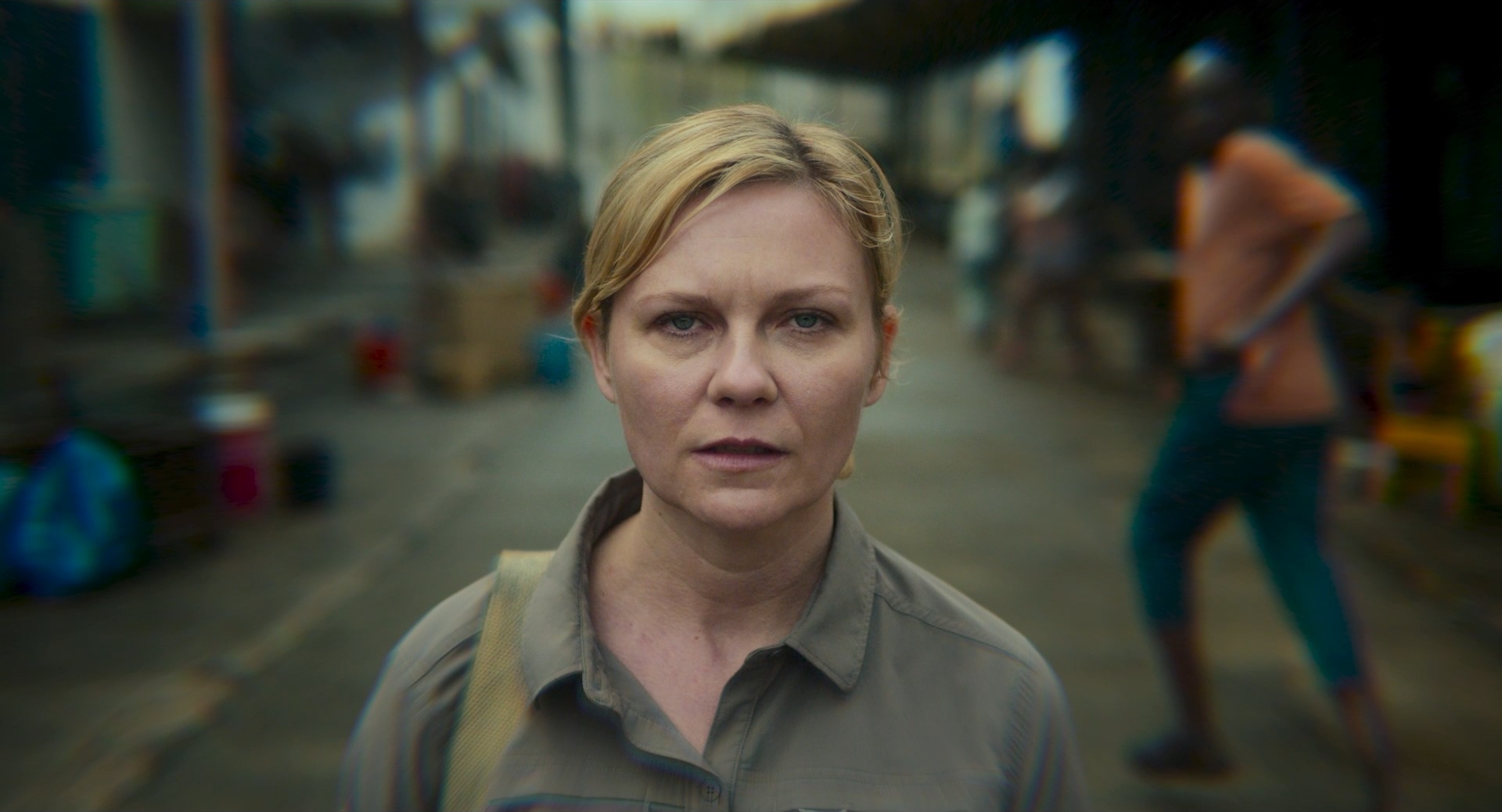
A medium close-up (MCU) frames a person from about mid-chest to just above the head. It is close enough to read the eyes and small shifts of expression, yet loose enough to keep the shoulders, a gesture and a slice of the room, which is why it carries most of the dialogue in film and television.
- What it does
- Puts the face at the center of attention while keeping posture, shoulders and a readable background.
- Use it when
- You need the standard single for a conversation, an interview or a character thinking on screen.
- Watch out
- A few centimeters of frame line turn it into a close-up or a medium shot, so pin the bottom edge at mid-chest.
- Try this prompt
Medium close-up of a woman framed from mid-chest to just above her head, 65mm lens at eye level, soft window key from the left, background softly out of focus
What is a medium close-up shot?
A medium close-up, written MCU on a shot list and sometimes called a medium close shot, sits between the medium shot, which frames a person from the waist up, and the close-up, which gives the screen to the face. On the scale of camera shot sizes it is where the face starts to dominate but the body has not yet disappeared.
- Bottom edge: mid-chest, around the breast pocket. At the collarbone it becomes a loose close-up; at the belt, a medium shot.
- Top edge: a little headroom, or a slight trim of the crown.
- Eyes: near the upper third line.
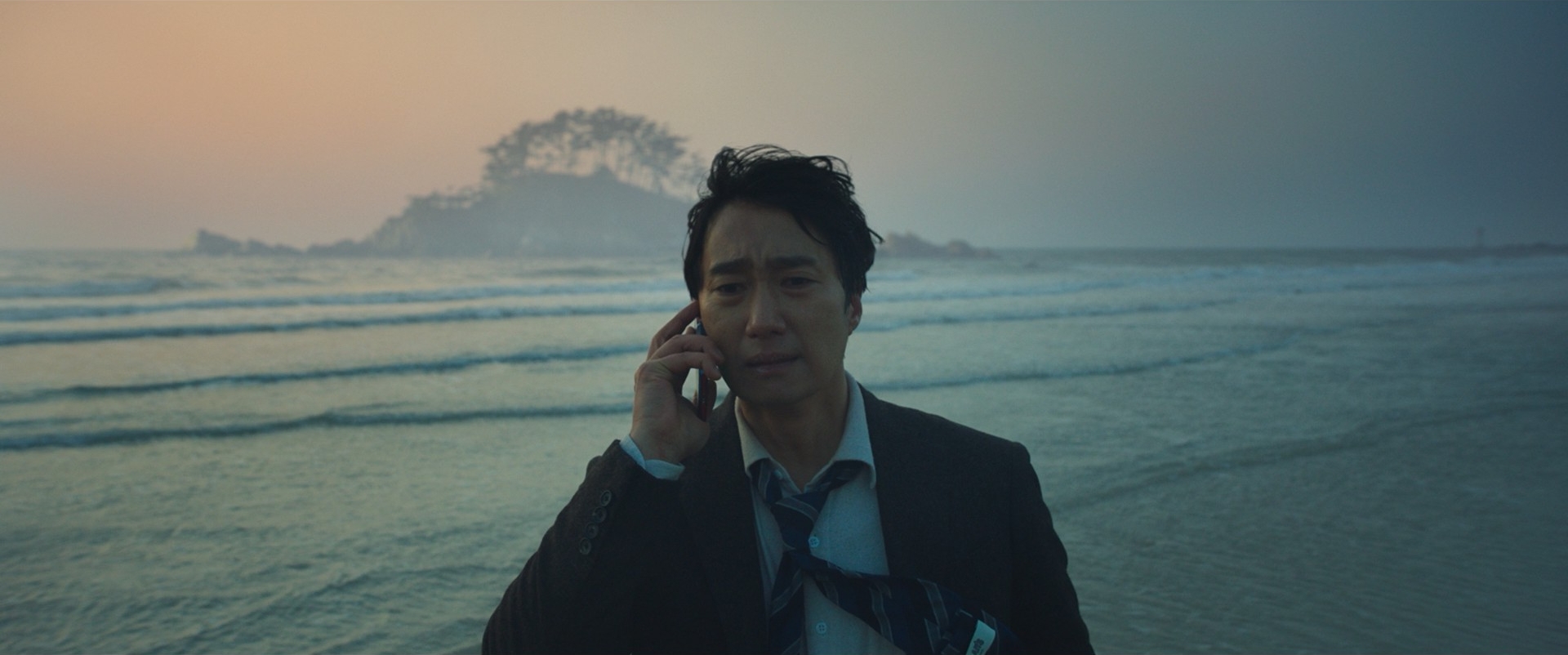
Because shoulders and collar stay in frame, an MCU shows posture and costume: a slumped chest, a loosened tie, a phone at the ear.
Why is the medium close-up the workhorse of dialogue?
It reads the face without isolating it. The audience catches a glance or a swallowed reaction and still sees how the character holds their body.
It is the default single in coverage. In shot reverse shot the singles on each actor are most often MCUs. They cut smoothly against a wide master and leave a close-up in reserve for the line that matters; a scene that starts in close-ups has nowhere left to go.
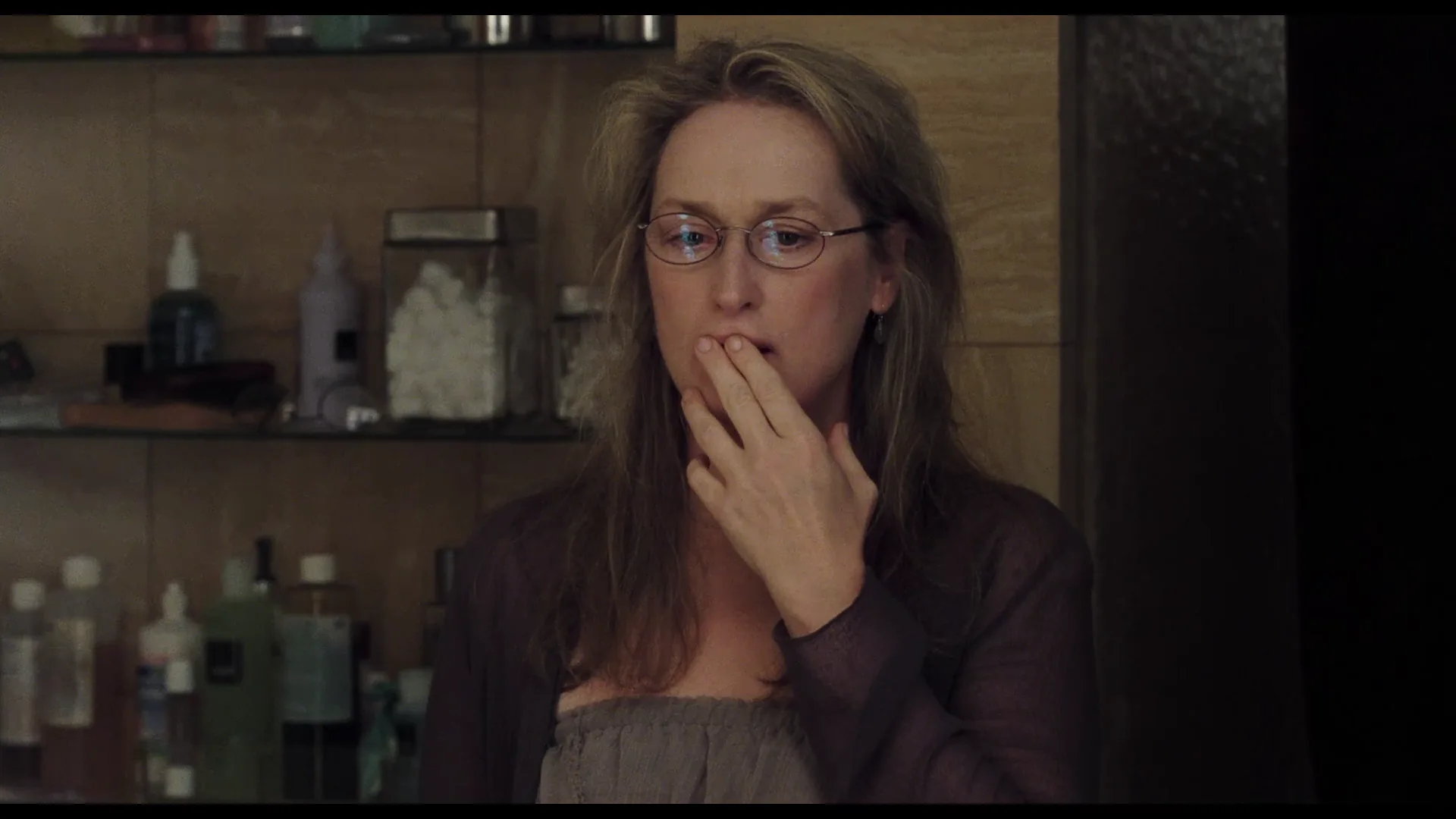
It leaves room for hands and props. A cup at the mouth or a hand over the lips lands inside an MCU; a close-up crops them into fragments.
It is the grammar of the interview. Anchors, documentary subjects and the talking head of online video sit near MCU size because it holds a speaker for minutes without feeling invasive.
How to shoot a medium close-up
Lens. On full frame, 50–85mm; on Super 35, roughly 35–60mm. For a mid-chest frame a 50mm puts the camera about 1.5 m from the actor, an 85mm about 2.5 m. A 24mm at the same size enlarges the head and deepens the room.
Height and eyeline. Start at the actor's eye level. Dropping 10–15 cm below the eyes adds weight; going above diminishes. The actor looks just past the lens at their scene partner; a closer eyeline feels more intimate.
Focus. An 85mm at T2.8 and 2.5 m holds roughly 15 cm of depth: eyes and shoulders sharp, background soft. Open up for stronger shallow depth of field, and focus on the nearer eye.
Light. A soft key 30–45° off axis on the side the actor faces, fill about two stops under, and a back light or bright practical to separate the shoulders. Let light fall off down the chest so the face stays brightest.
Clean and dirty medium close-ups
A clean MCU shows one character. A dirty MCU keeps a soft shoulder or the back of the other person's head at the foreground edge, the tight end of the over-the-shoulder shot. Dirty singles keep a conversation physically connected; switching to clean singles mid-scene makes the characters feel alone while they are still talking.
Medium close-up vs. close-up
One frame line separates them, and it decides what survives.
| | Medium close-up | Close-up | |---|---|---| | Bottom edge | Mid-chest | Collarbone to chin | | Body language | Shoulders, posture, hands at chest height | Face only | | Background | Readable as a place | Mostly blur | | Typical use | Dialogue singles, interviews | Peaks, reactions |
Treat the MCU as the base of a scene and the close-up as emphasis.
Medium Close-Up examples in film
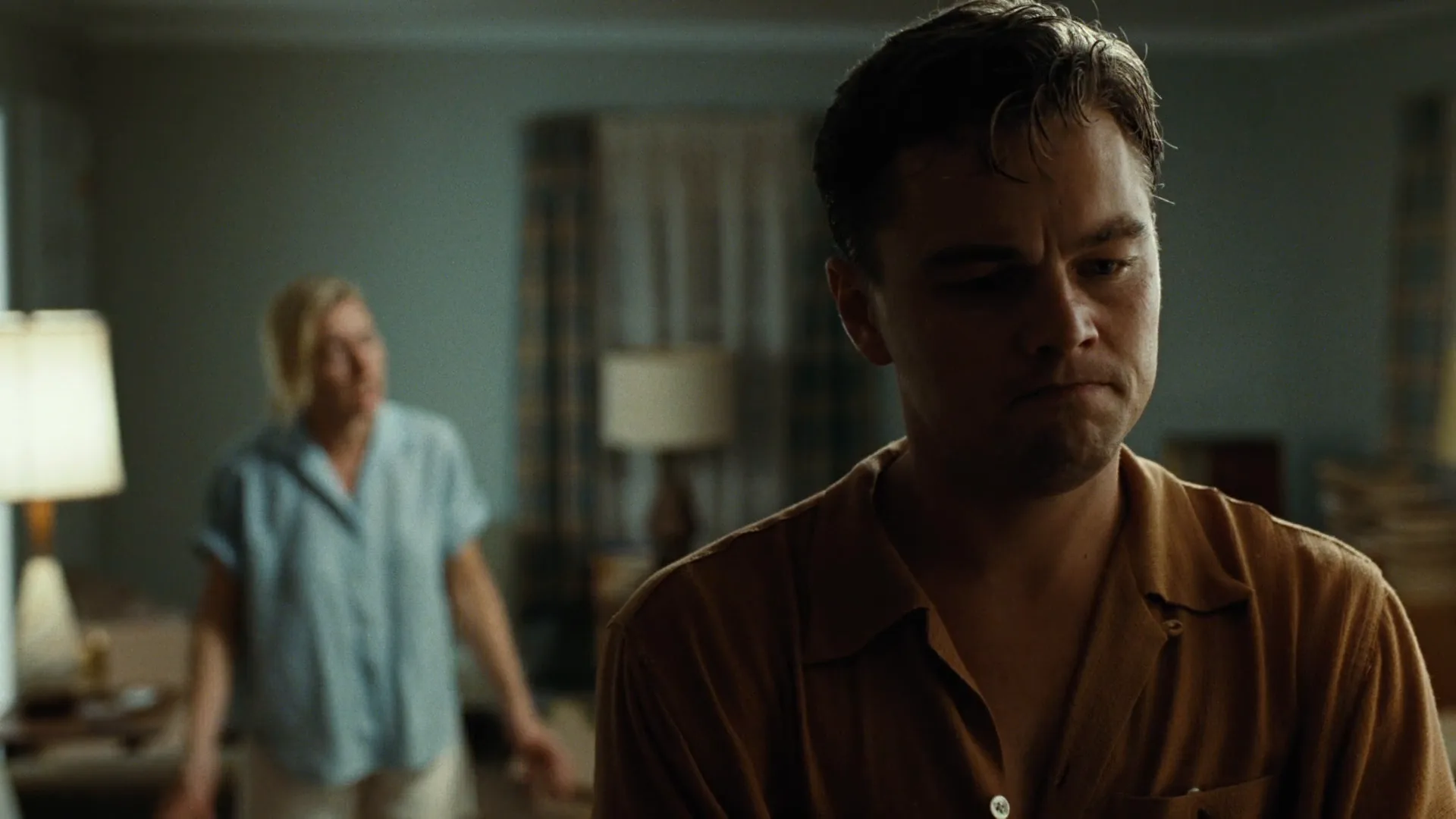
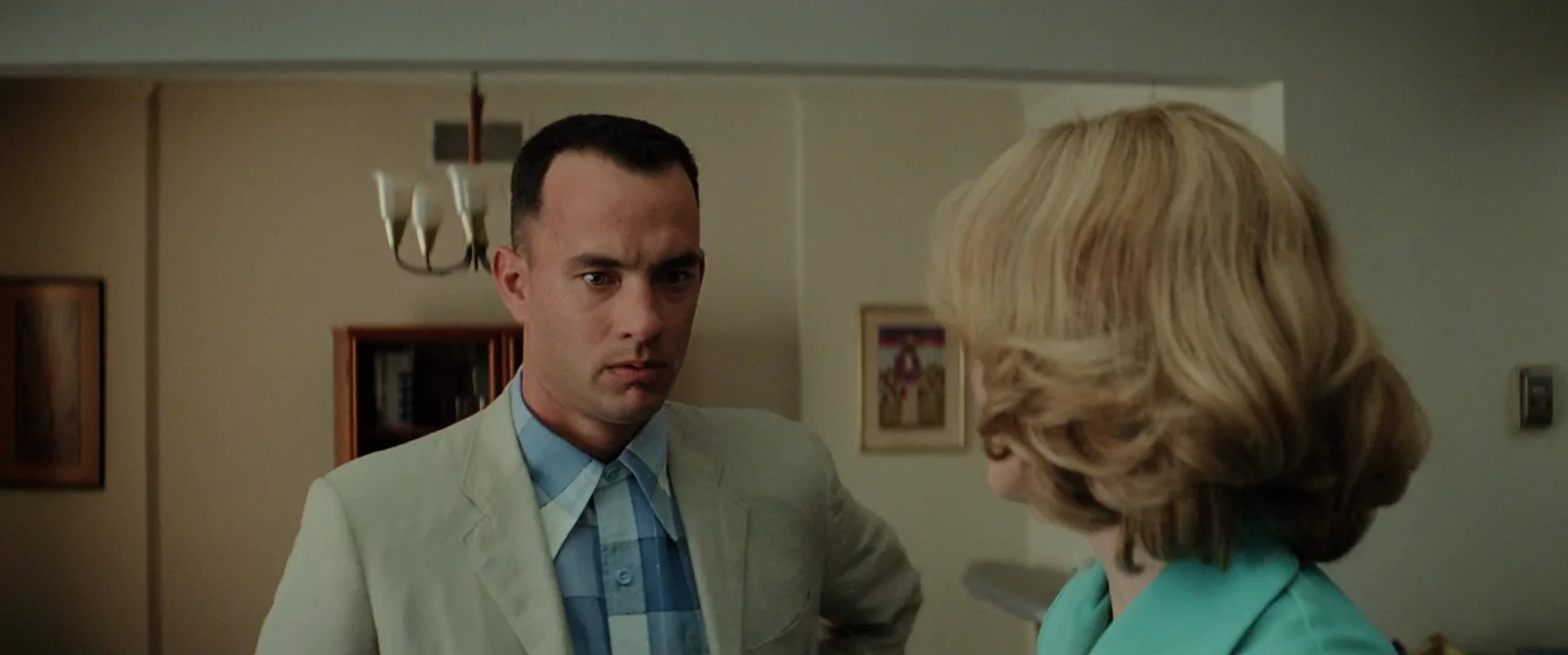
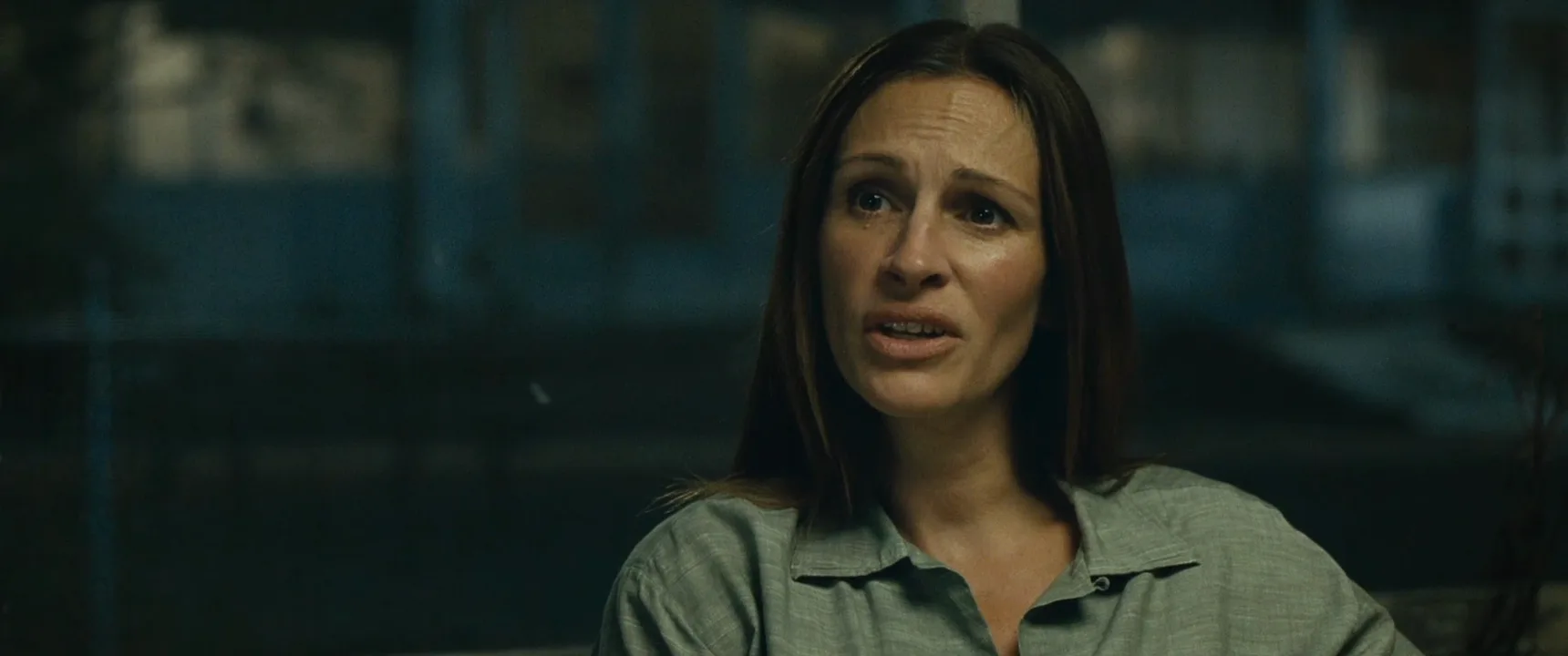
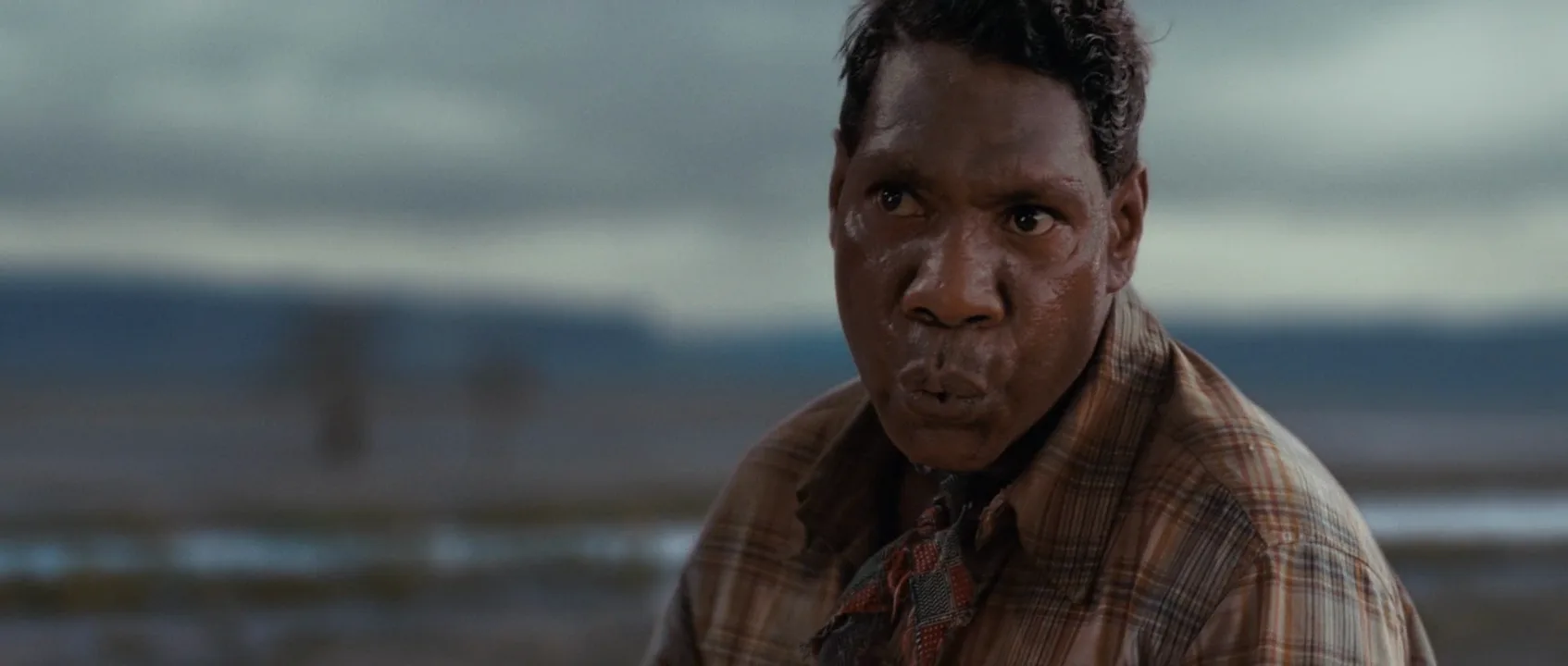
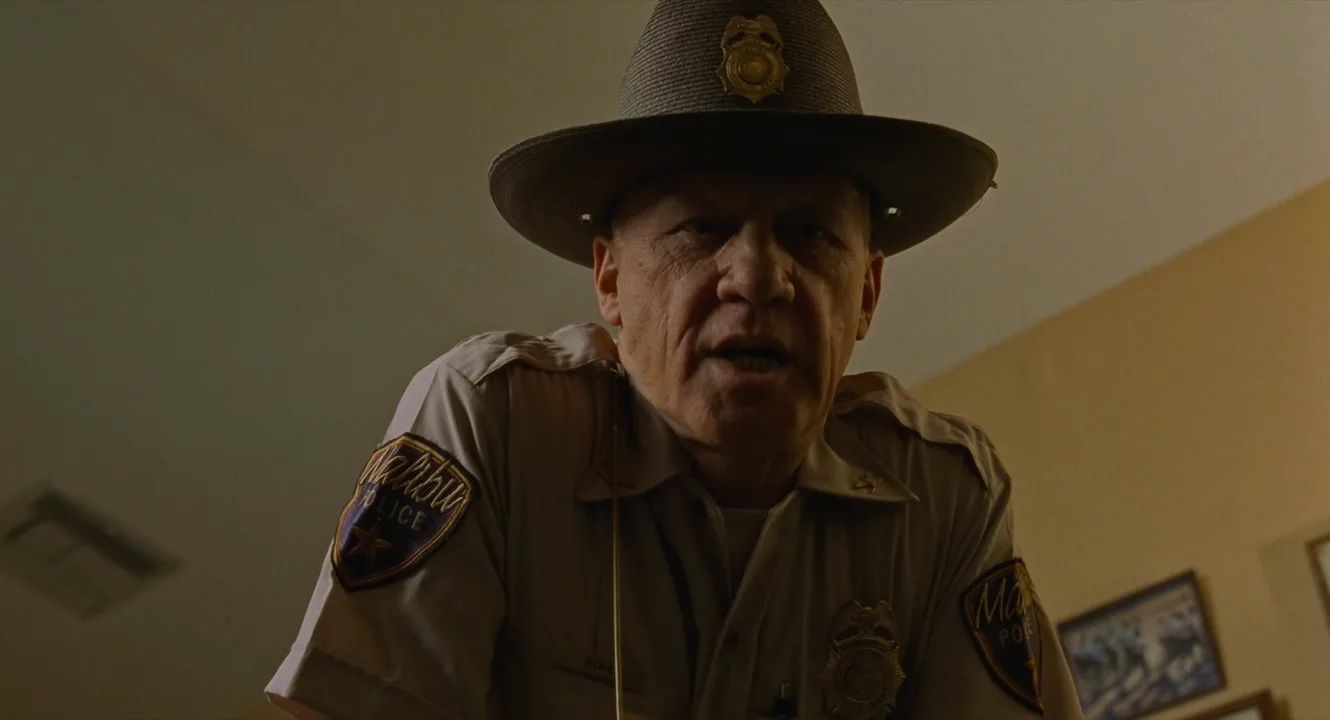
8 framesWatch where the bottom edge falls and what the shoulders, hands and background add to the face.
How to create a medium close-up with AI
4 promptsModels know the phrase "medium close-up" but drift toward a headshot or a waist-up shot unless you pin the frame lines, lens and eyeline. Keep the start frame, second take and film references side by side on one FlashBoards board to pick the single that matches. The fourth prompt re-shoots a real film shot from a text description alone, and the original plays next to the result so you can compare.
Cinematic medium close-up of a fictional woman in her late forties, auburn hair streaked with silver and pinned up, freckles, a small scar through her left eyebrow, moss-green cardigan over a cream blouse. Framed from mid-chest to just above her head, shoulders and collar visible, eyes on the upper third. 65mm lens at eye level, camera 2 m away. Kitchen table at dusk, soft window light from the left, warm lamp softly out of focus behind her. She looks just off-lens to the right, listening. Fine film grain.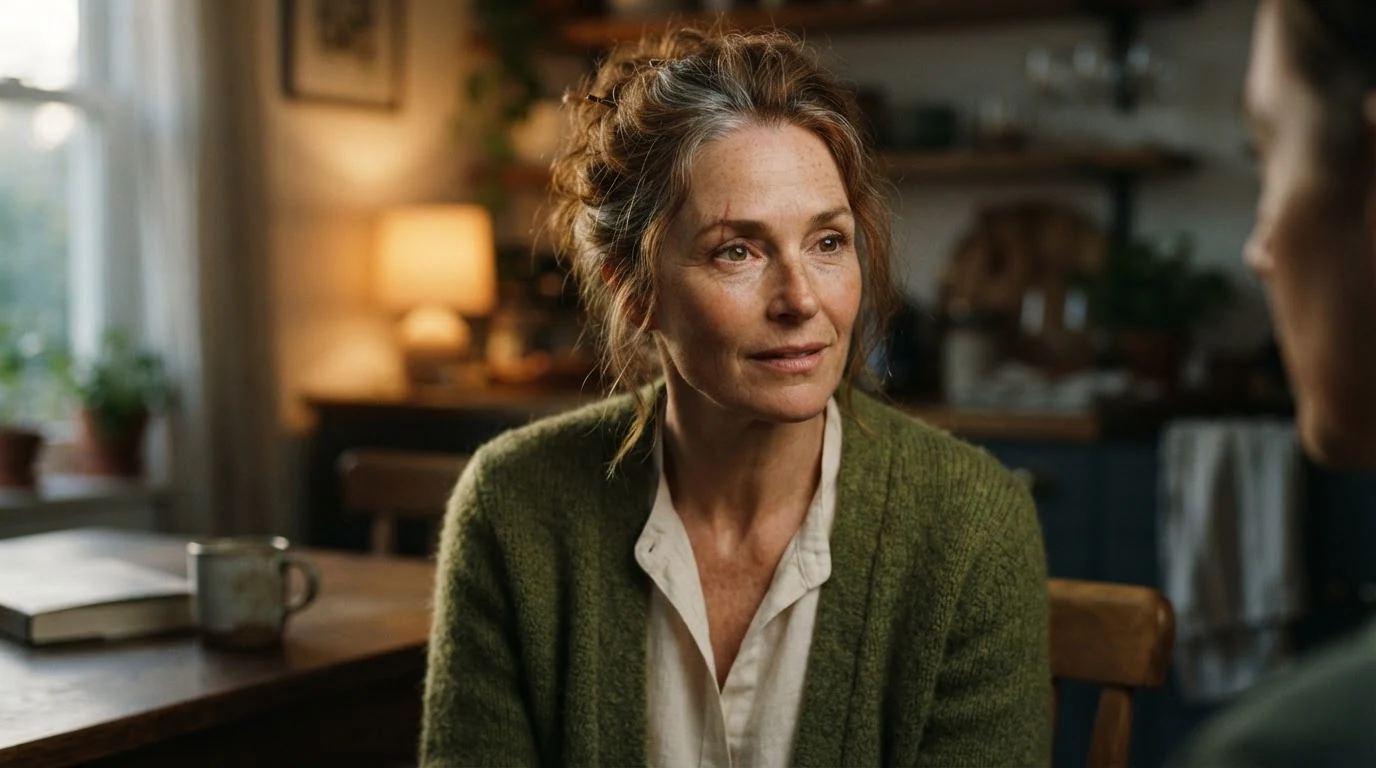
"Framed from mid-chest to just above her head" sets both frame lines; the 65mm at eye level keeps the face neutral, and "just off-lens" makes it a dialogue single, not a portrait.
Open FlashBoardsDirty medium close-up of a fictional man in his sixties, shaved head, close-cropped white beard, wire-rim glasses, navy work jacket. Framed from mid-chest up on the left third; the blurred shoulder of a second person fills the right edge of frame in the foreground. 85mm lens at eye level, shallow depth of field. Diner booth at night, cool fluorescent overhead, red neon glow in the window behind him. He is mid-sentence, holding a coffee mug at chest height.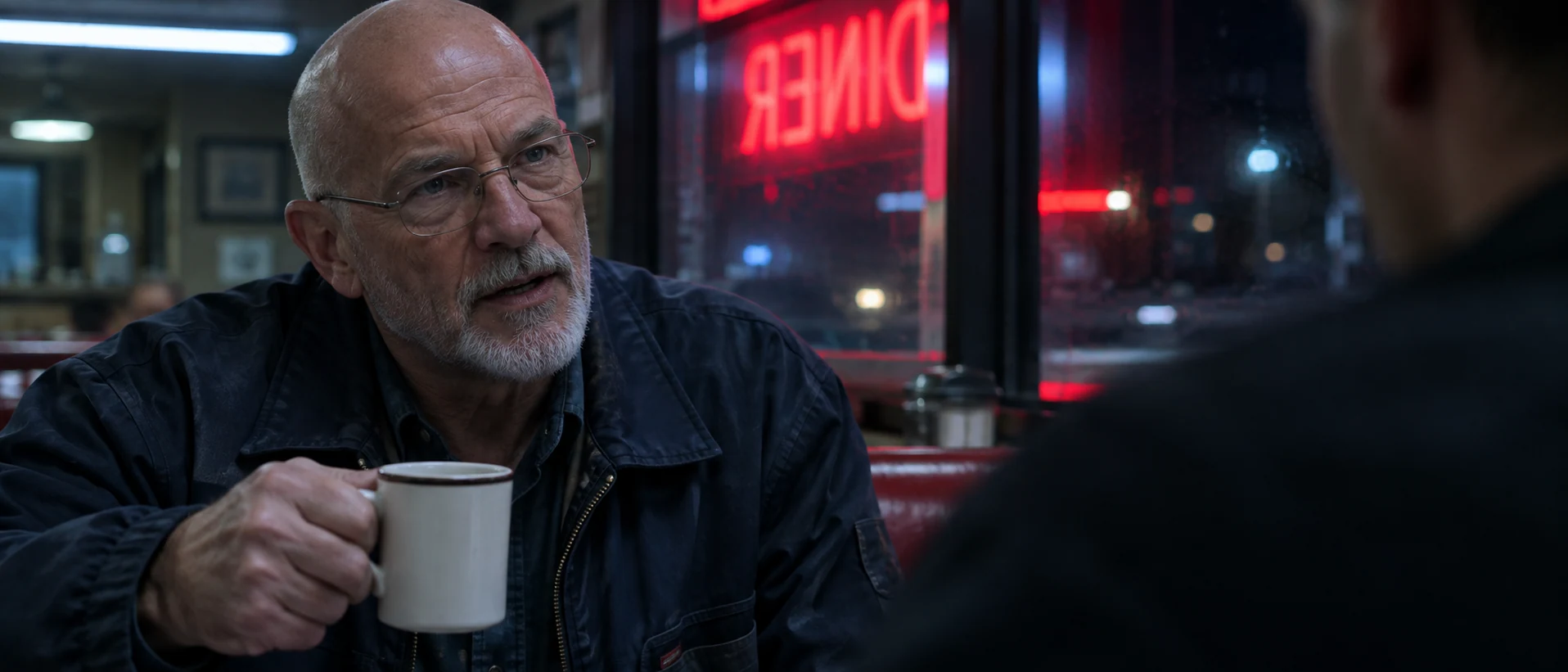
"Dirty" plus a concrete foreground shoulder builds the over-the-shoulder variant; a mug "at chest height" stays in frame without pulling the model out to a medium shot.
Open FlashBoardsCamera: a slow, steady drift a few centimeters to the left at eye level, holding the same mid-chest framing; the frame size stays constant. Action: she is already lifting her eyes toward the person off-lens right as the shot begins. She takes a breath and her shoulders drop. She answers with a few quiet words, glances down at the table, then looks back up.Motion starts on frame one, so the shot doesn't creep in on a still; "the frame size stays constant" keeps the MCU from sliding into a close-up.
Open FlashBoards{
"output": "Full-screen live-action scene from Revolutionary Road (2008) from its very first frame: one continuous shot, a single unbroken take from first frame to last. Late-1950s suburban living room at night, 35mm color film look with fine grain; dusty teal-green walls, plaid curtains, two lit table lamps with pale shades (one at the left edge beside a white-bright window frame, one in the centre background), cream armchair at right; soft light from the left, the man's face in low-key amber shadow; teal, cream and rust-brown palette; shallow focus.",
"characters": {
"S1": {
"name": "Frank Wheeler, played by Leonardo DiCaprio",
"look": "early thirties, short dark-brown hair combed back, rust-brown short-sleeved camp-collar shirt open at the neck",
"voice": "low, flat, weary"
},
"S2": {
"name": "April Wheeler, played by Kate Winslet",
"look": "early thirties, short honey-blonde hair, pale blue short-sleeved button-up pajama shirt, cream shorts",
"voice": "raised, pleading, close to tears"
}
},
"shots": [
{
"shot": 1,
"camera": "static, eye level, 50mm lens, locked-off; wide two-person frame at the start, then S1 walks into the lens and ends in a medium close-up on the right half of the frame, cut at mid-chest, head near the top edge; S2 stays small in the left-centre background at medium-shot size between the two lamps; focus holds on S1 and S2 goes soft once he is close",
"action": [
"BEGINNING: alive from the first frame, S1 is already walking straight toward the lens from the middle of the room, centre-right, eyes down and to screen left; S2 follows one step behind him on the left, her right hand raised at her chest, pleading at his back.",
"THEN: S1 comes so close that his chest fills the lower right of the frame, then lowers himself onto a seat just below frame, shoulders dropping, so his head and shoulders settle into a medium close-up on the right; S2 stops in the left-centre background.",
"THEN: S2 presses her right hand to her forehead, then flings that hand up and out; S1 stays still, eyes lowered to screen left, lips slightly parted, not answering.",
"THEN: S2 throws both arms out wide, palms up, and holds them there as she begs; S1 does not turn, jaw tightening, lips pressed shut, a slow breath.",
"THEN: S2 lets her arms drop to her sides and stands still, staring at the back of his head.",
"END: S1 lifts his chin slightly, eyes still half-lowered, and answers without looking at her, his head turning a little toward screen right; S2 answers back from the background, arms hanging."
],
"dialogue": [
{
"speaker": "S2",
"on_screen": true,
"when": "from the first frame, while she follows him",
"delivery": "pleading, breaking",
"line": "<d>[English] Then it's for me.</d>"
},
{
"speaker": "S2",
"on_screen": true,
"when": "as he settles into the medium close-up and she presses her hand to her forehead",
"delivery": "begging",
"line": "<d>[English] Tell me we can have the baby in Paris, Frank.</d>"
},
{
"speaker": "S2",
"on_screen": true,
"when": "while her arms are thrown out wide",
"delivery": "pleading, close to tears",
"line": "<d>[English] Tell me we can have a different life. But don't make me stay here. Please.</d>"
},
{
"speaker": "S1",
"on_screen": true,
"when": "near the end, as he lifts his chin, eyes still lowered",
"delivery": "low, flat, final",
"line": "<d>[English] We can't have the baby in Paris.</d>"
},
{
"speaker": "S2",
"on_screen": true,
"when": "right after his line, at the very end",
"delivery": "sharp, stunned",
"line": "<d>[English] Why not?</d>"
}
]
}
],
"sound": {
"ambience": "quiet room tone of a small house at night, crickets heard from outside",
"speech": "exactly these spoken phrases, each said once, in this order",
"never_spoken": "no narration and no voice-over: the descriptions, performance notes and step words of this prompt are never spoken aloud",
"music": "a film score under the scene, always below the voices: a quiet, sorrowful piano figure over low sustained strings",
"subtitles": "none"
}
}Remakes the living-room argument from Revolutionary Road (2008): the prompt kept the static eye-level camera, Frank walking into an MCU on the right, April gesturing at medium-shot size behind him, and the scene's exact dialogue.
The camera line pins the end frame: mid-chest on the right, April at medium-shot size behind. The walk-in lets the MCU arrive on screen, and the film's own lines keep her pleading and his flat answer in order.
Open FlashBoardsCommon mistakes
- Headshot drift. "Portrait" pulls the frame into a close-up; write "framed from mid-chest up, shoulders visible".
- Too loose. Hands on a table invite a medium shot; keep props at chest height.
- Staring into the lens. Say "looks just off-lens to the right" for a dialogue single.
- Wide-angle faces. Name the lens and distance: "65mm, camera 2 m away".
Keep the reference frames, prompts and every generated take side by side — images and video in one canvas.
FAQ
4 questionsWhat does MCU mean in film?
MCU stands for medium close-up, the shot size that frames a person from about mid-chest to just above the head. On shot lists it is shorthand for the standard dialogue single: close enough to read the eyes, loose enough to keep shoulders, posture and a little of the location. Some crews call it a medium close shot.
What is the difference between a medium close-up and a medium shot?
A medium shot frames a person from the waist up, with hand gestures, props at table height and more of the room. A medium close-up tightens to mid-chest, so the face carries the frame and the body shrinks to shoulders. Directors often move from medium shot to MCU as a conversation gets more personal.
What lens is best for a medium close-up shot?
On full frame, 50–85mm covers most medium close-ups; on Super 35, about 35–60mm. Longer lenses flatter the face and soften the background. Wider lenses pushed close enlarge the head and deepen the space, which suits comedy or unease more than neutral dialogue.
Is a medium close-up the same as a head-and-shoulders shot?
Not always. Head-and-shoulders is a loose portrait term that can mean a medium close-up or a loose close-up. If the frame cuts at mid-chest, it is an MCU. If it cuts at the collarbone and the shoulders are only a sliver, call it a close-up.
Related terms
5- Close-Up ShotCamera Shots
A close-up frames a subject tightly — for a person, usually the face from chin to forehead or the head with the top of the shoulders — so emotion, micro-expressions and small details dominate the screen.
- Medium ShotCamera Shots
A medium shot frames a person from about the waist up, balancing facial expression with hand gestures and some of the surroundings — the neutral, conversational size of most dialogue and interaction.
- Over-the-Shoulder ShotCamera Shots
An over-the-shoulder shot looks at one character past the back of another's shoulder and head, keeping both in frame so a conversation feels connected and spatially anchored.
- Shot Reverse ShotCamera Shots
Shot reverse shot alternates between two opposing camera setups — one on each character, typically over-the-shoulder shots or singles from the same side of the axis — so a conversation plays as a rhythmic back-and-forth.
- Talking HeadCamera Shots
A talking head is a head-and-shoulders shot of a person speaking — an interviewee, expert or presenter — the basic framing of documentaries, news and online video.
Further reading
Joseph V. Mascelli, The Five C's of Cinematography (1965). Blain Brown, Cinematography: Theory and Practice (Focal Press).