 FlashBoards Learn
- Learn
- Filmmaking Process & Crew
- Documentary Filmmaking
Filmmaking Process & Crew · Film language
Documentary Filmmaking
Also called: documentary, doc, nonfiction film
Documentary filmmaking records real people, places and events instead of staging fiction. A documentary is built from observation, interviews, archival footage and narration, then shaped into a story in the edit. Its power comes from an implied contract with the audience: what you see happened, even when the film chooses how you see it.
- What it does
- Turns real events and testimony into a structured story the audience trusts as evidence.
- Use it when
- The subject is real and access, testimony or footage can carry the film better than actors could.
- Watch out
- The story is found in the edit; shoot for coverage and ethics, not for a script you wrote in advance.
- Try this prompt
observational documentary frame, handheld 35mm at shoulder height, available light, a fisherwoman mending nets at dawn, 16mm grain
What is documentary filmmaking?
A documentary is a nonfiction film: its material exists before the camera arrives. The filmmaker still chooses framing, omissions and order, but the material is testimony, behavior and record, not performance.
Four kinds of material do most of the work. Observation: the camera watches life unfold, often handheld and unlit. Interviews: a person speaks about what happened, usually in a talking head framing. Archive: newsreels, home movies, photographs, documents; see archival footage. Narration: a voice-over that explains, argues or reflects. The balance of the four defines the style.
It follows the usual film production phases, but research, shooting and editing often overlap.
What are the types of documentary?
Film scholar Bill Nichols sorts documentaries into six modes. They describe tendencies, not rigid boxes.
| Mode | How it works | Example | |---|---|---| | Expository | A narrator argues a case over supporting images | nature and history series | | Observational | The camera watches without intervening | Salesman (1969) | | Participatory | The filmmaker questions, provokes, appears | Shoah (1985) | | Reflexive | The film shows its own making | Man with a Movie Camera (1929) | | Poetic | Rhythm and image over argument | Koyaanisqatsi (1982) | | Performative | Personal, subjective, first-person | Tongues Untied (1989) |
In the 1960s, American direct cinema tried to be a fly on the wall, while French cinéma vérité accepted that the camera changes what it films. Later films stretched the form: The Thin Blue Line (1988) uses stylized reenactments, Waltz with Bashir (2008) is animated.
Why documentary works on an audience
Fiction asks the viewer to believe; documentary asks the viewer to witness. In Night and Fog (1956), Alain Resnais cuts from black-and-white archive of the camps to slow color tracking shots of the empty grounds a decade later: the calm present makes the record unbearable. Claude Lanzmann's Shoah refuses archive entirely and builds more than nine hours from testimony and present-day landscapes, letting empty roads hold what witnesses describe.
The interview can also become the confrontation. In The Fog of War (2003), Errol Morris has Robert McNamara look straight into the lens; in The Look of Silence (2014), Joshua Oppenheimer follows a man questioning the men who killed his brother.
How to make a documentary, step by step
- Find the subject and the access. A great topic without access is a pitch, not a film. Who will let you film, and for how long?
- Research. Pre-interviews, reading, scouts. Write a treatment that states the question the film asks, not the answer.
- Plan the shoot. Releases for everyone identifiable, location permissions. Observational films often shoot 50 or 100 minutes for every minute used.
- Shoot interviews deliberately. One or two cameras on tripods, 50–85mm at eye level, eyeline just off the lens, a soft window or single large source as key, a lavalier plus a boom. Let silences run.
- Shoot observation and B-roll generously. Wide, medium and close on every action; record room tone.
- Find the story in the edit. Transcribe everything, build a paper edit from quotes, then cut.
- Clear and deliver. License archive and music, check every release, prepare deliverables.
On a FlashBoards board, a doc team can keep the treatment, location photos, archive research and interview notes side by side, plus generated previs frames for scenes not yet filmable, clearly labeled as mockups.
Documentary vs. mockumentary
A mockumentary borrows every visual signal of documentary (talking heads, handheld camera, captions, 'caught' moments) and fills them with scripted fiction, usually for comedy, as in This Is Spinal Tap (1984).
| | Documentary | Mockumentary | |---|---|---| | Material | Real people and events | Actors and a script | | Contract | This happened | This is a joke about how documentaries look | | Story | Found in the edit | Planned, then roughed up |
Style alone never proves truth, which is why reenactments and staged scenes in a real documentary should be signaled.
Documentary Filmmaking examples in film
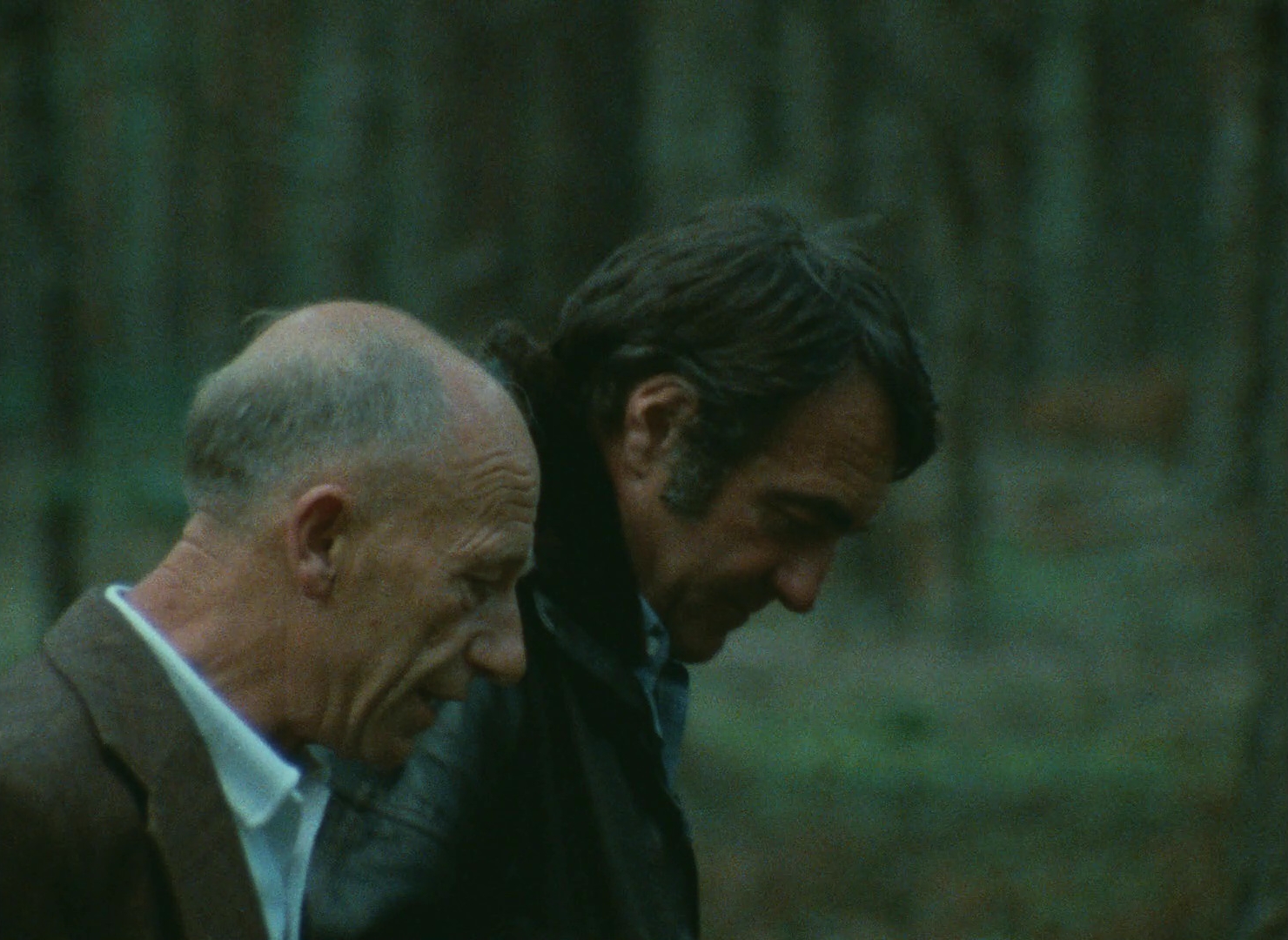
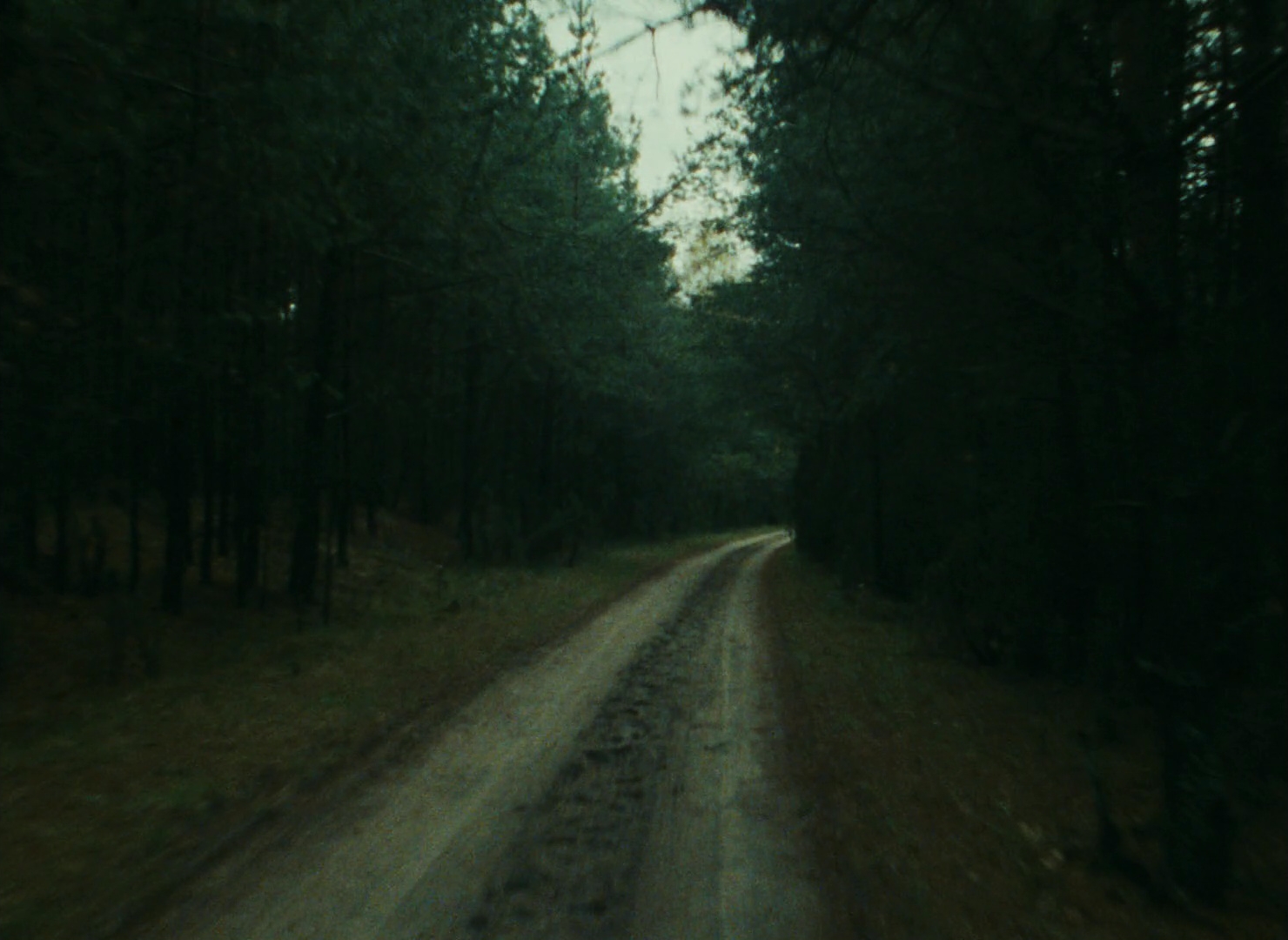
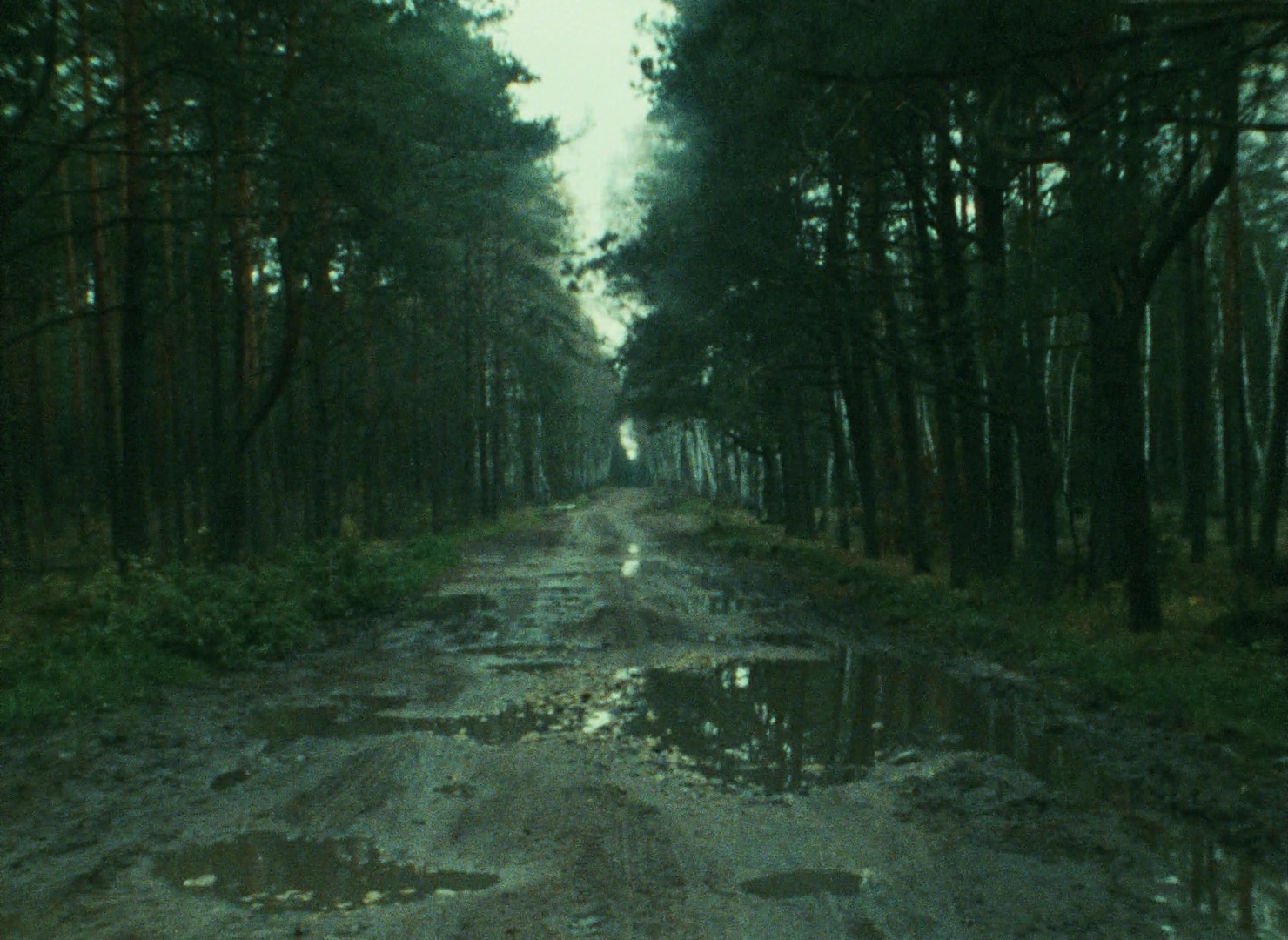
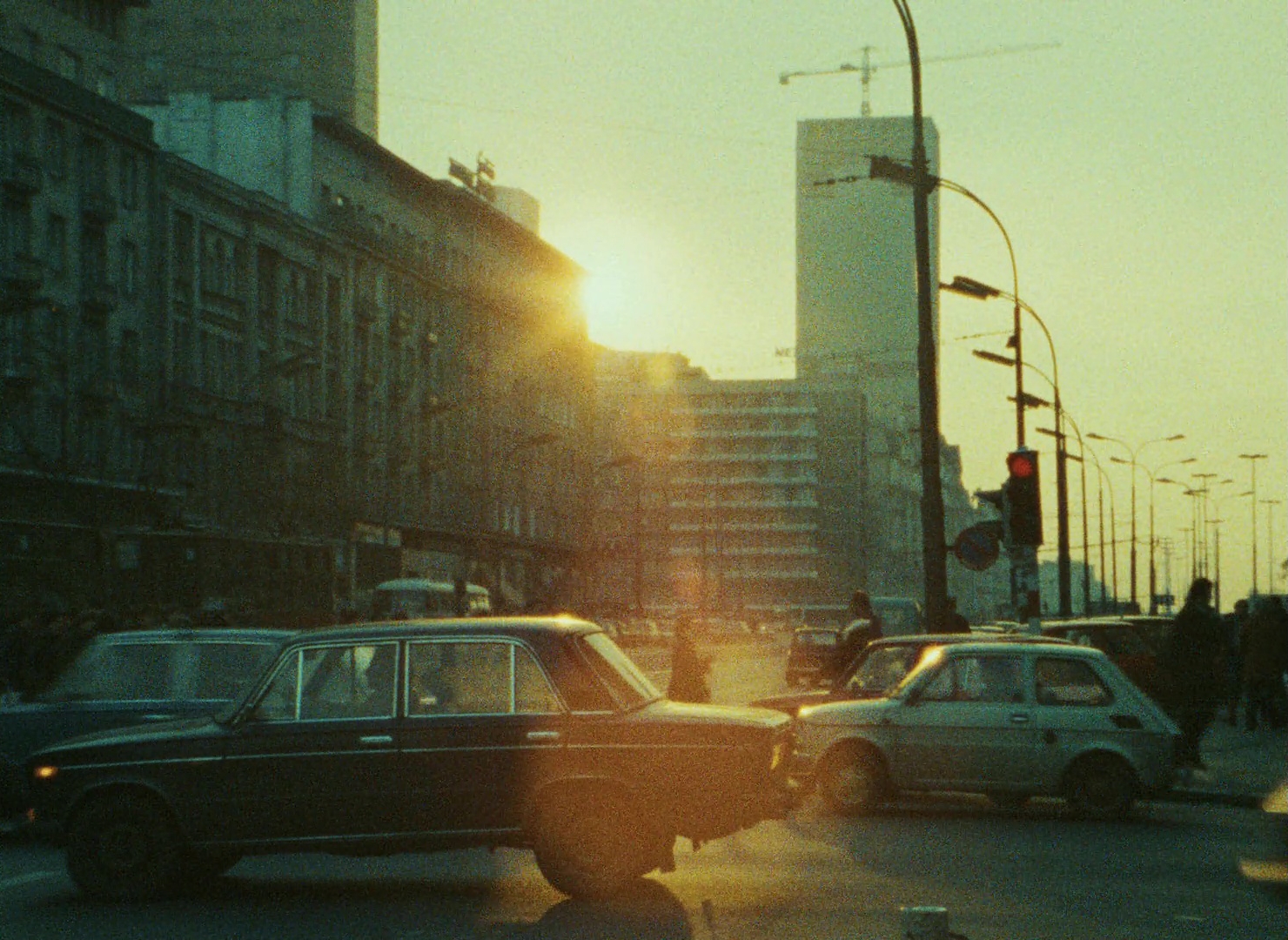
5 framesFrames from Shoah, built on testimony and present-day places, and Sans Soleil, an essay film carried by narration.
How to create a documentary filmmaking with AI
4 promptsAI images help around a documentary shoot: previs for a reconstruction, a pitch-deck look, an interview framing test. Name available light, camera height and eyeline to beat the models' default polish, and keep references, takes and notes on one FlashBoards board to compare looks. The fourth prompt re-shoots a real film shot from a text description alone, and the original plays next to the result so you can compare.
Observational documentary frame, handheld camera at shoulder height, 35mm lens, medium shot. In a cluttered harbor net shed at dawn, a fisherwoman in her sixties with cropped gray hair, wind-reddened cheeks, orange oilskin bib overalls and fingerless wool gloves mends a green net across her knees, not looking at the camera. Only available light: cold blue daylight from an open door on the left, a bare warm bulb overhead. 16mm film grain, muted, unpolished.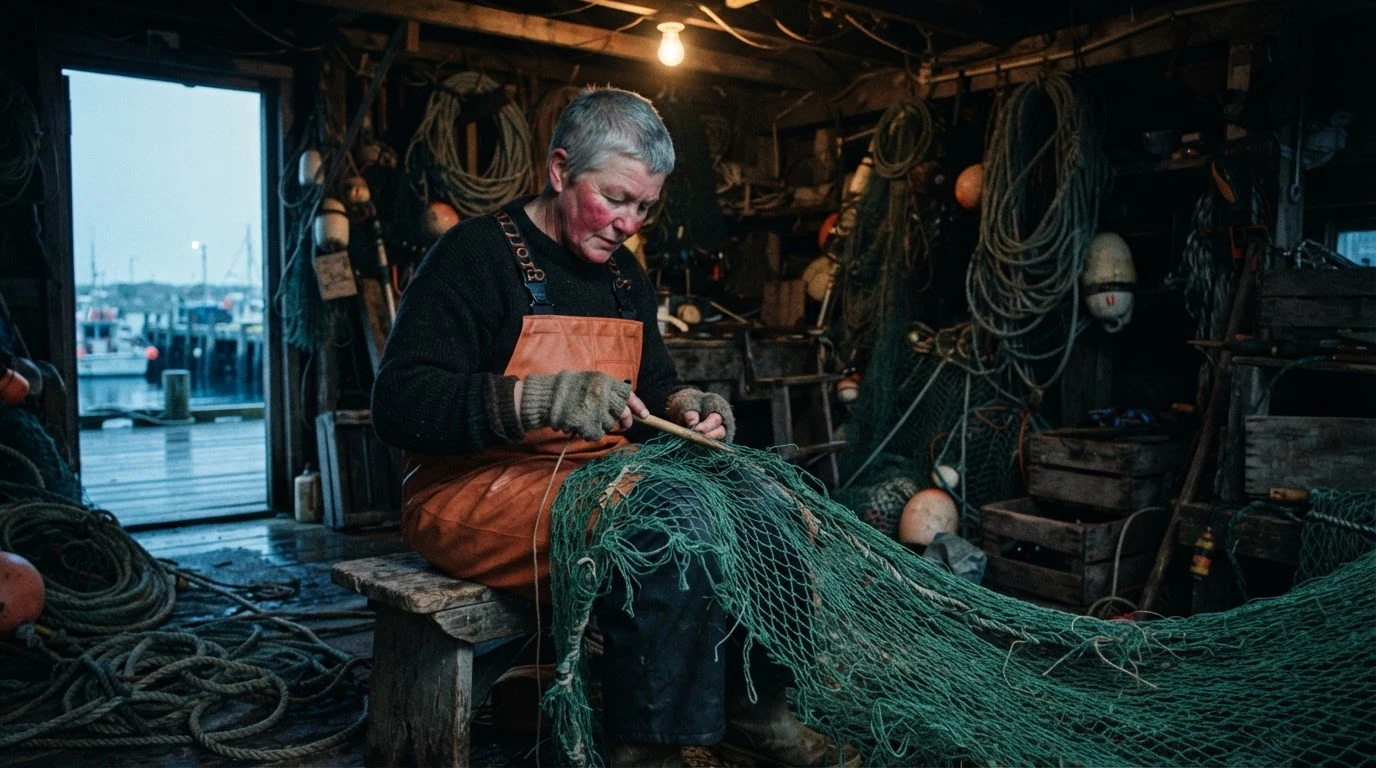
"Handheld at shoulder height" and "not looking at the camera" set the observational stance; "only available light" with mixed sources reads as unlit reality.
Open FlashBoardsDocumentary sit-down interview, medium close-up, locked-off tripod at eye level, 85mm lens. A retired railway signalman in his seventies with white mutton-chop sideburns, a thin scar through his left eyebrow and a navy cable-knit cardigan sits at his kitchen table, looking just off camera right at an unseen interviewer, mid-sentence. Soft window key from camera right, a dim warm lamp behind him, shelves out of focus. Natural skin texture.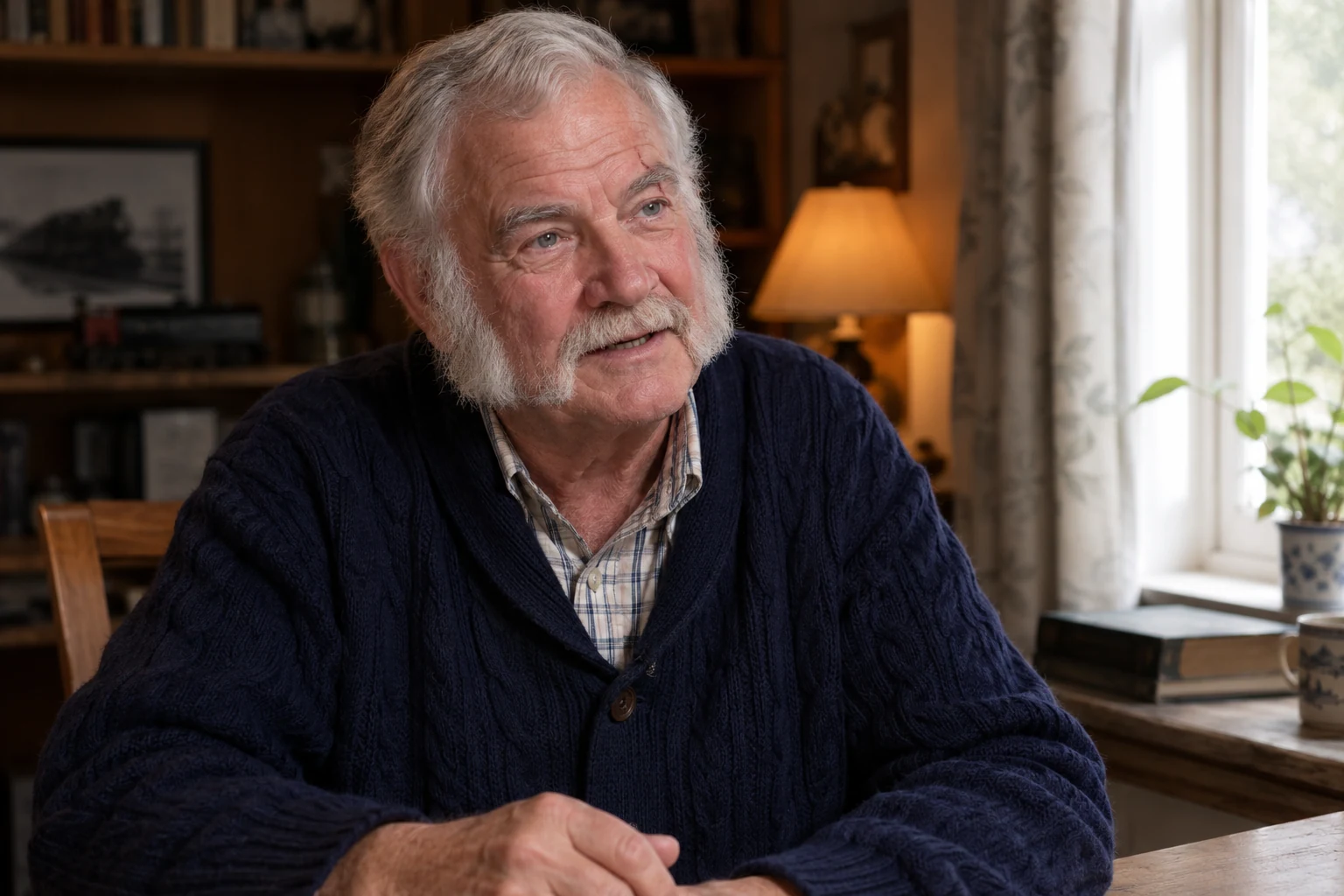
"Just off camera right at an unseen interviewer" gives interview eyeline, not direct address; "85mm, locked-off, eye level" and one window key describe a real doc setup.
Open FlashBoardsCamera: handheld at shoulder height with small natural sway, drifting slowly to the right and settling. Action: The woman is already pulling the green net through her gloved hands as the shot begins. She ties a knot and tugs it tight, glances toward the open door on the left, then returns to the net. The bulb overhead glows steadily."Already pulling the net as the shot begins" keeps the frame alive; everything named is already in the start frame.
Open FlashBoards{
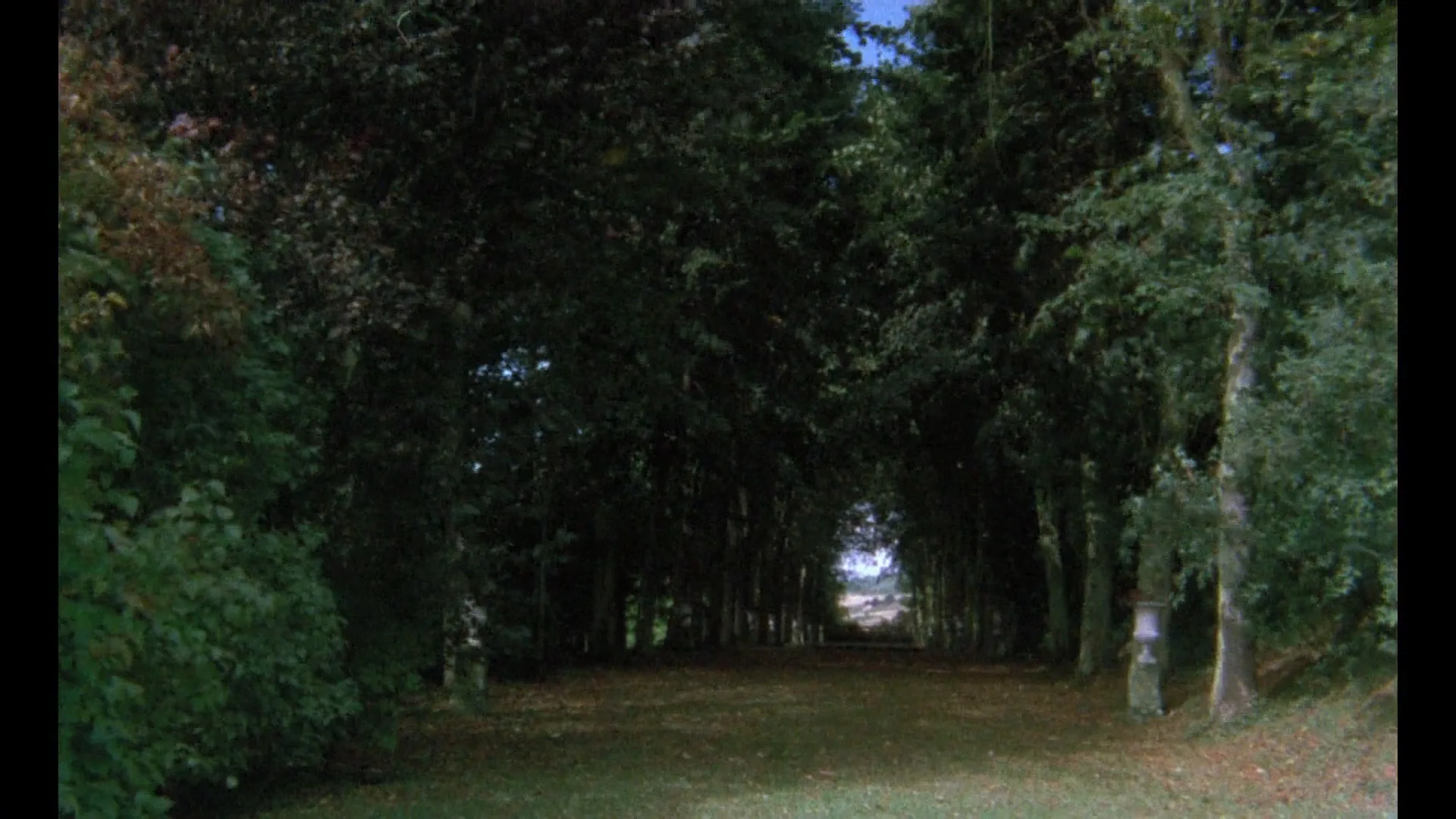
"output": "Full-screen live-action documentary landscape shot from Sans Soleil (1983), from its very first frame: one continuous locked-off shot. 1980s 16mm color reversal film, fine grain, slightly faded greens, natural daylight only, a quiet avenue of old trees in a European park in late summer.",
"characters": {
"V1": {
"name": "Narrator (voice), played by Florence Delay",
"look": "never seen: an off-screen woman reading a letter aloud",
"voice": "calm, low, intimate, unhurried, a reading voice close to the microphone"
}
},
"shots": [
{
"shot": 1,
"camera": "static, locked-off tripod, eye level, normal lens, wide shot looking straight down a long grass path between two walls of tall dark trees; a copper-leaved beech overhangs the upper left, a dense green shrub fills the lower left, a pale slender trunk stands at right; the far end of the path is a small bright opening of pale sky and meadow at the center of the frame; the camera never moves",
"action": [
"BEGINNING: alive from the first frame, bright sunlight lies across the grass path in warm patches, leaves on the pale tree at right flicker in a light breeze, the bright opening glows at the far end.",
"THEN: the sunlit patches hold for a moment while the leaves keep stirring.",
"THEN: a cloud slowly crosses the sun and the sunlit patches on the path fade away one by one, from the foreground back toward the trees.",
"THEN: the whole avenue dims and cools to deep green; the copper beech at left turns dark.",
"END: the path lies in soft even shade, the trees stand dark and almost still, only the small bright opening at the far end keeps its light; nobody enters the frame."
],
"dialogue": [
{
"speaker": "V1",
"on_screen": false,
"when": "from the first frame, while the path is still in sunlight",
"delivery": "quiet, reading a letter",
"line": "<d>[English] I've even given it a title.</d>"
},
{
"speaker": "V1",
"on_screen": false,
"when": "as the sunlight fades off the path",
"delivery": "quiet, reading a letter, slight pause before the last word",
"line": "<d>[English] Indeed, the title of that Mussorgsky's song.</d>"
}
]
}
],
"sound": {
"ambience": "soft wind in the leaves, scattered birdsong, faint distant rustle",
"speech": "exactly these spoken phrases, each said once, in this order, by the off-screen woman's voice only",
"never_spoken": "no narration and no voice-over beyond the two lines in dialogue: the descriptions, performance notes and step words of this prompt are never spoken aloud",
"music": "a film score under the scene, always below the voices: a sparse, slow electronic drone with a faint synthesizer tone, distant and melancholy",
"subtitles": "none"
}
}Remakes the static tree-lined path from Sans Soleil (1983), keeping the locked-off eye-level framing, the bright far opening, the fading sunlight and the narrator's lines.
A locked-off tripod, one natural event (a cloud dimming the sun) and the narrator's two letter lines from the film make an essay-film B-roll shot; the score stays under the voice.
Open FlashBoardsCommon mistakes
- Models default to glossy advertising light: name "available light", mixed color temperature and "unpolished".
- Subjects stare into the lens unless you state the eyeline.
- Handheld video turns into a smooth gimbal move; ask for "small natural sway".
- Generated frames are previs or labeled reconstruction, never evidence.
Keep the reference frames, prompts and every generated take side by side — images and video in one canvas.
FAQ
4 questionsHow do you make a documentary?
Start with a subject you can access, research it, and write a treatment around the question the film asks. Secure releases, shoot interviews and observational footage with plenty of B-roll and clean sound, then transcribe everything and find the story in the edit. Clear archive and music before release.
What are the 6 types of documentary?
Bill Nichols names six modes: expository (narrated argument), observational (fly on the wall), participatory (the filmmaker interacts on camera), reflexive (the film shows its own making), poetic (rhythm over argument) and performative (personal, subjective). Most documentaries mix several, so treat them as tendencies.
Do you need permission to film people for a documentary?
For identifiable people you feature, get a signed release; distributors and broadcasters usually require one. Public spaces carry fewer restrictions, but rules differ by country, and private property needs the owner's permission. Archive, music and artwork need licenses. When unsure, ask a media lawyer before picture lock.
Can you use AI in documentary filmmaking?
Yes, for development and planning: pitch-deck images, previs of reconstructions, interview framing tests and mood references. It should never stand in for recorded evidence. If a generated or reconstructed image appears in the finished film, tell the audience, the same way reenactments are signaled.
Related terms
6- MockumentaryGenres
A mockumentary is fiction staged in documentary form — talking-head interviews, handheld camera, captions, 'caught' moments — usually for comedy, as in This Is Spinal Tap or Borat.
- Cinéma VéritéFilm Movements & Styles
Cinéma vérité is a 1960s documentary approach, born with Jean Rouch and Edgar Morin's Chronicle of a Summer, in which lightweight sync-sound cameras record real life and the filmmaker openly provokes and takes part in it.
- Talking HeadCamera Shots
A talking head is a head-and-shoulders shot of a person speaking — an interviewee, expert or presenter — the basic framing of documentaries, news and online video.
- Archival FootageEditing
Archival footage is previously shot material — newsreels, home movies, TV broadcasts — cut into a new film as historical evidence, texture or counterpoint, usually keeping the look of its original medium.
- Voice-OverSound & Music
Voice-over is speech heard over the picture from someone not speaking on screen at that moment — a narrator, a character's inner thoughts, a documentary commentary.
- Film ProductionFilmmaking Process & Crew
Film production is the whole process of making a film — development, pre-production, production (the shoot), post-production and distribution; in the narrow sense, 'production' is just the shooting phase.
Further reading
Bill Nichols, Introduction to Documentary (Indiana University Press). Michael Rabiger, Directing the Documentary (Focal Press).