 FlashBoards Learn
Lighting · Film language
Key Light
Also called: key, main light, key lighting
The key light is the main light on a subject. It decides where the light comes from, how hard the shadows are and what color the face is, and every other source in the frame, from fill to backlight to practical lamps, is balanced against it. Move the key and the mood moves with it.
- What it does
- Sets the direction, hardness and color of the light on a face; everything else is measured against it.
- Use it when
- Always: every lit shot has a key, even if it is a window, the sun or a lamp in frame.
- Watch out
- A key placed on the camera axis flattens the face; swing it 30–60° off the nose to get shape.
- Try this prompt
cinematic close-up, one soft key light from frame left at 45 degrees and slightly above the eyes, far side of the face falls into shadow, dark background, 50mm
What is a key light?
The key light is the dominant source on your subject: the light that draws the shape of the face and tells the audience where the light in this world comes from. Once the key is set, the other lights have jobs defined in relation to it: the fill light controls how dark the key's shadows get, a backlight or rim light separates the head from the background, and practicals in the set explain where it all comes from.
Three properties of the key do most of the work:
- Direction. Where the key sits around the face (front, 45°, side, behind) and how high it is decides which features are lit and which fall into shadow.
- Quality. A small, bare source gives hard light with crisp shadow edges; a large, diffused one gives soft light that wraps around the cheek and fades gently into shadow.
- Color and intensity. A warm tungsten key against cool ambient light, or a key one stop over the rest of the room, sets both the time of day and the contrast of the image.
"Key" does not mean "brightest light on set": a backlight or a hot window can read brighter. The key is the light that models the face, the one you would miss most if it were switched off. In the classic three-point setup it is joined by a fill and a backlight, but plenty of great shots use a key alone and let the shadow side go black. It is the foundation of everything else in film lighting.
Why does the key light matter so much?
Because the audience reads faces before anything else, and the key is what shapes the face. The same actor in the same room can look open and trustworthy or guarded and dangerous depending only on where the key sits and how much of the face it leaves in shadow.
A few things the key decides for the viewer:
- Mood. A soft key close to the lens, with plenty of fill, gives an open, even face: comedy, romance, daylight drama. A hard key from the side with no fill cuts the face in half and pushes the scene toward low-key lighting and noir.
- Where to look. The eye goes to the brightest, most contrasted area. Keying one face and leaving the other in half-light tells the audience whose scene it is without a cut.
- Time and place. A low, warm key reads as a table lamp or late sun; a high, cool, soft key reads as an overcast window.
- Character. Gordon Willis's overhead key in The Godfather (1972) famously kept Brando's eyes in shadow, making him harder to read. Roger Deakins often builds keys that are motivated by a lamp or a window visible in the shot, so the light feels found rather than placed.
The key is also where the image's contrast begins. Its level against the fill (the lighting ratio) is the single biggest lever between a bright, forgiving frame and a dark, sculpted one.
Where to place the key light
Place the key on two axes: around the face (angle from the nose) and above it (height). Each classic portrait pattern is a key position with a name.
Front key (0–15° off the lens)
The key sits next to the camera. The face is evenly lit, shadows fall behind the subject, and the image looks clean but flat. Raised high and centered it becomes butterfly lighting, the old glamour pattern with a small shadow under the nose.
45° key
The most-used position: about 45° to one side and 30–40° above the eyes. The nose casts a short shadow toward the far cheek, the cheekbone and jaw get shape, and both eyes still catch light. Push it a little further and higher until only a triangle of light remains under the far eye, and you have Rembrandt lighting.
Side key (around 90°)
Half the face lit, half in shadow. Side lighting is graphic and tense; add no fill and the dark side disappears completely.
Three-quarter back key (120–150°)
The key comes from beyond the subject, on the side the actor faces, so the camera sees mostly the shadow side with a lit edge along the profile. This far-side key is a staple of modern drama.
High and low keys
Overhead, the key becomes top lighting and eye sockets go dark. From below it reads as firelight, a flashlight or a horror cue.
Broad vs. short keying
When the face is turned away from the lens, the key can hit the side facing the camera (broad lighting: wider, flatter, friendlier) or the side turned away from it (short lighting: slimmer, more shape, more shadow toward the lens). Short keying from the far side is the default for most dramatic coverage today.
How to set a key light on set
1. Find the motivation. Put the key on the side of a believable source (window, lamp, streetlight, screen) at a believable height.
2. Choose the source size. For a soft key, use a large source close to the face: a panel through a 4×4 of diffusion at 1–1.5 m, or bounced into muslin (a "book light"). For a hard key, use a bare Fresnel at a distance, shaped with barn doors. Source size relative to the face, not wattage, decides softness.
3. Set angle and height. Start at 45° off the nose and about 30° above the eyeline, then walk the light toward the side or behind the actor until the shadow on the far cheek looks right. Watch the eyes: if they go dark, the key is too high or too far back. A key slightly above the eyeline puts a catchlight in the upper part of the eye, which keeps the face alive.
4. Set the ratio. Meter or eyeball the key side against the shadow side. One stop of difference (2:1) is gentle and commercial. Two stops (4:1) is standard drama. Three stops or more (8:1 and up) is moody, night, noir. Control it with fill, negative fill (a black flag on the shadow side), or by moving the key.
5. Control spill and falloff. Flag the key off the background so the face stays brighter than the wall. Light drops with the square of distance, so a key at 1 m falls off across the room much faster than the same light at 4 m.
6. Pick the color. Set the key's color temperature against the ambient: a 3200K key in a daylight-balanced room goes warm and intimate; a daylight key with tungsten practicals behind puts a cool face against warm lamps.
7. Check it from the lens. Judge the key through the camera while the actor plays the whole move, not just the first mark.
Key light vs. fill light: what's the difference?
The key light creates the shape; the fill light decides how deep its shadows are. The key is the stronger, directional source that sets where the light comes from. The fill is weaker, usually softer, placed on the opposite side or near the lens, and it only lifts the shadow side without casting a visible shadow of its own.
| | Key light | Fill light | |---|---|---| | Job | Models the face, sets direction and mood | Controls shadow density | | Intensity | The reference level, exposed for | 1–3 stops under the key | | Position | 15–150° off the nose, above the eyes | Opposite side or close to the camera axis | | Quality | Hard or soft, depending on the look | Almost always soft | | If removed | The face loses its shape | Shadows go darker; the look gets moodier |
The two are judged as a pair: a 2:1 ratio reads bright and even, close to high-key lighting; 8:1 reads dark and dramatic. Fill can be a bounce card, a white wall or the room's ambient light, and many low-key shots have none at all.
Should the key light be hard or soft?
Neither is correct by default. A soft key (large source, close, diffused) forgives skin and rolls slowly from light to shadow; it is the default for modern drama and dialogue because it looks like window light and holds up as actors move. A hard key (small source, far, bare) draws crisp shadows of nose, brow and hat brim and brings out texture; it suits noir, westerns, sunlight and interrogations, but a small head turn moves the nose shadow across the face. Match hardness to the motivation: sun and bare bulbs are hard, overcast windows and lampshades are soft.
Key Light examples in film
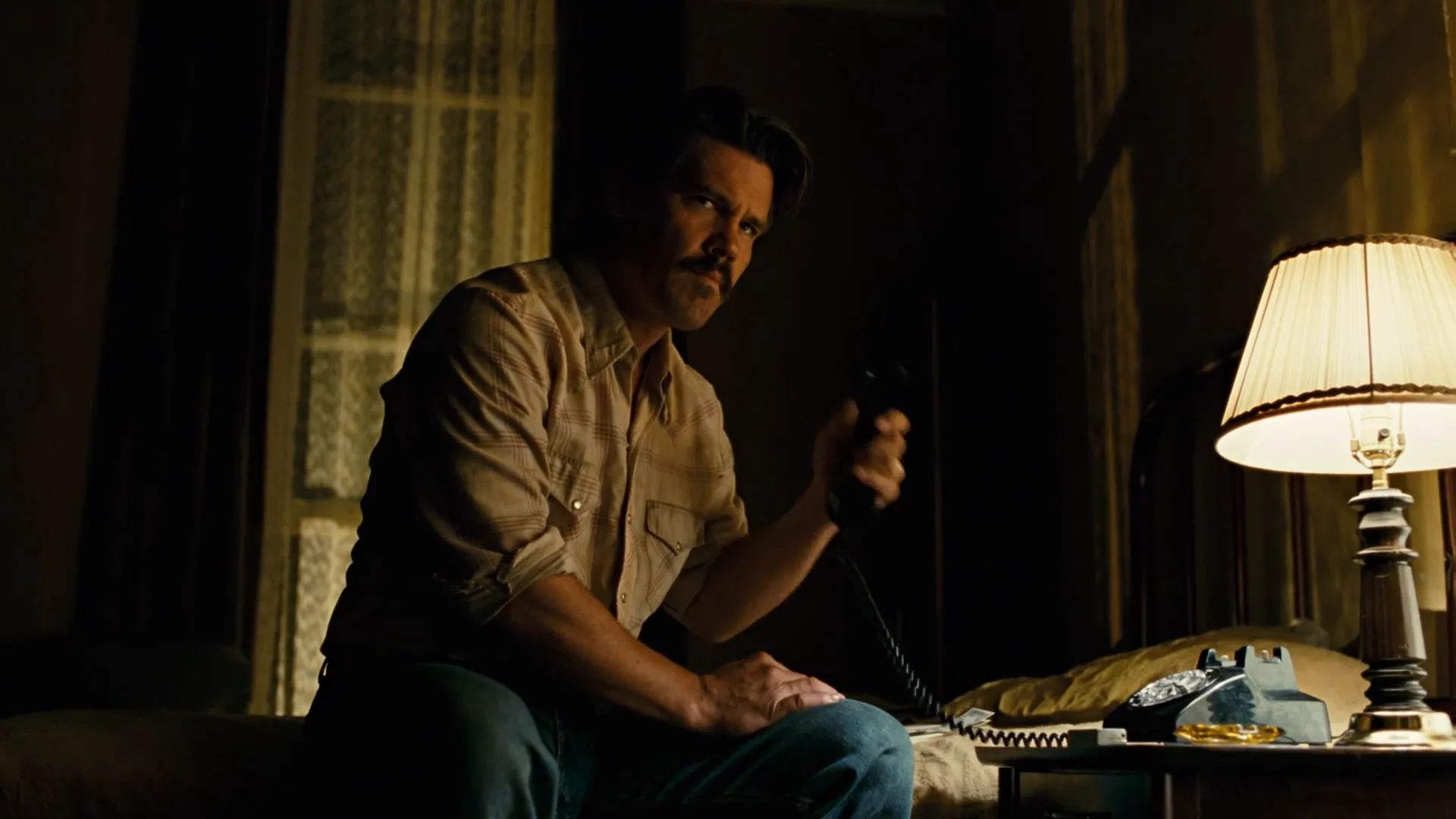
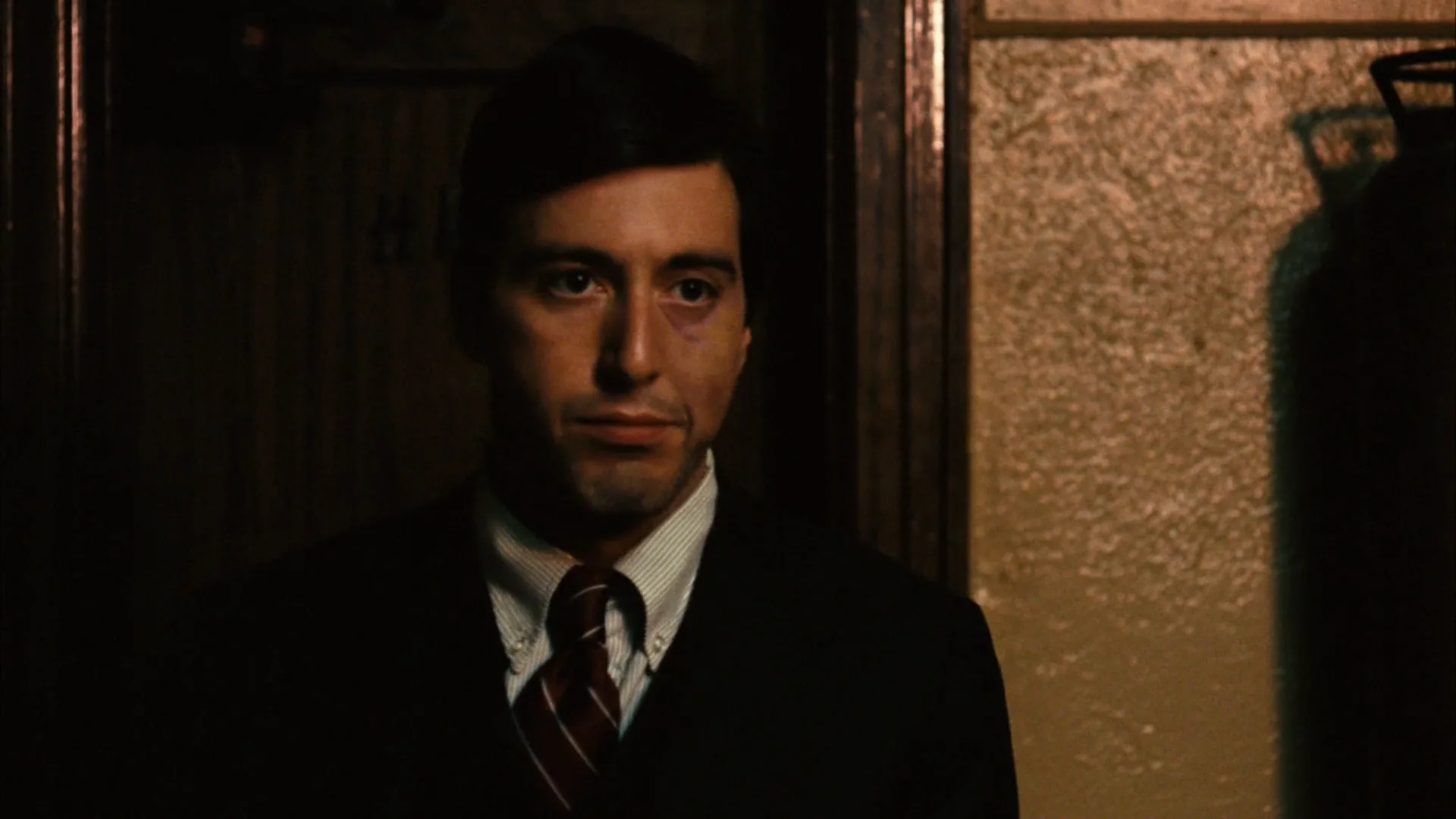
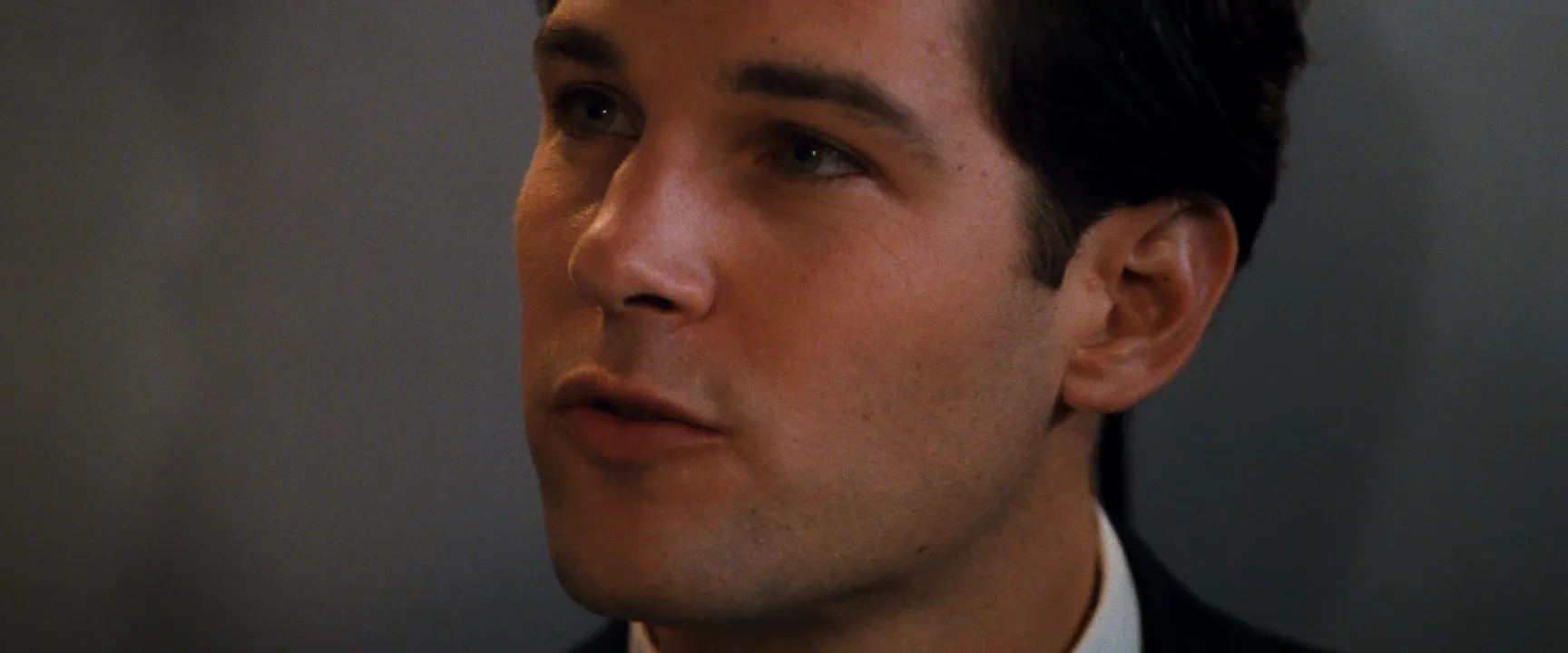
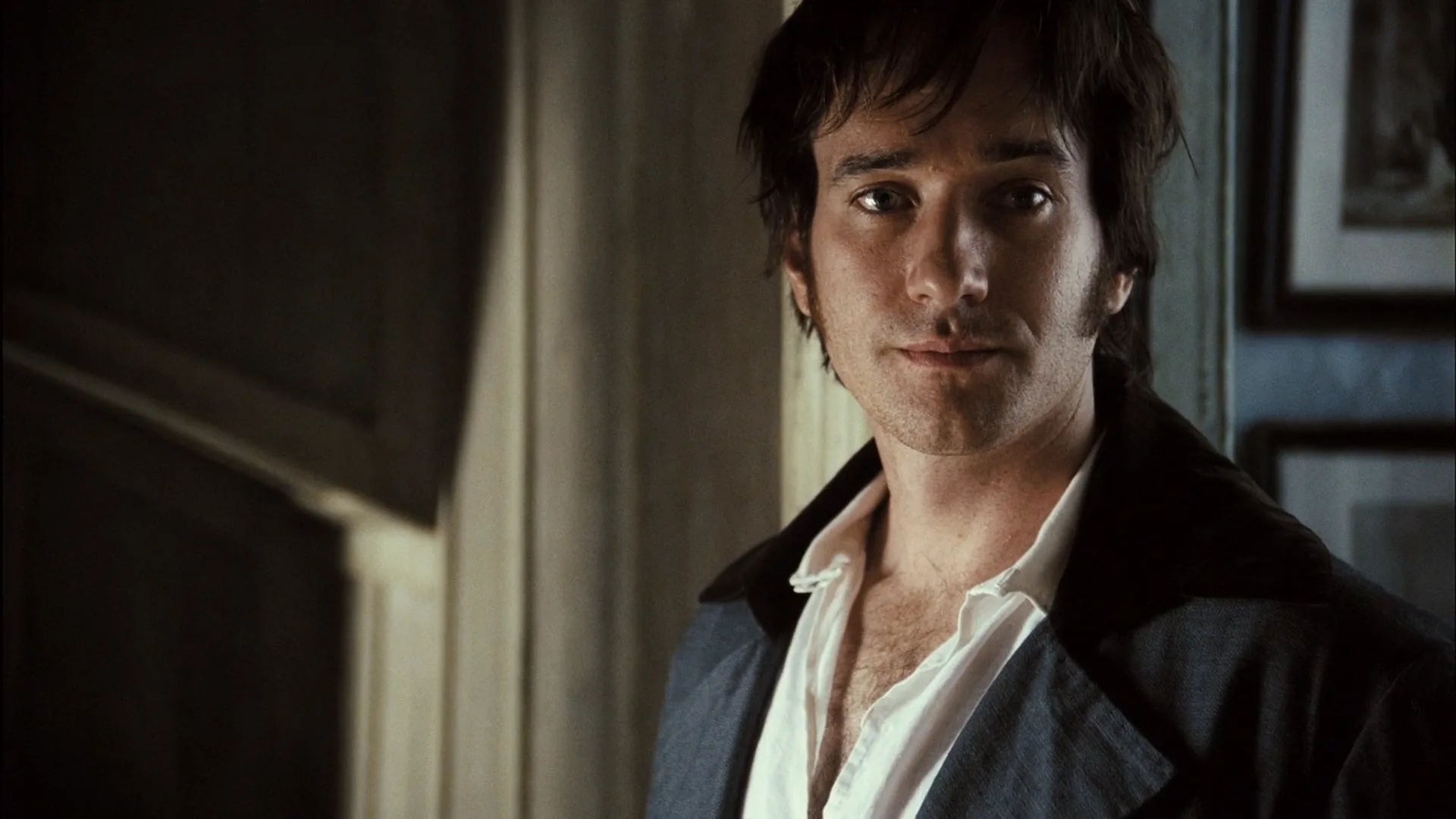
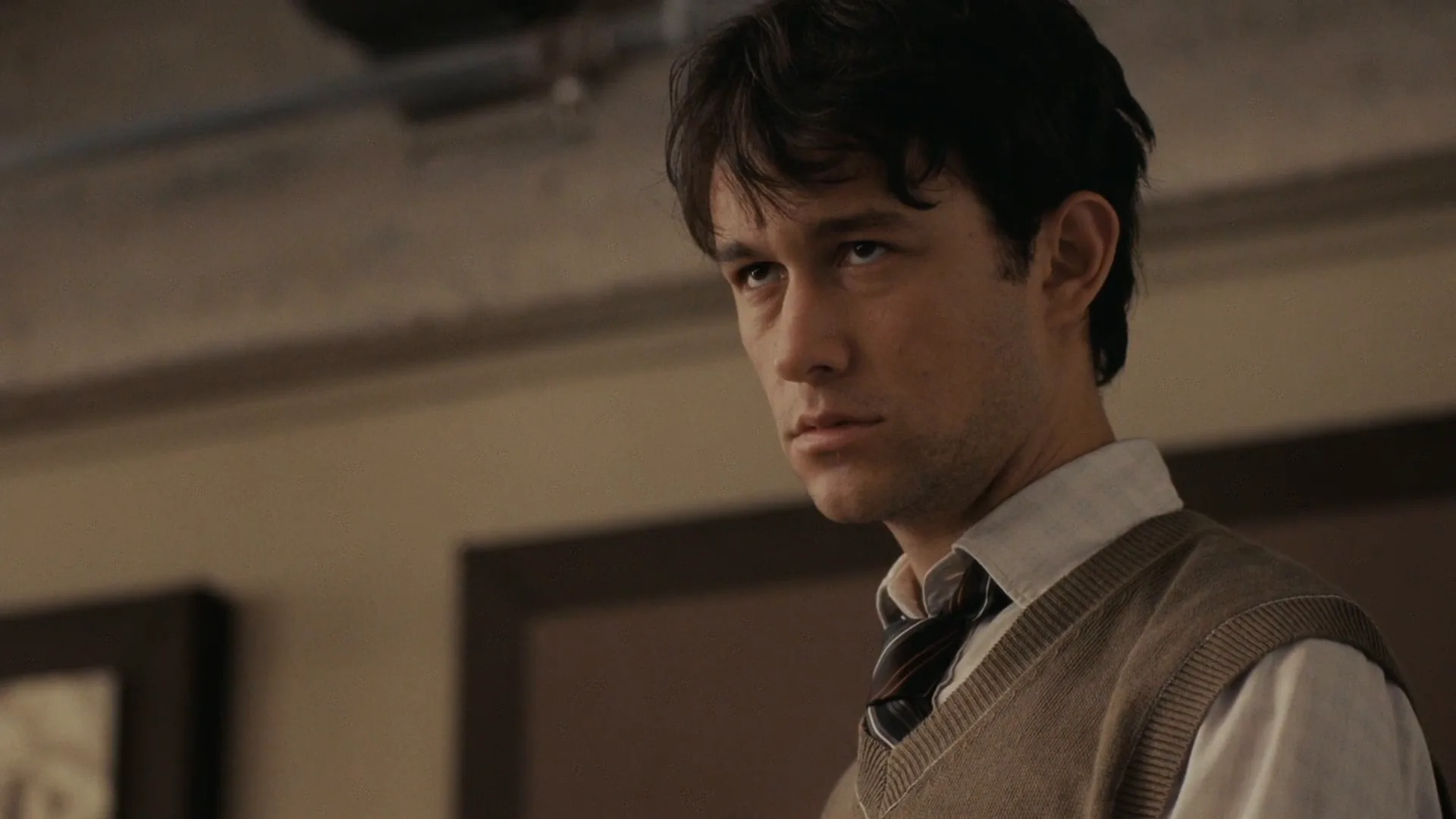
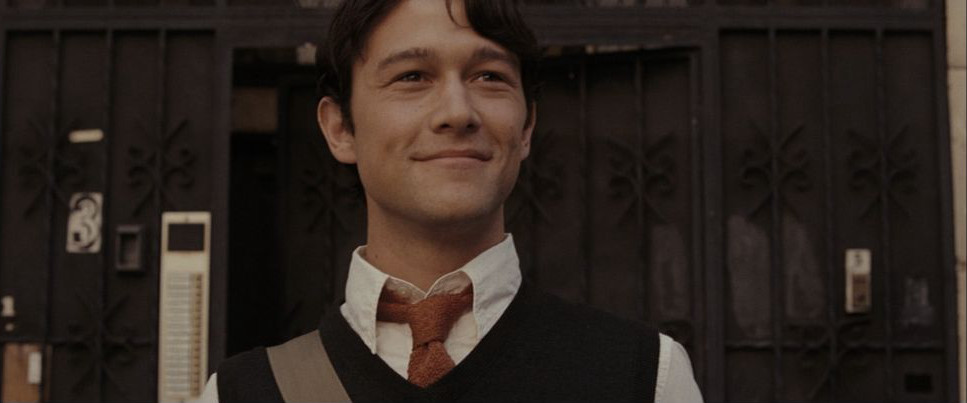
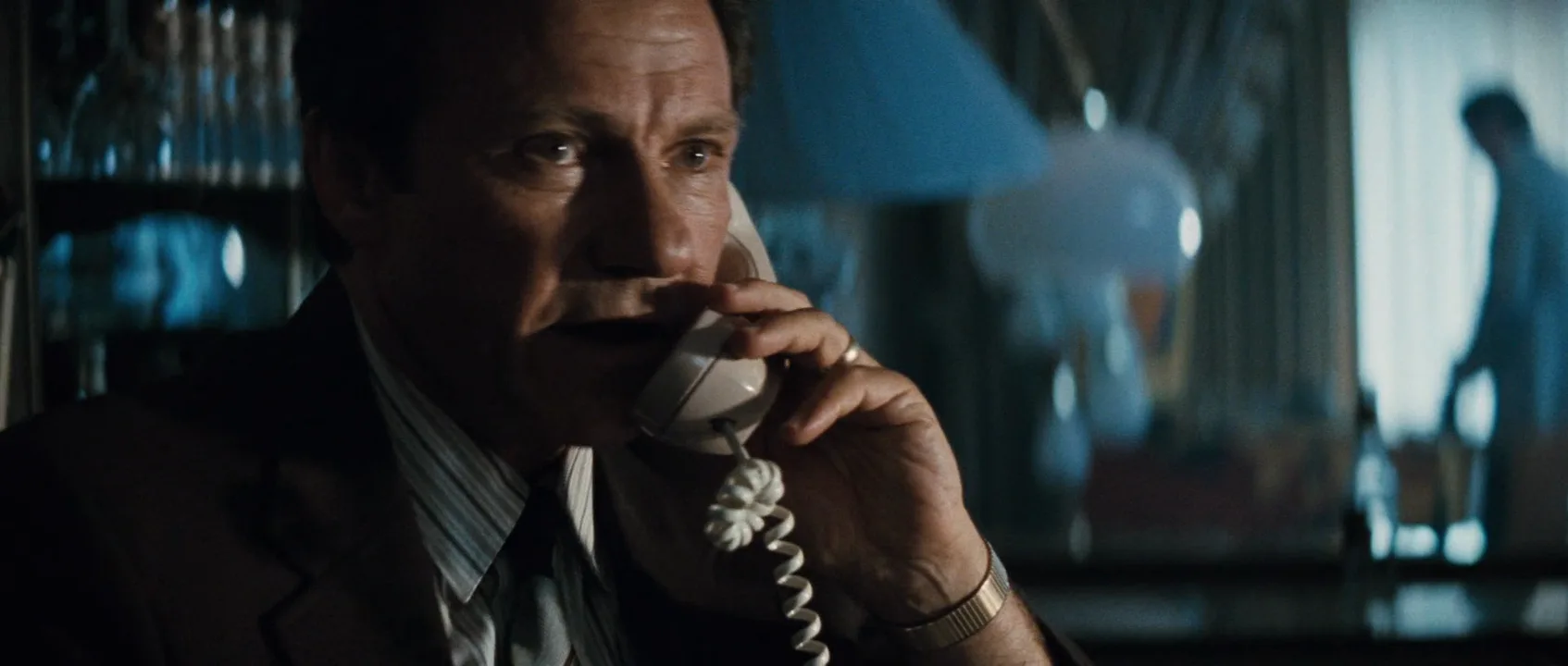
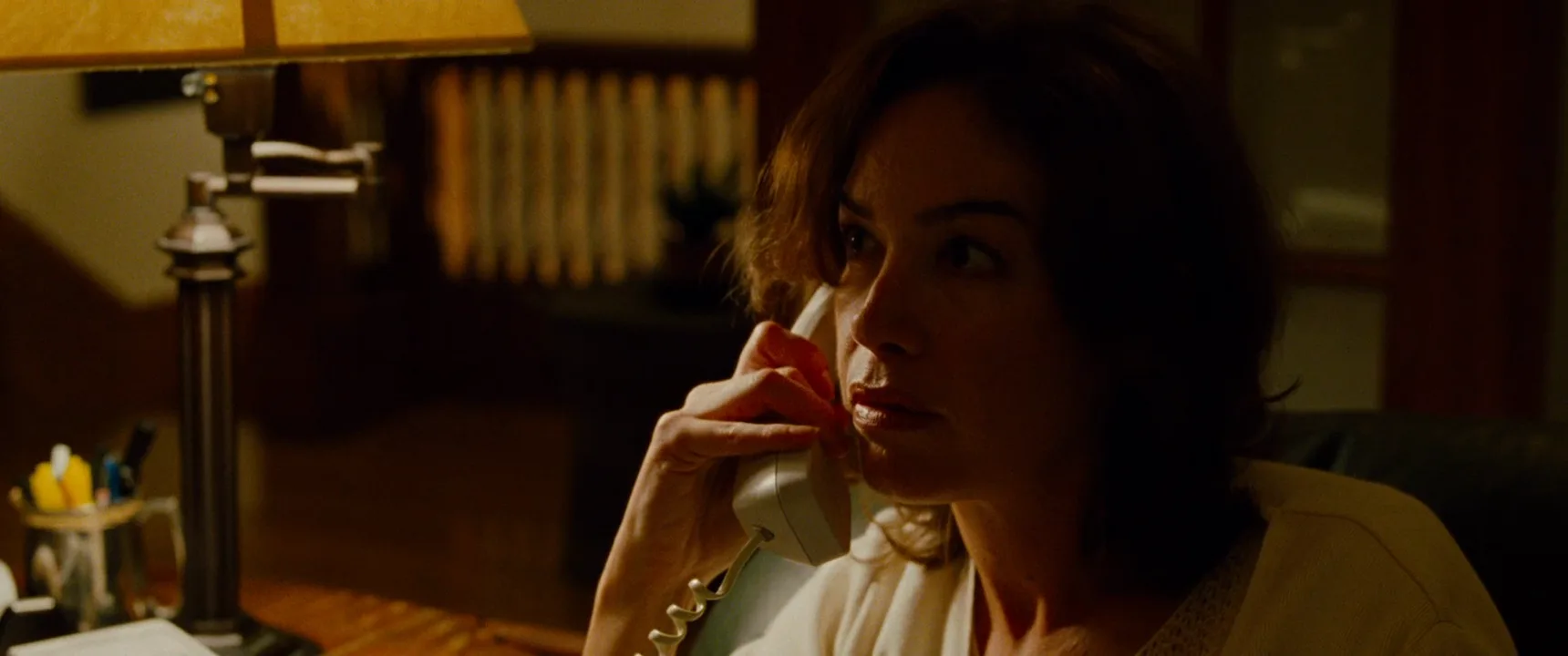
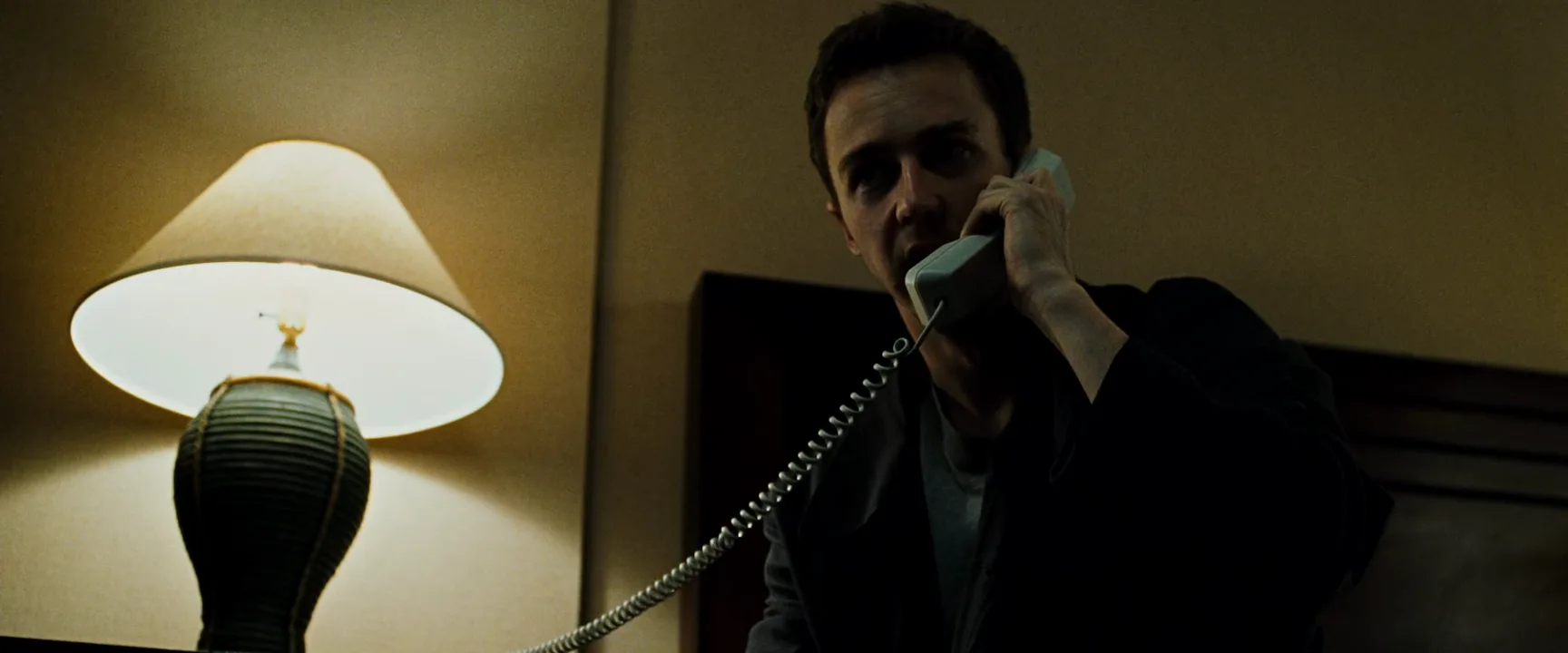
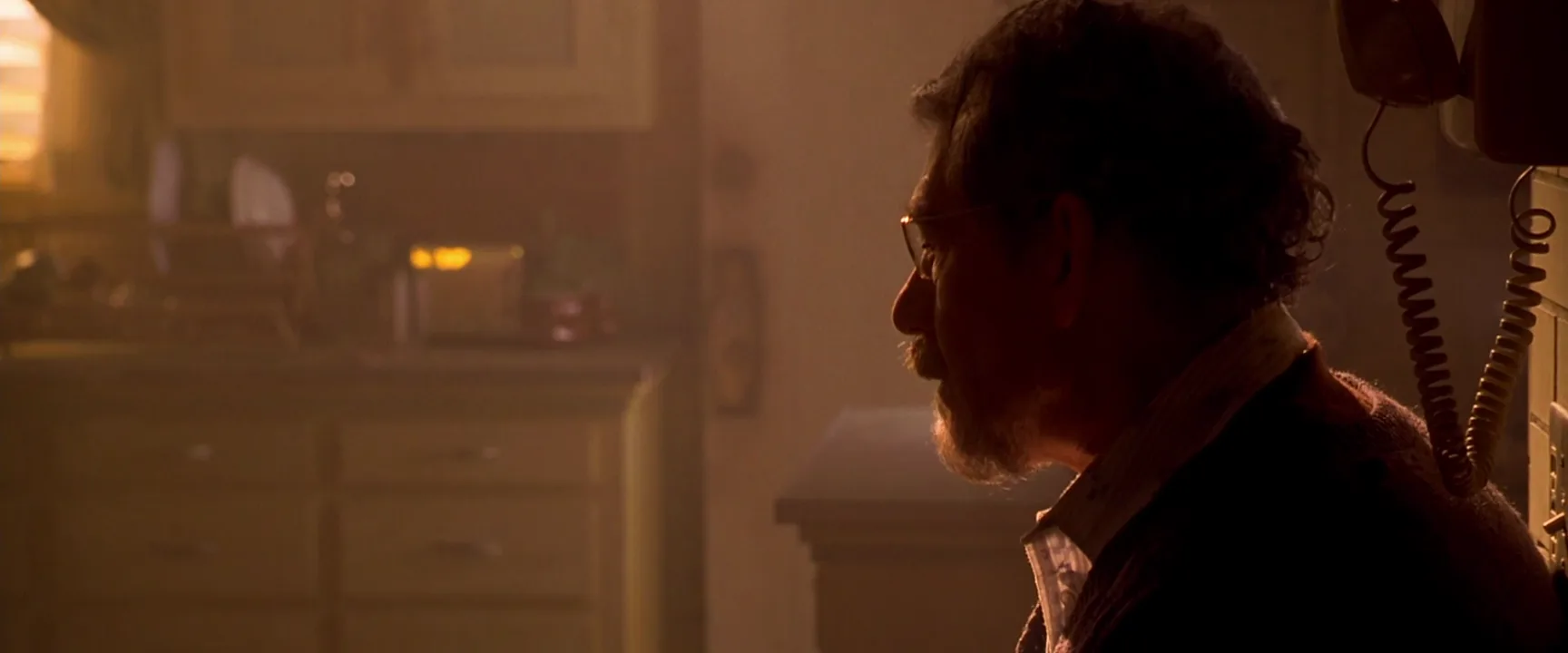
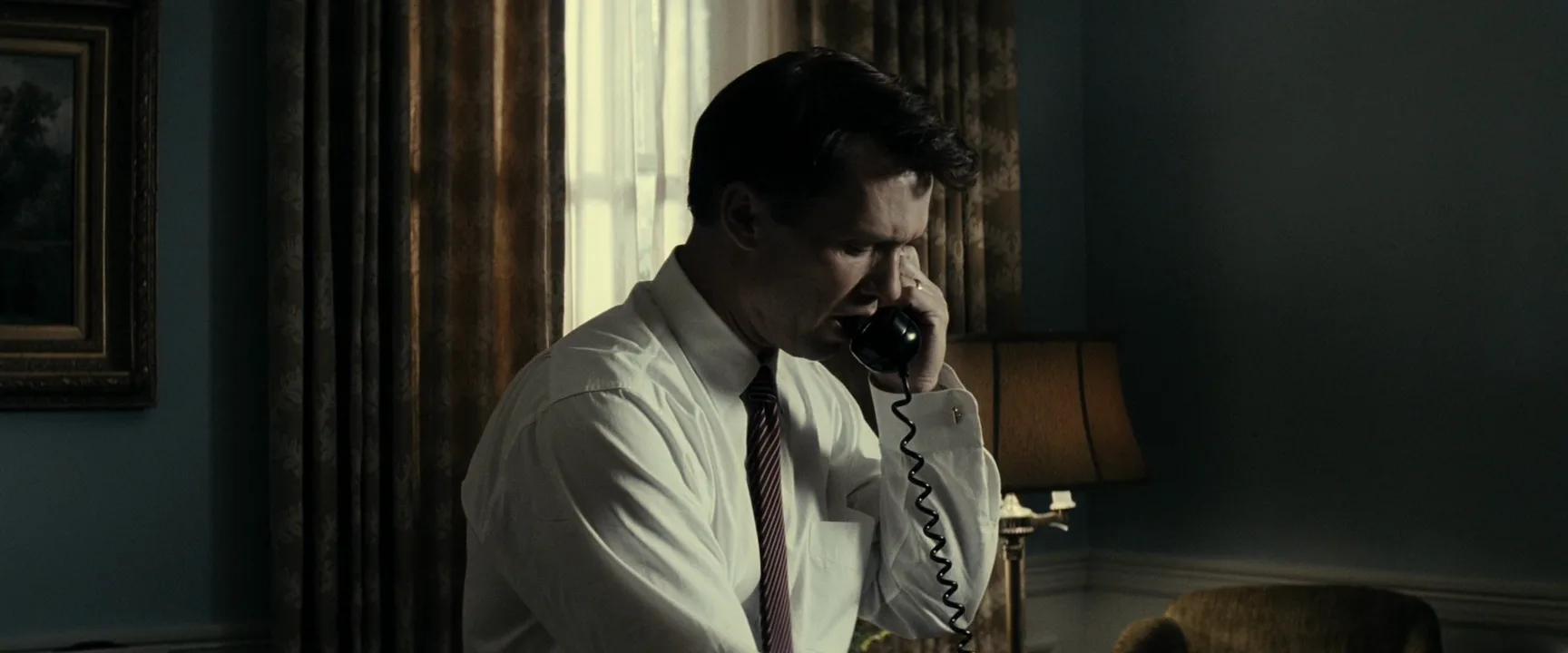
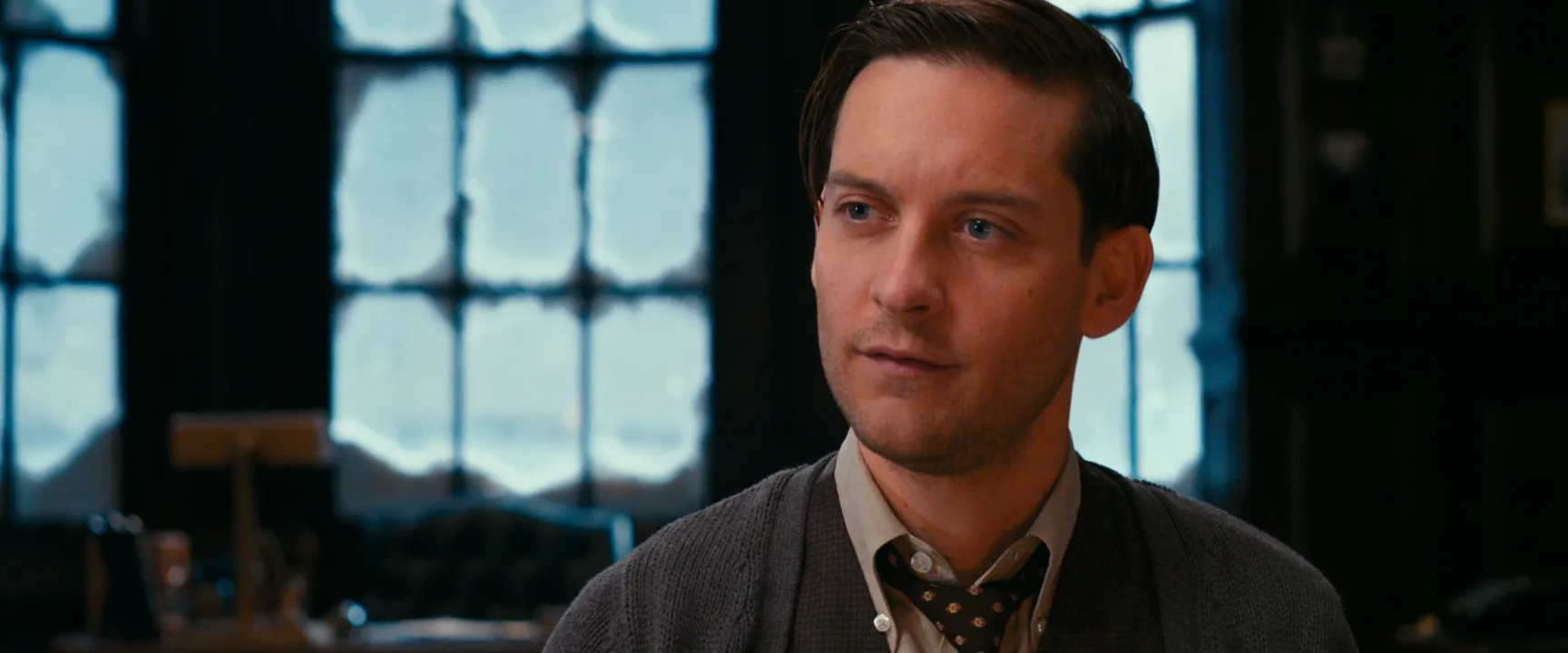
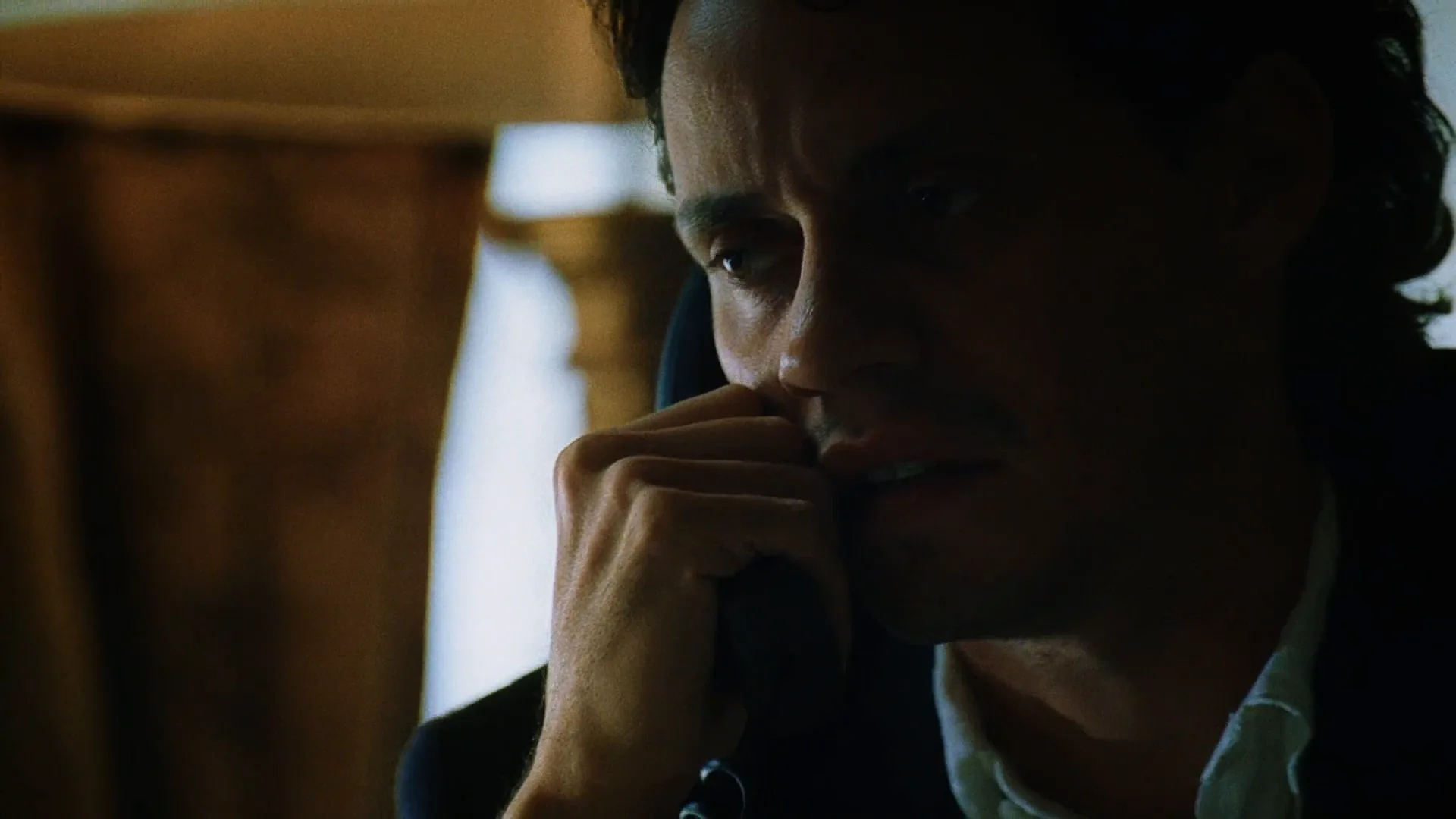
14 framesFourteen frames where you can read the key: find the side the light comes from, how high it is and how dark the other side of the face is allowed to go.
How to create a key light with AI
4 promptsImage models default to soft, frontal, even light, which is the absence of a key decision. To get a real key, the prompt has to name one source, its side, its angle off the face and its height, and then say what happens to the other side of the face. Generate the start frame, try a second take with a hard key on a different subject and lens, then animate the first frame so the light stays fixed while the actor moves through it. On a FlashBoards board you can keep these takes next to the film frames above and compare the ratio shot by shot. The fourth prompt re-shoots a real film shot from a text description alone, and the original plays next to the result so you can compare.
Cinematic film still, close-up at night: a man in his mid-forties with a shaved head, a short salt-and-pepper beard, a crooked nose and a small silver hoop in his left ear, wearing a faded navy work shirt, sits at a wooden kitchen table with a glass of water, looking just off camera toward frame left. One large soft key light from frame left, 45 degrees to the side of his face and slightly above his eyes, lights his forehead, cheek and the bridge of his nose. The right side of his face falls into soft shadow about two stops darker, lit only by faint bounce. A clear catchlight sits in the upper left of both eyes. The kitchen behind him is dark and out of focus. Warm 3200K key, 50mm lens, eye level, shallow depth of field, fine film grain.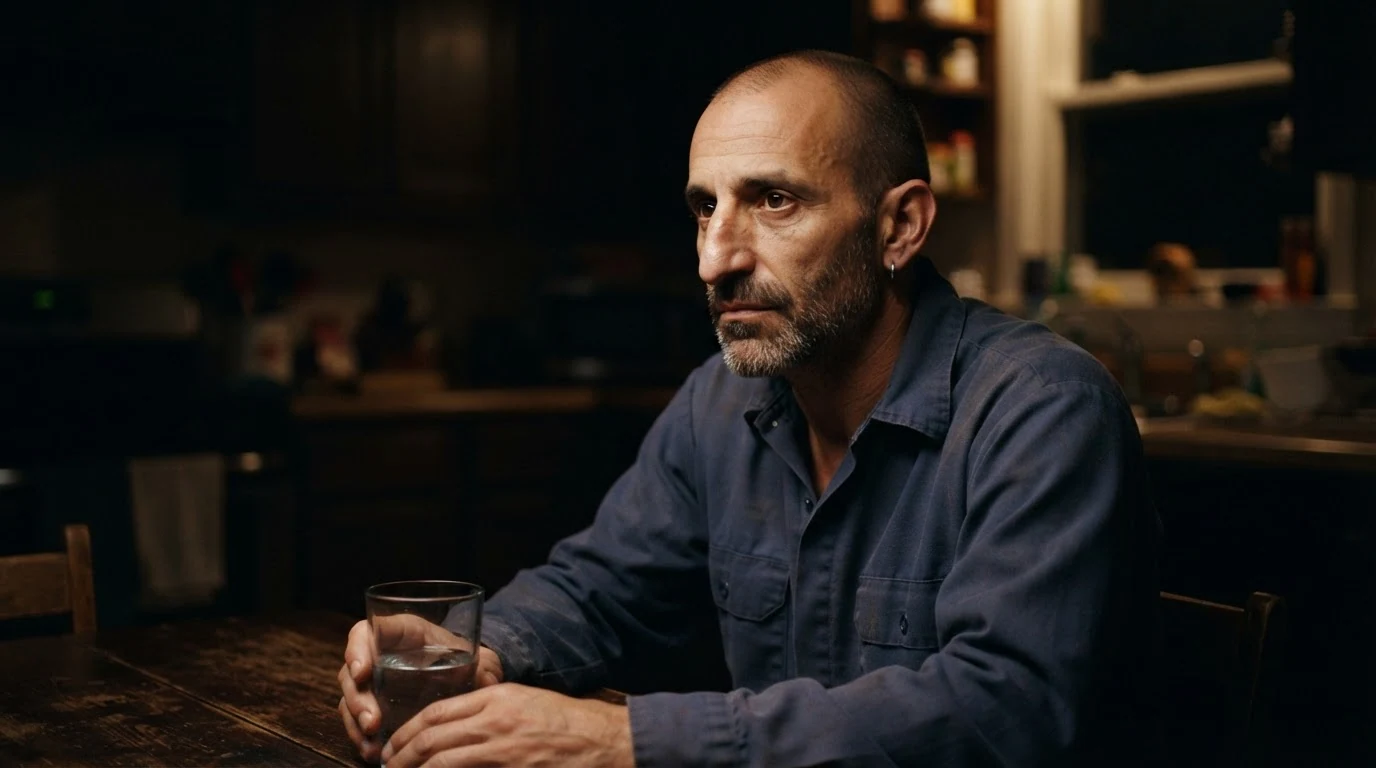
"One large soft key light from frame left, 45 degrees to the side" names source, quality and angle in one phrase. "Slightly above his eyes" plus the catchlight position keeps the key off eye level, "about two stops darker, lit only by faint bounce" sets the ratio, and the dark kitchen keeps the room below the face.
Open FlashBoardsWide anamorphic cinematic frame, medium close-up: a woman in her late twenties with a tight black braid, a gold nose stud and a freckled face, wearing a rust-colored boiler suit, stands in an empty boxing gym at night with her gloves hanging from her shoulder. A single hard key light from a bare spotlight high at frame right, about 60 degrees off her nose, casts a crisp shadow of her nose onto her far cheek and leaves a small triangle of light under her left eye. The left half of her face is in deep shadow with no fill. Behind her the gym is dark, with a faint cool edge of light on the ropes. 85mm anamorphic lens, eye level, high contrast, film grain.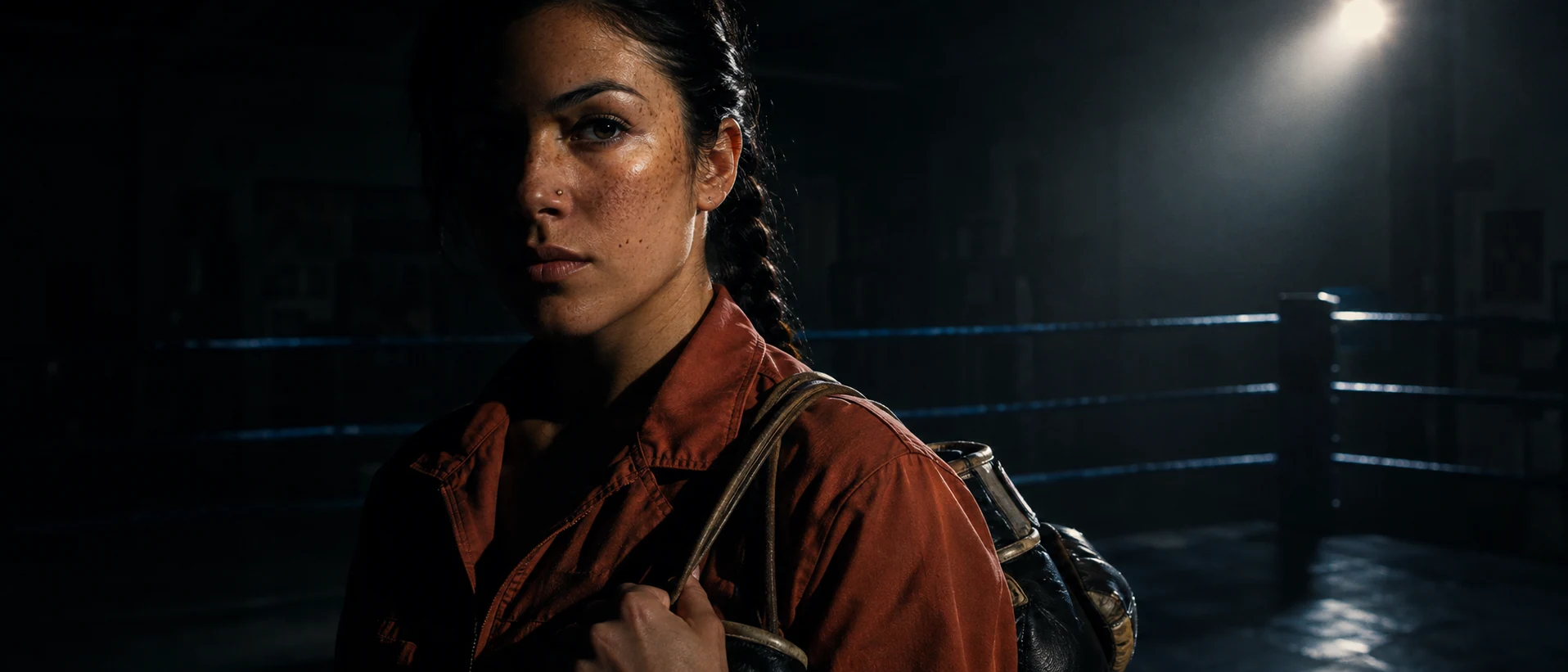
This take swaps soft for hard and moves the key higher and further around. "Bare spotlight" and "crisp shadow of her nose" force a small source, "small triangle of light under her left eye" pins a Rembrandt-style position, and "deep shadow with no fill" sets a high ratio.
Open FlashBoardsCamera: slow, steady push-in that starts immediately and ends in a tighter close-up on his eyes. Action: He is already raising his head from the glass toward frame left as the shot begins, turning his face into the key light so the lit side of his face widens and the shadow side shrinks. In the middle he holds still, the soft warm light on his forehead and cheek and the catchlight bright in his eyes. At the end he lowers his gaze and turns back toward the camera, and the right side of his face slides back into shadow while the light stays fixed at frame left.A key light is proven by movement through it: turning toward the source should brighten the face, turning away should return it to shadow. "The light stays fixed at frame left" keeps the model from moving the light with the head. Motion starts in the first words ("already raising his head"), and the prompt mentions only the man, the glass and the light that are in the start frame.
Open FlashBoards{
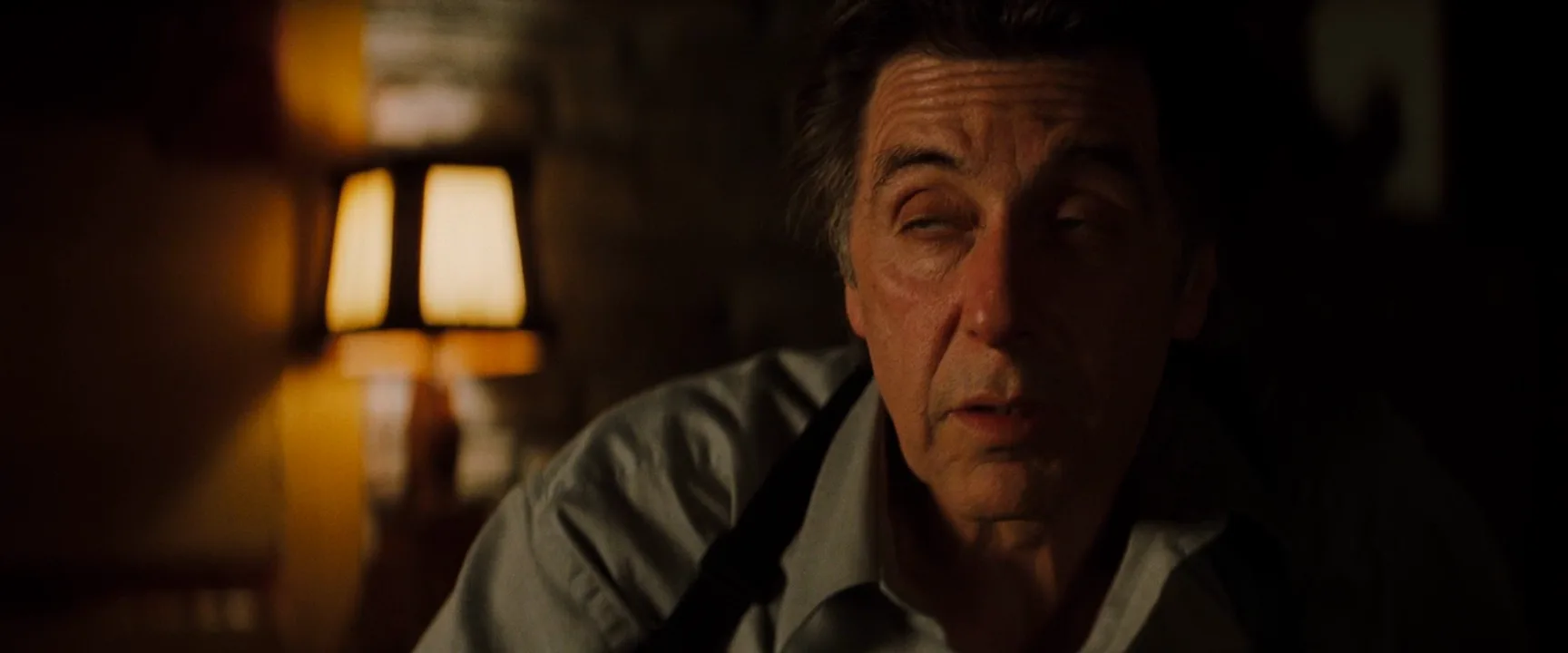
"output": "Full-screen live-action shot from Insomnia (2002) from its very first frame: one single continuous shot. Early-2000s 35mm anamorphic film look, fine grain, very low-key night interior, underexposed, warm amber and brown palette. A dim room with dark wood paneling; the only light source is a small table lamp with a cream shade glowing soft and out of focus in the background at frame left, behind and to the side of the man. That lamp is the key: a dim warm side light that grazes the side of his face nearer frame left, his forehead and the ridge of his nose, while the whole side of his face nearer frame right falls into deep brown shadow, close to black. No fill light: the key-to-shadow ratio is high, the room sinks to near black.",
"characters": {
"S1": {
"name": "Will Dormer, played by Al Pacino",
"look": "man in his early sixties, thick dark hair graying and swept back, clean-shaven with light stubble, deep forehead lines and heavy bags under tired eyes, pale gray-green work shirt with the collar open, a dark suspender strap over the shoulder on the frame-right side",
"voice": "low, hoarse, weary, pleading"
}
},
"shots": [
{
"shot": 1,
"camera": "static, locked-off, slightly below eye level, long lens, close-up of S1 at frame right, head and shoulders filling the right half of the frame, the glowing lamp soft and out of focus at frame left, focus holds on his eyes",
"action": [
"BEGINNING: alive from the first frame, S1 leans forward, head turned three-quarters toward frame left, eyes raised to someone unseen just off frame left, lips already moving; warm key from the lamp side lights his forehead, the bridge of his nose and the cheek nearer frame left, the cheek and jaw nearer frame right stay in shadow; his hands stay below frame.",
"THEN: he keeps talking to the unseen person, brow lifting, eyes wide and searching, head nodding slightly with each word.",
"THEN: he turns his face straight toward the lens for a brief moment, eyes wide, mouth open; now the warm side light reaches only the frame-left half of his face and the frame-right half stays dark, and his eyes keep only a tiny pinpoint catchlight.",
"THEN: he turns back three-quarters toward frame left and holds that angle, the lamp side of his face lit, the far side in shadow again, still speaking, gaze fixed on the unseen person.",
"END: he goes quiet for a beat, mouth slightly open, then begs with one last word, eyes still off frame left; the camera never moves."
],
"dialogue": [
{
"speaker": "S1",
"on_screen": true,
"when": "right after the first frame, while looking off frame left",
"delivery": "quiet, weary, coaxing",
"line": "<d>[English] Why don't you tell me what you think?</d>"
},
{
"speaker": "S1",
"on_screen": true,
"when": "as he turns toward the lens and back to frame left",
"delivery": "slow, each word separated, intense",
"line": "<d>[English] Here. Now. In this room. You and me.</d>"
},
{
"speaker": "S1",
"on_screen": true,
"when": "at the very end, after a short silence",
"delivery": "soft, begging",
"line": "<d>[English] Please.</d>"
}
]
}
],
"sound": {
"ambience": "quiet room tone, faint electrical hum of the lamp",
"speech": "exactly these spoken phrases, each said once, in this order",
"never_spoken": "no narration and no voice-over: the descriptions, performance notes and step words of this prompt are never spoken aloud",
"music": "a film score under the scene, always below the voices: a low sustained string drone with a slow, uneasy pulse",
"subtitles": "none"
}
}Remakes the lamp-lit close-up of Will Dormer (Al Pacino) from Insomnia (2002), dir. Christopher Nolan, DP Wally Pfister, keeping the locked-off long-lens framing, the warm lamp key from frame left, the shadowed far cheek, the turn toward the lens and his three lines from the scene.
The prompt names one motivated source, the lamp at frame left, and says which half of the face it lights and which half stays near black, with no fill, so the ratio is stated rather than left to the model. Dormer's turn toward the lens and back, timed to his real lines, makes the key slide across his face while the camera stays locked off.
Open FlashBoardsCommon mistakes
- No key at all. Prompts like "cinematic lighting" give flat, frontal, shadowless faces. Name one source, its side and its angle: "one soft key from frame left, 45 degrees".
- Invisible fill everywhere. Models lift the shadow side to near the key level. State the ratio in plain words ("the right side two stops darker", "deep shadow on the far side").
- Direction drift. The key is written from frame left but the nose shadow falls the wrong way. Describe the shadow as well as the light: "the nose casts a shadow onto her far cheek".
- Light that follows the actor. In video, the key can travel with the head. Write "the light stays fixed at frame left" and describe the face moving into and out of it.
- Background as bright as the face. Add "the room behind is dark" or "background falls off to shadow" so the key reads as a directed source.
Keep the reference frames, prompts and every generated take side by side — images and video in one canvas.
FAQ
5 questionsWhat is a key light in film?
A key light is the main source on a subject, usually the actor's face. It sets the direction the light comes from, how hard or soft the shadows are and the color of the light. Every other light, including fill, backlight and practical lamps, is set in relation to it.
What is the difference between key light and fill light?
The key light is the strong, directional source that shapes the face. The fill light is weaker and softer, placed on the opposite side or near the camera, and only lifts the shadows the key creates. The ratio between them sets the mood: a small difference looks bright and open, a big difference looks dark and dramatic.
Where should the key light be placed?
A reliable starting point is about 45 degrees to one side of the subject's nose and 30 degrees above the eyes. From there, move it toward the side or behind the subject for more shadow and drama, or toward the lens for a flatter, friendlier face. Keep it high enough for a catchlight, on the side a window or lamp would motivate.
Does the key light have to be the brightest light?
No. The key is the light that models the face, not necessarily the brightest one on set. A strong backlight on hair, a sunlit window or a bright practical in frame can be hotter than the key. What makes a light the key is its job: it shapes the face, and exposure is usually set for it.
Can natural light be the key light?
Yes. Sun, a window or overcast sky are often the key, especially in location work. Cinematographers position the actor relative to the window instead of moving a lamp, then control it with diffusion on the glass, negative fill on the shadow side or a bounce for fill.
Related terms
7- Fill LightLighting
Fill light is a softer, weaker source on the side opposite the key that lifts the shadows the key creates; its level relative to the key — the lighting ratio — decides whether a face looks open and bright or moody and sculpted.
- BacklightingLighting
Backlighting places the light behind the subject, facing the camera: it outlines hair and shoulders, separates the figure from the background, makes smoke and dust glow and, with no light from the front, turns people into silhouettes.
- Rim LightLighting
A rim (edge) light sits behind and to the side of the subject, drawing a thin bright line along the edge of the head, shoulders or profile to pull it off a dark background.
- Rembrandt LightingLighting
Rembrandt lighting places the key high and about 45° to one side, so the far cheek falls into shadow except for a small triangle of light under the eye — a moody, painterly portrait look named after the Dutch painter.
- Butterfly LightingLighting
Butterfly lighting puts the key light high and straight in front of the face, casting a small butterfly-shaped shadow under the nose; it sculpts cheekbones and was the classic Hollywood glamour look.
- ContrastLighting
Contrast is the difference between the brightest and darkest parts of an image — set on set by the ratio between key and fill — and ranges from flat, gentle low contrast to hard, graphic high contrast.
- Film LightingLighting
Film lighting is the craft of shaping light for the camera — its direction, quality, color and contrast — to model faces, build space, set the time of day and carry the mood of a scene.
Further reading
Blain Brown, Motion Picture and Video Lighting (Focal Press). Harry C. Box, Set Lighting Technician's Handbook (Focal Press). Kris Malkiewicz, Film Lighting (Touchstone).