 FlashBoards Learn
- Learn
- Cameras & Capture
- Film Stock
Cameras & Capture · Film language
Film Stock
Also called: motion picture film, 35mm film, film emulsion
Film stock is the light-sensitive material a movie is shot on: a flexible base coated with emulsion. Its gauge (16, 35 or 65mm), speed and color response decide grain, contrast, highlight roll-off and palette before any grading; choosing a stock means choosing how the film feels.
- What it does
- Sets the texture, contrast and color bias of every frame at the moment of exposure.
- Use it when
- You are choosing a look for a whole film or a period, memory or dream sequence inside it.
- Watch out
- Stock, gauge, exposure and lab processing work together; naming a stock alone does not guarantee the look.
- Try this prompt
Shot on 35mm Kodak Vision3 500T color negative, fine visible grain, soft halation on neon, warm skin, teal shadows
What is film stock?
Film has two layers. The base is the clear support; early stocks used flammable nitrate, modern ones acetate or polyester. The emulsion is gelatin carrying silver-halide crystals that development turns into silver (black-and-white) or dye clouds (color).
Three properties describe any stock:
- Gauge — Super 8, 16mm/Super 16, 35mm, 65mm. A bigger frame means finer apparent grain.
- Speed — the exposure index (EI 50, 250, 500). Faster stocks need less light but show coarser film grain.
- Balance and type — daylight (D, about 5500K) or tungsten (T, about 3200K); negative, reversal or black-and-white.
The name on the can is a spec sheet: Kodak Vision3 comes as 50D, 250D, 200T and 500T — speed plus balance. Fujifilm stopped making motion picture negative in 2013, so its stocks now live on mostly as a look to emulate.
Types of film stock
Color negative is the feature-film workhorse. It holds detail several stops over exposure and rolls highlights off gently.
Color reversal gives a positive directly on the camera original: dense, saturated color, high contrast and narrow latitude — half a stop of error shows.
Black-and-white negative records tone only. Silver grain looks sharper and grittier than dye, and lens filters decide how skin, sky and foliage turn into gray.
The positive print shown in cinemas has its own contrast and color, so part of the classic film look comes from the print stock too.
Why does the choice of film stock matter?
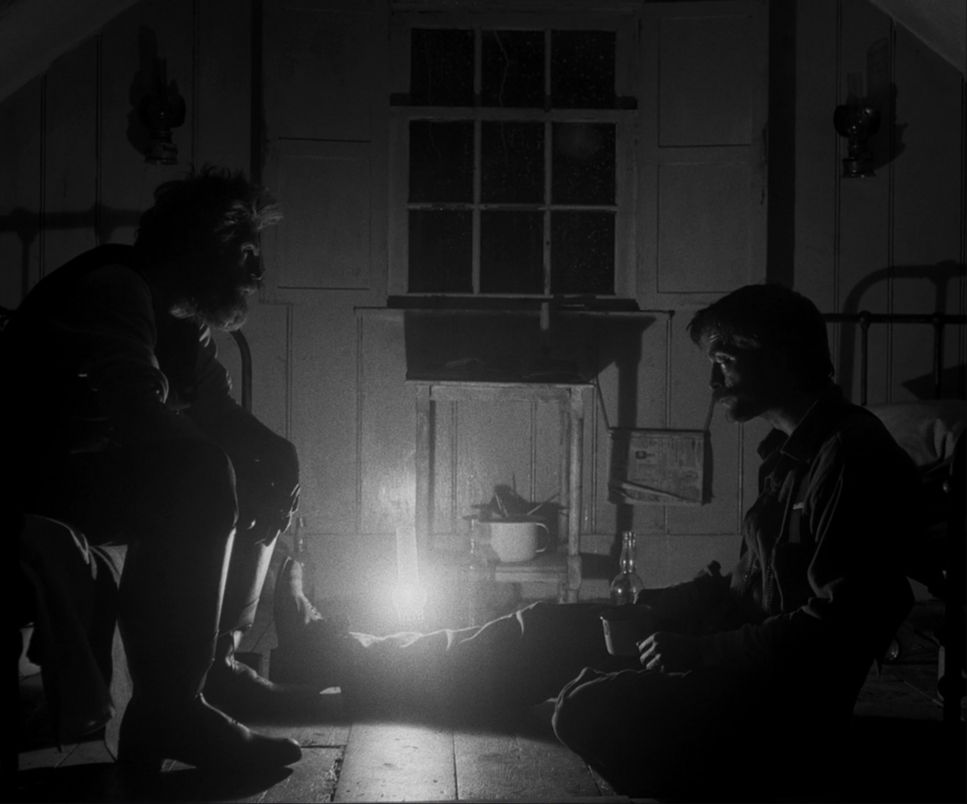
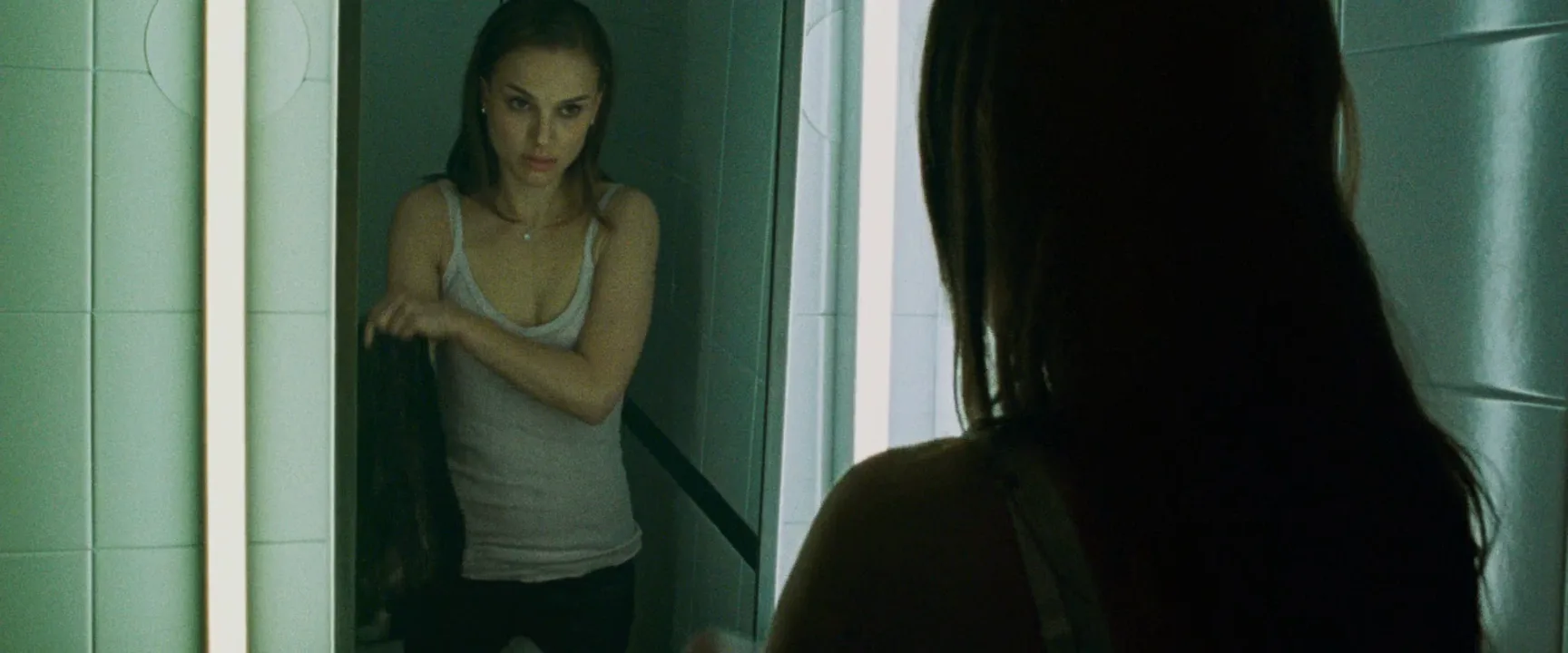
Matthew Libatique shot Black Swan (2010) largely on Super 16, and the bigger grain keeps the ballet world restless and close. Jarin Blaschke shot The Lighthouse (2019) on 35mm black-and-white negative, so the story feels dug up from another era. Oppenheimer (2023) went the other way, with 65mm, including black-and-white 65mm stock, for maximum detail on faces.
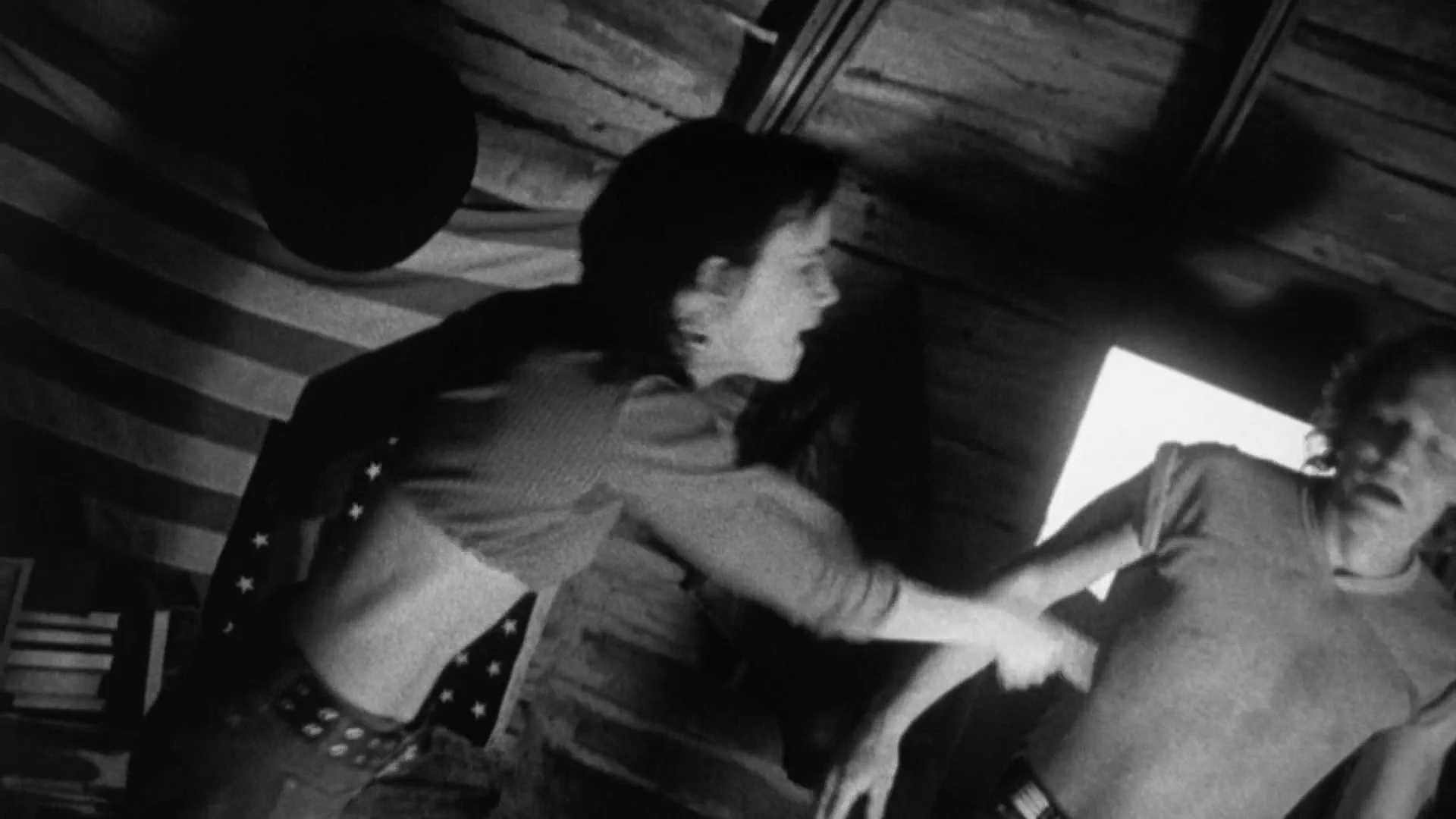
Mixing stocks is a storytelling tool. Robert Richardson intercut 35mm, 16mm, Super 8, color and black-and-white in JFK (1991) and Natural Born Killers (1994), so texture alone tells you what is memory, document or fever.
The effect lives in texture (grain size and how it dances), tone (highlight roll-off, deep or milky blacks) and color (warm skin and cyan-leaning shadows of color negative, or the harder saturation of reversal). Bright points bloom red through halation.
How to choose and shoot film stock
- Match speed to light. 50D or 250D for exteriors and bright interiors, 500T for night and low-light interiors.
- Match balance to the source. Tungsten stock in daylight goes blue unless you add an 85 filter (about two-thirds of a stop); daylight stock under tungsten goes orange.
- Rate for density. Many cinematographers rate color negative a third to two-thirds of a stop slower (500T at EI 320–400) for cleaner shadows and finer grain.
- Choose the gauge for texture. Super 16 for visible grain and a light camera, 35mm for the classic feature look, 65mm for the finest detail. The gauge also shapes your aspect ratio options.
- Plan the lab. Pushing one or two stops adds speed, grain and contrast; bleach bypass keeps silver in the image for a desaturated, hard look.
Film stock vs. digital cinematography
Digital cinematography records on a sensor whose pixels stay put, so its noise is fixed, while film grain is random in every frame. Film holds overexposure gracefully; digital holds more shadow detail and clips highlights more abruptly. Many productions now shoot digitally and emulate a stock in the grade with grain, halation and print-emulation curves. More in the cameras and capture hub.
Film Stock examples in film
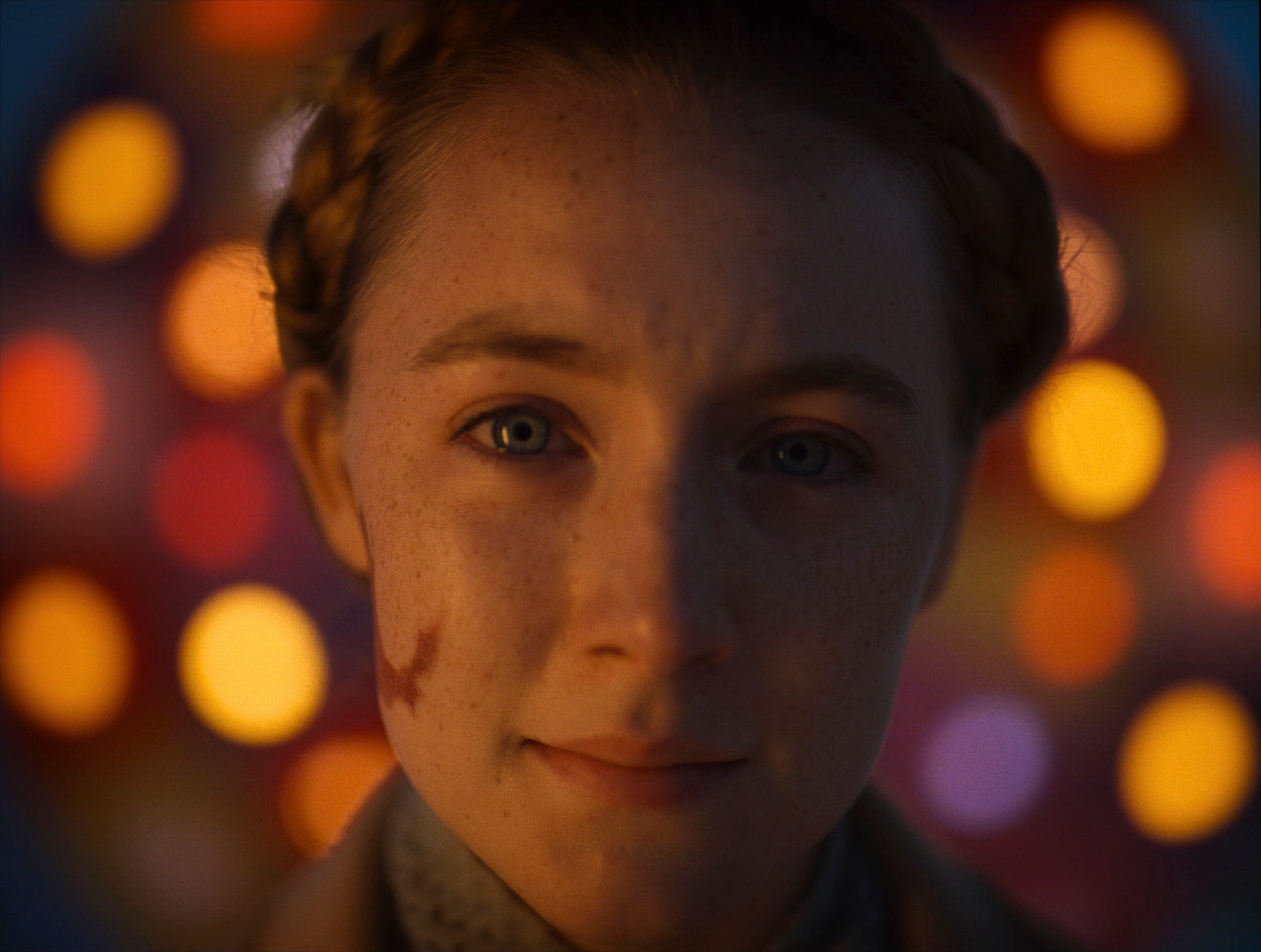
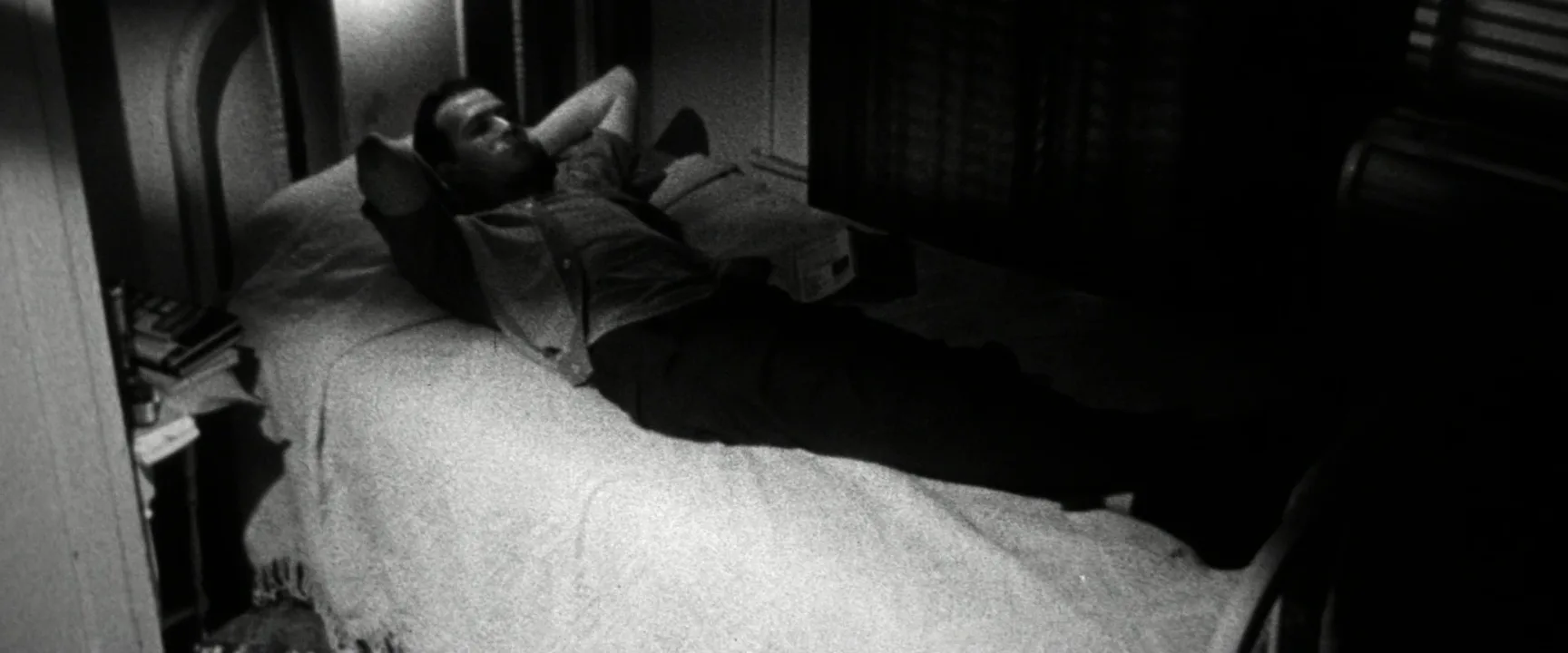
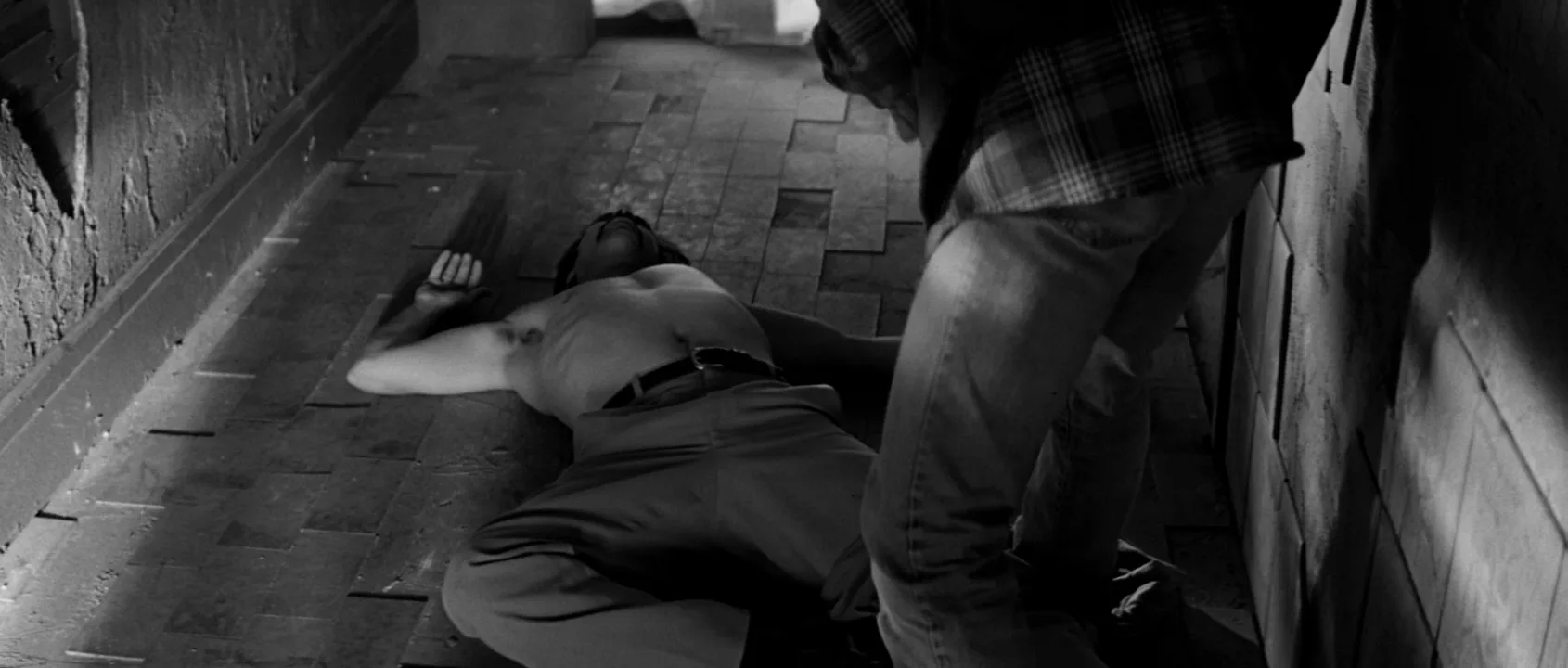
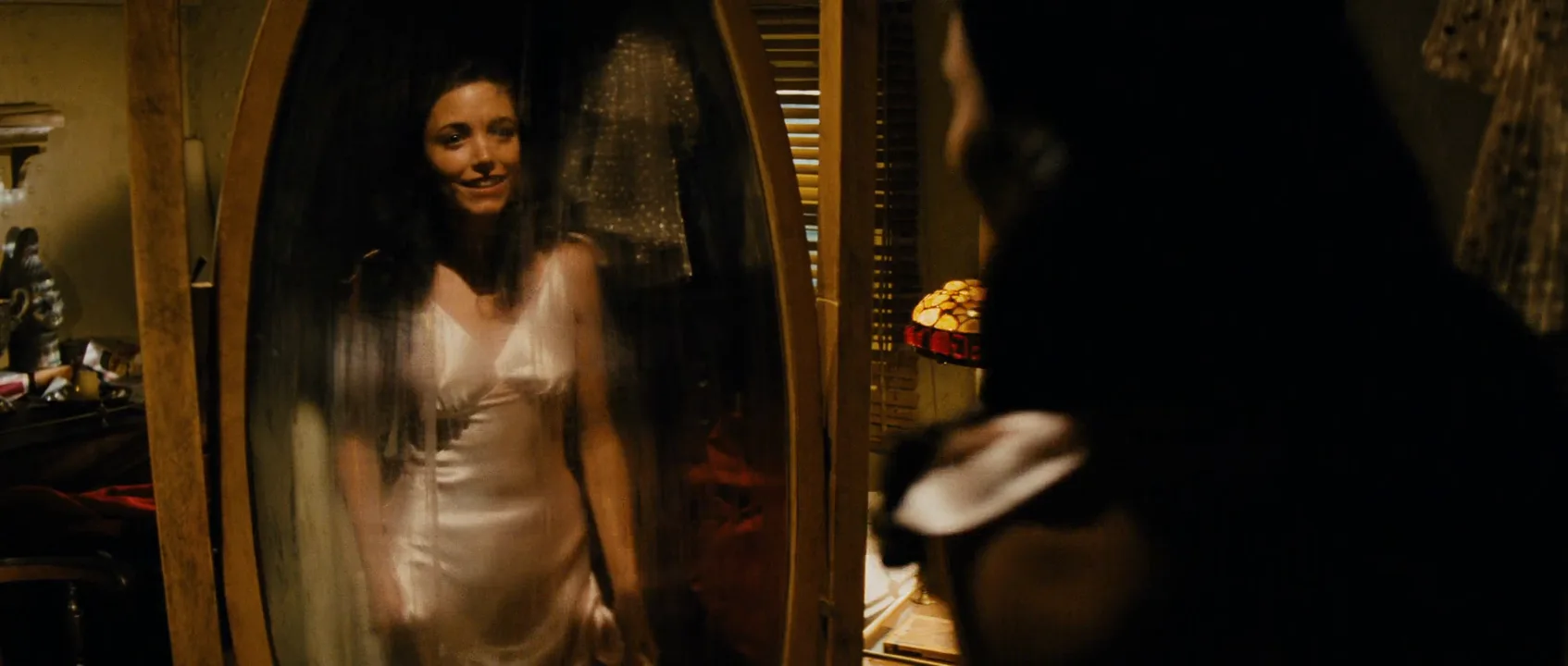
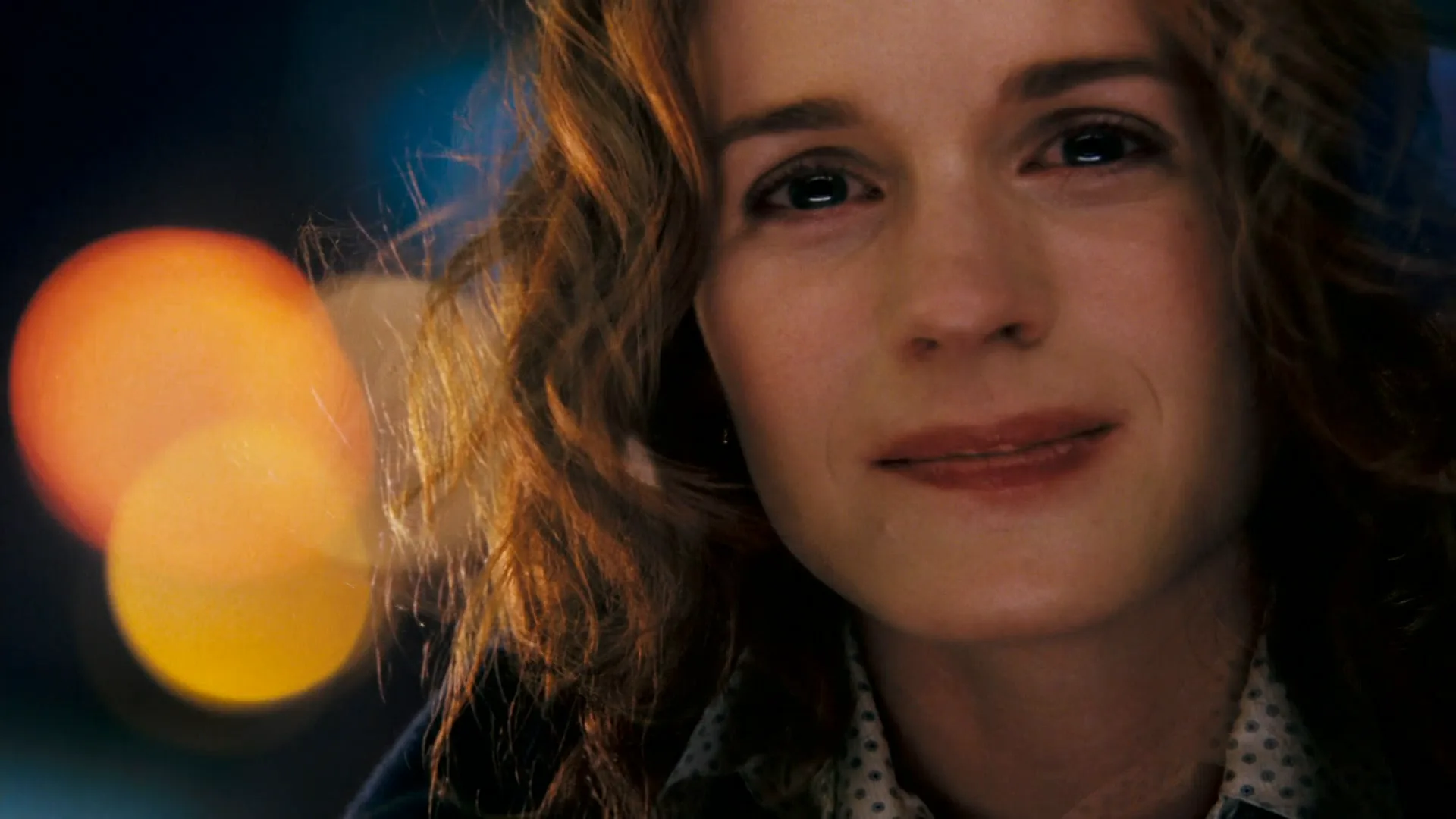
8 framesFrames on different gauges and emulsions: compare grain size, highlight bloom and how deep the blacks sit.
How to create a film stock with AI
4 promptsModels respond to stock names and gauges, but they need the visible side effects spelled out: grain, halation, roll-off, color bias. In FlashBoards, pin reference frames next to your generations on one board and compare takes side by side. The fourth prompt re-shoots a real film shot from a text description alone, and the original plays next to the result so you can compare.
Medium close-up of a fictional night-shift cook in her late 40s, cropped silver hair, a small burn scar on her left forearm, faded mint uniform, wiping a steel counter in an empty diner at night. Shot on 35mm Kodak Vision3 500T tungsten color negative, 40mm lens at eye level, overhead fluorescent tubes, red neon sign in the window behind her, fine visible film grain, soft red halation around the neon, gentle highlight roll-off, teal shadows, warm skin.
35mm Vision3 500T tungsten sets warm skin with cool shadows; fine visible grain, halation around the neon and highlight roll-off name the physical effects so the model avoids a clean digital look.
Open FlashBoardsWide shot of a fictional elderly fisherman with a long white beard, a gap in his front teeth and a heavy wool sweater, mending a net on a stone pier under an overcast sky. 35mm black-and-white negative film, Kodak Double-X look, 32mm lens at chest height, deep blacks in the wet stones, silvery midtones in the sea, coarse grain, slight gate weave, 4:3 frame.
A second emulsion: black-and-white negative plus deep blacks, silvery midtones, coarse grain describes the tonal curve, and 4:3 with gate weave points to a period print.
Open FlashBoardsCamera: slow handheld drift to the left from the first frame, at eye level, keeping her in a medium close-up. Action: she is already wiping the steel counter in long strokes; she pauses, glances toward the red neon sign in the window, the neon flickers once, and she goes back to wiping. Film grain moves in every frame; the neon keeps its soft red halation.Motion starts at once (already wiping, drift from the first frame), only recipe 1's objects appear, and grain moves in every frame keeps the emulsion alive.
Open FlashBoards{
"output": "Full-screen live-action scene from Black Swan (2010) from its very first frame: one continuous shot. Shot on Super 16mm color negative film pushed one stop and blown up for the big screen: heavy, clearly visible film grain dances in every frame, over the flat tiled walls and thickest in the near-black silhouette; slightly soft focus, low contrast, milky highlights. Palette: pale mint-green fluorescent light, sickly green-gray tiles, cool pale skin. A cramped tiled restroom at night.",
"characters": {
"S1": {
"name": "Nina Sayers, played by Natalie Portman",
"look": "slim young woman, long straight brown hair pulled loosely back from her face, pale skin, a thin silver chain at her throat, white ribbed camisole with thin straps, dark trousers; she handles a small sheer black lace top",
"voice": "silent, only soft breathing"
}
},
"shots": [
{
"shot": 1,
"voice": "silence: nobody speaks in this shot, no voice at all",
"camera": "handheld but nearly still, eye level, normal lens, placed just behind S1's left shoulder. Her back, hair and bare shoulder fill the right half of the frame as an almost solid, grainy black silhouette, unlit. In the left half, a tall wall mirror edged by two vertical strips of white fluorescent light on pale green tiles shows her reflection facing camera, head to hips, softly lit, a dark diagonal handrail on the tiles behind her. The framing holds the same from start to end, with only a faint handheld sway.",
"action": [
"BEGINNING: alive from the first frame, the reflection stands with both arms hanging loosely at her sides, fingertips near her hips, eyes lowered to her own body in the mirror, lips closed.",
"THEN: she lifts the sheer black top by its two thin straps, one strap in each hand at shoulder height, and holds it flat against the front of her camisole; she studies it in the mirror with a level, serious gaze; the silhouette's hand shows dark at the lower centre of the frame, near her shoulder.",
"THEN: she lowers the top to her waist and bunches it in her screen-left hand; her brow creases as she looks down at the fabric, her screen-right hand hovering palm down beside it.",
"THEN: she turns the bunched top over, searching for the neckline, then holds it out at her screen-left side and lifts her eyes to the mirror for a moment, wide-eyed and still.",
"THEN: eyes lowered again, she stretches the neck opening wide with both hands in front of her chest.",
"END: she raises both arms above her head and starts pulling the black top down over her head, her face half hidden behind her forearms in the mirror; at the same time the silhouette's raised elbow and forearm swing up into the near right of the frame, large, dark and slightly soft."
],
"dialogue": []
}
],
"sound": {
"ambience": "steady hum of fluorescent tubes, muffled bar chatter heard through a closed door, soft rustle of fabric",
"speech": "no words in this video; the only human sounds are breaths and movement",
"never_spoken": "no narration and no voice-over: the descriptions, performance notes and step words of this prompt are never spoken aloud",
"music": "a film score under the scene, always below the voices: a thin, uneasy high string drone over a slow low pulse",
"subtitles": "none"
}
}Remakes Nina's silent restroom mirror shot from Black Swan (2010), keeping the over-the-shoulder silhouette, the reflection between two light strips, her try-on of the black top, the green fluorescent palette and the Super 16 grain.
The stock lives in the output line: Super 16 pushed one stop, heavy grain in every frame, soft focus, milky highlights and a mint-green fluorescent palette. Nina's silent staging and a low string score copy the original, so the texture is what you compare.
Open FlashBoardsCommon mistakes
- A stock name alone gives a generic vintage filter; add grain size, halation, roll-off and shadow color.
- Models overdo grain and scratches; say fine grain and a clean negative for a modern feature look.
- Black-and-white can come out as tinted, desaturated color; write black-and-white negative film and describe the blacks.
- In video, grain can freeze into an overlay; state that it moves every frame.
Keep the reference frames, prompts and every generated take side by side — images and video in one canvas.
FAQ
5 questionsWhat are the main types of film stock?
Color negative, used on most features for its wide latitude; color reversal, which gives a saturated positive directly but tolerates little exposure error; and black-and-white negative, which records tone with silver grain. Each comes in gauges such as Super 8, 16mm, 35mm and 65mm, and in different speeds and daylight or tungsten balance.
What is 35mm film stock?
35mm film stock is motion picture film 35 millimeters wide, the standard theatrical gauge for over a century. The frame can span 4, 3 or 2 perforations, which changes aspect ratio and film usage. It balances fine grain, camera size and cost better than 16mm or 65mm.
What does Kodak Vision3 500T mean?
Vision3 is Kodak's current color negative family. 500 is the exposure index and T means it is balanced for tungsten light around 3200K, which makes it the standard choice for night and low-light interiors. Its siblings are 50D and 250D for daylight and 200T for brighter tungsten-lit scenes.
Is film stock still used today?
Yes. Kodak still makes motion picture negative in 16mm, 35mm and 65mm, and features and commercials are still shot on it. Most productions scan the negative and finish digitally, so film today is mainly a capture choice made for its grain, highlight handling and color rather than for projection.
How do I get a film stock look with AI?
Name the gauge and stock, such as 35mm Kodak Vision3 500T or 16mm black-and-white negative, then describe what it does in your scene: grain size, halation around bright lights, soft highlight roll-off, shadow color and skin tone. Name the real light sources too.
Related terms
4- Digital CinematographyCameras & Capture
Digital cinematography records motion pictures on an electronic sensor instead of film stock; since the 2010s it has been the industry standard, with cinema cameras such as the ARRI Alexa and RED.
- Film GrainCameras & Capture
Film grain is the random speckled texture of silver-halide crystals in developed film; faster stocks and push processing make it coarser, and digital productions add it back to soften the clean video look.
- TechnicolorColor
Technicolor is a family of color film processes; its three-strip version (from 1932 into the 1950s) split light onto three negatives and printed them by dye transfer, producing the saturated, jewel-like color of The Wizard of Oz and classic Hollywood musicals.
- HalationCameras & Capture
Halation is the reddish-orange glow around bright highlights on film: light passes through the emulsion, reflects off the film base and re-exposes the layers; digital looks add it to imitate celluloid.
Further reading
Kodak, The Essential Reference Guide for Filmmakers. — Steven Ascher and Edward Pincus, The Filmmaker's Handbook. — American Cinematographer magazine, production articles on the films cited.