 FlashBoards Learn
- Learn
- Formats & Exhibition
- Aspect Ratio
Formats & Exhibition · Film language
Aspect Ratio
Also called: aspect ratios, frame ratio, screen format
Aspect ratio is the shape of the picture: its width divided by its height, written as 1.85:1 or 16:9. Cinema mostly uses 1.85:1 (flat) and 2.39:1 (scope), with 1.33:1 Academy, 1.43:1 IMAX and 16:9 HDTV around them. The ratio decides how much space surrounds a character and how a composition breathes.
- What it does
- Sets the shape of every shot: how much width a scene gets relative to its height.
- Use it when
- Before prep: the ratio drives lens choice, blocking, set width and every storyboard panel.
- Watch out
- Wide frames punish empty centers; tall frames punish flat, lateral staging.
- Try this prompt
2.39:1 anamorphic widescreen film still, two people at opposite edges of the frame, empty space between them
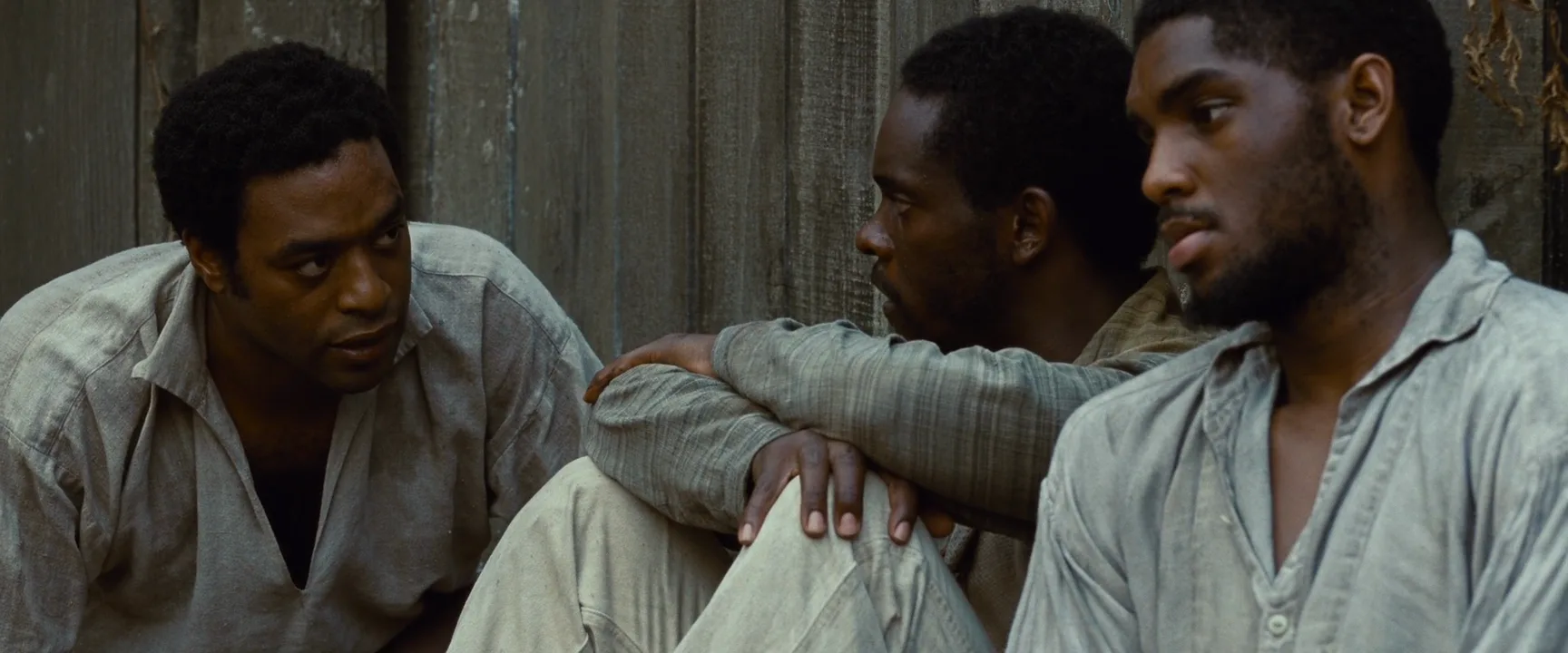
What is aspect ratio?
Aspect ratio is the proportion between the width and the height of the image. Cinema writes it as one number against 1: a 1.85:1 frame is 1.85 times wider than it is tall. Television and the web use whole numbers, so 16:9 (1.78:1) and 4:3 (1.33:1) are the same measurement in another notation.
The ratio is not the size of the screen and not the resolution. A phone and a 20-meter cinema screen can both show 2.39:1; a 1920×1080 file and a 3840×2160 file are both 16:9. What the ratio sets is the edges of the frame and with them how many people fit in a row, how much sky sits above a head and how far a character can look before the frame runs out.
| Ratio | Name and use | |---|---| | 1.33:1 (4:3) | Silent film, standard-definition TV | | 1.37:1 | Academy, the sound-era 35mm standard | | 1.43:1 | IMAX 15-perf 70mm | | 1.66:1 | European widescreen | | 1.78:1 (16:9) | HD and UHD television, streaming | | 1.85:1 | Flat, the standard spherical widescreen | | 1.90:1 | Digital cinema full container, digital IMAX | | 2.00:1 | Univisium, common in streaming series | | 2.20:1 | 70mm release prints | | 2.39:1 | Scope, anamorphic | | 2.76:1 | Ultra Panavision 70 | | 9:16 | Vertical video for phones |
Where film aspect ratios came from
Silent 35mm film carried a frame about four units wide by three high: 1.33:1. When optical soundtracks took a strip along the edge of the film, the Academy standardized a slightly adjusted 1.37:1 frame in 1932, and for two decades nearly every Hollywood film was shot in it.
Television copied that shape, and in the early 1950s the studios answered TV with width. Cinerama joined three projectors into one curved image in 1952; Fox launched CinemaScope in 1953, squeezing a wide picture onto ordinary 35mm with an anamorphic lens. Cheaper systems simply masked the Academy frame in projection, which produced the flat ratios still in use: 1.66:1 in much of Europe, 1.85:1 in the United States. In the early 1970s the scope projection standard was redefined with a slightly shorter frame, so 2.35:1 became 2.39:1 (often rounded to 2.40).
In the 1980s, engineers designing high-definition television picked 16:9 as a compromise between 4:3 and the cinema ratios. It became the default for HD, streaming and camera sensors, which is why most films are finished at 1.85:1 or 2.39:1 and delivered inside a 16:9 container.
What counts as widescreen?
Widescreen is any frame noticeably wider than the 1.37:1 Academy ratio: the flat ratios (1.66:1, 1.85:1), 70mm (2.20:1) and scope (2.39:1 and wider) in theaters, and 16:9 on television.
There are two ways to get it. Spherical widescreen uses ordinary lenses and crops the frame: 1.85:1 on 35mm is the Academy area masked top and bottom, and a digital 2.39:1 on spherical lenses is a crop from a 16:9 or 17:9 sensor. Anamorphic widescreen uses anamorphic lenses that squeeze a wide view onto a taller sensor or negative and stretch it back later, keeping more of the capture area and adding oval bokeh and horizontal flares.
"Widescreen edition" on old home video meant a wide film shown in full inside a 4:3 set with letterboxing bars, instead of the sides cut away by pan and scan.
How aspect ratio changes a shot
The ratio is a composition decision before it is a technical one. Keep the actor, the spot and the lens, change only the shape of the frame, and the shot means something else.
Scope (2.39:1) is a horizontal frame. It holds a landscape, a line of people or a room from wall to wall. In a close-up the face fills the height and the sides stay open, so where the empty space falls becomes part of the meaning; see negative space. Scope makes the two-shot its natural unit: two people at opposite edges with the whole frame between them. Star Wars (1977), Apocalypse Now (1979) and Mad Max: Fury Road (2015) use it for scale and speed across the frame. The Hateful Eight (2015) went to 2.76:1 in Ultra Panavision 70 and then spent most of its running time inside one cabin, using the width to keep several suspicious characters in the same shot.
Flat (1.85:1) and 16:9 are the neutral middle: a person head to waist with the room behind, and enough height for doorways, stairs and standing figures. The Master (2012) was shot on 65mm film yet framed at 1.85:1, spending the large negative on faces rather than width.
Academy and narrower (1.37:1 and below) make height and closeness. There is little room beside a face, so a close-up feels cornered, and staging moves into depth: one character in front, another behind. Son of Saul (2015) boxes its protagonist in 1.37:1; The Lighthouse (2019) narrows to 1.19:1 so two men and a tower seem crushed together; Mommy (2014) is shot almost entirely in a 1:1 square.
The ratio can also change inside a film. The Grand Budapest Hotel (2014) gives its eras 1.37:1, 1.85:1 and 2.35:1, and IMAX releases open up to a taller frame for set pieces; see aspect ratio change.
How to choose and shoot an aspect ratio
Start from the story's geography. Isolation in a landscape, a western, a road movie or an ensemble in one room tends toward scope. One person's inner pressure, a family in a small house, or anything built on vertical space (stairs, towers, standing crowds) often sits better at 1.85:1 or narrower. Then check the practical side:
- Capture. Most cinema cameras record 16:9 or 17:9. 1.85:1 costs almost nothing; spherical 2.39:1 crops away about a quarter of the sensor height. A 2× anamorphic on a 6:5 sensor area gives a full-height 2.39:1 image; 1.3× and 1.5× anamorphics are built for 16:9 and 3:2 sensors.
- Lenses. A given focal length shows more width in scope, so scope close-ups are often shot on longer lenses to keep the background simple across the frame.
- Monitoring. Load frame lines for the finishing ratio in the camera and on every monitor, and decide what must be protected for other deliveries, such as a 9:16 social cut.
- Blocking and sets. Scope needs width in the set and the blocking: plan where people stand across the frame. Tall ratios need ceilings, headroom and foreground layers.
In FlashBoards the aspect ratio is the first parameter of every generation, so it is also the first decision on the board. Generate the key shots of a scene at 4:3, 16:9 and 21:9 from the same prompt and pin them next to your reference frames and storyboard: the shape that makes the blocking read without explanation is usually the right one.
Aspect ratio vs. resolution (and HD)
Video formats bundle the two, so they get mixed up. High definition means 1280×720 or 1920×1080 pixels, both 16:9; UHD is 3840×2160, also 16:9. Resolution counts pixels; aspect ratio describes the shape they form. A 2.39:1 film in a UHD stream uses about 3840×1606 active pixels, and the rest of the 16:9 frame is black bars.
So "shot in 4K" says nothing about the ratio. The shape is decided on set; resolution only says how finely it is sampled.
Aspect Ratio examples in film
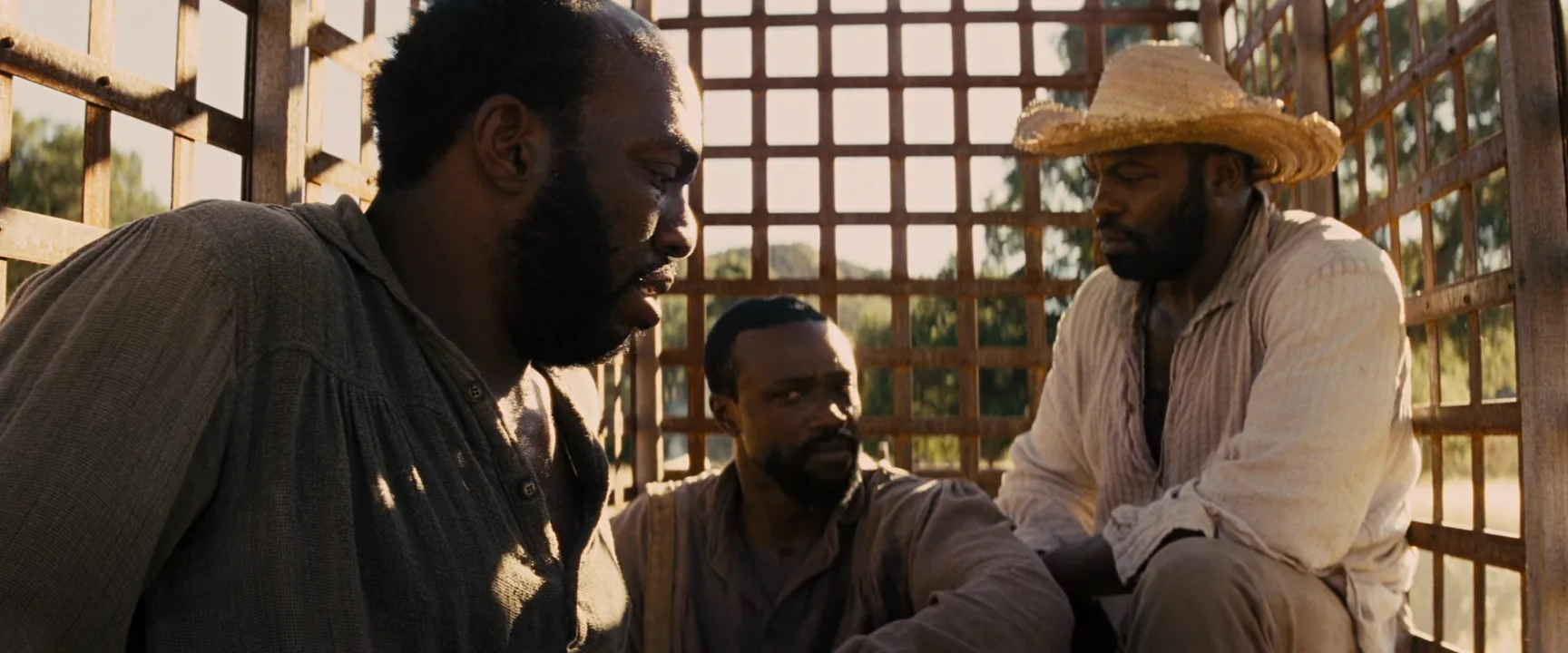
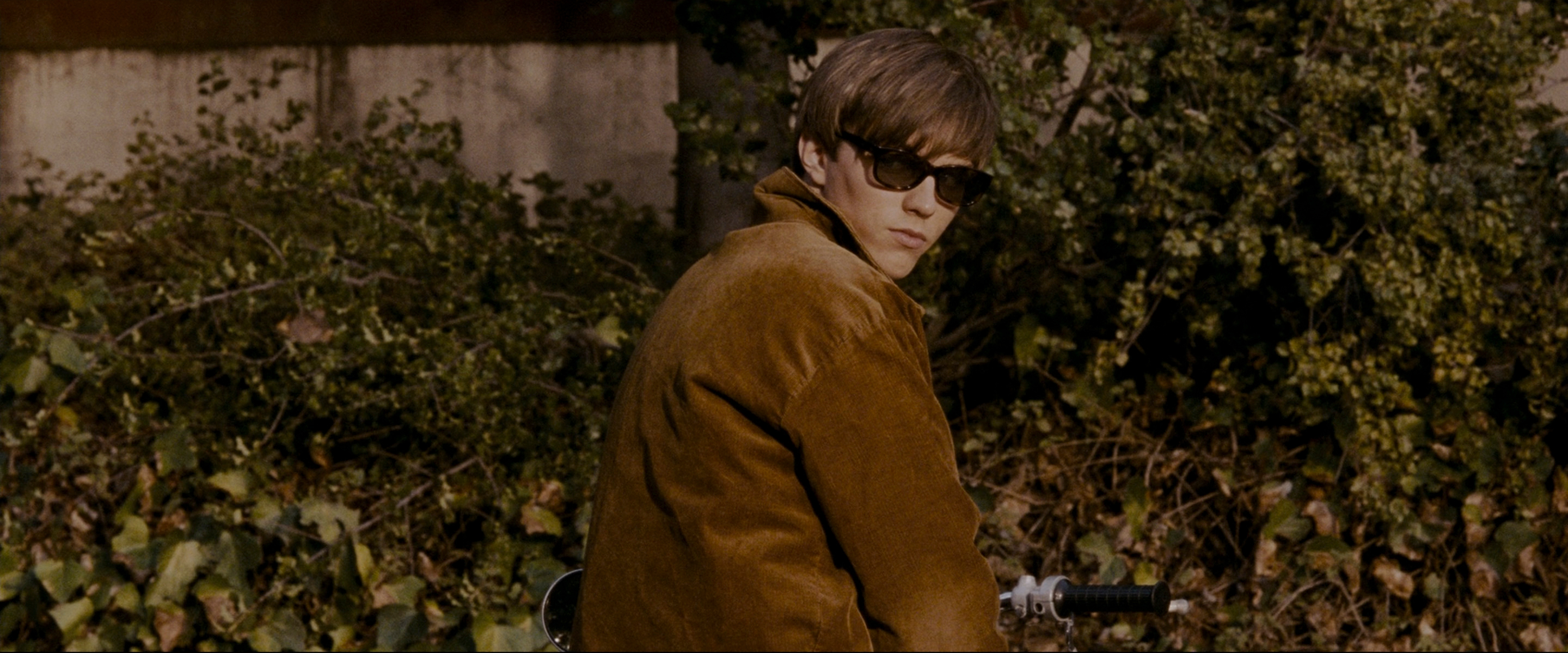
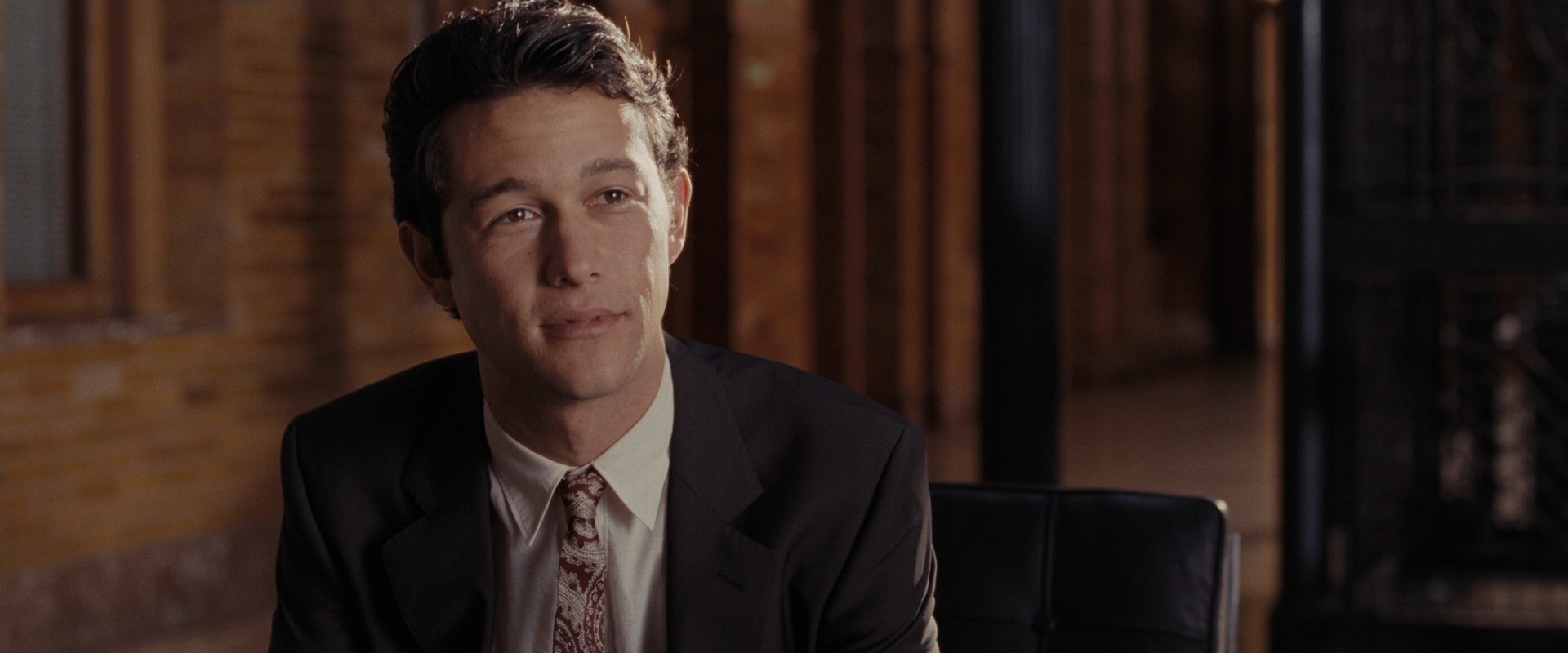
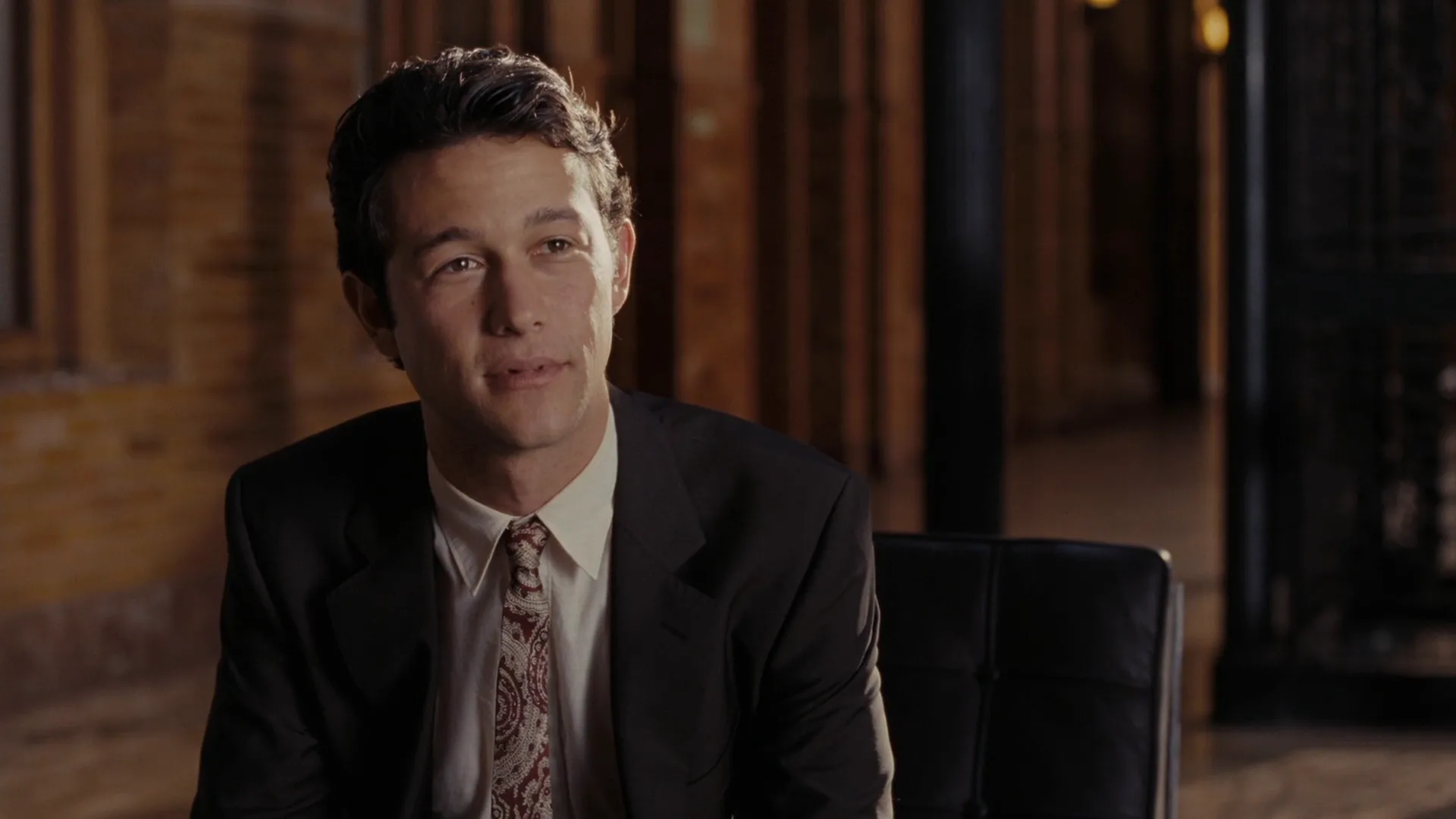
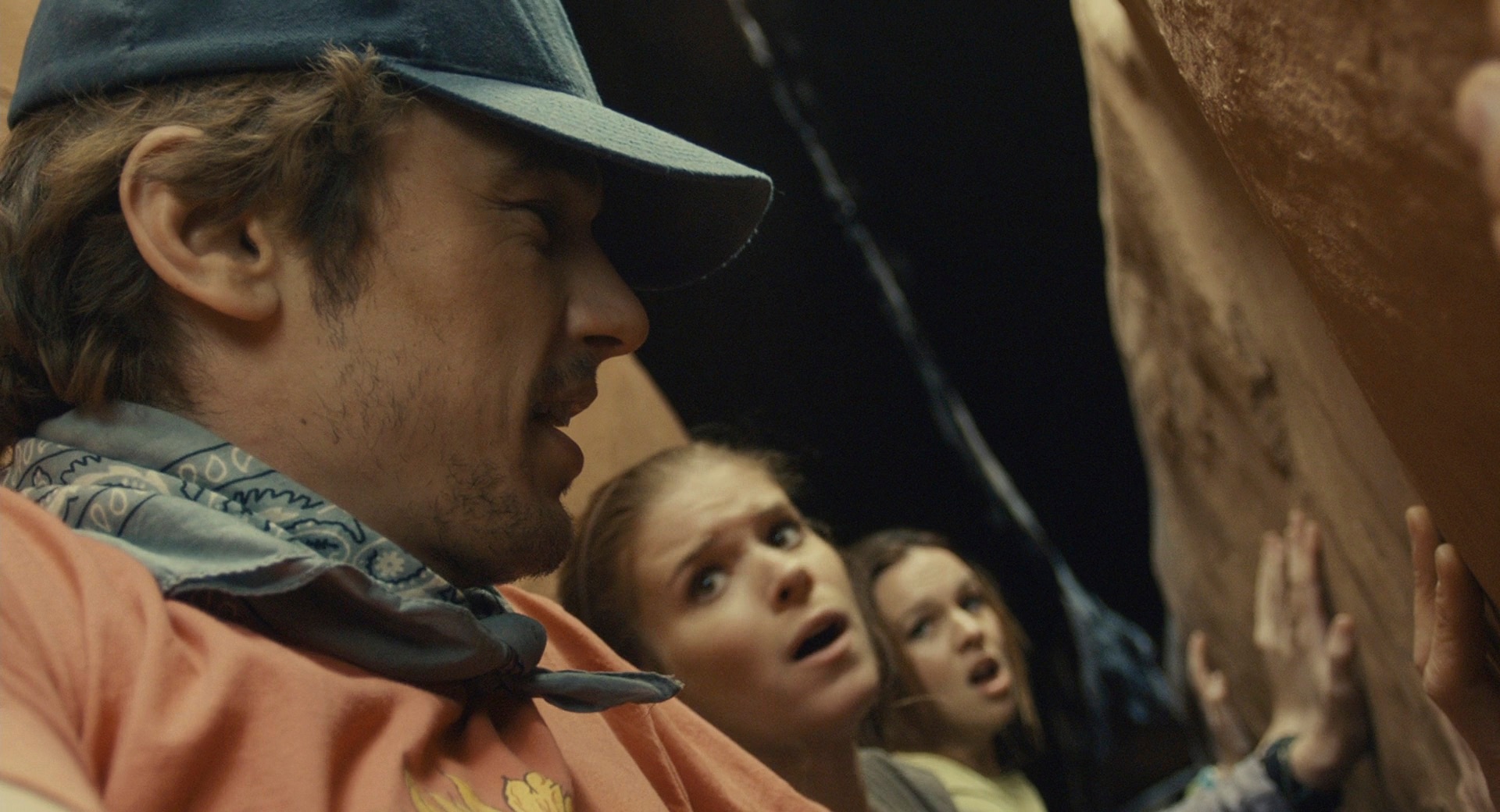
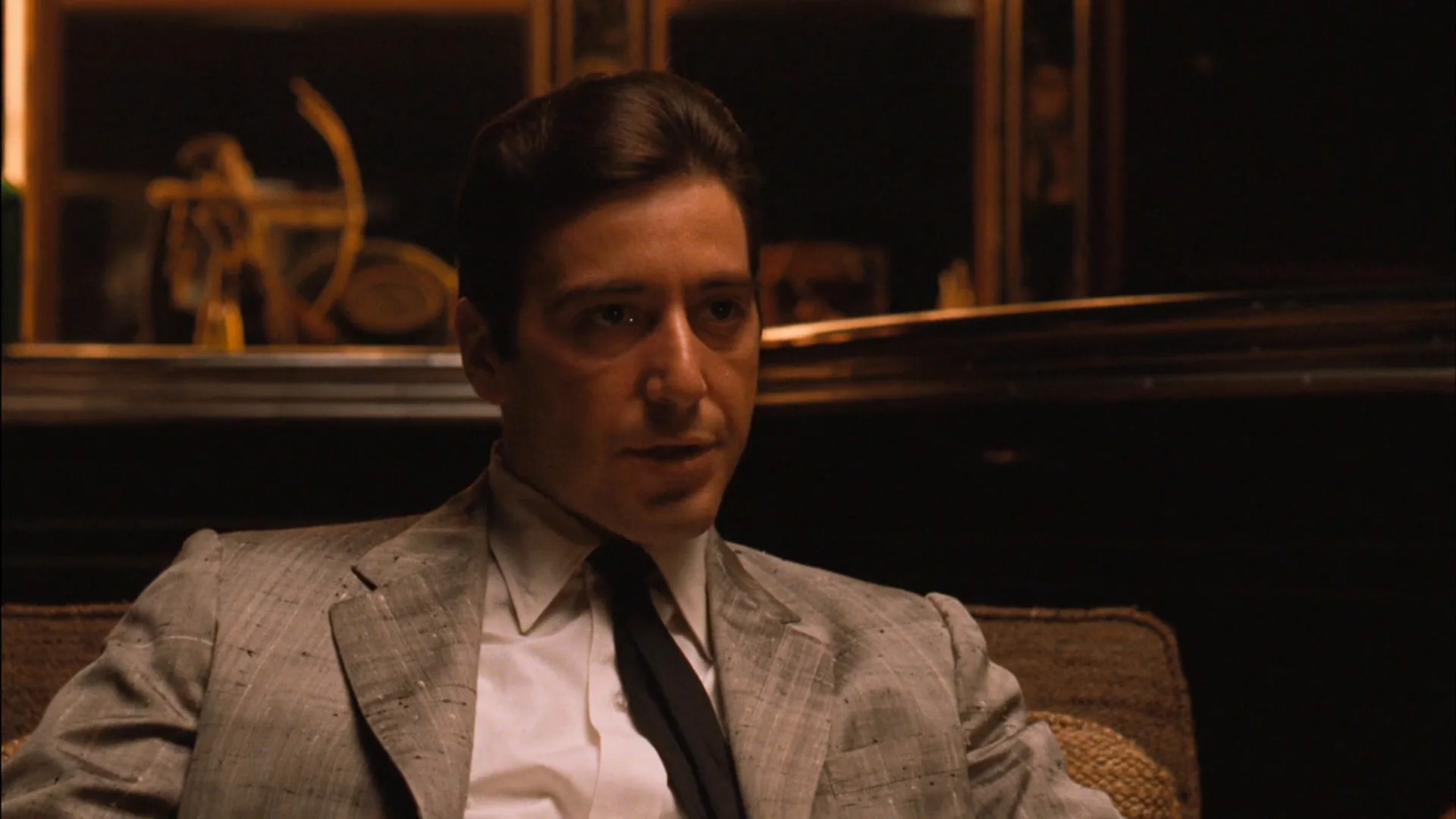
10 framesFrames shown in their own shape, grouped from widest to tallest. Watch what the extra width or height is spent on.
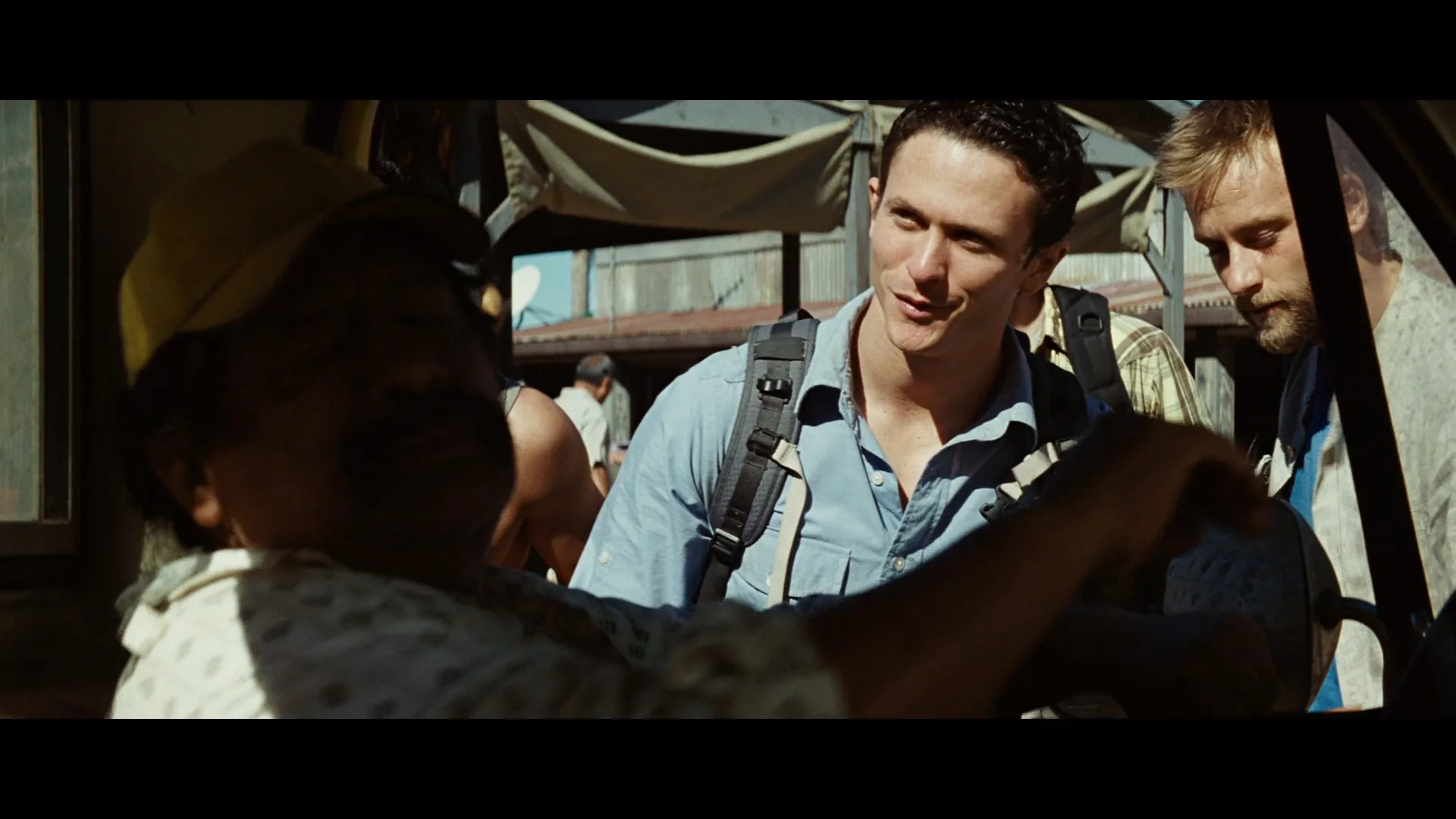
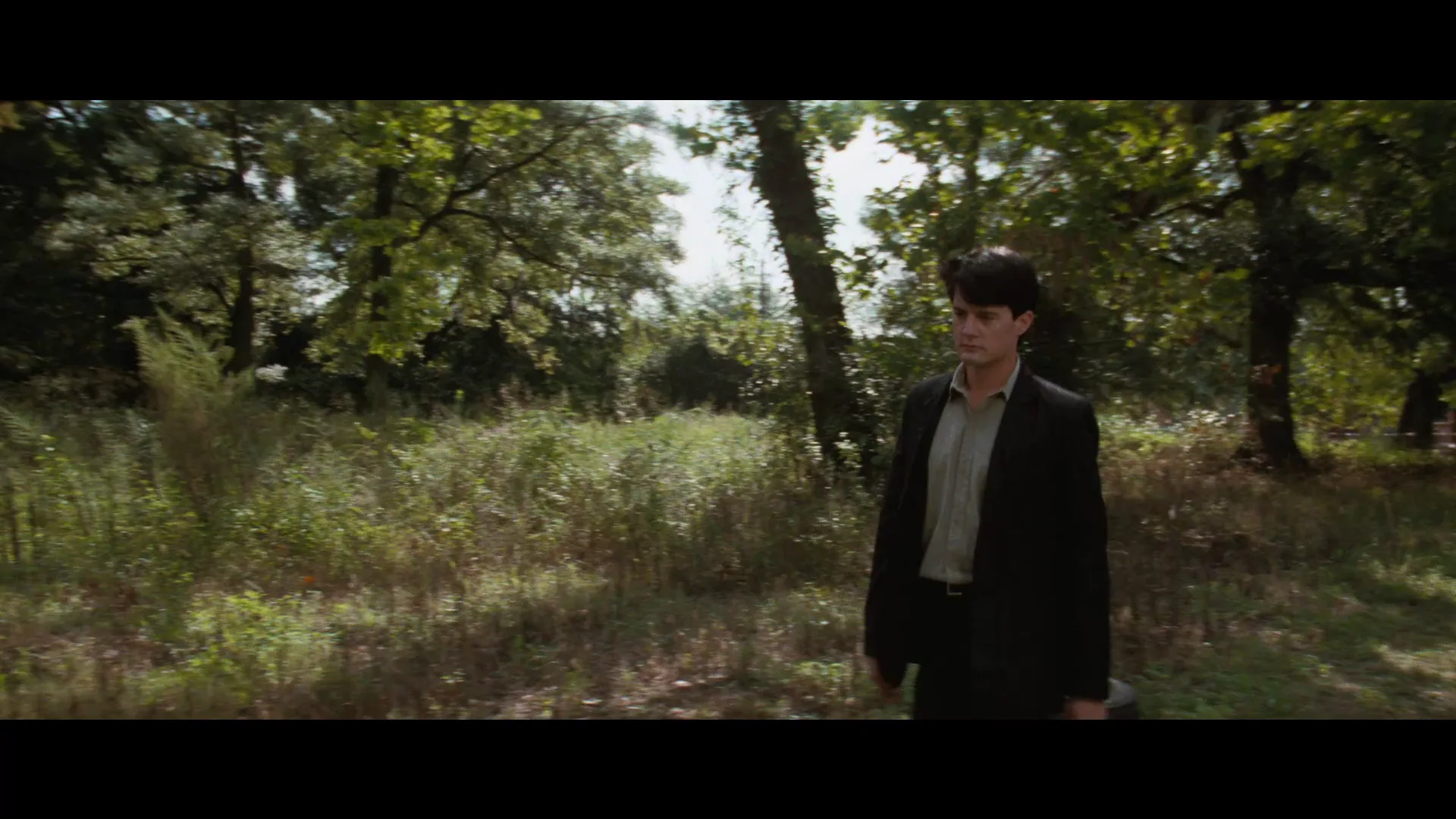
How to create a aspect ratio with AI
4 promptsThe ratio is a setting, not a prompt word: pick 21:9, 16:9 or 4:3 on the model, then write the composition the shape needs. Recipe 1 builds a scope frame, recipe 2 stages the same scene in 4:3, and recipe 3 animates the scope frame, so the shapes sit side by side on one FlashBoards board. For 1.85:1, run the prompt at 16:9 and trim the top and bottom slightly. The fourth prompt re-shoots a real film shot from a text description alone, and the original plays next to the result so you can compare.
2.39:1 anamorphic widescreen film still, wide two-shot along the counter of an empty roadside diner at night, camera at seated eye height, 40mm anamorphic lens. At the left edge of the frame a waitress in her sixties with a silver bob, heavy dark eyeliner and a mint-green uniform stands behind the counter holding a white coffee mug. At the far right edge a broad trucker in his forties with a shaved head, a thick red beard and a green flannel shirt sits hunched on the last stool. A long row of empty chrome stools stretches between them. Rain on the windows, red and blue neon reflections, warm fluorescent light, horizontal lens flare, 35mm film grain.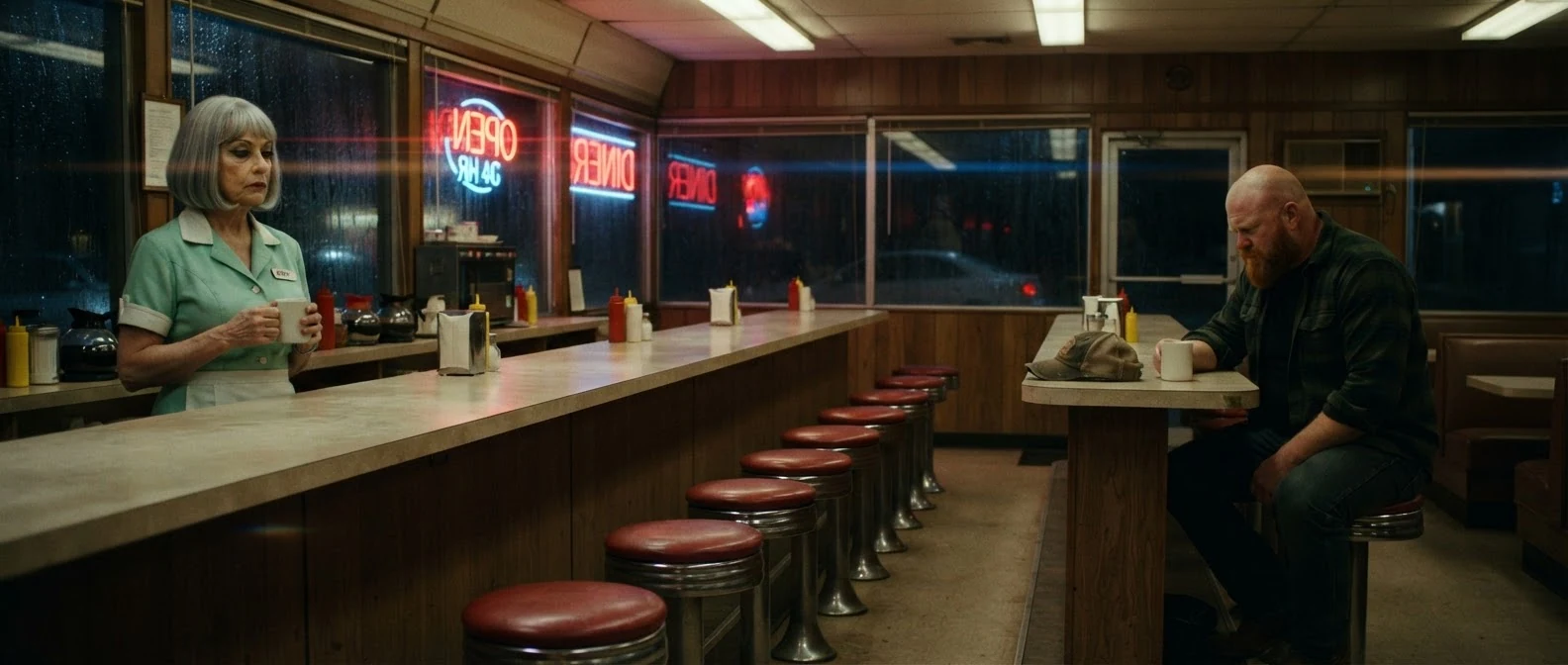
The 21:9 canvas (about 2.33:1) gives the scope shape; left edge, far right edge and a long row of empty stools between them tell the model how to spend the width, otherwise it centers both people. Anamorphic and horizontal lens flare add the scope look.
Open FlashBoards1.33:1 Academy ratio film still, tall near-square frame, the same roadside diner at night staged in depth. In the foreground a waitress in her sixties with a silver bob, heavy dark eyeliner and a mint-green uniform fills the left half of the frame in medium close-up, holding a white coffee mug, looking right. Behind her, small and softly out of focus, a broad trucker in his forties with a shaved head, a thick red beard and a green flannel shirt sits at the end of the counter. Hanging pendant lamps and a lit menu board fill the top of the frame. Spherical 35mm lens, warm fluorescent light, 35mm film grain.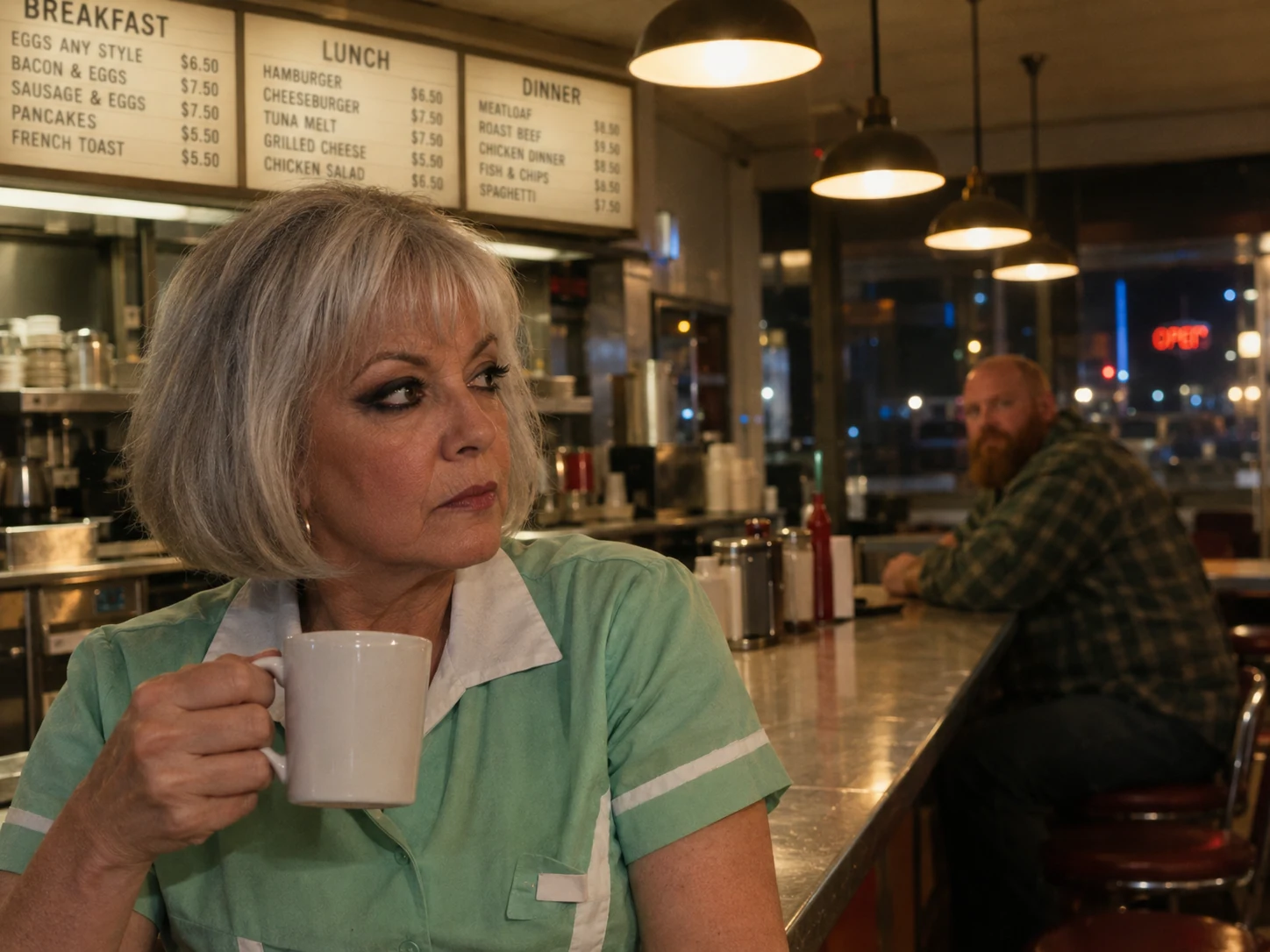
The same scene in the 4:3 shape. A narrow frame cannot hold two people at its edges, so the prompt moves them into depth: foreground and behind her, small. Pendant lamps and a menu board fill the top spend the extra height.
Open FlashBoardsCamera: locked-off wide shot at seated eye height, holding the full width of the frame for the whole clip. Action: from the first frame rain is streaking down the windows and the neon flickers on the chrome counter. The waitress sets the white mug on the counter and slides it hard to the right; it glides past the row of empty stools across the whole frame. At the end the trucker catches the mug with one hand and looks back at her along the counter.Rain is streaking and neon flickers make the shot alive from the first frame. The action is one horizontal movement across the whole frame, which is what scope is for, and locked-off stops a push-in from cropping the edges. The prompt names only what is already in the start frame.
Open FlashBoards{
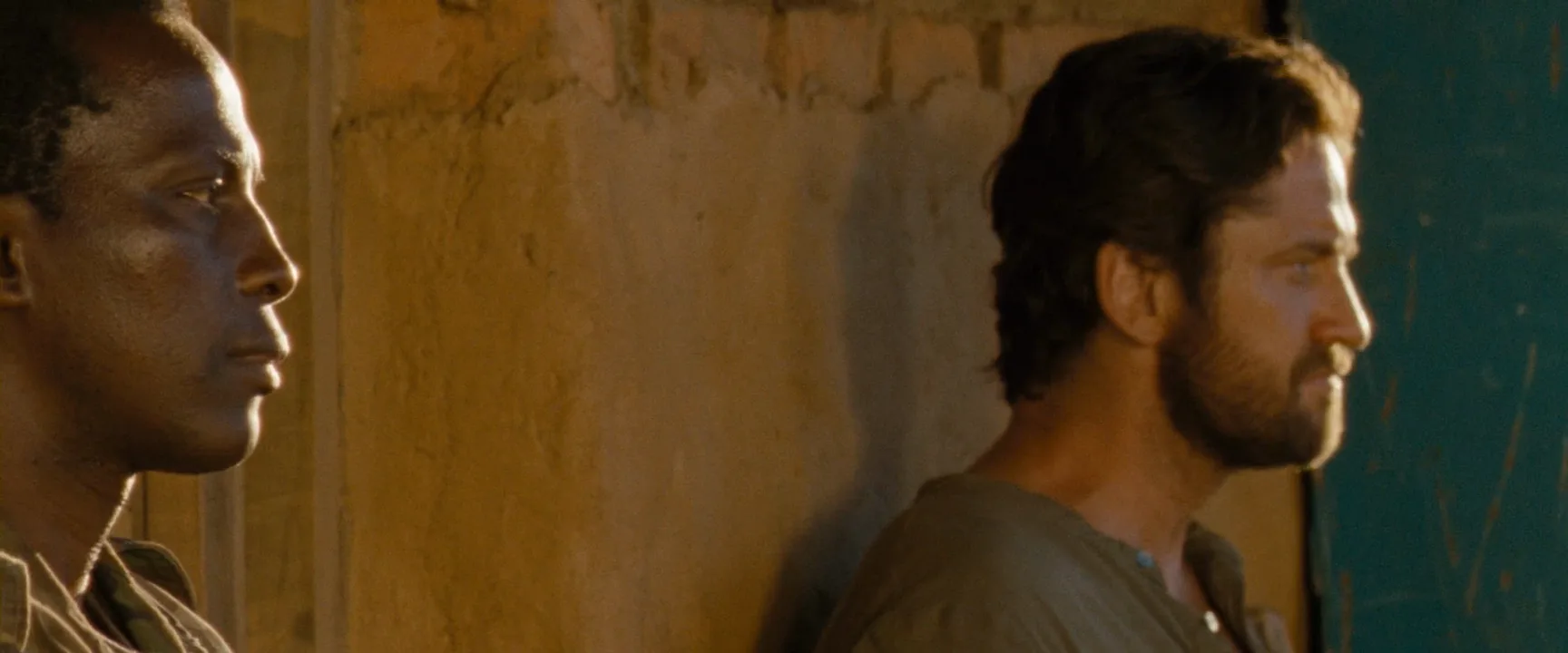
"output": "Full-screen live-action single continuous shot from Machine Gun Preacher (2011), alive from its very first frame, a 2.39:1 widescreen frame filled edge to edge. Grainy 35mm film, a dusty village compound in South Sudan in late afternoon, warm low golden sunlight from the front right, an ochre mud-plaster wall with a row of rough bricks along its top, honey and teal palette, fine dust in the air.",
"characters": {
"S1": {
"name": "Deng, played by Souléymane Sy Savané",
"look": "slim dark-skinned man in his thirties, close-cropped black hair, high cheekbones, khaki camouflage army shirt",
"voice": "silent in this shot"
},
"S2": {
"name": "Sam Childers, played by Gerard Butler",
"look": "broad white man in his early forties, tousled dark brown hair swept back, full short dark beard, sweat-stained olive-gray henley shirt with an open placket",
"voice": "silent in this shot"
}
},
"shots": [
{
"shot": 1,
"camera": "nearly static at eye level, long lens, a slow faint drift to the left; a wide close two-shot in profile that keeps both faces at the far sides of the frame for the whole shot, both faces in focus",
"voice": "silence: nobody speaks in this shot, no voice at all",
"action": [
"BEGINNING: alive from the first frame, S1 in tight profile at the far left edge of the frame, the back of his head cut by the edge, facing screen right, gazing off frame right and slightly up, lips closed, completely still; S2 in profile in the right third, his shoulder and the back of his head leaning against the sunlit mud-plaster wall, head bowed low, chin toward his chest, eyes down.",
"THEN: a long empty stretch of cracked ochre wall with S2's soft shadow fills the whole middle of the frame between them, and a weathered teal-painted door frame runs down the right edge of the frame.",
"THEN: S2 slowly lifts his head, straightens his neck and turns his face toward screen right, his eyes rising from the ground to the distance; S1 stays still, eyes fixed off frame right.",
"END: both men hold still in parallel profiles at opposite sides of the wide frame, both gazing off frame right in the same direction, S2's jaw set, the empty wall between them; the slow drift left has revealed S1's ear at the left edge."
],
"dialogue": []
}
],
"sound": {
"ambience": "warm dry breeze, distant children's voices and a rooster heard from far away",
"speech": "no words in this video; the only human sounds are breaths and movement",
"never_spoken": "no narration and no voice-over: the descriptions, performance notes and step words of this prompt are never spoken aloud",
"music": "a film score under the scene, always below the voices: sparse low strings over a soft sustained drone, slow, weary and somber",
"subtitles": "none"
}
}Remakes the profile two-shot from Machine Gun Preacher (2011), dir. Marc Forster, DP Roberto Schaefer: the scope frame, Deng and Sam Childers at opposite edges with bare wall between them, and Sam lifting his head in silence.
The 21:9 canvas sets the shape, and the prompt spends the width on purpose: Deng cut by the far left edge, Sam Childers in the right third, and a long empty stretch of wall named as what fills the middle. Nearly static with only a faint drift keeps both edges in frame.
Open FlashBoardsCommon mistakes
- "2.39:1" or "CinemaScope" in the prompt does not change the canvas; set the ratio on the model and use the words only to steer the look.
- On a 16:9 canvas, "letterbox" or "cinemascope" can make the model paint black bars into the image. Generate at 21:9 and ask for a full-bleed frame.
- In wide frames models center the subject and leave dull sides. Place people at edges or thirds and say what fills the space between.
- The canvases are close to cinema ratios, not exact: crop 21:9 slightly top and bottom for 2.39:1, and 16:9 for 1.85:1.
- In video, a slow push-in quietly reframes a scope composition; say "locked-off" or name the move.
Keep the reference frames, prompts and every generated take side by side — images and video in one canvas.
FAQ
5 questionsWhat is the best aspect ratio for a film?
There is no single best ratio. 2.39:1 suits landscapes, ensembles, action across the frame and two-shots with distance between people. 1.85:1 is the flexible default for drama and comedy, with room for standing figures and interiors. Narrow ratios like 1.37:1 make a film feel close and confined. Choose the shape that makes the key compositions read without extra cutting.
2.39:1 vs 1.85:1: what is the difference?
Both are theatrical widescreen standards. 1.85:1, called flat, is shot with ordinary spherical lenses and nearly fills a 16:9 TV. 2.39:1, called scope, is shot with anamorphic lenses or cropped from a larger sensor; it is about 30 percent wider for the same height and shows bars on a 16:9 screen. Scope favors width and separation, flat favors height.
Is 16:9 the same as 1.85:1?
Almost. 16:9 equals 1.78:1, so a 1.85:1 film on a 16:9 television either has very thin bars above and below or is trimmed slightly at the sides. Many Blu-rays and streams present 1.85:1 films at 1.78:1, a difference few viewers notice.
Why are there black bars when I watch a movie on TV?
The film is wider than the screen. A 16:9 television is about 1.78:1, while many features are 2.39:1, so the whole image is shown with bars above and below instead of cutting off the sides. That is letterboxing. Narrow films, such as 1.37:1, get bars on the left and right instead, called pillarboxing.
What aspect ratio do phones and social platforms use?
Vertical phone video is 9:16, the 16:9 frame turned on its side, and feeds also use 4:5 and 1:1. A film shot wide needs a separate vertical framing for these platforms, reframed in post or protected on set with extra frame lines, because a 9:16 crop from a 2.39:1 image keeps less than a quarter of its width.
Related terms
5- CinemaScopeFormats & Exhibition
CinemaScope was 20th Century Fox's anamorphic widescreen system, launched with The Robe (1953): a lens squeezed a wide image onto 35mm film and the projector lens unsqueezed it to about 2.35:1.
- LetterboxingFormats & Exhibition
Letterboxing shows a widescreen image on a narrower screen in full by adding black bars above and below; the vertical version, bars on the sides, is pillarboxing.
- Aspect Ratio ChangeFormats & Exhibition
An aspect ratio change deliberately widens or narrows the frame within a film — to mark a time period, a shift into memory, or a burst of spectacle as with IMAX sequences.
- IMAXFormats & Exhibition
IMAX is a large-format system of cameras, film (15-perforation 70mm), projection and theaters with huge, tall screens; its native 1.43:1 frame is why films like Dunkirk and Oppenheimer switch ratio in IMAX scenes.
- Film CompositionComposition & Framing
Composition is the arrangement of everything inside the frame — subjects, lines, shapes, light, color and empty space — to direct attention and express the meaning of a shot.
Further reading
American Cinematographer Manual (ASC Press), sections on formats and aspect ratios. John Belton, Widescreen Cinema (Harvard University Press, 1992). SMPTE and DCI specifications for digital cinema image containers.