 FlashBoards Learn
Color · Film language
Sepia Tone
Also called: sepia, sepia toning
Sepia tone is a warm brown monochrome: a black-and-white image whose shadows and midtones turn umber and whose highlights stay cream. It began as a chemical toning of photographic prints. In film today it is usually added in the grade to signal the past, memory, an old photograph or dry, dusty heat.
- What it does
- Replaces the full color range with one brown hue, so the image reads as old, remembered or sun-baked.
- Use it when
- You need a flashback, a period prologue, a dream of the past or a world drained by heat and dust.
- Watch out
- Sepia is not just a warm grade: if blues and greens survive, it reads as an orange filter, not an old print.
- Try this prompt
sepia-tone film still, warm brown monochrome, umber shadows, cream highlights, 1920s farmhouse porch, fine grain
What is sepia tone?
Sepia is a toning process, not a development process. After a black-and-white print was developed and fixed, a toner bath converted its metallic silver into silver sulfide. The image turned brown and far more resistant to fading. The name comes from cuttlefish (Sepia) ink, a similar brown pigment.
Because toning acts on the silver, shadows go deep brown while highlights stay near paper white. Silent-era film prints were toned the same way, making sepia one of the oldest tools of film color. Digitally, the term means a grade that removes color and maps luminance onto a brown scale: a pure monochromatic color scheme.
Why do filmmakers use sepia tone in movies?
Audiences read sepia as "the past" instantly. Directors use it three ways:
- Framing a story as old. Butch Cassidy and the Sundance Kid (1969) opens in sepia, like a period photograph, before moving into color.
- Marking a different world. In The Wizard of Oz (1939), the Kansas scenes were released sepia-toned, so the jump into Technicolor Oz lands as a shock.
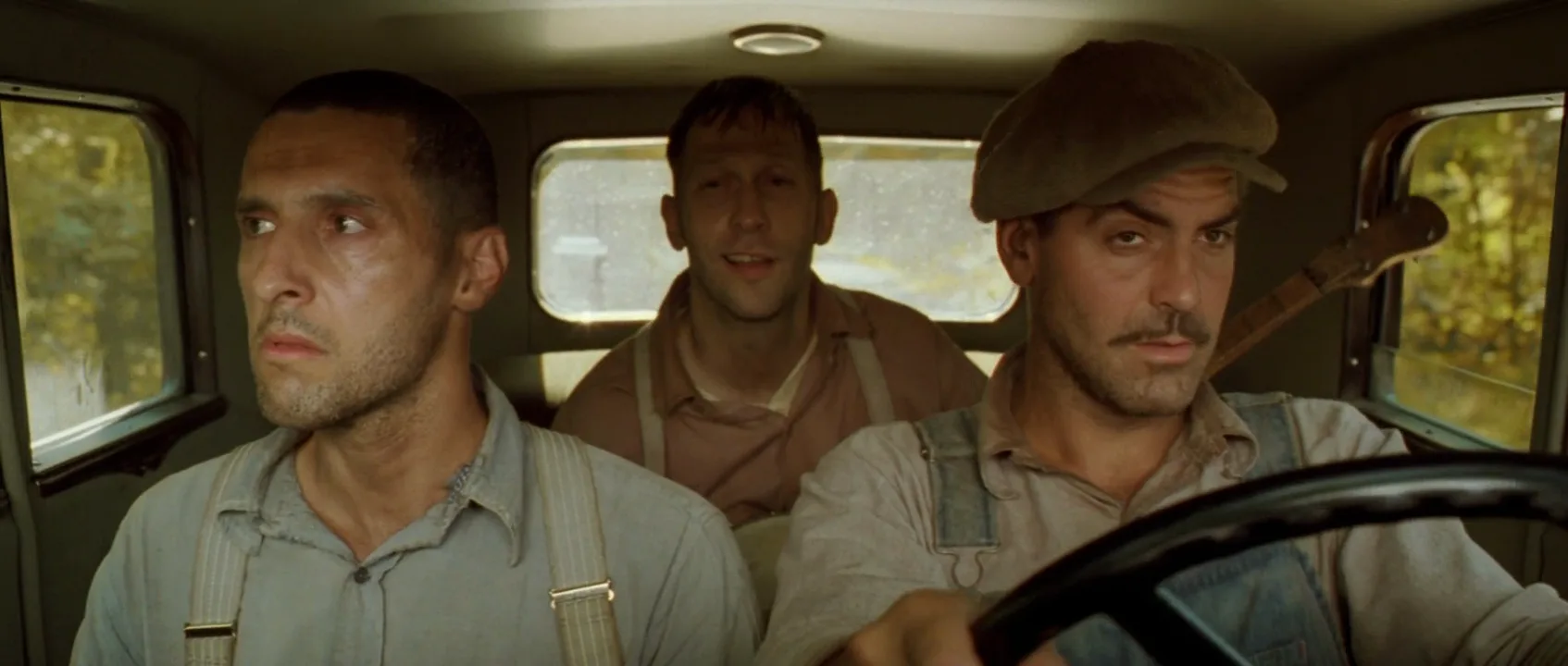
- Heat, dust and myth. O Brother, Where Art Thou? (2000) was graded digitally from start to finish so Roger Deakins could turn green Mississippi summer into dry, golden-brown land.
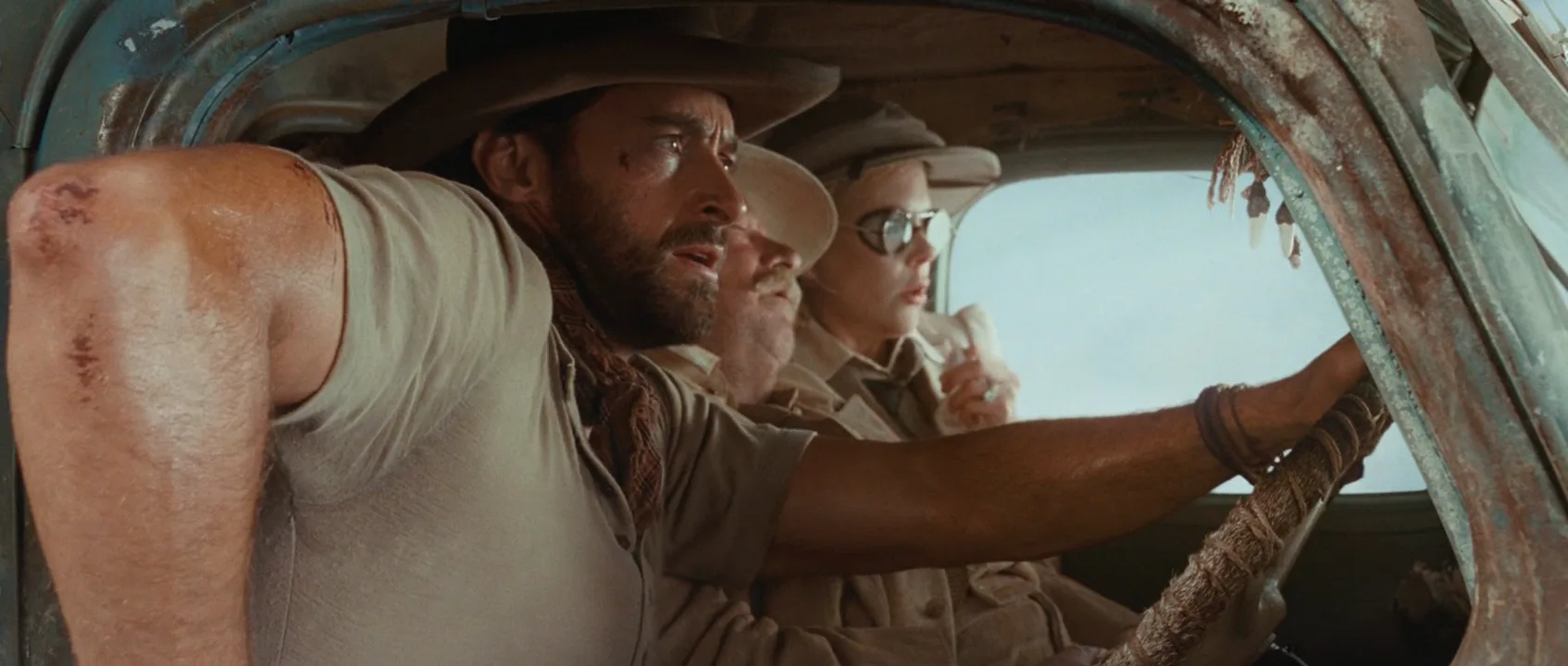
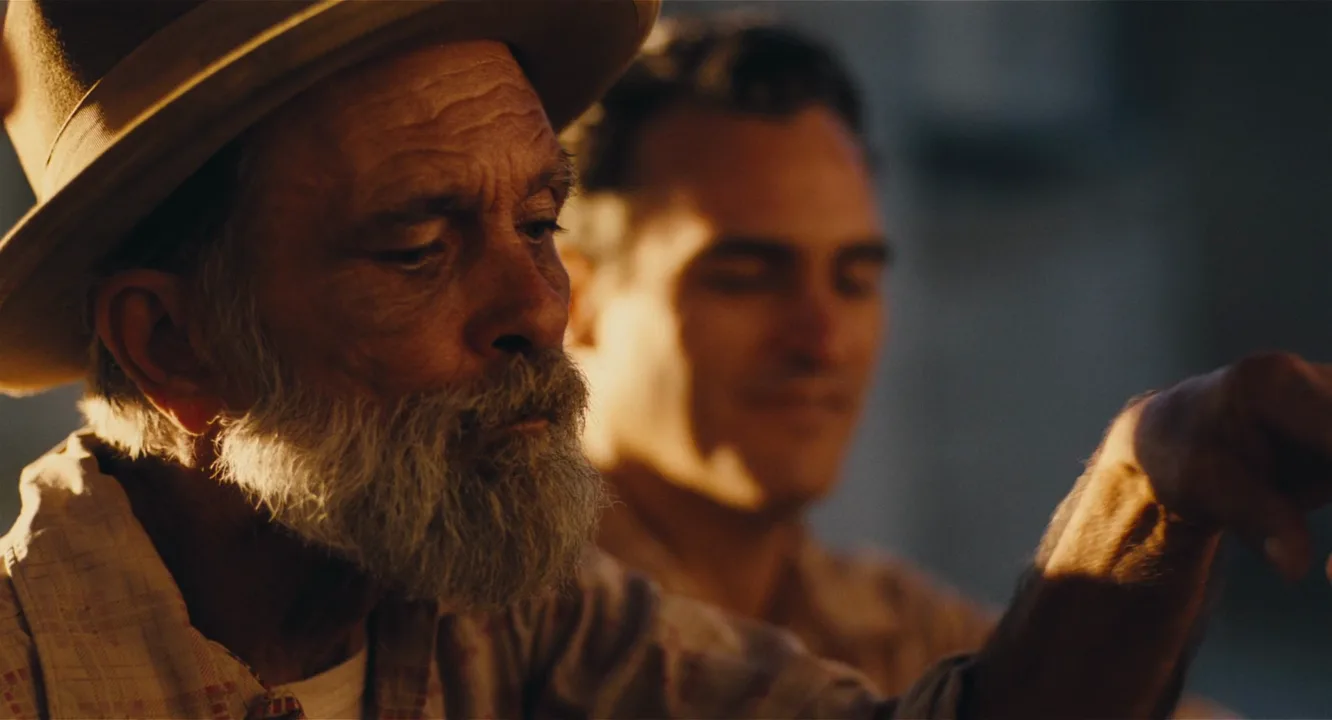
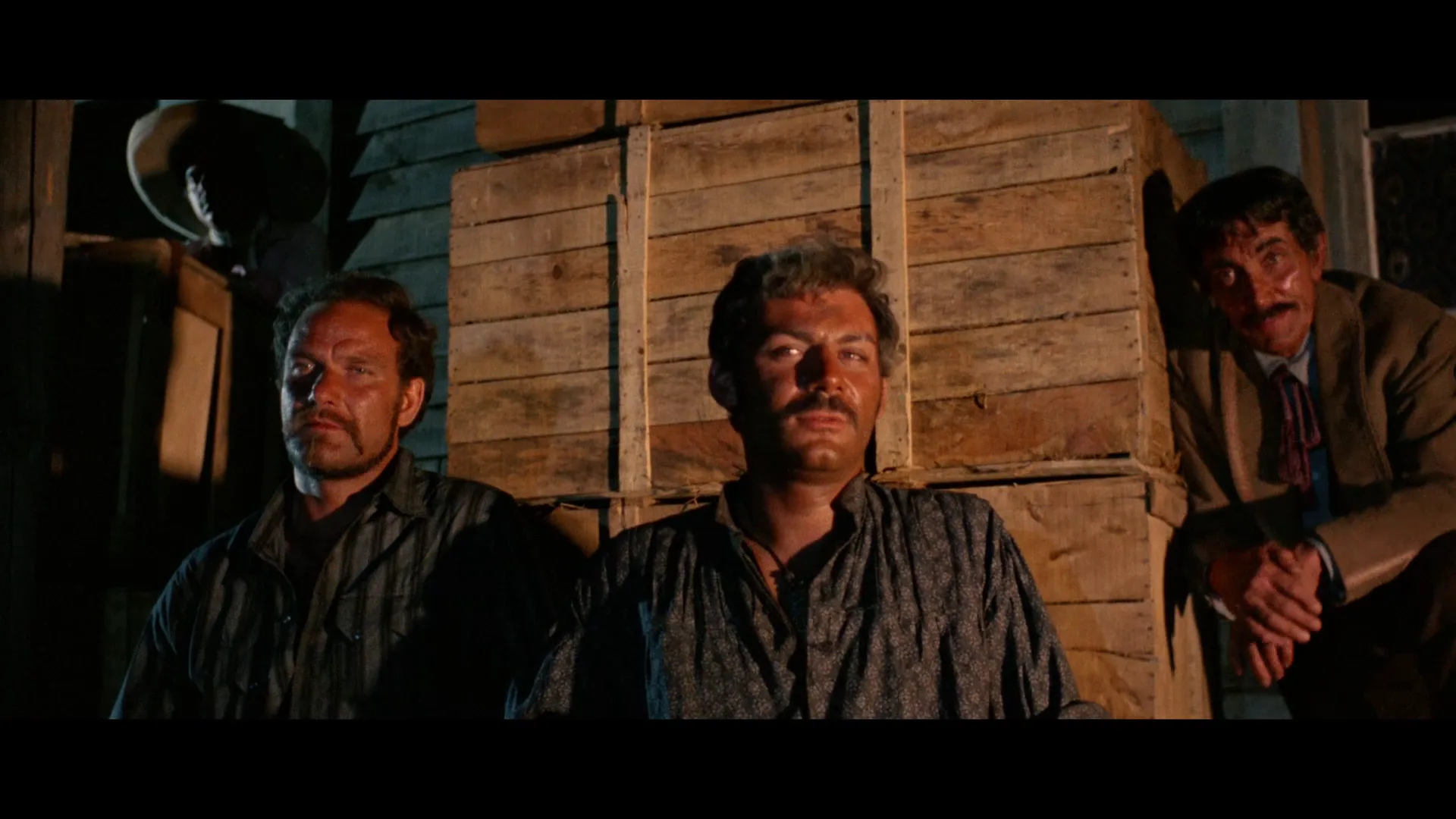
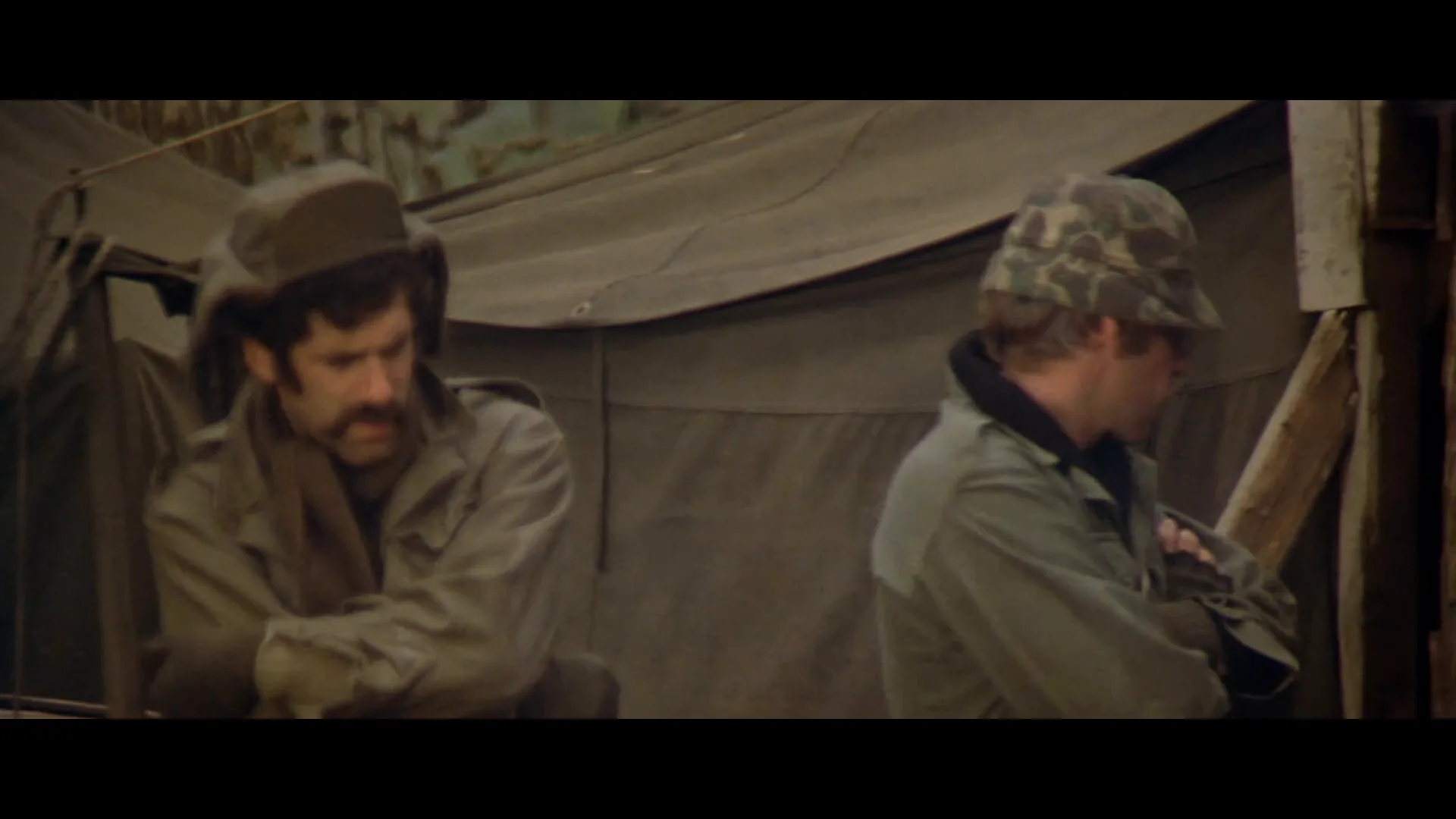
With hue gone, the image feels seen from a distance, which suits memory and legend. The test for true sepia: if a blue shirt or green leaves survive, you have a warm color palette or a desaturated look, not a brown monochrome.
How to get a sepia film look
Shoot in color and make the sepia in the grade.
On set. Sepia throws away hue, so separation must come from brightness and texture. Light for contrast: a 4:1 to 8:1 key-to-fill ratio and backlight. Build the design from wood, leather, linen, rust and dust; saturated blue and green props turn to muddy grey.
In the grade.
- Desaturate to roughly 0–15%.
- Set contrast on the monochrome image: this is where the look lives.
- Tint shadows and midtones orange-brown (hue around 30–40°), with less tint in highlights so they stay cream, not yellow.
- Lift blacks slightly for an aged print, or keep them dense for a harder look.
- Add fine grain and a soft vignette.
For a full vintage film look, add gate weave, softer optics and a period aspect ratio.
Sepia tone vs. film tinting
Silent-era labs colored prints in two opposite ways.
- Film tinting dyed the film base, so the highlights took the color: blue for night, amber for lamplight, red for fire. Shadows stayed black.
- Toning, including sepia, changed the silver image itself, so shadows and midtones took the color while clear areas stayed pale.
Labs sometimes combined both. In the grade, tinting is a wash over the image or its highlights; sepia is color mapped into the shadows. Adding real colors back object by object is a different craft: colorization.
Sepia Tone examples in film
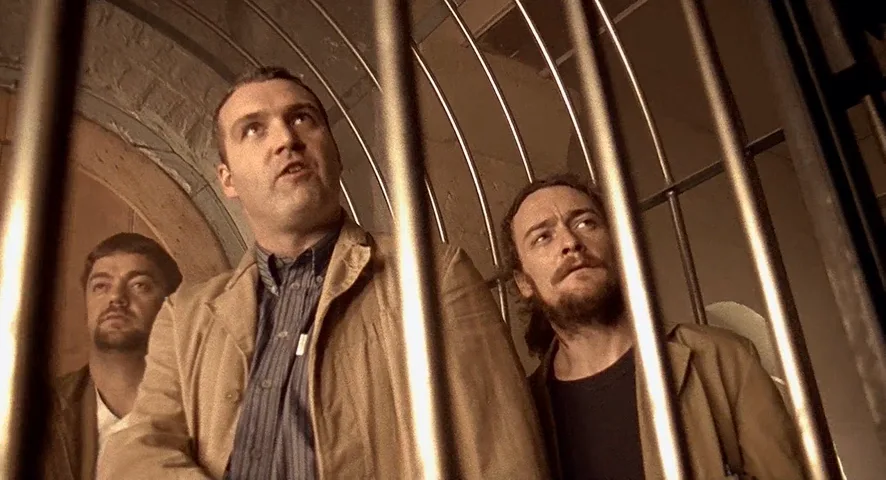
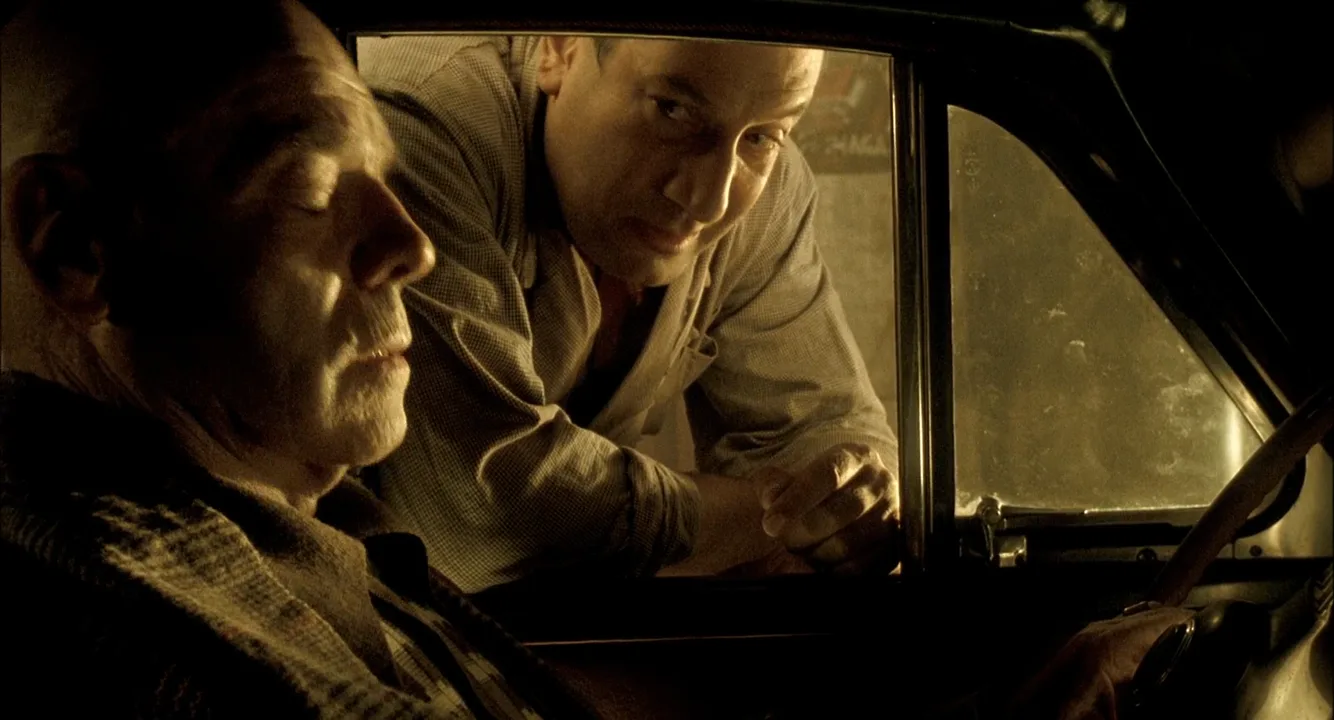
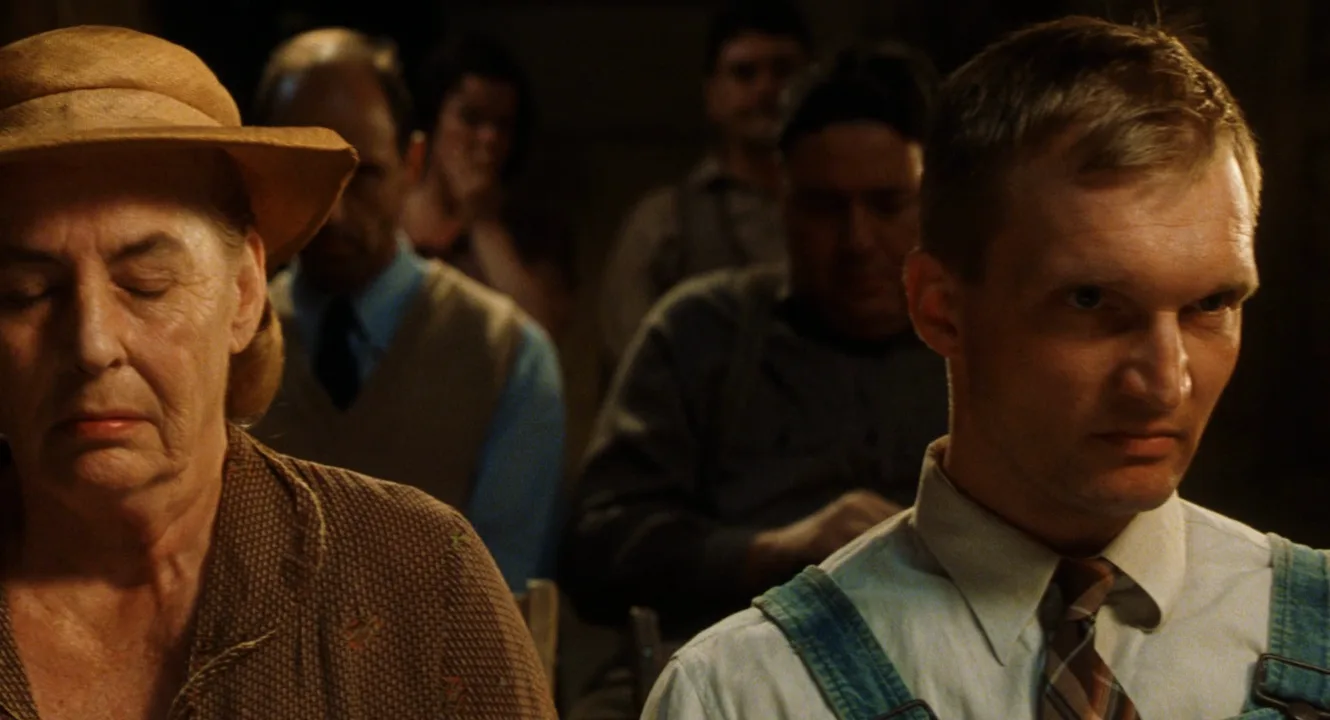
8 framesThe closer faces, clothes and background come to one brown family, the more a frame reads as sepia rather than simply warm.
How to create a sepia tone with AI
4 promptsModels often read "sepia" as a warm color photo. Name it as a toned print, say every object is rendered in shades of brown, and describe highlights and shadows. Keep references and takes on one FlashBoards board to spot which take still leaks color. The fourth prompt re-shoots a real film shot from a text description alone, and the original plays next to the result so you can compare.
Sepia-tone film still, warm brown monochrome like a toned silver print: every object in shades of umber, brown and cream. Medium shot of a wiry woman in her sixties with a long grey braid, a crooked nose, deep sun lines and a gap between her front teeth, wearing a heavy leather apron over a linen shirt, standing in the open doorway of a wooden barn at noon. Hard sunlight on her face, the barn behind her in deep brown shadow, dust in the air. 35mm lens at chest height, fine grain, soft vignette, 1920s rural America.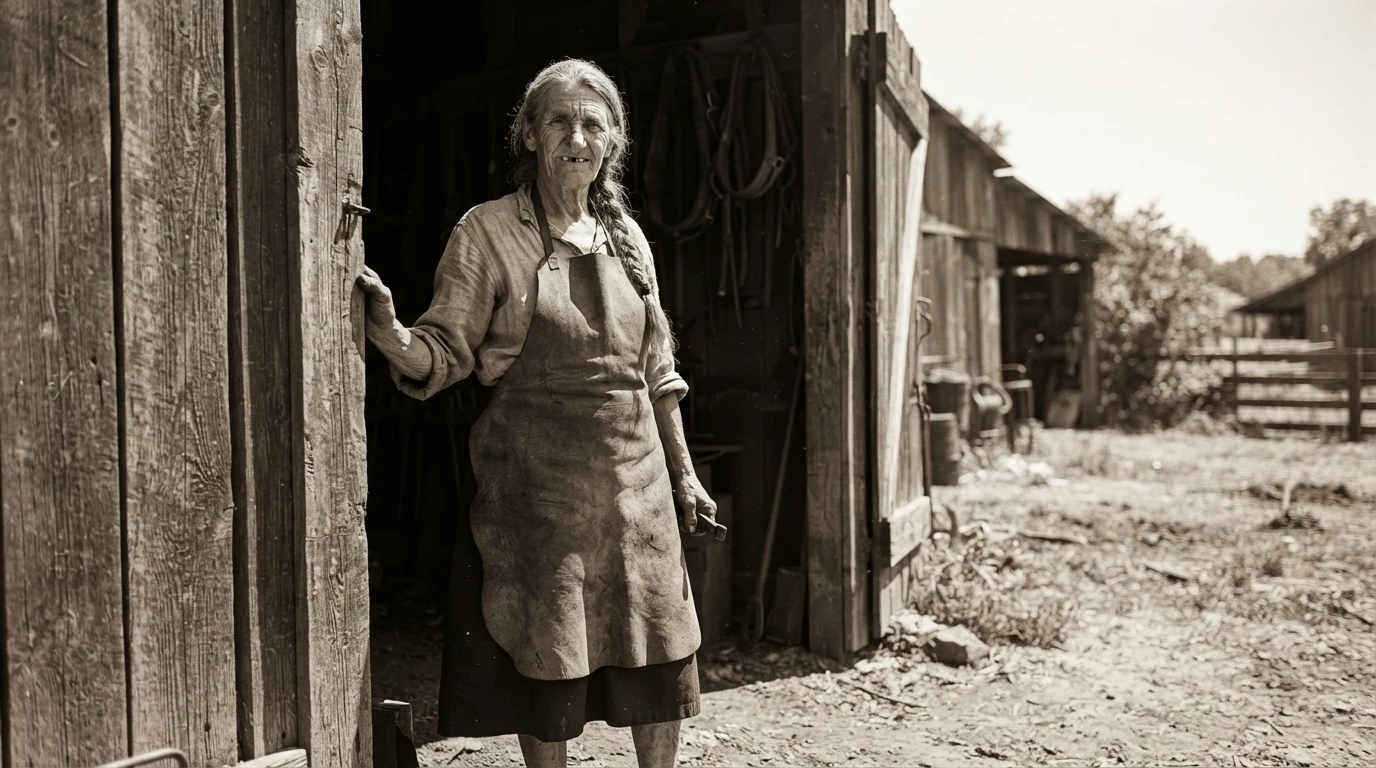
"Toned silver print" and "every object in shades of umber, brown and cream" force a true monochrome. Hard noon light against the dark barn gives the luminance contrast that carries the image once hue is gone.
Open FlashBoardsFull-bleed widescreen sepia film still, brown monochrome with cream sky and dark umber shadows. A lonely 1930s gas station on a flat prairie in late afternoon: one hand-cranked fuel pump, a wooden shack with a tin roof, a dirt road to the horizon. A stocky young man with a shaved head, thick eyebrows and a split lower lip leans on the pump in oil-stained overalls, small in the frame. Wide shot, 28mm lens at eye level, long shadows, soft vignette, fine grain, like an old toned print with clean square edges.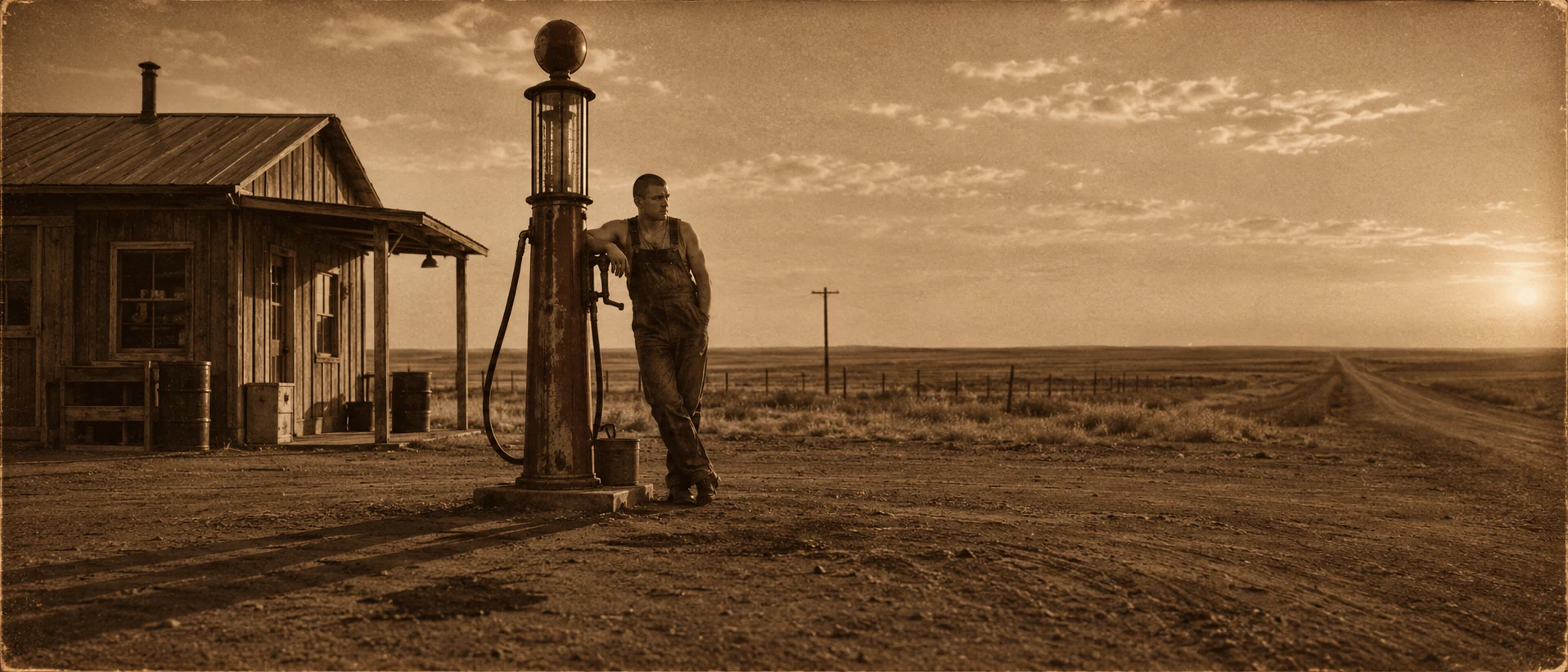
A wide shot adds sky, the part models most often leave blue; calling it "cream" keeps it in the sepia range, and "full-bleed" with "clean square edges" keeps the age in the tone and grain, not in worn paper corners.
Open FlashBoardsSepia brown monochrome throughout. Camera: slow dolly-in at chest height, from medium shot to medium close-up over the whole clip. Action: The woman is already wiping her hands on the leather apron as dust drifts through the sunlight. She steps out of the barn doorway into full sun, squints and lifts her chin toward the lens. She stops and holds still, a faint smile showing the gap in her teeth.Hand-wiping and drifting dust start on the first frame, so the shot is alive at once; restating "sepia brown monochrome" keeps the clip from drifting back to color.
Open FlashBoards{
"output": "Full-screen live-action shot from O Brother, Where Art Thou? (2000), alive from its very first frame: one continuous shot, no cuts. Digitally graded sepia like a hand-toned print: skin, shirts, caps and the car's roof lining all in shades of tan, brown and umber, the sunlit leaves in the side windows drained to dry olive-gold, the rear window blown out to cream. Hazy summer daylight, soft dark vignette, fine 35mm grain, 1930s rural Mississippi.",
"characters": {
"S1": {
"name": "Pete Hogwallop, played by John Turturro",
"look": "front passenger on the left of frame: lean, sunburnt narrow face, short dark hair, pale collarless work shirt buttoned to the neck, wide suspenders",
"voice": "silent in this shot, lips stay closed"
},
"S2": {
"name": "Everett, played by George Clooney",
"look": "the driver on the right of frame behind a big black steering wheel: pencil moustache, brown tweed newsboy cap, grey work shirt, dark jacket",
"voice": "silent in this shot, lips stay closed"
},
"S3": {
"name": "Delmar O'Donnell, played by Tim Blake Nelson",
"look": "in the middle, a little further back between the other two: thin face, short slicked dark hair, brown shirt",
"voice": "silent in this shot, lips stay closed"
},
"V1": {
"name": "an old man, never seen",
"look": "never on screen",
"voice": "reedy old man's voice, off-screen"
},
"V2": {
"name": "women singing, never seen",
"look": "never on screen",
"voice": "soft women's voices in close harmony, heard from outside the car"
}
},
"shots": [
{
"shot": 1,
"camera": "car-mount rig on the hood looking back through the windscreen at the front seat: wide-medium three-shot at eye level, slightly wide lens, locked to the car with only a faint road sway; the car rolls forward at a slow steady speed and trees slide past in both side windows",
"action": [
"BEGINNING: alive from the first frame, the car already rolling down a wooded dirt road; Pete on the left of frame sits upright staring just past the lens with wide, unblinking eyes; Everett on the right holds the wheel low with both hands and looks straight ahead down the road; Delmar in the middle behind them gazes ahead, face half in shade.",
"THEN: Pete turns his head toward the left of frame and stares out his side window, brow drawn together, listening.",
"THEN: Everett's eyes slide toward the left of frame, then he turns his head to look across at Pete, brows lowered, both hands still on the wheel.",
"THEN: Delmar leans forward into the light between them, looking ahead, mouth slightly open.",
"THEN: Everett turns back to face the road with a faint knowing smile under his moustache; Pete keeps looking up and out of the left window.",
"THEN: the car passes into deep tree shade and the whole cab darkens; Delmar turns his head sharply toward the right side window behind Everett.",
"END: Pete turns back toward the lens, eyes wide and uneasy; Everett glances to the right of frame out of his own window; Delmar stays craned toward the right; all three listening, lips closed."
],
"dialogue": [
{
"speaker": "V1",
"on_screen": false,
"when": "only at the very first frame, cut off at once",
"delivery": "the tail of a sung phrase, clipped",
"line": "<d>[English] In the mornin'</d>"
},
{
"speaker": "V2",
"on_screen": false,
"when": "near the end, as the car passes into the tree shade and Delmar turns his head, running on past the last frame",
"delivery": "sung softly, a slow a-cappella lullaby",
"line": "<d>[English] Go to sleep, you little baby</d>"
}
]
}
],
"sound": {
"ambience": "steady rumble of an old car engine, tyres on a dirt road, leaves hissing past, heard from outside",
"speech": "exactly these phrases, each heard once, in this order; nobody inside the car speaks",
"never_spoken": "no narration and no voice-over: the descriptions, performance notes and step words of this prompt are never spoken aloud",
"music": "a film score under the scene, always below the voices: a low, slow fiddle-and-guitar drone of old-time Southern folk",
"subtitles": "none"
}
}Re-shoots the hood-mounted car three-shot from O Brother, Where Art Thou? (2000), dir. Joel Coen and Ethan Coen, DP Roger Deakins, carrying over the framing, each man's glance and the drained olive-gold sepia grade.
Naming the film and spelling out the grade as a hand-toned print (skin, shirts and roof lining in tan and umber, leaves drained to olive-gold) carries the sepia look; timed head turns keep the three-shot alive for all nine seconds.
Open FlashBoardsCommon mistakes
- Warm photo instead of sepia. Blue sky and green grass survive. Write "every object in shades of brown" and give the sky a cream value.
- Golden, not brown. "Golden" pushes toward yellow. Use "umber, brown, cream" and "toned print".
- Borders. "Old photo" can add torn corners. Ask for a "full-bleed film still".
- Muddy image. Describe a hard key and deep shadows.
- Color returning in video. Open the video prompt with "sepia brown monochrome" too.
Keep the reference frames, prompts and every generated take side by side — images and video in one canvas.
FAQ
5 questionsWhat does sepia tone mean?
Sepia tone is a brown monochrome image. Originally it meant black-and-white prints bathed in a toner that turned the silver brown. Today it usually means a digital effect that removes color and tints the picture brown, with umber shadows and cream highlights.
Why are old photos sepia?
Many were deliberately toned. The sepia bath turned image silver into far more stable silver sulfide, so prints lasted longer and turned warm brown. Because toned prints survived while many untoned ones faded, brown became the color we associate with old photography.
Is The Wizard of Oz in sepia?
The Kansas scenes of The Wizard of Oz (1939) were printed in sepia tone for the original release, though many later prints and broadcasts showed them in plain black and white. The brown Kansas sets up the switch to full Technicolor when Dorothy opens the door to Oz.
What is the difference between sepia and black and white?
Both are monochrome, built only from lightness. Black and white maps that lightness onto neutral greys; sepia maps it onto browns, from umber to cream. Sepia feels warmer and older. A sepia grade is usually a black-and-white grade with a brown tint on top.
How do you make a sepia look in editing?
Desaturate the clip almost completely, set contrast on the monochrome image, then tint shadows and midtones brown with a lighter tint in the highlights. Most editing tools have a tint, colorize or color-balance control for this. Finish with fine grain and a soft vignette for an aged-print feel.
Related terms
5- Monochromatic Color SchemeColor
A monochromatic scheme builds the image from a single hue in different shades and tints — an all-red room, an all-green world — so meaning comes from lightness and texture rather than color contrast.
- ColorizationPost-Production & VFX
Colorization adds color to black-and-white footage, once by hand-painting frames and now digitally frame by frame or with AI models.
- Desaturated LookColor
A desaturated look drains color intensity across the frame without going fully black-and-white, giving a muted, cold, war-weary or documentary feel.
- Vintage Film LookPost-Production & VFX
A vintage look stylizes new footage to resemble film or video of a past era — grain, faded or shifted color, soft optics, light leaks, gate weave, period aspect ratio and frame rate.
- Warm Color PaletteColor
A warm palette is dominated by reds, oranges, ambers and yellows; it usually reads as intimacy, nostalgia, heat, comfort — or, pushed hard, danger and sickness.
Further reading
Paolo Cherchi Usai, Silent Cinema: An Introduction (BFI) — sections on tinting and toning of release prints. Eastman Kodak, Tinting and Toning of Eastman Positive Motion Picture Film — the studio-era lab handbook on toning baths.