 FlashBoards Learn
- Learn
- Composition & Framing
- Center Framing
Composition & Framing · Film language
Center Framing
Also called: central framing, centered framing, center composition
Center framing places the subject on the vertical center line of the frame, so the eye lands on it instantly and nowhere else. It reads as dominance, confrontation, isolation or formal control. Unlike symmetry, only the subject must sit on the axis; the two sides of the frame can differ completely.
- What it does
- Gives one subject total visual priority and a still, formal, often confrontational weight.
- Use it when
- A character faces the audience, stands apart from a crowd, or is trapped by the space around them.
- Watch out
- Used for every shot it turns static and airless; save it for beats that need weight.
- Try this prompt
centered composition, woman standing dead center on the vertical center line, facing camera, camera square to her at eye height, 35mm, empty corridor
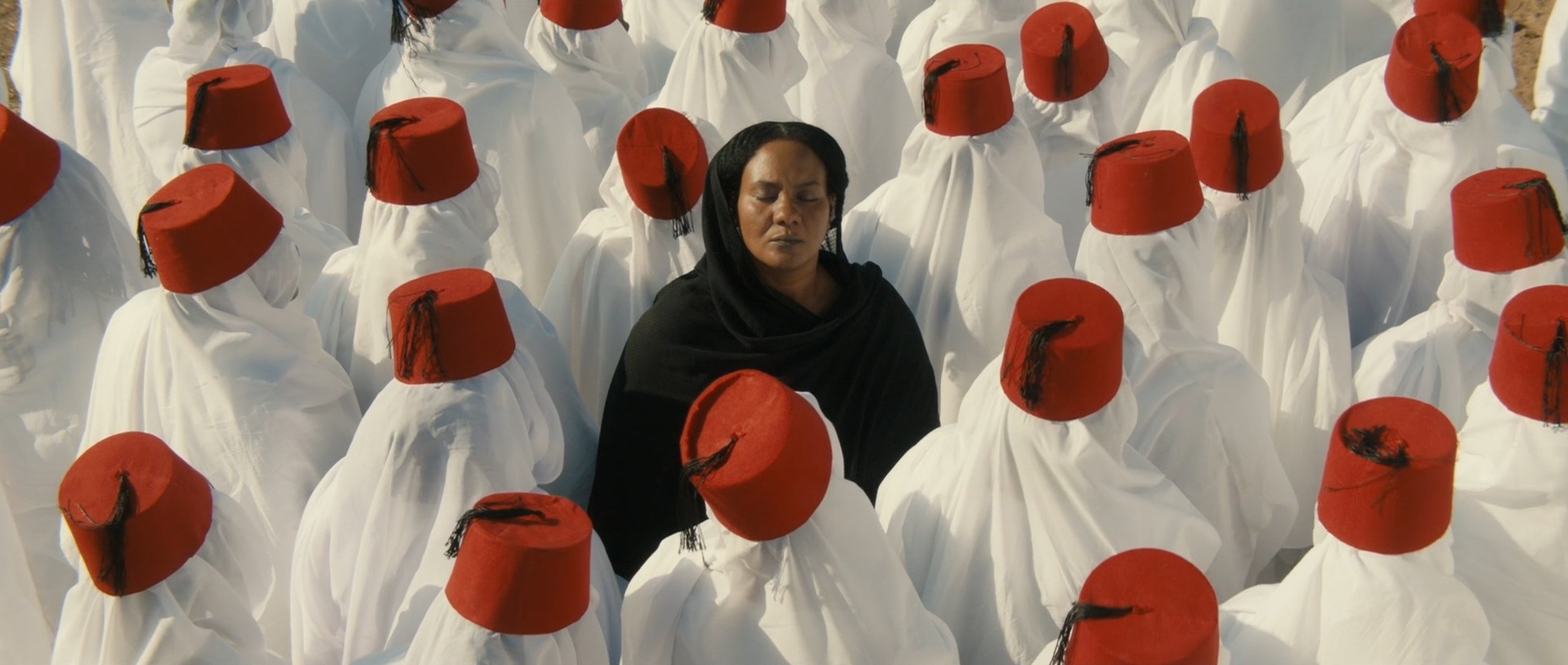
What is center framing?
Center framing — also called centered or central framing — puts the main subject on or very near the vertical center line of the frame, where the gaze rests first. It is a basic composition decision, and a deliberate one, because modern coverage habits pull subjects off center.
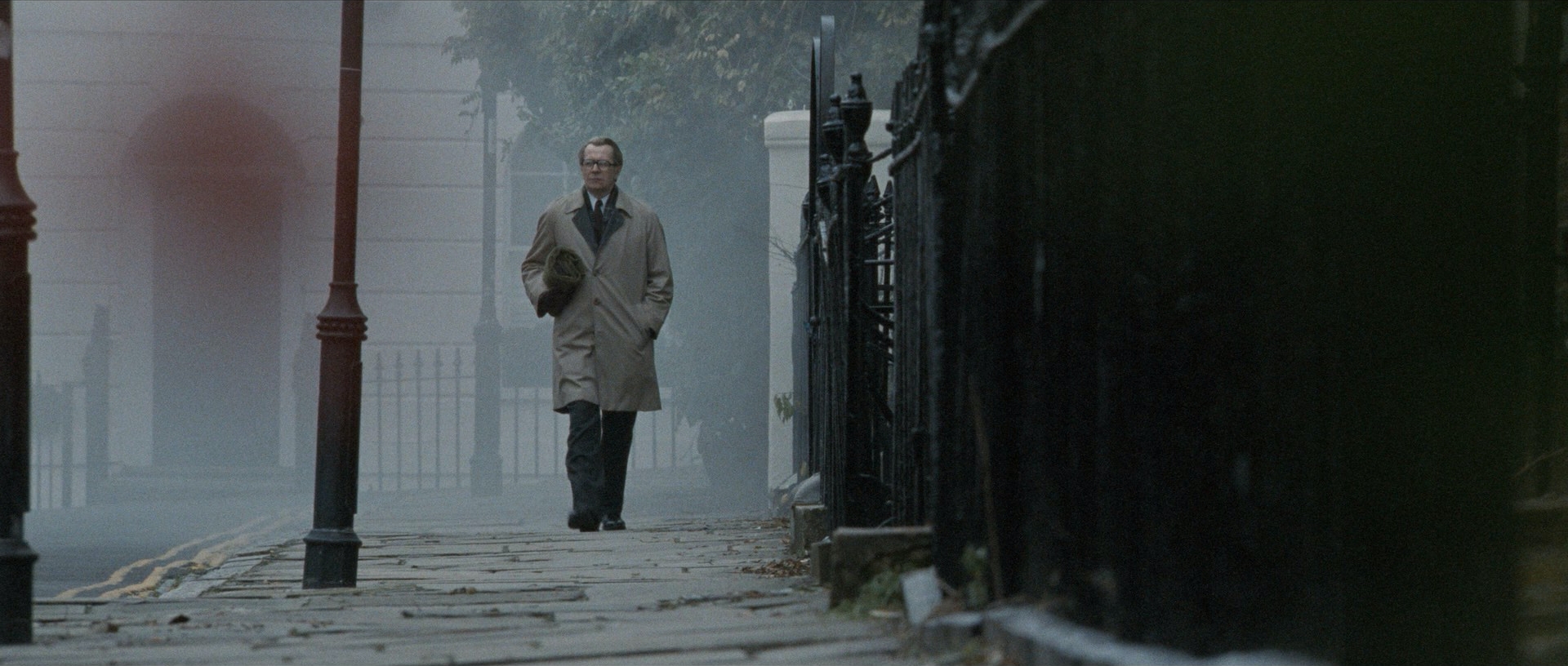
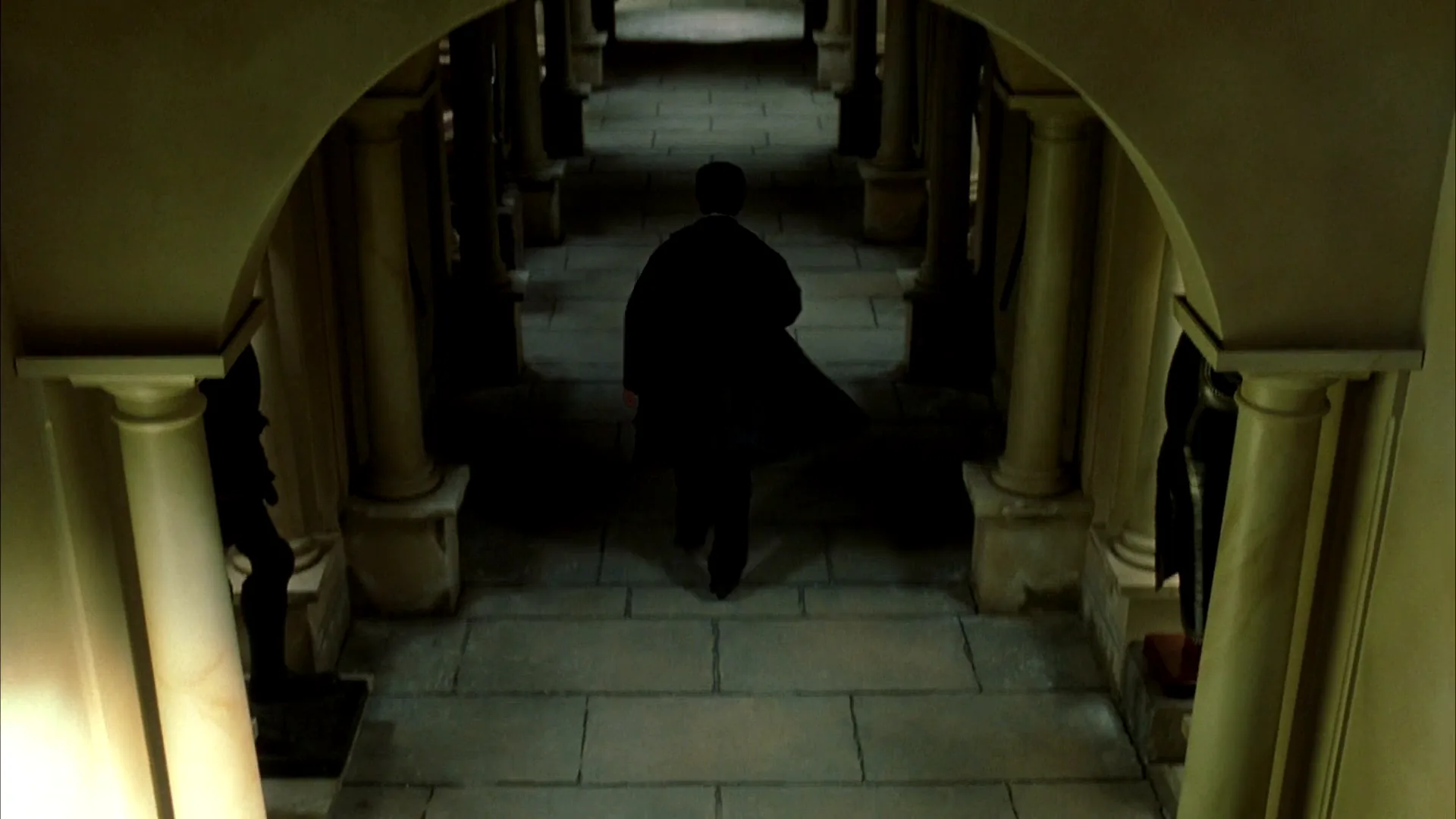
The definition is about the subject, not the whole picture. A man walking down the middle of a foggy path, a lamppost on his left and an iron fence on his right, is center framed although nothing mirrors. Height is separate: the head can be centered left to right while the eyes stay in the upper third. The camera is often square to the subject, as in a head-on shot, but a figure walking away can be centered just as firmly.
Why do filmmakers center the subject?
With no lead room hinting where the story goes next, a centered shot feels like a statement.
- Confrontation. Jonathan Demme's frontal, centered close-ups in The Silence of the Lambs (1991) put the viewer in the interrogation chair.
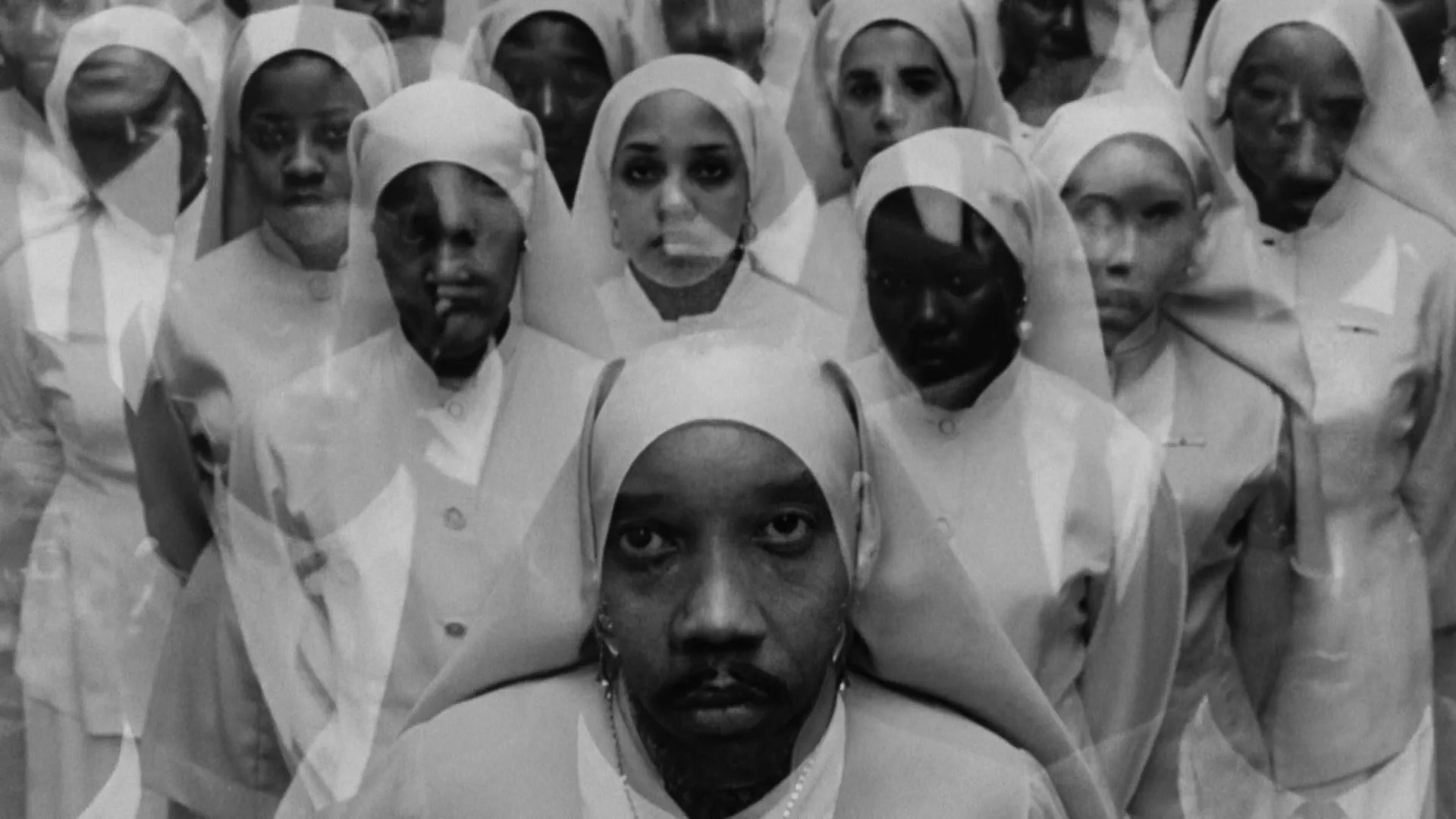
- Selection. One figure in the middle of many is chosen for the viewer, especially with contrast in color or focus.
- Entrapment. A small figure dead center in a wide frame is surrounded by space — unlike negative space left open on one side.
- Control. Stanley Kubrick centered figures in one-point perspective in The Shining (1980); Wes Anderson builds whole films on centered characters.
The cost is energy. A film that centers everything loses the tension of shifting visual balance, so save it for beats that need to land.
How to shoot a centered composition
- Use the center cross. Put the bridge of the nose or the figure's spine on the monitor's center marker; small drift reads as a mistake.
- Square the camera. Align the lens with the subject's axis and keep it level. In deep sets, hide the vanishing point behind the head.
- Pick the lens. 18–25mm in a corridor makes everything converge on the figure; 50–85mm at eye height gives a frontal portrait with a soft background.
- Keep headroom. Center horizontally, not vertically — eyes near the upper third.
- Block into the center. An actor walks into the middle and stops.
- Light for separation. A brighter patch behind the head, a rim light or a unique costume color locks the eye on the axis.
Center framing vs. symmetry
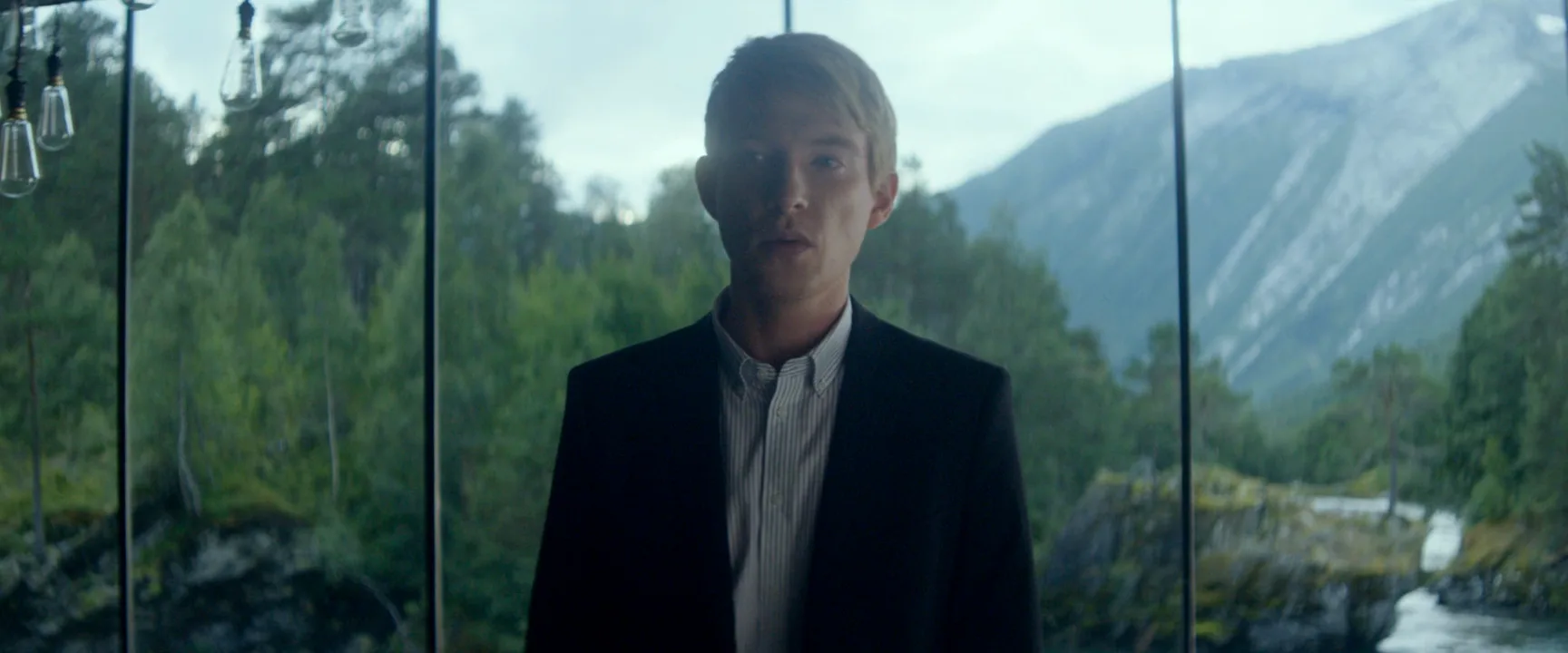
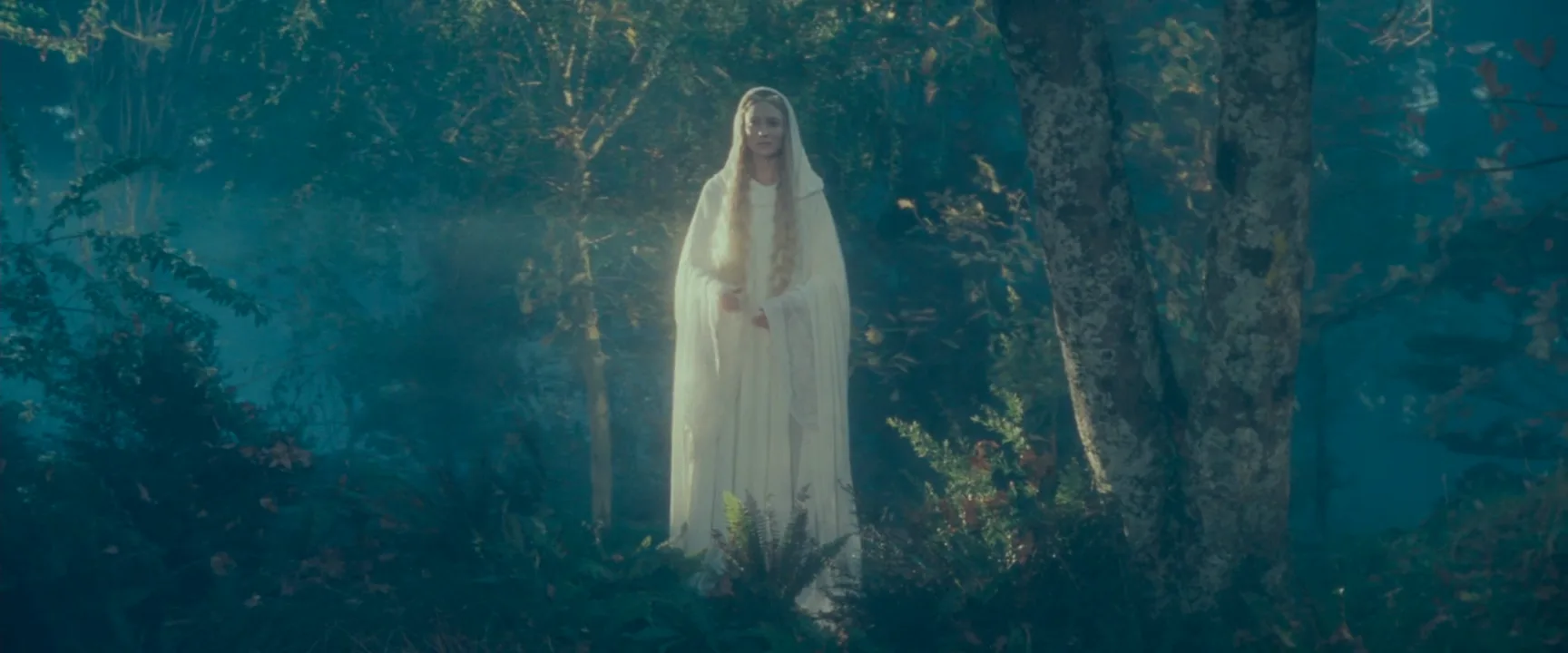
Perfect symmetry usually has something on the center line, so the two get confused. Symmetry needs the left and right halves to mirror each other; center framing needs only the subject on the axis. A face centered before a window, forest on one side and mountain slope on the other, is centered but not symmetrical, and feels natural rather than designed. Mirror the architecture and it moves toward a staged tableau shot.
Center framing vs. the rule of thirds
The rule of thirds sets subjects off center so eyelines and cuts flow — the default for coverage. Centering breaks that flow on purpose: cut from thirds to a centered close-up and the character seems to turn from the conversation to the audience, often at a confession, threat or decision.
Center Framing examples in film
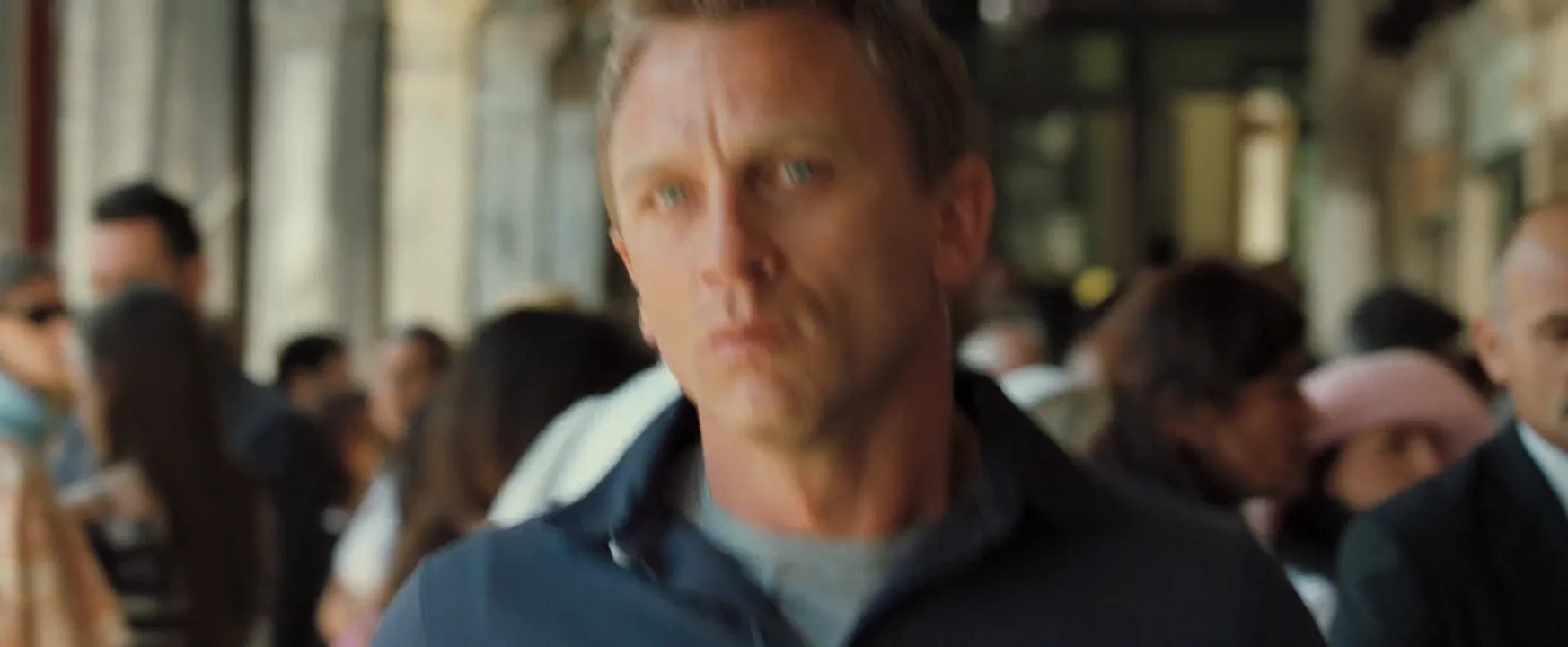
9 framesNine frames with the subject on the center line — note how often the sides don't match.
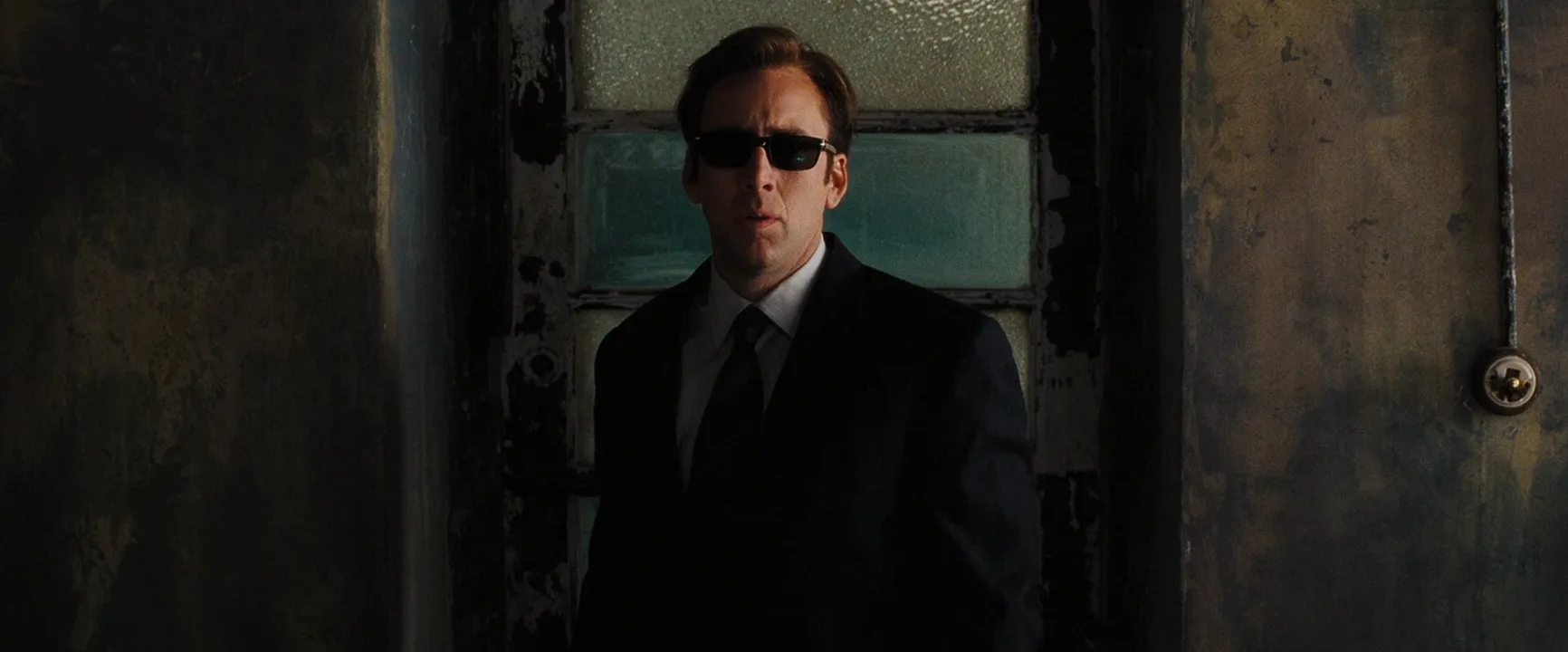
How to create a center framing with AI
4 promptsImage models drift toward thirds or full symmetry, so state the geometry: dead center, on the vertical center line, camera square to the subject. In FlashBoards, keep these frames, your takes and the animated shot on one board and compare them side by side. The fourth prompt re-shoots a real film shot from a text description alone, and the original plays next to the result so you can compare.
Centered composition, cinematic film still. A woman in her late fifties with a silver buzz cut, a thin scar through her left eyebrow and a mustard wool coat stands dead center in an empty tiled subway corridor, facing the camera, face on the vertical center line, eyes in the upper third. Left wall: dented gray lockers. Right wall: bare concrete. The corridor's vanishing point hides behind her head. Camera square to her at eye height, 35mm lens, flat fluorescent top light, cold green-gray palette.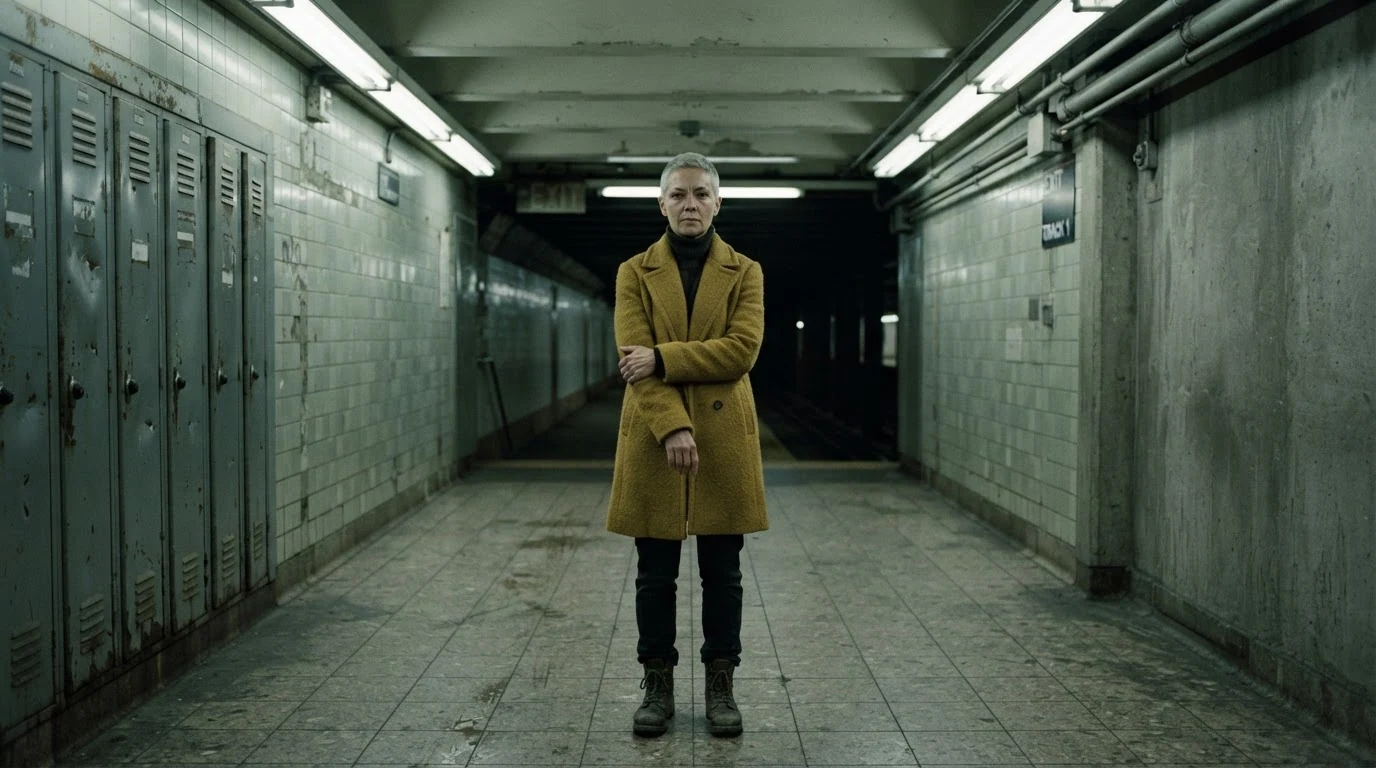
Dead center, on the vertical center line and camera square to her pin her to the axis; the hidden vanishing point makes the corridor lead into her. Different walls keep it centered, not symmetrical.
Open FlashBoardsAnamorphic film still, centered framing in a crowd. A teenage boy with a shaved head, a gap between his front teeth and a bright orange raincoat stands perfectly still dead center, looking into the lens. Commuters in dark gray coats rush past on both sides, motion-blurred, on a rainy city crossing. 85mm lens at his eye height, shallow depth of field, overcast light.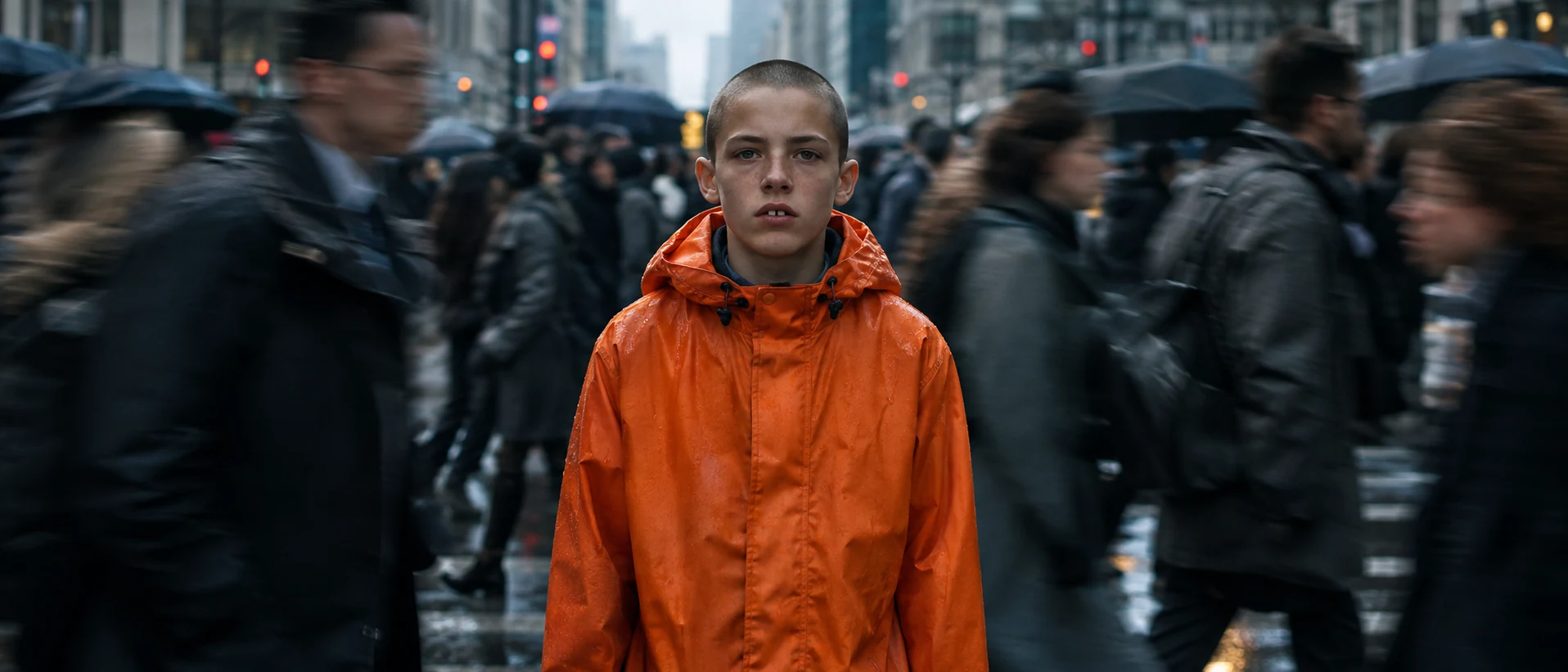
The wide frame fills both sides with blurred movement, so the one still, sharp, orange figure on the axis is chosen for the viewer — the logic of the crowd frames above.
Open FlashBoardsCamera: slow, steady dolly back along the corridor, perfectly level, keeping the woman locked on the vertical center line; near the end the camera slows and she closes in to a medium shot, still dead center. Action: She is already walking toward the camera, coat swinging, fluorescent tubes flickering overhead. Halfway she lifts her chin and fixes her eyes on the lens. She stops and holds the stare.The walk starts at frame one, so the shot is alive immediately. Locked on the vertical center line stops the move from drifting, and the slowing camera lands her in a centered medium shot.
Open FlashBoards{
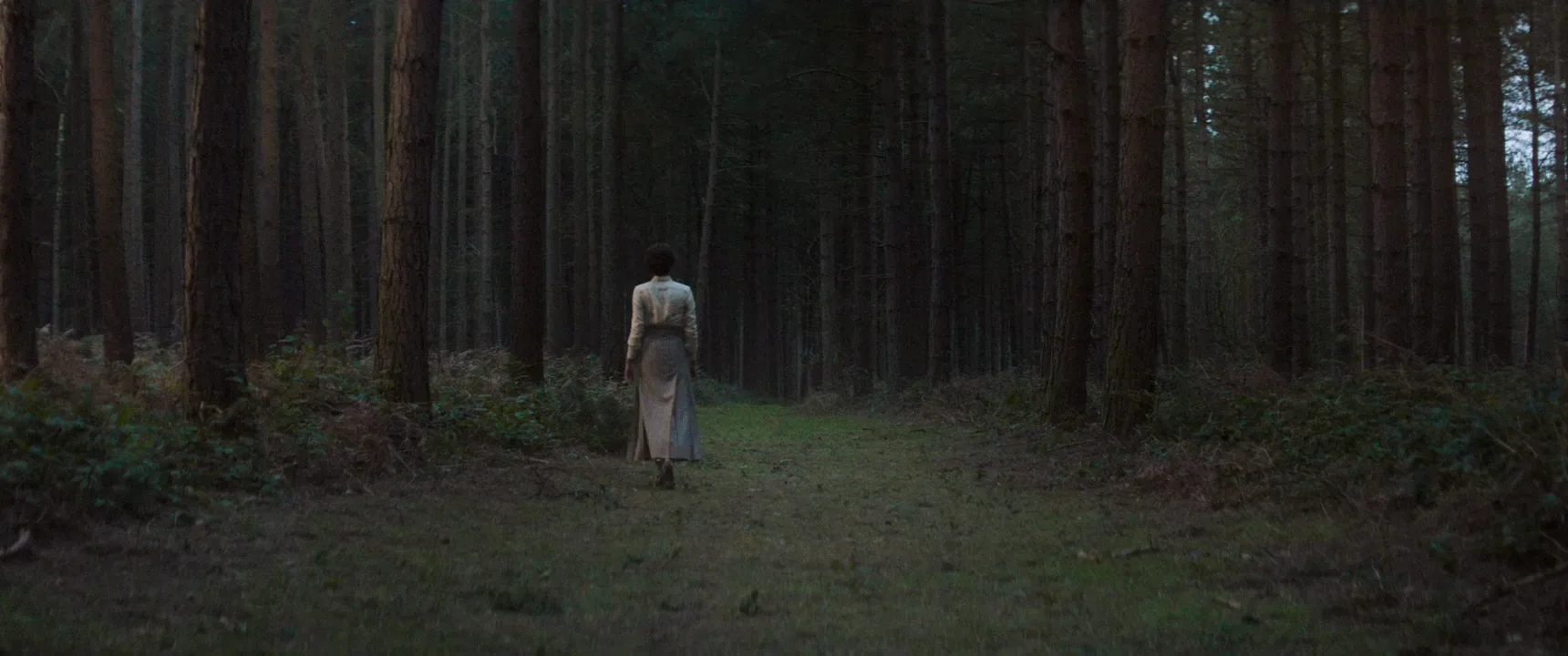
"output": "Full-screen live-action scene from Testament of Youth (2015) from its very first frame: one continuous unbroken shot. Anamorphic 2.39:1 35mm film look, fine grain, cold blue dusk under a flat overcast sky, dim, soft, shadowless light, a dense English pine plantation, muted palette of dark rust-brown trunks, moss-green grass, brown bracken and a pale gray-blue sky showing only in small gaps between the trunks at the top right.",
"characters": {
"S1": {
"name": "Vera Brittain, played by Alicia Vikander",
"look": "slim young woman seen only from behind, short dark hair pinned up at the nape, long-sleeved ivory cotton blouse, dark narrow belt at the waist, ankle-length pale gray-beige skirt, both arms hanging loose at her sides, nothing in her hands",
"voice": "soft, low, measured English voice, reciting a poem off screen, never seen speaking"
}
},
"shots": [
{
"shot": 1,
"camera": "wide shot at standing eye height from behind S1, camera square to a straight grassy ride through the pines and centered on it, 35mm lens; a slow, steady dolly in straight along the ride, perfectly level, no pan, no tilt; S1 walks away faster than the camera moves, so she keeps shrinking; she and the ride's vanishing point stay on the vertical center line of the frame the whole time, with dense trunks rising like columns on both sides: two heavy trunks and bracken in the left foreground, a thicker cluster of trunks on the right",
"action": [
"BEGINNING: alive from the first frame, S1 is already walking away from the camera down the exact middle of the grassy ride, back to the lens, a small pale figure in the lower half of the frame, the brightest thing in the dark forest, head level and facing straight ahead down the ride.",
"THEN: she keeps walking at an unhurried, even pace, left foot then right, skirt hem swaying, arms hanging still at her sides, head never turning, while the camera creeps after her and the trunks at the frame edges slide slowly outward.",
"THEN: she drifts a half step toward the middle of the ride and stays there, now smaller, her ivory blouse still catching the last gray light between the dark trunks.",
"END: still walking away with her back to the lens, a small pale figure on the vertical center line, the dark pines framing her evenly on both sides and the grassy ride running straight ahead of her into the trees."
],
"dialogue": [
{
"speaker": "S1",
"on_screen": false,
"when": "from the first frame, already mid-sentence, while she walks",
"delivery": "quiet voice-over, reciting a poem, measured and tender",
"line": "<d>[English] the velvet clematis that clung around your windowsill,</d>"
},
{
"speaker": "S1",
"on_screen": false,
"when": "after a short pause, as she walks deeper down the ride",
"delivery": "quiet voice-over, slower, softly",
"line": "<d>[English] are waiting for you still.</d>"
},
{
"speaker": "S1",
"on_screen": false,
"when": "right after, carrying through to the end of the shot",
"delivery": "quiet voice-over, steady and wistful",
"line": "<d>[English] Again the shadowed pool shall break in dimples at your feet.</d>"
}
]
}
],
"sound": {
"ambience": "still forest air at dusk, soft footsteps on grass, a few distant birds, pine branches creaking faintly in a light breeze",
"speech": "exactly these spoken phrases, each said once, in this order",
"never_spoken": "no narration and no other voice-over: the descriptions, performance notes and step words of this prompt are never spoken aloud; the only voice heard is S1 reciting her three lines",
"music": "a film score under the scene, always below the voice: slow, mournful solo piano over soft sustained strings",
"subtitles": "none"
}
}Remakes the forest-ride shot from Testament of Youth (2015), dir. James Kent, DP Rob Hardy: the pale figure walking away down the middle of the pines, the slow dolly in and the poem heard in voice-over.
The prompt is structured JSON: it names the film, casts Vera Brittain, played by Alicia Vikander, keeps her on the vertical center line through a slow dolly in, and carries the original's three voice-over lines verbatim under a quiet piano score.
Open FlashBoardsCommon mistakes
- Drift to thirds. Repeat dead center, on the vertical center line.
- Accidental symmetry. Symmetrical mirrors the whole set; describe each side differently.
- Face sinks. Add eyes in the upper third.
- Camera drift in video. Write locked on the center line and say where the move ends.
- Extra people. Name what fills the space (lockers, fog) so the model doesn't add figures.
Keep the reference frames, prompts and every generated take side by side — images and video in one canvas.
FAQ
4 questionsWhat is center framing in film?
Center framing is a composition where the main subject sits on the vertical center line of the frame. The eye goes straight to it, so the shot feels direct, stable and weighty. Filmmakers use it for confrontation, isolation, a character singled out in a crowd, or a formal look. The rest of the frame need not be symmetrical.
Is centered composition bad because it breaks the rule of thirds?
No. The rule of thirds is a default for flowing coverage, not a law. Centering deliberately stops movement in the frame and makes the subject confront the viewer. Many films switch from off-center coverage to a centered close-up at a turning point, and that contrast gives the moment its weight.
What is the difference between center framing and symmetrical composition?
Center framing only requires the subject on the center line. Symmetrical composition requires the left and right halves to mirror each other around it. A centered face with a window on one side and a bookshelf on the other is center framed but not symmetrical. Symmetry feels designed; plain centering feels natural.
Which directors are known for centered framing?
Stanley Kubrick often centered figures inside one-point perspective, as in The Shining (1980). Wes Anderson builds his style around centered characters and flat, frontal sets. Jonathan Demme used frontal, centered close-ups in The Silence of the Lambs (1991) so characters seem to address the audience directly.
Related terms
4- SymmetryComposition & Framing
Symmetry arranges the frame so its left and right halves mirror each other around a central axis — architecture, props and actors in matched positions — creating order, formality and sometimes an uncanny, controlled world.
- Rule of ThirdsComposition & Framing
The rule of thirds divides the frame with two horizontal and two vertical lines and places key elements — eyes, horizon, subject — on those lines or their intersections, producing a balanced yet dynamic off-center composition.
- Visual BalanceComposition & Framing
Visual balance is how visual weight — size, brightness, color, faces, movement — is distributed across the frame; it can be symmetrical or asymmetrical and makes a shot feel stable, or deliberately tipped and uneasy.
- Tableau ShotComposition & Framing
A tableau is a static, carefully arranged frame in which characters are posed in the set like figures in a painting, usually wide and frontal, so the whole composition reads as one picture.
Further reading
Gustavo Mercado, The Filmmaker's Eye (Focal Press). Bruce Block, The Visual Story (Focal Press).