 FlashBoards Learn
- Learn
- Composition & Framing
- Visual Balance
Composition & Framing · Film language
Visual Balance
Also called: balance, balanced composition, visual weight
Visual balance is how visual weight — size, brightness, color, faces and movement — is spread across the frame. A balanced shot feels stable because its heavy and light areas answer each other, symmetrically or not; a deliberately tipped frame makes the viewer uneasy, as if something is about to fall or enter.
- What it does
- Makes a shot feel settled and complete, or deliberately lopsided and tense.
- Use it when
- You need to control whether the audience rests in an image or leans forward in it.
- Watch out
- Balanced does not mean centered or mirrored; a frame with everything in the middle can feel dead.
- Try this prompt
Wide shot, a lone figure large on the left third, a small red truck far off on the right third balancing her, empty salt flat, overcast light
What is visual balance in film?
Picture the frame as a seesaw with its pivot at the center. The image feels balanced when the weight on both sides roughly cancels out. Visual weight is not physical weight: a small bright window can outweigh a large dark wall. Weight comes from size and closeness, brightness and contrast, saturated warm color, faces, movement and isolation.
Balance can be symmetrical, with matched elements mirrored around the center, or asymmetrical, where a large element is answered by a smaller but brighter or more meaningful one. Most narrative frames use the second kind.
Why do filmmakers balance or unbalance a shot?
Balance is an emotional dial within the composition. A balanced frame reads as calm and finished, so dialogue coverage and closing images tend to settle into it, often via the rule of thirds.
Tipping the frame does the opposite: when one side is heavy and the other empty, the viewer senses something missing — horror uses an empty half of a room as a threat. Across a cut, a left-heavy single and a right-heavy reverse add up to one balanced conversation and support screen direction; give one character a crowded, lopsided frame and the power shift reads without dialogue.
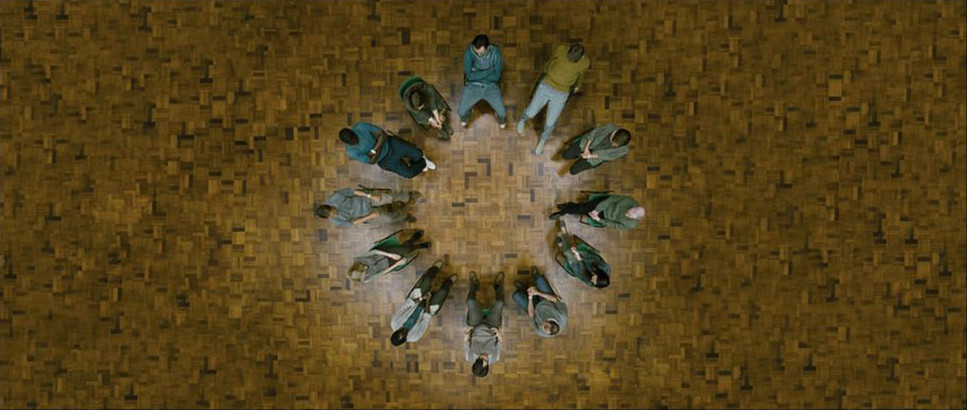
Center-heavy composition
A center-heavy frame puts its largest, brightest or most meaningful element in the middle and lets the edges only support it. Pivot and mass coincide, so nothing tips — ideal for ritual moments and for center framing. The risk is stillness: give the subject a shape around it — a circle, an arch, a ring of people.
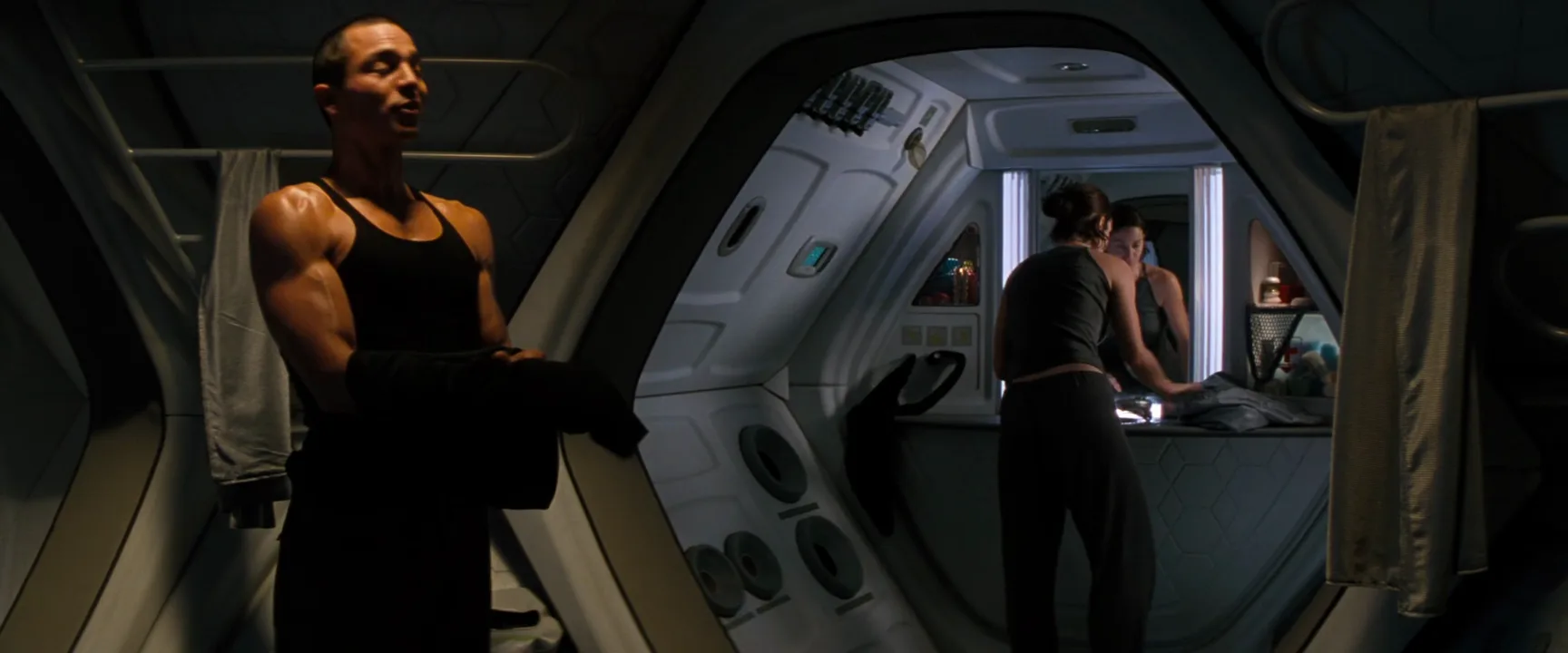
Left-heavy composition
A left-heavy frame loads the main figure, darkest mass or strongest color into the left half. The eye lands there first and then travels across the lighter side, so the shot implies a look or a journey toward the right. A small counterweight on the right — a lit doorway, a distant figure — keeps it steady; remove it and the frame tips, which suits a cornered character.
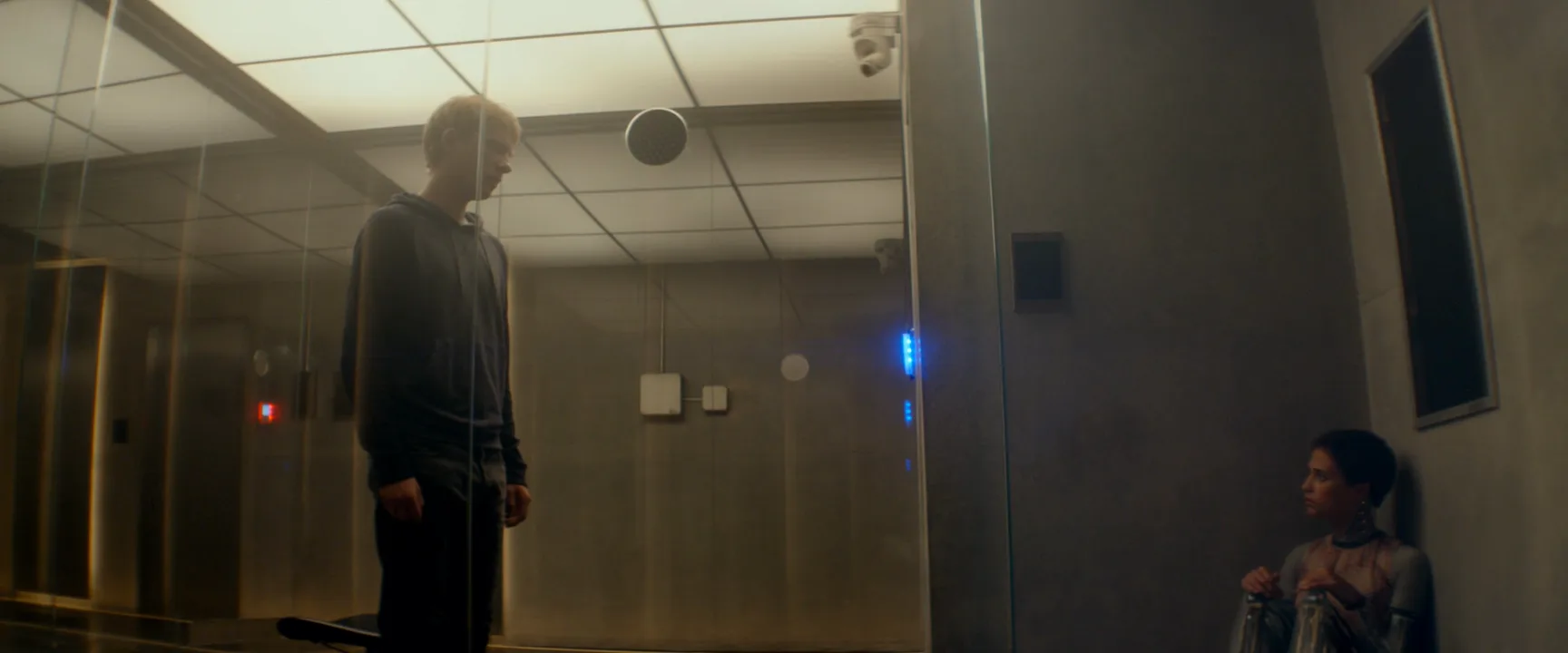
Right-heavy composition
A right-heavy frame puts the weight in the right half and leaves active empty space on the left. Because the eye ends its scan on the right, weight there feels like an arrival or a wall; a large dark profile pressing toward a smaller face is classic intimidation staging. The open side should be negative space with a job — where the subject looks or someone may appear.
How to shoot a balanced frame
- Find the heaviest thing. View the monitor in black-and-white: the brightest and largest shapes are your weights.
- Place it, then answer it. Put the main figure on a third and decide what sits opposite: a practical lamp, a window, a second actor, a patch of color.
- Use depth. One actor 1.5 m from camera can be balanced by two people 6 m back — layering foreground and background multiplies your options.
- Light for weight. A 1K bounced into the back wall on the empty side rebalances a frame without moving anyone.
- Pick the lens. A 24–35mm shrinks distant counterweights; a 75–100mm compresses depth and makes them count more.
Visual balance vs. symmetry
Symmetry is one specific way to balance a frame: the halves mirror each other around a central axis. Every symmetrical frame is balanced, but most balanced frames are not symmetrical. Use symmetry for order and control; use asymmetrical balance — unlike elements of equal weight — for everyday coverage.
Visual Balance examples in film
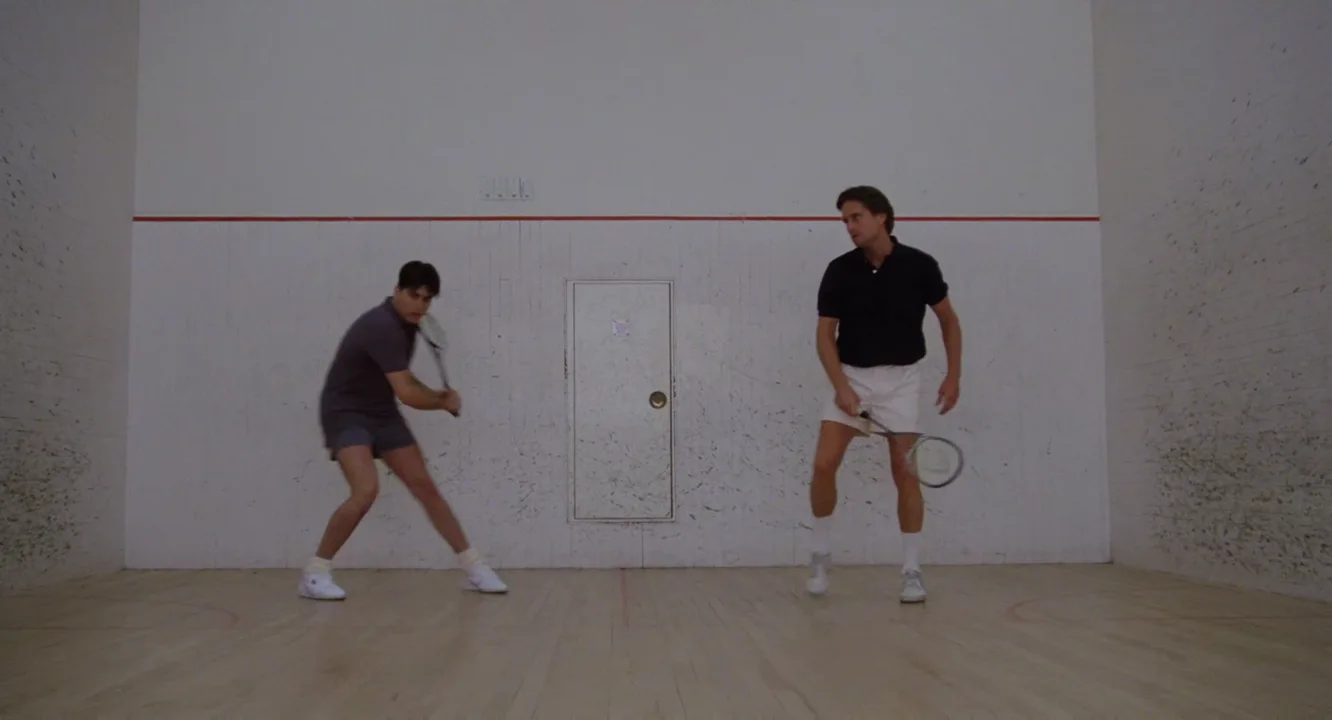
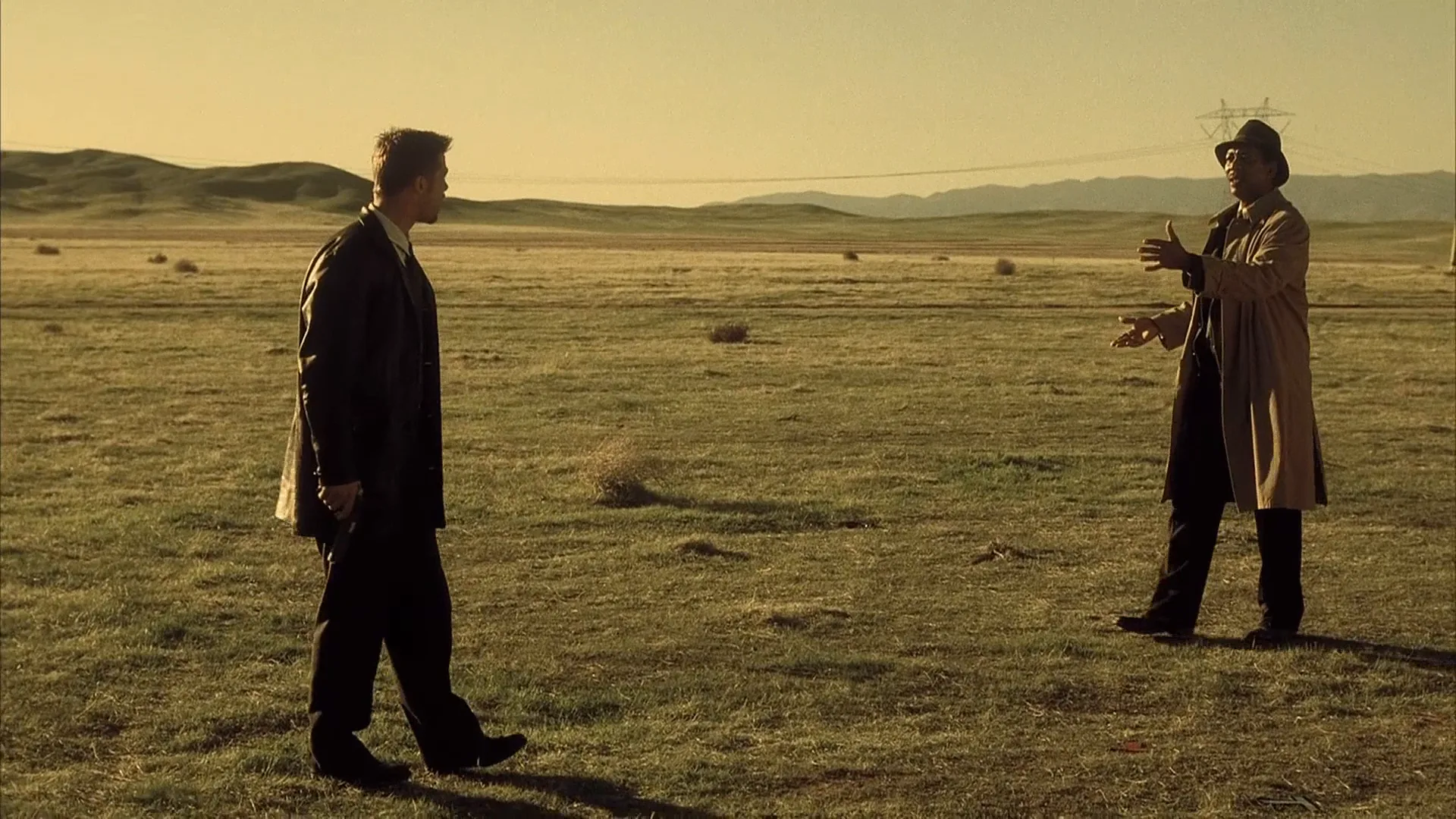
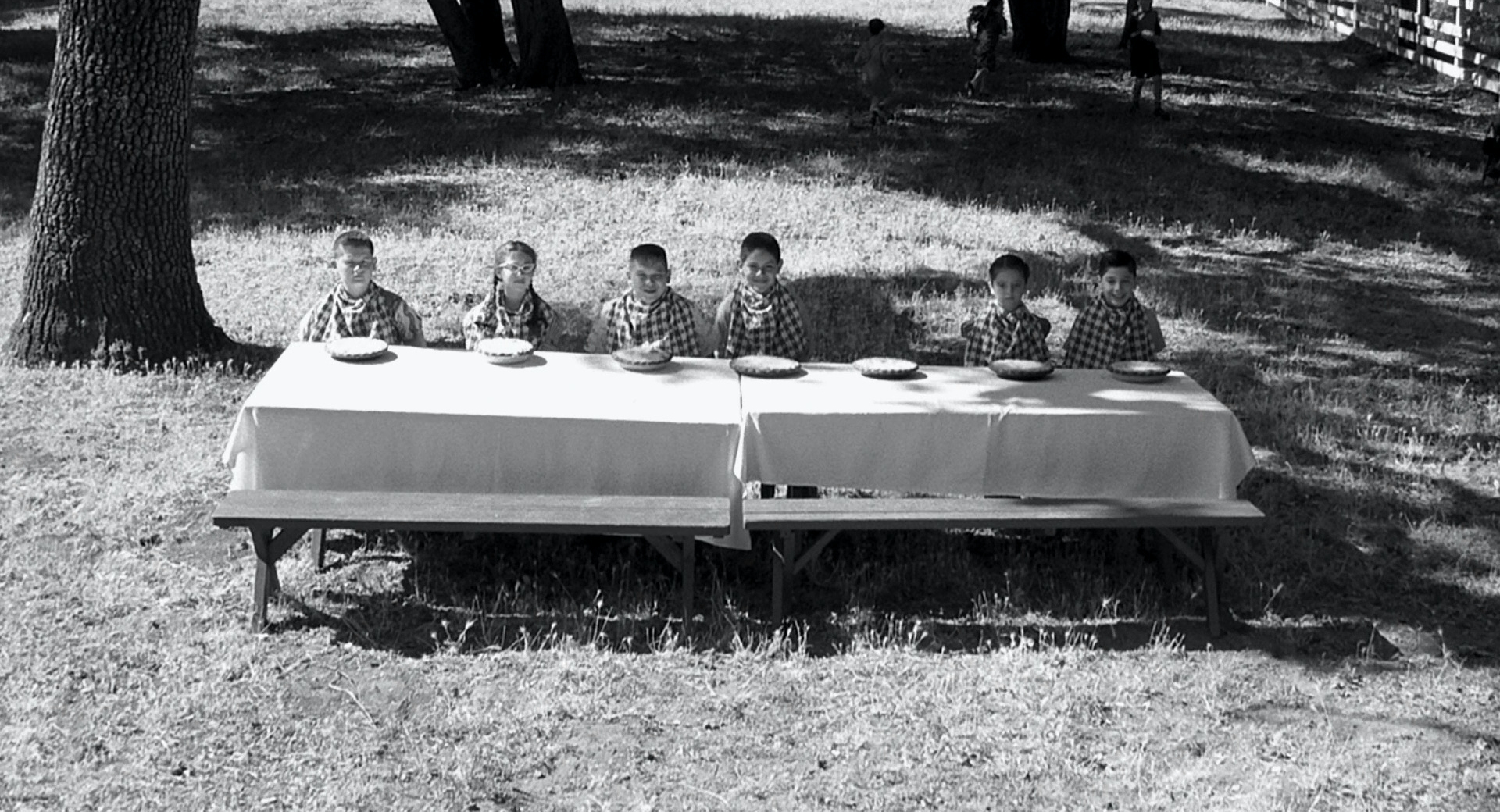
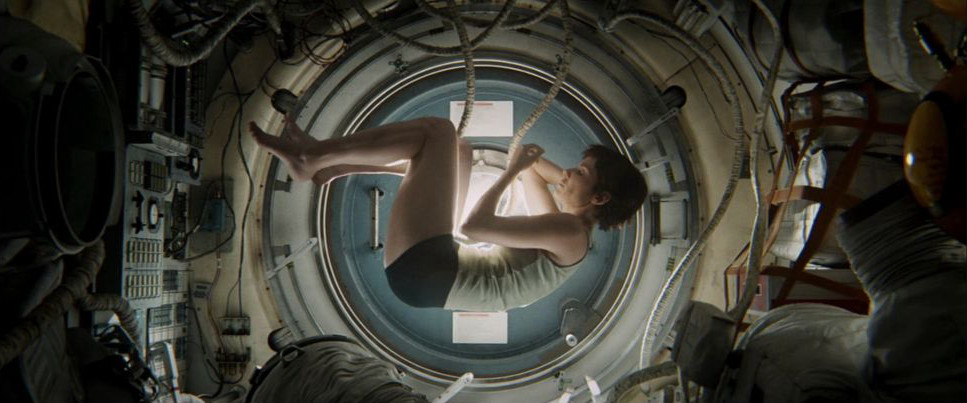
8 framesFrames that balance — or deliberately tip — their visual weight. Find the pivot and what sits on each side of it.
How to create a visual balance with AI
4 promptsImage models center the subject and often read "balanced" as "symmetrical", so name the weights and where they sit. In FlashBoards, keep reference frames beside your generations and compare takes side by side. The fourth prompt re-shoots a real film shot from a text description alone, and the original plays next to the result so you can compare.
Cinematic wide shot, asymmetrical balanced composition. A tall woman in her sixties with a cropped silver buzz cut and a rust-orange wool coat stands large on the left third of a gray salt flat, facing right. Far away on the right third, a small red pickup truck with headlights on balances her. Horizon on the lower third, pale overcast sky, soft light, 35mm lens at chest height, film still.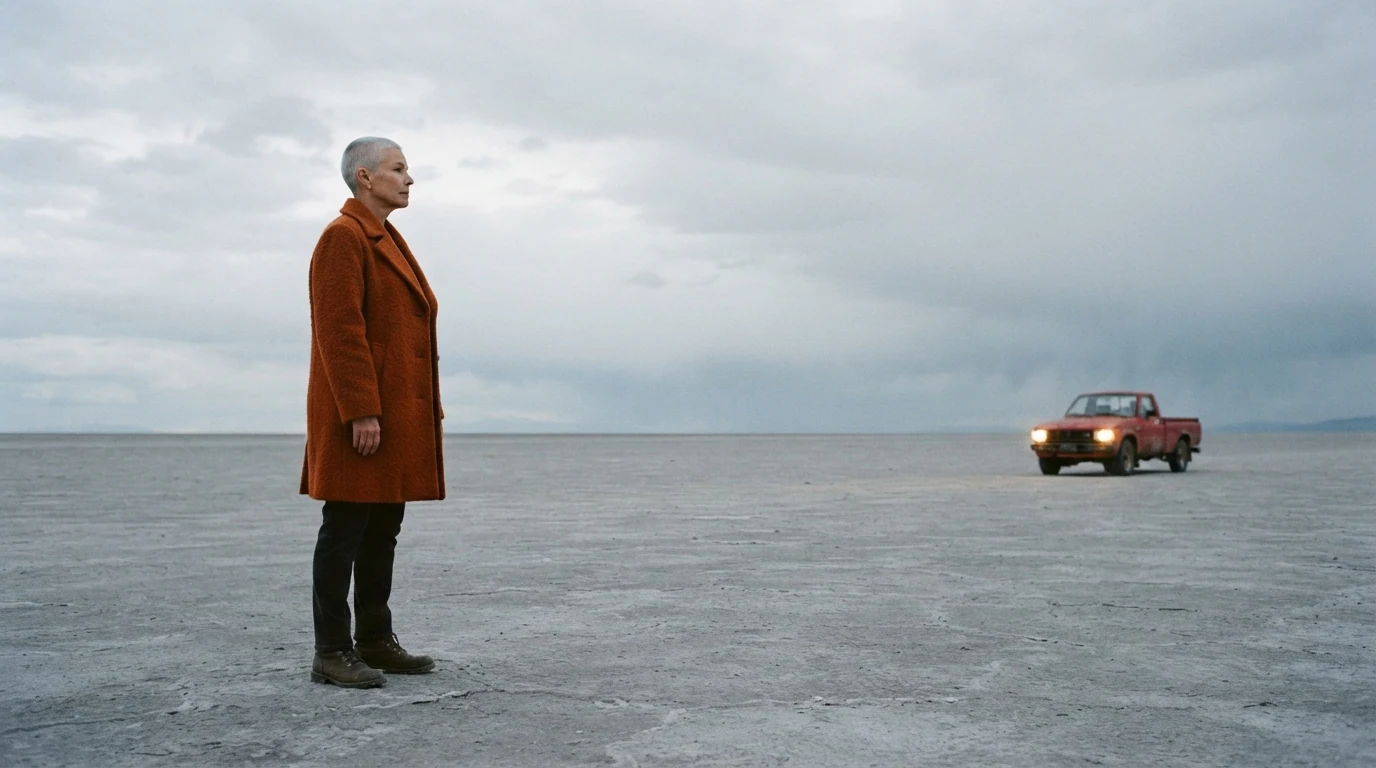
Two weights with positions: the large figure on the left third, the small red truck with headlights on the right. Color and light let the tiny truck answer her. This is the video's start frame.
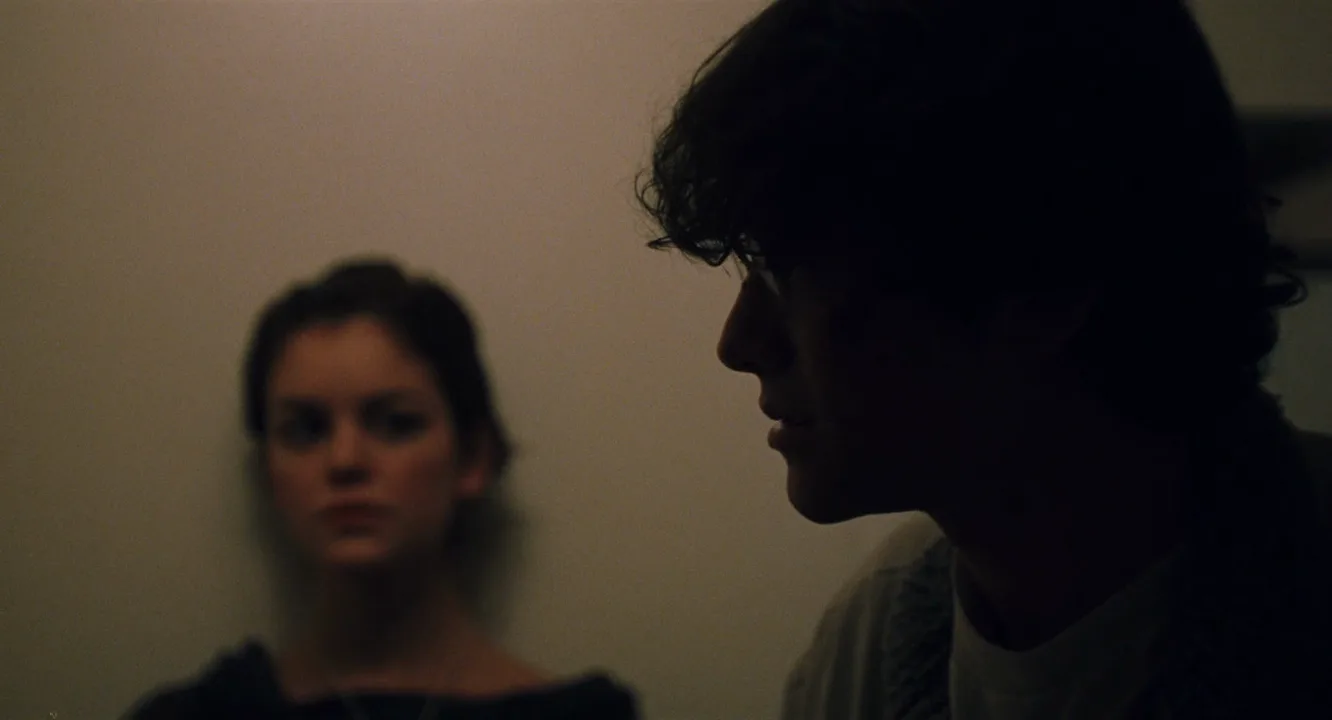
Open FlashBoardsDeliberately right-heavy, uneasy composition. A man in his forties with a shaved head, thick black beard and round tortoiseshell glasses in close profile filling the right third, dark sweater, face half in shadow, looking left. The left two-thirds is a bare pale kitchen wall with one small window. 50mm lens at eye level, low-key tungsten side light, film still.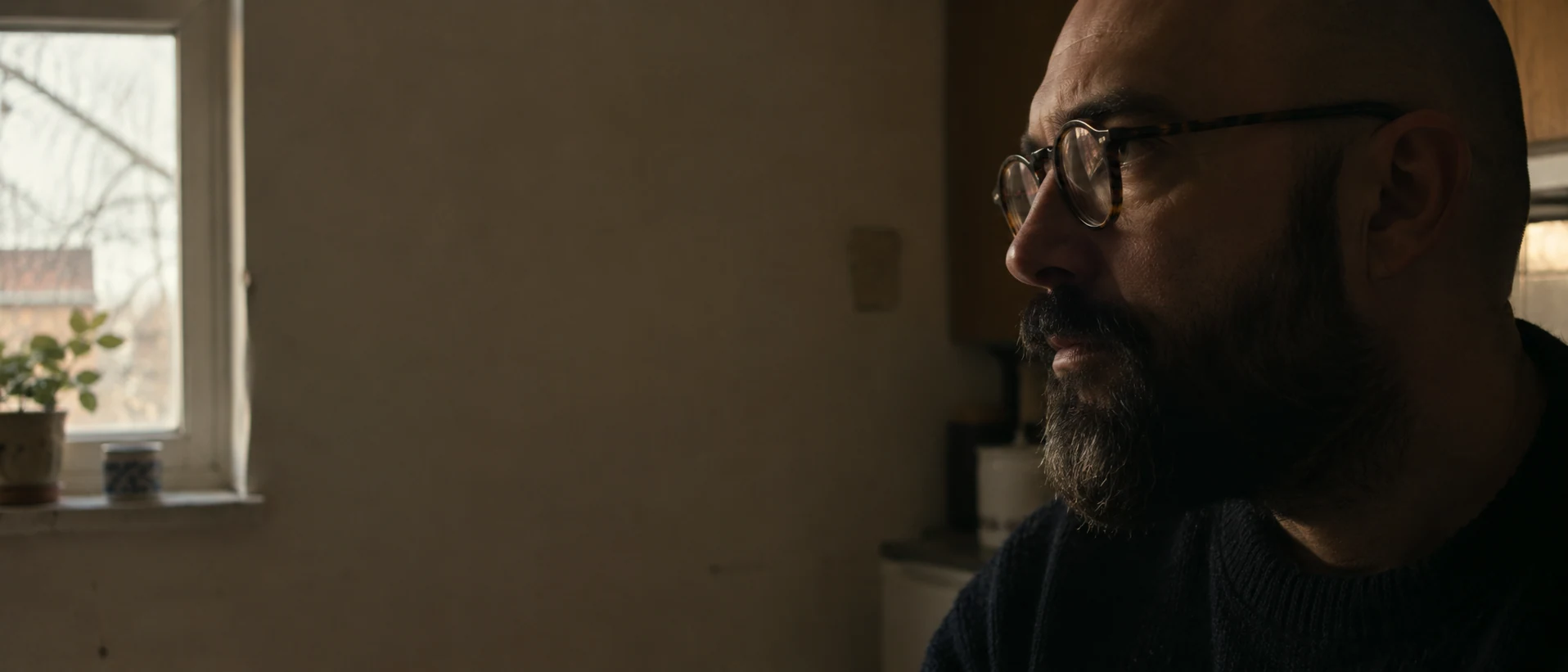
A take that tips on purpose. "Filling the right third" makes the weight; describing the empty side as a bare wall stops the model from inventing clutter.
Open FlashBoardsCamera: locked-off on a tripod, the framing stays exactly the same. Action: from the first frame the wind whips the woman's orange coat and the red pickup truck is already driving slowly toward the camera on the right side of the salt flat, headlights on. The truck grows larger while she stays on the left. At the end the truck stops in the right half of the frame and she turns her head toward it.With the frame fixed, balance changes only through what moves: the approaching truck gains weight until the shot settles. Motion starts in the first sentence, so the shot is alive from frame one.
Open FlashBoards{
"output": "Full-screen live-action shot from the film Brick (2006) from its very first frame: one continuous shot, no cuts. Mid-2000s 35mm film with fine grain, a dim room at night, one warm tungsten light washing a bare cream wall behind the two people while the near figure stays unlit, a near-black silhouette; amber, brown and charcoal palette, deep blacks. A right-heavy composition: the big dark profile on the right outweighs the small, soft face on the left.",
"characters": {
"S1": {
"name": "Brendan, played by Joseph Gordon-Levitt",
"look": "slim teenage boy, dark shaggy curly hair over his forehead and ears, thin wire-rimmed glasses, a chunky gray-green knit cardigan with a cabled edge over a white T-shirt; here almost a black silhouette against the lit wall, only a faint warm edge on his nose, lips and chin",
"voice": "low, fast, flat and deadpan, clipped hard-boiled patter"
},
"S2": {
"name": "Laura, played by Nora Zehetner",
"look": "slim teenage girl, dark hair pinned back with loose strands at the temples, dark eyes, a black wide-neck top showing her collarbones, a thin chain necklace; small, soft and out of focus behind him",
"voice": "she stays silent the whole shot"
}
},
"shots": [
{
"shot": 1,
"camera": "locked-off on a tripod at eye level, long lens with very shallow focus, the framing never changes. S1 fills the right half of the frame close to the lens, in exact profile facing screen left, his dark head, curls and knit shoulder running from the top edge to the bottom edge. S2 is small in the left third, a few metres behind him, head and shoulders only, blurred. The rest of the left half is bare warm cream wall. Focus holds on the edge of S1's profile.",
"action": [
"BEGINNING: alive from the first frame, S1 is already talking, lips moving, his face turned to screen left toward someone off frame left, chin level; S2 stands still in the left third facing the camera, her eyes turned to the right of the frame onto S1's face, mouth closed. Both are framed from the chest up.",
"THEN: S1 pushes his chin slightly forward and opens his jaw wider on a stressed word, his head otherwise still; S2 holds perfectly still, her face unchanged.",
"THEN: S1 closes his lips for a short beat, then starts his second line as his head begins to tip forward.",
"THEN: while he speaks his chin sinks lower and his gaze drops toward the floor on the left; the warm light from the wall traces a thin line along his nose and lips.",
"END: S1 finishes and his lips close, head lowered and drawn back a little to the right, a thin warm rim on his curls; S2 is exactly as she was, eyes still on him, mouth closed, face calm and unreadable."
],
"dialogue": [
{
"speaker": "S1",
"on_screen": true,
"when": "from the first frame, already mid-sentence",
"delivery": "low, fast, flat, matter-of-fact",
"line": "<d>[English] The Pin's sitting on the brick profits. Hitting him now would be post.</d>"
},
{
"speaker": "S1",
"on_screen": true,
"when": "right after a short pause, as his head starts to tip down",
"delivery": "quieter and firm, advice more than an order",
"line": "<d>[English] Make peace, wait for your chance.</d>"
}
]
}
],
"sound": {
"ambience": "quiet room tone of a small house at night, the soft rustle of his knit sleeve when he moves",
"speech": "exactly these spoken phrases, each said once, in this order",
"never_spoken": "no narration and no voice-over: the descriptions, performance notes and step words of this prompt are never spoken aloud",
"music": "a film score under the scene, always below the voices: a sparse, low, muted piano figure over a faint hollow drone, hushed noir tension",
"subtitles": "none"
}
}Remakes the silhouetted profile shot from Brick (2006), dir. Rian Johnson, keeping Brendan's two lines, his dark head filling the right half, Laura small in the left third and the head dipping as he finishes.
The JSON names Brendan and his two lines from the film, then writes the weight into the camera line: an unlit profile filling the right half at arm's length, a small figure far back in the left third. The locked frame keeps that dark mass heavy while only his head moves.
Open FlashBoardsCommon mistakes
- Everything drifts to the center. Give thirds for both the subject and the counterweight.
- "Balanced" becomes a mirror image. Ask for "asymmetrical balanced composition" and name two unlike elements.
- The empty side fills with clutter. Describe what is there: "bare pale wall", "open overcast sky".
- The video recenters. Say the camera is locked-off and the framing stays the same.
Keep the reference frames, prompts and every generated take side by side — images and video in one canvas.
FAQ
4 questionsWhat is visual balance in film?
Visual balance is the distribution of visual weight across the frame. Size, brightness, contrast, color, faces and movement all add weight. When the heavy and light areas on either side of the center answer each other, the shot feels stable; when one side dominates, it feels tipped and tense.
What is the difference between symmetrical and asymmetrical balance?
Symmetrical balance mirrors matched elements around a central axis, so the frame feels formal and controlled. Asymmetrical balance pairs different elements — a large figure on one side, a small bright window on the other — so the weights match while the shapes don't. It feels more natural and dominates narrative coverage.
Is an unbalanced composition a mistake?
Not if it is deliberate. Filmmakers tip the frame to create unease, show one character dominating another, or leave an empty side where something may appear. It is a mistake only when the imbalance is accidental, like a bright lamp in a corner pulling focus for no reason.
How do you balance a shot with only one person in it?
Place the person on one third and give the opposite side a counterweight: a practical lamp, a window, a strong color, or open space in the direction they look. Light is the fastest tool — brightening the empty side rebalances the frame without moving the actor.
Related terms
3- SymmetryComposition & Framing
Symmetry arranges the frame so its left and right halves mirror each other around a central axis — architecture, props and actors in matched positions — creating order, formality and sometimes an uncanny, controlled world.
- Rule of ThirdsComposition & Framing
The rule of thirds divides the frame with two horizontal and two vertical lines and places key elements — eyes, horizon, subject — on those lines or their intersections, producing a balanced yet dynamic off-center composition.
- Negative SpaceComposition & Framing
Negative space is the empty area around a subject — sky, wall, darkness, water — deliberately left large so the subject feels isolated, small, lonely or expectant, and the eye settles on it.
Further reading
Rudolf Arnheim, Art and Visual Perception (University of California Press, 1954; rev. 1974) — chapter on balance. Bruce Block, The Visual Story, 2nd ed. (Focal Press, 2008).