 FlashBoards Learn
- Learn
- Composition & Framing
- Rule of Thirds
Composition & Framing · Film language
Rule of Thirds
Also called: thirds grid, rule of third
The rule of thirds divides the frame into a three-by-three grid and places the subject, the eyes or the horizon on those lines or where they cross, not dead center. The result is an off-center frame that still feels balanced, leaves room for the space around the subject, and quietly tells the viewer where to look.
- What it does
- Moves the subject off center so the frame feels balanced but alive, with room for the space, gaze or action beside it.
- Use it when
- You frame singles, dialogue coverage, landscapes and any shot where the space around the subject matters as much as the subject.
- Watch out
- Applied to every setup it becomes a template; center the frame when you want confrontation, symmetry or a jolt.
- Try this prompt
Cinematic wide shot, woman standing on the right third line, eyes on the upper-right intersection, looking left into open space, horizon on the lower third, 35mm lens
What is the rule of thirds?
Draw two vertical and two horizontal lines across the frame at equal distances and you get nine rectangles. The rule of thirds says the important elements of a shot should sit on those lines, and the most important point of all, usually a pair of eyes, on one of the four places where the lines cross. Camera operators call those crossings the power points or intersections.
In film practice the rule comes down to three habits:
- Subjects on a vertical line. A person in a single shot stands on the left or right third line instead of the center, and the empty two thirds of the frame become part of the shot.
- Eyes on the upper horizontal line. In a medium close-up or a close-up the eye line sits on or near the upper third. That single habit fixes most headroom problems before they happen.
- Horizons on a horizontal line. A horizon on the lower third gives the sky two thirds of the frame; on the upper third the ground takes over. A horizon cutting the frame in half splits the viewer's attention between two equal areas.
The name is older than cinema. The English painter and engraver John Thomas Smith used the phrase "rule of thirds" in Remarks on Rural Scenery (1797), as advice for balancing light and dark masses in landscape pictures. Photographers adopted it, and camera operators carried it into the moving frame. It is the default grid overlay on nearly every monitor and viewfinder today, which is part of why it is one of the first things a new filmmaker learns about film composition.
It is a guideline, not geometry: a starting position that moves the subject off center and forces the question of what fills the rest of the frame.
Why do filmmakers use the rule of thirds?
Because a centered subject reads as a statement. A face in the middle of the frame, looking into the lens, feels formal, confrontational or posed. Put the same face on a third line and the frame relaxes: the viewer watches a person inside a space rather than a portrait. That is why the rule is the baseline of dialogue coverage and center framing the exception reserved for emphasis.
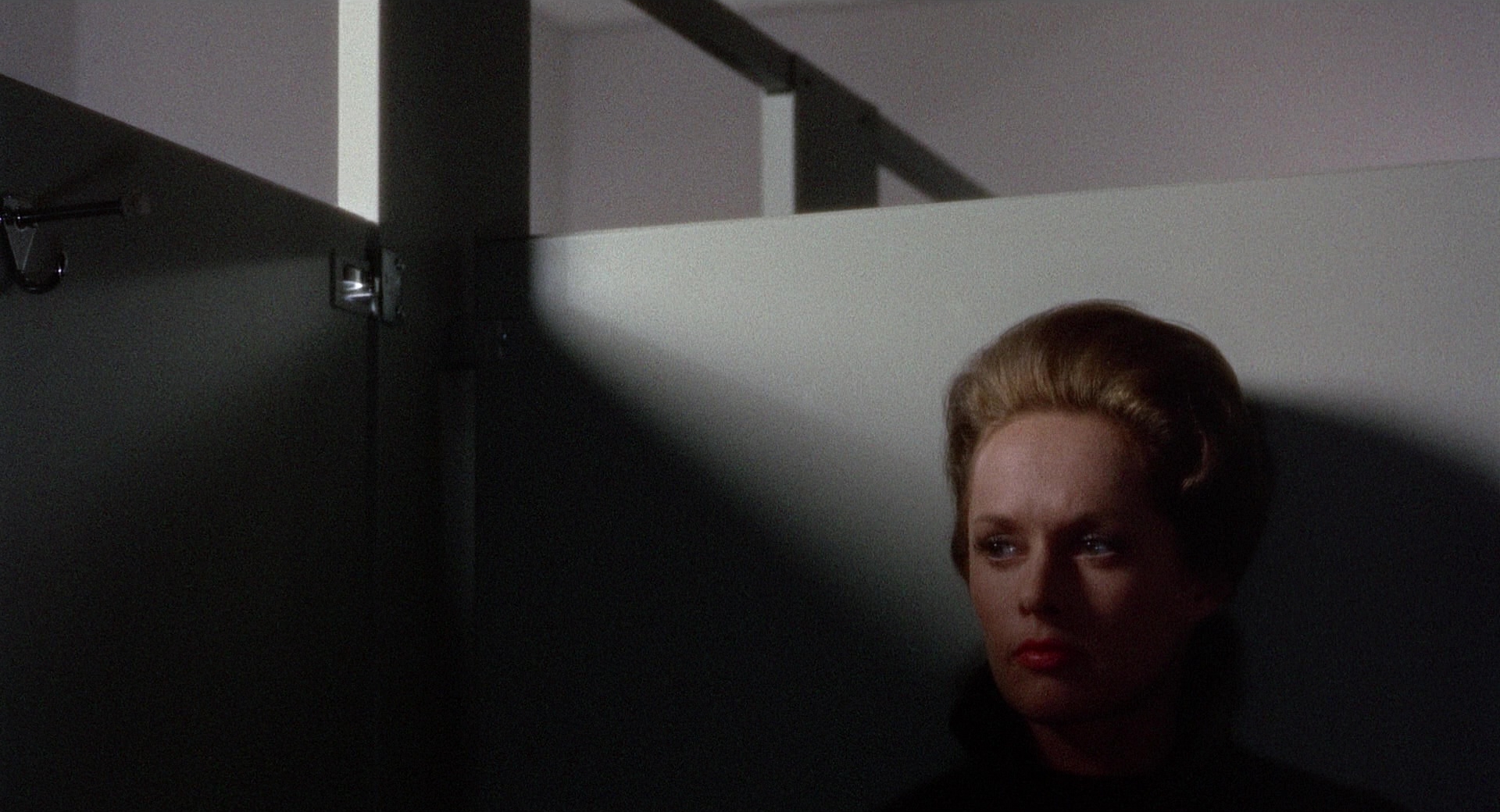
Because the empty two thirds carry meaning. Once the subject moves to one side, the other side has to hold something: the city a character is looking at, the room they are about to cross, or nothing at all. A face on the right third with a wall of darkness on the left, like the close-up in Marnie (1964), turns the empty area into negative space that presses on the character.
Because it builds balance without symmetry. A subject on one third can be weighed against a lamp, a window or a second figure on the opposite third. That off-center equilibrium is the core of visual balance: the frame feels stable, but the eye keeps moving between the two weights instead of settling in the middle.
Because it tells the eye where to go. Viewers look at faces first and eyes before anything else. When the eyes sit on a power point, and the lines of the set, a road, a doorframe or leading lines point toward that same point, the frame has one clear destination. It is one of the most reliable tools for directing the viewer's eye inside a single shot.
Because it gives gaze and movement somewhere to go. A character on the left third looking right has the whole frame to look into. This "look room" or "lead room" is the reason the rule is paired with eyeline direction: the subject sits on the third opposite the direction they face or travel. Flip it on purpose and you get short siding, where the character looks at the near edge of frame and the space behind them becomes uneasy.
How to use the rule of thirds when you shoot
Turn the grid on, then stop staring at it. Every production monitor and most cameras have a thirds overlay. Use it while you block and set the frame, then switch it off for the take so you see the image, not the lines.
Place the eyes first. For singles from medium shot to close-up, set the frame so the eye line sits on the upper third. In a tight close-up let the eyes rise slightly above it; forehead cut off is fine, chin cut off rarely is.
Give the look room. Put the subject on the third opposite their eyeline: looking screen right means the left third. The more the head is turned toward profile, the more space the gaze needs in front of it.
Pick the horizon on purpose. Low horizon (lower third) for sky, weather, scale and loneliness. High horizon (upper third) for ground, roads, crowds and the feeling that the world is closing in.
Check the aspect ratio. In 2.39:1 the thirds are far apart, so a face on a third line leaves a wide empty panel on the other side, which is why anamorphic films so often show two faces on opposite thirds with a gap between them. In 1.33:1 or 4:5 vertical the thirds crowd together and the difference between a third and the center is small. When you change aspect ratio, recompose instead of cropping.
Block movement toward the lines. Moving subjects rarely stay on a power point. Plan marks so the actor lands on a third at the important beat, and let the camera pan or truck to keep them there during the line, not during the walk.
Light the power point. Viewers go to the brightest area first. Keep the brightest part of the frame, the face, the window, the practical lamp, on or near the third you want seen, and let the opposite side fall a stop or two darker so the balance is intentional.
Rule of thirds in dialogue: singles, OTS shots and two-shots
Dialogue coverage is where the rule does most of its work, and it has to be applied as a system, not frame by frame.
- Opposite thirds in shot/reverse shot. If character A sits on the left third looking right, character B sits on the right third looking left. Their eyelines then meet across the cut, and screen direction stays consistent. Put both on the same third and the edit feels as if they are looking past each other.
- Over-the-shoulder shots. In an over-the-shoulder shot the foreground shoulder and the back of a head take one outer third, and the face of the speaker lands on the opposite third line, eyes on the upper third.
- Two-shots. In a two-shot the two people usually take the left and right third lines, leaving the center for the space between them: a table, a gap, a window. How wide that gap is tells the audience how close they are.
- Match the reverses. Same lens, same height, same eye position on the grid, or the cut jumps.
When should you break the rule of thirds?
The rule of thirds is a default, and defaults are for breaking with a reason.
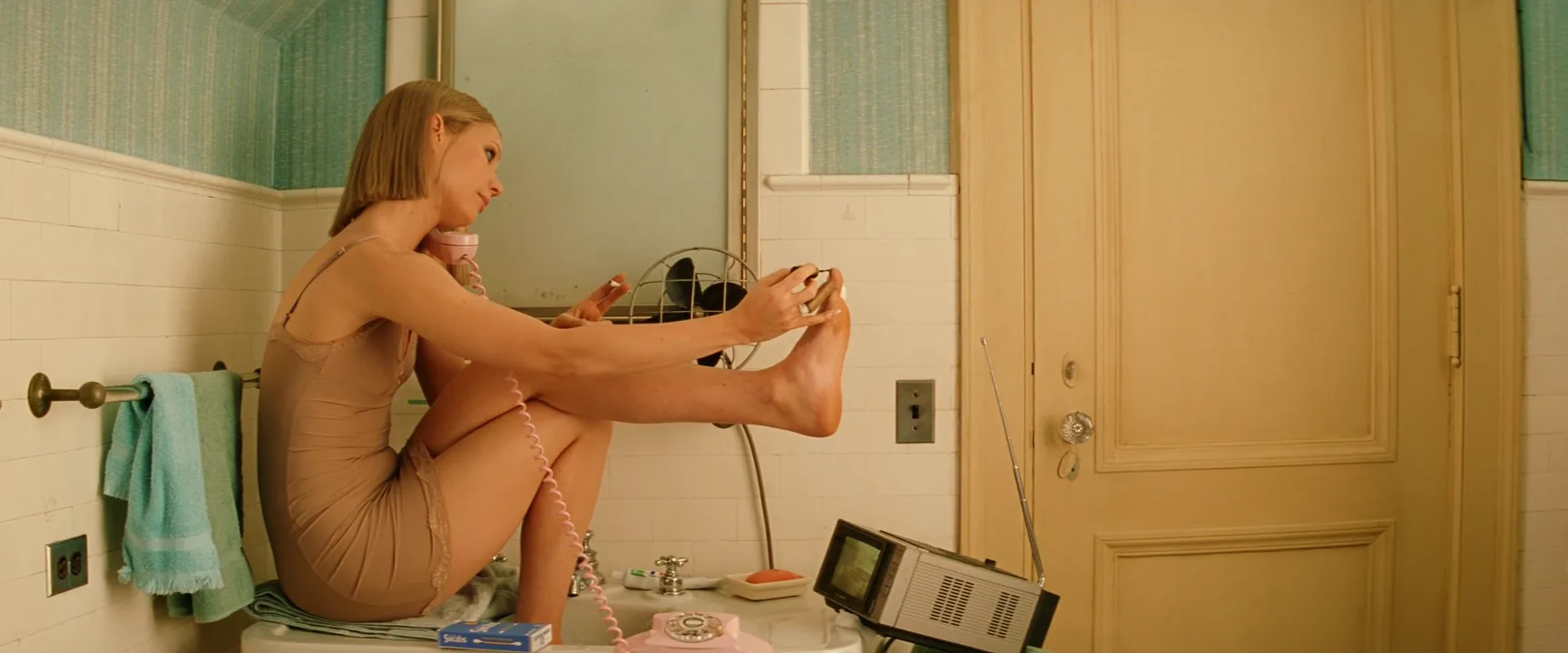
Center it for power or confrontation. A subject on the vertical center line looks at the audience from a position of authority or threat. Stanley Kubrick and Wes Anderson are known for centered, often symmetrical frames; the effect is formal, controlled, sometimes deadpan. Notably, the bathroom frame from The Royal Tenenbaums in the gallery below comes from Anderson and still sits on the left third, so even centering directors use both.
Push past the third for isolation. Moving a subject all the way to the edge, with a huge empty frame beside them, reads as smallness, loneliness or a character about to leave the story.
Crowd the near edge for tension. Short siding, the subject on the third but looking toward the close edge of frame, breaks the look-room convention and makes the audience feel something is behind the character.
Cut on the break. Holding a scene on thirds and then cutting to a single centered frame is a classic way to mark the moment a scene changes. It only works if the rest of the scene respected the grid.
Rule of thirds vs. center framing
The two are opposite answers to the same question: where does the subject stand in the frame?
| | Rule of thirds | Center framing | |---|---|---| | Subject position | On a third line or intersection | On the vertical center line | | Feeling | Natural, observational, relaxed | Formal, direct, confrontational, sometimes claustrophobic | | Empty space | One large side area that carries meaning | Split evenly on both sides, often ignored | | Eyeline | Looks across the frame into space | Looks at or near the lens, or straight down the axis | | Typical use | Dialogue coverage, landscapes, walking shots | Portraits, confrontations, title moments, symmetrical sets | | Risk | Becomes a template | Becomes a mannerism |
A quick test on your own footage: cover the half of the monitor the subject is not in. If the shot loses its meaning, the empty side was doing work and you are using thirds well. If nothing is lost, either center the subject or fill that side with something that matters.
Rule of Thirds examples in film
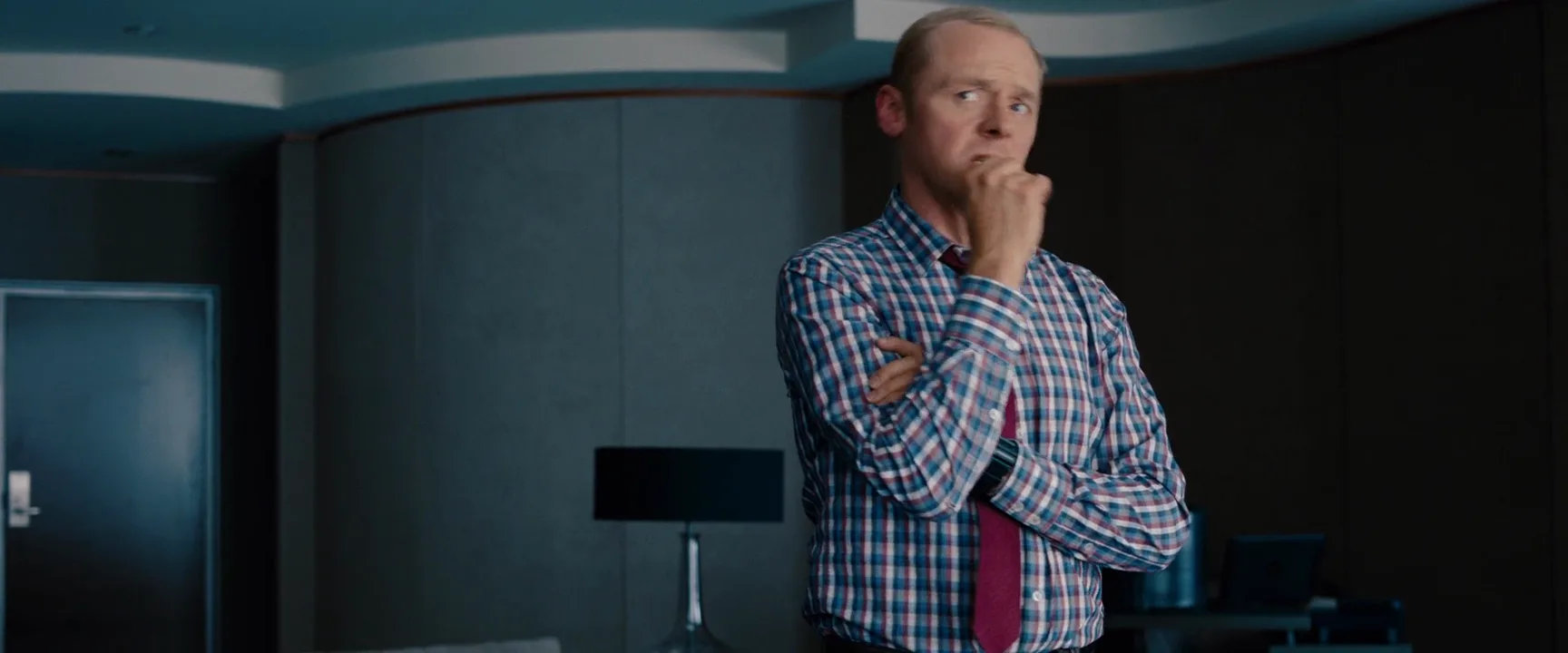
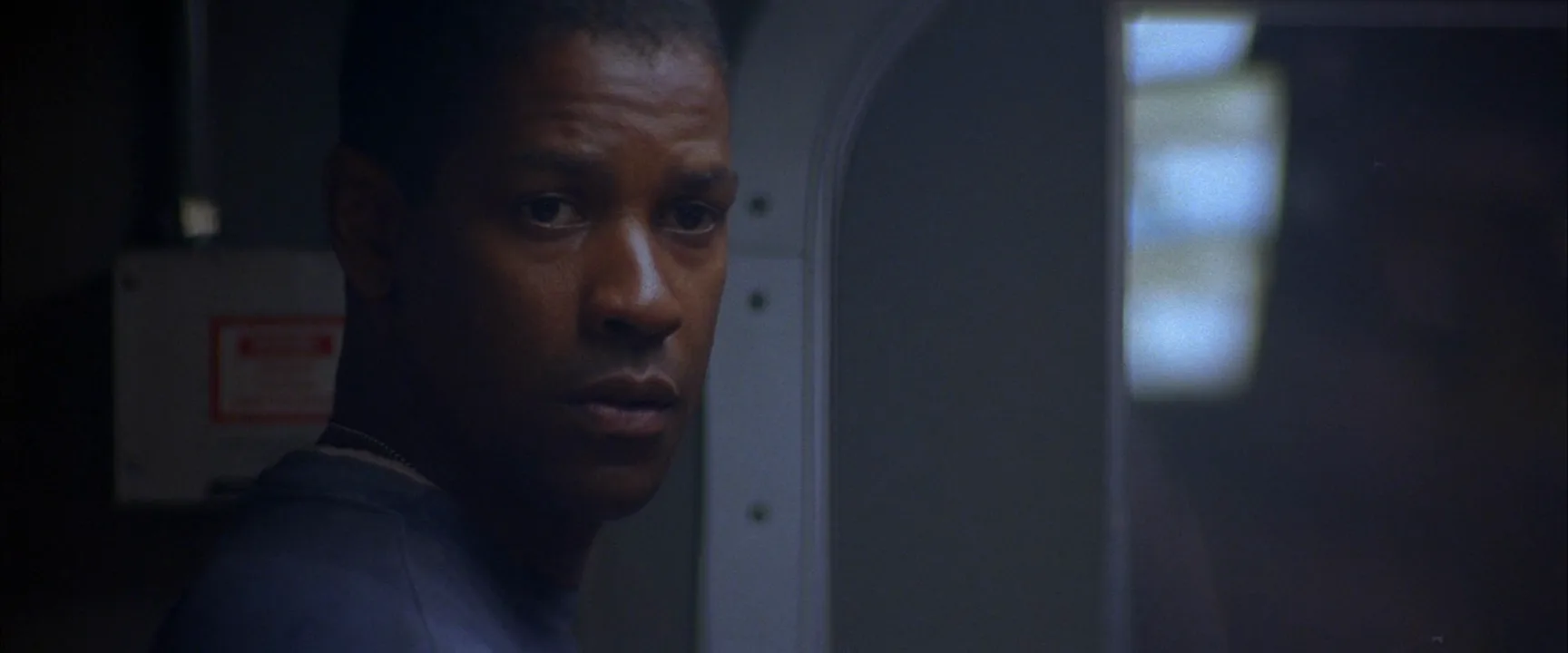
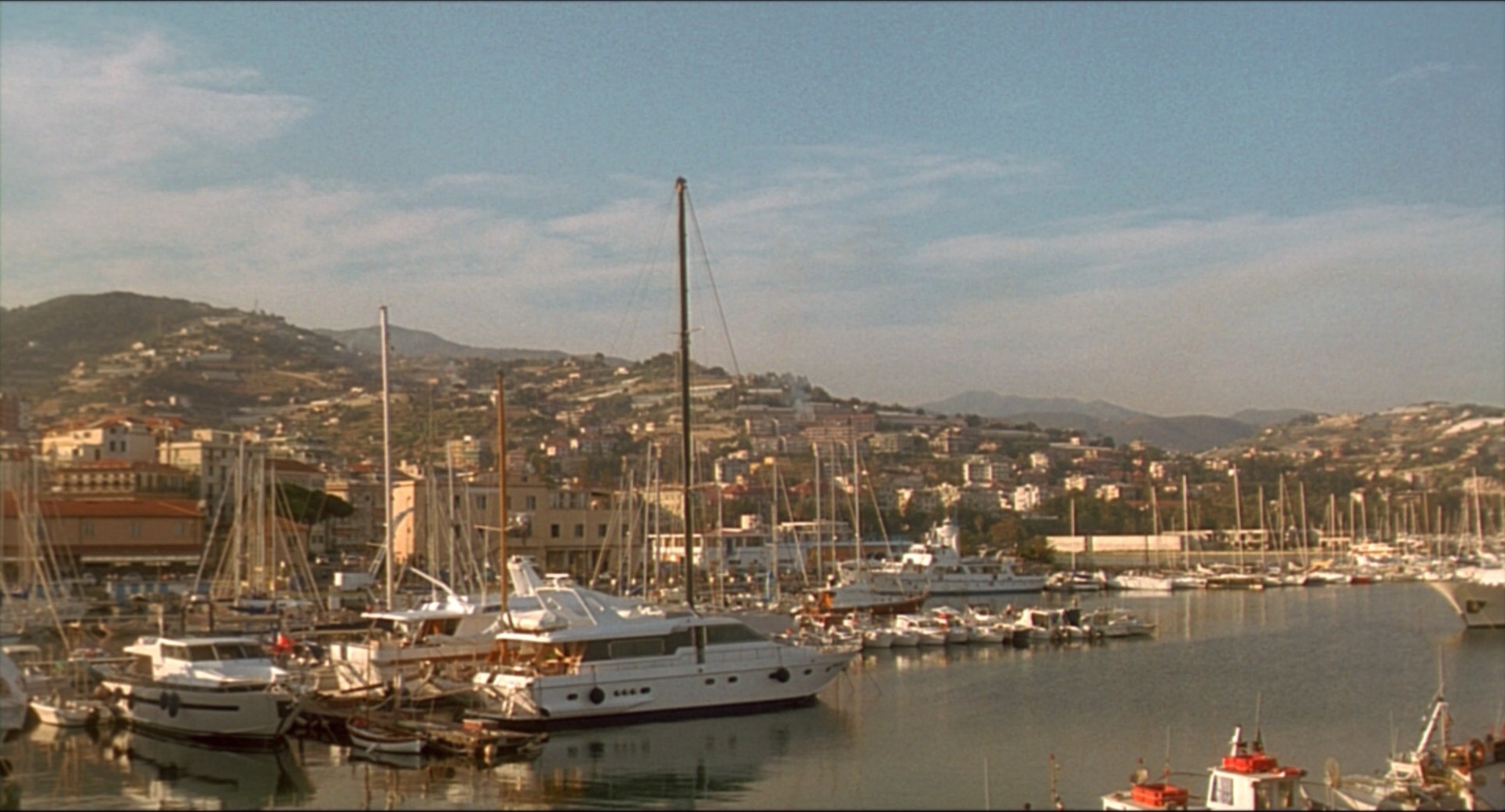
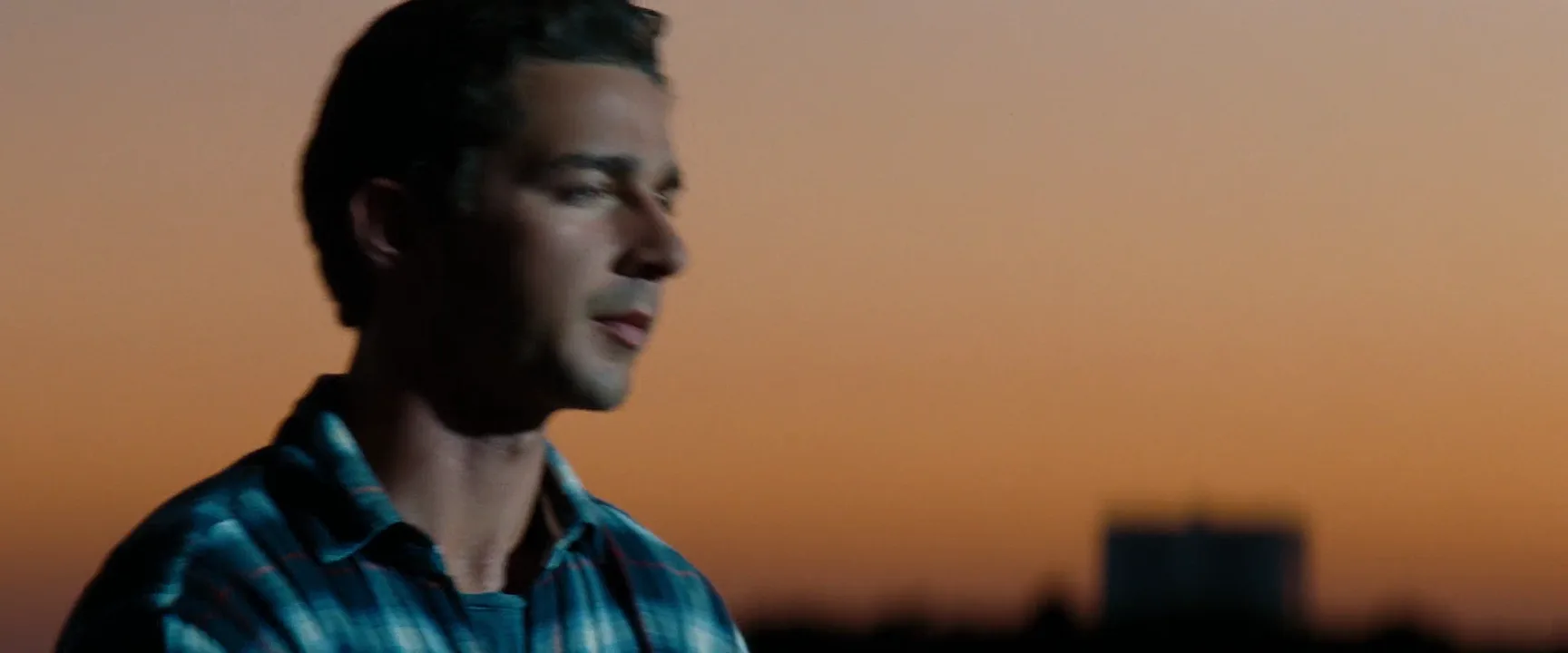
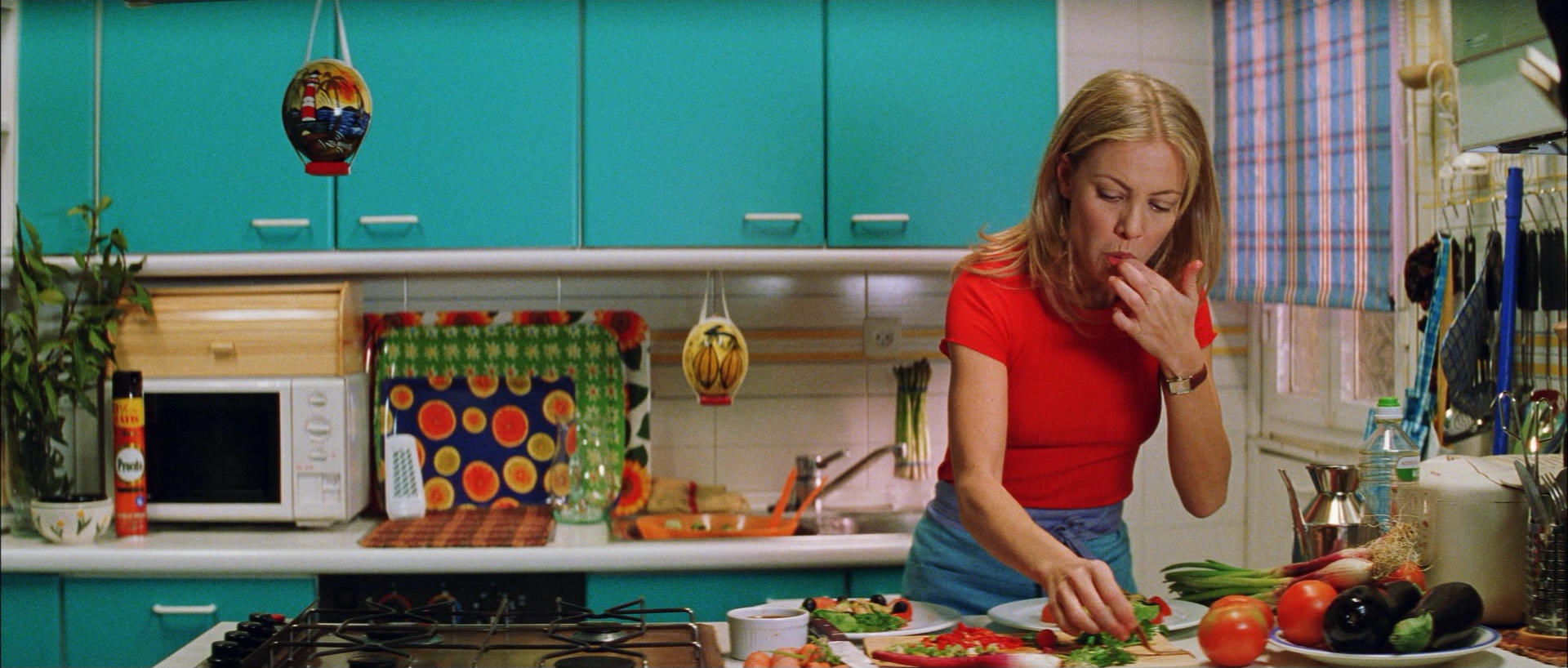
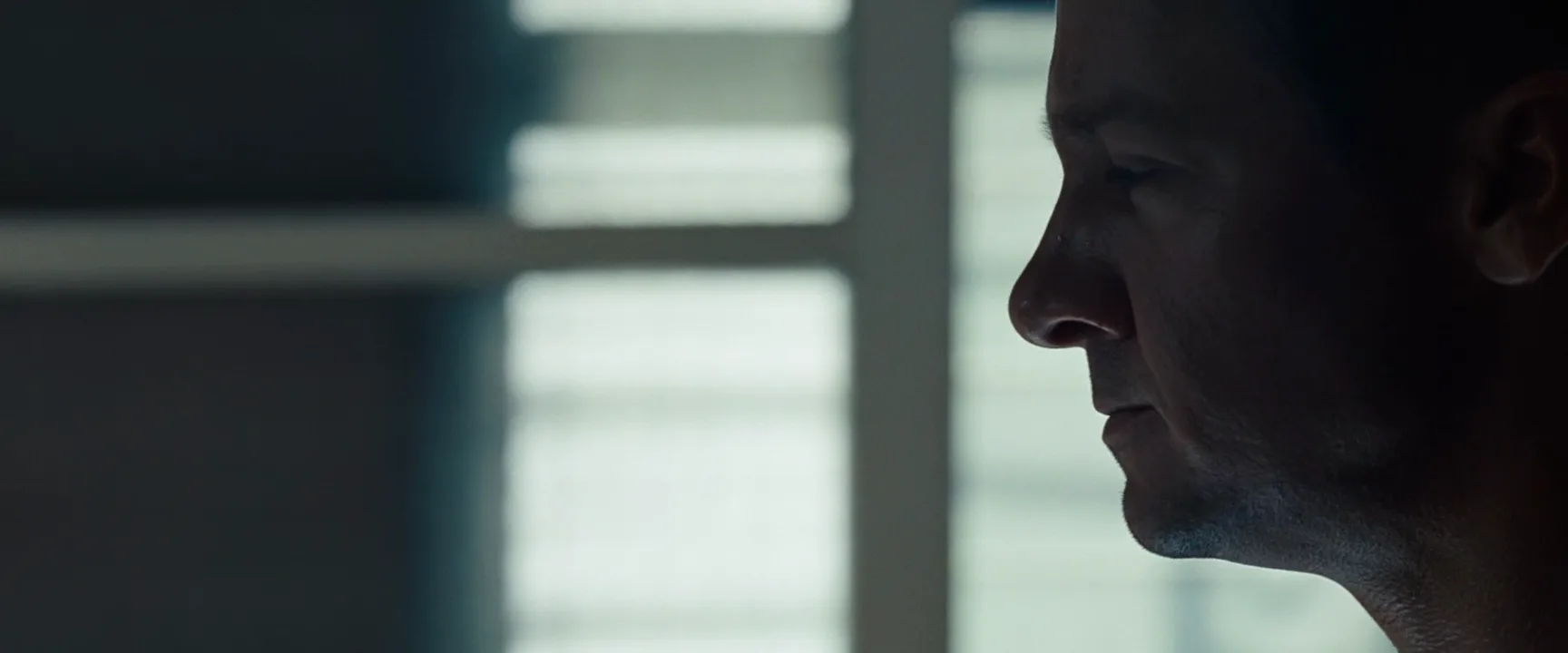
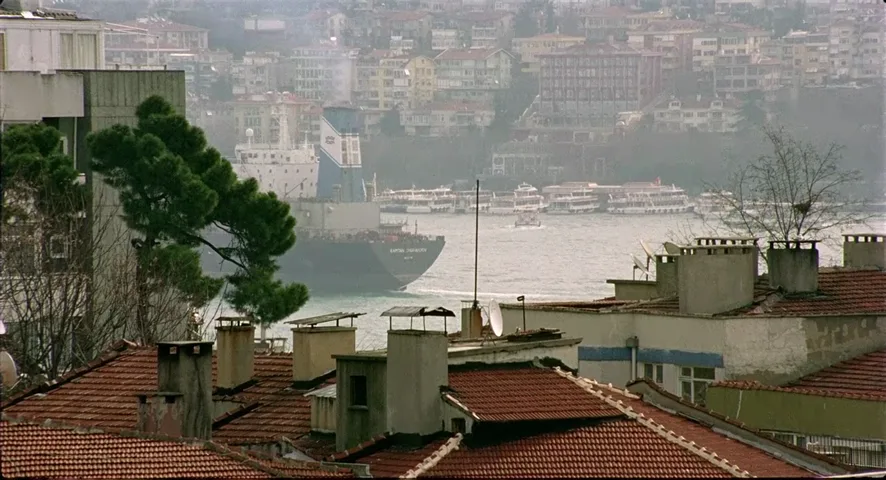
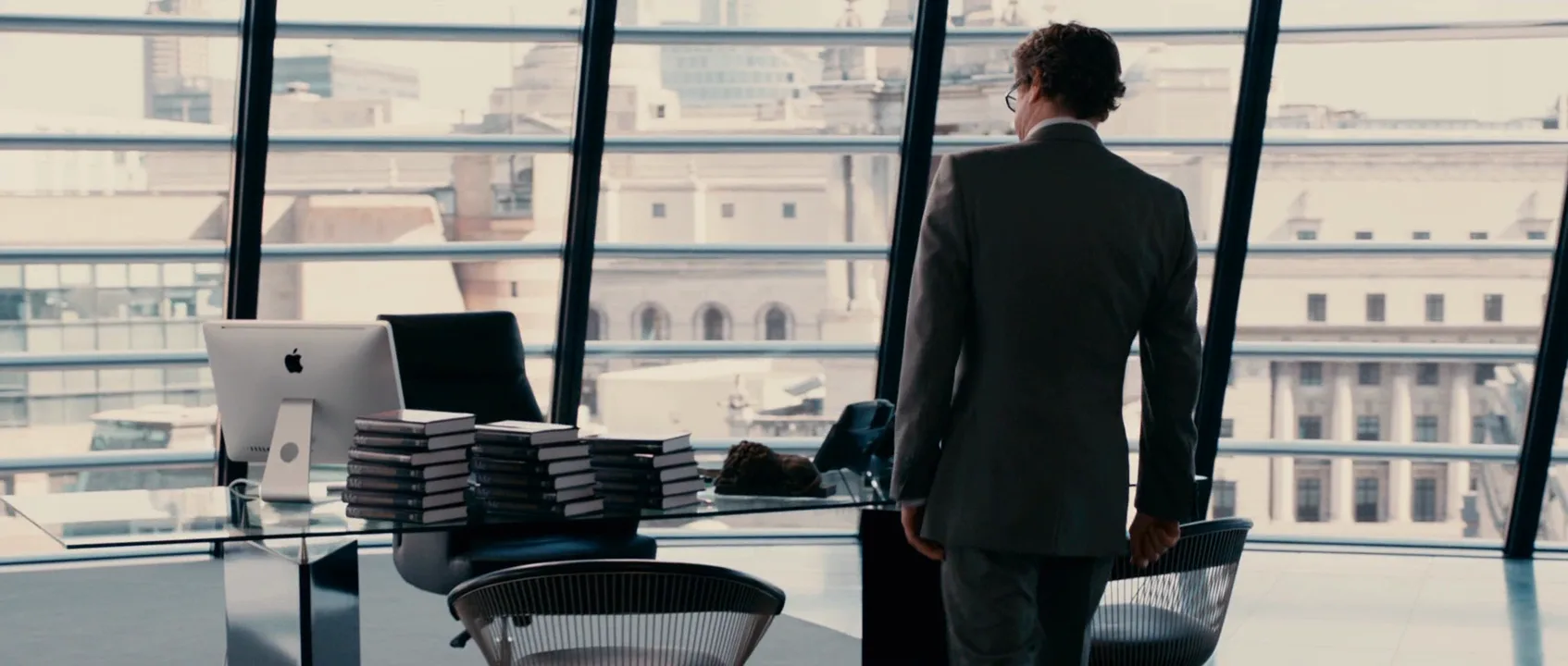
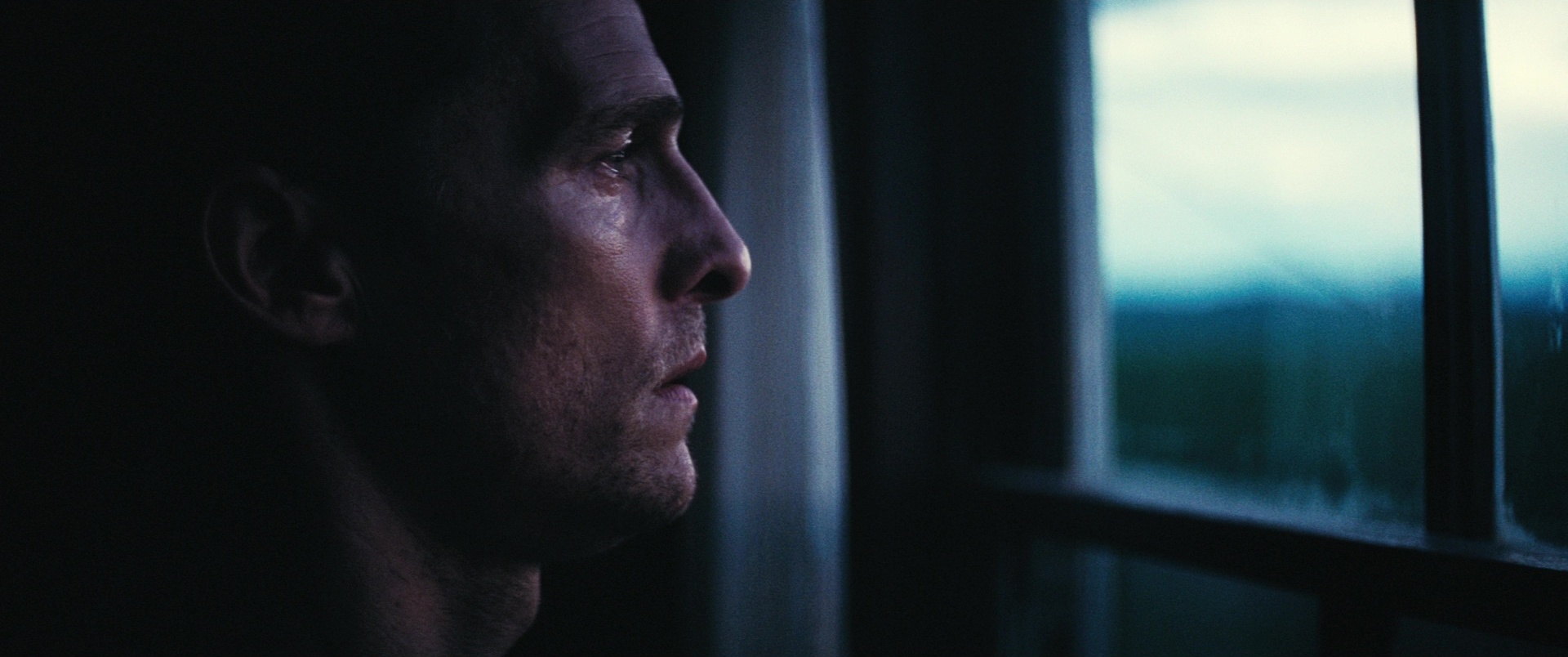
15 framesFifteen frames from 1964 to 2016 where the subject, the eyes or the horizon sit on a third line. Look at what fills the other two thirds in each one: space, light, a city, a wall of darkness.
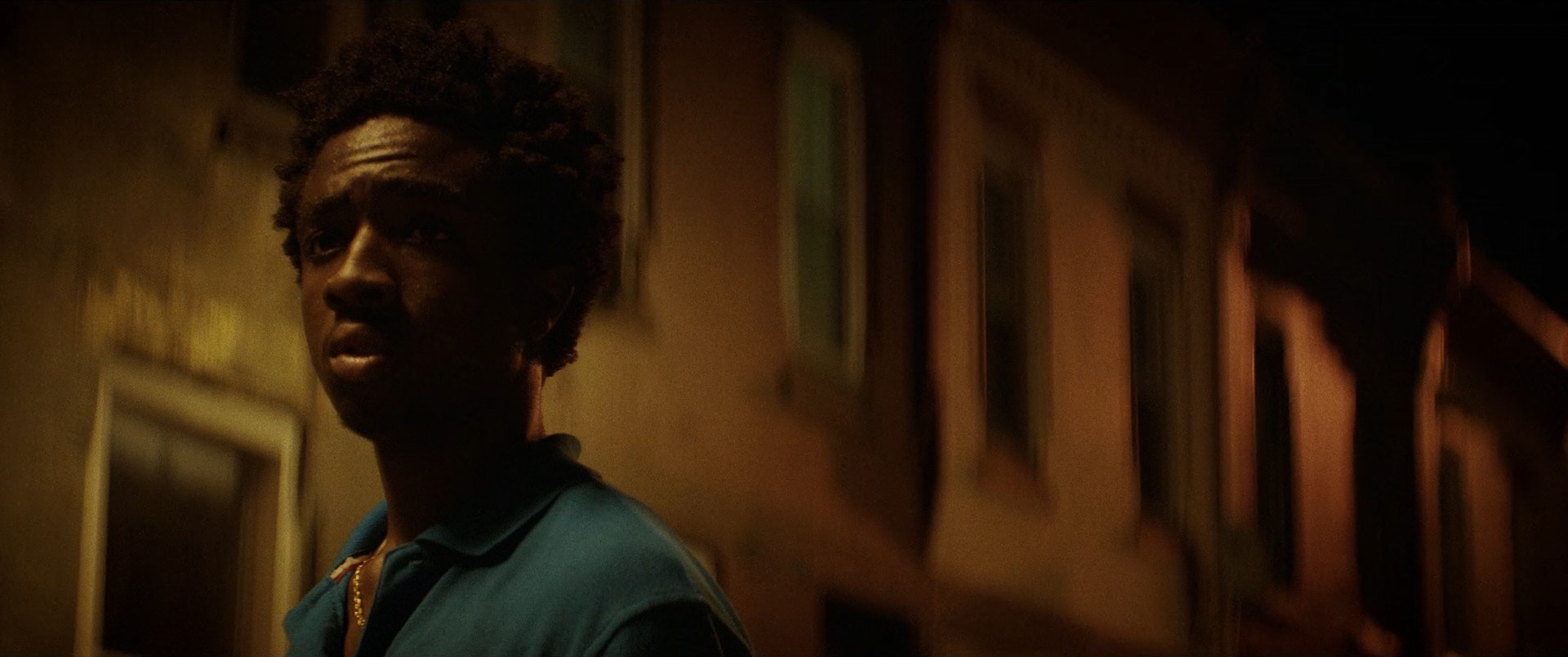
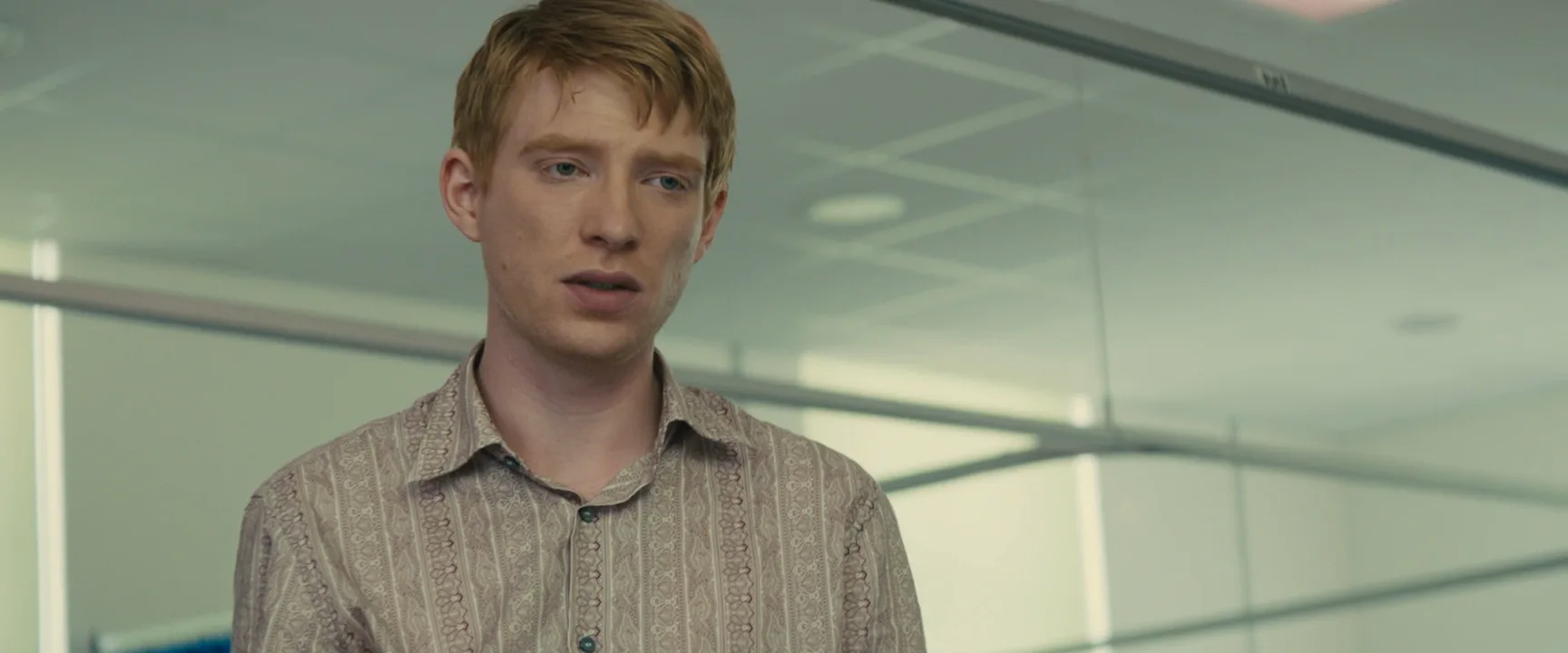
How to create a rule of thirds with AI
4 promptsImage and video models center subjects by default, so the rule of thirds has to be written into the prompt as positions, not as the phrase alone. Name the third line or intersection, the direction of the gaze, and what fills the empty side. In FlashBoards you can keep the film frames above, your generated takes and your notes on one board and compare the grid placement side by side. The fourth prompt re-shoots a real film shot from a text description alone, and the original plays next to the result so you can compare.
Cinematic wide shot, rule of thirds composition. A lighthouse keeper in her sixties with a short silver braid, deep laugh lines, a weathered olive raincoat and a red wool scarf stands on the right third line of the frame, her eyes on the upper-right intersection, looking left across the frame into open space. Low horizon on the lower third line, one third up from the bottom edge: dark grey sea and a black rock breakwater. The upper two thirds is heavy overcast sky with one pale break of light on the left. 35mm lens, camera at hip height tilted slightly up, soft diffused daylight, muted teal and slate palette, 35mm film grain.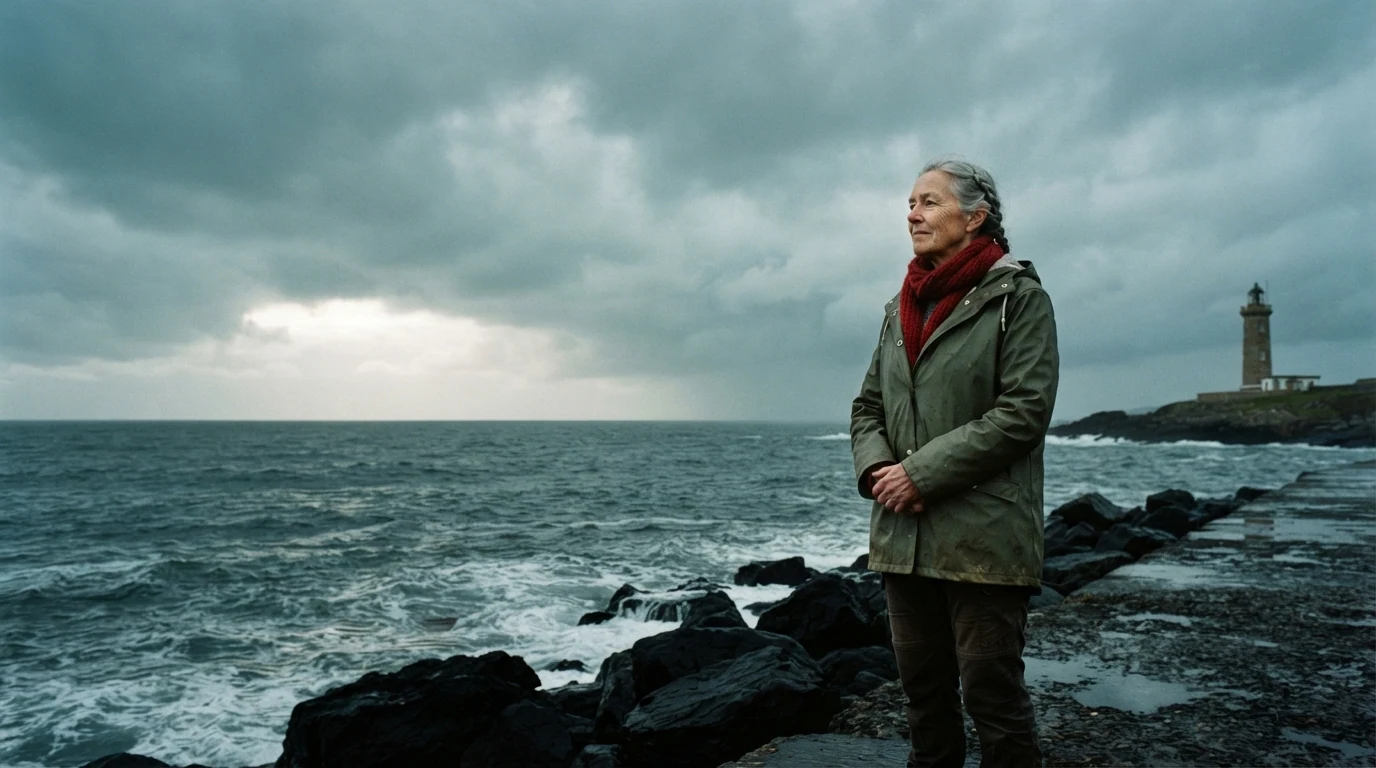
"Right third line", "eyes on the upper-right intersection" and "low horizon on the lower third line" give the model coordinates instead of a style word; a camera at hip height tilted slightly up is what physically keeps the horizon that low. "Looking left across the frame into open space" sets the look room, and the break of light on the left gives the empty side a second visual weight to balance her.
Open FlashBoardsAnamorphic widescreen film still, interior of a narrow all-night diner. On the left third line a young cook with a shaved head, freckles and a small burn scar on his forearm sits at the counter facing right. On the right third line a waitress in her forties with curly auburn hair pinned up with a pencil stands behind the counter facing left. Both pairs of eyes sit on the upper third line. The center of the frame is a stretch of empty counter with a single white coffee cup. 40mm anamorphic lens at seated eye height, warm tungsten practicals, green neon glow from the window behind them.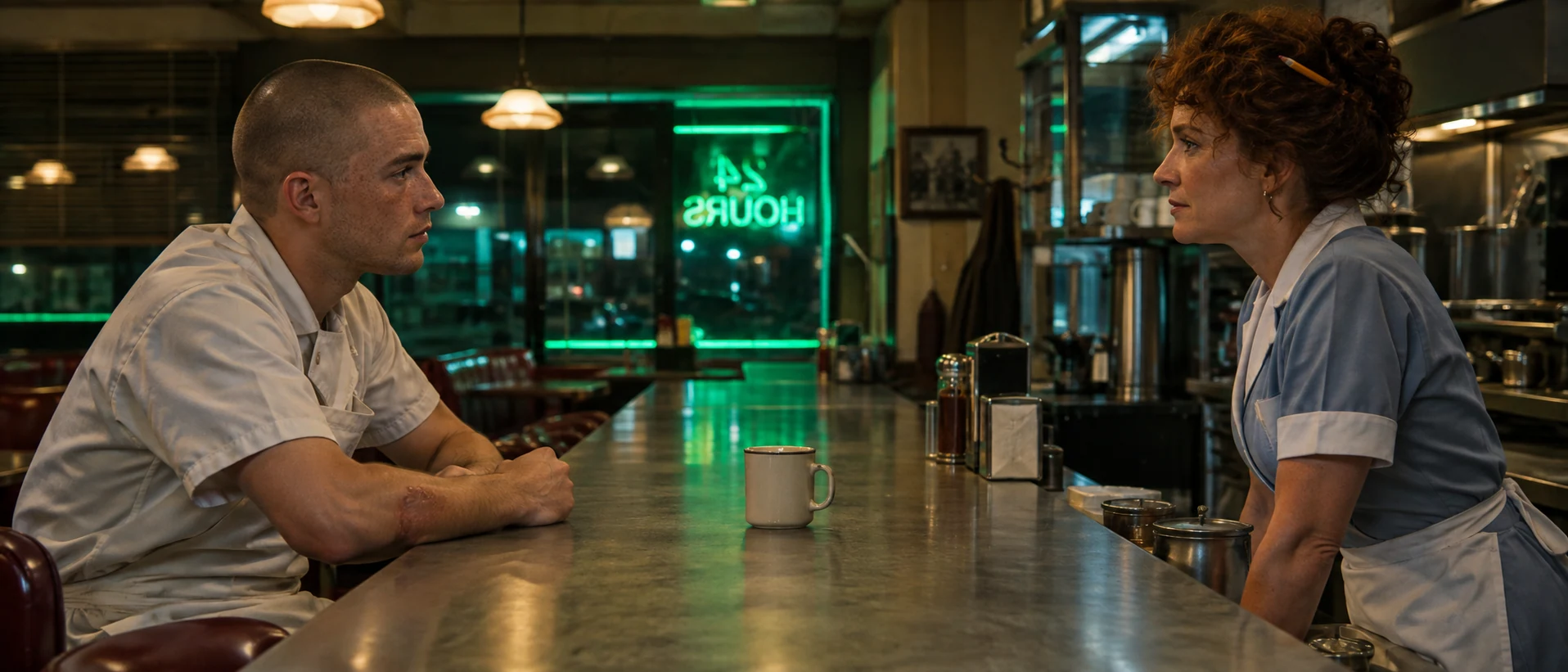
A second take in 21:9, where thirds sit far apart: two people on opposite third lines with the empty counter between them is the classic widescreen two-shot. "Facing right" and "facing left" lock the eyelines toward each other, and "eyes on the upper third line" keeps both heads at the same height.
Open FlashBoardsCamera: a slow, steady push-in from the first frame, drifting slightly right as it moves so the woman stays on the right third line and the horizon stays low; it ends as a medium-wide shot. Action: Her red scarf and the hem of her raincoat whip in a strong wind while grey waves break white against the breakwater. She raises one hand to shade her eyes and keeps looking left across the sea. Near the end she lowers her hand and the pale break of light in the sky widens.The wind, the waves and the scarf put motion into the shot from the first frame, so the model does not settle into a slow push on a still. "Drifting slightly right so the woman stays on the right third line" tells it how to keep the composition during the move; without it, a push-in drags an off-center subject toward the edge or recenters her.
Open FlashBoards{
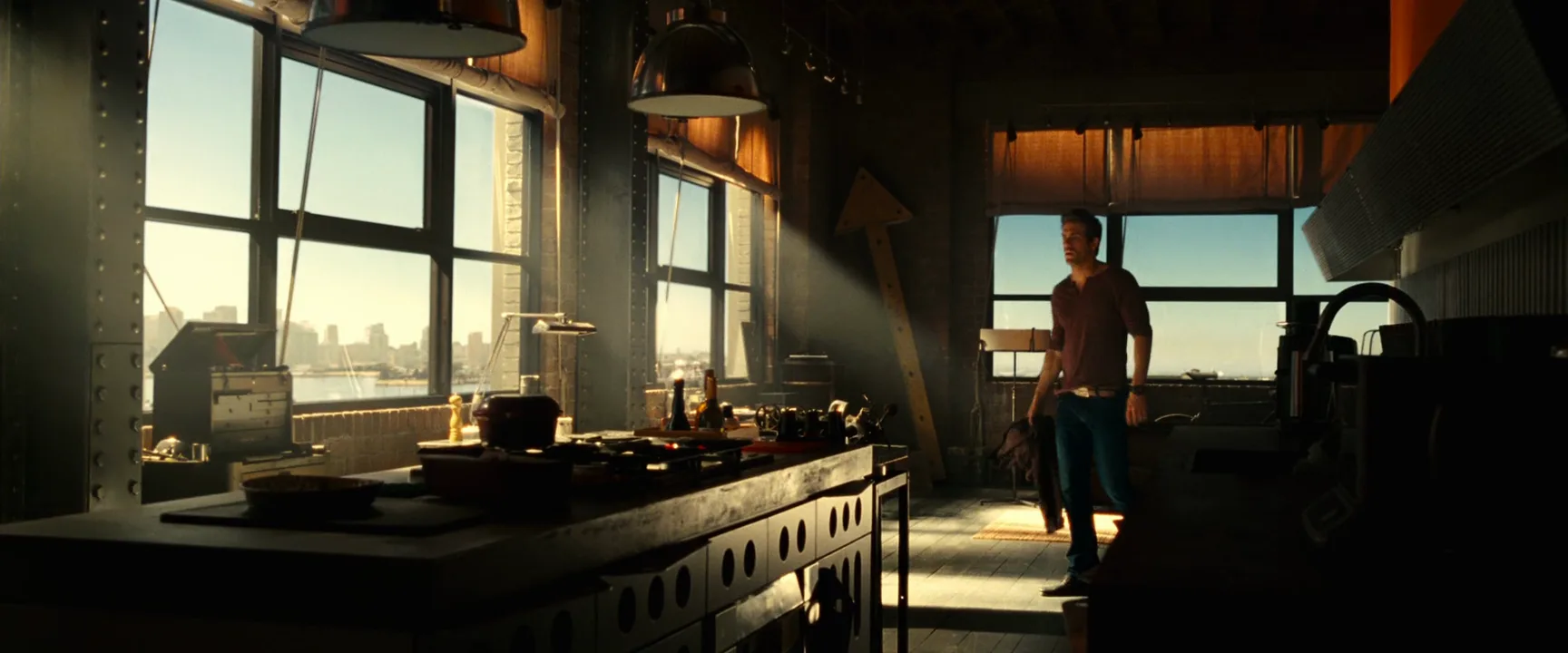
"output": "Full-screen live-action shot from Green Lantern (2011) from its very first frame: one continuous locked-off wide shot, no cuts. Anamorphic 2.39:1 35mm look, a high-ceilinged industrial loft kitchen at golden hour, low-key interior in deep brown shadow, warm amber sunlight and a pale cyan sky in the windows, fine film grain. Rule-of-thirds composition: the man stays deep in the room in the right third of the frame, always a full figure, and ends standing on the right third line, while the huge bright windows and the shaft of light fill the left two thirds.",
"characters": {
"S1": {
"name": "Hal Jordan, played by Ryan Reynolds",
"look": "man in his thirties, short dark-brown hair, light stubble, fitted maroon henley with the sleeves pushed up to the forearms, dark blue jeans, brown belt, black wristwatch on his left wrist, a folded dark-brown leather jacket in his hands",
"voice": "silent, only breath"
}
},
"shots": [
{
"shot": 1,
"camera": "locked-off tripod, eye level, wide anamorphic lens, deep focus, the frame stays perfectly still and wide for the whole shot, the man always seen full figure from head to shoes. Left two thirds: two tall steel-framed factory windows full of bright sky, a distant city skyline and a strip of bay; a thick diagonal shaft of sunlight falls through dusty air from the upper left toward the centre of the room; two large metal pendant lamps hang at the top edge; a long dark kitchen island with a range, pots and bottles runs across the lower-left foreground, close to the camera. Right third, deep in the room: a lower window with an orange roller blind pulled halfway down, a slim floor lamp, a tall plain wooden arrow shape pointing up and leaning on the brick pillar, a warm patch of sunlight on the wooden floor, a dark steel range hood in the upper right corner and a dark counter silhouette along the lower right edge.",
"action": [
"BEGINNING: alive from the first frame, S1 is perched on a high seat in front of the right-hand window, deep in the room between the right third line and the right edge, small in the frame, a dark figure rimmed with sunlight, in profile facing screen left, his gaze across the loft toward the big bright windows, the folded leather jacket held in both hands on his lap.",
"THEN: he lifts the jacket off his lap with both hands and shifts his weight forward, still looking left.",
"THEN: he pushes off the seat and steps down to the floor, the jacket swinging down into his right hand on the screen-left side of his body, his body turning toward the camera.",
"THEN: he takes three short, unhurried steps forward and slightly to screen left, staying deep in the room beyond the far end of the kitchen island, far from the camera, the jacket hanging from his right hand, his left arm swinging loosely, his head lifting toward the tall windows on the left.",
"THEN: he slows as he reaches the right third line of the frame, sunlight catching his face and the maroon shirt.",
"END: he stops and stands still on the right third line, still far from the camera, a full figure from head to shoes with his shoes on the floor just above the bottom edge and his eyes on the upper third line, feet apart, looking up and off to screen left toward the light, brow slightly drawn, lips closed, the jacket hanging from his right hand, his left hand loose at his side; the windows and the sunbeam still fill the left two thirds."
],
"voice": "silence: nobody speaks in this shot, no voice at all",
"dialogue": []
}
],
"sound": {
"ambience": "quiet loft room tone, a soft creak as he gets up, his footsteps on the wooden floor, a faint city hum heard from outside",
"speech": "no words in this video; the only human sounds are breaths and movement",
"never_spoken": "no narration and no voice-over: the descriptions, performance notes and step words of this prompt are never spoken aloud",
"music": "a film score under the scene, always below the voices: soft sustained strings with a slow, hopeful piano motif",
"subtitles": "none"
}
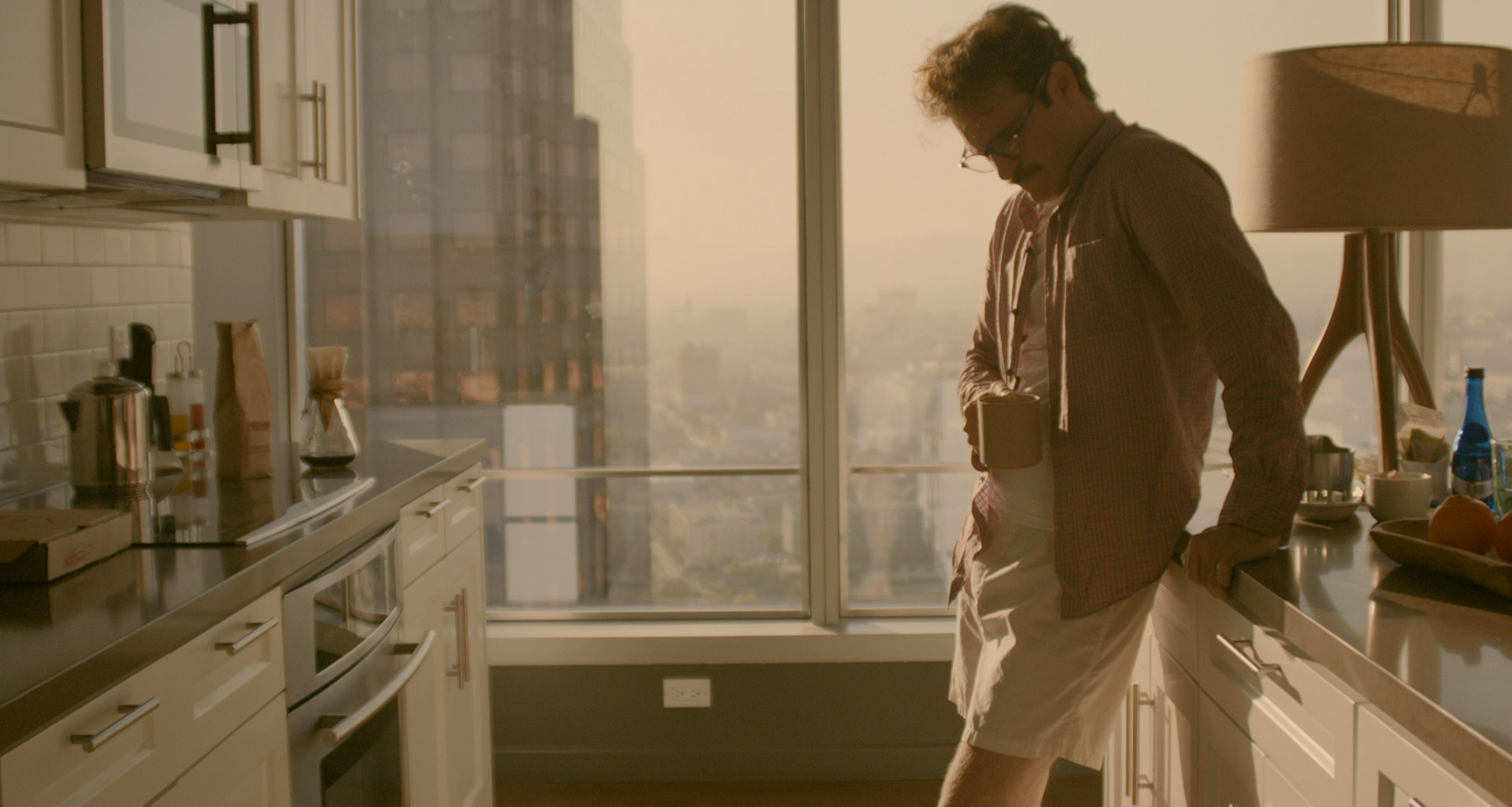
}Remakes the wide loft shot from Green Lantern (2011), dir. Martin Campbell, DP Dion Beebe: the prompt carries over the locked-off anamorphic frame, the sunlit windows filling the left two thirds and Hal Jordan's silent rise from the window seat to a stop on the right third line.
The JSON doesn't stop at "rule-of-thirds composition": it assigns the grid. The windows and the sunbeam are listed as the left two thirds, and Hal Jordan starts between the right third line and the edge and ends standing on that line with his eyes on the upper one. A locked-off frame, "far from the camera" and "always a full figure" keep him deep in the room; a first take without them walked him up to the lens.
Open FlashBoardsCommon mistakes
- The model recenters the subject. "Rule of thirds" alone is often ignored. State the line ("on the right third line") and the gaze direction ("looking left across the frame").
- Look room flips. Models often put the subject on the right third but facing right, into the edge. Name the direction of the eyes and what they look at on the other side.
- Horizon lands in the middle. Write "low horizon on the lower third line" or "high horizon on the upper third line" and describe what fills the larger area.
- The empty side fills up. Image models like to put props in open space. Describe the empty area as what it is, "overcast sky", "plain dark wall", so it stays calm.
- Video drifts back to center. On camera moves, say how the camera corrects ("drifting right so she stays on the right third") or keep the move small.
Keep the reference frames, prompts and every generated take side by side — images and video in one canvas.
FAQ
5 questionsWhat is the rule of thirds in film?
It is a composition guideline that divides the frame into a three-by-three grid and places key elements on the lines or their four intersections instead of the center. In film it usually means a subject on the left or right third, eyes on the upper third line and horizons on the upper or lower third. It gives off-center frames that still feel balanced and leaves space for gaze and movement.
What are some rule of thirds examples in movies?
Look at dialogue coverage in almost any feature: faces on opposite thirds in shot and reverse shot. Clear examples include a face on the right third against dark space in Marnie (1964), a woman on the left third of a bathroom in The Royal Tenenbaums (2001), and the figure on the right third of the kitchen in Her (2013).
Where should the eyes be in the rule of thirds?
On or near the upper horizontal third line, ideally close to one of the two upper intersections. For a medium close-up that leaves natural headroom; for a tight close-up the eyes can rise slightly above the line and the frame can cut the forehead. The face goes on the third opposite the direction the character looks, so the gaze has room.
Is the rule of thirds the same as the golden ratio?
No, but they are close. The rule of thirds puts its lines at one third and two thirds of the frame; a golden-ratio grid puts them at about 38 and 62 percent, slightly nearer the center. Both move the subject off center. On set the difference is small, and most monitors only offer the thirds grid.
When should you not use the rule of thirds?
When you want a frame to feel formal, confrontational, symmetrical or deliberately wrong. Centered subjects project authority or threat, symmetrical sets need the middle, and extreme edge placement or short siding can create isolation and tension. Breaking the grid works best when the rest of the scene follows it, so the break reads as a choice.
Related terms
5- Center FramingComposition & Framing
Center framing puts the subject on the vertical center line of the frame, giving it instant dominance and a formal, confrontational or claustrophobic feel; unlike symmetry, the two sides need not mirror each other.
- Visual BalanceComposition & Framing
Visual balance is how visual weight — size, brightness, color, faces, movement — is distributed across the frame; it can be symmetrical or asymmetrical and makes a shot feel stable, or deliberately tipped and uneasy.
- Negative SpaceComposition & Framing
Negative space is the empty area around a subject — sky, wall, darkness, water — deliberately left large so the subject feels isolated, small, lonely or expectant, and the eye settles on it.
- Short SidingComposition & Framing
Short siding frames a character so they look or move toward the near edge of the frame, with most of the empty space behind them — breaking the usual lead-room convention to create tension, confinement or unease.
- Leading LinesComposition & Framing
Leading lines are lines in the frame — roads, rails, corridors, fences, architecture, beams of light — that carry the viewer's gaze toward the subject or deeper into the space.
Further reading
John Thomas Smith, Remarks on Rural Scenery (1797). Gustavo Mercado, The Filmmaker's Eye (Focal Press). Blain Brown, Cinematography: Theory and Practice (Focal Press).