 FlashBoards Learn
- Learn
- Composition & Framing
- Negative Space
Composition & Framing · Film language
Negative Space
Also called: empty space, breathing room
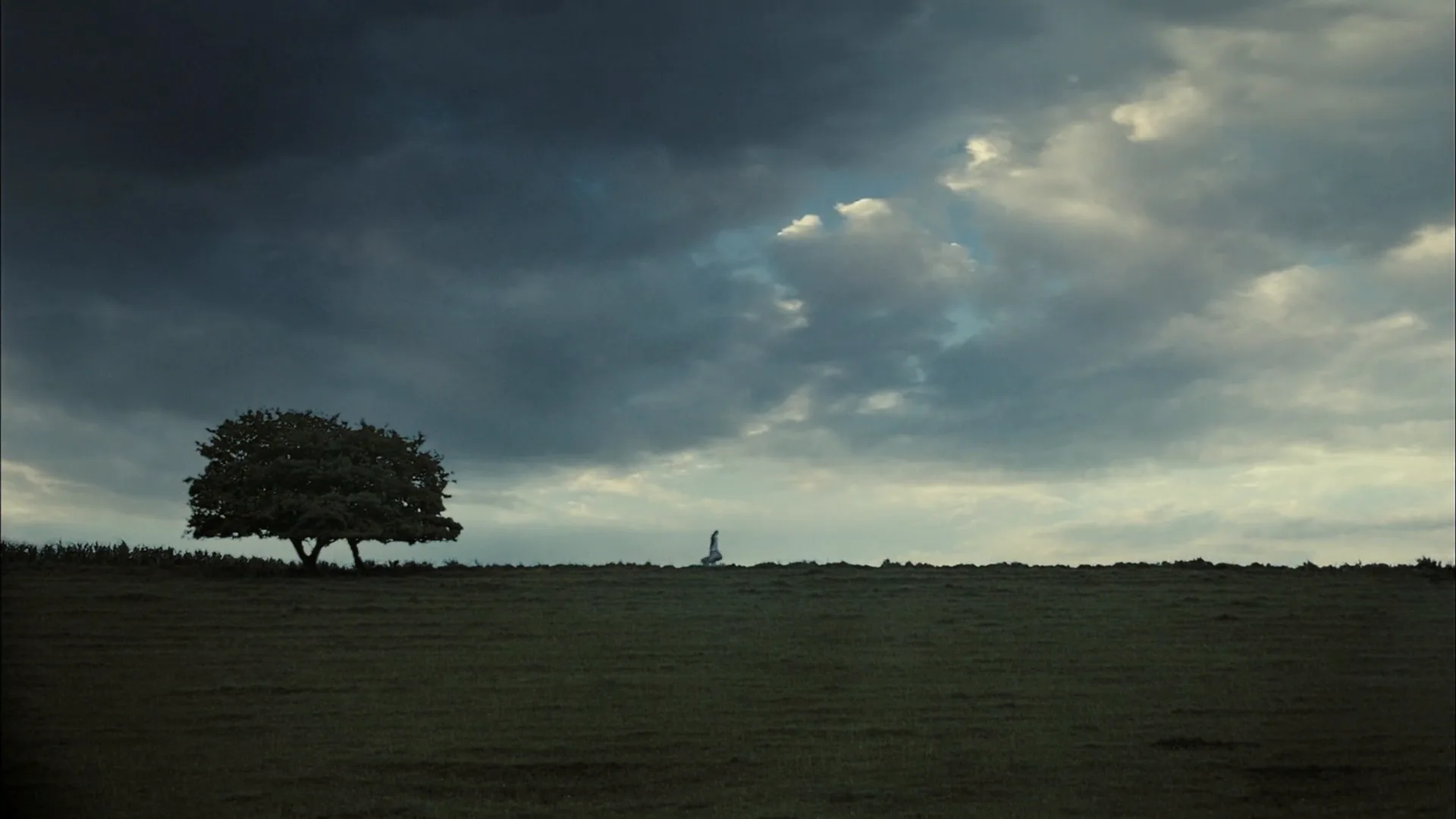
Negative space is the empty area around a subject: sky, wall, darkness, fog or water, deliberately left large. It makes the subject feel small, isolated, lonely or expectant, and because nothing else competes for attention, the eye settles on the one thing in the frame that is not empty.
- What it does
- Isolates the subject and gives the frame a mood of loneliness, smallness, calm or waiting.
- Use it when
- The emotion is about distance, solitude or scale, or you want the audience to wait for something to fill the gap.
- Watch out
- Empty is not the same as busy-but-dark: any texture, sign or bright spot in the field steals the eye.
- Try this prompt
a lone figure small at the lower right third, a vast blank grey concrete wall filling 85% of the frame, flat soft light, 2.39:1 film still
What is negative space in film?
Every frame splits into two kinds of area. Positive space is the subject: a face, a figure, a tree. Negative space is everything around it that carries no information of its own: open sky, a bare wall, a black void, snow, fog. Composing with negative space means making that empty area deliberately large, often several times larger than the subject.
The empty part changes how the subject feels: the same actor looks confident when he fills the frame and lost when a wall swallows most of it. That makes negative space a core tool of film composition.
Graphic designers say white space; in film the terms are negative space, empty space or breathing room. The field does not have to be white; black is just as common.
Why filmmakers use negative space
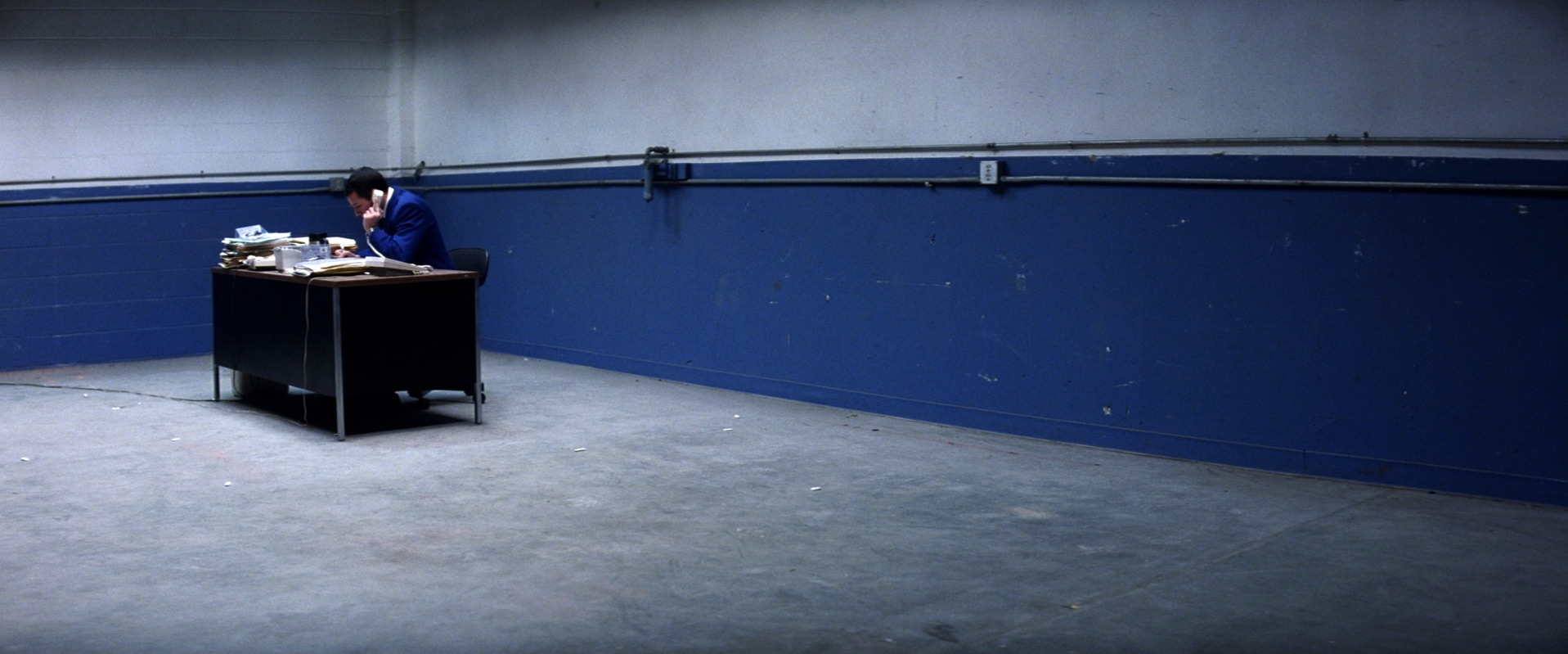
Isolation. One figure in a mostly empty frame feels alone before anyone speaks. Paul Thomas Anderson's Punch-Drunk Love (2002) keeps placing Barry small against flat, oversized walls.
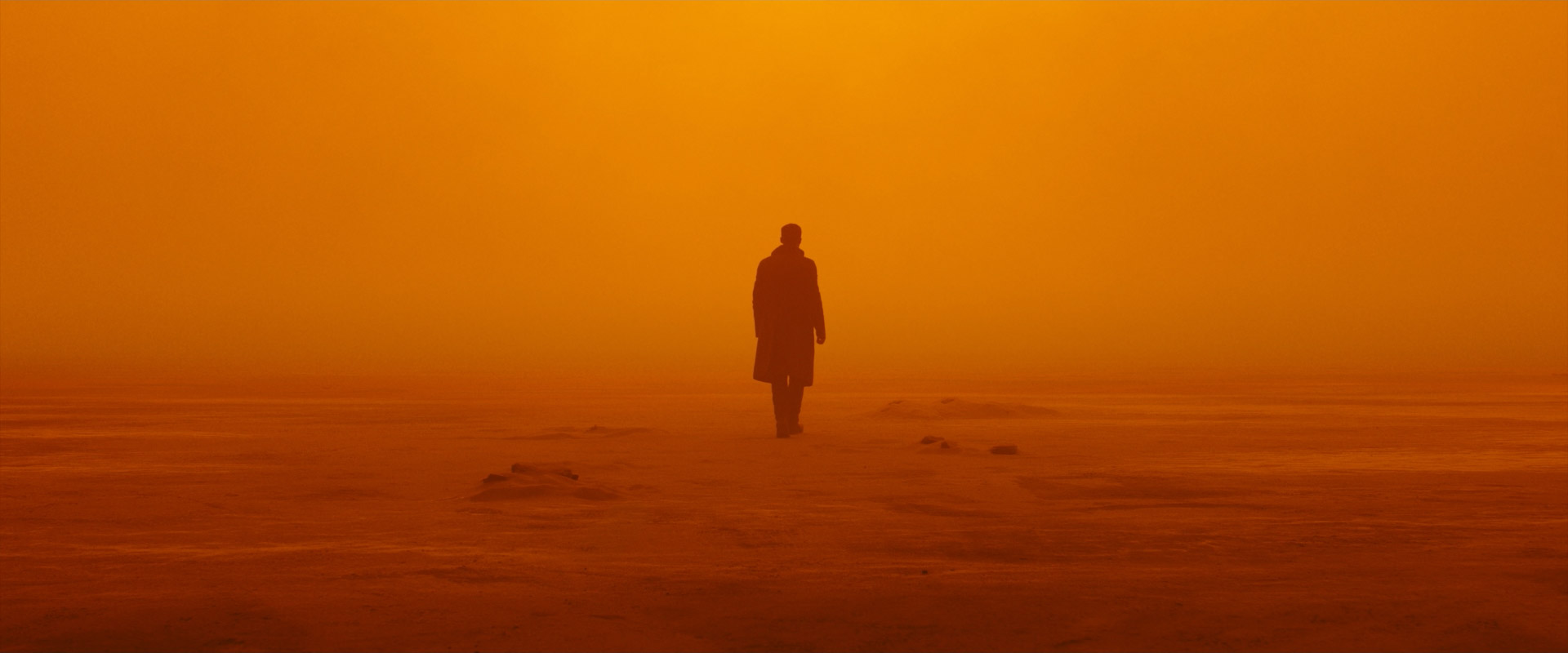
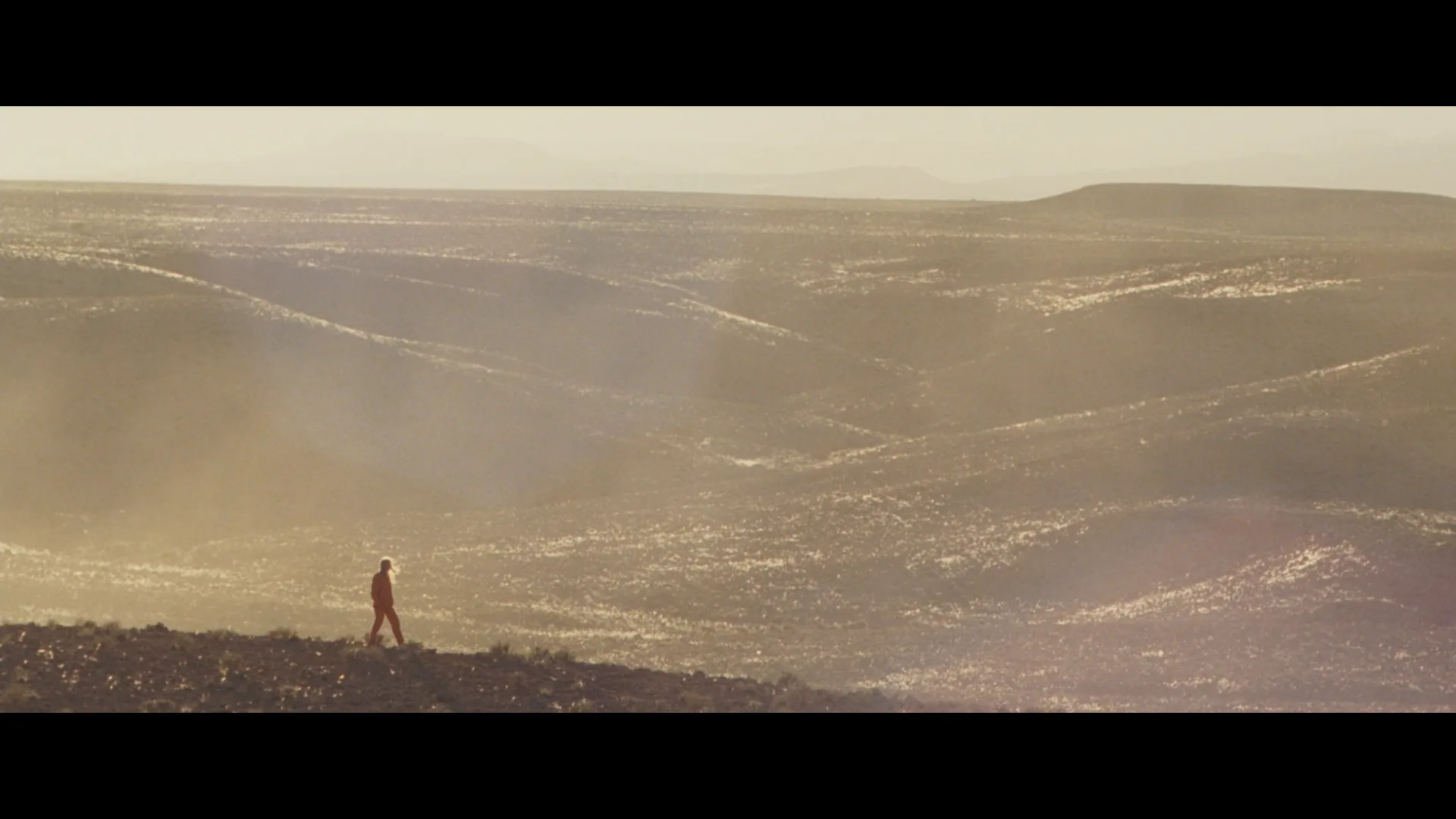
Scale. When the field is a landscape or atmosphere, the person shrinks against the world, as in Blade Runner 2049 (2017), where figures dissolve into dense orange haze.
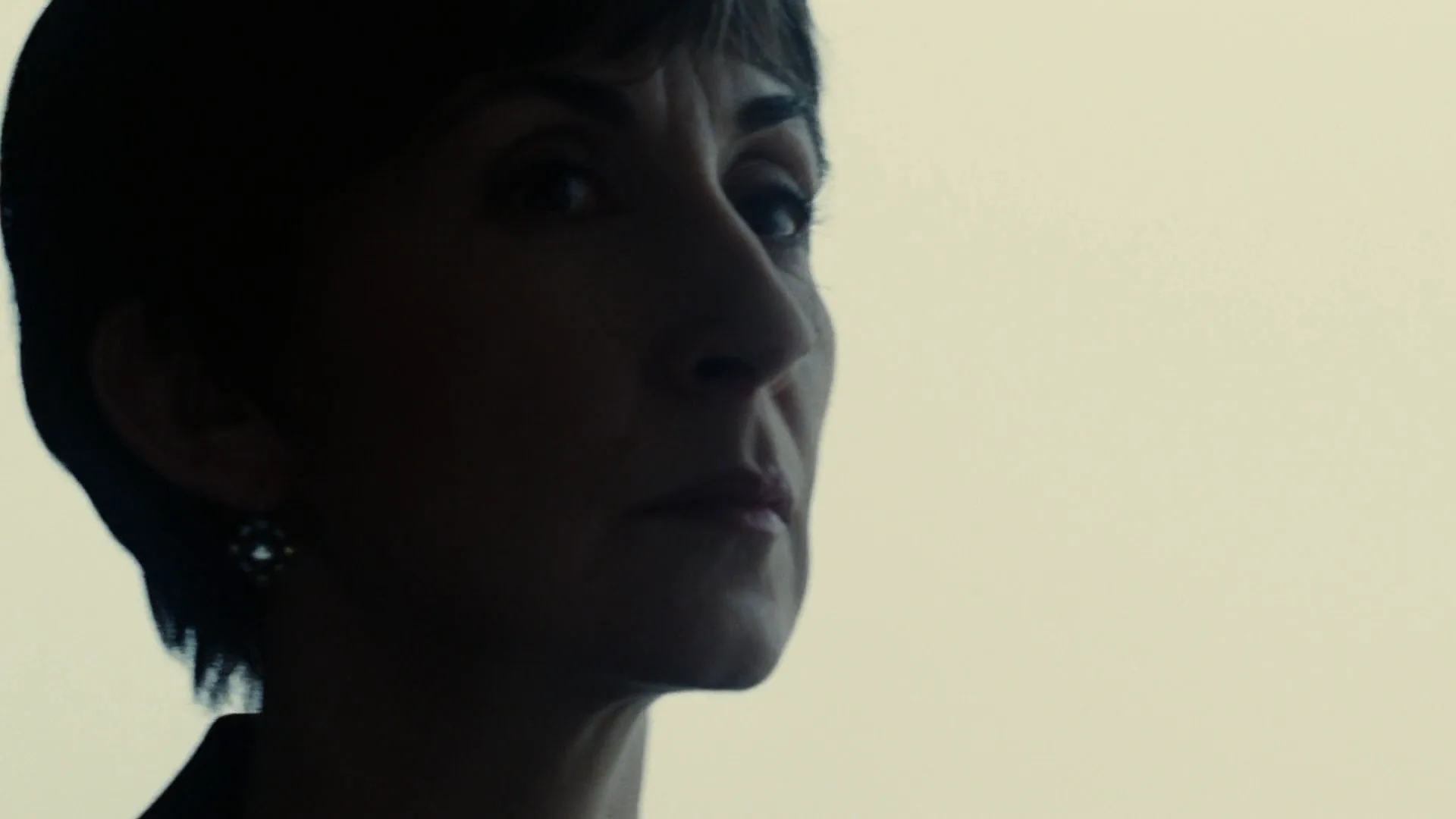
Unease and expectation. Push a character to one side and leave the rest blank, and the audience starts watching the blank, waiting for someone to enter it. The series Mr. Robot (2015) made this its signature, parking faces low in the corner under huge areas of wall.
It is also a question of visual balance: the empty area has weight, and you decide which way the frame tips.
How to shoot negative space
Pick a clean field. Look for one tone and texture: overcast sky, a painted wall, still water, snow, fog, or darkness underexposed by two to three stops.
Make the subject small or push it to the edge. Let the empty area take 60–90% of the frame. A line from the rule of thirds feels stable; the very edge of frame adds pressure.
Decide where the space sits. Space in front of the eyeline gives the character somewhere to look. Space behind them is short siding and feels trapped.
Separate by tone. A dark figure on a bright field, or a lit face on black.
Lens and format. A wide lens up close makes the field feel huge; a telephoto from far flattens a wall or sky into one plane. A 2.39:1 frame gives more room to leave empty.
Hold the shot. Lock off, keep the actor still, and cut later than feels comfortable.
Can a close-up use negative space?
Yes. Instead of shrinking the person, push the face to one side and leave the rest as out-of-focus wall, window or darkness. It pairs naturally with a profile shot: the character looks across the empty field toward someone off-screen, and the gap becomes the subject.
Negative space vs. extreme long shot
An extreme long shot is a shot size: people become tiny against the environment. Negative space is a compositional choice at any size. A wide shot of a crowded street has little negative space; a close-up against a blank wall has a lot. Combine them, a tiny figure under an empty sky, and you get scale and isolation in one image.
Negative Space examples in film
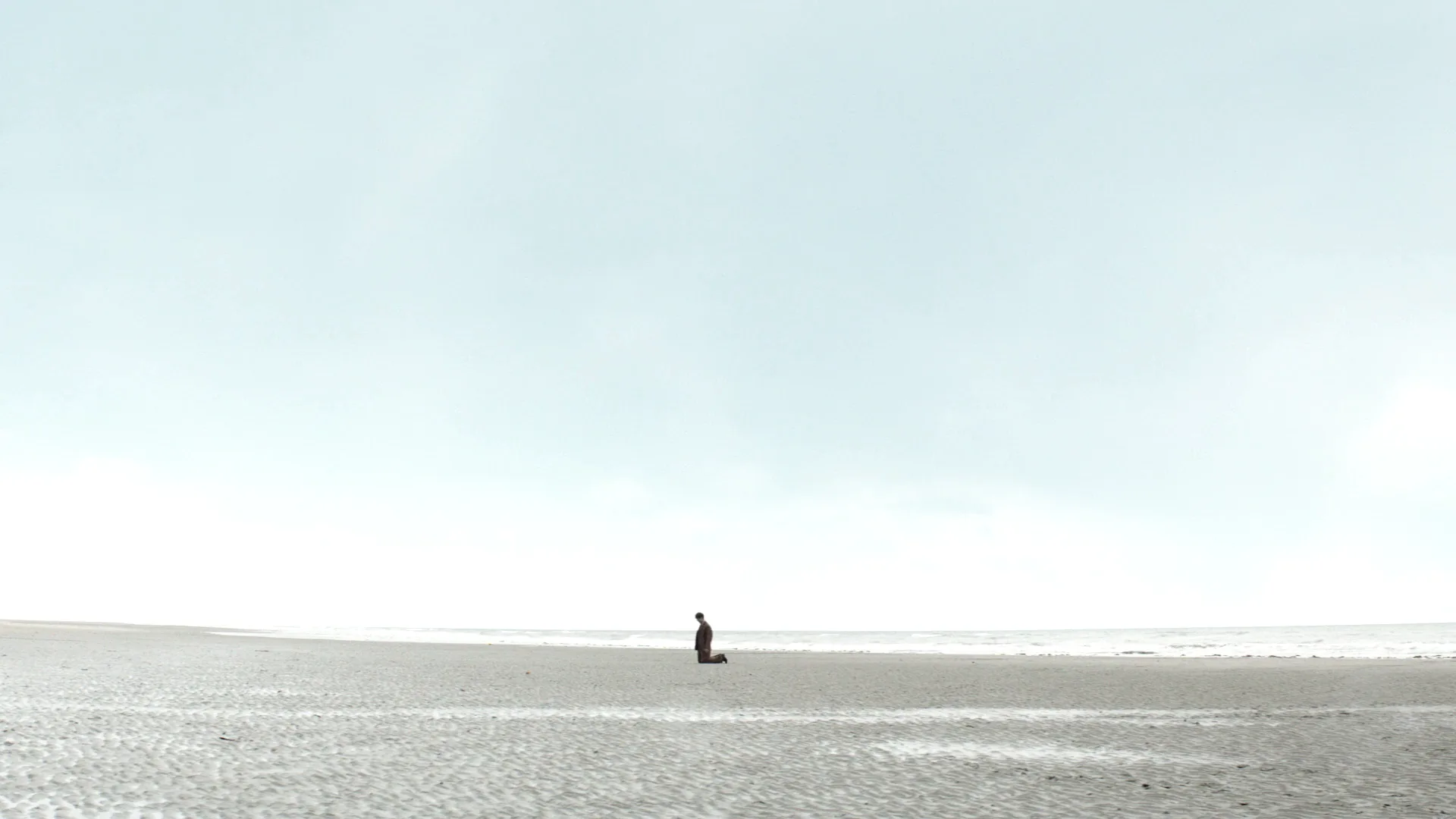
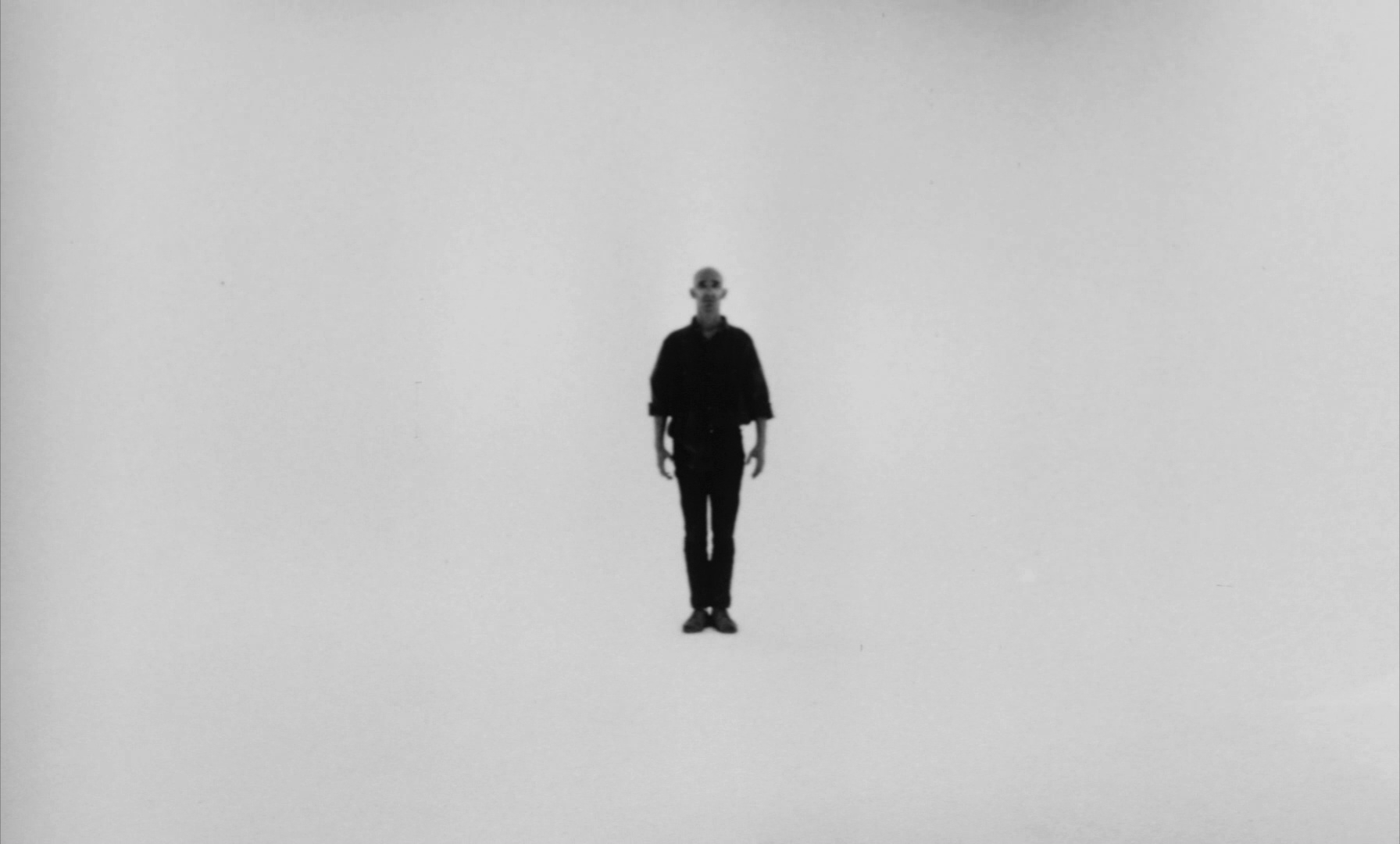
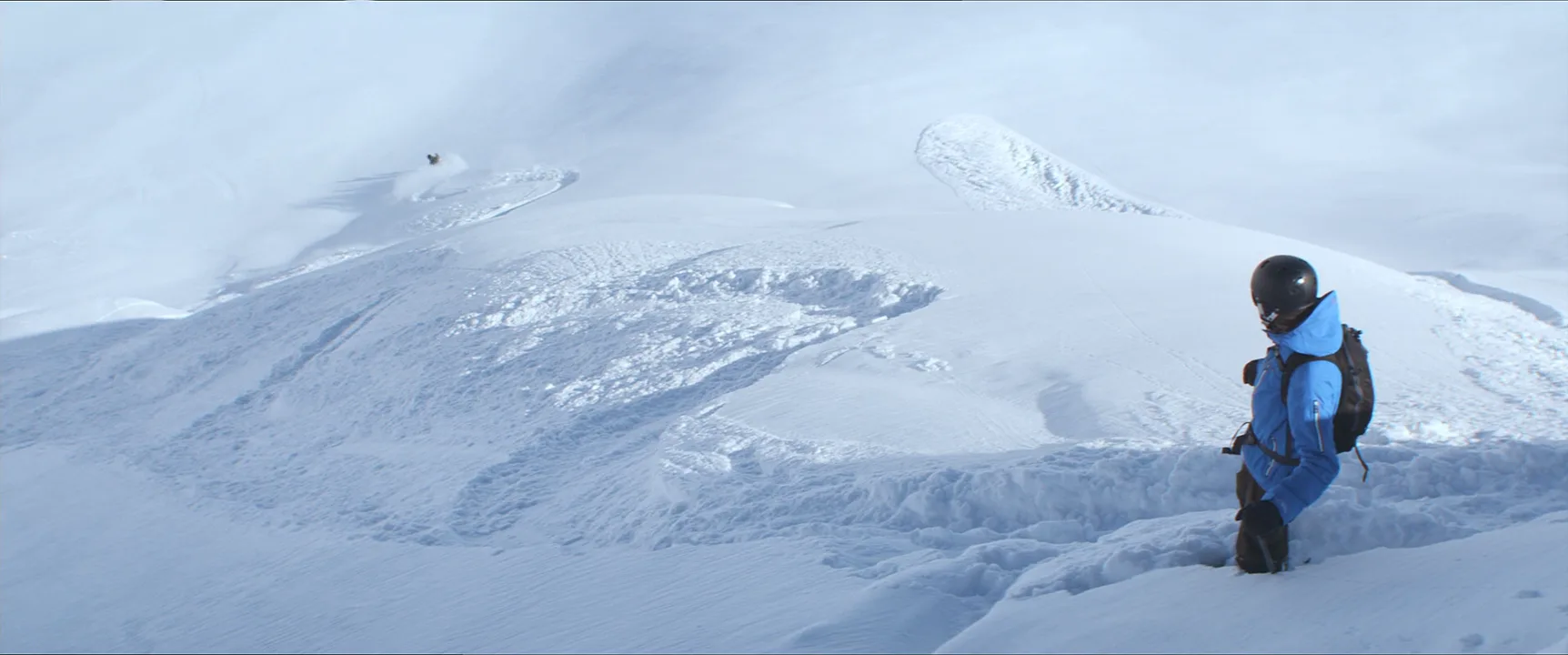
8 framesEight frames where the empty area does the work, from landscapes to a single face.
How to create a negative space with AI
4 promptsModels center the subject and fill backgrounds with detail, so state negative space as proportions and surfaces, not just "minimal". In FlashBoards, build the start frame with Nano Banana 2 Lite, try a close-up take with GPT Image 2.5 and animate frame one with MiniMax H3 Max Turbo, all on one board next to the film frames. The fourth prompt re-shoots a real film shot from a text description alone, and the original plays next to the result so you can compare.
Extreme wide shot from across the street, negative space composition. A tall man in his sixties with a shaved head, a short white beard and a long charcoal wool coat is a tiny distant figure at the lower right third, no taller than 15% of the frame height. A vast blank pale-grey concrete wall fills 85% of the frame, smooth and even. Wet dark pavement at the bottom edge. Light drizzle, flat overcast light, eye level, 35mm lens. Quiet, lonely film still.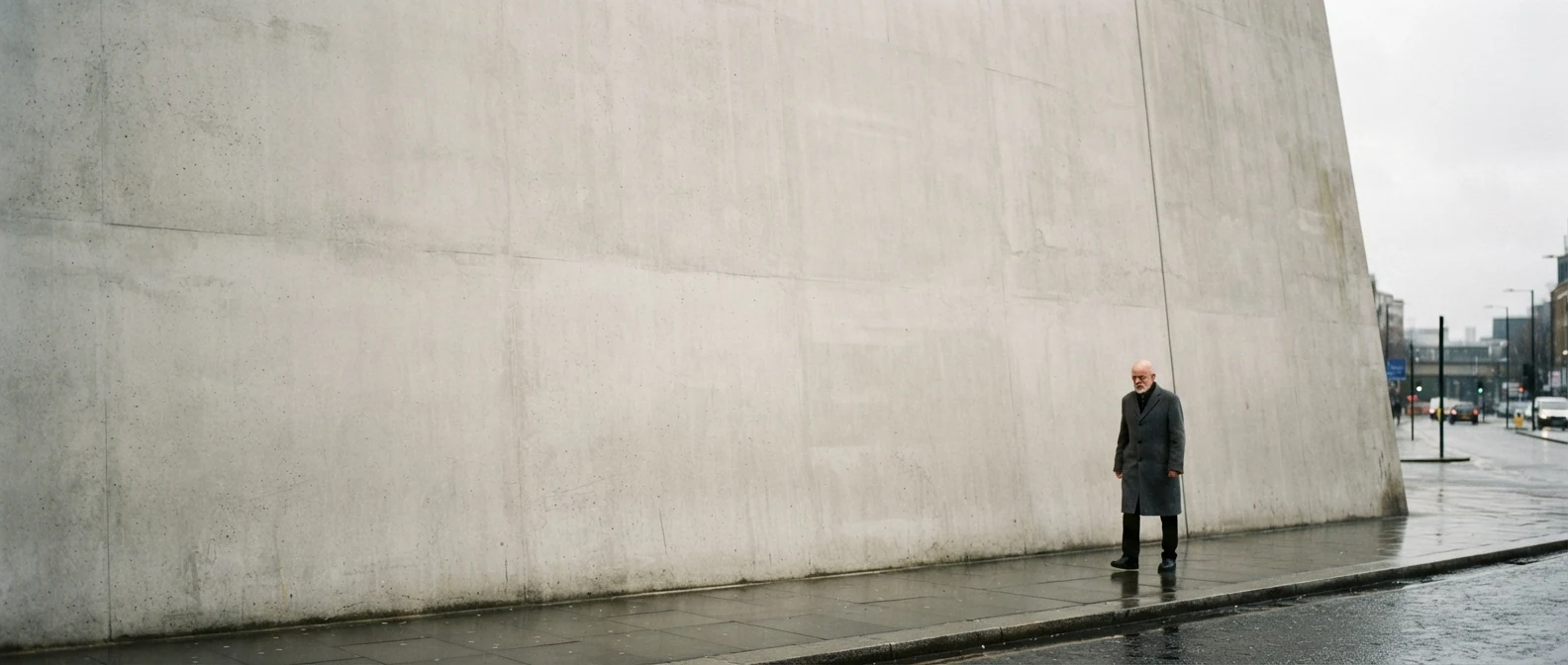
Tiny distant figure, no taller than 15% and fills 85% turn the idea into numbers. Blank, smooth and even keeps the wall empty; lower right third stops centering. Drizzle gives the video recipe motion.
Open FlashBoardsClose-up profile, negative space composition. A woman in her thirties with a shaved head, dense freckles and a small silver ring in her left eyebrow sits at the far right edge of the frame, looking left. The left 75% of the frame is an out-of-focus dusk-blue window, one smooth tone. Soft side light, 85mm lens, eye level. Still, withdrawn film still.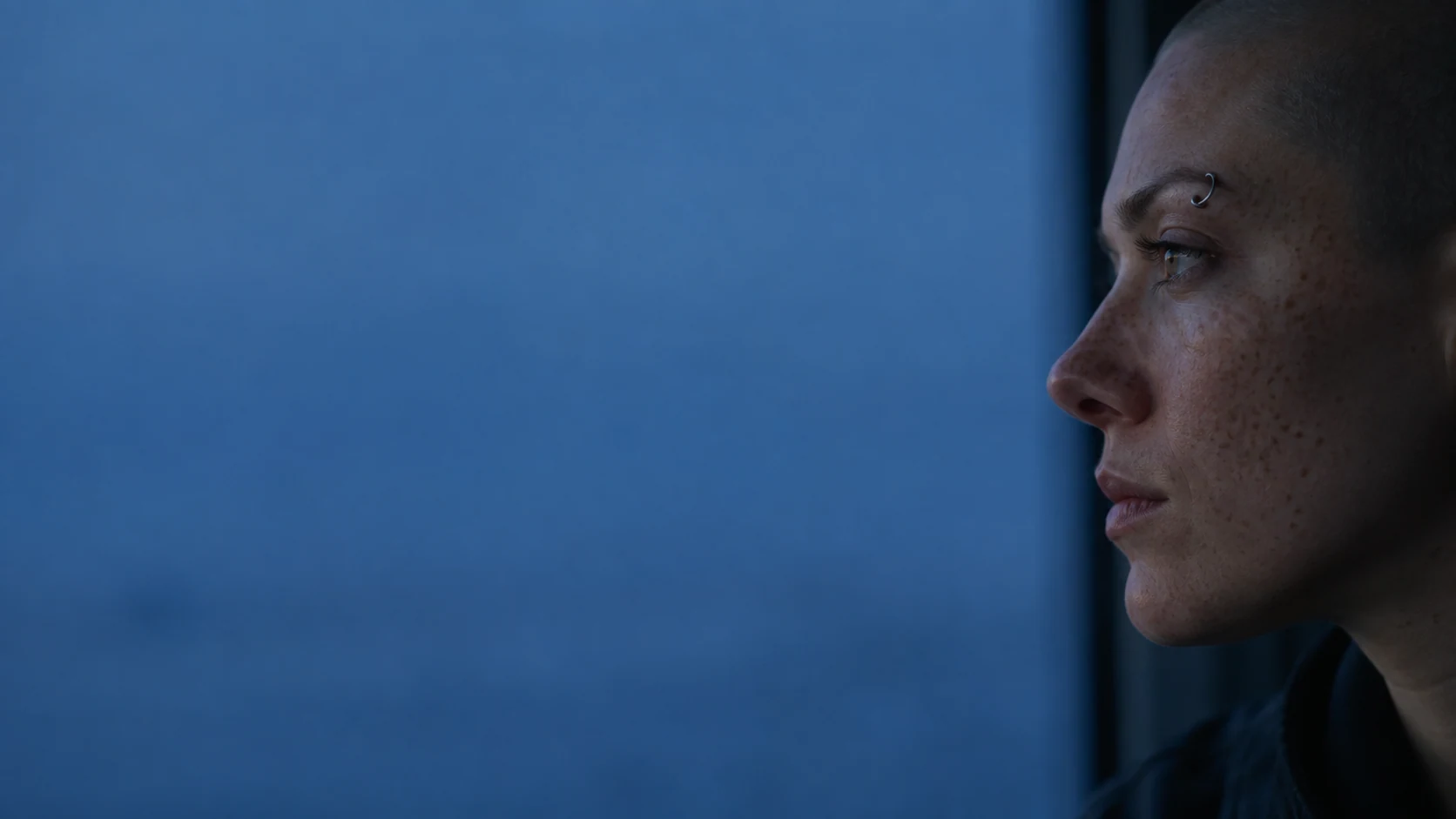
Negative space in a close-up. Far right edge, looking left leaves breathing room before her eyeline; the left 75% and one smooth tone keep the field large and empty.
Open FlashBoardsCamera: locked-off tripod shot, the frame stays fixed. Action: The man is already walking slowly left along the base of the grey wall, coat moving with each step, drizzle falling across the frame. Midway he stops and lifts his head toward the top of the wall. At the end he stands still, small in the lower third, as rain falls on the wet pavement.Locked-off keeps recipe 1's proportions. Already walking makes the shot alive from frame one, and the action names only what is in frame.
Open FlashBoards{
"output": "Full-screen live-action shot from Force Majeure (2014) from its very first frame: one continuous locked-off shot, no cuts. Clean digital cinema image, 2.39:1, bright hazy high-alpine daylight, a palette of white and pale blue-grey in which one bright blue ski jacket is the only strong color. Negative space composition: a single small skier stands close to the right edge and an immense empty mountain face of snow fills the rest of the frame.",
"characters": {
"S1": {
"role": "lone skier on a high mountain, face hidden",
"look": "medium build, glossy black ski helmet, bright royal-blue ski jacket with the tall collar zipped up over chin and mouth, dark gray backpack with shoulder straps and a chest strap, dark ski trousers, black gloves, two dark ski poles",
"voice": "silence: does not speak"
}
},
"shots": [
{
"shot": 1,
"camera": "locked-off tripod, the frame stays fixed for the whole shot; long telephoto lens from about thirty meters away at the skier's head height, looking across a valley at a vast mountain face; wide framing in which S1 is small: the body sits close to the right edge, its center at about four fifths of the frame width, seen from the knees up, the helmet about 40 percent down from the top of the frame and the knees about 85 percent down; everything left of S1, three quarters of the frame, is open snow",
"action": [
"BEGINNING: alive from the first frame, S1 stands knee-deep in a trench of churned snow near the right edge, body in three-quarter profile turned toward frame left, backpack toward frame right, head bowed, looking down at the snow toward frame left; both gloved hands hang low in front of the waist holding the pole grips. Behind S1 a huge steep mountain face of snow rises to a summit ridge with a curling wind cornice just right of center, thin mist and white sky at the very top; wide bands of broken, chunky avalanche snow blocks cross the middle of the face. High up on the face, just left of center, a tiny dark distant skier is already moving.",
"THEN: S1 stays almost motionless, only breathing, head still bowed, hands still low; the tiny distant skier slides slowly down and to the left across the huge white face, a speck drawing one thin curving track.",
"THEN: thin mist drifts along the summit ridge; soft blue shadows lie in the hollows between the avalanche blocks.",
"END: the tiny distant skier is near the left edge of the frame, still a speck on the empty white; S1 lifts the gloved hand on the frame-left side of the body up to helmet height, the ski pole hanging from it on a slant, head still bowed."
],
"voice": "silence: nobody speaks in this shot, no voice at all",
"dialogue": []
}
],
"sound": {
"ambience": "high-mountain wind over open snow, the soft creak of snow and the rustle of S1's jacket, a faint scrape of skis heard from far away",
"speech": "no words in this video; the only human sounds are breaths and movement",
"never_spoken": "no narration and no voice-over: the descriptions, performance notes and step words of this prompt are never spoken aloud",
"music": "a film score under the scene, always below the voices: a sparse, cold sustained string drone with a slow low pulse, quiet and uneasy",
"subtitles": "none"
}
}Remakes the long-held snow shot from Force Majeure (2014): the prompt carries over the skier pinned near the right edge with head bowed, the vast white mountain face with a tiny skier crossing it, the fixed long-lens frame, the pole lifted at the end and the silence under a cold score.
The camera line turns the composition into numbers: the skier's center at about four fifths of the frame width, the helmet about 40 percent down, and everything left of S1, three quarters of the frame, is open snow. A first take with only "the right fifth" put a large skier near the right third, so the second pins the figure's size and place. Locked-off holds the original's still frame, and the tiny distant skier gives the empty slope the one movement it has in the film. Nobody speaks in the original, so the shot is marked silent under a cold string score.
Open FlashBoardsCommon mistakes
- The subject drifts to the center and grows. Give a height limit and a position ("lower right third").
- The empty area fills with detail. Describe the surface as "blank, smooth, one even tone".
- The video pushes in. Write "locked-off tripod, the frame stays fixed".
- Dark voids turn muddy. Say "deep black background, single hard light on the face".
Keep the reference frames, prompts and every generated take side by side — images and video in one canvas.
FAQ
4 questionsWhat is negative space in film?
Negative space in film is the empty area of the frame around the subject: sky, wall, darkness, fog, water or snow. Filmmakers make it deliberately large so the subject feels isolated, small, lonely or expectant. Because nothing in that area competes for attention, the eye goes straight to the subject.
Is negative space the same as white space?
The idea is the same, but white space is a graphic-design term for page and screen layouts. In film and photography people say negative space or empty space. It does not have to be white: a black void, a blue wall or a grey sky all work, as long as the area is quiet and carries no information.
How much negative space should a shot have?
There is no fixed number, but the effect usually starts when the empty area clearly dominates, roughly 60% of the frame or more. At 80–90%, the subject becomes a small mark and the shot reads as isolation or scale. In close-ups, leaving two thirds of the frame empty is often enough.
What is breathing room in a shot?
Breathing room is the empty space left in front of a character's face or in the direction they move, also called lead room or look room. Move that empty space behind the character instead and the frame feels cramped and tense, a technique called short siding.
Related terms
5- Rule of ThirdsComposition & Framing
The rule of thirds divides the frame with two horizontal and two vertical lines and places key elements — eyes, horizon, subject — on those lines or their intersections, producing a balanced yet dynamic off-center composition.
- Extreme Long ShotCamera Shots
An extreme long shot shows a vast space in which people are tiny or absent — landscapes, cityscapes, battlefields — so environment, scale and isolation matter more than any character.
- Short SidingComposition & Framing
Short siding frames a character so they look or move toward the near edge of the frame, with most of the empty space behind them — breaking the usual lead-room convention to create tension, confinement or unease.
- Visual BalanceComposition & Framing
Visual balance is how visual weight — size, brightness, color, faces, movement — is distributed across the frame; it can be symmetrical or asymmetrical and makes a shot feel stable, or deliberately tipped and uneasy.
- Profile ShotCamera Angles
A profile shot films the subject from the side, roughly 90 degrees to their line of sight, so the outline of the face is emphasized and the character seems withdrawn, observed, or locked in confrontation with someone off-frame.
Further reading
Bruce Block, The Visual Story (Focal Press) — chapters on space and contrast of affinity. Blain Brown, Cinematography: Theory and Practice (Routledge) — composition and frame balance.