 FlashBoards Learn
- Learn
- Composition & Framing
- Short Siding
Composition & Framing · Film language
Short Siding
Also called: short side, short-sided framing
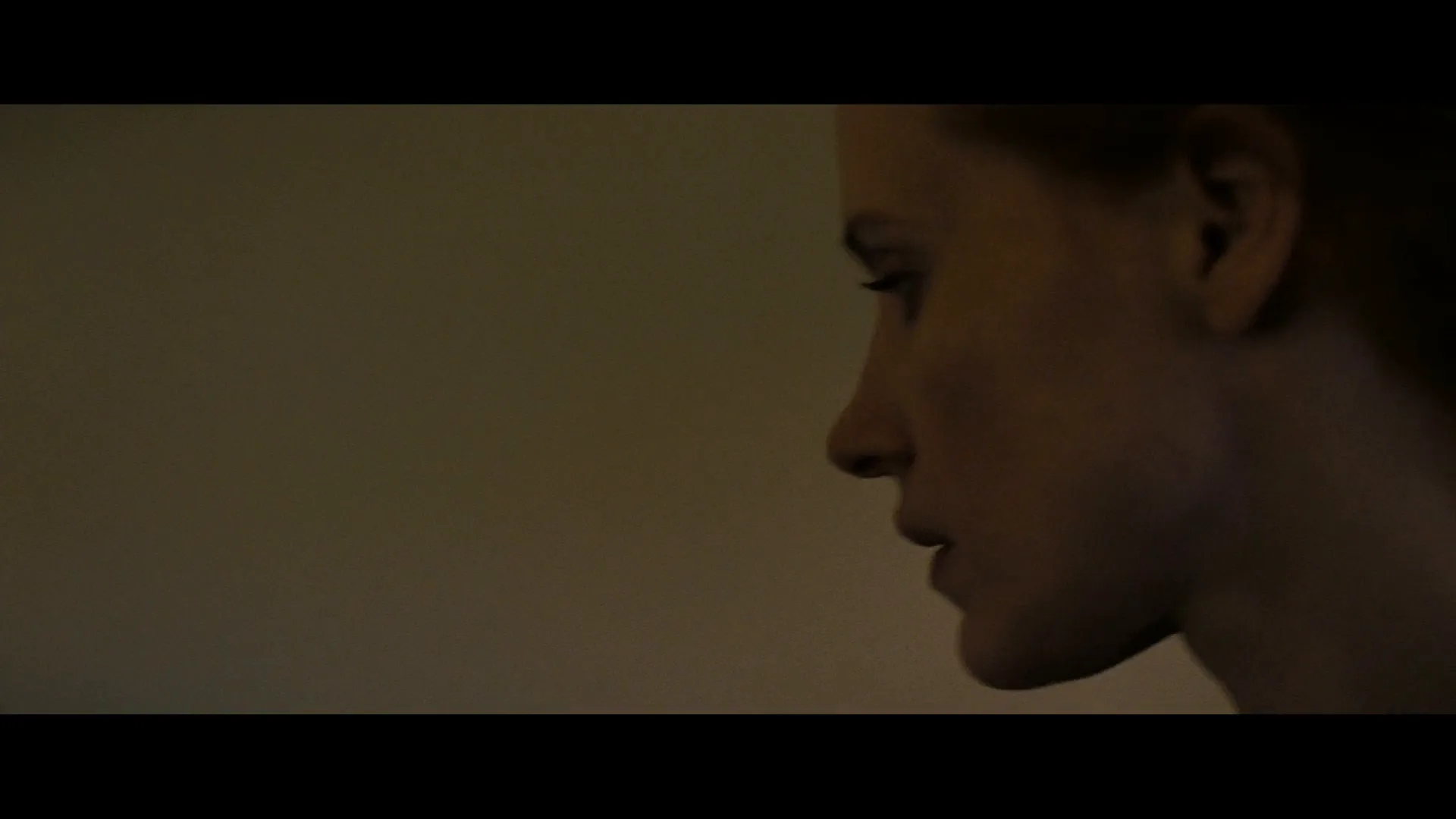
Short siding frames a character so they look or move toward the near edge of the frame, with most of the empty space behind them instead of in front. It breaks the usual lead-room habit on purpose, and the viewer feels it as pressure: the character seems boxed in, uneasy, cut off from whatever they are looking at.
- What it does
- Puts the empty space behind the character, so the frame feels cramped, tense or wrong.
- Use it when
- The character is trapped, isolated, avoiding someone, or the scene should feel off-balance.
- Watch out
- Used once by accident it reads as a framing mistake; commit to it and keep the face sharp.
- Try this prompt
close-up profile of a man at the far right edge of frame looking right, nose almost touching the frame edge, the left 70% an empty out-of-focus grey wall, 2.39:1 film still
What is short siding in film?
An off-center single splits the frame in two. The long side is the wider part, from the face to the far edge; the short side is the narrow strip between the face and the nearest edge. The usual habit, called lead room or nose room, aims the eyeline across the frame into the long side.
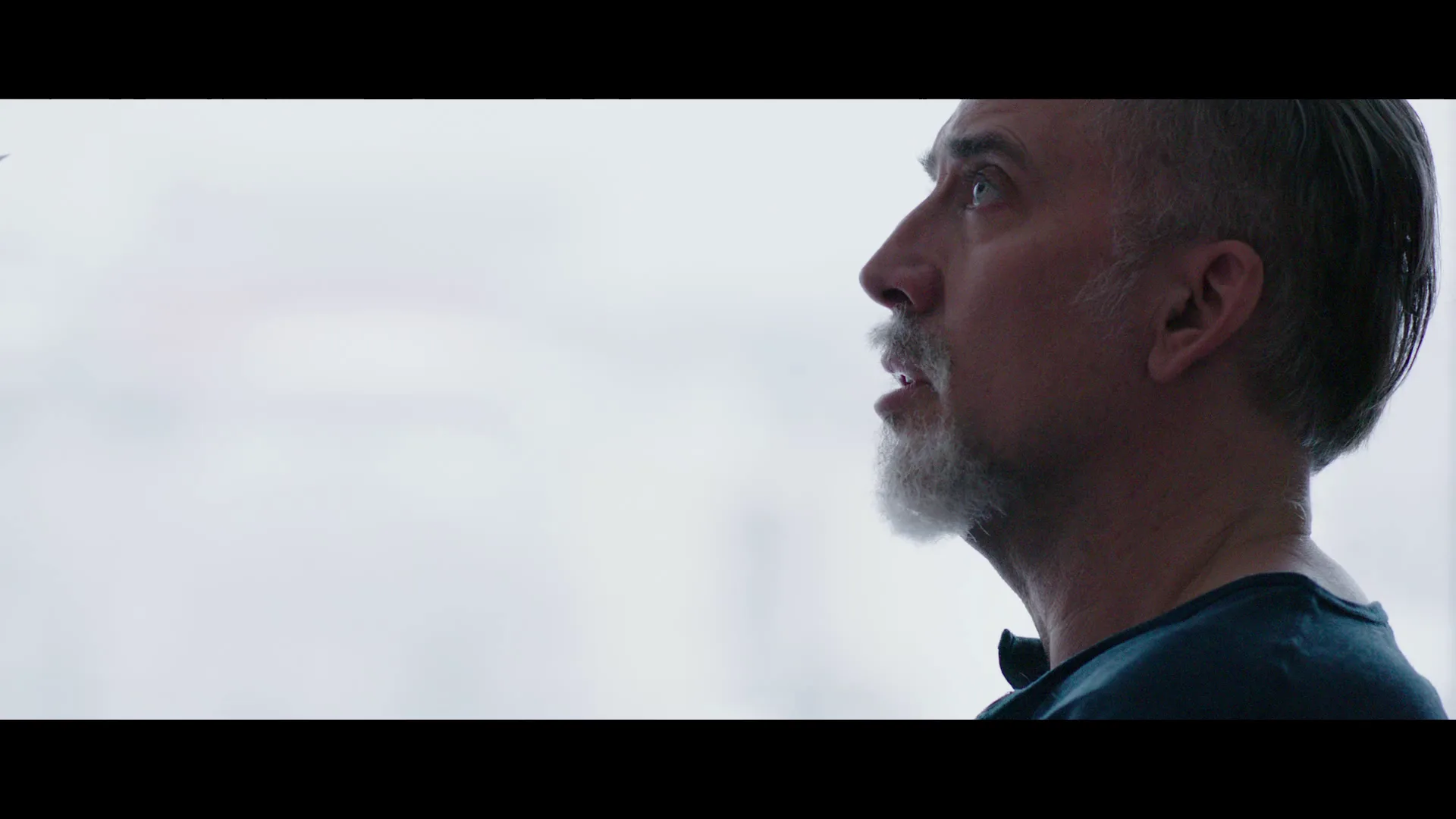
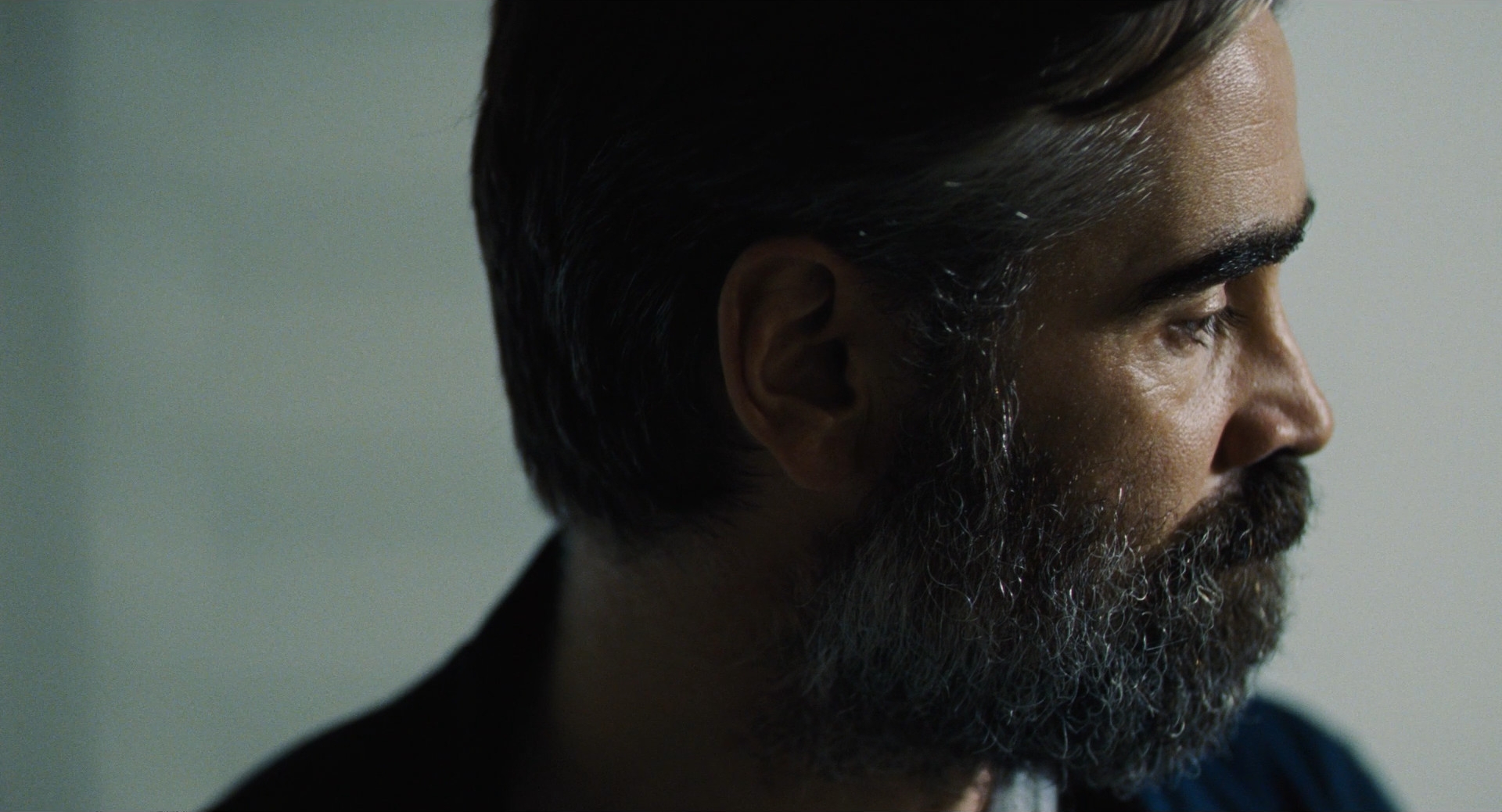
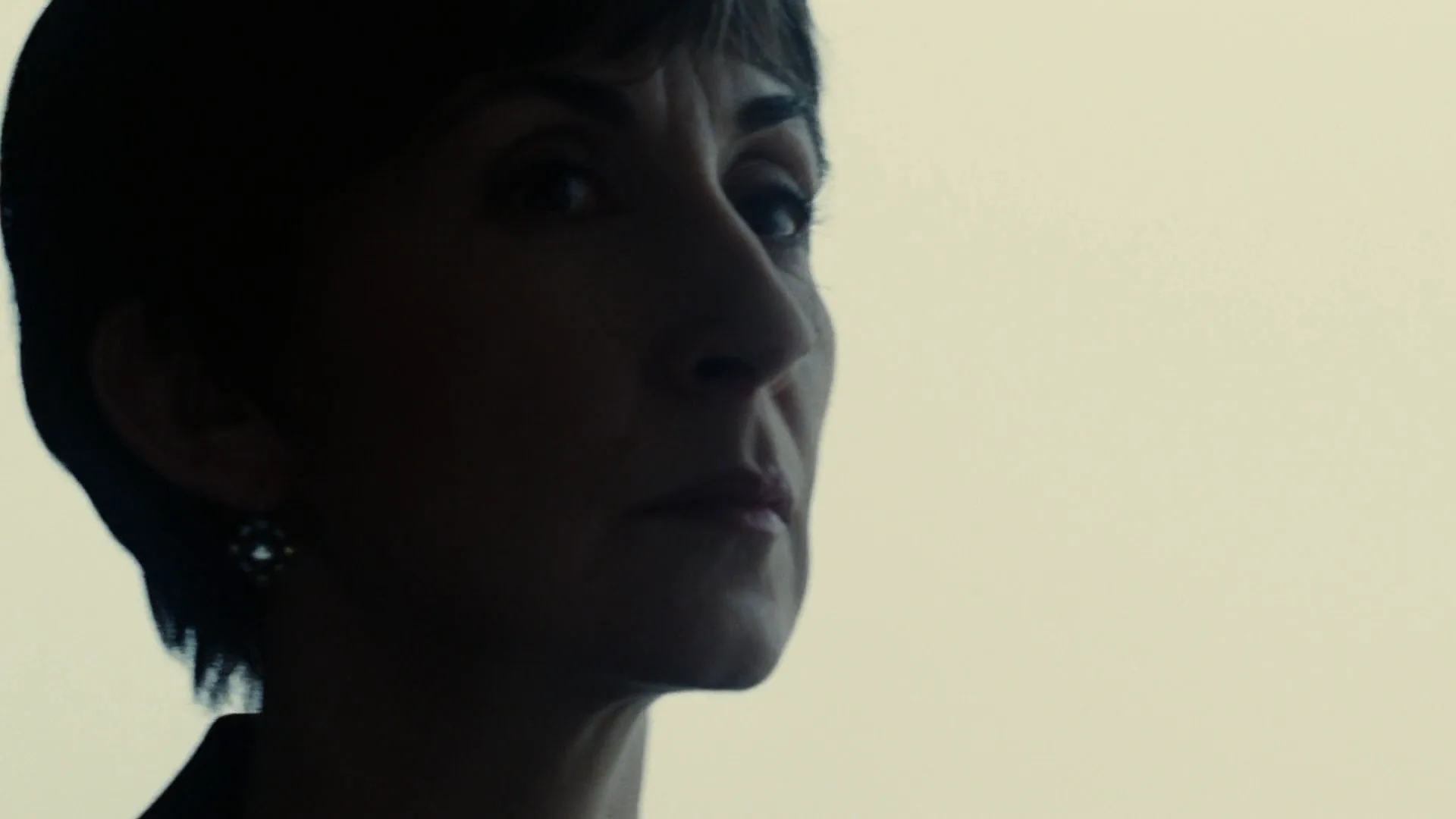
Short siding flips that. The character sits near one edge and looks or moves toward it, so the nose almost touches the frame line and the empty area sits behind the head. The face is still off-center, often on a line of the rule of thirds, but the space is on the wrong side.
A quiet tool of film composition: viewers rarely name it but feel it.
Why do filmmakers use short siding?
Confinement. With no space in front of the eyes, the frame edge becomes a wall, even in an open room.
Unease. The audience starts watching the empty area behind the head, and in thrillers that dead space invites a threat.
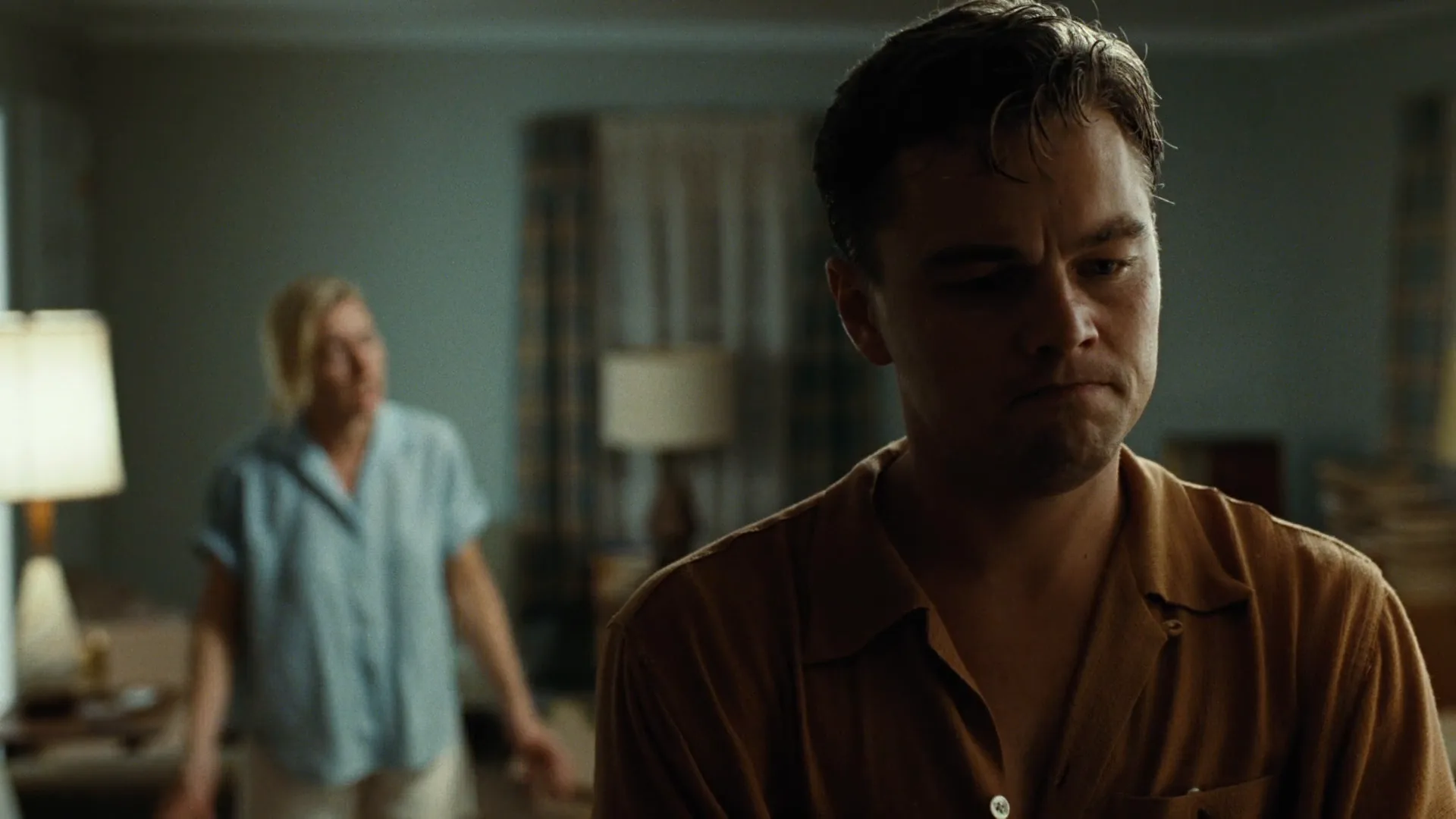
Avoidance. A character turned toward the near edge is turned away from the rest of the frame, often from another person in it. In Revolutionary Road (2008) the husband faces the edge while his wife stands behind him.
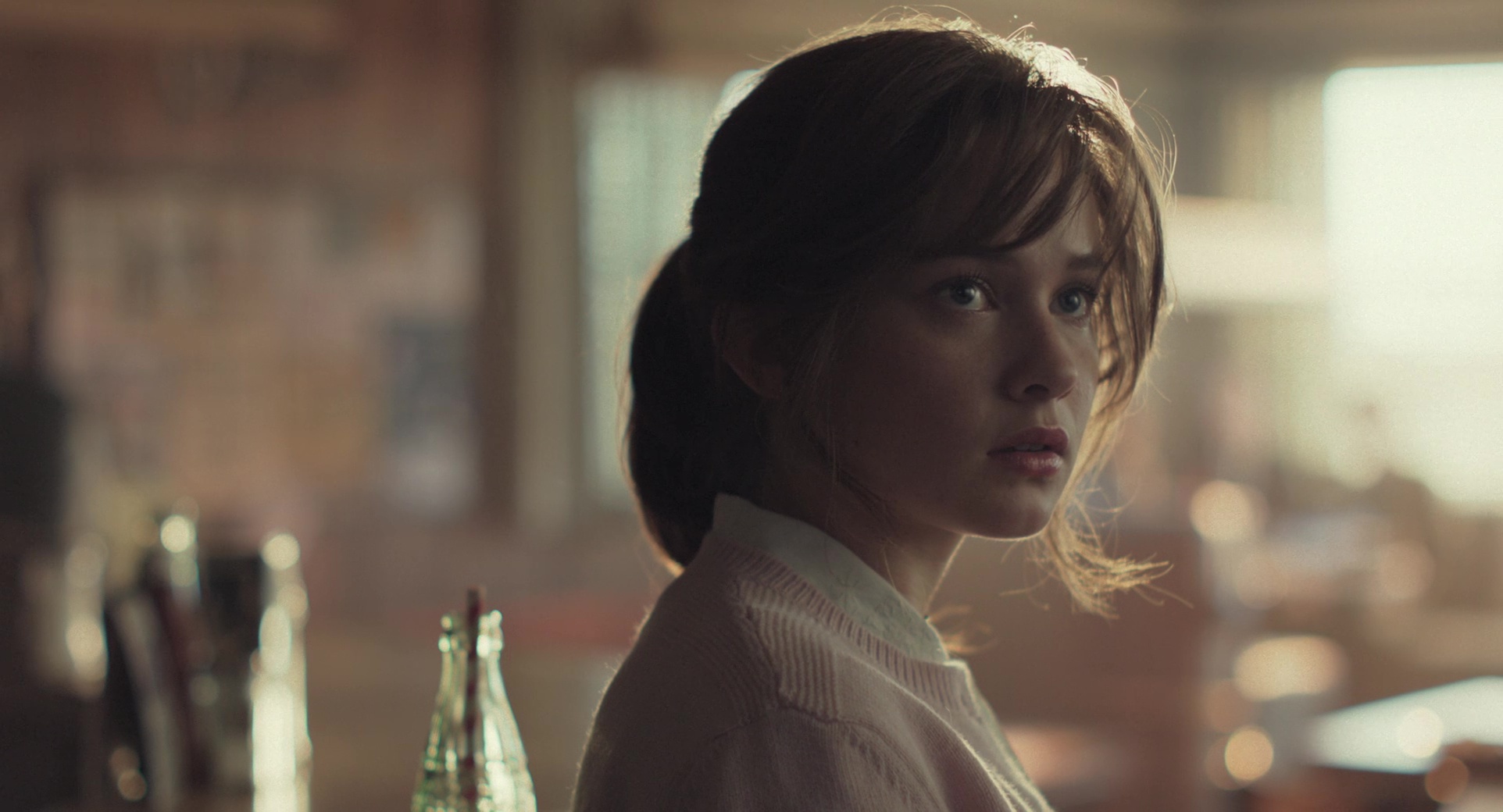
A tilted world. The series Mr. Robot (2015) built its look on short-sided close-ups, faces jammed into a corner of the widescreen frame under large areas of wall.
The empty area still has weight, so short siding is also a visual balance decision: you tip the frame backward on purpose.
How to shoot a short-sided frame
Place the eyes first, 10–25% of frame width from the near edge. The closer, the stronger the pressure.
Aim the eyeline at that edge. The actor looks past the lens on the near side of camera. A profile shot makes the direction unmistakable; a three-quarter angle works if the eyes clearly point out of frame.
Keep the empty side quiet: a plain wall, a soft window, darkness.
Lens and depth. A 50–85mm lens at T1.8–T2.8 melts the background into one tone. A 2.39:1 frame gives more space to push behind the head.
Light the face, not the space. Side light from the direction the character faces keeps the profile readable.
Mind the cut. Keep your screen direction consistent so the audience still knows where the character is looking.
Short siding in a dialogue scene
In a standard shot reverse shot, each character looks across the frame toward the other, and the space in front of each face connects them. Short-side both singles and that link breaks: two people talk while each faces a wall. It suits scenes where the conversation fails or someone is lying.
Short-siding only one person makes that character read as cornered, and switching them from long side to short side mid-scene marks the moment the ground shifts.
Short siding vs. lead room
Lead room leaves space in front of the eyes or ahead of a moving subject, which feels natural. Short siding puts that space behind them. Both are off-center; only the empty side differs.
It also differs from plain negative space. A mostly empty frame with the character looking into the emptiness reads as longing. Negative space behind the head reads as pressure.
Short Siding examples in film
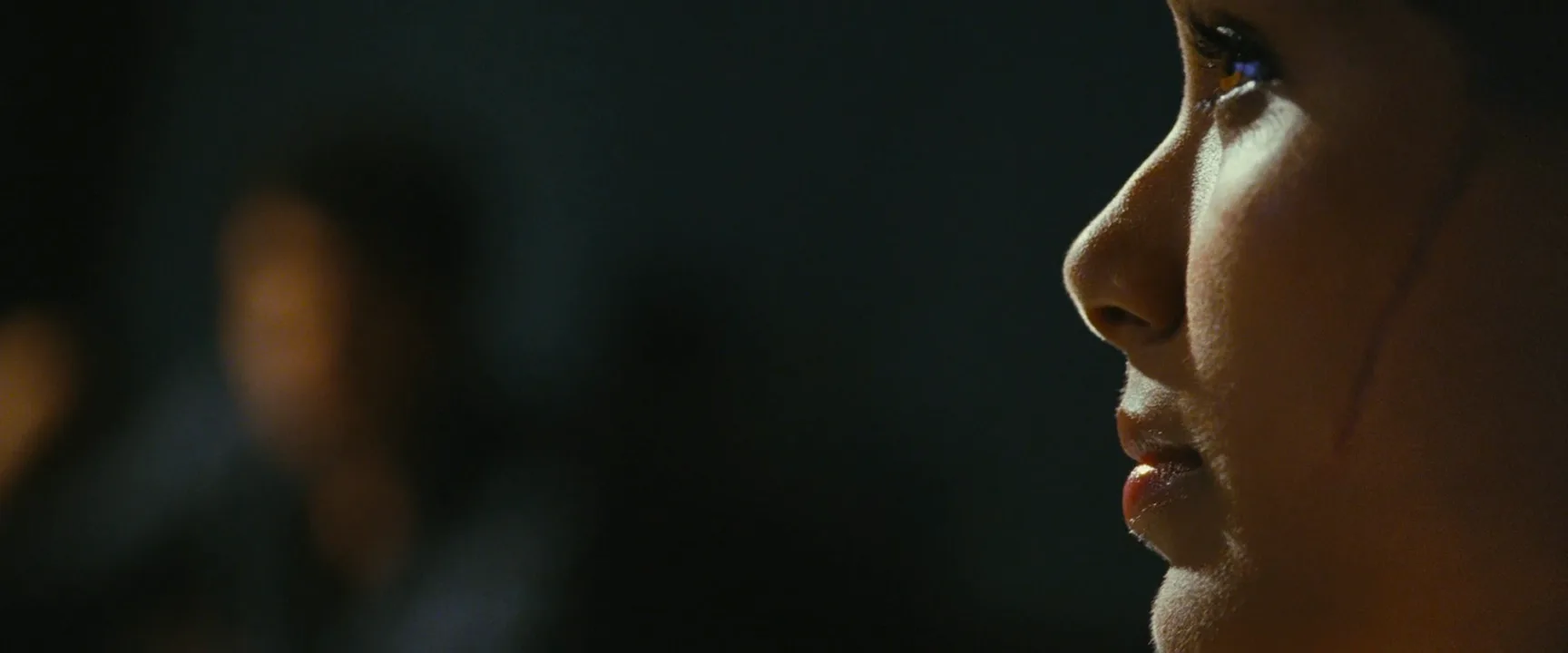
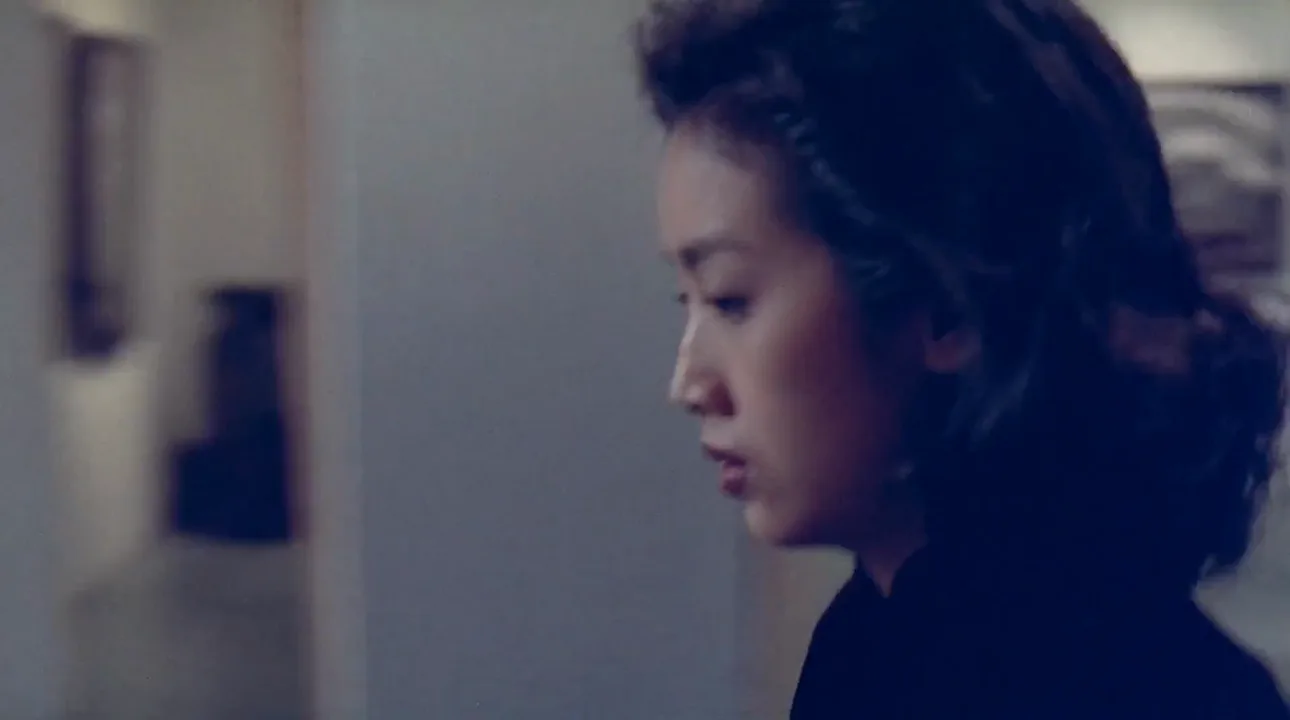
9 framesNine frames where the face is pushed toward the near edge and the empty space sits behind it.
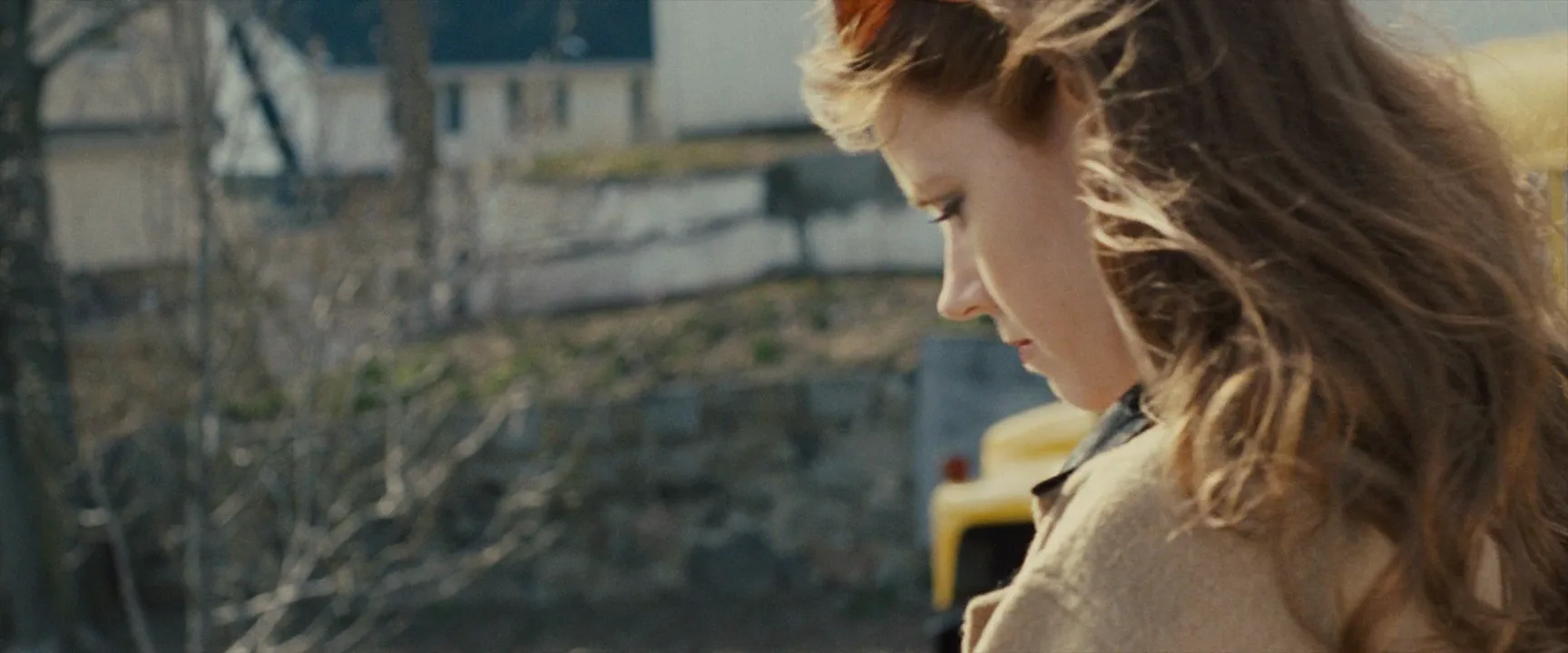
How to create a short siding with AI
4 promptsImage models default to lead room: they center the face or aim the eyeline across the frame. State the edge, the eyeline and the size of the empty area as numbers. In FlashBoards, build the start frame with Nano Banana 2 Lite, try a second take with GPT Image 2.5 and animate frame one with MiniMax H3 Max Turbo, on one board beside the film frames. The fourth prompt re-shoots a real film shot from a text description alone, and the original plays next to the result so you can compare.
Close-up, short-sided composition. A man in his forties with a shaved head, a crooked nose, a thin grey mustache and a dark green knit collar sits at the far right edge of the frame in profile, looking right, out of frame, nose close to the frame line. The left 70% of the frame behind his head is an empty, out-of-focus pale grey wall, one smooth tone. Cool window light from the right, 85mm lens, eye level. Tense, cramped film still.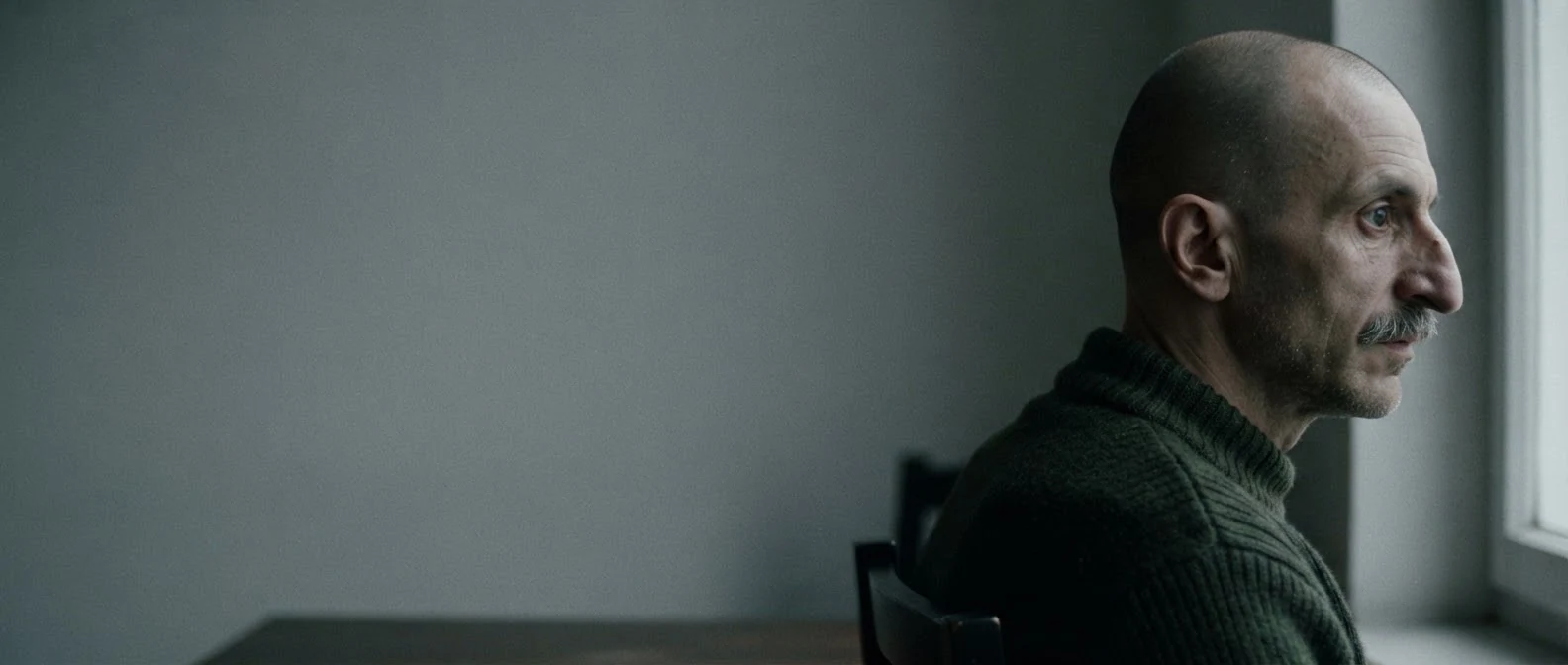
Far right edge, looking right, out of frame points position and eyeline the same way. The left 70% behind his head puts the space on the short side.
Open FlashBoardsMedium close-up, short siding. A woman in her twenties with a copper-red buzz cut, dense freckles and a yellow raincoat stands at the left edge of the frame, three-quarter profile, looking left past the frame edge. The right two-thirds behind her is a dark blue bus shelter glass wall at night, softly blurred, one streetlight glow far back. 50mm lens, eye level, rain on the glass. Uneasy film still.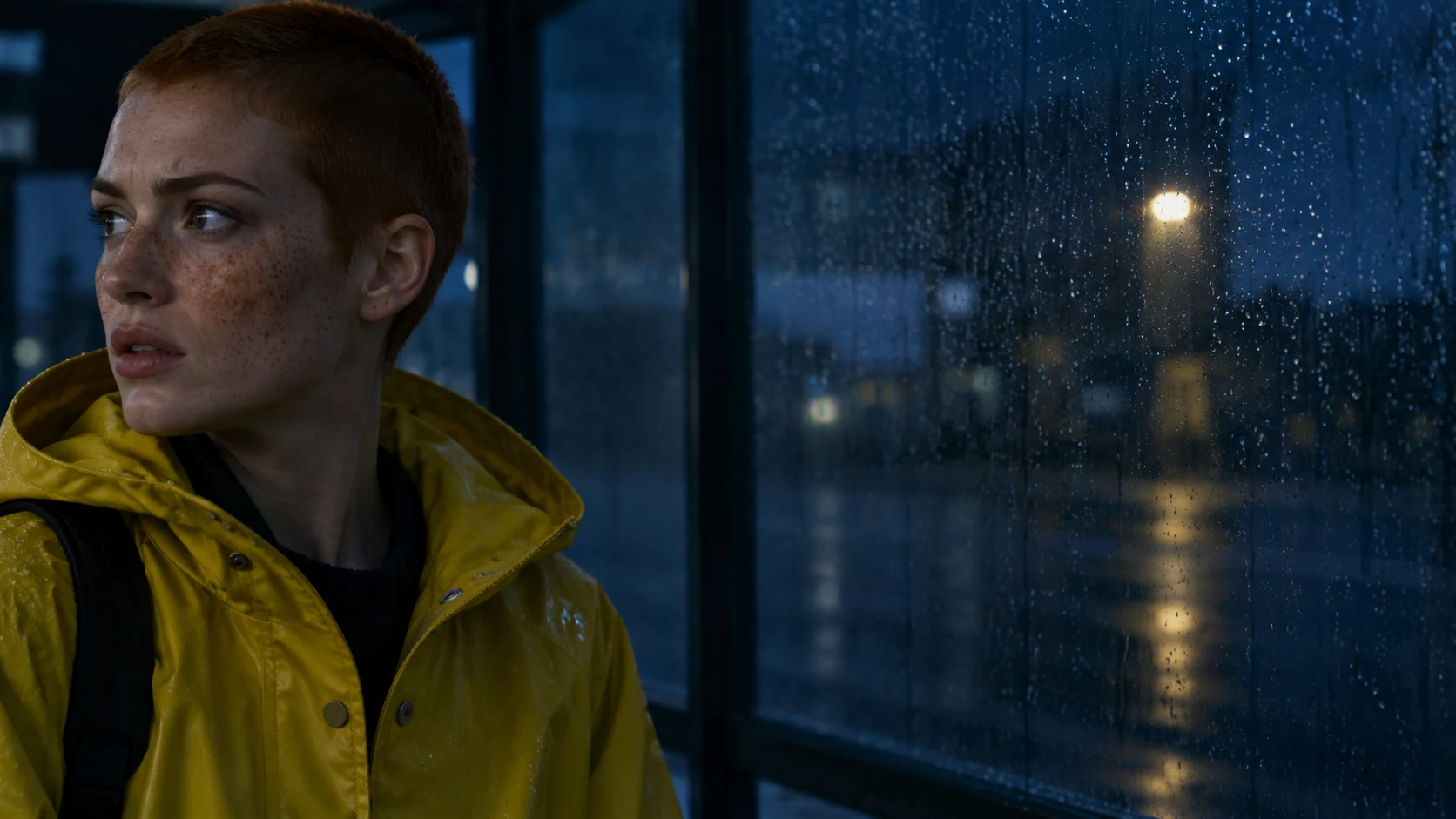
The mirror version at a wider size. Looking left past the frame edge stops her turning back into the frame; the single streetlight glow gives the empty side something to worry about.
Open FlashBoardsCamera: locked-off tripod shot, the frame stays fixed with the man at the right edge. Action: The man is already breathing slowly, eyes flicking right, out of frame. Midway he swallows and lowers his gaze. At the end he lifts his eyes back to the right and holds them there, the grey wall behind him unchanged.Stays fixed with the man at the right edge stops the model recentering him. Already breathing makes the shot alive from frame one.
Open FlashBoards{
"output": "Full-screen live-action scene from Revolutionary Road (2008), alive from its very first frame: one continuous shot, no cuts. 35mm film grain, a 1950s suburban living room at night, pale sea-green walls, warm pools of light from two white-shaded table lamps, deep amber shadows, muted teal and rust palette, short-sided composition.",
"characters": {
"S1": {
"name": "Frank Wheeler, played by Leonardo DiCaprio",
"look": "early thirties, dark hair slicked back, a rust-brown short-sleeved shirt with an open collar, face half in shadow",
"voice": "low, flat, tired"
},
"S2": {
"name": "April Wheeler, played by Kate Winslet",
"look": "early thirties, short blonde hair, a pale blue short-sleeved pyjama shirt and white shorts, bare legs, soft and out of focus in the background",
"voice": "pleading, breaking, rising"
}
},
"shots": [
{
"shot": 1,
"camera": "locked-off tripod at standing eye level, 40mm lens, shallow depth of field; the frame never moves; it starts as a medium shot of the room and ends as a medium close-up of S1 filling the right half, his head near the right frame edge, the left half and the whole depth of the room behind him",
"action": [
"BEGINNING: alive from the first frame, S1 walks straight toward the camera from the middle of the room, drifting to screen right; S2 stands behind him at left of centre, far back beside a lit lamp and a bright window, her right hand pressed flat to her chest, mouth open mid-sentence, eyes on the back of his head.",
"THEN: S1 stops close to the lens in the right half of the frame, shoulders cut by the bottom edge, and drops his head, eyes turned down and toward the right frame edge, away from her; he never looks back over his shoulder.",
"THEN: S2, soft and small in the space behind him, lifts her right hand to her forehead, then raises it high beside her head as she pleads, stepping a little toward him.",
"THEN: S2 spreads both arms out low at her sides, palms up, begging, then lets them fall and hang still.",
"THEN: S1 stays frozen, jaw set, lips pressed shut, eyes down to the right, the lamplight catching only his cheekbone and nose.",
"END: without lifting his eyes or turning his head, S1 answers quietly toward the right edge of frame; S2 stands still in the background, arms at her sides, staring at his back."
],
"dialogue": [
{
"speaker": "S2",
"on_screen": true,
"when": "from the first frame, while S1 walks toward the camera",
"delivery": "sharp, hurt",
"line": "<d>[English] Then it's for me.</d>"
},
{
"speaker": "S2",
"on_screen": true,
"when": "as S1 stops and drops his head",
"delivery": "pleading, voice cracking",
"line": "<d>[English] Tell me we can have the baby in Paris, Frank.</d>"
},
{
"speaker": "S2",
"on_screen": true,
"when": "while her hand goes to her forehead and her arms spread wide",
"delivery": "desperate, tearful, rising then fading",
"line": "<d>[English] Tell me we can have a different life. But don't make me stay here. Please.</d>"
},
{
"speaker": "S1",
"on_screen": true,
"when": "near the end, his eyes still down",
"delivery": "quiet, flat, final",
"line": "<d>[English] We can't have the baby in Paris.</d>"
},
{
"speaker": "S2",
"on_screen": true,
"when": "right after his line, at the very end",
"delivery": "stunned, barely audible",
"line": "<d>[English] Why not?</d>"
}
]
}
],
"sound": {
"ambience": "quiet room tone of a house at night, the soft buzz of a lamp, footsteps on carpet as he walks in",
"speech": "exactly these spoken phrases, each said once, in this order",
"never_spoken": "no narration and no voice-over: the descriptions, performance notes and step words of this prompt are never spoken aloud",
"music": "a film score under the scene, always below the voices: a slow, sparse piano motif over a low sustained string note, melancholy and restrained",
"subtitles": "none"
}
}Remakes the static shot from Revolutionary Road (2008) where Frank walks up to the lens, stops at the right edge and faces it while April pleads behind him; the prompt carries over the framing, her gestures and the dialogue.
His head near the right frame edge, the whole depth of the room behind him fixes the short side in the camera note. Eyes down toward the right frame edge, never looks back stops him turning into the long side, where his wife pleads.
Open FlashBoardsCommon mistakes
- The face slides to the center. Name the edge: "far right edge, nose close to the frame line".
- The character looks back across the frame. Repeat: "in profile, looking right, out of frame".
- The empty side fills with props. Say "empty out-of-focus wall, one smooth tone".
- The video recenters. Write "locked-off tripod, the frame stays fixed".
Keep the reference frames, prompts and every generated take side by side — images and video in one canvas.
FAQ
4 questionsWhat is short siding in film?
Short siding is framing where a character sits near one edge of the frame and looks or moves toward that edge, so most of the empty space is behind them instead of in front. It reverses normal lead room, and viewers feel it as tension, confinement or unease, even if they cannot say why.
What does short-sided framing mean emotionally?
It usually signals that a character is trapped, isolated or out of step with their world. With no room in front of their eyes, the frame edge acts like a wall, and the empty area behind them feels like a place where something could appear or someone is being ignored.
Is short siding a mistake?
Only when it happens by accident. One short-sided shot in an otherwise conventional scene can look like a framing error. Used deliberately and consistently, for one character, one scene or a whole film, it becomes a clear visual signal. Decide why the space is behind the character before you roll.
What is the difference between short side and long side?
The long side is the larger part of the frame, between the character and the far edge; the short side is the smaller gap between the character and the nearest edge. Conventional framing aims the eyeline into the long side, so the space sits in front of the eyes; short siding aims it into the short side, toward the nearest frame edge, so the space ends up behind the head.
Related terms
4- Negative SpaceComposition & Framing
Negative space is the empty area around a subject — sky, wall, darkness, water — deliberately left large so the subject feels isolated, small, lonely or expectant, and the eye settles on it.
- Rule of ThirdsComposition & Framing
The rule of thirds divides the frame with two horizontal and two vertical lines and places key elements — eyes, horizon, subject — on those lines or their intersections, producing a balanced yet dynamic off-center composition.
- Profile ShotCamera Angles
A profile shot films the subject from the side, roughly 90 degrees to their line of sight, so the outline of the face is emphasized and the character seems withdrawn, observed, or locked in confrontation with someone off-frame.
- Shot Reverse ShotCamera Shots
Shot reverse shot alternates between two opposing camera setups — one on each character, typically over-the-shoulder shots or singles from the same side of the axis — so a conversation plays as a rhythmic back-and-forth.
Further reading
Gustavo Mercado, The Filmmaker's Eye (Focal Press) · Blain Brown, Cinematography: Theory and Practice (Focal Press)