 FlashBoards Learn
- Learn
- Directing & Staging
- Film Director
Directing & Staging · Film language
Film Director
Also called: director, movie director, filmmaker
A film director is the creative lead who turns a script into a film. The director decides how each scene is staged, performed and covered, guides the actors, and approves every visual and sound choice, from casting and locations in prep to the last trim in the edit.
- What it does
- Sets the interpretation of the script and makes the final creative call on performance, staging, camera, design, sound and cut.
- Use it when
- You need one person whose taste and plan hold every department to the same version of the story.
- Watch out
- The director does not run the set's schedule minute to minute; that is the first assistant director's job.
- Try this prompt
Wide shot of a night kitchen, woman at the sink, man seated at the table, three meters of floor between them
What does a film director do?
The director is responsible for what the audience sees and hears, and how it feels. A script describes events; the director decides how they play: who stands where, how close the camera gets, how long a pause lasts, when the cut comes. Every department on the film crew brings options, and the director chooses.
- Prep. Cast the roles, choose locations, and build the visual plan with the DP and designers, often as shot lists or storyboards.
- Production. Rehearse and stage each scene, shape performances, decide when a take is good enough.
- Post. Build the director's cut with the editor, then guide sound, music, VFX and color until picture is locked.
How a director works on set
A scene usually starts with a private rehearsal with the actors, where the director finds the blocking, then shows it to the DP, gaffer and first AD so camera and light can be placed around it.
Next comes coverage: the angles the editor will need. A dialogue scene might get a wide master, two over-the-shoulders and two close-ups; a director with a firm plan may design one long take.
Between takes the director gives notes. Good direction of actors is phrased as something playable: "try to get him to leave" gives the actor a job, "be angrier" gives a result to fake. Watch the monitor for framing, the room for truth, and protect time for the one moment the scene is about.
Film director vs. producer: who is in charge?
The film producer is responsible for the project; the director is responsible for the film on screen.
| | Director | Producer | |---|---|---| | Owns | Creative interpretation | Money, schedule, deals | | Hired by | Producer or studio | Starts the project | | On set | Stages and shoots scenes | Protects budget and schedule | | In post | Delivers the director's cut | Often holds final cut |
Final cut, the right to decide the released version, usually stays with the studio or producers unless the director negotiates it. On a small indie one person often does both jobs; on a TV series the showrunner outranks the episode director.
Director vs. first assistant director
The first AD is not a deputy director. The 1st AD builds the shooting schedule, runs the floor, calls the roll, manages extras and keeps the day on time and safe. The director decides what to shoot and how; the 1st AD makes sure it gets shot before the light goes.
Working with the cinematographer
The closest creative partnership on most films is with the cinematographer. The director brings the intention ("we should feel trapped in this room"); the DP turns it into lens, height, light and movement. Directors still need camera language: "closer" is a note, "85mm, eye level, just over her shoulder" is a decision. More staging craft sits in the directing and staging hub.
Film Director examples in film
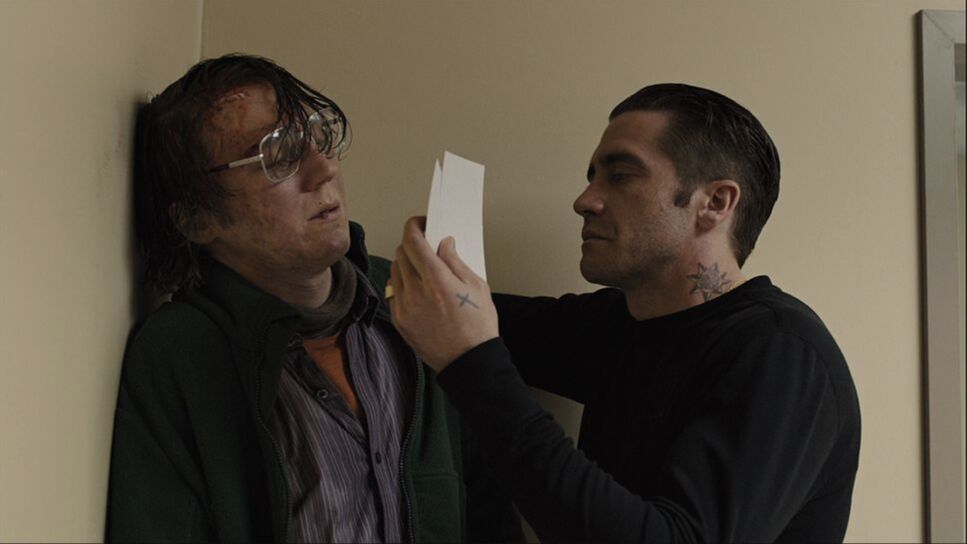
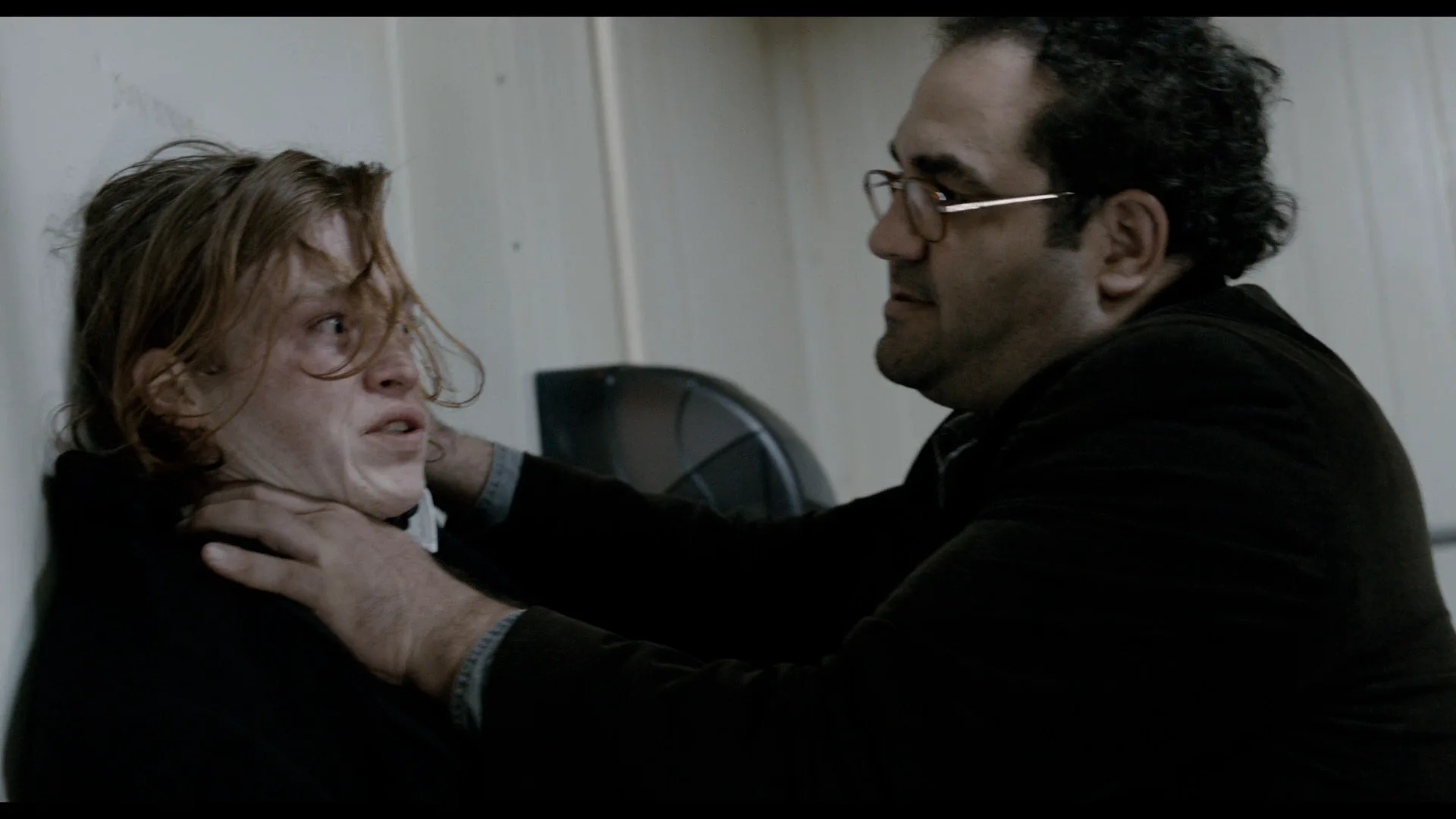
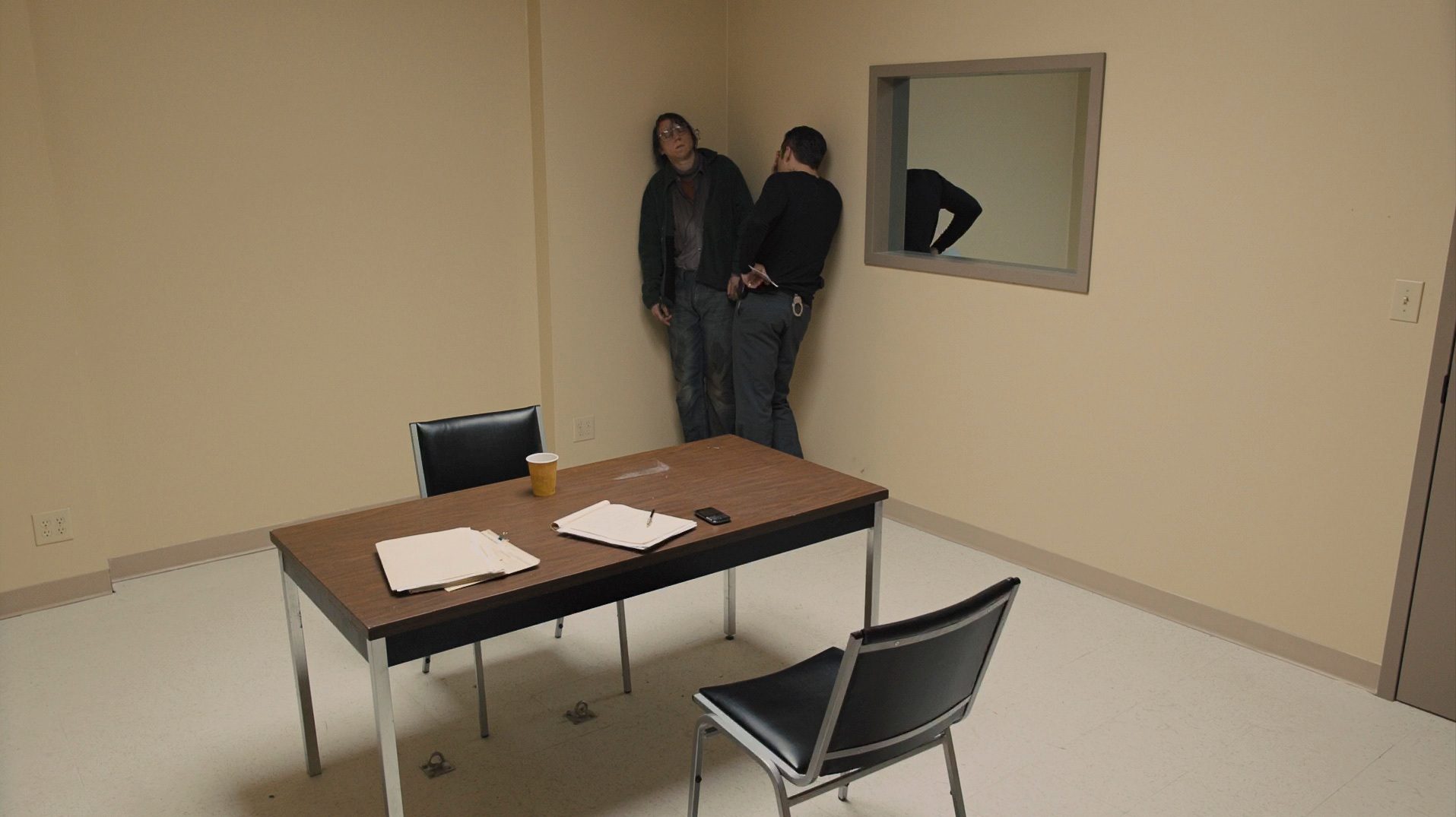
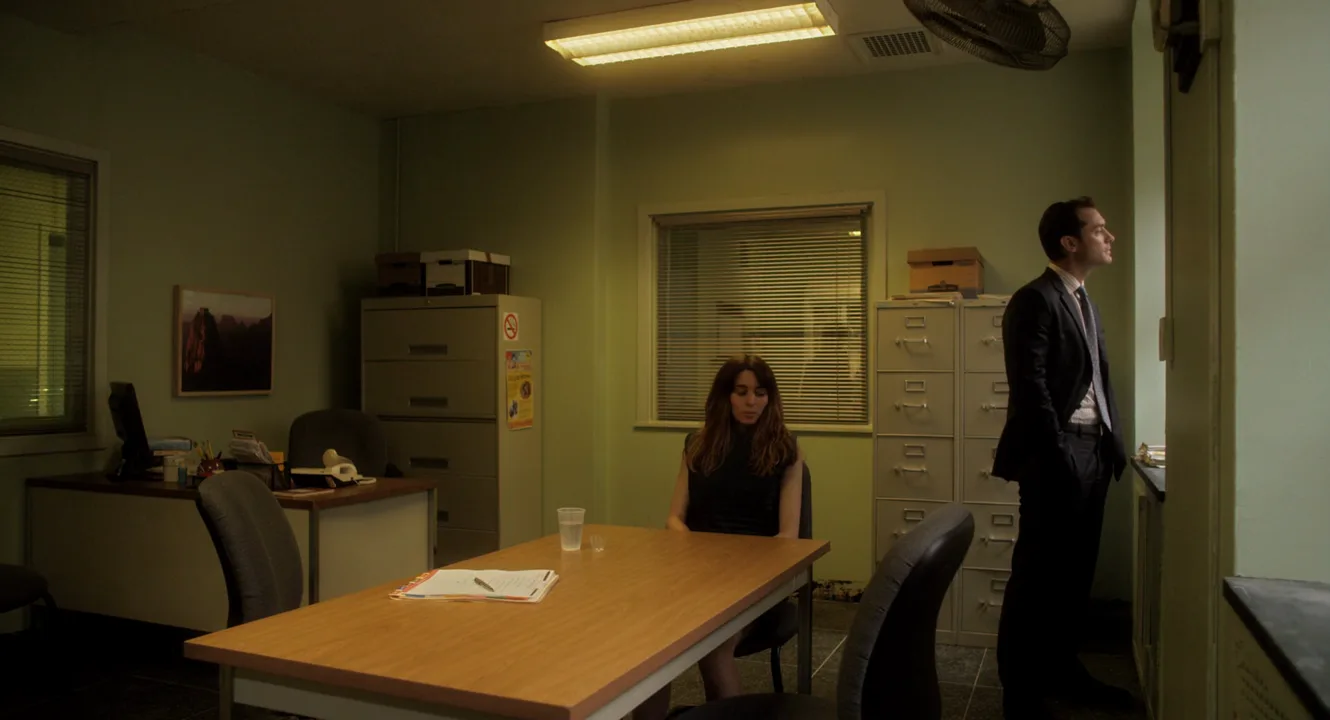
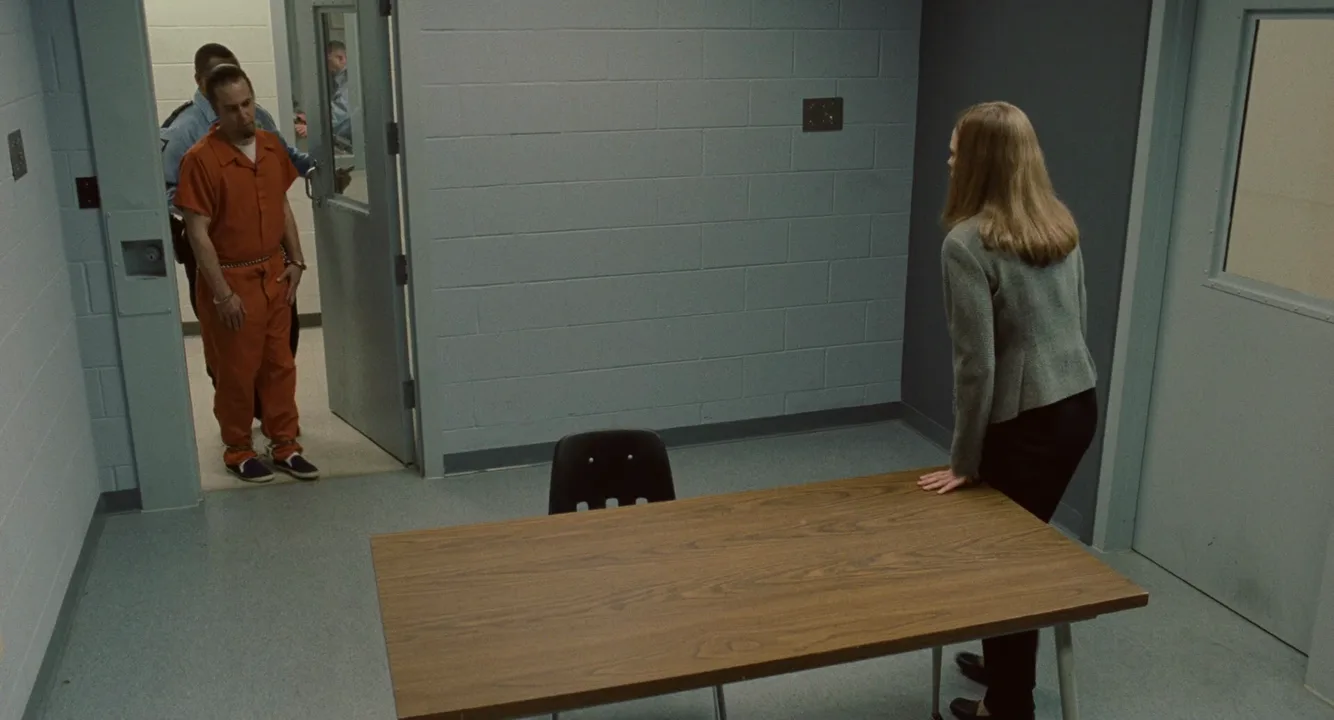
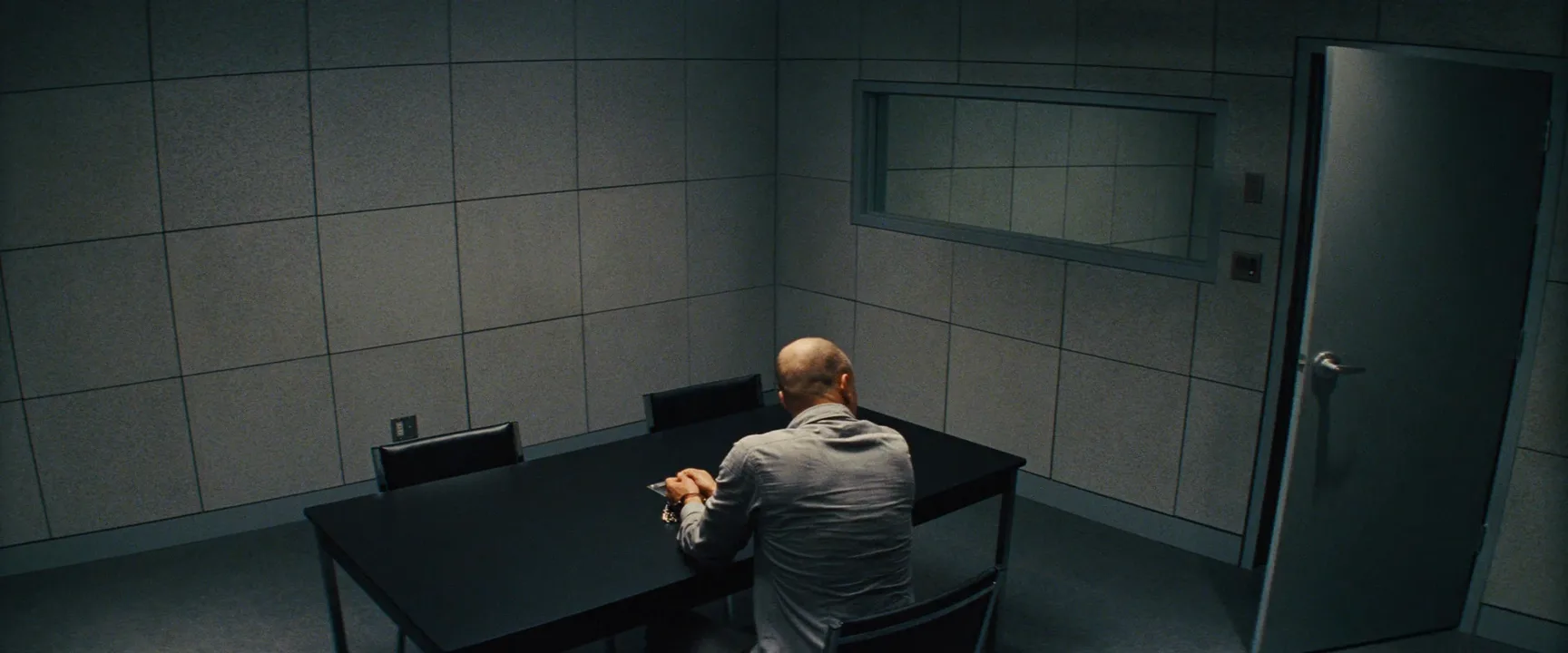
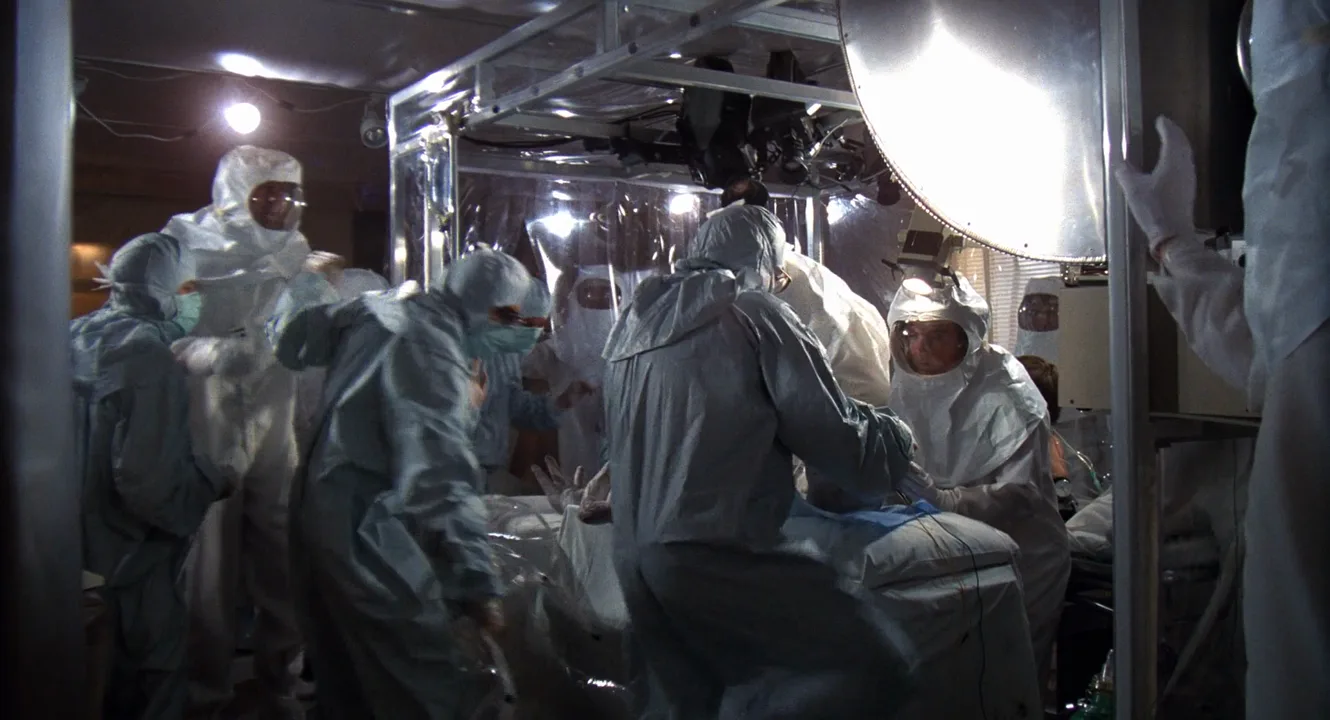
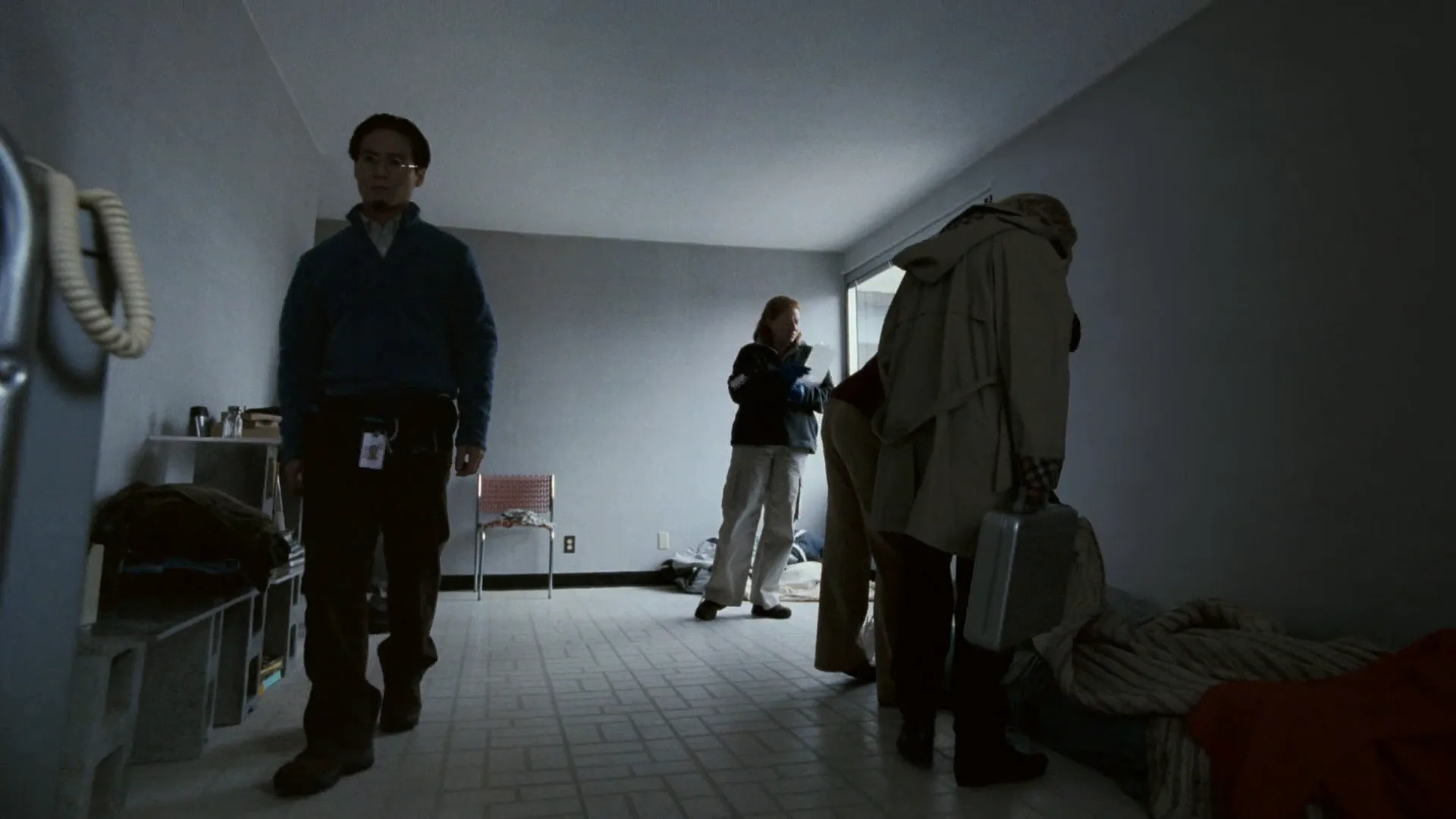
8 framesYou can't photograph a director, but you can see directing in every frame: where the actors stand, how close the camera sits, how much of the room you see.
How to create a film director with AI
4 promptsWith AI you are the director: the model fills in anything you leave vague, so write prompts as staging decisions, not moods. Say where each actor stands, what they are doing and where the camera is, then compare takes side by side on a FlashBoards board, the way you would review dailies. The fourth prompt re-shoots a real film shot from a text description alone, and the original plays next to the result so you can compare.
Wide shot, 28mm lens at eye height, small apartment kitchen at night. On the left, a woman in her forties with short copper hair, freckles and a gray knit cardigan stands at the sink, back half turned. On the right, a man in his fifties with a shaved head, thick salt-and-pepper beard and navy work jacket sits at a round wooden table, an unopened envelope in front of him. Three meters of tiled floor between them. Warm pendant lamp over the table, cold blue streetlight through the window. Film grain.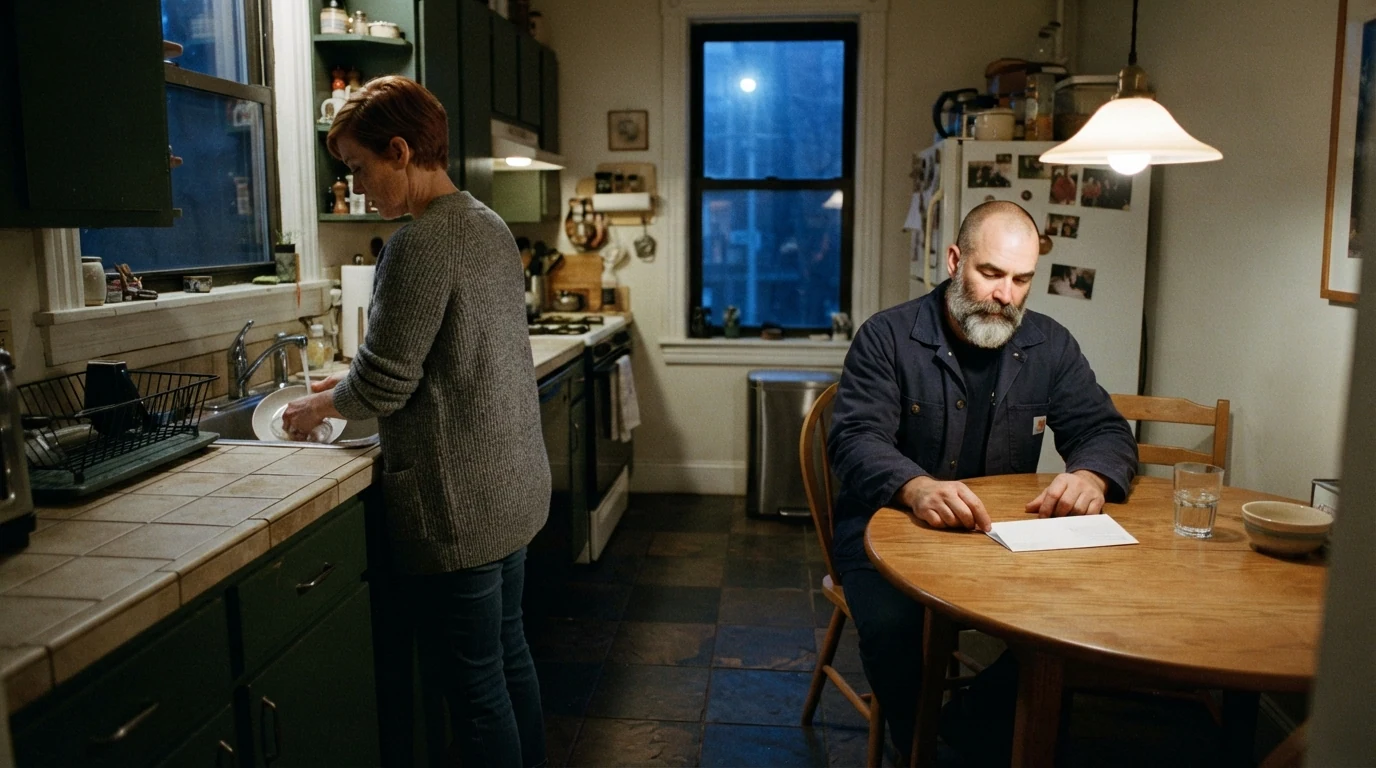
The prompt is a blocking diagram: on the left / on the right, three meters of tiled floor between them. The envelope gives the scene a prop, and the two light sources split the room into two territories.
Open FlashBoardsClose two-shot, 85mm lens, same night kitchen, new staging. The woman with short copper hair and gray knit cardigan now stands beside the seated man with the shaved head and salt-and-pepper beard, her hand on the table next to an unopened envelope. His face in the foreground, sharp, eyes on the envelope; her face behind, softer, looking down at him. Warm pendant light, cold blue window edge light. Shallow depth of field.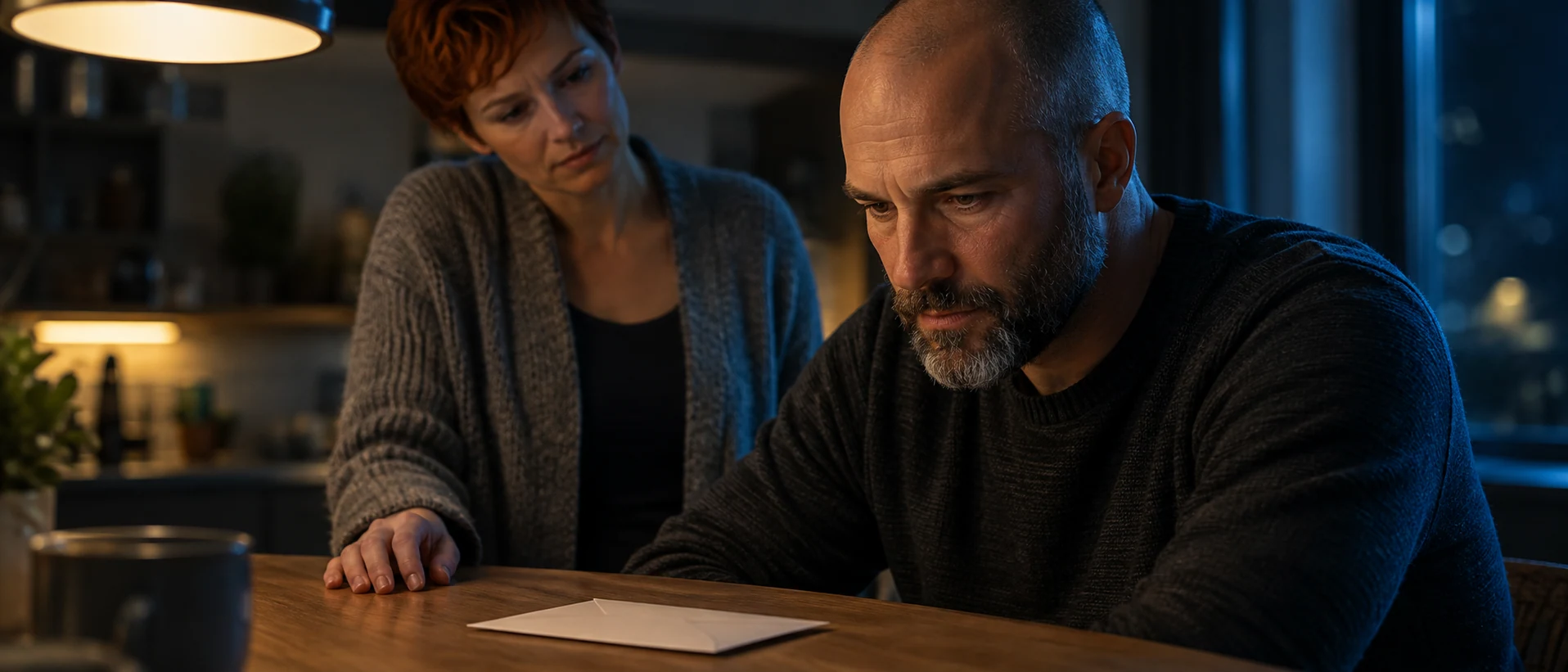
The director's second option for the same beat: actors moved together, lens gone long. Close two-shot, 85mm and foreground sharp, behind softer turn distance into intimacy.
Open FlashBoardsCamera: slow push in toward the table, steady, ending on a medium-wide shot of both people. Action: the woman is already turning off the tap. She dries her hands on her cardigan, turns and crosses the tiled floor to the table. She stops beside the man. He slides the envelope toward her without looking up.Already turning off the tap makes the shot move from frame one. The action is written as blocking, a cross, a stop and one gesture with a prop already in frame, so nothing new gets invented.
Open FlashBoards{
"output": "Full-screen live-action scene from Conviction (2010), directed by Tony Goldwyn, from its very first frame: one continuous shot from a locked-off camera that never moves. Muted 35mm film look, flat cool fluorescent light from overhead, pale blue-gray painted cinder-block walls, a bare prison visiting room, desaturated teal-gray palette with one strong orange accent.",
"characters": {
"S1": {
"name": "Betty Anne Waters, played by Hilary Swank",
"look": "slim woman, long straight light-brown hair falling past her shoulders, gray tweed blazer, black trousers, black heels",
"voice": "silence: she does not speak"
},
"S2": {
"name": "Kenny Waters, played by Sam Rockwell",
"look": "wiry man, short dark hair, thin goatee, loose orange prison jumpsuit over a white T-shirt, a chain around the waist, both wrists cuffed to it in front",
"voice": "silence: he does not speak"
},
"S3": {
"name": "a prison guard",
"look": "broad Black man, close-cropped hair, short-sleeved light-blue uniform shirt with shoulder patches and a badge, dark trousers, black duty belt with a radio on the hip",
"voice": "silence: he does not speak"
}
},
"shots": [
{
"shot": 1,
"camera": "static zero: locked-off tripod high in the near corner of the room, looking down at a steep angle, wide lens; wide shot of the whole room: a long wooden table with metal legs across the lower foreground, one black plastic chair behind it against the back wall, a gray metal door with a small wired window in the back-left corner, a dark gray wall panel and an interior window on the right; the frame holds perfectly still from first frame to last",
"voice": "silence: nobody speaks in this shot, no voice at all",
"action": [
"BEGINNING: alive from the first frame, S1 stands in the right third, near the right end of the table, her back almost fully to the camera, head turned left toward the metal door at back left, the hand on the screen-left side of her body resting flat on the table's far corner, her other arm hanging at her side; the door is shut.",
"THEN: the metal door at back left swings open into the room toward screen right; S3 pushes it with one hand and steps through, holding it open and glancing back into the bright corridor behind him.",
"THEN: S2 comes through the doorway behind S3, head lowered, eyes on the floor, cuffed hands together at the waist chain; he takes short, shuffling steps forward and to the left of the doorway, staying close to the left wall, far from the table.",
"THEN: S3 lets the door go and moves in right behind S2, at his screen-left shoulder, one hand on his back; S2 stops, feet together, head still down.",
"THEN: S1 lifts her hand off the table and turns her whole body to the left to face S2, taking one small step back toward the dark right wall, both arms now hanging still at her sides; her gaze stays fixed on S2's face.",
"END: S2 lifts his head and looks across the room at S1; S3 stays behind him, hands at S2's waist chain; S1 stands still in the right third facing him; the empty table and bare floor stay between them, nobody moves toward the other, no one smiles."
],
"dialogue": []
}
],
"sound": {
"ambience": "low fluorescent hum, the heavy metal clunk of the door latch and hinges, a few footsteps on hard linoleum, a faint clink of the waist chain",
"speech": "no words in this video; the only human sounds are breaths and movement",
"never_spoken": "no narration and no voice-over: the descriptions, performance notes and step words of this prompt are never spoken aloud",
"music": "a film score under the scene, always below the voices: a sparse, hesitant solo piano over soft sustained low strings, restrained and aching",
"subtitles": "none"
}
}Remakes the visiting-room entrance in Conviction (2010), keeping the high static wide, Betty Anne waiting at right, Kenny and the guard entering at back left and the gap between them.
A blocking plan in words: camera position, who stands where, who enters and where each person stops. Nobody speaks; the empty table and a quiet piano carry the scene.
Open FlashBoardsCommon mistakes
- Actors drift to the center. Pin each person to a side of frame and name the distance between them.
- Performance turns into posing. "Sad" gets stock faces; give each character a task instead.
- Faces change between takes. Repeat the same features and clothing word for word.
- Video invents action. Describe only moves using people and objects already in the start frame.
Keep the reference frames, prompts and every generated take side by side — images and video in one canvas.
FAQ
4 questionsWhat does a film director do?
A film director leads the creative side of a film. In prep they cast, choose locations and plan the look with the cinematographer and designers. On set they stage scenes, guide actors and choose takes. In post they shape the edit, sound and color. The core job is deciding how the story is told on screen.
What is the difference between a director and a producer?
The producer runs the project: finding material, raising money, hiring the director and key crew, and protecting budget and schedule. The director runs the creative work: performances, staging, camera and the cut. Producers usually hire directors, and the studio or producers often hold final cut unless the director has negotiated it.
Is a director the same as a filmmaker?
Filmmaker is a looser word for anyone who makes films, often a director who also writes, produces or edits. Director is a specific credit: the person responsible for the creative interpretation of the script. Every director is a filmmaker, but an editor or cinematographer can call themselves one too.
Do film directors operate the camera?
Usually not. The cinematographer designs the image and a camera operator runs the camera on larger productions. Some directors shoot their own films; Steven Soderbergh often serves as his own cinematographer under a pseudonym. On micro-budget films the director operating is common, but most directors watch the monitor and the actors.
Related terms
7- Film ProducerFilmmaking Process & Crew
A film producer drives a project from idea to release — acquiring material, raising money, hiring the director and key crew, protecting budget and schedule, and steering distribution.
- Directing ActorsDirecting & Staging
Directing actors means giving performers playable actions, objectives and circumstances rather than results — shaping a performance through rehearsal, adjustments between takes and a safe atmosphere on set.
- BlockingDirecting & Staging
Blocking is the planned choreography of actors and camera within a scene — where people stand, when they move, how they relate in space — so that movement itself tells the story and gives the editor usable shots.
- Auteur TheoryFilm History & Theory
Auteur theory holds that the director is the true author of a film, whose personal style and themes recur across their work; it grew from Truffaut and Cahiers du cinéma's 'politique des auteurs' in the 1950s and was popularized in the US by Andrew Sarris.
- CinematographerFilmmaking Process & Crew
The cinematographer, or director of photography (DP), designs the film's image with the director — framing, lenses, lighting, exposure, camera movement and look — and leads the camera, grip and electric departments.
- Director's CutFilm Industry
A director's cut is a version of the film edited to the director's preferences, often released after the theatrical cut when the studio held final cut.
- Film CrewFilmmaking Process & Crew
A film crew is everyone who makes the film behind the camera, organized into departments — directing, camera, grip, electric, art, costume, makeup, sound, production, post — each with a head and a chain of assistants.
Further reading
Alexander Mackendrick, On Film-Making (Faber and Faber, 2004). Judith Weston, Directing Actors (Michael Wiese Productions, 1996). Sidney Lumet, Making Movies (Knopf, 1995).