 FlashBoards Learn
Editing · Film language
Archival Footage
Also called: archive footage, archival material, found footage (archival), newsreel footage
Archival footage is material shot before your production, such as newsreels, home movies, TV news and amateur film, that you cut into a new film as evidence, period texture or counterpoint. It keeps the look of its original medium, so the audience reads it as a real record of another time.
- What it does
- Puts a real record of the past on screen, so the audience trusts it as evidence of what happened.
- Use it when
- The story depends on real events, a real era or a real person's history that you could never restage.
- Watch out
- Rights and provenance: clear every clip, and label recreations so they never pass as the real archive.
- Try this prompt
Black-and-white 16mm newsreel frame, 1950s harbor strike crowd, coarse grain, gate weave, dust specks, 4:3
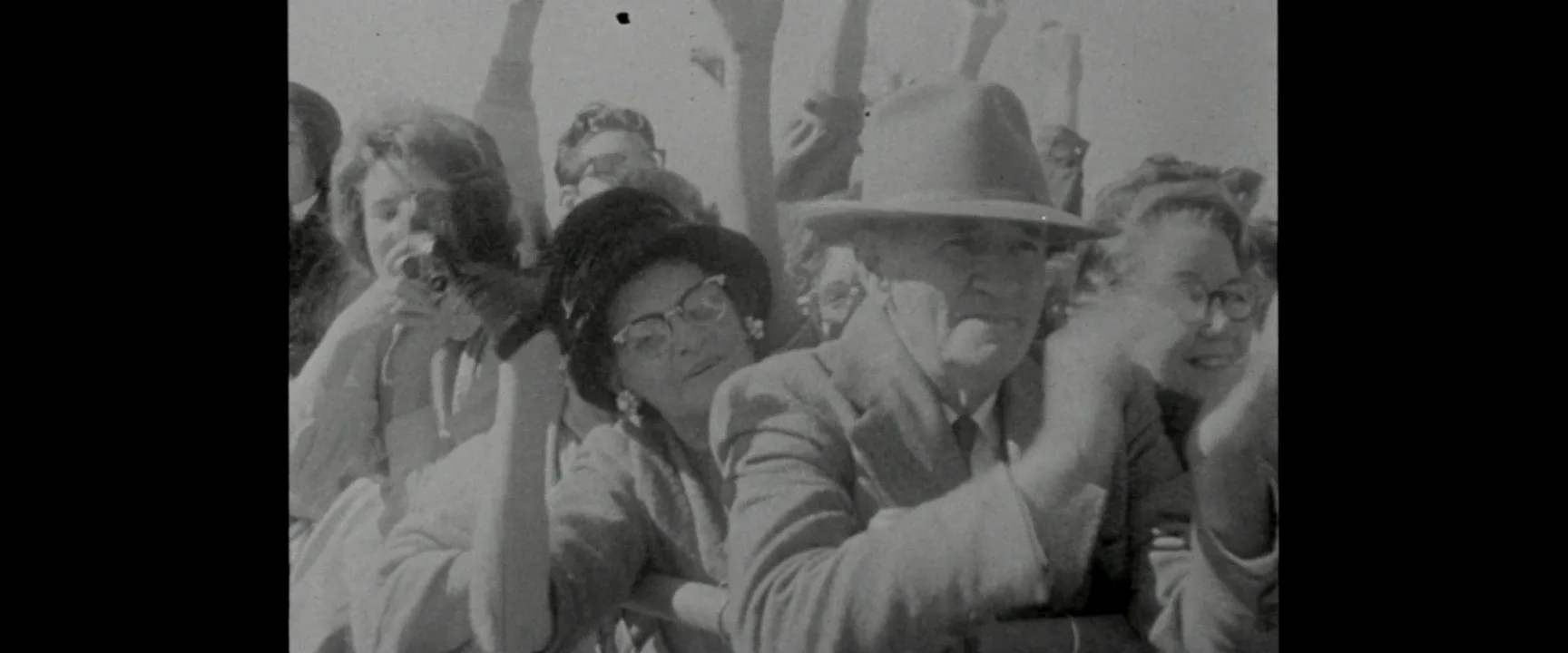
What is archival footage?
Archival footage is any moving image that existed before the current production and is reused inside it: newsreels, broadcast news, industrial films, home movies on 8mm or Super 8, camcorder tapes, surveillance video. The word is about origin, not style. A clip is archival because it is a real recording from another time, not because it looks old.
Archive arrives with its medium intact: a 4:3 frame, reversal-stock grain, smeared analog color, scratches, silent-era frame rates. Editors keep those traits because they tell the viewer this is real. Archive is a core material of documentary filmmaking, but fiction uses it too.
Why do filmmakers use archival footage?
Evidence. Archive proves something happened. Senna (2010) tells its story through race footage and home video. Apollo 11 (2019) is built from restored mission footage with no narrator.
Texture. One cut to grainy newsreel sets the year faster than a title card.
Counterpoint. Near the end of Come and See (1985) real Nazi-era newsreels run backward, intercut with a boy firing at a portrait of Hitler. JFK (1991) mixes the Zapruder film and news footage with restaged scenes shot on similar stocks, so record and reconstruction blur.
In film editing terms, archive changes the register: the image stops being staged and becomes testimony.
How to use archival footage in a film
- Source and clear it first. Work from the best copy (a film scan, not a web rip) and get written clearance before you lock the cut.
- Respect the frame. Pillarbox 4:3 material instead of cropping it; cropping loses the composition and doubles the grain. See aspect ratio.
- Fix the speed. Silent film shot at 16–18 fps runs fast at 24. Retime it, and restore only as much damage as the story needs.
- Give it sound. Most archive is silent; add modest period effects.
- Move the stills. A slow push keeps a photograph alive; Days of Heaven (1978) opens on period photographs.
- Label recreations. Archive borrows trust from real history. Don't spend it on fakes.
Shooting new footage that cuts with the archive
New shots must match the archive's medium, or the seam shows. No (2012) was shot on old U-matic video so actors cut straight into the real 1988 campaign ads. Stories We Tell (2012) mixes real family home movies with Super 8 recreations and reveals it late.
For a match: shoot the same format (16mm, Super 8, SD video), frame for 4:3, light flat, and operate like a news cameraman: handheld, reacting late, zooming to find the subject. Degrading clean digital footage in post reads as a vintage film look unless the camera behavior also matches.
Archival footage vs. stock footage
Stock footage is generic licensed material that fills a gap (a skyline, a crowd), and the viewer isn't meant to notice its source. Archival footage testifies: this strike, this funeral, this family. The same clip can be either; what decides it is whether the film presents it as a record.
A vintage grade or a simulated damaged film effect stylizes new footage; archive is old. A mockumentary or a fake newsreel like News on the March in Citizen Kane (1941) borrows archive's grammar for fiction.
Archival Footage examples in film
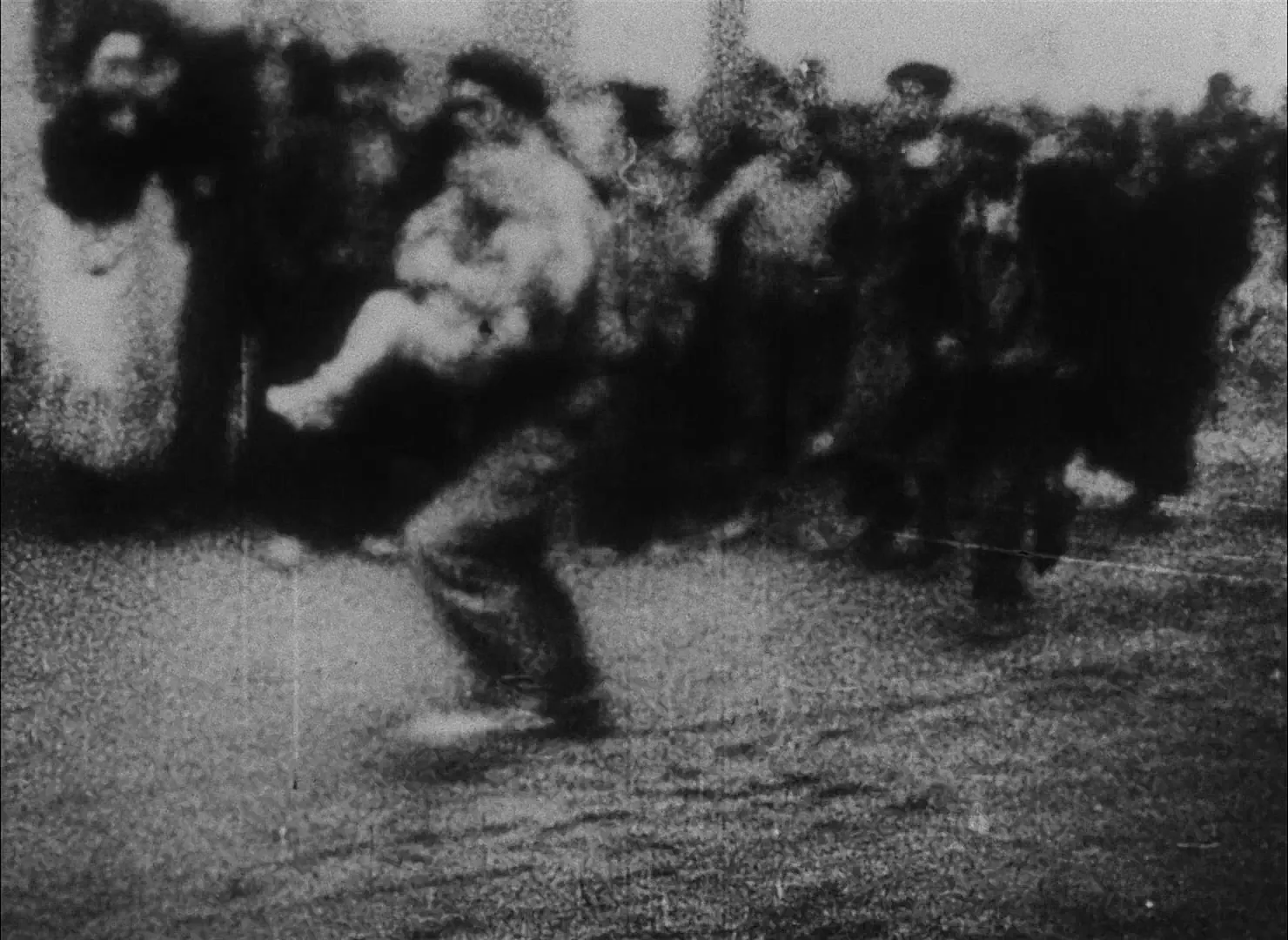
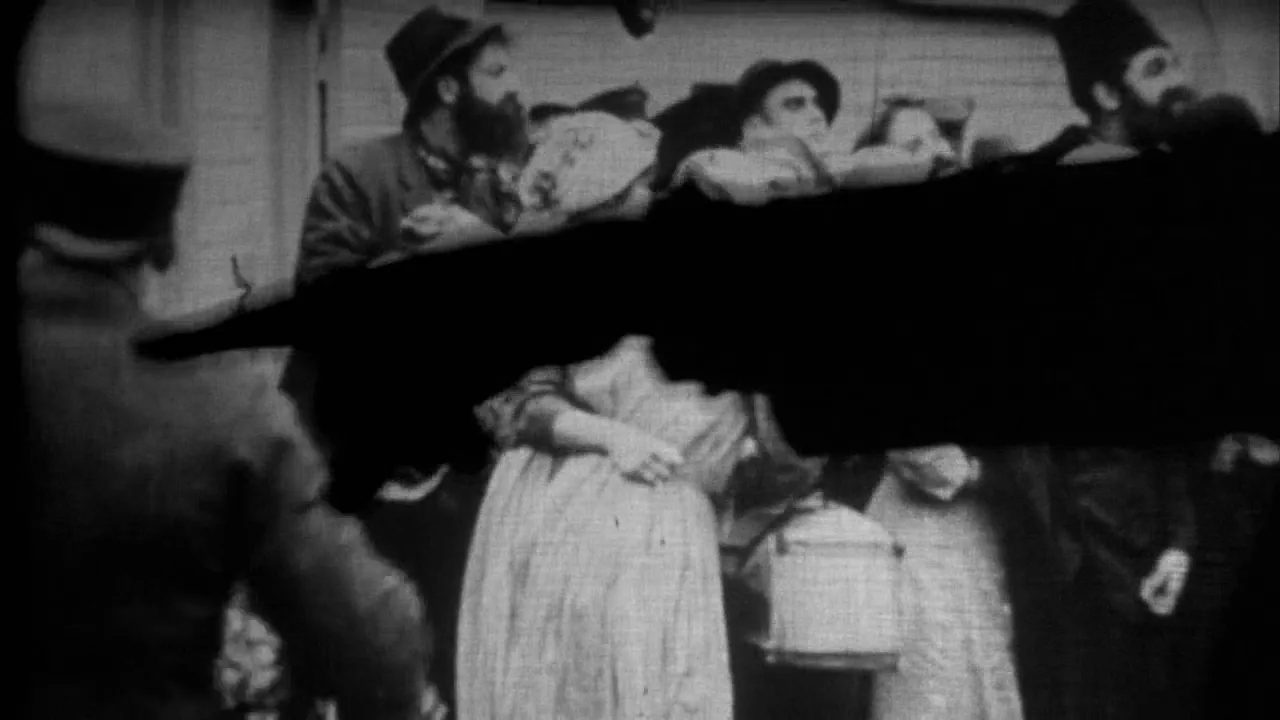
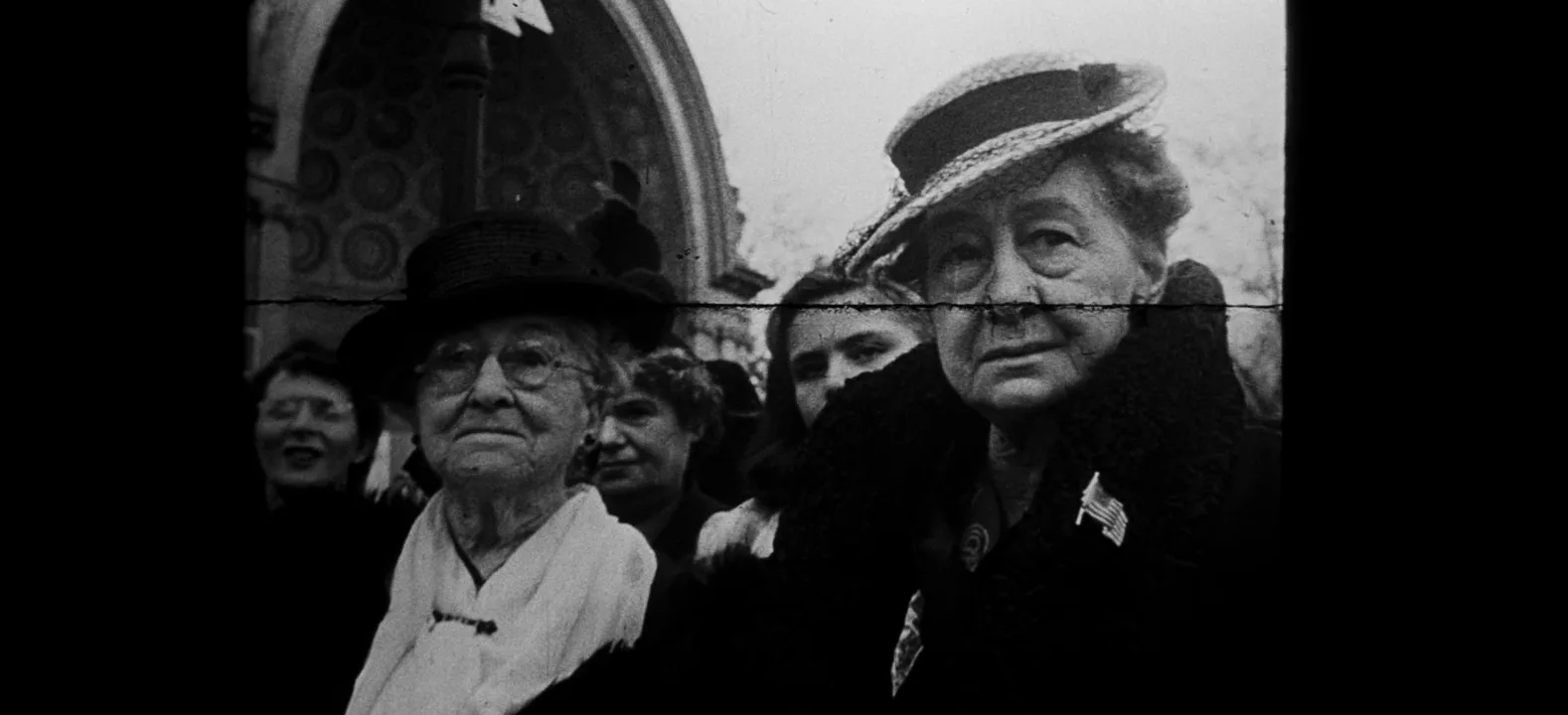
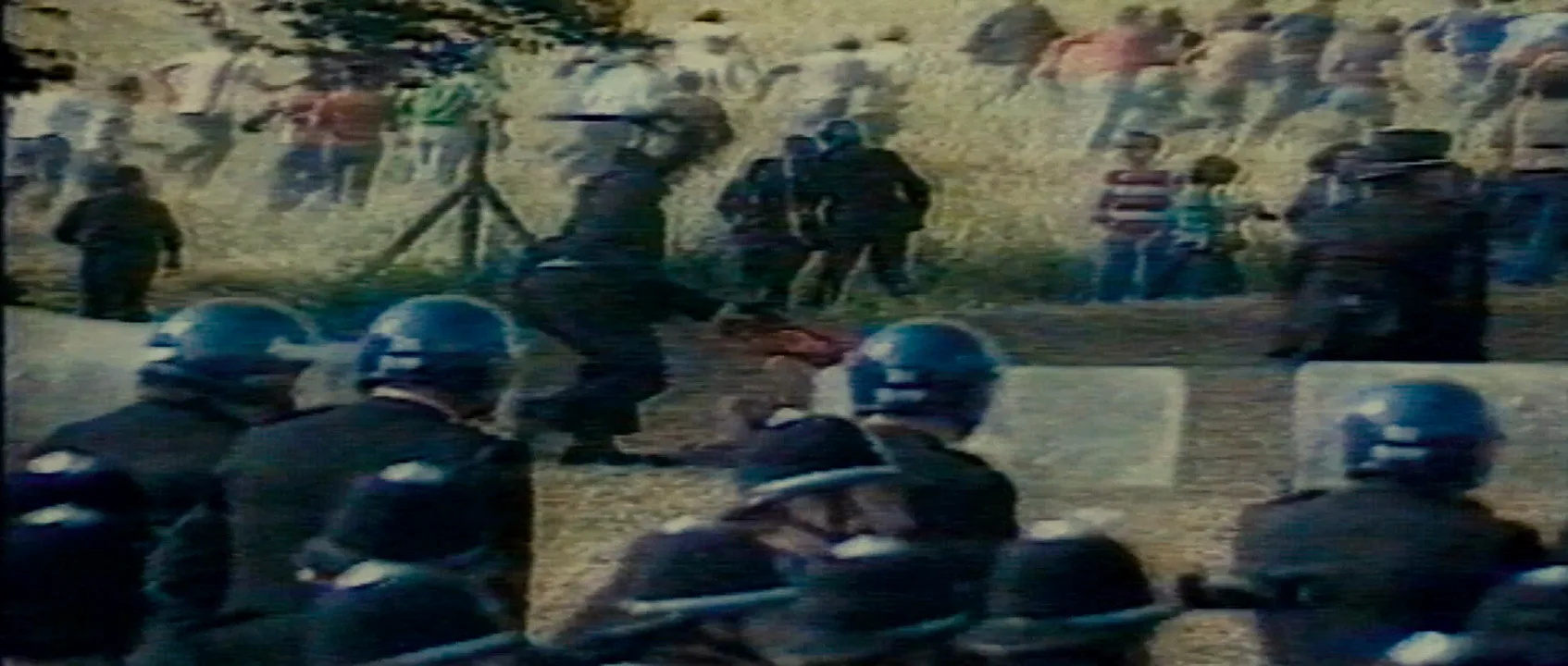
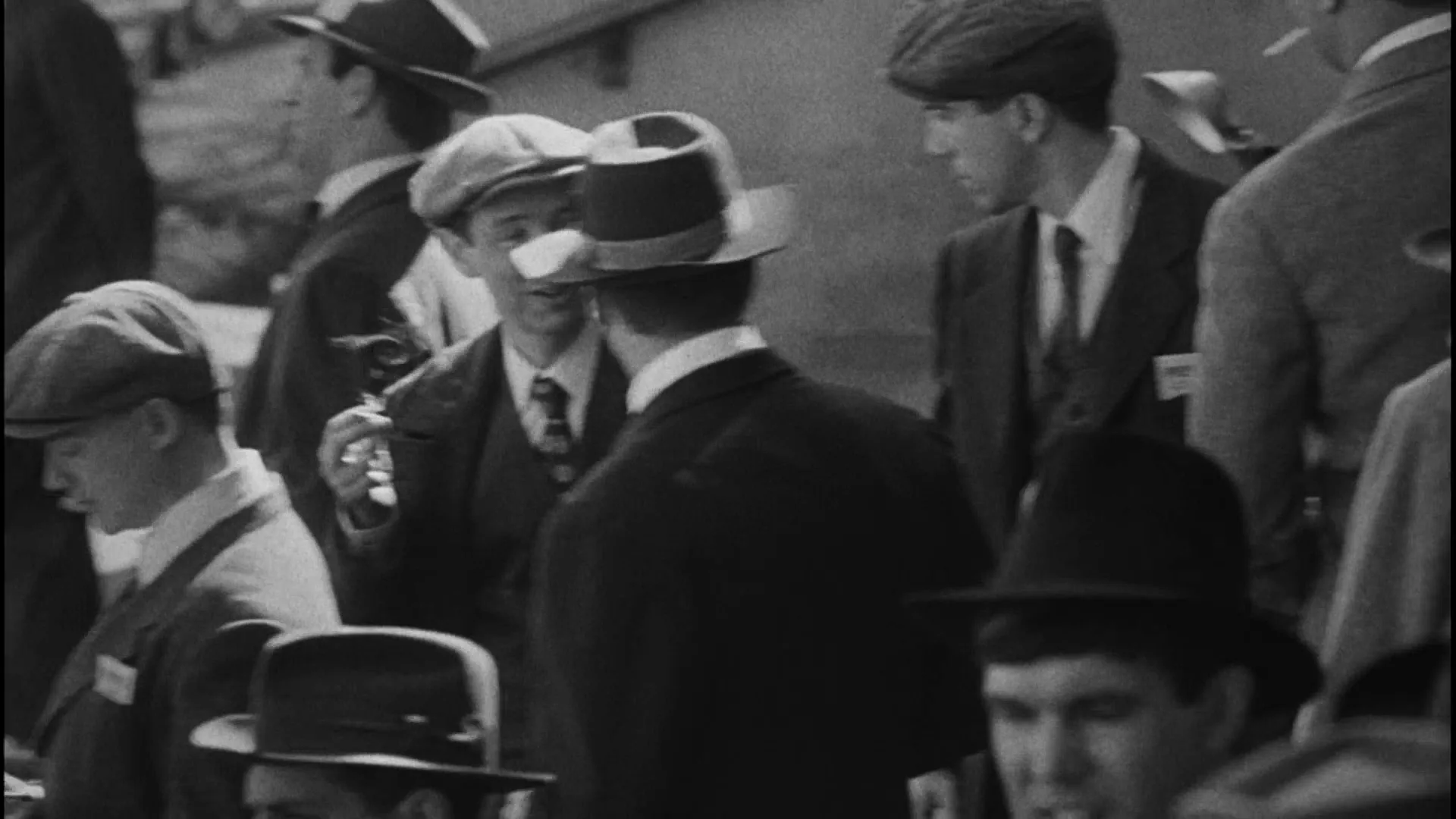
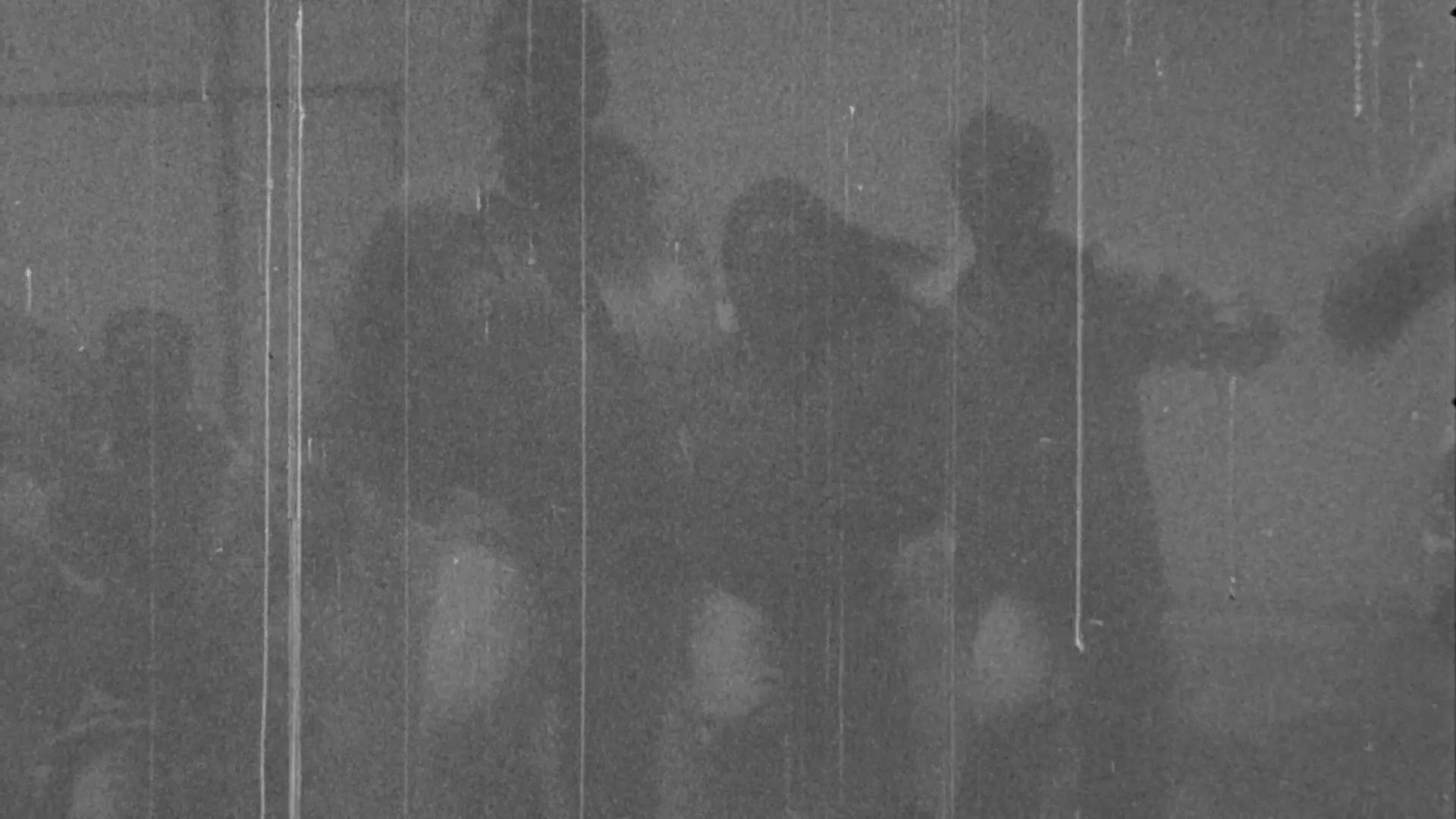
8 framesReal archive, or new footage made to pass as archive. Watch the aspect ratio, grain and damage.
How to create a archival footage with AI
4 promptsAI can't make real archive, and shouldn't pretend to. Use it to previsualize archive-style inserts and to create openly fictional newsreel for dramas. In FlashBoards, keep the real reference clips, the generated takes and your notes on one board to compare them. The fourth prompt re-shoots a real film shot from a text description alone, and the original plays next to the result so you can compare.
Black-and-white 16mm newsreel frame, 1950s: striking dockworkers on a wet harbor quay, overcast. In front, a heavyset man in his fifties with a thick gray walrus mustache, knitted wool cap and patched pea coat raises one hand and shouts; men in flat caps crowd behind him. Handheld, slightly off-center, cut at the chest. Coarse grain, high contrast, soft corners, dust specks, one thin vertical scratch, 4:3 frame.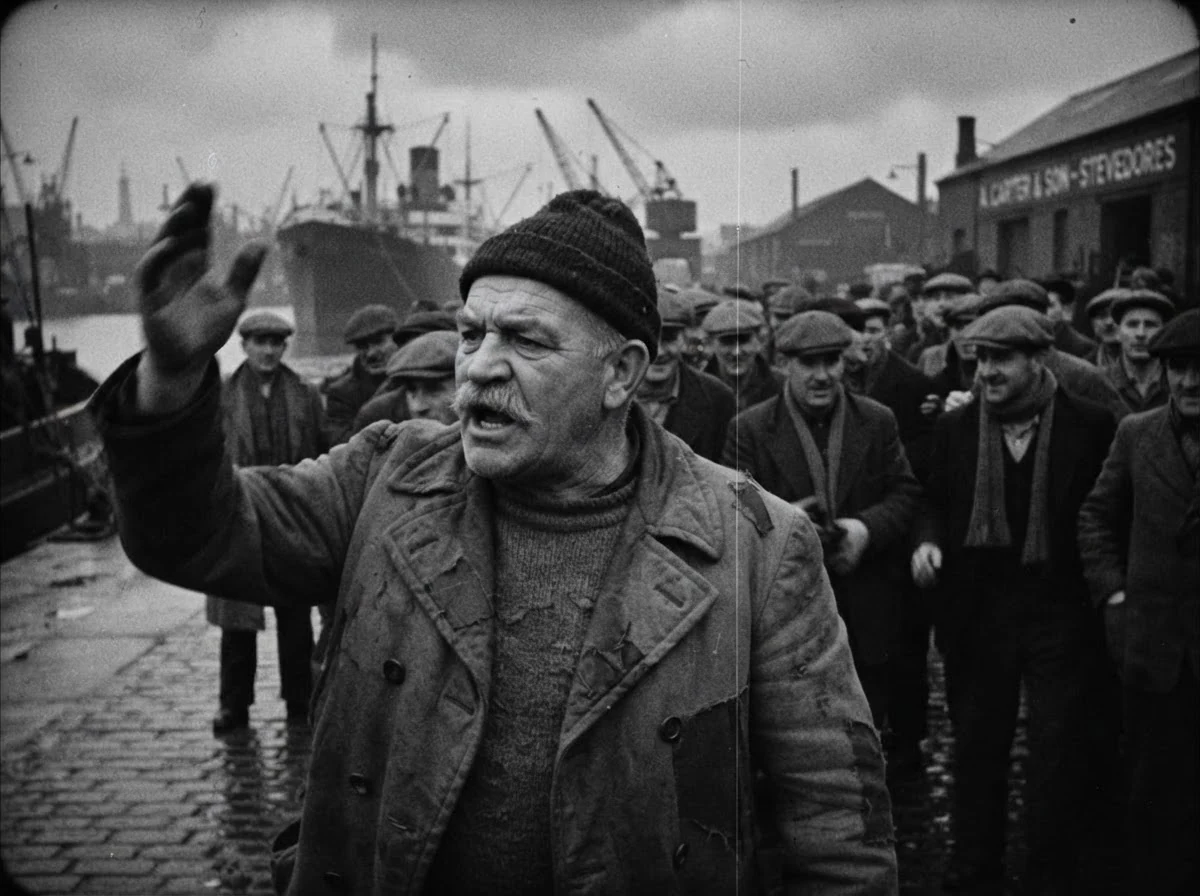
16mm newsreel, coarse grain, dust specks and 4:3 frame name the medium, not just the era. Handheld, off-center, cut at the chest gives a news operator's imperfect framing, which sells authenticity more than any filter.
Open FlashBoardsFaded 1970s Super 8 home movie frame: backyard birthday party. A girl of about seven with a short red bob, freckles and a gap-toothed grin leans over a cake with lit candles; two adults clap at the frame edge. Handheld, slightly tilted, too close. Warm faded color with a magenta shift, blown-out sky, heavy grain, orange light leak on the right edge, 4:3.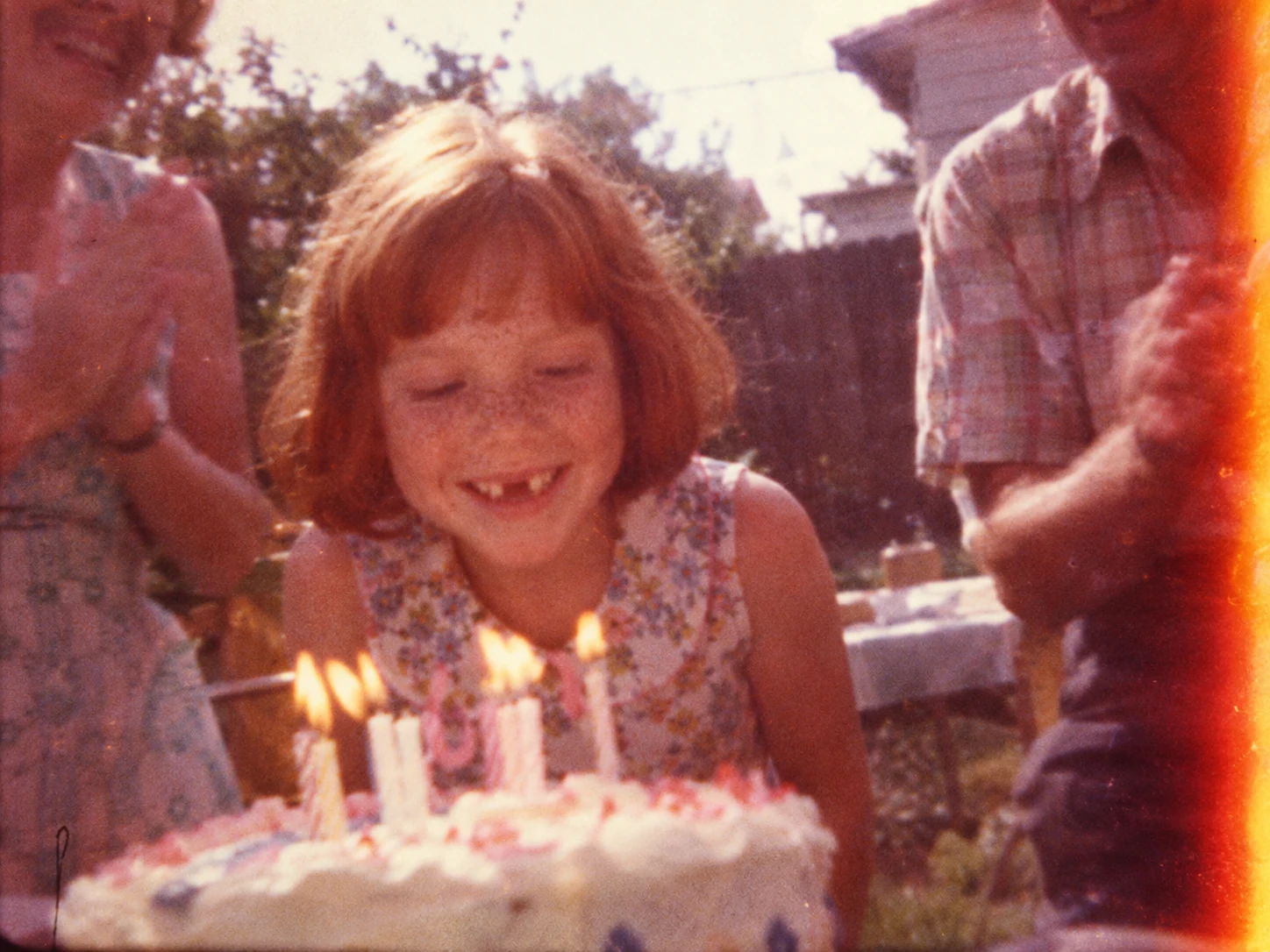
A second medium: color home movie. Magenta shift, blown-out sky and light leak describe how that stock ages. Slightly tilted, too close is the amateur operator; without it the frame looks professionally composed.
Open FlashBoardsCamera: handheld 16mm newsreel camera with constant small jitter, panning slowly left across the crowd, then quickly reframing back onto the mustached man. Action: The mustached man is already shouting and pumping his raised hand. The men behind him push forward and raise their fists. At the end he points past the camera and the crowd surges forward. Black and white, flickering exposure, coarse grain.Already shouting makes the shot alive from frame one. Constant small jitter and flickering exposure animate the medium itself, and the late reframe mimics a news operator reacting to action.
Open FlashBoards{
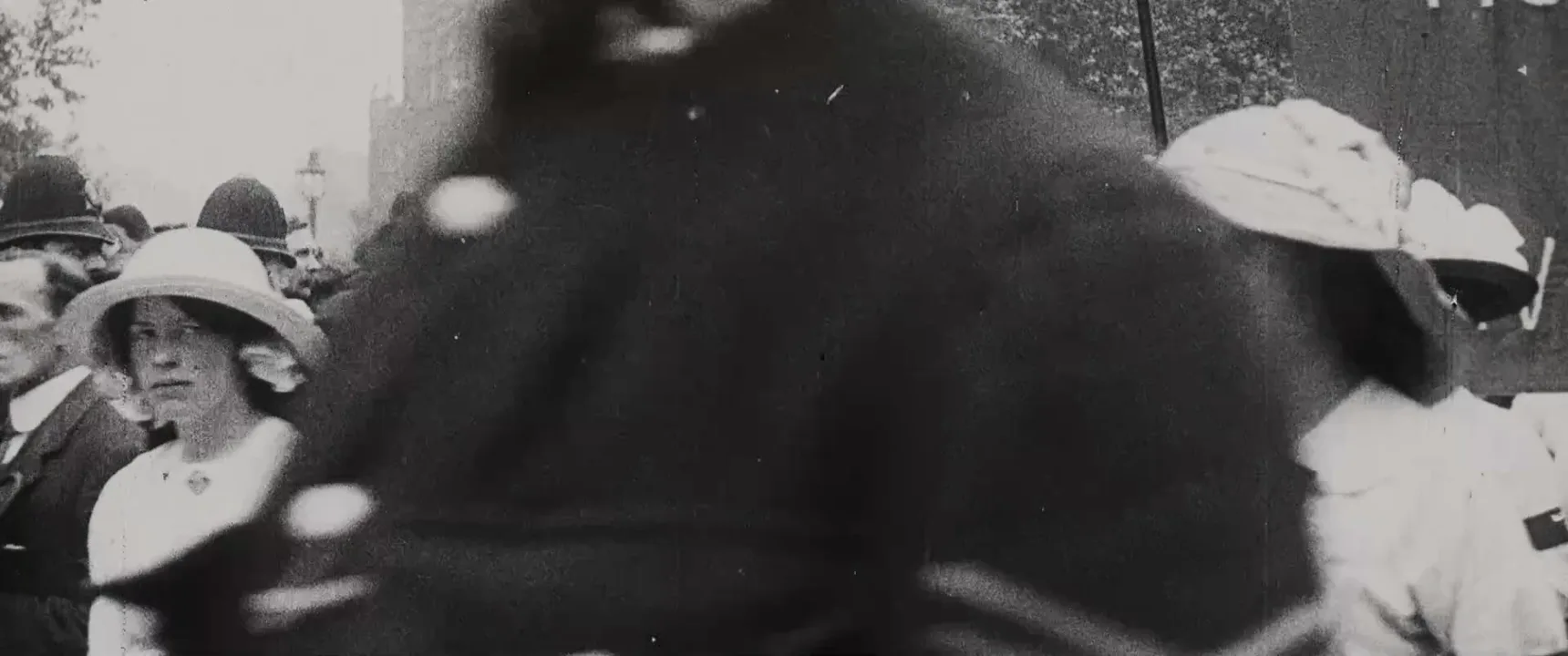
"output": "Full-screen scene from the closing archive sequence of Suffragette (2015), alive from its very first frame: one continuous shot with no cuts, genuine 1913 London street newsreel of a suffragette memorial procession, a worn nitrate print copied many generations over and pulled from an archive vault. The damage is the look: every frame is soft and slightly out of focus, faces are blurry with little detail, whites bloom and burn out, blacks are murky gray; very heavy clumpy grain crawls over everything; the brightness pumps up and down every few frames; the picture jitters and weaves in the gate; white dust flecks, dark hairs and several thin vertical scratches run through the whole shot; motion is slightly fast and jerky from hand cranking. Monochrome only, faded warm gray tint, milky low contrast, dark vignetted corners. Overcast summer daylight in a square lined with tall plane trees, dark banners with large white lettering on poles.",
"characters": {
"S1": {
"name": "a young woman marcher, an anonymous person in the 1913 newsreel, no actor",
"look": "about twenty, dark hair pinned up under a wide white brimmed hat, plain white high-collared dress, black mourning band on the arm",
"voice": "silence: she does not speak"
},
"S2": {
"name": "a long-haired girl, an anonymous person in the 1913 newsreel, no actor",
"look": "about twelve, long dark wavy hair loose on her shoulders, wide white hat, white dress, a laurel wreath in her arms",
"voice": "silence: she does not speak"
},
"S3": {
"name": "a girl with a black bow, an anonymous person in the 1913 newsreel, no actor",
"look": "about fifteen, very wide pale hat with a crumpled flower-trimmed brim, white blouse with a large black ribbon bow at the collar",
"voice": "silence: she does not speak"
},
"S4": {
"name": "a passing constable, an anonymous person in the 1913 newsreel, no actor",
"look": "heavyset, dark wool uniform greatcoat with a row of bright metal buttons, tall dark police helmet",
"voice": "silence: he does not speak"
}
},
"shots": [
{
"shot": 1,
"camera": "hand-cranked 1910s newsreel camera at chest height, trucking slowly to the right along the edge of the procession, so the marchers slide from right to left across the frame; medium shots of people passing close to the lens, slight jitter and uneven frame speed",
"voice": "silence: nobody speaks in this shot, no voice at all",
"action": [
"BEGINNING: alive from the first frame, the picture flares almost pure white as if overexposed; S1 and three other young women in white hats and white dresses stand in a row in the centre, all in profile, faces turned to screen left, a tall dark banner pole just right of S1; the camera is already gliding right.",
"THEN: the exposure settles darker and the trees and banners appear behind; S1 slides out of frame left while S2 comes in at centre right, her face turned straight to the lens, a small child in a white bonnet beside her and helmeted constables standing behind.",
"THEN: S4 walks across very close to the lens from frame right to frame left, his dark buttoned greatcoat filling the frame in a soft blur for a moment, then clearing out of frame left.",
"THEN: S3 is revealed in the centre behind him, walking slowly to screen left with her eyes lowered to the left, while S2 at frame left turns her face to the camera and stares straight into the lens with a serious face, eye contact with the viewer.",
"END: S3 passes out of frame left; a row of women in white with wide black hats, black armbands and pale sashes across their chests drift past from right to left carrying wreaths, one holding a tall banner pole, a line of helmeted constables at frame left, everything flickering and grainy as the camera keeps trucking right."
],
"dialogue": []
}
],
"sound": {
"ambience": "soft murmur of a large outdoor crowd far away, shuffling feet on paving",
"speech": "no words in this video; the only human sounds are breaths and movement",
"never_spoken": "no narration and no voice-over: the descriptions, performance notes and step words of this prompt are never spoken aloud",
"music": "a film score under the scene, always below the voices: slow, mournful strings with a soft solo piano line, restrained and dignified",
"subtitles": "none"
}
}Remakes the 1913 funeral-procession newsreel that closes Suffragette (2015), dir. Sarah Gavron, keeping the slow truck right, the constable's coat wiping across the lens and the girl who stares into it.
output names the film and the damaged print: soft focus, burnt whites, grain, flicker, scratches. The one shot keeps the newsreel beats: a slow truck right, a coat wiping the lens, a girl staring back, silence under a mournful score.
Common mistakes
- Too clean. Models default to sharp, centered images. Name the grain, the damage and the imperfect framing.
- Vague medium. "Old footage" gives a sepia blur. Name format and decade: 16mm newsreel, Super 8, 1980s broadcast video.
- Widescreen. Set 4:3 and write "4:3 frame" in the prompt.
- Real people. Never generate a real person or event as if it were a record; label recreations in the film.
Keep the reference frames, prompts and every generated take side by side — images and video in one canvas.
FAQ
4 questionsWhat is archival footage in film?
Archival footage is previously recorded material, such as newsreels, TV news or home movies, reused in a new film. Documentaries use it as evidence of real events; dramas use it for period texture or counterpoint. It normally keeps its original medium's grain, 4:3 frame and damage, which mark it as a real record.
What is the difference between archival footage and stock footage?
Stock footage is generic material licensed to fill a gap, like a skyline, and the viewer isn't meant to notice its source. Archival footage is presented as a specific record of a real event, person or place. The same clip can be either, depending on whether the film presents it as evidence.
Can I use archival footage for free?
Sometimes. Some footage is in the public domain, such as many U.S. federal government films, but archives may still charge for access to their copies. Most newsreel and broadcast footage needs a license for each use. Get written clearance before you lock the cut, and check fair use with a lawyer.
Should archival footage be cropped to widescreen?
Usually not. Cropping a 4:3 clip to 16:9 cuts off a quarter of the composition and enlarges the grain and damage. Most documentaries pillarbox archive with side bars, which also signals another time. Crop only when a single detail matters more than the whole frame.
Related terms
4- Stock FootagePost-Production & VFX
Stock footage is pre-shot material licensed from a library — skylines, crowds, nature, historical newsreel — cut into a film instead of shooting it again.
- Vintage Film LookPost-Production & VFX
A vintage look stylizes new footage to resemble film or video of a past era — grain, faded or shifted color, soft optics, light leaks, gate weave, period aspect ratio and frame rate.
- Documentary FilmmakingFilmmaking Process & Crew
Documentary filmmaking records real people and events rather than staged fiction, built from observation, interviews, archival footage and narration, and shaped into a story in the edit.
- Film EditingEditing
Film editing is the selection and ordering of shots — where each one starts, ends and what follows it — to build continuity, rhythm and meaning out of the raw footage.
Further reading
Bill Nichols, Introduction to Documentary (Indiana University Press). Jaimie Baron, The Archive Effect: Found Footage and the Audiovisual Experience of History (Routledge, 2014).